
-
Mk1YEARS2019 - 2022
-
Mk2YEARS2022 - 2025
Princess F50 Yachts For Sale
View a wide selection of used Princess F50 yachts for sale near you and worldwide on YachtBuyer. Explore detailed listings, specifications, and photos to compare available F50s and find your next Princess with confidence and minimal hassle.
The Princess F50 flybridge yacht for sale offers buyers a smart three-cabin option, with two en suite cabins joined by a bunked third.
Built in Plymouth at 15 m / 49 ft, it reflects the proven methods that have shaped Princess Yachts for decades. This guide looks at the F50 as an established model whose design and build still stand out in today’s pre-owned market.
Princess F50 Buyer's Guide
The aim of this guide is to help buyers understand how each yacht’s use, care, and refit history shape its true worth. You’ll find context on how the F50 fits its class, how it compares across generations, and what to expect from ownership in practice. The focus is on clear, factual insight drawn from the model’s years in service.
- Why Buy a Princess F50?
- Who Buys a Princess F50?
- Two Generations of the Princess F50
- Design & Layout
- Performance & Engines
- Princess F50 Ownership & Running Costs
- Crewing & Operating a Princess F50
- Insuring & Registering your Princess F50
- Princess F50 Yachts for Sale: Market Price Insight
- Rivals & the Successor to the Princess F50
- Working with a Buyer's Broker
- Buy Smarter with YachtBuyer
Why Buy a Princess F50?
The Princess F50 holds its value because it was built right from the start. It joined the Princess F Class in 2019 and ran until 2025, long enough to prove its strength and keep strong support from the yard and its network. Owners rate it for the way it runs, the ease of upkeep, and how its space works for real life at sea. As a used boat now, it stands as a solid, modern-feeling cruiser with little of the fragility that dates others from its era.
Build that Lasts
- Resin-infused GRP hull and deck keep weight down and stiffness high; no reports of blistering or hull fatigue.
- Vinylester barrier layers guard against osmosis, and stainless fittings stay bright with routine care.
- Teak decks of 8mm thickness hold ten years or more before major work, showing how the yard balanced finish and function.
Handling and Everyday Use
- Volvo IPS pod drives with joystick control make the F50 easy to steer alone; the bow stays low and the wake clean.
- The forward engine placement and balanced hull give steady trim and quiet running even at cruise.
- Range around 250 nm at 30 kn lets owners cover real ground without fuel anxiety.
- Sound insulation is strong enough that talk in the saloon stays calm at speed.
Comfort that Works at Sea
- The three-cabin plan gives six full berths in 15 metres without crowding, helped by a full-beam master.
- Aft galley by the cockpit doors links inside and out, making serving and cleaning easy under way.
- High side rails and wide decks keep movement safe for owner-operators.
- Air-conditioning, generator and real insulation mean the boat can stay aboard for weeks.
- CE Category B rating.
Upkeep and Support
- Princess’s global dealer base still carries F-Class spares, making service simple despite the model’s end of production.
- IPS service intervals are well known and parts easy to source; surveys show steady reliability in later Mk2 boats.
Why Buy a Used Princess F50?
On the used market, the F50 rewards buyers who want a strong, modern-looking yacht without the cost of new build. The Mk1 and Mk2 share the same hull, so choice comes down to décor and equipment rather than structure. Good examples keep their gloss and teak with light care, and refits can add later-generation tech like gyro stabilisers or updated upholstery. For anyone seeking a manageable owner-run flybridge cruiser that feels fresh yet needs little learning curve, the Princess F50 still earns its keep.
Who Buys a Princess F50?
The Princess F50 draws people who like to run their own boat and live aboard in comfort. It fits owners moving up from smaller sports cruisers who want more range and space but still plan to helm themselves. Most value the way it blends sharp handling with quiet, homely living. They are not buyers chasing fashion; they want a yacht that works, holds its worth, and stays simple to keep.
Buyers tend to fall into three groups:
- Hands-on family owners: Couples or young families who cruise weekends or a few weeks at a time. They like the aft-galley layout and the safe decks for children. They often run short coastal routes and berth the yacht near home.
- Experienced step-ups: Owners coming from 35–45 ft boats who want pod control and the feel of a bigger yacht without crew. They appreciate the joystick handling, solid ride and the three-cabin layout for guests.
- Retiring professionals: Buyers who have finished full-time work and now spend months afloat. They use the yacht as a second home, enjoy the low noise, and keep to mild cruising grounds where they can manage maintenance themselves.
Most owners share a preference for quality they can trust. They keep service schedules tight, often stay with the Princess dealer network for parts and winter care, and treat the yacht as a long-term asset rather than a quick trade-in.
Where the Princess F50 Spends Its Time
- South of England and Channel coasts : protected waters and good yard support make it easy for owner-drivers.
- Mediterranean mooring belts : the F50’s air-conditioning and flybridge living suit long warm seasons from Palma to the Côte d’Azur.
- US East Coast and Florida : pod drive service points are common, and the shallow draft suits the Intracoastal route.
The people who buy a Princess F50 tend to keep it. It’s a boat they use often, not a status piece but a working base for sea life—steady, easy to run, and built to stay that way.
Two Generations of the Princess F50
The Princess F50 timeline in total ran in production from 2019 to 2025 and had two clear iterations: Mk1 and Mk2. Both shared the same Olesinski-drawn hull, but buyers comparing used examples should look more at fit, finish and installed options than at any structural difference, as the core design remained sound throughout.
Princess F50 Mk1: 2019 to 2022
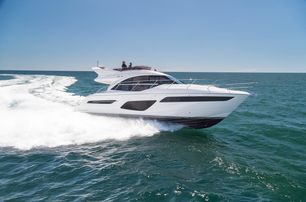
The first generation launched at Cannes 2019 as the successor to the Princess 49. It carried the new F-Class look which included things like knife-edge hull windows and a one-piece windscreen, and was powered mainly by twin Volvo IPS 700 engines of 550hp each, with the IPS 800 package optional. Interiors came in gloss walnut or oak with the familiar high-grade Princess joinery. The Mk1 set the layout that lasted: aft galley, U-shaped saloon seating, and a full-beam midship master cabin. It established the F50’s strong handling and easy dockside control, making it one of the most approachable owner-run flybridges in its class.
Princess F50 Mk2: 2022 to 2025
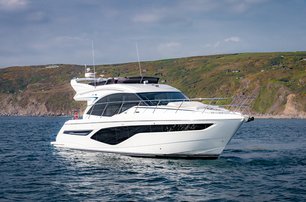
Princess introduced the Mk2, often called the “New F50,” in mid-2022. The update was evolutionary rather than radical. Exterior styling gained longer hull windows and a sportier canopy line, while inside, tones shifted to light oak, soft grey, and taupe. Sofas and fixtures were renewed, including Perrin & Rowe fittings in the heads. The IPS 800 engines became standard, lifting top speed beyond 35 knots. Popular options such as Seakeeper gyro stabilisation and Volvo’s “Easy Boating” suite appeared more often, giving later boats quieter, steadier running. Minor trim updates like restyled helm seats, transom gates, and logo moulding on the swim platform, all added polish but did not alter structure or performance fundamentals in reality.
Across both marks, owners reported minimal difference in hull feel or mechanical reliability. Many Mk1s have since been refitted with Mk2 décor or stabiliser upgrades, blurring the line between them.
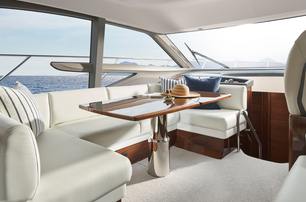
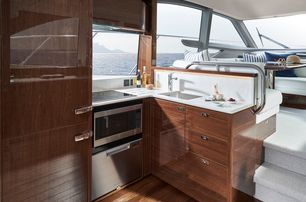
Design & Layout
The F50’s layout was drawn to make life aboard easy for an owner-run crew. At 15m it uses every inch well, with good separation between cooking, sitting and sleeping areas. Day-to-day, the boat feels open but secure; movement from saloon to cockpit to flybridge is smooth, with no awkward steps or blind corners.
On Deck
The main deck starts with a teak swim platform that lowers for tender use. Wide side decks and high rails give safe movement forward. In the cockpit, a sofa and folding teak table form a calm outdoor dining space shaded by the bridge overhang. The aft-galley arrangement places the cook just inside the sliding glass doors, so meals pass straight to the cockpit or the saloon without fuss. Up top, the flybridge holds a U-shaped settee and teak table aft, a wet bar with fridge and grill beside the helm, and a forward sunpad that converts from seating to a lounge. Two helm seats sit high and close to the guests, letting the driver stay part of the conversation. At the bow, a large sunpad with adjustable backrests makes a quiet spot at anchor.
Interior and Guest Accommodation
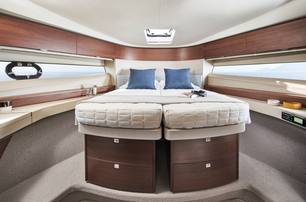
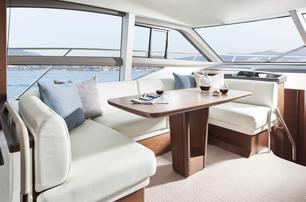
Inside, the F50 keeps the atmosphere of a small apartment at sea. The saloon has a raised U-shaped sofa to port and a loveseat to starboard around a folding table that shifts from coffee to dining height. Views run almost unbroken through the single-piece windscreen and deep hull windows. Timber options ranged from gloss walnut in early boats to light satin oak in later builds, with leather and fabric tones matched to the era. Below, three cabins sleep six. The full-beam master amidships offers a walk-around double berth, sofa or vanity, large hull windows and an en-suite shower room. Forward, the VIP cabin has scissor berths that slide together to form a double. To port lies a compact twin-bunk cabin often used as storage or an office. All spaces have real doors, opening ports, and full standing headroom. The use of joinery and sound insulation means nights are quiet even with the generator running.
Tenders and Toys
The hydraulic platform carries a small rigid inflatable tender or PWC. Many owners add chocks or a cradle system for launch and recovery. The flybridge wet bar stores inflatables and lines, while lockers under cockpit seating hold fenders and deck gear. For longer cruises, some owners fit removable racks for paddleboards or a folding bike set in the lazarette. Storage throughout is generous for a 50-footer, helped by deep bilge trays and under-bed bins.
Each variant of the F50 suits self-run cruising. Early glossy interiors feel warm and club-like; later light palettes give a clean, modern tone. In both, the thoughtful layout and good sightlines make the yacht easy to live with underway or at berth, proving why the design endured through its production run.
Performance & Engines
The Princess F50 was built for owner-drivers who want strong, steady control with little effort. Its deep-V hull by Olesinski works with the Volvo pod system to lift cleanly onto plane and hold a flat trim. The design joins smooth power delivery with quiet handling, giving a sense of balance that suits both short coastal hops and long weekend runs.
Engine Options & Specifications
| Specification | Option 1 | Option 2 |
|---|---|---|
| Engine model | Volvo Penta D8 IPS 700 | Volvo Penta D8 IPS 800 |
| Power (per engine) | 550 hp | 600 hp |
| Total output | 1,100 hp | 1,200 hp |
| Top speed | about 34 knots | about 36 knots |
| Cruising speed | around 25 knots | around 30 knots |
| Economical range | about 250 nautical miles | about 250 nautical miles |
| Fuel capacity | 1,850 litres | 1,850 litres |
The twin Volvo D8 six-cylinder engines sit forward in the hull and link by jackshafts to the aft pod drives. This keeps weight low and even, which helps the hull rise without bow lift. Joystick control at both helms gives fine steering in tight spaces, and the IPS vectoring propellers turn the yacht in its own length. At speed the ride stays level and dry, with light helm load and clear sightlines. Noise and vibration are well contained, so talk in the saloon remains easy at cruise. Fuel burn is steady and predictable, and service access in the engine room is good for daily checks.
Survey Hot Spots
- Inspect IPS pod seals, anodes, and paint condition below the waterline.
- Check alignment of jackshafts and engine mounts for signs of wear or corrosion.
- Review service logs for pod oil changes and software updates.
- Look for stress marks around pod mounts if the yacht has grounded.
- Confirm ventilation fans and bilge pumps run smoothly under load.
Princess F50 Ownership & Running Costs
The Princess F50 is built for owner operation, so running costs stay clear and easy to plan. Most owners allow 5-8 % of the yacht’s value each year to cover berth, insurance, service and fuel. The boat can be kept without a management company, with work handled through the Princess and Volvo networks.
Fixed Annual Costs
- Berth and storage: A 15m (50ft) berth on yearly contract is the main fixed cost. Rates are higher in prime Mediterranean marinas and lower on the South Coast UK. Add haul-out, storage, and relaunch each winter.
- Insurance: Annual hull insurance averages about 1% of insured value. Premiums vary by cruising area, age, and claims record.
- Routine maintenance: Engine and generator service, antifouling, anodes, and IPS drive checks form the yearly base. Expect around $10,000-$15,000 per year, with variation as larger items fall due.
- Registration and compliance: Allow small sums for flag fees, radio licences, and safety-gear service such as life-raft and extinguisher checks. Keep VAT or tax records current when moving between regions.
Variable Costs
- Fuel: At a 25 kn cruise the F50 burns roughly 8 L per nm. Owners running 100 h per year spend mid-five-figure sums on fuel in busy regions; slower speeds cut this sharply.
- Transport and relocation: For long passages some owners use yacht transport to save time and wear. Treat this as a one-off project cost, not yearly.
- Crew or local help: The F50 is easy for two people to run. Freelance skippers or guardiennage services can be hired as needed for cleaning or passage work.
- Repairs and parts: Keep a reserve fund for pumps, batteries, air-conditioning service, and minor electrical items. A gyro stabiliser, if fitted, also has a small annual service.
Why Ownership Stays Manageable
- No full-time crew: Joystick control and a bow thruster let most owners dock with a partner, avoiding payroll cost.
- Simple administration: All service and parts support remain available through the Princess and Volvo dealer networks worldwide.
- Predictable budgeting: A steady yearly plan for berth, service, insurance, and fuel keeps the yacht ready and costs transparent.
For most careful owners the F50 fits a clear annual plan with no surprise costs. Its size, systems, and service access make it one of the most practical flybridge yachts to own long-term.
Crewing & Operating a Princess F50
The Princess F50 is designed for owner operation. At 15 m it can be managed safely by a couple without full-time crew. All controls sit within reach, the joystick handles docking, and every daily task is kept simple. Owners describe it as a yacht that invites regular use because it is easy to start, steer, and shut down after a trip.
Typical Crew Profile
- The F50 is usually run by the owner with help from one partner or friend.
- Joystick control and a bow thruster make docking calm and exact even in tight marinas.
- Some families bring in a freelance skipper for the first season or for long passages.
- No permanent crew accommodation is needed, which keeps space free and fixed costs low.
Operating Routine
Before leaving the berth, most owners check fuel, oil, and bilges, switch on the generator, and confirm shore power is off. The process takes only a few minutes. Under way, the yacht holds trim without constant helm work, and autopilot can run for longer legs. At arrival, the joystick gives fine control for side-to-berth moves, and lines are handled easily from the cockpit. Cleaning and shut-down take about one hour, including wash-down, log entry, and battery reset. The systems are arranged so that one person can manage the whole sequence while the other handles lines or covers. Routine upkeep and light engineering are within reach of any careful owner, and dealer support covers heavier work such as winter service or electronics updates.
Owner Experience
- Owners keep the yacht within easy reach of home and use it often for weekends or short cruises.
- Running without crew gives privacy and flexibility in planning trips.
- All servicing, fuel, and supplies can be arranged through the Princess and Volvo networks.
The F50’s balance, sightlines, and automation make it simple to run short-handed. It offers the independence of a serious sea-going yacht while keeping workload and cost light enough for frequent use.
Insuring & Registering your Princess F50
The Princess F50 sits at 15 m / 49 ft, so its insurance and registration stay simple. Most yachts of this size are kept for private family use and insured on light leisure policies. The aim is steady cover for hull, gear, and third-party risk without the paperwork that comes with larger commercial yachts. Registration is also straightforward, handled through a flag state or local registry chosen for convenience rather than tax structure.
Insurance for an owner-run F50 combines hull protection with personal-liability cover. Premiums stay low when the boat has full service records and limited annual hours. Owners who berth in Europe, the United Kingdom, or the United States can arrange cover through standard leisure-craft brokers familiar with Princess and Volvo systems.
- Hull & Machinery: covers hull, engines, pods, and electronics against damage or loss during navigation or storage.
- Protection & Indemnity (P&I): provides personal-liability cover for injury or pollution but remains light for private use.
- Add-ons: extend cover to tenders, toys, and gear such as paddleboards or outboards, plus storm or travel-disruption risk.
Annual premiums typically run at 0.5-1% of insured value, with discounts for experienced owners and clean logs. Underwriters favour yachts built by established yards with clear parts support. The F50 meets that test easily, as the Princess warranty history and Volvo network give confidence in upkeep. Keeping service receipts and photos of maintenance helps renewals and claims.
VAT status matters only for movement inside the EU. Boats first delivered with VAT paid may circulate freely in EU waters. Non-EU owners can use temporary import for up to 18 months, leaving and re-entering to reset the clock. Holding the yacht through a small single-purpose company is optional but can simplify paperwork if ownership is shared between family members.
Princess F50 Charter Potential
Few F50s are coded for charter, but it can be coded under the Small Commercial Vessel Code (under 24m) where applicable. Owners who plan light charter in the Mediterranean may add safety manuals, fixed fire gear, and extra life-saving appliances. The cost and time to code a 15 m yacht are modest, though the benefit depends on use frequency. For most F50s, private use gives the best balance of freedom and cost control.
Princess F50 Yachts for Sale: Market Price Insight
The Princess F50 keeps an active profile on the brokerage market across Europe, the United Kingdom, and the United States. Listings show both Mk 1 and Mk 2 versions in steady rotation, most privately run and maintained through Princess and Volvo service agents. Buyers see the F50 as a practical owner-operated flybridge that holds its worth when hours and care stay consistent.
How the Princess F50 Trades
YachtBuyer Market Watch data shows the F50 trading within a narrow, steady band between €1.1 million and €1.5 million, depending on year, hours, and condition. Well-kept examples with recent IPS service, fresh upholstery, and full logs usually sell within two to four months of listing. Boats with older décor or incomplete service history take longer but still move due to strong demand for easy-to-run 15 m yachts. Short supply of later Mk 2 builds supports pricing near the top of the range.
- Live Price Data: Displays current F50 listings and asking prices between €1.1 million and €1.5 million across all regions.
- Price Positioning Gauges: Benchmarks the F50 against similar 15m flybridge yachts, showing firm mid-range value and low volatility.
Historic Market Overview
The three-year price trend shows a mild easing in early 2024 from about €1.6 million to €1.1 million, followed by recovery toward €1.5 million by late 2025. Mk 1 yachts built 2019–2022 follow the same curve with wider swing as older hulls pass through refit. Mk 2 yachts built 2022–2025 hold close to €1.5 million with little change, supported by newer interior fit and IPS 800 power. Overall, the F50 market has stabilised with strong buyer confidence in build quality and moderate upkeep cost.
- Historic Prices – All Yachts: Shows a short dip in mid-2024 then recovery to €1.4-€ 1.5 million through 2025, confirming balanced supply and demand.
- Historic Prices – by Generation: Mk 1 yachts vary with refit condition, while Mk 2 examples keep a stable premium of about € 0.2 million due to later build years and updated décor.
Rivals & the Successor to the Princess F50
The Princess F50 competes in the mid-range flybridge class where most owners run their own boats. Yachts in this bracket share similar size, power, and three-cabin plans, but each takes a different path in layout and feel.
For charts and deeper analysis, see the Princess F50 Rivals and Head-to-Heads.
Lower-Priced Rival
The Azimut 53 Fly offers Italian style with softer lines and a larger hull volume. It adds a small crew cabin and wide saloon windows but runs at a slower top speed around 30 kn. The finish leans toward light décor and high gloss surfaces that need regular care in warm climates. Its wider beam gives space but raises mooring cost in tight Mediterranean berths.
Mid-Range Rival
The Absolute Navetta 52 takes a semi-displacement route focused on range and quiet travel. It cruises near 25 kn and can cover longer legs on less fuel. The upright superstructure brings fine inside space yet reduces the open-air feeling of the F50. Maintenance stays light, but top-end speed and handling in cross-seas are more relaxed than the Princess.
Higher-End Rival
The Fairline Squadron 50 matches the F50 for British build and three-cabin layout. Its fit-out carries more weight and softer trim, which brings a calm ride but trims a few knots off top speed. Engine access is tighter, and some service points sit lower in the bilge. Owners choose it for comfort and finish but accept a slightly slower turn of pace.
Successor Model
The Princess F54 took over from the F50 in mid-2025. It grew to 16m (52ft) LOA with 4.9m (16ft) beam and runs twin Volvo D11-725 or D13-900 on shafts. The design adds a crew cabin aft and lifts the master suite size. Interior styling moved to lighter tones and hidden lighting. Base price started near € 1.8 million, placing it a step higher in cost and class. The F54 build shows where Princess aims next, yet many owners still prefer the F50 for its smaller footprint and easier upkeep.
Working with a Buyer's Broker
A good buyer’s broker checks facts, spots risks, and keeps your aims in view. Their job is to help you find a yacht that fits how and where you plan to run it. They match listings to your berth, your crew plan, and your cruising waters. They keep the search steady and the paperwork clean so you can focus on the boat itself.
From the start, a broker reviews build sheets, options, and service logs. They check engine hours, pod and generator service, software updates, and stabiliser history. They confirm VAT or tax status, finance liens, and insurance in principle. If a boat clears these checks, they arrange viewings and prepare you for what to look for on board.
When it is time to make an offer, the broker drafts clear terms and books the haul and sea trial. They hire surveyors, arrange oil analysis, and handle talks once reports land. They agree repairs or price changes and hold funds safely until work is done. Every promise is written so there are no surprises at closing.
After purchase they manage handover and training, schedule first service, and line up storage or refit space. They help with flag papers, insurance transfer, and spares. With tracking tools such as YachtBuyerPRO they log hours, service dates, and market trends.
Buy Smarter with YachtBuyer
Every Princess F50 has its own story. Some have run quiet family seasons along the Riviera, others have crossed the Channel or lived most of their life under cover. How each boat has been used, cared for, and refitted shapes its true worth. Knowing these details early helps a buyer act with care, avoid wasted travel, and make decisions based on fact rather than hope.
YachtBuyer brings these facts together in one clear view. It checks and verifies data drawn from live listings and confirmed sales, then tracks how prices move over time. Each entry shows specification, build year, and generation so buyers can compare boats on equal terms. This steady, research-based approach turns scattered market noise into simple, useful knowledge.
If you want to explore further and see how design and fit come together in practice, explore YachtBuyer's Reviews & Video Yacht Tours.
If you're considering buying the Princess F50 but want to explore similar yachts in the same style, YachtBuyer also lists every model in the Princess F Class range for sale. You can also browse all Princess Yachts for sale to compare sizes, layouts, pricing, and specifications across the full range.

New Princess F50 - Built to order

Configure Your Own
Princess F54 Yacht
- Choose color, fabric & specification
- Select your layout
- Warranty & Dealer Support
- Fewer maintenance costs

New F50 Yachts - In Stock
Looking for a brand new F50 Yacht with full warranty, but don't want to wait. View all built stock yachts ready to purchase or near completion.
Dealers & Shipyards - tell us about your stock.
Used Princess F50 Yachts for sale
View a wide selection of pre-owned Princess F50 Yacht for sale in your area, explore detailed information & find the perfect Princess F50 Yacht for you.
8 Pre-Owned Princess F50 Yachts for sale
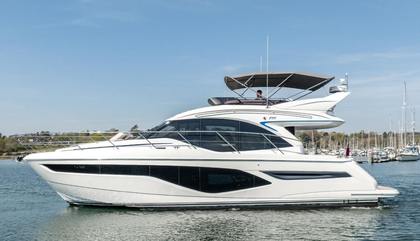


Princess
Princess F5016m | F50 (Mk2)
2025 M/Y noname
2 x Volvo Penta 600hp
Features: Aircon, Joystick
Southampton, Hampshire, United Kingdom
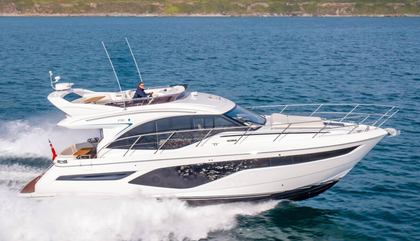
Princess
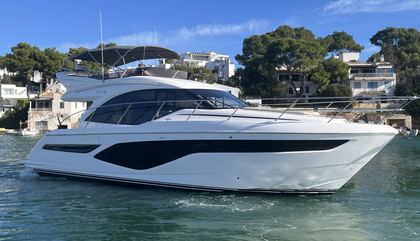
Princess F5016m | F50 (Mk2)
2024 M/Y Moose
2 x Volvo 600hp
Features: Joystick, Passerelle, Bow Thruster
Princess
Princess F5016m | F50 (Mk2)
2024 M/Y noname
2 x Volvo Penta 200hp
Features: Aircon, Joystick, Bow Thruster
Cala D'or, Mallorca, Spain

Princess
Princess F5016m | F50 (Mk2)
2024 M/Y noname
2 x Volvo 195hp
Features: Aircon, Joystick, Bow Thruster
Cala D'or, Mallorca, Spain
Princess
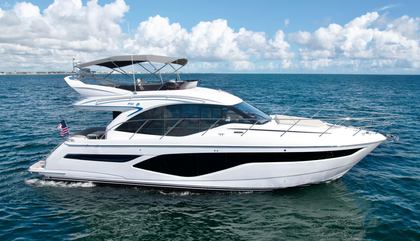
Princess F5016m | F50 (Mk2)
2023 M/Y noname
2 x Volvo Penta
Features: Aircon, Joystick, Passerelle, Bow Thruster
Essex Marina, United Kingdom
Princess
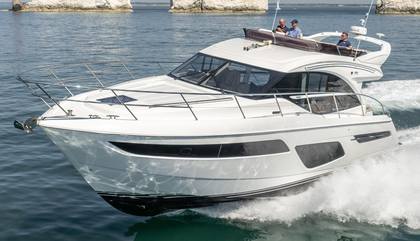
Princess F5016m | Princess F50 (Mk1)
2022 M/Y noname
2 x Volvo 600hp
Yarmouth, United Kingdom
Princess
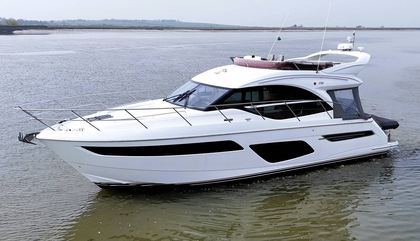
Princess F5016m | Princess F50 (Mk1)
2019 M/Y noname
2 x Volvo Penta 360hp
Features: Stabilisers, Joystick, Bow Thruster
Essex Marina, United Kingdom
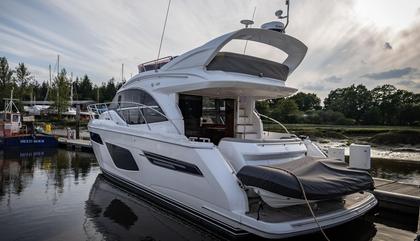
Princess
Princess F5016m | Princess F50 (Mk1)
2019 M/Y Thabisa
2 x Volvo 550hp
Features: Stabilisers, Joystick, Bow Thruster
Wallasea Island, United Kingdom
1 Not for sale to US residents while in US waters
2 Approx Price Conversion
Pictures shown are for illustration purposes only. Actual Yacht may vary due to client options.
LIVE: Used Princess F50 Yacht Prices
Find out how much a pre-owned Princess F50 may cost based upon the asking price of all yachts currently for sale globally according to YachtBuyer Market Watch & our sales listings.
Market Price Insight
YachtBuyer’s Market Watch reports that there are currently 8 Princess F50 yachts listed for sale globally, with prices spanning a wide range due to generational differences and features. First generation models (Mk1, 2019 - 2022) are the most affordable, priced between £730k and £1 million, with an average asking price of £856.7k. In contrast, the newest second generation models (Mk2, 2022 - 2025) are listed between £950k and £1.2 million, reflecting their advanced technology, more modern design, and newer construction. The arrival of the second generation model has influenced the pricing of first generation yachts, as their updated styling, features and cutting-edge appeal shift buyer preferences, resulting in more competitive pricing for older models. This trend highlights how innovation drives market dynamics for the F50 line.
Princess F50 (Mk1) Price
2019 - 2022
- Average Price £856.7k
- Price Range £730k - £1m
- Average Age 6 years
Princess F50 (Mk2) Price
2022 - 2025
- Average Price £1.1m
- Price Range £950k - £1.2m
- Average Age 2 years
Average asking price according to YachtBuyer data (8 yachts available). Prices may vary depending on specification, condition and extras.
Historic Price Comparison
Across its two generations, the Princess F50 has demonstrated noticeable price trends over the past three years, reflecting shifts in market demand, vessel condition, and features. The first generation models have the longest average time on the market, sitting for about 282 days, suggesting lower demand for the older features, and on average, they end up 3.25% lower than their initial asking price. With an average market duration of 175 days, the second generation models stand out for their shorter time on sale, likely due to their newer features and refreshed design, and on average, they end up 4.49% lower than their initial asking price.
Princess F50 Yacht Price Trends & Sales Graphs (3-Year Data)
Princess F50 (Mk1) Prices
2019 - 2022 Discontinued
Princess F50 (Mk2) Prices
2022 - 2025 Discontinued
F50 Model Overview & Timeline
Princess started development on the F50 in 2019. The second generation was launched in 2022 and saw its World Debut at Southampton International Boat Show later that year.
-
-
![Princess F50]()
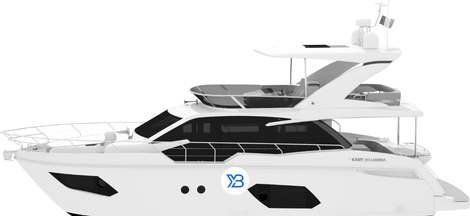
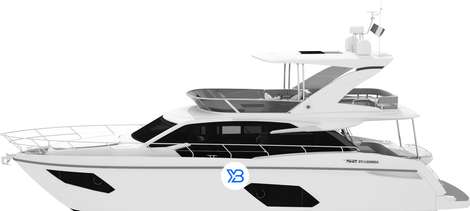
- Princess F50 - Mk1
- 2019 - 2022
- Discontinued
- More
- Length (LOA): 15.55m
- Beam: 4.34m
- Draft: 1.25m full load
- Speed: 36 Knots
- Full Details & Spec
-
-
- Length (LOA): 15.65m
- Beam: 4.3m
- Draft: 1.39m
- Speed: 34 Knots
- Full Details & Spec
Video Yacht Tours & Walkthroughs
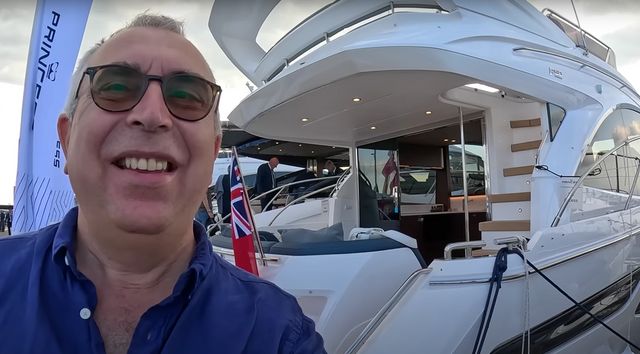
All-New Princess F50 Review (2023 Edition)

by Aquaholic
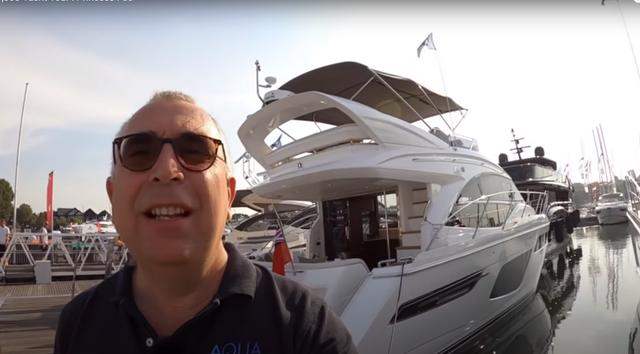
Princess F50 Review (2020 Edition)
by Aquaholic
Rivals & Head-to-Head
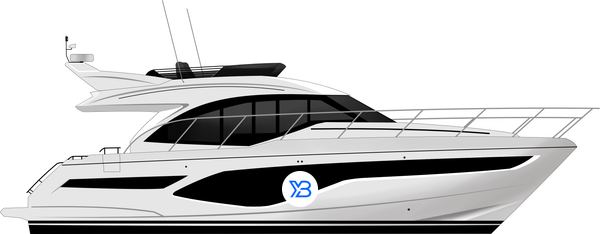
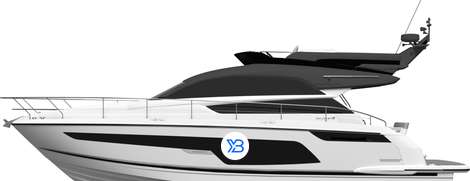
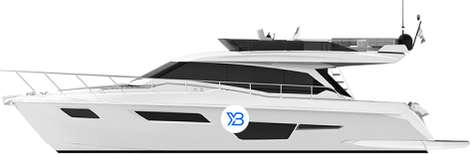
Princess F50 Rivals
We've hand-picked a series of similar and direct rival yachts help you identify the strengths of the F50 among its peers. These rivals include the Italian Azimut Fly 53 and the Italian Sessa Marine Fly54.
Head to Head
Visually compare everything from performance to layout for these closely matched models from competing builders.
Princess F50 News
Browse our collection of articles and commentary on the Princess F50 from Princess.
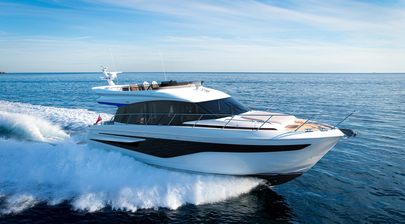
Princess Yachts Announces New F54 at Cannes Yachting Festival 2025
Princess Yachts is set to present the F54 at boot Düsseldorf 2027, replacing the F50 ...
10th September 2025

Princess S65 to make Australian debut at 2025 SCIBS
The Princess S65 motor yacht will make its Australian debut at the 2025 Sanctuary Cov...
20th May 2025
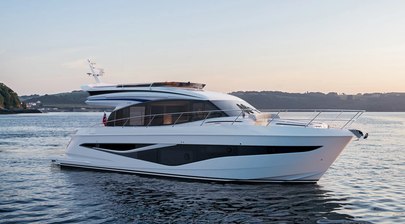
Princess F58 Flybridge Boat to Make World Premiere at Boot Dusseldorf 2025
At Boot Düsseldorf 2025, Princess Yachts will exhibit a six-model line-up, including ...
27th November 2024
Princess F50 FAQ
A selection of frequently asked questions from buyers
-
There are two generations of the F50. The older generation measures 15.55m. The current one is slightly larger and measures 15.65m.
-
There are two generations of the F50. The older generation has a top speed of 36 knots. The current one has a top speed of 34 knots.
-
The first F50 was launched in 2019 and was in production for 3 years. The current generation has been in production since 2022.
-
Depending on your layout choice, the F50 has two generations and they both have three cabins.
-
The F50 is a Flybridge
-
To start the process of buying your own Princess Yachts F50, please get in touch with us or contact a buyer’s broker.
We're committed to making yacht buying easier, so if you can't find what you're looking for just ask.