When measuring a yacht, many instinctively focus on its length, a straightforward metric. While longer yachts are often seen as bigger, length alone doesn’t fully capture a yacht’s true size. The world's biggest yachts deserve a more accurate measurement.
Yacht Gross Tonnage (GT) is a volume measurement that determines which international safety regulations apply to your vessel. The critical threshold is 500 GT, where yachts must comply with SOLAS, MARPOL, and ISM Code requirements, significantly increasing operational complexity and costs. This is a true measure of a yacht’s size, and arguably the most meaningful one.
Ultimately, Gross Tonnage reflects the actual internal volume of a yacht, offering a more accurate representation of its overall size and capacity, making it the best metric to assess the world's largest yachts.
What is Gross Tonnage (GT)?
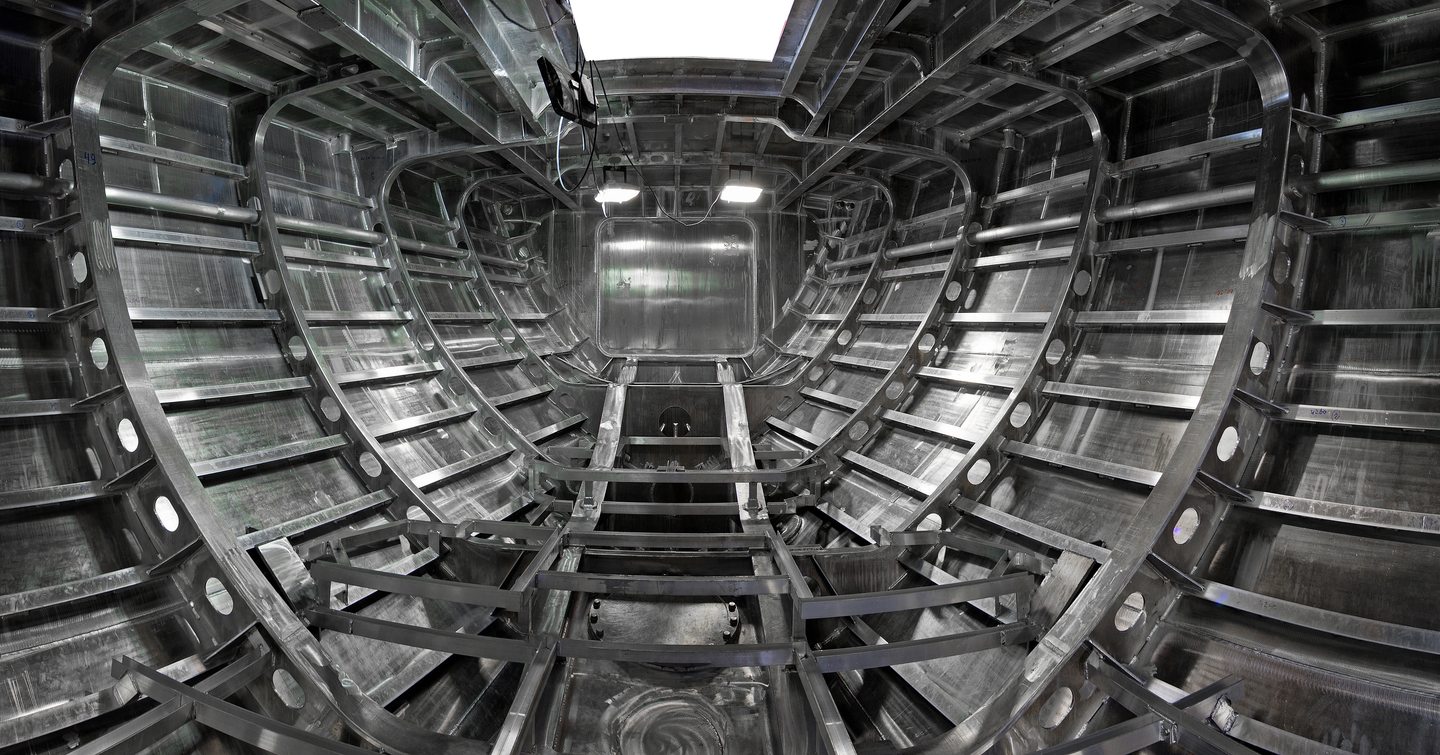
Gross Tonnage is a measure of the total internal volume of a yacht, including all enclosed spaces such as living areas, engine rooms, storage spaces, and more. Unlike length, which is a linear measurement, Gross Tonnage is a volumetric measure. It encompasses the entire space within the yacht’s hull and superstructure, giving a comprehensive sense of the yacht's size.
For example, two yachts might have the same length, but if one has a higher Gross Tonnage, it means that the yacht has more internal space - potentially offering more amenities, larger living areas, and greater levels of amenities and comfort. This makes Gross Tonnage an important factor in understanding the actual scale of a yacht.
The YB100 - The True Measure of the World's Biggest Yachts
Length Overall (LOA) is the most familiar way to measure a yacht, but it only tells you how long the yacht is. It doesn't account for internal volume, which is often a much better indicator of the space, comfort and amenities available on board. That's why YachtBuyer publishes two rankings of the world's biggest yachts: the Top100, ranked by Length Overall, and the YachtBuyer YB100, ranked by Gross Tonnage to reflect a yacht's true size.
Modern yacht design has made this distinction even more important. A shorter yacht with a wider beam and additional decks can have considerably more usable space than a longer, slimmer yacht. Gross Tonnage measures this enclosed internal volume, making it the most meaningful way to compare a yacht's true size.
That's why the YachtBuyer YB100 ranks the world's biggest yachts by Gross Tonnage rather than Length Overall, providing a more accurate comparison of their true size. Whether you're browsing the Top100 or the YB100, you can compare any two yachts side by side using YachtBuyer's comparison tool to see how Length Overall, Gross Tonnage, beam, accommodation and performance differ.
The wider industry takes the same approach. Shipyards frequently price custom builds by Gross Tonnage because it better reflects the complexity, materials and engineering involved, reinforcing Gross Tonnage as the most relevant measure of a yacht's true scale.
Case Studies: NORD vs. YAS
Two examples that highlight the impact of Gross Tonnage are NORD and YAS.
NORD, a Lürssen yacht launched in 2021, and YAS, a conversion yacht built by ADM Shipyard from a 1981 original build and launched as a superyacht in 2021, are both approximately 141m in length. However, the difference in Gross Tonnage between the two is striking: NORD has a GT of 10,154, more than double that of YAS, which has a GT of 5,002.
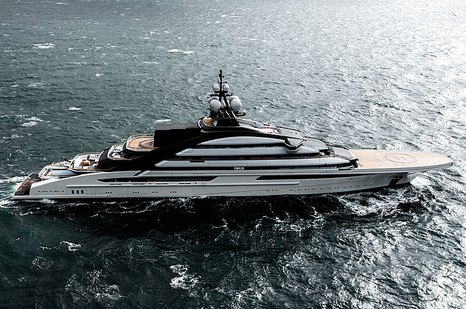
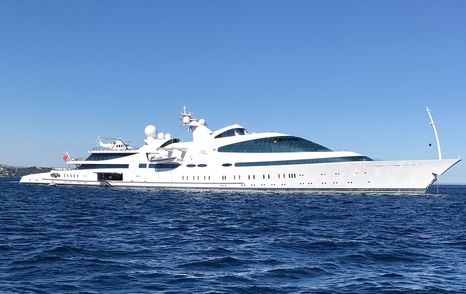
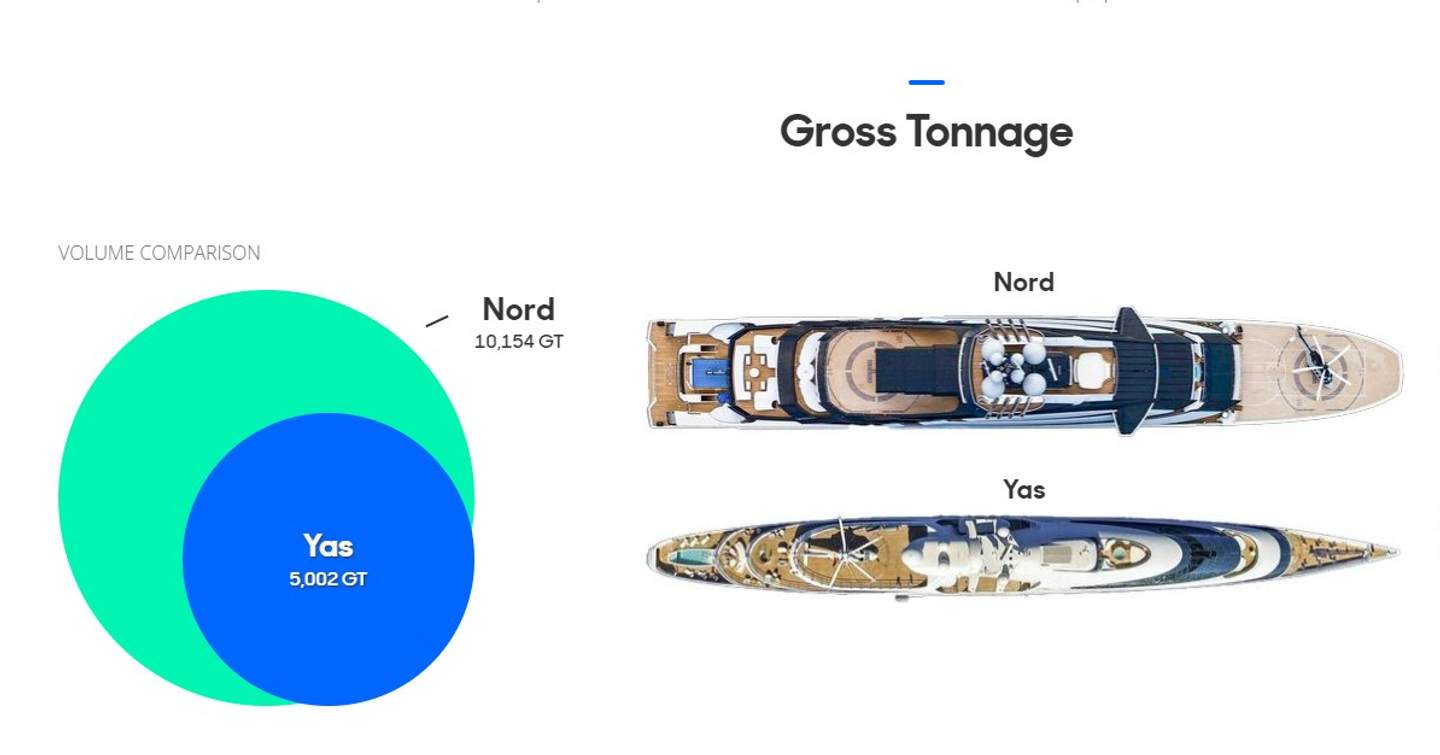
This stark contrast underscores that length alone is not an accurate measure of a yacht's size or volume. NORD, with its multi-deck design, is a true behemoth, carrying 36 guests and 42 crew, with a focus on expansive spaces and luxury. In comparison, YAS accommodates up to 60 guests and 56 crew in what is effectively a much smaller yacht by volume.
Compare NORD and YAS side by side via our YachtBuyer Intelligence.
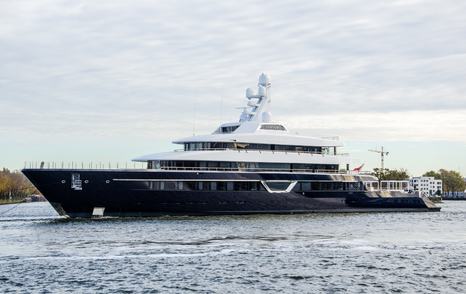
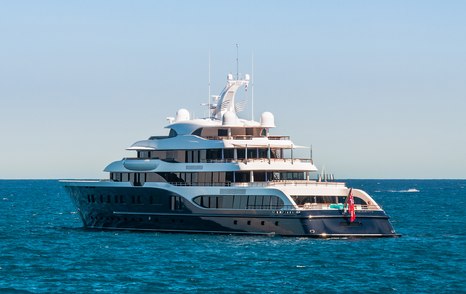
Three years apart, Feadship delivered two impressive custom yachts, LONIAN (2018) and SYMPHONY (2015). Whilst both custom yachts measure an internal volume of 3,000GT, SYMPHONY measures 102m in length overall (LOA), whereas LONIAN is 87m.
Compare LONIAN and SYMPHONY in detail on YachtBuyer.
It's as Much About the Vertical ...
Yachts with similar lengths can have vastly different Gross Tonnages - it's about the vertical space as much as the horizontal.
Multi-deck yachts have more enclosed spaces spread across several levels, which directly increases the Gross Tonnage. A yacht with more or higher decks will naturally have a larger internal volume, boosting its Gross Tonnage significantly. The term "enclosed" is crucial here because Gross Tonnage is calculated based on the volume of all enclosed spaces within the yacht.
Returning to the NORD and YAS comparison, NORD's high internal volume of 10,154GT is a result of its multiple decks, extensive enclosed interior spaces, and the complexity of its design. This includes large, luxurious living areas, guest suites, and crew quarters spread across several levels. In contrast, YAS, despite having a similar length, has a lower Gross Tonnage because she likely has fewer enclosed decks or less internal volume overall.
Generally, a flybridge yacht has a higher Gross Tonnage compared to a sportsbridge yacht of the same length due to its additional upper deck, which increases enclosed internal volume.
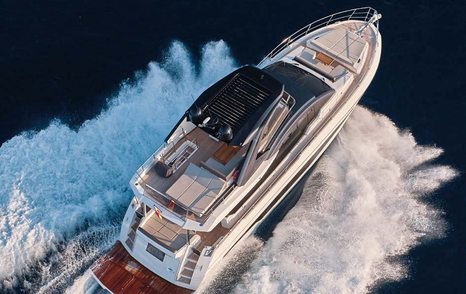
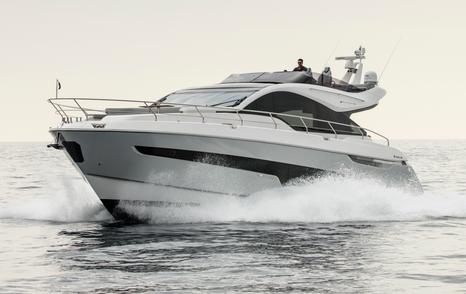
For instance, the Astondoa 66 Flybridge with an internal volume of approximately 86GT, benefits from its multi-deck design and spacious flybridge, contributing to a larger internal volume. Conversely, the Fairline Phantom 65 sportsbridge has an internal volume of around 52GT. Its more streamlined and open design, featuring a smaller sportsbridge, emphasizes open-air spaces over enclosed volume, resulting in a lower Gross Tonnage.
Why Are So Many Superyachts Exactly 499 GT?
One of the most important Gross Tonnage thresholds is 500GT. Once a yacht reaches or exceeds this figure, it must comply with additional international regulations, including SOLAS (Safety of Life at Sea), MARPOL (Marine Pollution) and the International Safety Management (ISM) Code. These requirements increase the complexity of a yacht's design, construction and operation.
To avoid these additional regulatory requirements, many builders deliberately design yachts to come in just below the limit at 499GT. This allows owners to maximise interior volume while avoiding the higher costs and operational obligations associated with crossing the 500GT threshold.
As a result, 499GT has become one of the most common targets in modern superyacht design. Notable examples include the 50m superyacht CONTIGO (ex ALMAX) by Sanlorenzo, the 50m ALP by Heesen, and the 42m SEAWOLF X by Rossinavi, all of which were designed to maximise onboard space while remaining below this significant regulatory benchmark.
The Importance of GT in Yacht Design and Purchase
For yacht buyers, Gross Tonnage is a critical consideration. When evaluating potential purchases, knowing the Gross Tonnage of a yacht can help set expectations for the onboard experience. A higher Gross Tonnage generally means more space for amenities, larger cabins, and greater overall comfort.

Gross Tonnage is often a better indicator of the yacht's capabilities and the lifestyle it offers. Yachts with a higher Gross Tonnage usually have larger crew accommodations, more storage for water toys and tenders, and more substantial mechanical spaces, which can enhance both luxury and operational efficiency.
How is GT Calculated?
Gross Tonnage (GT) is calculated using a formula established by the International Maritime Organization (IMO).
Volume Measurement:
The yacht’s internal volume is measured in cubic meters, including all enclosed spaces like living areas, storage, and machinery rooms. This volume is taken from the internal hull and superstructure.
Gross Tonnage Formula:
GT = K x V
K is a constant based on the volume of the yacht, and V is the total internal volume in cubic meters.
The constant K varies depending on the yacht’s size and design, as defined by the IMO's tonnage regulations.
Calculation Standards:
The GT calculation follows the guidelines set out in the International Convention on Tonnage Measurement of Ships, 1969 (TONNAGE Convention). These standards ensure consistency in how Gross Tonnage is calculated and reported across different vessels.
By providing a standardized measure of internal volume, Gross Tonnage supports consistent safety and operational practices across the maritime industry.
Design and Build to GT, not LOA
When designing and building a yacht, focusing on Gross Tonnage rather than just length has several cost implications. Gross Tonnage, which measures the total internal volume, affects material and construction expenses, as larger internal spaces require more materials and more complex construction techniques.
The need to comply with more stringent regulations for larger yachts with higher Gross Tonnage also contributes to higher costs for certifications and safety equipment. Additionally, the design of yachts with a higher Gross Tonnage often includes more luxurious interiors and amenities.
Overall, while length provides a basic measure of a yacht’s size, Gross Tonnage offers a more comprehensive view that impacts material, labor, regulatory, and operational costs, reflecting the greater complexity and luxury associated with larger internal volumes.
Summary
| Term | Definition | Key Details |
|---|---|---|
| Gross Tonnage (GT) | A measure of a yacht’s internal volume | Includes all enclosed spaces (cabins, engine room, bridge, etc.) |
| GT vs. Displacement | GT = Volume; Displacement = Weight | GT measures internal capacity, not how heavy the yacht is |
| 500 GT Threshold | Major regulatory benchmark | Triggers stricter safety, crew, and compliance requirements |
| GT vs. GRT | GRT = outdated; GT = current standard | GT uses IMO 1969 formula based on volume (GT = K × V) |
| Impact on Ownership | Higher GT = more operating rules and expenses | Affects crew certifications, insurance, port fees, and flag rules |
| Design Impact | Same yacht length can have different GT | Beam, deck count, and internal layout affect GT rating |
In the yachting world, size does matter - but it’s not just about length. Gross Tonnage provides a more accurate measure of a yacht’s true size, reflecting the actual volume and, by extension, the potential for luxury and comfort.
Ready to find your dream yacht and put Gross Tonnage into context? View all new and used superyachts for sale, tracked in real time by YachtBuyer MarketWatch. We scan the entire market to ensure access to all genuine listings, saving you time. Alternatively, you can view all other yachts for sale.