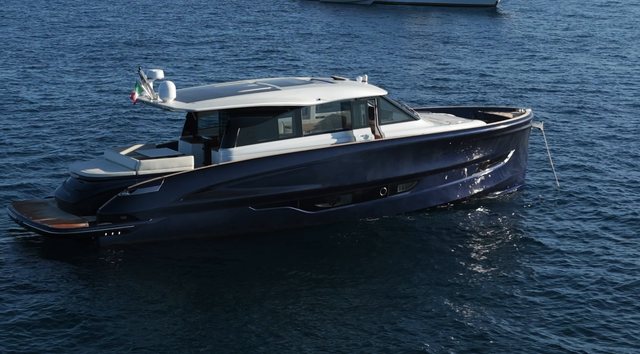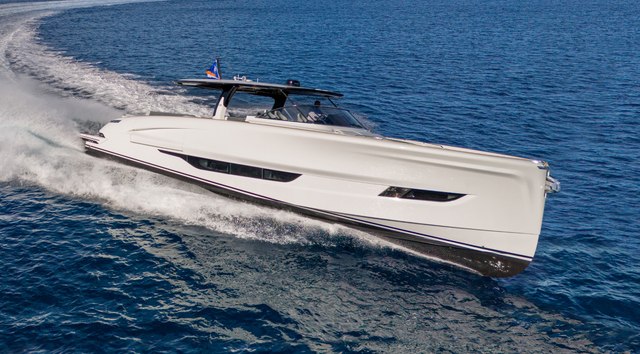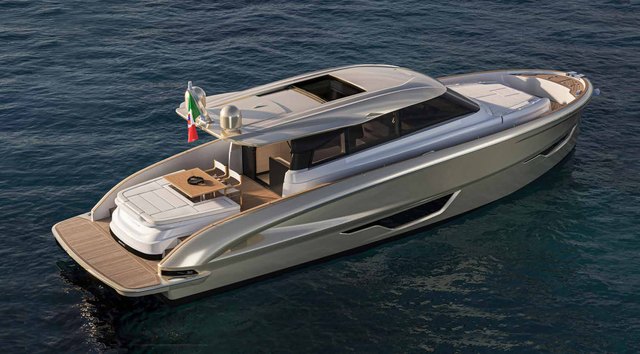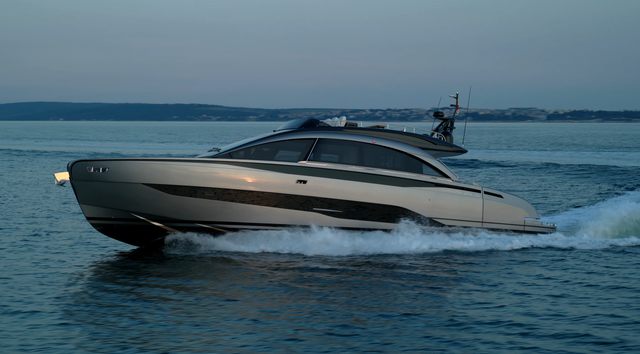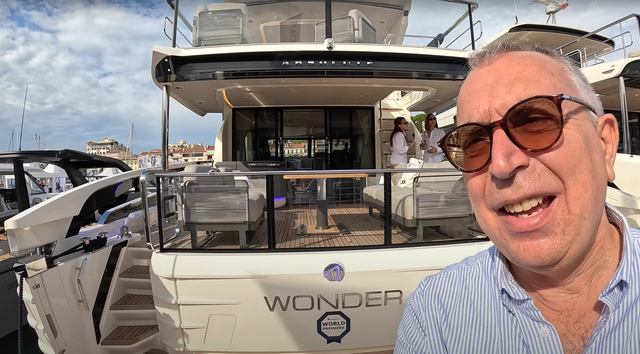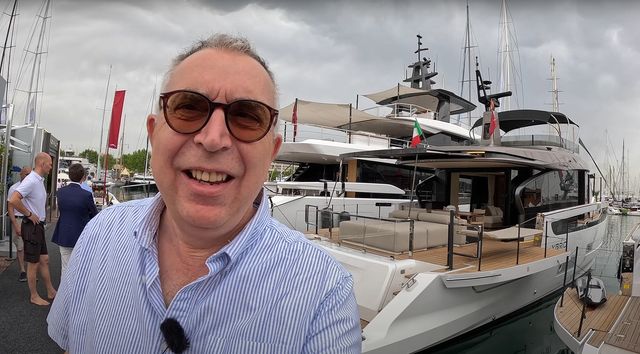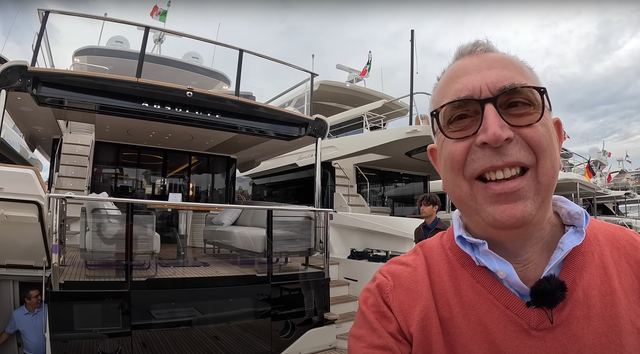
The Solaris Power 70 Long Range is the largest and most ambitious boat the yard has built. It comes with a garage that fits a 4m (13.1ft) tender, a range of close to 900nm, and a cruising speed of 20 knots. It is a shift for Solaris - from coupés and open dayboats into long-distance cruising.
The layout has a few surprises, too. One of them is the balcony, which isn't aft, where most builders put it, but amidships, set into the saloon so it opens out into the middle of the boat. On this particular boat - hull #1 - there's a twist in store.
Review Video
The 70 Long Range is the largest powerboat Solaris has built and the first in a new series focused on extended cruising. It moves the yard beyond the open and coupé-style models between 40 and 60 feet and takes a different approach to the similarly sized 70 Grand Coupé. This is a higher, heavier, more capable platform, shaped for long passages and longer stays aboard.
The hull is tall, with a fine entry and strong flare through the bow, with a high freeboard from the stem to the stern. The superstructure is near-vertical, and the windscreen follows the same upright line. The beam measures 5.99m (19.7ft), which puts it ahead of most rivals and adds real space across all three decks.
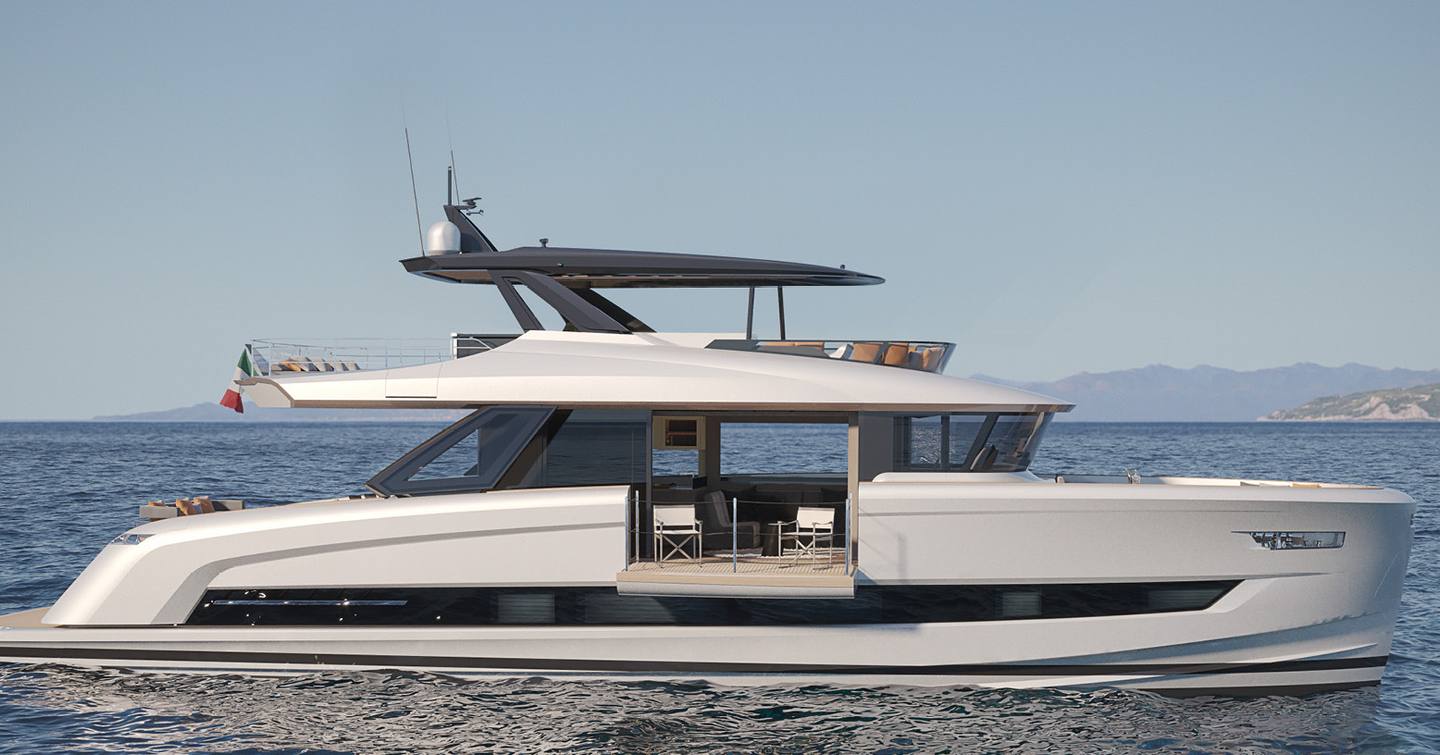
The hull shape is built for efficiency and stability at both displacement and planing speeds. Hull #1 was fitted with Volvo Penta IPS1350s (1,000hp), the fuel tank holds 4,100L (1,083 US gal), and it was designed to cruise between 16 and 20 knots with a top speed of around 25 knots. At 12 knots, the yard quotes a range of 900nm.
Construction style is consistent with the rest of the range. The hull and deck are resin-infused with composite reinforcements. Structural bulkheads are glassed in. The tender garage is moulded into the hull and opens onto a fixed platform section. A hi-lo platform sits behind it to launch a 4m (13.1ft) tender on a roller cradle. The passerelle and shore gear are stored inside the stylish steps and covered when not in use.
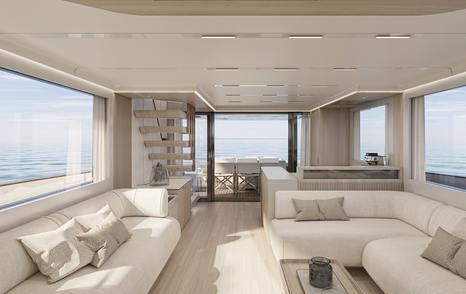
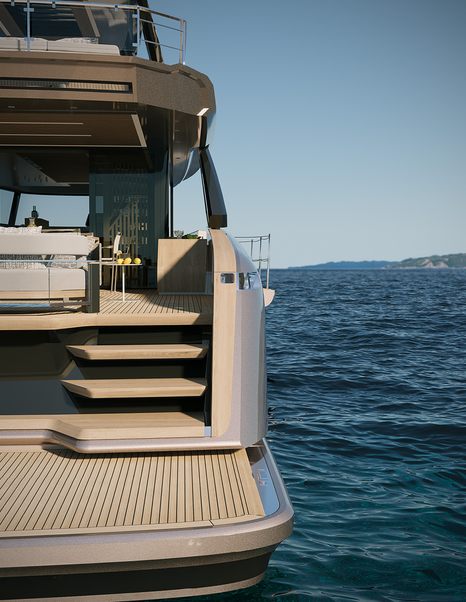
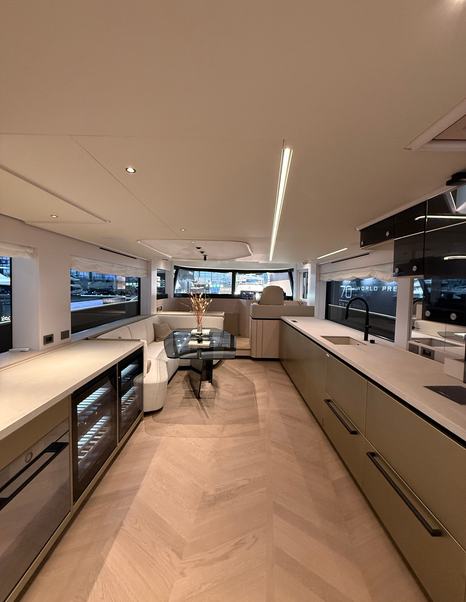
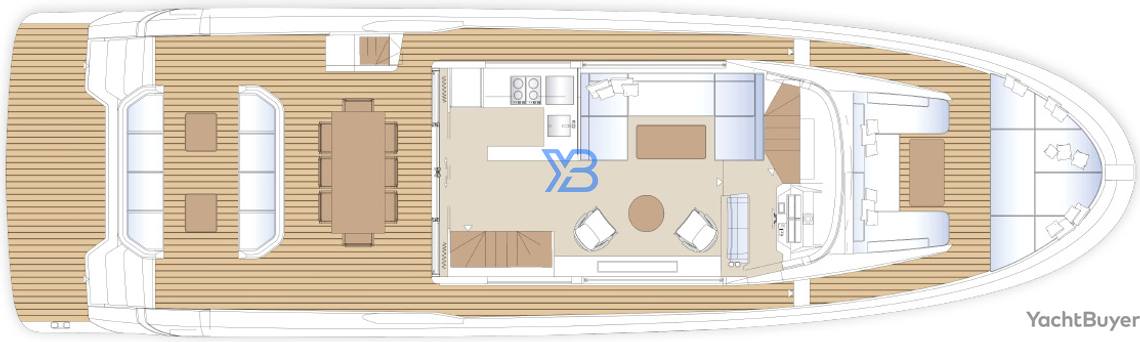
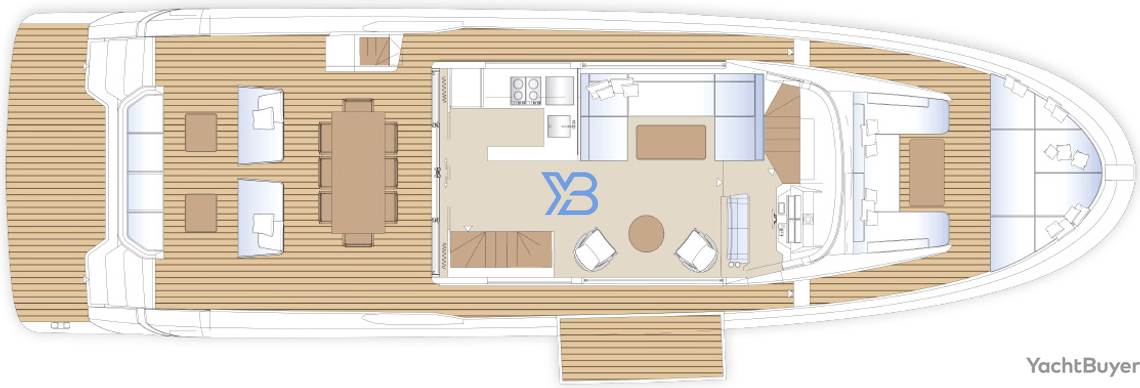
The boat we saw, which was hull #1, had a totally customised galley, a major change from the standard spec. Normally, Solaris offers a folding balcony on the starboard side of the saloon, set amidships to open up the view and bring air straight into the centre of the boat.
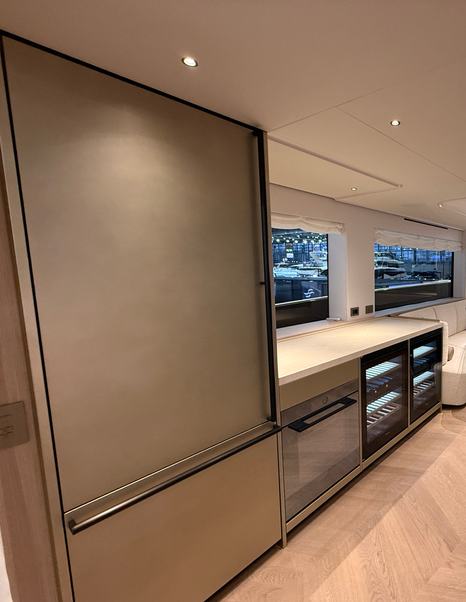
On this build, the owner has opted to delete that completely. In its place is a Boffi galley, drawn to their spec, with more cold storage and more workspace. Though disappointing for Solaris that the first boat doesn't have the star feature, the bespoke galley does demonstrate Solaris's willingness to customise at this level.
In this guise, the volume of cold storage is high for a boat this size. There is a full-height fridge-freezer against the aft bulkhead, two large wine fridges to starboard, and four cold drawers under the counter. There are some lovely touches, such as the induction hob being integrated into the countertop, but the standard galley arrangement is likely to suit most buyers more.
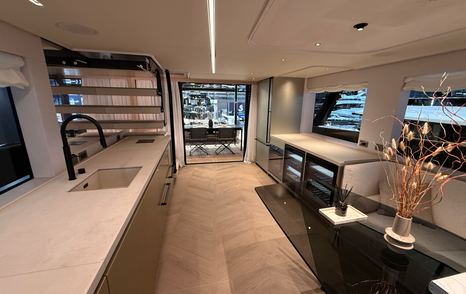
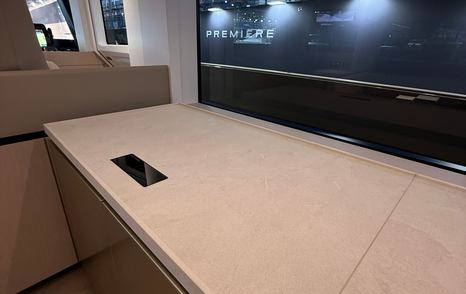
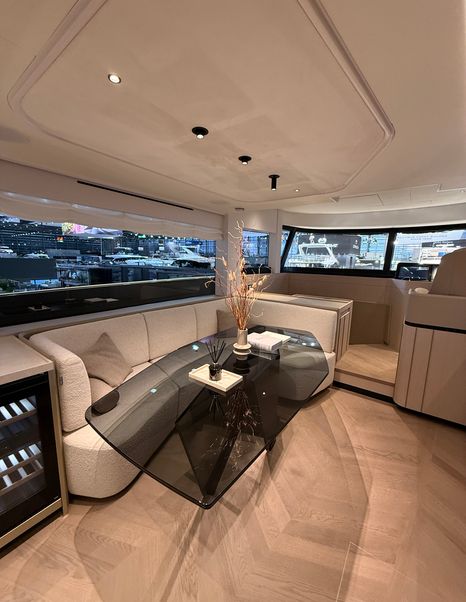
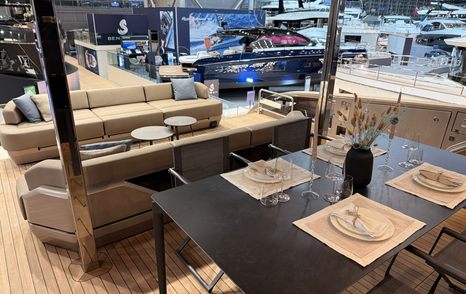
With the galley forward and no balcony built in, the seating space here is reduced. There is an L-shaped sofa along the port side with a glass table, but that suits this owner, who plans to use the cockpit as the main dining space.
Drop-down windows are fitted to both sides, so there is cross-ventilation when needed, and you still get that nice connection to the outside, even without the optional balcony in place.
Owner's Cabin
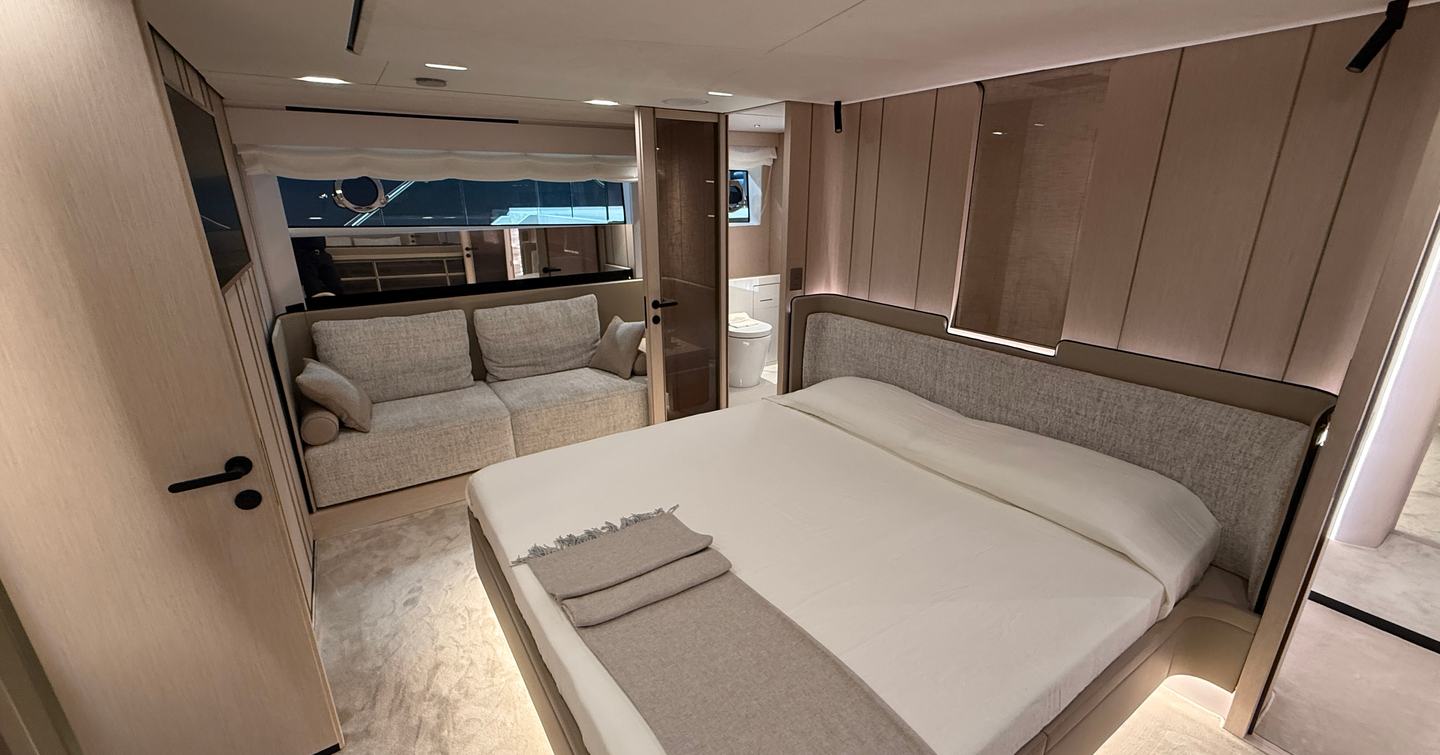
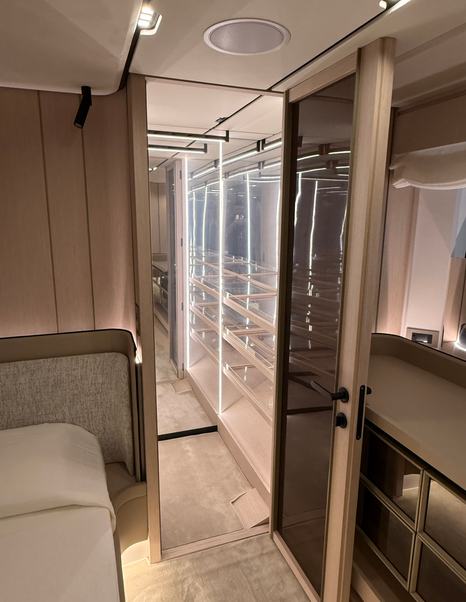
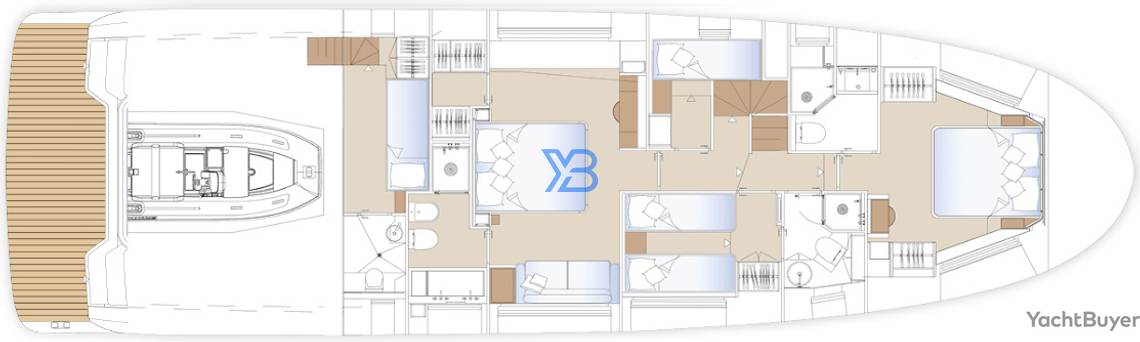
The owner’s cabin sits amidships and runs full beam. The floor is flat from end to end, with no steps or raised sections, and headroom is strong across the space, with enough clearance on either side of the bed to move around easily. The cabin has a good mix of seating, storage and built-in furniture.
The bed is set on the centreline with access on both sides. To port, there’s a sofa tucked below the window, while the starboard side has a long bureau with a mirror above. The finishes follow the same tone as the main deck, with a mix of light wood, clean lines and soft lighting.
Behind the forward bulkhead, there’s a walk-in wardrobe. The door opens onto a space that feels like a cloakroom, with full-height mirrors and hooks built into the frame. Storage continues throughout the cabin, with drawers under the bed and lockers worked into the sides.
Natural light comes in through hull windows on both sides. There are opening portholes for ventilation, and the mirrors inside help bounce the light around.
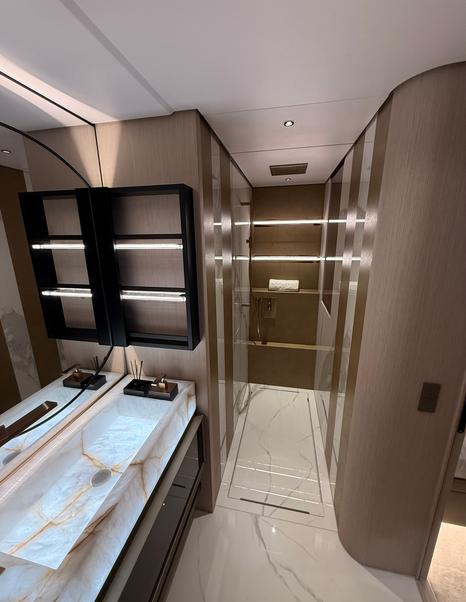
The ensuite bathroom runs across the beam behind the bed. There’s no door to the shower, which helps with the feeling of space, though it's a decent space anyway. The cubicle stretches across to the port side and is fitted with a rain showerhead above. On the starboard side, the sink sits below a backlit panel of onyx, with drawer storage beneath.
There's a really lovely use of materials here, from the sink to the bathroom fittings and mirrors throughout the space. It feels quite special.
VIP and Guest Cabins
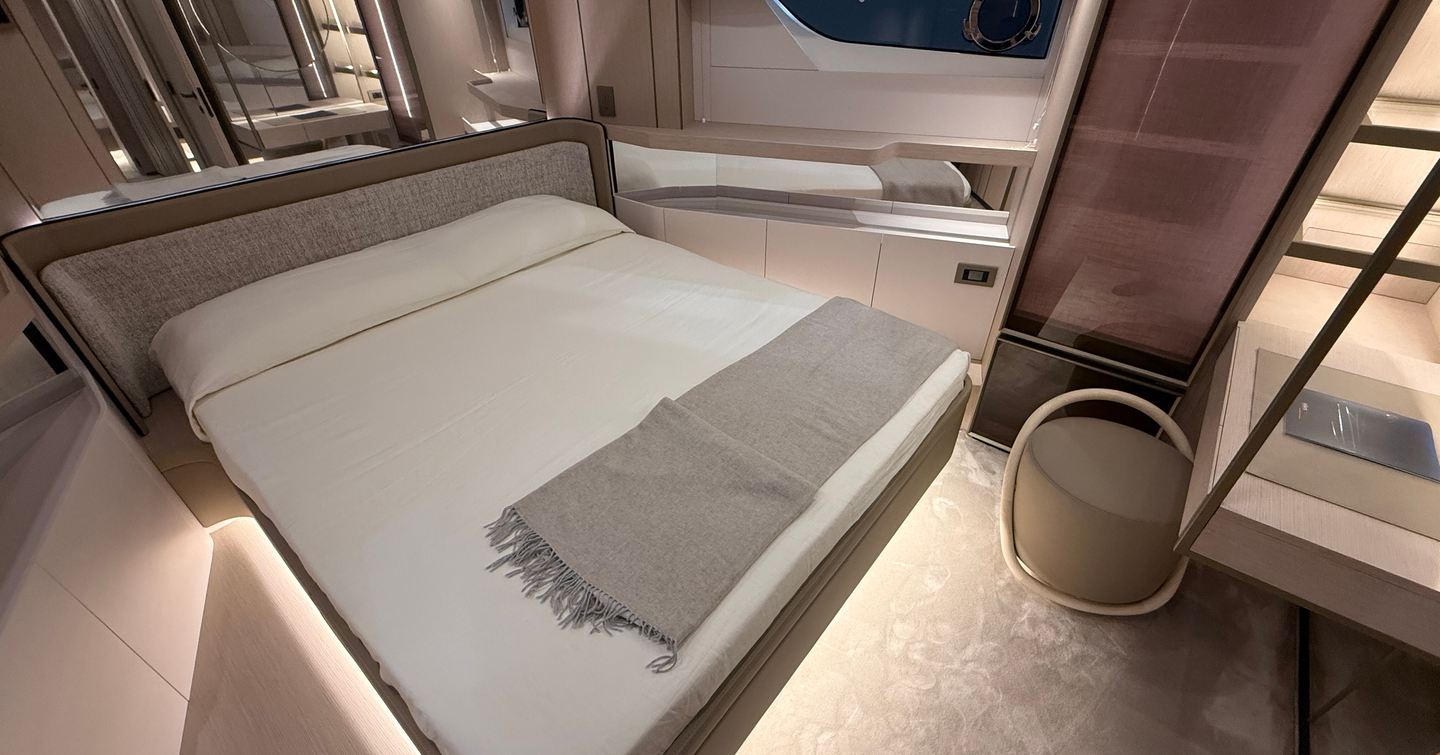
The VIP cabin sits right forward with a large island bed set down the centreline. There’s access on both sides and enough room to move around without squeezing past the bulkheads. The layout is familiar for a boat of this size, but it’s done well. Storage is solid, with a full-height wardrobe to port and a proper bureau to starboard. The bed is at a good height and sits in line with the windows.
There’s no overhead hatch, so light comes through the hull windows on both sides. These include opening sections for natural ventilation. The cabin uses mirrors to reflect light into the space, and the lighting itself is soft and subtle. The ensuite bathroom is private, with a separate shower cubicle tucked to port and the toilet behind the door. The layout mirrors the owner’s bathroom aft, just slightly smaller in scale. There’s the same onyx panel behind the sink and the same built-in tap and soap dispenser.
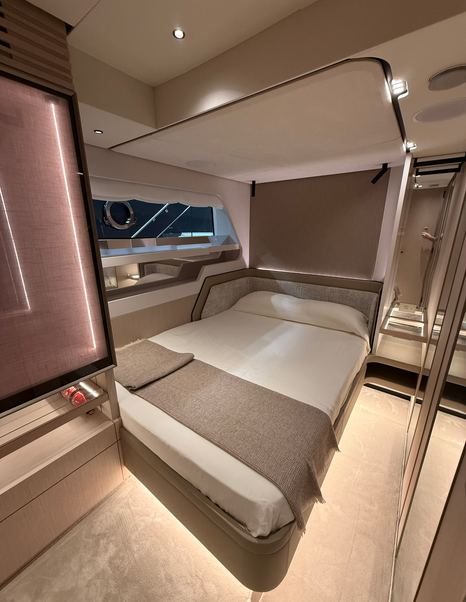
The double guest cabin sits to starboard, just aft of the VIP. The bed is set into the corner, so access is only clear on one side. The person on the inside has to climb over if they need to get up in the night. That said, headroom is decent, and there’s enough width to move past the foot of the bed. There’s a clever fold-up top at the end of the mattress that turns into a desk or dressing table. It’s not a big cabin, but the space they have has been used well.
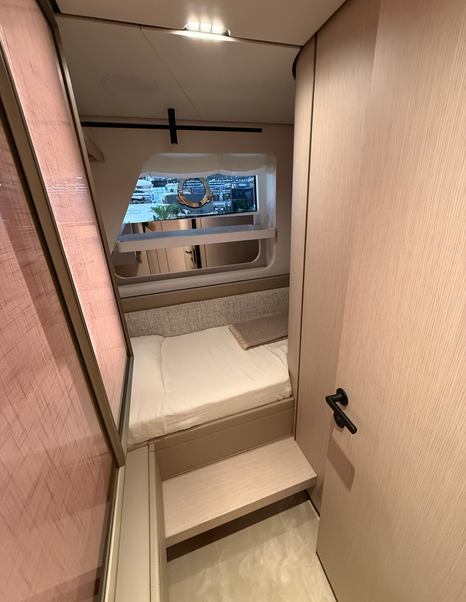
The single cabin is on the port side and best suited to children. It gets very narrow down towards the foot of the bed, but headroom is good enough near the door. There’s a decent locker and a full-size bedside table. The porthole opens, and there’s climate control like the rest of the lower deck. The berth is fixed in place, and there’s no extra bunk or slide-out, which is a compromise in this sector. Most of this boat's rivals have four cabins on the lower with two berths each, even if the 4th cabin is a pair of bunks. Only being able to sleep seven is a bit of a black mark.
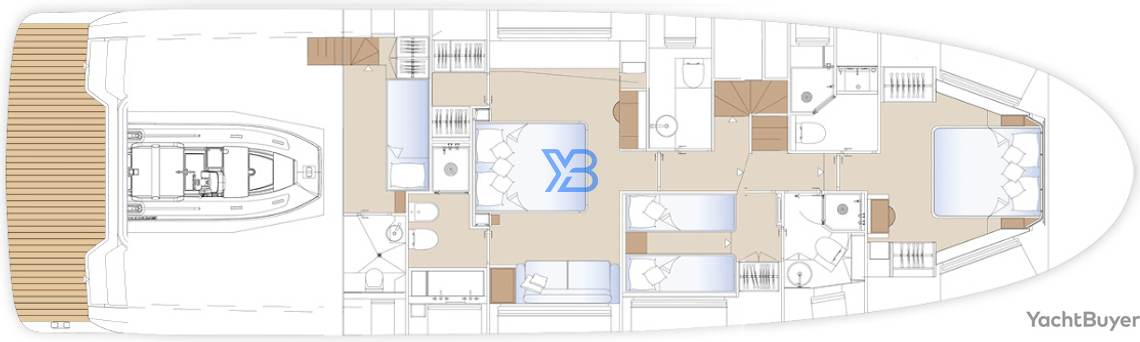
The dayhead sits between the twin and single cabins. This bathroom is shared when the VIP and owner’s cabins are in use. It has a full-size shower and proper headroom, with the same fittings and finish as the other bathrooms on board.
Crew Area and Access
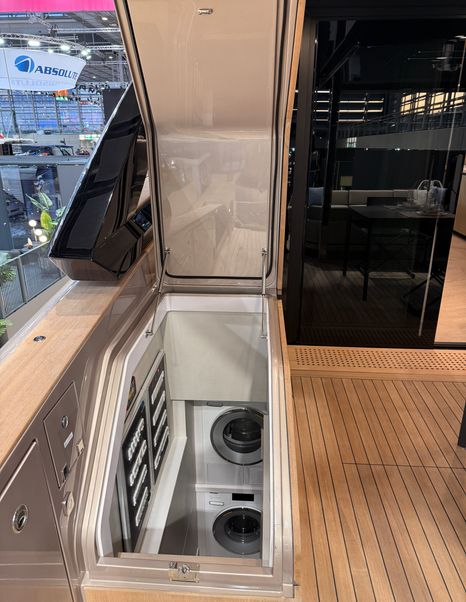
The main crew hatch in the cockpit opens onto a proper stairwell, so access is pretty good. The engine room hatch is tighter, with a steeper ladder and less room to move.
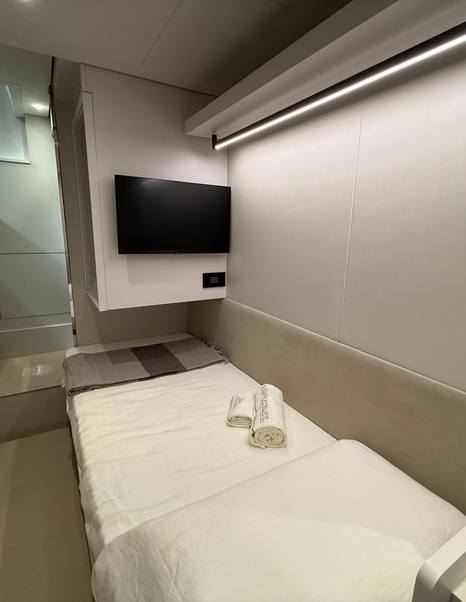
At the bottom of the steps, there’s a washer and dryer mounted on the starboard side. The crew cabin itself sits forward and has a single berth, a wardrobe and a wall-mounted TV. The shower is in its own cubicle, tucked into the corner. The sink is outside the bathroom, set into a panel near the foot of the bed. There’s no mess area or seating down here - it’s just a place to sleep and wash.
This boat sits right on the edge of needing crew. Some owners will run it themselves, but others will bring a skipper or deckhand, especially on longer passages or when chartered. Either way, the space is there. It’s simple, clean and separate from the guest areas, and it adds flexibility without eating into the rest of the layout.
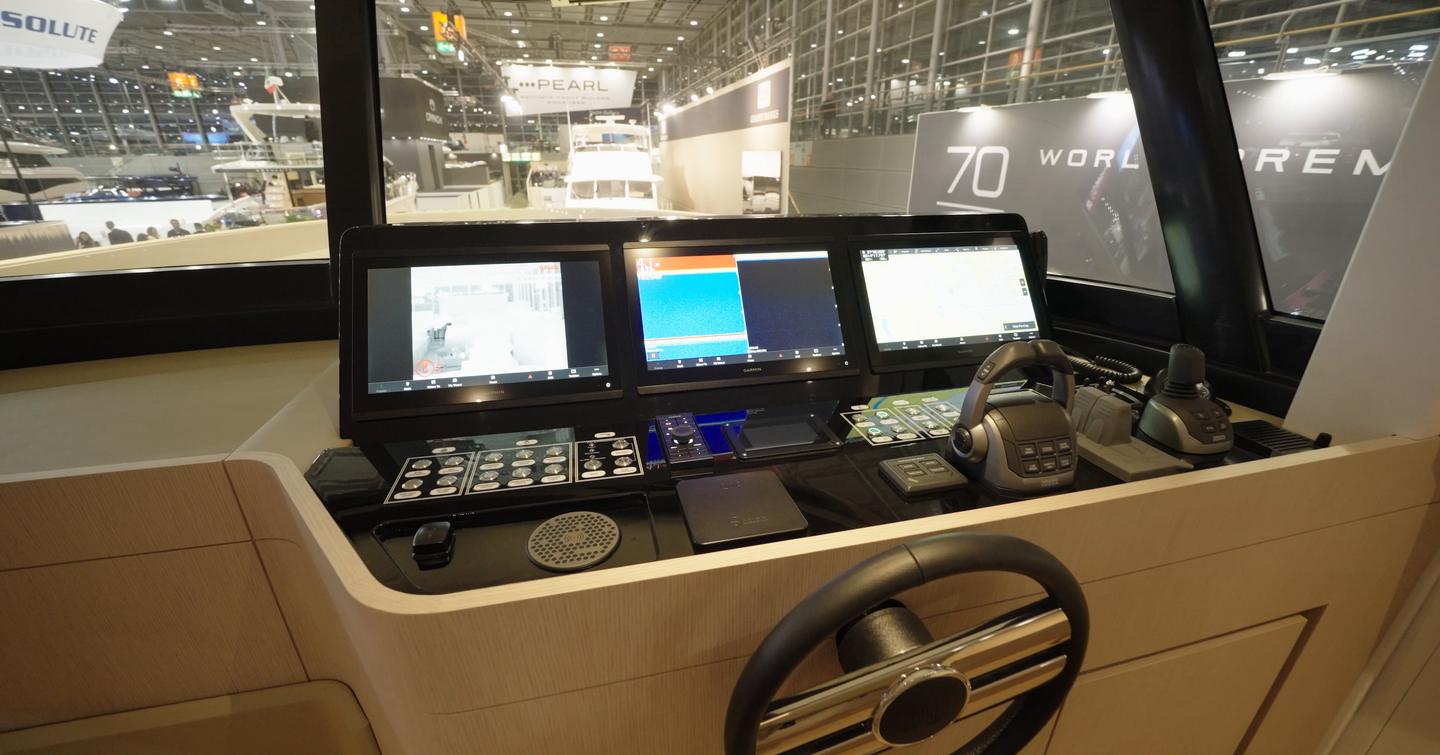
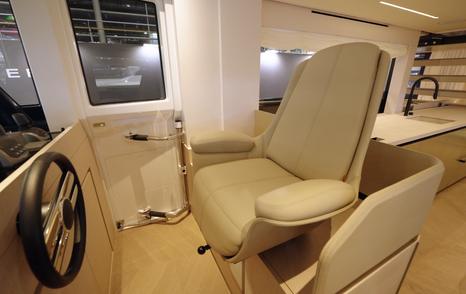
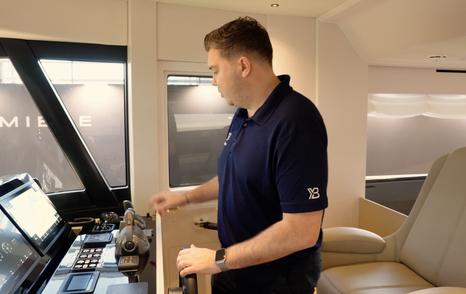
The lower helm is forward on the starboard side. The seat is set well back from the dash and sorely lacking a footrest, so standing here ends up being the more natural driving position. There is a dedicated door to the side deck, so the skipper can step out quickly for lines or get a better view when coming in. You can helm with the door open, one hand on the joystick, and your head clear of the superstructure.
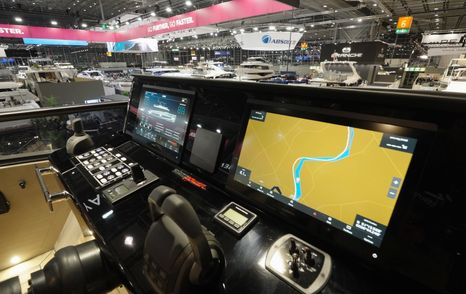
The dash is clean and nicely designed. There are twin MFDs set in a black gloss panel, with a rotary controller to starboard as a backup to the touch screens. The IPS joystick sits close to hand on the right, with a separate panel for the bow thruster and fixed switches for regularly used functions. There is space for a second seat to port if needed, and it would be an addition we'd go for as it fills the space nicely and gives you another forward-facing seat.
Visibility is good thanks to the upright windscreen and narrow mullions. Looking aft, the sightline runs through the saloon to the cockpit and out to the platform, so there’s no major blind spot inside.
The third station and the flybridge helm are better for close-quarters work. But here in the lower helm, it works best when the boat is cruising for longer jaunts, especially night passages, where you have all of the information being fed to you by multiple MFDs.
Upper Helm
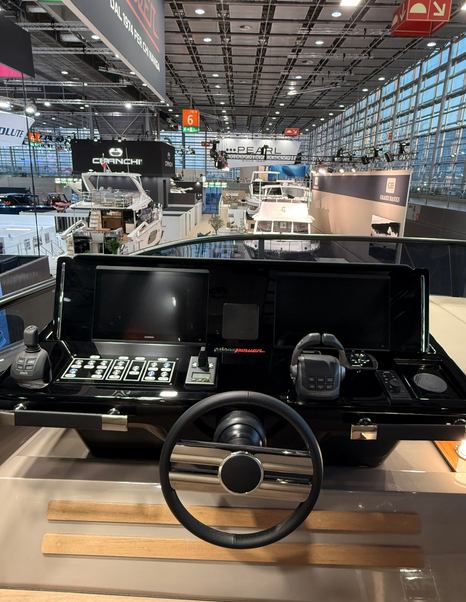
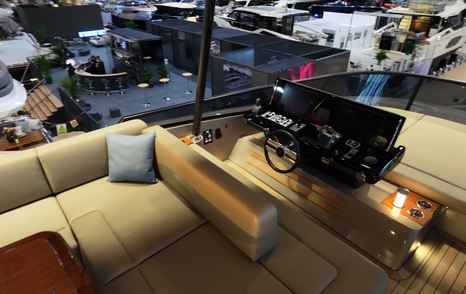
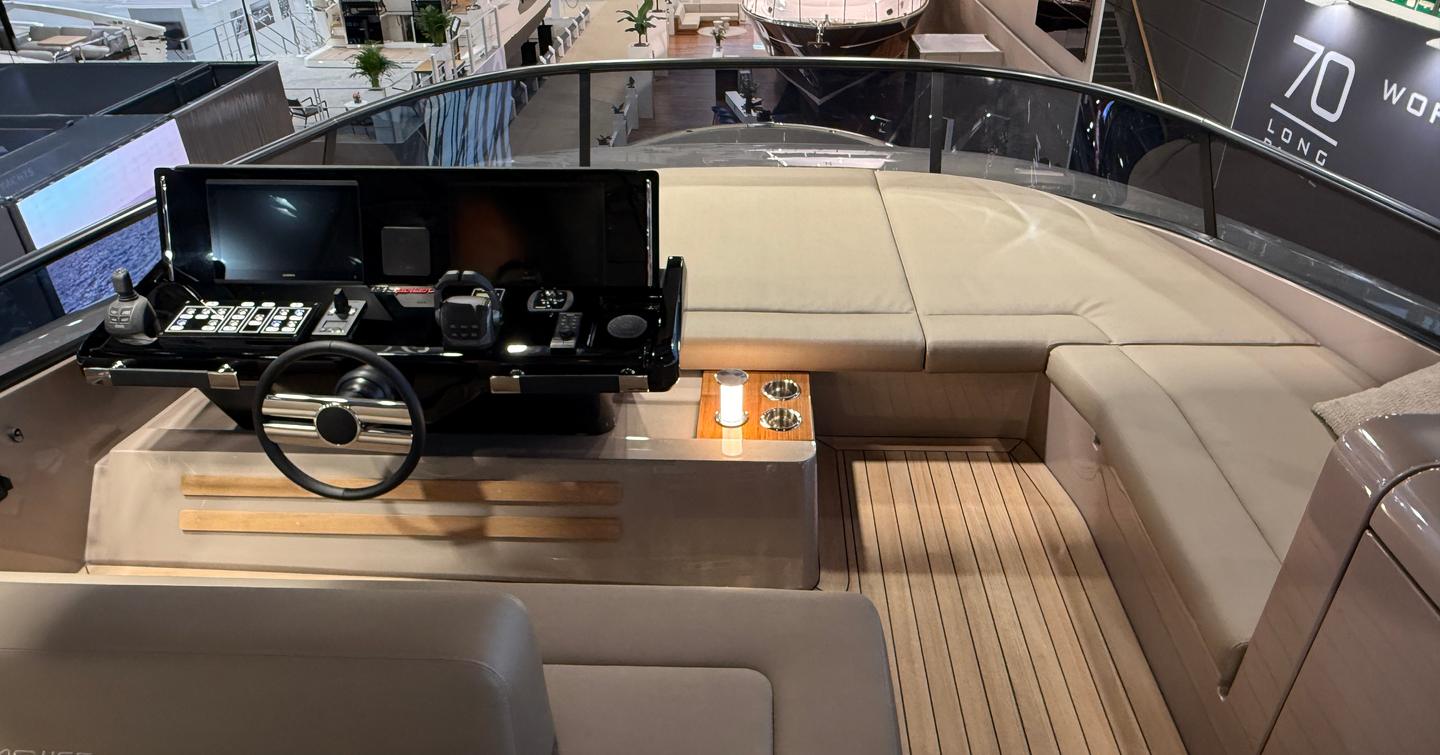
The upper helm is built into the forward end of the flybridge, set low behind the windscreen and linked directly to the seating area. The seat is fixed and wide enough for two, though it sits low behind the dash with a small amount of adjustment at the wheel. There is nothing at the base. You can stand if you need to, but the throttles and the wheel are set too low to make that comfortable for long periods.
The windscreen is high enough to deflect air but not so tall that it blocks the line of sight. Sightlines over the bow are good, so you can keep watch and talk to guests at the same time. But you are a long way from the stern, so for close-quarters work this is not the position you would use. The third station or lower helm is better suited to docking.
The dash mirrors the layout below. There are twin MFDs with a rotary controller, and the IPS joystick sits to starboard. The panel is gloss black, a material that so many builders use, but it's bad for glare and scratches easily, so it's not a great option in my opinion.
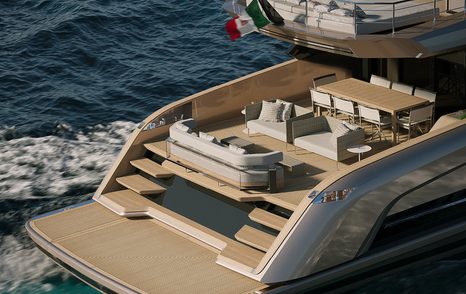
The aft platform is split into two sections, with a fixed part forward and a hydraulic lift at the aft end. The upper section stays level when the lower one drops, so you can still step aboard without needing to raise the lift. Teak runs straight from the cockpit down to the transom, which is a really nice effect that draws you up into the cockpit.
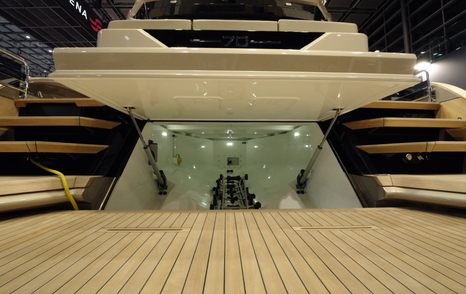
The garage sits just ahead of the platform, and the hatch lifts on a shallow angle to reveal space for a 4m (13.1ft) tender stored lengthways on runners. The cradle aligns with the platform height, so the tender can roll straight out.
There are steps on both sides of the garage, and they neatly hide some of the equipment back here. The top step on the port side holds the passerelle, which slides out and locks in place. On the starboard side, there is a washdown, a pull-out shower and a connection for a removable overhead shower socket. Shore power sockets sit behind the same panel, so everything is nicely hidden when not in use.
With the platform lowered and the tender launched, the aft end becomes a great space for guests to enjoy some time in the water.
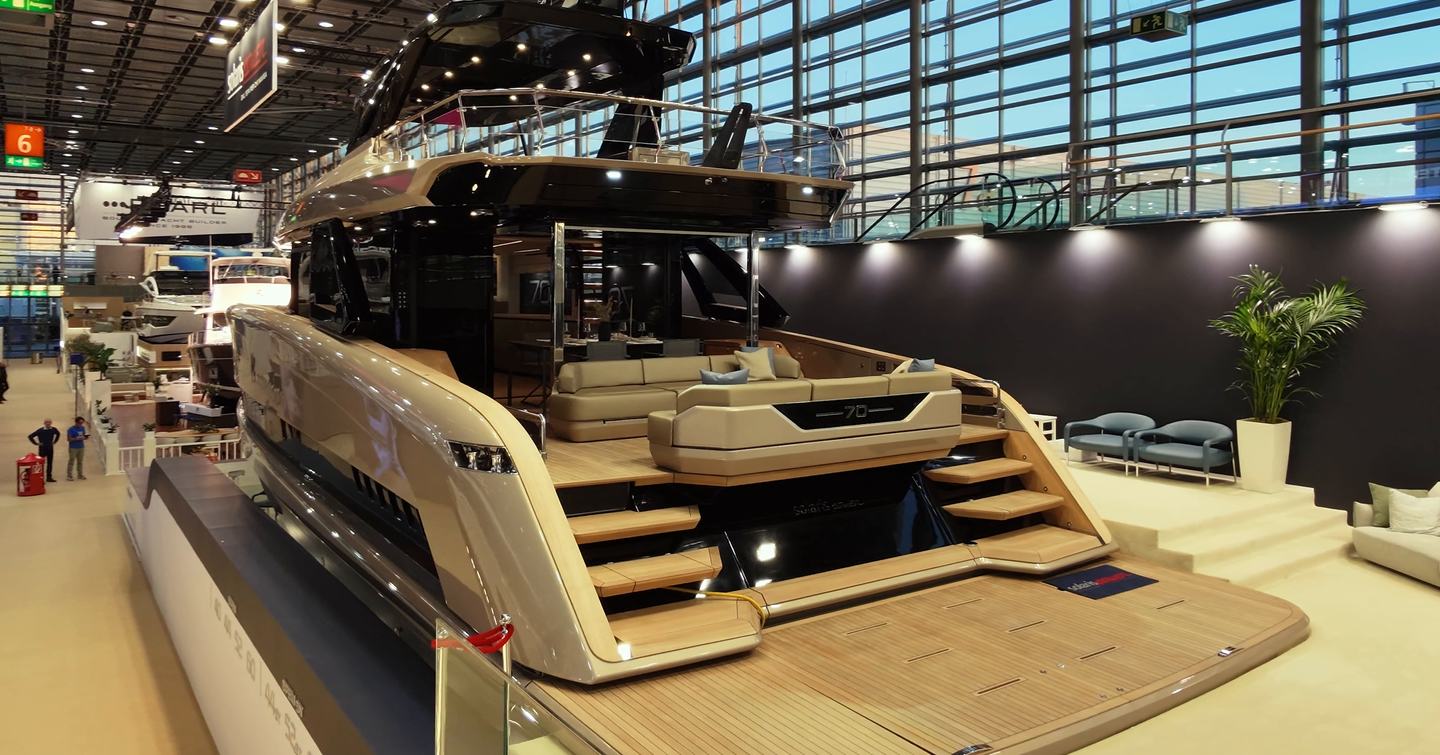
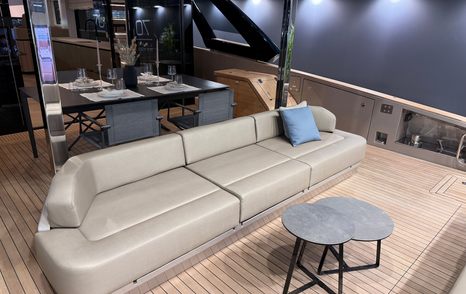
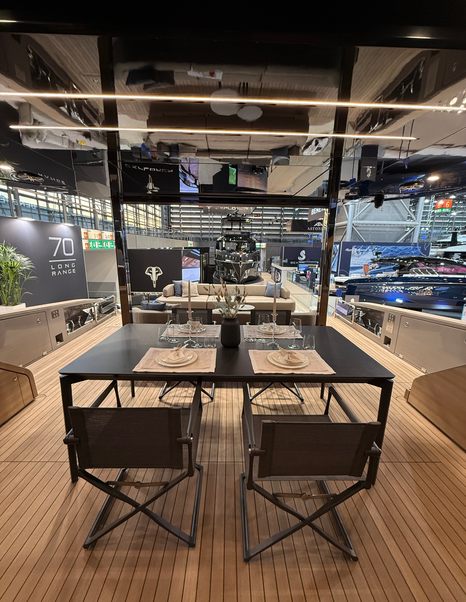
The cockpit is split into two distinct spaces, with a relaxed seating area aft and a fixed dining section further forward under the flybridge overhang. This separation works well, especially when the boat is in use for longer periods with several guests on board.
The aft section is set low, with full-depth cushions and backrests that wrap around the sides. It is not intended for dining, but the space works as a place to sit, stretch out, or just stay close to the water. A canopy can be deployed from above to give shade without breaking the line of sight aft.
The dining table sits forward of the seating area and runs athwartships under the shelter of the flybridge. The type of furniture is flexible here, but there's enough space for a good-sized dining table. There is a TV mounted overhead that drops down and can rotate to face either the cockpit or the saloon inside. With the saloon doors open, the two areas join together nicely, even more so if you have the standard aft galley layout.
On the port side, a moulded unit gives access to the crew space. The hatch lifts on a gas strut, revealing a staircase leading below. On the starboard side, the same form is used for the third helm station if that option is chosen. It houses a joystick and bow thruster control, and this location puts the skipper in line with the stern, but the controls are low, and the position is awkward. If you don't have this module with the controls and sink, the third station goes on the superstructure, which will be much more comfortable to use.
Another neat touch in this area is the lockers on both sides, specifically designed to hold Seabobs. They hold the machines in place and then fold up into the bulwarks so they don't gobble up space inside the tender garage.
Side Decks & Foredeck
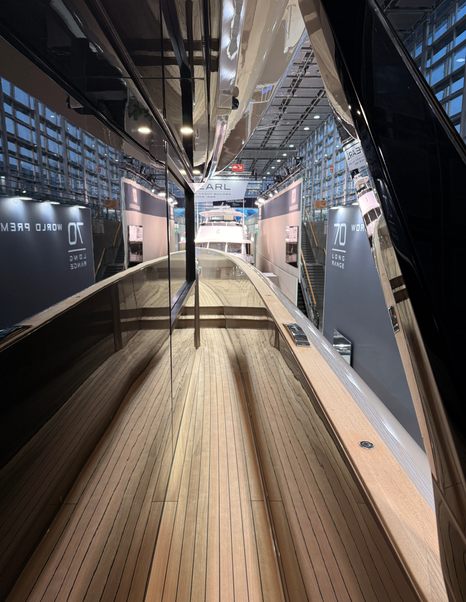
The side decks are wide and level, with bulwarks running full height instead of guardrails and plenty of familiar Solaris design cues such as teak-capped bulwarks, chunky pop-up cleats and fender sockets.
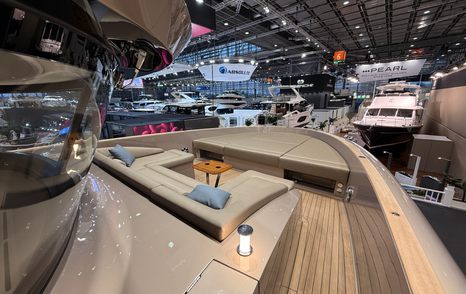
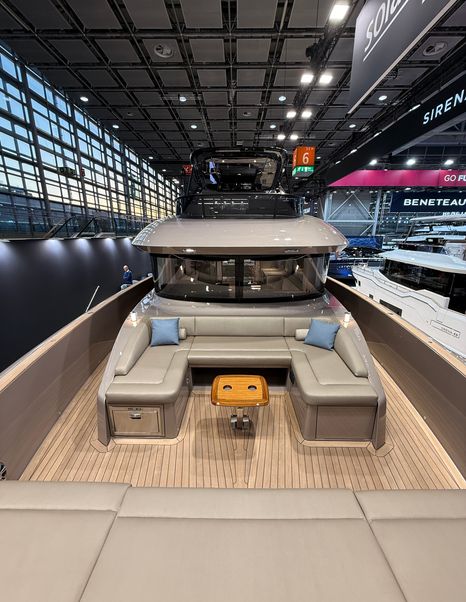
At the bow, the deck opens into a proper living area. A horseshoe-shaped sofa faces aft, with a second bench ahead of it. A table connects the two, so the space can be used for drinks or lounging. A fixed sunpad sits beyond the seating area above the cabin roof, with thick cushions that stay in place underway. There is no need to set anything up.
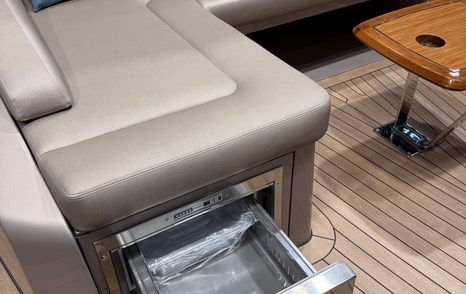
There are lockers built into the deck sides, which are useful for lines or covers, though they're not big enough for fenders. There are also pop-up lights in the coamings and a drawer fridge, so there is easy access to the next cold drink. There's also a dedicated space for the liferaft up here, which is good to see.
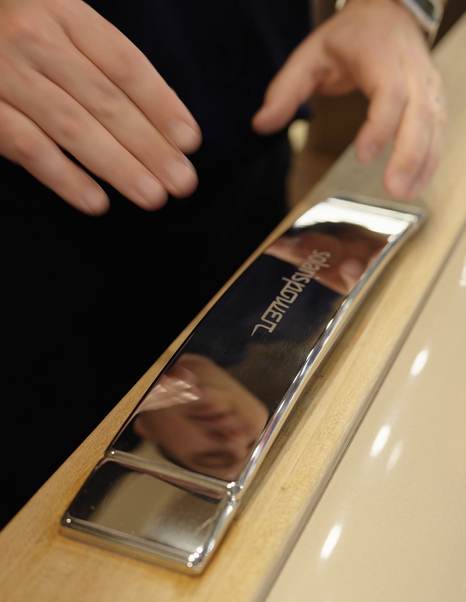
The anchor is concealed in a cassette system that swings out when deployed. The mooring gear is also hidden beneath cushions and hatches. It gives a clean look and adds usable surface, but getting to it is a bit of a process, especially if you need to get to the ground tackle quickly. That is fine at anchor, but in an emergency, it takes longer than ideal.
Flybridge
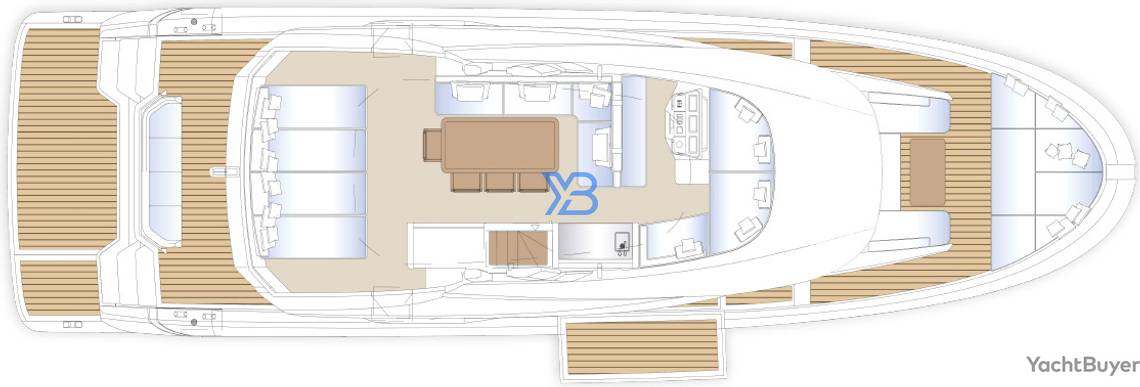
The flybridge is one of the largest in this size range at 40 sqm (430 sqft), running the full length of the saloon roof and split into three clear areas. Aft, there is a wide open section left clear for freestanding loungers. In the middle, there is a fixed dining table under the hardtop, and forward of that, the helm and seating area wrap around the console.
The aft section is left open. The idea here is to give the owner a choice of freestanding loungers or loose seating. It stays well clear of the hardtop, so this is the place for sunbathers. There are speakers built in at deck level and a deck shower tucked into the coaming. The space can double as a party zone or just be kept clear as a sun deck, but there is also the option to have a fixed sun pad module, which many owners will like the convenience of.
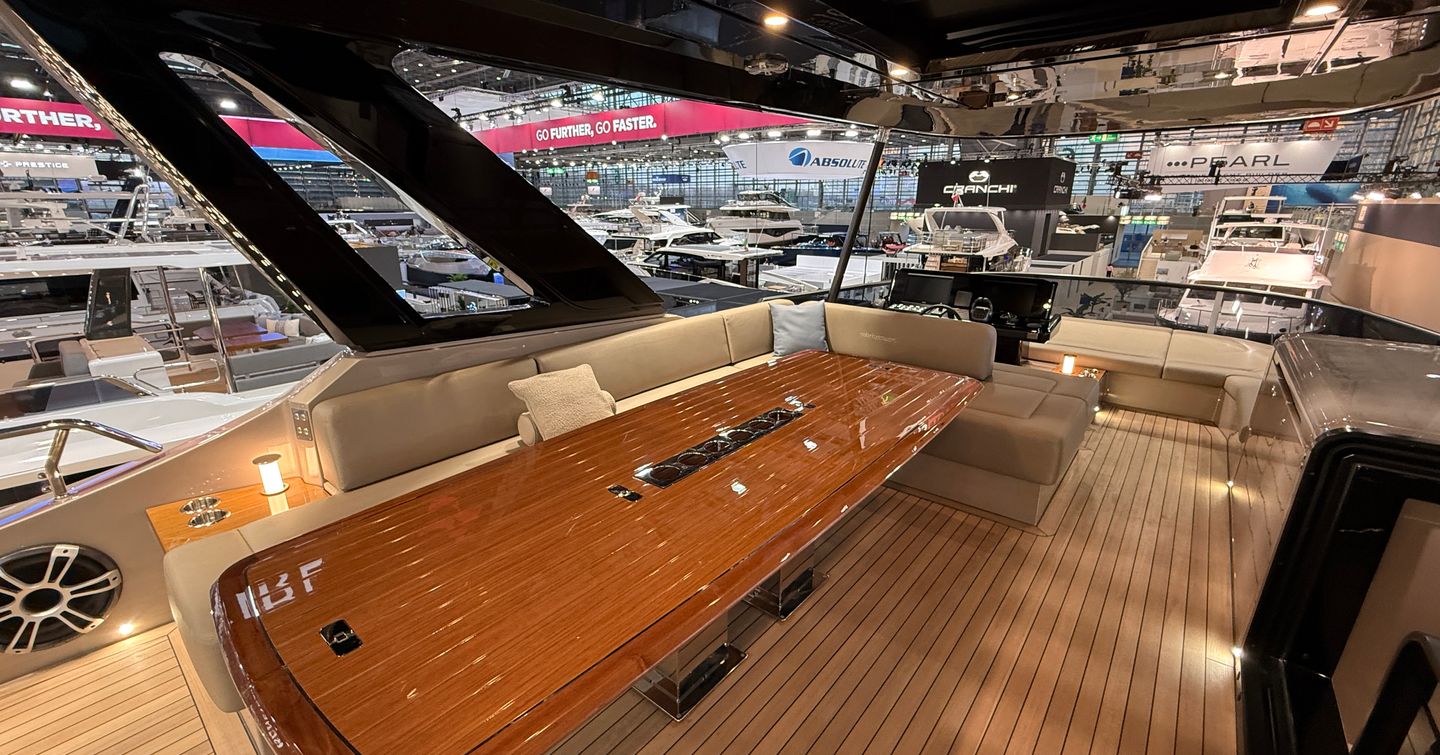
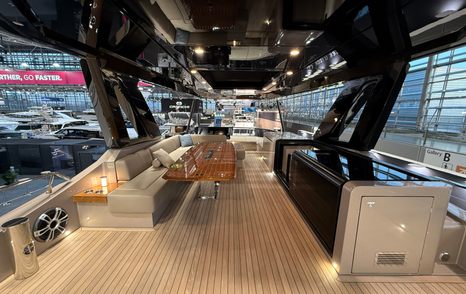
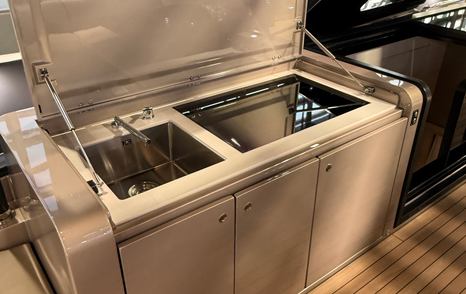
In the centre of the flybridge, the dining table sits under the hardtop. It is built from gloss wood with stainless steel detailing and folds down to make it easier to move through the space. It has a very "Riva" feel about it, which is no bad thing.
Opposite the table, a wet bar runs along the port side. It includes a fridge, sink and storage, with room for an optional induction hob.
The dainty hardtop is available with two options. You can have solar panels to top up the domestic load, or a louvre-style sunroof. The sunroof lifts to allow airflow but does not retract, so you don't get the large aperture of a canvas roof, but it's likely to be quieter when open and when it's closed, the roof is solid.
The staircase up from the saloon is protected by a one-touch glass hatch, which slides across to shut this deck off. It's quite an elaborate hatch design, and it's rather slow to open and close, but it adds a touch of class compared to the usual flush-fit flybridge hatch.
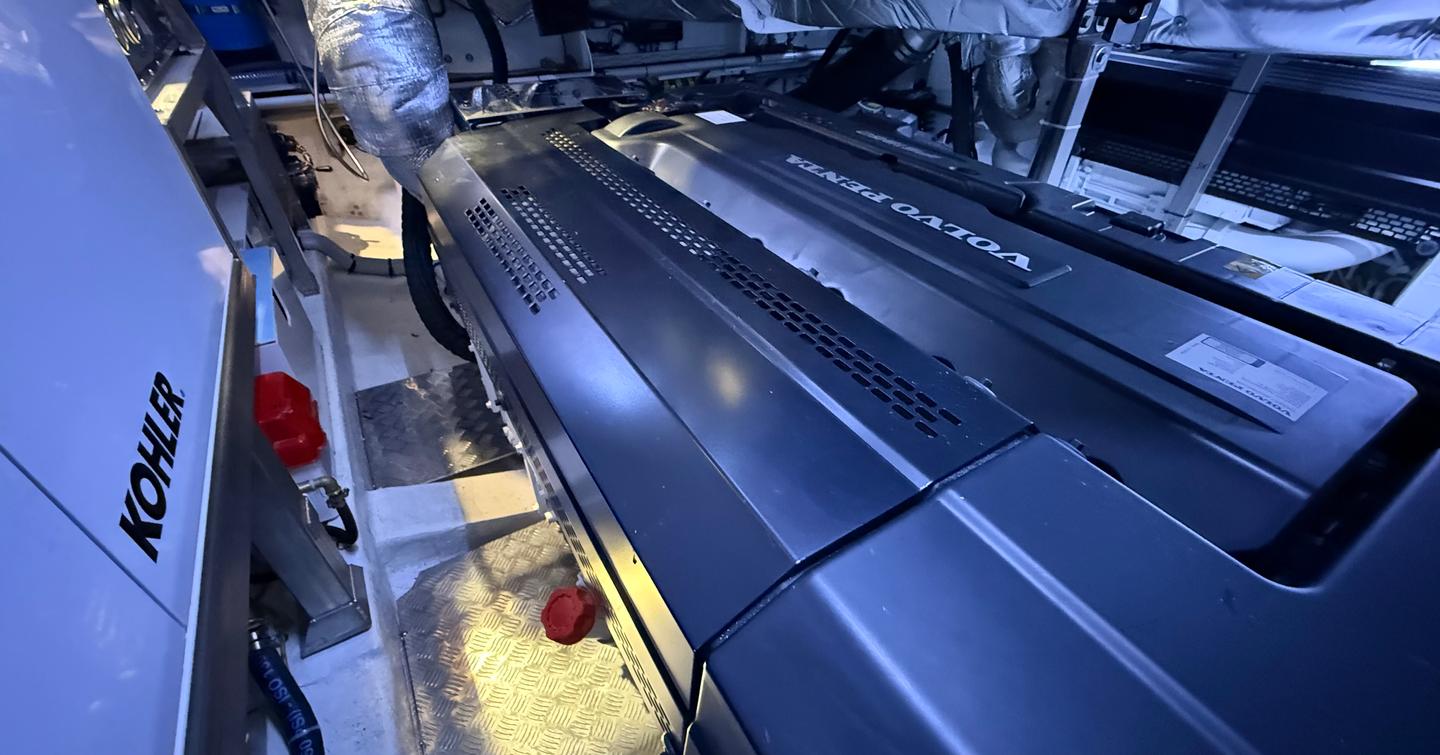
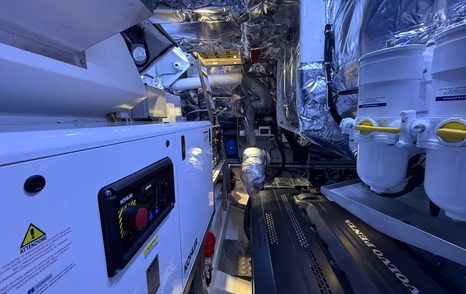
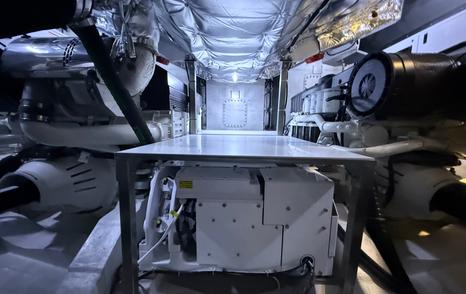
Access is through a hatch towards the aft end of the cockpit. It’s not a big opening, the ladder is steep, and you have to squeeze past the exhaust of the starboard engine to get down, so entry takes a bit of care. It’s not the easiest engine room to reach, but once you’re in, there’s enough space to work.
The two engines are mounted wide apart, with the (twin) Seakeepers fitted low in the middle. There is enough room to stand between the engines at the aft end, but it gets tighter as you move forward. The Seakeepers and the intrusion from the garage make the clearance low, so getting across to the port side means ducking and crouching. It’s manageable, but not exactly comfortable.
Daily checks are fairly straightforward. The fuel filters are mounted by the access ladder, and the dipsticks are easy to reach. Clear bowls on the filters would help, just to get a visual check on fuel quality. The generator sits between the engines and can be reached without moving panels.
The compartment is tidy and accessible, with good visibility across the key systems, but it’s not the best in class.
The base price for the 70 Power with the base (725hp) engines is €3,673,000 ex VAT (all prices correct at the time of writing).
The boat on show at Düsseldorf came in at a whisker under €5 million ex VAT, however. That is because the showboat was not only heavily specced but also had some significant one-off customisations, such as the aforementioned custom galley.
Other pricey options fitted include €90,000 to upgrade to IPS1350 (which we would recommend) and another €38,330 for DPS, which holds the boat in place using the pods and GPS. If running the boat yourself, this will make life a lot easier.
The pair of Seakeeper 10s comes in at €250,000, and you'll pay almost the same again for the (albeit lovely) Oro Di Luna metallic paint. Another custom item on the showboat was the AtoneRe Design cabin decor, a cool €70,000.
There are better value boats in this sector, but Solaris's ability to customise so heavily for this size does set it apart among most rivals.
Our Verdict
The 70 Long Range is a big move for Solaris, and a smart one. This is a sector where most buyers want more time aboard and more confidence at sea, and this boat is built around both. It is heavier than the competition, with more fuel, more hull, and a more traditional approach to structure and layout. It does not chase clever geometry or loose styling. It backs up its shape with volume and range.
There is proper separation between guest spaces, strong access throughout, and no wasted areas. The engine room could be easier to reach, and the third helm station at the stern is cramped, but those are trade-offs against the flexibility and storage elsewhere. The foredeck, cockpit and flybridge are all scaled to match the hull, and the whole boat feels consistent from stern to bow.
We have not yet seen what it can do at sea, so until it gets time on the water, the final verdict stays open. But based on the way it is built, and what it is built for, the 70 Long Range already gives buyers a reason to look twice. Solaris has entered this market with something different, and that difference makes sense.
Reasons to Buy
- 900nm range at 12 knots
- Full-size 4m (13.1ft) garage
- Enormous cockpit/flybridge
- Customisable
- Styling
Things to Consider
- Tight engine room
- Single cabin
Looking to own a Solaris Power 70 Long Range? Use YachtBuyer’s Market Watch to compare all new and used Solaris Power 70 Long Range Boats for sale worldwide. You can also order a new Solaris Power 70 Long Range, customized to your exact specifications, with options for engine choice and layout configuration. Alternatively, explore our global listings of new and used boats for sale and find your perfect boat today!
Rivals to Consider
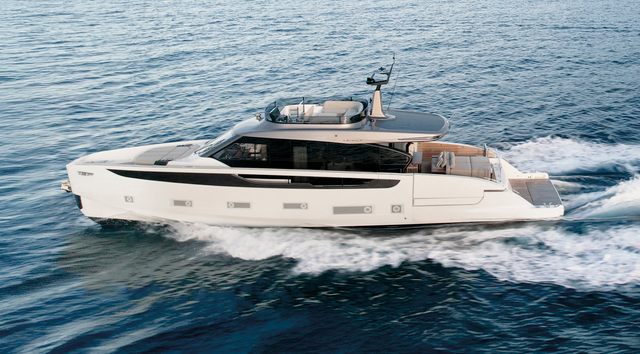
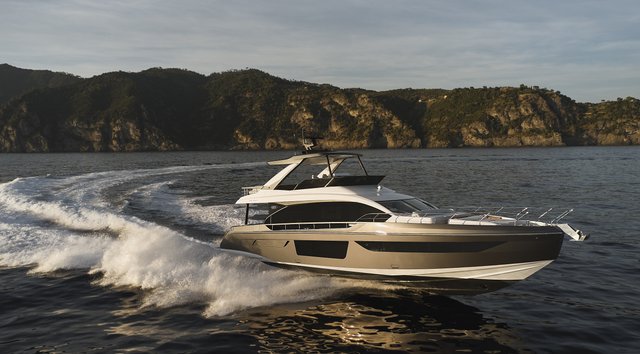
The Azimut Seadeck 7 takes a hybrid approach, pairing twin Volvo IPS 1350s with 160kW electric motors, so it can cruise silently at up to 11 knots or run at 28 knots on diesel. It measures 21.7m (71.2ft) overall and carries a 5.50m (18.0ft) beam, which makes it slightly longer but narrower than the Solaris. The structure is lighter, with carbon fibre used throughout the hull and deck, and overall displacement is around 43 tonnes, while the Solaris sits at 53 tonnes light and 59 tonnes fully loaded. Its fuel capacity stands at 3,700L (978 US gal), which is slightly lower than the Solaris, but the hybrid system is intended to offset that with greater low-speed efficiency. Azimut quotes a range of around 283 nautical miles at 16 knots. The Seadeck has five cabins, a big fold-out beach club called “Fun Island,” and a deck layout focused on lounging and water access. While it is aimed at longer stays, the Seadeck is still a coastal cruiser at heart, so it lacks the Solaris’s heavier hull form and Category A classification.
The Absolute Navetta 70 is built for volume and comfort, with similar proportions to the Solaris at 21.27m (69.8ft) long and a 5.63m (18.5ft) beam. It runs twin Volvo IPS 1350s as standard and reaches just over 25 knots at full throttle, while cruising comfortably around 20 knots. Range sits close to 280 nautical miles at cruise, and the fuel capacity is 3,500L (925 US gal), which is slightly below that of the Solaris but still ample for coastal work. The draft is just 1.3m (4.3ft), so it can access shallower bays and marinas where the Solaris might draw too much. Accommodation includes four guest cabins and a separate crew space, with a full-beam saloon and near floor-to-ceiling glazing. Absolute calls it a “little ship,” but it is built to Category B standards, which means it suits sheltered waters and fair-weather conditions rather than open-ocean passages. Compared to the Solaris, it offers similar pace and space, but trades offshore robustness and fuel margin for more internal glass and layout flexibility.
The Prestige X70 approaches this size class differently, removing the side decks and pushing the saloon out to the full beam to maximise space. It measures 21.83m (71.6ft) long with a 5.34m (17.5ft) beam and uses either IPS 1200s or IPS 1350s, which deliver a top speed of around 26 knots and a cruising speed in the low 20s. It carries 4,000L (1,057 US gal) of fuel, and its range at cruise is quoted around 270 to 280 nautical miles. Displacement is lighter than the Solaris, which gives the X70 a different feel underway. Interior volume is impressive, especially in the saloon and master cabin, as almost 90 percent of the beam is used internally. The X70 is rated to Category B, so while it can handle moderate offshore conditions, it is not built with the same hull depth or structural margin as the Solaris. The layout works best for entertaining and Med-style living, with an internal staircase to the flybridge and a galley that opens directly into the cockpit. Compared to the Solaris, the X70 is more of a floating apartment, while the 70 Long Range stays closer to its cruising brief.
The Pershing GTX70 is the fastest and most performance-driven rival here, with three IPS 1200s delivering a top speed of 35 knots and a cruising speed close to 30. It shares a similar length at 21.7m (71.2ft) but has a narrower beam at 5.42m (17.8ft) and a lower profile overall, which gives it a more aggressive shape but less internal volume. Draft is deeper at 2.00m (6.6ft), which limits some shallow-water access, and fuel capacity is slightly higher than the Solaris at 4,200L (1,109 US gal). It has three large guest cabins, each with an en-suite, and a beach club that stretches across 23 square metres, with fold-down terraces to extend the deck. The sportbridge helm replaces a full flybridge, and while it offers outdoor driving and sunbathing space, it lacks the multi-zone upper deck of the Solaris. The GTX70 is Category A rated, so it matches the Solaris in classification, but its intent is different as it is built to cover ground quickly and turn heads, while the Solaris is designed to be out at sea for longer stretches, with a calmer motion and more consistent deck use.
Considering a new boat? Explore Solaris Power's entire current range to find the model that best suits your needs, and compare it with alternatives from competitors to ensure you make the perfect choice.
Specifications
- Builder Solaris Power
- Range Long Range
- Model 70 Long Range
- Length Overall 21.3m
- Beam 5.99m
- Draft 1.49m
- Hull GRP
- Cabins 4
- Berths 7
- Crew 1
- Cruising Speed
- Max Speed
- Fuel Capacity 4,100 Litres
- Fresh Water Capacity 1,200 Litres
- Engine Model 2x Volvo Penta D13-IPS1350
- Engine max range (speed type) 350 (nm)
Solaris Power 70 Long Range Layout
-
Flybridge
-
![Flybridge Solaris Power 70 Long Range]()
The standard flybridge has a sun pad at the aft end
-
Main Deck
-
Standard main deck layout
![Main Deck Solaris Power 70 Long Range]()
The standard main deck layout with galley, aft
-
Optional fold-down bulwark
![Main Deck Solaris Power 70 Long Range]()
The optional balcony opens up the saloon on the starboard side
-
Lower Deck
-
Standard 4 cabin layout
![Lower Deck Solaris Power 70 Long Range]()
Only a single cabin on the port side falls down compared to rivals
-
Optional 3 cabin layout with day head
![Lower Deck Solaris Power 70 Long Range]()
The 3-cabin arrangement with an extra bathroom
Interested in a 70 Long Range?
NEW Build
Find your local dealer for a personalised, no-cost consultation
or just request
Brochures & Pricing
Used & In Stock
Looking for a ready-to-go 70 Long Range or pre-owned options? Explore all inventory of the 70 Long Range available worldwide