-
Guests
10
-
Cabins
5
-
Crew
7
| Length | GT | Built (REFIT) |
|---|---|---|
|
37.5m
|
299 GT | 1996 (2020) |
| Beam | Draft | Top Speed |
| 8.23m | 1.8m | 16 Kts |
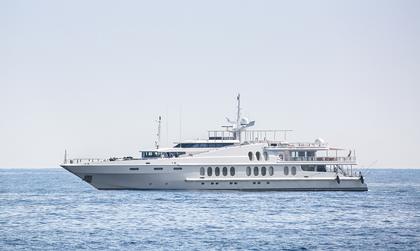
Delivered in 1996, Oculus is a 37.5m motor yacht built by Australian shipyard Oceanfast. She features exterior design by Bannenberg & Rowell and interior styling by Sam Sorgiovanni.
Key Features
- 38m (124ft) Oceanfast yacht
- 19-knot top speed
- Raised foredeck guest area
- GRP hull and superstructure
Design & Construction
Designed around a semi-displacement GRP hull and superstructure she features a 8.23m beam and a 1.8m draft. The yacht is built over 3 decks with an internal volume of 299 GT (Gross Tonnes).
Exterior Design
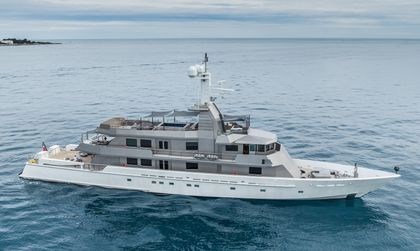
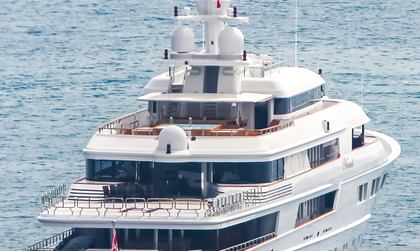
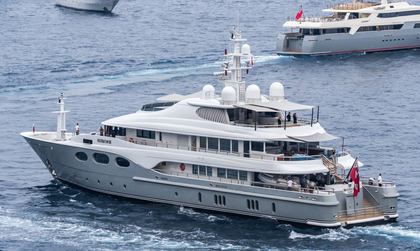
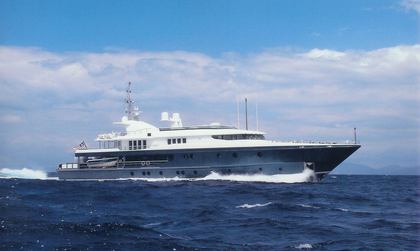
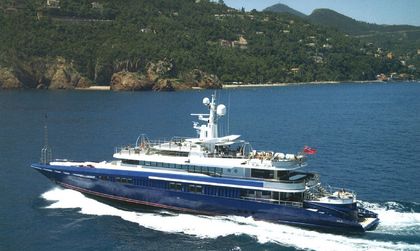
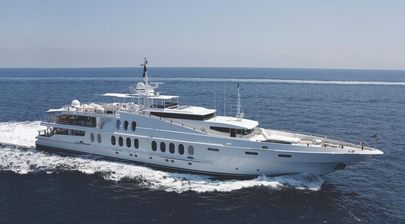
The Oceanfast Oculus measures 39.02m (128.0ft), and her exterior carries the distinctive Bannenberg approach, where volume and line work together rather than compete. In the photo, the profile reads as long and continuous, with the superstructure pushed forward and the deck levels visually tied together, so the yacht avoids the stepped look seen on more conventional designs.
The hull and superstructure are built in GRP, and the semi-displacement form blends deep-vee forward sections with flatter aft sections, so the yacht balances efficiency with usable internal volume. That design allows a moderate draft while keeping the profile low and purposeful, and it supports a top speed of 19 knots with a cruising speed of 17 knots.
A key exterior trait is the raised foredeck, which sits at bridge deck level and extends the usable space forward. This area is arranged as a proper guest zone, with seating, a large sunpad, and a Jacuzzi positioned to take advantage of airflow and privacy, especially when the yacht is stern-to in harbour. The foredeck also carries practical elements, including space for tenders or watercraft and concealed storage within the bulwarks.
Side decks run cleanly aft along the superstructure, leading to the aft bridge deck where additional seating creates another lounging area. Above, the flybridge adds a further sunpad and helm position, while a structured sunshade system allows control over exposure. The main deck aft sits under the overhang, and this area can be enclosed to form a protected lounge or dining space, which adds flexibility across different climates.
A stern garage can house a tender the size of a Novurania MX-530 RIB, which keeps the deck spaces clear and allows the exterior layout to focus on guest use rather than storage. Access is handled through a transom door and side staircases, with a crane system for launch and recovery.
Interior Design
Inside, Oculus reflects a detailed and layered design by Sam Sorgiovanni, developed from a Bannenberg concept, and the emphasis is on using every part of the available volume. The interior combines rich materials with lighter finishes, so darker woods such as madrona burl veneer, teak flooring, and Brazilian mahogany frames sit alongside cream leather wall panels, white wool carpets, and raw silk deckheads.
The main deck layout departs from the usual arrangement, with the dining area placed aft and the main lounge forward. This decision uses the available width more effectively, as the aft section accommodates the dining table without compromising the main seating area. The dining space centres on a large table finished with Corian and lacquer detailing, while the forward lounge uses three settees arranged around a central table, and benefits from larger windows and stronger natural light.
Circulation is handled carefully, with the main staircase positioned between the dining and lounge spaces, so neither area is disrupted. The galley sits to port of the entrance lobby and is larger than typical for this size range due to the adjusted layout.
Accommodation
Oculus accommodates up to eight guests in four staterooms, with a layout that spreads accommodation across multiple levels to maximise flexibility. The owner’s suite is positioned forward on the main deck and uses the full beam, taking advantage of the raised foredeck above to create a space with strong headroom and natural light.
The master suite includes a full-beam bathroom forward of the bed, arranged as a his-and-hers layout, while the cabin itself integrates practical features such as a concealed treadmill within the floor, which reflects the focus on using space efficiently.
On the lower deck, there are three guest cabins, comprising two doubles and one twin, all with en suite facilities, and two of these cabins include additional Pullman berths. An additional cabin aft can serve either as guest accommodation or for the captain, which adds flexibility depending on operational needs.
The upper deck saloon can also convert into a guest cabin, with seating that transforms into a king-size bed, so the yacht can adjust between social and accommodation roles as required. Crew accommodation is arranged for up to six across three cabins.
Performance & Capabilities
Powered by twin diesel MTU (8V396 TE 94) 1,500hp engines, motor yacht Oculus is capable of reaching a top speed of 16 knots, and comfortably cruises at 13 knots. With her 37,854 litre fuel tanks she has a maximum range of 2,000 nautical miles at 12 knots. Her semi-displacement hull design means she offers a great balance of space and speed.
Oculus Yacht is not For Sale
Motor yacht Oculus is not currently for sale. Explore all new & used yachts for sale globally powered by YachtBuyer’s Market Watch.
If you're the yacht owner, broker, or captain, please use the "Update Sales Info" link to report any changes to the sales information. Update Sales Info