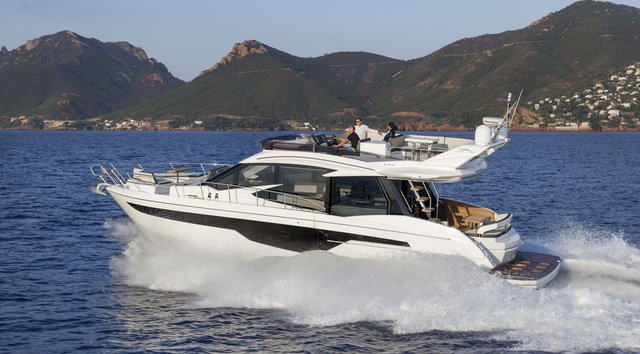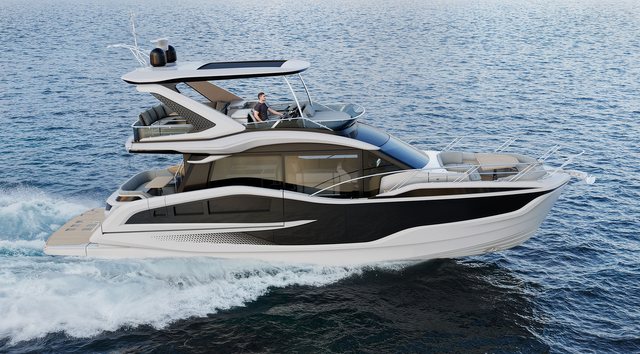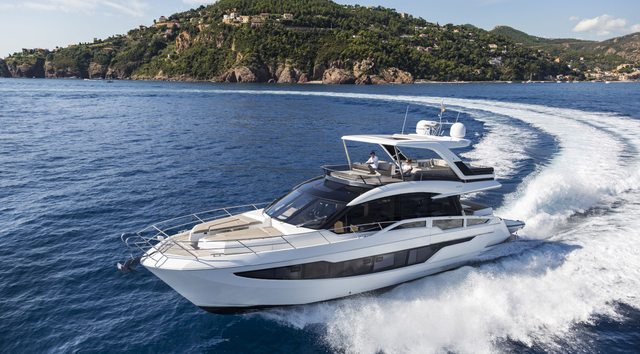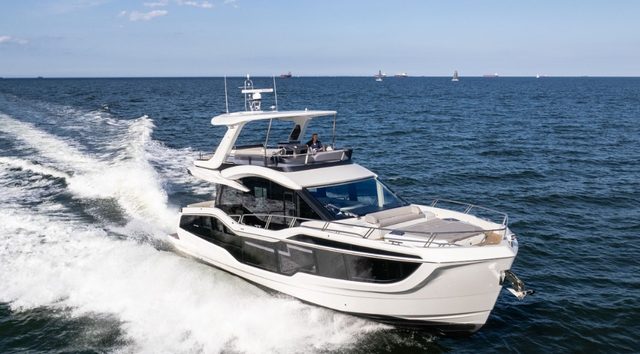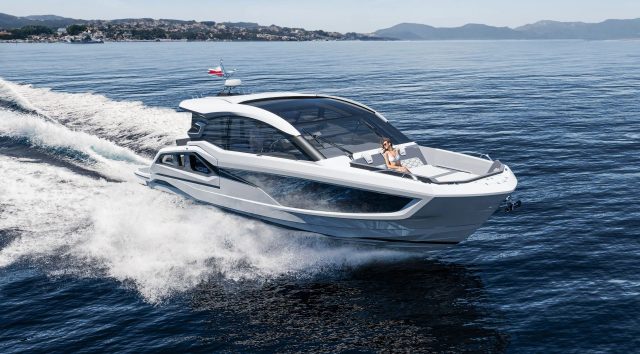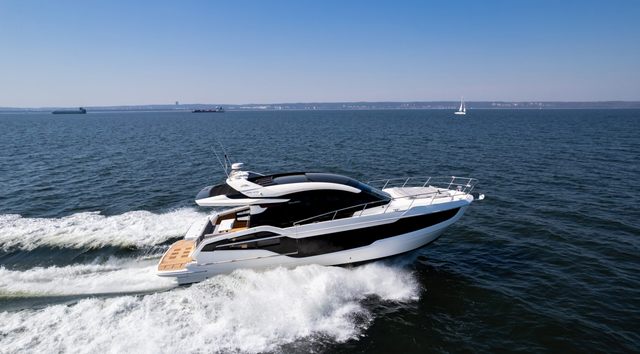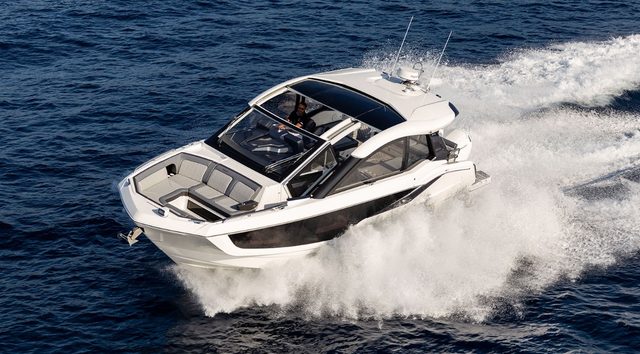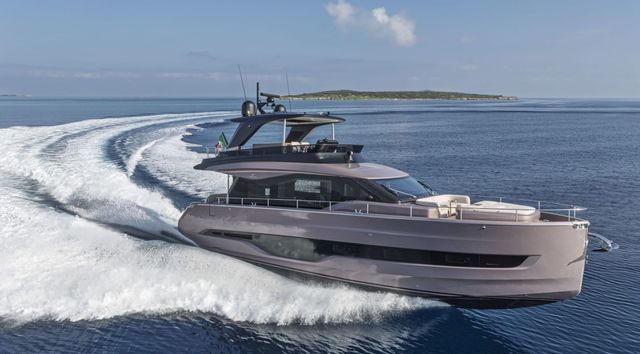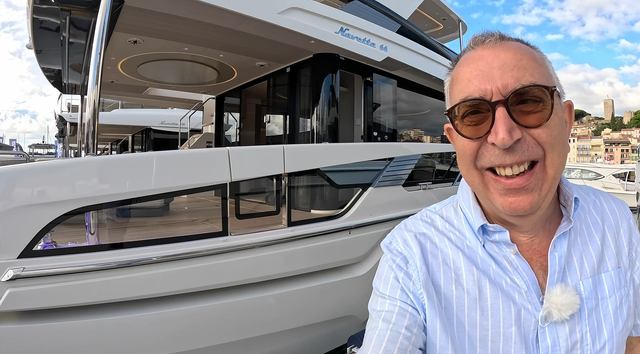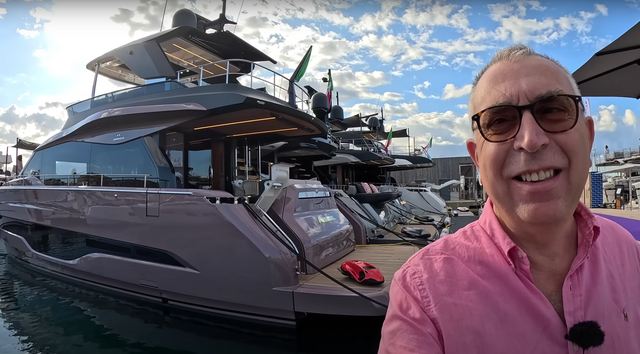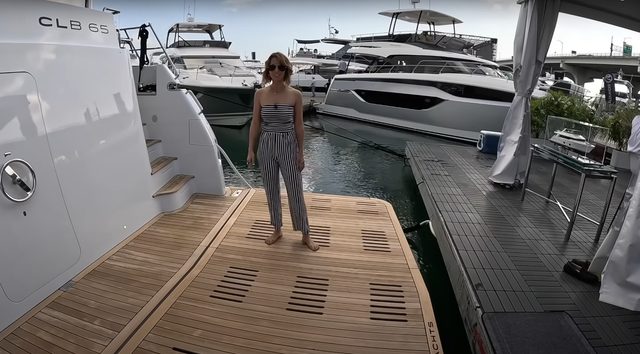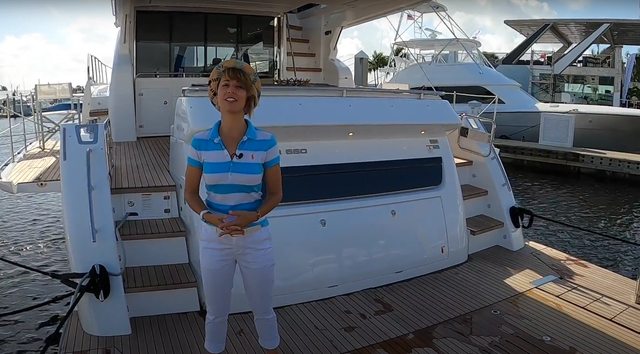
The Galeon 620 Fly is one of those yachts that keeps changing shape the longer you spend around it. Balconies fold out, terraces drop toward the water, glass sections slide away and the owner’s cabin even gains its own private staircase out into the sea.
But beyond the clever architecture and beach-club atmosphere, what is the Galeon 620 Fly actually like to live with? In this review, we’ll look at how the asymmetrical layout changes the onboard experience, whether all that transformable design genuinely works in practice and where the compromises start appearing once you move beyond the wow factor.
Review Video
The Galeon 620 Fly is a much bigger step for the Polish builder than a normal model update. Galeon first built its reputation around transformable balconies and fold-out terraces on smaller yachts such as the 500 Fly, though the 620 Fly now takes that whole idea a bit further. Rather than treating the balconies as extras added onto a conventional flybridge yacht, Galeon has reorganised huge parts of the boat around water access and beach-club living instead.
Tony Castro remains responsible for the exterior design and naval architecture, continuing a partnership with Galeon that dates back more than 20 years. The 620 Fly keeps the same broad shape and sporty profile of earlier Castro-era Galeons, but the architecture underneath has changed quite a bit. The asymmetrical main deck frees up a much wider starboard side deck, which in turn allows the saloon to gain extra volume without increasing the yacht’s overall length.
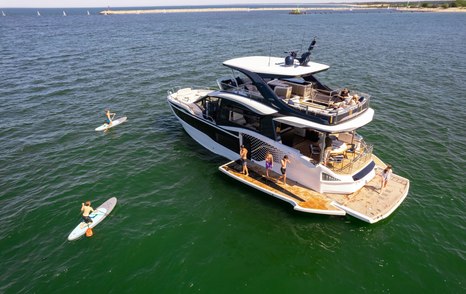
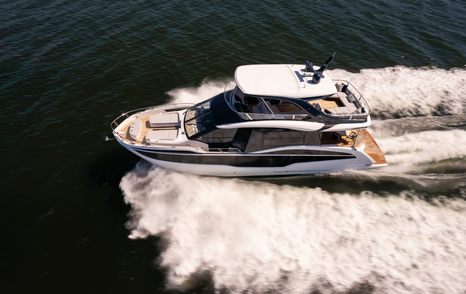
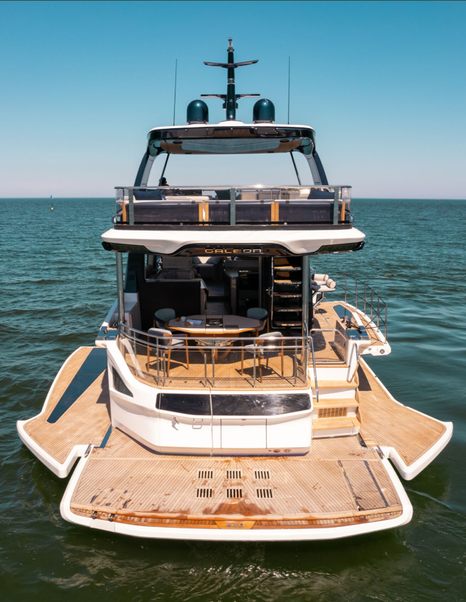
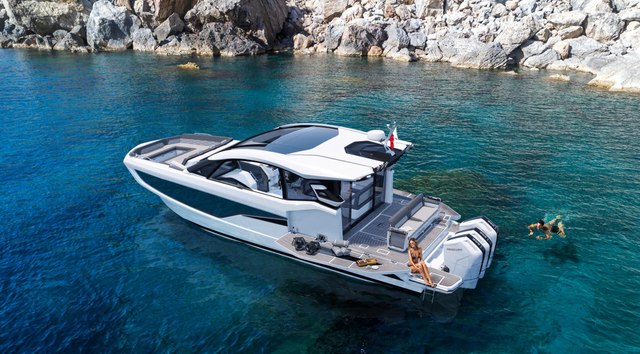
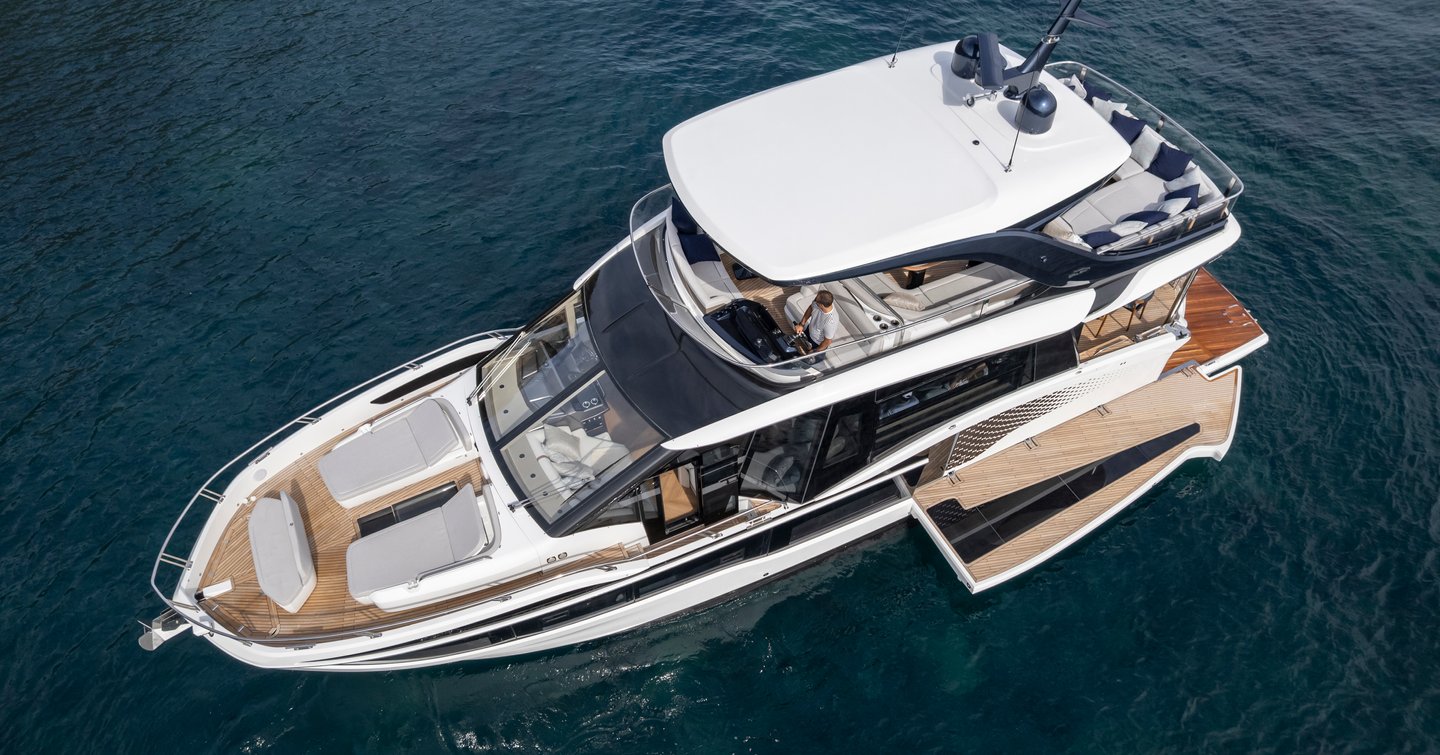
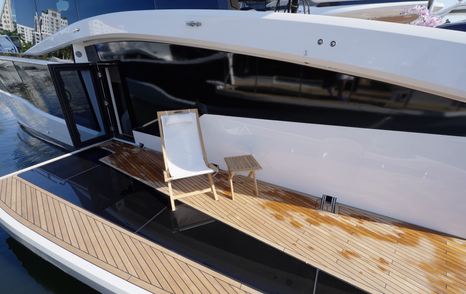
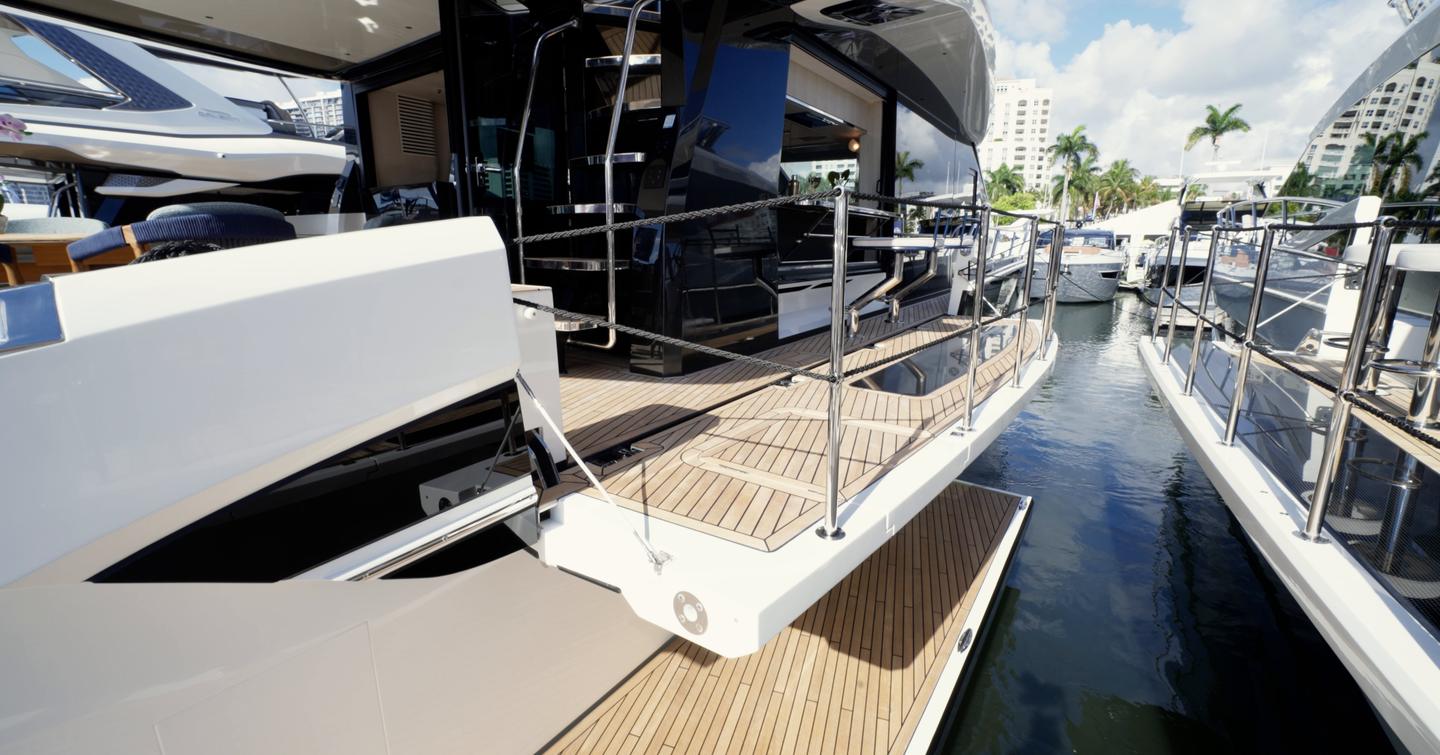
The biggest change sits aft, where Galeon has expanded the old fold-out balcony idea into a full multi-level beach-club arrangement. Two lower water-level terraces now extend out beside the hydraulic bathing platform, while an upper fold-out balcony forms a raised waterside bar area above. It feels much closer to the beach-club thinking seen on larger yachts such as the longstanding Galeon 640 Fly.
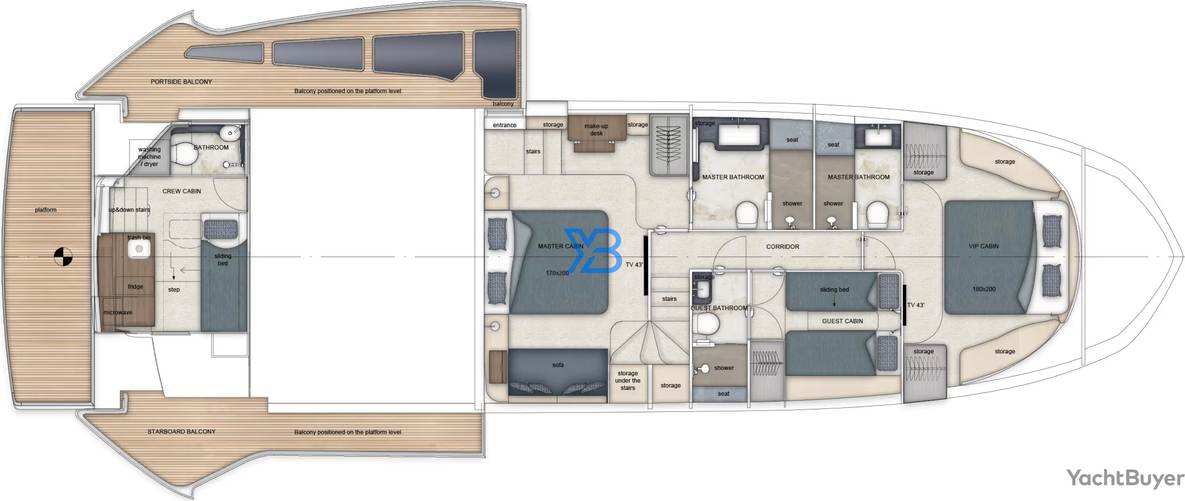
The owner’s cabin plays a big role in that idea. A private stair leads directly down to the portside terrace, which sits just 40cm above the waterline. It is an unusual feature on a production flybridge yacht of this size and one that clearly shaped the entire lower-deck arrangement. There are compromises to allow for this. The asymmetrical layout limits the port side deck, circulation tightens around the owner stair below deck, and the galley feels slightly compact relative to the boat’s sleeping capacity.
The interior is another change in direction for Galeon. Hong Kong studio InSitu & Partners handled the redesign, with Philippe Grasset tasked with giving the boat a more residential feel while keeping Galeon’s sportiness intact. Walnut, eucalyptus, leather and indirect lighting replace some of the brighter, flashier detailing of older Galeons, and owners now get five interior themes plus much scope for customisation.
The 620 Fly also says quite a lot about where Galeon wants to position itself now. The company has spent years building a reputation around inventive moving balconies and transformer layouts. This boat feels like an attempt to move beyond that and compete on atmosphere as well. The yard builds its own metalwork, glazing systems, upholstery and joinery, which helps when a yacht relies so heavily on moving terraces, pantograph doors and large structural openings.
And all of these hydraulic systems has obvious ownership implications. A yacht this dependent on hydraulics and powered systems inevitably places heavy demand on generators, pumps, actuators and electrical management systems, and long-term reliability will depend heavily on maintenance discipline. This is not the sort of boat that rewards neglected servicing because small faults inside interconnected hydraulic or electrical systems could quickly become frustrating and expensive.
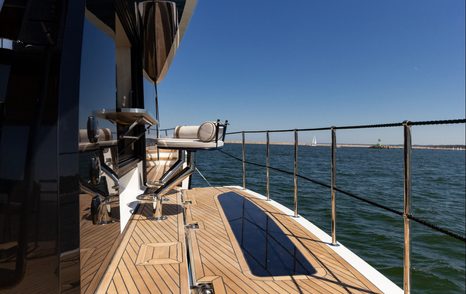
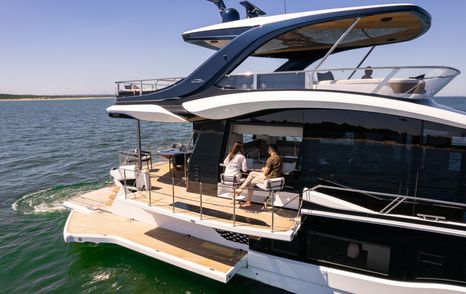
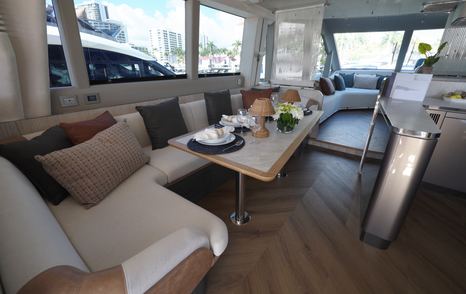
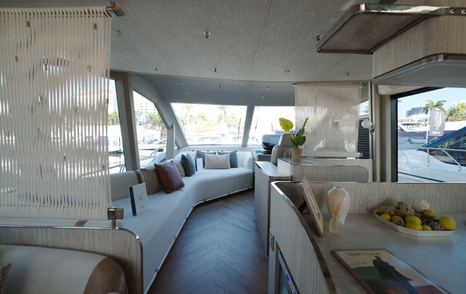
The saloon space feels noticeably wider than most boats around this size. The glazing runs very low along both sides, the terraces outside pull loads of light into the interior and the furniture itself stays fairly open, so the whole area ends up feeling very relaxed and airy rather than overly packed with cabinetry.
It is also a much calmer interior than older Galeons tended to be. Previous boats from the brand could lean slightly toward glossy finishes and stronger lighting effects, whereas this feels softer and more residential. The walnut tones warm the space nicely, the indirect lighting is much easier on the eye and the loose furniture stops the saloon feeling too heavy or built-in.
The seating layout is less successful though. You do slightly question the sofa arrangement because the television positioning never quite lines up naturally with where you actually want to sit, so some of the angles feel a bit awkward in practice. It is one of those layouts where you can tell the architecture of the boat has dictated the furniture plan rather than the other way around.
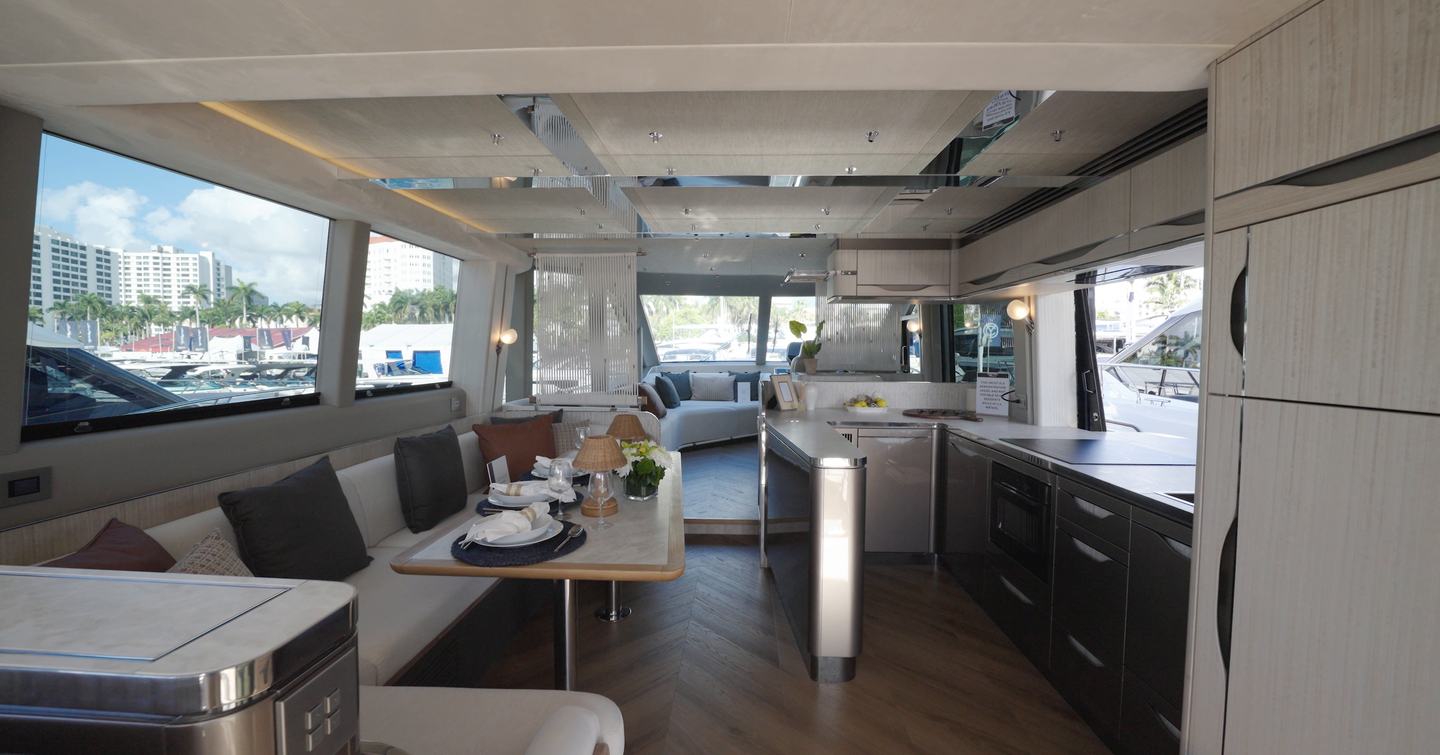
Still, the connection between cockpit and saloon works very well. Open the aft glazing and the whole rear half of the boat starts functioning as one long social space, while the terraces outside keep the water constantly in view from almost every seat inside. At anchor especially, this part of the yacht feels very connected to the surroundings rather than sealed away from them.
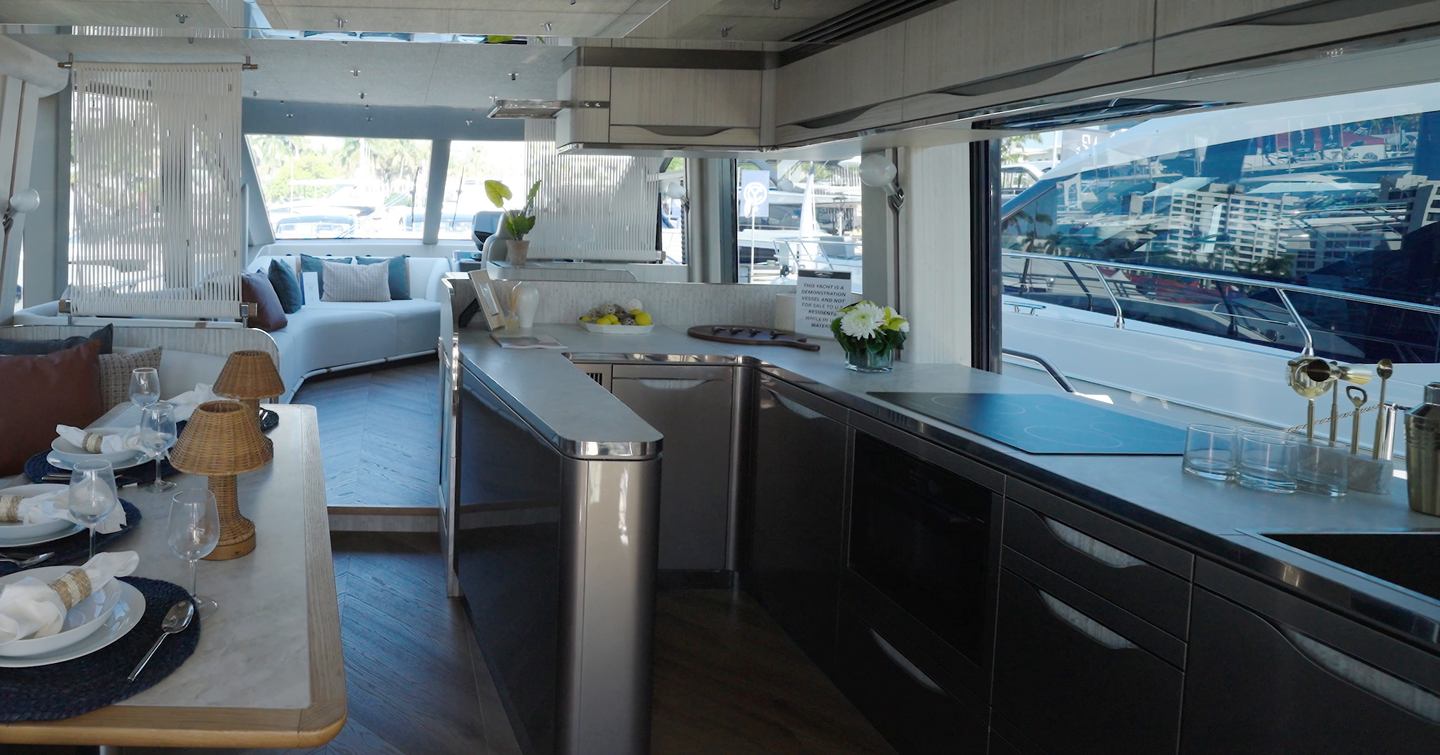
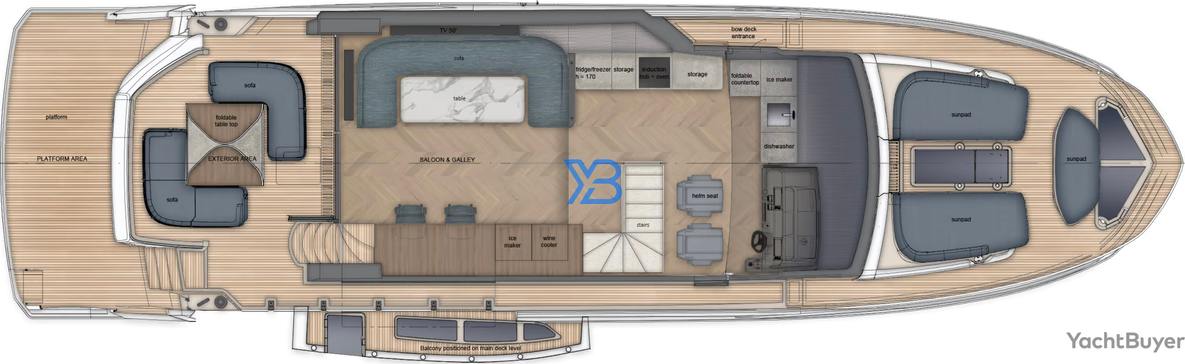
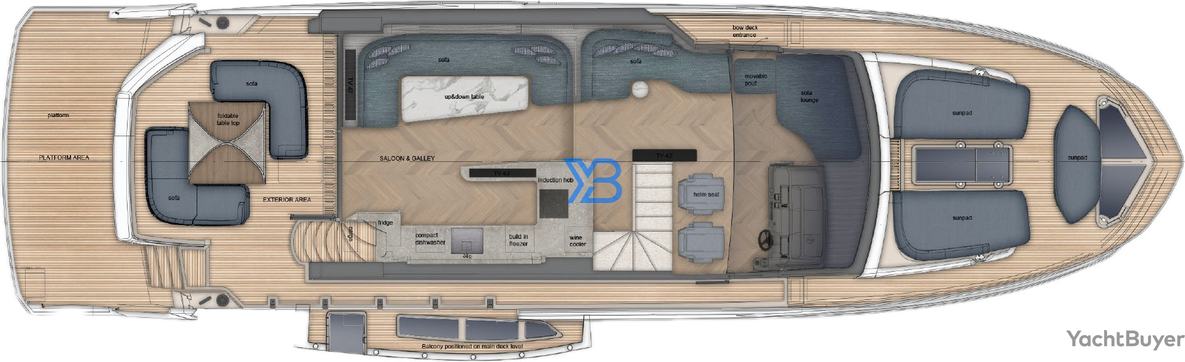
The galley continues the same practical approach. Positioned forward beside the lower helm, it stays connected to the rest of the main deck rather than hidden off in a separate corner, and the island arrangement gives a decent amount of preparation space as well as somewhere people can naturally gather while food is being prepared.
There are compromises here too mind you. For a yacht capable of sleeping this many guests, the refrigeration feels surprisingly small, and once you start moving around the galley properly, the U-shaped layout narrows the central walkway more than you first expect. You can definitely feel where some of that extra saloon width has been gained because circulation tightens slightly in these areas.
Even so, the atmosphere inside is really nice. With the terraces lowered and the aft doors fully open, the saloon sits visually very close to the water, and that gives the whole main deck a much more relaxed feel than a lot of conventional flybridge yachts manage.
Owner's Cabin
The owner’s cabin is probably the point where the whole terrace idea either works or falls apart, and actually, once you get down here, it works really well. On paper it sounds like one of those features designed mainly to grab attention at a boat show, though standing in the cabin with the terrace lowered beside you, it suddenly feels very natural.
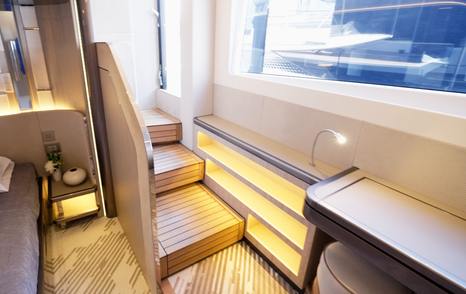
A private stair drops directly down onto the portside platform, so instead of walking through the cockpit every time you want a swim, the owner gets their own little waterside area sitting only inches above the sea. In a quiet anchorage you can absolutely imagine people using this all the time because it changes the feel of the cabin completely. It stops feeling like a lower-deck room and starts feeling much closer to the water outside.
The glazing helps massively with that too. The hull windows are huge, there is loads of natural light coming in from both sides and because the waterline sits so close to the cabin, the view outside always feels present even when you are lying in bed. For a production flybridge yacht, it is a surprisingly atmospheric space.
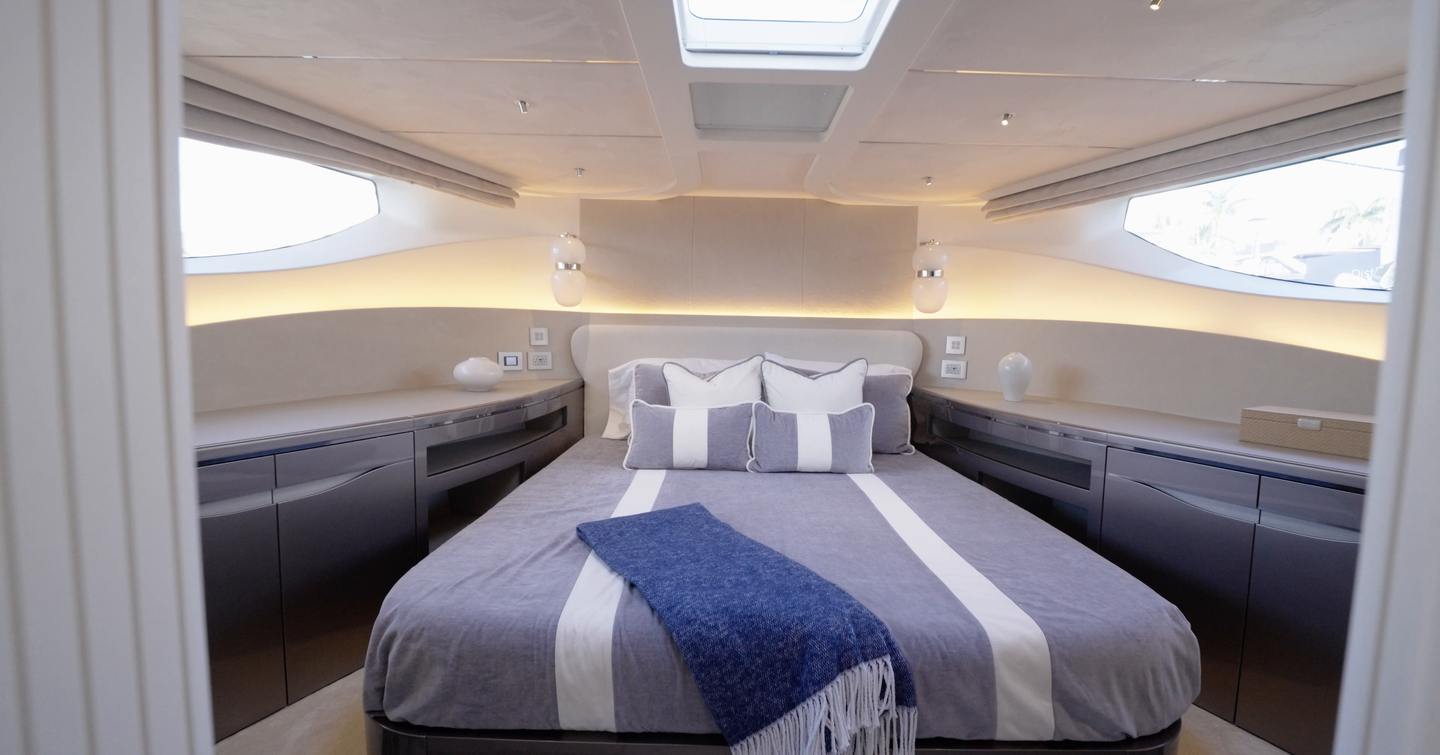
They have also kept the styling fairly restrained in here, which is probably the right decision because the terrace and the glazing are really the main event. The softer colours, indirect lighting and warmer timber tones calm everything down quite nicely, and the whole cabin feels much more relaxed than some older Galeons tended to inside.
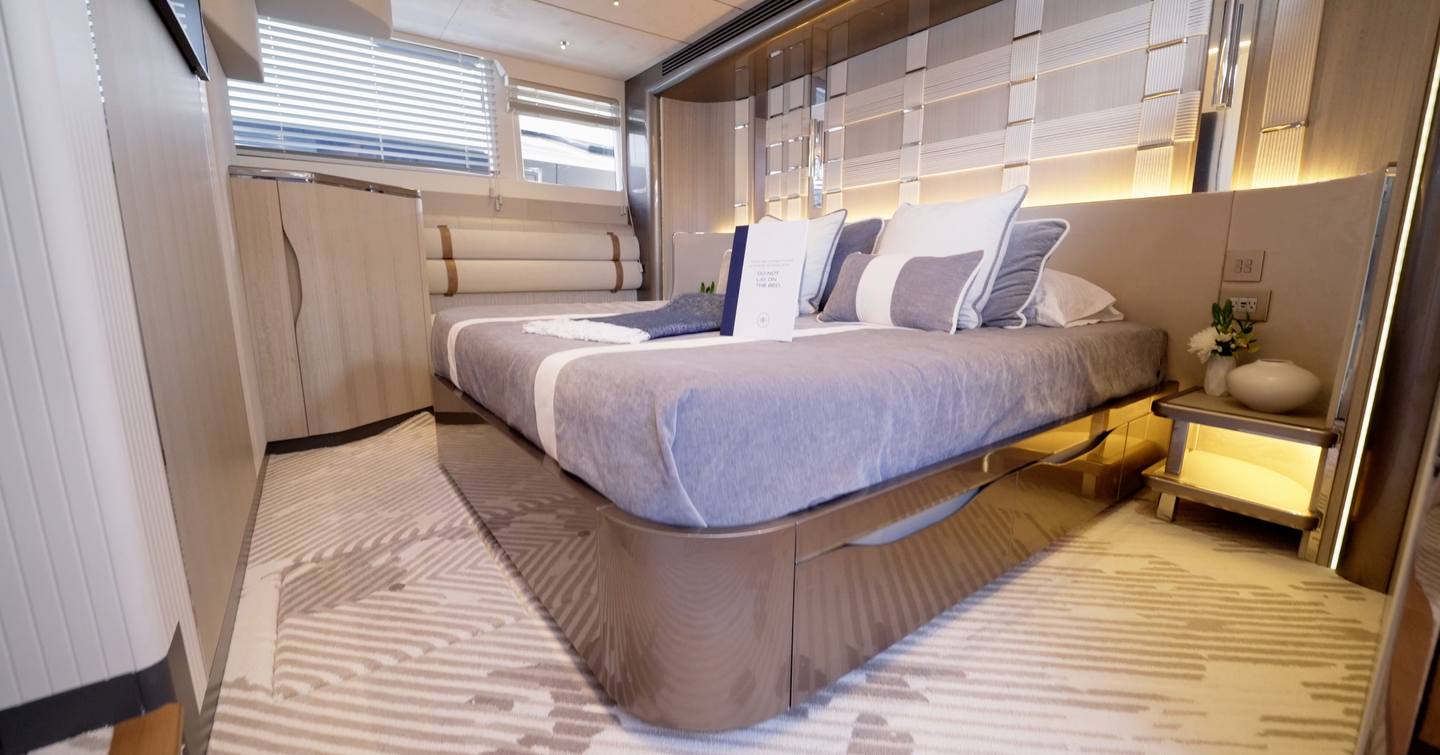
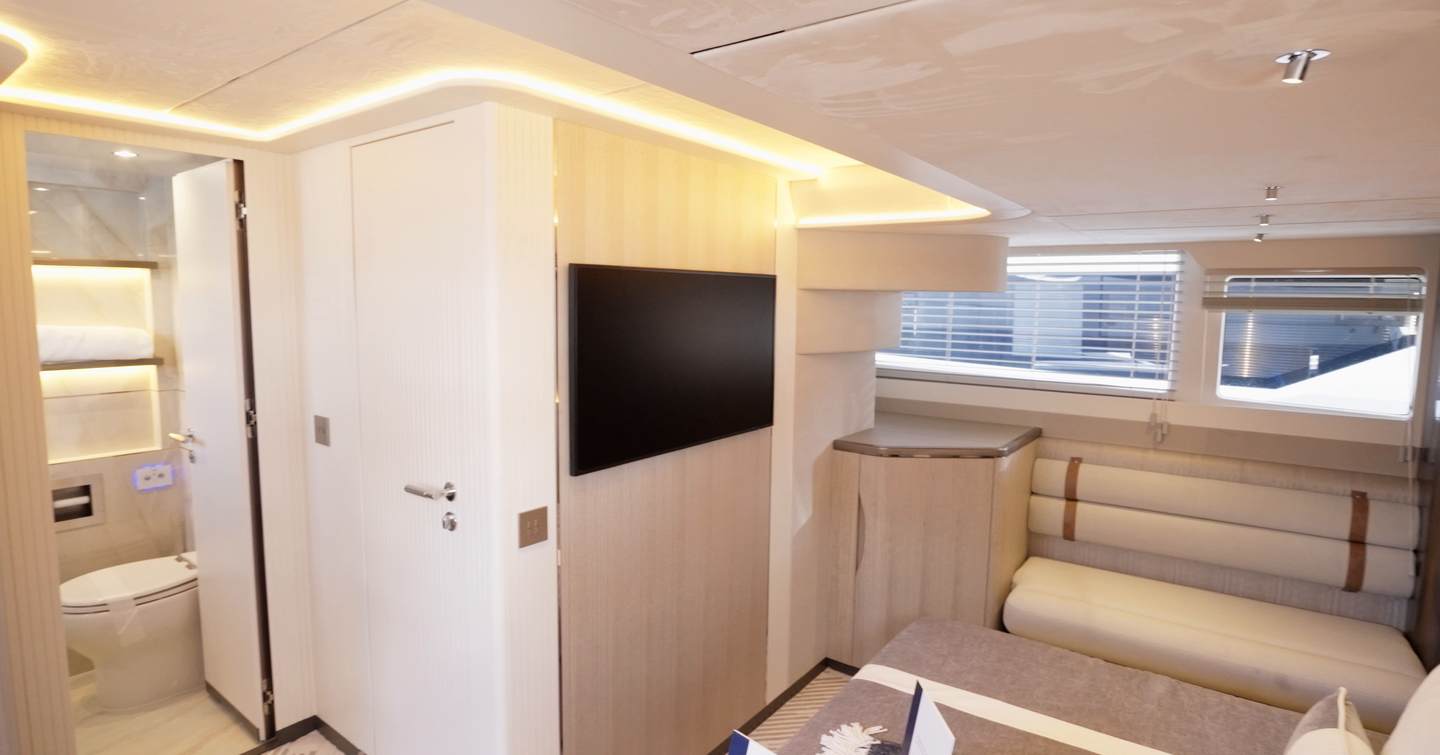
There are compromises of course. You can definitely feel the staircase shaping the layout because movement around the aft sections of the cabin tightens slightly, particularly beside the bed and toward the bathroom entrance. It is not difficult to move around exactly, though you are always aware that the architecture of the room is working around that private access stair.
Storage looks decent enough for extended stays aboard, and the bathroom works well too with a properly usable shower and enough separation between areas to stop the space feeling cramped. They have not tried to overdesign it, which helps.
Guest Accommodation
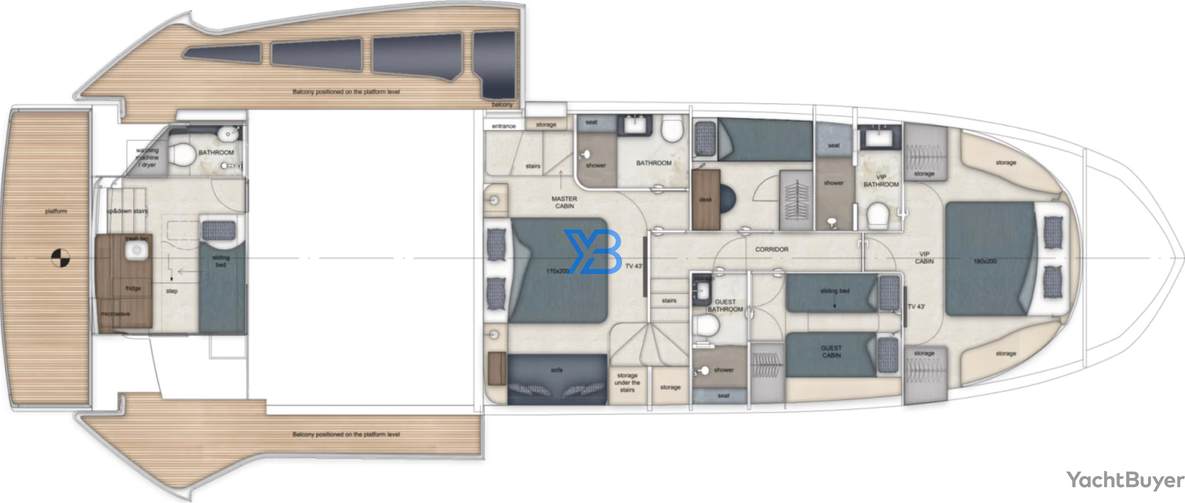
The forward VIP is probably the nicest guest space because the hull volume carries quite well into the bow and the glazing stops the cabin feeling closed in. There is a really nice amount of natural light coming through for a lower-deck cabin, the bed access works well enough from both sides and it feels properly comfortable for extended stays aboard rather than just somewhere guests disappear to at night.
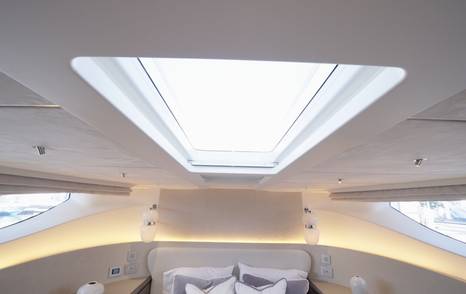
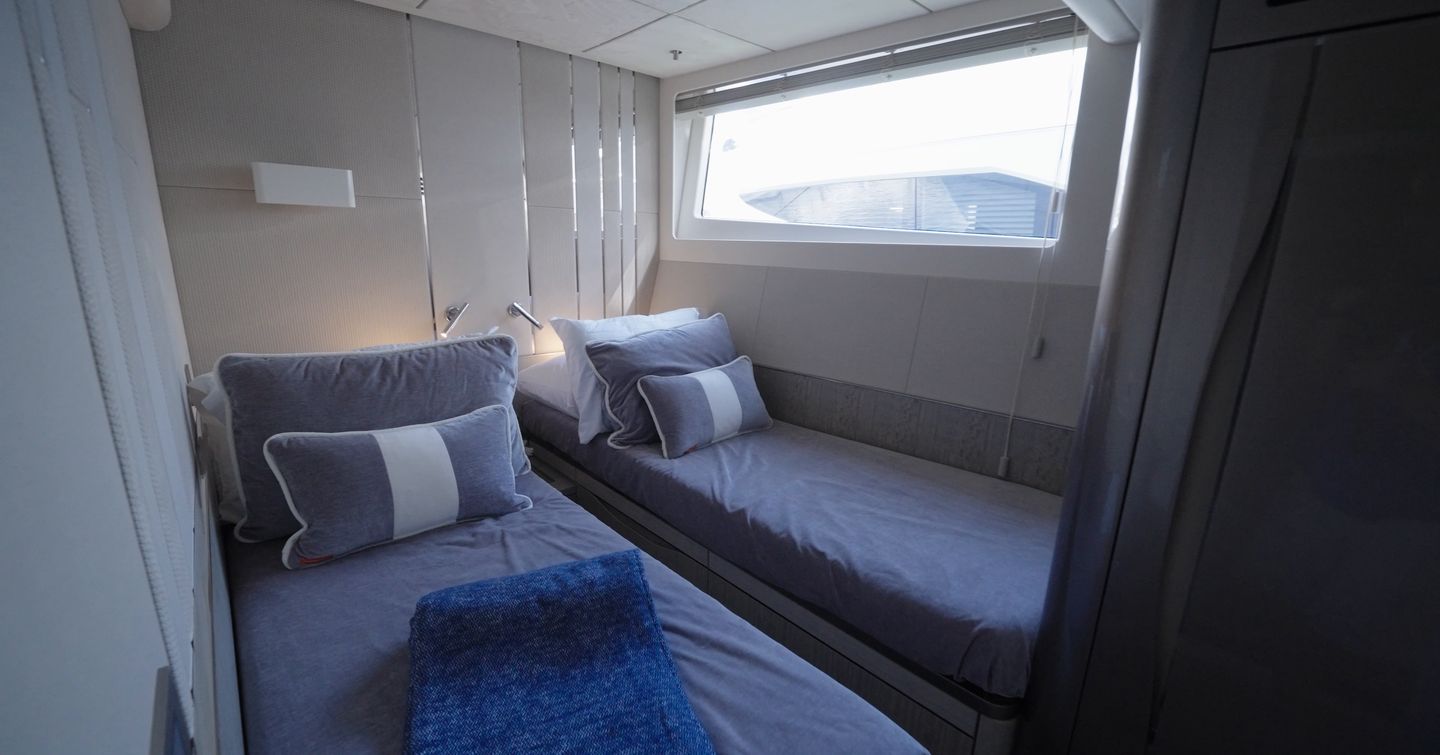
The twin cabin is where the compromises become more obvious. The space between the berths feels fairly narrow once you are actually moving around properly, and you can definitely feel the lower-deck layout tightening up in this part of the boat. It is still perfectly usable, though compared with the openness of the owner’s cabin and even the VIP, this room feels much more driven by packaging efficiency than atmosphere.
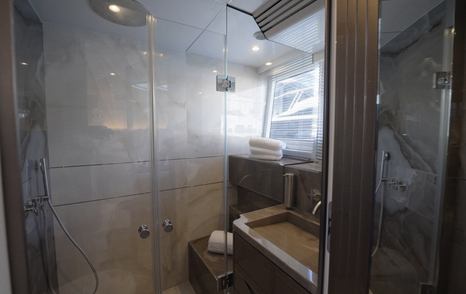
The bathrooms are straightforward and sensible rather than overly styled. Shower spaces look properly usable, storage is decent enough and Galeon has avoided cramming too many decorative details into relatively compact rooms, which helps them feel cleaner and easier to live with day to day.
What works nicely across the whole lower deck is the atmosphere. The softer lighting and calmer material choices suit the boat much better than a glossier, more theatrical interior probably would have done, especially because there is already quite a lot happening architecturally with the terraces, glazing and asymmetrical layout above.
Crew Cabin
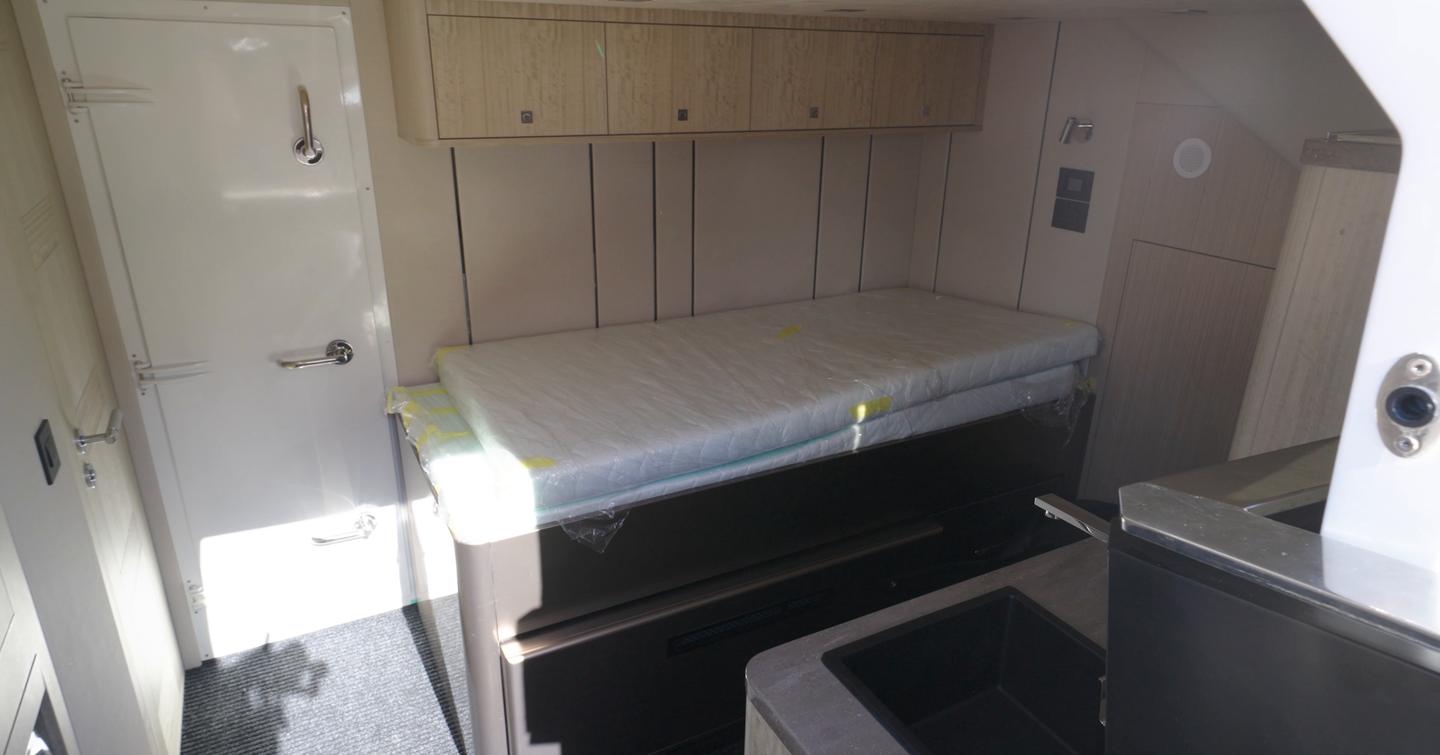
The crew cabin sits directly off the bathing platform, which makes a lot of sense on a boat designed so heavily around water access and beach-club living. Positioned aft beside the technical spaces, it gives crew quick access to toys, terraces and docking areas without forcing movement through the guest accommodation. Space is fairly compact, with two berths, a small kitchenette and a separate bathroom.
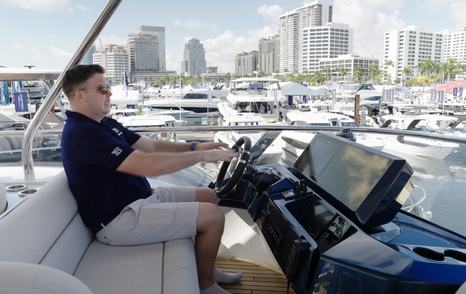
The asymmetrical layout starts making most sense from the lower helm because the widened starboard side deck and pantograph access door create a very direct route from the driving position to the dockside. On a boat approaching 20 metres overall, that matters, especially for owner-operators handling stern-to berthing or short-handed manoeuvres. Step through the side door and you are immediately beside the side deck rather than having to work around furniture or narrow walkways first.
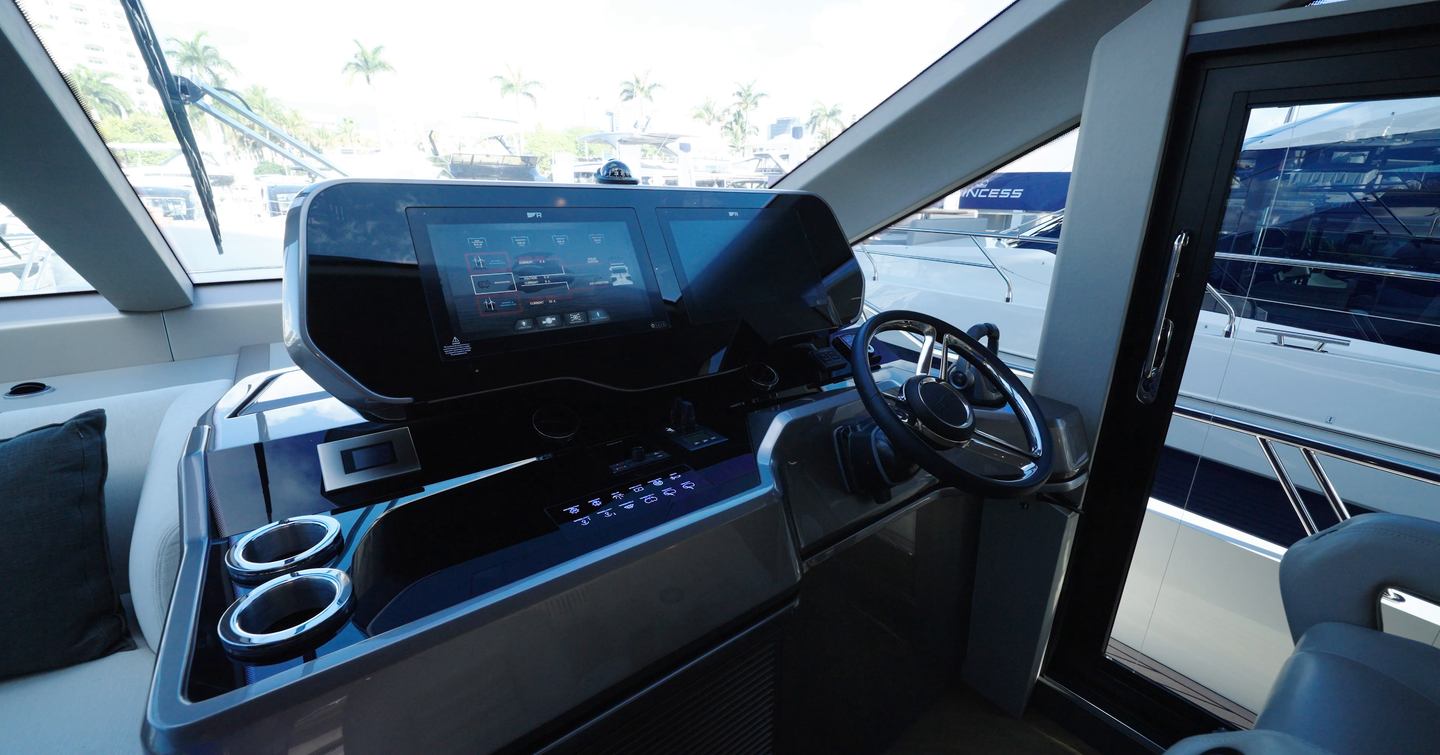
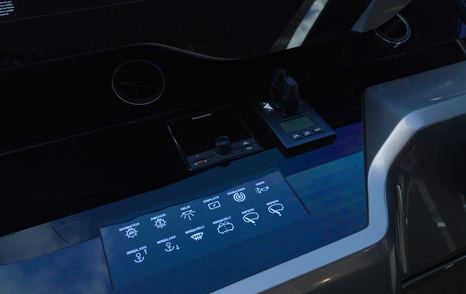
The lower helm itself is quite cleanly arranged. Twin multifunction displays sit directly ahead of the wheel, with throttles and joystick controls naturally placed to starboard, while the side glazing and deep windscreen help visibility considerably when standing. The dashboard stays fairly low too, so the forward sightlines feel open and confidence-inspiring when manoeuvring slowly.
Seated visibility is less convincing though. Once fully back into the helm seat, the rising bow starts obscuring the near-water view sooner than you would really want, particularly during close-quarters work where seeing exactly where the bow ends matters. It is not disastrous, though it does encourage a more upright driving posture than the seat itself suggests.
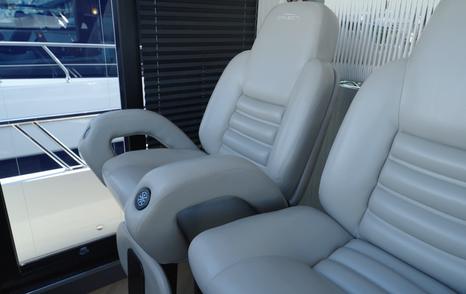
The companion seating beside the helm works nicely because it keeps the driving position socially connected to the rest of the main deck rather than isolating the skipper off in a separate corner. That broader feeling continues through the centre windscreen opening and side access arrangement, so movement between helm, foredeck and saloon feels unusually fluid for a flybridge yacht of this size.
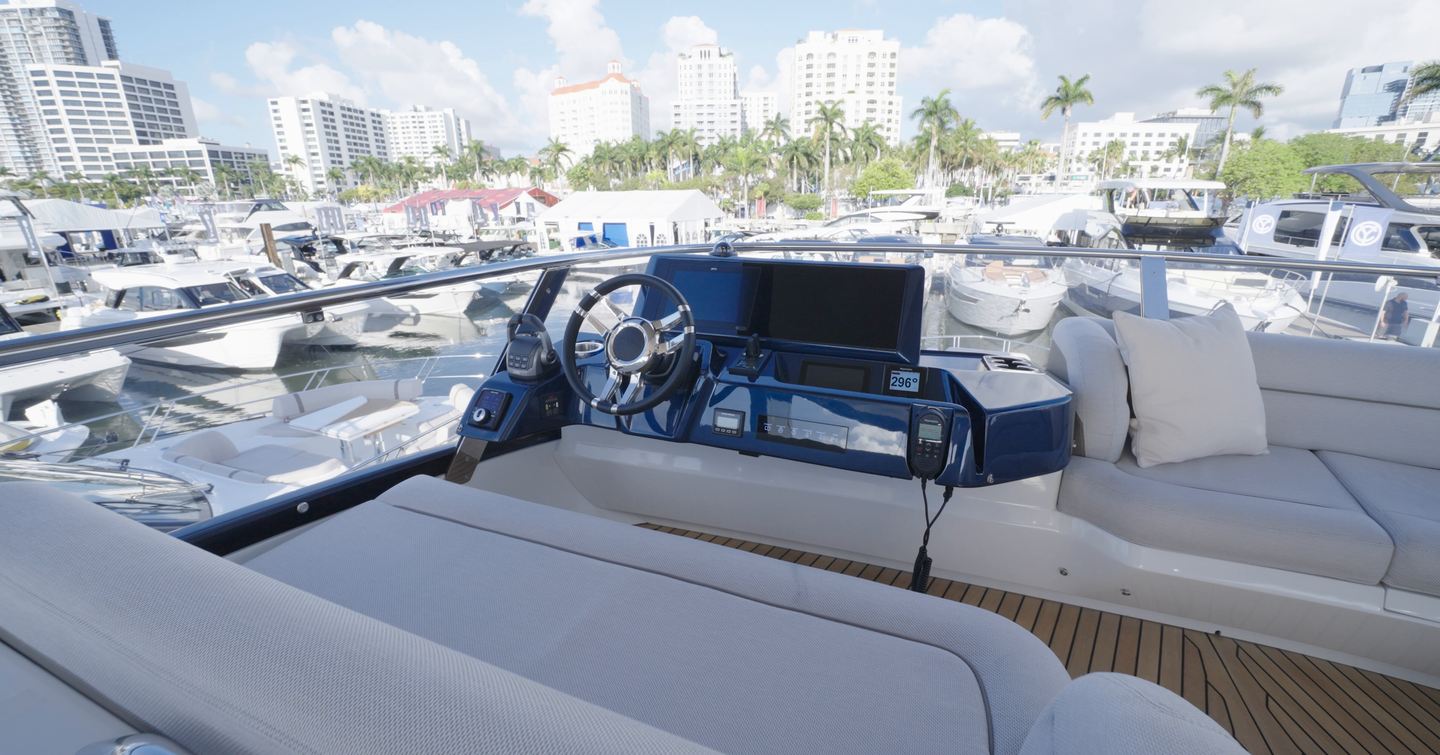
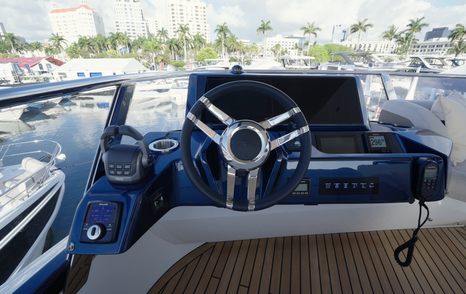
Up on the flybridge, the mood changes quite a bit because the upper helm is much more relaxed and outward-looking. Visibility aft improves significantly from up here, airflow across the deck is excellent, and the skipper remains part of whatever is happening socially around the seating and wet bar areas. Galeon has resisted turning the helm into a completely separate operational zone, which suits the boat’s overall character very well.
The flybridge console itself is straightforward and easy enough to understand, though the surrounding layout is less successful in places. The route between the wet bar and dining area narrows noticeably once chairs are occupied, and the amount of loose furniture spread around the upper deck starts feeling slightly impractical on a boat intended for genuine cruising rather than occasional marina use. Securing everything before passage-making will take time, and there does not appear to be an especially elegant answer to where it all lives underway.
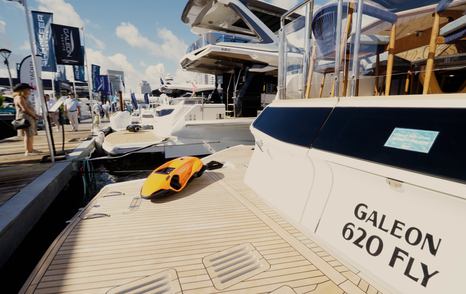
The aft deck is the point where the Galeon 620 Fly stops feeling like a fairly conventional flybridge yacht with some clever party tricks and starts feeling genuinely different. With the terraces folded out and the platform lowered, the stern opens into a very broad waterside space that changes how the boat gets used at anchor, because suddenly everybody ends up down at sea level rather than sitting higher up in the cockpit.
The lower terraces do most of the heavy lifting here. Drop both sides alongside the hydraulic bathing platform and the whole footprint widens dramatically, while the water sits almost level with the seating areas. It is a really nice place to spend time, especially in calm anchorages, and unlike some transformable deck systems that feel designed mainly for brochures, this one actually alters the atmosphere on board in a meaningful way.
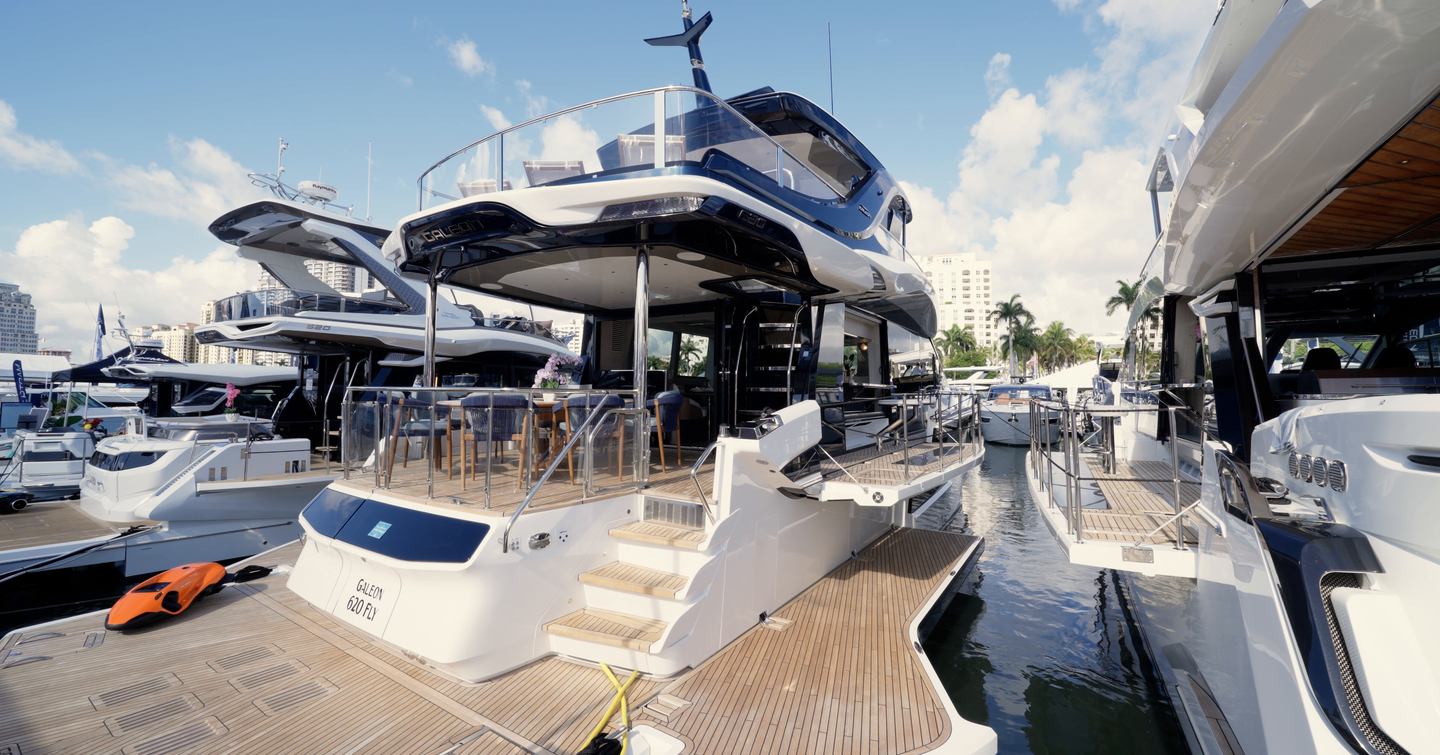
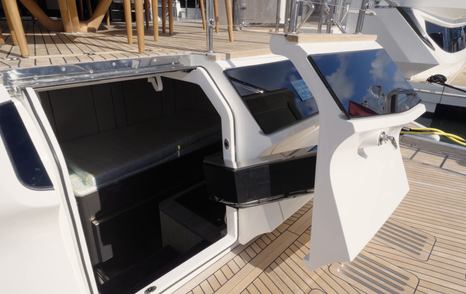
What helps is that the three opening sections all do slightly different jobs. The upper starboard balcony becomes part of the cockpit bar arrangement, so with the sliding glass section open beside it, this side works very well for drinks and casual dining over the water. Down below, the lower starboard terrace feels more practical than decorative because Galeon has built retractable cleats into it, allowing the space to work as a proper toy and tender berth rather than just another lounging platform.
The portside terrace is the clever bit though because this is where the owner’s cabin connects directly to the water. A private stair leads down onto a platform sitting only around 40cm above sea level, and while it sounds slightly overcomplicated on paper, in practice it is probably the best idea on the boat. Early mornings at anchor, quick swims without crossing the cockpit, somewhere quiet away from guests - it all feels very natural once you see it in use.
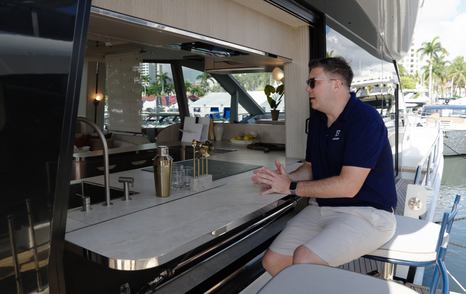
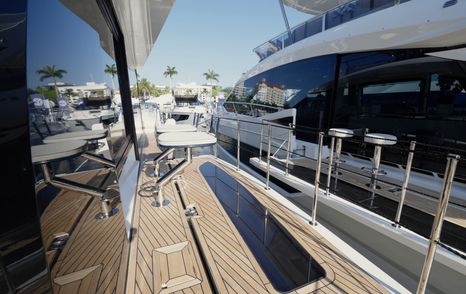
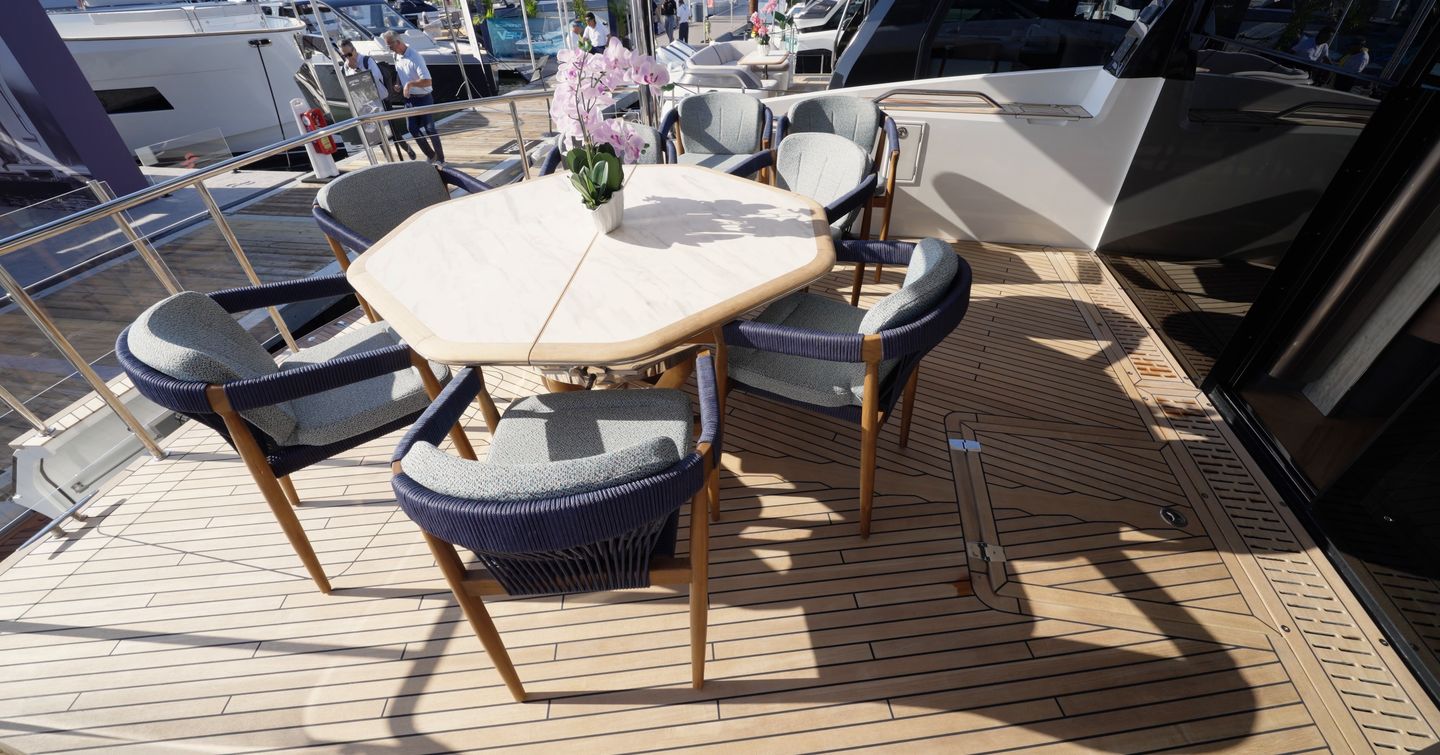
The cockpit itself is comparatively restrained, and that is probably the right decision because there is already a lot happening around it. The dining area sits beneath a very deep flybridge overhang, so this becomes a genuinely comfortable shaded space during the hottest parts of the day, while the opening galley connection keeps food and drinks service easy without forcing everybody inside.
Not everything works perfectly, mind you. The asymmetrical layout means the port side deck effectively disappears aft of the saloon, so movement around the boat feels less balanced than on a conventional flybridge yacht, and starboard-side berthing quickly becomes the obvious choice. The loose furniture arrangement is another weak point because it looks good in a marina but raises immediate storage questions once the boat gets underway. There is also an enormous amount of mechanical complexity concentrated into one area - hydraulic terraces, moving glass sections, folding balconies, powered platforms - and while most of it feels worthwhile here, long-term ownership and maintenance will matter far more on this boat than on something simpler and more conventional.
Foredeck & Flybridge
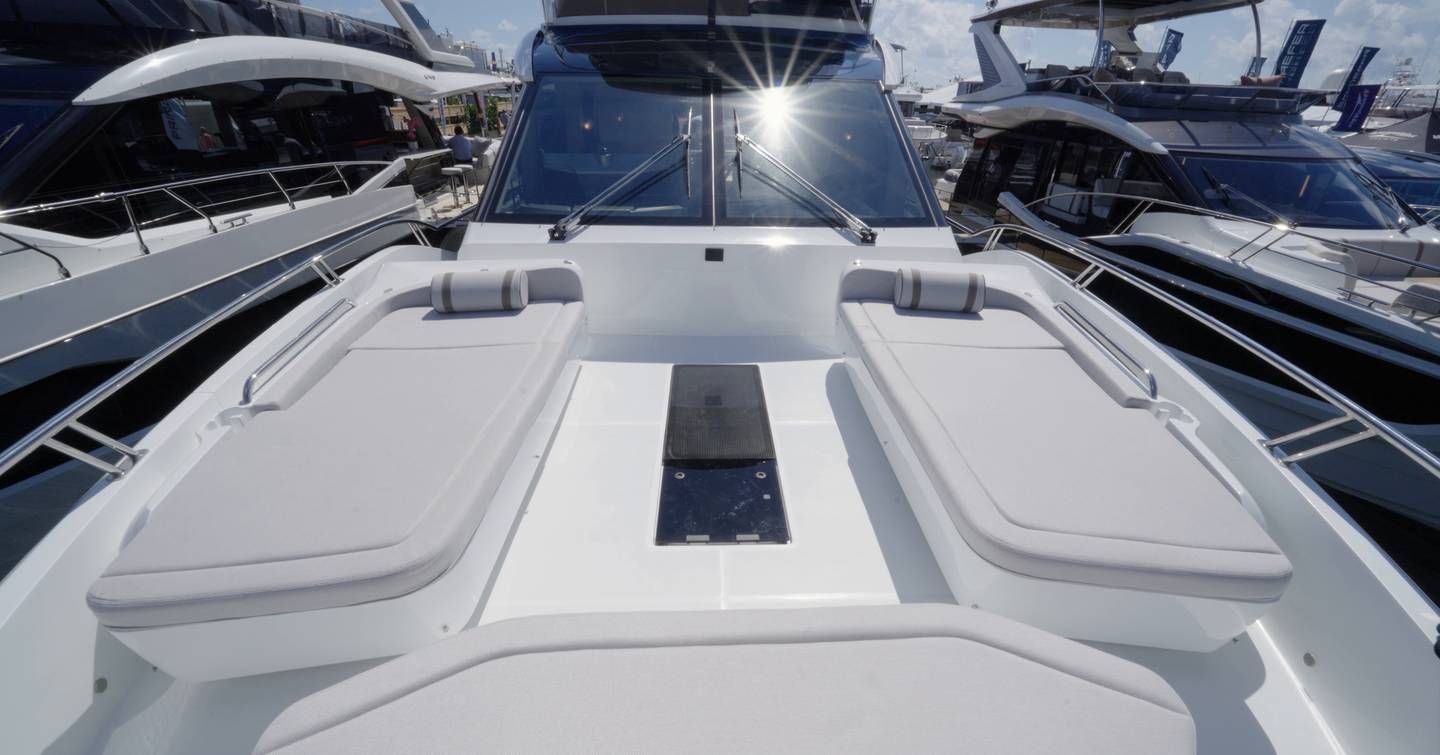
Galeon has clearly decided that the cockpit should focus on dining and water access because the proper lounging spaces have been pushed forward and upward instead. That becomes obvious once you reach the foredeck, where the whole area has been designed around sunbathing and relaxed seating rather than practical deck handling.
The basic layout works well. Two large sunpads dominate the space, while the seating faces inward so people can actually sit and talk to each other rather than staring straight ahead at the anchor. There is good storage beneath the cushions too, and the side-deck access is easy enough thanks to the asymmetrical arrangement further aft.
Some of the movable features feel slightly overthought though. The sunpads slide inboard and outboard on runners, while the central seating section rotates as well, and although the flexibility is quite clever, you do occasionally find yourself questioning whether every mechanism really needed to exist. The simpler reality is that this is just a very nice place to lie in the sun, and it probably would have been equally successful without quite so much movement built into it. The lack of teak or softer decking up here stands out too because the moulded surface feels bright and slightly hard underfoot compared with the warmer atmosphere elsewhere on the boat.
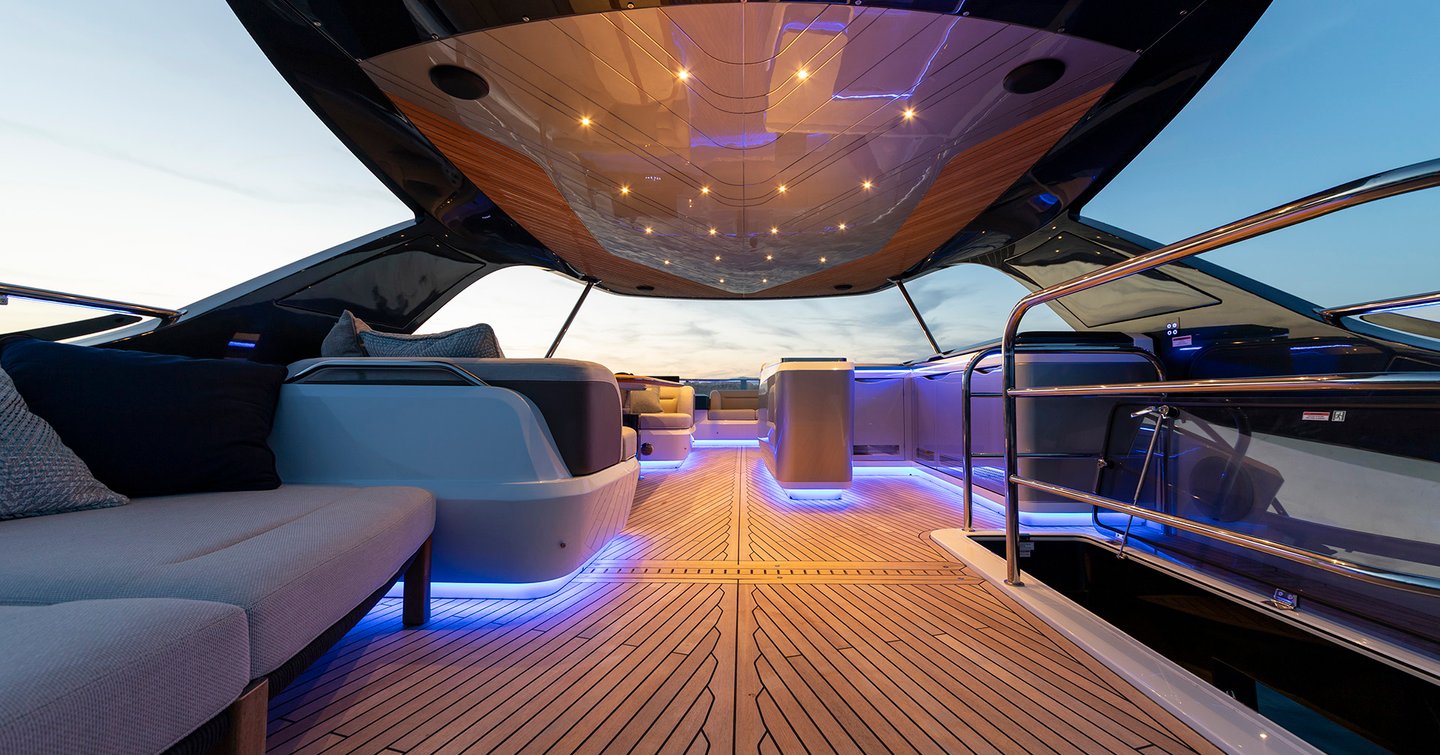
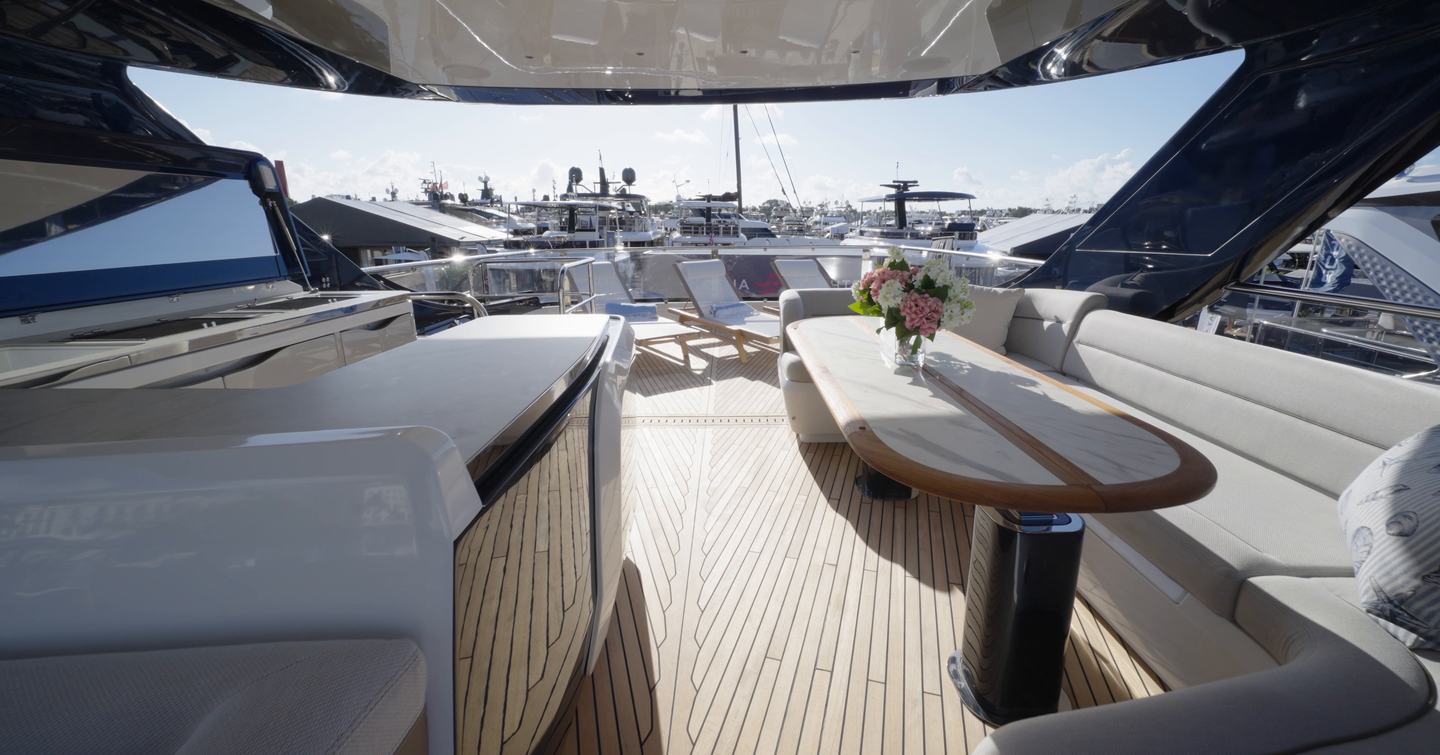
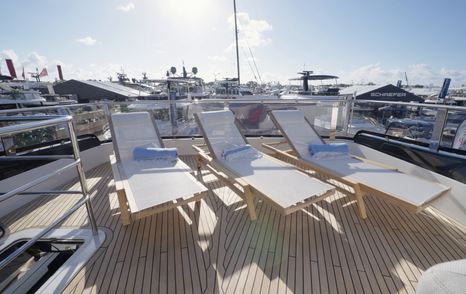
The flybridge itself makes a much stronger first impression because the sheer amount of space up here is genuinely surprising. Galeon has split the deck into very distinct zones, so the lounging area aft feels separate from the helm and dining spaces forward, while the open sides and broad beam allow plenty of air to move through the deck. Even sitting inside a crowded show marina, the flybridge still catches enough breeze to feel very pleasant.
The aft section is probably the weakest part practically because Galeon has filled it with loose freestanding furniture that looks lovely when the boat is stationary but immediately raises questions once the yacht gets underway. There is a lot of it, none of it appears especially easy to secure quickly, and boats in this size range spend plenty of time moving rather than sitting perfectly still in marinas.
The fixed hardtop will divide opinion too. It gives excellent shade coverage, and in hotter climates that matters far more than people sometimes admit, though the lack of an opening roof does remove some of the open-air feel rivals offer with sliding canvas or louvre systems.
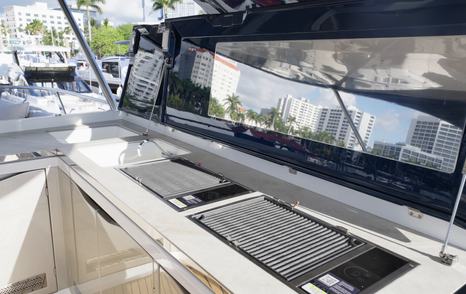
The flybridge bar is much more convincing. It is a really good size with twin grills, refrigeration, sink space and generous work surfaces, while the wraparound shape helps it feel integrated into the seating rather than simply pushed against the edge of the deck. The dinette opposite works reasonably well too, though the seating sits slightly too low for comfortable dining and the walkway between table and bar becomes quite tight once chairs are in place.
Engine Room
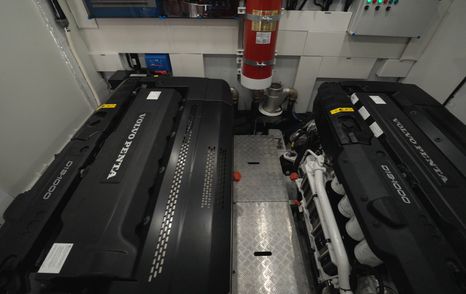
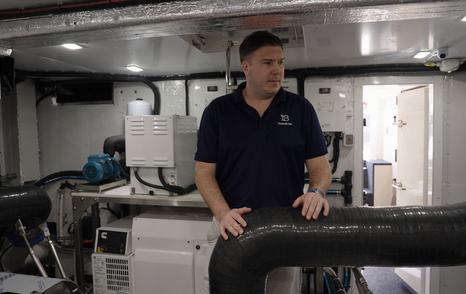
The engineering challenge on the Galeon 620 Fly is not really the engines themselves but everything wrapped around them, because this is a yacht built around moving terraces, hydraulic platforms, pantograph doors and large sections of powered glazing. The machinery spaces appear relatively tightly packaged because so much of the aft structure is given over to terraces, platform systems and beach-club architecture, and while there seems to be enough room for routine checks and servicing, the outboard areas naturally tighten as systems, pipework and hydraulic equipment start competing for space. That is probably unavoidable on a yacht trying to deliver this much transformable architecture within a 62-foot platform.
Power comes from either Volvo Penta IPS installations or larger MAN shaft-drive packages, with outputs ranging from 900hp up to 1200hp per side. The two setups likely give the boat slightly different personalities. IPS suits the 620 Fly’s strong owner-operator focus because joystick manoeuvring and integrated controls make docking a boat of this size far less intimidating, while the MAN shaft-drive configuration will probably appeal more to buyers wanting a heavier-duty and mechanically simpler propulsion arrangement over the long term.
Our Verdict
There is obviously a huge amount of pressure on Galeon to keep innovating because the brand has built so much of its identity around transformable design, though the danger with that approach is that boats can start feeling overcomplicated simply for the sake of standing out - but the 620 Fly's big ideas improve the onboard experience in a meaningful way, and the lower terraces are the clearest example of that.
Some of the movable furniture feels better suited to a boat show than serious cruising, circulation tightens in places because of the asymmetrical layout and the sheer amount of hydraulics and powered systems creates a level of mechanical complexity owners will need to take very seriously. Still, the important thing is that the core concept is bang on.
Reasons to Buy
- Brilliant waterside beach-club
- Private owner terrace
- Huge saloon for 62ft
Things to Consider
- Tight around owner stairs
- Complex systems
Looking to own a Galeon 620 Fly ? Use YachtBuyer’s Market Watch to compare all new and used Galeon 620 Fly Yachts for sale worldwide. You can also order a new Galeon 620 Fly , customized to your exact specifications, with options for engine choice and layout configuration. Alternatively, explore our global listings of new and used yachts for sale and find your perfect yacht today!
Rivals to Consider
The closest rival is naturally their own Galeon 640 Fly, a larger 20.8m (68ft) development of the same transformable architecture idea. The 640 pushes the beach-club concept even harder with larger fold-down balconies, a more expansive flybridge and greater interior volume overall, though the extra size also moves it further into crew-operated territory. The 620 Fly arguably feels slightly more cohesive because it still balances owner-operation practicality with all the moving architecture, whereas the 640 becomes more focused on outright scale and marina presence.
The Azimut Fly 62, measuring 19.2m (63ft), approaches the “closeness to the sea” idea very differently. Designed externally by Alberto Mancini with interiors by Fabio Fantolino, the Azimut uses its Beach Cockpit arrangement to open the transom outward while lowering the aft sofa toward the water, creating a much calmer and more integrated stern area than previous Azimut flybridge yachts. The whole boat feels extremely polished and architecturally clean, though it keeps most of the drama concentrated around the cockpit and bathing platform rather than attempting anything as ambitious as Galeon’s lower side terraces or private owner sea-access arrangement.
The Cranchi Sessantadue 62, at 20.2m (66ft), takes a more restrained and slightly more naval approach again. The hull was developed by Aldo Cranchi, with design by Centro Studi Ricerche Cranchi and art direction from Christian Grande. A vertical bow and long visual waterline give the boat a more purposeful stance than the Galeon, while the interior leans toward Italian minimalism rather than transformable architecture. It feels calmer and mechanically simpler overall, though Cranchi never attempts the same kind of waterside theatre or beach-club experimentation that defines the 620 Fly.
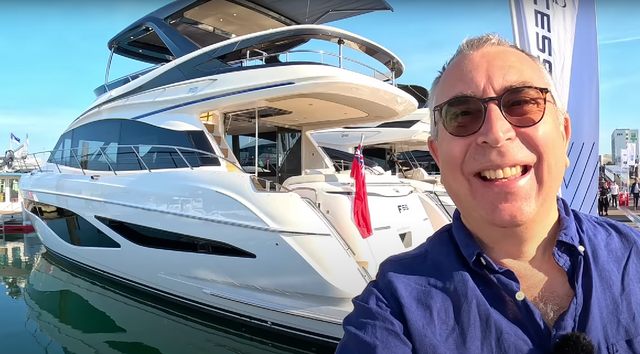
A Princess F65 is probably the most conventional rival here, though also one of the most polished from a pure usability standpoint. At 20.3m (67ft), the British-built flybridge yacht focuses heavily on practical family cruising with four cabins, strong glazing throughout the main deck and very refined circulation both inside and out. The engineering and systems integration feel extremely mature, and there is far less mechanical complexity overall than on the Galeon. What it does not try to do is reinvent the relationship between owner and water. Compared with the F65, the Galeon feels much more experimental and much more ambitious architecturally, especially around the owner’s suite and aft terraces.
Considering a new yacht? Explore Galeon's entire current range to find the model that best suits your needs, and compare it with alternatives from competitors to ensure you make the perfect choice.
Specifications
- Builder Galeon
- Range Flybridge
- Model 620 Fly
- Length Overall 64' 7"
- Beam 16' 7"
- Draft(full load) 3' 3"
- Hull GRP
- Cabins 3
- Berths 6
- Crew 1
- Cruising Speed
- Max Speed
- Fuel Capacity 885 Gallons
- Fresh Water Capacity 211 Gallons
- Engine Model 2x MAN V8-1200

Interested in a 620 Fly?
NEW Build
Find your local dealer for a personalised, no-cost consultation
or just request
Brochures & Pricing
Used & In Stock
Looking for a ready-to-go 620 Fly or pre-owned options? Explore all inventory of the 620 Fly available worldwide