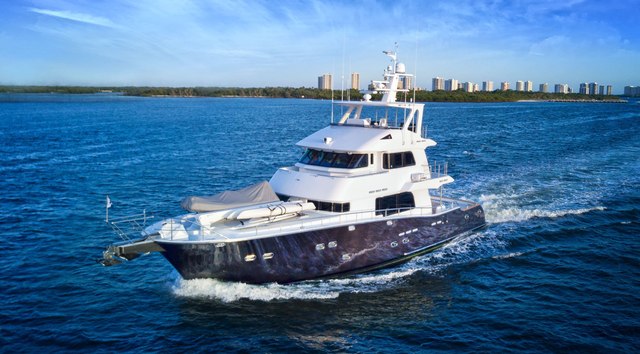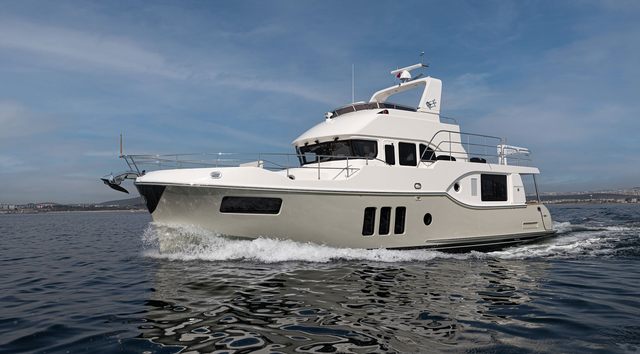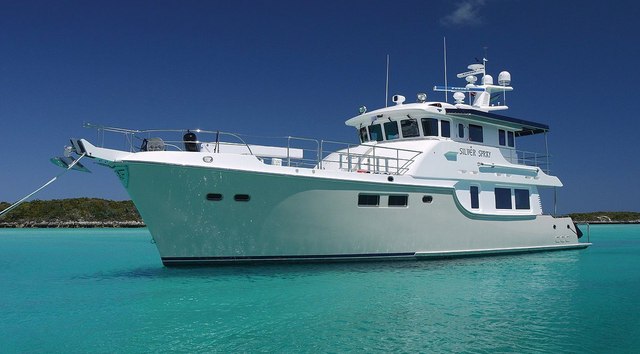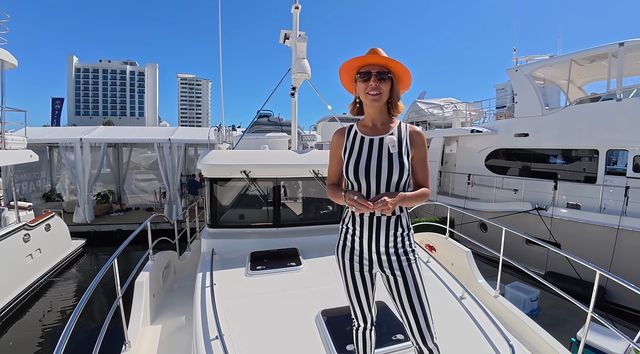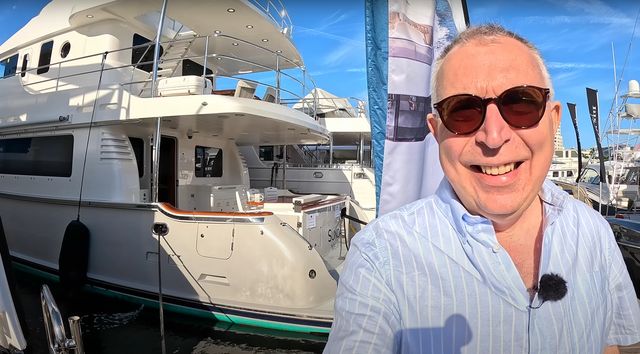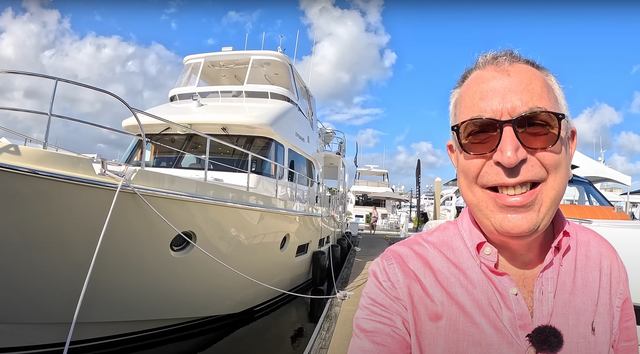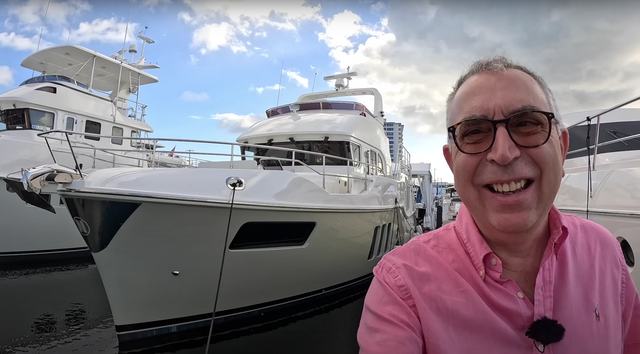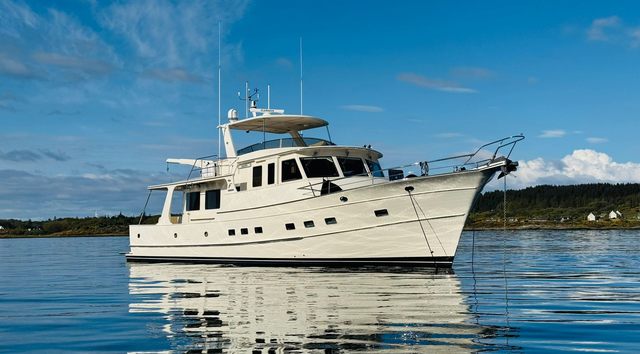
The N68 is still built like a ship, but with the kind of space and finish that make full-time life aboard realistic.
There’s the full-beam owner’s cabin forward with big hull windows, a galley that feels like a home kitchen, and a flybridge that trades instruments for open air and a view. It appears to be where Nordhavn transitions from a rugged liveaboard to become a spacious and comfortable home away from home.
Nordhavn 68
- LOA 68'
- Model Year 2021
- Cabins 3
- Crew 1
- Max Speed 11 knots
- Status In Production
- Yacht Type Trawler Boat
- Use Type Cruising
Review Video
The Nordhavn 68 was created to fill a particular space in the range. At its introduction, it came in between the N62 and the N72, and the original brief came from long-time Nordhavn owners who had taken their N62 across oceans and wanted more room without needing crew. The N68 set the blueprint for what has since become the upper limit of Nordhavn's owner-operator line.
The N68 is built on one versatile hull that supports two distinct versions. The Aft Pilothouse model mirrors the older N62, with the master cabin forward on the main deck for a single-level, liveaboard feel. The Forward Pilothouse version takes its cues from the N64, with the owner’s cabin amidships on the lower deck for less motion at sea.
A third variant, the Non-Flybridge, trims the superstructure height for a lower centre of gravity and a tougher, expedition look. On the main deck, the design is asymmetric, giving a wide starboard walkway and maximising interior space to port. The bridge deck returns to a symmetrical layout with Dutch doors and wing stations on both sides, keeping movement safe and practical in any conditions.
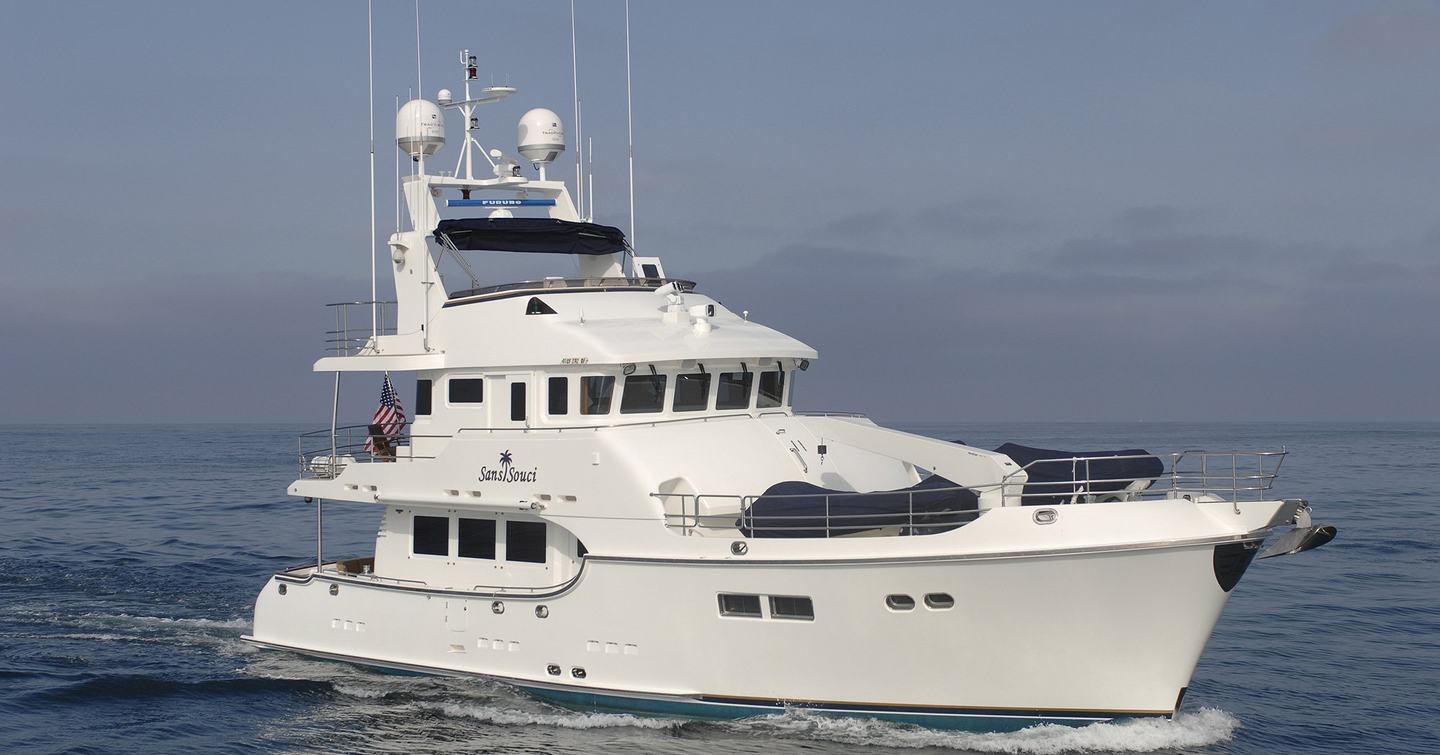
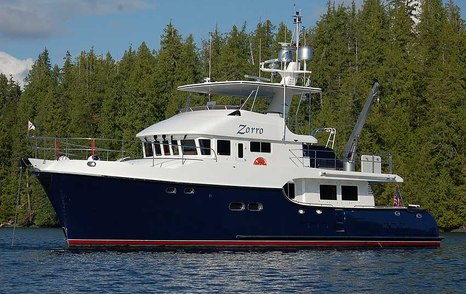
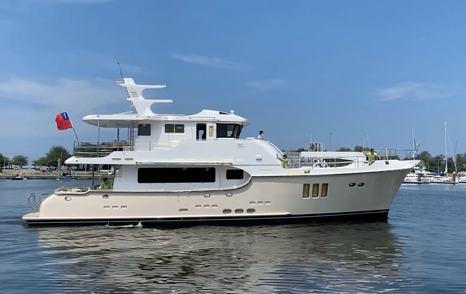
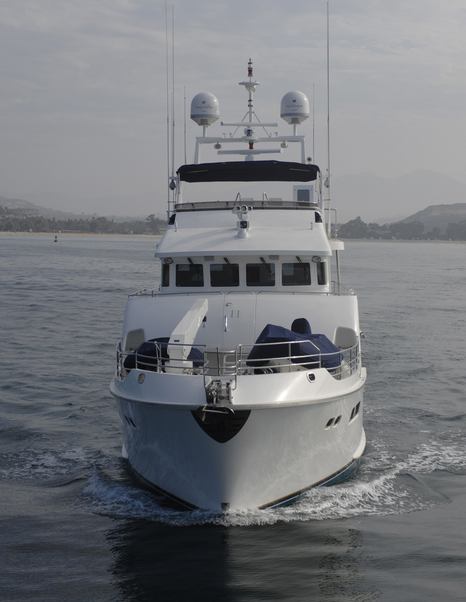
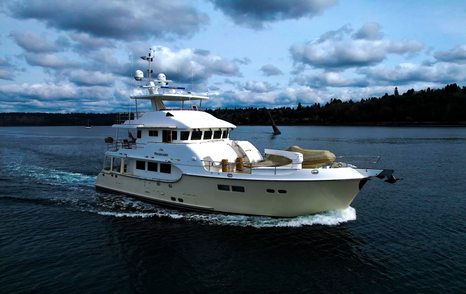
At its heart, this is a full-displacement passagemaker, shaped to work efficiently through water rather than skim over it. The N68’s steady 8-9 knot cruise delivers a range of around 3,000 to 4,000nm and the security that comes from mass and depth.
Nordhavn’s reputation for heavy construction is clear the moment you look at those specifications. The hull below the waterline is a solid layup of hand-laid fibreglass using vinylester resin for maximum osmosis resistance. The forward sections have extra laminate thickness for collision protection. Seven longitudinal stringers run the length of each side, supported by transverse frames that give the hull enormous rigidity. Above the waterline, the decks and superstructure use a one-inch Baltec balsa core to add stiffness and insulation without carrying unnecessary weight.
Large sections of the superstructure, including the wheelhouse and bulwarks, are moulded in single pieces to avoid seams and potential leaks. The result is a finish that feels more commercial than cosmetic, and entirely in keeping with the brand’s practical mindset.
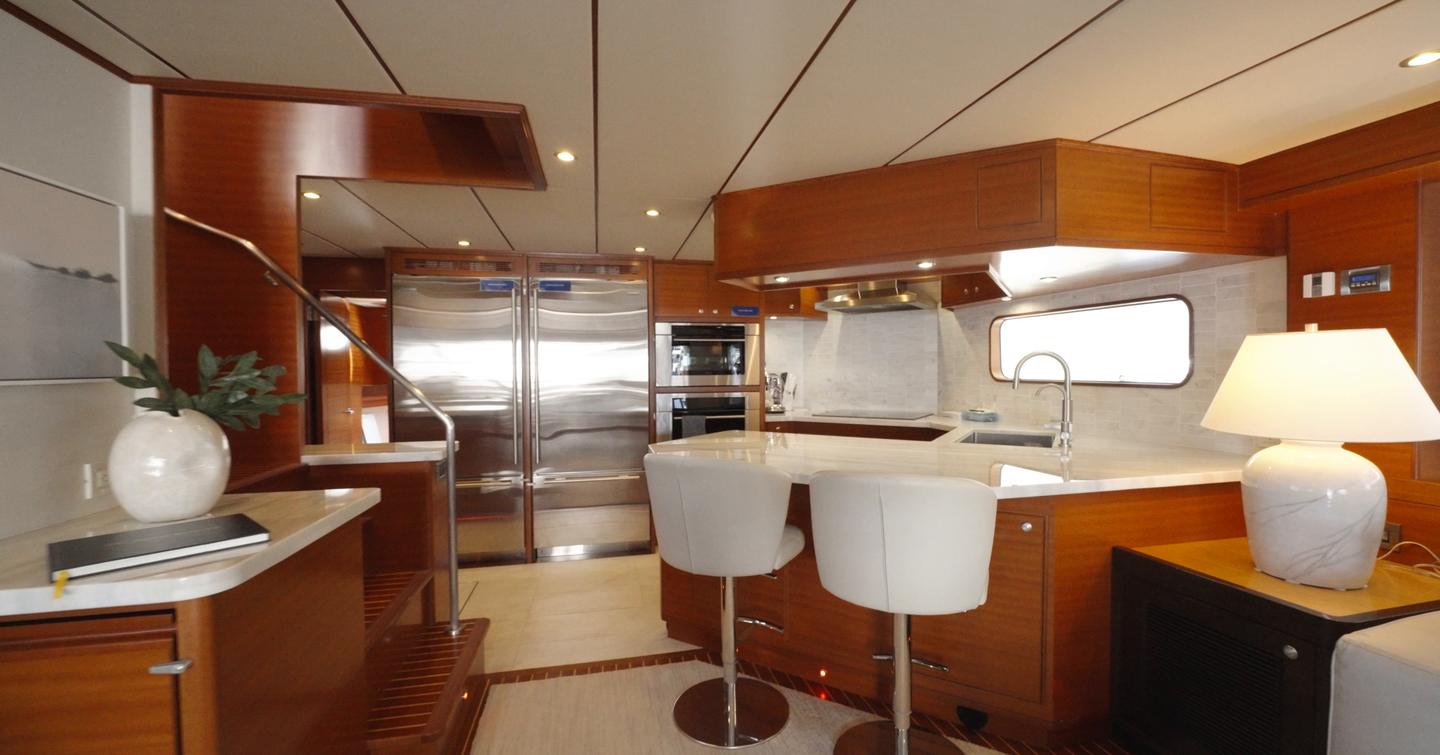
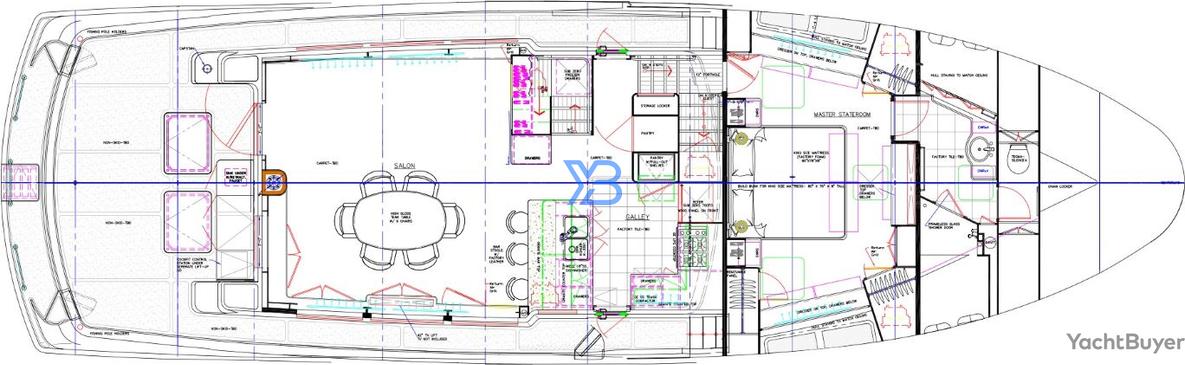
A step down from the wheelhouse, the saloon and galley share the same level, so the whole main deck feels open and easy to live in. Big windows bring in plenty of light, and the galley runs forward in a country kitchen style, fitted with proper domestic appliances.
There’s a big breakfast bar with stools, a large sink with twin taps, and a full set of Wolf cooking equipment, including double ovens, an induction hob, and an extractor. Cooling is handled by a pair of Sub-Zero fridge-freezers that wouldn’t look out of place in a house, plus extra cold drawers built into the cabinetry. Normally, this area would have a day head, but on this boat, the owner swapped it for a laundry/utility room, which is a sensible addition.
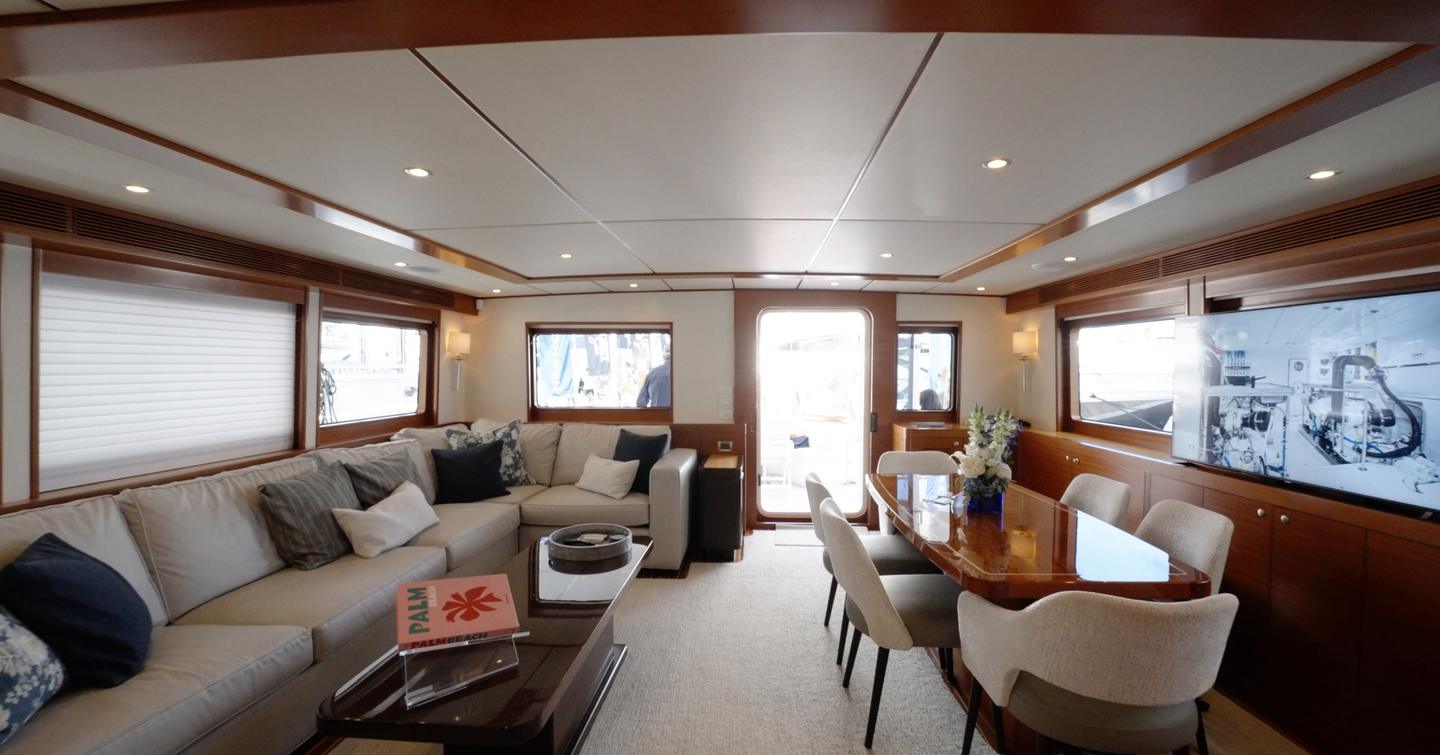
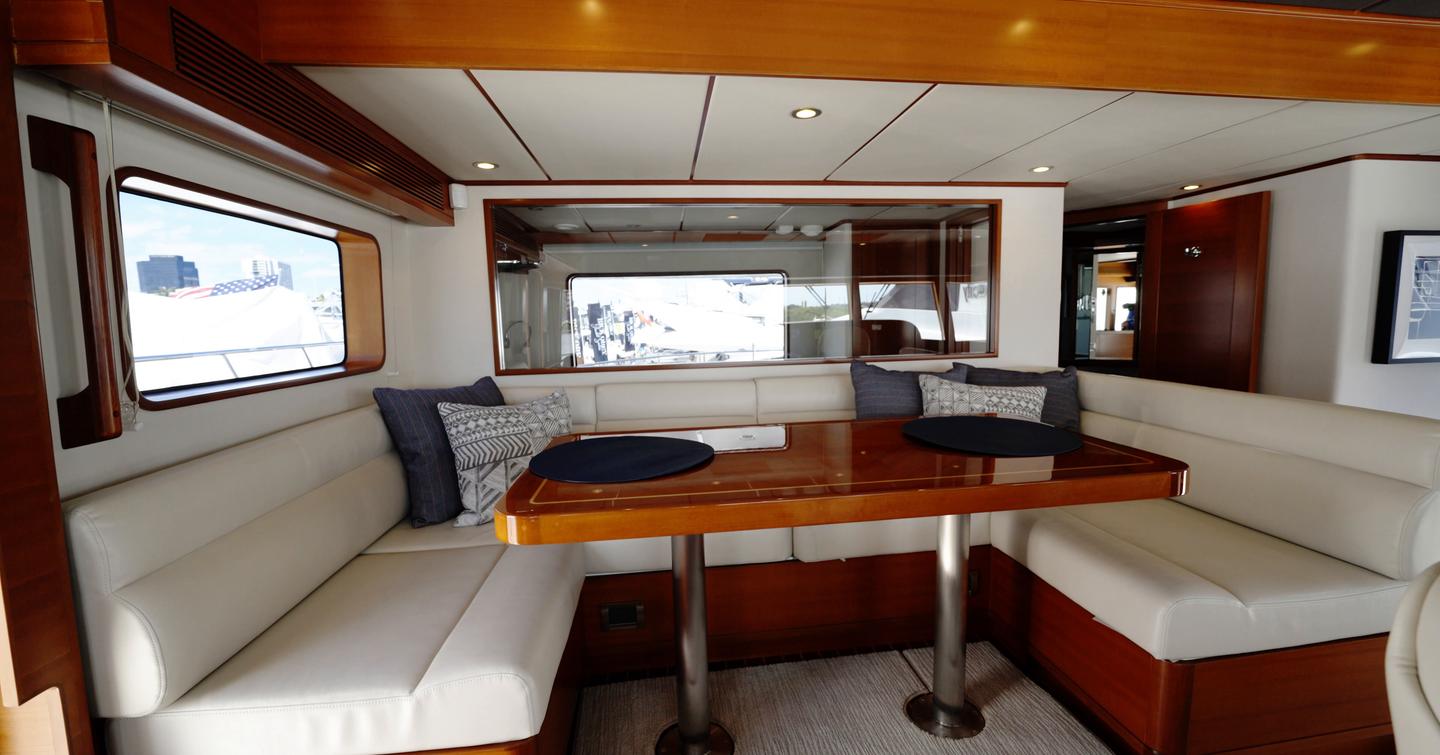
Aft of the galley, the saloon brings a softer tone. There’s a big sofa to port facing a television that drops down from a cabinet opposite, and a smaller table for indoor dining. You can imagine spending days here at anchor when the weather’s foul outside.
It’s a homely space, and because the cockpit sits just beyond a watertight door, you can open it up in good weather and blend the two areas into one. The details are solid and simple – hand-finished teak joinery, deep fiddles on the counters, and sturdy latches on every door.
From this level, stairs lead forward to the owner’s suite and down to the guest cabins, with another set of steps aft to the engine room.
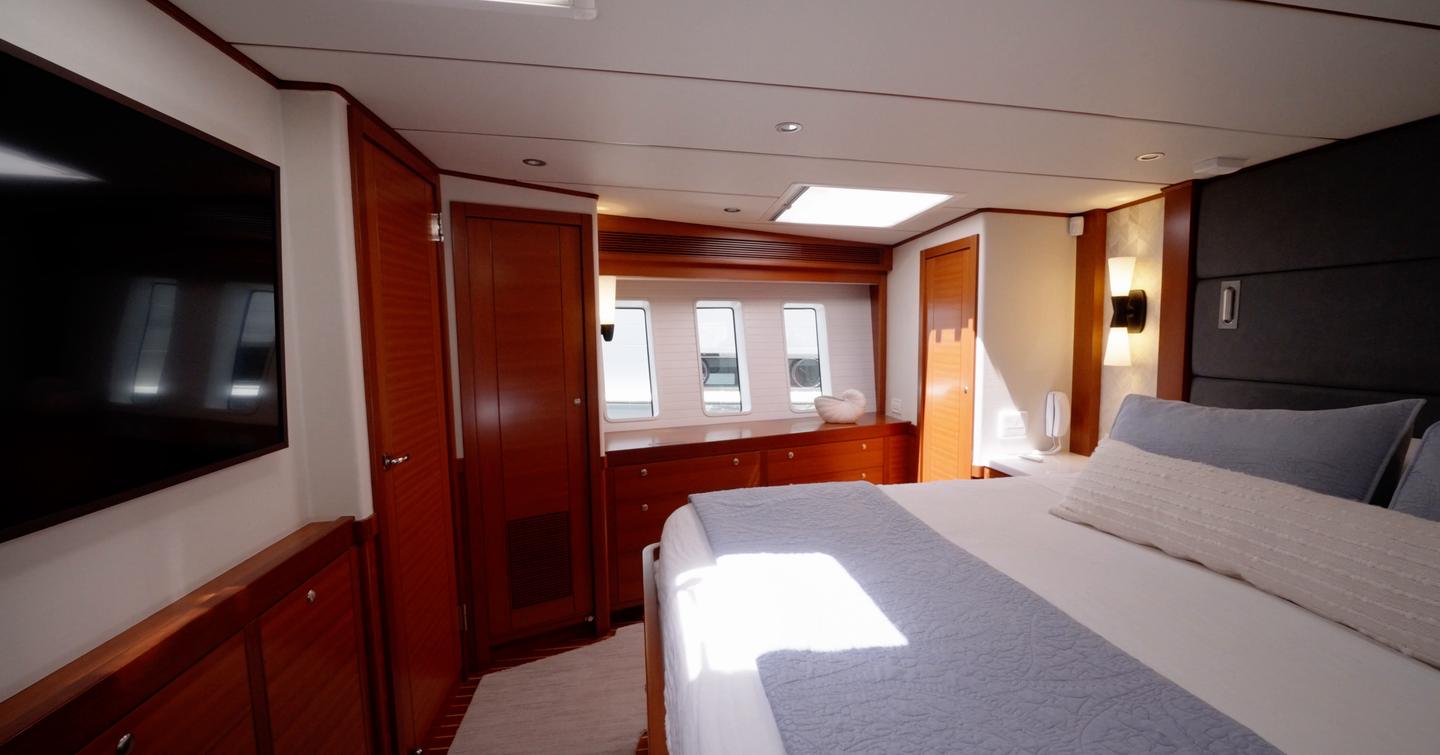
Owner's Cabin
The forward owner’s cabin is full beam, bright, and feels more opulent than the smaller Nordhavns in the range. Triple hull windows on each side flood it with natural light so you can wake up and see the sea from bed. These don’t open, but the three hatches above do, and when you’re at anchor the breeze comes straight over the bow and cools the cabin without relying on the air conditioning.
The bed is large and centred with enough room to walk around on both sides. Storage is everywhere - drawers under the bed, hanging wardrobes on both sides, and even a small walk-in locker. It’s the kind of cabin you could actually live in, which is handy because most owners probably will for a long period of time. The styling keeps that familiar Nordhavn warmth, with teak joinery and soft lighting giving it a calm, homely feel.
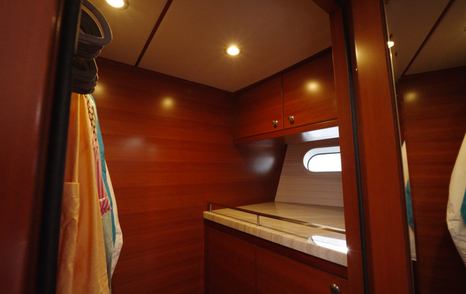
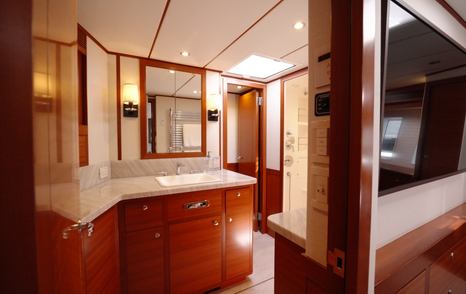
The ensuite runs along the forward bulkhead and is built to the same practical scale. There’s a good-sized sink, a separate shower cubicle, and even a heated towel rail, a small thing that makes a big difference on long trips. Another overhead hatch lets out steam when you’re showering and brings in more light. The head sits right forward, just where it should.
Guest Accommodation
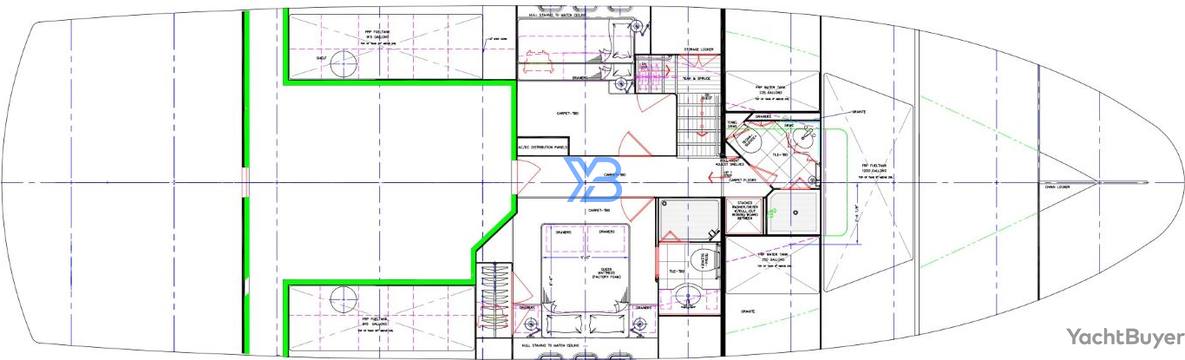
The guest area sits a level down from the saloon, reached by its own staircase. On this boat, the owner asked for the stairs to be moved aft, creating a more private space and a better flow between the living spaces and the accommodation. It works well, giving direct access to the cabins and to the engine room beyond without cutting through the owner’s space.
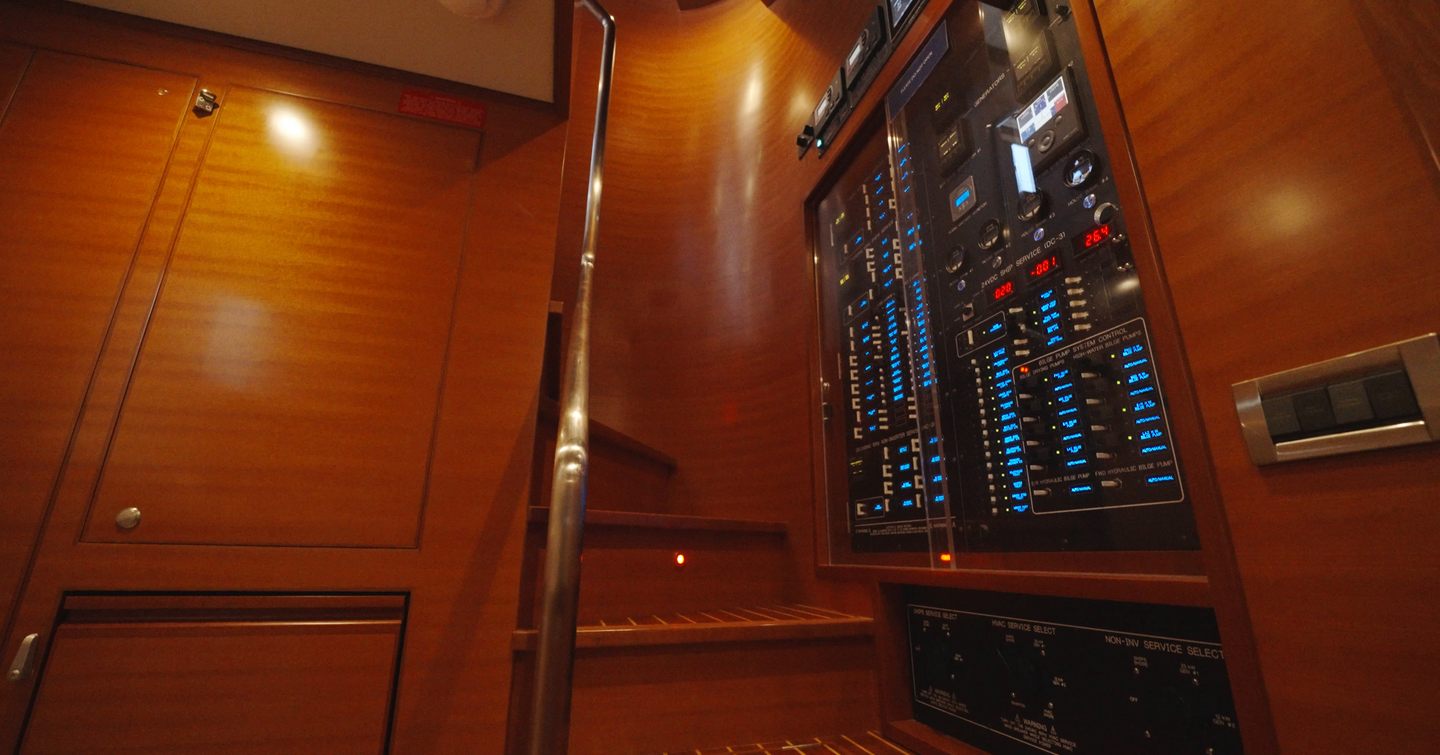
At the bottom of the steps, there’s a small lobby with extra storage and, sensibly, the main electrical switchboard. It’s central and easy to reach, right where you spend most of your time aboard.
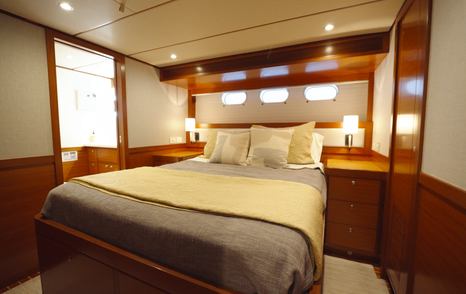
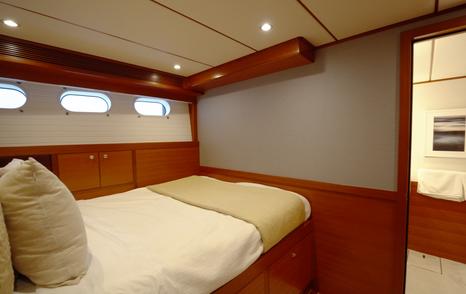
The VIP cabin sits to port and is the larger of the two. It has a proper walk-around double bed, good hanging space, and big drawers under the berth. The ensuite is compact but complete, with a separate shower cubicle, a sink with storage below, and extraction for ventilation. There’s not much natural air here because the portholes are fixed, but the air conditioning keeps the temperature steady.
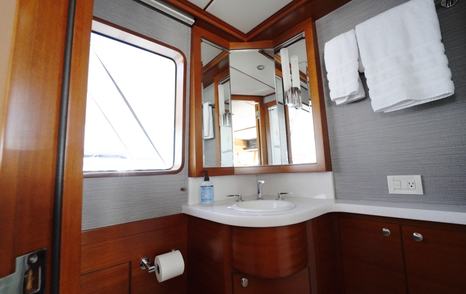
Opposite is the second guest cabin, also a double but slightly tighter. The berth runs against one side, so whoever sleeps outboard has to climb over to get out, though the ensuite here is actually a bit larger than the one next door. It has a big mirror, more counter space, and another proper shower cubicle. Both cabins feel warm and comfortable, finished to the same standard as the rest of the boat.
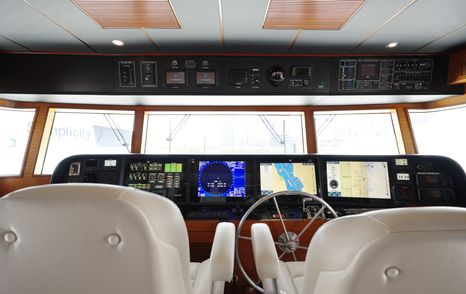
Step inside the wheelhouse, and you transform boat to ship in an instant. The scale, the layout, even the feel underfoot - it all says commercial. Four large Furuno screens stretch across the dash, backed up by a mix of radar, navigation, and control systems that look ready to take you anywhere. Everything is doubled up or has a backup close by, so if something fails, there’s always another way to get home.
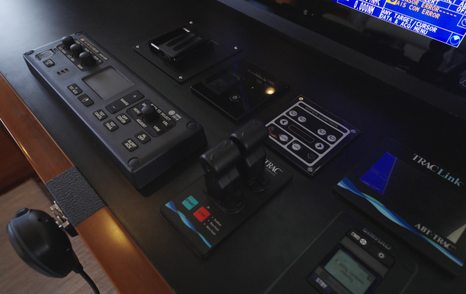
The controls are laid out in classic Nordhavn style. Twin throttles, separate rudder control, hydraulic bow and stern thrusters, and panels overhead for things like the watermaker, engine monitors, and wing engine controls.
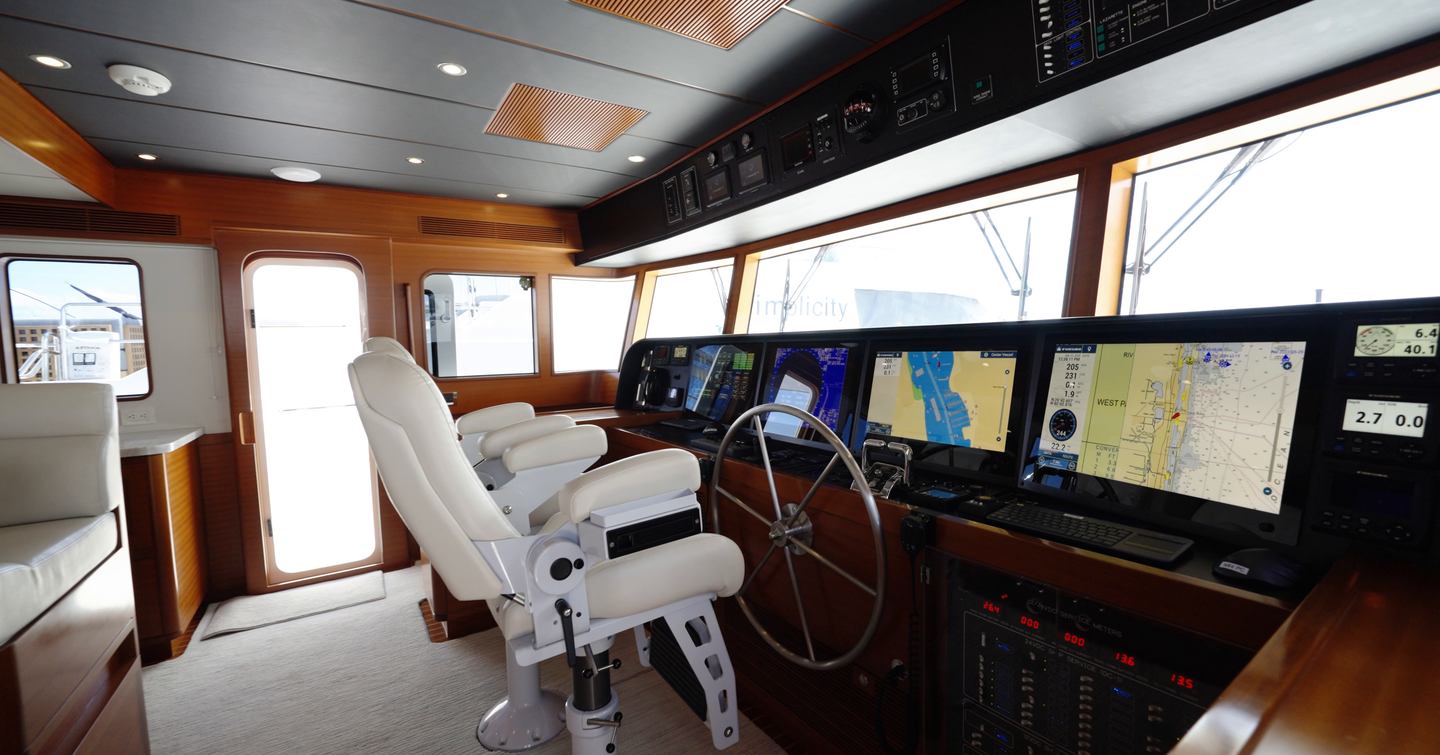
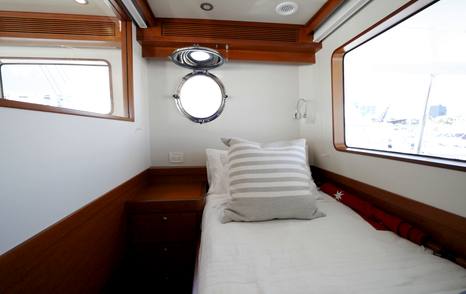
You’ll spend hours here cruising at 8 knots, so it’s not just a working bridge; it’s also a living space. So to starboard, there’s a dinette, big enough to eat or work at while you’re on passage. The Stidd chairs adjust for long stretches at the helm, and even with people sitting there, you can still see forward easily. Off to one side is a single watch cabin with its own head for overnight runs or off-watch naps. It’s small but comfortable, with an opening porthole and plenty of ventilation.
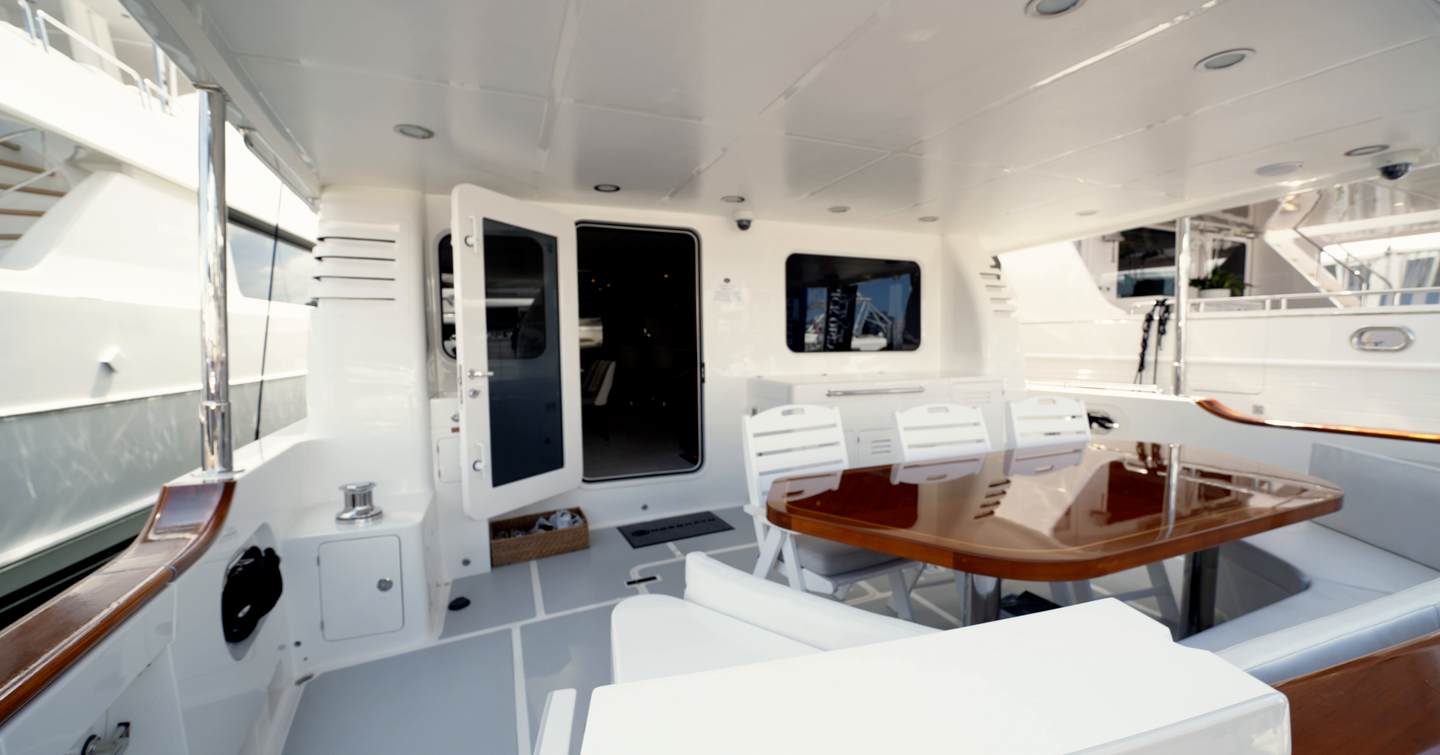
The cockpit on the Nordhavn 68 feels like an outdoor extension of the saloon, sheltered by the bridge deck above, so it works in almost any weather. The space is broad and secure with high coamings and solid bulwarks, giving that reassuring sense of depth that defines a Nordhavn. A large fixed table sits aft with room for loose chairs, and because the galley is just inside on the same level, this becomes the natural spot for everyday meals.
To port is a wet bar with a Fire Magic grill, the kind you would expect in an outdoor kitchen. There is a gas locker beneath, storage for cooking tools, and more lockers for deck gear and a cleaning kit. The whole layout lets you cook and live outside without cluttering the saloon, while the overhang keeps you dry even in a downpour.
The cleats, fairleads, and small warping winches line up cleanly so lines can be handled short-handed without leaving the cockpit. Boarding gates are fitted on both sides, though only the starboard side leads forward along a wide side deck; the port side is closed off to give more room inside. The cockpit can be enclosed to turn it into another living area when the weather closes in, or left open when you want air and space.
Boat Deck
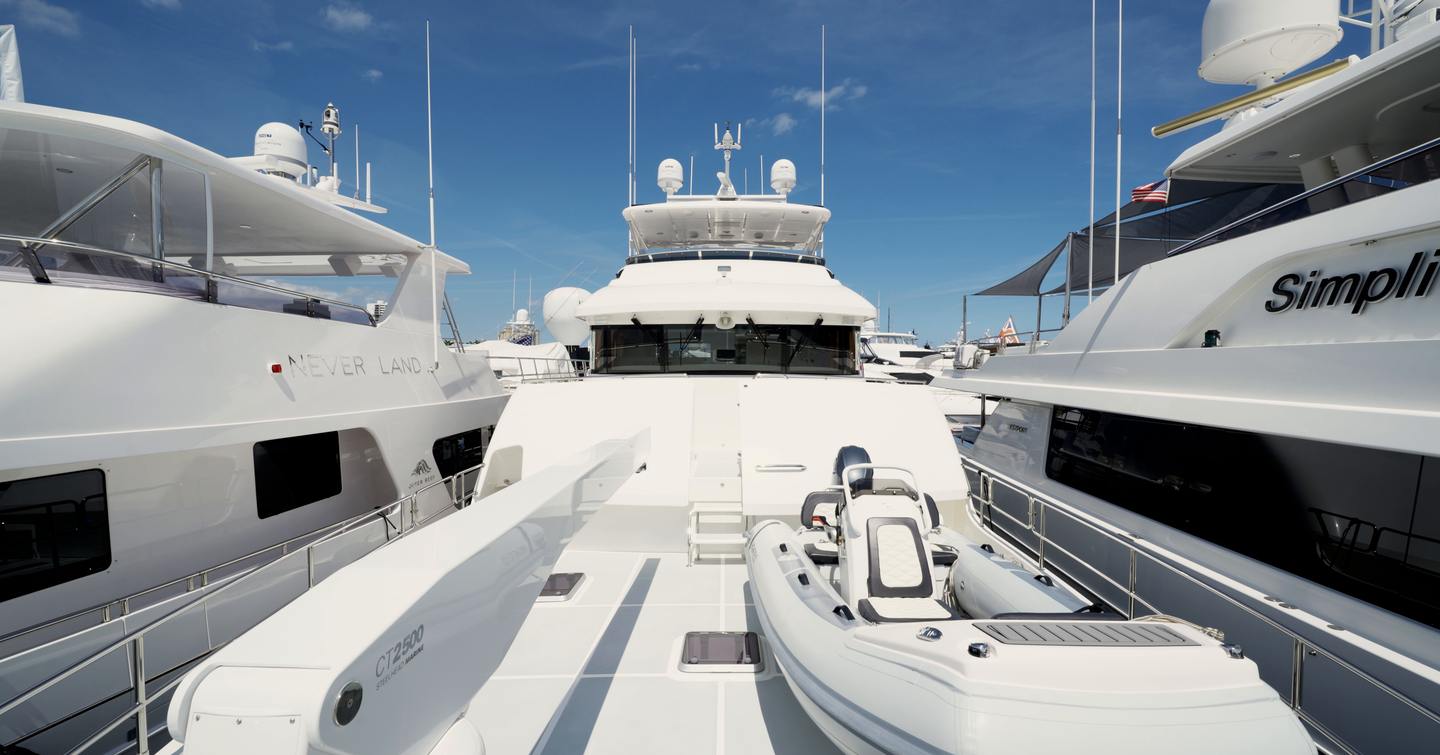
Forward, the boat deck is very much the working end of the decks. It's finished in a heat-resistant, grippy material so you can move around with confidence when you’re launching or recovering the tender.
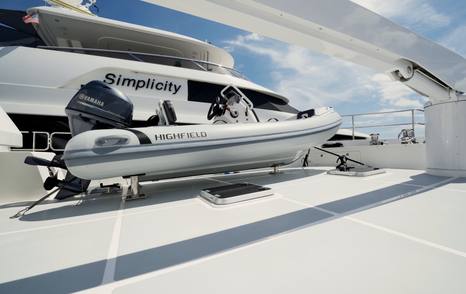
The tender itself sits up on this deck along with the toys, and there’s plenty of room to spare. You could easily fit a 17ft (5.2m) tender; this one carries a 15ft (4.5m) boat and still leaves space to port for a jet ski or extra kit. The crane is rated to 2,500lb (1,134kg) and looks ready for anything. People wonder if the tender’s vulnerable being up front like this, but owners who’ve done big miles say it’s never been an issue. From the bridge you can see it clearly, so if something starts to move, you’ll know straight away, as opposed to stowing it on the aft end of the boat.
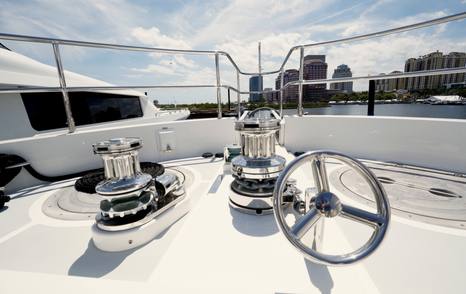
Forward of the tender, you’ve got the anchoring gear. Twin anchors, heavy stainless steel fittings, and deep lockers for chain and rode, all exactly what you’d expect from Nordhavn.
Bridge Deck
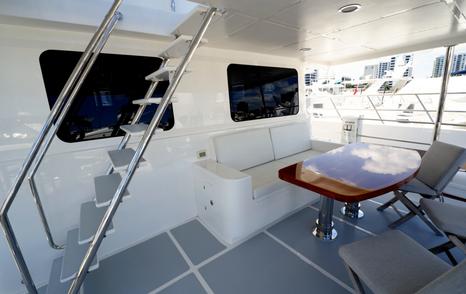
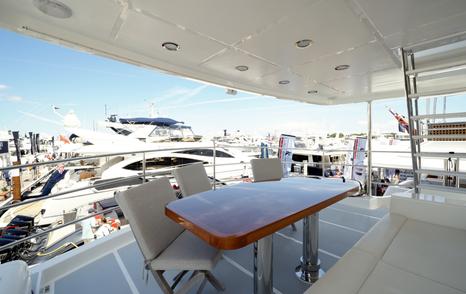
What’s nice about a Nordhavn of this size is that you get good living spaces everywhere you go. Up here on the bridge deck aft, it’s another area that doubles up beautifully - part observation point, part outdoor lounge. From this spot, you’ve got a great view down over the stern, perfect if people are fishing or running the tender, but it’s also just a lovely place to sit when you’re at anchor.
There’s a high-gloss table surrounded by built-in seating with storage underneath. You could easily travel from here on passage too because it’s well protected by the wheelhouse forward. The breeze comes over the bow, so even when you’re outside, you’re sheltered and comfortable. You can imagine having coffee here in the morning or watching the sunset in the evening; it’s that kind of space.
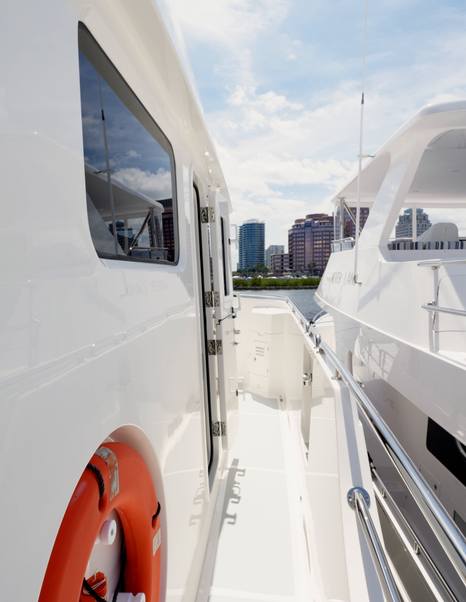
Up here, the layout changes a bit from the main deck. It’s symmetrical, so you’ve got walkways down both sides, Dutch doors that can be half closed when the weather turns, and boarding gates port and starboard. There are also wing stations tucked into each corner of the Portuguese bridge with throttle and thruster controls. Depending on which side you’re coming alongside, you just pick your station. There’s also another set further aft, so you’ve always got an option when you’re handling the boat on your own.
Flybridge
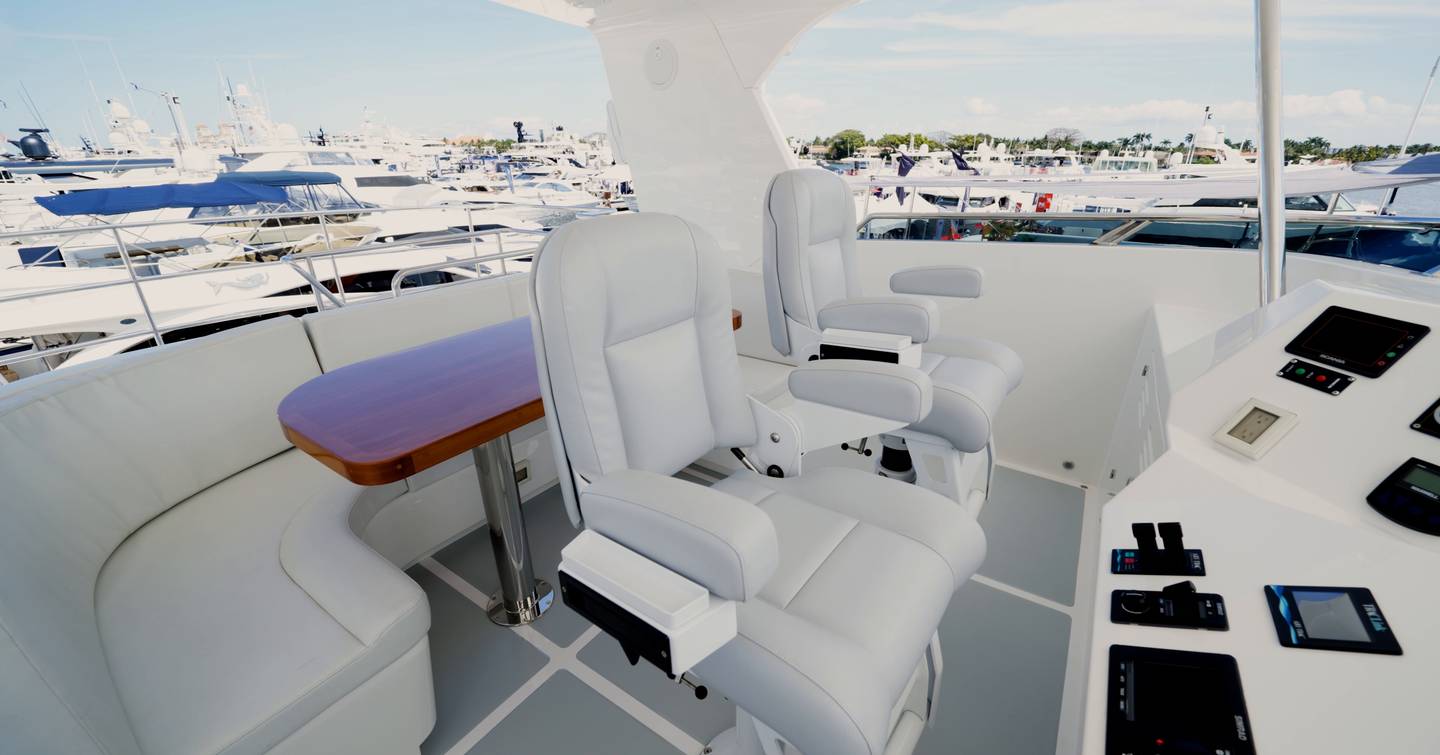
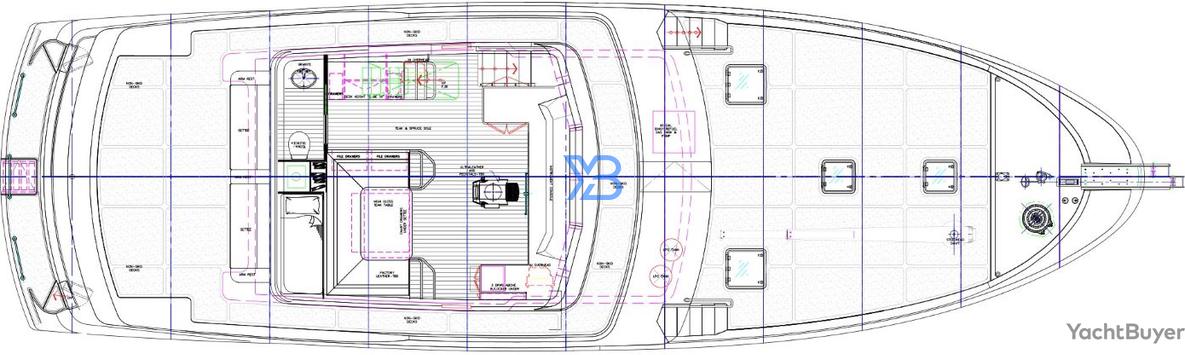
The flybridge on the N68 is a great place to be. This is more about enjoying the weather than running the boat, because there’s no wheel up here, just rudder and throttle controls and an MFD for basic navigation. The serious business happens down in the wheelhouse. Up here it’s for fair-weather days when you want to feel the breeze and take in the view.
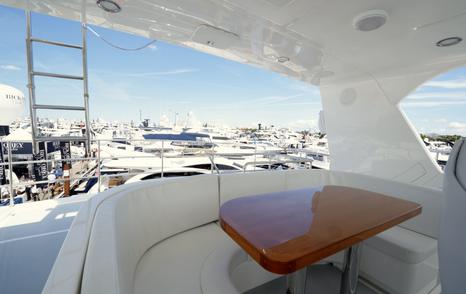
There’s a big wrap of seating that curves around a table, a proper social spot for drinks or lunch when the sun’s out. The seats are set quite low, so you don’t really see forward when you’re sitting down, but it’s perfect for dining or relaxing. To one side, there’s a wet bar with a sink, fridge, and ice maker, and if you want a grill, that can be added too. This is also the deck where you can have a hot tub fitted, right aft. Considering where this boat can take you, the idea of dropping into warm water at the end of a long passage sounds very appealing.
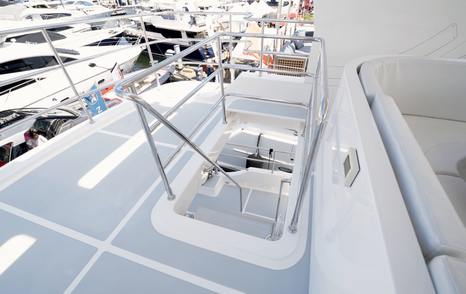
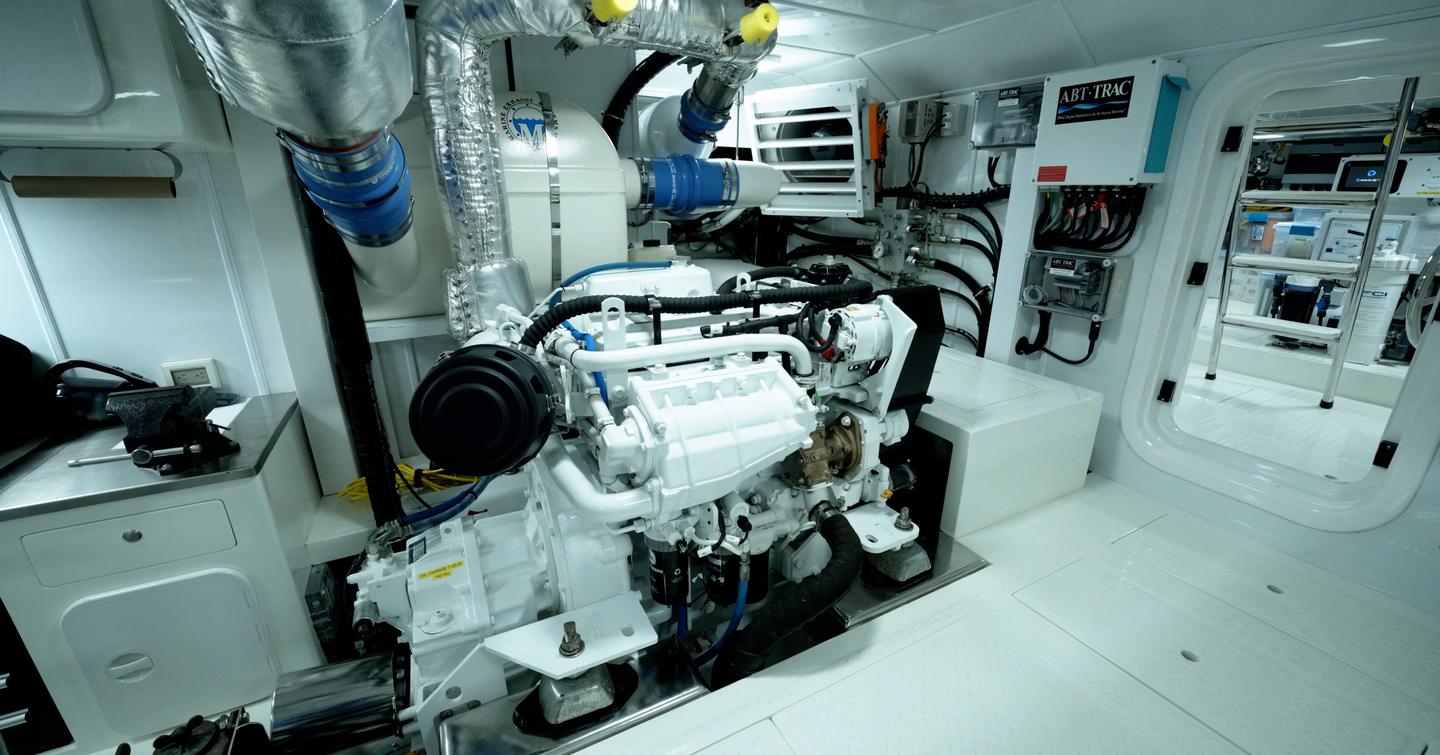
For an owner-run boat, this is where it all comes together. The layout is clean, logical, and easy to move around in, with over 6ft of headroom around the main engine so you can actually work standing up.
This boat has a 400hp Scania main engine and a 160hp John Deere wing engine sitting alongside it and the idea is always the same: reliability through redundancy. You can cruise for weeks at a time at around 8 knots, and if something goes wrong, the wing engine is ready to get you home. It also powers the PTO for the hydraulic systems that run the ABT-TRAC thrusters and stabilisers, so even when you’re on the backup, you still have full control.
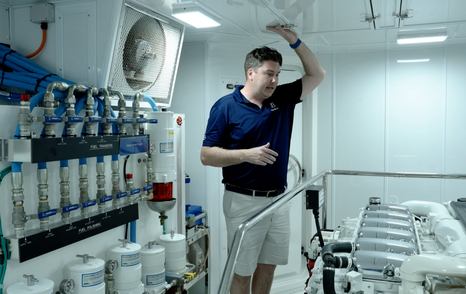
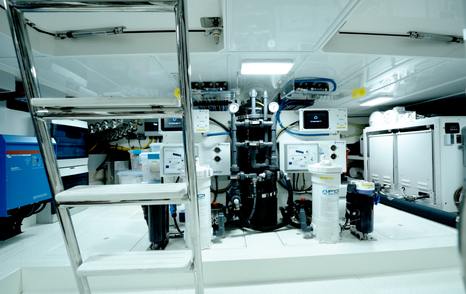
The systems here are built around that belt-and-braces Nordhavn philosophy. The fuel manifold and polishing system are gravity-fed, clearly labelled, and easy to reach. Filters are lined up in a way that makes sense, and you don’t have to crawl into dark corners to check them. There are two generators, two watermakers, and throttle repeaters inside the compartment, so you can manage the machinery without heading back to the bridge.
A workbench with a mounted vice sits along one side, surrounded by tool storage and spares. Every label, valve, and pipe has its place, which says a lot about how Nordhavn expects owners to use their boats. Through another watertight door aft is the lazarette, where you’ll find the second generator, the watermakers, and access straight back into the cockpit.
You'll likely pay in the region of $5,000,000 for an N68, so it certainly can't be described as a budget option.
But if you think about the capabilities of this boat for its size and price, it's pretty hard to find anything that can compete. And if you're cruising around the globe, you'll be glad of the extra lengths Nordhavn has gone to when it comes to construction and engineering quality. And that's what you have to pay for.
The other element in the equation is the quality of the standard specification, which includes stabilisation, watermaker, fuel polishing, generators and other machinery that other builders will ask you to spec as an option.
Yes, it's a lot of money, but you're getting possibly the most capable owner-run passagemaker on the planet.
Our Verdict
It just doesn’t get better in this size and style of passagemaker. All Nordhavns share the same long-range capability, but the N68 adds an extra layer of comfort to complement it. The owner’s cabin feels like a proper bedroom, the guest suites are genuinely usable for long stays, and the country kitchen turns daily life on board into something easy and familiar. Add in the sheltered cockpit, the bridge deck seating, and the flybridge up top, and you’ve got a boat that’s as comfortable at anchor as it is crossing an ocean.
There is, as ever with Nordhavn, a small caveat. It’s a full-displacement hull, so you have to enjoy life at eight or nine knots. But if that steady pace suits you, there’s not much else to wish for. The N68 gives a couple the means to cruise anywhere, safely and comfortably, without a crew and without compromise.
The YachtBuyer Score provides a clear, category-by-category assessment of how the yacht performs in the areas that matter most. In this review, the Nordhavn 68 receives an overall rating of 4 out of 5 stars.
Reasons to Buy
- True owner-run liveaboard
- Built for serious miles
- Engine room is a delight
- Depth of engineering
Things to Consider
- You have to enjoy it slowly
- Lacks some style
Looking to own a Nordhavn 68? Use YachtBuyer’s Market Watch to compare all new and used Nordhavn 68 Boats for sale worldwide. You can also order a new Nordhavn 68, customized to your exact specifications, with options for engine choice and layout configuration. Alternatively, explore our global listings of new and used boats for sale and find your perfect boat today!
Rivals to Consider
The Fleming 60 is often seen as the benchmark for craftsmanship in the trawler market, but it plays in a different league of cruising. With twin MAN diesels capable of more than 20 knots, it’s a semi-displacement yacht designed for regional and coastal passages rather than open-ocean work. The hull form is lighter and flatter, giving it pace and efficiency at displacement speed but a sharper, quicker motion when the sea builds. Inside, the layout is generous for its length, with three cabins finished to a high standard and easy access throughout. Where the Nordhavn 68 feels like a private ship for two people to live aboard indefinitely, the Fleming feels more like a family yacht built for shorter, comfortable runs between ports.
The Outer Reef 720 is within a few feet in length of the N68 but taking a very different path to performance. It uses a semi-displacement hull that can cruise at 8 to 9 knots or climb to 17 to 19 when needed. On paper, its range at slow speed can match or even exceed the Nordhavn’s, but the lighter displacement and shallower draft mean it won’t feel as planted in rough water. The 720’s interior is also more traditionally yachting in style, offering up to four guest cabins plus crew accommodation aft. The Outer Reef offers flexibility and pace; the Nordhavn offers endurance and complete self-sufficiency.
Considering a new boat? Explore Nordhavn's entire current range to find the model that best suits your needs, and compare it with alternatives from competitors to ensure you make the perfect choice.
Specifications
- Builder Nordhavn
- Model Nordhavn 68
- Length Overall 68'
- Beam 20' 4"
- Draft 7' 2"
- Hull GRP
- Cabins 3
- Berths 5
- Crew 1
- Yacht Type (Primary) Trawler Boat
- Use Type (Primary) Cruising
- Cruising Speed
- Max Speed
- Fuel Capacity 3,136 Gallons
- Fresh Water Capacity 673 Gallons
Nordhavn 68 Layout
-
Flybridge
-
![Flybridge Nordhavn 68]()
It's nice to have some proper living space on the upper deck
-
Main Deck
-
![Main Deck Nordhavn 68]()
The country kitchen arrangement transforms the main deck
-
Lower Deck
-
![Lower Deck Nordhavn 68]()
The cabin spaces aren't huge but they're comfortable
Interested in a Nordhavn 68?
NEW Build
Find your local dealer for a personalised, no-cost consultation
or just request
Brochures & Pricing
Used & In Stock
Looking for a ready-to-go Nordhavn 68 or pre-owned options? Explore all inventory of the Nordhavn 68 available worldwide