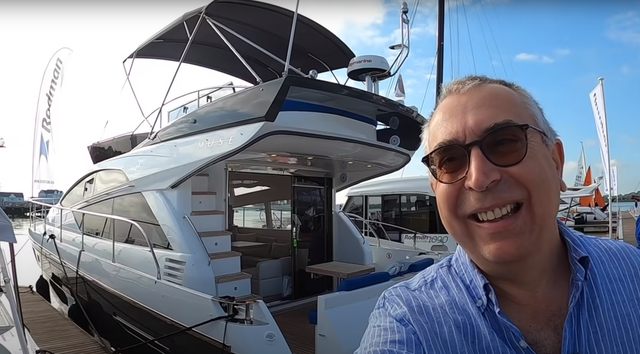
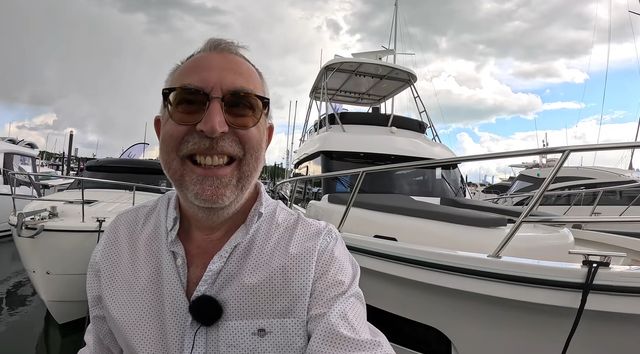
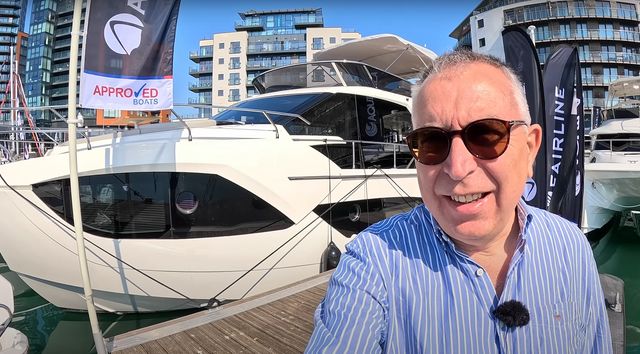
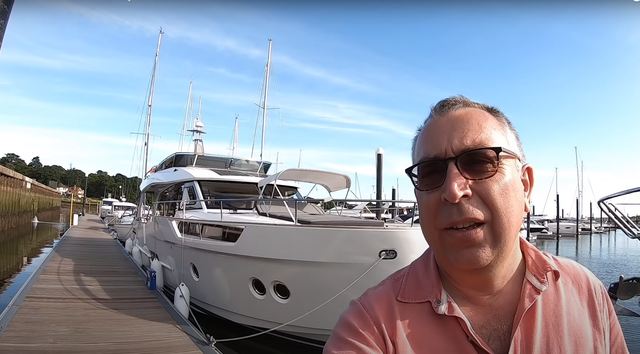
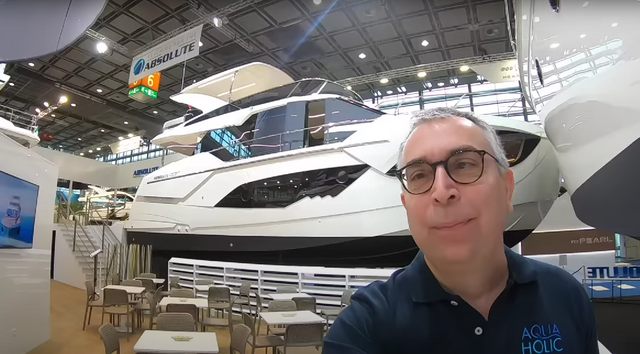
In this Aquaholic video review, Nick Burnham takes a close look around a well-kept 2015 example to find out whether that clever layout still makes the Muse 44 stand out today.
Rodman Muse 44 (Gen 2) Key Facts
- LOA 44' 7"
- Model Year 2015
- Cabins 3
- Max Speed 32 knots
- Status In Production
- Generations 2
- Yacht Type Flybridge
- Use Type Weekending
Video Tour
Rodman Muse 44 At A Glance
Why you'll love it
- Genuine three-cabin layout with twin guest cabins
- Raised galley creates surprisingly usable accommodation
- IPS drives make close-quarters handling much easier
Things to know
- Optional equipment has a big impact on used values
- Side-deck headroom limits standing space in guest cabins
On Deck
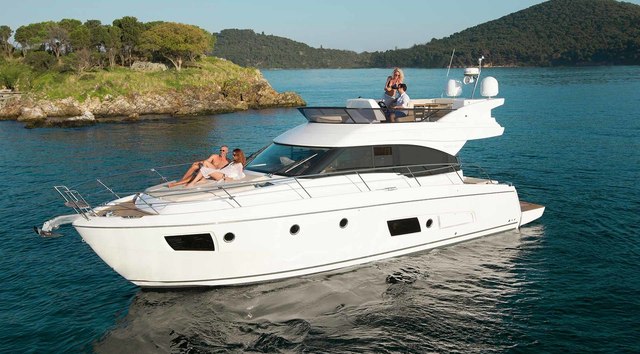
Rodman built its reputation on commercial boats before launching the Muse range, and the 44 was the smallest model in the line. This 13.6m (44ft 7in) flybridge cruiser has an extended bathing platform, wide side decks and a flybridge that sits slightly further forward than you might expect. At first glance it looks like a fairly conventional layout, but there's a reason for those proportions that becomes clear once you head below.
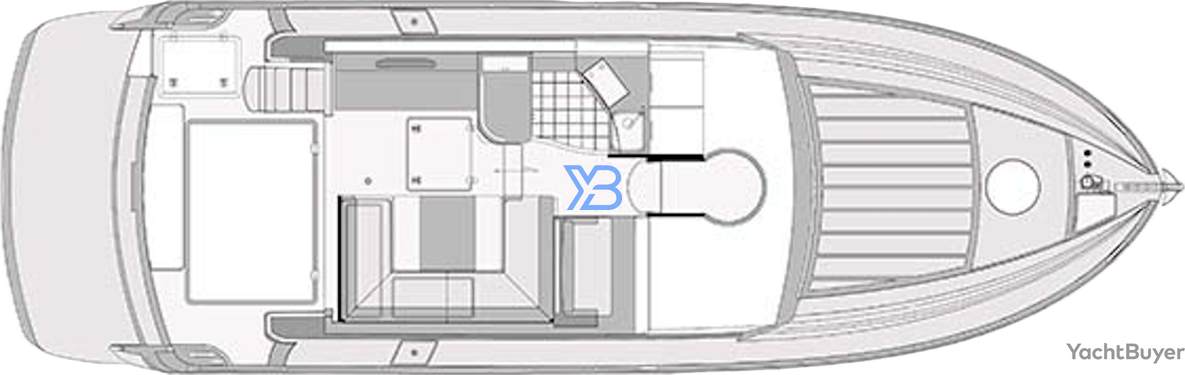
The cockpit is simple and well thought out. An L-shaped seating area wraps around a height-adjustable table that unfolds to almost twice its size for dining, while the stainless steel framed sliding doors open the saloon to the outside. The bathing platform extends well aft and this boat has the optional hydraulic passerelle, which doubles as a tender crane. A transom shower sits within easy reach after a swim, and if the weather turns there are cockpit canopies that enclose the whole area. Engine access is through the cockpit sole, so routine checks don't involve lifting saloon floors or squeezing through cockpit lockers.
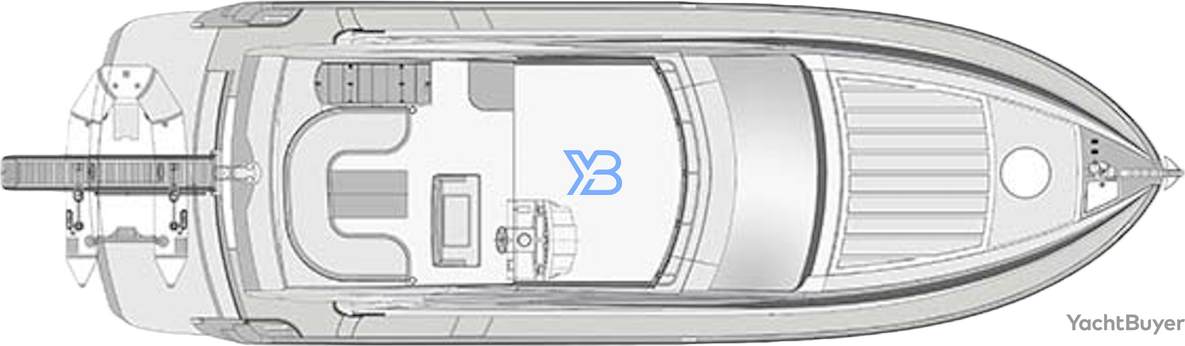
The flybridge carries another surprise. Rather than placing the sunpad behind the helm, Rodman moved it right to the front of the deck. It looks slightly unusual until you realise why. That extra height allows the galley below to sit on a raised level, which in turn creates enough headroom for two proper twin guest cabins. It's a neat piece of packaging that explains one of the Muse 44's biggest selling points before you've even stepped inside.
The upper helm has a double seat to starboard, a U-shaped dinette aft with an adjustable table, and a fridge built into the flybridge furniture. This particular boat also has Volvo Penta's Dynamic Positioning System, an option listed by Rodman when new that allows the IPS drives to hold the boat on station using GPS while you prepare fenders or mooring lines. It's not something you expect to find on many boats from this period.
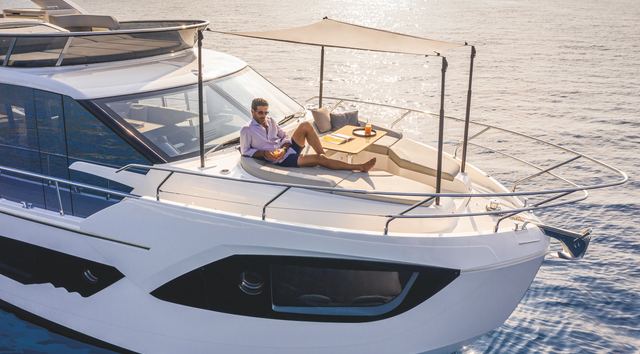
Side decks lead safely to the bow, where the guardrails continue right forward to the anchoring gear. An opening window beside the lower helm makes it easier to speak to someone on the dock when coming alongside, and the foredeck has a pair of sunpads set around the forward hatch. There are no dramatic styling tricks here. Most of what you see on deck exists because it has a job to do, and much of it feeds directly into the unusually practical layout below.
Interior Accommodation
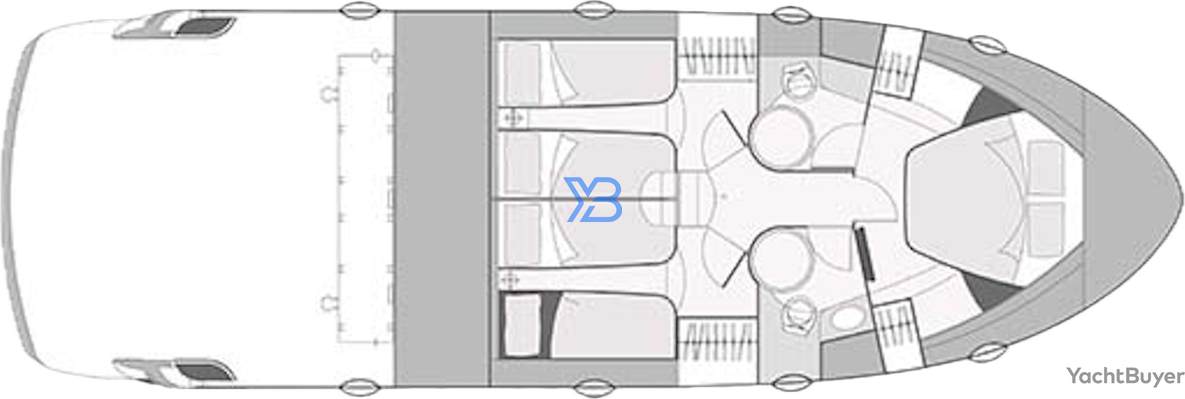
The Muse 44's interior revolves around one idea. Rodman raised the galley and lower helm by a couple of steps, creating enough space below for a genuine three-cabin layout. That's unusual on a 13.6m (44ft 7in) flybridge cruiser, and it means both guest cabins have side-by-side beds rather than bunks. It's a simple piece of design that shapes the whole boat.
The split-level saloon feels bright and open thanks to the large side windows and stainless steel framed sliding doors aft. A U-shaped settee sits to starboard around a height-adjustable table, while the cabinet opposite has dedicated storage for crockery, cutlery and the entertainment system. The television rises from the cabinet when required, then disappears out of sight when you're finished with it. Everything has its place, which makes the saloon feel particularly tidy when the boat is under way.
The galley sits on the raised level beside the lower helm. It has a two-burner ceramic hob, microwave, integrated 110-litre fridge, generous worktop space and plenty of storage within easy reach. Keeping the galley here also opens it to both the saloon and cockpit, while the raised floor quietly creates the accommodation below.
The lower helm shares the same elevated position, giving a clear view forward through the wraparound windscreen. This IPS-equipped example has joystick control alongside the engine controls and navigation displays, while drop-down blinds help manage glare. An opening side window also makes it easier to communicate with the dock when coming alongside.
Guest Accommodation
Rodman found room for two proper twin cabins, each with side-by-side single beds, where many flybridge cruisers of this size settled for bunks. It sounds like a small detail until you spend time aboard. Adults can use both cabins comfortably, which makes a real difference for family cruising or when another couple joins you for a weekend away.
The port guest cabin makes the most of the available space. Twin 2.0m (6ft 7in) berths sit either side of a central bedside table, with a full-height wardrobe, reading lights and storage beneath each bed. Standing headroom is available as you enter the cabin before the deck line naturally lowers over the berths, while the hull window with its opening portlight brings in plenty of daylight and fresh air.
The starboard cabin follows much the same layout, with the same pair of full-length single berths, central bedside table, wardrobe and under-bed storage. Rather than treating one guest cabin as the better room, Rodman gave both almost identical accommodation, so guests enjoy the same amount of space whichever side of the boat they sleep on.
Between the two cabins sits the shared day heads. The standout feature here is the rotating shower screen, which swings out to create a proper shower enclosure before folding neatly away again. It's a simple piece of design that makes the room much easier to use without taking up extra space. An opening portlight provides ventilation, while the vanity unit, storage and vacuum toilet complete a layout that feels every bit as practical as the cabins it serves.
The whole interior comes back to that raised galley. It looks like a small design decision at first, but it allows the Muse 44 to offer three cabins that adults can genuinely use. More than a decade after this boat was built, that's still one of its strongest selling points.
Performance & Engine Room
Lift the hatch in the cockpit and you get excellent access to the pair of Volvo Penta IPS engines. There's plenty of room to get around them, so checking oil, belts, filters and the other routine jobs shouldn't involve too much crawling about. The hot water system, trim tab pumps and fuel filters are all mounted where you can actually reach them, and that's always a good sign on a boat of this size.
This particular boat has the twin 370hp Volvo Penta D6 IPS500 installation,which will probably run somewhere in the mid to high 20-knot range flat out, with an easy cruise at around 20 knots, which feels about right. When the Muse 44 was new, Rodman also offered a 435hp IPS600 package, quoting up to 32 knots and a 26-knot cruising speed under the right conditions.
Being an IPS boat, joystick control comes as part of the package, and this example also has Volvo Penta's Dynamic Positioning System. Jack was quite taken with that because it isn't something you expect to find on many boats from this period. Press the button and the boat will hold its position using GPS and the engines while you sort the fenders or get the lines ready. It was an expensive option when new, but it's one of those features you quickly get used to once you've lived with it.
Rodman also did a sensible job with the engineering behind the scenes. The IPS installation forms part of the boat's cooling and steering systems, which helps keep the machinery space tidy, while the large engine hatch means you can actually get on top of routine servicing instead of putting it off because access is awkward. Like much of the Muse 44, it feels as though somebody spent time thinking about how owners would use it rather than simply finding somewhere to fit the engines.
Ownership Considerations
A nearly 14m or 44ft flybridge cruiser sits at an interesting point in boat ownership as it's big enough to cruise serious distances in comfort, but still small enough for most owners to run themselves without employing crew. Many couples happily manage boats of this size on their own, although another pair of hands always makes locks, fuel berths and unfamiliar marinas a little less hurried.
It's also about the point where boating becomes less spontaneous. A weekend away needs a little more planning, annual servicing becomes a bigger job and marina costs climb once you move into the 14-metre berth category. An often cited budet for costs is 10-15% of the boat's value each year for berthing, servicing, insurance and general upkeep, although that depends on where the boat lives and how much work you do yourself so take it with a grain of salt.
Fuel use naturally depends on speed and sea conditions, but a flybridge cruiser of this size will typically burn around 100 to 130 litres of diesel per hour at a comfortable cruising speed. Slow down and that figure drops considerably, which is why longer passages often reward a more relaxed pace.
One thing experienced owners soon discover is that boats prefer to be used. Engines like to reach operating temperature, batteries like to be charged properly and pumps, seals and plumbing all seem happier when they aren't left sitting for months at a time. A regular weekend afloat often does more for a boat than another afternoon spent polishing it.
Discover more about the Rodman Muse 44, or explore the entire fleet by checking out all Rodman Yachts for sale. You might also want to browse all yachts for sale to uncover more options.
Pricing
Price as reviewed: £300,000 ($399,813 approx)
The Rodman Muse 44 launched with a UK list price of £502,000 fitted with twin 380hp Volvo Penta D6-380 IPS500 engines, while buyers opting for the more powerful 440hp D6-440 IPS600 installation paid £525,000 before any optional equipment.
Like most premium flybridge cruisers, very few boats left the factory in standard trim. The original options list reveals that many of the features buyers now expect carried substantial premiums. Volvo Penta's Dynamic Positioning System cost £17,425, a 14kVA Paguro generator added £14,845, the hydraulic bathing platform £23,625, and the hydraulic passerelle another £11,635. Air conditioning, bow thrusters, teak decking, navigation electronics and entertainment upgrades could easily add tens of thousands more, so many delivered boats exceeded their published list price by a considerable margin.
That makes specification one of the biggest influences on today's brokerage values. Two 2015 Muse 44s may look similar on paper yet differ significantly in asking price if one was ordered with IPS Dynamic Positioning, a larger generator, hydraulic systems and upgraded teak, while another remained close to the standard specification.
Used Rodman Muse 44 Prices
Today, early 2010s Rodman Muse 44s typically change hands between £300,000 and £400,000, depending on engine specification, maintenance history, equipment and condition. The 2015 yacht featured in our tour was marketed at £300,000, placing at the starting price of the current brokerage market.
For the latest asking prices, recent sales activity and historical value trends, visit the live prices section on the Rodman Muse 44 for Sale page, monitored by YachtBuyer MarketWatch.
Looking to own a Rodman Muse 44? Use YachtBuyer’s Market Watch to compare all new and used Rodman Muse 44 Boats for sale worldwide. You can also order a new Rodman Muse 44, customized to your exact specifications, with options for engine choice and layout configuration. Alternatively, explore our global listings of new and used boats for sale and find your perfect boat today!
Rivals to Consider
The Princess F45 is probably the first boat most buyers will look at if they're moving beyond a Rodman Muse 44. It stretches to 14.35m (47ft 1in), so it's a little longer than the Rodman, but Princess has spent that extra length rather differently. Instead of finding room for a third cabin, it gives the owner's cabin the full beam of the boat, placing it amidships with large hull windows, generous storage and an ensuite that feels closer to what you'd expect on a 50-footer. Power comes from twin 480hp Volvo Penta IPS600 engines, giving around 31 knots at the top end and a comfortable cruise in the high 20s, while the 1,640-litre fuel tank also makes it the longest-legged boat here. If there are usually two of you aboard, with the occasional guests, it's a lovely layout. If you're more likely to have children or another couple staying aboard every trip, the Rodman's third cabin starts to make a great deal of sense.
The Prestige 460 has always been very good at finding space inside. At 14.29m (46ft 11in) with a 4.30m (14ft 1in) beam, it's only fractionally bigger than the Rodman on paper, but it feels quite different once you step below. The owner's cabin has its own private staircase from the saloon, so you don't share the main companionway with everyone else on board. It's a clever arrangement that gives the boat a much bigger feel than its dimensions suggest. Buyers can choose either a two or three-cabin layout, powered by twin Volvo Penta IPS600 engines capable of around 32 knots. That's where the decision becomes interesting. Prestige uses the available volume to give the owner more space and privacy. Rodman spreads it more evenly across three cabins, so everybody gets a proper room instead of one outstanding one.
The Sealine F430 comes at the same size from another angle again. At 13.55m (44ft 5in), it's almost the same length as the Muse 44, and with a 4.20m (13ft 9in) beam it offers either two or three cabins depending on how the boat was ordered. The first thing you notice aboard is the amount of glass. Sealine cut away the bulwarks beside the saloon windows and moved the galley aft beside the cockpit doors, so the whole main deck feels open and connected. It's a very sociable arrangement, particularly at anchor when the cockpit and saloon become one large living space. Twin Volvo Penta IPS500 or IPS600 engines deliver around 32 knots, although the 1,100-litre fuel capacity reflects a slightly different brief from the Princess. Step back aboard the Rodman and it feels quite different. The galley sits forward beside the helm, but that decision creates enough room below for two twin guest cabins with side-by-side beds, and you don't often see that on a flybridge cruiser under 45 feet.
Considering a new boat? Explore Rodman's entire current range to find the model that best suits your needs, and compare it with alternatives from competitors to ensure you make the perfect choice.
Specifications
- Builder Rodman
- Range Muse
- Model Muse 44
- Length Overall 44' 7"
- Beam 14' 1"
- Draft 3' 7"
- Hull GRP
- Cabins 3
- Berths 5
- Yacht Type (Primary) Flybridge
- Use Type (Primary) Weekending
- Cruising Speed
- Max Speed
- Fuel Capacity 351 Gallons
- Fresh Water Capacity 106 Gallons
- Engine Model 2x Volvo Penta D6-IPS500
Interested in a Muse 44?
NEW Build
Find your local dealer for a personalised, no-cost consultation
or just request
Brochures & Pricing
Used & In Stock
Looking for a ready-to-go Muse 44 or pre-owned options? Explore all inventory of the Muse 44 available worldwide