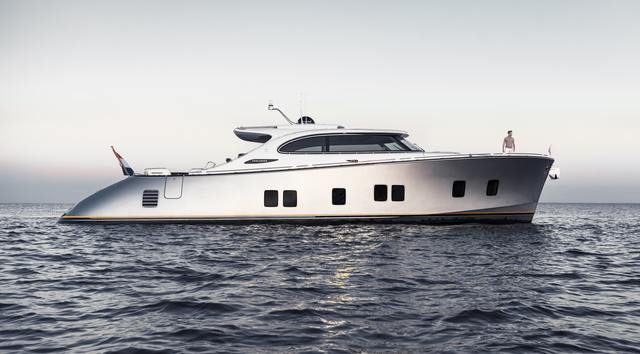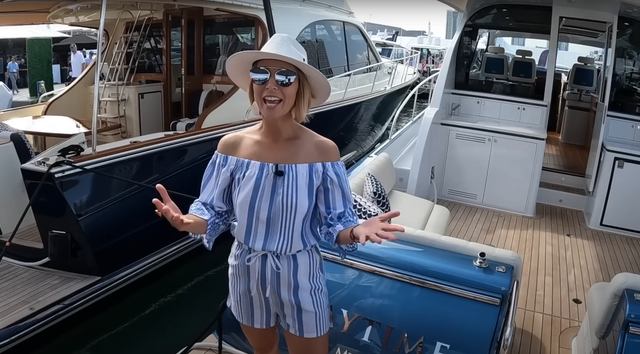
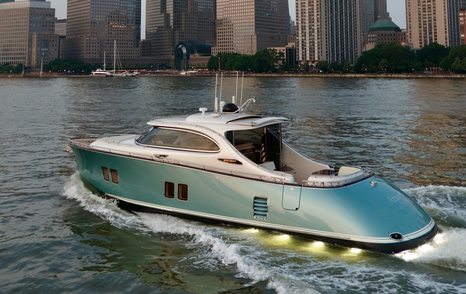
This is the Zeelander 5, the smallest model in the Zeelander range and the latest evolution of the original Z44, and it follows the same styling and layout philosophy as the larger Zeelander 6 and 7, with the same focus on noise reduction, soft ride, and beautifully executed detail throughout.
The hull is a warped-plane form built around IPS drives, so you get joystick control and a level running angle at speed. Inside, there are two cabins, a split heads and shower, and a compact galley connected directly to the saloon. Let's have a closer look.
Zeelander 5

- LOA 48' 3"
- Model Year 2025
- Cabins 2
- Max Speed 30 knots
- Status In Production
- Yacht Type Classic Style
- Use Type Weekending
Review Video
The Zeelander 5 is the most compact model in a three-boat range from Zeelander Yachts, a Dutch builder known for producing low-volume, high-finish dayboats with a distinctive retro-modern style. Founded in 2002, the shipyard has always focused on owner-run craft, where visual identity and build quality matter more than outright size or capacity.
Every Zeelander shares the same design language, from the exaggerated tumblehome to the curved sheerline and long overhangs, and the 5 is no exception. It offers the full visual and mechanical identity of its larger siblings, only in a format that is easier to own and run without a crew.
The 5 replaces the original Z44, launched in 2008, and although the lineage is clear, the new boat is a complete redesign. It has a longer waterline, a deeper S-curve to the hull, and a more sculpted coachroof that borrows heavily from the flagship Zeelander 7.
The helm windscreen is now frameless, so the driver gets uninterrupted 360-degree visibility, while larger hull windows bring more light into the accommodation. Hull classification is CE Category B, which suits its role as a fast coastal cruiser designed for open-sea conditions up to 4m (13.1ft) waves and Force 8 winds.
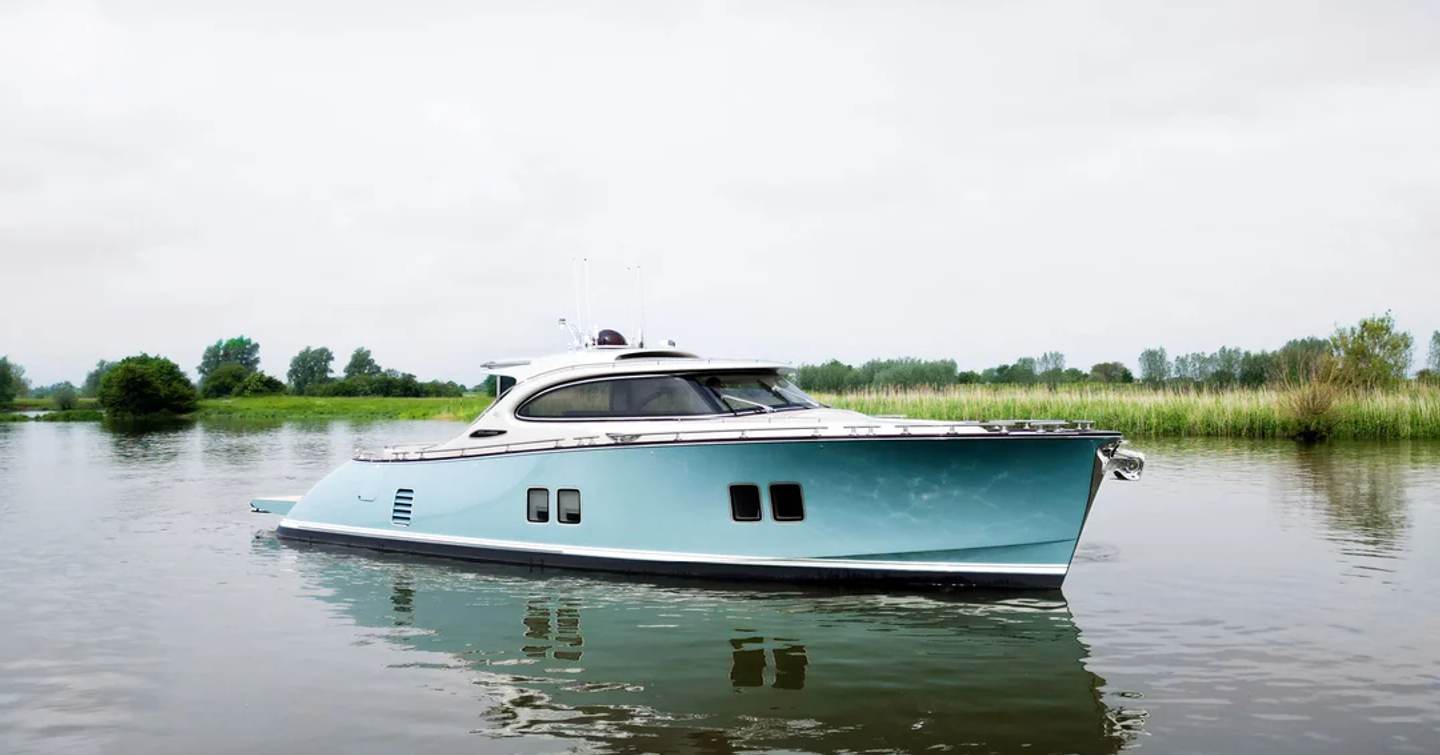
Cor D. Rover handled the exterior design, while naval architecture and structural engineering came from Sea Level, a Dutch firm that also worked on earlier Zeelanders. Interior planning and detailing were carried out in-house at Zeelander’s Groot-Ammers facility, where every hull is built by hand.
Construction uses a vacuum-infused GRP sandwich with vinylester resin and foam coring, combining lightness with stiffness and allowing for precise structural control. The hull is a warped-plane form optimised for IPS drives and designed to run flat at speed, with a soft entry in chop and composed handling through turns.
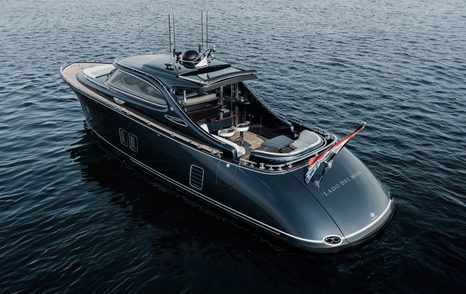
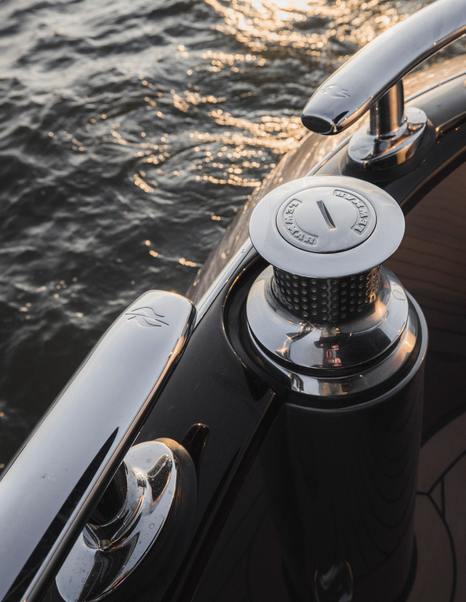
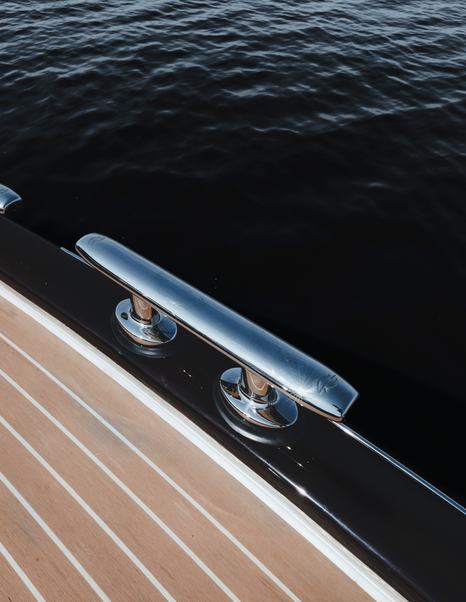
The entire structure is engineered to absorb and isolate noise, with floating floors, insulated machinery spaces, and soft-mounted furnishings that prevent resonance throughout the hull. All fittings, from cleats to flagpoles, are shaped without hard edges and finished in polished stainless steel, so there are no exposed fixings and no visual breaks from bow to stern.
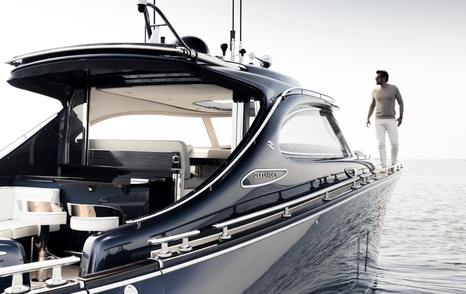
At 14.7m (48.3ft) long and 4.3m (14.1ft) wide, the Zeelander 5 is only slightly larger than its predecessor, but the changes make a noticeable difference. The new deck layout improves movement around the boat, with full walkaround side decks, recessed handholds, and flush thresholds between the interior and cockpit.
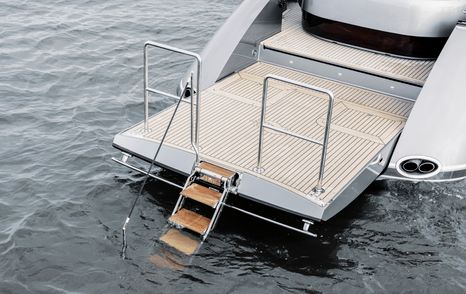
Composite decking is used throughout for high grip and low upkeep, offering the look of natural teak without the maintenance. There are now sideboarding gates and a deeper bathing platform that includes integrated steps and a convertible sunbed module.
Zeelander claims this is their quietest model yet, with sound levels around 2 decibels lower than the Z44 at top speed, and the upgrades to insulation, ventilation, and system access all reflect what the yard has learned from a decade of production.
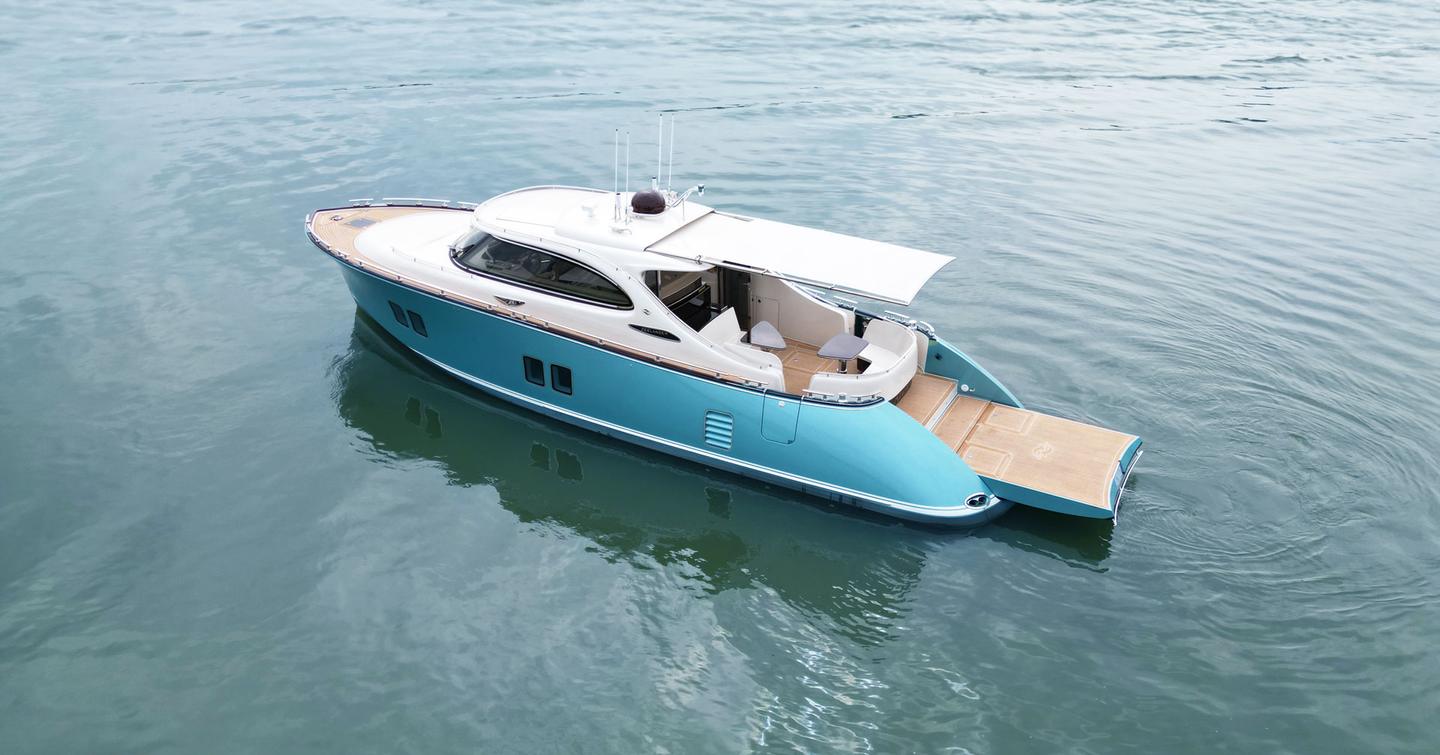
While the Zeelander 5 is the smallest model in the range, it carries the same detail, the same materials, and the same brand identity as the boats above it. It suits owners downsizing from larger yachts as well as those trading up from simpler craft, and it offers the kind of presence and refinement that rarely exists at this size. The scale may be compact, but the ambition is not.
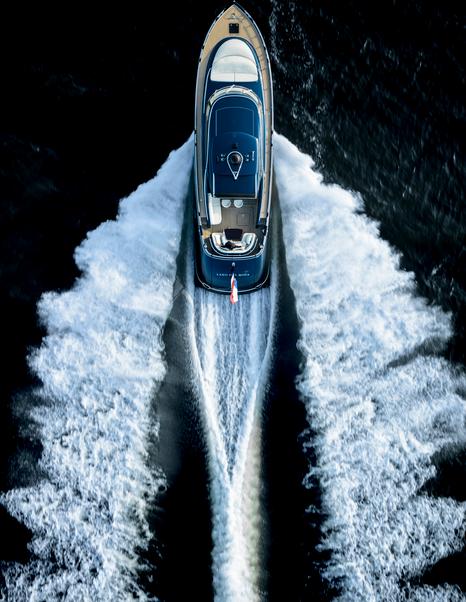
The interior saloon sits just forward of the cockpit and connects directly to it through a drop-down rear window. This glass panel disappears into the cabinetry below and rises to meet the roof when closed, forming a complete seal.
It follows the same curve as the deck moulding, and the frame is shaped to match the angle of the windscreen, so it feels like part of the structure rather than an add-on. The mechanism is concealed, and the glass is curved, which is not easy to design or build, especially at this thickness and with this much movement. With the window lowered, the saloon and cockpit merge into one open space that works as a single zone.
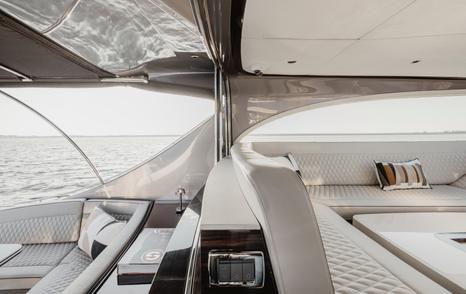
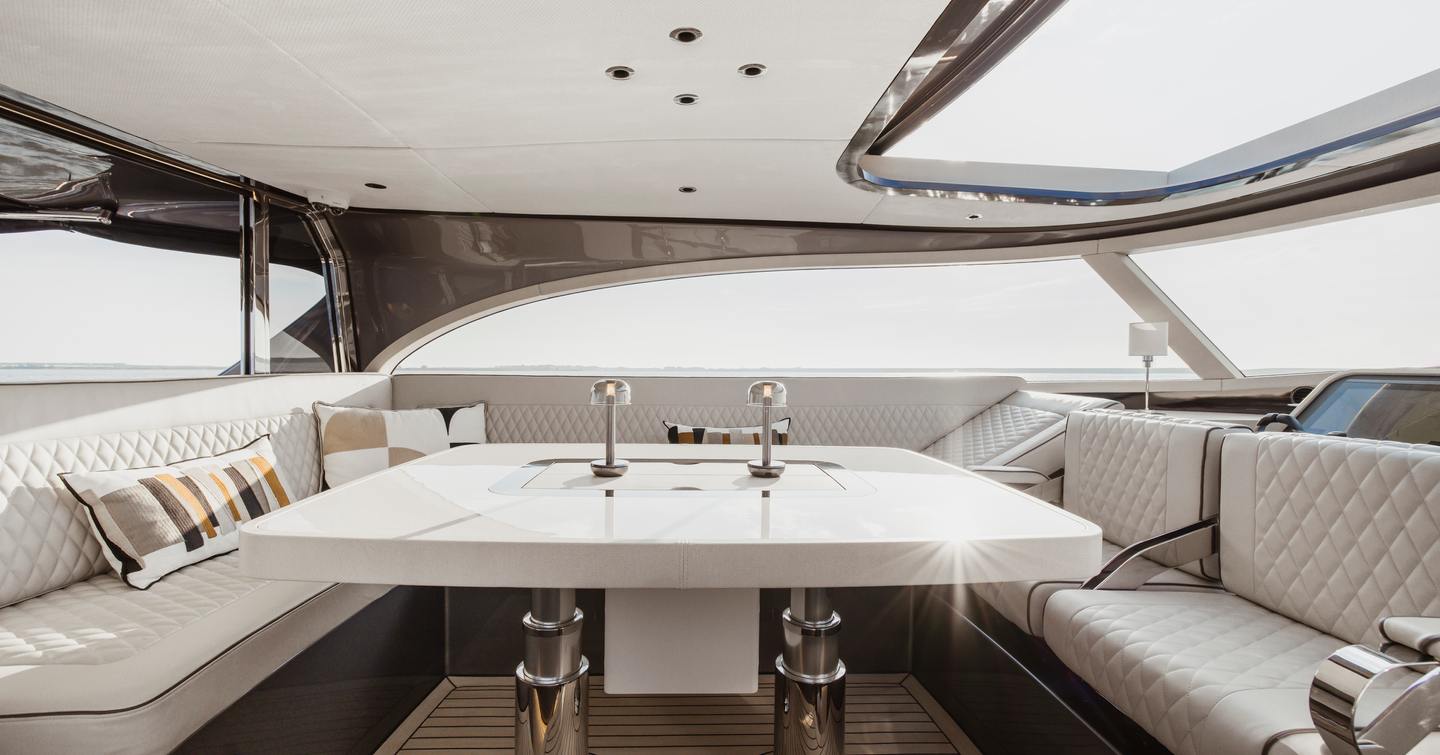
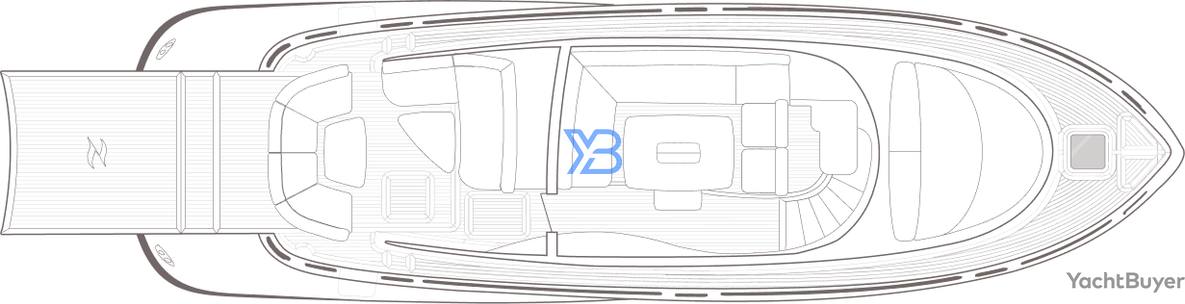
Inside, there is a fixed table on the port side with a settee running along the bulkhead, and the whole area is set low into the floor so you step down slightly from the cockpit. The table drops down on a powered mount to convert the space into a daybed, and a sliding stool pulls out from the galley bulkhead to provide a second seat opposite. The ceiling height is good, and there is plenty of light drawn into the interior.
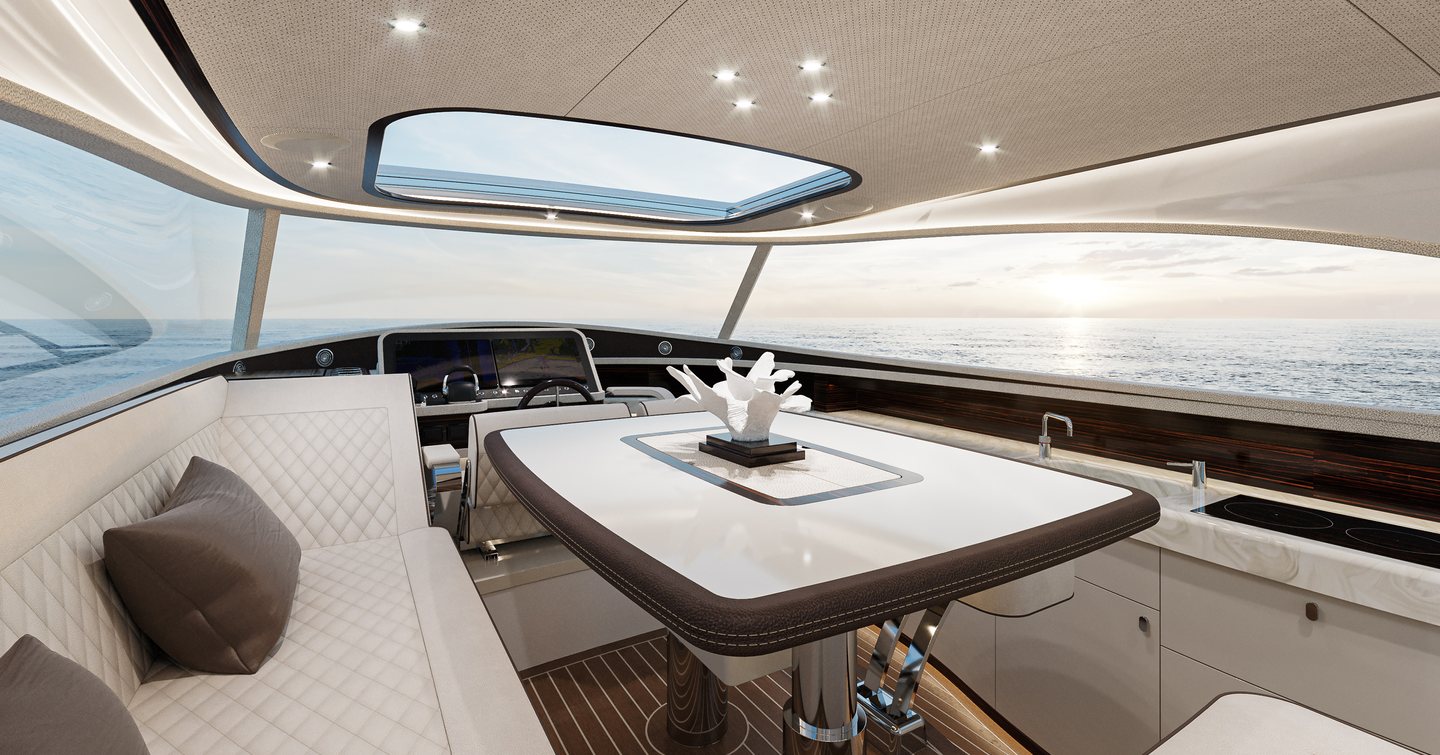
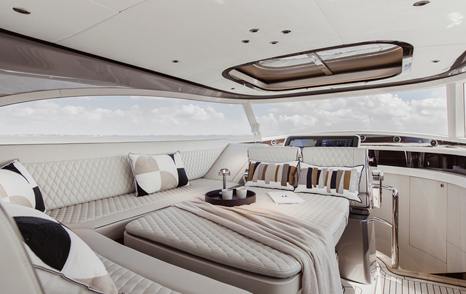
Just forward of the table, built into the deckhead, is a drop-down television. The screen lowers on an electric arm and comes down quickly, locking into place firmly. It's a neat feature, but it would be even better if it could pivot to face the cockpit so you can watch TV outside.
There is storage throughout the saloon, both under the settee and within the bulkheads, and the detailing here is through the roof. The trim around the sunroof is finished in wood, matched to the other joinery, and the ceiling itself is upholstered in soft material with clean seams. Even the mount for the flagpole aft is milled from stainless steel and fixed into a polished socket, and that small piece tells you what kind of standard is being applied across the board.
Galley
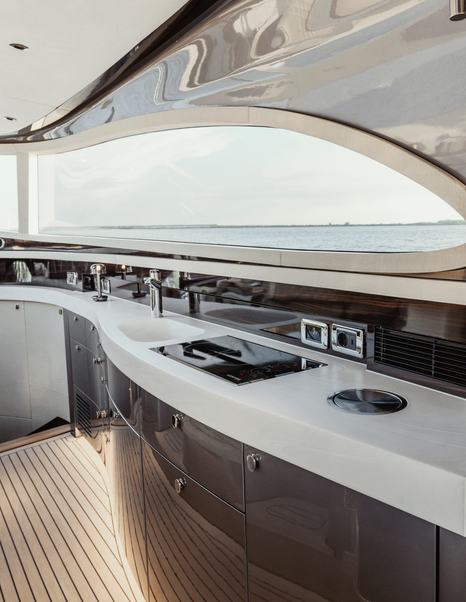
The galley is opposite the main dinette and runs along the port side of the deckhouse, just behind the helm. It’s compact for a boat of this size, and if cooking is your thing, then there are 50-footers with better arrangements than the 5.
There’s an induction hob built into the worktop with a sink beside it, and both are finished flush, so the surfaces aren't cluttered. All the refrigeration and dry storage is built into the cabinetry below, and the drawers are deep enough to take full-size pans or bottles.
Cooling space runs the full length of the base units, with separate drawers and compartments hidden behind soft-close fascias. The layout is simple, and the fridge access is easy whether you’re standing at the hob or sitting at the saloon table. Just forward of the galley, below the helm bulkhead, there’s another wine fridge and some extra cold storage, all helpful when there isn't space for a full-height fridge/freezer.
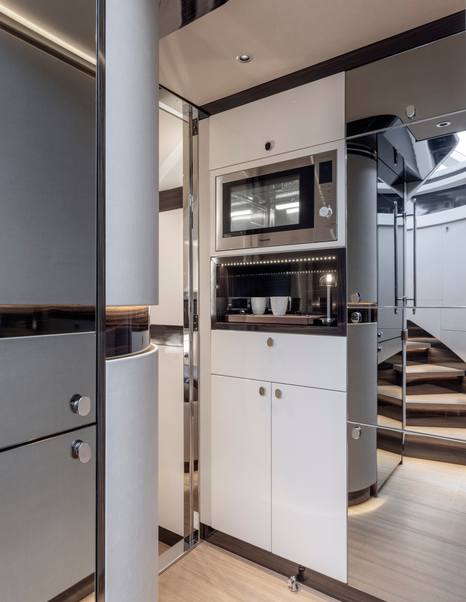
The storage fit-out is unusually refined. Cutlery sits in suede-lined trays with individual slots to stop it rattling, and all the utensils have fixed holders that keep them secure under way. Even the smaller drawers are treated the same way, and the cabinets feel solid when you open and shut them. Of course, the quieter the engines, the more likely you are to hear other noises, so this stuff is important.
On the lower deck, there’s another fridge built into the cabinetry and a dedicated space for the coffee machine, complete with a socket, venting, and a lip to hold it in place underway.
Guest Accommodation
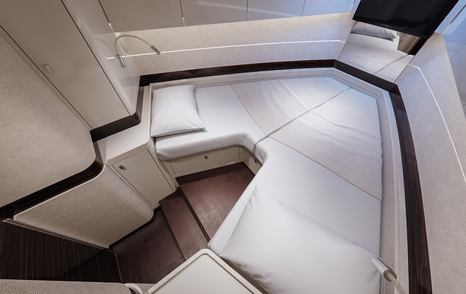
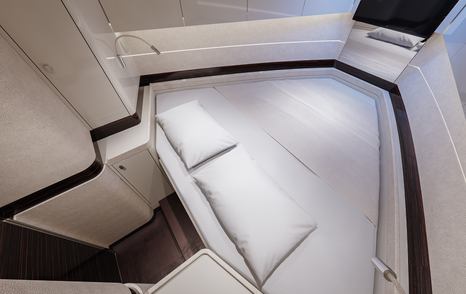
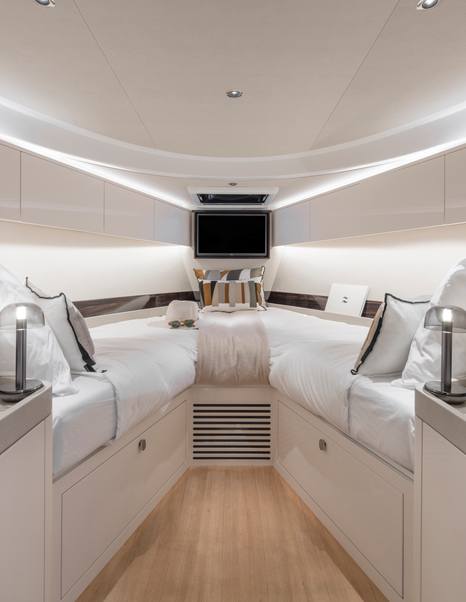
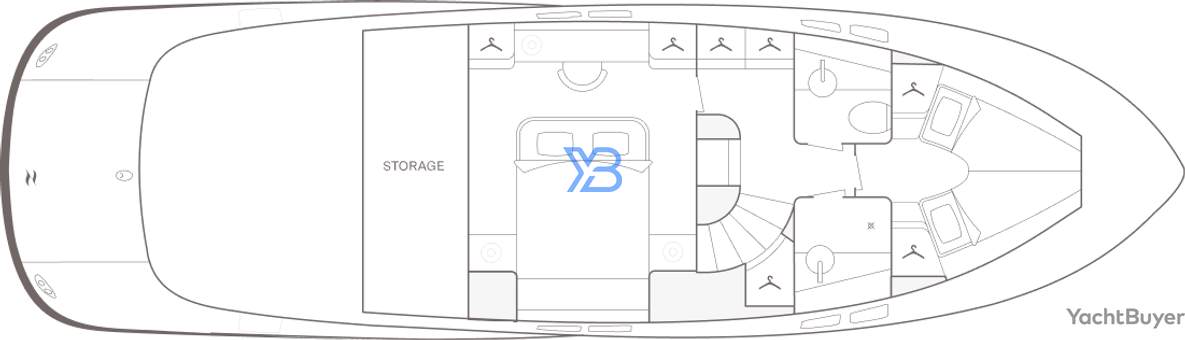
Right forward, there’s a V-berth cabin set low into the bow. Headroom here is surprisingly decent, so those over 6ft tall should be able to stand comfortably. The berth itself isn’t huge, but it’s usable, and because it’s a V layout rather than a fixed island bed, you can climb in and out without crawling awkwardly. If this were a solid double set against the bulkhead, it would be difficult to get in and out, and hard to change bedding.
There’s storage at eye level on both sides. It’s not masses, but they’ve fitted it in where they can. You also get a bit of stowage under the berth and some shelves along the hull sides. There are definitely more voluminous 50-footers than this, and boats that deliver more cabin space overall, but that’s part of the trade here.
Zeelander has clearly chosen shape and deck integration over cabin volume, and most owners looking at this kind of boat are happy with that. The styling carries through the joinery and the lighting, even in the far reaches of the cabin; it feels special.
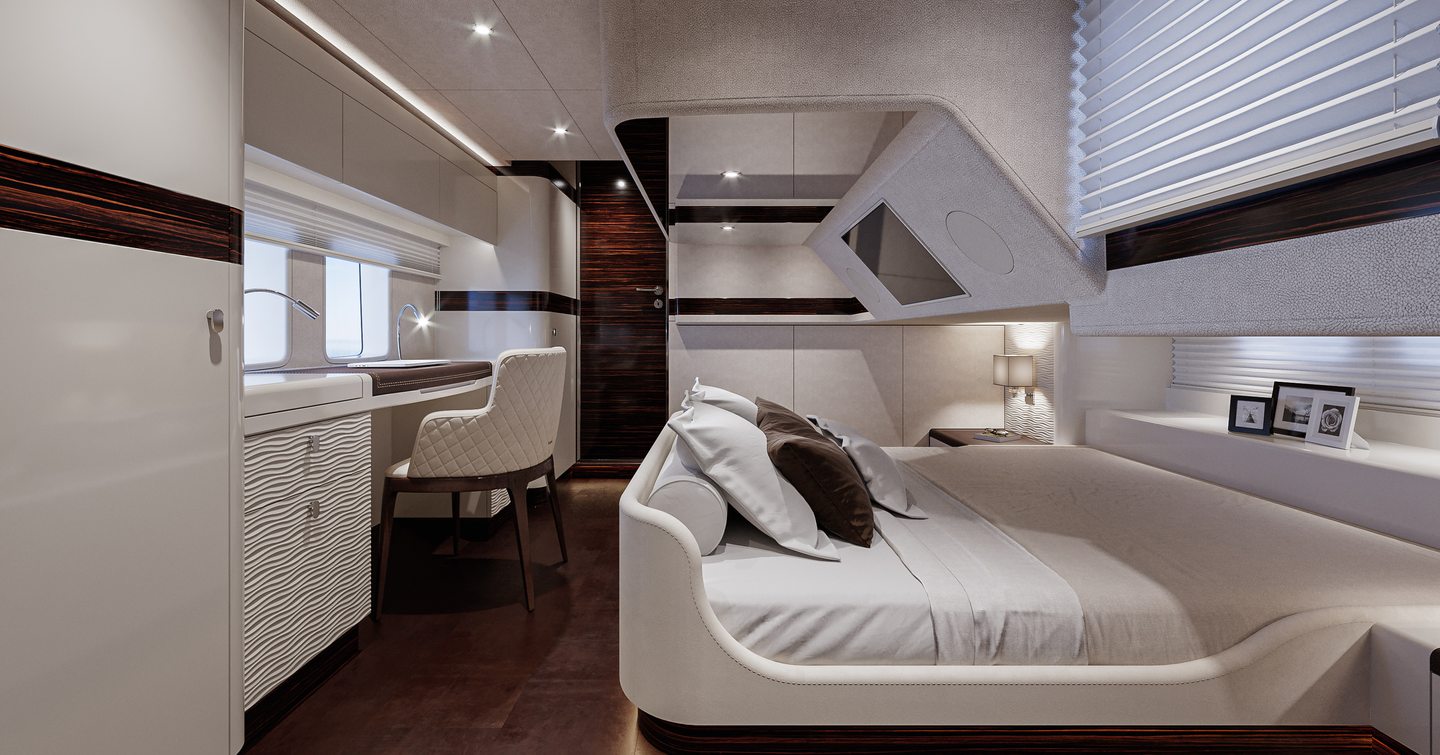
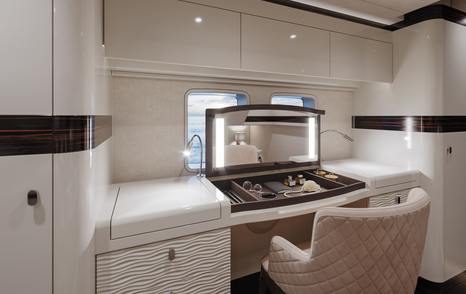
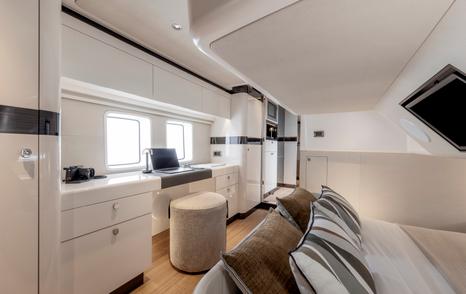
Midships, there’s a second cabin, but it's set very low. This is a tighter space, and you do have to duck coming in. Headroom is limited, especially around the entry, and you have to stoop to move around. But once closer to the bed, it opens up.
The bed is set deep into the hull, and it faces the long rectangular windows, so you get a good view out while lying down. The headboard sits against the forward bulkhead, and there’s a TV mounted opposite with speakers on either side. You could lie in here, put a film on, and it would feel very cosy. It’s atmospheric, quiet, and has that enclosed, tucked-away feeling, but there are quite serious headroom limitations.
Storage is good, though. There’s a full-height hanging locker, shelves and drawers beneath the bed, and bedside tables at the foot. A small bureau sits just under the window, so there’s somewhere to sit with a laptop or unpack clothes properly. At the door threshold, the sill plates are custom-cut with Zeelander branding and backlit from below. Details are glorious, but space is at a premium for the size.
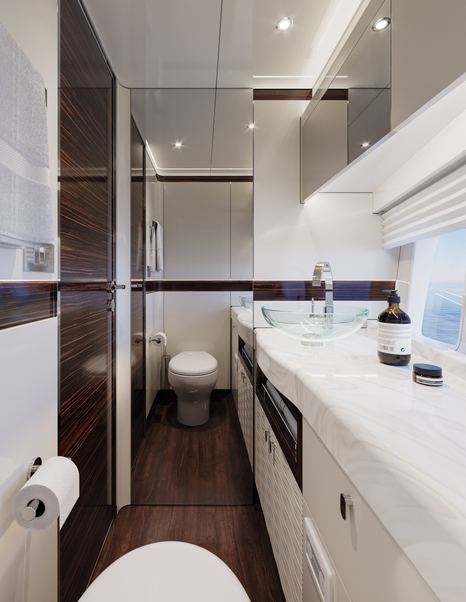
The heads are split into two separate spaces, with the shower cubicle on one side and the toilet and sink opposite. That split layout makes a big difference on board, especially when two people are staying overnight. Someone can use the shower while someone else is brushing teeth or getting ready, and you don’t have to take turns or work around wet floors.
The shower room is enclosed, with a glass door and a moulded seat, and the finish in here matches the rest of the boat. The hull windows run through the space, so there’s natural light even when the door’s shut, and the fittings feel solid. There’s a subtle Zeelander logo set into the upper corner, and the overall feel is bright, clean, and finished with care. The wood on the floor has that same striped pattern seen elsewhere on board, and the surfaces follow the same curved edgework used in the saloon and cabins.
Opposite the shower, the toilet cubicle has a vacuum-flush unit, a countertop sink, and mirrored lockers above. It’s not a huge space, but it’s easy to move around in, and the ventilation keeps it from feeling boxed in. The whole setup works well for two guests using it across a weekend, or just for quick use on day trips without needing to rely on a shared shower for the whole boat.
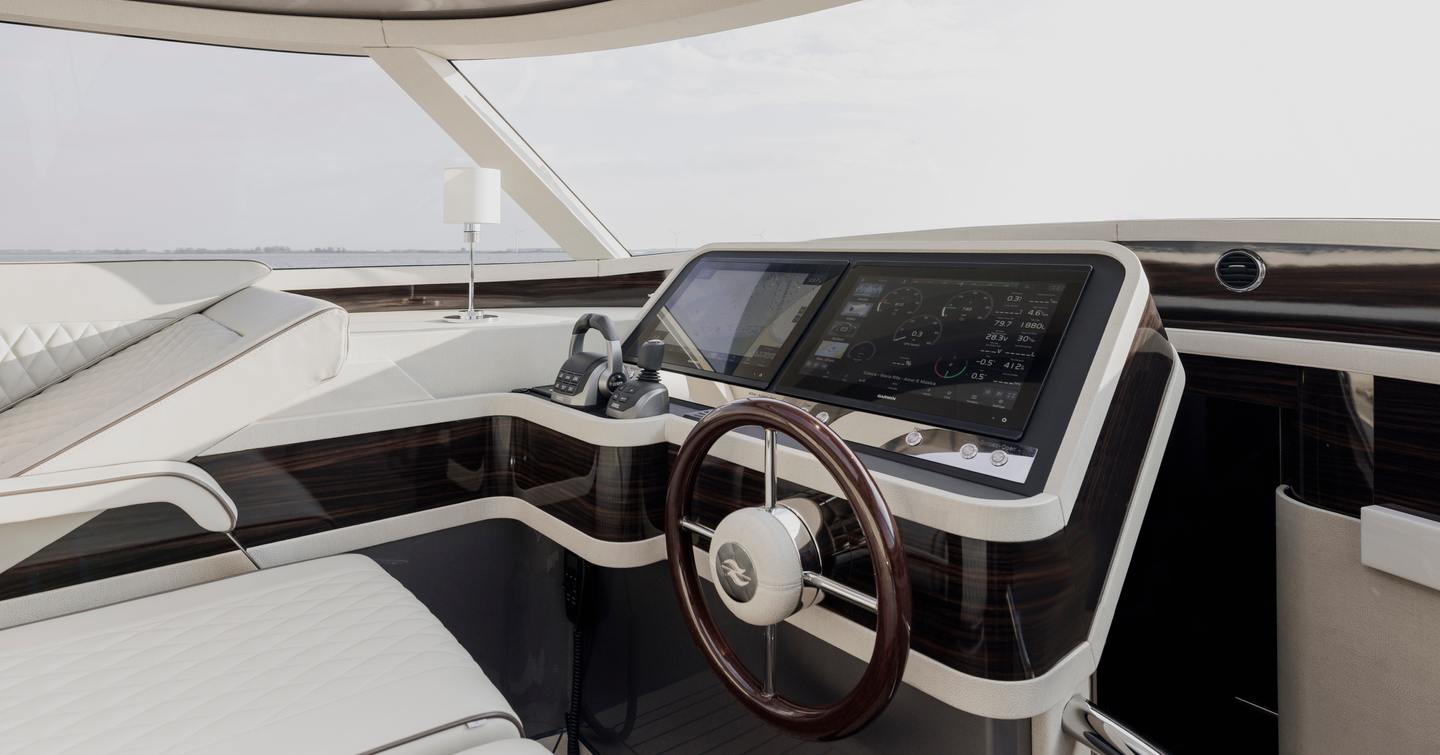
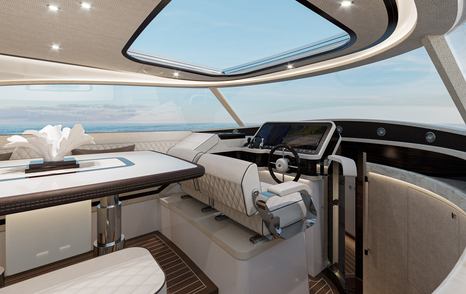
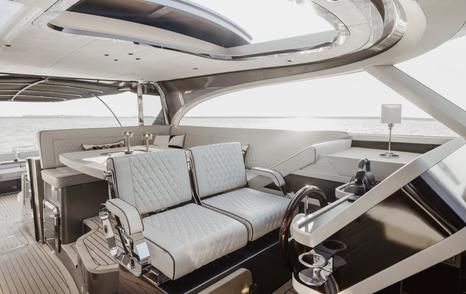
The only helm is at the forward end of the saloon, and it just looks right. You’ve got the curve of the windscreen in front, big side windows, and the sunroof overhead. It's part of the saloon, and they've done a great job of blending it into the living space, thanks to its architectural beauty.
You get two big Garmin MFDs, mounted up high where they’re easy to read. Just below them are the Volvo controls, the throttles and joystick, and then the silver button bank. Everything’s clearly labelled and grouped by function, so it makes sense straight away. The wheel is mounted at a slight rake, and the driving position works whether you’re sitting or standing. You’ve got a proper line of sight down the bow, and visibility through the corners is very good. There can be few finer views than looking out through that windscreen and over that bow.
That said, given that the only helm is internal, having the second joystick just outside the cockpit doors is a useful addition, especially if mooring stern-to.
Power comes from a pair of Volvo IPS650s, so that’s 480hp each as standard. That’ll give you a top speed around 30 knots, and if you go for the triple-engine option, it climbs closer to 40 knots. Either way, what stands out is how quiet it is. Zeelander says around 70dB at full speed, which is impressive for a 50-footer.
This is something that binds the entire range, smooth effecient cruising with IPS propulsion and very low sound readings even at higher speeds. It's designed to be the ultimate fast cruiser.
On any Zeelander, the aft deck is probably the most important part of the exterior layout, and the 5 follows that rule without exception. Everything about this area is designed to be the heart of outdoor life on board, and when deployed, it opens out to create a full beach-style platform right at water level.
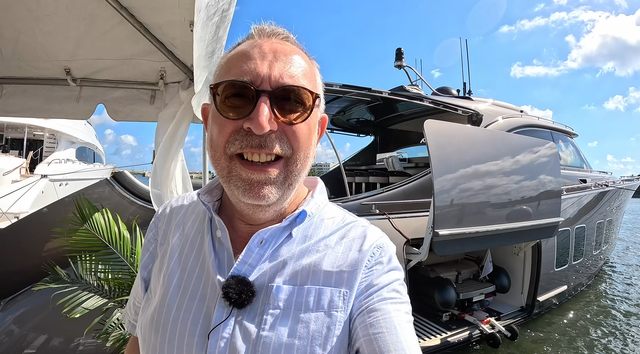
The transom is built around a hydraulically operated panel that folds down to form the swim platform. When lowered, this section reveals fixed sunpads built into the deck, creating what Zeelander calls “beach mode.” The platform sits close to the water and includes integrated steps that double as a passerelle, making it easy to board either from the dock or straight from the sea. When not in use, the platform lifts back into place and disappears into the curve of the hull, restoring the full sweep of the Zeelander tumblehome.
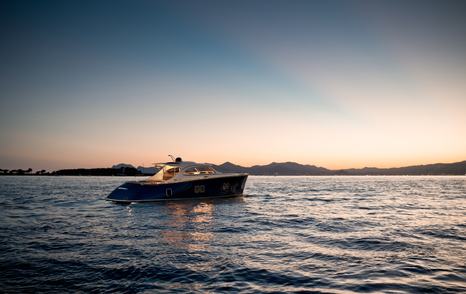
In profile, the Zeelander 5 looks like nothing else in its class, and the transom contributes heavily to that.
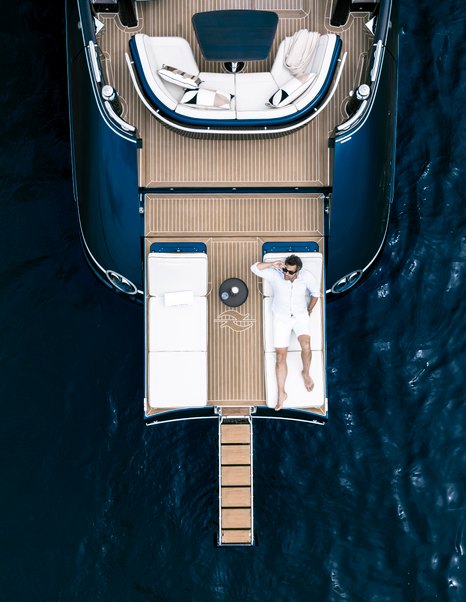
The detailing back here is unusually refined. There are no sharp angles. Every surface and edge is curved, from the bulwarks to the comings, and even the cleats have been custom-machined to suit the aesthetic. Each cleat carries a raised Zeelander logo and costs around £3,000 to produce.
The boarding gates on both sides of the cockpit open outward to allow side-to boarding, so guests can step on directly, whether the boat is stern-to or tied alongside. Because the cockpit itself sits slightly inboard of the side decks, this whole area feels very secure underfoot, and there is a strong sense of containment even if the gates are open.
Cockpit
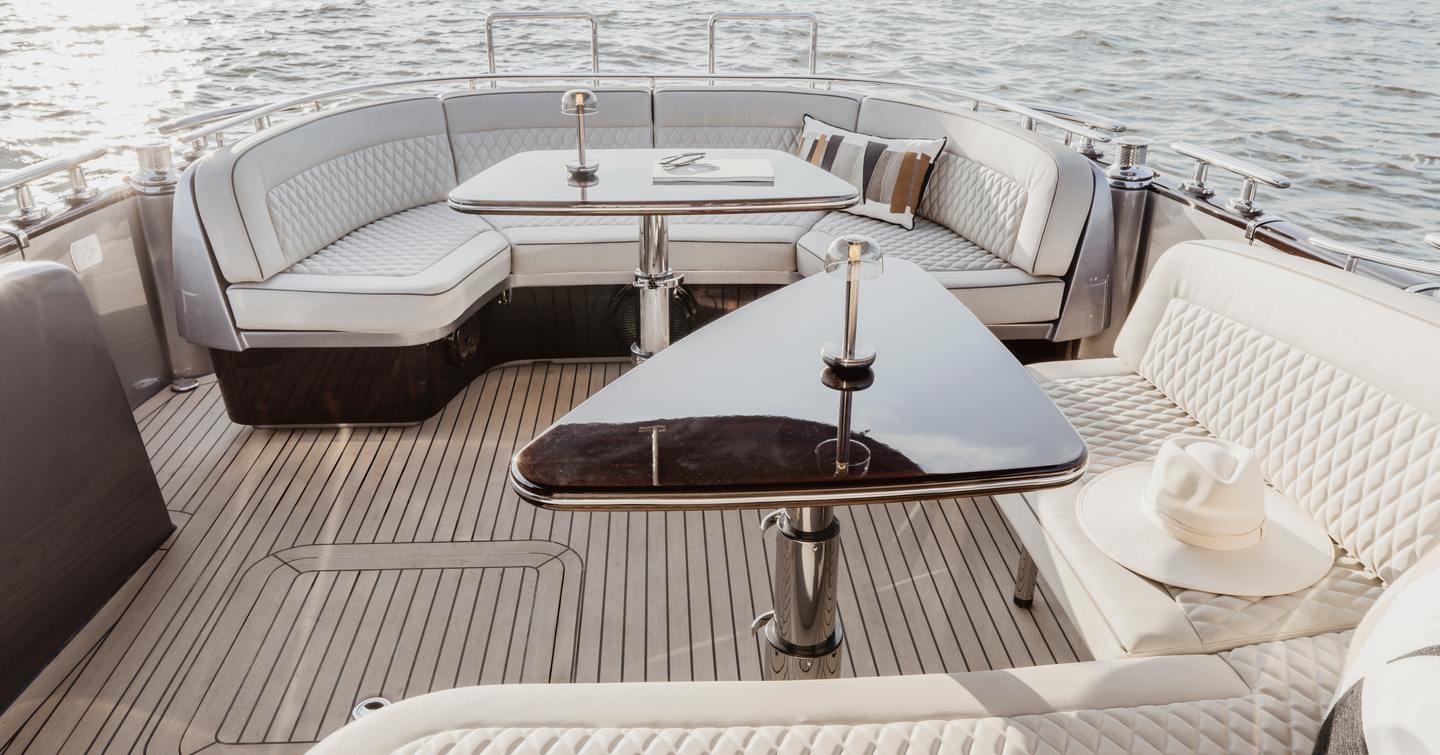
The cockpit forms the main outdoor living area on board. It is slightly recessed and cocooned by the structure, so it feels safe and enclosed as you move between the aft deck and the saloon. You are inboard of the side decks, with solid coamings on both sides and an overhead canopy formed by the extended wheelhouse roof.
Fixed U-shaped seating wraps around a central dining table, and the whole space is set at a comfortable depth for outdoor dining. The cushions are firm and supportive, so you can sit properly without adding scatter pads or filler pieces, and the backrests have enough rake to remain comfortable during longer runs. The canopy above offers full shade while also blocking the breeze, and the raised coamings around the seating make it feel protected even when the boat is moving at speed.
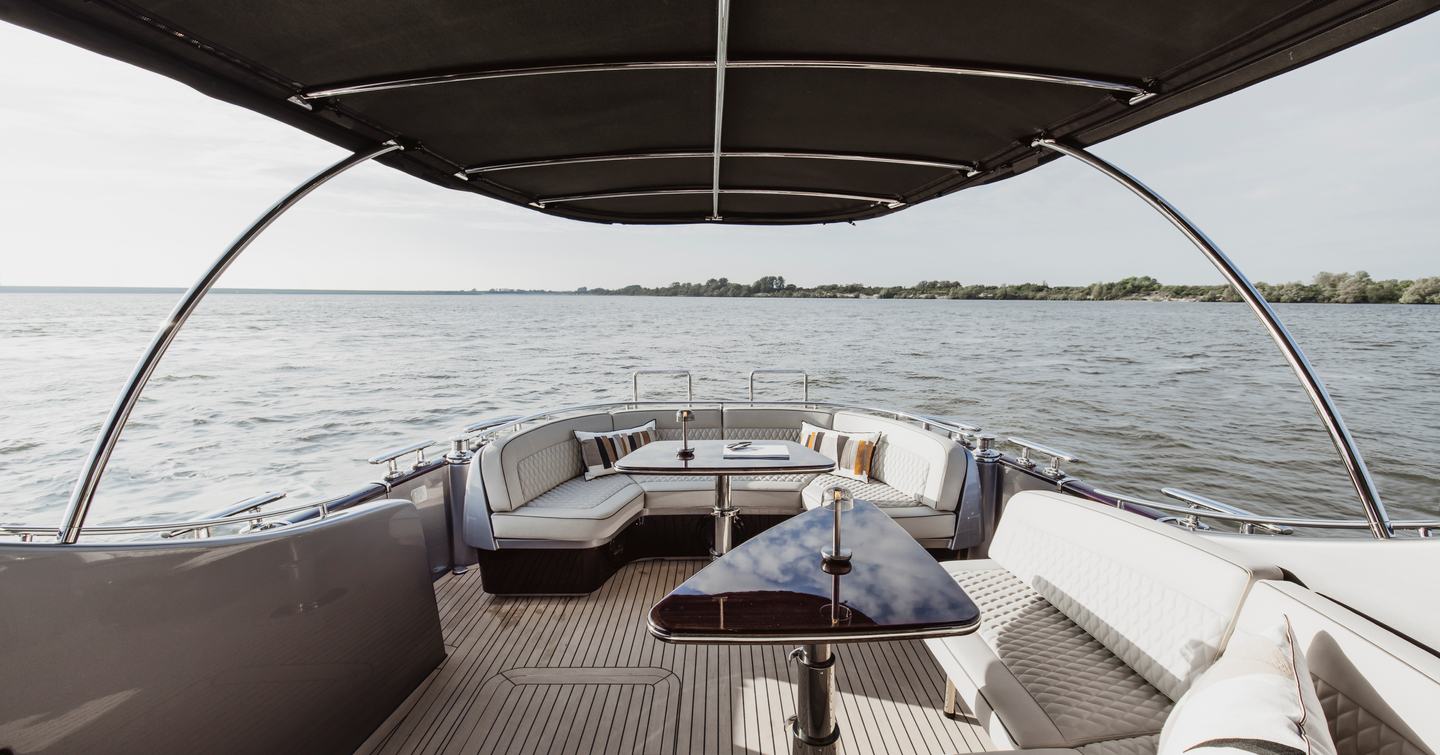
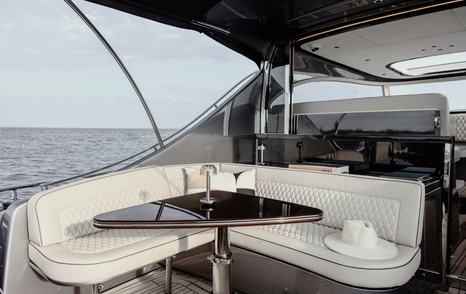
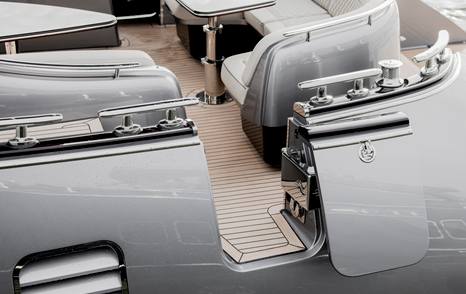
There's no bar out here as such - though the galley isn't far away - but there are a couple of fridges hidden near the door so you can get cold drinks in the cockpit. There's also some really useful fender storage just outside the cockpit doors, which is a hint at some of the practical stuff that the Dutch are generally so aware of. Like, for example, at the aft end of the cockpit, where a forward-facing locker flips open to reveal deep storage below, so loose gear can be stowed quickly and easily.
Side Decks & Foredeck
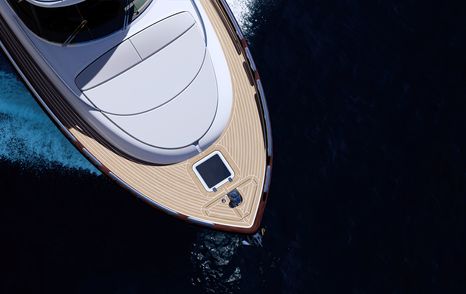
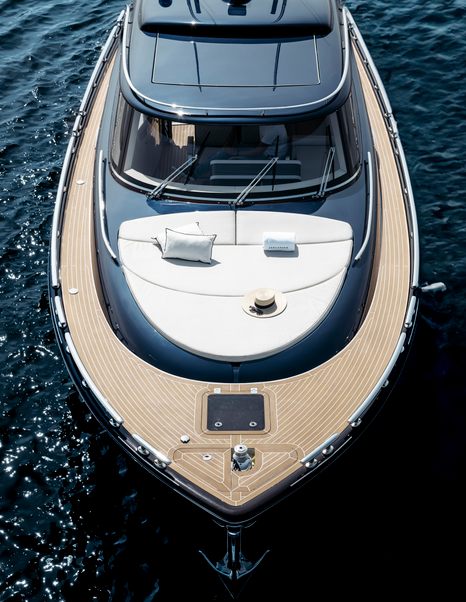
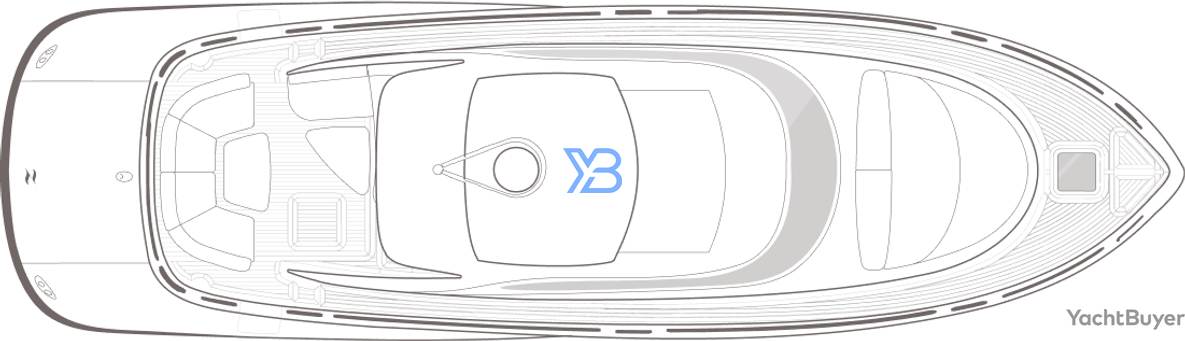
There are no high guardrails around the foredeck, but the coachroof's shape and moulded railings give you something to hold as you pass the wheelhouse. The side decks are wide and safe, but once you are forward of the coachroof, there isn't much to hold on to.
A full-width sunpad covers the forward section of the coachroof, set flush into the moulding so it doesn’t disrupt the flow of the lines. There is no permanent seating, just a clean flat deck with one clear purpose. It's a simple arrangement compared to rivals that have seating and tables, but if you want to sunbathe, this is where you'll be.
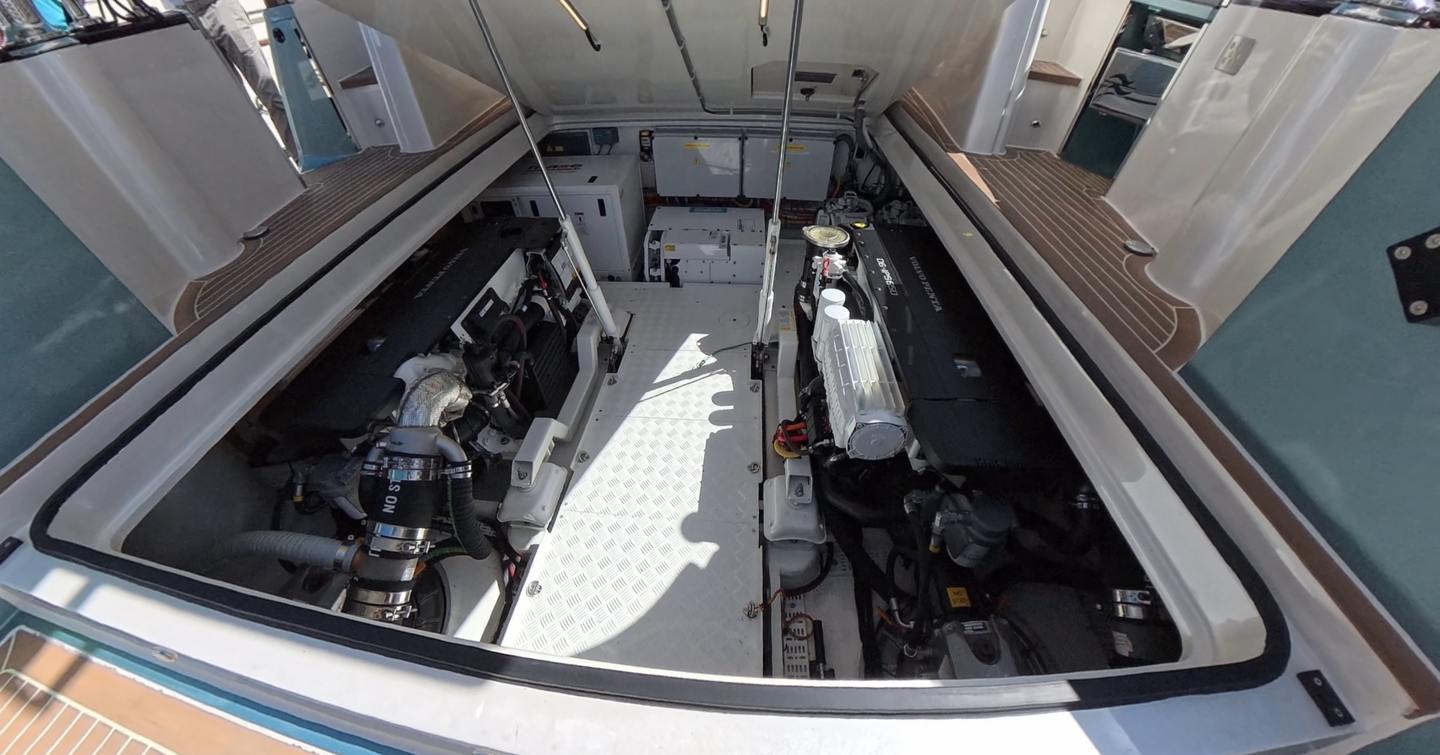
There are two ways into the engine room. For a quick check, there’s a small access hatch in the cockpit floor, which lets you get eyes on the engines without lifting any major structure. But if you want proper access, the whole aft deck section is hinged at the forward end and lifts on hydraulic rams.
That gives you full standing room, clear sightlines, and enough space to move around and actually work on the systems. It’s rare to find this kind of access on a boat this size, and it makes a real difference if you plan to run and maintain the boat yourself (which most owners will).
The twin Volvo IPS units sit aft, with space between them for servicing, and there’s a Seakeeper gyro and generator mounted forward of the engines. You can see how neat the wiring is and how well laid out the major components are; everything’s labelled, clipped, and routed cleanly.
With the triple-engine option, space down here does get tighter, and that centreline walkway disappears. But with the standard twin Volvo Penta IPS650s, which will be more than enough for most owners, you’ve got clear access between the blocks and space for extra storage between them. It may be drop-dead gorgeous, but the depth of engineering is clear.
The 5 is aimed at experienced owners who want a smaller yacht with high levels of fit and finish, and who prefer to operate it themselves. That use case drives the design: joystick control, simplified service points, and a clear focus on comfort without crew.
Owners often specify the boat with bespoke paint, custom interiors, and branded equipment to match aircraft or homes. Zeelander offers four standard interior styles or full customisation, and each hull is built to order with tight production limits.
This is not a mass-market product, and the yard treats it accordingly. Even the bilges, lockers, and wiring runs are finished to the same standard as guest spaces, with clean gelcoat, colour-coded cabling, and labelled systems throughout.
That is a long-winded way of saying that you pay a pretty penny for this level of exclusivity and customisation. At the time of writing, you're looking at around €3,300,000/$4,000,000, depending on spec, which of course varies wildly on a boat like this.
In truth, the type of person looking to own one of these is unlikely to be prioritising value for money. They want something special and unique that they're proud to own because of the way it looks and the way it feels.
Our Verdict
The Zeelander 5 trades cabin height and interior space for surface quality and styling that is truly unique. The layout decisions are deliberate, and while that means some compromises inside, like the amidships cabin has limited headroom, the galley is small, and the layout below isn’t designed for extended stays or big groups. The forward cabin works well, as it’s still shaped by the hull line, but they’re all the kind of compromises that will be forgiven because you are buying something that is truly special.
What you get instead is a boat that feels special before you even take a step on board. The curves, the finish, the quietness underway - all of it adds up to something that feels different. For the right owner, not much else at this size feels like this.
Reasons to Buy
- Beautiful design
- Quiet at cruising speed
- Immaculate fit & finish
- IPS handling
Things to Consider
- Headroom tight amidships
- Galley limited for longer stays
Looking to own a Zeelander 5? Use YachtBuyer’s Market Watch to compare all new and used Zeelander 5 Boats for sale worldwide. You can also order a new Zeelander 5, customized to your exact specifications, with options for engine choice and layout configuration. Alternatively, explore our global listings of new and used boats for sale and find your perfect boat today!
Rivals to Consider
The Palm Beach PB45 is one of the closest Zeelander 5 competitors in terms of length and style. Both are around 14.7m (48ft) and offer strong visual identity, but they approach performance and design very differently. The Palm Beach is built using carbon-reinforced vinylester for lightness and runs on a semi-displacement hull that cruises efficiently around 25 knots and tops out near 34. Engine options include IPS or straight shafts. Interiors lean toward Down-East elegance with satin teak and cream upholstery, and while the build quality is excellent, customisation is limited compared to the Zeelander. If you want a luxury dayboat that blends classic style with fuel economy, the PB45 delivers.
The Solaris Power 48 Coupé is another serious alternative for buyers in the market for a high-end 50-foot yacht. It offers a wider beam at 4.85m (15.9ft), which gives it more internal volume and options for two heads and even a crew berth. Twin IPS 650s give a top speed around 36 knots, which is quick but still slightly behind the Zeelander in triple-engine spec. The Solaris layout is open and sociable, with sunpads at both ends and sharp exterior styling. The interior finish is strong for a production yacht, although it does not match the handcrafted precision of the Zeelander. If you need more interior space or want a slightly more flexible layout, the Solaris makes sense.
The Mulder Favorite 1500 is a longer and heavier Dutch-built cruiser that focuses on traditional yachting character. At 15.6m (51.2ft), it offers more interior room and longer range, thanks to its aluminium hull and round-bilge profile. Powered by twin Volvo D6s, it cruises at 18 to 20 knots and can reach 25. The deck and cockpit are wide open, finished in thick teak, and the whole boat feels purpose-built for elegant, unhurried travel. This is not a planing hull and not a performance boat, but it is a top choice for owners looking for a Category A cruiser with high build quality and timeless lines. While the Favorite excels at long-range comfort, it cannot match the Zeelander 5’s handling, noise suppression, or integrated technology. Both are luxury 50-foot yachts, but they suit very different owners.
The Sasga Menorquín 42 FB sits in a different part of the market but comes up often in searches for quiet cruising yachts or displacement-style trawlers under 45 feet. It measures 13.2m (43.3ft), uses twin shaft-driven diesels, and cruises comfortably at 12 to 15 knots. Top speed is around 23 knots, and its full-bodied hull offers good fuel economy and stability at anchor. The layout includes a flybridge and generous cockpit space, which makes it a practical choice for relaxed Mediterranean cruising. Inside, it has good storage and a traditional finish, but it lacks the precision and modern control systems of the Zeelander. For buyers who want luxury at a slower pace, the Menorquín fits the brief.
Considering a new boat? Explore Zeelander's entire current range to find the model that best suits your needs, and compare it with alternatives from competitors to ensure you make the perfect choice.
Specifications
- Builder Zeelander
- Model Zeelander 5
- Length Overall 48' 3"
- Beam 14' 1"
- Draft 3' 7"
- Hull GRP
- Cabins 2
- Berths 3
- Yacht Type (Primary) Classic Style
- Use Type (Primary) Weekending
- Cruising Speed
- Max Speed
- Engine Model 2x Volvo Penta D6-IPS650
- Engine economic speed 20.2 knots
- Engine max range (speed type) 302 (nm)
Zeelander 5 Layout
-
Above
-
![Above Zeelander 5]()
The walkaround deck is easy to navigate
-
Main Deck
-
![Main Deck Zeelander 5]()
The aft end drops down to create a fantastic bathing platform
-
Lower Deck
-
![Lower Deck Zeelander 5]()
Two cabins and two bathrooms on the lower deck
Interested in a Zeelander 5?
NEW Build
Find your local dealer for a personalised, no-cost consultation
or just request
Brochures & Pricing
Used & In Stock
Looking for a ready-to-go Zeelander 5 or pre-owned options? Explore all inventory of the Zeelander 5 available worldwide