Ultimately, the choice of the ideal flag state depends on the individual preferences, intended usage, and specific requirements of the yacht owner.
History
Since ancient times, a ship's flag has represented its nationality, subjecting it to the laws of the country it belongs to. For ships operating far from their homelands, flying the flag of a different nation granted protection and trading advantages.
This practice, known as "flags of convenience," dates back to the Classical period, with examples of ships using flags of other countries to secure advantages in trade. In the Middle Ages, ships trading in areas far from their homes might arrange to fly the flag of the “controlling” state to gain its protection and cargo rights.
Throughout history, including during World War II, the concept of flags of convenience resurfaced to navigate trade and legal restrictions, allowing ships to operate more freely in various regions.
The convention that established what is now the International Maritime Organization was adopted in 1948, entered into force in 1958, and the organisation first met in 1959. Today, the IMO sets the global framework for maritime safety, security and environmental standards.
Flag states play a pivotal role in enforcing these international standards, ensuring compliance, and promoting a culture of maritime safety and security worldwide. A competent flag state authority must possess the requisite financial and technical maritime infrastructure to provide comprehensive support to vessels registered under its flag.
Key Factors
The choice of the flag flown from your yacht can significantly influence various aspects of your ownership, especially ownership of the world's biggest yachts. Factors include:
- your privacy,
- your tax obligations,
- your liability exposure,
- your commercial viability, and
- your overall yachting experience.
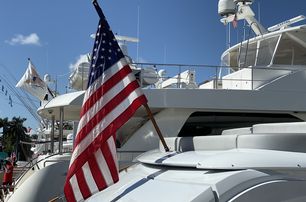


The choice can be as straightforward as your country of residence or, more commonly in the superyacht realm, an offshore registry in a country with laws tailored to accommodate the intricacies of your personal yacht ownership and potential charter operations.
Popular flag states provide attractive and straightforward options for establishing offshore corporate structures, offering protections within stable fiscal and legal systems. In addition, these states provide construction, inspection, and regulatory compliance frameworks that streamline the ownership and operation of large yachts.
A good starting point is the Paris MoU White List. It ranks flag-state performance from port-state-control inspection and detention data over a rolling three-year period. A White List flag has a stronger inspection record than Grey or Black List flags, although the ranking doesn't certify the condition or compliance of an individual yacht.
An estimated 80% of superyachts are registered under the 'Red Ensign Group,' comprising the British overseas territories such as the Cayman Islands, Gibraltar, and the Isle of Man.

Vessels within the Red Ensign Group have access to British consular support overseas, while UK defence and security responsibilities also extend to REG-flagged vessels. That doesn't amount to a guaranteed naval response to every incident, but it is one of the wider state-support benefits attached to the group.
What does a yacht's flag actually mean?
You’ll sometimes hear that a yacht is effectively part of the territory of the country whose flag it flies. That isn’t literally true.
The flag gives the yacht its nationality and places it under that state's jurisdiction for matters such as registration, safety standards, certification and some crew rules. On the high seas, the flag state has an especially important role.
But the yacht doesn't carry a piece of its home country around with it. Once it enters another country's territorial waters or ports, local laws can also apply. Customs, VAT, immigration, charter rules and port regulations may depend on where the yacht actually is rather than the flag at the stern.
The same distinction matters for tax. A yacht's flag can form part of its ownership and operating structure, but it doesn't by itself decide whether VAT is due, whether temporary admission applies or whether a commercial yacht qualifies for a maritime tax relief.
Fiscal
The fiscal implications of choosing one flag state over another can significantly impact a yacht owner's financial responsibilities. Factors such as tax regulations, VAT obligations, and customs duties can vary depending on the flag state, potentially influencing the overall operational costs and financial planning for the yacht. Additionally, the choice of flag state may determine the eligibility for certain tax exemptions or incentives, affecting the owner's fiscal position and regulatory compliance.

Temporary Admission is a good example. A qualifying privately used non-Union yacht can remain within the EU customs territory under Temporary Admission for up to 18 months without import VAT or customs duty. But a non-EU flag alone isn't enough. EU rules also look at matters such as registration or ownership and, as a general rule, require the yacht to be used by a person established outside the EU customs territory. The 18-month limit applies to qualifying privately used sea and inland-waterway craft.
A yacht intended for charter will usually need a commercial registration and must meet the rules that apply in its flag state and the jurisdictions where it operates. Commercial status can also affect VAT treatment, but it doesn't make the yacht automatically VAT-exempt.
A genuine charter business may be able to deduct qualifying input VAT on goods and services used for its taxable business activity, subject to the relevant VAT rules. That is different from a maritime VAT exemption. Article 148 of the EU VAT Directive provides specific exemptions for certain supplies and services connected with qualifying vessels, including fuel, provisioning, repairs, maintenance, charter and hire, but only where the statutory conditions are met.
Flag-state myth: “Register the yacht offshore and you won't pay EU VAT.”
A non-EU flag alone doesn't create a VAT exemption. The yacht's ownership, use, customs status, location and the residence or establishment of the person who uses it can all matter.

The selection of a flag is best approached under the guidance of a maritime attorney and a fiscal advisor.
Reputation
A good reputation in the maritime industry enhances a flag state's standing in the international community, fostering trust and credibility among vessel owners, operators, and maritime authorities.
A robust regulatory framework and effective enforcement of maritime regulations contribute to improved safety and security standards, reducing the likelihood of maritime incidents and ensuring the well-being of seafarers and the protection of the marine environment.
The choice of flag significantly influences the operational ease of the yacht, particularly in dealings with customs officials and port-state authorities. A flag known for its more lenient approach toward maintenance and administrative regulations is likely to garner increased interest from authorities keen on imposing fines.
Reputable flag states listed in the White List, as previously mentioned, are recognized for their stringent requirements to ensure compliance and operational adherence. Yachts registered under such reputable flags are less likely to face rigorous scrutiny or in-depth investigations while visiting foreign ports.
Technical Competence
Reputable flag states offer transparent instructions concerning the technical and operational management of a yacht, covering areas such as safe manning, crew certification, safety equipment, and annual surveys.
Opting for a widely recognized flag state increases access to an approved pool of surveyors, streamlining the process of regulatory compliance and ensuring the effective maintenance of adherence to established standards.

Ease of Use
Flag states have a vested interest in ensuring that their systems are user-friendly. By implementing accessible and straightforward procedures, flag states can attract more vessels to register under their flag, contributing to the growth of their maritime registry and bolstering their position in the global industry.
The more vessels registered under the flag, the more revenue through registration fees and fostering economic development in related maritime industries.
Furthermore, adherence to international standards and cooperation with international organizations bolsters a flag state's position within the global maritime regulatory framework, facilitating diplomatic and economic relations with other nations.
Protection
Yachts, especially when operating in remote or foreign waters, can rely on the support of their flag state's naval forces in times of distress.
For instance, a yacht registered under a Red Ensign Group flag state can call upon the UK's Royal Navy for assistance when facing challenging situations. This support from the flag state's naval forces serves as a crucial safety measure, providing reassurance to yacht owners and operators, and underlining the importance of selecting a flag state with a reliable and responsive support system.

Name and Home Port
The uniqueness of a chosen yacht's name may hold sentimental value for a yacht owner.
While most flag states allow a name to be used only once within their register, some permit the use of the same name, albeit with a different home port. This consideration underscores the personal touch and individuality associated with a yacht's name, highlighting the significance of selecting a flag state that resonates with an owner's connection to their yacht's identity.
Buying a used yacht? Flag and VAT status are only part of the due diligence. YachtBuyer MarketWatch lets you check the live market, current asking prices and historical asking price data for yachts for sale globally. Legal and tax status should then be verified from the yacht's documentation before purchase.