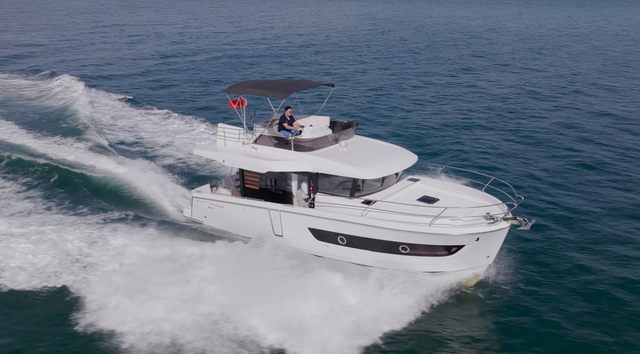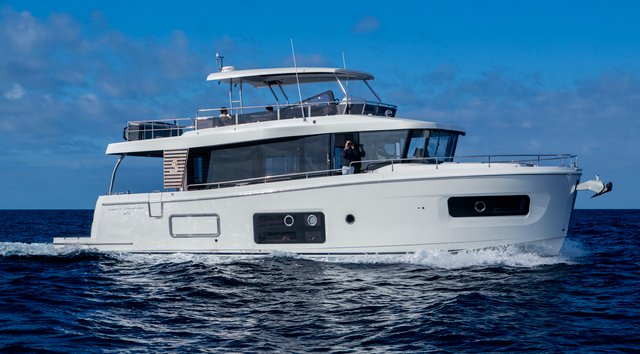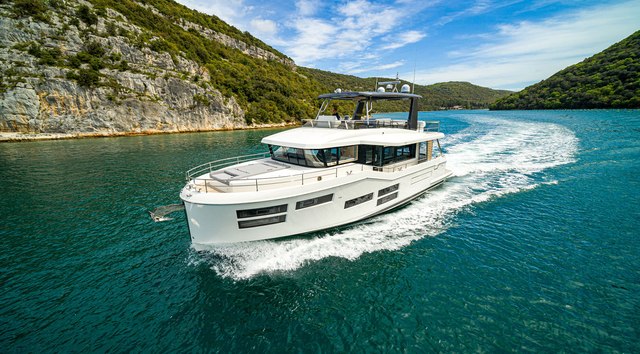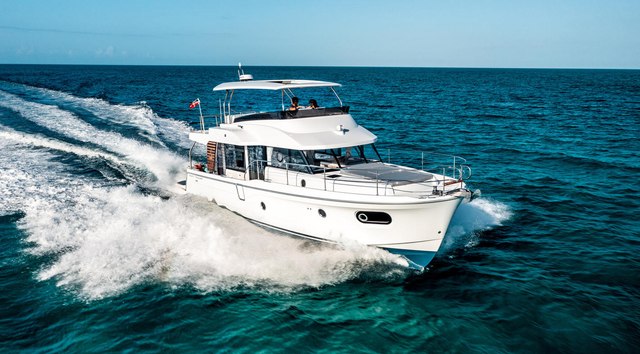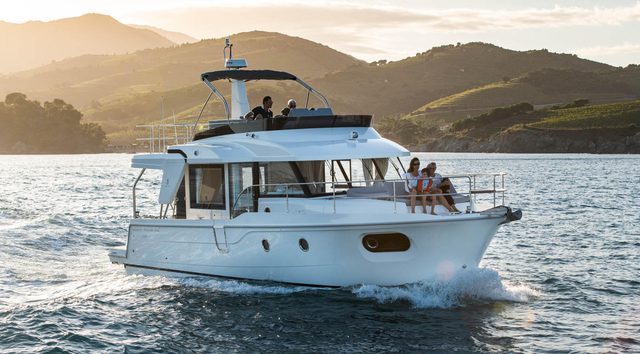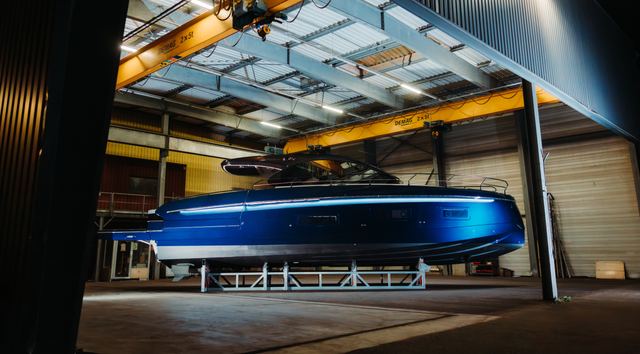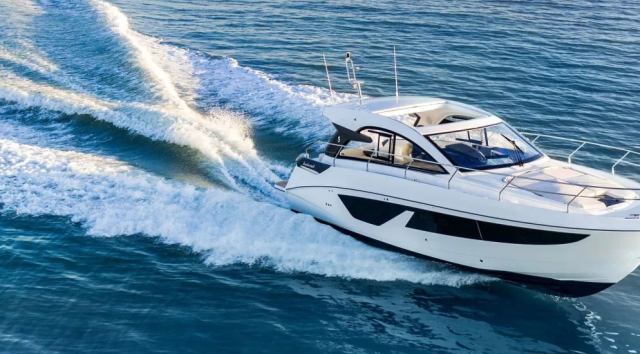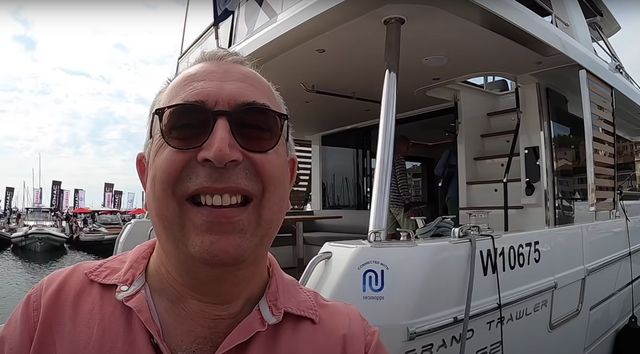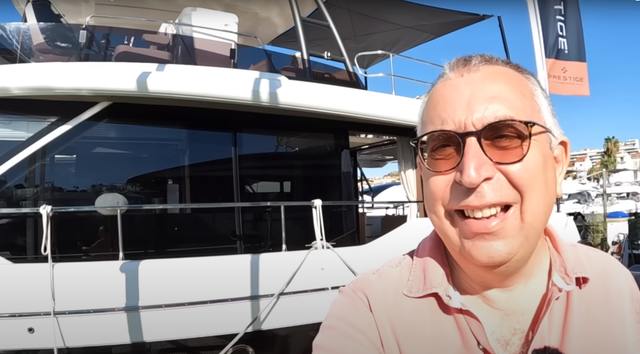
At around £2.5 million, this is comfortably the biggest and most expensive yacht Beneteau has ever built. It also places the company in unfamiliar company, with buyers equally likely to be considering Princess, Fleming, Grand Banks or Azimut, so simply offering more space isn't enough.
This isn't simply a larger interpretation of the Swift Trawler idea as the Grand Trawler platform is developed around a full-displacement hull and a long-range cruising brief, and that focus runs through everything from the engineering to the deck layout and accommodation.
Review Video
The first thing worth saying is that this isn't just a stretched Swift Trawler. In fact, the Grand Trawler sits apart from the rest of Beneteau's trawler range because it uses a dedicated full-displacement hull developed with French naval architects MICAD. That hull first appeared on the Grand Trawler 62 and Beneteau wisely left it alone for the 63 because the original brief was already doing exactly what it was meant to do.
What I really like is how honest that brief was. Beneteau didn't chase an impressive top speed and work backwards from there. It started by looking at how owners actually use boats of this size and found that most spend their time cruising between 8 and 12 knots. So that's where the development effort went. More than 300 hours of computational fluid dynamics and tank testing were used to develop the hull, with careful attention paid to weight distribution, efficiency and sea-keeping. A top speed of around 20 knots was enough as the priority was creating a boat that could cover long distances comfortably and economically because that's what owners were most likely to ask of it.
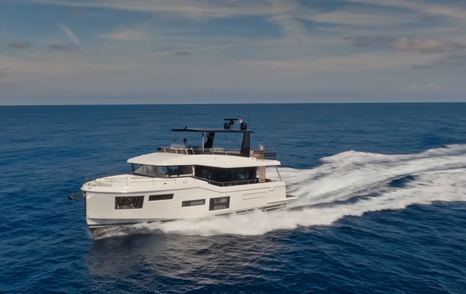
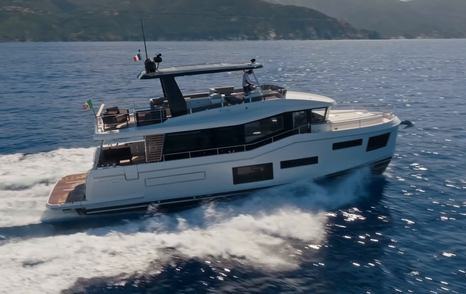
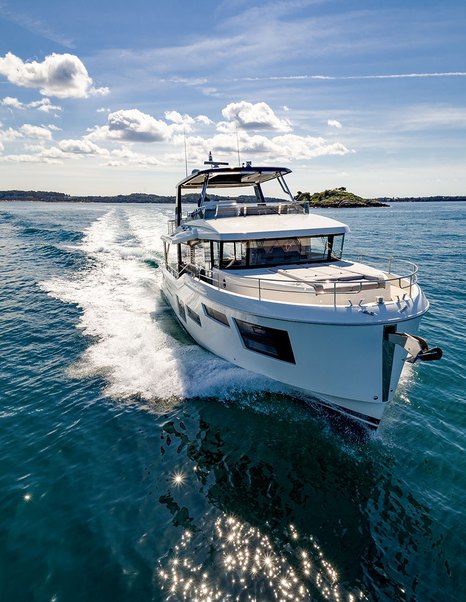
That explains why the Grand Trawler feels quite different to many boats you'll find at this price. It isn't trying to be a fast flybridge cruiser that can slow down. It's a long-range cruising boat that still has enough performance in reserve if the weather changes or the next harbour suddenly becomes a better option. It's also worth mentioning that this is a CE Category B yacht, so it's designed for offshore passages in winds up to Force 8 and seas of up to 4 metres. Beneteau claims up to 1,000nm at 9 knots with reserve, while independent testing suggests those figures depend heavily on speed, with the hull rewarding patience far more than throttle. That's worth understanding because the range figures only tell part of the story. It's the way the boat has been optimised around sensible cruising speeds that really matters.
You can see the same thinking in the rest of the engineering package. Rather than fitting stabilisers as an expensive extra, Sleipner fin stabilisers now come as standard because they aren't really a luxury on a boat designed to spend days at displacement speeds. The large flybridge and hardtop inevitably carry weight high above the water, so active stabilisation becomes part of making the whole concept work rather than simply adding comfort. Straight shafts, twin 730hp MAN diesels and electric steering continue the same theme. None of it is especially glamorous, but it's dependable, well understood technology that suits the way this boat is intended to be used.
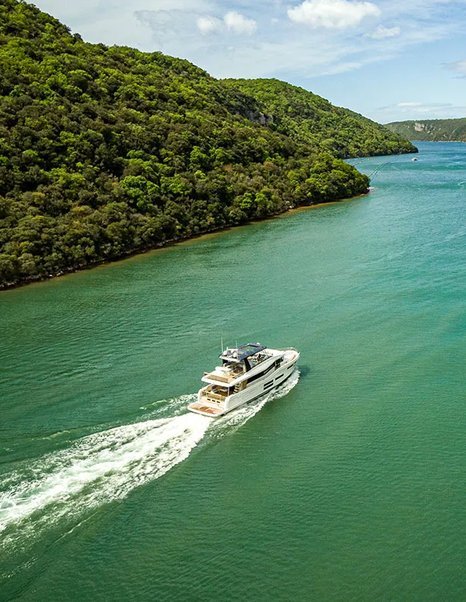
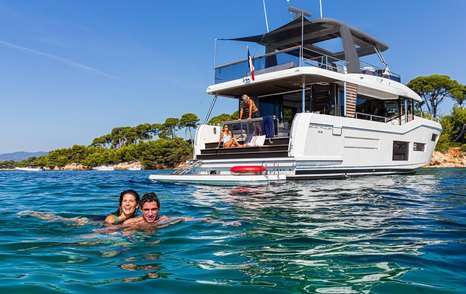
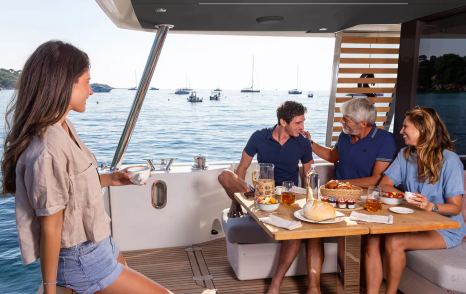
Construction follows a similarly sensible path. The hull and deck are resin infused with balsa-cored sandwich construction, while a substantial structural inner moulding adds stiffness and provides the framework for tanks, machinery and accommodation. Beneteau builds the major sections and many of the interior modules separately before bringing everything together later in the production process. It's a highly industrial approach, but that's also one of the company's strengths. Few builders have Beneteau's experience of producing large yachts consistently, and that repeatability shows in the fit of the mouldings and the way the systems are integrated.
That said, this is also where the Grand Trawler 63 reminds you it comes from a volume builder rather than a boutique yard. Beneteau doesn't publish the sort of structural detail you'll find from some engineering-led rivals, and its own production rules encourage common mouldings and repeated components across the range. That's no bad thing from a reliability point of view, but it does place a ceiling on how bespoke the boat feels. The interior has moved on with leather trim, more timber, solid wood tables and smarter detailing, yet it still doesn't quite have the richness or craftsmanship you'd expect from the very best boats at this price. At close to £2.5 million, that's a fair comparison to make because those are exactly the boats buyers will be looking at.
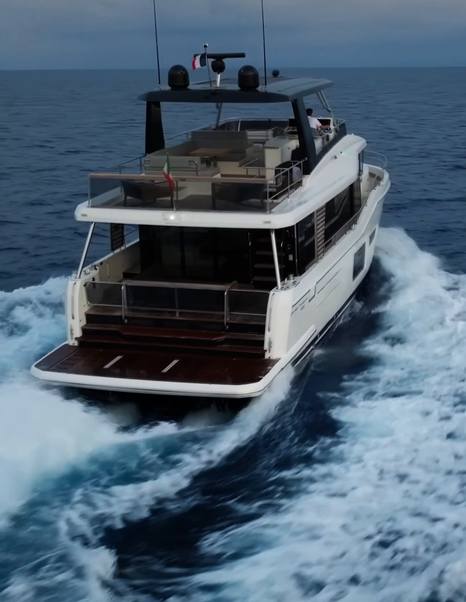
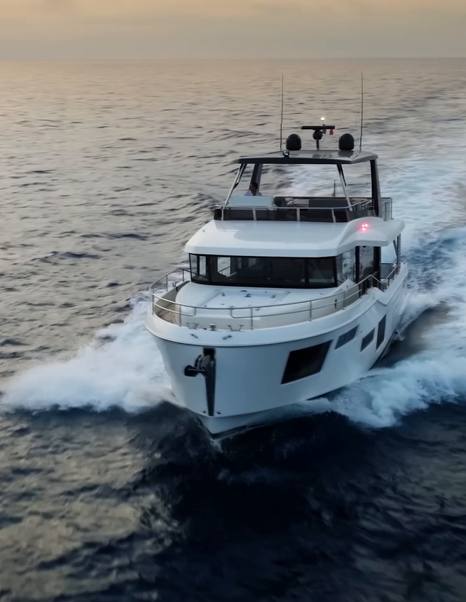
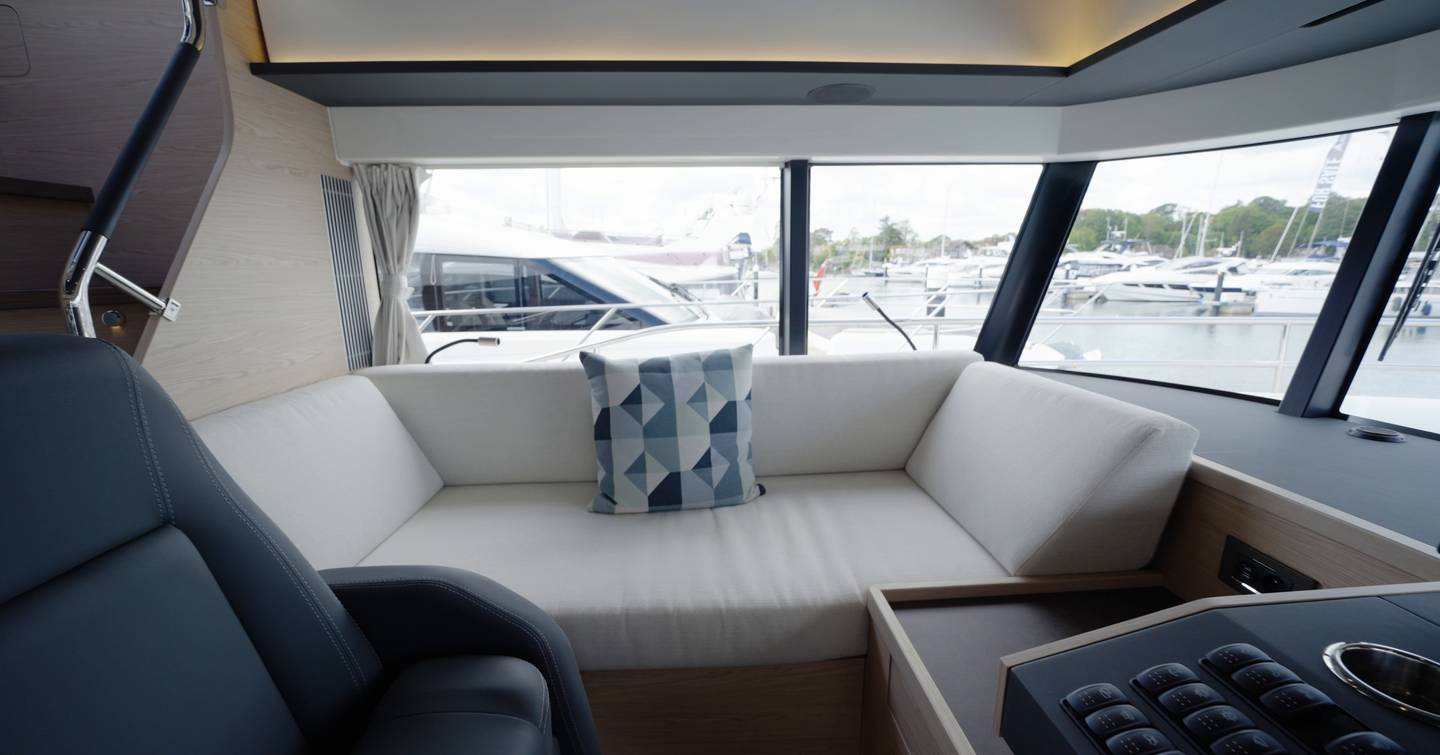
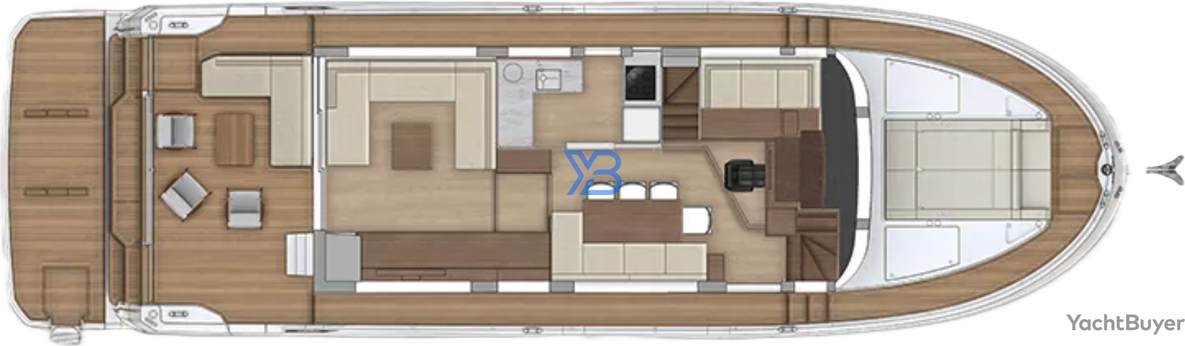
Moving aft from the helm you come to the dinette and it's maybe not quite where you'd expect to find it because it's up here alongside the driving position rather than further back. But on a boat like this, there's actually a lot to be said for it. If you're on passage and somebody's making a cup of tea or putting some lunch together, they're still right next to the helm, so it's easy to have a conversation and keep an eye on what's going on. If you do want a few more people around the table there's room to add a couple of chairs as well, although I'd imagine, most of the time, you're going to be eating outside.
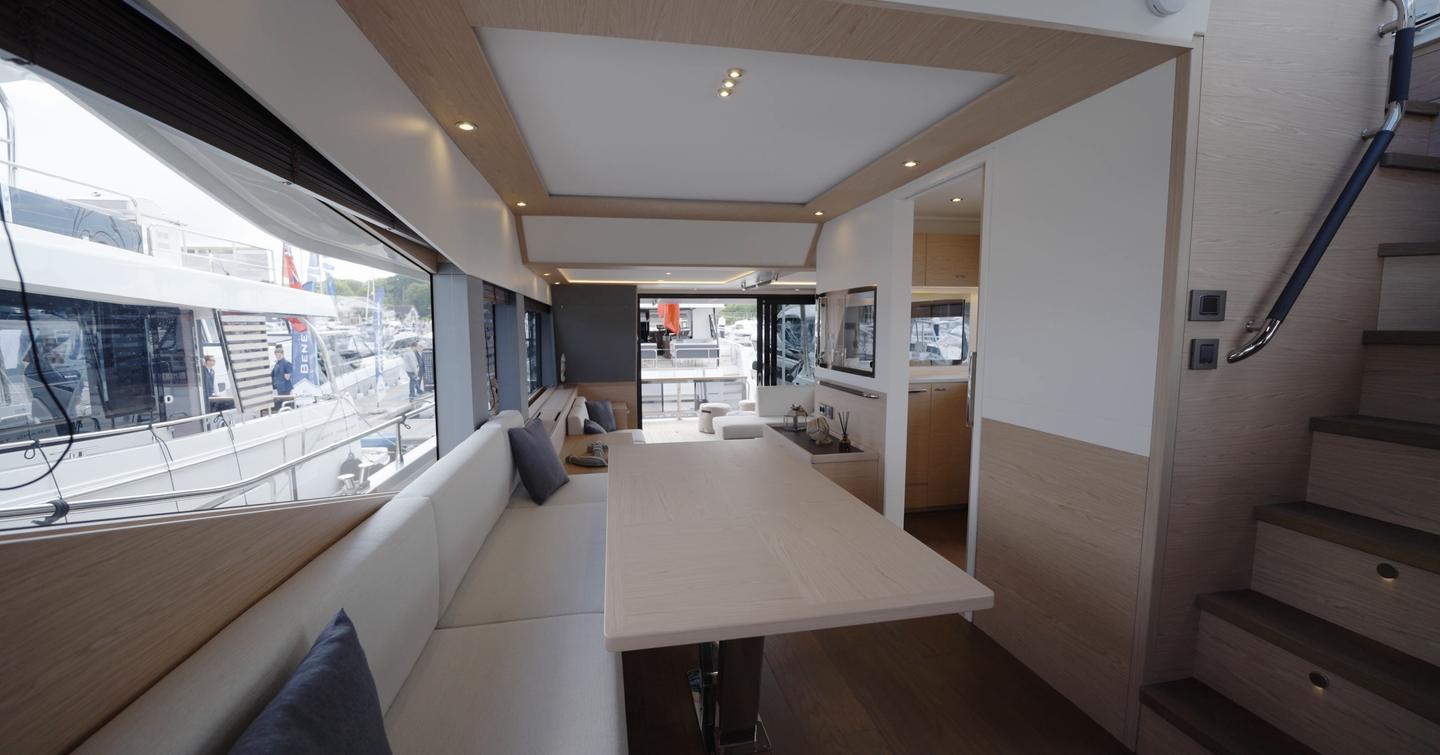
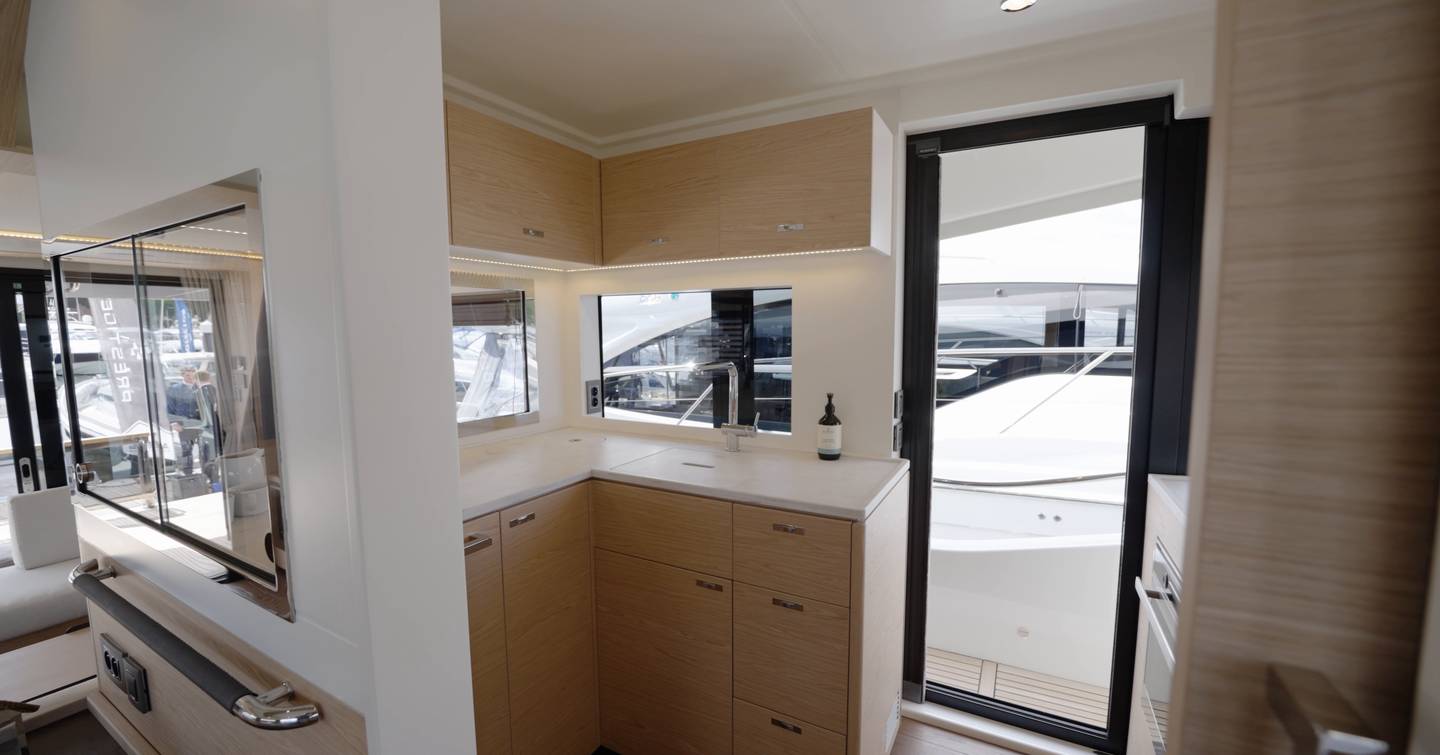
Opposite is the galley and, again, it's one of those layouts that seems to be going a little bit out of fashion but every time I get aboard a boat with it I think there's a lot to be said for it. Having the galley in the middle of the boat just works. You can grab a drink, stick your head up and talk to whoever's at the helm, and because you've got the side door right there it's easy to step outside if you're coming alongside and need to grab a line or a fender. It all feels very connected.
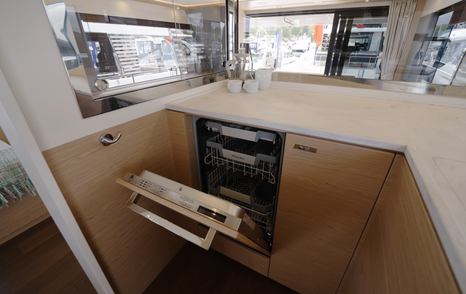
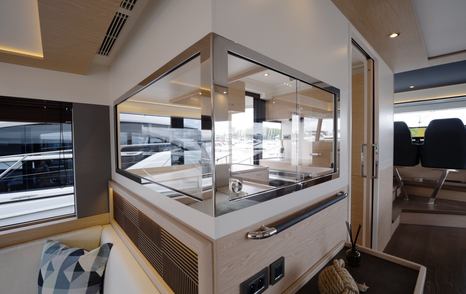
And it's a decent galley too. You've got a good-sized fridge with a freezer underneath, an oven, a four-burner induction hob and a dishwasher, so if you are living aboard for a few weeks you're not really missing much. The glass screens help as well because you never feel shut away in here, and this one even slides open so you've effectively got a little serving hatch through to the saloon. It's only a small thing, but it's quite a nice feature because whoever's in the galley never feels cut off from the rest of the boat.
Saloon
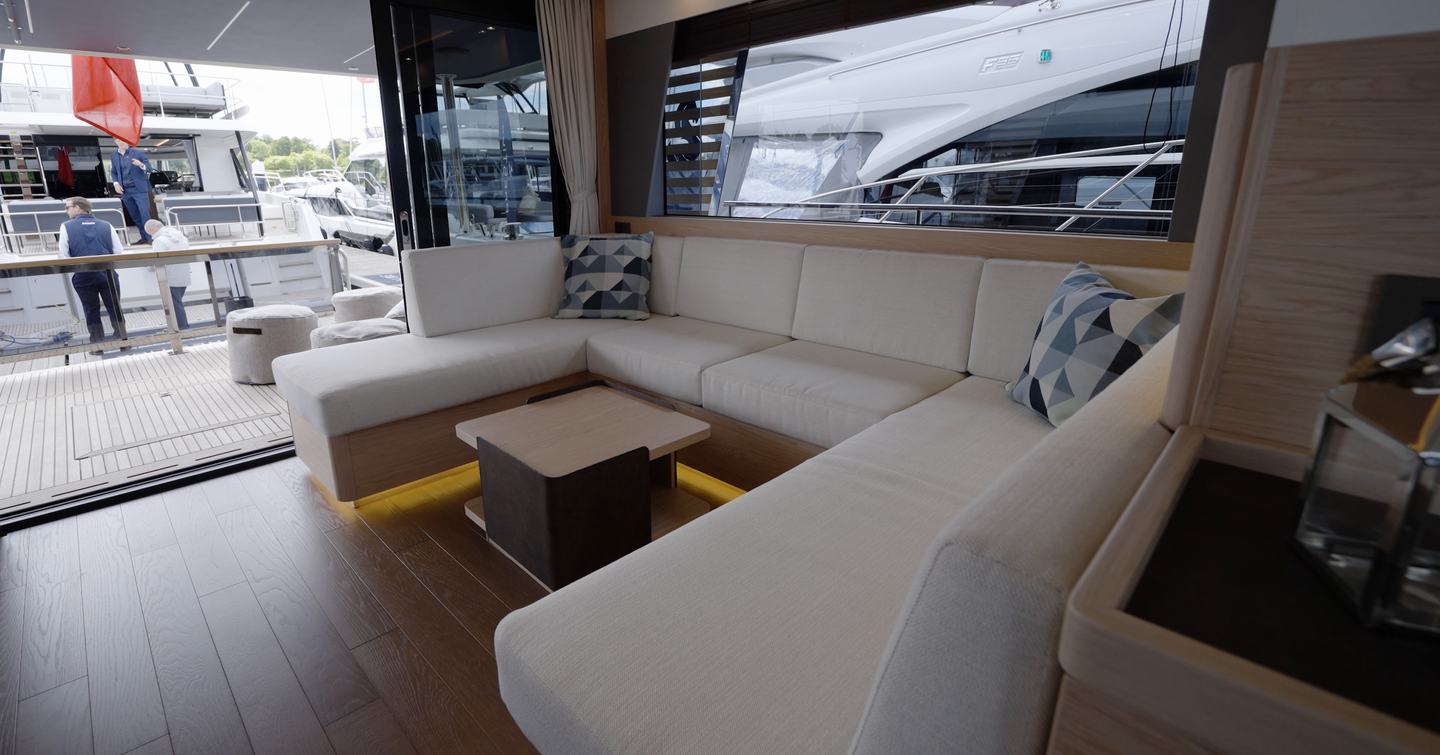
The seating area itself is a comfortable place to spend an evening. The main sofa faces a television that rises out of the cabinet opposite, there's another smaller sofa alongside and, just as elsewhere on the boat, you've still got plenty of room to move around. That wide walkway through the middle makes a difference, and having a decent handhold there is no bad thing on a boat that's going to spend a lot of time at displacement speeds.
Open the cupboards though and you find one of my favourite details. Rather than just a shelf for mugs and glasses, everything has its own dedicated space. Coffee cups, tea cups and glasses all sit in individual slots, so they're far less likely to rattle around or chip when you're underway. It's exactly the sort of detail we normally point out on boats from Princess, and it's nice to see Beneteau thinking about it here as well. Soft-close drawers finish it off nicely.
The timber itself perhaps doesn't have quite the same richness as some of the premium brands at this sort of money, but that's only part of the story. The layout works well, there's a separate wine fridge so you're not filling the main refrigerator with bottles, and it all feels like a space that's been designed to be used every day rather than simply admired at a boat show.
Owner's Cabin
The owner's cabin sits right amidships and it's a really impressive space. You come down a couple of steps to get into it but, once you're through the doorway, it's completely flat, so it's really easy to move around. On a boat that's designed for spending weeks on board rather than just weekends, that makes a surprising difference.
The first thing that really stands out though is the glass. Those hull windows are huge, so there's loads of natural light coming into the cabin, and I actually quite like this lighter oak finish because it keeps everything feeling bright. You can have a darker timber if you prefer it, but I think this works rather well in here.
Storage's good too. You've got wardrobes on both sides, loads of lockers underneath the television position and then this lovely bureau over here. It's just a nice space. Somewhere to sit with a laptop, somewhere to empty your pockets at the end of the day, or just somewhere to chuck a book when you've finished reading it. This particular boat didn't have the television fitted, but this is where it would go.
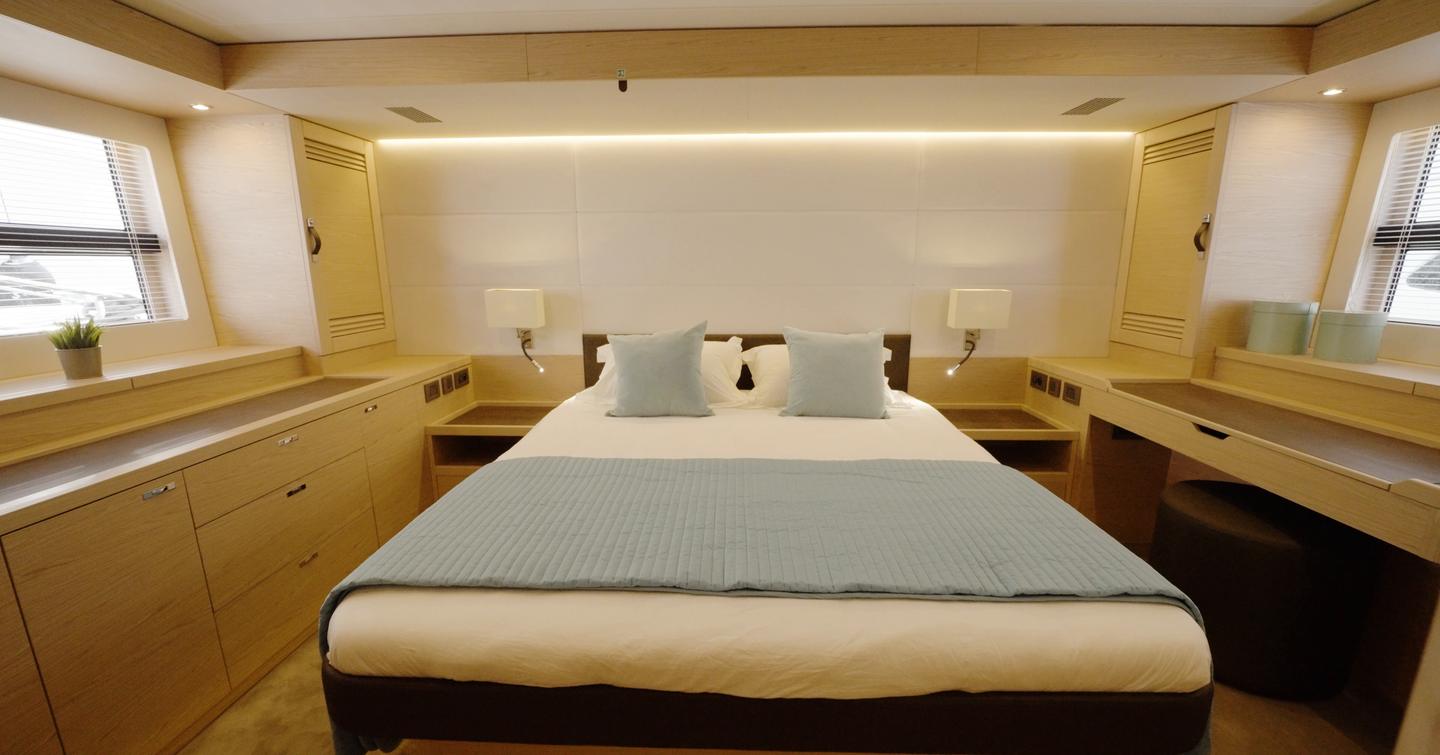
The bed itself is a good size and, because the cabin is so wide, you've actually got room to walk around it properly. It doesn't feel as though everything's been squeezed in just to maximise the accommodation plan. In fact, this whole cabin feels like somewhere you could happily spend a few weeks. That's really the impression you get throughout the Grand Trawler. Beneteau seems to have concentrated on making the boat comfortable to live on rather than simply trying to fit as many cabins into it as possible.
The ensuite carries that on. Headroom's excellent, there's loads of floor space, proper fiddled shelves around the basin so things aren't sliding around underway, and a separate shower cubicle that's actually a decent size. Again, it's all very easy to use and that's a phrase I keep coming back to on this boat because so many of the decisions seem to have been made with long periods on board in mind.
Guest Accommodation
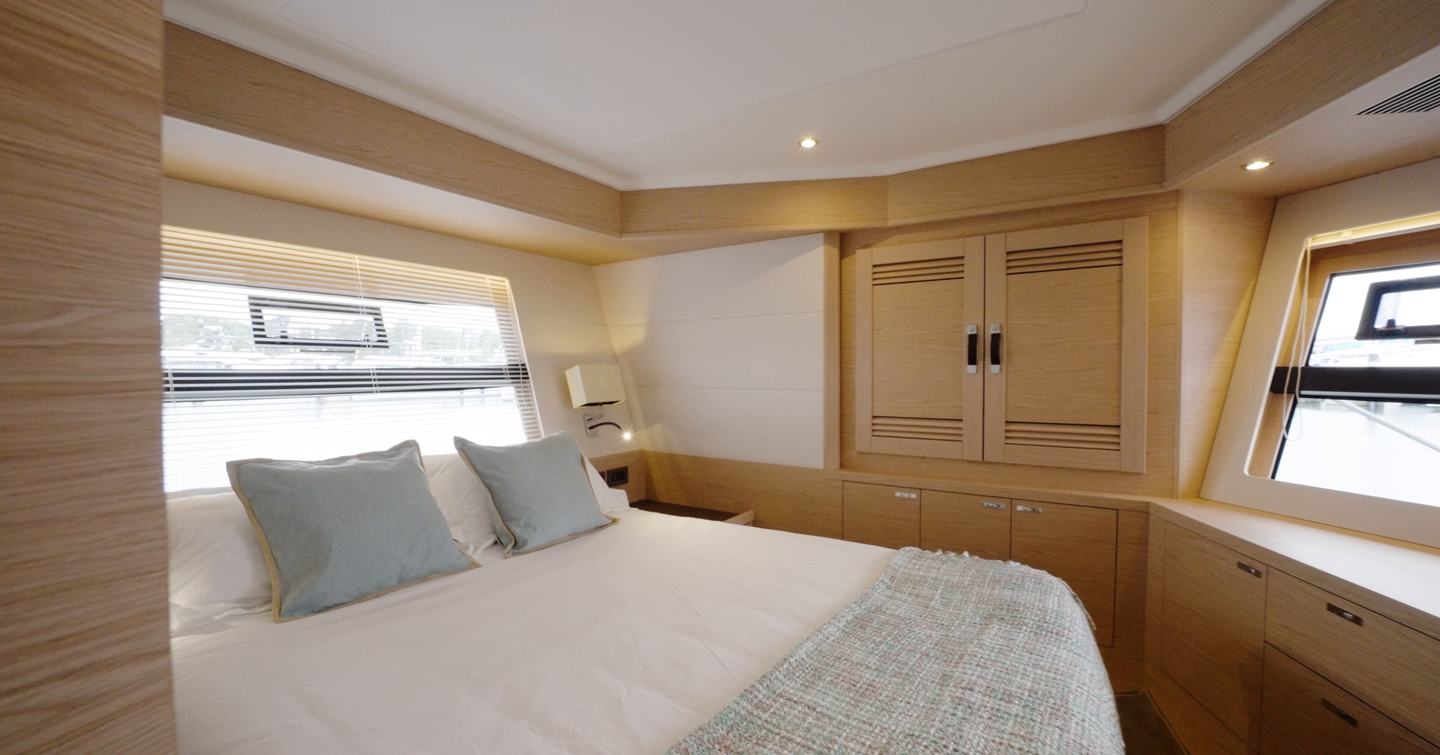
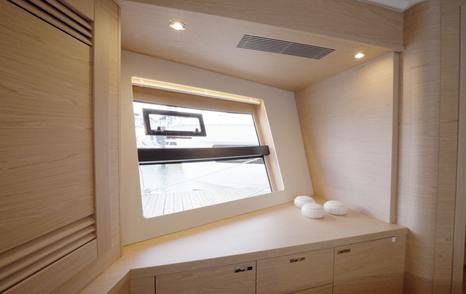
The VIP sits right forward and it's a really nice cabin. The berth's angled slightly and that's been done to open the floor space up, so it feels easier to move around, but it has another benefit as well because when you're lying in bed you can actually make the most of these huge hull windows. Quite often you get loads of glass in a cabin but, because of the way the bed's positioned, you don't really see much of it. That's not the case here.
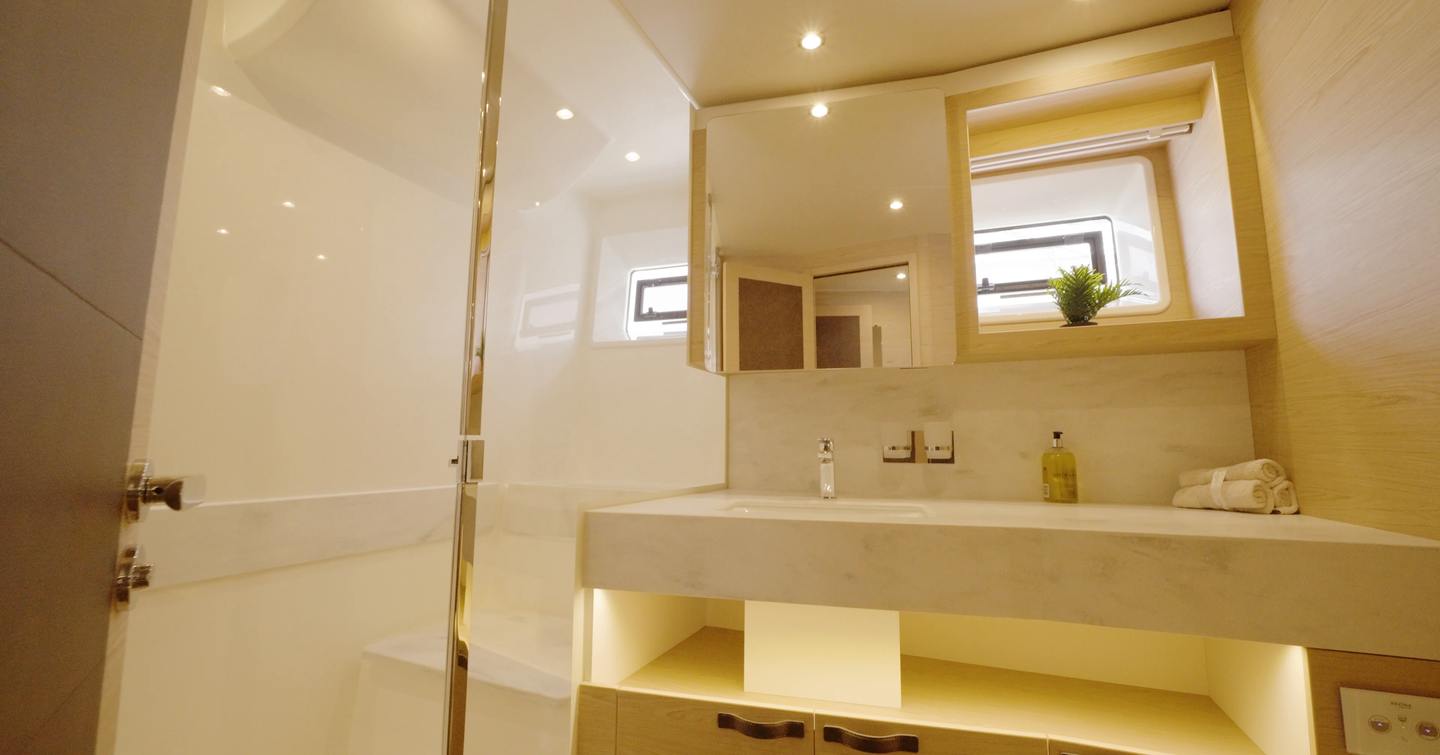
Storage's pretty good too. You've got decent bedside tables with storage inside, more underneath the berth and a bit more right up in the bow. Then the ensuite's impressive as well. The first thing that struck me was the headroom because I can put my arms right above my head and I'm still nowhere near the ceiling. The shower's a good size too, you've got a couple of opening portholes to get a bit of air through afterwards and there's fiddles around the worktop so you're not forever picking things up off the floor when you're underway.
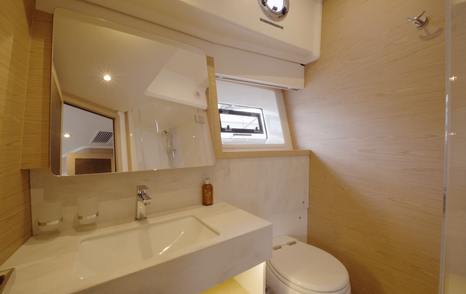
Back in the passageway you've got a proper day head and that's also the ensuite for the twin cabin, so your guests can shut the door off and have their own private bathroom. Again, the headroom's really good and so is the shower, and that's something you notice all the way through this boat because nowhere feels cramped.
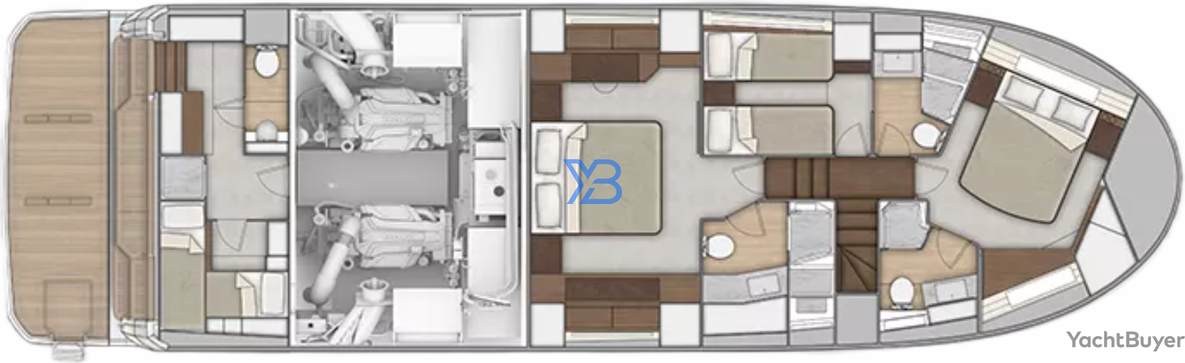
In the twin cabin, even right up by the beds there's still plenty of room to move around and I don't think you'd have any problem putting two adults in here. The only thing that's maybe a little bit limited is wardrobe space. It's absolutely fine for weekends or a couple of weeks away, but if you've got six adults all living aboard for an extended cruise, that's probably the first place you'll start wishing for a bit more room.
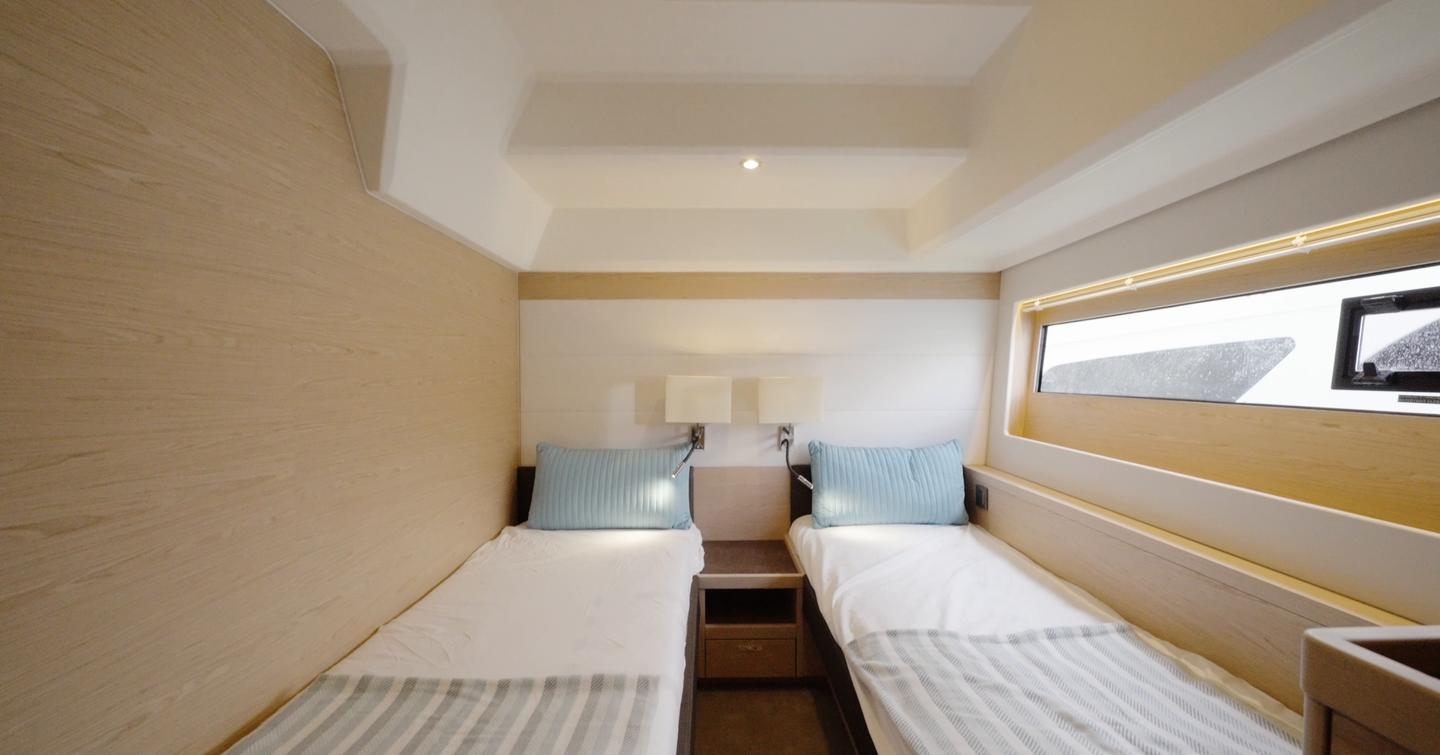
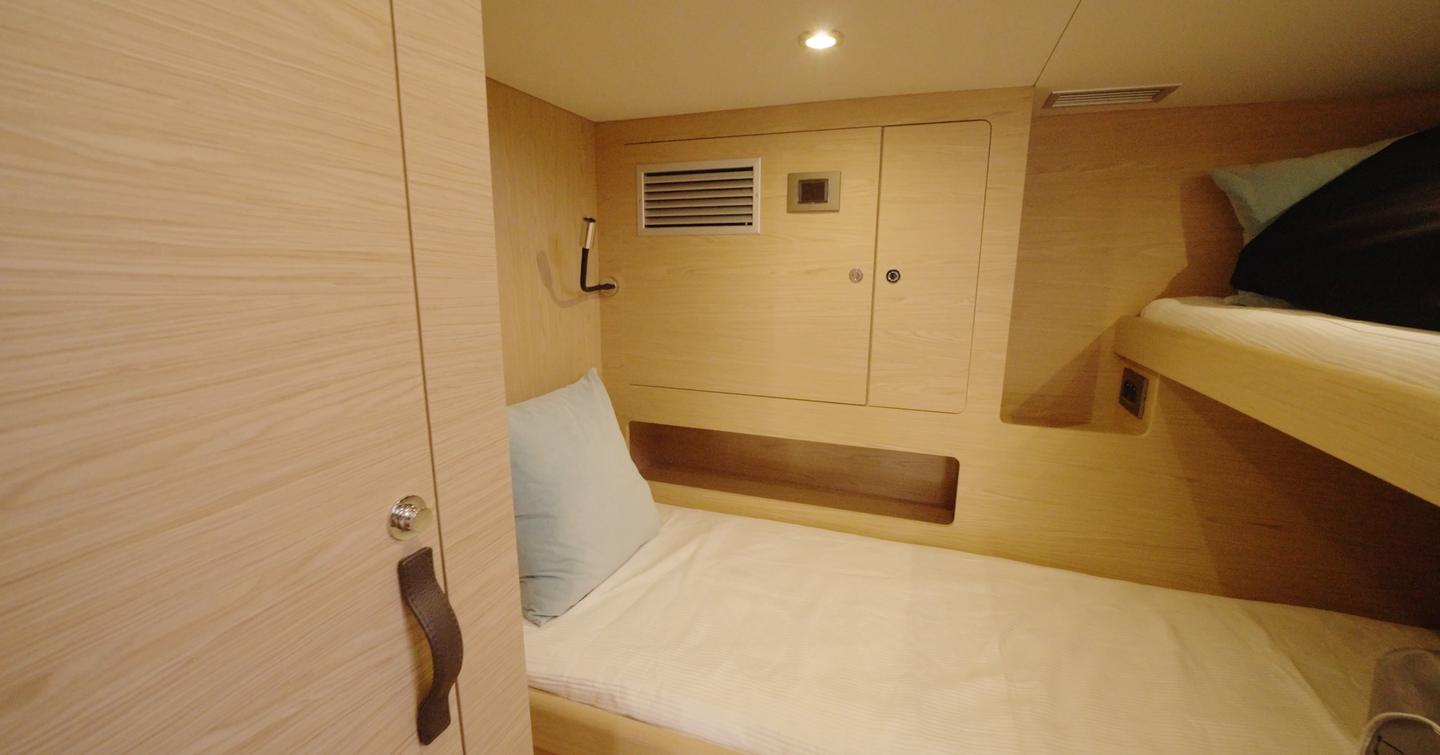
The crew cabin is quite interesting because it doesn't really feel like a crew cabin. It feels much more like a utility room that happens to have somewhere to sleep, and I think that's probably the right approach because a lot of these boats are going to be owner operated rather than running with full-time crew.
So the practical bits come first. You've got a washer dryer down here, an inflator for the paddleboards and other toys mounted on the bulkhead, and then a separate toilet and shower room. That's obviously useful if you do have crew on board, but it's handy even if you don't because somebody can come straight in from the bathing platform, use the facilities and head back outside without walking through the accommodation dripping wet. It's just a sensible use of the space.
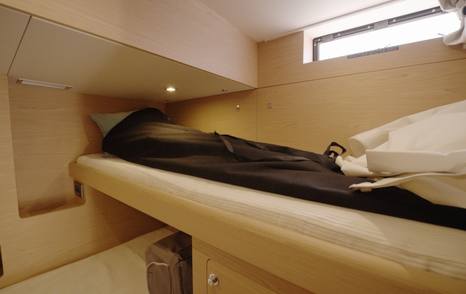
The cabin itself's better than you might expect too. Headroom isn't anything like as generous as it is further forward, but if you're around 6ft tall it's still perfectly manageable, and the L-shaped bunks make good use of the space that's available. I suspect plenty of owners will use it for children or teenagers rather than crew most of the time, but equally, if you did want to bring somebody along for a longer trip, it's a perfectly usable cabin.
There's a watertight door that leads straight up into the cockpit, so if you need to get down here in a hurry, or you simply don't want to come in via the bathing platform, it's only a few steps away.
The upper helm has a nice feel to it. The driving position is set slightly lower than you might expect, so if you're sat normally the bow is just in view, although the bolster seats quickly solve that if you want a little more height. Either way, it feels comfortable rather than perched, and that's probably how this boat is going to spend most of its life, cruising steadily rather than chasing the horizon.
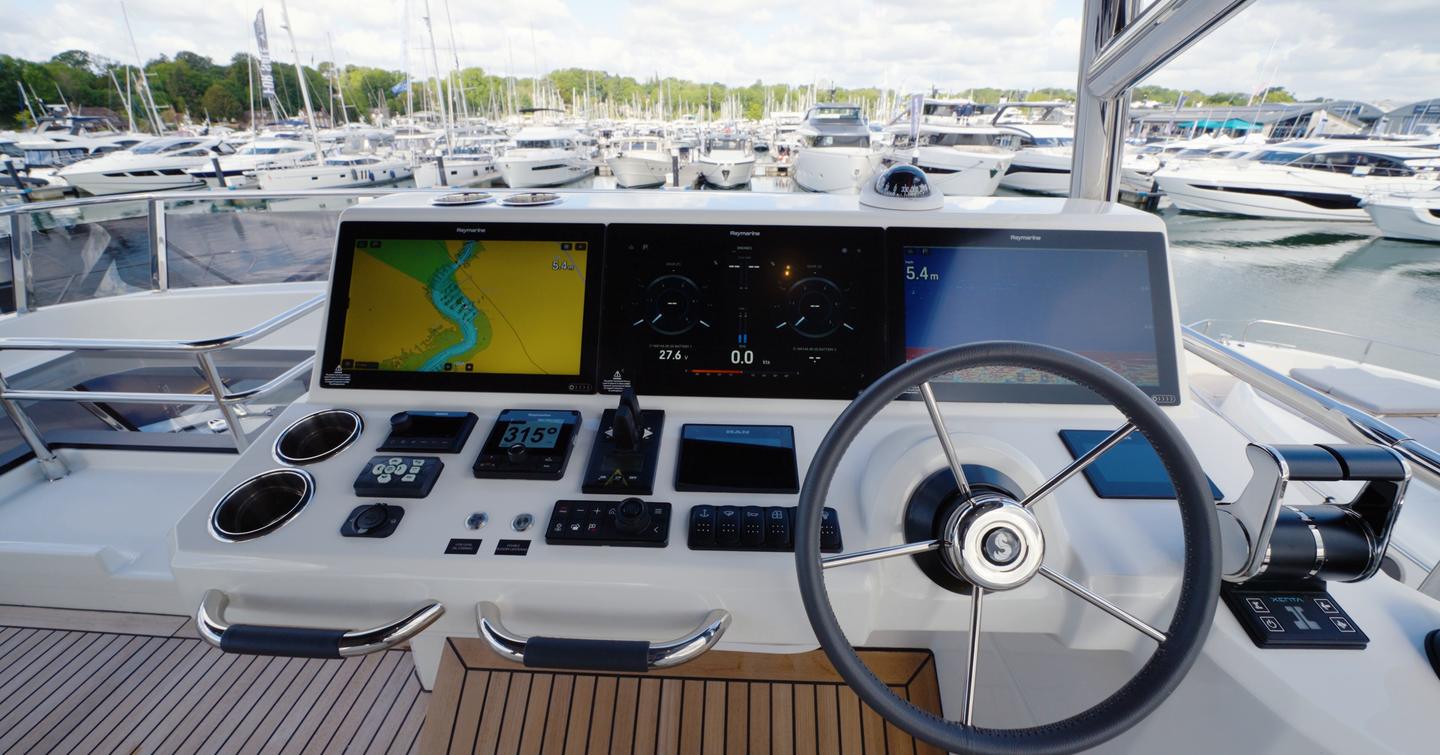
There's very little to complain about when it comes to the layout. Three Raymarine displays give you as much information as you'll find at the lower helm, so it's easy enough to dedicate one to the chart, another to the engines and keep radar on the third. Everything falls naturally to hand, with the throttles tucked neatly beside the wheel and plenty of space around them, so it never feels cluttered.
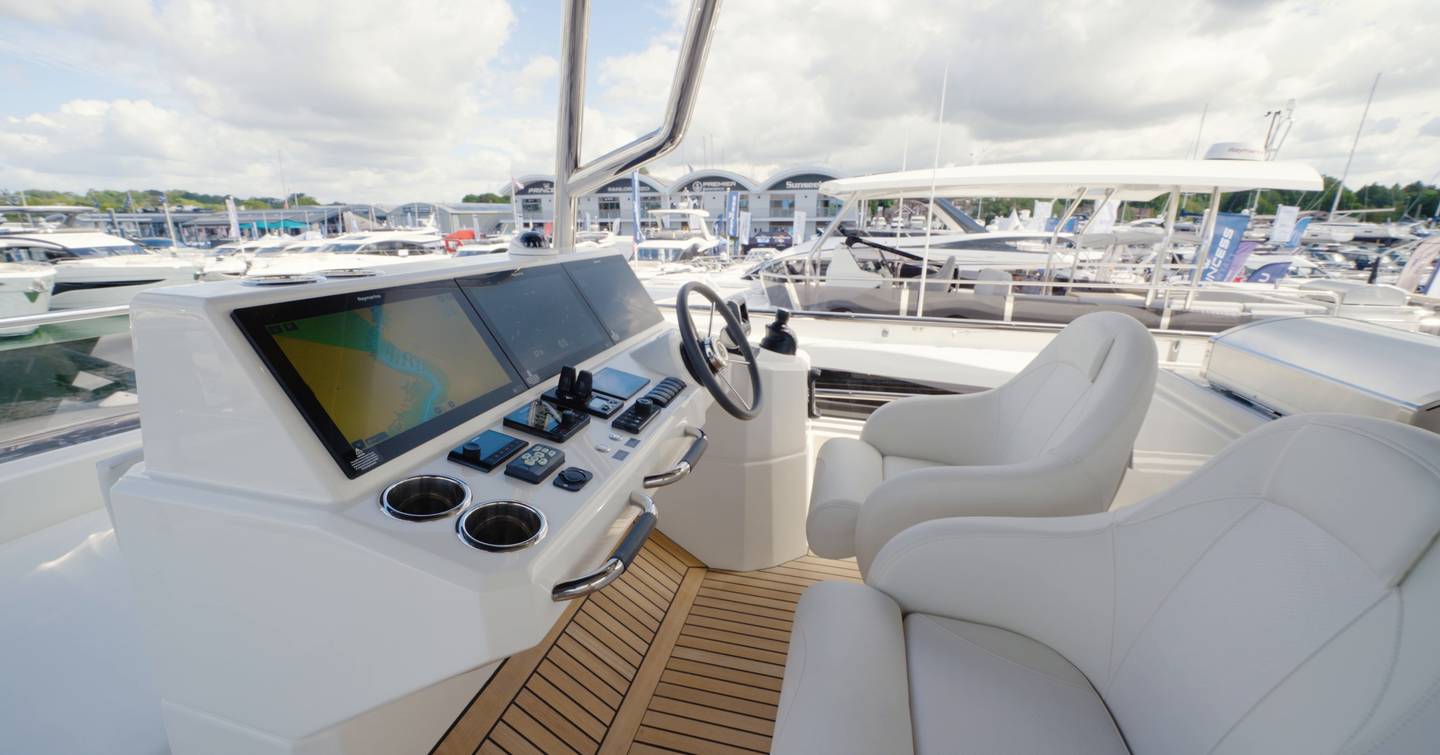
The leather-trimmed grab rails give you something solid to hold as you move around the helm, the cupholders are large enough to double as somewhere to leave a phone, and there are more moulded into the console ahead. They're only small things, but they're exactly the sort of details you appreciate after a few hours at the helm rather than five minutes at a boat show.
Alongside the twin bucket seats there's an L-shaped bench, so four or five people can sit facing forward while you're underway without feeling as though they're getting in the skipper's way. On a boat that's designed to cover long distances at a relaxed pace, that makes a lot of sense because cruising is just as much about the journey as the destination.
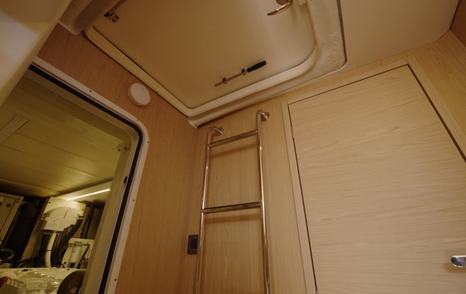
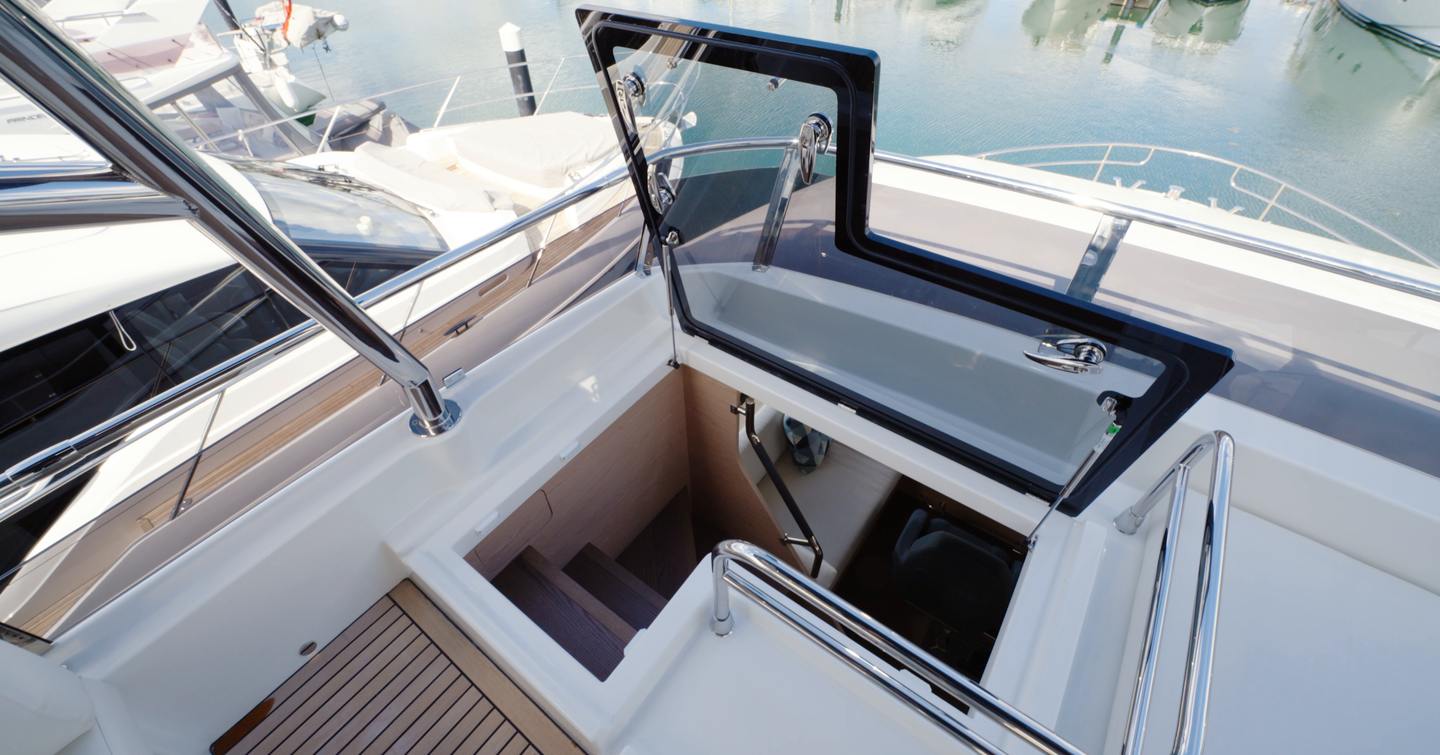
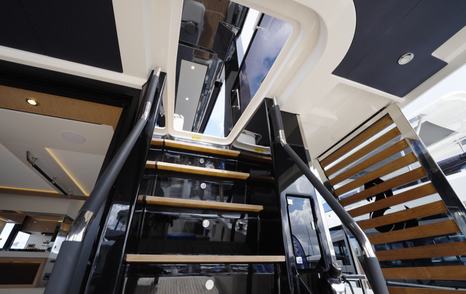
My favourite feature, though, isn't actually the helm at all. Lift a hatch in the deck and a proper staircase leads straight down to the lower wheelhouse. You just don't see this very often these days, but it means you can move between the two helms without stepping outside, which is exactly the sort of thinking that suits a boat intended for serious passagemaking.
Lower Helm
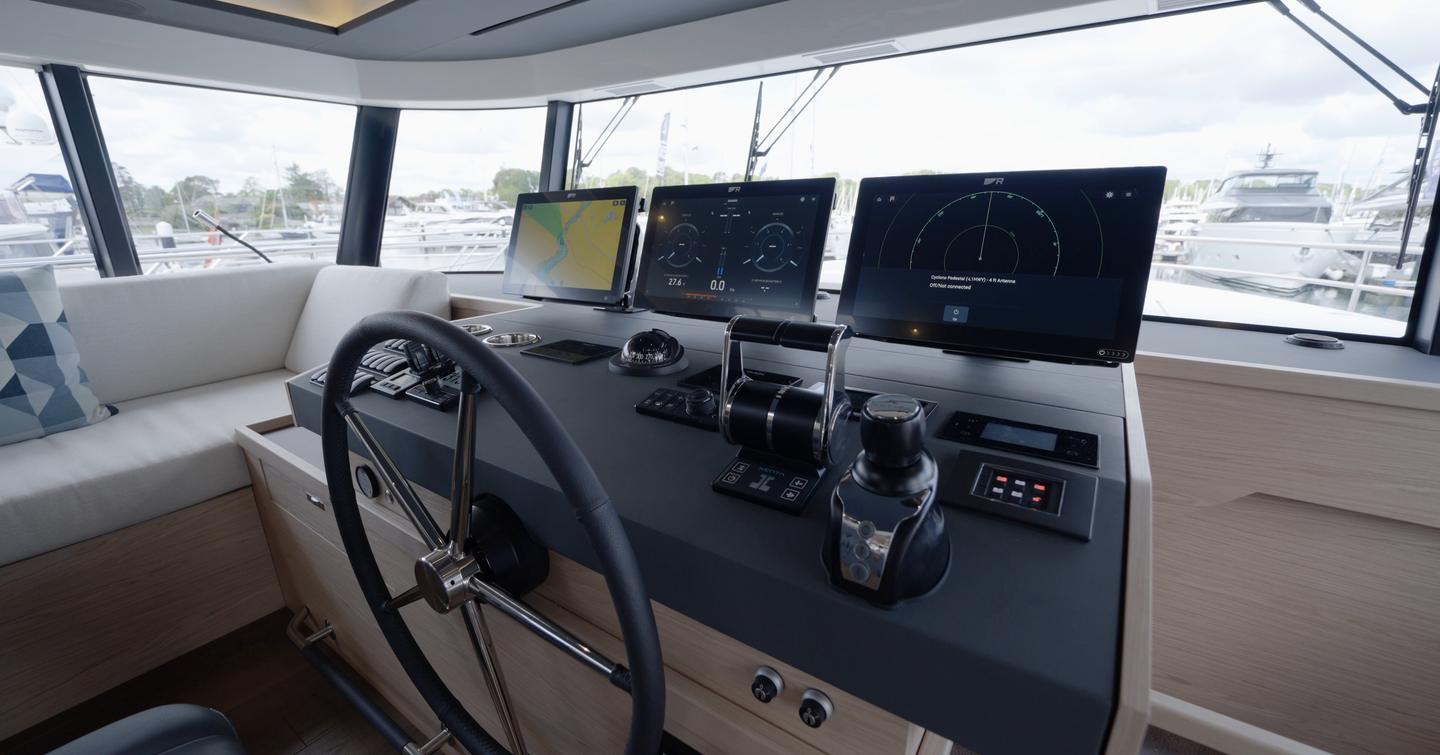
The lower helm has quite a different character to the one upstairs. It feels more purposeful, helped by that enormous wheel sitting right in front of you. It's a proper ship's wheel, and together with the three Raymarine displays it gives the whole area a much more serious feel.
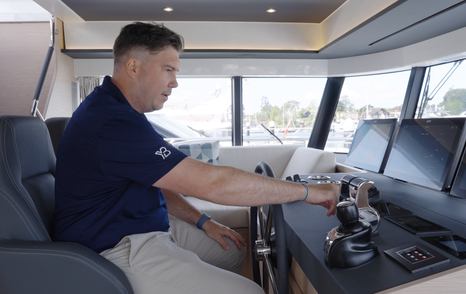
The layout is pretty straightforward too. The screens are a little bit of a reach, although Beneteau has thought about that because there's a controller down by your right hand, so you don't have to keep leaning across the dash to make changes. I actually quite like the display arrangement as well. Three screens is plenty to split your chart, engine information and radar, and if they were much bigger they'd start getting in the way of the view through the windscreen.
Power comes from a pair of 730hp MAN diesels, and Beneteau quotes a top speed of around 20 knots. That's useful if you need it, but it's the cruising numbers that really tell you what this boat has been designed to do. At 9 knots you're looking at around 1,000 nautical miles, while dropping back to 5 knots stretches that to a theoretical 2,500 nautical miles. It's also why fin stabilisers are fitted as standard because at those sorts of speeds they'll play an important role in keeping the boat comfortable over longer passages.
Despite its size, Beneteau has clearly tried to make the Grand Trawler approachable for owners running the boat themselves. There's an optional joystick that combines the shaft drives with the bow and stern thrusters, while the thrusters can also be operated independently if you prefer. Sitting right in the middle of the wheelhouse, with side doors on both sides, also makes it much easier to step out and deal with lines when you're coming alongside.
The navigator's seat is perhaps a little boxed in, although it's easy enough to shuffle around the front to get out, and there's another bench just behind the helm where somebody can sit and keep the skipper company. It's a simple arrangement, but on a boat that's designed to cover long distances at sensible speeds, having somewhere comfortable to sit and watch the world go by makes a lot of sense. From there, the wheelhouse opens naturally into the dinette and the galley beyond.
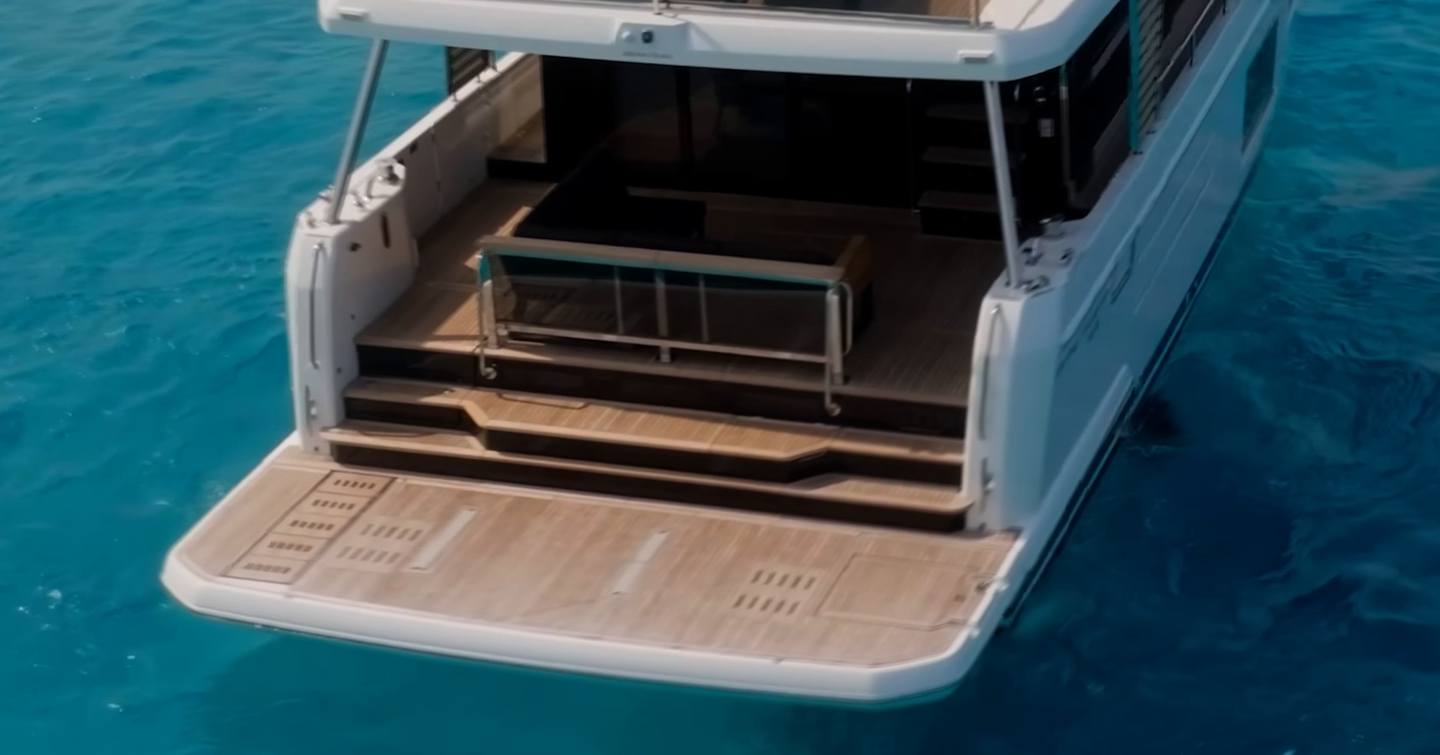
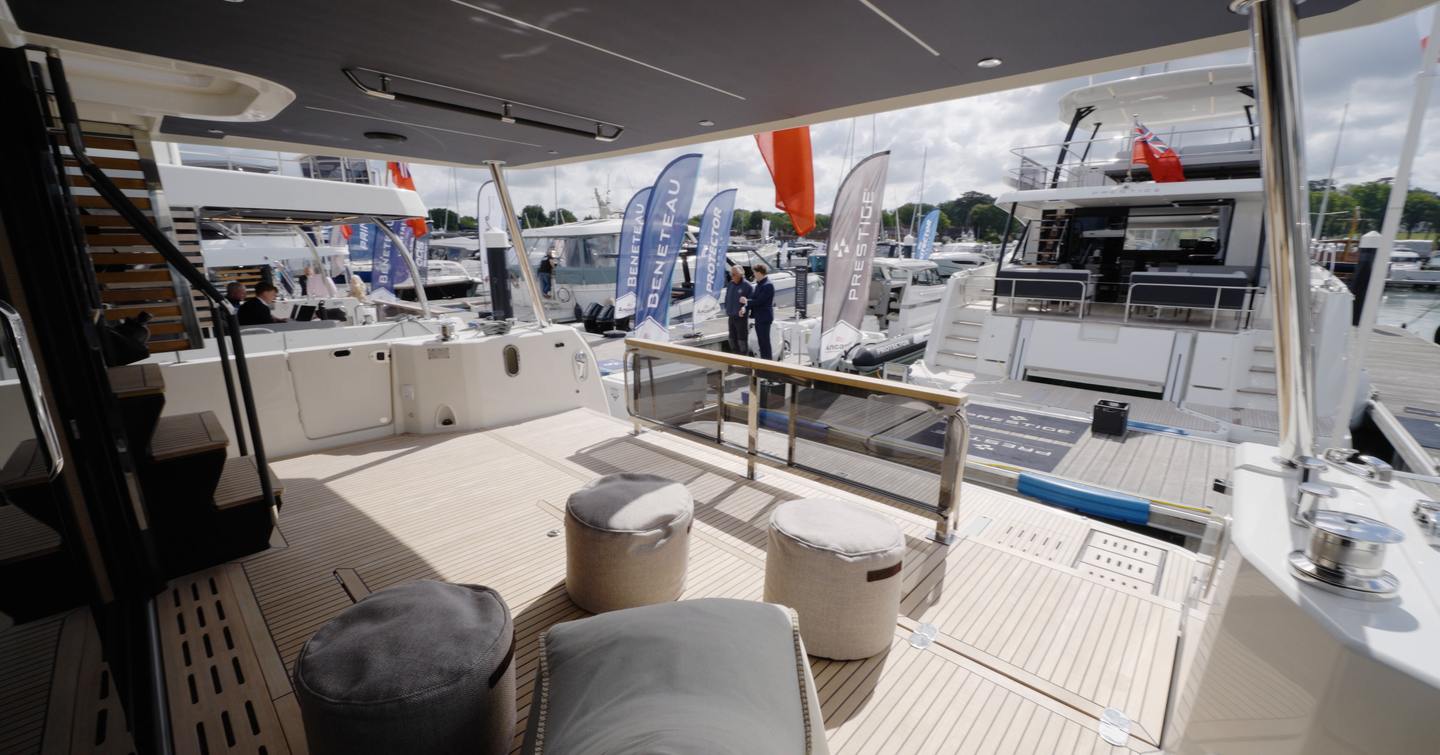
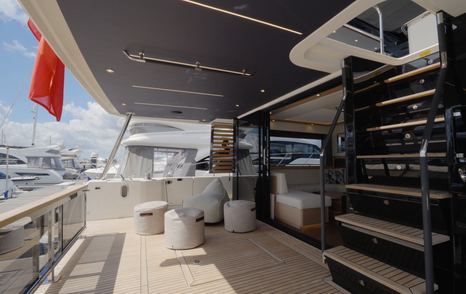
The cockpit is probably the biggest surprise on the whole boat because it's almost empty.
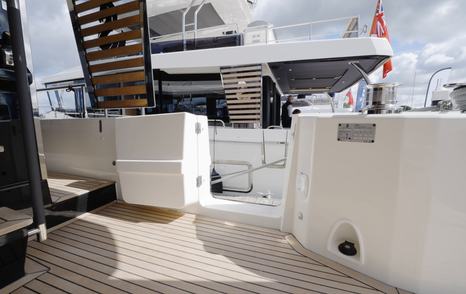
Normally, on a 63-footer, you'd expect the aft end to be filled with fixed seating and a big dining table. Here, there's very little of that. The hydraulic bathing platform becomes part of the living space, the glass transom keeps the view right through to the water and you've got one big open area to do with as you please. Nauta Design describes it as a terrace to the sea and, standing back and looking at it, you can see exactly what they were aiming for.
I actually quite like the idea. If you've got grandchildren running around, somewhere to chuck a couple of paddleboards, or you just want somewhere to put your feet up and watch the world go by at anchor, it's a lovely space. It doesn't feel cluttered and it gives the boat a very different character to most flybridge yachts.
But this is also where I think Beneteau has gone a little too far.
The supplied beanbags are fine, but I suspect they'll be one of the first things many owners replace. There's nowhere obvious to sit down for dinner, or to gather with a drink, and on a boat that's knocking on the door of £2.5 million, I'd argue a proper bench seat and a decent table should already be part of the package. I completely understand why Beneteau has left owners free to arrange it as they like. In reality though, I think most people will end up arriving at much the same answer.
Thankfully, the practical thinking is seen again in the storage in this area. Under the cockpit sole there's a huge lazarette that will swallow covers, lines, fenders and all the bits that normally end up cluttering the deck. There are dedicated rope lockers where you need them, plenty of room for toys and inflatable gear, and straightforward access down towards the machinery.
Side Decks & Foredeck
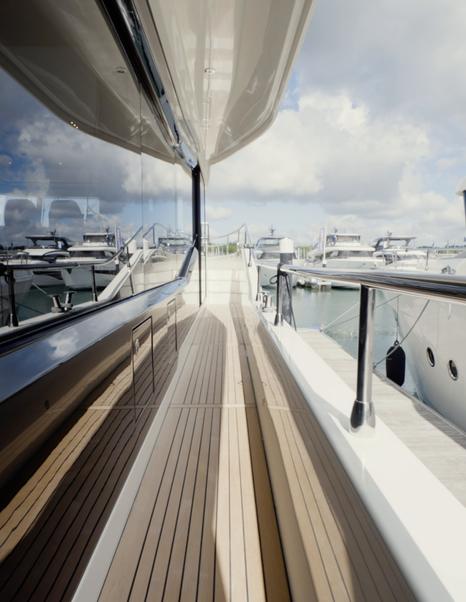
Safe and practical. That's really the theme as you leave the cockpit and start walking forward. Beneteau hasn't tried to do anything clever here, it's just concentrated on making the boat easy to move around. The side decks are fully symmetrical, the bulwarks are reassuringly high and there are handholds exactly where you reach for them. Even with a bit of movement underfoot, you never feel exposed. The only slight compromise is that anyone much over 6ft might find the overhang a little low in places, although there is more headroom directly beneath the flybridge.
The gates at the aft end of the side decks can be closed to keep the breeze out of the cockpit if the wind is funnelling along the side of the boat. The fuel fillers are tucked neatly into the side deck, complete with drains, while the water fillers sit alongside, making it easy to run a hose straight down the deck without trailing it through the cockpit. None of those things are particularly exciting, but they're exactly the sort of details that make owning a boat easier.
There are doors on both sides of the wheelhouse, and on a boat that many owners will run themselves, they're worth their weight in gold. Whether you're stepping out to handle a line, checking the fenders or simply moving around the boat at sea, they make everything feel that bit easier. It's part of a wider theme really. The flow around this boat is excellent.
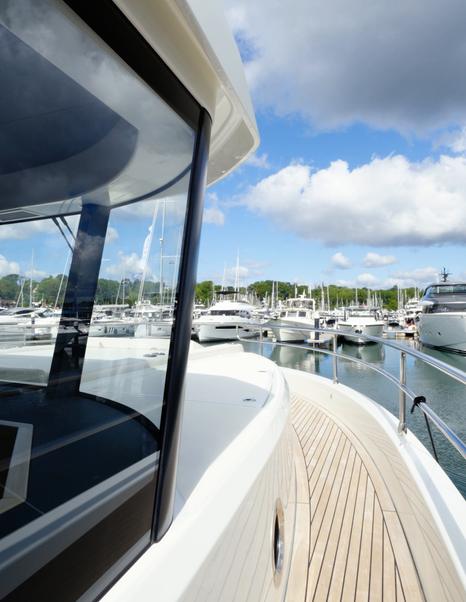
As you reach the bow, there are deep storage lockers on both sides for covers, warps and even a couple of fenders, positioned exactly where you're most likely to need them. Again, it's not glamorous, but it saves chucking everything into one huge locker and then digging around for it when you're coming alongside.
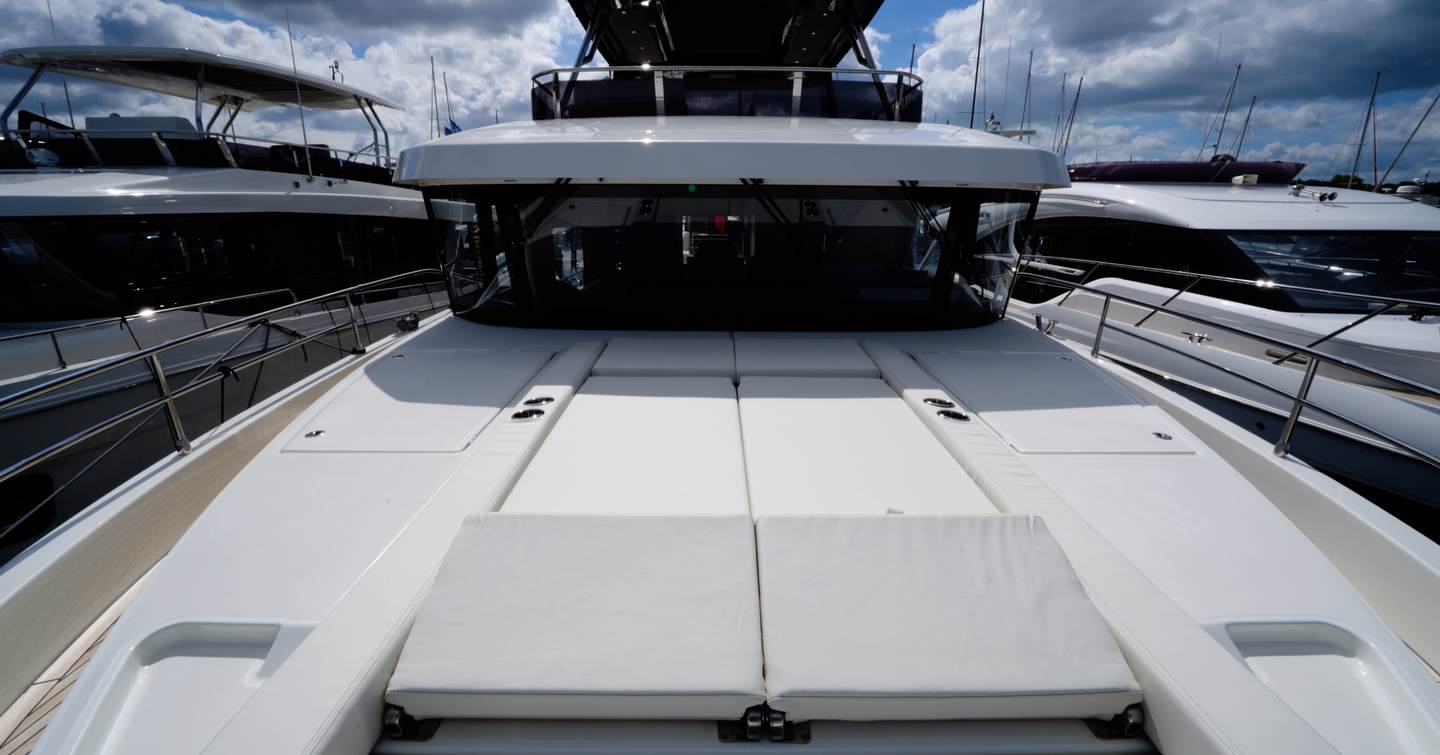
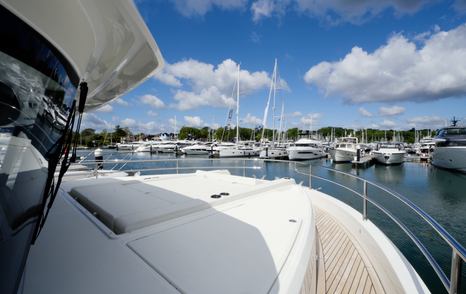
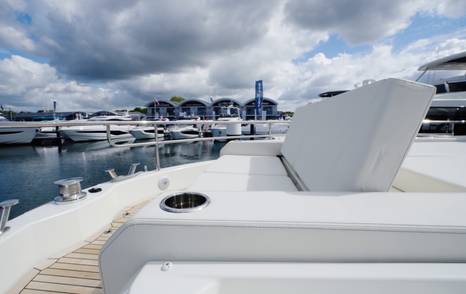
Of course, Beneteau knows that a boat at this price needs somewhere to relax as well. The foredeck combines a generous sunpad with adjustable headrests and a bench seat whose backrests can be raised, turning it into somewhere comfortable to sit when you're at anchor or even while coming into harbour. It's a simple arrangement, but it works well without cluttering the deck or getting in the way when you're moving around.
The anchor locker is one of those areas where you can tell somebody has actually thought about using the boat rather than just drawing it. It's a large split locker with a ladder down into it, so you can actually climb inside if you need to. The sections keep everything organised, access to the windlass is straightforward and the anchor sits well clear of the bow, so you're far less likely to have it knocking against the hull as it's recovered. It's not the sort of feature that sells boats at a boat show, but if you're anchoring regularly, it's really what you need.
Flybridge
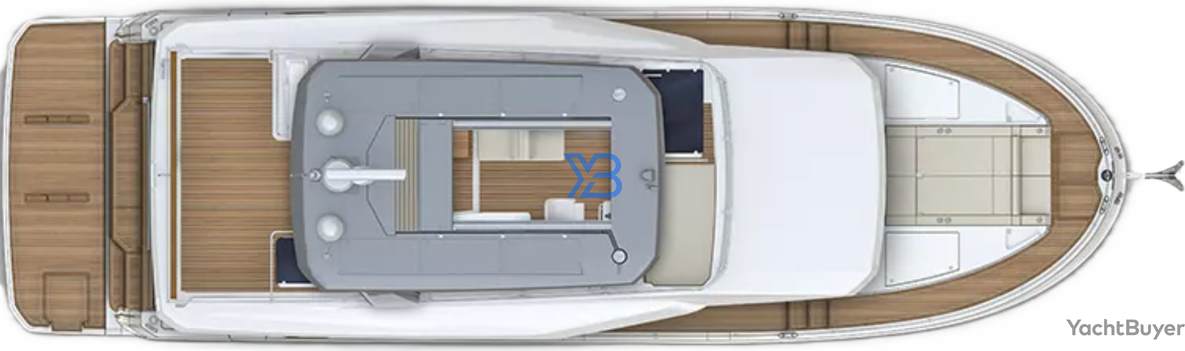
Climb the steps up from the cockpit and there's a familiar feel to the flybridge because Beneteau has followed much the same approach as it has downstairs. The aft end has been left largely open, with freestanding furniture rather than fixed seating, so there's plenty of room to use the space however you want. As with the cockpit, I can see the thinking. It gives you flexibility and it certainly makes the deck feel open, but I suspect a lot of owners will eventually settle on something a little more permanent. The loose furniture is fine, although a fixed seating arrangement would probably make better use of the space over the long term.
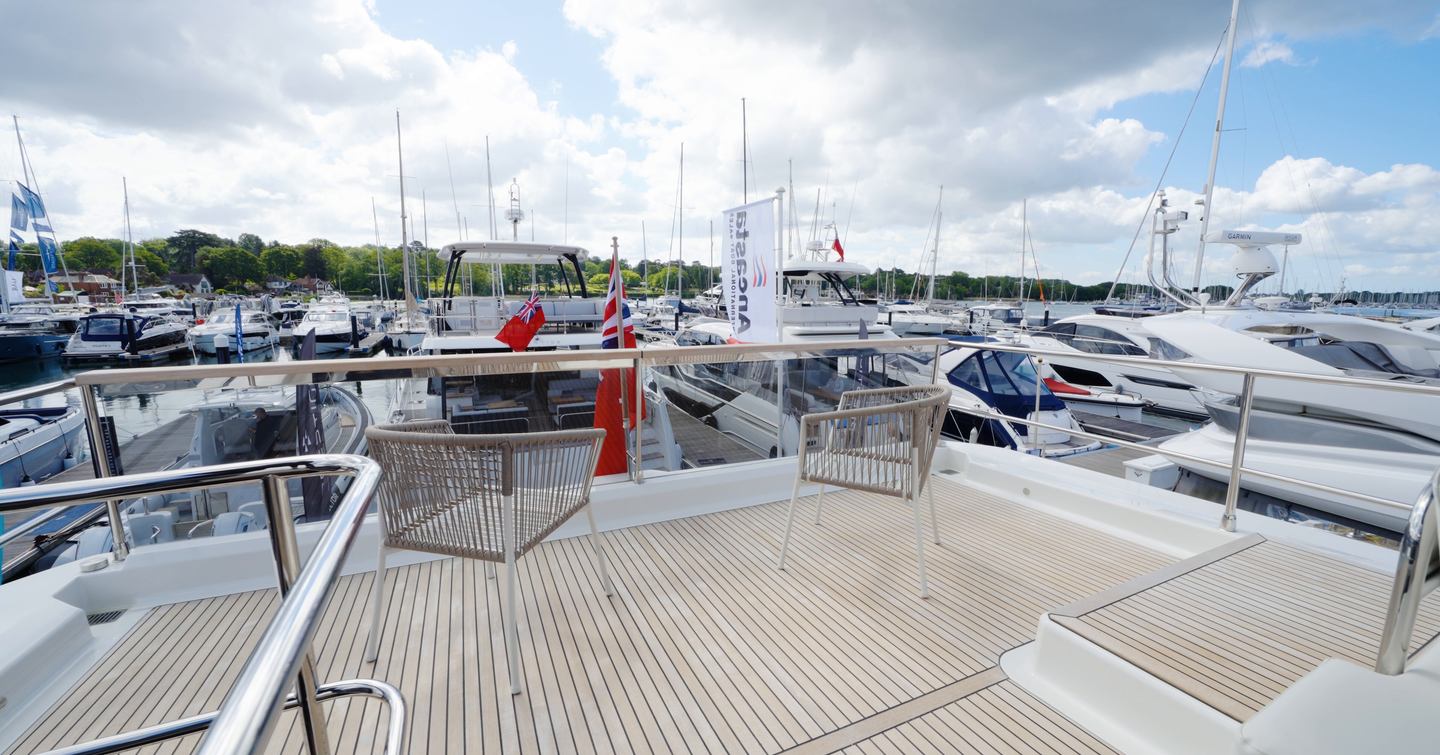
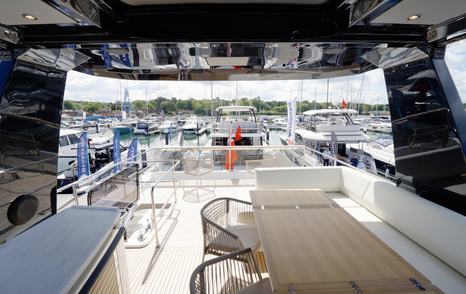
Then again, there is another way of looking at it. This aft section is a really useful place to keep paddleboards and other toys, so you're not cluttering up the cockpit below, and because it's such a long, flat deck you've got plenty of room to work around them. The glass transom carries on the theme from downstairs as well, so even up here you still have that connection with the water rather than staring at a run of stainless rails.
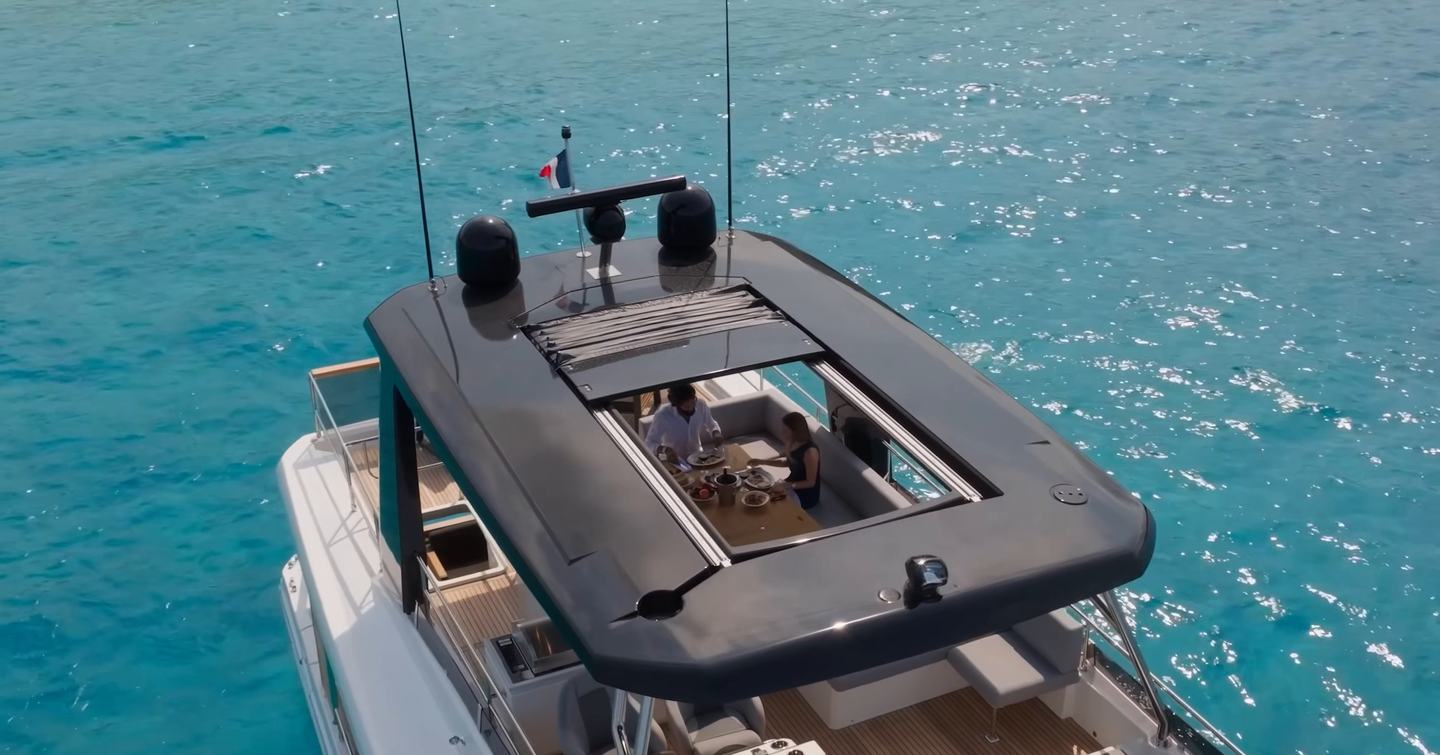
That long deck is one of the advantages of this trawler design. Because the superstructure stretches so far forward, Beneteau has been able to create a much bigger entertaining area than you'd normally expect. The wet bar is a good example. There's a Kenyon grill, fridge and sink all grouped together, so you're not forever disappearing downstairs when people are eating up here. A leather-trimmed handrail runs right across the front as well, which is a nice detail and gives you something solid to grab as you move around.
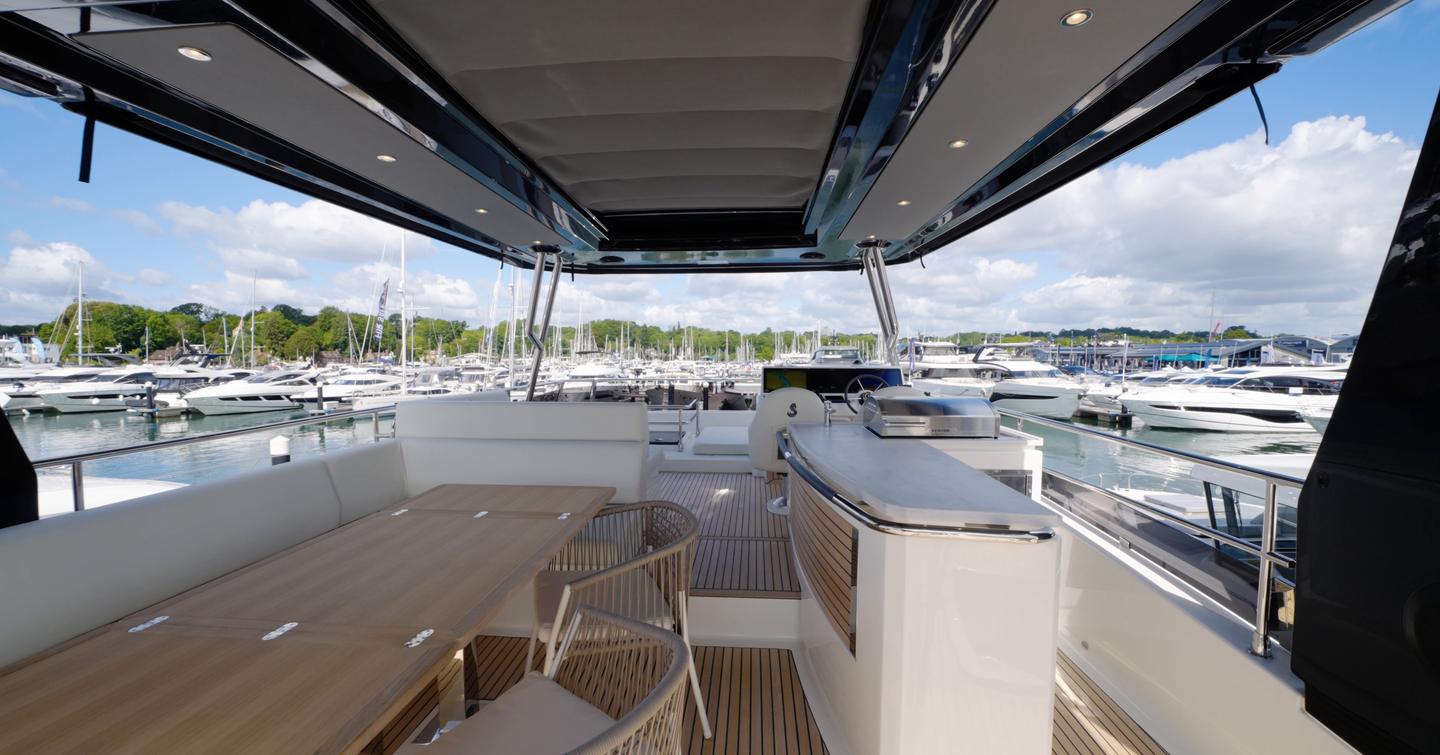
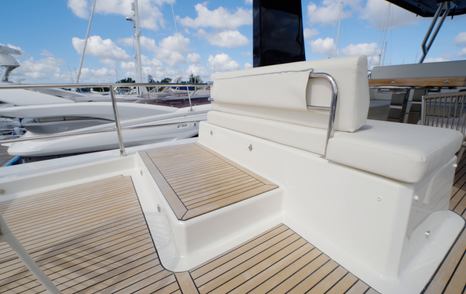
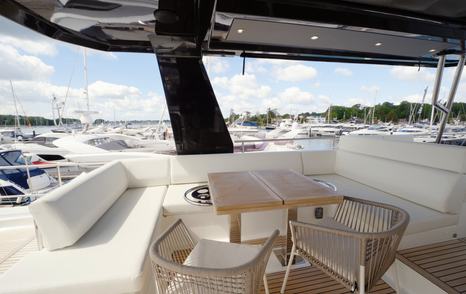
Opposite sits the dinette, and it's a sensible arrangement. The folding table opens out when everybody sits down to eat and then folds away again afterwards, making it much easier to move around the deck. It also reveals another handhold beneath, along with a couple of cupholders, so even something as simple as the dining table has been designed with life underway in mind.
It's also around here that you start to notice the little upgrades Beneteau has worked into the Grand Trawler. The teak inserts set into the stainless steel, the leather trim on the handrails and the overall finish aren't dramatic changes, but they're the sort of details you'd expect once you move into this price bracket.
Engine Room
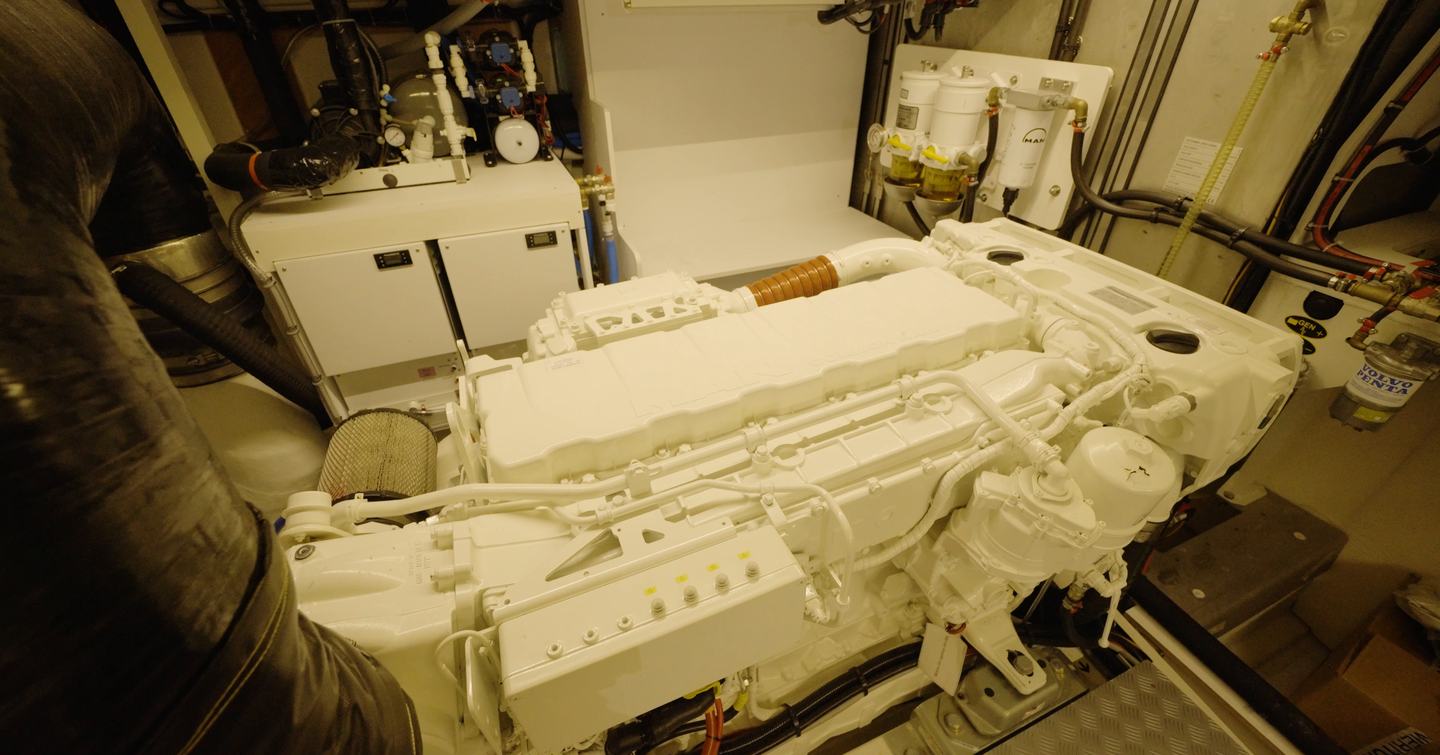
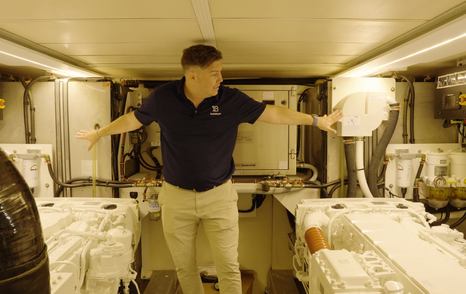
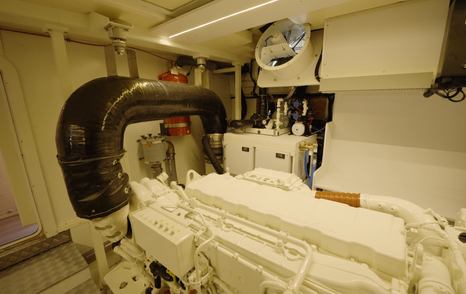
Getting into the engine room is a little bit of a squeeze, but once you're through the watertight door it opens out quite nicely. There's just under 6ft of headroom and, although it's never going to feel cavernous, there's enough room to move about without constantly banging elbows on machinery. That's always a good start on a boat that's likely to be looked after by its owner.
The MAN i6 730hp engines are relatively compact too and that pays dividends because you can actually get around them. Outboard access is often where engine rooms become awkward, but there's enough space here to get to the areas you're most likely to need, and there's good clearance above the engines as well. The shafts are easy enough to reach and the fin stabilisers are in full view below, so routine checks shouldn't involve too much crawling around.
Forward sits the generator. This particular boat has been upgraded to the larger 21.5kVA unit, and even with that in place there's still a useful amount of space left in the compartment. Because the Grand Trawler relies on fin stabilisers rather than a gyro, you haven't got another large piece of machinery taking up the middle of the bilge, so there's a surprisingly useful storage area for spare parts, fluids and the bits that inevitably build up on a boat used for longer cruises.
The fuel system's been thought through as well. Twin fuel filters with clear inspection bowls make it easy to keep an eye on fuel quality and, if one filter does become contaminated, it's simply a case of changing over to the other and carrying on. The stainless steel fuel tanks are easy enough to get to as well, so all the routine jobs feel as though they've been considered from the outset rather than squeezed in afterwards.
It's a pretty good machinery space. Not because it's especially big or full of shiny equipment, but because you can get to things.
The price is probably the biggest hurdle for the Grand Trawler 63 because, as toured, this boat comes in at £2,478,114. That immediately puts it into some very serious company and it's why a lot of buyers will start comparing it with the likes of Princess, Fleming and Grand Banks rather than other Beneteaus.
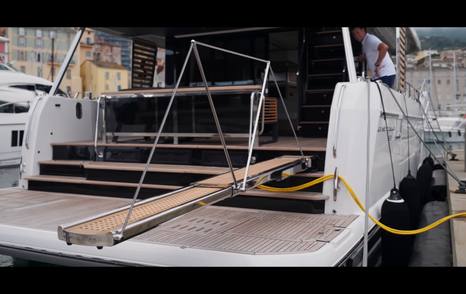
It's worth remembering though that this isn't a standard boat. The base price sits at £1,835,364, so this particular example is carrying just over £600,000 of factory options. Some of those are the sort of things buyers at this level are likely to specify anyway, like the upgraded electronics package, tropical air conditioning, the larger generator and the hydraulic gangway, while others, such as the Lounge Trim package, bundle together many of the features that give the Grand Trawler its premium feel.
That Lounge Trim alone adds more than £150,000, but it also includes features such as the hydraulic bathing platform with dinghy supports, the flybridge T-top, inverter, generator and flybridge fridge. The upgraded electronics package brings six 16-inch Raymarine displays across the two helms, along with AIS, engine-room and stern cameras and 3D sonar, so it's doing rather more than simply giving you bigger screens.
Our Verdict
It's easy to get hung up on the badge and the price, and there will undoubtedly be buyers who expect a little more polish in places. But I don't think that's the story here. The Grand Trawler 63 is a boat that keeps revealing reasons why life on board would be easy, comfortable and enjoyable. By the end of the tour, it's the freedom it offers that stays with you - the freedom to cover long distances, spend extended periods aboard and use every part of the boat in the way it was intended. That's what makes it such a compelling package.
Reasons to Buy
- Loads of living space
- 2,500nm maximum range
- Great owner's engine room
- Easy boat to live aboard
Things to Consider
- Expensive for a Beneteau
Pricing
Price as reviewed: £2,478,114 ($3,281,618 approx)
Review boat included approximately £600,750 of factory options (before VAT).
Standard price: £1,835,364 - approximately €2,145,818.
Looking to own a Beneteau Grand Trawler 63 ? Use YachtBuyer’s Market Watch to compare all new and used Beneteau Grand Trawler 63 Boats for sale worldwide. You can also order a new Beneteau Grand Trawler 63 , customized to your exact specifications, with options for engine choice and layout configuration. Alternatively, explore our global listings of new and used boats for sale and find your perfect boat today!
Rivals to Consider
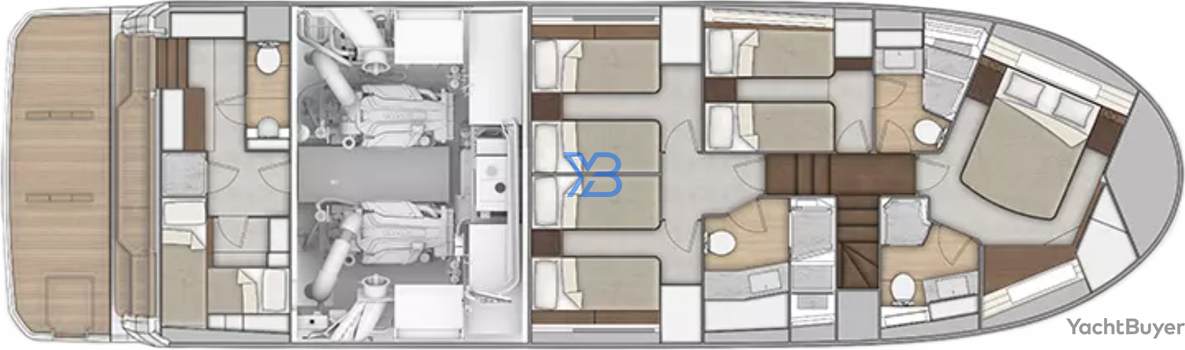
The most obvious alternative is the Beneteau Grand Trawler 62, particularly if you're happy to buy used. At 18.95m (62.2ft), it's fundamentally the same boat underneath, with the same full-displacement hull, the same twin 730hp MAN diesels and the same four-cabin layout. The Grand Trawler 63 hasn't reinvented the formula, but it has improved it in lots of small ways. Fin stabilisers are now standard, the new Xenta steering makes the helm noticeably lighter, interior finishes have been lifted with hardwood flooring and upgraded cabinetry, and Beneteau has rolled many of the options buyers chose most often into the standard specification. If your budget is £1.6 million rather than £2 million for a new GT63, a well-equipped pre-owned boat is well worth seeking out.
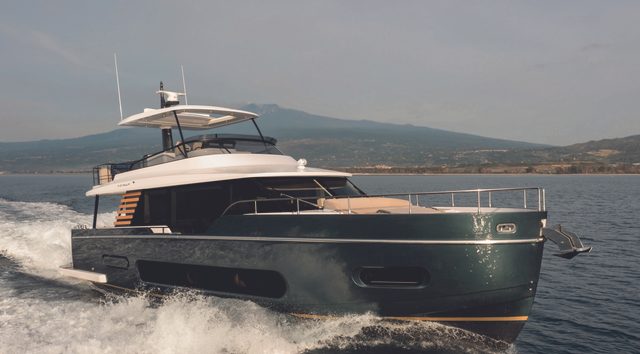
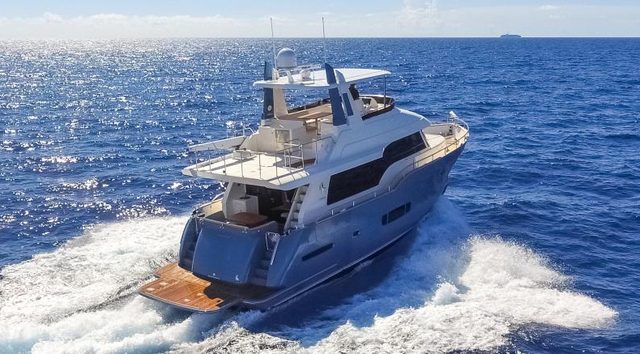
Starting new at around £1.98 million, the Absolute Navetta 62 is probably the boat most buyers will cross-shop with the Grand Trawler 63 because it's chasing a similar brief, just in a different way. At 18.68m (61.3ft), it's a touch shorter than the Beneteau's 18.95m (62.2ft), but its semi-displacement hull and Volvo Penta IPS drives deliver up to 30 knots and make close-quarters manoeuvring about as easy as it gets. The trade-off comes once you slow things down. Range drops to around 450nm at 10 knots, compared with over 900nm for the Grand Trawler 63, and the accommodation is limited to three guest cabins instead of four. If your cruising is mostly coastal and you like getting there quickly, the Absolute makes a strong case.
The Sirena 60 takes yet another approach. Stretching to 19.45m (63.8ft), it's actually the longest boat here and combines a semi-displacement hull with a surprisingly shallow 1.24m (4.1ft) draft, making it well suited to cruising areas where depth is always on your mind. Optional 900hp Volvo Penta diesels push it to almost 26 knots, so it's noticeably quicker than the Grand Trawler 63, but it gives away a cabin in the process, offering accommodation for six rather than eight guests. For owners who want more speed without moving into a full planing yacht, it's an appealing compromise, but it doesn't quite match the Beneteau's long-range credentials or its emphasis on extended living aboard.
The Azimut Magellano 60 is perhaps the closest match in character starting at £1,850,000 . At 18.47m (60.6ft), it's a little more compact than the Grand Trawler 63 and pairs the same twin 730hp MAN engines with a semi-planing hull that lifts top speed to 26.4 knots. It also carries Azimut's typically rich interior finish, something buyers will notice straight away. Even so, its 827nm range at 8.5 knots still falls short of the Beneteau's passagemaking ability, and like the Sirena and Absolute, it's a three-cabin boat. If interior finish and a little extra pace are high on your list, the Magellano is well worth considering.
Considering a new boat? Explore Beneteau's entire current range to find the model that best suits your needs, and compare it with alternatives from competitors to ensure you make the perfect choice.
Specifications
- Builder Beneteau
- Range Swift Trawler
- Model Grand Trawler 63
- Length Overall 62' 2"
- Beam 17' 11"
- Draft 4' 7"
- Hull GRP
- Cabins 4
- Berths 8
- Crew 2
- Cruising Speed
- Max Speed
- Fuel Capacity 1,057 Gallons
- Fresh Water Capacity 222 Gallons
- Engine Model 2x MAN i6-730
- Engine max range (speed type) 900 (nm)
Beneteau Grand Trawler 63 Layout
-
Flybridge
-
Main Deck
-
Lower Deck
-
Standard 3 cabin layout
![Lower Deck Beneteau Grand Trawler 63]()
-
Optional 4 cabin layout
![Lower Deck Beneteau Grand Trawler 63]()
Available Stock


Beneteau
Beneteau Grand Trawler 6366'ft | Grand Trawler 63
2026 M/Y noname
2 x MAN
Features: Swim Platform, Aircon, Joystick, Bow Thruster
Interested in a Grand Trawler 63?
NEW Build
Find your local dealer for a personalised, no-cost consultation
or just request
Brochures & Pricing
Used & In Stock
Looking for a ready-to-go Grand Trawler 63 or pre-owned options? Explore all inventory of the Grand Trawler 63 available worldwide