At 117m, a big superyacht like Boardwalk can spread the tender work around. Its three 12.19m Hodgdon tenders each have different jobs, with a limousine for guest transfers, an open tender for general duties and watersports, and a Beachlander for getting people ashore. Drop down to a superyacht around 40m and there is a lot less room for that sort of tender fleet.
Watch The Full Video
The 40.05m Sunseeker Sonishi, for example, carries a 7m De Antonio D23 alongside a smaller Williams 565. Extra Time, at 44.3m, relies on a single 6.32m Williams 625. So, in other words, one yacht can divide the work and another may ask one boat to cover most of it.
And the job can change by the hour. Guests arrive with bags...someone wants to go to the beach. Later, the skis come out and so on. So rather than spend the day doing laps of Studland Bay, in this YachtBuyer Prop Gear special we used the 7.10m Evene Origin 71 as a case study to find out what a superyacht tender is actually being asked to do.
The Superyacht Tender Brief
At this size, the tender is shaped as much by the yacht carrying it as by the trip ashore. As a rough guide, yachts in the 40-50m range tend to carry tenders around 5-7m long, while 7-8m boats commonly have capacity for roughly 12-14 people. The Origin 71, with its 13-person rating, is right at the big end of that sort of single-tender brief. YachtBuyer’s tender size guide goes into those limits in more detail.
There are really two groups to keep happy:
- Guests want: an easy step aboard, a dry seat, some shade and enough storage to keep bags out from under their feet.
- Crew need: space for luggage, predictable handling around the yacht, a hull that fits through the garage opening and a weight that stays within the lifting gear’s limit.
A tender can work well for the 10 minutes a guest spends aboard but be awkward for the crew who use it all day.
That is the territory the Origin 71 is aimed at. Evene is part of Williams Marine Group and took five years to develop, with production at the same Oxfordshire factory and the same dealer network behind it. The big change is the hard hull. The Origin takes Williams' long experience with inflatable-tube jet tenders into the sort of solid-sided boat more often associated with specialist superyacht tender builders, with more of its beam available for passengers and kit.
Evene doesn’t necessarily expect the Origin to do everything where the yacht has room for more than one tender. Its preferred setup is the Origin for guest work, with a Williams RIB taking on the rougher utility jobs. Around 40m, of course, finding room for both can be the problem in the first place.
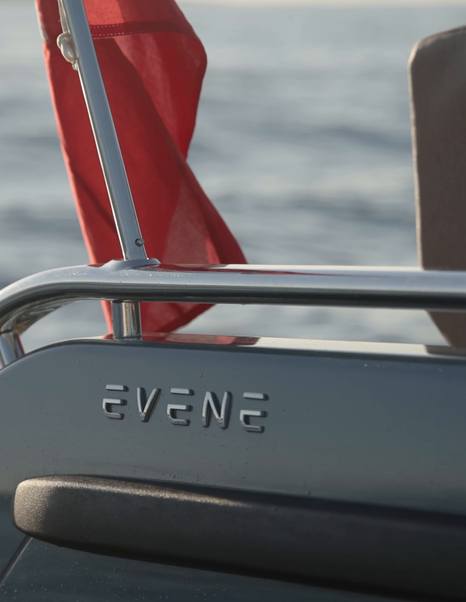
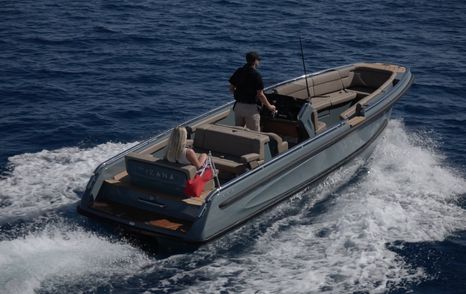
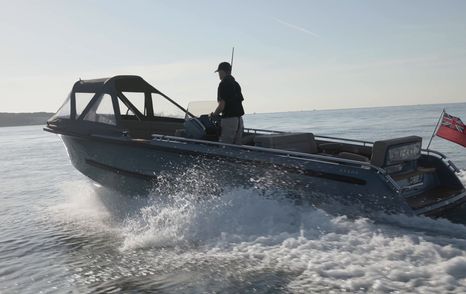
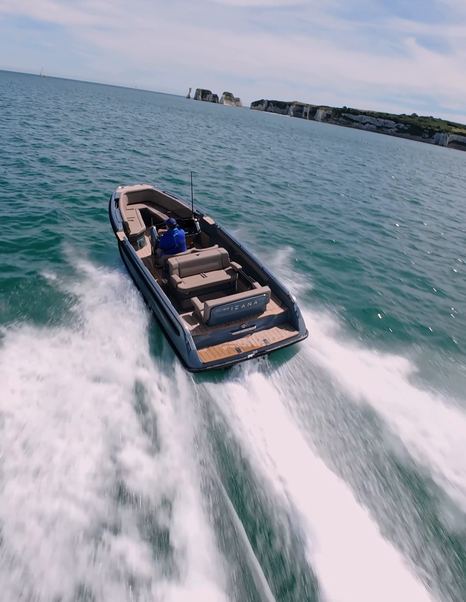
The 71 is the larger of two models (above the Origin 57) and Evene pitches it at yachts of 40m and above. It measures 7.1m (23ft 3in) long and 2.25m (7ft 5in) across the beam, with seats for up to 13 people. Power comes from a 250hp Yanmar 4LV diesel linked to a Williams waterjet, with a 140-litre fuel tank and an official top speed of around 36 knots. The jet also keeps the drive inside the boat rather than hanging an outboard or sterndrive off the stern, which helps when the tender has to fit inside a garage. Williams has also long argued for the more central weight of a diesel-jet installation when the boat is hanging from the yacht's lifting gear. Underneath is a Petestep hull, which becomes important once we get out into the chop.
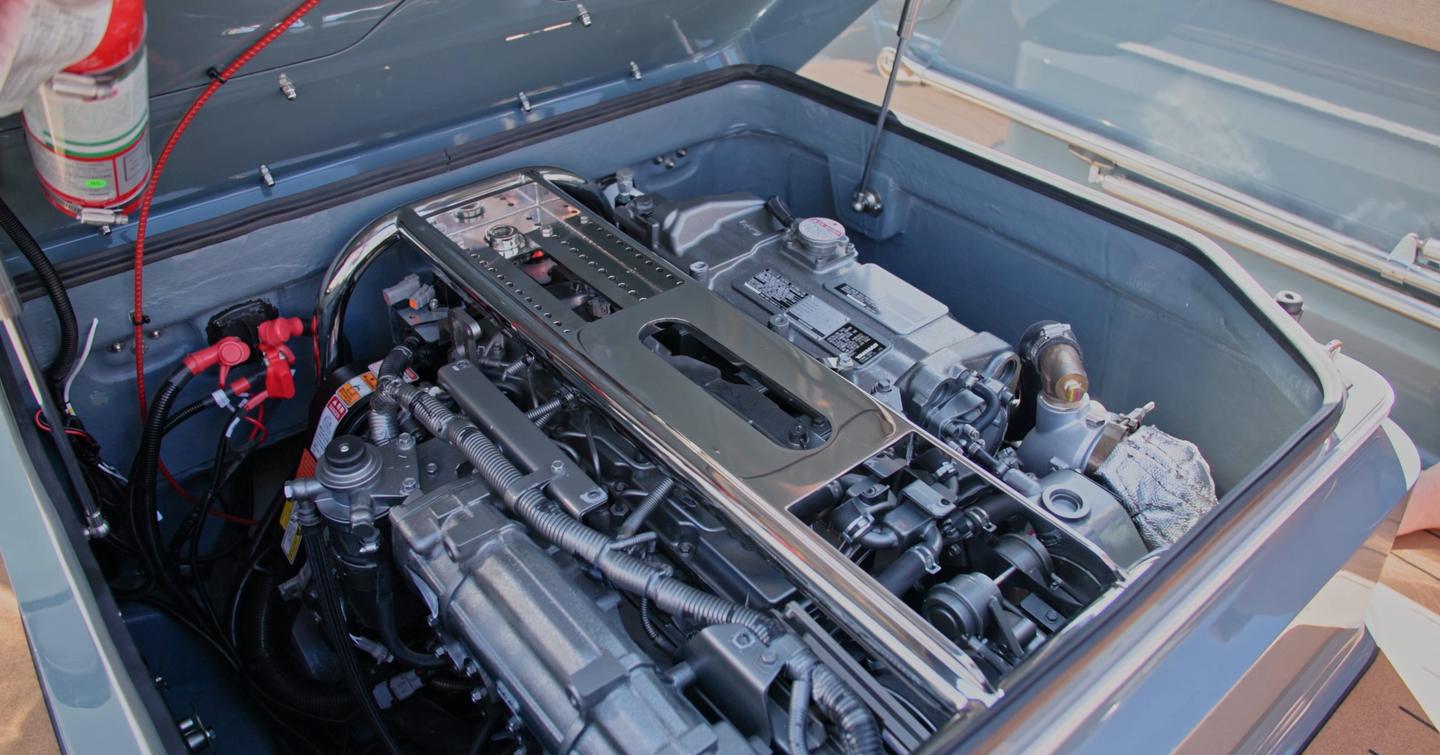
For a tender, some of the less exciting numbers matter just as much. The Origin weighs 1,800kg (3,968lb) dry and stands 1.55m (5ft 1in) high, or 1.40m (4ft 7in) in its low-profile form. A few centimetres here can be the difference between the tender living in the garage and not getting through the door.
Evene then lets the tender be set up around the yacht carrying it. A quick-release steering wheel can be specified, along with custom in-floor lifting points, a single-point lift, spreader bar, tie-downs and shorepower. There are also options for MCA equipment, a carbon swimming and beach-landing ladder, extra weather protection and the usual navigation and communications kit.
None of that is particularly glamorous, but this is where a superyacht tender starts to differ from a small dayboat. It still has to sit properly on its cradle, stay within the yacht's lifting limit and work with whatever launch and recovery arrangement the mothership has. The crew may have to do all of that several times in a day.
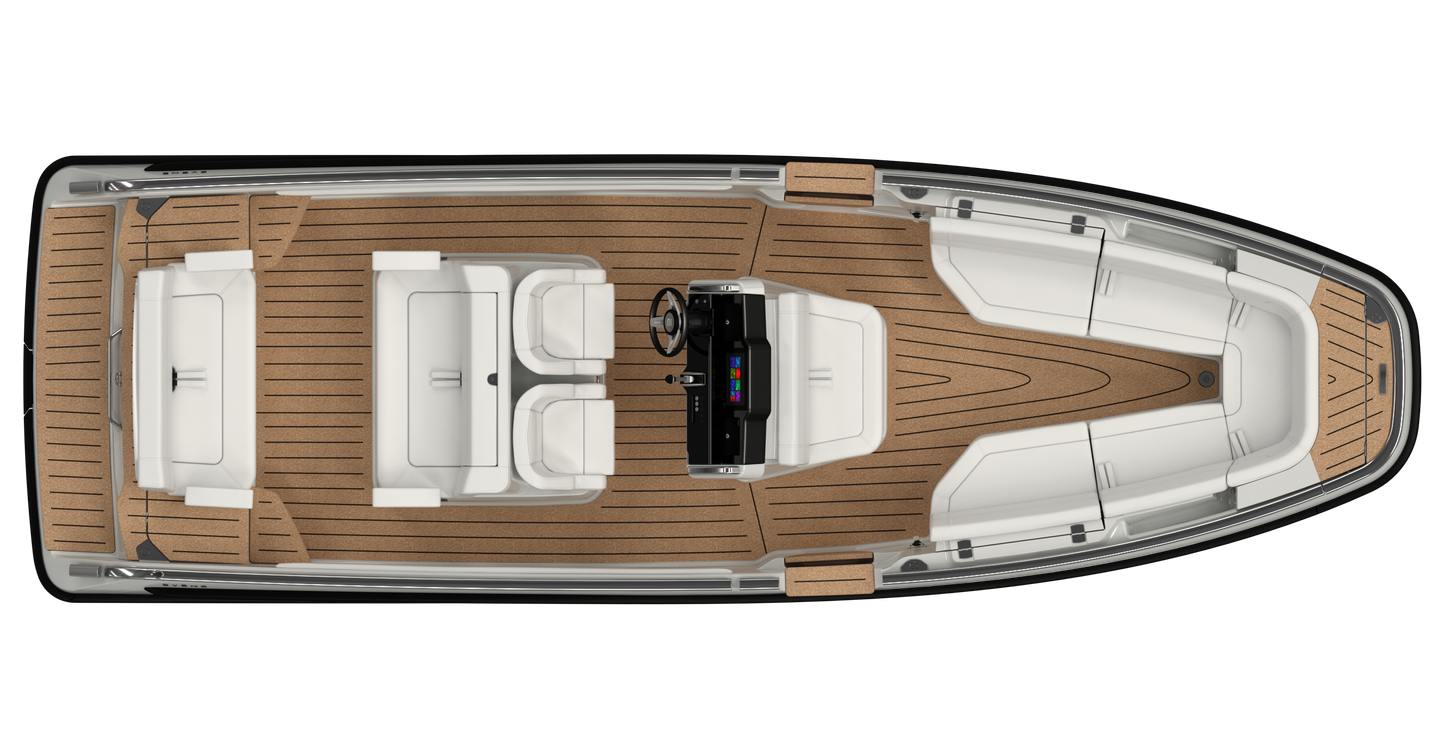
The Origin 71 is priced at £215,000 ex VAT before options, so the final figure will depend on how it is set up for the yacht. Our boat had several extras fitted, including the bimini and carbon beach-landing ladder, which become useful later in the day for rather different reasons.
Once it is in the water, of course, none of that matters to the guests. They want somewhere to sit, somewhere for their bags and a dry ride back to the yacht, and so that was our first test.
Guests First
Guest collection is about as basic a job as a tender gets, but it is also a good way to find out whether the layout works. People rarely turn up on their own. They bring bags, shoes, pets, kids, and all the other kit a yacht tender has to deal with, and none of it is much use scattered across the deck.
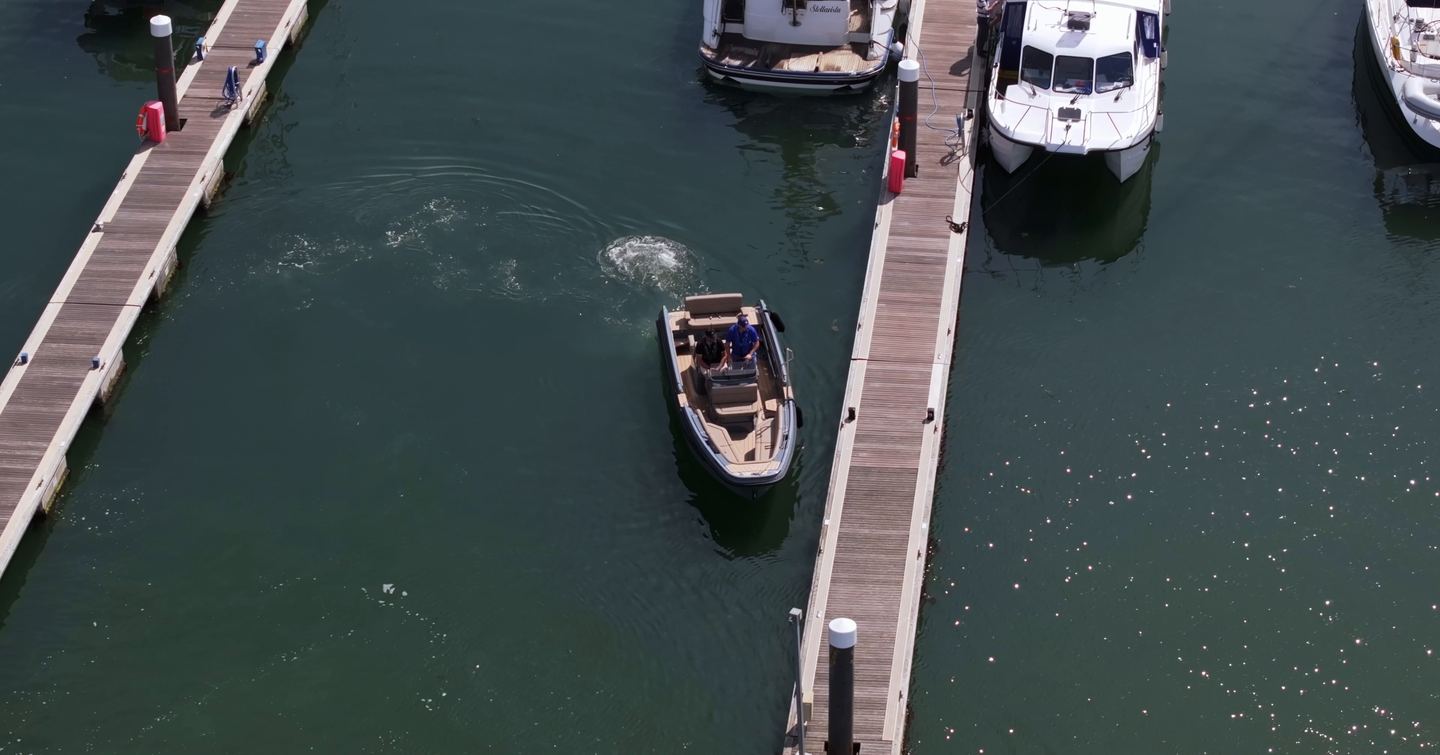
Compared with a big-tube RIB, more of the beam is available for people and their kit, and there is a nice step to work with when someone comes aboard rather than a tube taking up the edge of the boat. On a tender that spends its life moving people, bags and provisions, that space is useful very quickly.
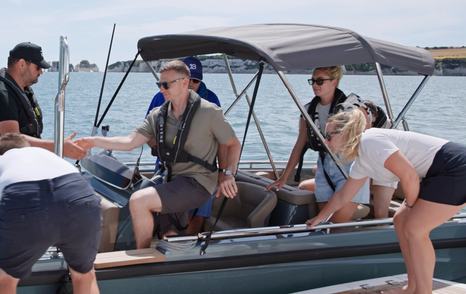
There is a long stainless rail to grab as you step aboard too, with walk-through boarding on both sides. That is particularly useful once the tender is alongside a yacht that is moving beneath your feet rather than sitting quietly against a pontoon.
The Origin was port side to at the pontoon, with the fenders lined up with the boarding step. There is a useful amidships cleat close enough to the helm where we could get the boat alongside, stand up for the final bit and secure it without much fuss. The guests arrived almost on cue.
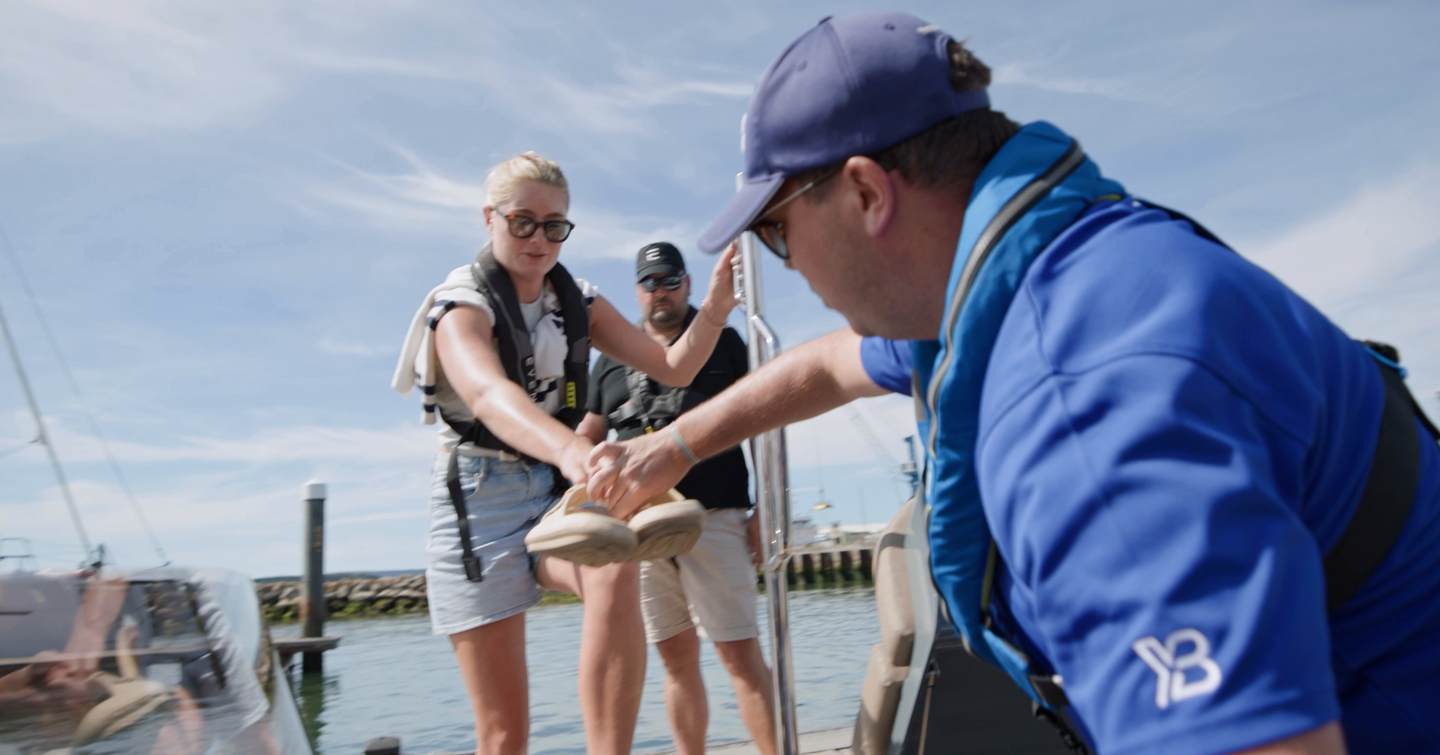
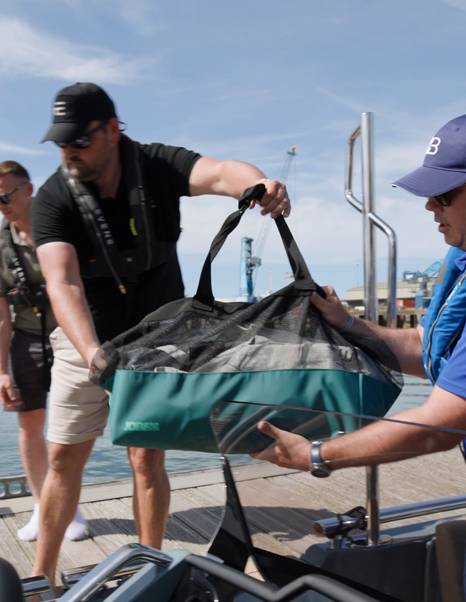
Our challenge was easy enough: every bag had to go away, and anything left loose on deck would cost me a strike.
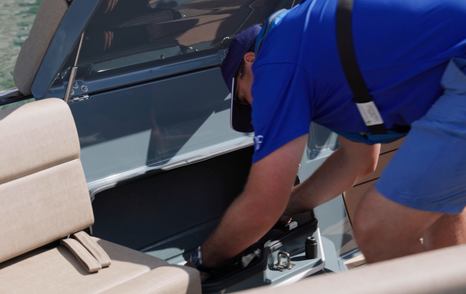
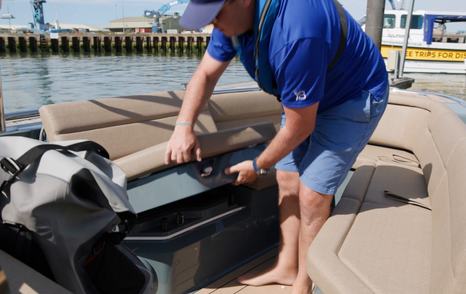
The main luggage locker is forward and goes a long way into the bow. We started to feed bags into it and there was still room as more appeared. There is a separate shoe locker too, which sounds like a small detail until a group of people step aboard and all take their shoes off at once. Better in there than under someone's feet.
Then the late guest arrived with some very awkward, long water skis. Fortunately, Oliver Browne, Evene's head of development and my crew for the day, knew where to put them.
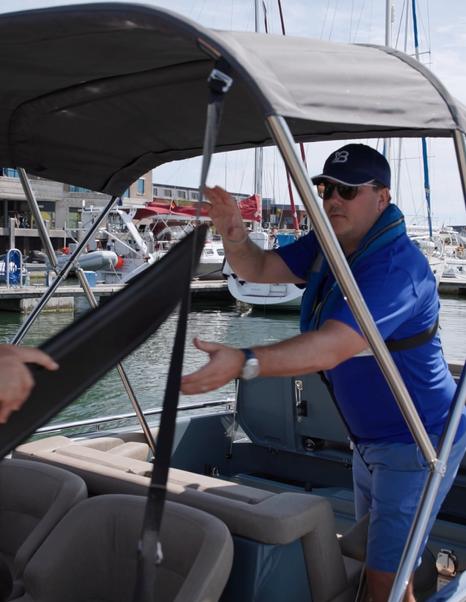
He explained that the optional bimini normally hides beneath the rear seat. With the guests aboard we wanted the shade anyway, so up it went and the long locker it had occupied became free for the skis. One went in each direction and disappeared inside rather than lying across the cockpit.
However, we weren't carrying the full 13 people the Origin is rated for, so this wasn't a full-load test. What we did have was a realistic mix of guests and awkward kit, and all of it went away without taking over the cockpit.
Running Guests to the Yacht
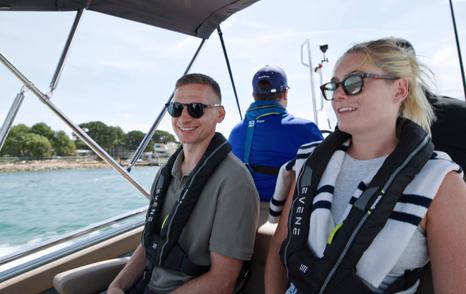
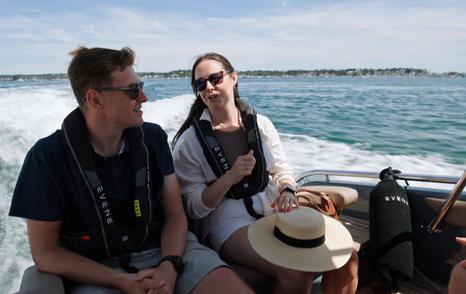
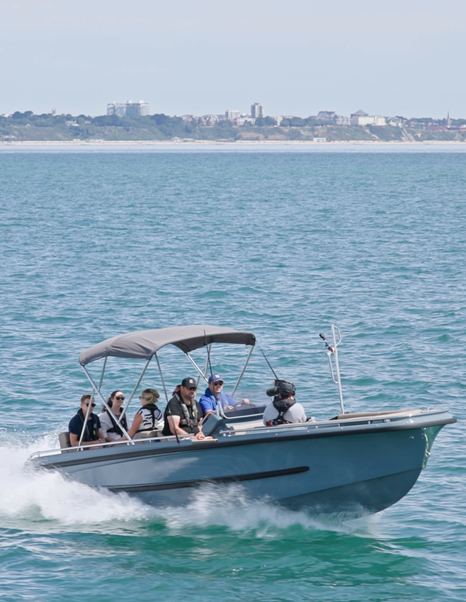
With everyone aboard, the next job was to get them out to the mothership dry and comfortable. Poole Harbour gave us a long stretch at its 10-knot limit first and, although the Origin clearly prefers to be properly on the plane, it felt quite content there. That matters on a tender. A fair chunk of its life will be spent inside harbour limits or close to the mothership rather than at 30 knots.
Once clear of the harbour we could pick the pace up. There was some wash about and a bit more chop, and a few of the guests had chosen the forward seats - the obvious place to find out how dry the boat really is - and happily they stayed dry.
The Petestep spray rails, which run diagonally, actually funnel the spray much further aft and keep it a lot lower.
Head of Development
Evene Tenders
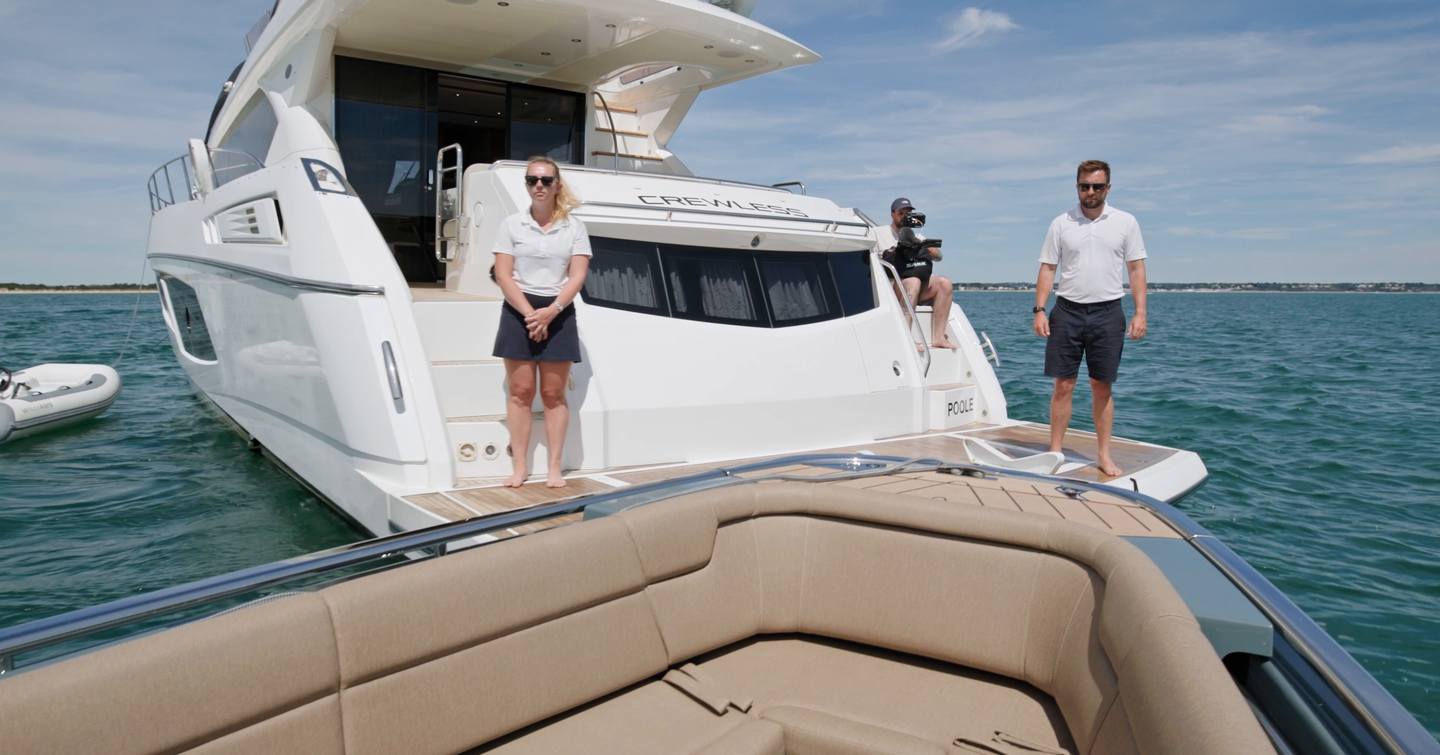
Our mothership for the day was a Sunseeker Manhattan 65. At 21.07m (69ft 2in), it is much smaller than the 40m-plus yachts the Origin 71 is designed to serve, and its bathing platform isn't a purpose-built superyacht tender station. That made the next part slightly harder than it might be in the Origin's usual working life.
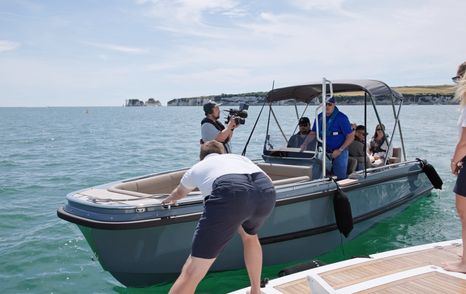
A pontoon berth is one thing; putting a tender alongside a bathing platform that moves with the yacht and the water is another. My first approach wasn't good enough, so I went around (giving the guests an extra good view of their yacht) and tried again. The second was much better and the guests stepped across, followed by all the bags we had packed away back in Poole.
Tender work happens around wash, wind and a mothership that isn't staying completely still, and sometimes the right call is to abandon the approach and have another go...but still I was one strike down.
The Race: Is the Origin 71 Still a Williams underneath?
With the guests safely aboard the yacht, the next challenge was rather different. The bimini came down, the bags were gone and we had the bay to ourselves. As Evene is part of the Williams Jet Tenders Group, does any of that small Williams character survive in a 7.1m tender that weighs 1,800kg? We put her to the test in a time trial.
To help, we brought along the new Williams TurboJet 280MX. This is not a rival to the Origin 71 - the two boats have completely different jobs - but it makes a useful benchmark. The 280MX replaces the MiniJet as the smallest Williams, weighs just 235kg and has a 60hp engine. There really isn't much boat for that engine to move.
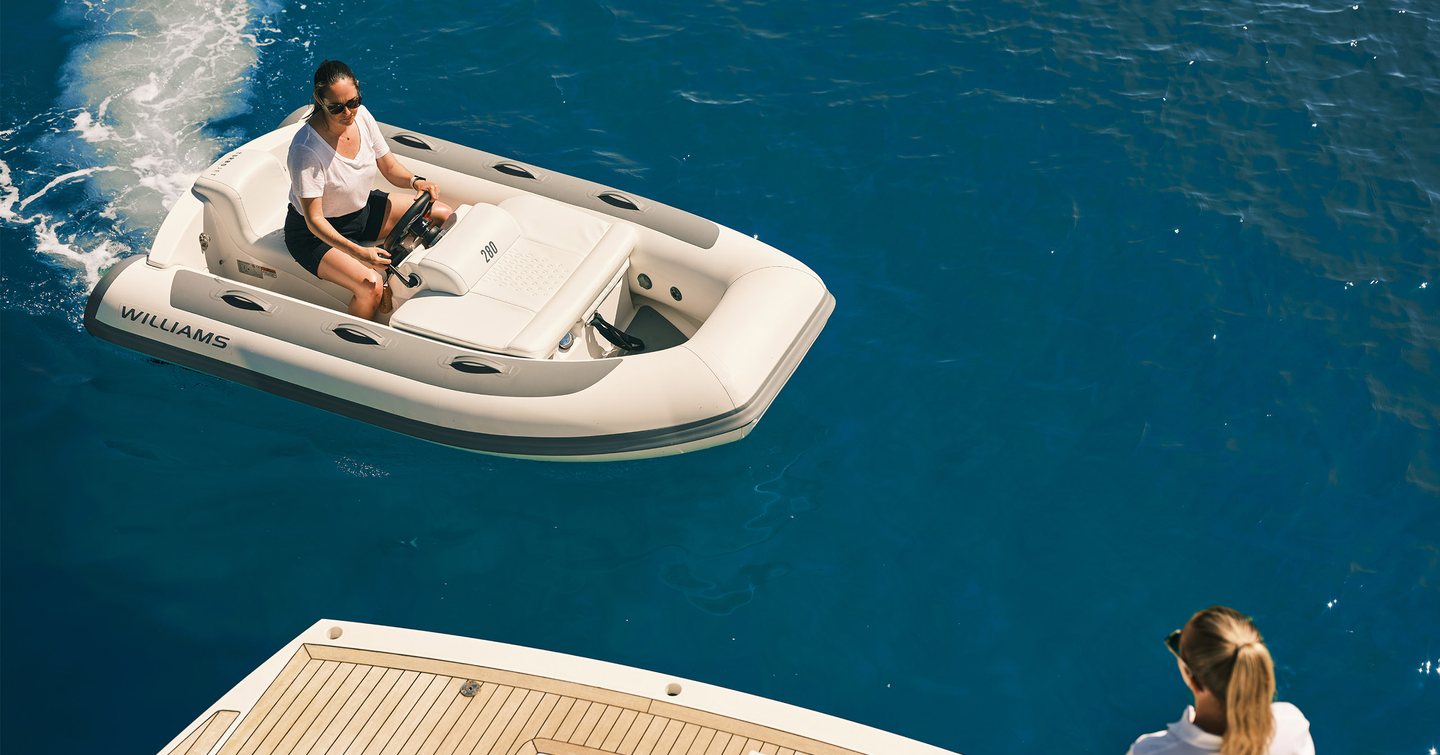
The 280MX gets out of the hole almost immediately and needs input once you start to push it. It snaps through a tight turn, changes direction quickly and has that slightly frantic character that makes the small Williams boats such good fun.
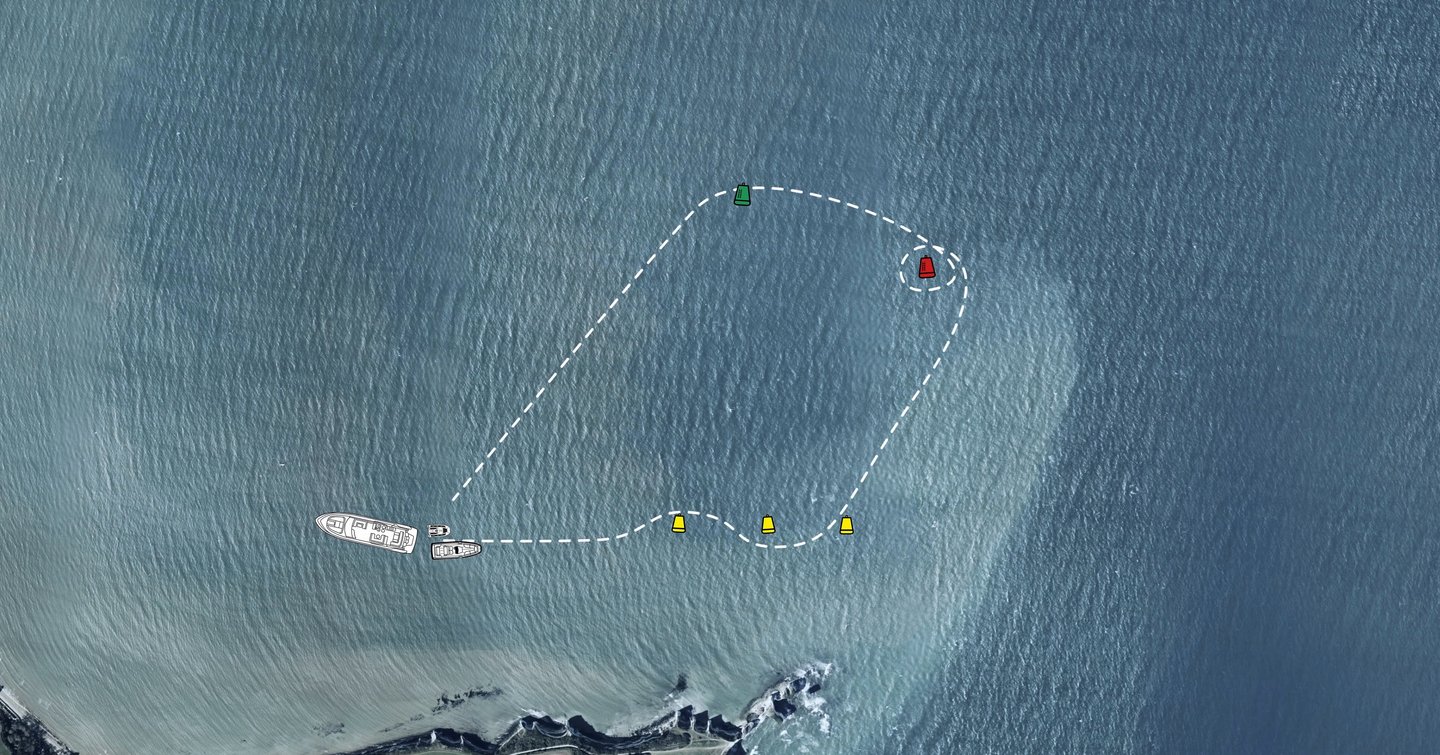
Both boats had the same course. We started beside the Sunseeker mothership, ran through a short slalom and then headed across Studland Bay to loop a red buoy. From there it was across to the green buoy, round that and back to the yacht. There was enough wind and chop around to make it a bit more useful than a flat-water drag race.
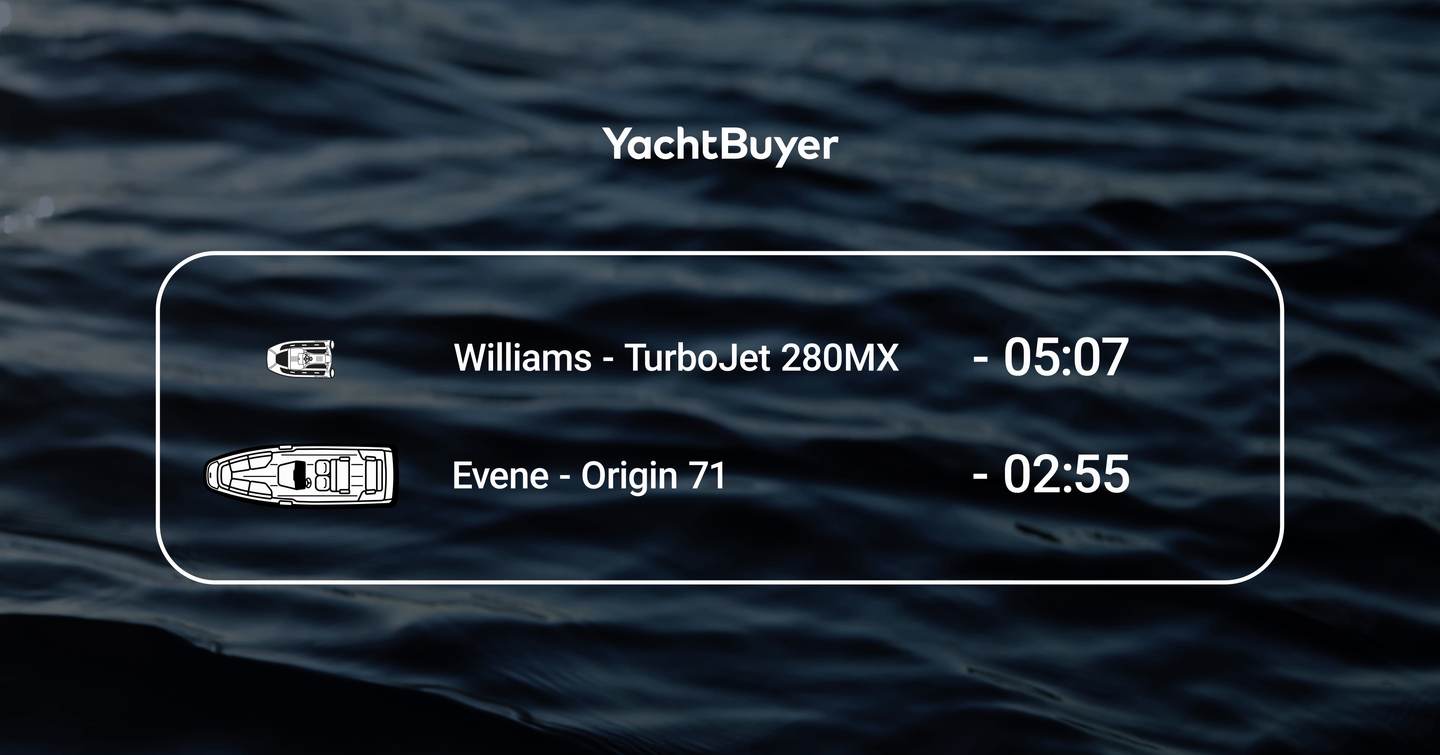
The little Williams felt quick everywhere, which made its time of 5min 07sec rather surprising. I genuinely thought I had been going faster than that.
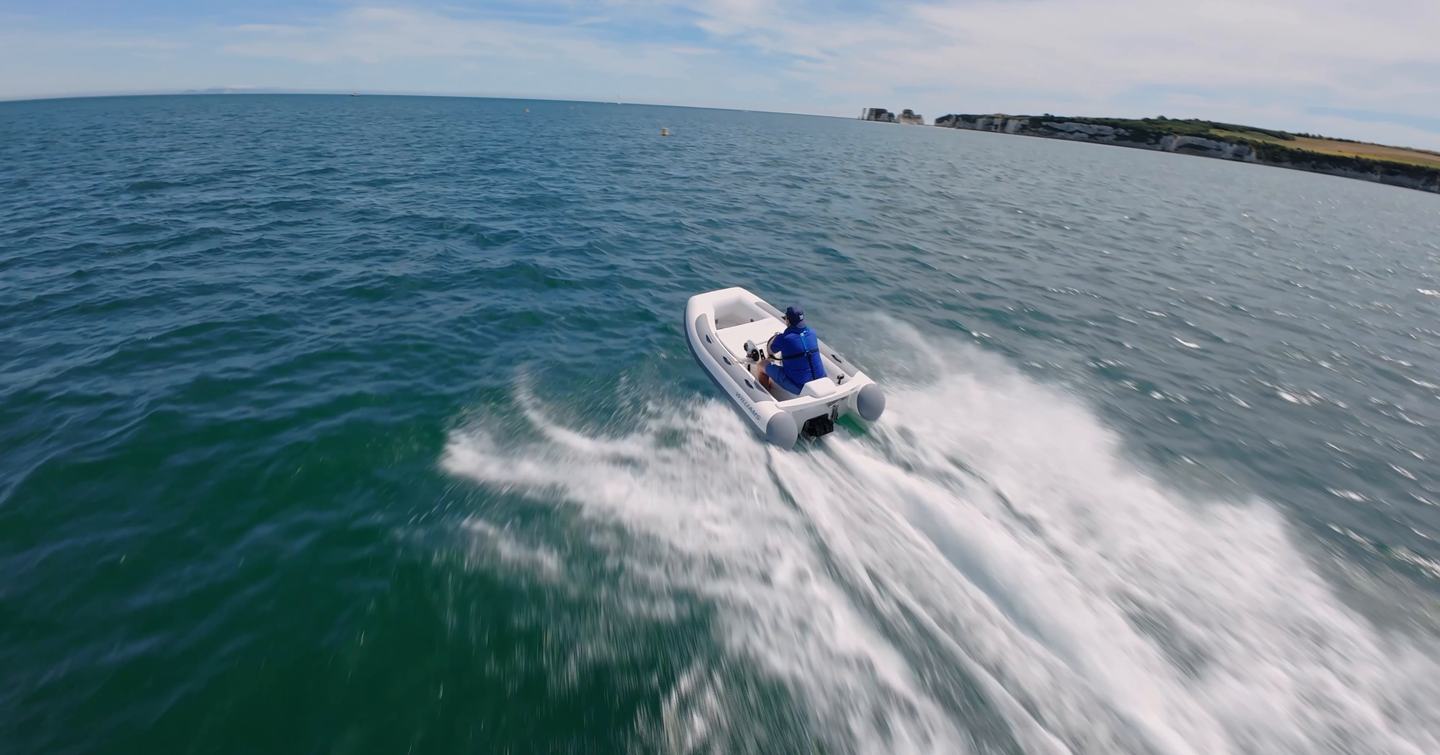
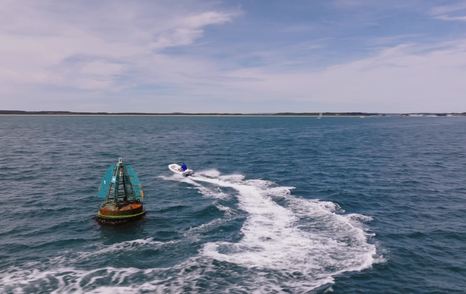
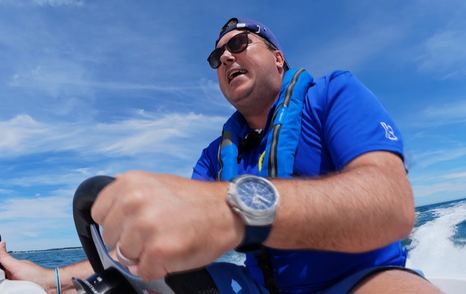
Then it was the Origin's turn. With 250hp it has far more power, but there is also a lot more boat to get moving. The difference was obvious straight away. It couldn't match the 280MX out of the hole and needed more room through the slalom. Tight turns are not where the extra length and weight help.
Once the course opened up, though, the picture changed. The Origin could keep far more speed through the chop and the hull stayed settled as the pace rose. We saw 35-36 knots at wide-open throttle and there was plenty of grip when it was pushed hard into the turns. It wasn't as tight or as immediate as the Williams, but it didn't need to shed nearly as much speed once the water became broken.
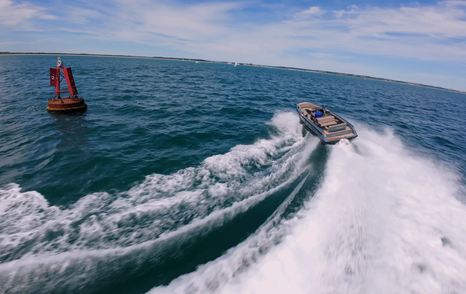
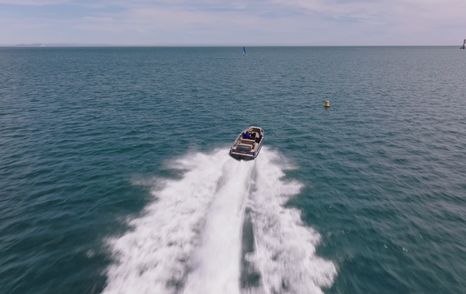
The time was 2min 55sec, more than two minutes quicker than the 280MX around exactly the same course.
That doesn't mean the Origin is twice as fast, because their outright speeds are actually fairly close. Both runs used the same course, the same driver and the same patch of choppy water, and the difference was how much of that speed each boat could use. The 280MX had the Origin beaten for acceleration and tight turns, but the bigger boat could carry its pace across the rougher parts of the bay. On a flat, calm day I suspect the gap would have been quite a bit smaller.
At the Helm
The time trial also changed my mind a bit about the driving position. Before we went out, I couldn't quite understand why the Origin doesn't have a bolster. A tender driver is going to spend plenty of time standing up around the yacht or in a marina, and the seat didn't seem particularly well suited to that.
At speed, though, it makes much more sense. The seated position is very good and I never felt the need to stand during the fast run. The hull feels planted, there is loads of grip through a turn and the seat holds you well enough that you can just get on with driving the boat.
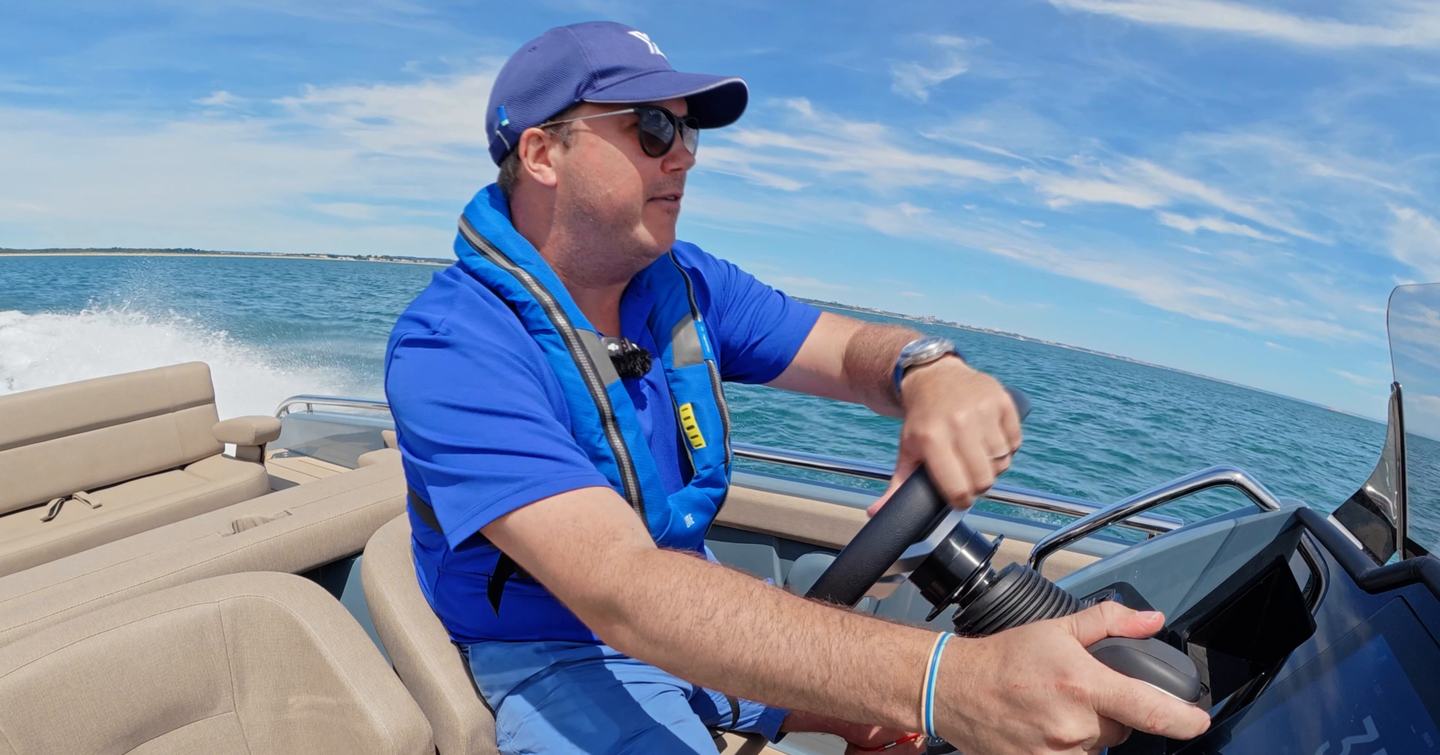
The problem comes back when you slow down. Stand at the helm and the front of the seat presses into the backs of your legs. Moving it aft helps, but doesn't really get rid of it, and this is exactly the sort of speed where I would naturally want to be on my feet for a better view around the boat. I would still rather have a bolster or a proper leaning post here.
There is another small trait to get used to. The jet lets the boat wander a little, so you are making more small corrections at the wheel than you would in a boat with a propeller. It never felt difficult, but the driver stays busier.
So I came away liking the helm more than I expected to. Seated and at speed, it works very well. For the slow-speed part of the job, I would still change that seat.
Taking Guests to the Beach
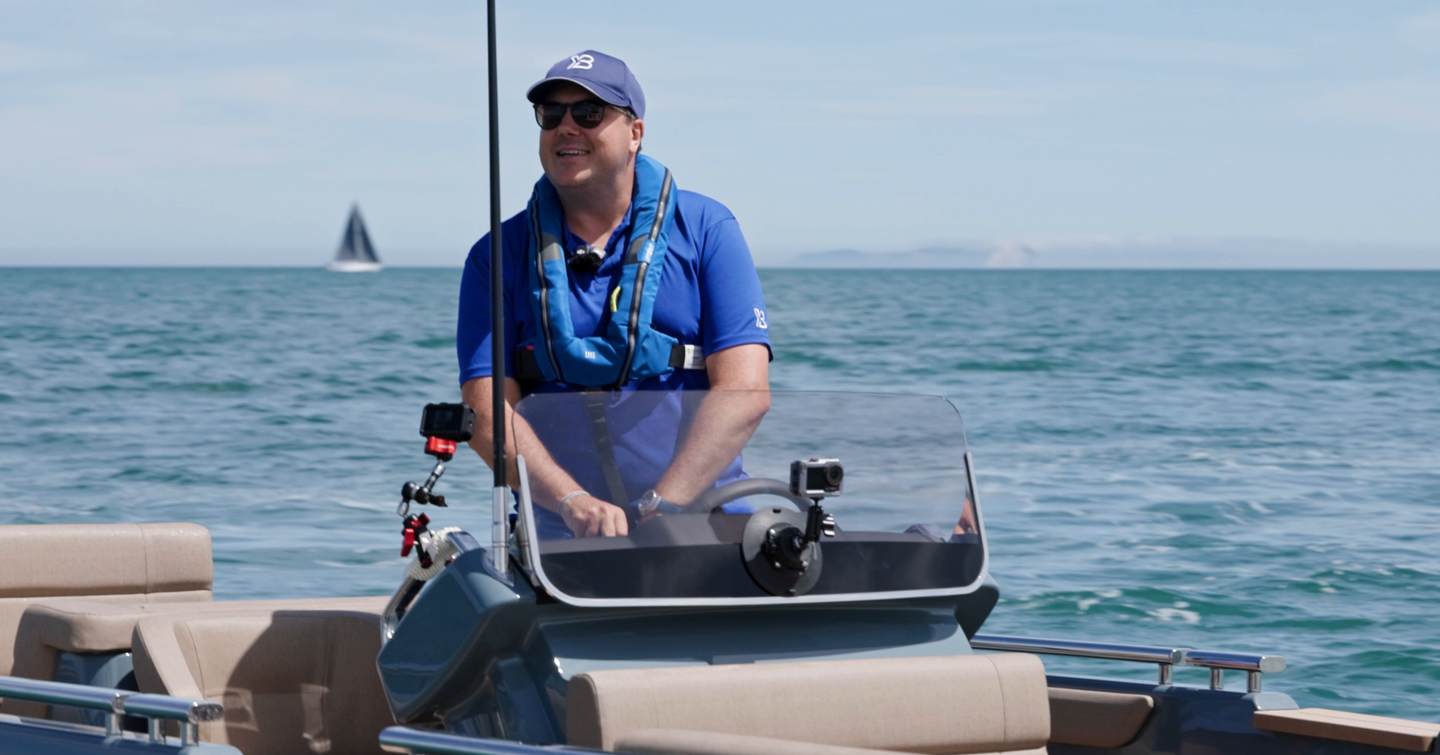
After all that charging about, it was back to tender duty. The guests wanted to spend some time on Studland beach and the challenge was to get them ashore without anyone getting wet below the knees. A slightly daft way to score it, perhaps, but a pretty fair test of a tender.
The wind decided how we were going to do it. The bow was the better place to get everyone on and off, so we moved the boarding pole forward before collecting the guests.
Once we slowed down close to the beach, Oliver Browne showed me that the carbon ladder could move forward too and become our way on and off the boat. That is the sort of detail that makes much more sense when the weather gives you a reason to use it. The ladder on our boat was an optional extra and, rather wonderfully, made in Norwich.
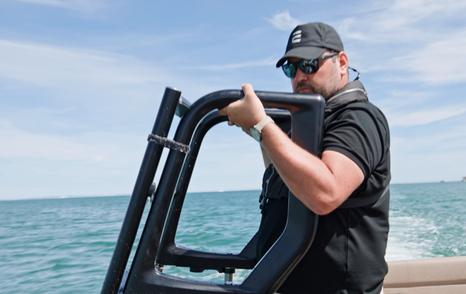
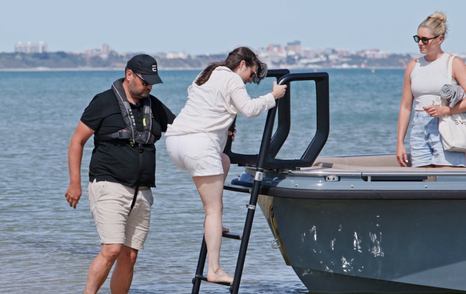
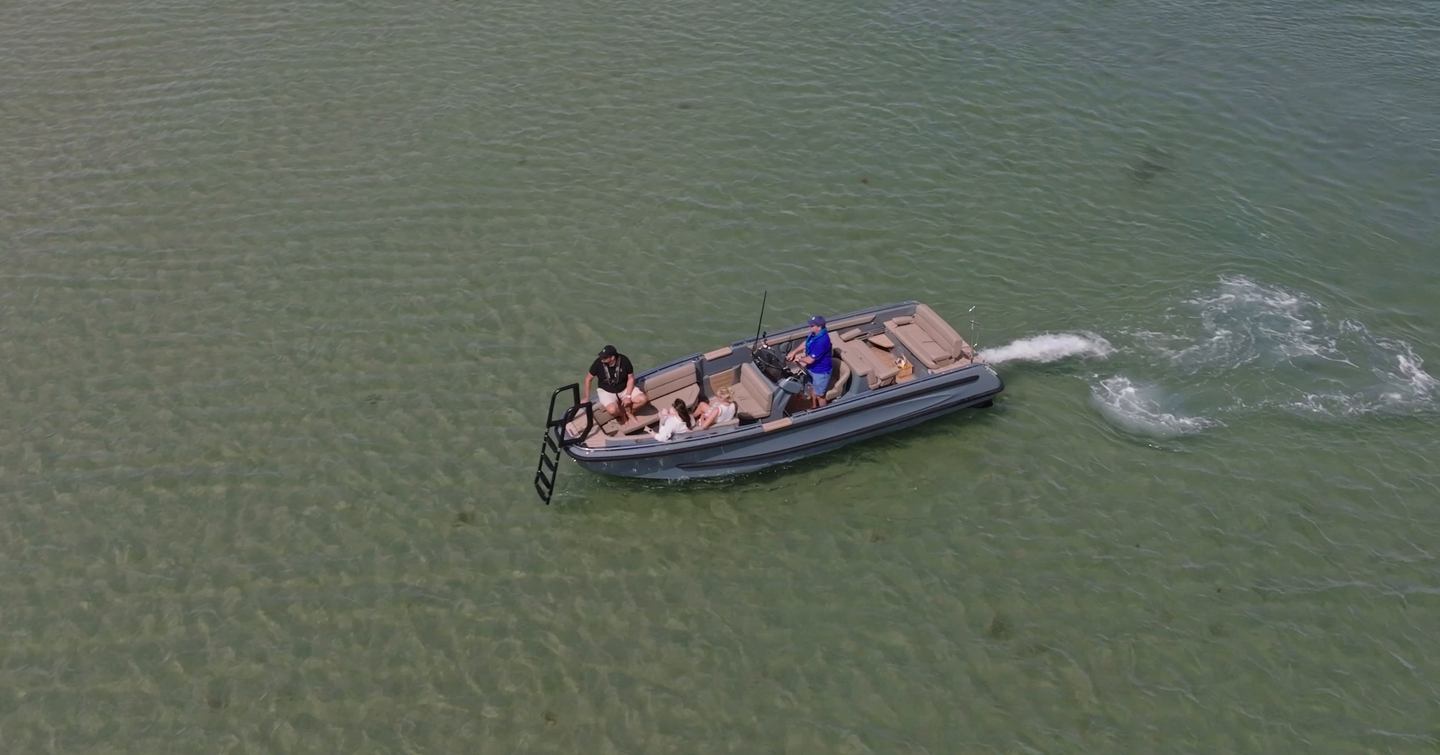
This is also where the jet drive starts to earn its keep in a different way. There is no propeller or sterndrive hanging beneath the stern, so the Origin can creep a long way into shallow water. That doesn't mean you stop thinking about what is underneath you. I was looking for a clear patch of sand and trying to avoid weed, because filling the jet intake with seaweed would rather spoil the exercise.
We found a clean spot, eased the boat in and the guests stepped off over the bow. They stayed dry below the knees, so the challenge was done without losing another strike.
A purpose-built Beachlander tender takes this much further, usually with a bow ramp so guests and kit can walk straight ashore. That starts to make sense if beach landings are a big part of the yacht's programme - regular loads of coolers and beach kit, explorer trips, or guests for whom climbing down a ladder is difficult. There is more hardware for the crew to deal with, but it is much better at that one job. The Origin is tackling the more usual beach run and it isn't the same thing as a ramp onto the sand, but for the landing we made at Studland it was enough.
From Tender to Ski Boat
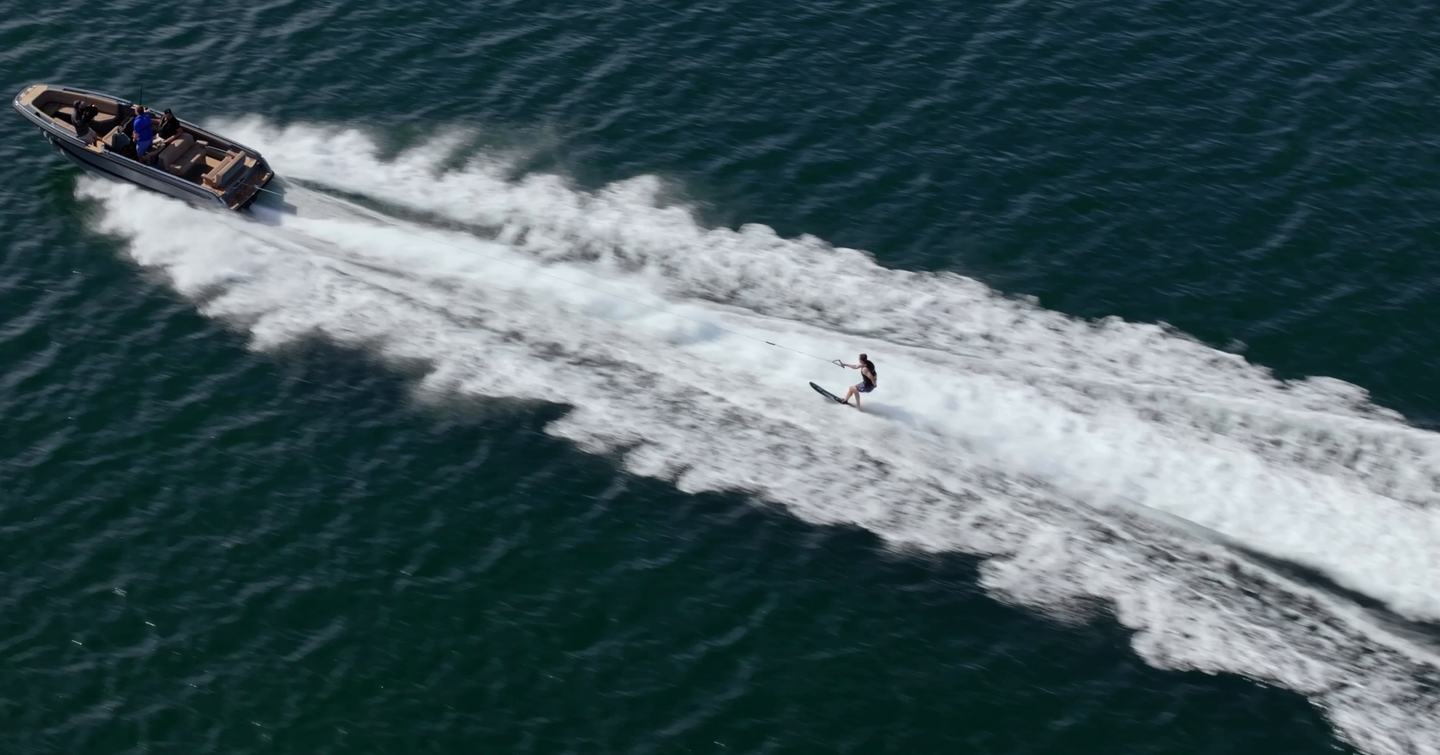
The beach run should probably have been enough, but there was still a skier waiting for a tow. Watersports are another job that can easily fall to the yacht's tender, and the Origin already has a centreline tow eye on the transom, so there wasn't much excuse not to try it.
Getting the skier out of the water wasn't a problem. He was up first time and we settled at around 21 knots, which is right in the useful 20-25-knot range for recreational skiing. The Origin held that comfortably and there was still plenty left when we started to turn, rather than the engine feeling as though it had used everything simply to pull him onto his feet.
The jet drive makes a lot of sense here too. There is no exposed propeller behind the boat, which is an obvious advantage when somebody is in the water close to the stern. It doesn't remove all the usual care needed around a running boat, but it does take a spinning propeller out of the equation.
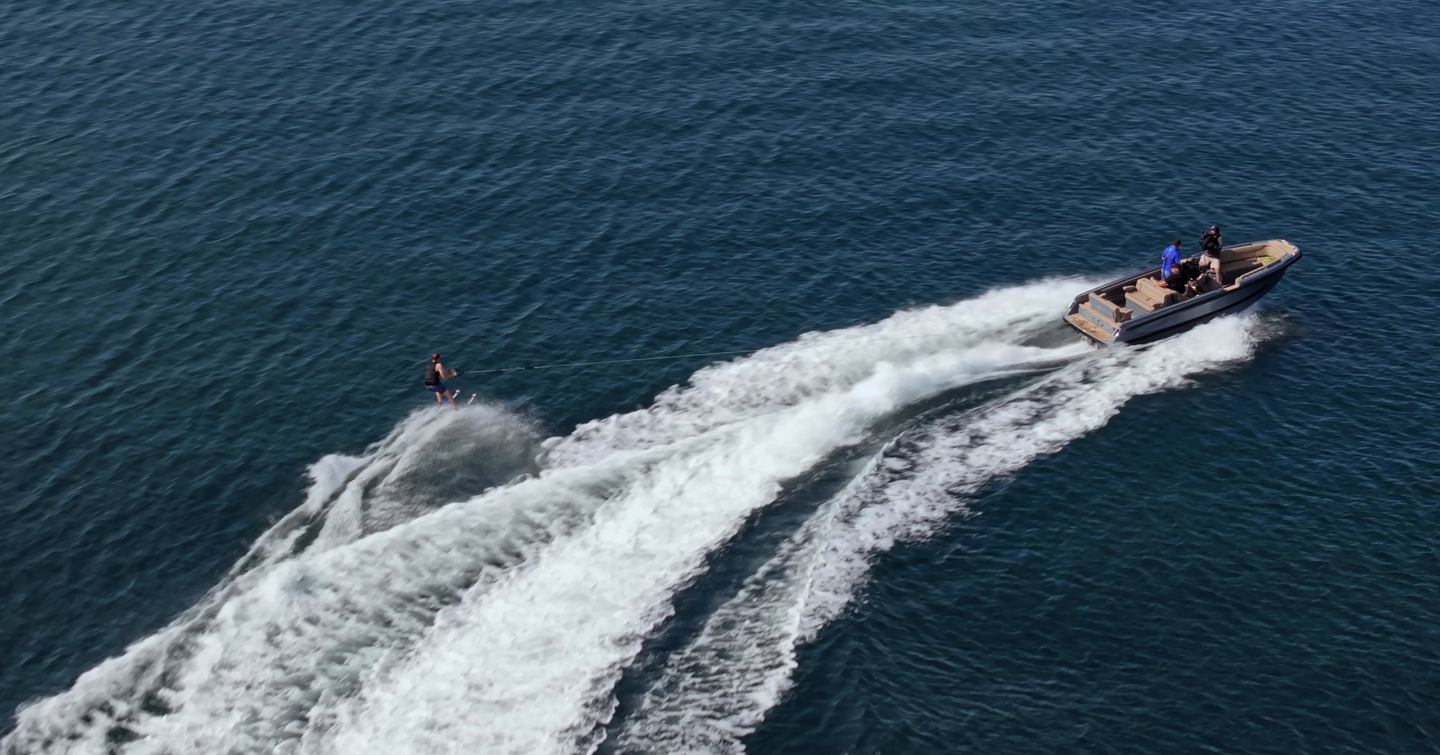
Studland wasn't exactly giving us perfect ski conditions by this point. There was plenty of wind and the water had become quite choppy, but that didn't stop an attempt on a mono ski. That was less conclusive - he came close rather than getting properly settled on one - but the first run had already told us what we needed to know.
One Tender, Many Jobs?
What became clearer over the day is that a superyacht tender has to keep two very different camps happy. Owners and guests spend a short time aboard and care about whether it is easy to get into, dry underway and comfortable once their bags are out of the way. For the crew, they have to put it alongside a very expensive yacht without leaving a mark, manoeuvre it in tight spaces, shift people and kit, and then be ready to do it all again when the next request comes down.
That rather changes the pecking order. A folding helm will matter more than another couple of knots, and a shoe locker suddenly looks like quite a clever idea when half a dozen pairs are no longer rolling around the deck. Slow-speed manners count for a lot too, because a tender spends a surprising amount of its working life pottering around pontoons, beaches and the mothership instead of charging across open water.
The Evene Origin 71 was a useful boat to test all this on because those priorities only really showed themselves once we started giving it proper jobs. It also made the weak point fairly obvious. The helm works very well when you're sitting down and pressing on, but for the slow stuff I would still want a bolster or leaning post.
And that is probably the wider point. On a yacht around 40m, the tender has to earn its keep. It is there for guests, crew, bags, beach runs and whatever else gets thrown at it that day, often with very little warning. The boat might live in the garage, but once it is launched it rarely gets an easy life.
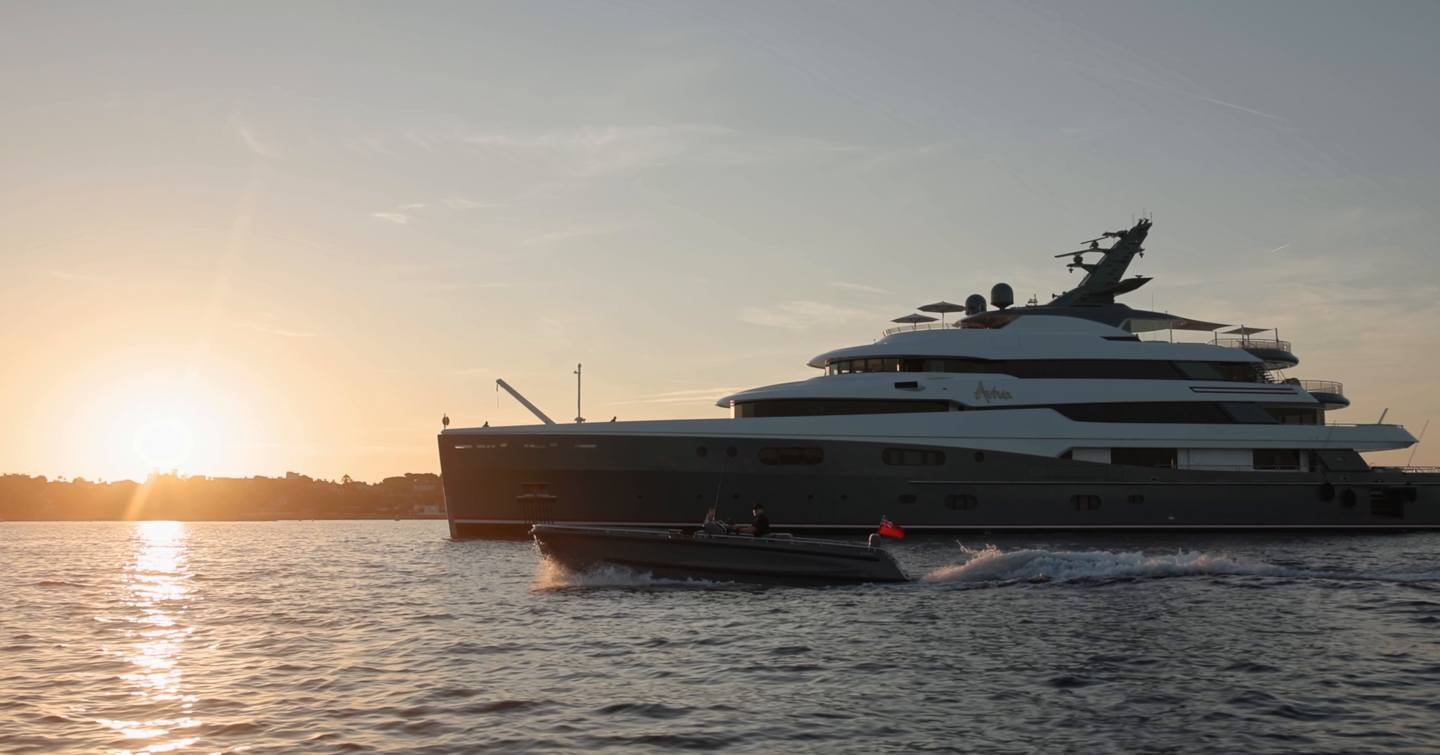
If you’re looking to buy, we bring together superyachts for sale and yacht tenders for sale in one place. YachtBuyer Market Watch tracks the live market, removes duplicate and stale listings, and makes it easier to see what is genuinely for sale and how asking prices are moving.