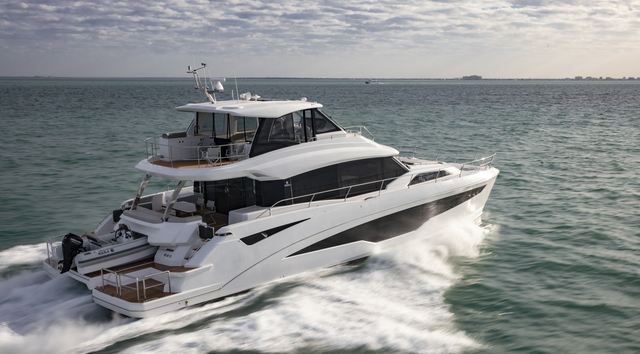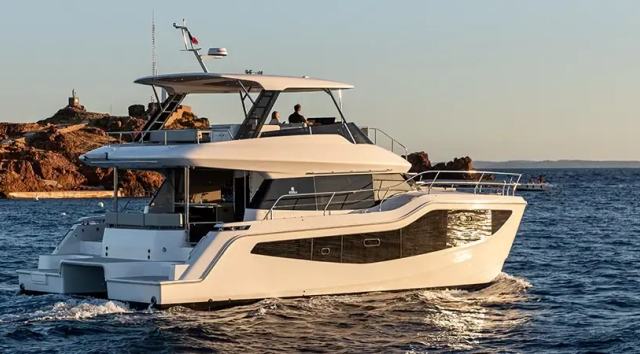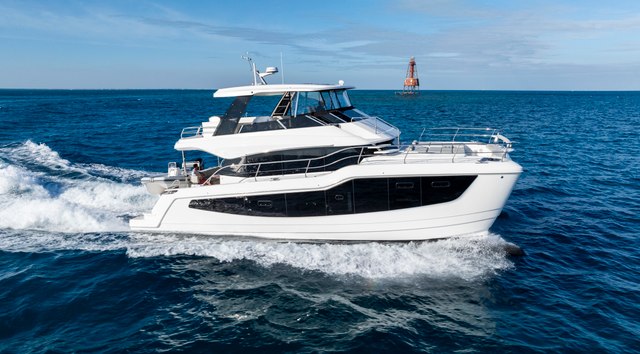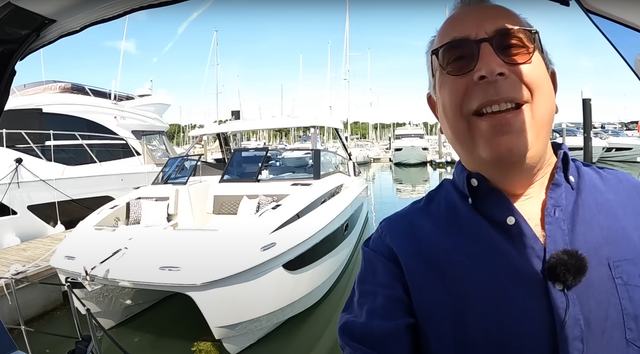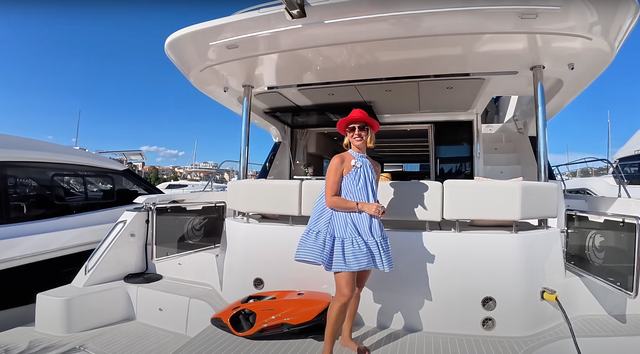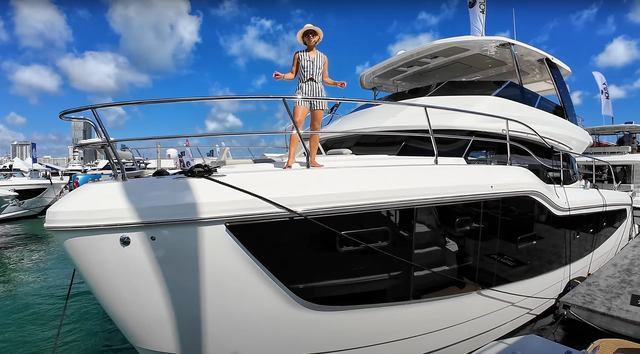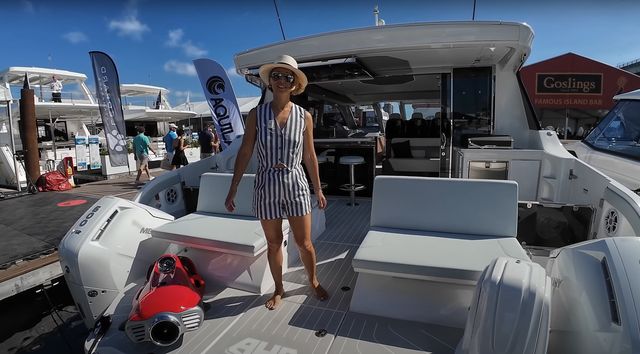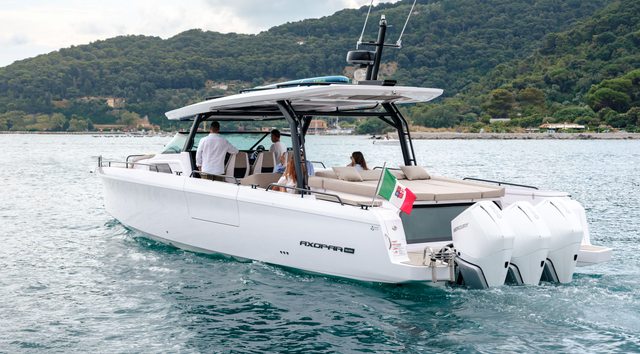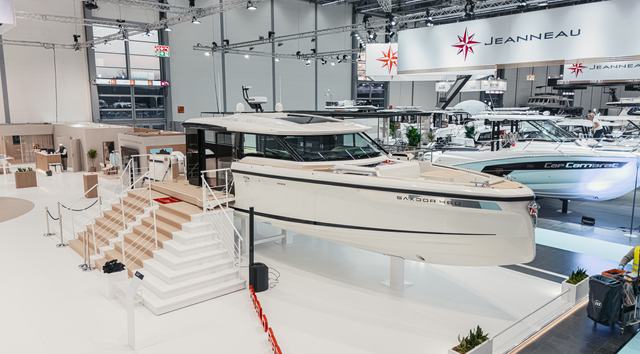
This is the Aquila 45 Sport, the flagship in the builder’s Sport range, and it uses its catamaran beam and fold-down terraces to create a wide, open platform aimed at large groups and short, fast runs.
So, does that approach work in practice? In this review, we look at how the layout comes together, how easy it is to live with, and whether the performance and design choices make sense for the way this type of boat is actually used.
Aquila 45 Sport

- LOA 46' 6"
- Model Year 2026
- Cabins 1
- Max Speed 40 knots
- Status In Production
- Yacht Type Multihull
- Use Type Dayboating
Review Video
Aquila sticks with its usual composite build here, with vinylester resin infusion used through the hull, deck, and bulkheads, and no wood in structural areas or below the waterline, so long-term moisture issues are less of a concern. The core uses PVC with different densities depending on load, and this comes from Aquila’s Infusi-Core method, where vacuum infusion and digitally cut materials help keep things consistent, so weight and strength don't add bulk.
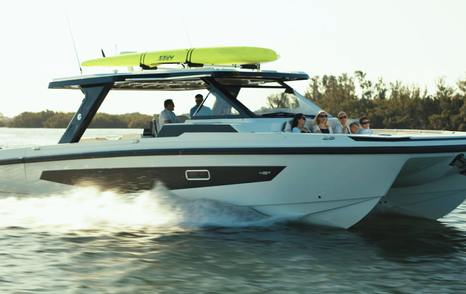
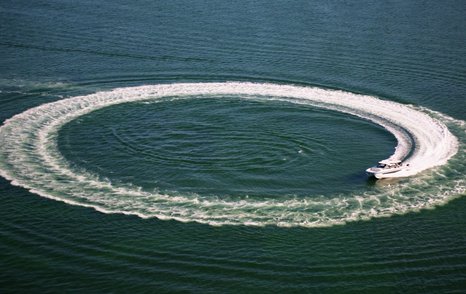
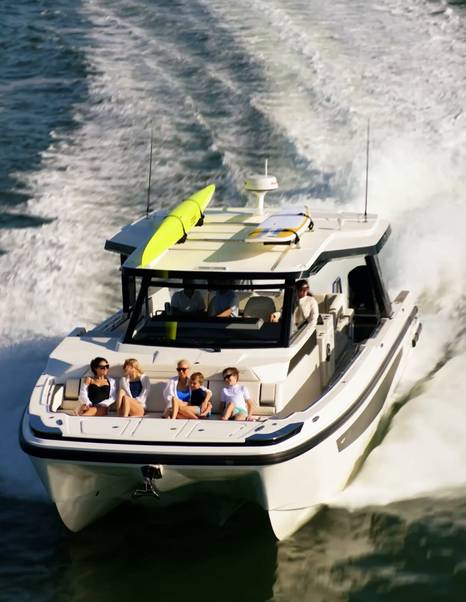
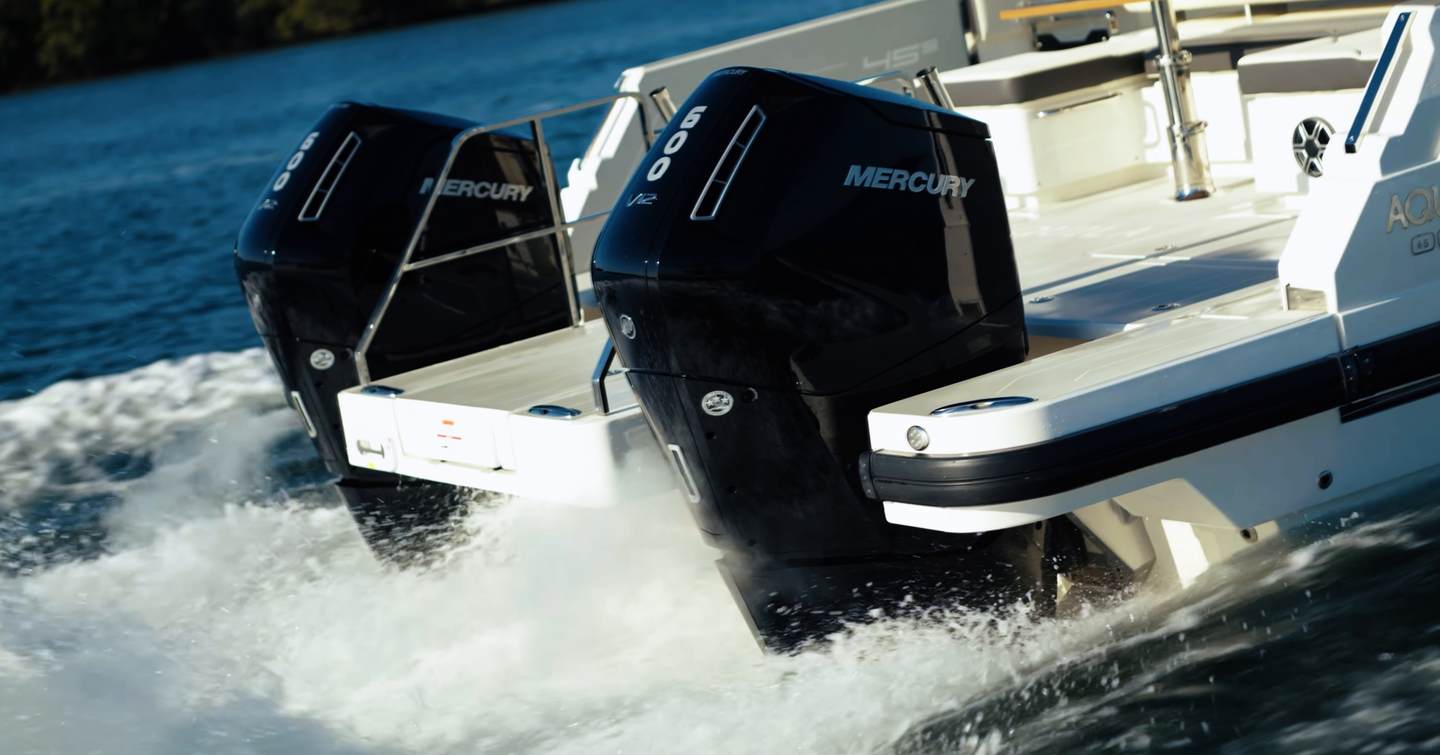
The hull itself is a step on from earlier Sport models, as this one uses a double-stepped design with twin Mercury Verado V12 600hp outboards, and you’re looking at mid-40-knot performance while still keeping the stable feel you expect from a powercat. Fuel capacity is 1,514L, and draft sits at 1.04m (3ft 5in) with the engines down, dropping to 0.60m (2ft) when raised, so it suits shallow anchorages well and can still cover ground quickly between stops.
This is where the catamaran layout really helps, as the beam is 4.57m (15ft), opening out to 5.88m (19ft 4in) with the terraces down, and that makes a big difference once you’re at rest. The engines sit far apart, so you get a proper central walkthrough, and the ladder is built into that space, so getting in and out of the water is easy, with no awkward steps or tight gaps.
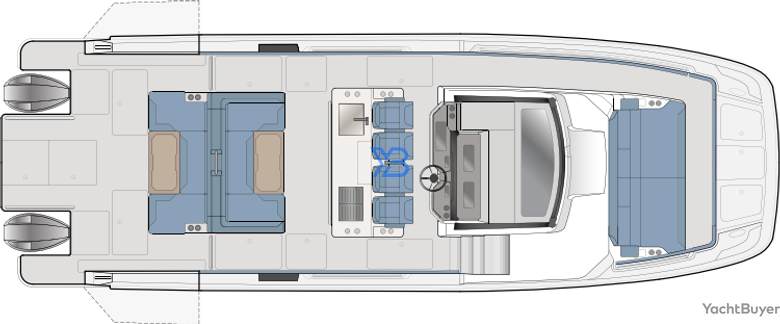
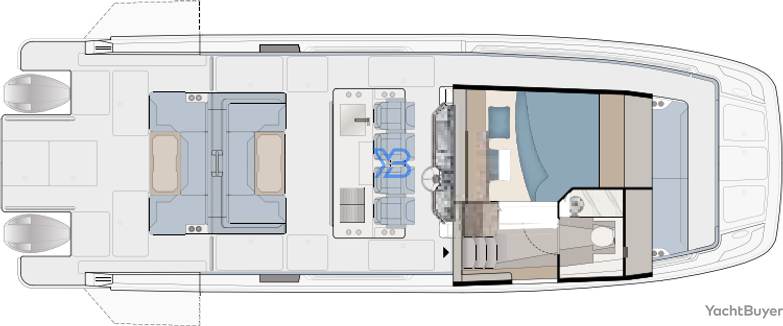
The deck is flat from the helm to the transom, and that changes how the space works, as people can move around freely without thinking about levels or trip hazards. The port side gives you a clear run forward, while the starboard side lifts alongside the console, and that offset geometry creates more space below for the cabin, while still keeping the deck open for up to 29 people for inland cruising.
Within the Aquila Sport range, alongside the 32 and 36, this 45 is the biggest, and it builds on the same ideas of outboard power, high capacity, and stable running, while pushing further toward big social use. The terraces, the stepped hull, and the updated styling all come in here, and the single-cabin layout keeps the focus on the deck and how you use it.
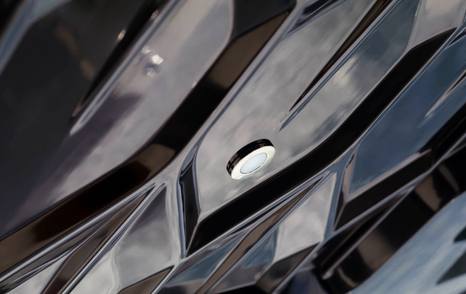
The 45 Sport was developed with Yacht Design Works, and you can see that in the sharper lines and darker glazing, as well as a shape that leans more toward modern SUVs than earlier powercats. That isn’t just surface detail, as the hardtop, the offset layout, and the overall geometry all feed into that look.
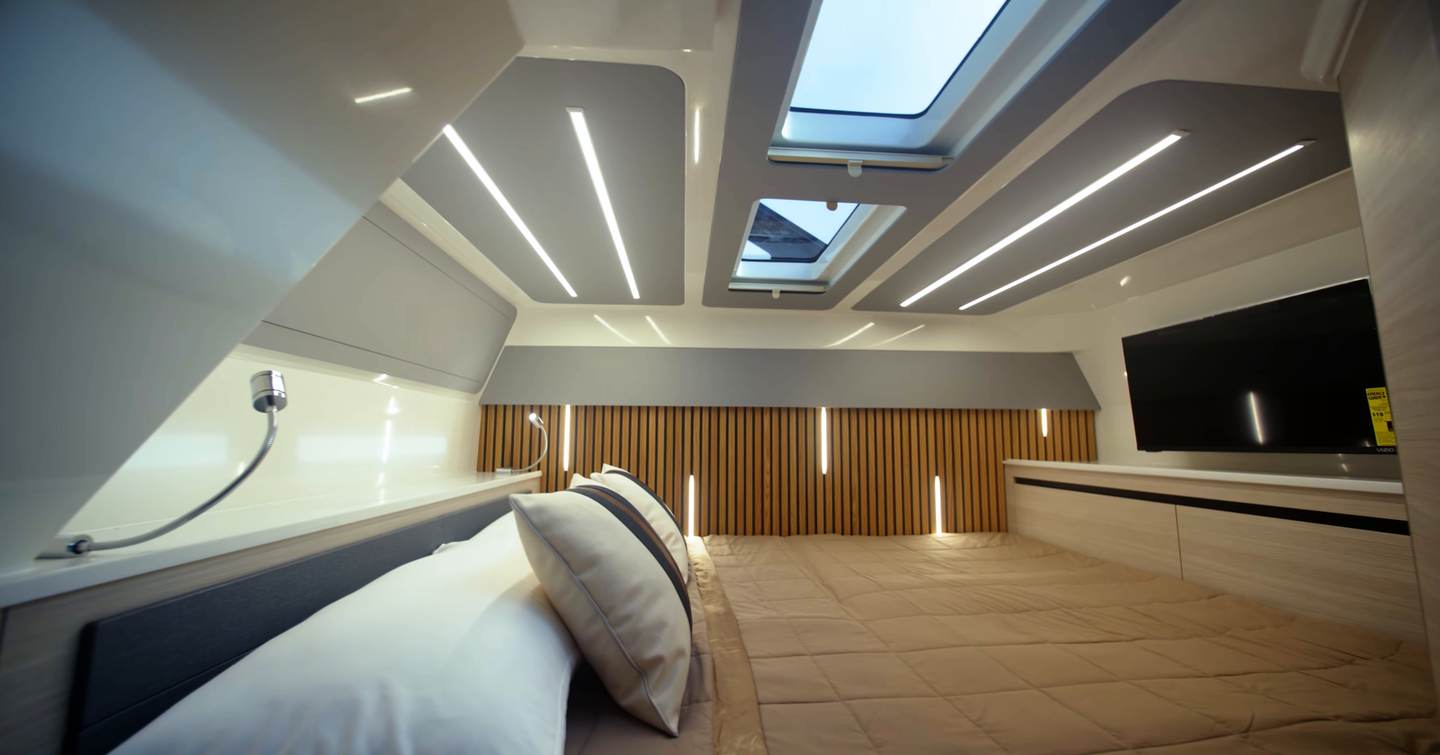
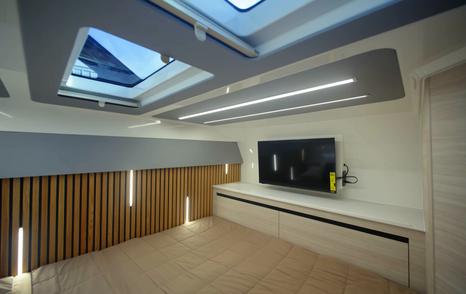
Below deck, that offset layout pays off, as it creates space for a single cabin with a queen bed measuring 203cm (6ft 8in) by 197cm (6ft 6in), along with a skylight and side window that bring in good natural light, and a full wet head that benefits from the extra depth of the hull. Sticking with one cabin means it has proper space and headroom, which fits the way this boat is likely to be used, with the odd overnight rather than longer stays.
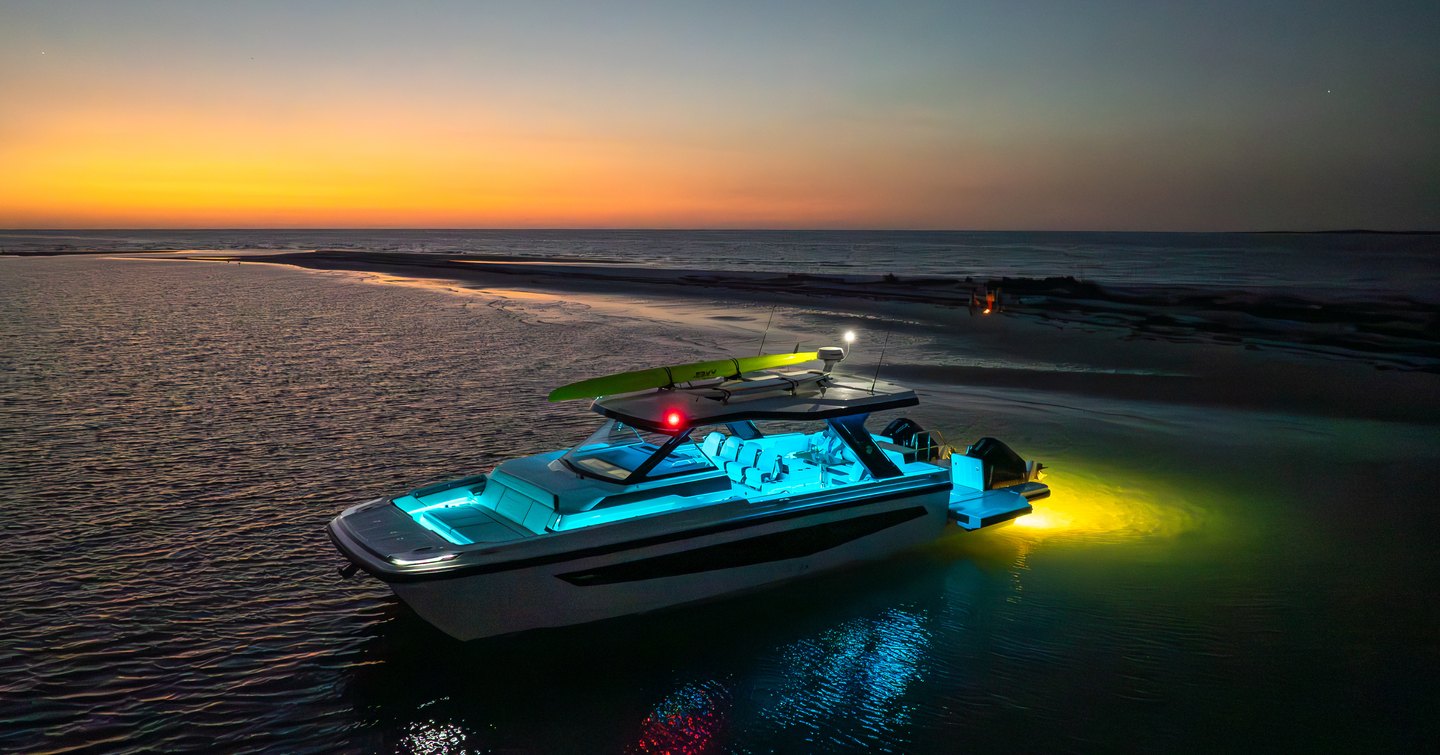
Aquila has gone with one cabin here, so instead of trying to split the lower deck into two smaller areas, everything is given over to a single space that actually works. It suits the way this boat is used, as most time will be spent on deck, so when you do come below, you’ve got a proper place to sleep. There are boats of this style and size with more berths, able to sleep more people, but the two people sleeping aboard the 45 Sport are very well looked after.
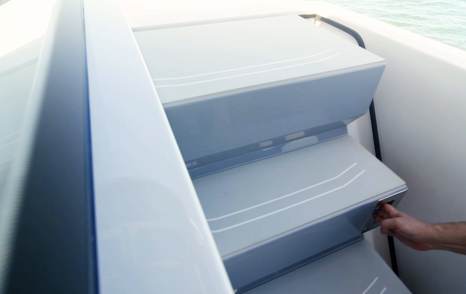
Access is via the sliding door at the helm, with steps leading down into the cabin, and it’s a simple route that also doubles as the way forward on deck when the door is open.
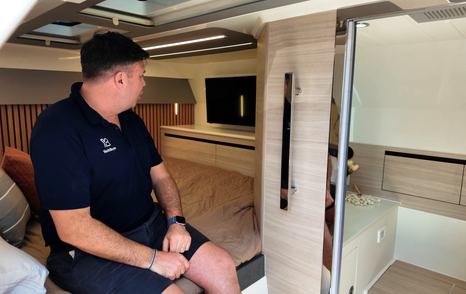
Down below, the cabin is arranged around the bed, and the width of the hull is noticeable, as there’s enough room to move around without it feeling tight. Headroom is better than you might expect on a boat like this, thanks to the inherent freeboard of a multihull design.
The bed itself is a good size at 203cm (6ft 8in) by 197cm (6ft 6in), set slightly raised so that you can sit up comfortably, and getting in and out is easy enough. There’s space under and around it for bags and smaller items, which is what you need for a night or two on board.
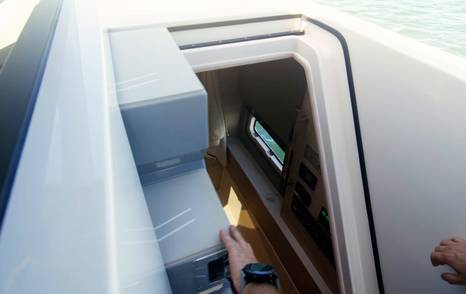
There’s enough room for basic gear, with places for bags, clothes, and smaller items, and it all fits the idea of short stays rather than extended time on board.
In use, it’s clearly set up for occasional overnight stays, and it suits a couple rather than a group, as there’s only one cabin and no attempt to add more.
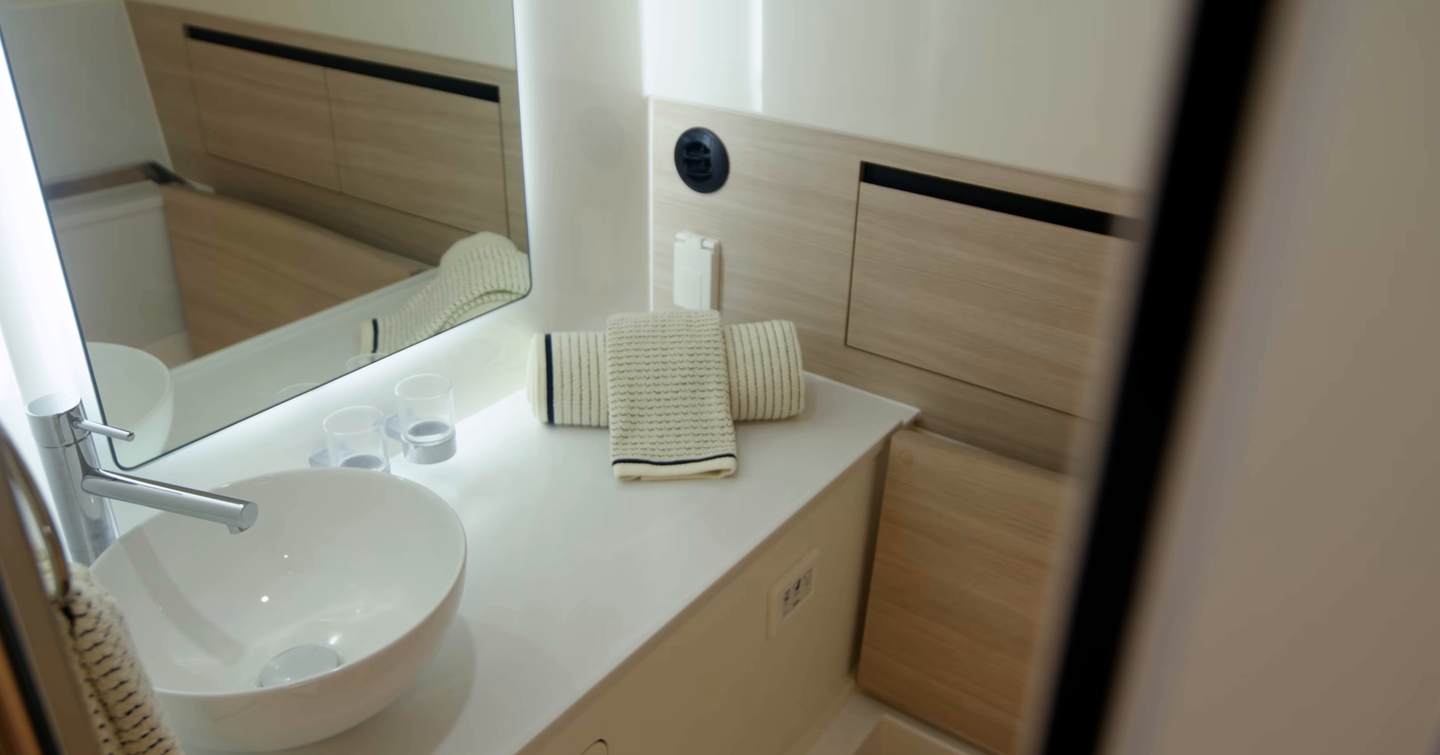
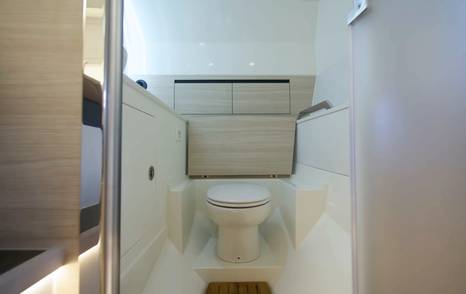
The head sits just off the main cabin, and it’s a really good size. Arguably, this space is more important than the berth if people need to use the facilities during the day.
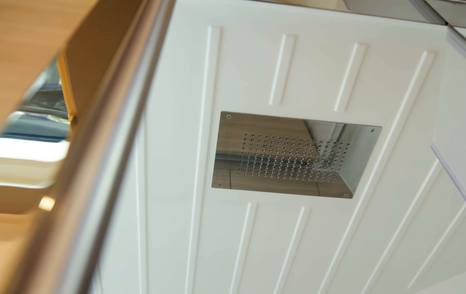
It’s set up as a wet head, with a shower, sink, and toilet all in one area, and the depth of the hull helps here, as there’s enough headroom to stand comfortably without having to crouch. The shower space is usable, too, so you’re not fighting for room when you’re using it.
The helm sits right at the centre of the boat, so you’re still part of what’s going on in the cockpit while you’re driving. It’s open, but protected by the screen and hardtop, so you get airflow without feeling overly exposed when you pick up speed.
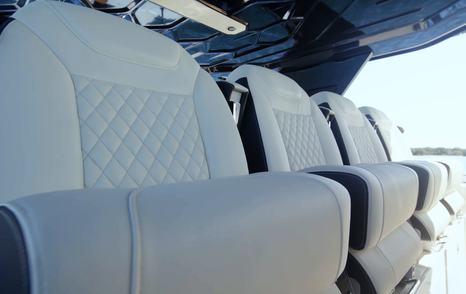
There are four forward-facing helm seats, all with bolsters and armrests, and they adjust enough that you can sit or stand comfortably. It’s a good setup if you’ve got people with you who want to stay involved while you’re running, and there’s enough space to move around without it feeling tight.
From the helm, visibility looks clean, as the position is slightly raised and central, so you should be able to see clearly ahead and keep an eye on what’s happening across the deck. The screen and structure take the edge off the wind, while the open sides keep air moving through, which should help when running at higher speeds.
The controls are all familiar Mercury kit, with twin throttles, joystick control, and Skyhook for station-keeping, and most systems are handled through the main displays and C-Zone switching. It’s a straightforward setup on paper, and it should be easy to get comfortable with if you’re running the boat yourself.
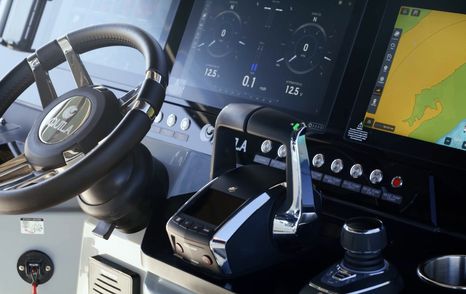
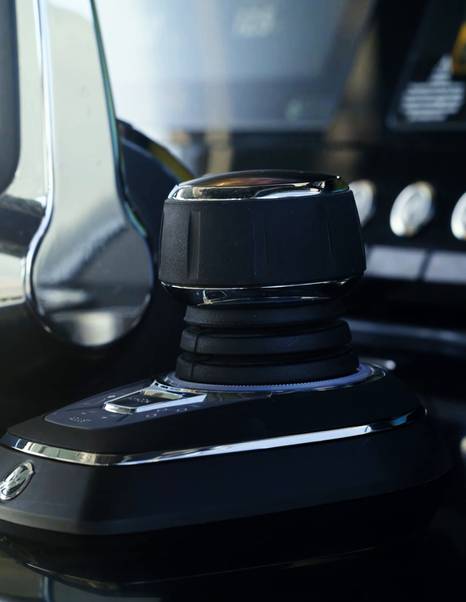
At the helm, the layout is set up for standing as much as sitting, with somewhere to brace and the throttles close to hand, so it should feel secure when pushing on. There’s also some useful storage nearby for smaller items and covers.
Performance is a big part of the appeal, as the twin Mercury Verado V12 600hp engines give you 1200hp in total, and Aquila quotes a top speed of around 40 knots, with a comfortable cruise in the 35-knot range. That kind of pace suits the brief, as it means you can cover distance quickly and get out to anchorages fast.
The double-stepped hull and wide engine spacing should both help with handling, as the catamaran layout brings inherent stability, and the distance between the engines gives a strong pivot point when manoeuvring. The joystick and Skyhook system are there to simplify close-quarters work and hold position when needed.
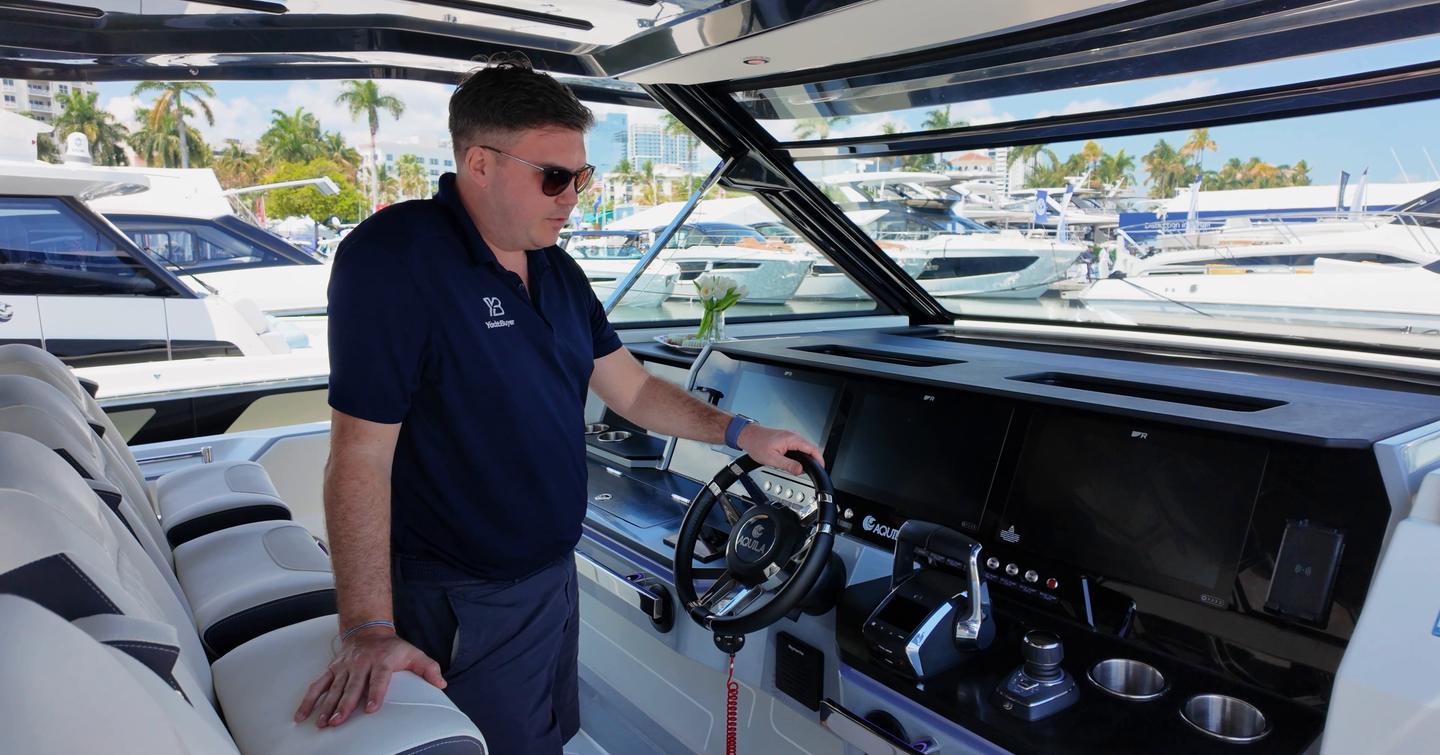
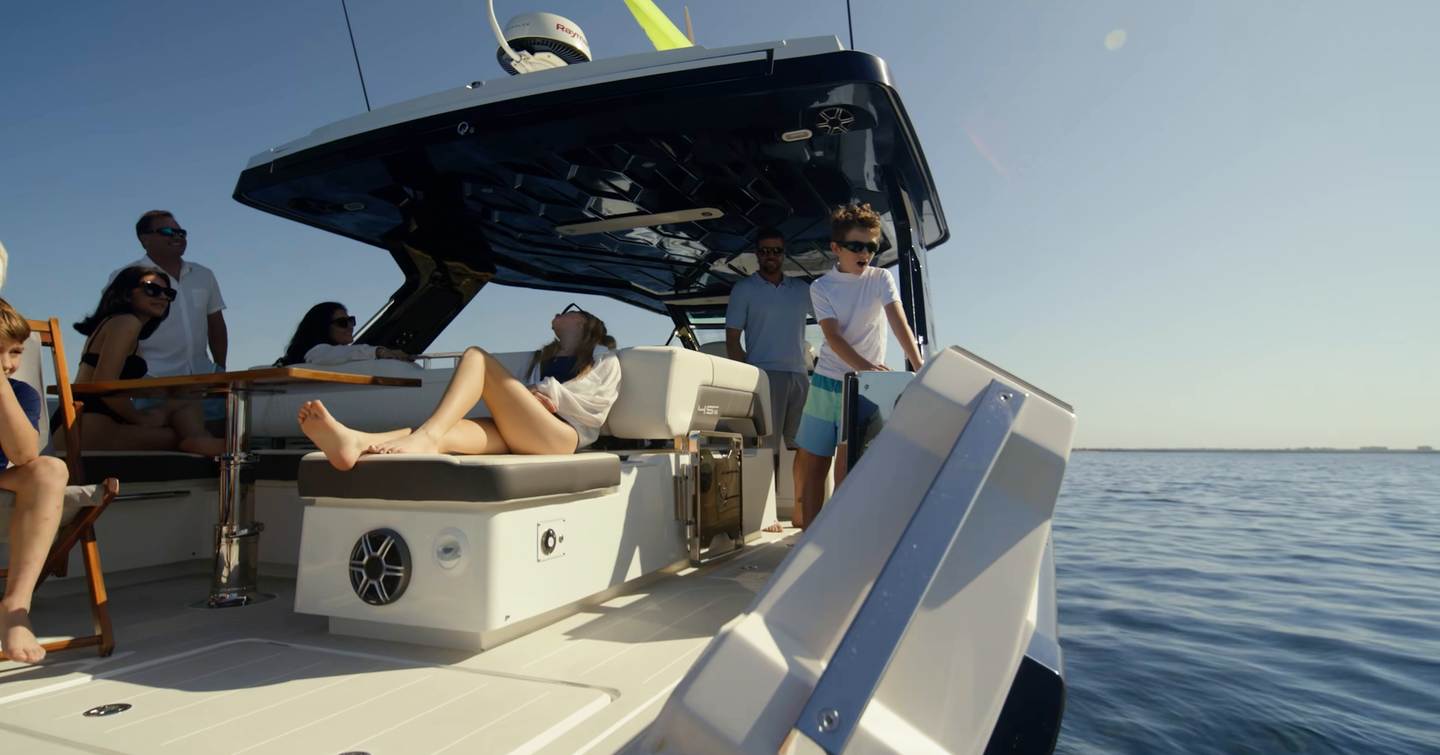
This is where the Aquila 45 Sport really earns its keep, as the cockpit is set up as one open, social space that is at the heart of this boat's appeal. It’s built around time on deck, with movement, seating, and water access all given priority.
The layout makes that work, as the deck is flat from the helm back to the transom, so there are no steps and nothing to interrupt how people move. With a beam of 4.57m (15ft), opening out to 5.88m (19ft 4in) when the terraces are down, it feels wide, and that space is easy to use even with a full group on board.
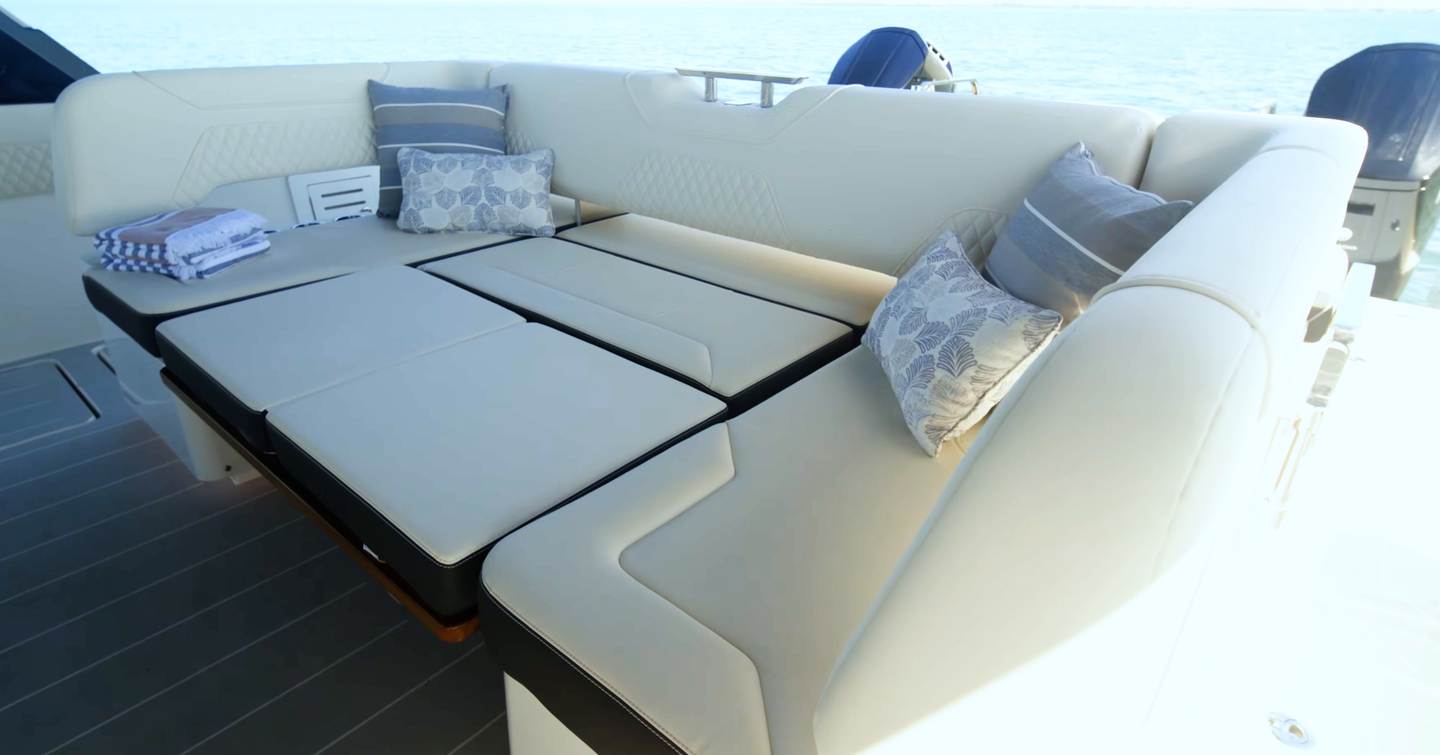
Seating is split into two main zones, with U-shaped areas facing forward and aft, and both can convert depending on how you want to use them. The tables drop down to form sunpads, and the sliding backrest lets you change the direction of the seating, so you can face out toward the water or sit more upright for dining. It’s a simple system, and it works, as you can switch between lounging and dining without much effort.
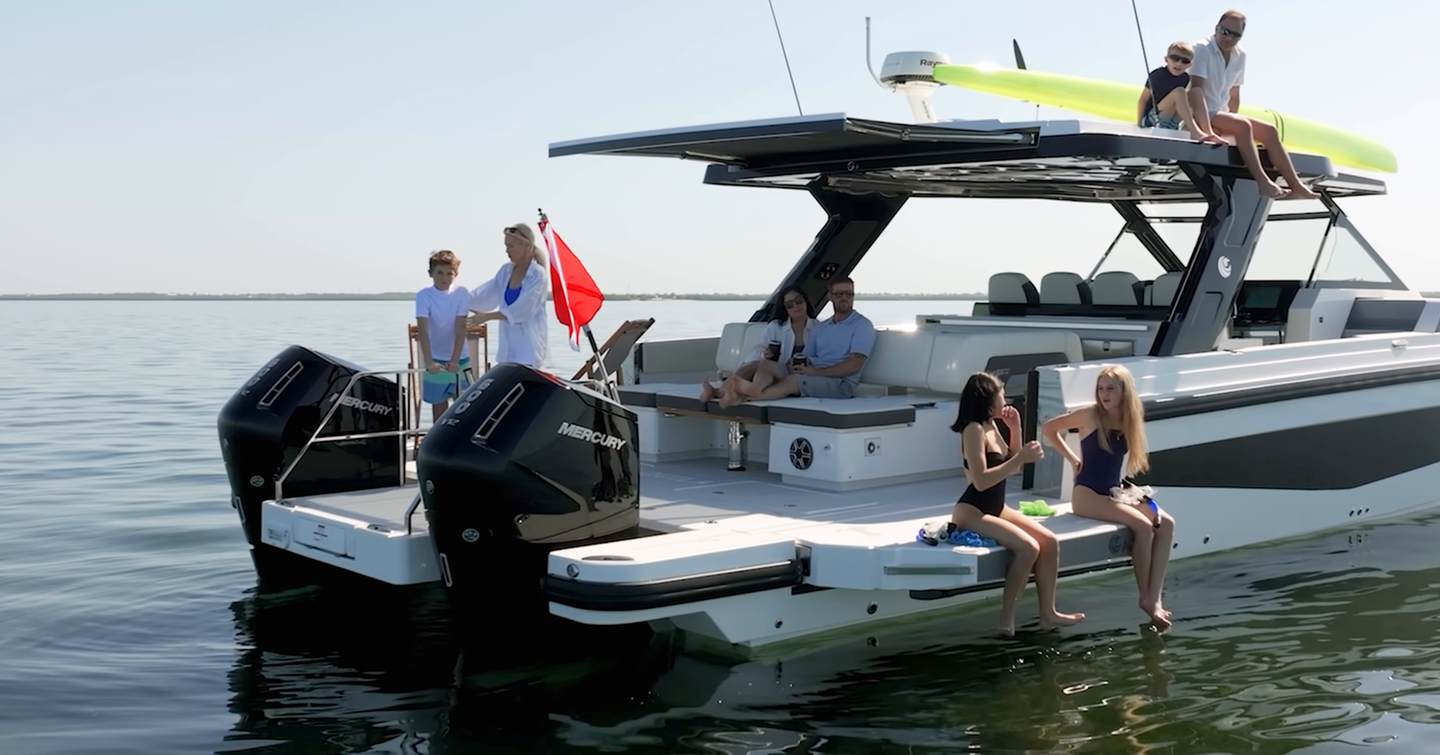
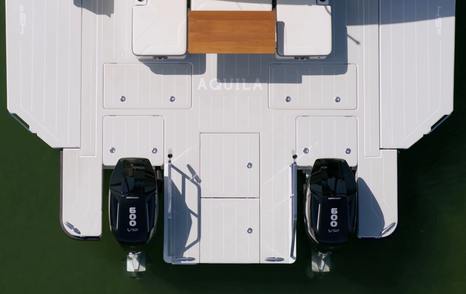
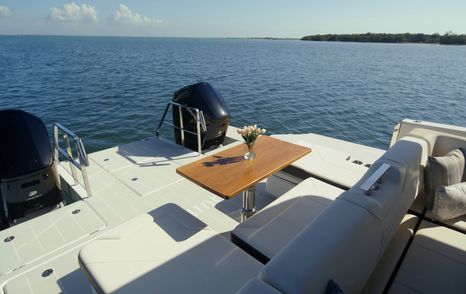
Access to the water is one of the strongest parts of the design, as the engines are set far enough apart to create a central walkthrough, and that’s where the ladder sits, built into the platform with handrails on either side. It’s all on one level, so you can walk straight out and drop into the water with ease; it's a contender for the best cockpit in class without a doubt.
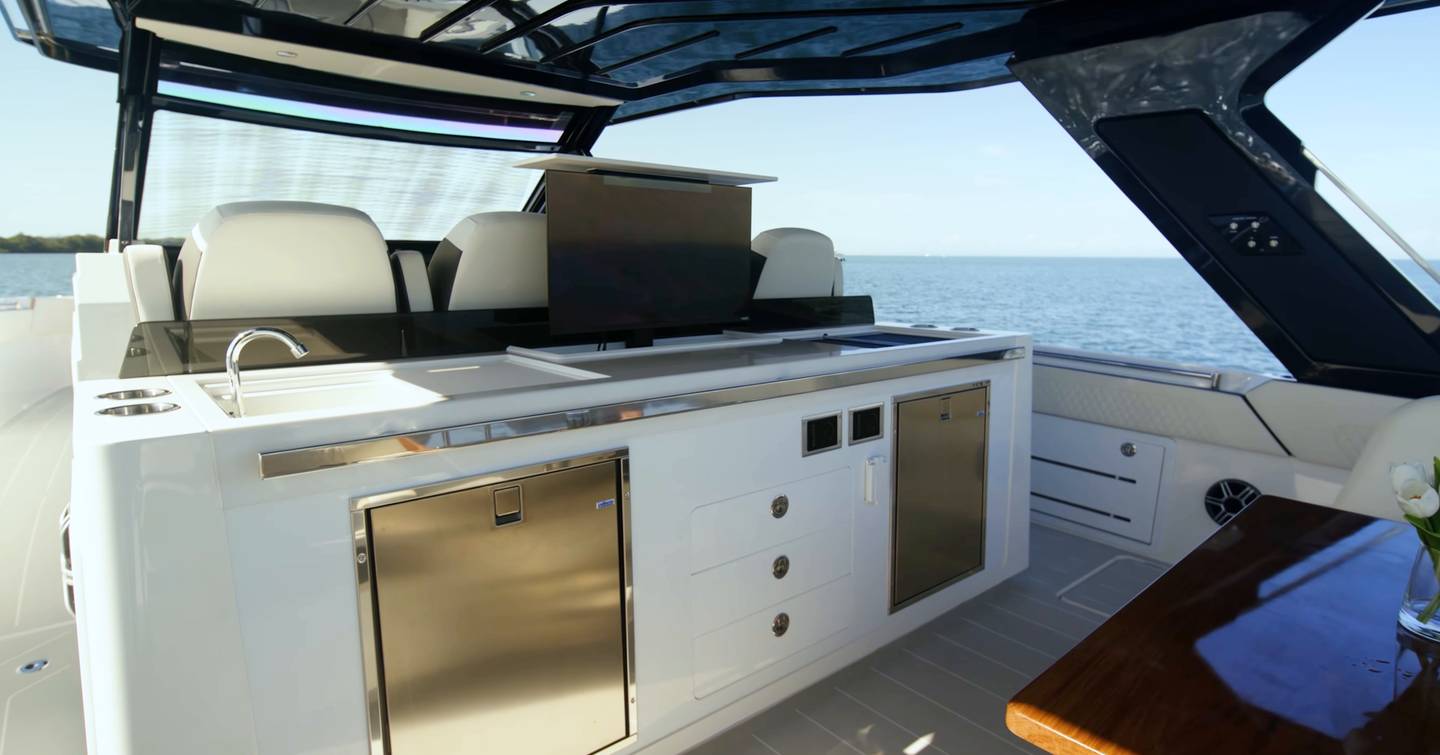
The on-deck galley sits neatly within the space, with a sink, prep area, grills, and a pair of fridges. Day boat heaven! There’s a pop-up TV here as well, and while it’s there if you want it, it’s hard to see it being used much on a boat like this.
Storage is well handled, with space under the seating and beneath the deck for gear, so paddleboards, inflatables, and fenders all have somewhere to go. There’s also a built-in inflator system, which makes dealing with water toys much easier and fits the way this boat is likely to be used.
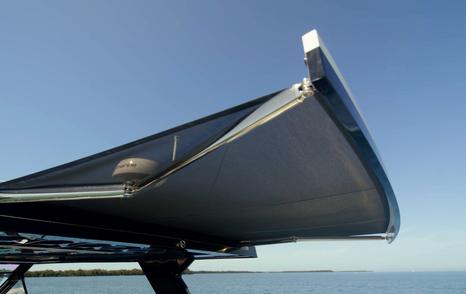
Overhead, the hardtop gives solid cover, and there’s an extending shade for the aft section, so you can adjust how much sun you want through the day. The sides are open, so airflow isn’t restricted, while still giving enough protection when you’re running at speed.
There are a few trade-offs. The synthetic decking gets very hot in the sun, so you’ll want to keep it wet or wear shoes, and while the forward-facing seating works well, it’s more comfortable in the evening than in the heat of the day. The layout also leans fully toward social use, so if you’re thinking about fishing or anything more specialised, this isn’t really the right setup for that.
Side Decks & Foredeck
The layout is slightly uneven, as the port side gives you a deep, flat walkway that runs all the way forward, while the starboard side steps up alongside the console, the upward shift allowing for the larger cabin below. In use, it means you naturally stick to the port side when moving forward.
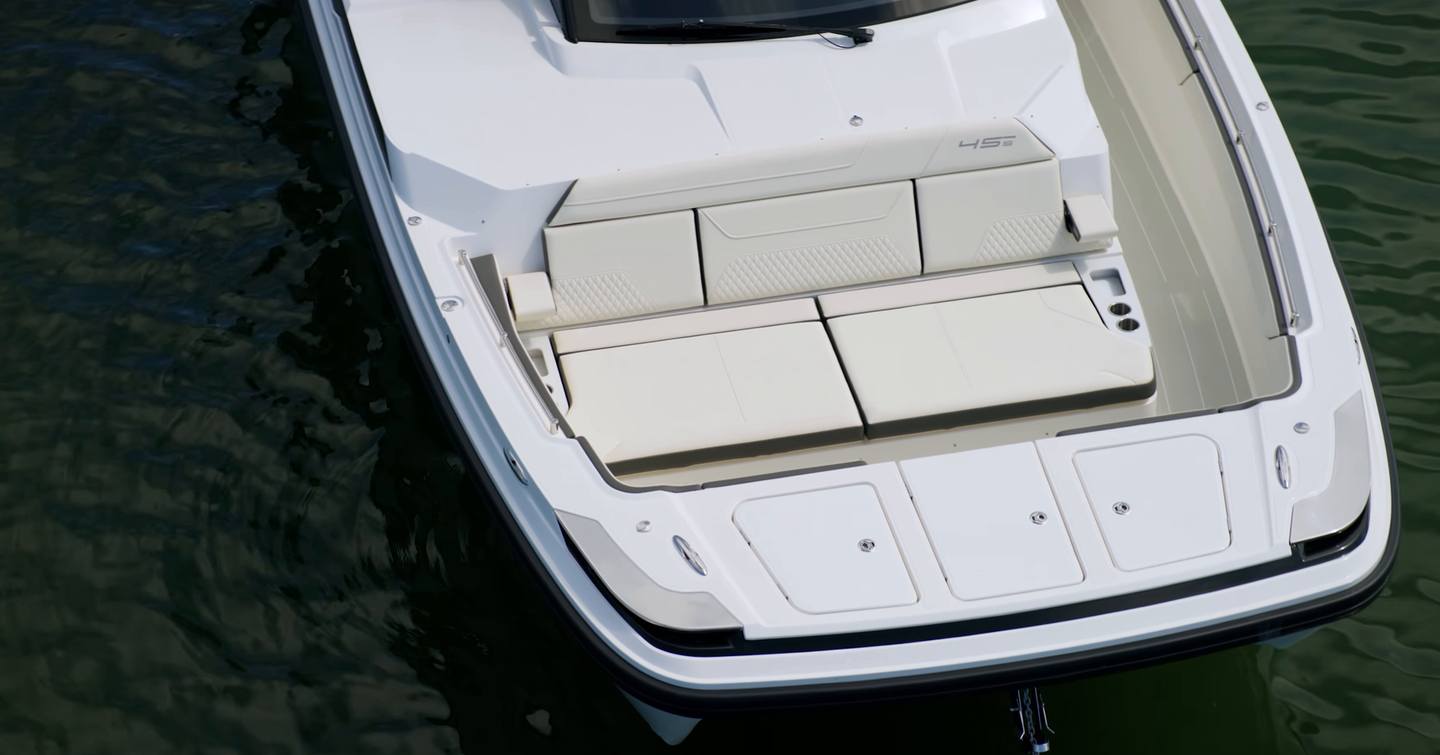
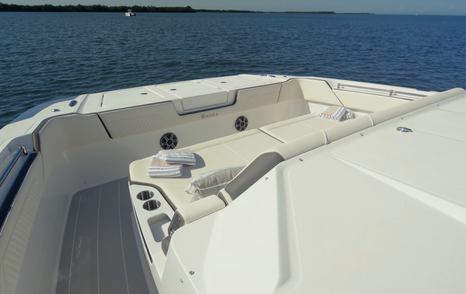
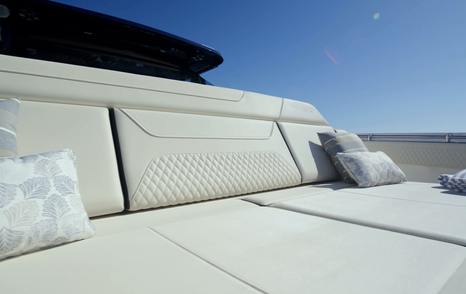
Up at the bow, the space opens out into a simple lounge area, with forward-facing seating and sunpad-style cushions that are set low into the deck. It is very exposed, so it works best at anchor or when moving along slowly; it would be a great spot for a sundowner.
Storage is worked in neatly, with space under the seating for gear, as well as wet lockers for fenders and lines, and small recessed areas where you can drop a phone or loose items without them sliding around. Forward, the anchor locker is easy to reach without getting in the way.
With construction taking place in China, Aquila has always had a keen eye on value for money. The 45 Sport starts from $781,500, and you'll be looking at an on-the-water price in the US of around $1,300,000, including taxes and tariffs. A fully equipped boat in Europe will be around €1,000,000 on the water.
Of course, that base price leaves with a pretty basic package, hence the jump to the turnkey price, which includes items such as the cockpit terraces (a must-have), the navigation package, lithium battery pack, air-conditioning, extendable sun shades, TV, and black hard top paint.
It feels expensive for a boat with such a focused use case, but in comparison to its rivals, it looks quite a lot for the money.
Our Verdict
The Aquila 45 Sport feels like it could cause some of the established dayboat brands a few problems. It’s clearly aimed at the likes of Sea Ray, Boston Whaler, and Tiara, but it also puts it up against the newer European boats from Axopar and Saxdor, and it does enough here to sit comfortably alongside them.
What sets it apart is how focused it is, as the deck space, water access, and speed all line up with how these boats tend to be used, and the move to a single cabin avoids the usual compromise you see in this size range.
There are limits. It’s exposed, the decking gets hot, and the accommodation is only really there for short stays, so it won’t suit everyone, and we’d need to get it out on the water to fully judge how it delivers at speed - but on paper and from what’s here, it looks like a well thought-through package.
Reasons to Buy
- Wide, flat cockpit suits large groups
- Strong performance
- Plenty of storage for day gear
- Cabin is really well done
Things to Consider
- Decking gets very hot in strong sun
- Open layout limits poor weather use
- Just one cabin
Looking to own a Aquila 45 Sport ? Use YachtBuyer’s Market Watch to compare all new and used Aquila 45 Sport Catamarans for sale worldwide. You can also order a new Aquila 45 Sport , customized to your exact specifications, with options for engine choice and layout configuration. Alternatively, explore our global listings of new and used catamarans for sale and find your perfect catamaran today!
Rivals to Consider
The Tiara 46LS sits closest in size at 14.17m (46ft 6in), and it takes a more traditional monohull route, with triple Mercury V12 600hp outboards pushing it to a claimed 59mph, so outright pace is higher on paper. It pairs that with a 4.19m (13ft 9in) beam and an enclosed helm with sliding doors, along with modular cockpit sections, so it leans toward finish, comfort, and flexibility rather than maximising deck area in the way the Aquila does.
The Fjord 490 Open comes in slightly larger at 15.03m (49ft 3in) with a 4.58m (15ft) beam, and it runs twin Volvo Penta IPS700 or IPS800 drives, with top speeds around 34 knots, so it trades outright speed for a more refined inboard setup. Its walkaround layout, fold-down balconies, and strong lower-deck accommodation give it a different focus, with more emphasis on design detail and cabin use than the Aquila’s deck-led approach.
The Axopar 45 Sun-Top is closer in spirit, at 13.91m (45ft 8in) with a narrower 4.11m (13ft 6in) beam, and it uses a twin-stepped 20º V hull with outboard options up to triple 350hp, delivering speeds up to 50 knots. Passenger capacity takes at up to 16 in Class C waters, and the modular layout allows for a mix of day use and light overnighting, so it offers more flexibility, though without the same beam-led deck space or terrace width of the Aquila.
The Saxdor 460 GTC takes a slightly different angle again, at 14.4m (47ft 2in) with a 4.11m (13ft 5in) beam, and outboard power up to 1275hp, with claimed speeds of 45-50 knots. It uses a twin-step deep V hull and vacuum-infused GRP construction, and its full-beam wheelhouse can open up alongside fold-down terraces, so it combines enclosed protection with transformable deck space, sitting between open dayboats and more enclosed designs.
Considering a new catamaran? Explore Aquila's entire current range to find the model that best suits your needs, and compare it with alternatives from competitors to ensure you make the perfect choice.
Specifications
- Builder Aquila
- Range Sport
- Model 45 Sport
- Length Overall 46' 6"
- Beam 15'
- Draft(full load) 3' 5"
- Hull GRP
- Cabins 1
- Berths 1
- Yacht Type (Primary) Multihull
- Use Type (Primary) Dayboating
- Cruising Speed
- Max Speed
- Fuel Capacity 400 Gallons
- Fresh Water Capacity 50 Gallons
- Engine Model 2x Mercury Verado V12 7.6L 600hp
- Engine HP 6400
Aquila 45 Sport Layout
-
Main Deck
-
![Main Deck Aquila 45 Sport]()
If you want deck space in this sector, it doesn't get much better
-
Lower Deck
-
![Lower Deck Aquila 45 Sport]()
There's only one cabin but it's a beauty
Interested in a 45 Sport ?
NEW Build
Find your local dealer for a personalised, no-cost consultation
or just request
Brochures & Pricing
Used & In Stock
Looking for a ready-to-go 45 Sport or pre-owned options? Explore all inventory of the 45 Sport available worldwide