
Published yacht range usually describes how far a yacht can travel on its available fuel under specified conditions. Real autonomy is broader. Freshwater, provisions, waste capacity and onboard systems can all determine how long a yacht can operate independently.
- What is the difference between yacht range and autonomy?
- What can limit a yacht’s autonomy?
- How does fuel range affect autonomy?
- How does freshwater affect time offshore?
- How long can provisions last onboard?
- Can waste capacity force a yacht back to port?
- What else can limit time away from port?
- How can you assess a yacht’s real autonomy?
- What should buyers check before choosing a long-range yacht?
- FAQ
What is the difference between yacht range and autonomy?
Yacht range describes distance. Autonomy describes how long a yacht can operate without needing to visit port for supplies, services or waste management.
A specification such as “5,000nm at 12 knots” normally refers to estimated fuel range at a particular speed and under defined conditions.
But fuel may not be the first limitation.
A yacht could theoretically have enough fuel for several weeks at sea but need to return sooner because provisions are running low, waste tanks are reaching capacity, or a freshwater system requires attention.
This distinction is particularly important when comparing explorer yachts and expedition yachts, where extended periods away from established yachting infrastructure are part of the design brief.
Related guide:
What can limit a yacht’s autonomy?
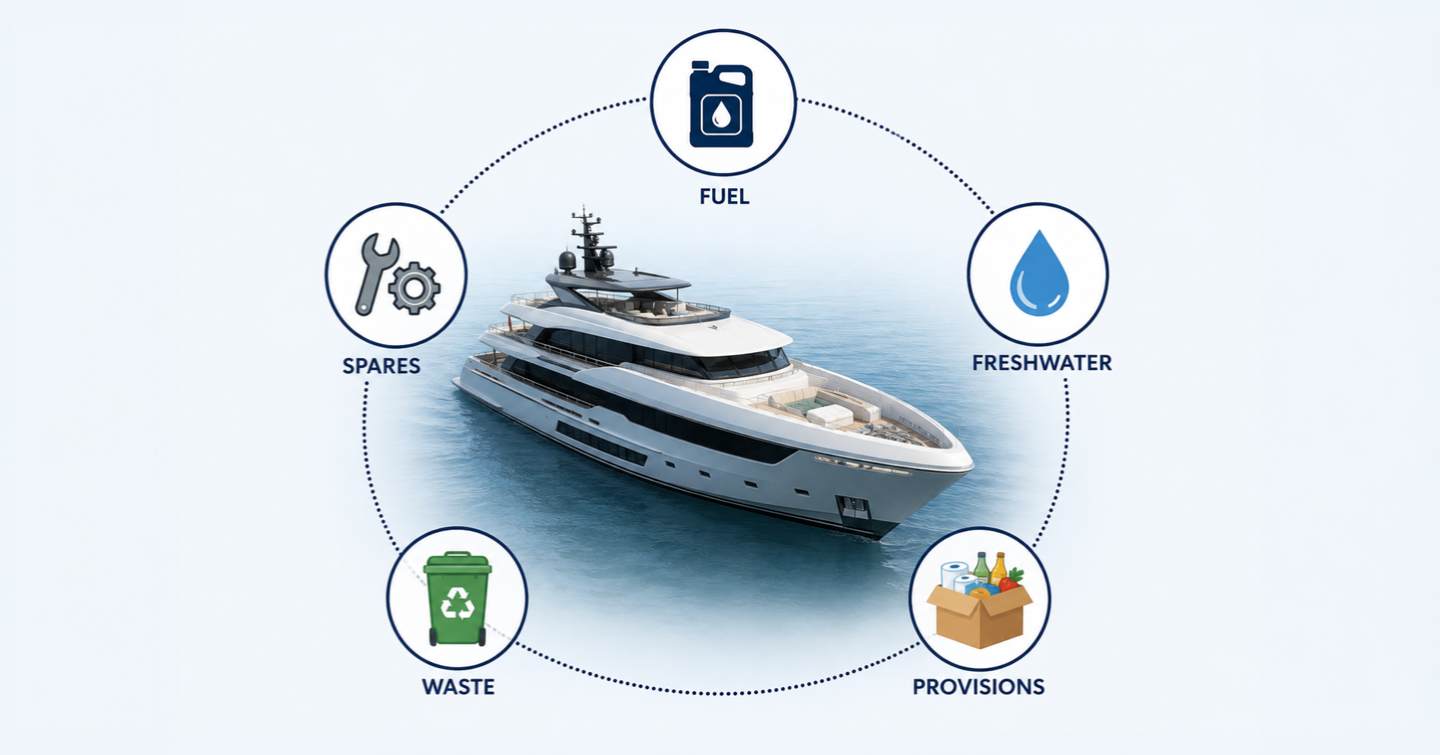
Practical autonomy is determined by whichever essential resource or system reaches its limit first.
The main considerations are:
- Fuel
- Freshwater
- Food and provisions
- Black and grey water
- Garbage storage
- Machinery consumables and spare parts
The balance between them matters more than any single headline figure.
Increasing fuel capacity provides little additional practical autonomy if food storage or waste capacity still requires the yacht to visit port much sooner.
This is why two yachts with similar published ranges can offer very different capabilities for extended cruising.
How does fuel range affect autonomy?
Fuel determines how far a yacht can travel before refuelling, but published range figures need context.
Buyers should first check the speed at which the range was calculated. Displacement yachts are generally most efficient at relatively low cruising speeds, and travelling faster can significantly increase fuel consumption.
Weather, sea conditions, hull fouling and yacht loading can also affect real-world consumption.
Hotel systems matter too. Generators may be powering air conditioning, stabilisers, watermakers, refrigeration and other equipment throughout a voyage.
When comparing yachts, look beyond the headline nautical-mile figure and establish the conditions under which it was calculated.
How does freshwater affect time offshore?
Freshwater is continuously consumed through drinking, cooking, showers, laundry and cleaning.
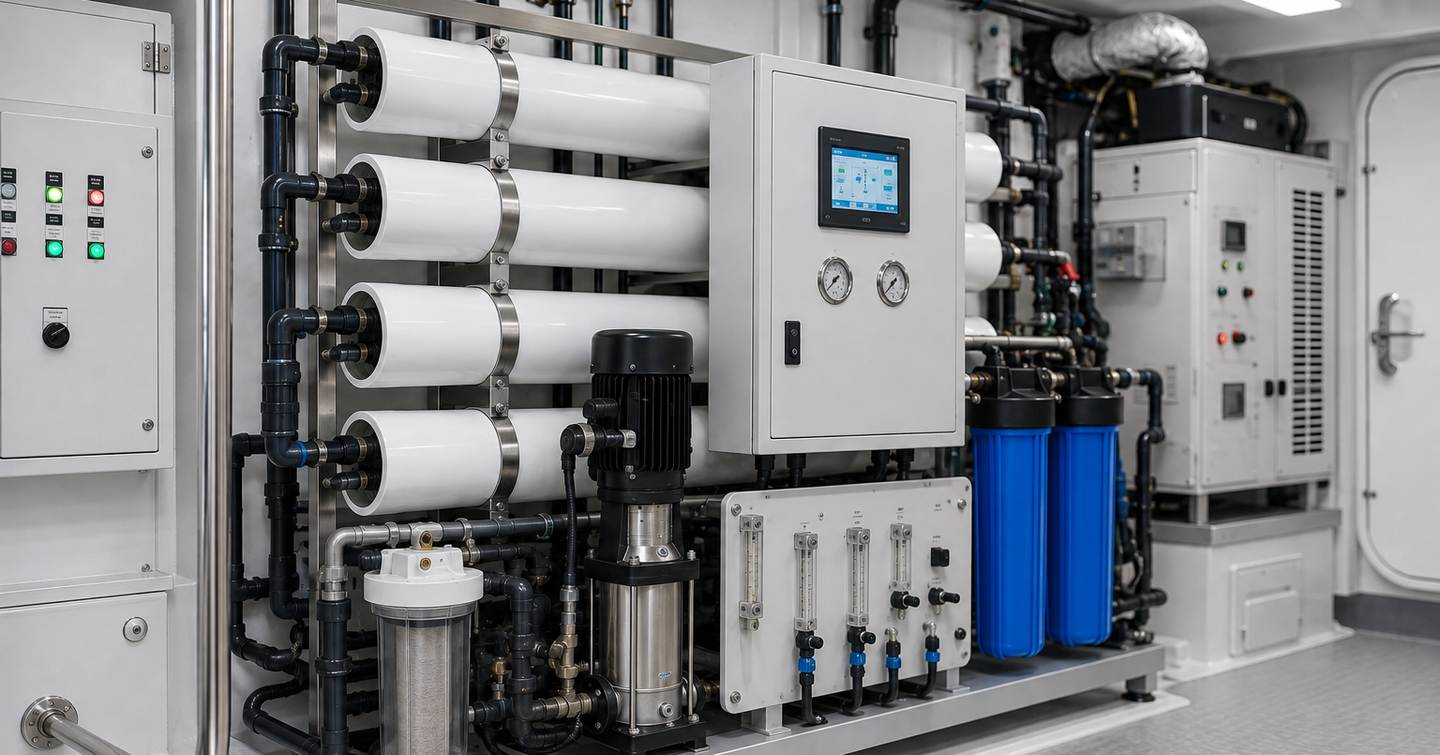
Tank capacity provides a finite supply, but many long-range yachts use reverse-osmosis watermakers to produce freshwater from seawater.
For extended cruising, useful specifications include freshwater tank capacity, daily watermaker output and the number of watermakers installed.
Redundancy can also matter. A yacht that relies heavily on a single watermaker could have its practical autonomy reduced if that system develops a fault.
Buyers considering remote cruising should therefore look at freshwater storage and production together rather than comparing tank capacities alone.
Related article:
How long can provisions last onboard?
Food storage can become another limitation, particularly when cruising somewhere with few suitable provisioning stops.
The number of people onboard makes a significant difference. A yacht carrying guests and a large crew requires considerably more storage than one operating with a smaller complement.
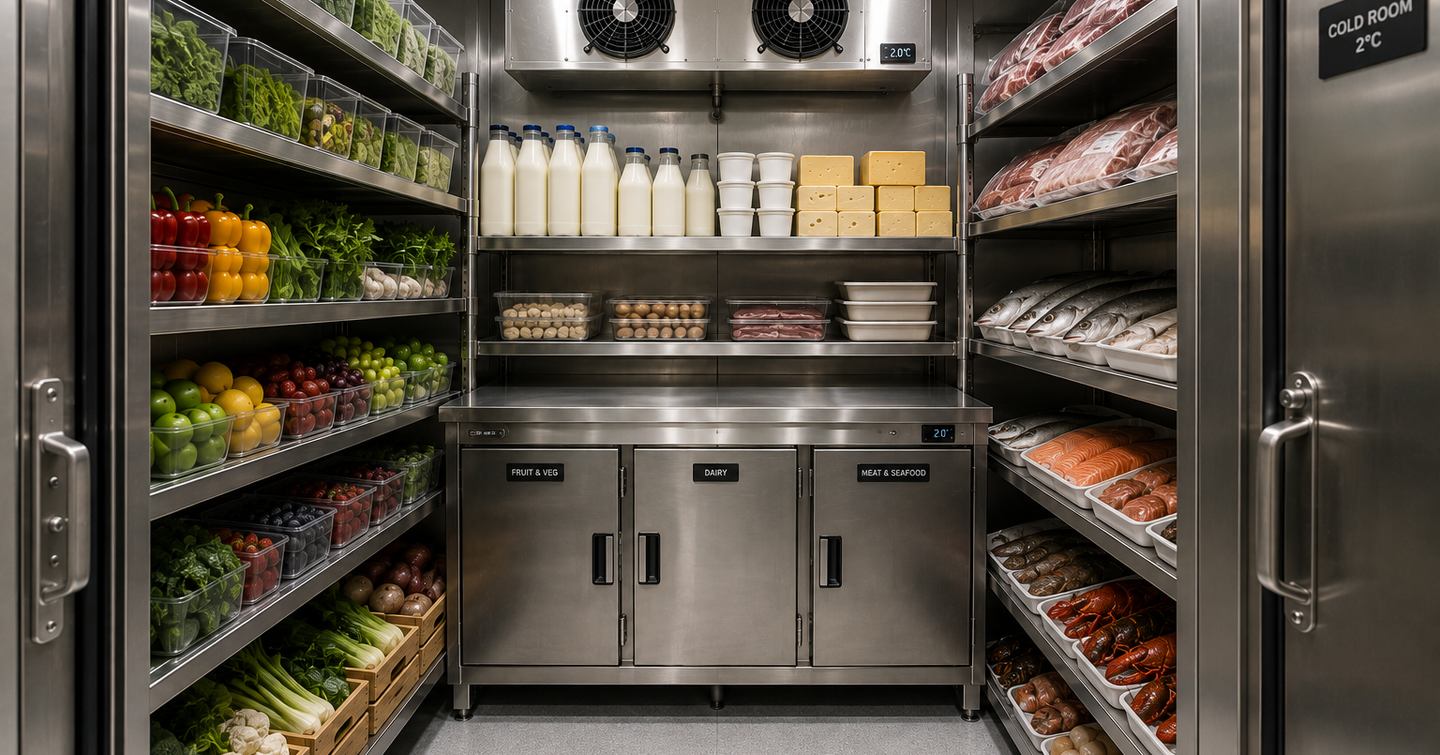
Long-range yachts may divide provisions between dry stores, refrigerators, freezers and dedicated cold rooms.
Rather than relying on descriptions such as “generous storage”, buyers can look for actual storage volumes or ask how many days of provisions can be carried for the yacht's normal guest and crew complement.
Freezer capacity can extend the period between major provisioning stops, although fresh produce and other shorter-life foods may still influence the cruising schedule.
Related guide:
Can waste capacity force a yacht back to port?
Yes. Waste capacity can become a restriction even when fuel, food and freshwater remain available.
Black water generally refers to sewage from toilets, while grey water comes from sources including showers, sinks and laundry.
How these can be stored, treated or discharged depends on the yacht's equipment and the regulations applying in the waters where it is operating.
This makes holding capacity particularly relevant when cruising in areas where discharge is restricted.
Buyers considering extended cruising should look at black and grey water tank capacities, onboard treatment systems and how long the yacht can operate at normal occupancy before pump-out or another appropriate waste-management solution is required.
The important question is not simply whether holding tanks are fitted, but whether the complete waste system supports the intended cruising programme.
Related guide:
What else can limit time away from port?
Solid waste and machinery requirements are less prominent on specification sheets but can still affect extended cruising.
Food packaging, bottles, cans and general rubbish all require storage until they can be disposed of appropriately. Larger long-range yachts may have dedicated garbage rooms, compactors or other equipment to manage this.
Machinery also requires filters, lubricants and other consumables, while spare parts become increasingly important when cruising far from repair facilities.
A minor component failure close to a well-equipped marina may cause little disruption. The same problem in a remote area could change the yacht's itinerary.
For serious long-distance cruising, storage, engineering redundancy and access to spares are therefore part of the autonomy calculation.

How can you assess a yacht’s real autonomy?
Start by converting its published fuel range into approximate cruising time.
For example, a yacht with a quoted range of 5,000 nautical miles at 10 knots would theoretically require about 500 hours, or just under 21 days, to cover that distance continuously.
That does not automatically mean it has 21 days of practical autonomy.
The next step is to consider whether its other systems can support a similar period with the expected number of guests and crew onboard.
Useful questions include:
- At what speed is the range calculated?
- Under what loading conditions?
- Are normal generator and hotel loads included?
- How much freshwater can be stored and produced?
- How many days of provisions can be carried?
- How much black and grey water can be held or treated?
- How is solid waste managed?
- What machinery consumables and spare parts are carried?
The shortest practical limit may be more important to your intended itinerary than the largest number in the brochure.

What should buyers check before choosing a long-range yacht?
Published specifications are useful for creating a shortlist, but buyers interested in extended cruising should investigate how the yacht performs as a complete system.
Depending on the yacht and intended use, this could mean discussing fuel consumption, generator loads, watermaker capacity, provision storage, waste systems and engineering redundancy with the broker, builder, captain, surveyor or other appropriate specialists.
For existing yachts, maintenance and operating records may also provide useful evidence of how these systems have performed in service.
The objective is not simply to establish whether the yacht can travel a certain number of nautical miles. It is to understand whether the entire yacht is suitable for the type and duration of cruising you intend to undertake.

Range is most useful when compared with similar yachts, and YachtBuyer data helps buyers assess fuel capacity, water capacity, cruising speed and published range across different models. For brokerage yachts, YachtBuyer MarketWatch and Intelligence together add context on pricing, listing history and comparable options, and combining this with an understanding of onboard autonomy gives a clearer view of whether a yacht’s long-range capability suits your cruising plans.
FAQ
What does yacht range mean?
Yacht range is the estimated distance a yacht can travel using its available fuel, usually calculated at a specified speed and under particular operating conditions.
What is yacht autonomy?
Autonomy describes how long a yacht can operate independently before requiring external supplies, services or facilities.
Does travelling faster reduce yacht range?
Generally, yes. Higher speeds normally increase fuel consumption, although the effect varies according to hull design, engines and operating conditions.
Can a watermaker increase yacht autonomy?
Yes. Producing freshwater onboard reduces reliance on tank capacity and shore supplies, although watermaker output, reliability and redundancy also matter.
Are explorer yachts more autonomous?
Explorer and expedition yachts are generally designed for longer periods away from port, but capabilities vary considerably between individual yachts and specifications.
Looking to own a yacht? View all new and used superyachts for sale, tracked in real time by YachtBuyer MarketWatch. We scan the entire market to ensure access to all genuine listings, helping you save time. Alternatively, explore all other yachts for sale.
