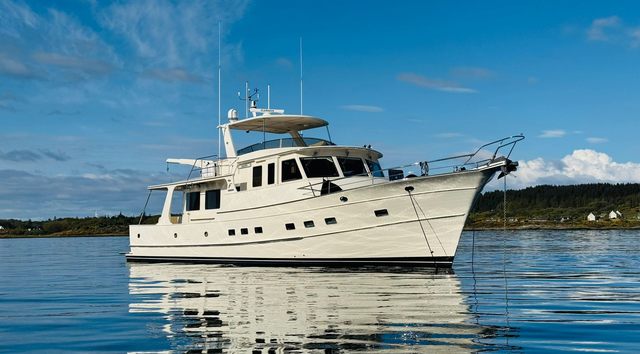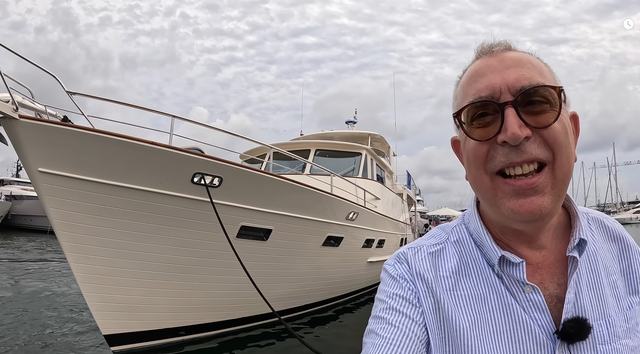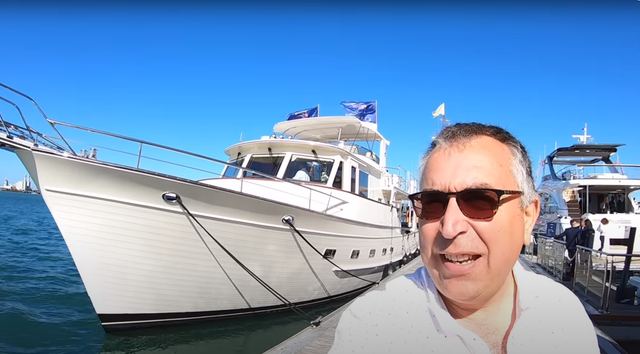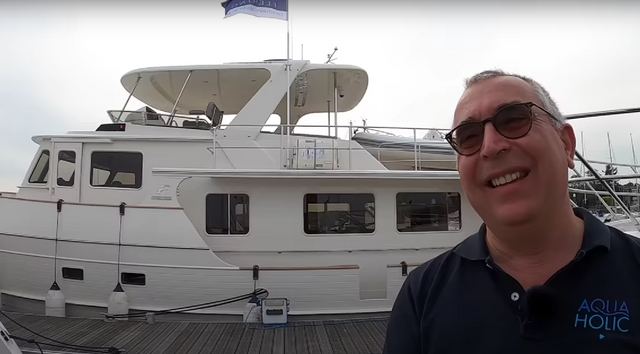
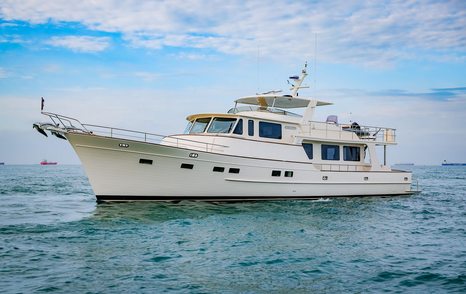
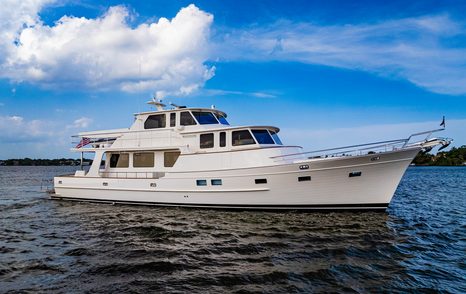
The Fleming 85 is the largest yacht the company has ever built and, despite its size, there's something very familiar about it. The raised pilothouse, deep walkaround decks and long-range cruising focus all feel unmistakably Fleming - and that's quite interesting because many yachts start to change character once they reach this sort of scale.
That's because Fleming has spent decades building boats around practical ownership, rather than whatever happens to be fashionable at the time. But does that same formula still work at 25.98m (85ft 2in), a size where many owners would normally expect crew, or has the jump in scale changed the equation too? After spending time on board, that's exactly what we wanted to find out.
Fleming 85
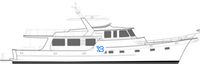
- LOA 25.98m
- Model Year 2023
- Cabins 4
- Crew 4
- Max Speed 25 knots
- Status In Production
- Yacht Type Trawler Yacht
- Use Type Oceangoing
- Vessel M/Y Ticket to Ride
Review Video
There are plenty of directions Fleming could have gone with a yacht this size. It could have chased the mini-superyacht market, added more dramatic styling or focused on creating something that felt completely different from the boats that built the brand's reputation. Instead, Fleming looked at the things existing owners already liked and then asked how far those ideas could realistically be stretched.
That's quite telling because, at 26m, this is a very different proposition to a Fleming 55 or F65. The physical scale changes, the loads get bigger and the systems become more complex too. But the basic philosophy remains remarkably familiar.
The company still talks about building a bluewater pilothouse yacht first and foremost, and you get the sense that every major decision was filtered through that idea. The objective wasn't simply to make the range bigger. The objective was to make sure the qualities that attracted owners to Fleming in the first place survived the move into a much larger yacht. A lot of this comes back to Tony Fleming.
Before establishing Fleming Yachts in 1985, he spent years helping develop the Grand Banks range, and although the brands have followed different paths since then, many of the underlying priorities remain very similar. Cruising comes first.
That sounds obvious, but it has a big influence on the way these boats are conceived. Safe movement around the decks matters. Visibility from the helm matters. Storage matters. Access to machinery matters too, as does the ability to spend weeks or months aboard without the boat becoming hard work to live with.
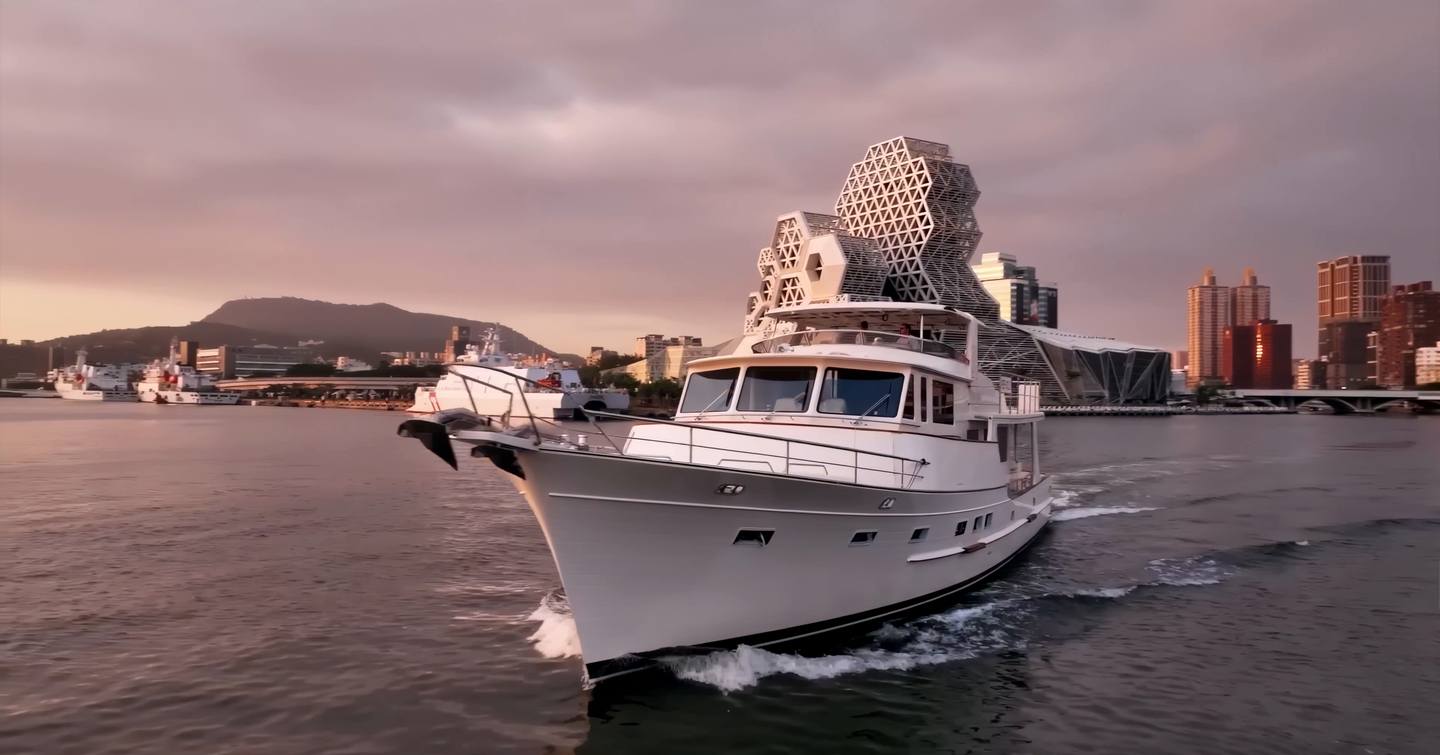
One thing that surprised many people when the boat was announced was that Fleming didn't simply stretch the next size down, the Fleming 78.
Instead, the company worked with Australian naval architects Norman R. Wright & Sons on an entirely new hull developed specifically for the project. That was a much bigger undertaking, but it also gave Fleming the opportunity to start with a clean sheet rather than compromise around an existing platform.
The brief itself was actually quite demanding. This needed to be a yacht capable of genuine ocean crossings, and it also needed to deliver the flexibility owners expect from a modern cruising boat.
Computational fluid dynamics formed part of the development process, helping refine the semi-displacement hull for efficiency and predictable behaviour across a broad speed range. The reason that's important is because a Fleming 85 may spend one trip making steady passagemaking miles and another running much faster between destinations, so the hull has to feel comfortable doing both.
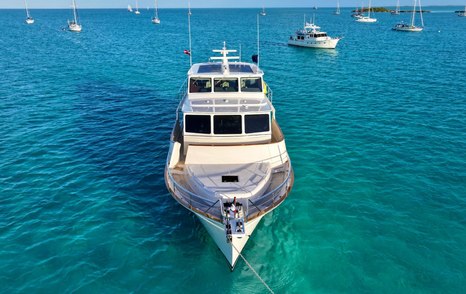
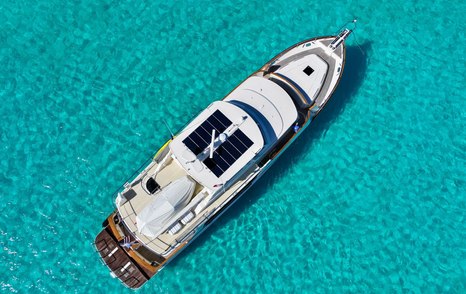
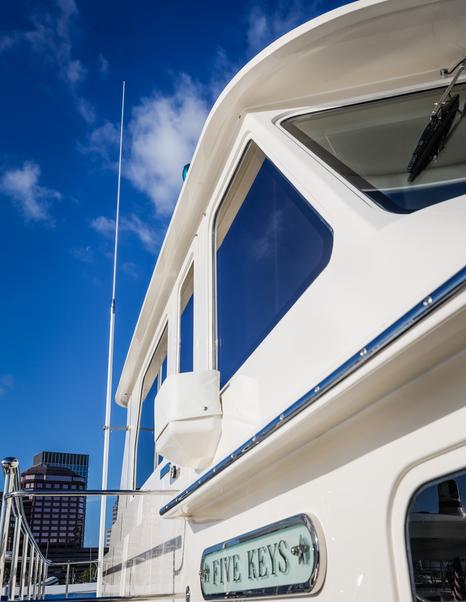
Below the waterline the Fleming 85 uses a solid fibreglass laminate hull, while cored construction in the topsides and superstructure helps keep weight under control higher up. Hull construction plans were certified by DNV and the yacht carries CE Category A Ocean certification too, both of which fit very neatly with the offshore ambitions behind the project.
There are some very Fleming details too. The keel extends below the propellers and rudders to help protect the running gear, while shaft tunnels keep draft to a relatively modest 1.69m (5ft 5in). Full-length structural stringers and composite watertight bulkheads complete a structure designed around serious cruising rather than occasional coastal use.
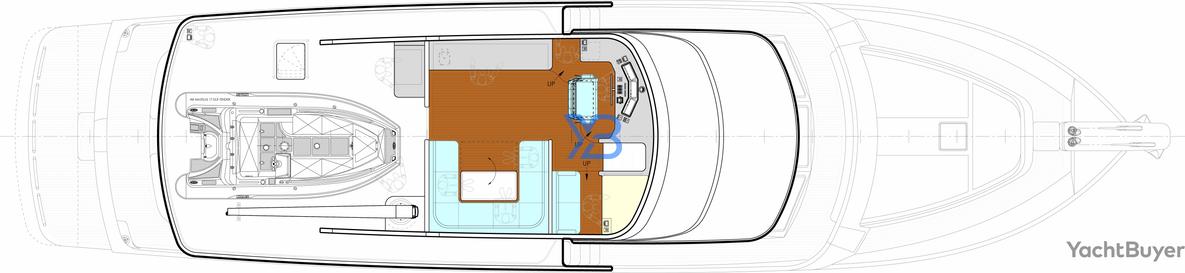
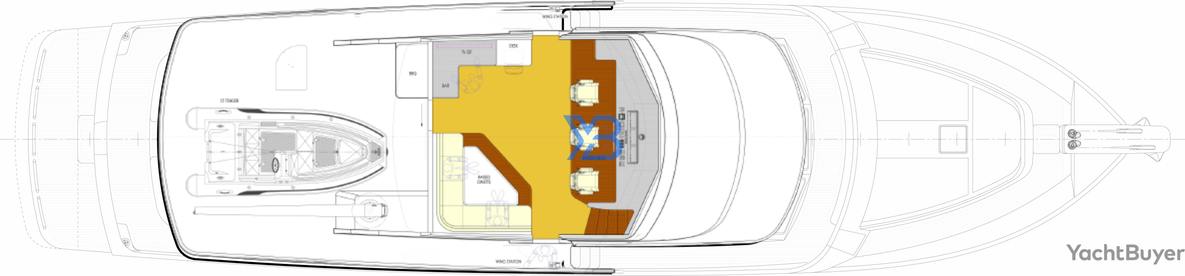
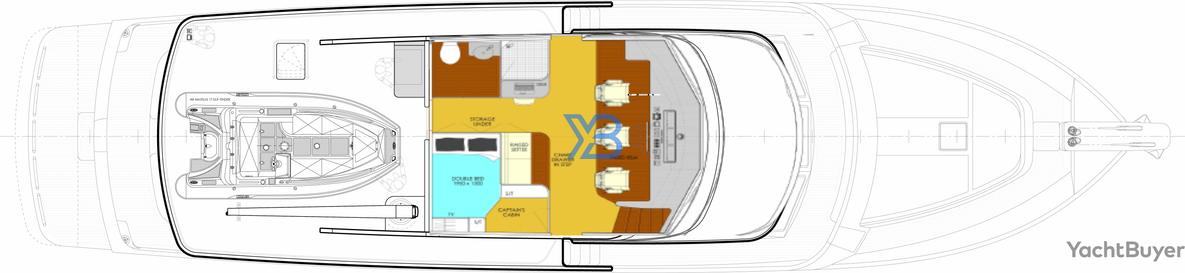
Owners can choose between open and enclosed flybridge versions, and they give the same platform quite different personalities.
The open version stays closest to traditional Fleming thinking with its lower profile and outdoor helm arrangement. The enclosed version moves the primary helm upstairs and creates additional entertaining space below, giving the yacht something closer to a compact tri-deck layout.
It's an unusual choice in this sector and allows owners to decide whether they place greater value on outdoor living or additional enclosed volume.
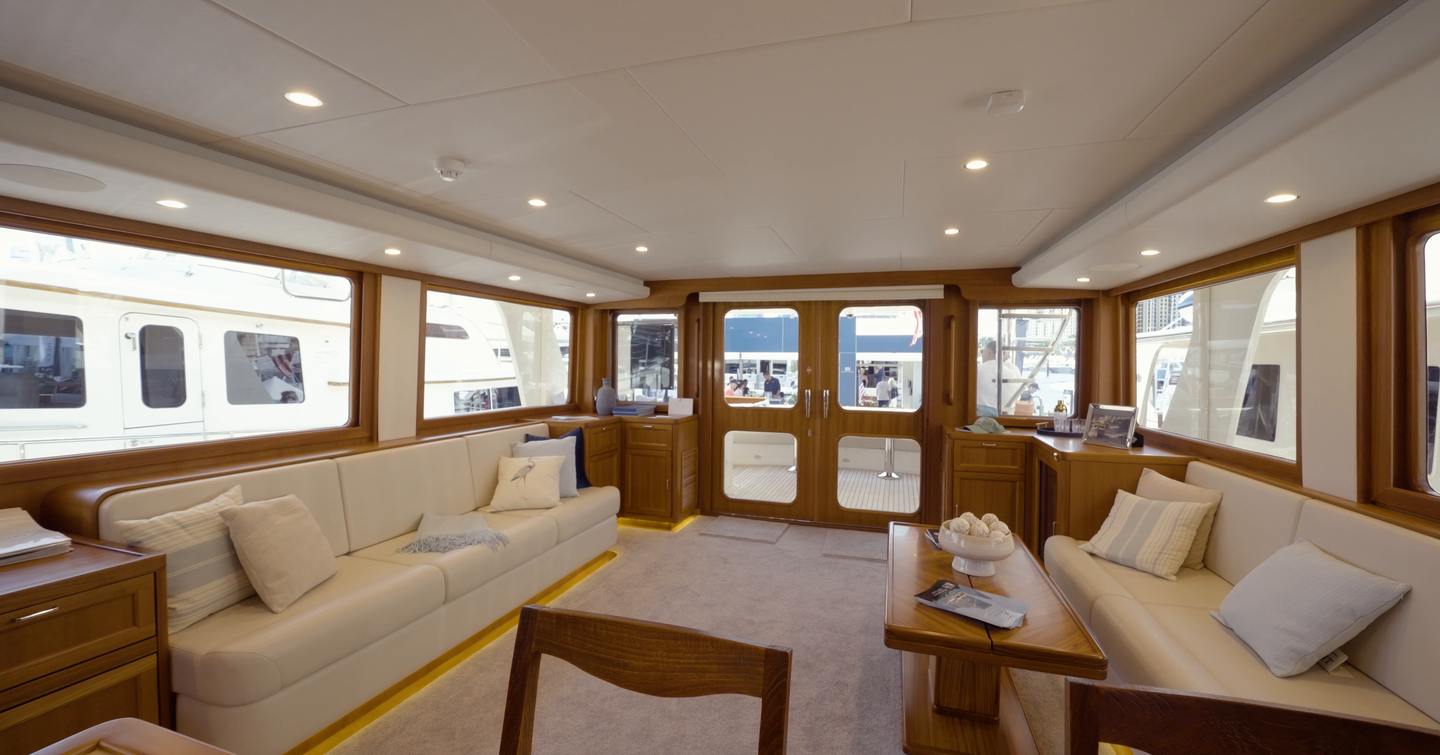
This is no Galeon. There are no backlit onyx or other design statements here and, if that's what you're looking for, you're probably shopping in the wrong place. What you get instead is warm timber joinery, lots of practical thinking and an interior that feels very easy to live with. It's quite traditional by modern standards, but that seems entirely appropriate on a boat designed to spend long periods away from home.
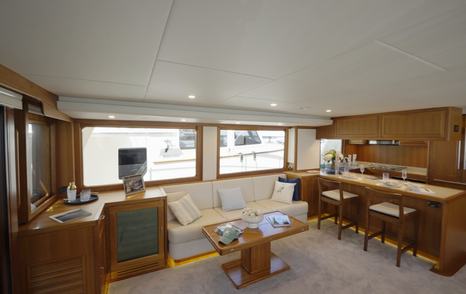
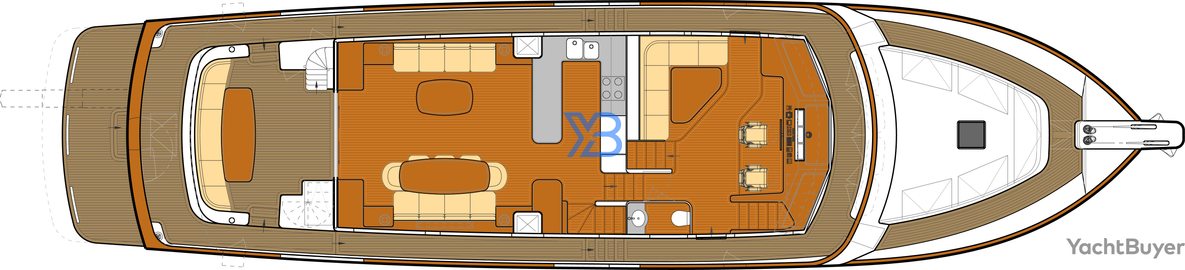
The saloon is a lovely space too. It's very bright thanks to the large windows, and, as you'd expect on the largest Fleming ever built, there's a huge amount of room in here. This particular owner has added another desk alongside the seating area and that's something of a theme throughout the boat. There seem to be places to work dotted all over it, which probably tells you quite a lot about how this owner uses the boat.
There's comfortable seating on both sides, an adjustable dining table and a wine fridge tucked away beneath the cabinetry. The saloon is so large that you do feel a fair way from people sitting on the opposite side of the room.
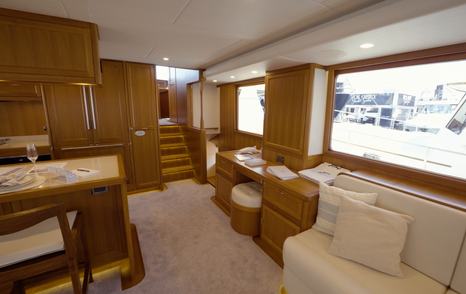
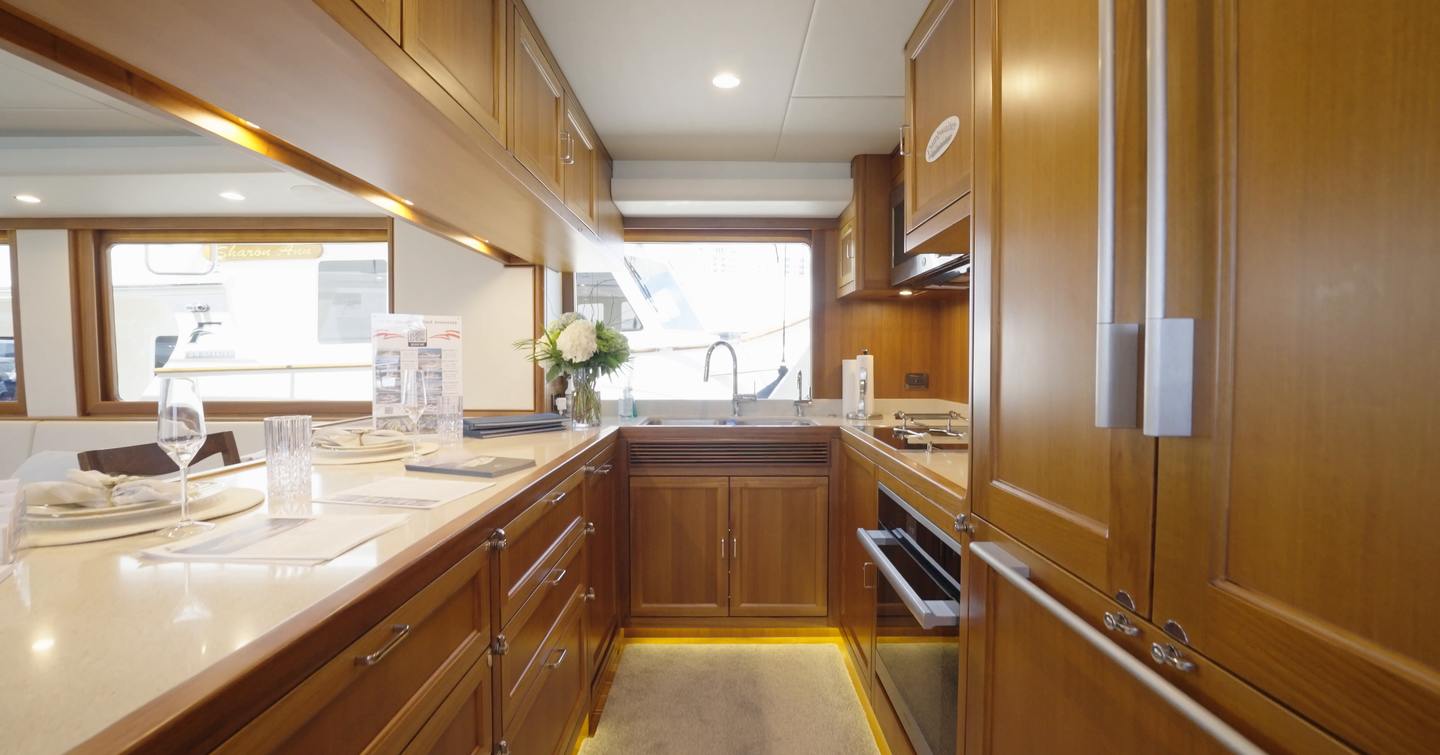
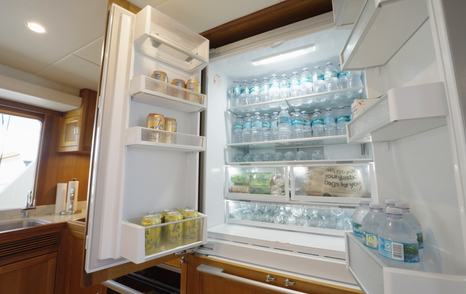
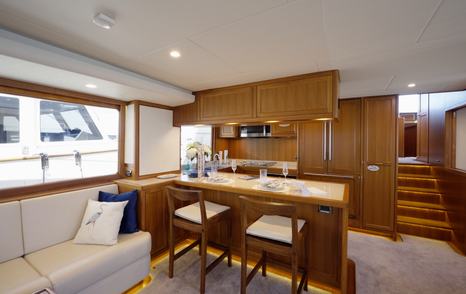
The galley is a whopper, with a large fridge, a drawer freezer and storage absolutely everywhere. The breakfast bar is a particularly nice touch because it gives the space a very domestic feel. You can imagine coming up from the accommodation in the morning, pulling up a stool, having a coffee and looking out through the glass while planning the day ahead.
Every locker has positive latches so nothing flies open when you're at sea, and there seems to be a place for everything. That's important on a boat designed for long-distance cruising because you tend to accumulate quite a lot of stuff over time.
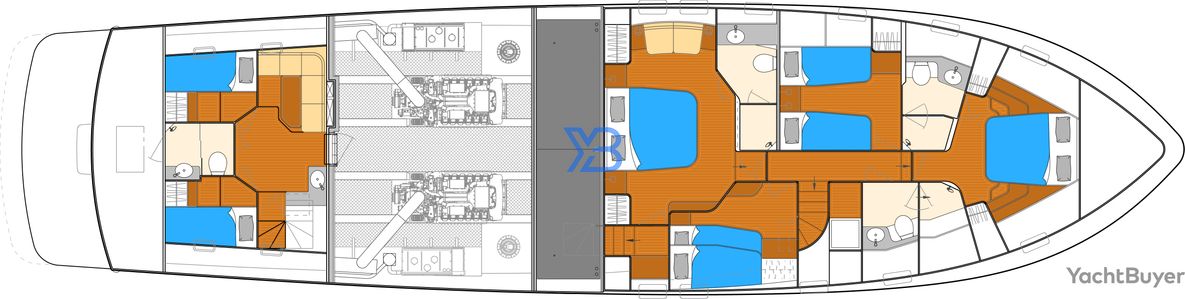
Head below and it quickly becomes apparent that this owner had family very much in mind when specifying the accommodation. In fact, having owned five or six Flemings already, the brief here was all about getting children and grandchildren aboard, so sleeping capacity has taken priority over the sort of arrangement many owners might choose.
Owner's Cabin
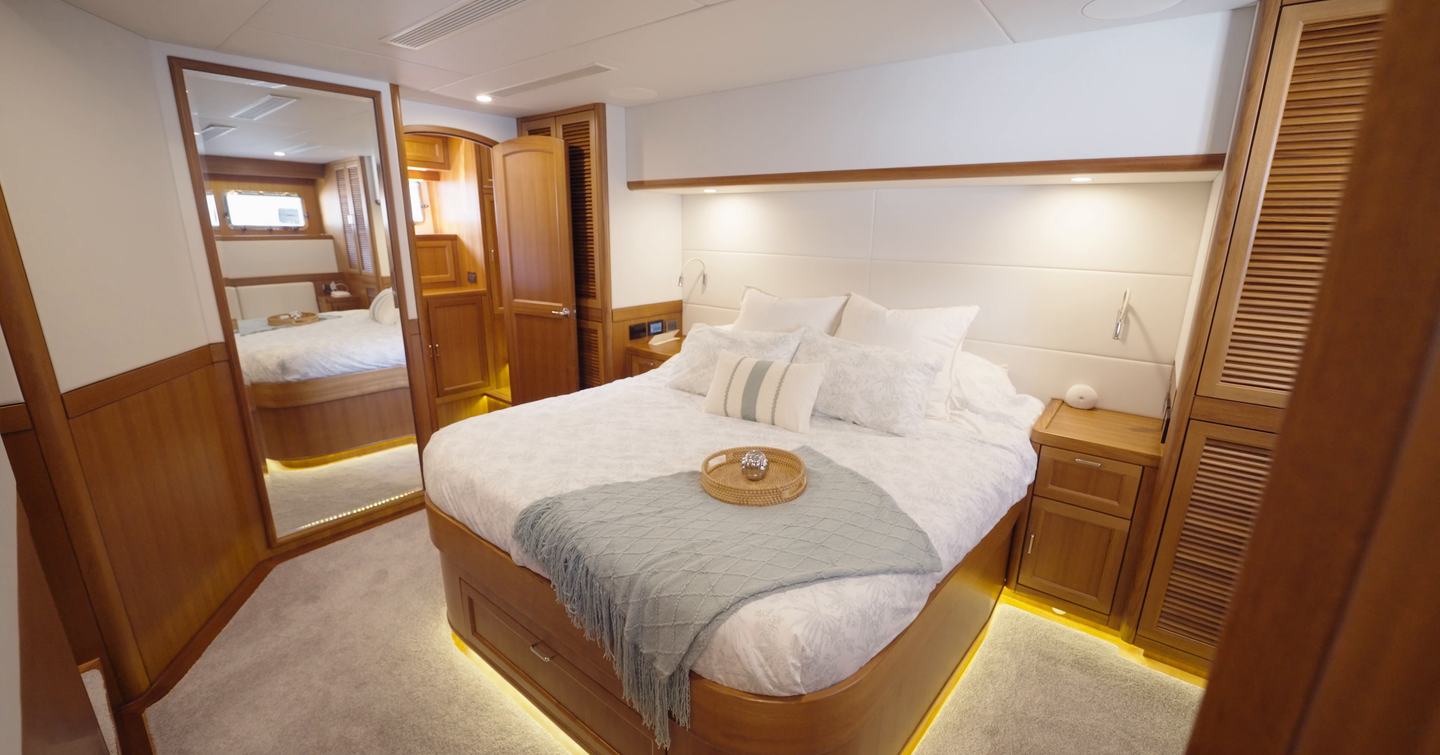
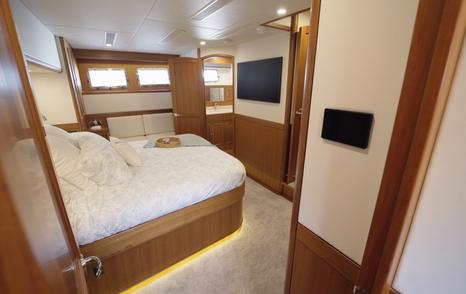
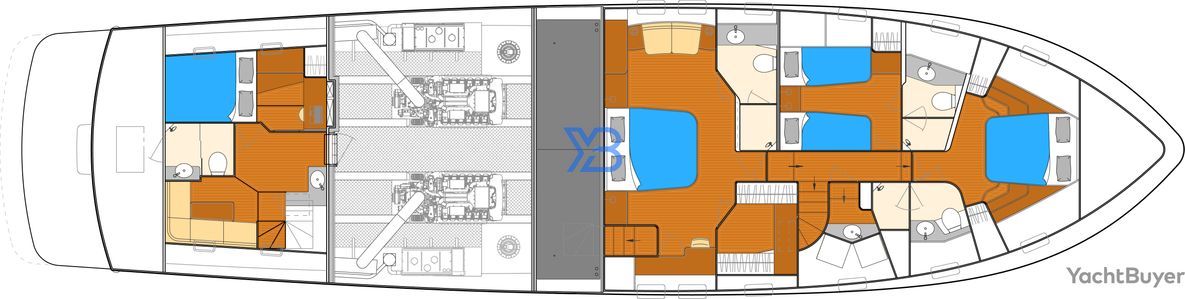
Amidships sits the full-beam owner's cabin and it's a lovely room. Fleming doesn't rely on giant hull windows, but the opening ports are surprisingly large and the natural light down here is really very good. Headroom is excellent, it's nice and cool thanks to the air conditioning and there is storage everywhere you look.
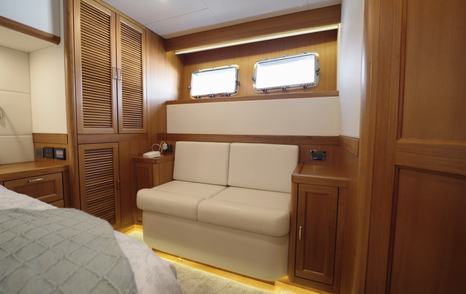
This owner has chosen a sofa rather than the optional desk and I think that works rather nicely. It's good to have somewhere to sit that isn't simply the bed, particularly if you're spending long periods aboard. The ensuite is a very good size too, with a large vanity, lots of storage and a separate shower.
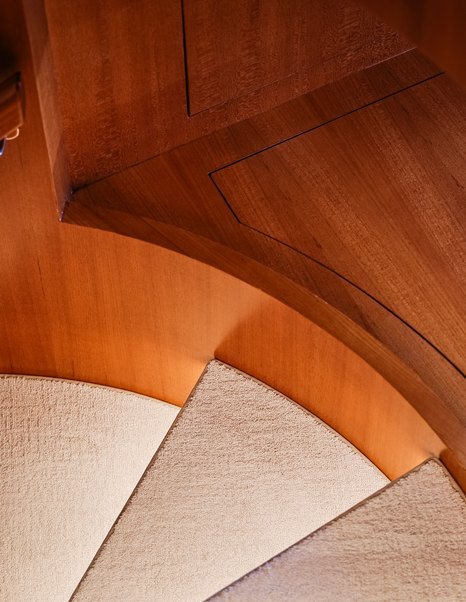
One feature that's really great is the private staircase connecting the owner's cabin directly to the saloon. It means you can pop down from the saloon without having to walk all the way through the pilothouse and companionway, and Fleming has used the space around the staircase to create yet more storage. It's one of those features that seems such a good idea that you immediately start wondering why more builders don't do it.
Guest Accommodation
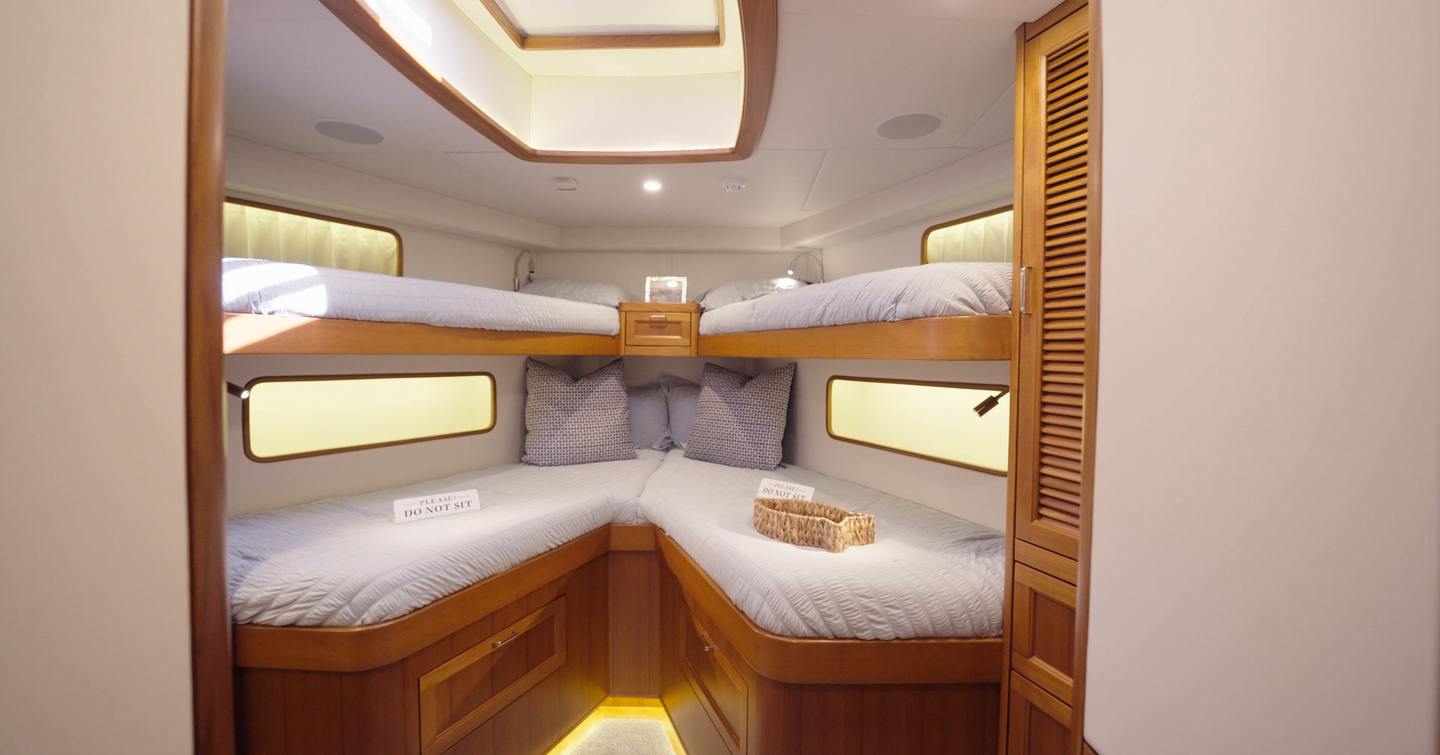
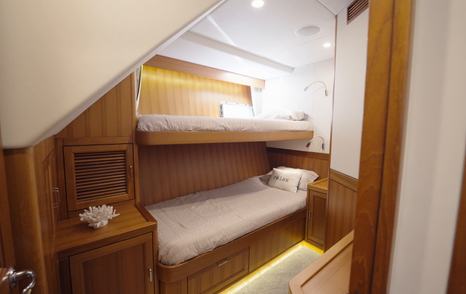
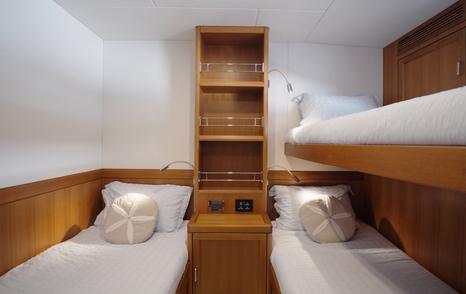
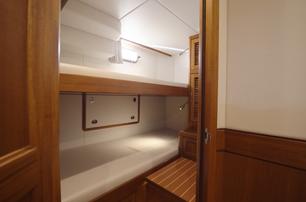
Instead of a VIP cabin, the bow has been given over to four single berths, while the cabin opposite combines twin beds with a bunk above. There's another twin cabin further aft too. Most owners would probably have gone for a more conventional arrangement, but if your aim is getting lots of family aboard, it makes perfect sense.
The supporting spaces have been thought through nicely as well. The forward cabins have their own bathrooms, there's a separate day head in the companionway, guest laundry facilities are built in and beneath the sole there's a very useful storage and technical space housing equipment such as the watermaker and bow thruster access.
Crew Accommodation
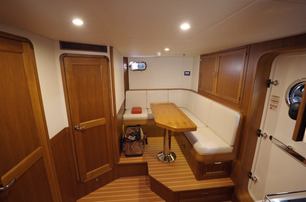
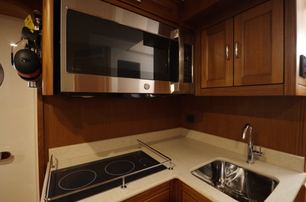
Beneath the cockpit sits what Fleming calls the crew accommodation, although that description doesn't really do it justice. There's a small galley, a mess area, two cabins and a shared bathroom and it feels far more generous than many crew spaces found on much larger yachts.
What's nice is that it doesn't have to be crew accommodation at all. It could be a workshop, somewhere to charge toys, extra storage or a mixture of all three. Given how many owners run these boats themselves, I suspect quite a few will end up using it that way.
If you're wondering whether a 25.98m (85ft 2in) yacht can still be owner-run, the helm arrangements are probably where you start looking for answers.
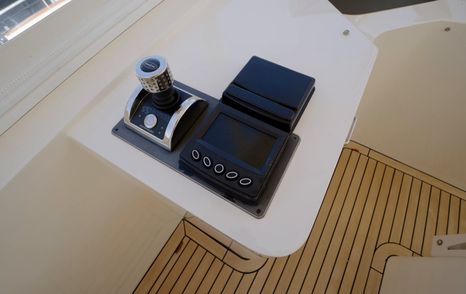
There are wing stations in the cockpit, another on the side deck and more up on the flybridge, and that's before you've even sat down at either of the main helms. Fleming clearly understands that docking a boat of this size can be intimidating, so it's given the skipper lots of different ways to approach the same manoeuvre.
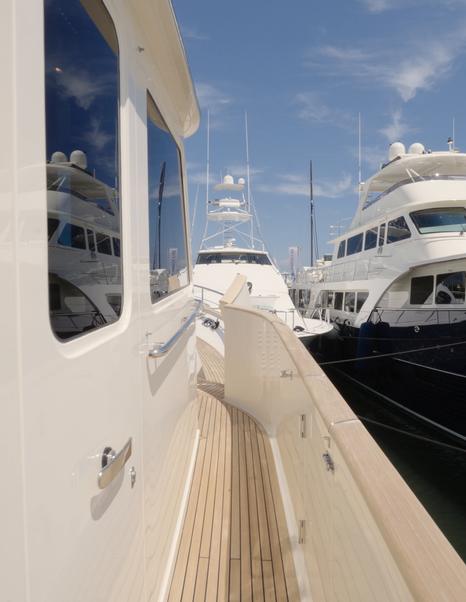
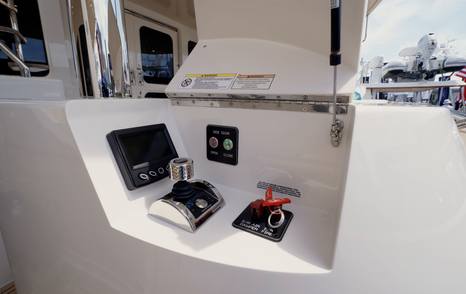
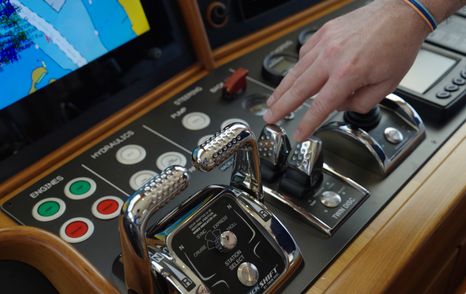
The side-deck station is a good example. It's elevated, it gives a really good view down the side of the boat and it fits neatly into the whole owner-run philosophy. The flybridge wing stations are equally useful because you can stand right out at the edge and see directly down to the waterline. Add in Twin Disc joystick controls and independent hydraulic bow and stern thrusters, and you have a lot of tools at your disposal when it's time to squeeze into a tight berth.
The side decks are wide and well protected, there are side doors and gates on both sides of the pilothouse and, if you're coming alongside a high quay, you can step straight from the helm position onto the dock. They're quite simple ideas really, but they're exactly the sort of details that make a big difference when you're operating a yacht like this yourself.
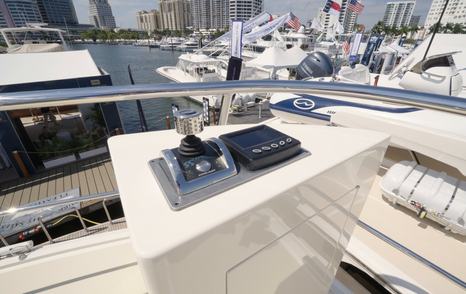
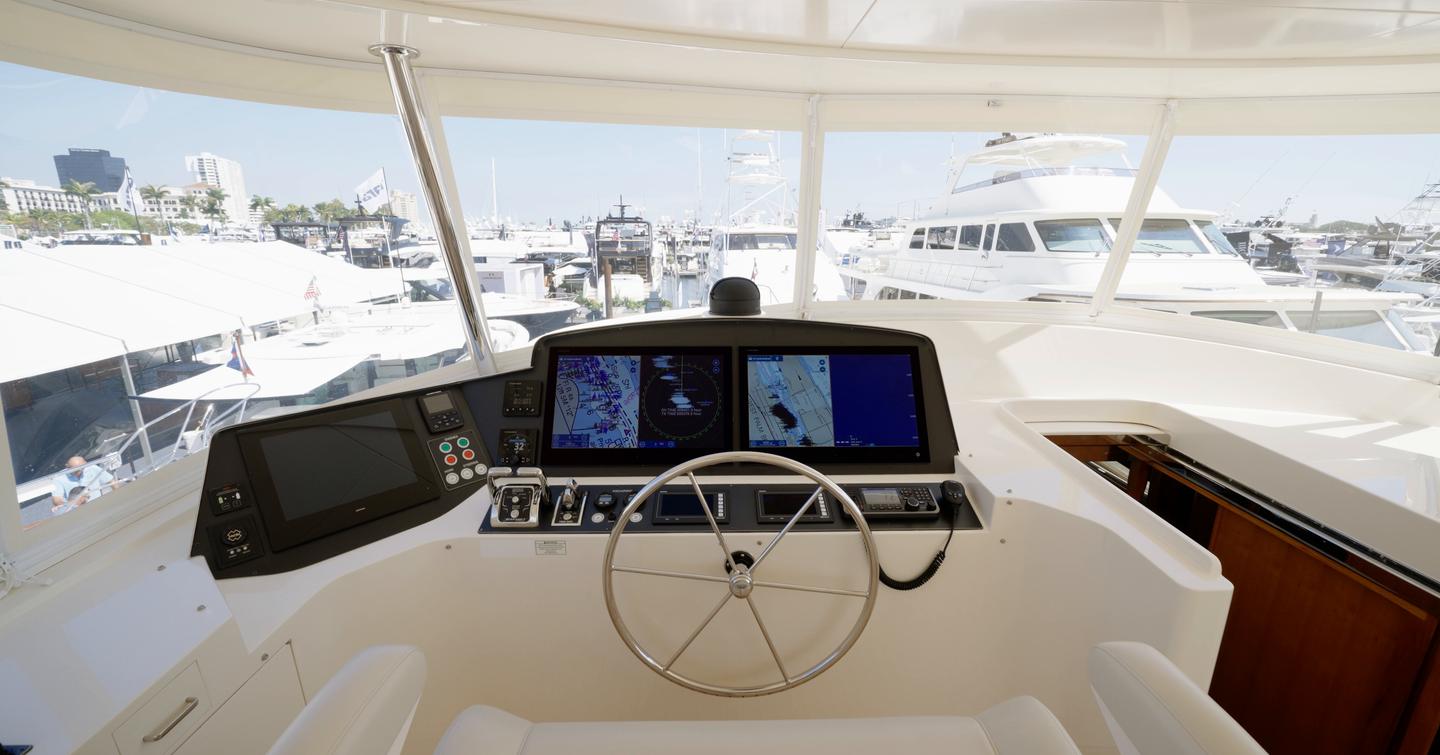
What's nice is that the Fleming 85 gives you two very different helm experiences. Up on the flybridge is where you'll probably spend your time when the weather is good and you're just hopping between bays. This particular boat is the open flybridge version, although the owner has fitted Strataglass screens around the aft section, so it sits somewhere between the two available configurations. They remain remarkably clear when fitted and, combined with the air conditioning, they make the space usable in a much wider range of conditions.
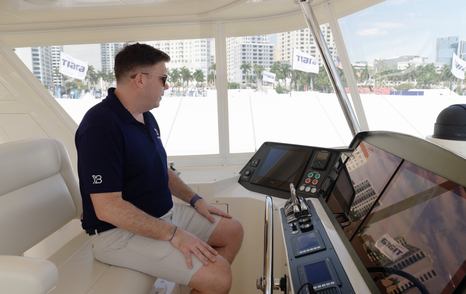
It's also just a lovely place to sit. There are two navigator seats, each with their own STIDD footrests, while the helm itself gets a comfortable double bench and a dashboard packed with screens angled towards the skipper. Some of the controls sit quite a long way away, but on a boat like this I don't think that's much of an issue. A lot of the time you'll simply set the throttles, settle back into the seat and enjoy the ride.
Pilothouse
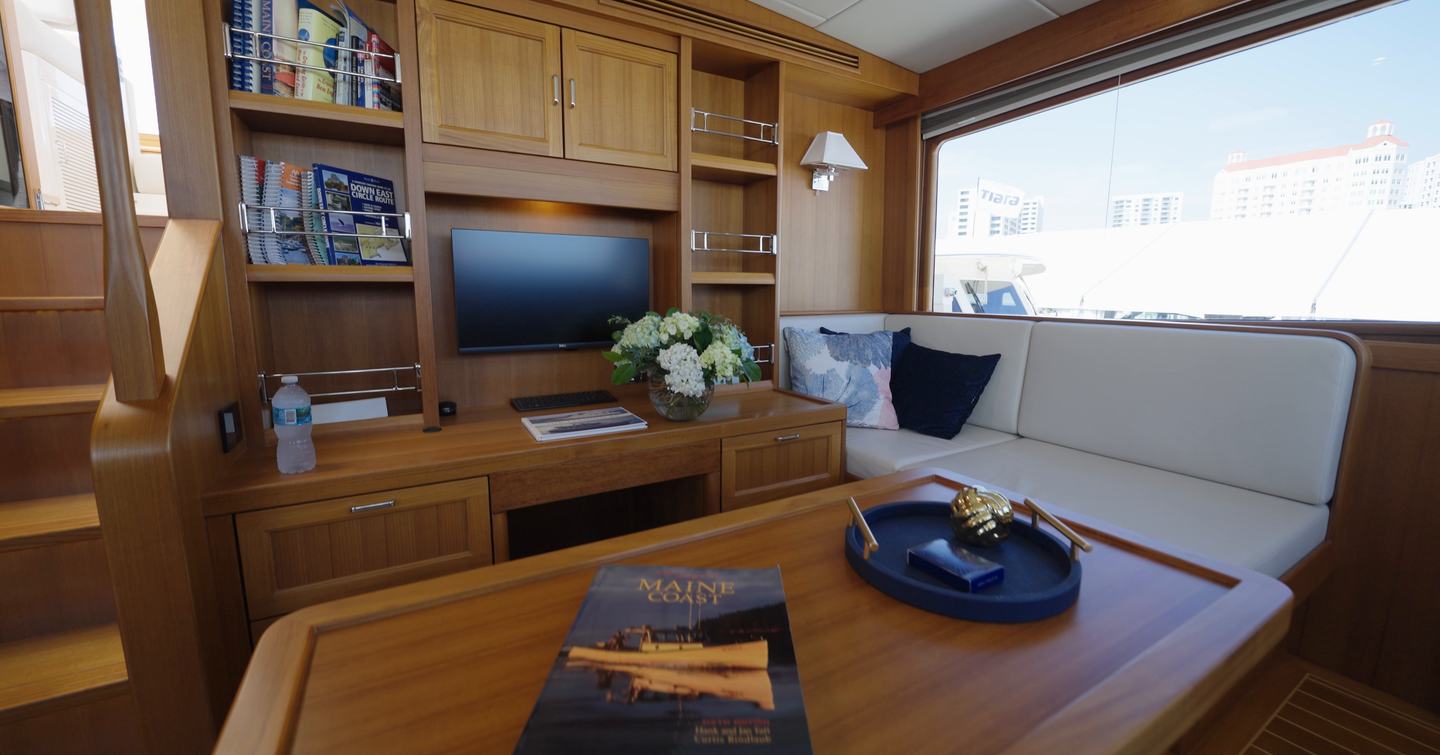
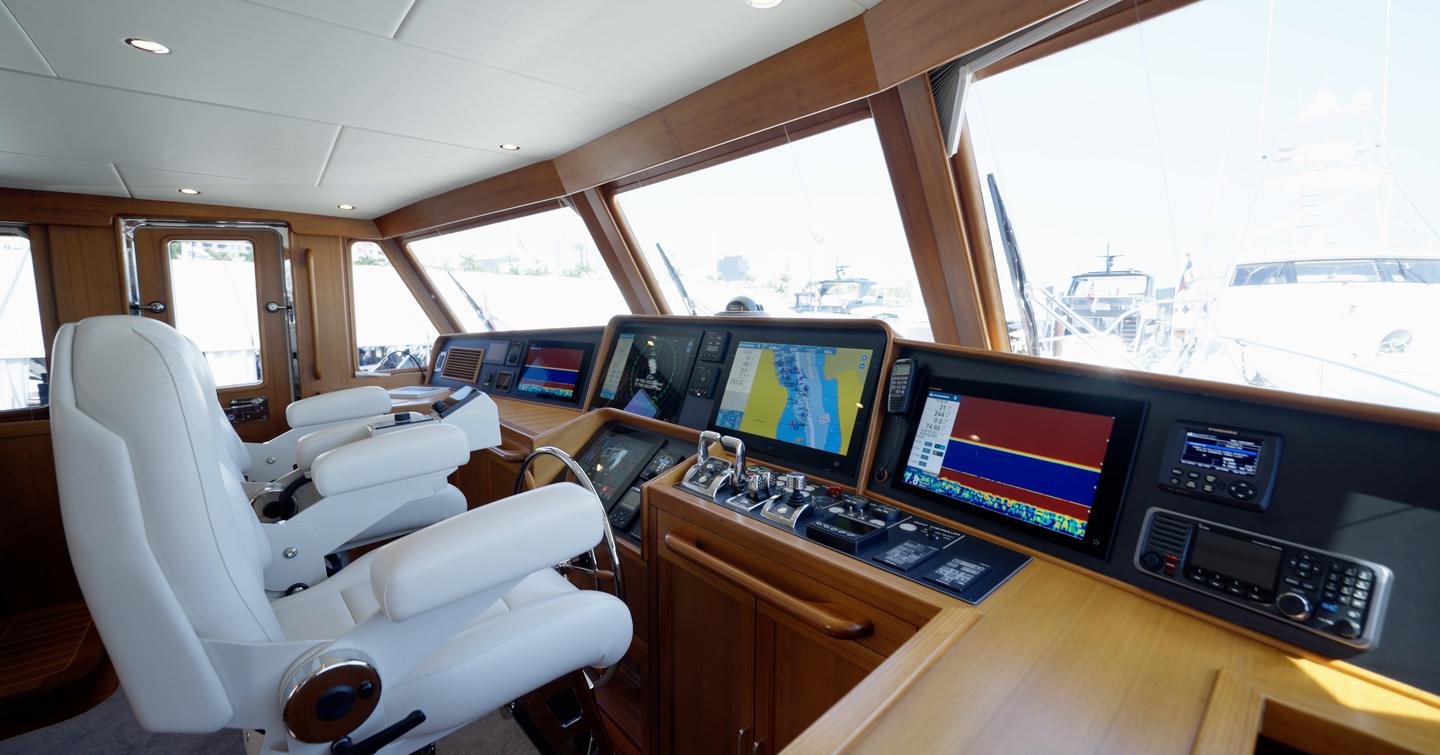
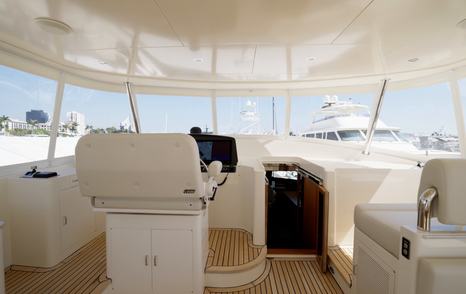
In the pilothouse, you're very much into the blue-water side of the Fleming story. This particular owner has replaced the standard seating area with a custom desk, creating somewhere to work while underway, although there is still seating nearby for guests who want to enjoy the view forward. There's also a day head just aft, which is one of those details you really appreciate when you're several hours into a passage and don't fancy heading below.
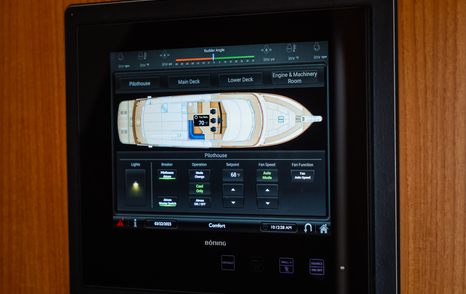
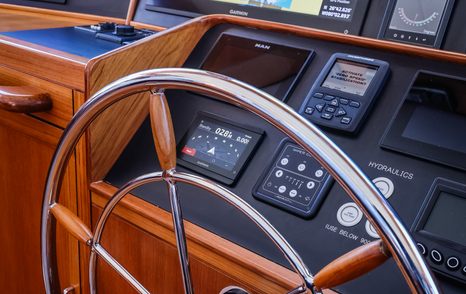
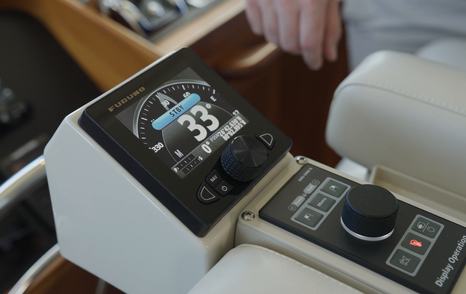
The helm itself is very nicely done. Large adjustable seats put everything comfortably within reach and, like the flybridge, the key controls sit directly beneath your hands. System management is handled through Boning digital switching, while this yacht carries a Furuno electronics package. Fleming is quite relaxed about that side of things though, so owners can specify whichever navigation suite they prefer.
There's also a pull-out autopilot control hidden beneath the dashboard. On a long passage you can sit back comfortably, rest an arm on the control and make course adjustments without constantly reaching forward. It's a lovely little detail and exactly the sort of thing that matters after several hours at the helm.
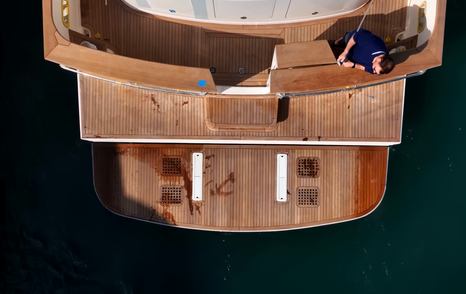
There's a reassuring heft to the Fleming 85 that immediately tells us its long-range cruising credentials. Even down at the bathing platform, the focus is less on creating a glamorous beach club and more on creating a practical space that works properly.
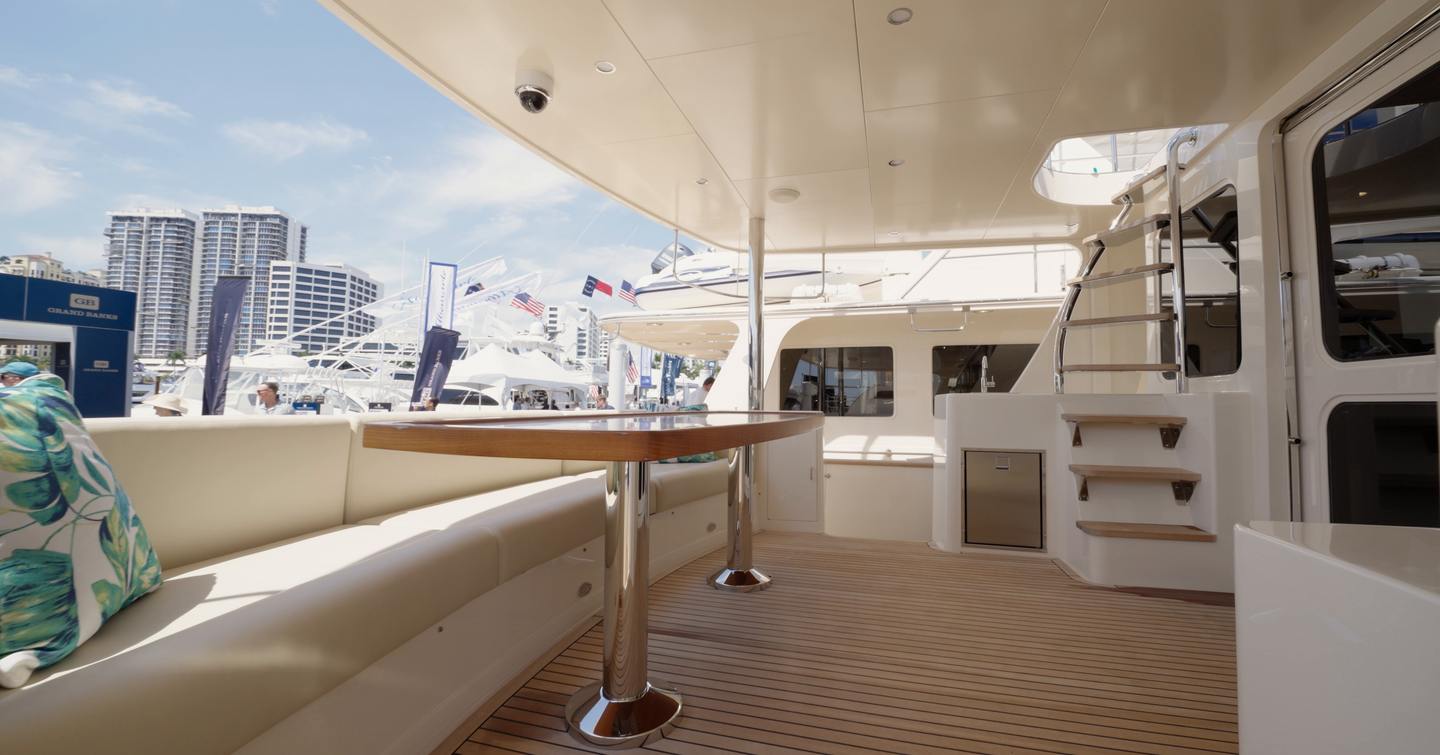
The cockpit has plenty of shade from the flybridge overhang, a large dining table at the centre and enough room for people to move around without constantly getting in each other's way. It feels exactly how you'd hope a Fleming cockpit would feel. Comfortable, practical and somewhere that's clearly going to get used. A sink and refrigerator are built into the cabinetry too, so you're not forever heading inside every time somebody wants a drink.
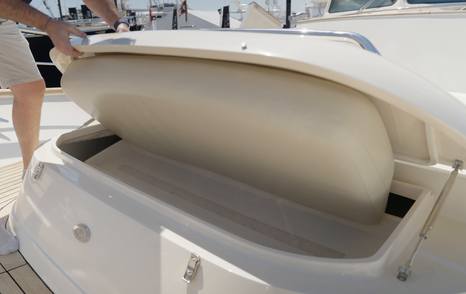
One thing that keeps cropping up is storage. Lift a hatch and there's another locker. Open a compartment and there's more useful space. Fleming seems almost incapable of leaving an area unused. It's not glamorous, but after a few weeks aboard a boat, good storage suddenly becomes a very attractive feature indeed.
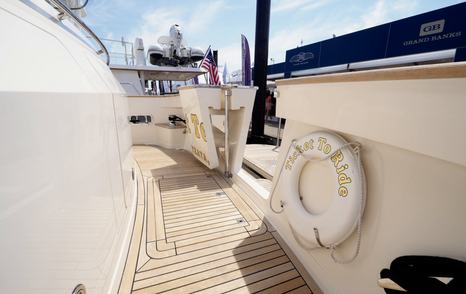
The Portuguese bridge is where the Fleming DNA really comes to the surface. You don't see many of them these days and it's one of those features that immediately changes the feel of the boat. Suddenly you're standing in a space that feels incredibly secure, protected by high bulwarks and wrapped around the front of the pilothouse. If the weather takes a turn for the worse, it's easy to see why owners appreciate it so much.
The nice thing is that Fleming hasn't stopped there, as set into the Portuguese bridge area is additional seating, so what could have been a purely practical space becomes somewhere you'd actually choose to spend time. That's something this boat does rather well. Areas that begin as working spaces often end up having a social side to them too.
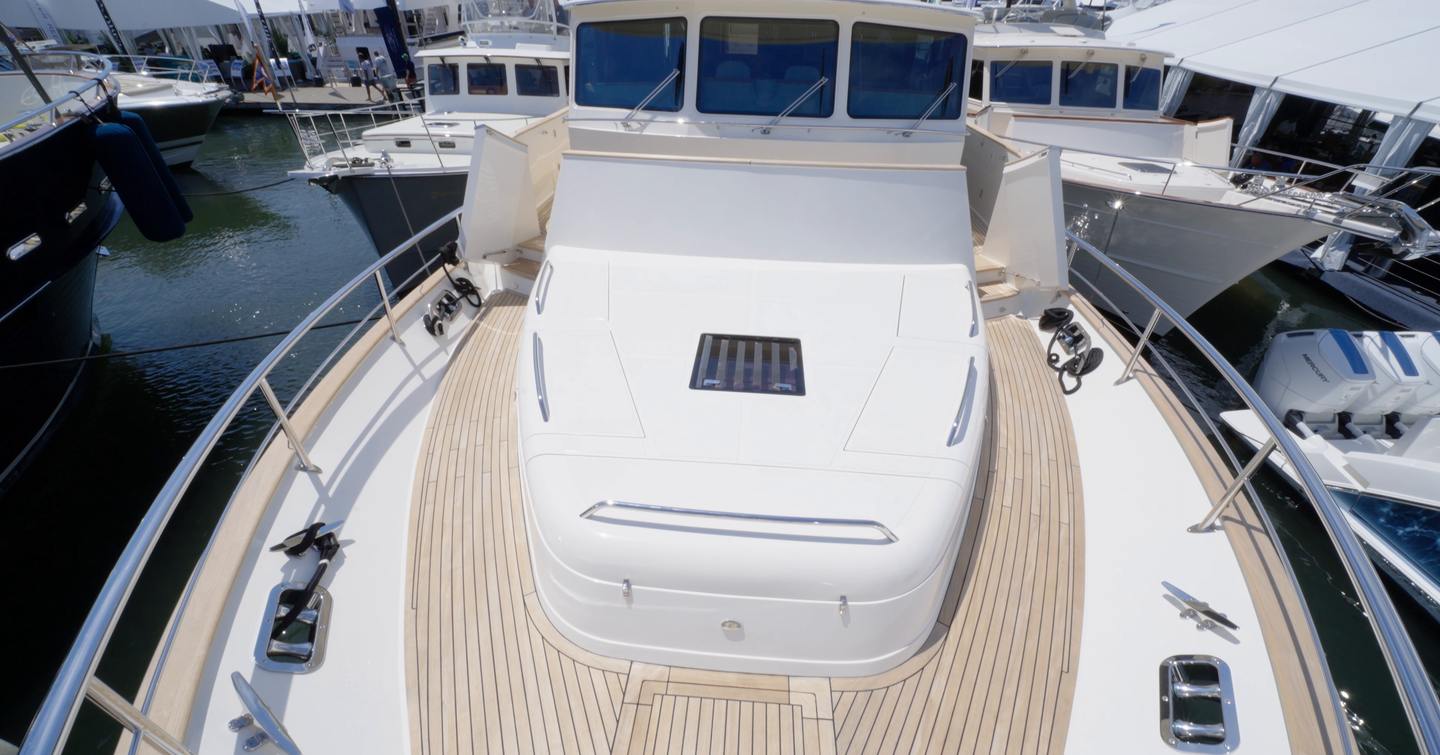
The foredeck follows the same pattern. Yes, the anchoring setup is serious, with twin anchors and substantial ground tackle ready for proper cruising duties, but it's also a surprisingly pleasant place to sit once the anchor is down. With cushions in place and the view stretching out ahead, it's easy to understand why people gravitate up here when the boat is at anchor.
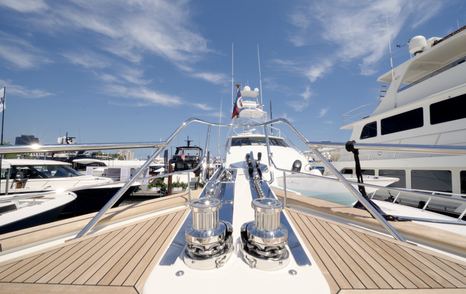
Head up to the boat deck and this is probably the point where the scale of the Fleming 85 really starts to sink in. The crane is rated to lift 1,000kg, so handling a substantial tender isn't a problem, but the tender doesn't completely take up all the space. There's still room to move around it and make good use of the deck, which isn't always the case on boats carrying tenders of this size.
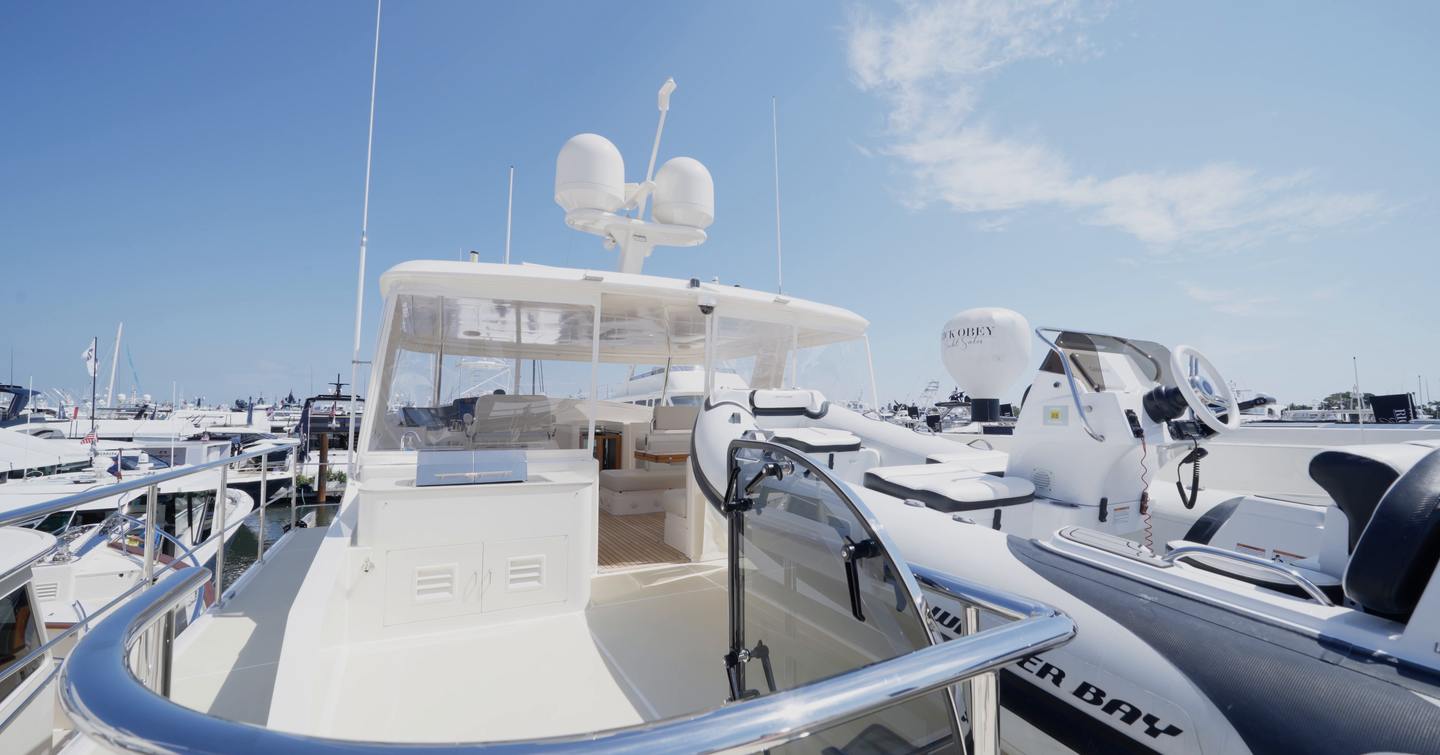
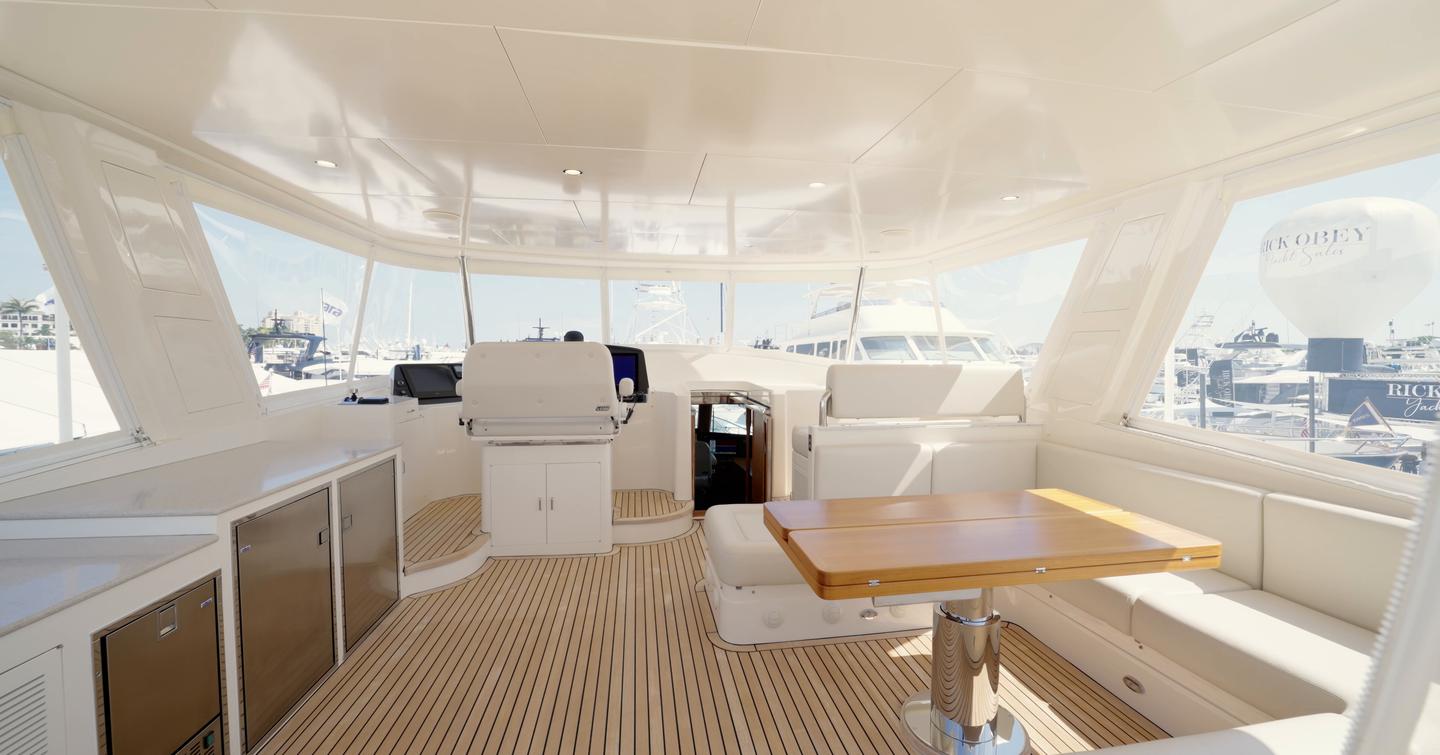
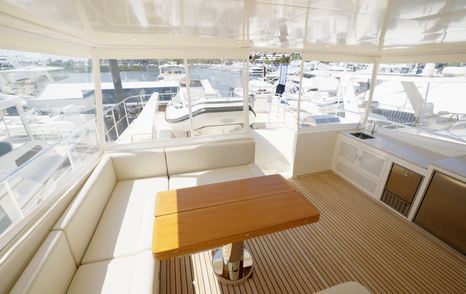
Then there's the flybridge and it's a lovely area. The helm may be the star of the show up here, but even without it this would be somewhere you'd happily spend an afternoon. There's plenty of seating, a dining table that expands when needed, a grill, refrigeration, a sink and enough space for a decent-sized gathering without anyone feeling squeezed in.
This particular yacht has the open flybridge arrangement, although the Strataglass screens fitted around the aft section blur the line a little. They're remarkably clear and, together with the hardtop and air conditioning, make the space comfortable in a much wider range of conditions than you might expect. It's another example of Fleming finding a practical solution without taking away from the enjoyment of the space.
That's really the recurring theme on deck. The Portuguese bridge becomes somewhere to sit, the foredeck becomes somewhere to relax and the boat deck remains usable despite carrying a substantial tender. Time and again, Fleming takes a space that could have been purely functional and finds a way to make it enjoyable as well.
Engine Room
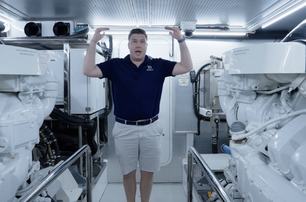
The crew area connects directly to the engine room and, on a Fleming, that's always worth a look because this is where a lot of the boat's thinking really comes into focus.
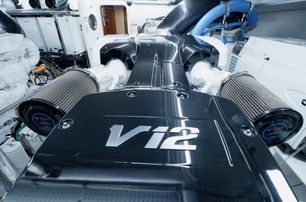
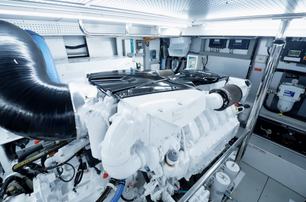
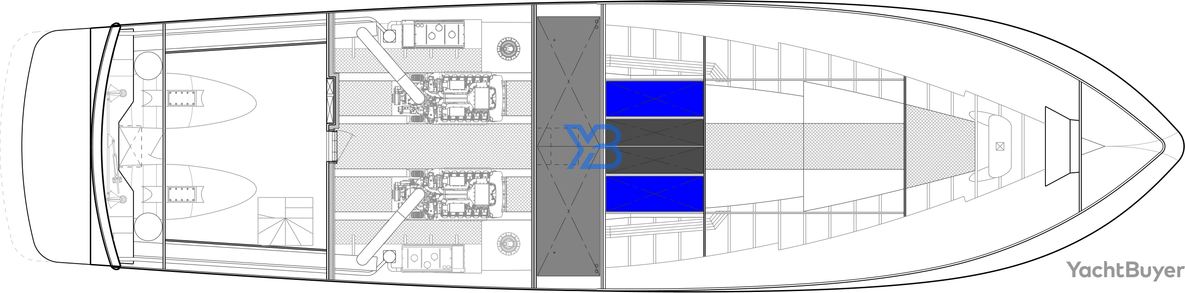
The first thing that stands out is the space. These are the larger 1800hp MAN V12s and they're not small engines, but there's still plenty of room to move around them. Headroom is excellent, it actually improves further into the compartment, and you're standing at a comfortable height relative to the machinery rather than peering down into it. The F85’s standard machinery package is twin MAN V12 1550hp diesels with Twin Disc MGX 6599A gearboxes, Aqua Drive drivelines, Express Joystick System, Express Positioning System, and hydraulic bow and stern thrusters.
It's immediately obvious that this is an engine room designed for people who will spend time in it. The filters sit neatly inboard with clear inspection bowls, so checking fuel quality is as simple as having a look. Service points are easy to reach, access around the engines is very good and even items like the shaft seals are visible without having to become a contortionist.
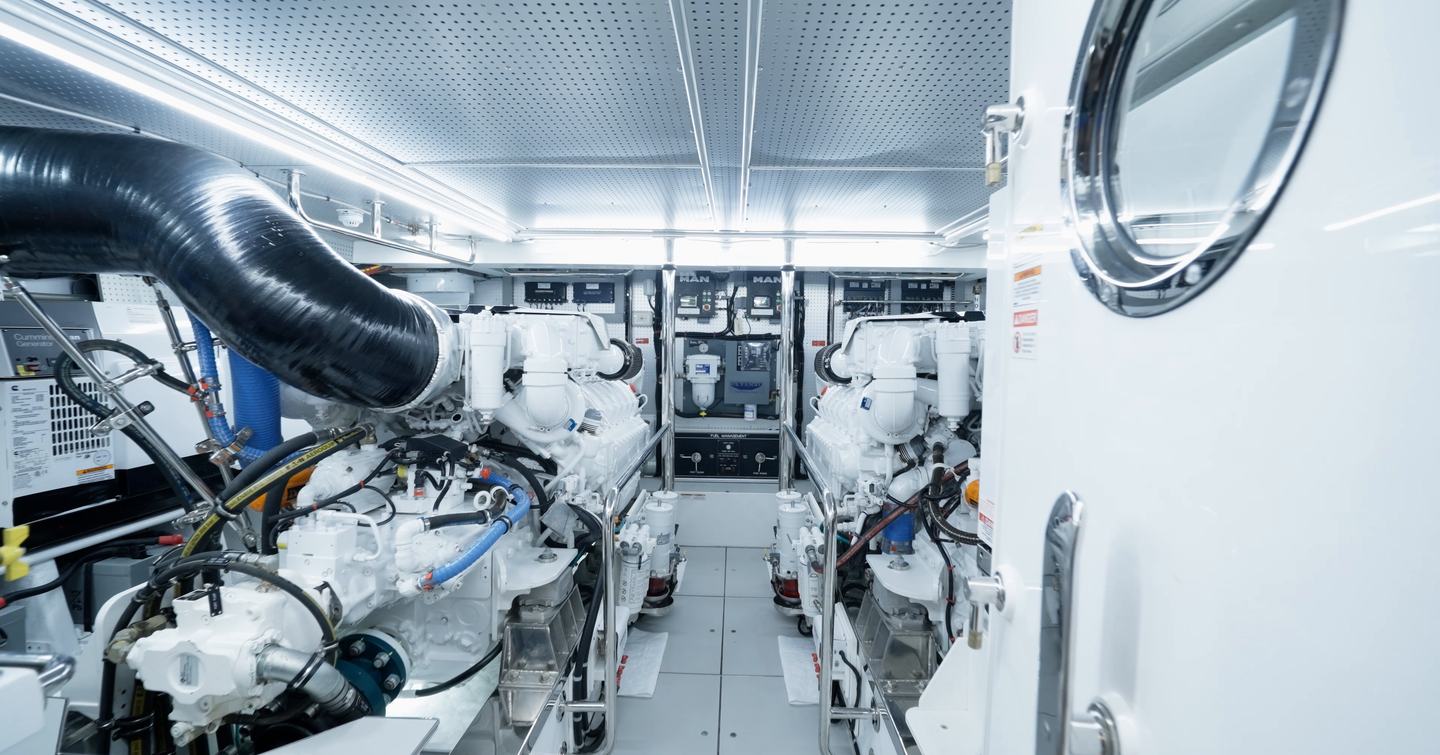
Everything is neat, tidy and clearly labelled too. That's not particularly exciting to talk about, but it's exactly the sort of thing that matters when you're hundreds of miles from home and trying to diagnose an issue. Fleming has never built boats around the assumption that help is always close by and that mentality runs right through the engineering spaces.
One thing that keeps appearing throughout the Fleming 85 is redundancy and the engine room is the most important example. There are twin generators, backup systems and multiple layers of protection built into the yacht because this is a boat that may end up in some very remote places. The same thinking extends to the fuel system. There are only two tanks, but a full fuel transfer system allows fuel to be moved between them easily, helping with both fuel management and trim. It's a simple solution and, as is often the case with Fleming, simple tends to be very good.
Our Verdict
So does all of this answer the owner-run question? From the helm, I think it probably does. The controls are excellent, the visibility is very good and Fleming has given the skipper plenty of options when manoeuvring. The bigger question isn't really driving the boat. It's handling the lines, the fenders and all the day-to-day jobs that come with an 85-footer. That's a slightly different conversation altogether.
The good news is that if crew are needed, the accommodation is unusually generous. Equally, if an owner wants to remain heavily involved, the Fleming still encourages that in a way many yachts of this size do not. And perhaps that's the most impressive thing about the Fleming 85. It takes the qualities that have always defined the brand - practicality, capability, thoughtful engineering and genuine long-range cruising ability - and scales them up without losing sight of what made them appealing in the first place.
Reasons to Buy
- Feels very easy to handle
- 3,700nm range
- Lovely bright owner's cabin
- Flybridge feels like a bonus
Things to Consider
- Big fenders need shifting
- Traditional interior won't suit all
Looking to own a Fleming 85? Use YachtBuyer’s Market Watch to compare all new and used Fleming 85 Yachts for sale worldwide. You can also order a new Fleming 85, customized to your exact specifications, with options for engine choice and layout configuration. Alternatively, explore our global listings of new and used yachts for sale and find your perfect yacht today!
Rivals to Consider
The Grand Banks GB85 Flybridge is probably the closest rival on paper because it targets much the same buyer: an experienced owner looking for serious cruising capability in a yacht around the 26m mark. At 26.58m (87ft 2in) with a displacement of around 57 tonnes, the GB85 takes a very different engineering route. Its infused E-glass hull and carbon-fibre structure keep weight remarkably low, while Mark Richards' V-Warp hull design delivers a 24-knot cruising speed and a range of 972nm at 21 knots. The result is a yacht that feels quicker, lighter and more performance focused than the Fleming.
The Bering 88 takes the explorer yacht concept further. Measuring 26.2m (85ft 9in), it carries a steel hull, aluminium superstructure and a full-load displacement of around 225 tonnes. Fuel capacity climbs to almost 40,000L and range exceeds 5,000nm at 8.5 knots, putting the emphasis firmly on autonomy and expedition cruising. Accommodation caters for up to eight guests and five crew, while the engineering and construction follow many of the principles more commonly associated with commercial vessels.
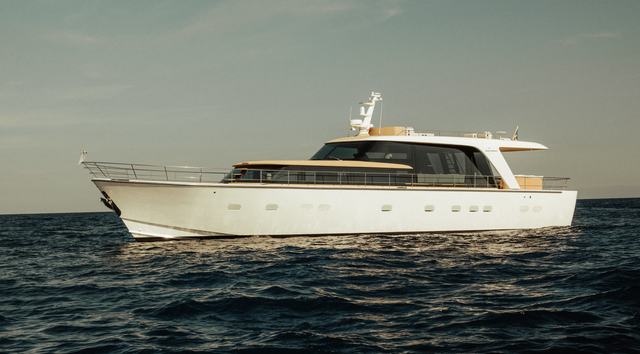
Rather than focusing on offshore passages or expedition capability, the Apreamare Maestro 82 has the Italian flybridge, where entertaining, outdoor living and coastal cruising take priority. The emphasis is on elegant styling, generous social spaces and a relaxed Mediterranean way of boating. While it occupies a similar size bracket to the Fleming, the Maestro 82 appeals to buyers who spend more time moving between anchorages than crossing oceans. It's less a rival in terms of mission profile and more a reminder that not every buyer looking at an 80ft yacht wants the same thing.
Considering a new yacht? Explore Fleming Yachts' entire current range to find the model that best suits your needs, and compare it with alternatives from competitors to ensure you make the perfect choice.
Specifications
- Builder Fleming Yachts
- Model Fleming 85
- Length Overall 25.98m
- Beam 6.48m
- Draft 1.69m
- Hull GRP
- Cabins 4
- Berths 11
- Crew 4
- Yacht Type (Primary) Trawler Yacht
- Use Type (Primary) Oceangoing
- Cruising Speed
- Max Speed
- Fuel Capacity 12,000 Litres
- Fresh Water Capacity 1,700 Litres
Fleming 85 Layout
-
Flybridge
-
Standard open flybridge
![Flybridge Fleming 85]()
-
Optional enclosed flybridge
![Flybridge Fleming 85]()
-
Optional enclosed flybridge with captain's cabin
![Flybridge Fleming 85]()
-
Main Deck
-
Standard main deck with open flybridge
![Main Deck Fleming 85]()
-
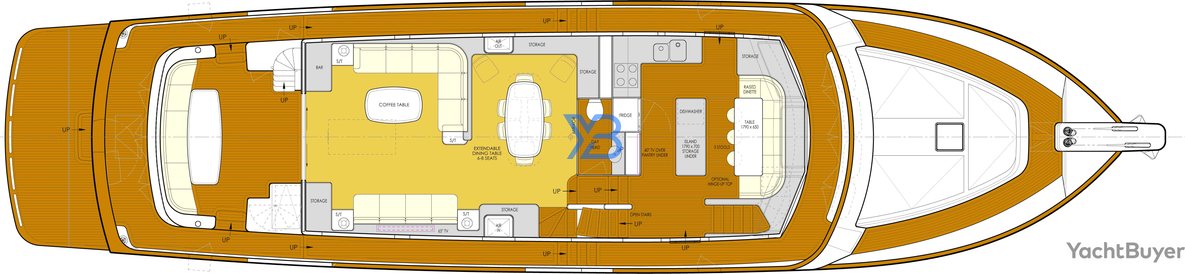
Optional main deck with enclosed flybridge, galley option A
![Main Deck Fleming 85]()
-
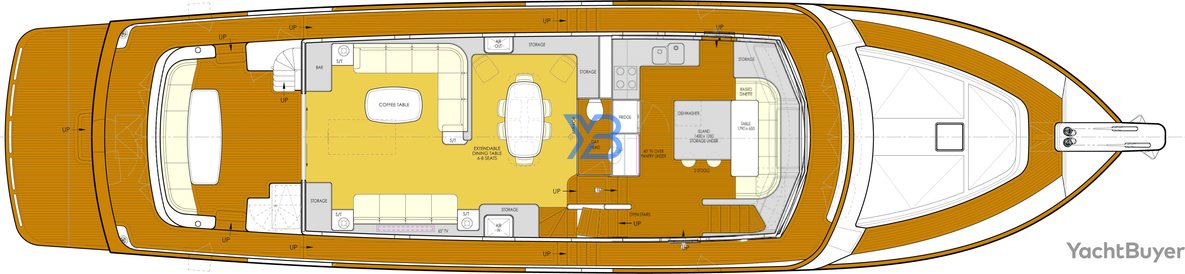
Optional main deck with enclosed flybridge, galley option B
![Main Deck Fleming 85]()
-
Lower Deck
-
Standard 3 cabin layout with crew option A
![Lower Deck Fleming 85]()
-
Optional 4 cabin layout with crew option B
![Lower Deck Fleming 85]()
-
Under the Lower Deck
Interested in a Fleming 85?
NEW Build
Find your local dealer for a personalised, no-cost consultation
or just request
Brochures & Pricing
Used & In Stock
Looking for a ready-to-go Fleming 85 or pre-owned options? Explore all inventory of the Fleming 85 available worldwide