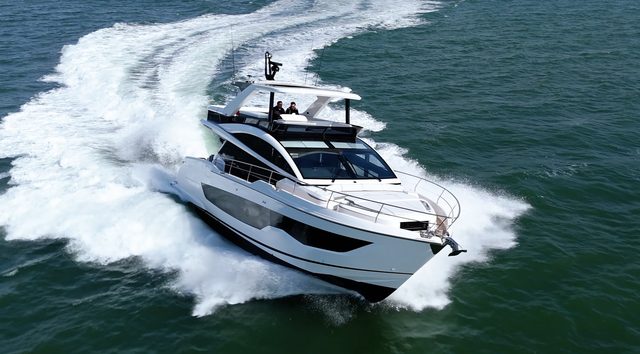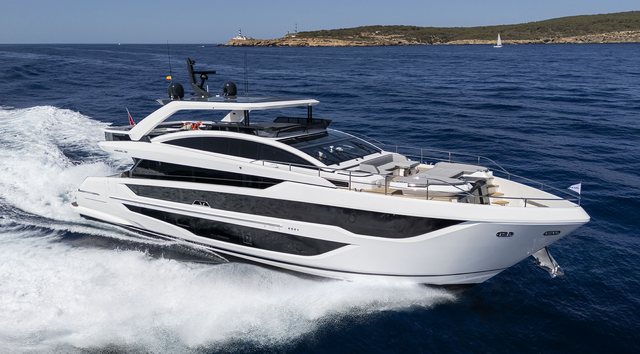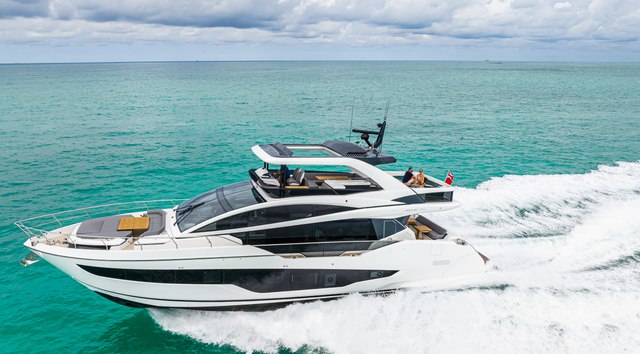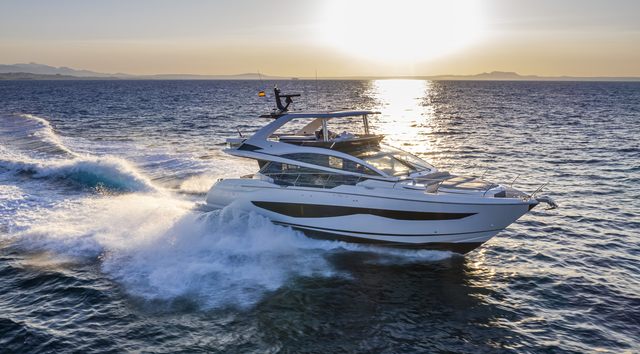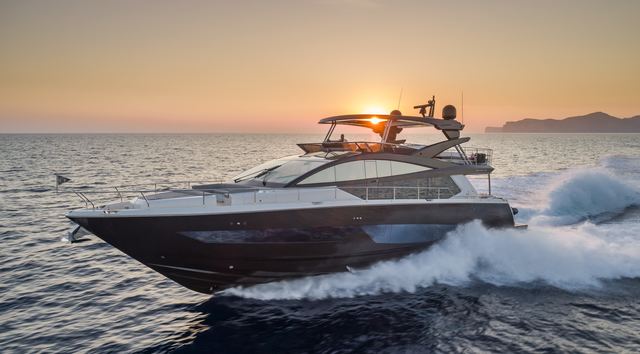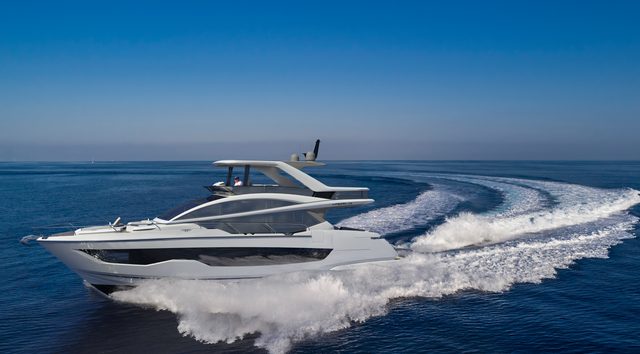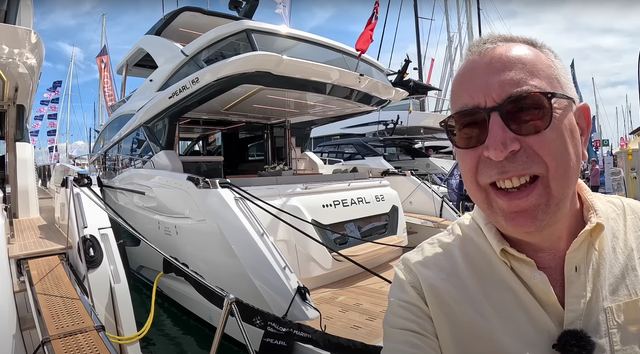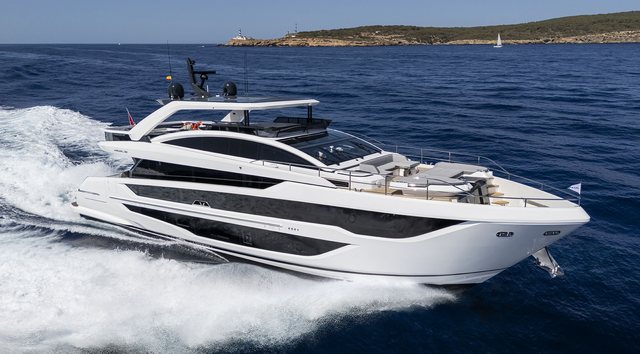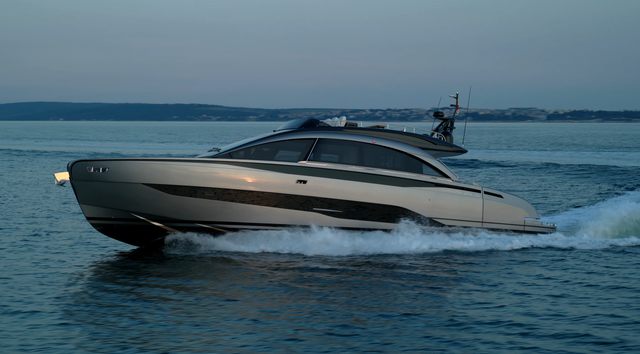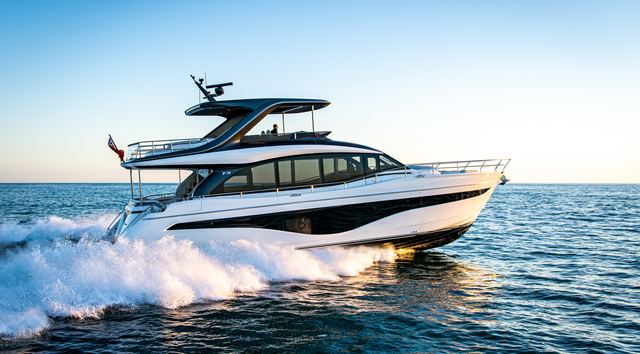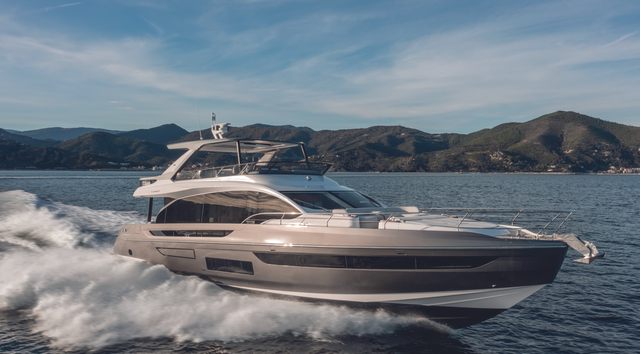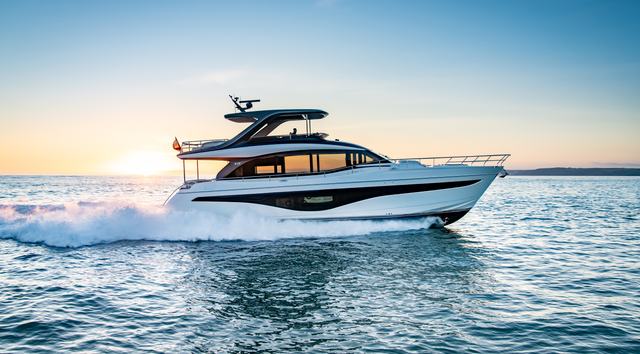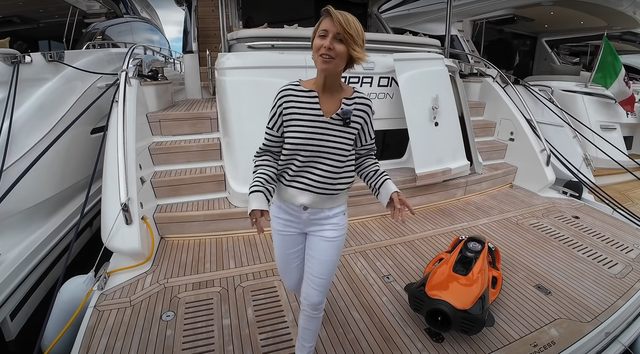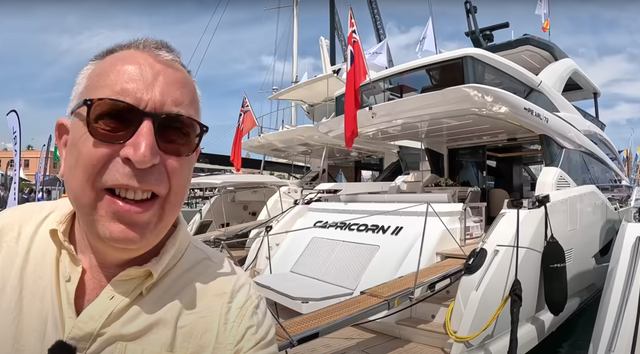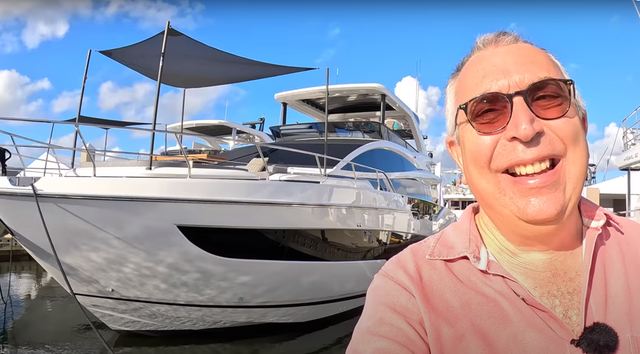
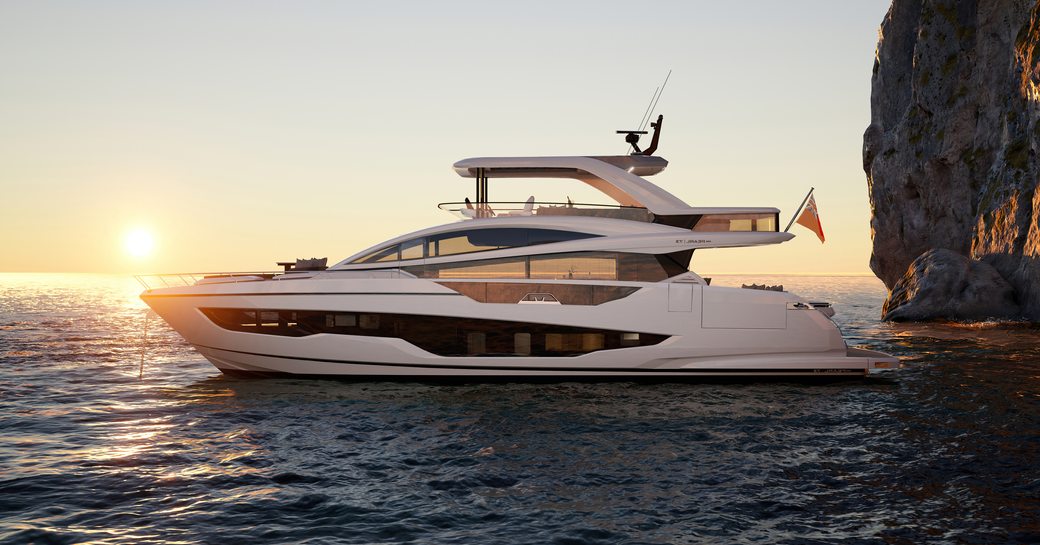
The Pearl 73 has a difficult act to follow. Its predecessor was already one of the smartest 22m boats around, with four guest cabins, two possible owner’s cabins and a layout that managed to squeeze a remarkable amount into 21.99m (72ft 2in). Pearl clearly didn’t see much sense in starting again.
Instead, the design team has taken what worked and made a series of changes based on where it thought the 72 could be moved on. Some are quite obvious, others are much smaller, and a few come down to personal taste rather than being clear improvements. That makes the 73 interesting, because the question isn’t whether Pearl has fixed a bad boat. It’s whether it has made a very good one better.
Pearl 73

- LOA 21.99m
- Model Year 2026
- Cabins 4
- Crew 2
- Max Speed 33 knots
- Status In Production
- Yacht Type Flybridge
- Use Type Weekending
Review Video
The Pearl 73 sticks closely to the architecture that made the 72 such a clever boat. At 22m (72ft), it still finds room for four guest cabins, two possible owner’s cabins, a huge flybridge and a tender garage that can swallow both a Williams 345 and a Sea-Doo Spark. There was clearly no reason to start again.
Instead, Pearl has moved a few things around. The galley is now aft, the balconies open at cockpit level rather than down by the bathing platform and the flybridge bar has shifted to one side. There has been some work downstairs too, where a tweak to the staircase has found more storage around the amidships cabins. The basic idea is much the same, but the space doesn’t always fall in the same places.
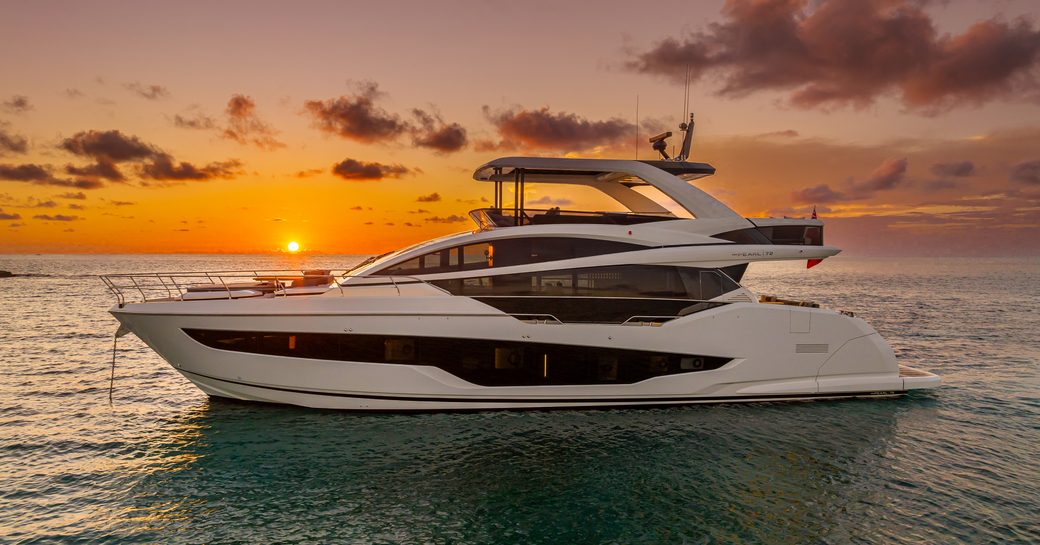
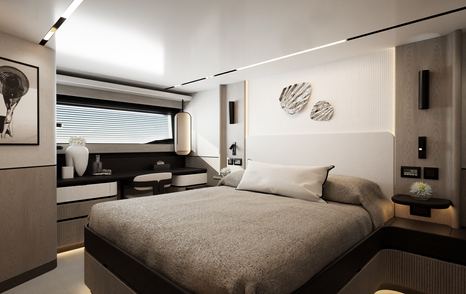
It feels quite different inside, though. Kelly Hoppen’s new Monochrome scheme has much less gloss, and there are curves everywhere but Pearl has promised four different interior schemes just like on the 72. Cabinets, bulkheads, bedside tables, even some of the handles have lost their hard edges. I like it. Curved joinery is difficult stuff to get right and some of the woodwork here is really nicely done, especially on the first 73 out of the mould. There is a practical side to it as well. A rounded corner is much nicer to meet with your hip when the boat moves than a sharp one.
The same impression of quality crops up outside. The rails feel chunky and substantial, and the deck hardware has a proper solidity to it. Pearl hasn't tried to reinvent the boat here. Most of the work has gone into small changes to the layout and a softer, better-finished feel around the same very clever core.
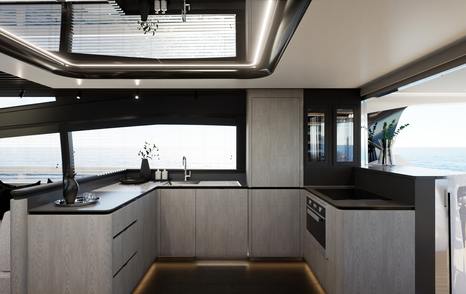
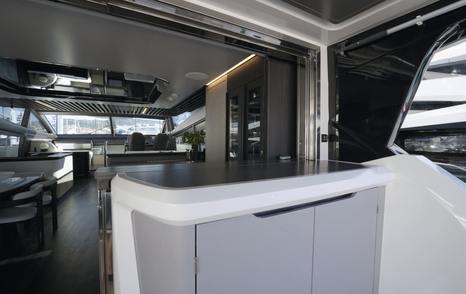
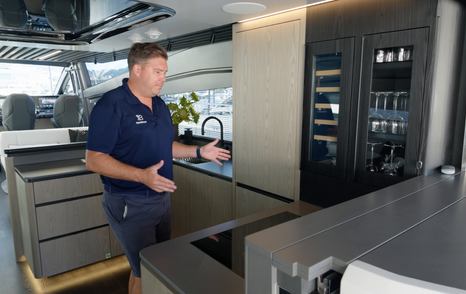
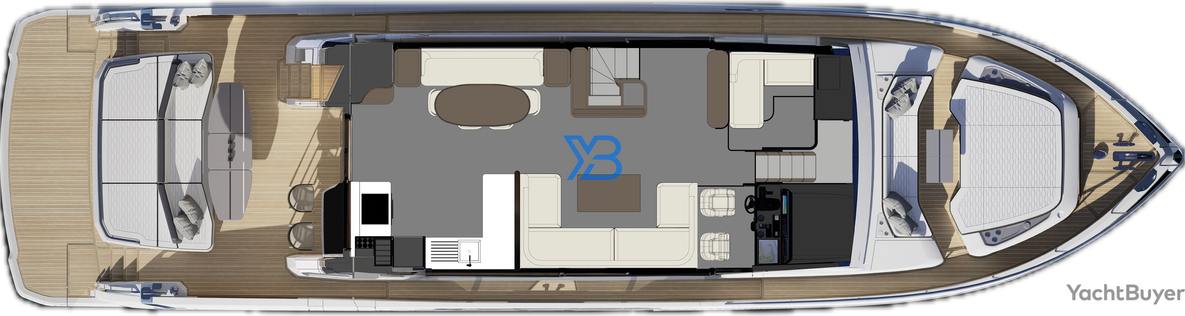
The biggest change inside is the galley. On the 72 it sat amidships, but on the 73 it’s moved right aft, much like it does on the Pearl 63. I liked the old layout, but there’s no denying this one connects better with the cockpit. Open the doors and the galley sits right in the middle of the main living space rather than halfway along the saloon.
And it works better as a galley too. On the 72 the fridge sat on one side and the cooking area on the other, so you were working across the saloon. Here the induction hob, oven, fridge and freezer all sit together, which makes much more sense. There’s a bar between the galley and cockpit as well, so this whole end of the main deck feels far more social than before.
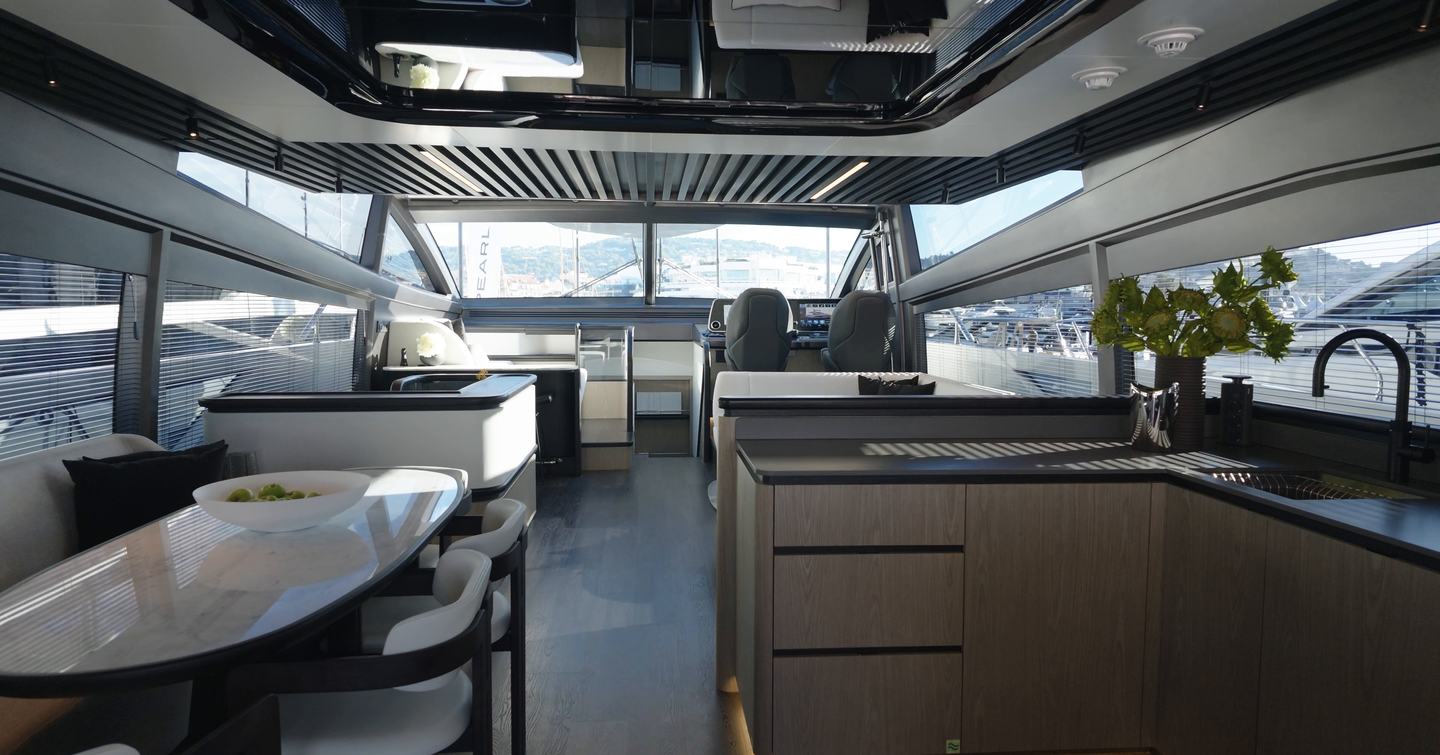
Move forward and the saloon is still very bright, despite the darker tones of Kelly Hoppen’s Monochrome scheme. Pearl pulls the windscreen a long way back and there’s glass everywhere, which gives the front of the saloon an almost atrium-like feel. The downside is obvious enough. All that glass lets in a lot of heat too, so in warmer climates the air conditioning is going to earn its keep.
The main seating area is a good size and it doesn’t feel like somewhere you’d only use at anchor. There’s enough space up here for people to sit comfortably while the boat’s under way, and the TV disappears neatly into a cassette when you don’t want it. A lot of the softer, curved detailing from elsewhere in the boat carries through here too, which helps the whole thing feel less hard-edged than the 72.
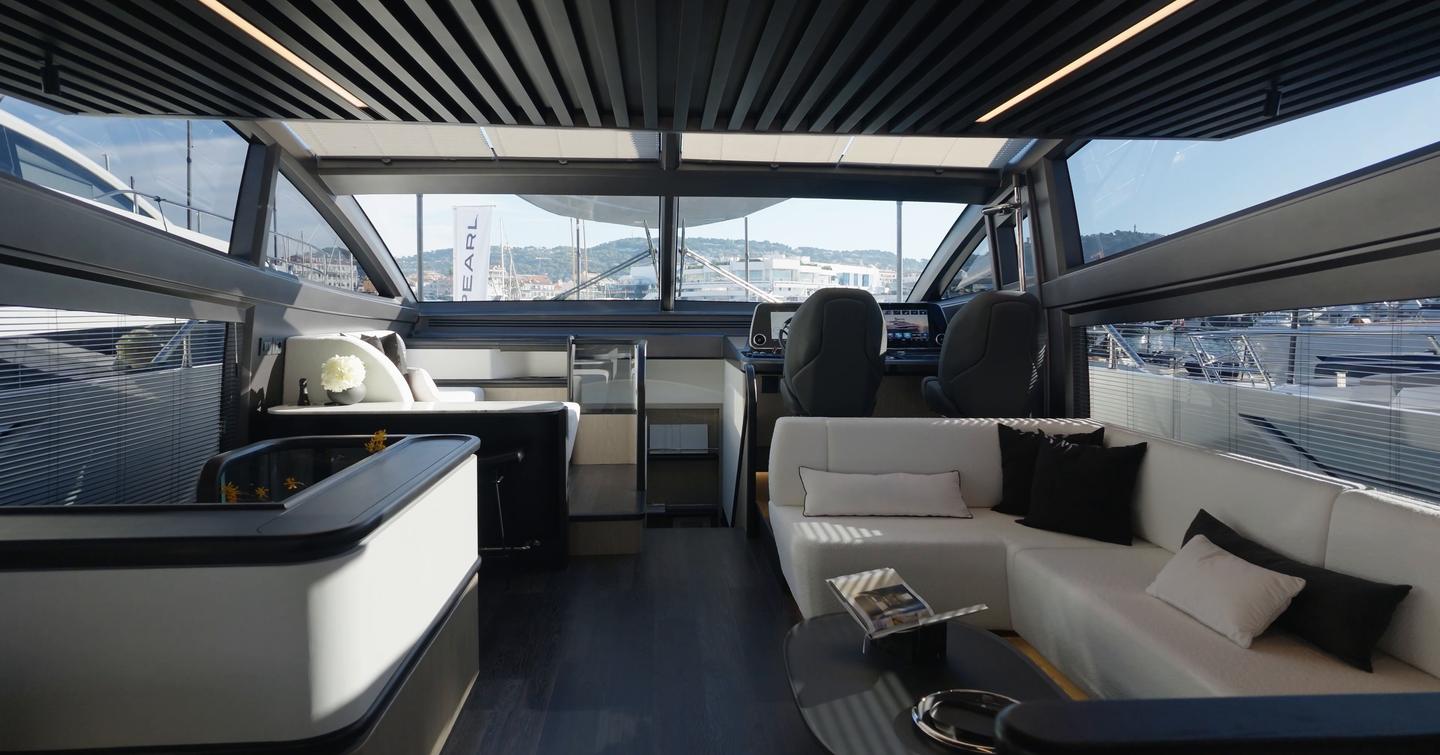
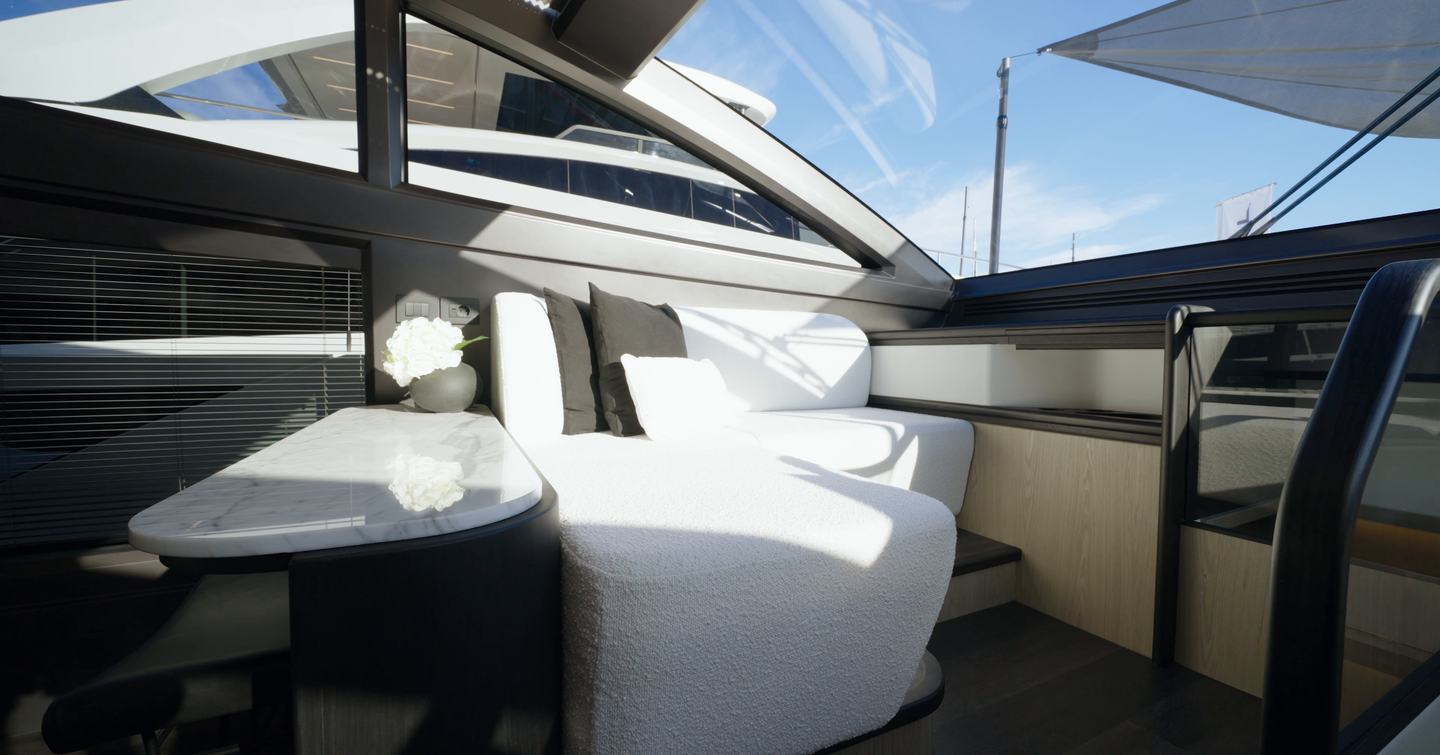
Farther forward there’s another small seating area close to the helm. It’s handy for someone who wants to sit up near the action when the boat’s moving, but it could just as easily work as a little ad hoc desk if you need to get a laptop out. The switchboard, digital switching, AC/DC controls and air-conditioning controls are tucked away beneath, so Pearl hasn’t wasted the space either.
Two Owner's Cabins
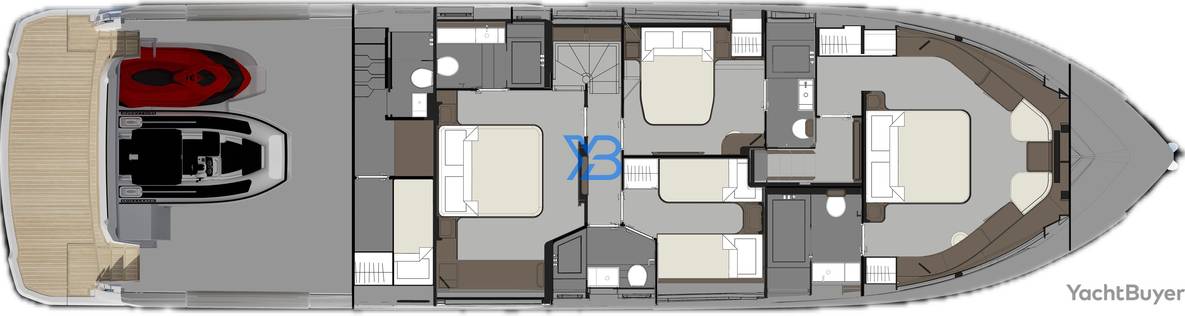
Pearl’s big trick downstairs is still the way it splits the accommodation. There are four guest cabins in total, but the forward owner’s cabin sits completely apart from the other three. That gives the owner a level of privacy you don’t often get on a boat this size, and it also explains why Pearl can make a fair case for there being two possible owner’s cabins on board.
The forward cabin is the larger of the two. It naturally follows the shape of the bow, so the softer curves in the new interior work particularly well in here. The bulkheads, bedside tables and cabinetry all pick up that theme, and the lighting has had plenty of thought too, with downlights, proper reading lights and those floating bedside tables either side of the bed. It feels very well put together without trying too hard.
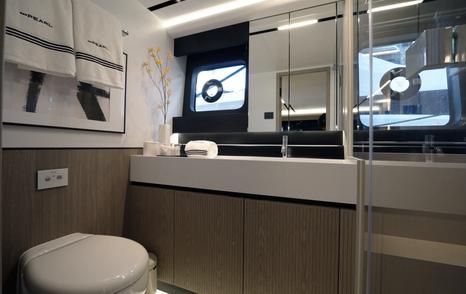
The ensuite is much the same size as before, but Pearl has opened up the shower entrance, which makes it easier to get in and out and gives you a bit more room to dry off. It’s a small change, but a useful one.
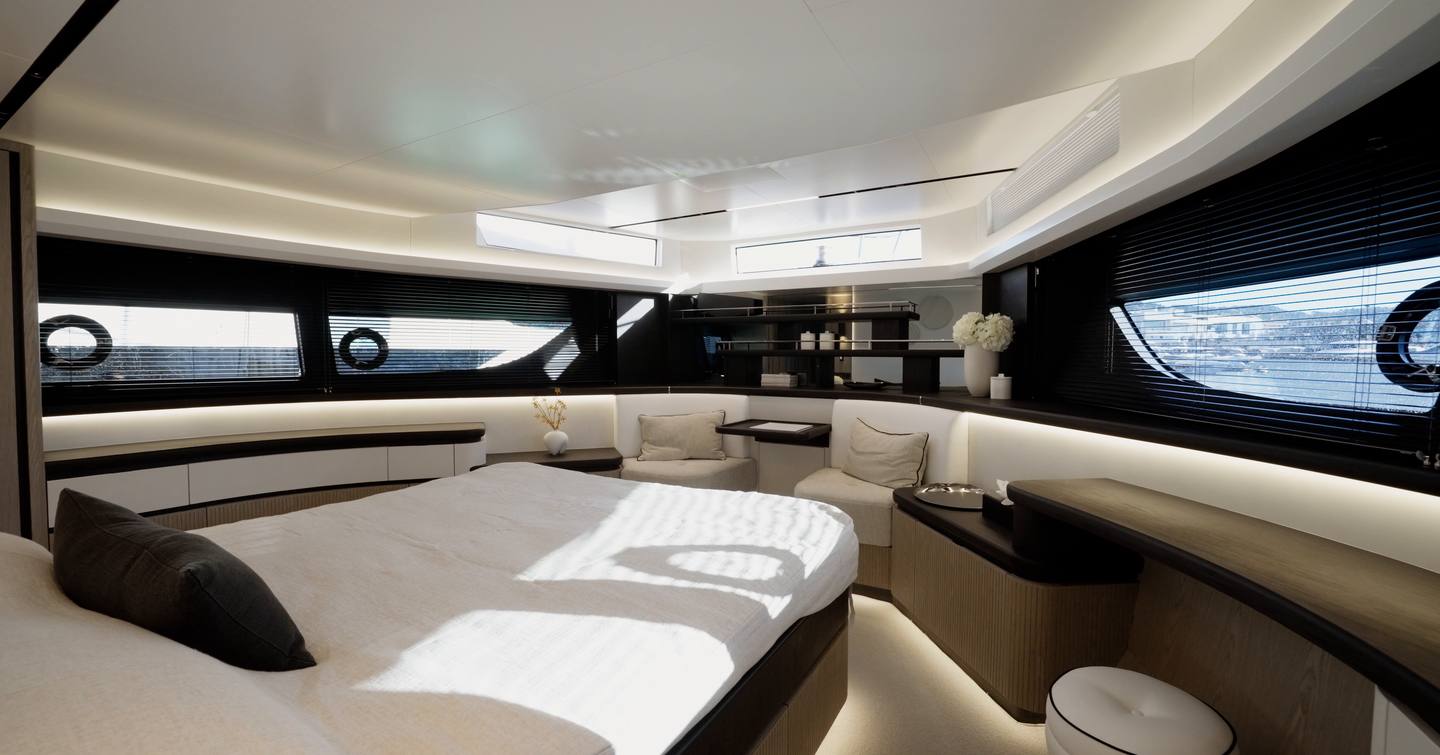
The second owner’s cabin sits amidships. It’s smaller than the one forward, but not by so much that it feels like a poor relation. In fact, depending on how you use the boat, this could easily be the owner’s cabin. If you’ve got children in the other cabins, you’re closer to them here. If you want more privacy, take the forward cabin and leave this one for guests. That flexibility is one of the smartest parts of the layout.
There’s good headroom, storage under the bed and a TV hidden behind the mirror. The revised staircase has also found space for a much deeper wardrobe than before. The en suite is a similar size to the one forward, so you don’t feel as though you’re giving up much in the bathroom department either.
Two More Cabins
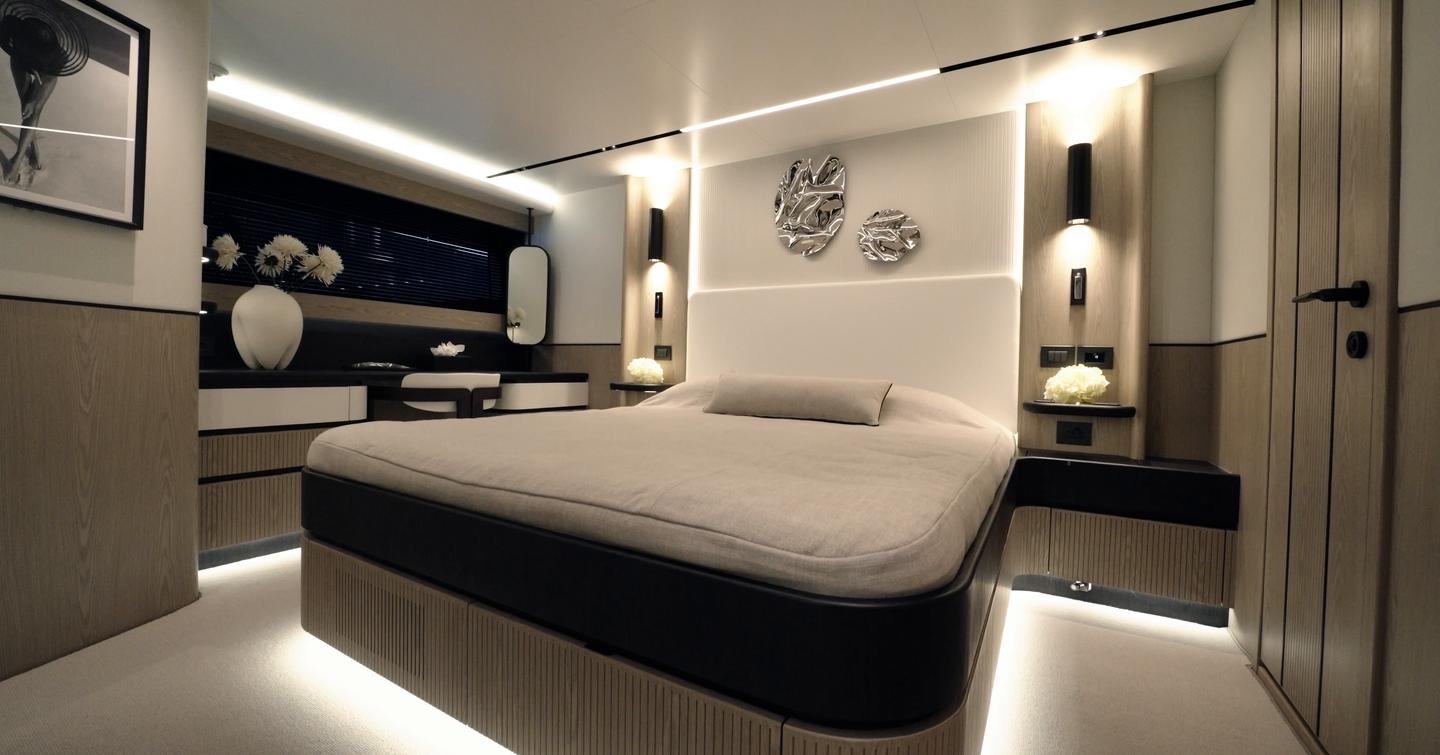
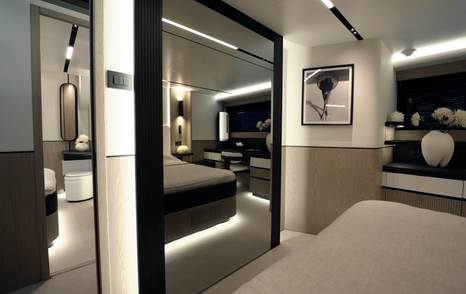
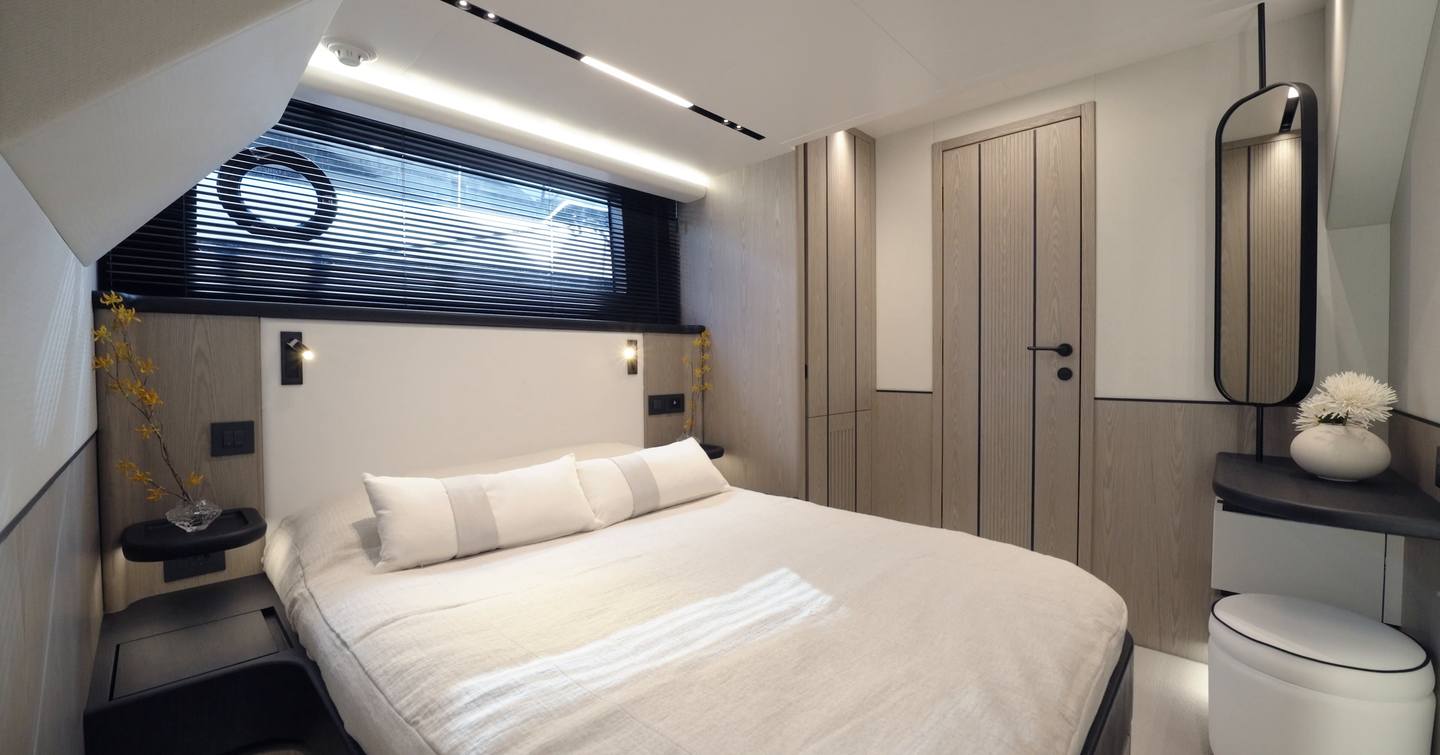
Across the passage is another double. The finish is still strong in here, with a mirrored TV, bureau and a swivelling vanity mirror, but this cabin also gets one of the layout’s compromises. The altered staircase creates an intrusion above one side of the bed. It’s not terrible, but whoever sleeps there will need to remember it’s above them when they get in and out. The upside is that this cabin still has its own ensuite.
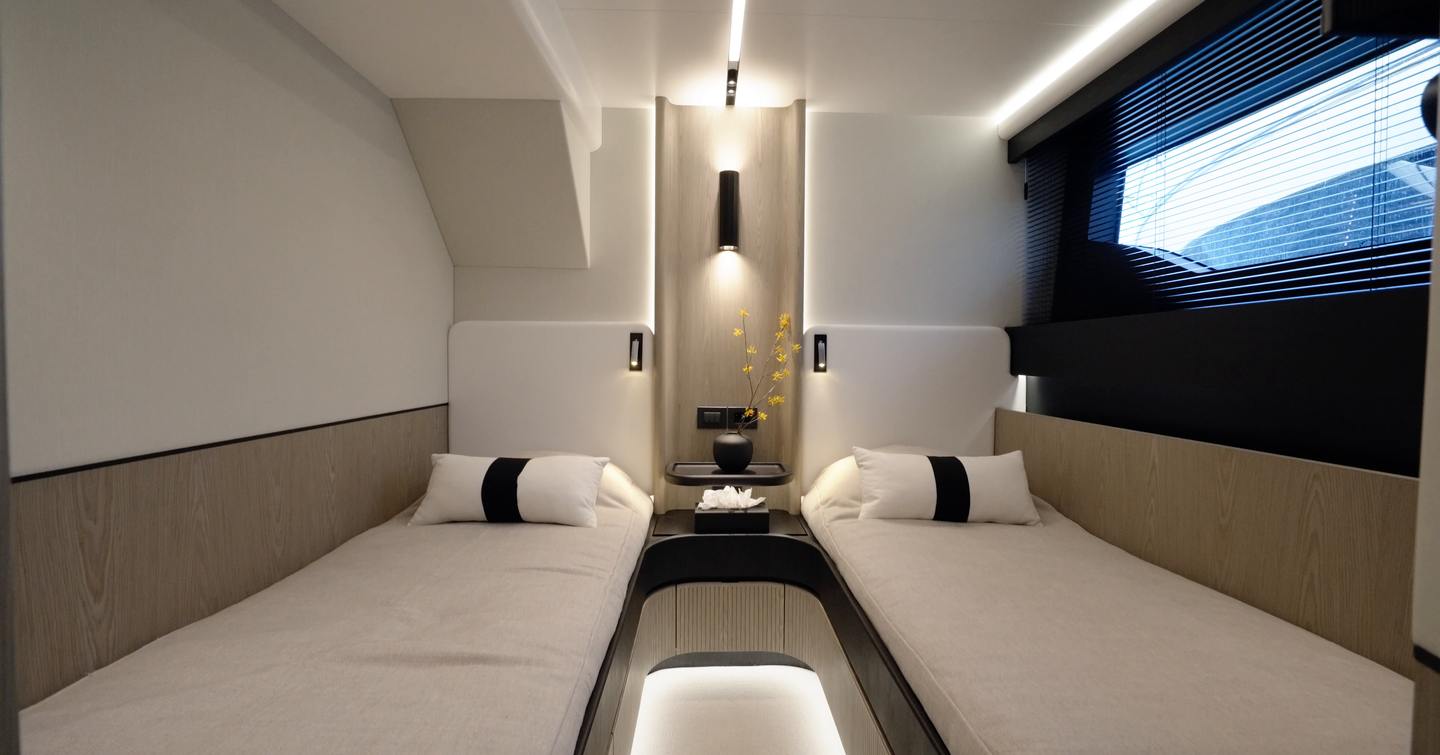
The twin is the smallest cabin on board, though the headroom is good and the berths are a decent size. Natural light is good too, and it still gets the same treatment as the bigger cabins, including a TV, Sonos soundbar and independent air conditioning. Its bathroom also works as the day head from the passage, but the twin still has direct private access when it’s occupied.
There are compromises here, mainly in the smaller twin and the staircase intrusion in the double, but the bigger point is how much Pearl has managed to fit in. Four cabins, four private bathrooms and two credible owner’s-cabin options is a lot to squeeze into 21.99m (72ft 2in), and the layout still manages to keep the owner properly separate if that’s what they want.
Crew Accommodation
The Pearl 73 sits right on the edge of being a crewed boat. Some owners will run it themselves, others will want one or two crew, and Pearl has left enough room for either approach.
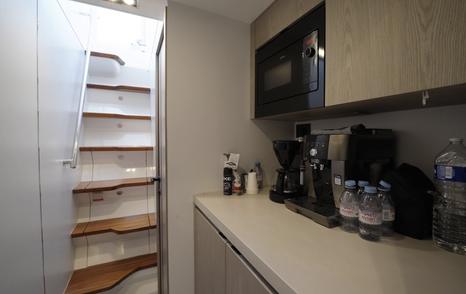
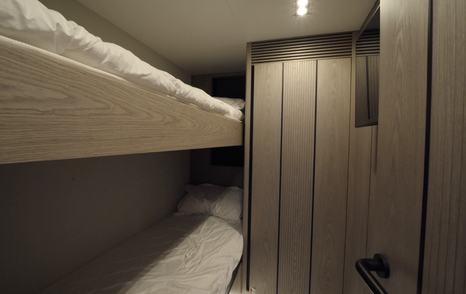
Access is from the side deck and the steps down are quite steep, to the point where going down backwards makes sense. At the bottom there’s a wet room, then a bunk cabin for two. If there’s only one crew member aboard, the upper bunk folds away, which opens the space up a bit. There’s also a small galley section and a decent amount of storage.
It’s not huge, but it doesn’t need to be on a boat that may spend much of its life owner-operated. For one crew member it should work well enough, and there’s still the option of carrying two when you need them. A watertight door at the back leads straight into the engine room, where the tender garage starts to have an effect on the available space.
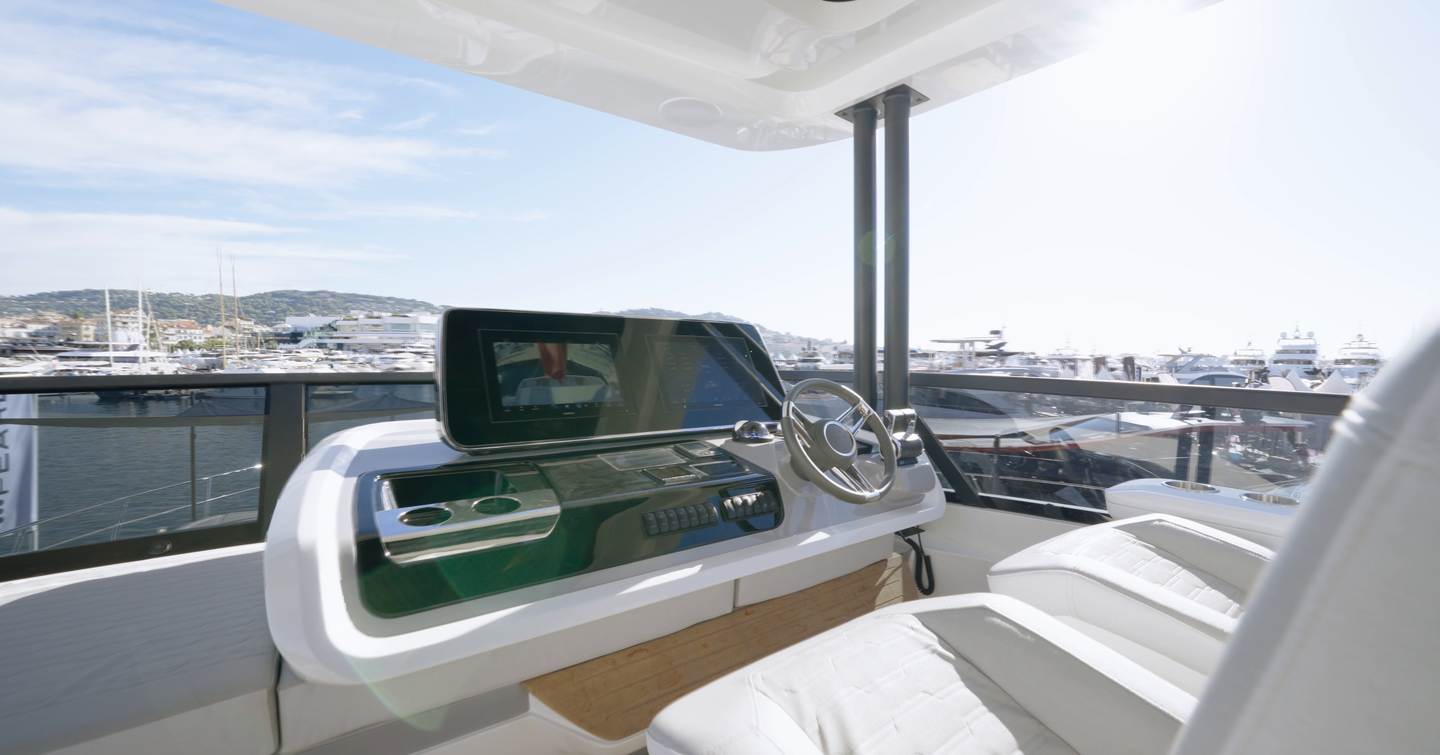
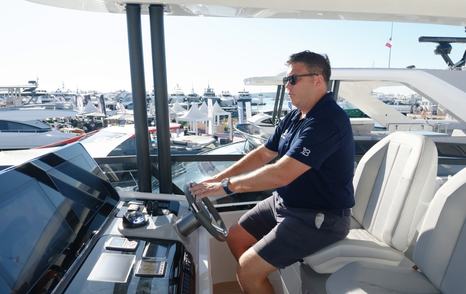
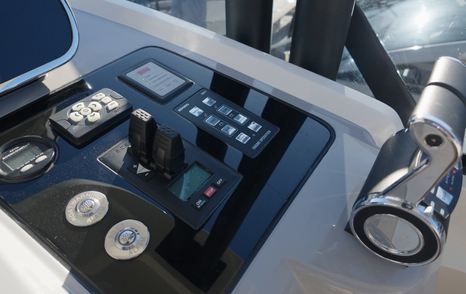
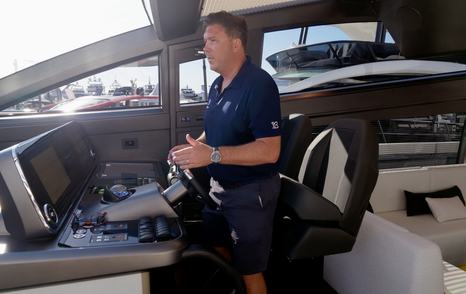
The flybridge helm is a clean setup without going completely touchscreen. There are two proper helm seats, both adjustable, and most of the information sits on the main displays. Pearl has grouped a lot of the switches together too, but it’s kept physical controls for things like the anchor, horn, lighting and bilge pumps, which is exactly where you want them. The throttles fall easily to hand and the view forward is good. There are cupholders behind as well, which are just as useful for a phone as they are for a drink.
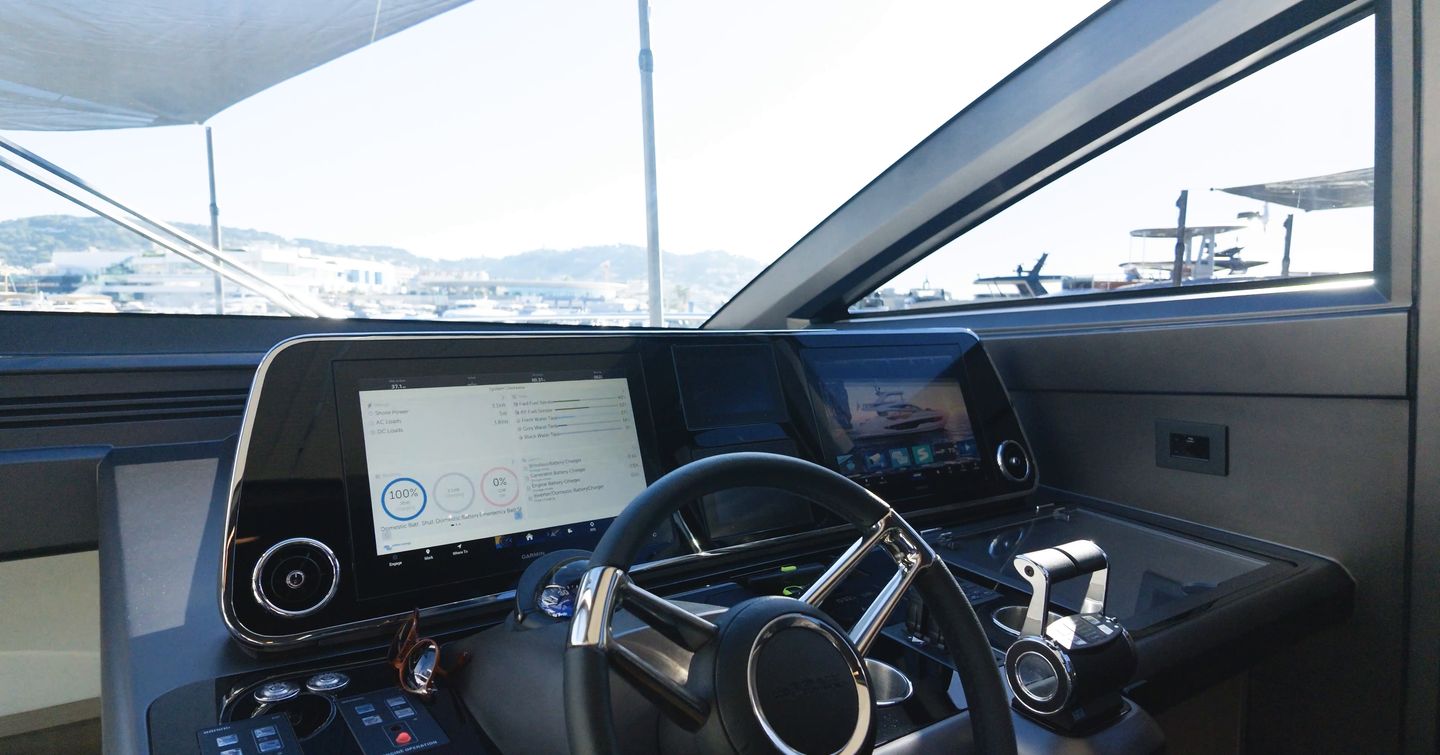
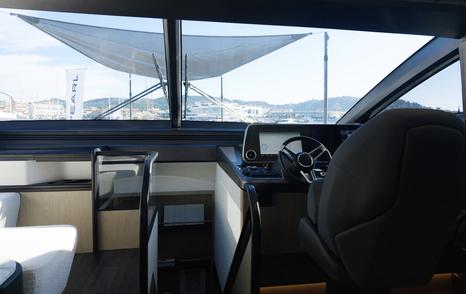
The lower helm follows much the same idea. Two large Garmin screens do most of the work, but there are still some proper switches and, rather unusually these days, a chart table with storage underneath. The seats are comfortable and can be used either sitting down or with the bolsters up, and all that glass across the front of the saloon gives you a very open view from here.
We didn’t sea trial this 73, so these aren’t fresh driving impressions. Pearl has kept the same engine options and it'll be broadly the same performance profile as the 72, with twin MAN diesels rated at 1,400hp or 1,550hp. Pearl quotes around 33 knots at the top end, with a cruise of about 25 knots and roughly 250-300nm of range. For the real numbers - fuel burn, range and speed data - our Pearl 72 sea trial and performance results give you the full picture from our test of the previous model.
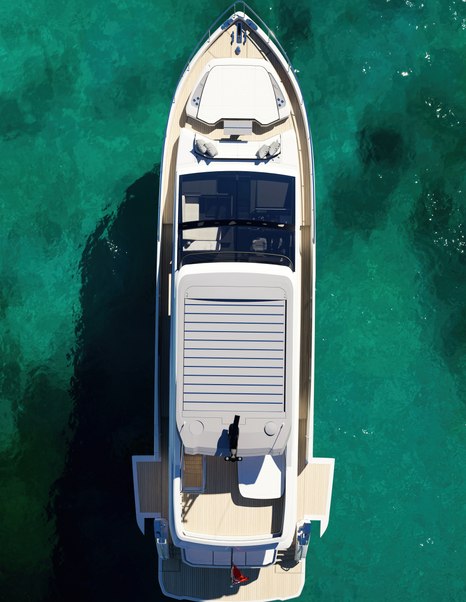
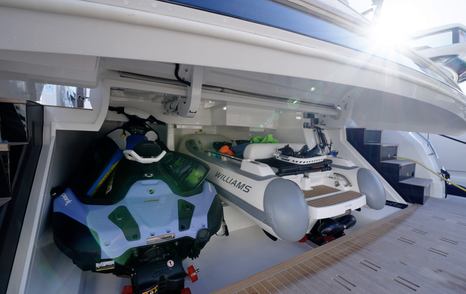
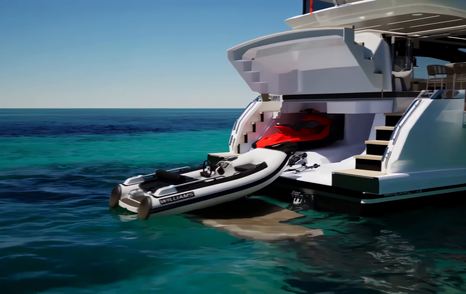
The stern still does something few boats this size can match. Drop the hydraulic bathing platform and behind it there’s a good-sized tender garage with enough room for both a Williams 345 and a Sea-Doo Spark. That’s a lot of toy storage for a 21.99m (72ft 2in) boat, and the useful bit is that it leaves the platform completely clear once everything’s packed away.
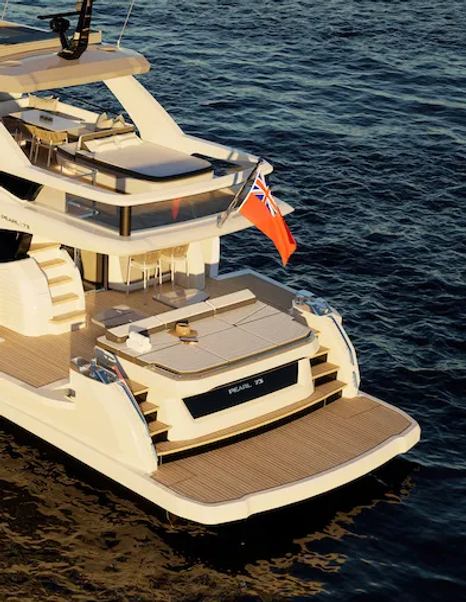
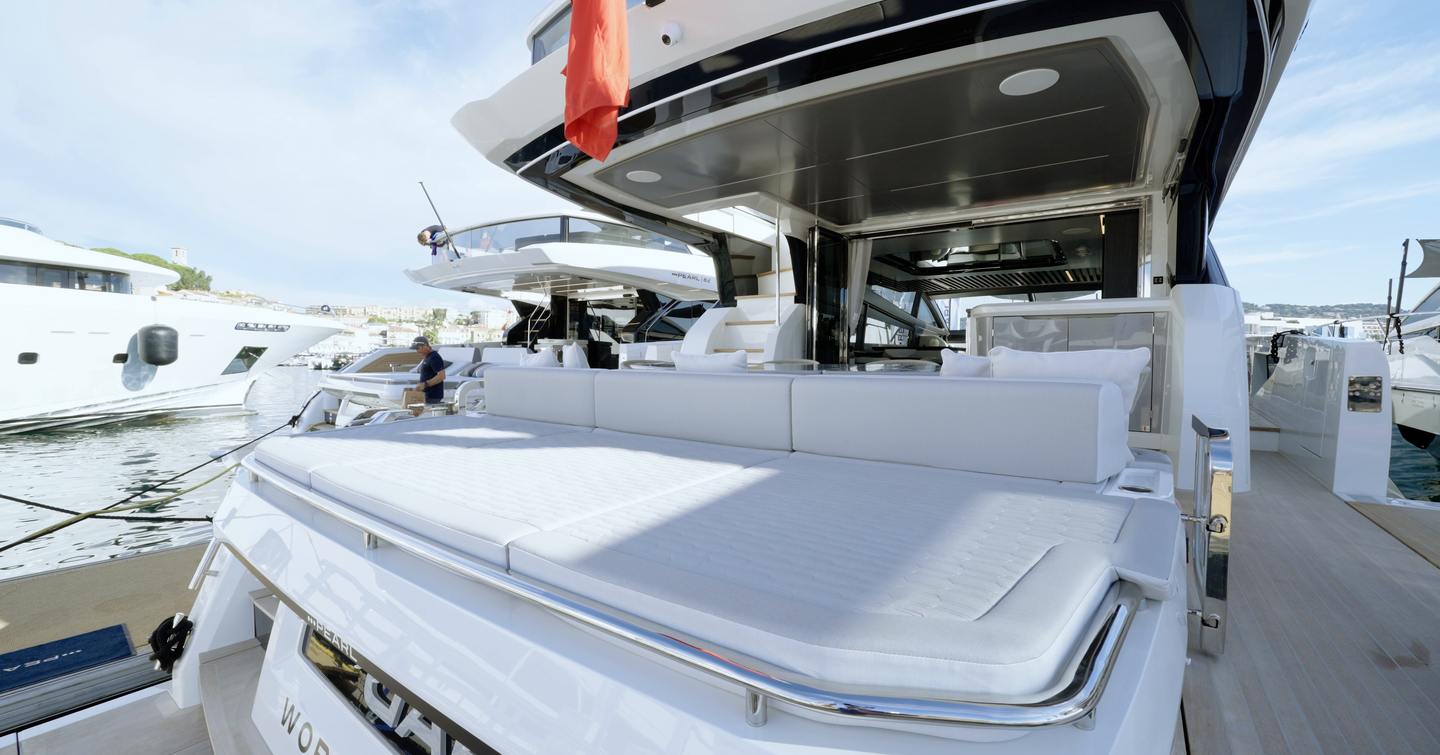
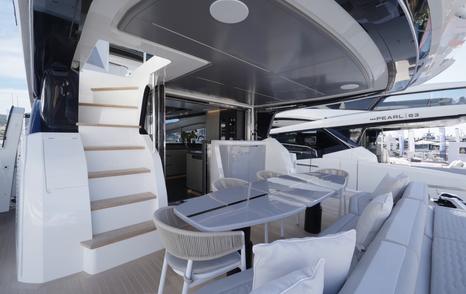
Step up into the cockpit and this is where one of the bigger changes from the 72 appears. The balconies used to fold out down at bathing-platform level. On the 73 they’ve moved up here, so they widen the cockpit instead. I can see the logic. You get much more main-deck space around the seating and dining area, though I’m not sure it’s simply better. The old arrangement worked well too and gave you that extra width right beside the water. It probably comes down to where you’d rather have the space.
The furniture has had some thought as well. The cockpit table adjusts at both ends and the centre section lifts out, so it can work as a pair of lower coffee tables with a clear route between them. Put the infill back and it becomes a proper dining table. The backrests are weighted rather than fixed, so they can move around too. Leave them where they are for dining or push them forward and the whole thing turns into a large sunpad.
Pearl had considered putting stools against the galley bar here, but that would’ve squeezed the passage too much. Storage went underneath instead, which is probably the better call. There’s also the option of a third control station with throttles and thrusters. It has a good view forward with the crew door shut and should be particularly useful when the boat goes stern to. Covers can fully enclose the cockpit as well, so this space doesn’t become useless as soon as the weather turns.
Side Decks & Foredeck
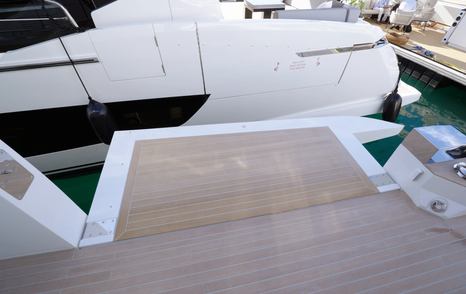
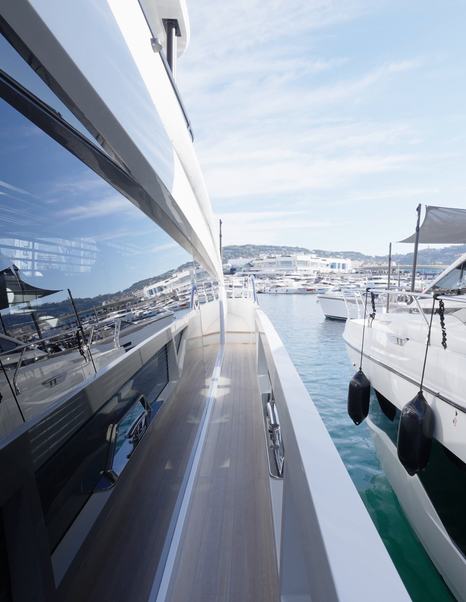
The side decks are straightforward, but there are some good details. Boarding gates on both sides make life easier against a high quay, and farther forward the rails are proper chunky things with a nice rounded section. There aren’t any rails right aft, where Pearl uses fender straps instead, then the stainless picks up again as you head towards the bow.
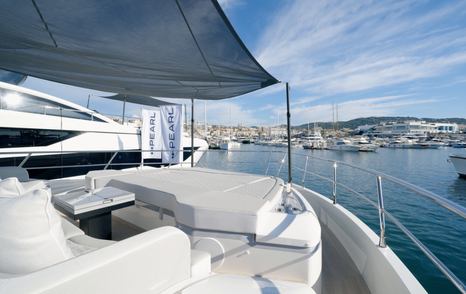
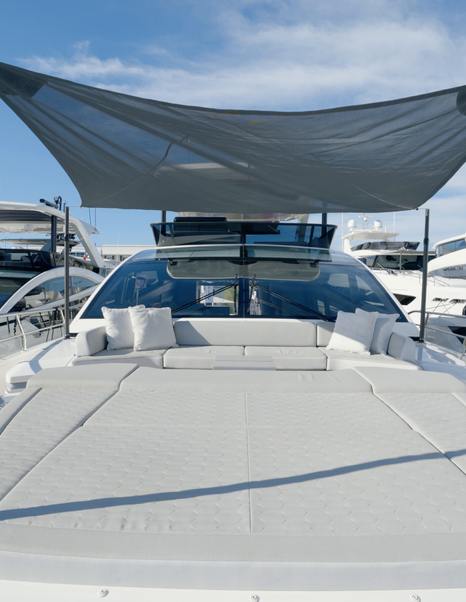
The foredeck hasn’t changed anything like as much. The sunpad remains, but the table is now separate rather than built into it. It adjusts and opens out, though it feels more suited to drinks and snacks than a full meal. There’s a pop-up shade overhead, storage on both sides and a few small touches that make the space easier to use - deep cupholders, a recessed place for a phone and pop-up lights for the evening. The chain locker is split and the deck hardware feels suitably substantial. It’s a very usable foredeck, especially later in the day when the heat drops away.
Flybridge
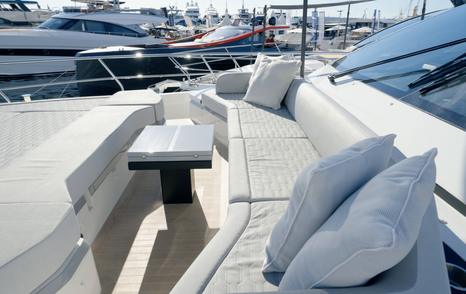
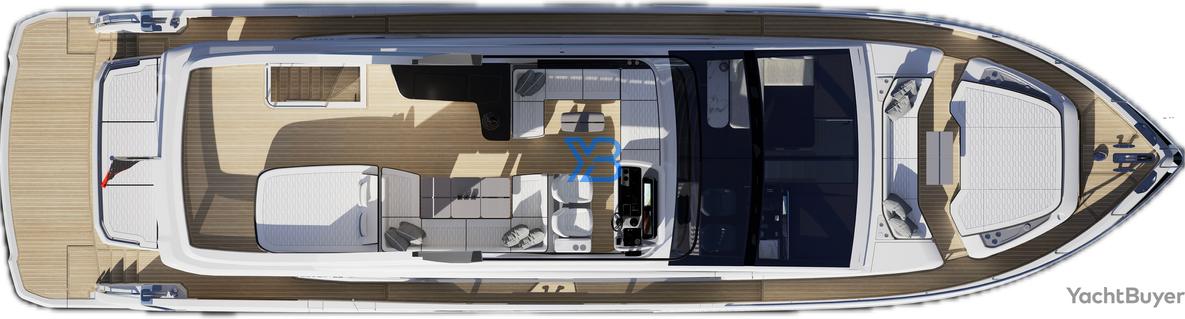
The flybridge remains one of this boat’s big strengths as it’s huge for the class, but Pearl has resisted the temptation to leave the whole aft end empty. There’s still some open deck space, but there’s fixed furniture too, which means you’re not reliant on loose chairs every time you want to use it. A long sunshade extends aft from the hardtop and disappears back inside when it’s not needed.
The old walk-around bar has gone. On the 73 it sits to one side instead, which frees up more room through the middle without losing much in the way of kit. There’s a grill, sink, fridge, ice maker and a top-loading fridge, which is one of those small things that just works well because everything’s easy to get at. The dining table uses the same idea as the one downstairs. Remove the centre section and people can move through more easily during the day; put it back and four can dine comfortably, with two stools on the other side if you need them.
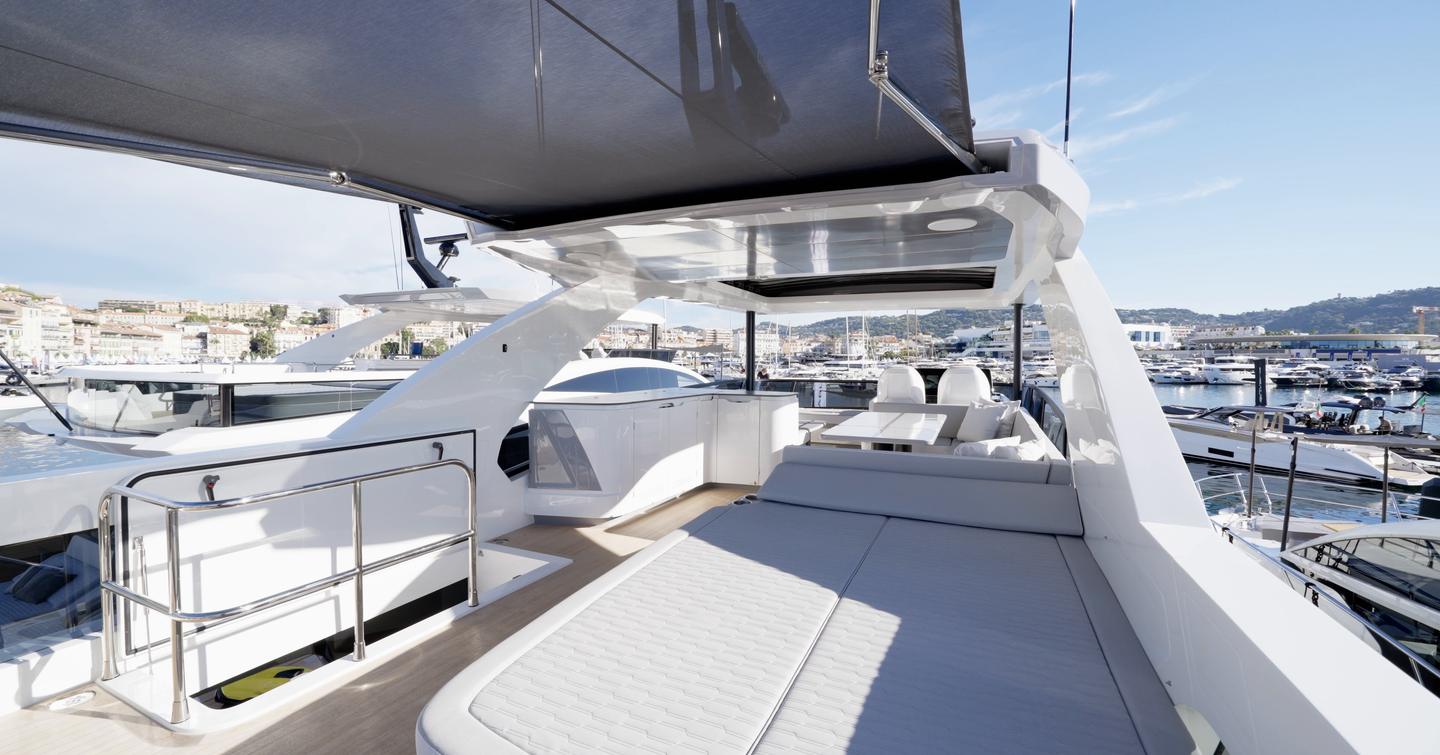
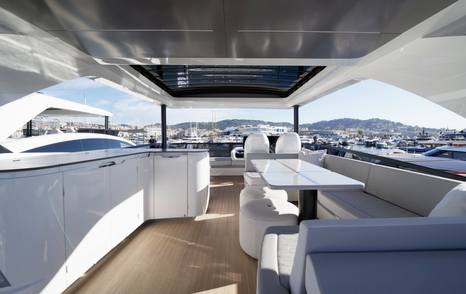
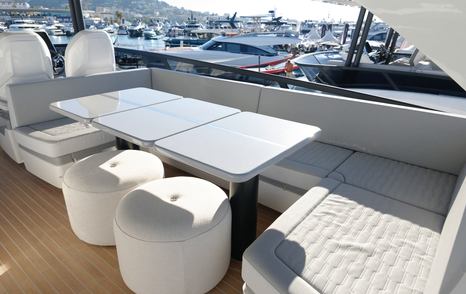
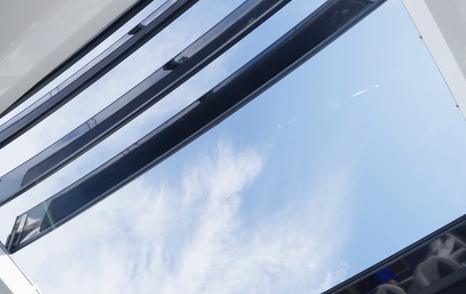
Forward of that is another seating area beside the helm. It’s a useful place when the boat’s under way because people can sit facing forward near the skipper, but it also works as a more casual spot for a drink away from the main table. Overhead, the hardtop has a tilt-vane sunroof rather than a big canvas opening. It can tilt to let some light in or slide farther back when you want it properly open, and it feels a bit tidier than a large piece of fabric flapping about.
There’s a lot going on up here, but it never feels as though Pearl has just filled the flybridge because the space was available. It has areas to sit, eat, cook and travel, with enough open deck left over that it doesn’t feel hemmed in. That was one of the strengths of the 72 and the 73 keeps it.

Engine Room
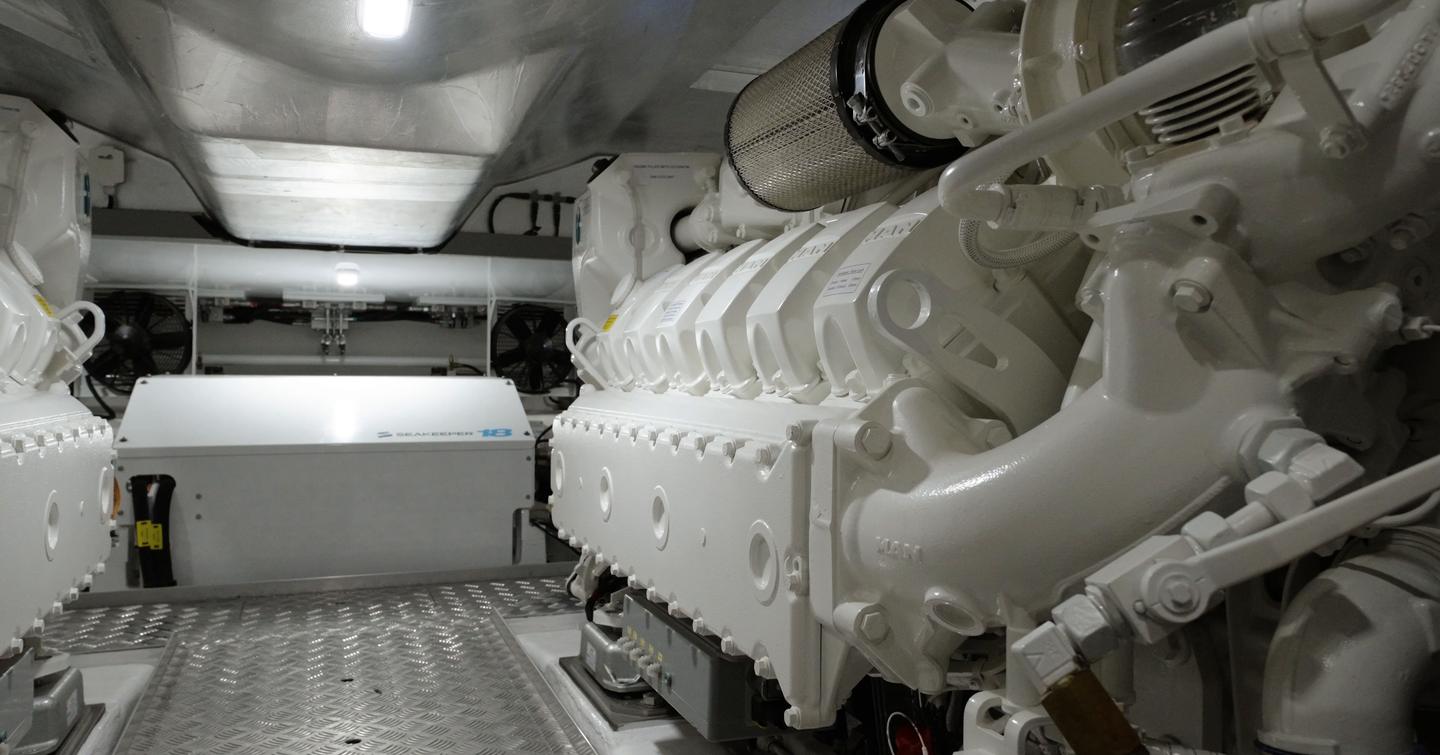
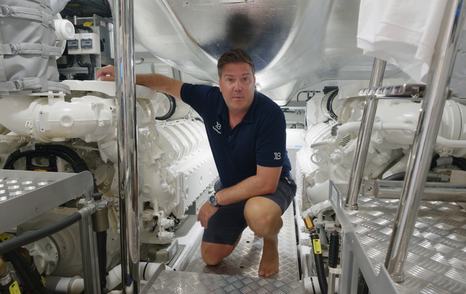
The Pearl 73 comes with twin 1,400hp MAN V12s as standard, with 1,550hp V12s available as an option. You can compare the two Pearl 73 engine options side by side on YachtBuyer, including their outputs and published performance figures. The price you pay for that big tender garage appears in the engine room, where it creates a large hump through the middle. This isn’t the easiest machinery space to move around, though you can still clamber around it reasonably well and access outboard of the engines isn’t too bad.
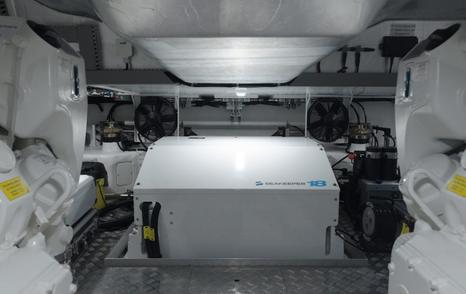
The checkerplate underfoot is quite hard on knees and feet, but the installation itself is very tidy. The plumbing is labelled, the direction of the flows is clear and the wiring is neatly aligned and tied away around the edges. This particular boat is very highly specced too, with a Seakeeper, generator and air conditioning among the kit on board.
It’s not the roomiest engine room in the class, but that’s the trade-off for the garage above it. Pearl has managed to keep the machinery installation clean and workable while still finding space for an amount of toy storage few boats of this size can match.
The Pearl 73 comes with a healthy standard specification. Twin 1,400hp MAN V12s, four ensuite guest cabins, crew accommodation, a Kohler generator, bow thruster, Garmin navigation kit and Humphree interceptors are all included. So are the hydraulic bathing platform and the garage sized for a Williams 345 and Sea-Doo Spark, which are two of the boat’s strongest features.
The options list is where the price could start to climb. The 1,550hp MANs cost extra, as do the Seakeeper SK18, hardtop with tilt-and-slide sunroof, fold-down cockpit wings, hydraulic passerelle and hydraulic thrusters. Pearl also lists upgraded air conditioning, a side door, spa tub and Glendinning cable system among the extras.
That distinction matters because this first 73 is very highly specced. The base boat already gives you most of the layout and equipment that make the model interesting, but anyone trying to recreate this particular boat would need to budget above the headline price. Pearl doesn’t publish individual option prices, so the final jump is difficult to quantify. The five-year warranty does at least add some useful reassurance to the ownership proposition.
Our Verdict
The Pearl 73 had a tough act to follow, but it’s done it. The 72 earned five stars from us and the 73 has now matched that score, which says a lot given how little there was to fix in the first place.
The aft galley works better, the interior feels softer and better finished, and the four-cabin layout is still one of the cleverest in the class. There are compromises around the smaller guest cabins and the engine-room intrusion from the tender garage, but they’re easy to understand when you see what Pearl has packed into 22m (72ft).
Five stars again, then, and another Pearl worthy of the YachtBuyer Hall of Fame.
Reasons to Buy
- Huge tender garage for this size
- Build quality feels very good
- Two credible owner's cabin options
Things to Consider
- Engine room suffers for the garage
- Crew access is pretty steep
Pricing
Price as reviewed: £2,870,000 (€3,338,596 approx)
The Pearl 73 price starts at £2.87 million before tax, but that’s the base figure and not the cost of the boat we toured as Pearl has not supplied the price for that particular yacht. YachtBuyer MarketWatch will be worth checking for live Pearl 73 asking prices and price changes, as they come to the market.
Looking to own a Pearl 73? Use YachtBuyer’s Market Watch to compare all new and used Pearl 73 Yachts for sale worldwide. You can also order a new Pearl 73, customized to your exact specifications, with options for engine choice and layout configuration. Alternatively, explore our global listings of new and used yachts for sale and find your perfect yacht today!
Rivals to Consider
The Princess Y72 is the obvious place to start, and it’s one we know particularly well because we’ve sea trialled it properly. At 22.8m (74ft 9in), it’s slightly longer than the Pearl and also has four cabins for eight guests, but the layout is more conventional, with a full-beam owner’s cabin amidships and three guest cabins forward. There’s no equivalent to the Pearl’s forward owner’s cabin or tender garage, but the Princess counters with a very polished all-round package, more substantial crew provision and twin 1,650hp MAN V12s good for a quoted 33-35 knots. If the Pearl appeals for the way it squeezes unusual features into 21.99m (72ft 2in), the Princess takes a more familiar route and does it extremely well.
The 22.69m (74ft 5in) Azimut Fly 72 is another close match, and we’ve spent time aboard the current model too. It also sleeps eight in four cabins, with two crew, but Azimut puts more emphasis on weight saving, using carbon fibre alongside GRP in the structure. Twin 1,400hp MAN V12s give it a quoted 32-knot top speed, and its 5,200-litre fuel capacity is usefully larger than the Pearl’s 4,340 litres. The Pearl is slightly broader at 5.75m (18ft 10in) against the Azimut’s 5.62m (18ft 5in), but the bigger difference is what happens below decks. Azimut sticks with the more usual full-beam master arrangement, while Pearl uses the same four-cabin footprint to create that separate forward owner’s cabin.
The latest Ferretti Yachts 720 is newer territory. This is the redesigned 2026 model, not the earlier 720 we’ve previously been aboard, so the comparison here is based on the current boat’s published specification rather than our own sea trial. At 22.5m (73ft 10in) with a 5.6m (18ft 4in) beam, it sits almost on top of the Pearl for size and also has four guest cabins plus crew accommodation. The standard twin 1,200hp MAN V8s give 28 knots, while the optional 1,400hp V12s lift that to a quoted 32 knots. Its lower deck is more conventional, with a master, VIP and two twins, while the crew area gets its own bathroom, laundry station and direct engine-room access.
Considering a new yacht? Explore Pearl's entire current range to find the model that best suits your needs, and compare it with alternatives from competitors to ensure you make the perfect choice.
Specifications
- Builder Pearl Yachts
- Model Pearl 73
- Length Overall 21.99m
- Beam 5.75m
- Draft 1.7m
- Hull GRP
- Cabins 4
- Berths 5
- Crew 2
- Yacht Type (Primary) Flybridge
- Use Type (Primary) Weekending
- Cruising Speed
- Max Speed
- Fuel Capacity 4,340 Litres
- Fresh Water Capacity 950 Litres
- Engine Model 2x MAN V12-1550
Tenders
The Pearl 73 supports tenders with a max length of 3.45m
Pearl 73 Layout
-
Flybridge
-
![Flybridge Pearl 73]()
Moving the bar to the side opens up the centre of the flybridge while still leaving fixed seating and useful open deck space aft.
-
Main Deck
-
![Main Deck Pearl 73]()
Moving the galley aft ties it much more closely to the cockpit, while the saloon and forward seating stay grouped around the lower helm.
-
Lower Deck
-
![Lower Deck Pearl 73]()
The clever bit is the packaging: four ensuite cabins, two credible owner’s suites and a garage for a Williams 345 and Sea-Doo Spark all fit into 21.99m (72ft 2in).
Interested in a Pearl 73?
NEW Build
Find your local dealer for a personalised, no-cost consultation
or just request
Brochures & Pricing
Used & In Stock
Looking for a ready-to-go Pearl 73 or pre-owned options? Explore all inventory of the Pearl 73 available worldwide