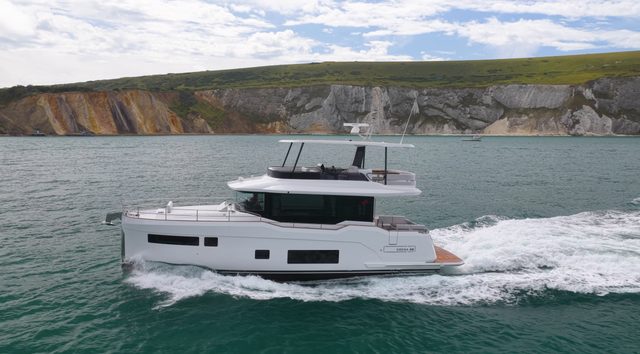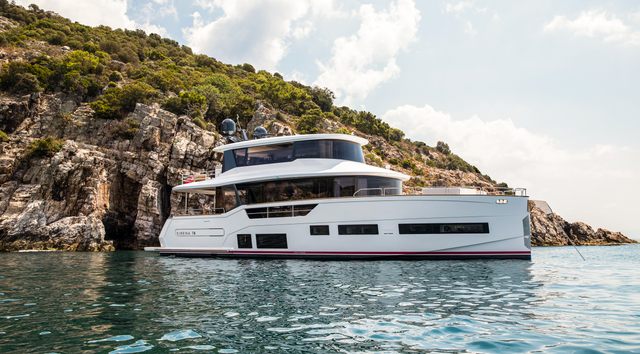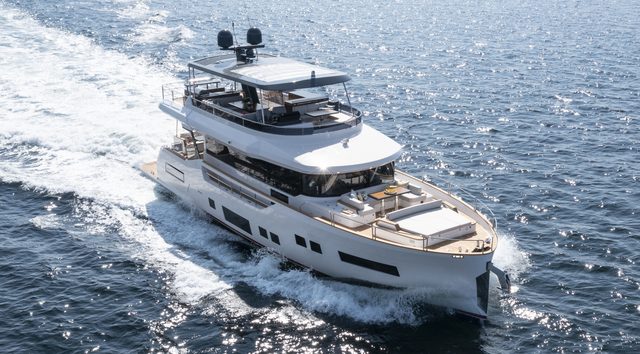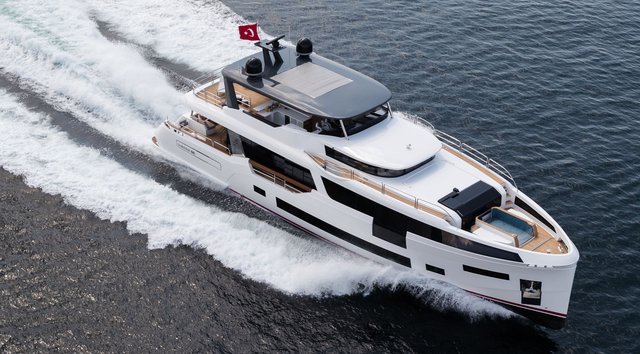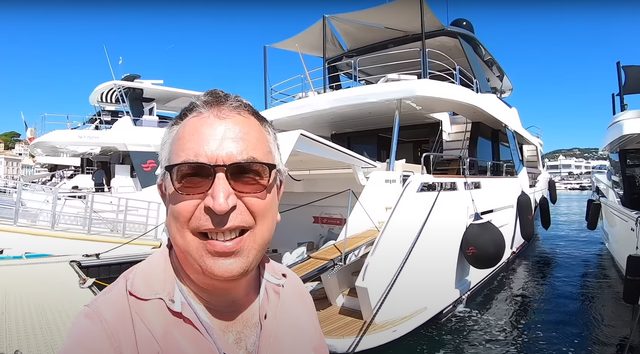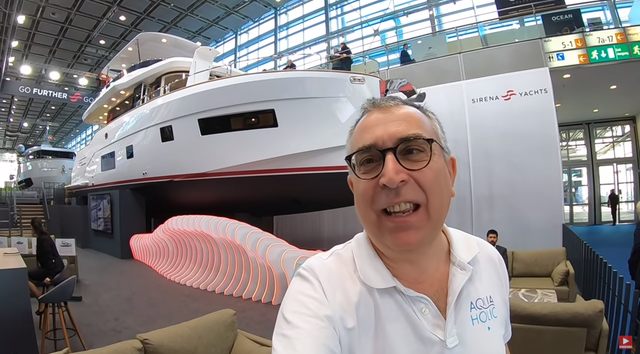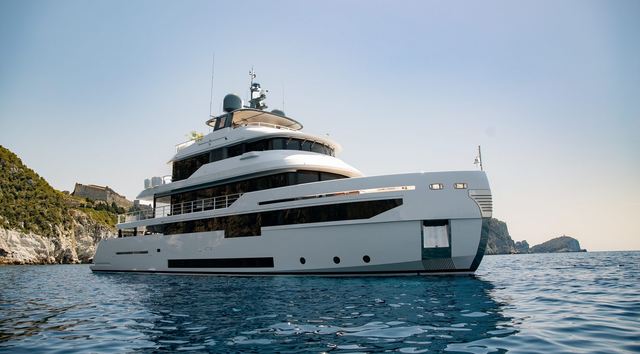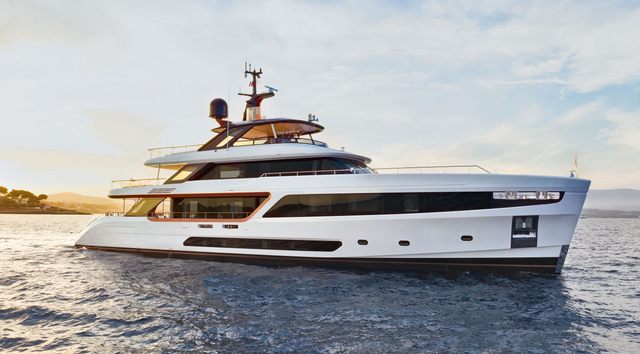
Sirena has reached a very different part of the market with the 118, and that brings a different level of scrutiny with it. The yard is now up against builders with decades of experience at this size, so simply making a bigger Sirena was never going to be enough.
But hull #1 hasn’t been treated as a cautious toe in the water. There are some big calls here, from the way space has been carved up to the interior itself. So do those brave decisions add up to a yacht that can hold its own against its rivals?
Sirena 118
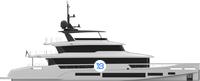
- LOA 36m
- Model Year 2026
- Cabins 6
- Crew 5
- Max Speed 19 knots
- Status In Production
- Yacht Type Superyacht
- Use Type Cruising
- Vessel M/Y Ikigai
Review Video
On paper, the Sirena 118 looks like quite a jump. The first Sirena-branded yacht, the Sirena 64, arrived in 2017 and the range grew in fairly measured steps from there. By 2022, the 26.8m (88ft) Sirena 88 was at the top of the line. The 118 adds another 9.2m (30ft) in one hit and takes Sirena’s GRP range well beyond the 30m mark less than a decade after that first 64 reached the water.
Sirena Marine had already committed to much larger yacht production through its separate Sirena Superyachts programme, with the 138ft Sirena 42M under construction while the 118 took shape. That yacht follows a steel-and-aluminium, more custom route, but it meant Sirena already had the facilities and appetite to build much bigger boats when it pushed its GRP range into the same territory.
The 118 was first announced in 2024 at Monaco Yacht Show, while detailed design work was still under way. Even then, the bones of the yacht were pretty well set: 36m (118ft) overall, below 300GT, six guest cabins, a huge beach club and the option of a two-level owner’s suite with its own lower retreat and direct access to the water.
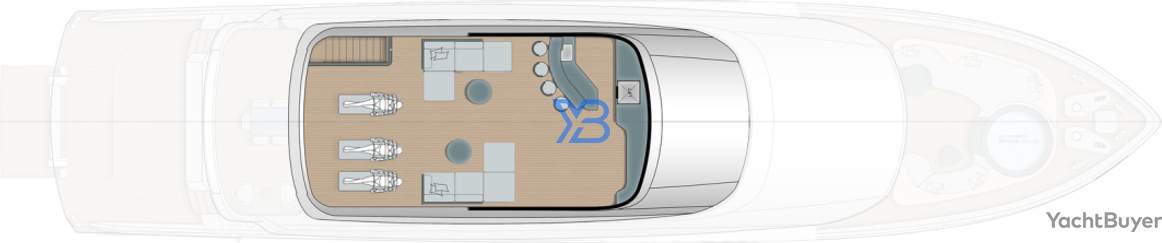
Early figures gave the yacht a 7.9m (26ft) beam and 265GT; the finished specification settled at 7.8m (26ft) and 279GT. The first plans also allowed for an optional circular pool forward and as many as seven crew through an upper deck captain’s cabin. Ikigai uses the bow as a semi-private owner’s terrace, puts the hot tub on the sun deck and houses five crew in three lower deck cabins.
Germán Frers carried out a fresh hull study for the 118, with CFD work on volume distribution, longitudinal centre of gravity, prismatic coefficients and the shape of the afterbody. This is its own hull, developed around the size and weight of the 118, and Sirena says the final geometry removes the need for propeller tunnels. The hull is glass fibre, with carbon fibre used in the upper decks, and resin infusion used in construction.
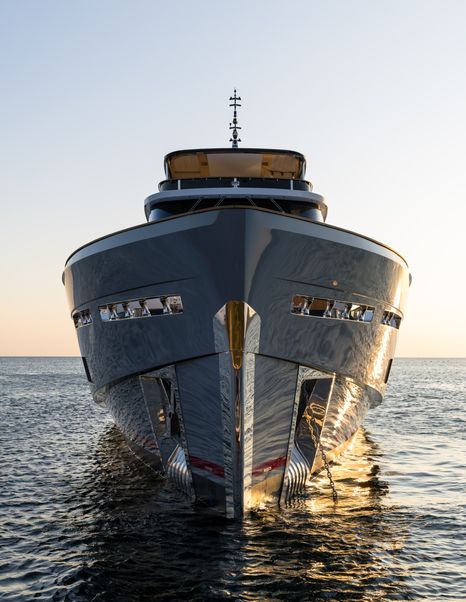
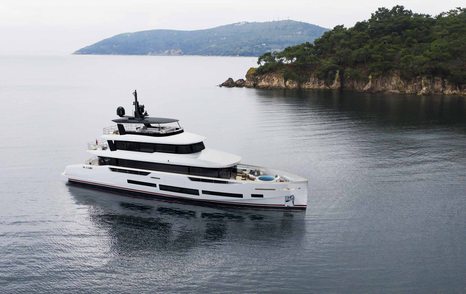
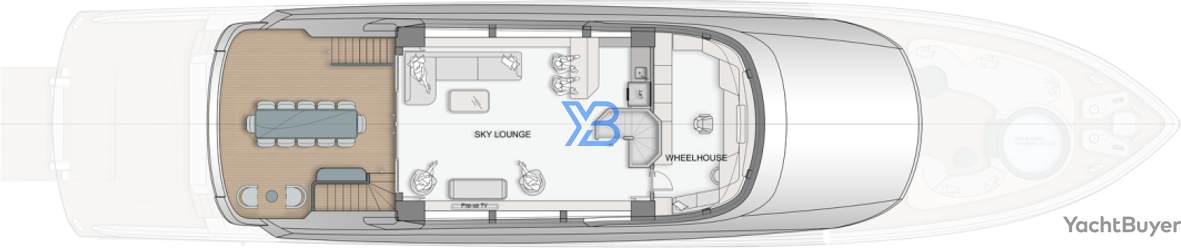
The family resemblance is still there, with a tall plumb bow, long strips of dark hull glass and an upright superstructure that pick up themes from smaller Sirenas, though there is far more height and mass here. On the bridge deck, Sirena has done away with the side decks altogether, so the upper saloon and wheelhouse run right out to the full beam. It creates a huge amount of room, but the skipper loses wing stations and has to lean more heavily on cameras and crew communication when coming alongside.
The same willingness to spend space differently crops up elsewhere, most obviously in the two-level owner’s quarters. Sirena has gone well beyond simply making the rooms bigger, while still keeping the yacht below 300GT at 279GT.
Cor D. Rover wasn’t given the easy brief here, and by his own admission he didn’t make life easy for Sirena either. Curves, awkward shapes and a long list of materials put plenty of pressure on the yard’s craftsmen. “We really gave them a hard time as designers with all the shapes and curvatures and materials,” he says, “but they did a fantastic job.” The designer puts much of that down to Turkey’s long history of woodworking and the sheer number of hours spent on the details, which starts to make sense once you get close to some of the finishes aboard Ikigai.

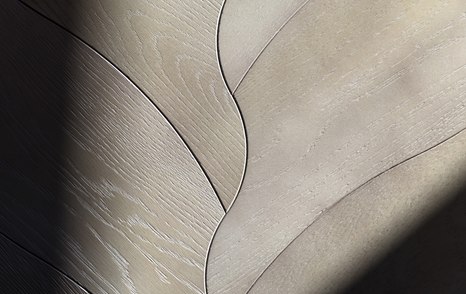

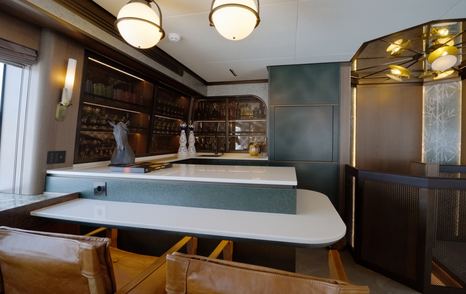
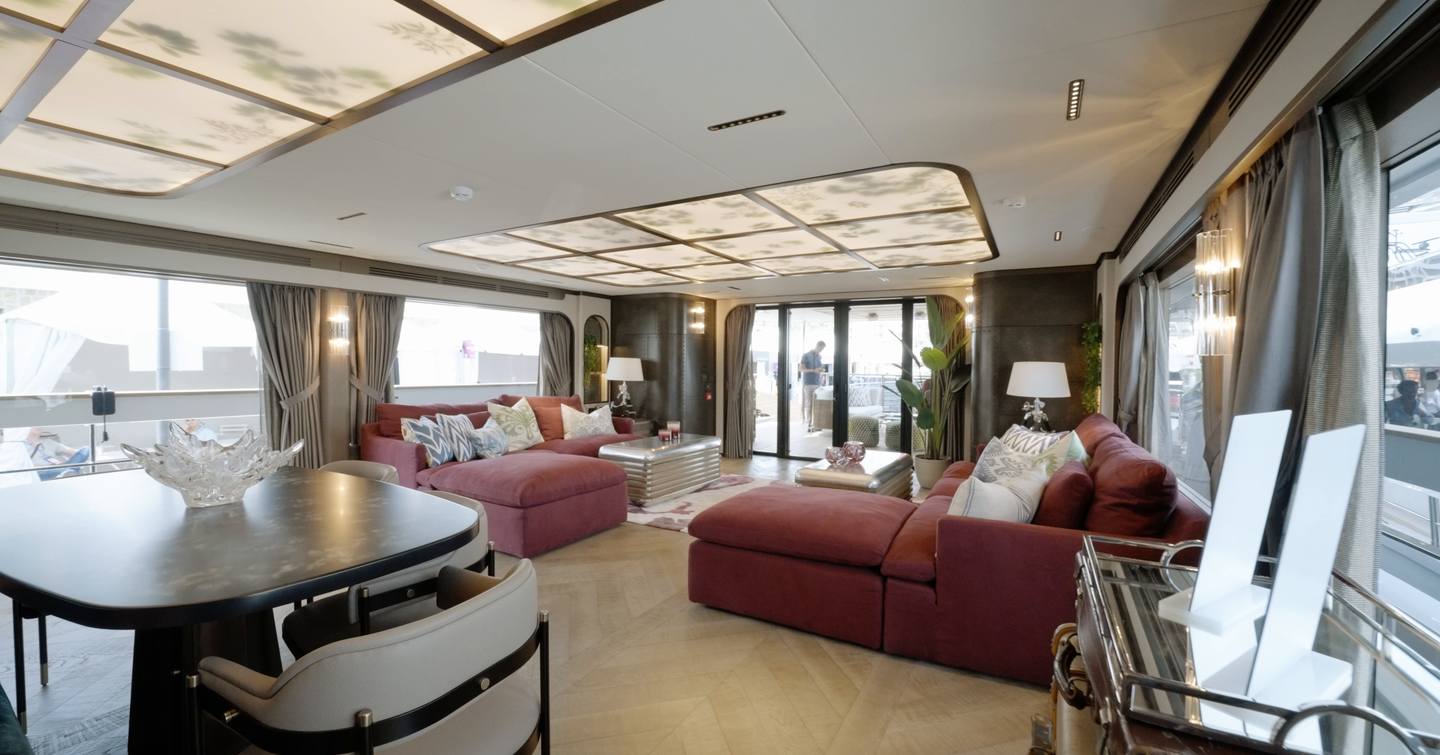
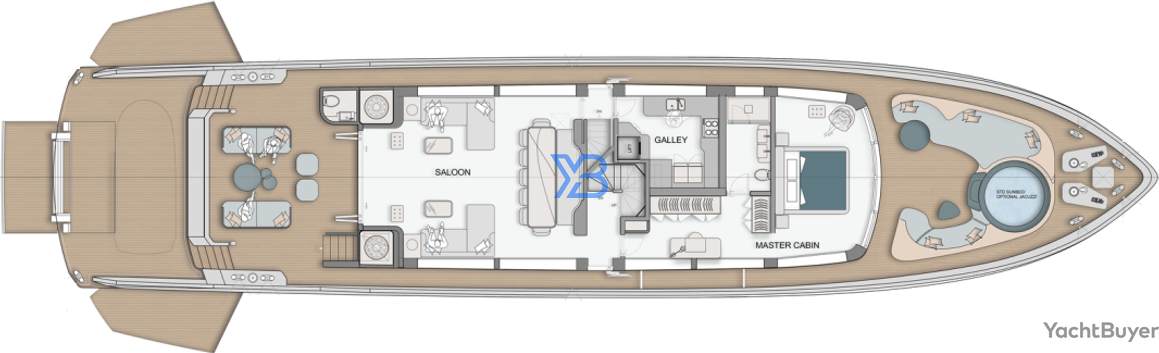
In the upper saloon, some of the best bits are almost hidden. Shells sit underneath panels around the room and barely register from a distance, then catch the light as you get closer. Individual lamps, curved cabinetry and small changes in texture keep it from feeling too polished or formal, and with no side decks at this level the room gets the full beam of the yacht. There’s a television that rises from the cabinetry and a proper bar beside the big windows aft.
The bar is next to the bridge deck dining area, so dinner can happen outside and the evening can drift indoors afterwards. Despite all the glass, the room still feels cosy. There’s a lot going on, but it remains somewhere you’d actually want to put your feet up.
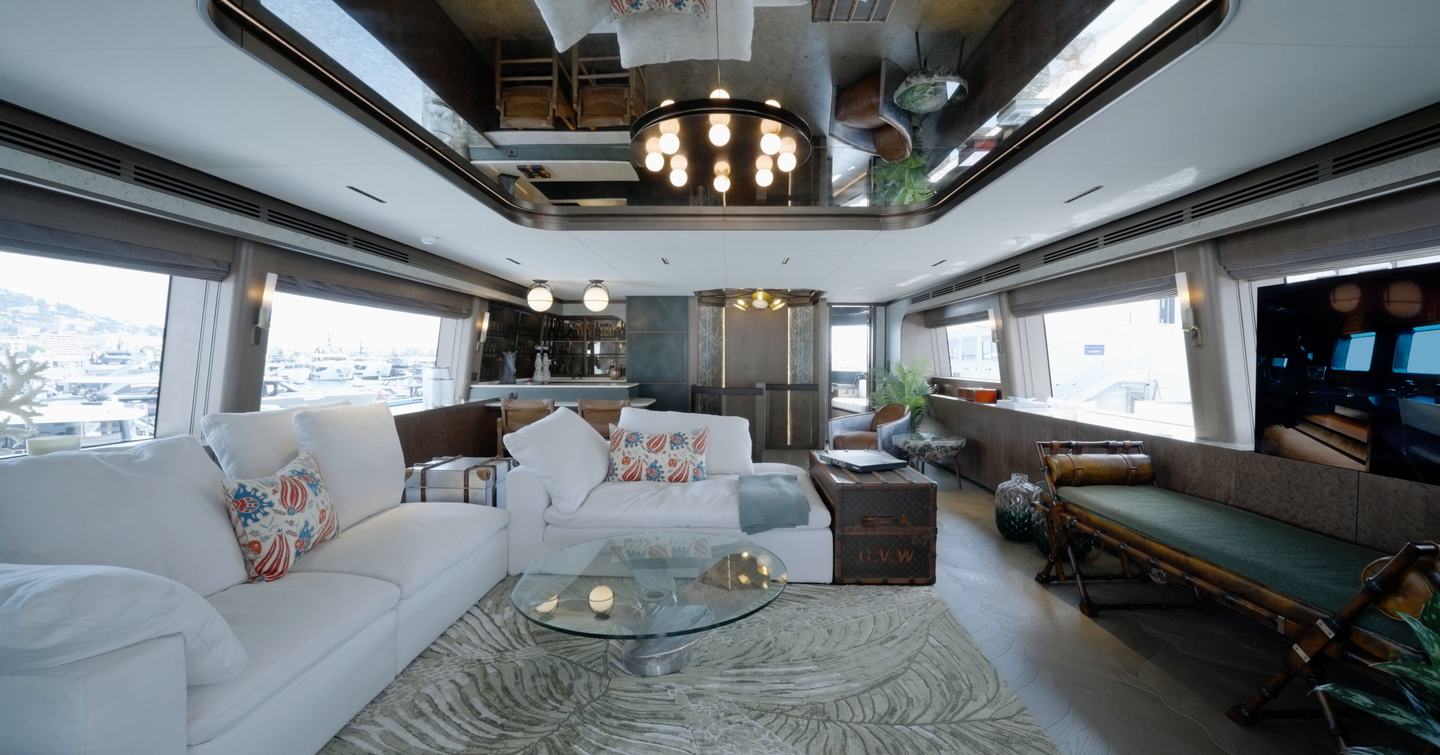
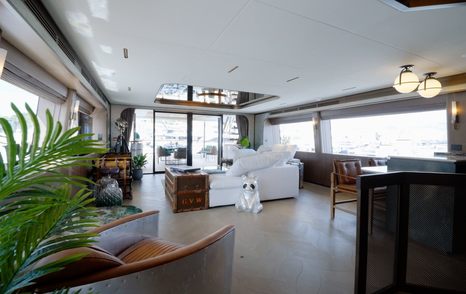
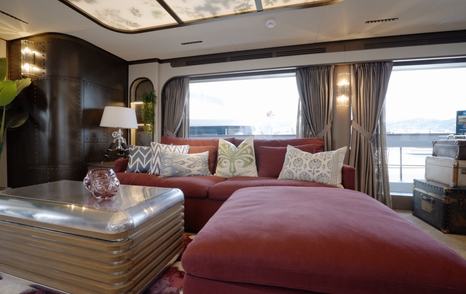
The owner had a strong hand in the mood of the interior too, citing the original interiors of Pink Gin (with Pink Shadow as its shadow boat) as an inspiration. That influence comes through most clearly in the main saloon, where Cor D. Rover has turned the wick up another notch, with huge backlit panels that contain leaf forms, and the sofas that are purple and squidgy, and all the coffee tables and lamps bring something different into the mix.
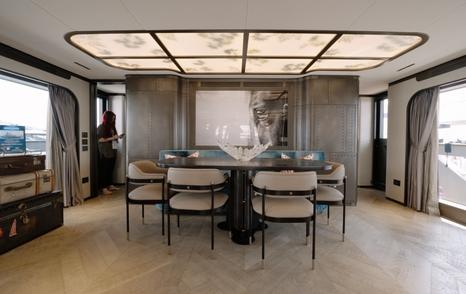
Even the dining table has another leaf motif worked into the top, though it’s quite small for a yacht that can carry 12 guests. The outdoor dining areas will do most of the heavy lifting, while the two interior saloons are much more about lounging.
Owner's Area
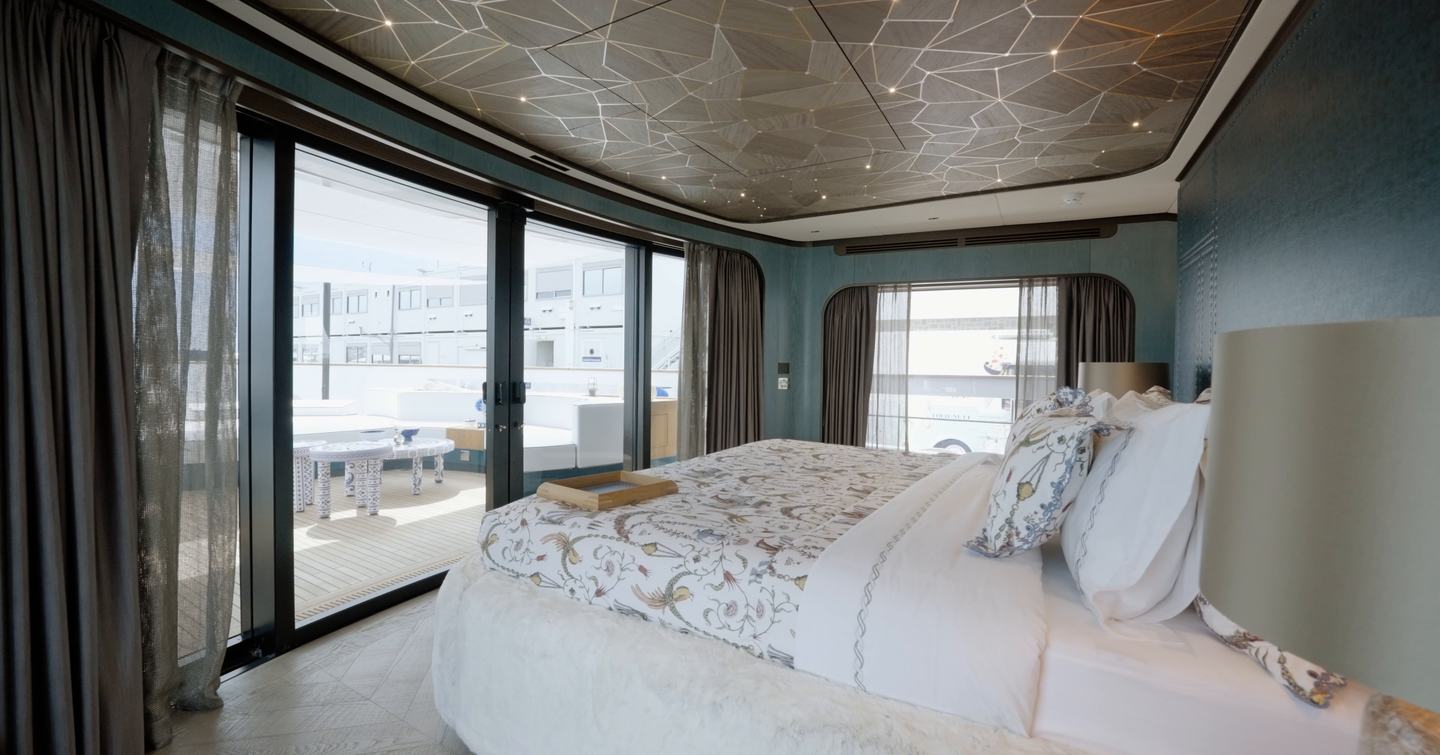
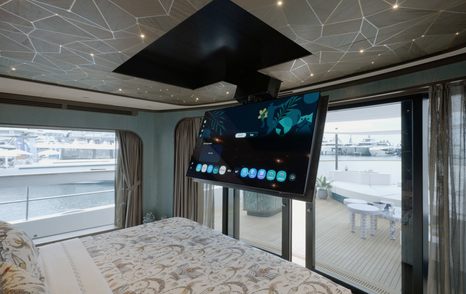
The owner’s quarters occupy the forward end of the main deck, with the semi-private foredeck terrace just outside, and there’s plenty here before the real party trick appears. The bed is huge and sits on a furry base, which sounds bonkers until you see it in place. Above it, constellations are picked out in mother of pearl and the television drops down from the ceiling, so it can disappear completely when it’s not needed.
Those deep hull windows are worth having too. The cut-outs in the topsides are obvious from outside, but from bed they make much more sense because the sightline still reaches the water. There’s no balcony off the bedroom itself, although that becomes rather less of an issue once you get downstairs.
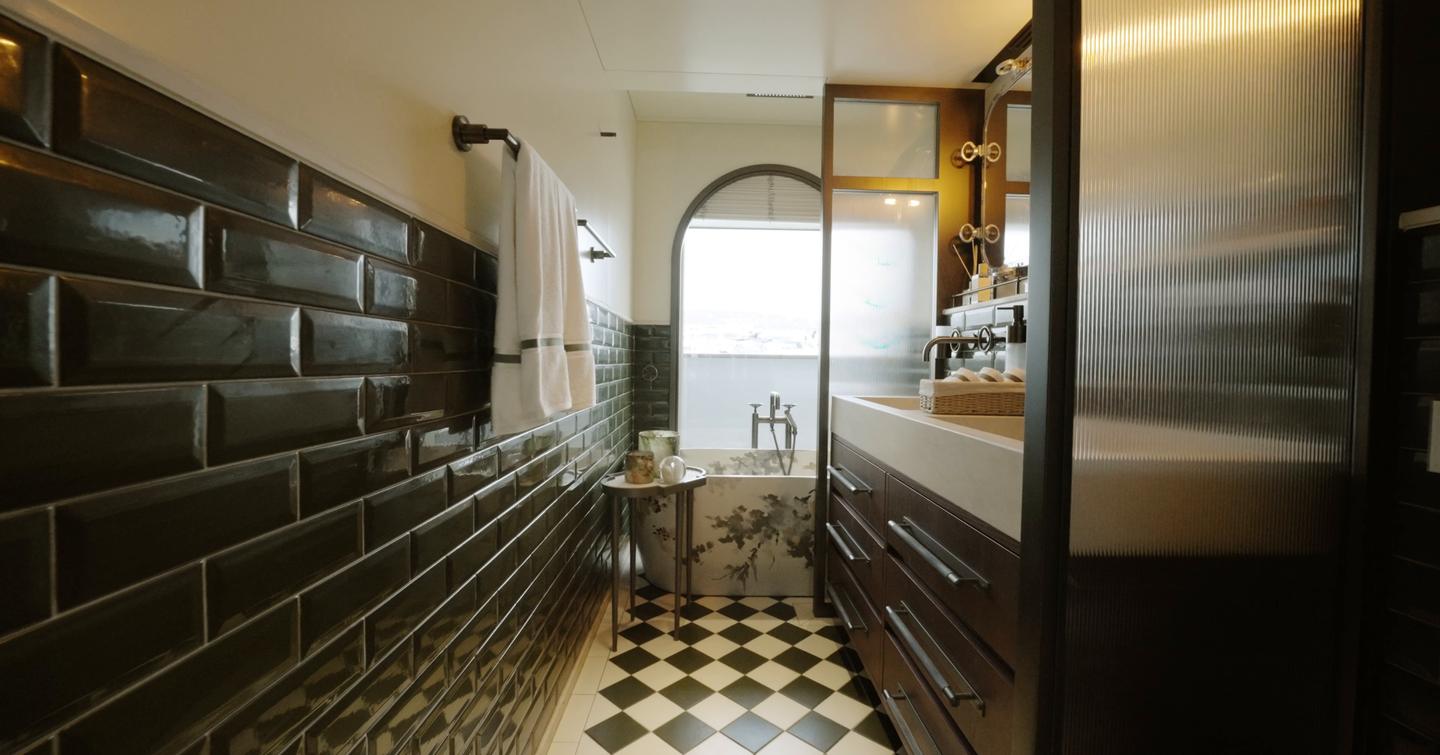
Before that, the route through the dressing area leads into one of the more playful bathrooms aboard. Clothes storage runs along both sides, then the colour really kicks in with green tiles, more traditional tiling lower down and a lot of glass around the wet area. Twin sinks get unusually shaped taps, the mirrors have a porthole feel to them and even the little bath has a painted, almost brush-stroke finish. It’s not a huge tub - you’ll be fairly tucked up in there - but the window alongside it is enormous and almost church-like in shape, so there’s plenty of daylight and a cracking view.
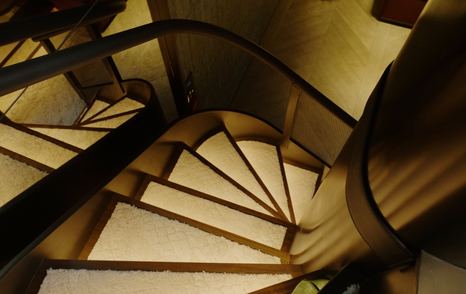
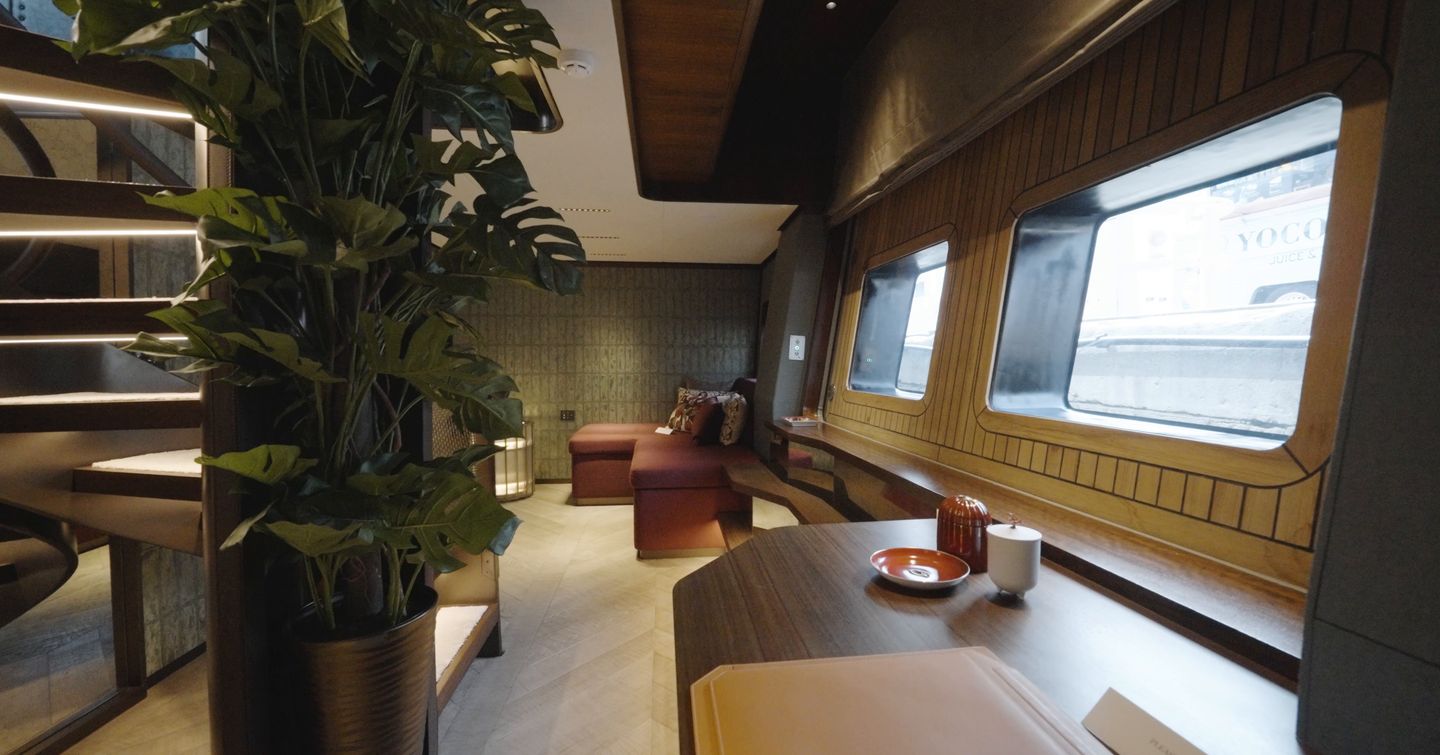
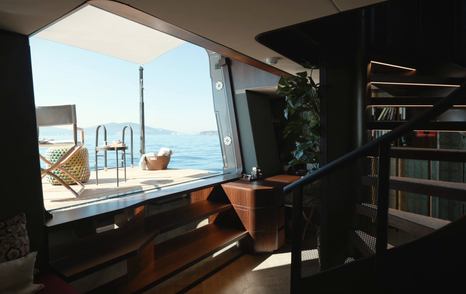
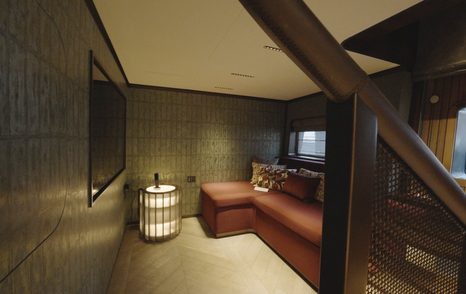
The staircase tucked inside the suite is where the whole thing changes. It drops to a second private level below, with a proper desk and shelving on one side and a sofa with a large television opposite. That gives the owner somewhere quiet to work, read or simply get away from the main guest areas, and it also means the suite can be used by more than one person without everyone piling into the bedroom. If there are children aboard, they could quite happily disappear down here with a film while the adults keep the upper level to themselves.
For all the theatre elsewhere on Ikigai, this lower room earns its keep. It adds a proper study, a second lounge and another layer of privacy, so the duplex arrangement has a purpose beyond the novelty of having two floors. There’s a sense that the owner can properly disappear into this part of the yacht when they want to.
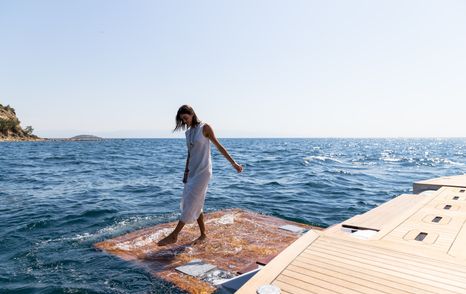
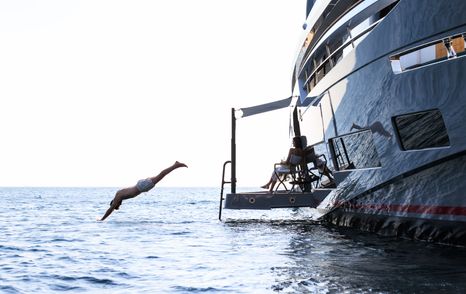
Then comes the bit that makes the whole setup. A large section of the hull folds down directly off the lower lounge to create a private balcony at water level. With it lowered, the owner can come downstairs in the morning and go straight out for a swim without passing through the main beach club or any of the guest areas. When it’s closed, glass within the opening keeps the view out, so the lower lounge doesn’t suddenly turn into a dark box.
Taken together, the owner gets the sleeping quarters and dressing room on the main deck, a separate lounge and study below, the semi-private foredeck terrace ahead and direct access to the sea from the lower level. That lower balcony folds directly from the hull beside the owner’s lounge.
Guest Accommodation
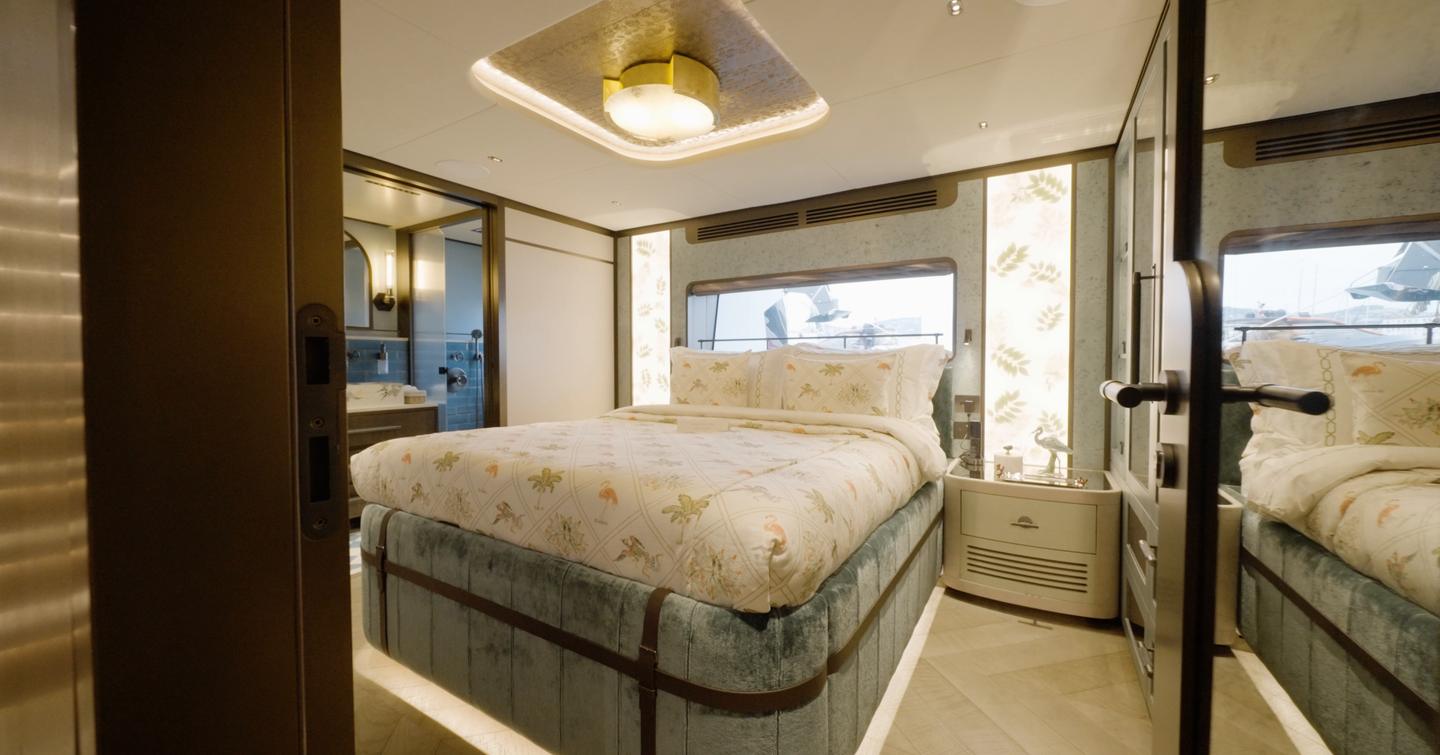
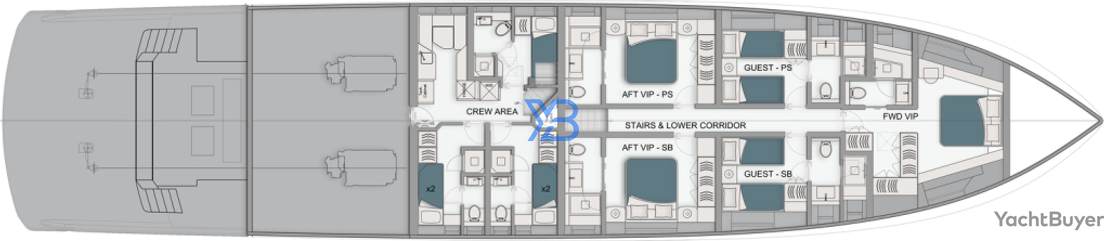
The double cabin is probably the best example of how far Sirena went. It has backlit panels that give a soft glow at night, a colour scheme that has its own identity and peacock feathers have been laid behind glass across the cupboard door. It’s a pretty ridiculous amount of work for what is, underneath it all, storage, but that’s exactly the sort of detail Rover was talking about. Open the cupboards and they’re illuminated inside as well.
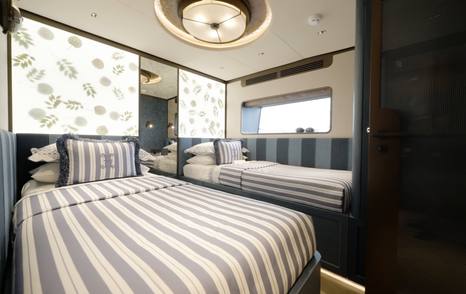
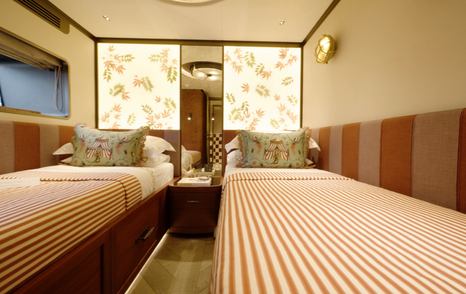
The pair of twins share a layout, though Cor D. Rover hasn’t simply copied and pasted the finishes. One is red, the other blue, with different lamps, bathroom colours and tile patterns giving each its own character. The berths are unusually wide for twins and there’s enough room between them to get changed without squeezing past the furniture. Hull windows bring in natural light, while glass bathroom doors and mirrors help push more of it around the cabins.
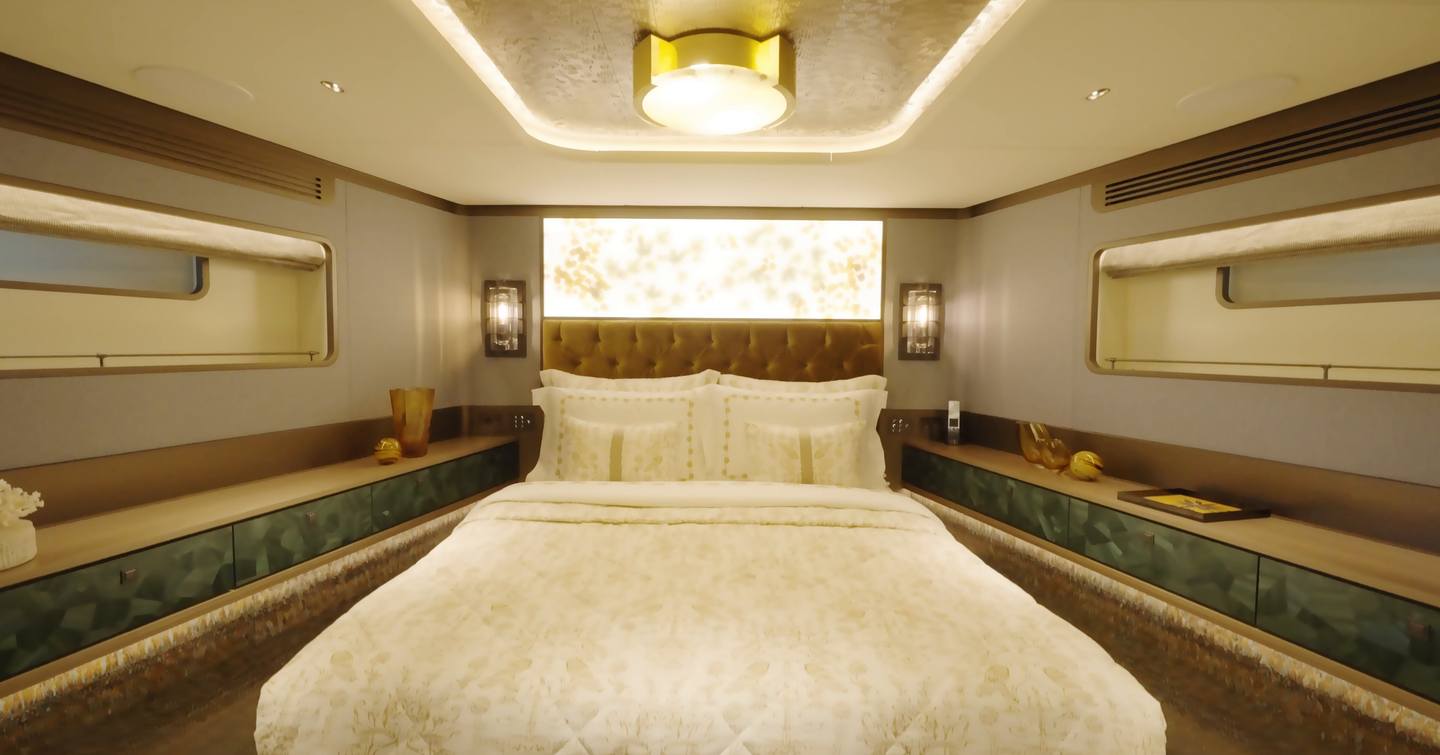
Forward, the VIP makes good use of the plumb bow, with a small entrance passage, storage to starboard and a large bathroom opposite. Metro tiles reappear here, along with more glass and another run of backlit panelling, but the materials aren’t simply repeated from the cabins further aft. There’s a wardrobe, space for a bureau and a television on the wall, so it has the storage and furniture for longer stays.
The compromise is daylight as the hull windows are very slim and there’s no hatch overhead, so the VIP is noticeably darker than the other guest cabins. The layered lighting does a decent job of lifting it, but this is one place where all that work with artificial light can’t quite make up for the lack of a bigger opening to the outside.
Crew Spaces
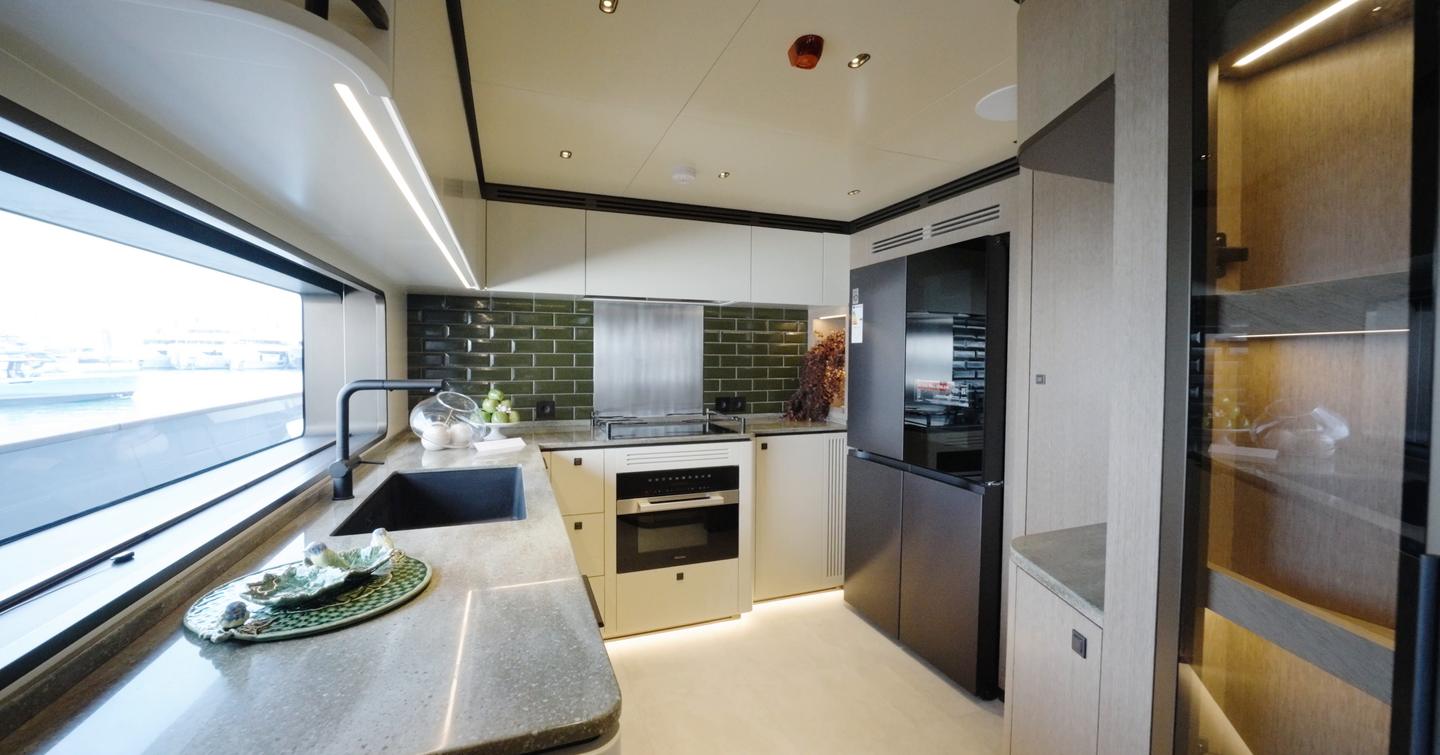
The galley sits on the main deck and has more character than you might expect from a working space, with metro tiles, good-looking worktops and even backlit cupboards. There’s a deep sink, induction hob, oven, extraction and a big dishwasher, plus a useful plating area and a dumbwaiter to take some of the legwork out of service between decks.
The one question mark is fridge capacity, as it doesn’t look huge for a 36m (118ft) yacht carrying 12 guests, and the oven is fairly modest too. With one chef aboard, longer trips at full capacity could make things pretty busy.
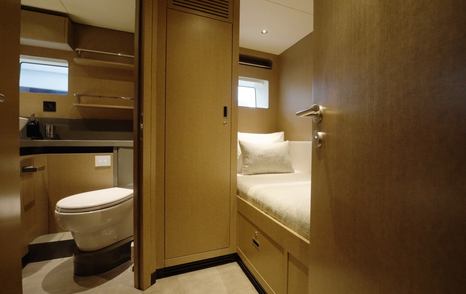
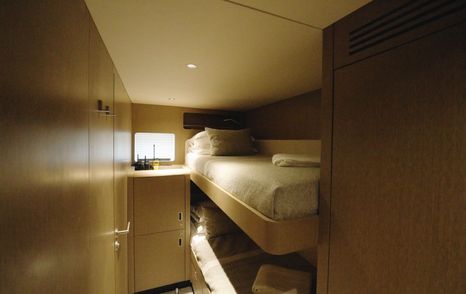
Five crew share three cabins on the lower deck. The captain gets a private single with the yacht’s control system close at hand and, unusually for crew accommodation, a bathroom with a rainfall shower. The two bunk cabins are compact but sensible, with decent clearance above the beds, some natural light, storage and a pop-up desk. Splitting the shower and WC means two crew can get ready at the same time, which is a simple idea that should make mornings a bit easier.
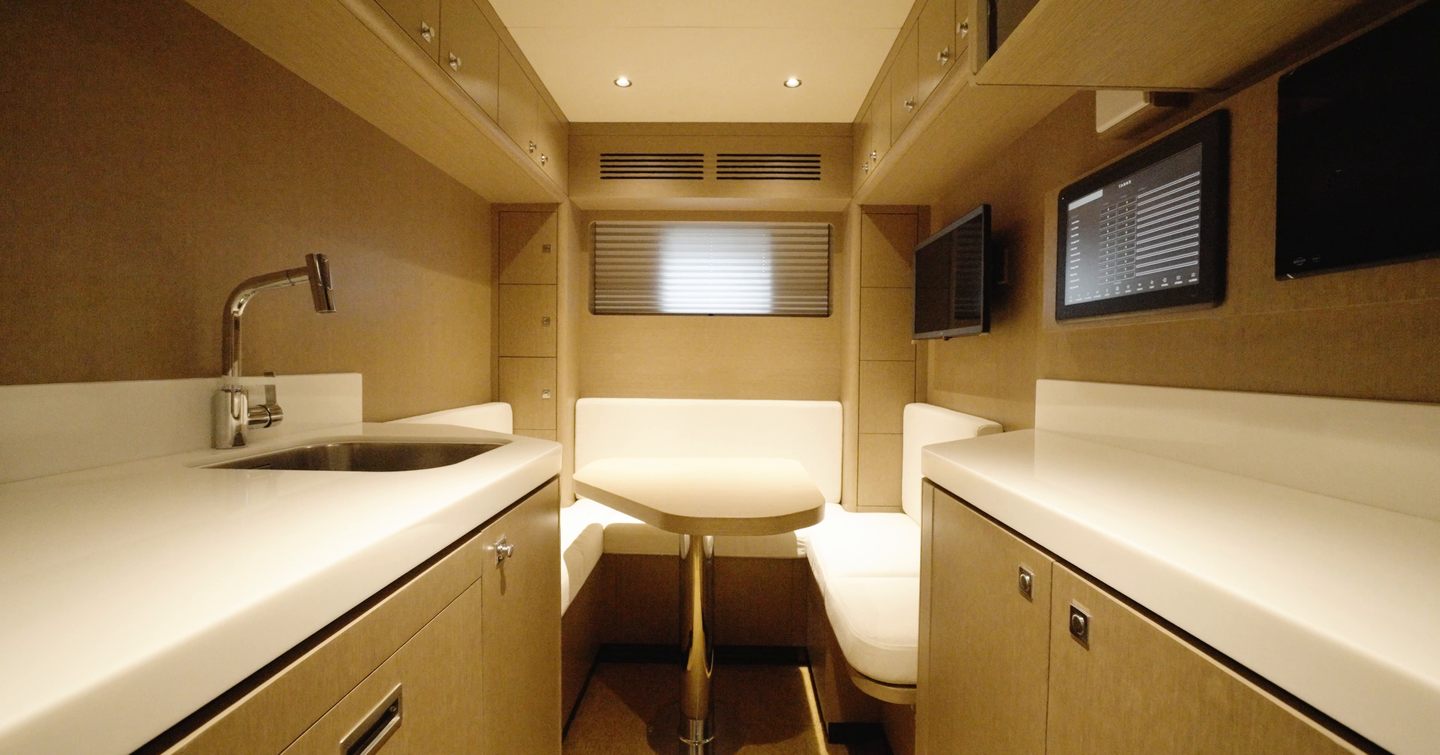
Laundry is handled by two stacked machines rather than a separate laundry room, while the crew mess gives everyone somewhere to sit away from the cabins. There’s a sink, microwave, another fridge-freezer, cupboards, television and navigation and system screens, so the crew can keep tabs on the yacht from down here. A chunky watertight door then leads straight through to the engine room.
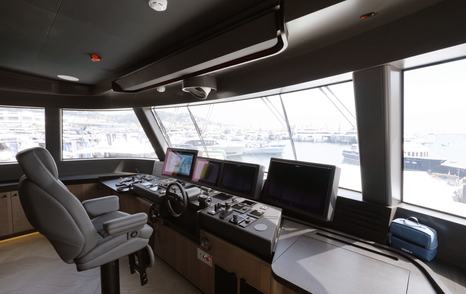
There’s something quite unusual about the bridge layout because Sirena has done away with the side decks at this level and pushed the interior right out to the beam. It gives the bridge a huge amount of room, though it does mean there are no wing stations. When the yacht comes alongside, the crew will be working the lines and fenders from the deck below while the skipper relies quite heavily on cameras and everyone talks to each other over headsets.
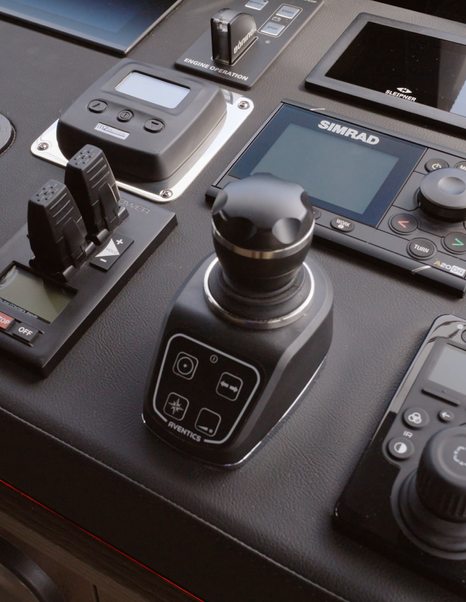
You do at least have plenty of help from the controls. Ikigai has bow and stern thrusters as well as a joystick, which brings the shafts and thrusters together and gives the skipper that sort of IPS-style control when manoeuvring. On a boat this size, with no wing station to step out to, that’s going to be pretty handy.
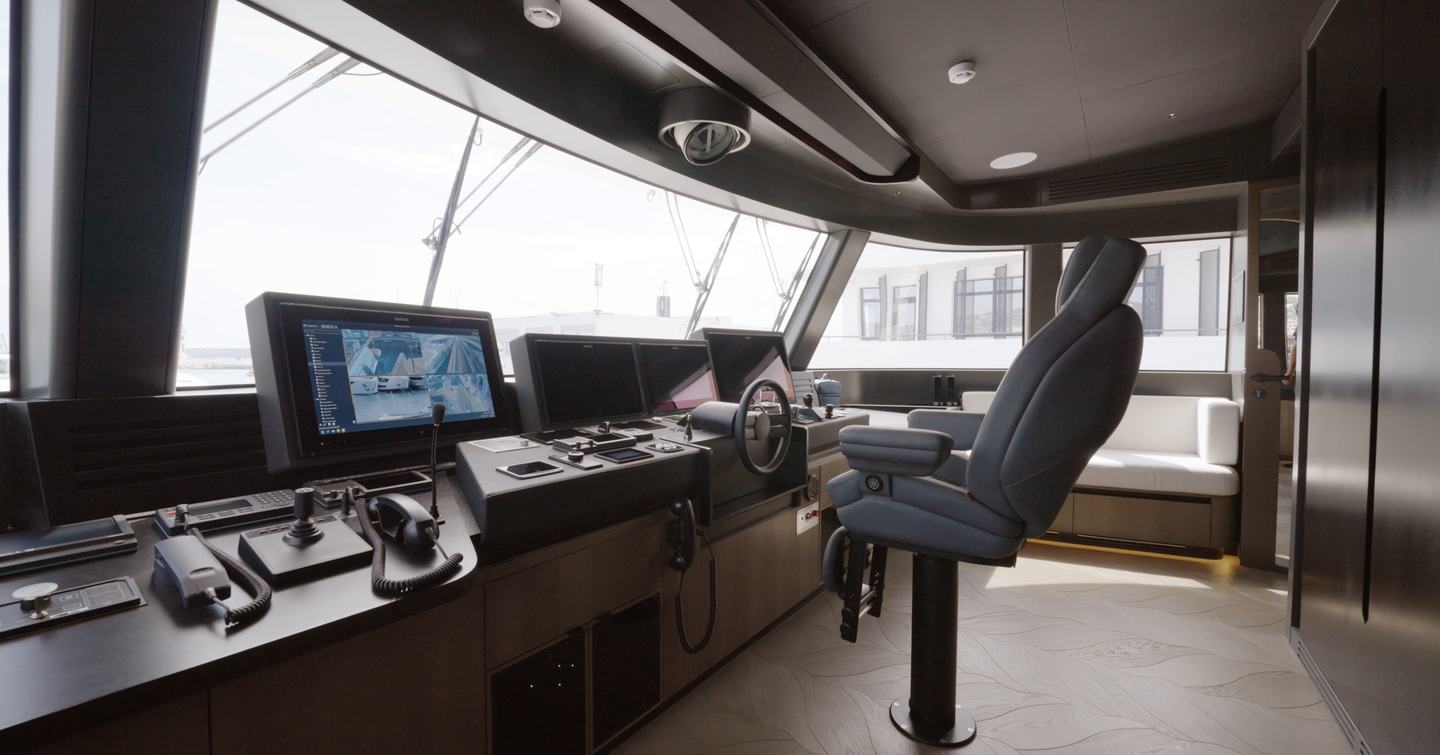
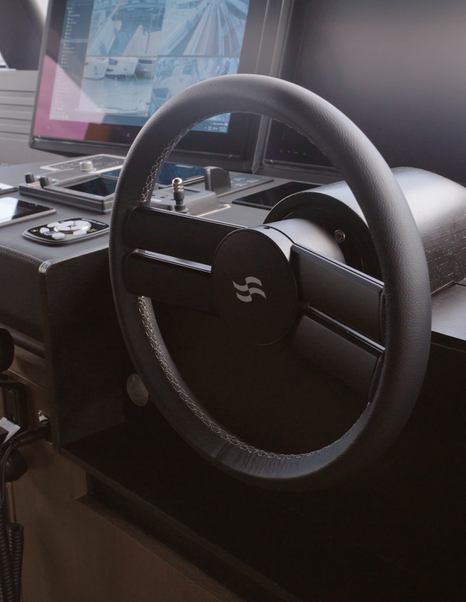
The helm itself is a decent arrangement. There’s a single seat on this boat, a big steering wheel and conventional twin throttles, with two smaller screens in the middle and larger displays either side. The view down the bow is pretty good too. I’m sure another helm seat could be fitted if an owner wanted one, but Ikigai keeps things quite simple.
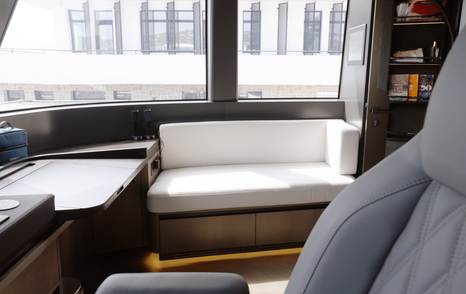
There’s no dinette or proper desk behind the skipper, just a small bench where crew or the odd guest can sit, though they certainly haven’t skimped on storage - practically the whole wall behind is given over to it. It’s a pretty pleasant place to run the boat from, even if the lack of wing stations means berthing it will rely more heavily on the cameras and crew below.
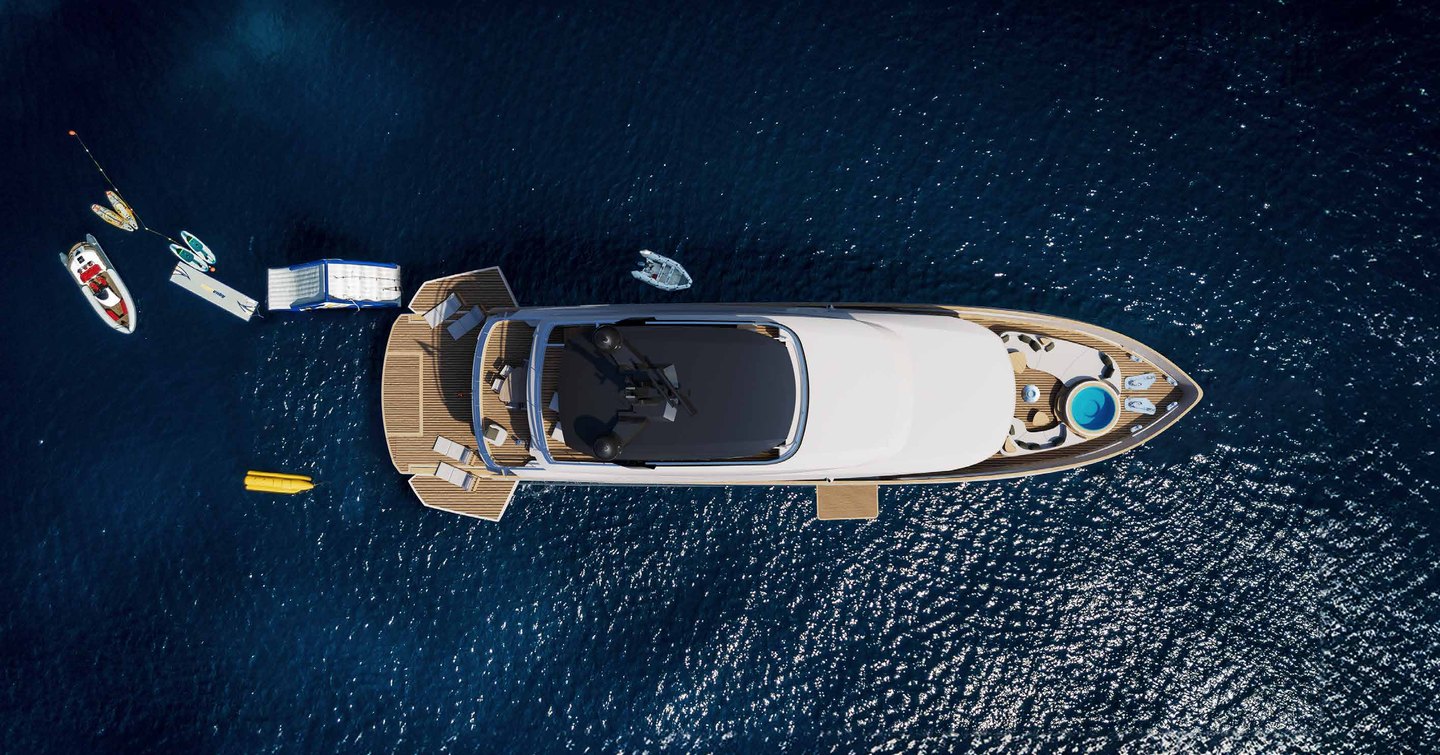
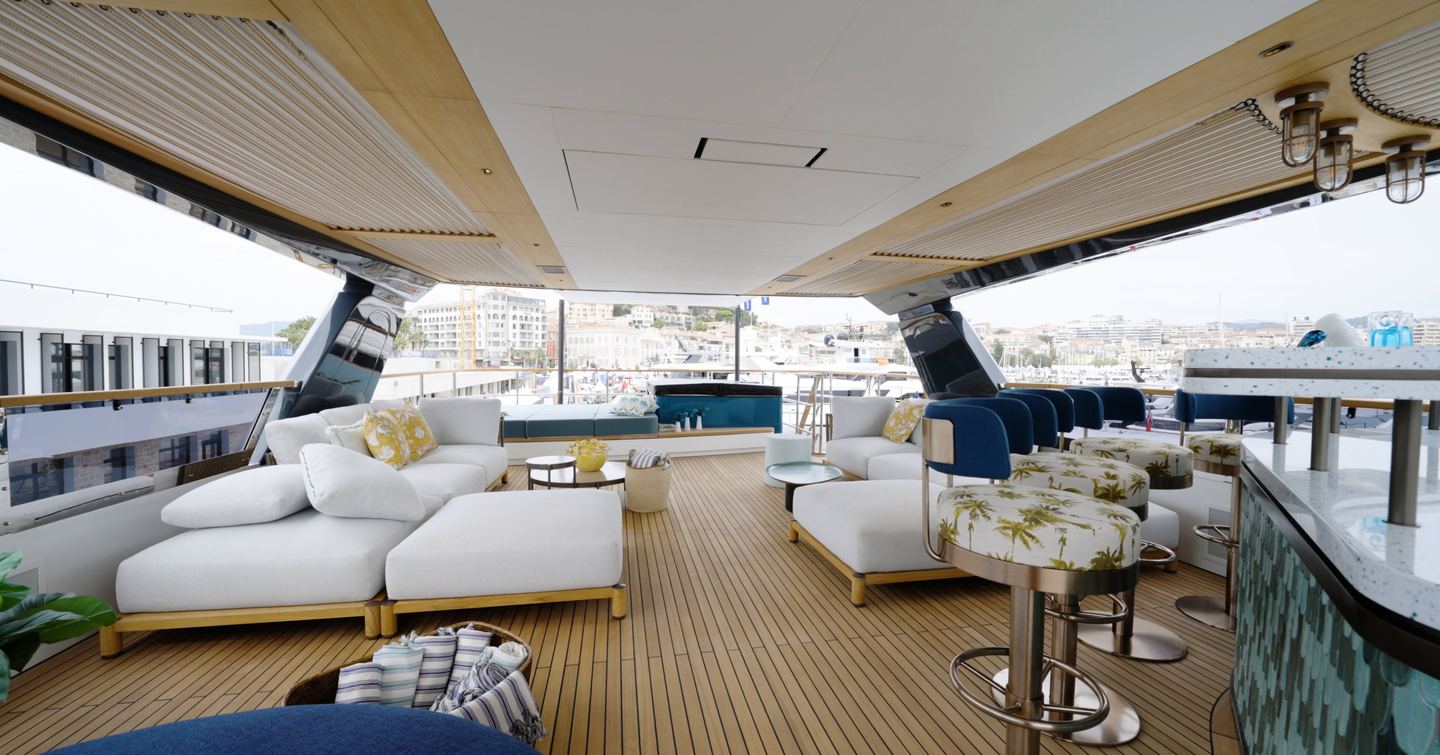
Up on the sun deck, Sirena has resisted the urge to squeeze in another dining table and kept the whole area much more casual. A large bar sits under the hardtop with low tables and loose seating around it, so this is really somewhere to crash out with a drink and get out of the midday sun. There’s plenty of shade, a good breeze when the boat is open to the weather and, right aft, a hot tub with a small sunbathing area alongside. Even here the decorative side of Ikigai starts to creep in, with feathers across the front of the bar, ropes running down beside the staircase and individual lights overhead. It could easily have been a fairly anonymous upper deck, but there’s already a bit of personality to it.
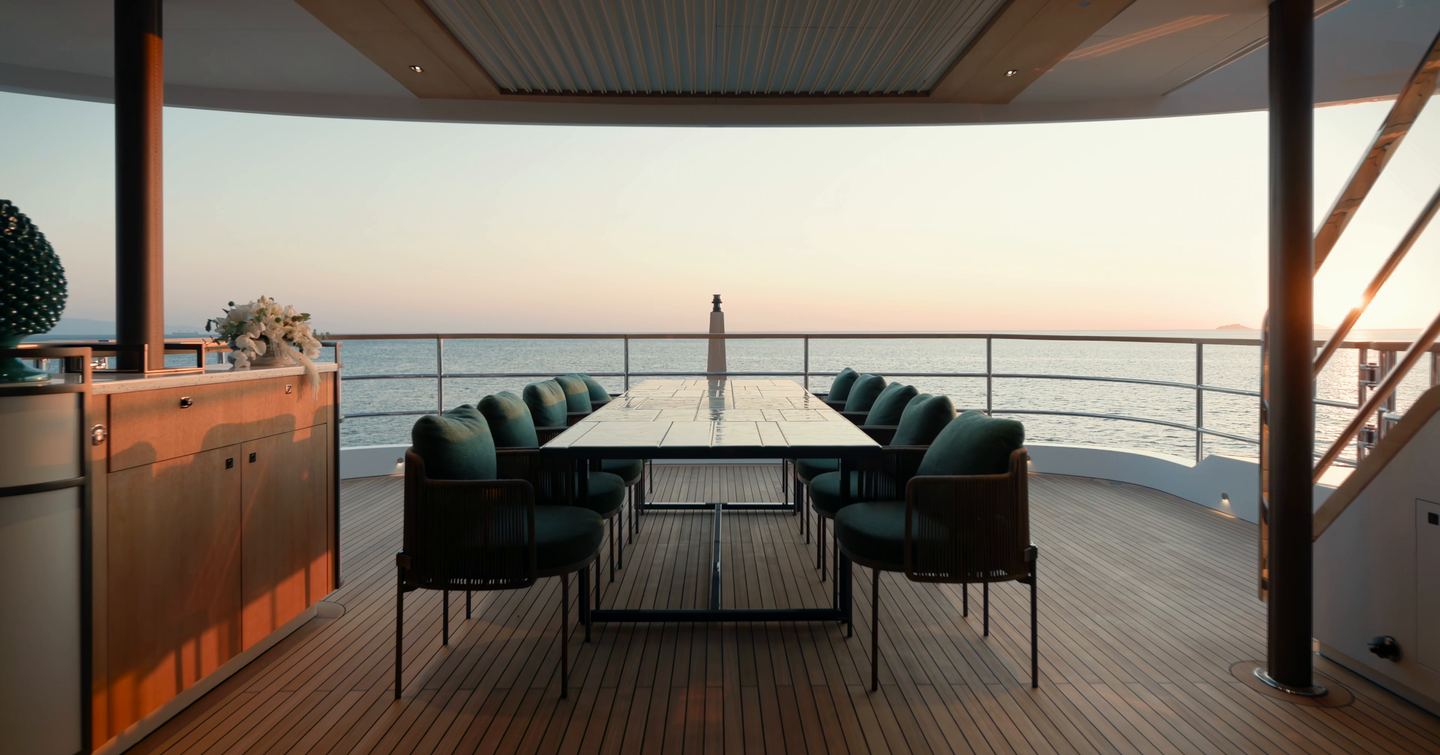
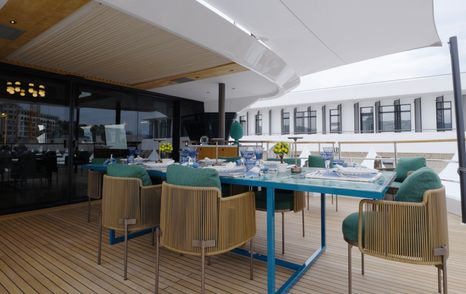
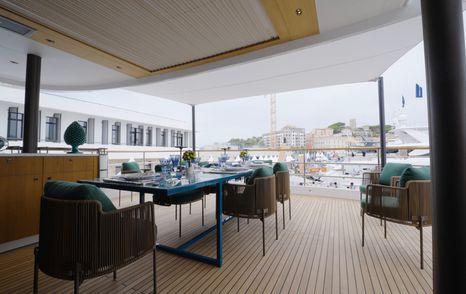
Dining is one level down on the bridge deck aft, where there’s room for a decent-sized table without the deck feeling swallowed by it. Loose furniture fills out either side and there’s still a clear route around the table, with storage built into both sides for service gear. The tiled tabletop is one of those details that could so easily have been plain timber, and the surrounding woodwork and stainless steel have had similar attention. It isn’t a vast deck for a 36m (118ft) yacht, but with the sun deck handling the lounging, this area can get on with being the main place to eat outside.
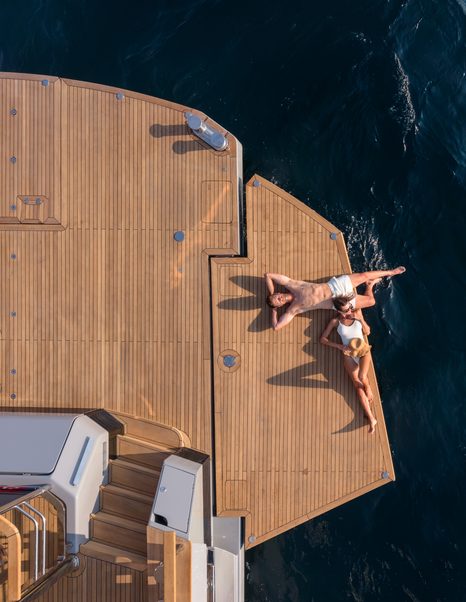
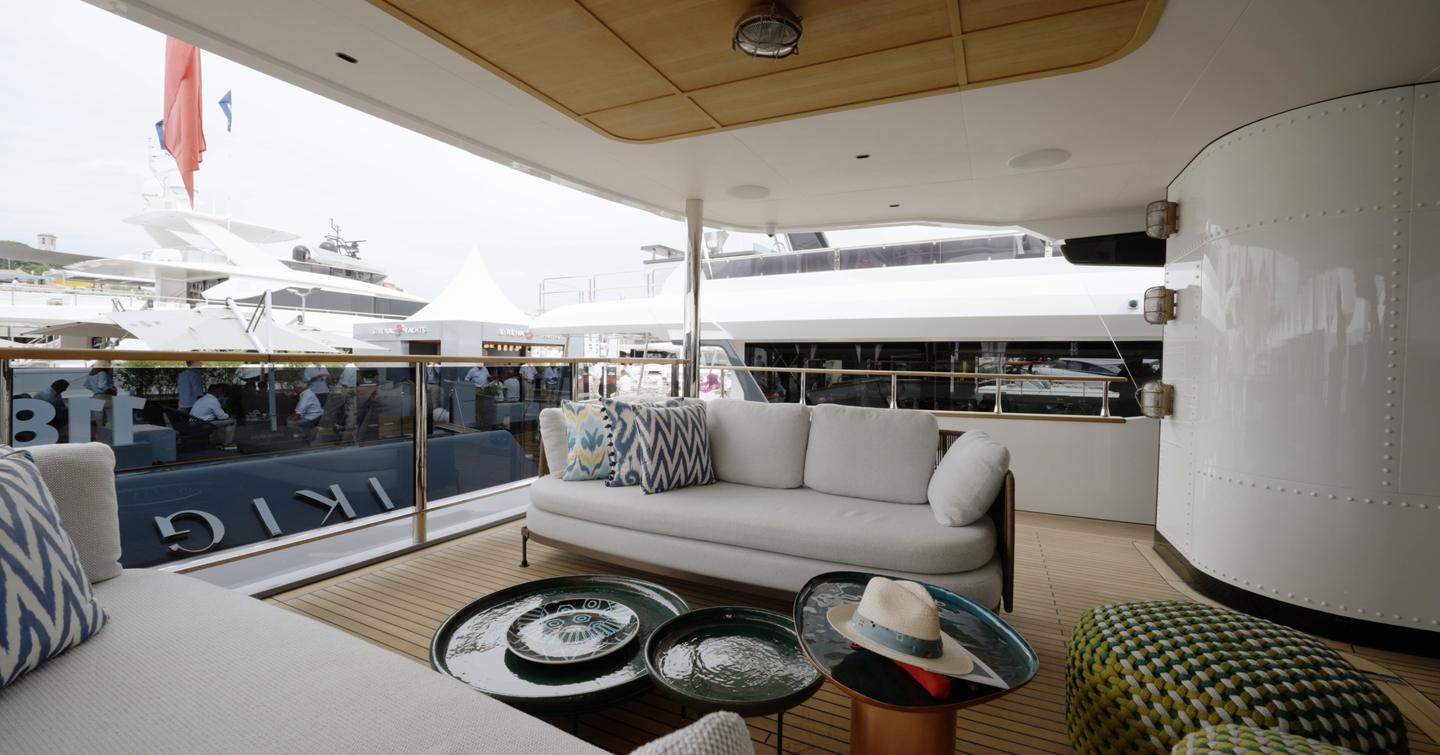
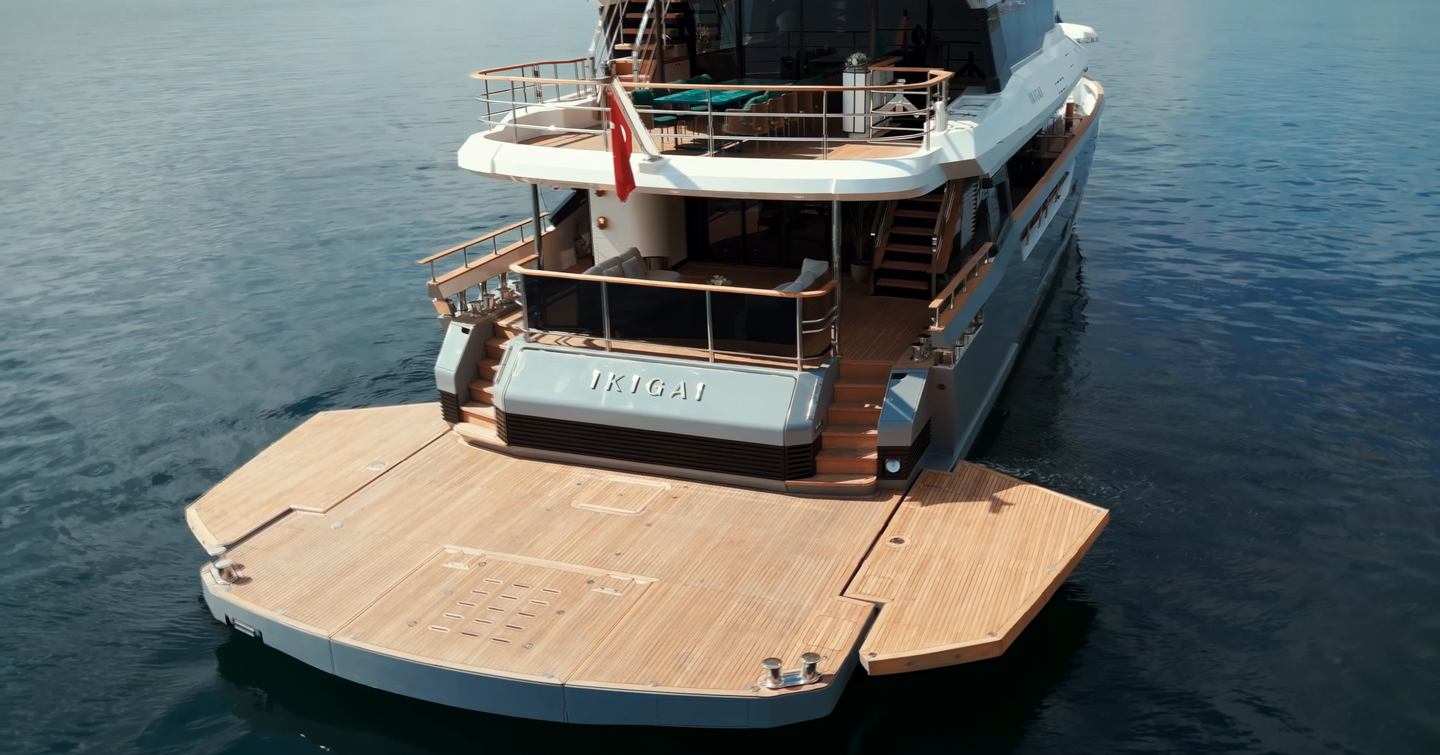
The main deck cockpit is set up for lounging, with the seating turned side-on so the view runs across the water instead of straight back into the saloon. A glass transom keeps that sightline open and the deck above provides plenty of shelter, while the amount of clear floor area leaves scope for bigger freestanding pieces if the owner wants them.
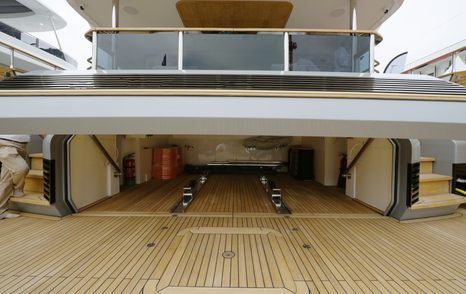
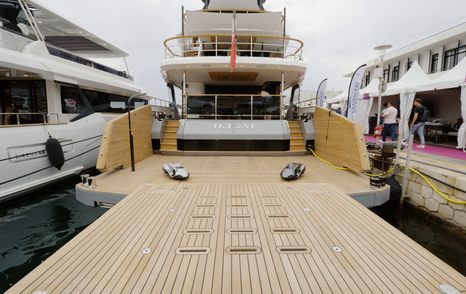
Below it, the beach club is where the scale of the stern really hits home. The side platforms couldn’t be dropped at Cannes, yet there was still a huge amount of open floor area with everything shut. There’s room for Seabobs, beanbags or loose furniture without turning the place into an obstacle course, and a shower sits nearby for anyone coming out of the water. Once the platforms are down at anchor, the whole area spreads further across the water and gives direct sea access on both sides.
Also here is a large lifting panel for the tender garage, with runners used to bring the tender out for launch, while the hi-lo platform can rise to dock level, drop below the water and help with launching toys.
Foredeck
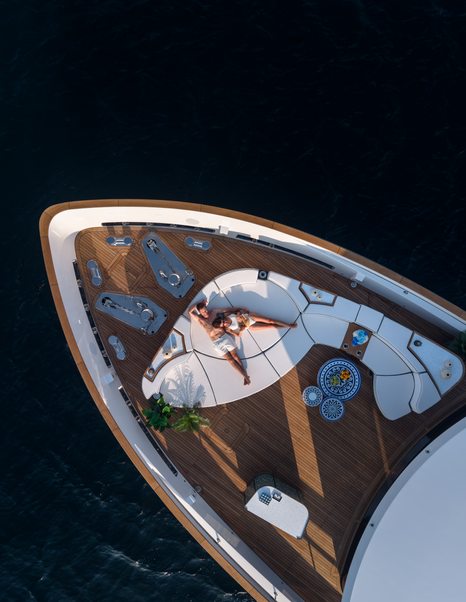
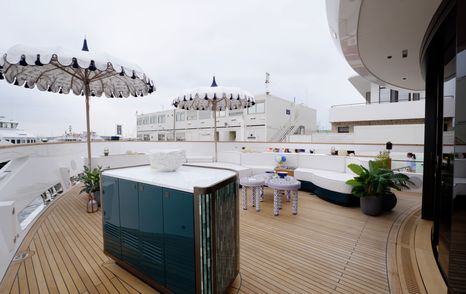
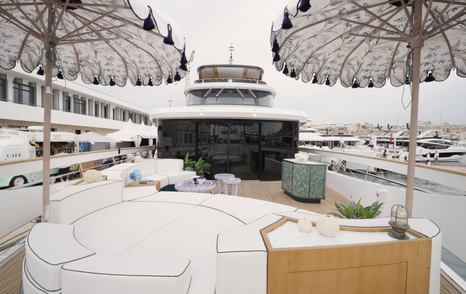
Here, the owner gets something much less predictable than the usual slab of sunpad. The seating wraps around the bow, swells into a sunbed through the middle and then pinches back down into a small perch at the front, with drinks trays worked into the top and a fridge close by. It’s connected directly to the owner’s suite, though semi-private is the fair description because crew can still pass around either side. The loose furniture brings in more colour and shape, and even the moulded GRP has been finished in a deep green instead of disappearing into another expanse of white.
Engine Room
The Sirena 118 has two engine options, coming as standard with a pair of MAN V12-1550s, while Ikigai has the larger V12-1900 option. Both drive conventional shafts, with Ikigai turning 5-blade Nibral propellers. The bigger engines give this first 118 a quoted top speed of 19 knots, with 10 knots given as the current cruising figure.
The Frers fast-displacement hull is a big part of her performance. We test drove the smaller Sirena 48, which also has a Frers hull, and that boat is wonderfully smooth through the water, though the 118 wasn’t available for a sea trial so there’s only so far I’d take the comparison. On paper, 19 knots is useful pace for a yacht of this size, and there are 20,000 litres of fuel aboard for the sort of slower cruising this boat is likely to spend much of its life doing.
-
 BOAT TESTSirena 48 Review (2026 Edition)
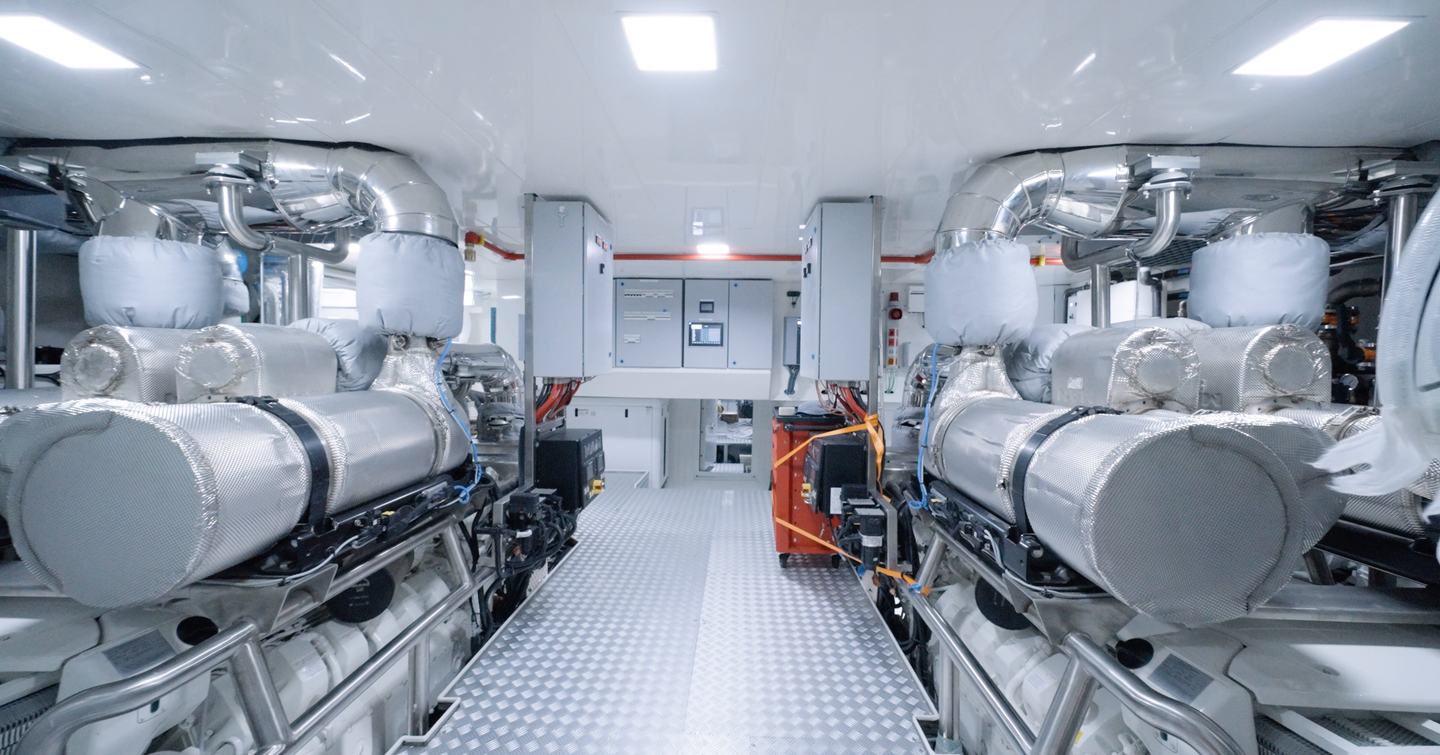
Once through the chunky watertight door from the crew area, the surprise is how much room is left around those V12s. There’s proper clearance between them and plenty above, so you can actually get around the machinery without having to fold yourself in half. That sounds like a small thing until something needs checking or servicing, and then it matters quite a lot.
There’s enough room down here to keep the machinery nicely separated too, with the engines, generators and fin stabiliser equipment all given some breathing space instead of being wedged into whatever gap was left. For a 36m (118ft) yacht, it’s a pretty remarkable amount of working room and feels like the sort of engine room you might find in the class above.
Headroom drops as you move aft beneath the cockpit, where there’s a separate lazarette with plenty of storage alongside the watermaker and shore-power transformer. It keeps some of the auxiliary gear away from the engines and leaves the main machinery space clear enough for crew to move properly between and around both V12s.
Our Verdict
Hull #1 had to do quite a lot of heavy lifting for Sirena, and what I like most is that nobody seems to have lost their nerve along the way. Cor D. Rover’s interior has bags of character, the duplex owner’s quarters are genuinely useful and some of the layout decisions are much braver than you normally see on a first boat of this size. Crucially, very little of it feels odd just for the sake of being different.
Perhaps, the forward VIP needs more daylight, I’d want more galley capacity with 12 guests aboard and the lack of wing stations won’t suit every captain. But none of that takes much away from what Sirena has achieved here. This is a much more serious part of the market, with some properly talented boats in it, and for a first go at 36m (118ft), the 118 is seriously impressive.
Reasons to Buy
- Brilliant two-level owner's suite
- Masterful interior
- Huge beach club
- Engine room feels a class above
Things to Consider
- VIP needs much more light
- Wing stations would be pretty handy
Pricing
Price as reviewed: €15,500,000 (£13,118,331 approx)
€15.5 million is the asking price quoted for hull #2. The price of Ikigai was not disclosed.
Looking to own a Sirena 118? Use YachtBuyer’s Market Watch to compare all new and used Sirena 118 Yachts for sale worldwide. You can also order a new Sirena 118, customized to your exact specifications, with options for engine choice and layout configuration. Alternatively, explore our global listings of new and used yachts for sale and find your perfect yacht today!
Rivals to Consider
The 35.75m (117ft) Sanlorenzo SD118 is probably the one I’d put directly alongside the Sirena. It’s 290GT, 7.9m wide, runs with five crew and tops out at 19 knots, so the numbers are remarkably close. The layout is where it gets interesting. Sanlorenzo keeps a proper side deck to port but absorbs the starboard side into the upper saloon, which gives you more interior width without losing the walkaround altogether. There’s even a sliding hatch tucked under the staircase so the owner can get from the forward cabin straight onto the foredeck. With 32,000 litres of fuel and the Caterpillar option, range is quoted at 2,500nm at 11 knots - around 1,300nm more than the Sirena’s estimated 1,200nm at 12 knots. Five SD118s had already been sold when Sanlorenzo announced the model, before the public had even walked one.
If your cruising is much more about the Med, the 35.29m (116ft) Azimut Grande 36M Evo makes a very different case. With the larger MTUs it’ll do 24 knots, and its 1.97m draft is the shallowest of this group, so there are plenty of harbours it’ll get into more easily than the Benetti. The really clever bit is upstairs, where Azimut’s semi-walkaround ‘infinity deck’ creates a single outdoor route from bow to stern - quite a trick on a yacht of this length. Fuel capacity is 19,000 litres and there’s no published Evo range figure, which tells you plenty about the priorities here. This is the 2025 evolution of the original Grande 36M, which picked up Best in Show at Fort Lauderdale in 2023 and Best Interior Design at the 2022 World Yacht Trophies, so Azimut hasn’t ripped up the formula, it has sharpened an already successful one.
Benetti’s 36.5m (120ft) B.Yond 37M is the odd one out here, and that’s exactly why it’s worth considering. It’s only half a metre longer than the Sirena, yet at 395GT it has roughly 40% more internal volume and carries a frankly enormous 70,000 litres of fuel. At 10 knots Benetti quotes 5,000nm, and with the hybrid package it has talked about as much as 10,000nm depending on operating mode. That’s pretty wild on a yacht this size. Twin MAN V12-1400s only push it to 14 knots, so you’re giving away a fair chunk of speed, but in return you get six cabins for 12 guests, seven crew and a boat that can genuinely head off across an ocean. Three of the first six hulls sold were ordered with the hybrid package too, which Benetti says can cut NOx by 70% and CO2 by 20% when paired with SCR.
Considering a new yacht? Explore Sirena's entire current range to find the model that best suits your needs, and compare it with alternatives from competitors to ensure you make the perfect choice.
Specifications
- Builder Sirena Yachts
- Model Sirena 118
- Length Overall 36m
- Beam 7.8m
- Draft(full load) 2.2m
- Hull GRP
- Cabins 6
- Berths 12
- Crew 5
- Yacht Type (Primary) Superyacht
- Use Type (Primary) Cruising
- Cruising Speed
- Max Speed
- Fuel Capacity 20,000 Litres
- Fresh Water Capacity 4,000 Litres
- Engine Model 2x MAN V12-1900
- Engine max range (speed type) 1200 (nm)
Tenders
The following tenders are compatible with the Sirena 118
- DieselJet 505 Builder: Williams Jet Tenders Length: 5.03m Speed: Knots
Available Stock
Interested in a Sirena 118?
NEW Build
Find your local dealer for a personalised, no-cost consultation
or just request
Brochures & Pricing
Used & In Stock
Looking for a ready-to-go Sirena 118 or pre-owned options? Explore all inventory of the Sirena 118 available worldwide