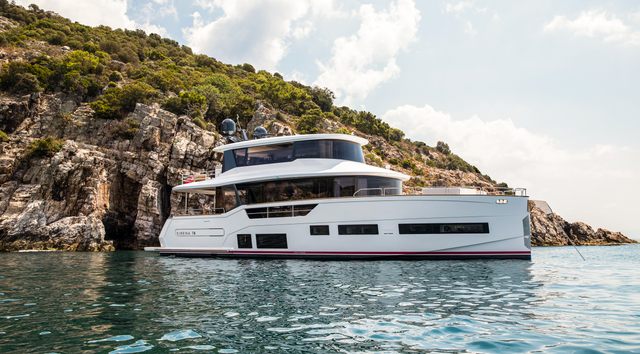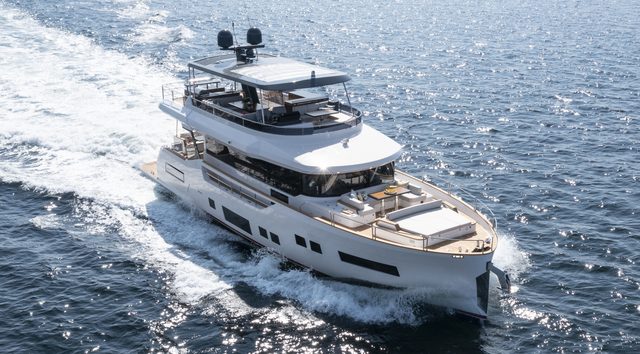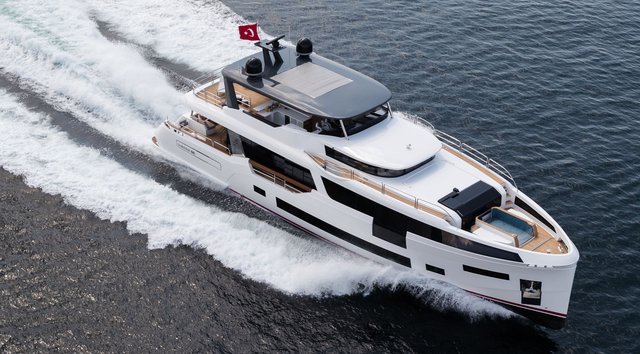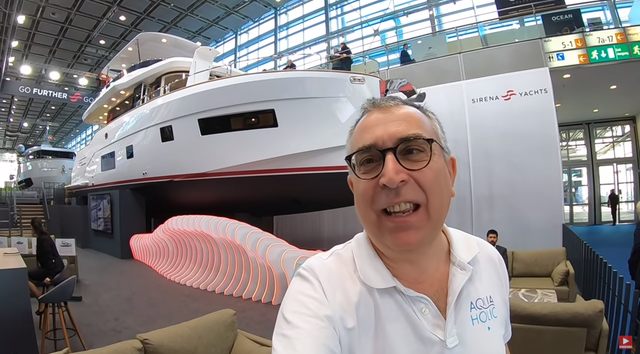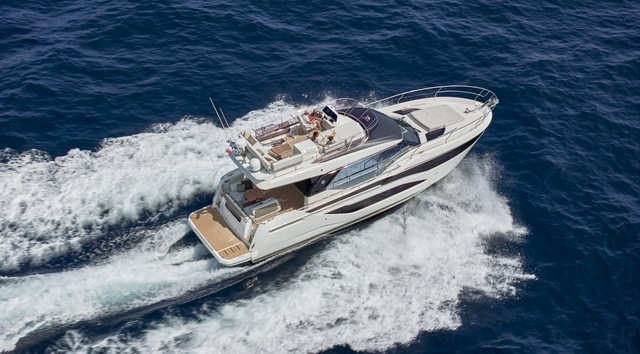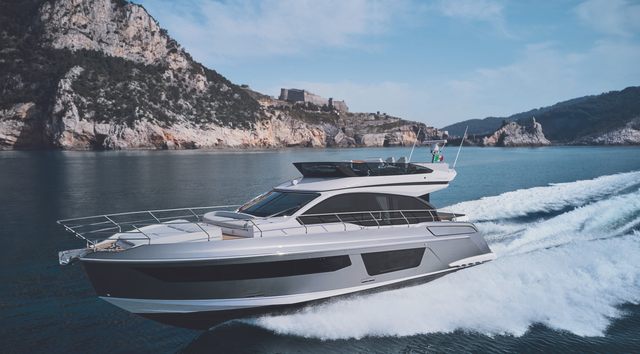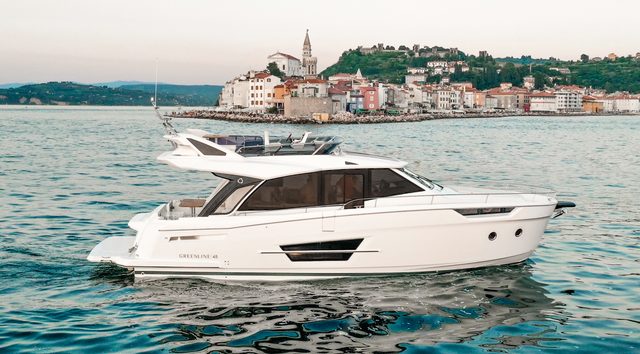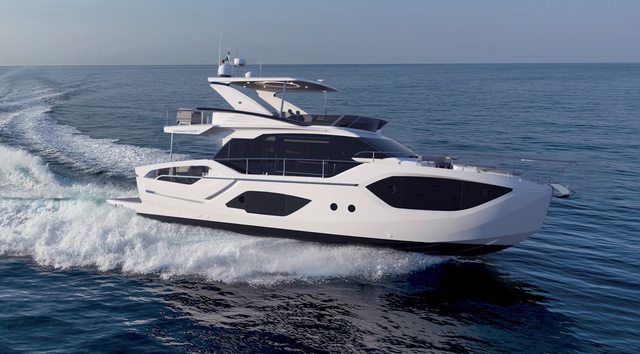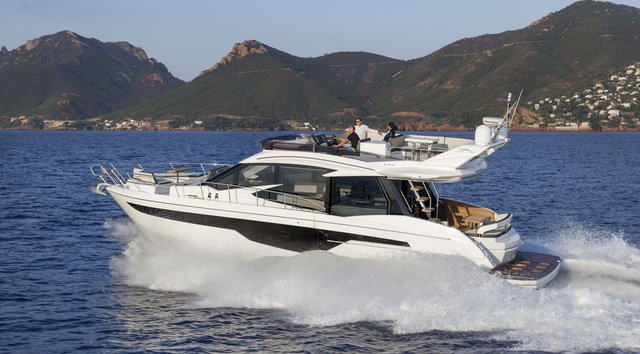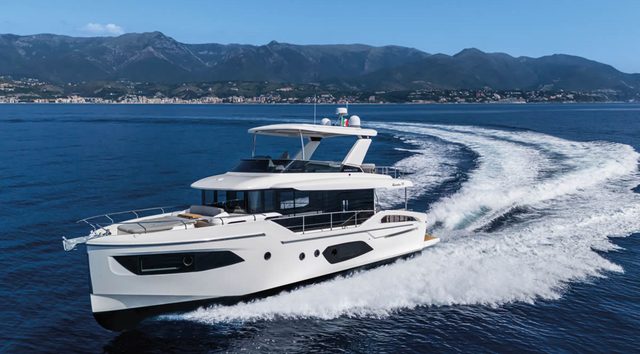
The 48 joined the range in 2023 beneath the Sirena 58, with Sirena aiming it at younger owners and families who might use the boat without permanent crew. It is called the 48, though the boat we tested stretches to 15.96m (52ft 4in), with a 4.93m (16ft 2in) beam, three cabins and a huge flybridge.
This isn't really a boat about chasing 30 knots. There is lots of volume, proper storage and a semi-displacement hull that feels far happier in the mid-teens. The interesting bit is whether Sirena has managed to get that bigger-boat feel without making the 48 awkward for an owner-driver.
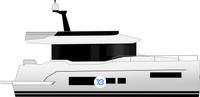
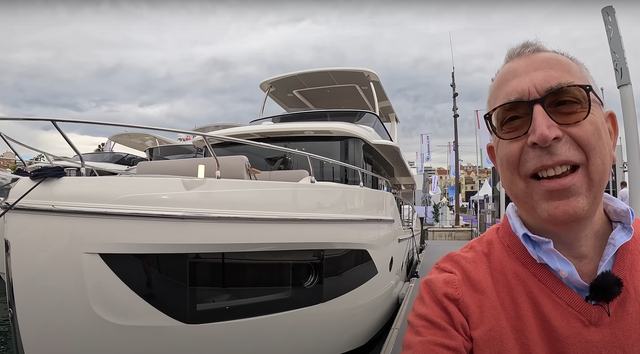
Test & Review Video
Around the Marina
Close quarters are a bit more old-school on this particular boat. You have two throttles, conventional shafts, a bow thruster and no stern thruster, so there is a little more for the skipper to do than there would be on an IPS boat with a joystick.
I chose the lower helm because it makes much more sense around a marina. The side door puts you straight onto the starboard deck, the aft camera gives you a view of the bathing platform and, most importantly, you can actually talk to the people handling the lines rather than shout at them from the flybridge.
Our first berth was a nasty one. It was short, the wind was blowing across it and we were originally told to go bow-in, though we first tried stern-to instead. The Sirena is quite tall, so once the wind gets hold of the bow you certainly know about it.
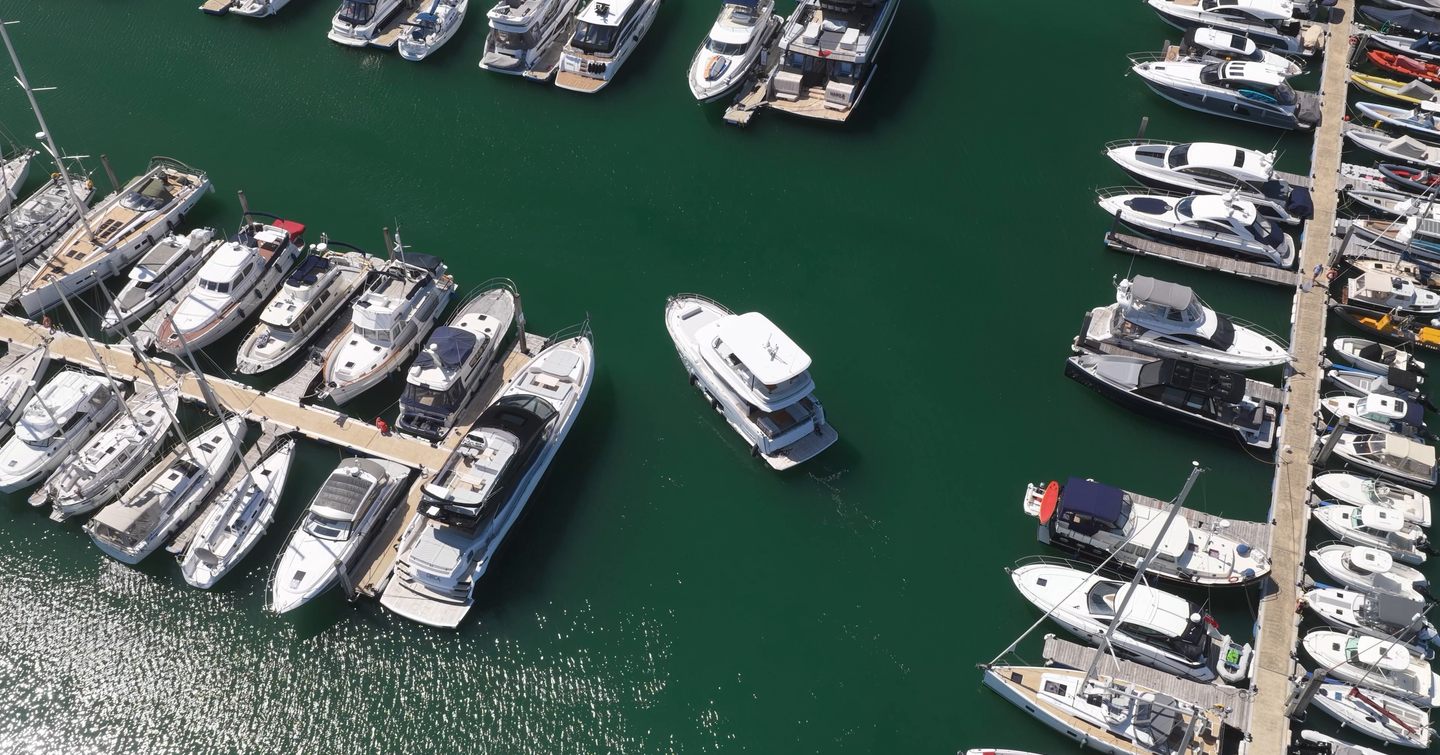
There was some keel in the water, which helps it sit rather than immediately skate sideways, and the shafts do give you useful purchase. The thing is, the props don't have masses of bite at very low speed, so sometimes it takes a fair bit of welly before the boat reacts. Giving a 16m boat a decent shove of throttle when you're close to a pontoon never feels especially lovely.
We had to abandon the stern-to attempt, change the fenders over and try a different plan. That didn't really work either, and even the professional skipper aboard couldn't squeeze it into the same berth.
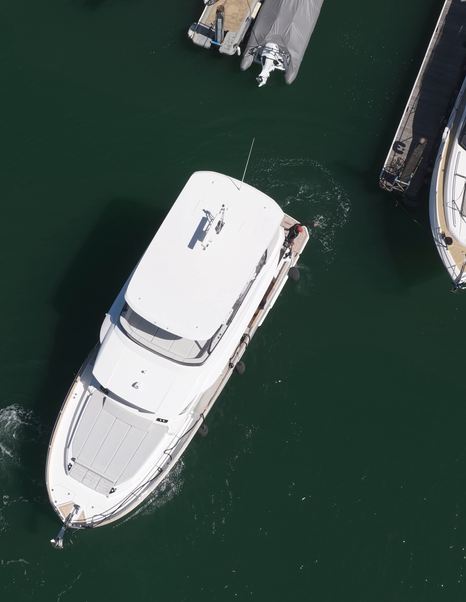
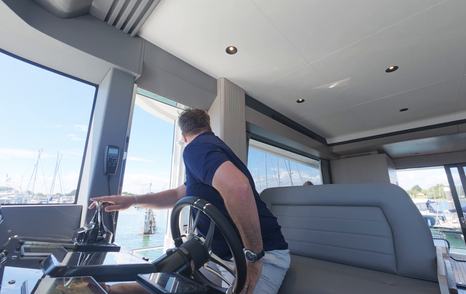
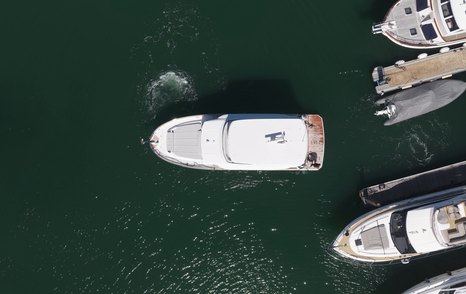
Real boating is sometimes like this. There was no panic and nothing got hit. The berth was horrible,and the wind wasn't helping so the sensible thing was just to stop trying and ask for another one. There is absolutely no prize for forcing a boat into a gap you're not happy with.
The second berth was much kinder and the Sirena came alongside without any issue. With enough room, the shafts make it easy enough to work the boat backwards and turn it around, while the bow thruster gives you another useful tool once the wind starts getting hold of that high bow.
I wouldn't call the Sirena difficult to berth, but it does ask a little more from the skipper than an IPS boat with joystick control, especially in a crosswind. You need to think ahead, use a decent burst of throttle when it needs one and accept that all that height does catch the breeze.
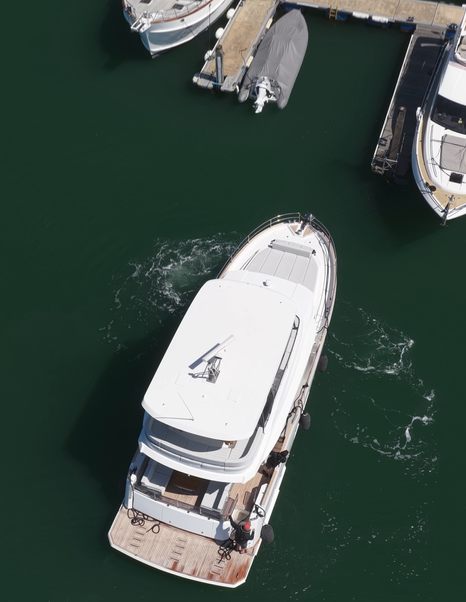
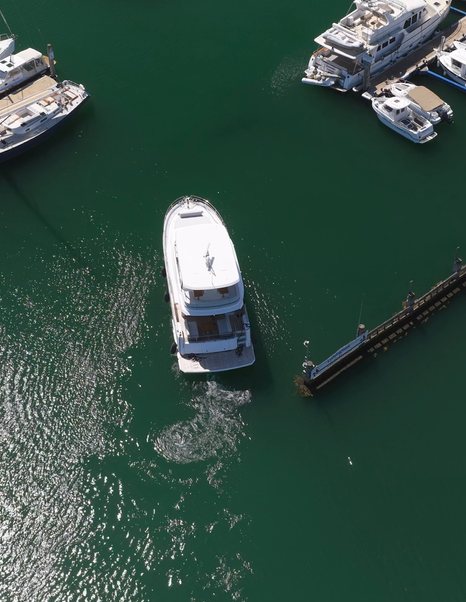
YachtBuyer tested the Sirena 48 on the water from Lymington on 30 June 2026, including a two-way performance run, cruising noise measurement and close-quarters berthing. The test boat had twin 550hp Cummins QSB 6.7 diesels, a Seakeeper and Humphree trim system.
At Sea
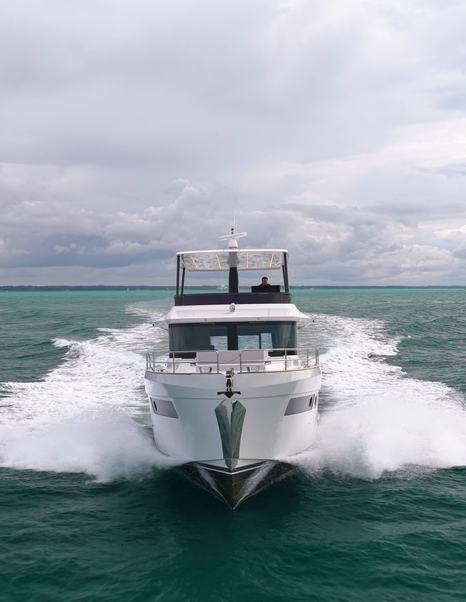
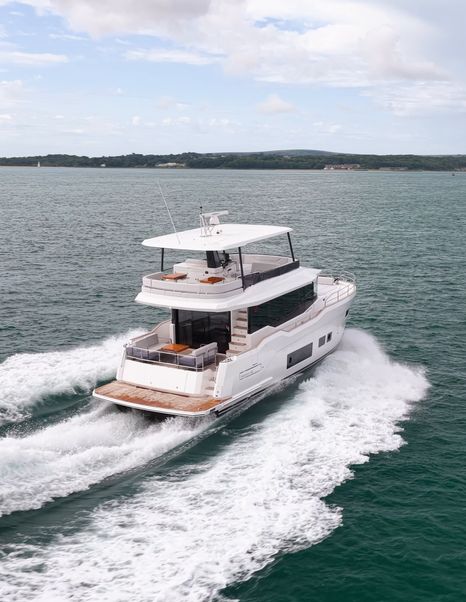
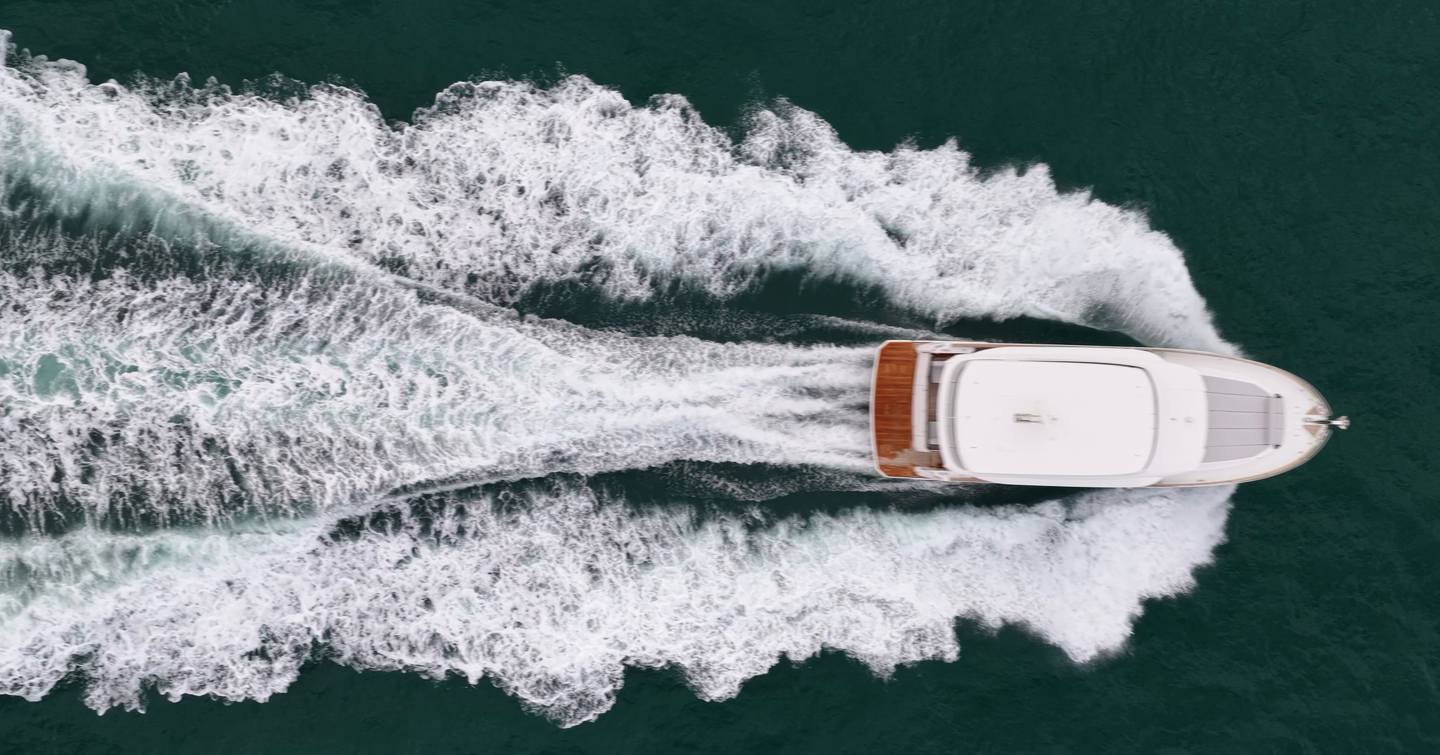
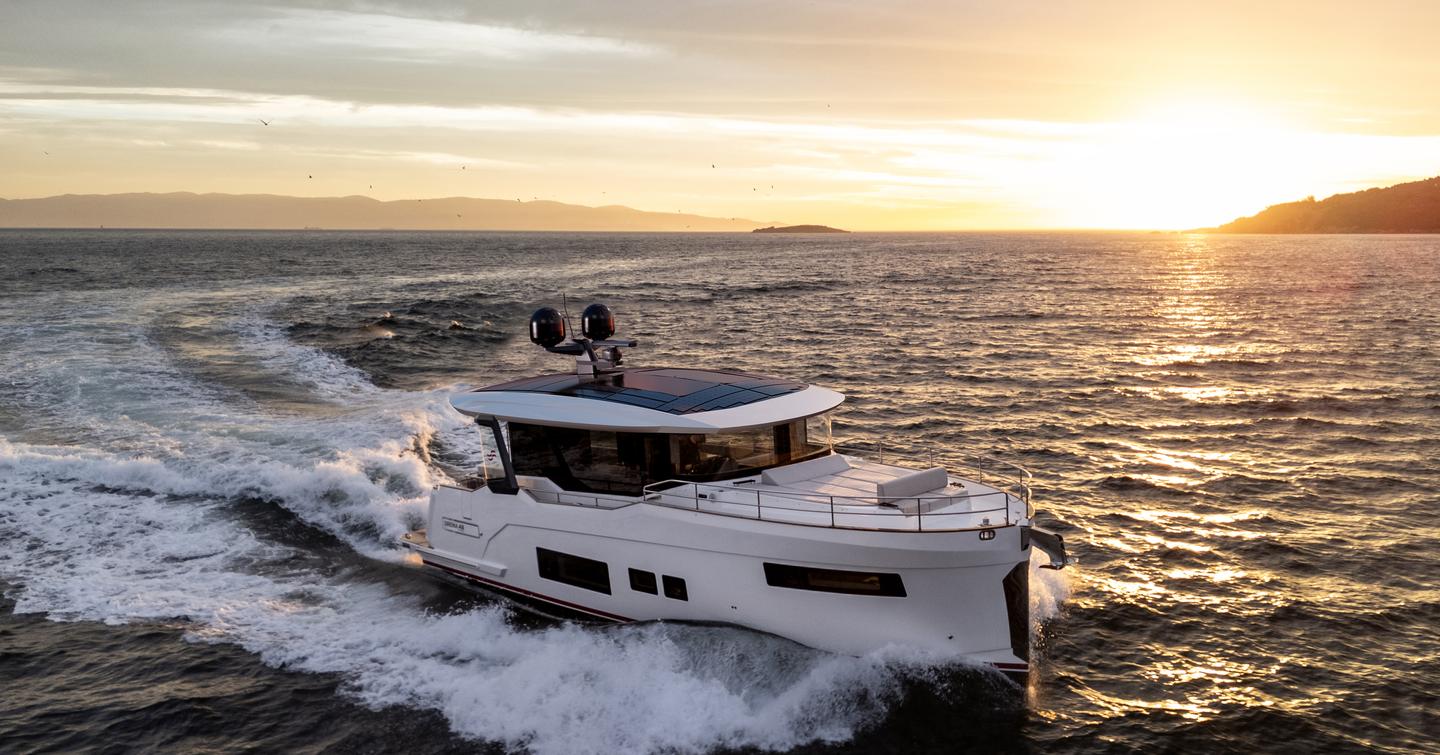
The Sirena 48 really finds its groove at about 15-16 knots, and once you're there the lack of outright speed doesn't bother you much because her Frers hull is a beaut. Sirena claims 24 knots with the standard power package, but on our proper two-way run we saw about 20 knots. So it was a little way short, though this was never going to be a boat about chasing a big number at the top end.
The hull is lovely and soft through a chop, there is no slapping or banging, and it doesn't feel laboured as the speed comes up. A semi-displacement boat like this could quite easily feel a bit heavy and wallowy, but the Sirena tracks very neatly and feels settled once it is moving.
The steering is quite heavy at low speed, then lightens up nicely as you get going. There is a surprising amount of response too. Put some lock on and it will turn back on itself in a couple of boat lengths, which is really good for this sort of boat. Nobody is going to buy one because they want to chuck it around, but it is nice that a quick change of direction doesn't turn into a great big lazy circle.
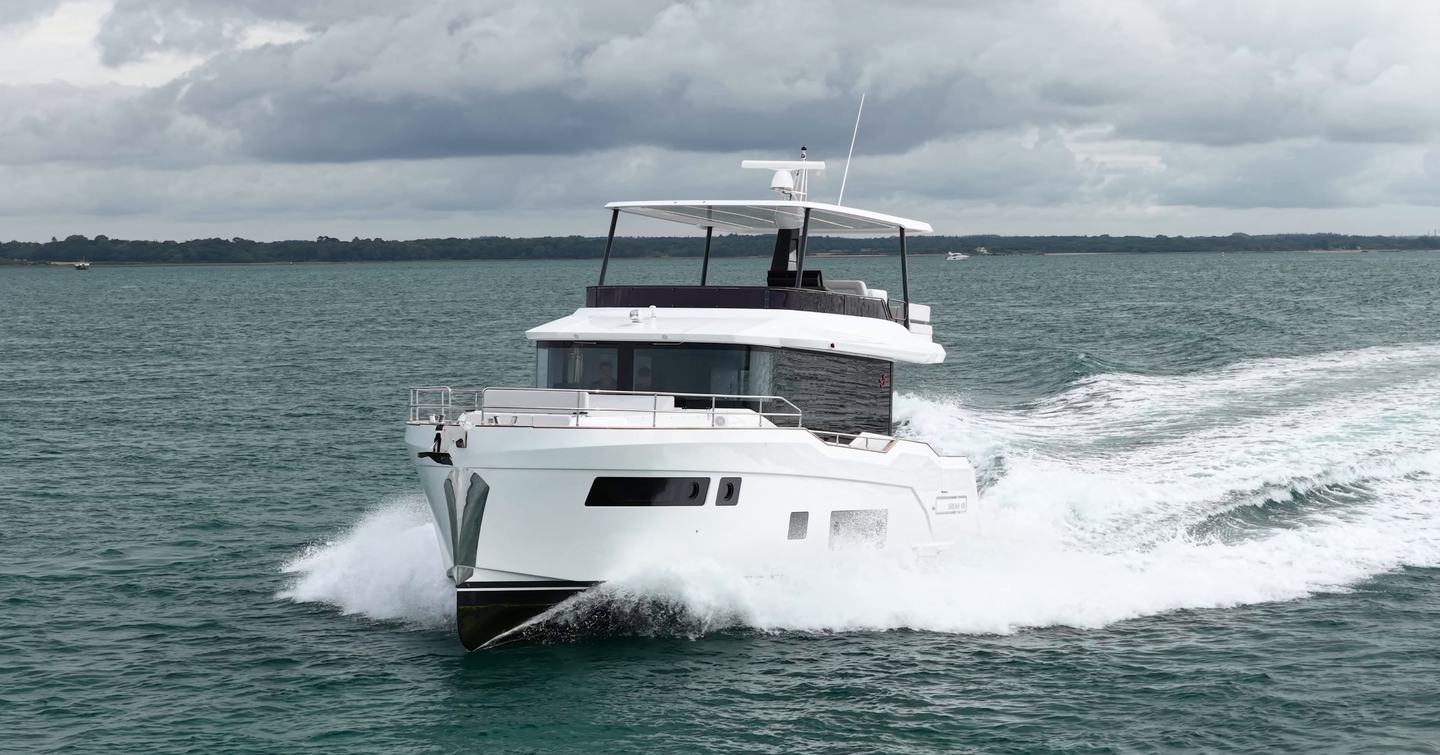
There are really two ways to cruise it. At around 8-10 knots, you can sit back and eke out the fuel, with roughly 500-600nm possible by our reckoning. Push into the 16-17-knot area and that range falls away pretty quickly, to something closer to 200nm. So you have the choice to potter along all day or get a move on if the weather is closing in or you simply want to reach the next stop before dark.
The nice thing is that 15-16 knots still feels very relaxed. The boat isn't straining, and at the lower helm we recorded 75dB, which is pretty good at this sort of speed, and more importantly you can talk normally without having to raise your voice. There was no obvious creaking from the structure either, and none of the crockery or cutlery started rattling away behind us. On a quiet boat, you soon hear that stuff if it isn't tied down properly.
Up on the flybridge it is naturally noisier, especially when you're near the top of the rev range, and the hardtop seems to hold some of that sound around the helm. Talking to the person next to you is fine, but you would be raising your voice to chat with people further aft.
The Humphree trim blades were left in automatic mode and, to be honest, I barely thought about them all day. That's probably the best compliment you can give something like that. The optional Seakeeper also takes the edge off the movement at slower speeds and at anchor, though the hull itself is doing the important work once the boat gets moving.
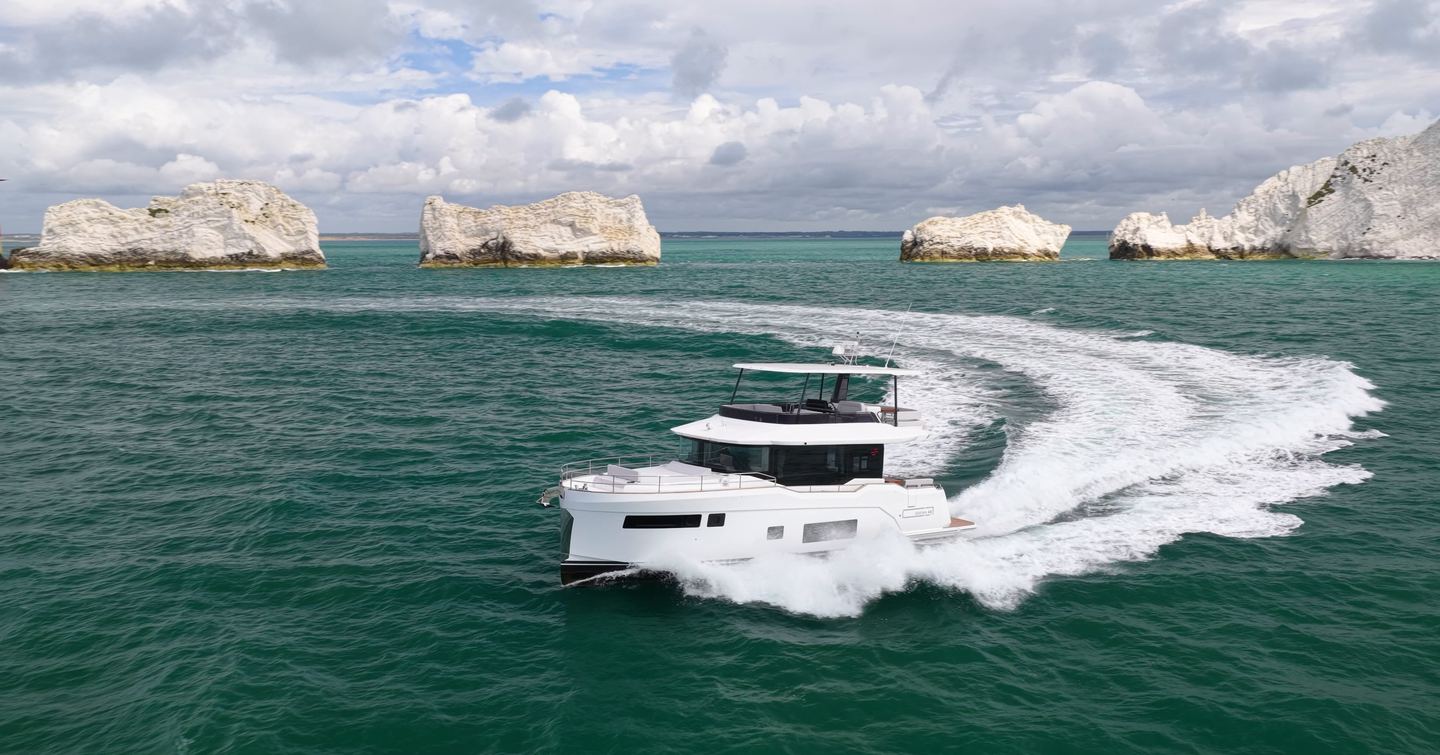
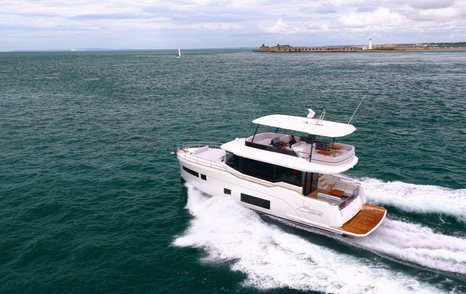

The Sirena 48 first appeared as a project at boot Düsseldorf in January 2023 and made its world debut at Cannes that September. It filled the gap below the Sirena 58, but this time the brief centred on a family cruiser that could work without a permanent crew, and still have enough space for longer stays aboard and more choice than usual around the cockpit and stern. Sirena had 18 orders before the first hull was launched.
Germán Frers developed the hull and naval architecture, while Sirena's own team handled the exterior styling and interior. That is worth spelling out because some early reports gave Frers credit for more of the boat than Sirena does today. His involvement is still important, though. Semi-displacement Frers hulls run through much of the Sirena range, so the 48 starts with an idea the yard already knows well rather than a one-off hull for its smallest model.
Quite a lot of the space downstairs comes from the shape of that hull. The bow is upright and the hull stays broad a long way forward, rather than narrowing sharply as it reaches the stem. That gives the forward VIP much less taper around the bed and helps explain the excellent headroom throughout the lower deck. There is no clever trick to it really - the hull simply carries a lot of volume for its length.
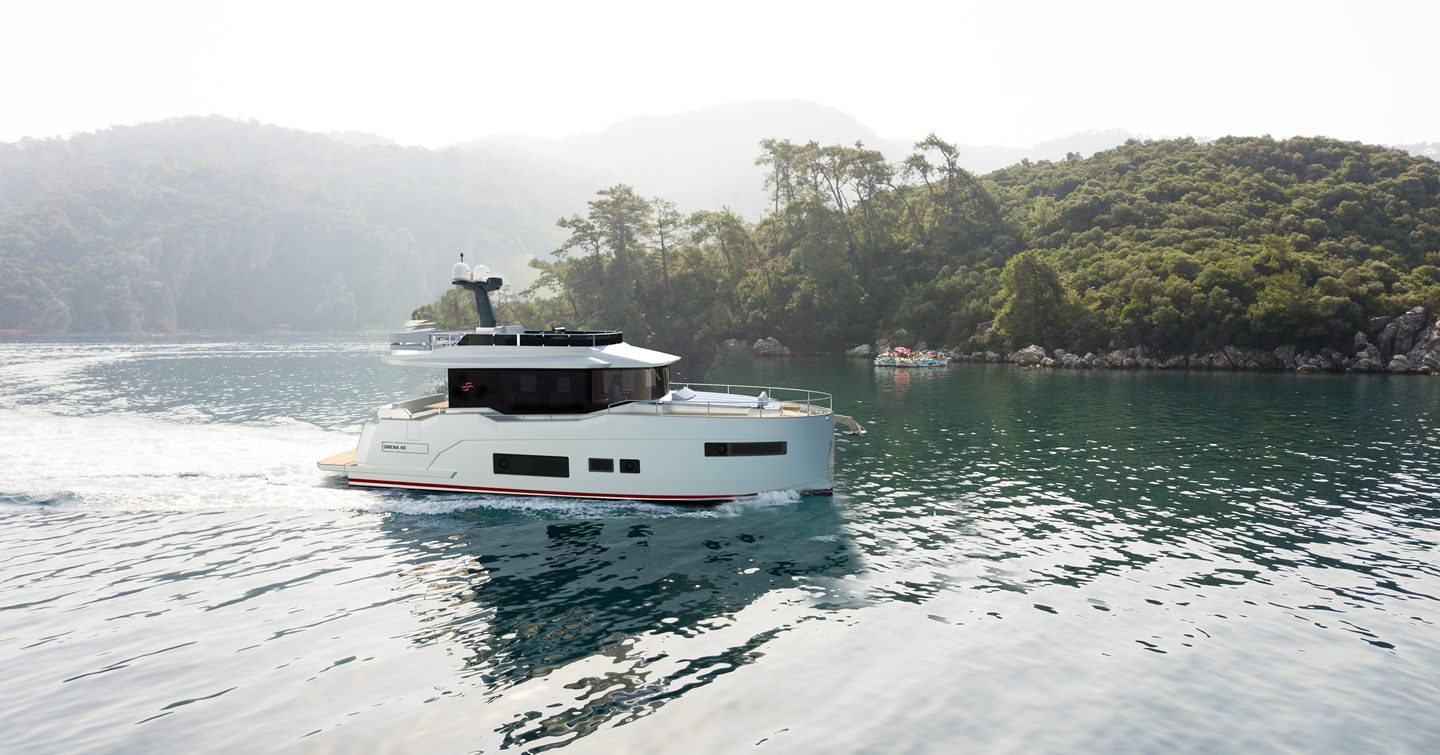
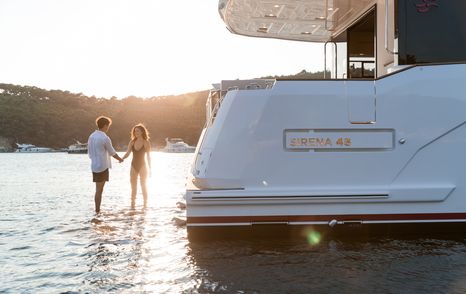
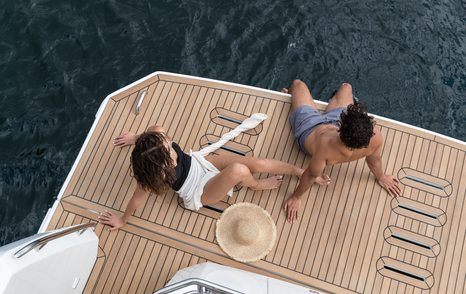
The machinery layout helps further aft. Sirena uses V-drive shafts rather than IPS, as it does on other models in the range, which allows the engines to sit a long way back in the hull. That leaves more length ahead of the engine-room bulkhead for accommodation and is a big part of the reason the full-beam owner's cabin feels like it belongs on a larger boat. Sirena has never publicly explained why it chose V-drives over IPS for the 48, so it would be wrong to invent a reason beyond the packaging benefits that are obvious on board.
There is some interesting detail in the construction too. Sirena says it keeps composite work, stainless steel, furniture, teak and upholstery in-house at its Orhangazi plant in Bursa, and the yard uses vacuum infusion for its hulls and decks.
The Azimut connection is useful background here. Sirena Marine was founded in 2006 and began working with Azimut-Benetti in 2008, with the company saying that partnership led to more than 250 motor yachts and work on three Azimut models. CEO Çağın Genç has said that period gave Sirena much of the production know-how it later used for its own motor yacht range. You can see some of that thinking in the 48, from the foam-lined crockery storage and individual cutlery slots to the neat labelling around the machinery.
Owner choice was built into the 48 from the start. The cockpit can be set up in different ways, while the stern space could become either a single crew cabin or a large storage area. The Flybridge was the original version, with hardtop and solar options available, while the lower Sirena 48 Coupé came later as Sirena developed the hybrid version.
Engine Room
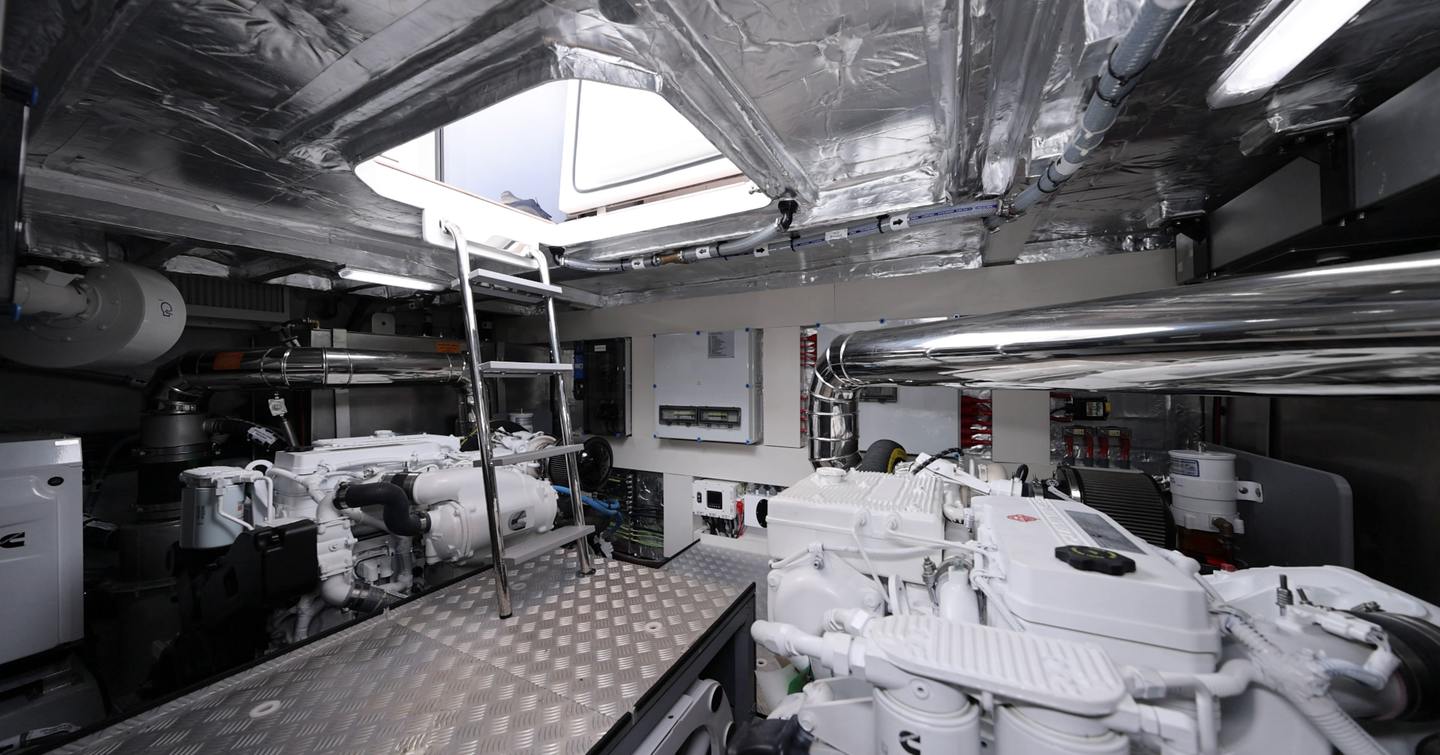
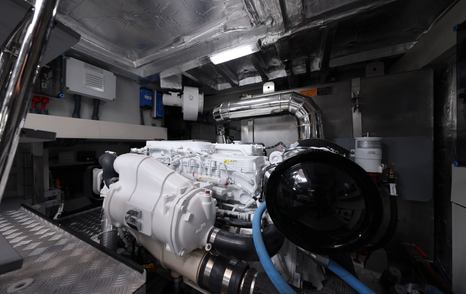
Access is through a big hatch in the cockpit, and the first step down is easy enough. Once you're between the engines, though, this is definitely crouching room rather than standing room. You can stay on your feet, just about, but spend too long on your knees and the checker plate soon lets you know about it.
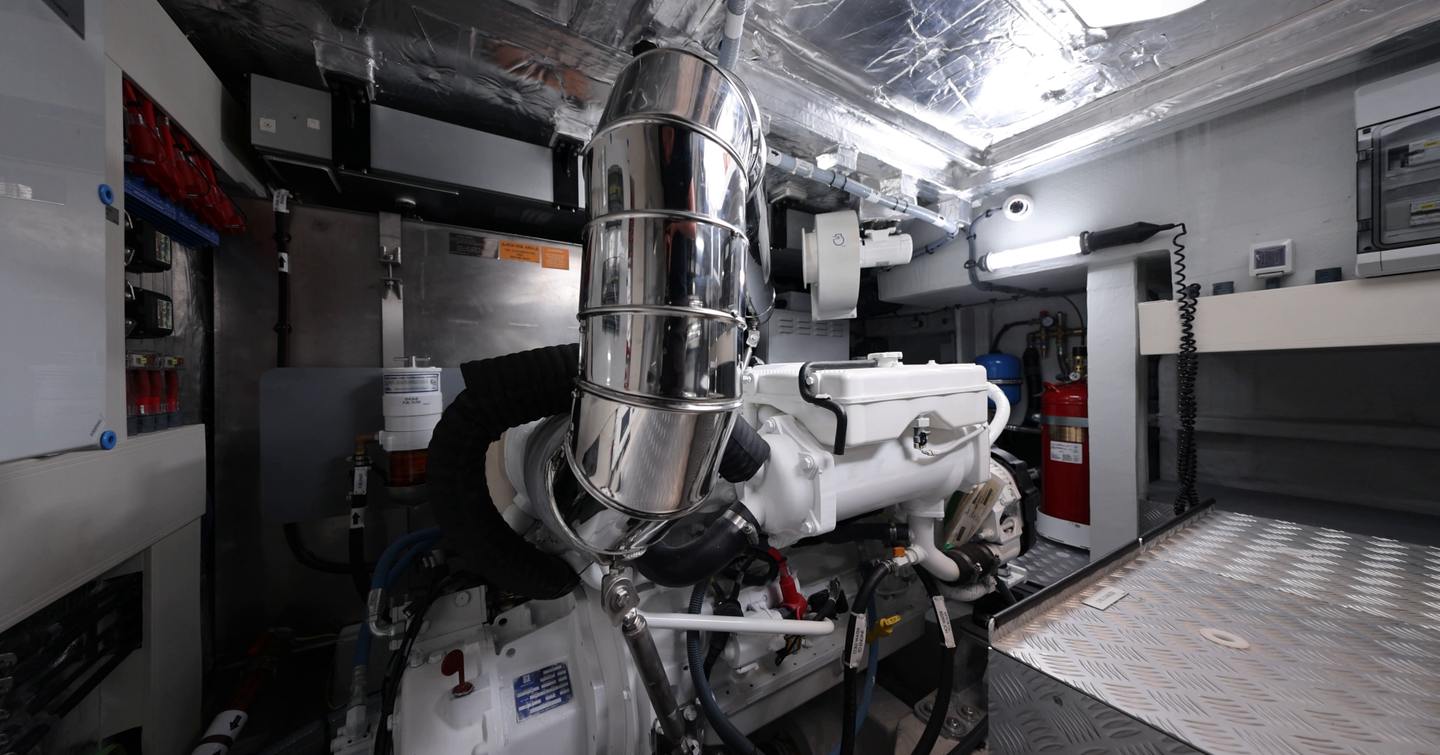
Our test boat has a pair of 550hp Cummins QSB 6.7 diesels, and they're nice compact engines for this installation. There is good space around them, you can get down both sides and underneath, and the main service points aren't buried behind half the engine room. That matters on a boat like this because plenty of owners will be checking fluids, filters and belts themselves rather than leaving everything to a crew.
The V-drive layout is doing a lot of work here. The engines sit right aft, with the shaft line running back beneath them, so Sirena can push the machinery space a long way towards the stern. That is one of the reasons the owner's cabin gets so much length, and it also keeps most of the machinery grouped together back here. Sirena uses the same basic V-drive set-up elsewhere in the range, though there isn't a clear statement from the yard that explains why it chose this over IPS for the 48.
At the time of our test, the alternative engine package was a pair of 670hp Volvos, which added around £100,000. That's a lot of dough for another handful of knots, but I can see the case if the boat is going to be loaded with a tender, Seakeeper, air-conditioning, stores and all the usual cruising kit. The bigger motors should have an easier time of carrying that weight, even if they don't suddenly turn the Sirena into a fast boat. For a full breakdown of how the two setups compare, see the Sirena 48 Engine Options Compared.
The rest of the installation is very nicely laid out. The generator is easy to get at in the corner, everything is labelled and the general finish is neat and tidy without trying to be fancy. The Seakeeper sits beneath a removable hatch, and the panels around it come away as well, which is exactly what you want. Gyros need servicing and, in the worst case, they may need to come out, so burying one under half the boat is never a good idea.
There are some nice little touches too, including a wandering inspection light that you can pull out and use around the bilges before slotting it back into its holder. Small thing, but handy.
You won't stand upright between the engines, but you can see what is going on, get to the machinery and reach the main service points without dismantling half the boat. For an owner-run cruiser, that counts for a lot.
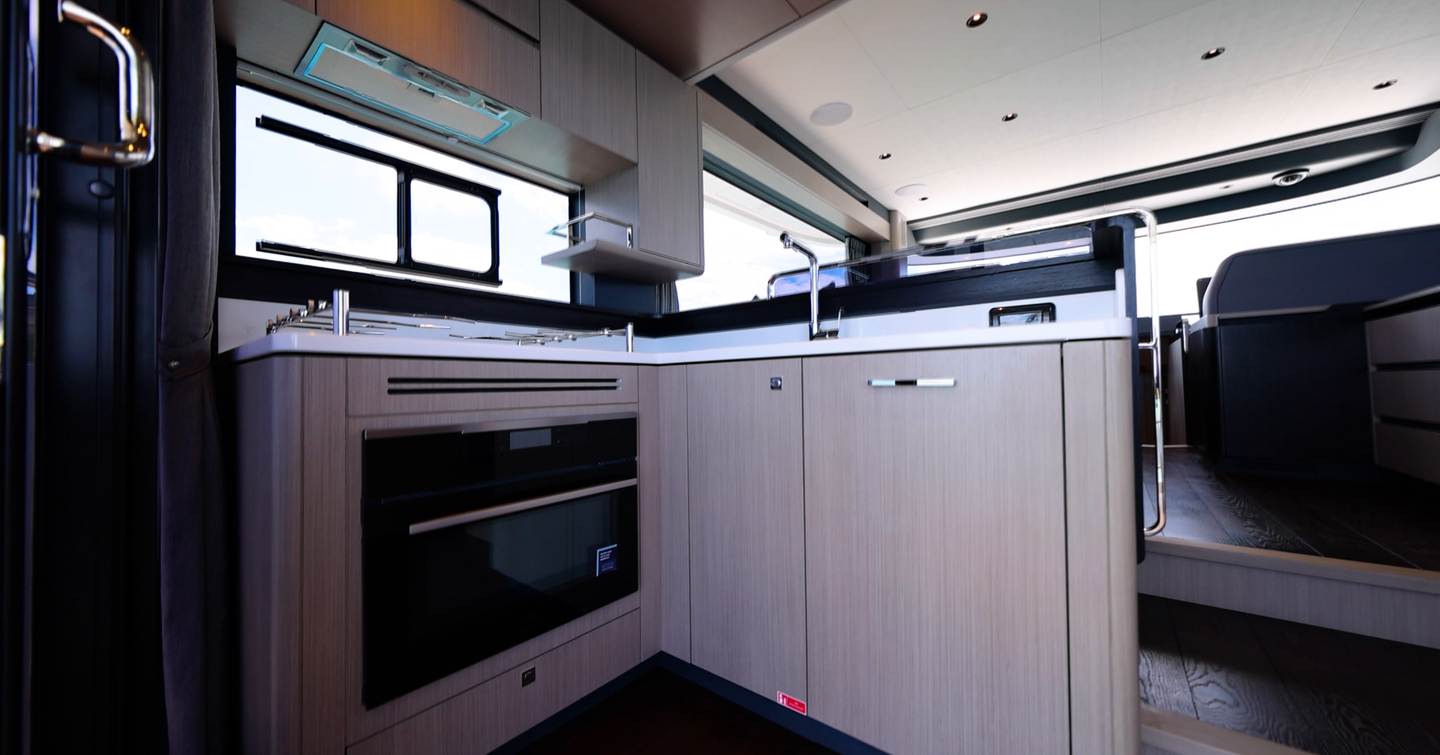
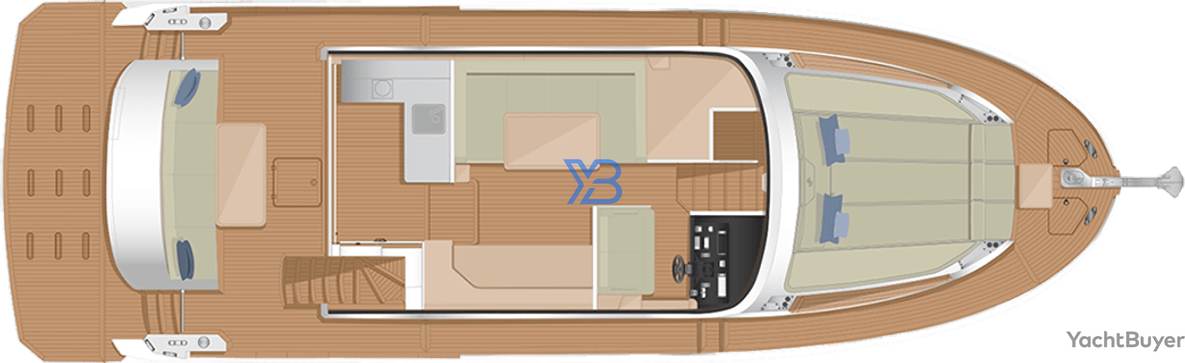
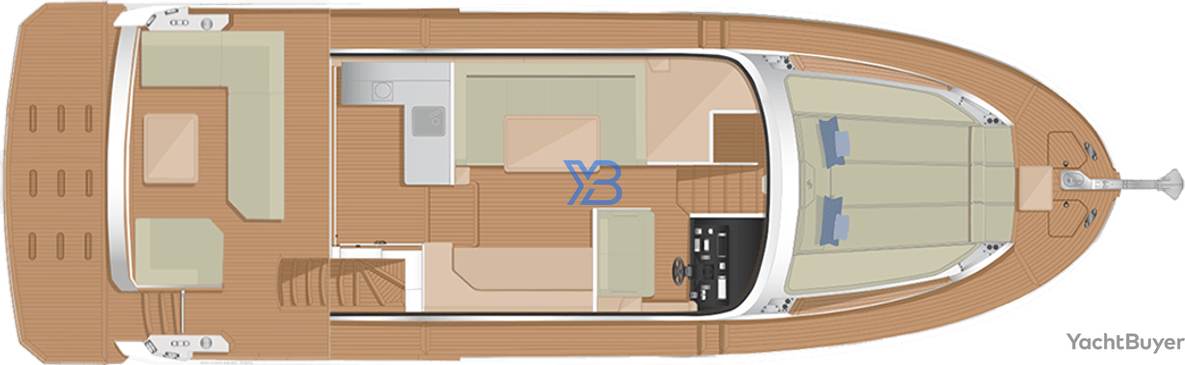
The galley sits right aft, and this is a really good place for it. Push the three-part doors across and the opening becomes huge, so it works almost as well for the cockpit as it does for the saloon. There is an opening window beside the worktop too, plus extraction above the hob, so you can get plenty of air through here when you're cooking.
It is a good-sized galley as well. There is an induction hob with pot clamps, a proper stainless-steel sink and a decent amount of worktop. I would have made the sink cover double as a chopping board because at the moment it just becomes another thing you have to put somewhere. The bin is a bit of a miss too. It is tucked away neatly, but it is tiny for a boat where you might quite happily spend a week or two aboard, so you'll be emptying that a lot.
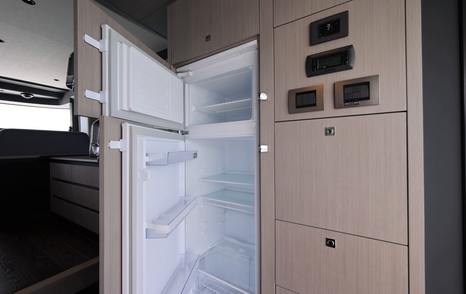
The fridge and freezer are much better. Both are a good size and sit in a tall unit on the starboard side, and there is loads of other storage around the galley. The bit I really like, though, is how Sirena deals with all the plates, glasses and cutlery that normally make themselves heard once a boat gets moving.
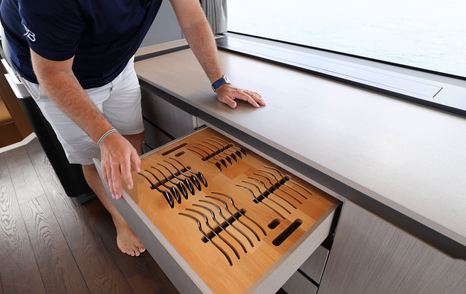
The crockery are behind foam-lined fiddles, while every bit of cutlery has its own little slot. Even the teaspoons get one. It sounds like a tiny thing, and at a boat show you could quite easily walk straight past it, but on a quiet boat this stuff matters. There is nothing worse than the hull doing a lovely job while half the kitchen provides the soundtrack. Here, it all stays put.
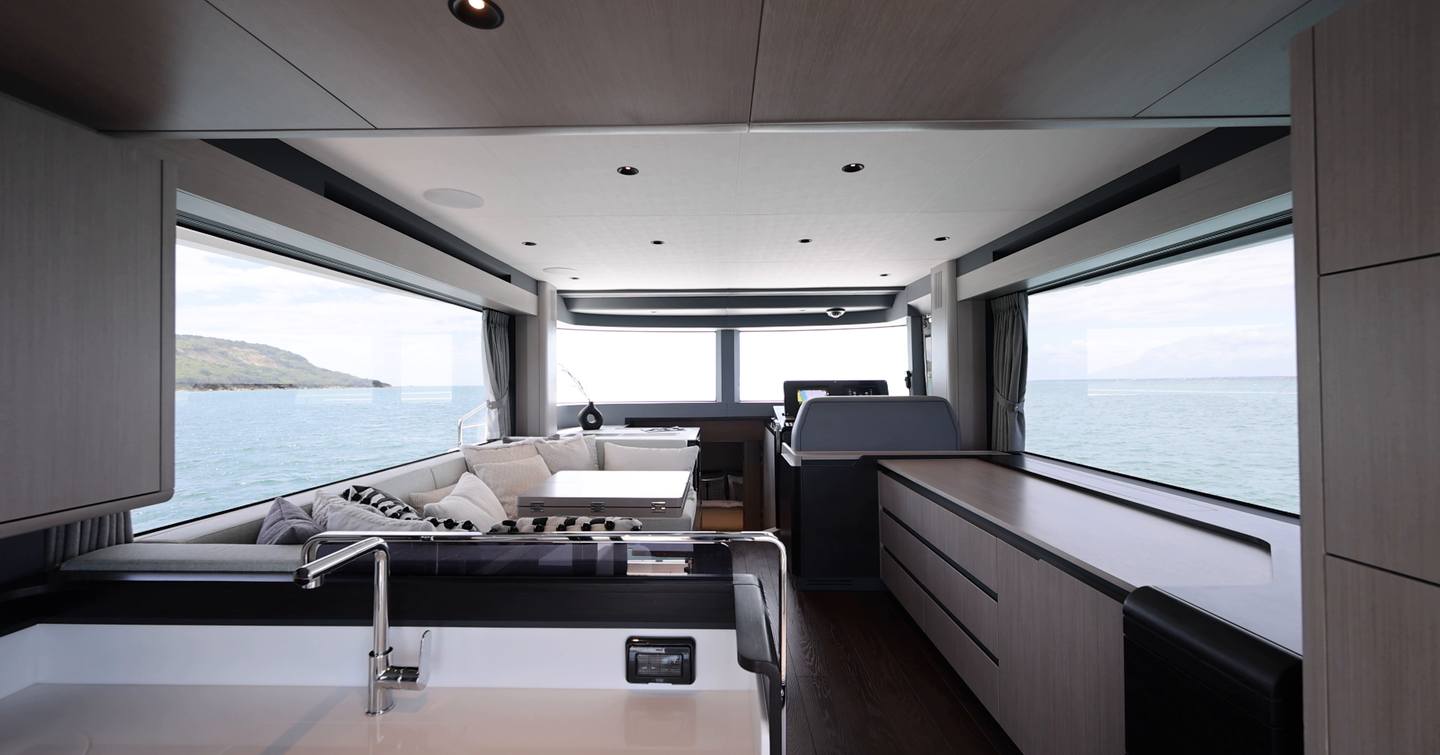
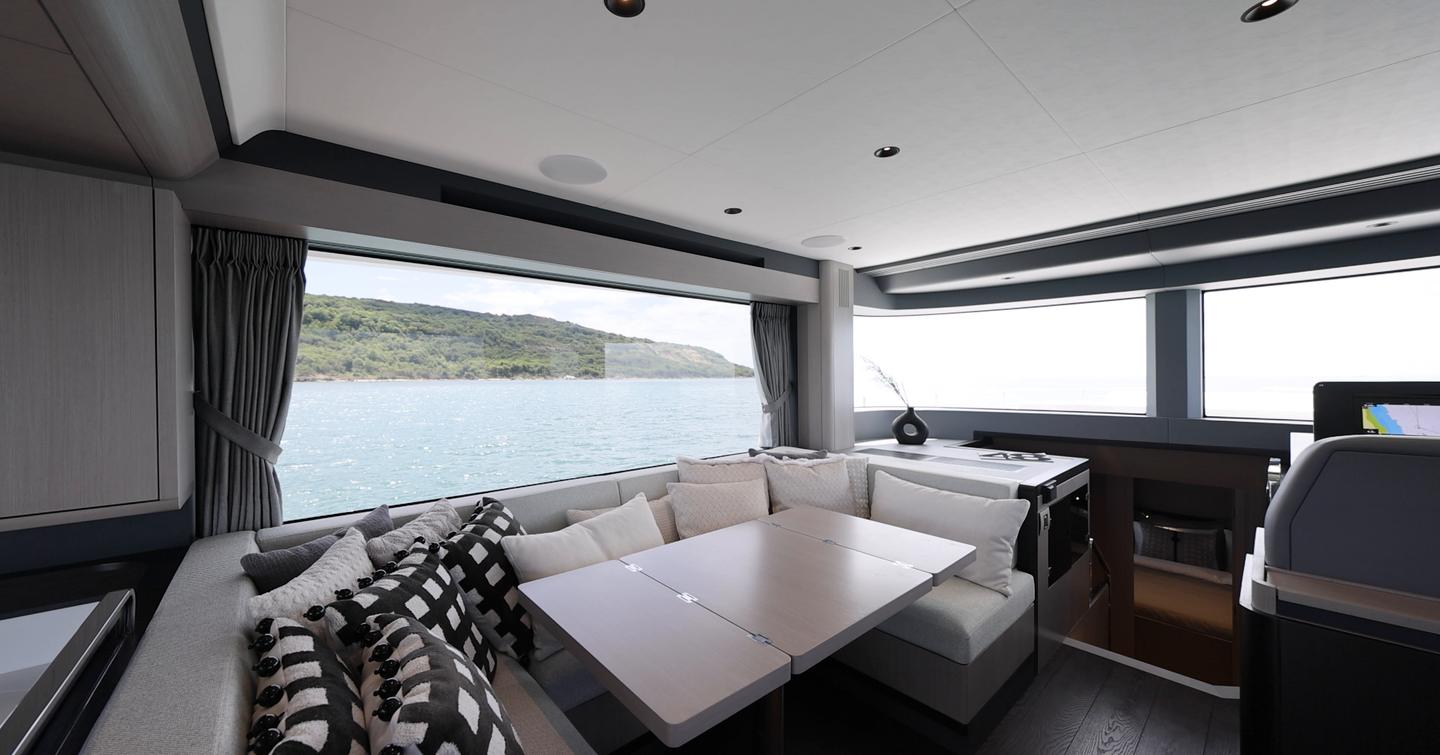
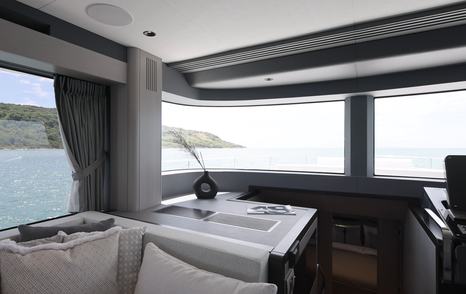
The saloon itself is pretty simple. A big C-shaped dinette sits to port with a folding table, and the windows come down low enough that you still get a lovely view out when you're sat there. There are a heroic number of scatter cushions on the sofa as well, though apparently still not enough for my liking. Move those out of the way and it is a nice, comfortable place to spend time.
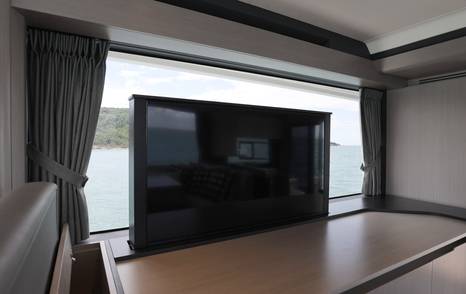
Opposite, the television rises out of the cabinetry and is around 50in. It is a good size and well placed for the dinette, but the best bit is that it disappears again. With the screen down you get the window back rather than a great black rectangle stuck permanently to the wall.
The table can also be specified on an adjustable leg, so it drops down to make another double berth. Handy if you regularly fill every bed on the boat, though with three cabins downstairs I suspect most owners will be perfectly happy to leave the saloon as it is.
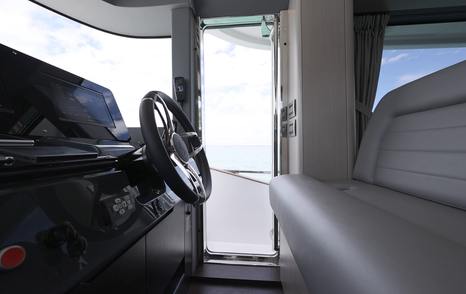
There is one slightly odd bit beside the lower helm. Sirena has left a decent patch of floor there, but there isn't a seat, a cupboard or really anything else to use it for. Nearly everything else on this deck has an obvious job, so this just feels a bit wasted.
The pale wood keeps the saloon nice and light, with darker sections here and there so it doesn't all look the same, and there is plenty of glass despite the flybridge overhead. But the better measure of the fit-out comes once the boat is underway. The doors stay shut, the crockery stays where it should and there are no obvious squeaks from the furniture or structure. On a boat this quiet, you'd hear them if they were there.
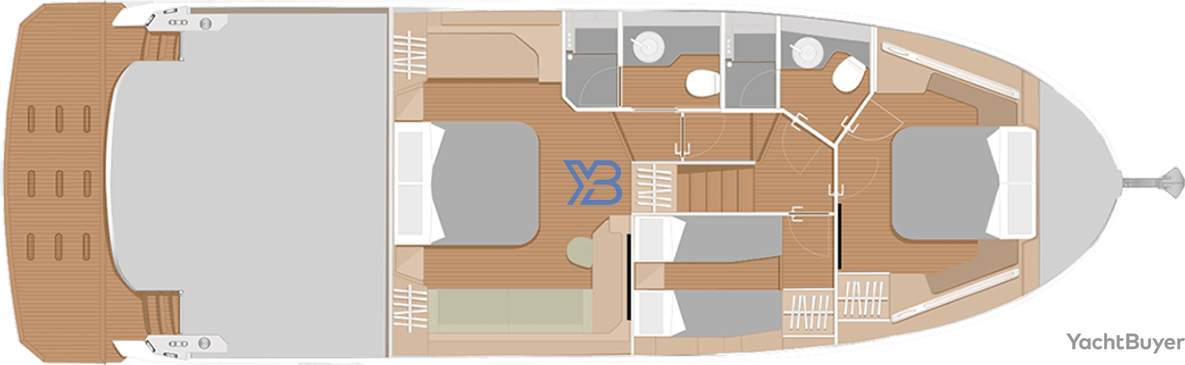
The lower deck has three cabins and two bathrooms, with the VIP right forward, a twin on the starboard side and the full-beam owner's cabin amidships. The VIP shares the day head but has its own private door into it, while the owner gets a separate bathroom. For a boat of this size, there is a lot of room down here.
Owner's Cabin
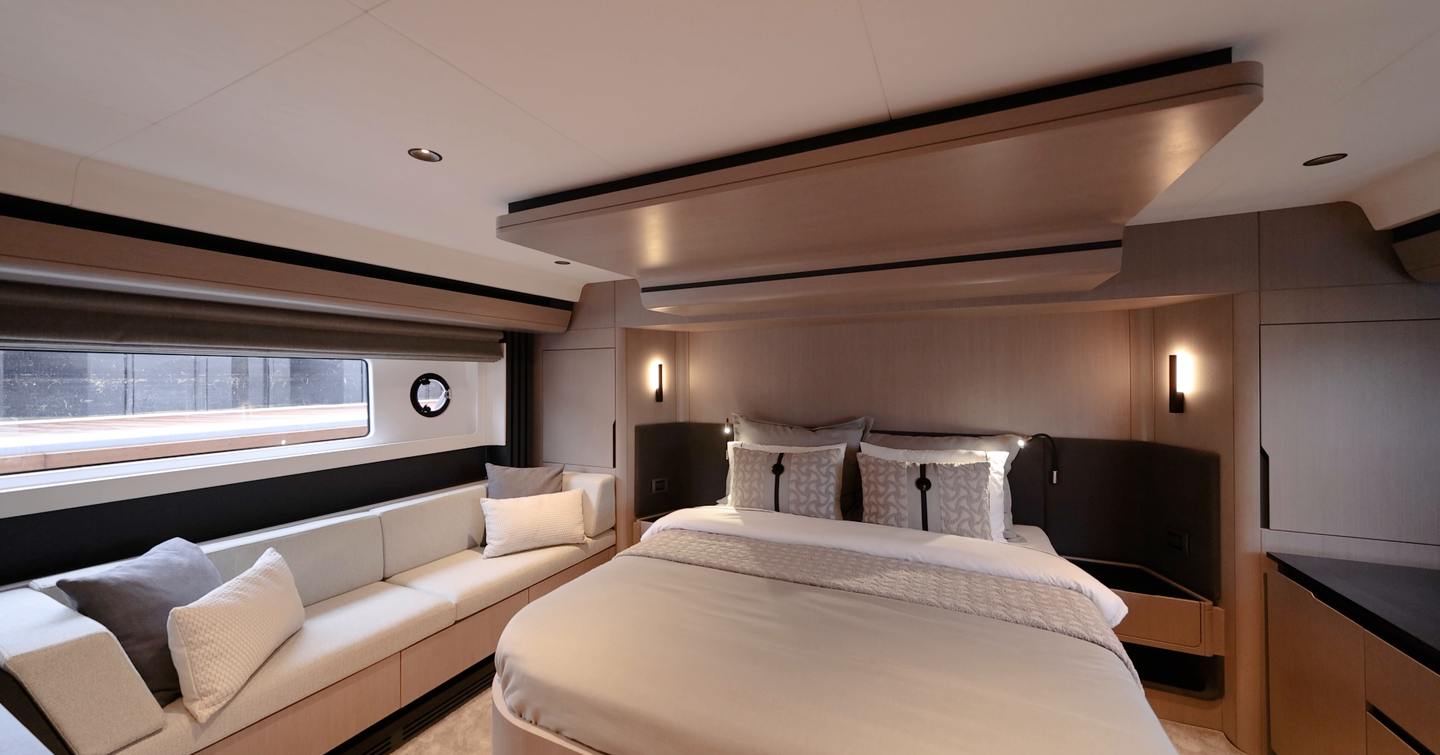
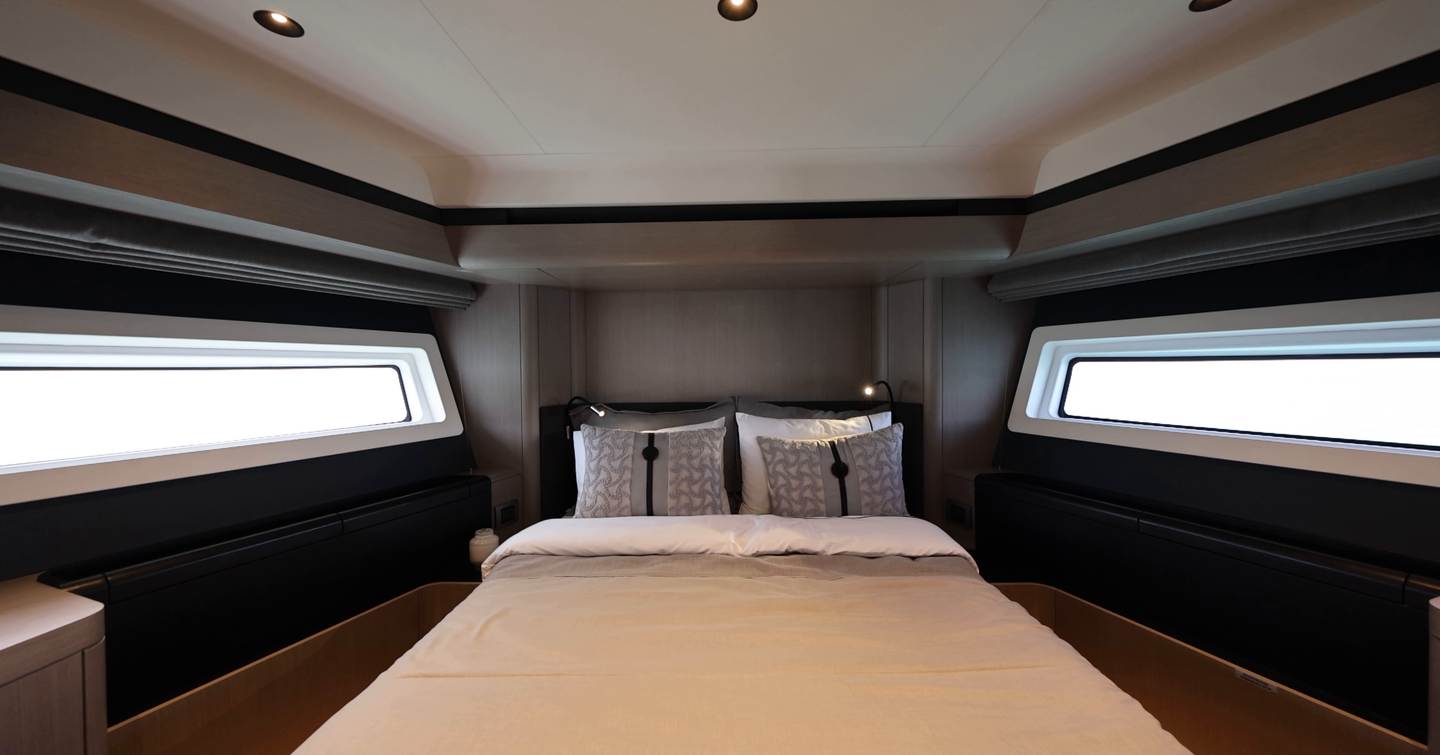
The owner's cabin is so impressive it makes you wonder whether this is really a 48ft boat. Once you're down the entrance steps the floor is flat, the bed is huge and there is a lovely amount of room around it. The V-drive machinery sits a long way aft, so Sirena has been able to push the engine-room bulkhead back and give this cabin a lot more length. It genuinely feels like it belongs on a bigger boat.
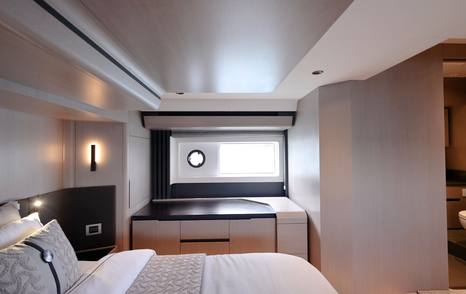
There is a nice mix of light wood and darker material around the bed, with a two-tone finish in places so it doesn't all become one big slab of the same colour. The ceiling has a bit of shape to it too, and the TV gets the same mirrored surround as the one in the VIP, only much larger. Opposite the bed there is a bureau with a little stool for make-up or jewellery.
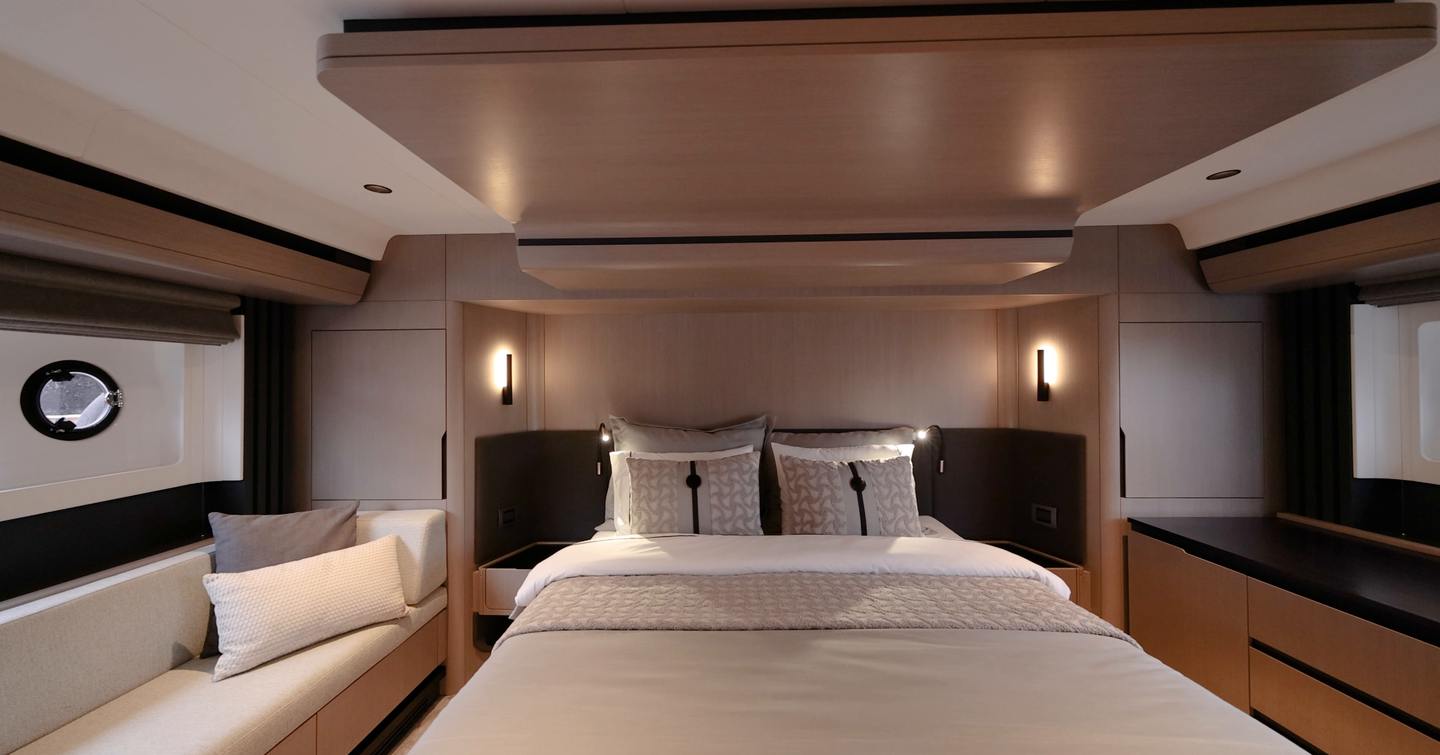
The sofa is a lovely touch because it gives you somewhere to sit that isn't the bed, and the big hull windows mean you can sit there and actually see the water. Storage is good as well, with lockers low down and a proper hanging wardrobe on the starboard side. Bedside tables, reading lights and sockets are all where they should be, and there is enough clearance to sit upright in bed quite comfortably.
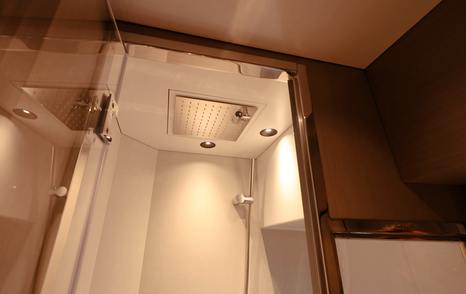
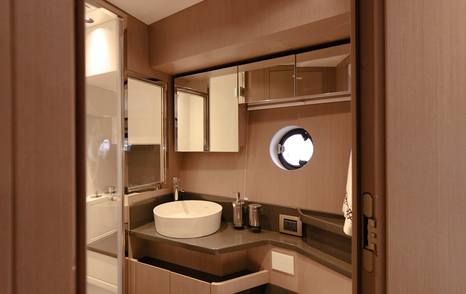
The owner's bathroom sits just outside the cabin in the little lobby. It is a little tighter than the one forward, though the sliding door saves a fair bit of space and there is still room for a proper separate shower with excellent headroom and a rainfall shower head. The optional washer-dryer also sits in this lobby rather than inside the cabin itself, which is handy because everyone on board can get to it.
Guest Accommodation
The VIP is a really nice cabin too. The upright bow helps because the hull stays broad much further forward, so the bed doesn't end up wedged into a tight V and there is proper floor space around the foot. One person can get changed here very easily, and two could manage at a push. Headroom is well over 1.83m (6ft), and the bed sits quite low as well, which makes it feel far more natural than those bow cabins where you have to climb halfway up the hull to get into bed.
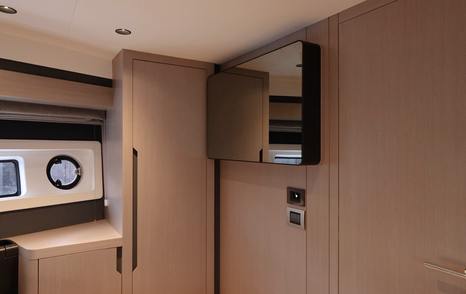
Natural light comes through the long hull windows on either side, and there are opening ports for some fresh air. There is no skylight or escape hatch overhead, though, which is a bit of a shame. Storage is good, with a proper hanging wardrobe, smaller lockers and useful little shelves beside the bed for phones and glasses. Sockets sit within easy reach, and the lighting controls repeat at the bedside so you don't have to get up again once you've settled in.
The TV is nicely done too, with a mirrored glass surround rather than a screen simply stuck on the wall. The bathroom doubles as the day head, but the VIP doesn't feel short-changed by that. It has its own door, there is enough room for a separate shower and the finish is very good.
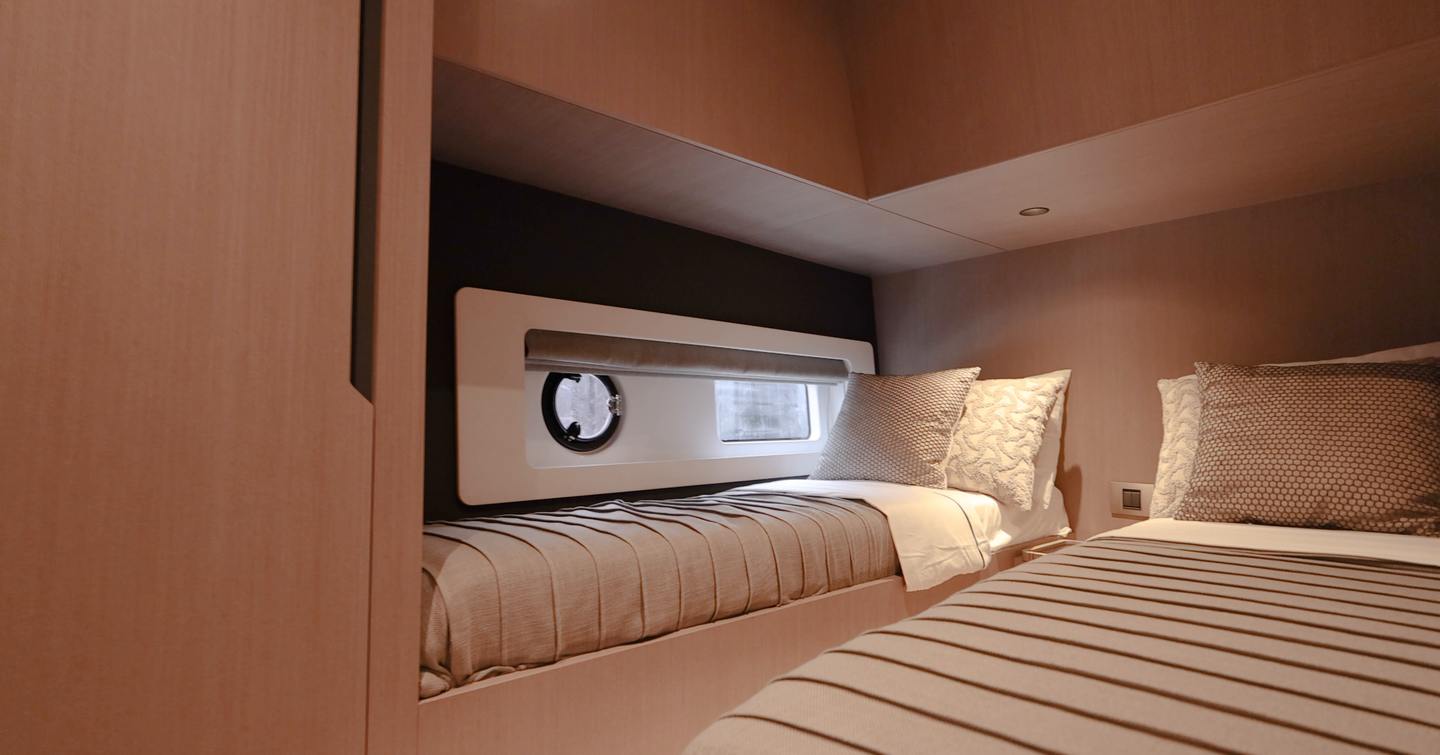
The twin is the weak cabin of the three. The berths are narrow, and if you're an adult who sleeps on your side you'll know all about it. I would really think of this as a kids' cabin, though adults could put up with it for a night or two. The beds are fixed as well, so there is no option to slide them together and make a double.
The berths may be narrow, but headroom certainly isn't. There is loads of height through the middle of the cabin, so adults can stand and get changed without any trouble. There is a proper hanging locker, a shared bedside table, sockets and lighting controls, plus another opening port for some air. The hull window isn't huge, but it is low enough to give you a nice view of the water from bed.
Crew Space
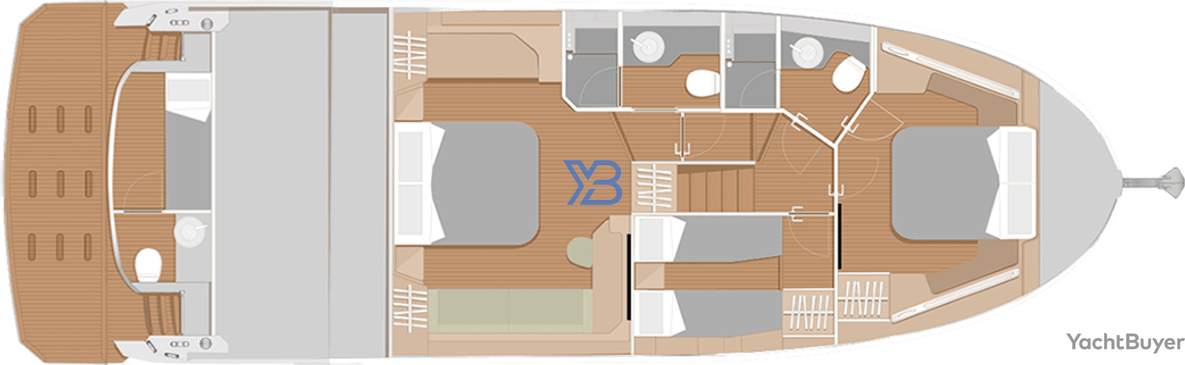
The Sirena 48 is clearly aimed at owners who will run the boat themselves, but there is an optional single crew cabin right aft if you really want one. It takes over the big storage space behind the transom and, to be honest, I wouldn't bother.
It is extraordinarily tight for a crew cabin, and on a boat of this size the storage feels far more useful. Keep it as a lazarette and there is room for all the fenders, lines, covers and plenty of water-sports kit, all right beside the bathing platform where you actually need it. Give that space over to one berth and you lose one of the most useful bits of the boat.
For an owner-driver who might occasionally carry an extra hand, the crew option is there. For most buyers, I'd keep the big boot.
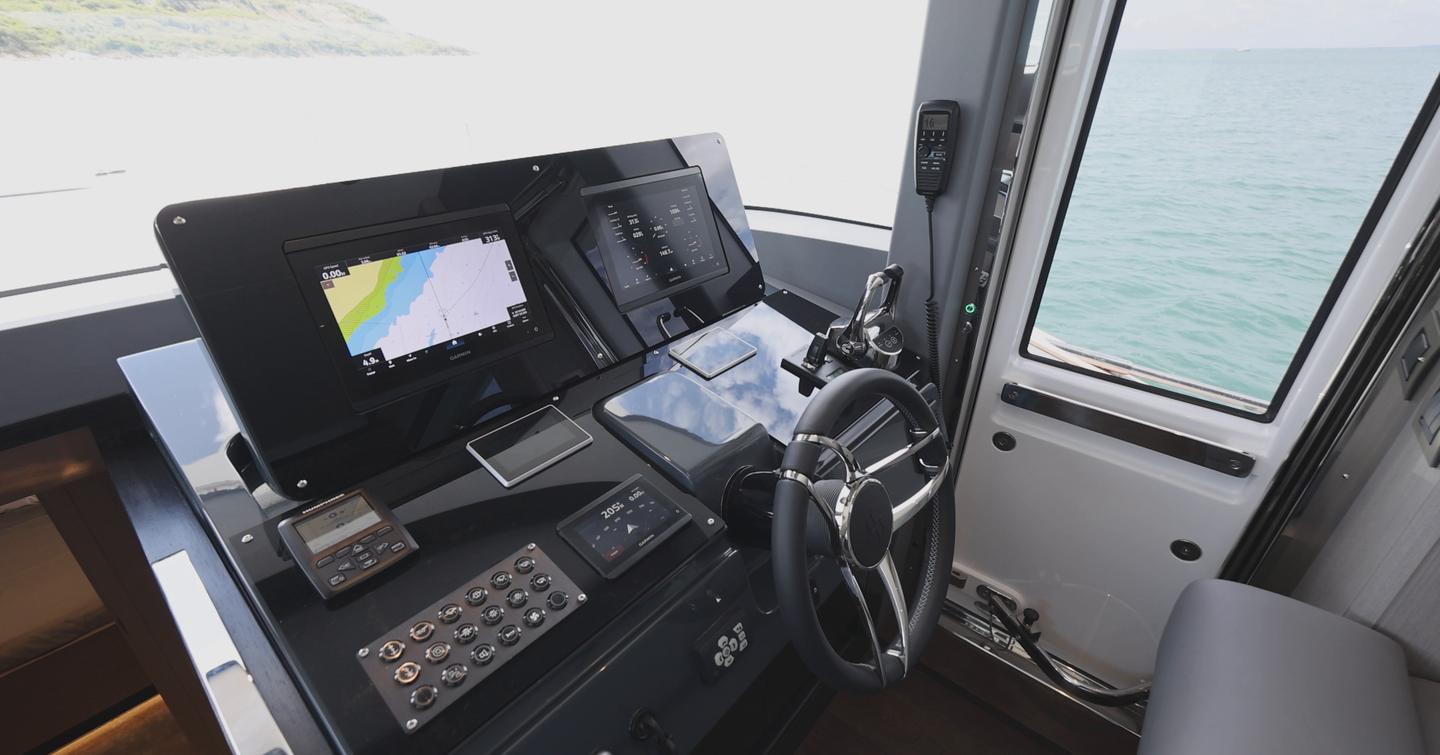
There are two helms on the Sirena 48 and, as nice as it is to be up on the flybridge when the sun is out, the lower station is probably the better of the two.
Upstairs, the set-up is pretty simple. There is a wide two-person bench, a proper footrest and useful little places on either side for a phone, sunglasses or a drink. The seat gives good support and the driving position is comfortable once you're settled into it, but there isn't much adjustment. The wheel is fixed, the bench is fixed and, more annoyingly, the screens and throttles sit a bit too far away. You can see everything easily enough, but actually using it means leaning forward more than you should have to.
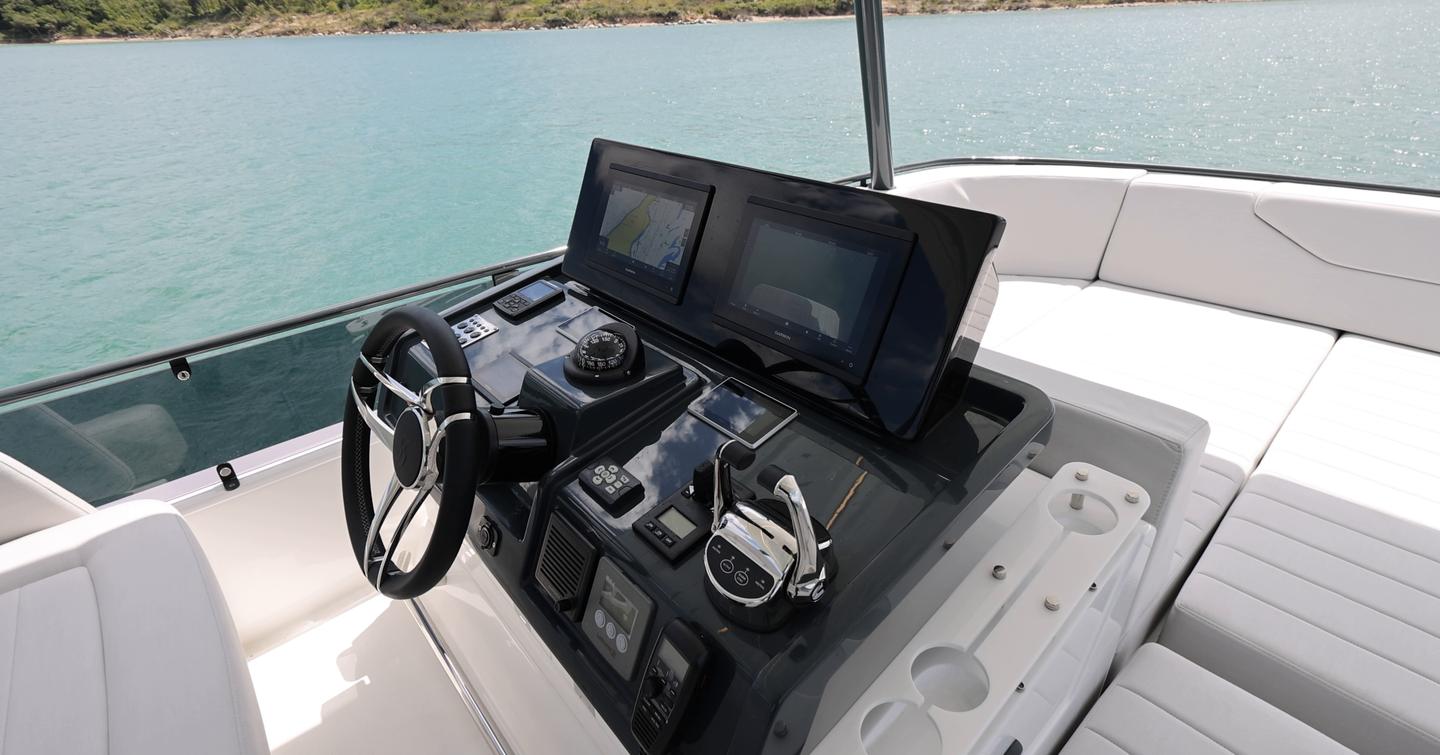

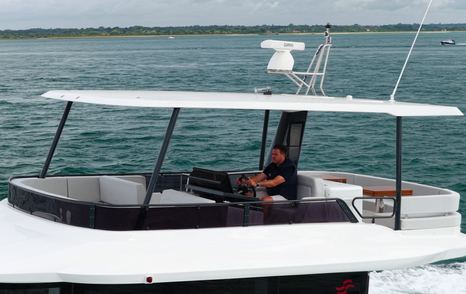
The view has another little quirk. Sat back in the seat, you can't quite see the point of the bow because that huge forward sunpad puts the windscreen a long way ahead of you. You can still see the water and anything in your path, so it isn't a serious blind spot, but I do quite like seeing the bow. There is something oddly comforting about knowing exactly where the pointy end is. Stand up and it comes straight back into view.
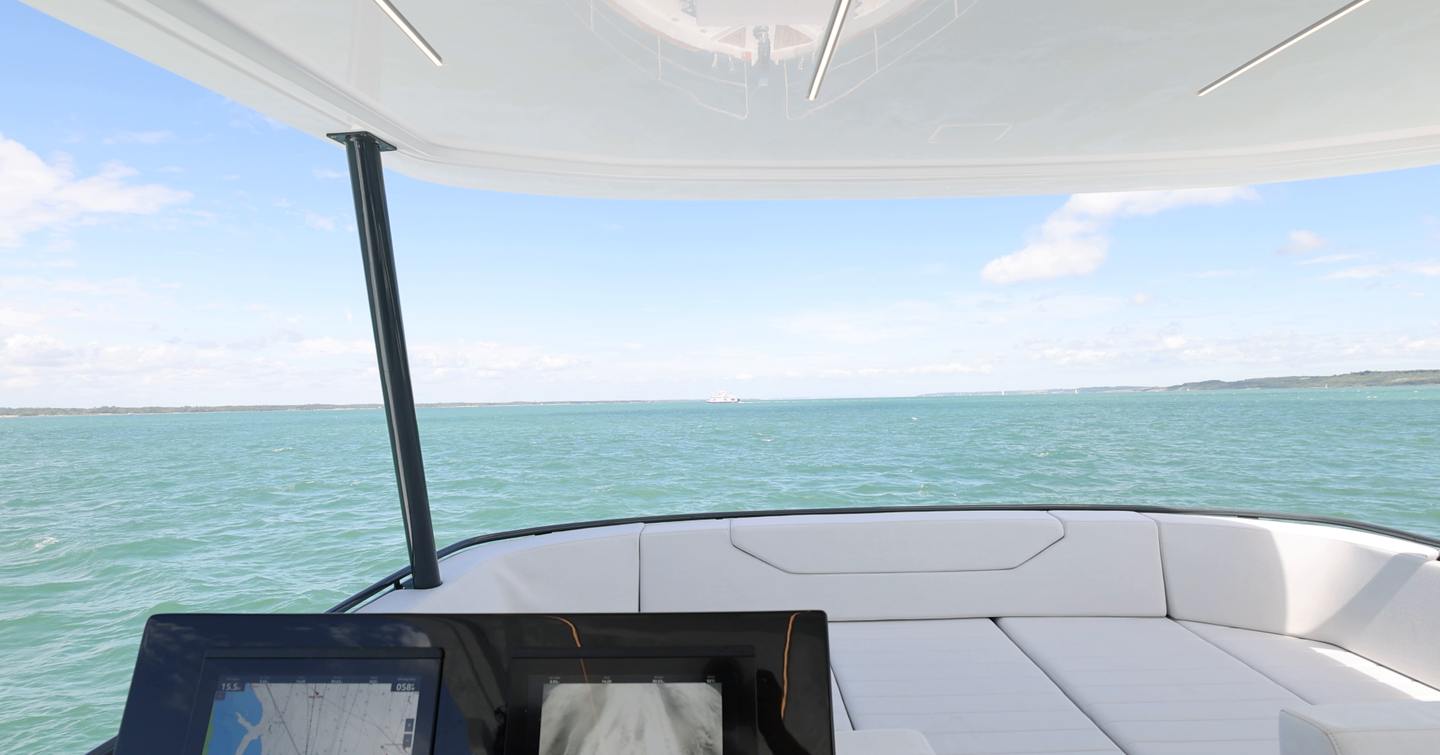
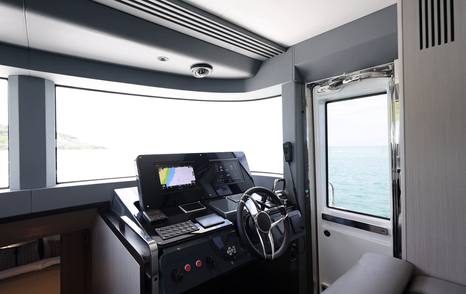
But downstairs just suits the boat better. The windscreen is tall and upright, and because the helm sits well forward you get a lovely clear view of the bow. There is a fairly chunky mullion through the middle, so occasionally you have to move your head slightly to see around it, but sightlines elsewhere are very good and there is plenty of glass down both sides.
The bench is another two-person affair, this time with a bolster so you can sit or lean, and there is still room for somebody alongside. Again, though, Sirena hasn't given you much adjustment and the controls are a stretch. That feels like a missed opportunity on a boat built so clearly around owner-operation.
More annoying is the complete lack of somewhere to put your bits and bobs. No cup holder, no proper ledge, nowhere obvious to drop a phone or sunglasses without expecting them to go for a slide. It's such a simple thing to fix and the upper helm already gets it right.
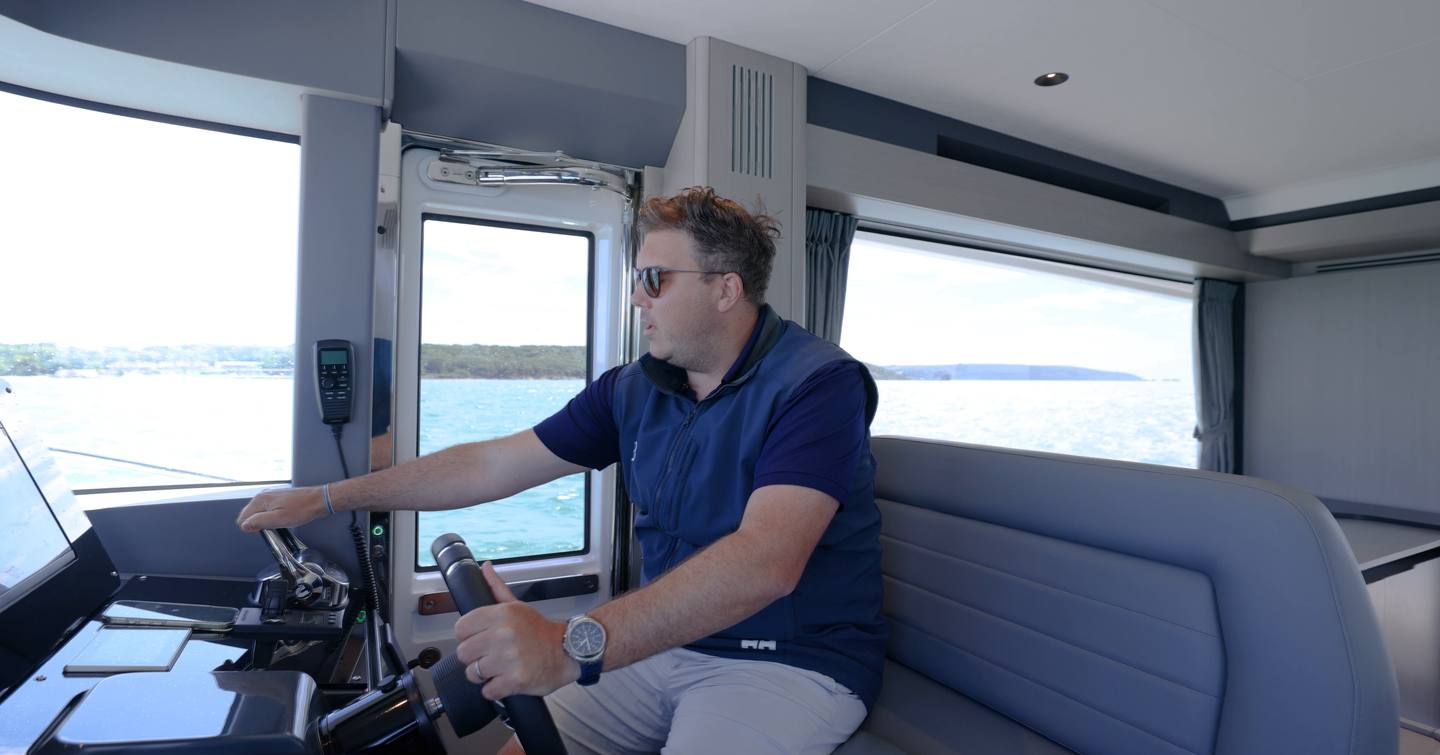
The side door is much more useful. It puts you straight onto the starboard side deck and is one of the reasons I'd choose this helm when coming into a berth. There is also an aft-facing camera, so even though the bathing platform disappears from sight when you're sat down, you can still keep an eye on it from the screen and stay in touch with anyone handling lines outside.
However, the door needs to work better for ventilation. It isn't a sliding door that can be pinned partly open. It is either properly open or shut, otherwise it swings around on its hinges, and there isn't another opening window beside the skipper. On a lovely day when you don't necessarily want the air-conditioning on, a small opening pane would make a big difference.
Neither helm is especially flashy, and there is nothing wrong with that. The lower station wins for the view, side-door access and the fact that you feel much closer to what is happening around the boat, while the flybridge helm gets the better small-item storage and, of course, the view when the weather behaves.
The Sirena 48 doesn't have a tender garage, which is pretty much what you'd expect from this style of boat. Instead, there is a big HB Technics hydraulic bathing platform with a 350kg lift capacity, so you can keep a Williams on here without any trouble. It drops quickly, there is a remote so you can operate it from the tender, and the whole thing feels like a nice bit of kit.
There is one slightly annoying bit, though. Once the platform is down in the water there isn't a proper step back onto the boat, and the little strip across the transom is too narrow to use as a walkway. So if you are dealing with the tender or have gone for a swim, getting back aboard isn't as easy as it really should be. It's a shame because most of the thinking around the stern is very good.
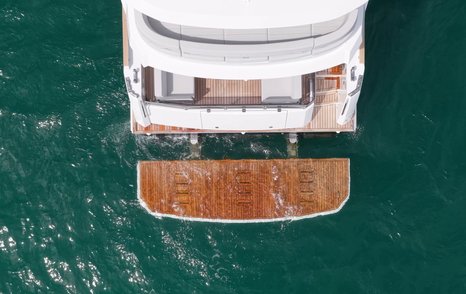
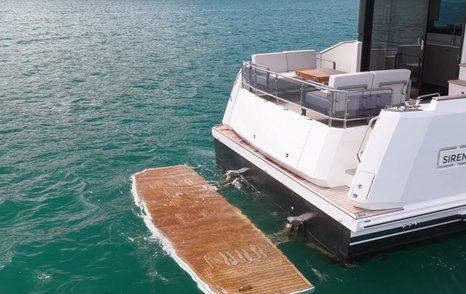
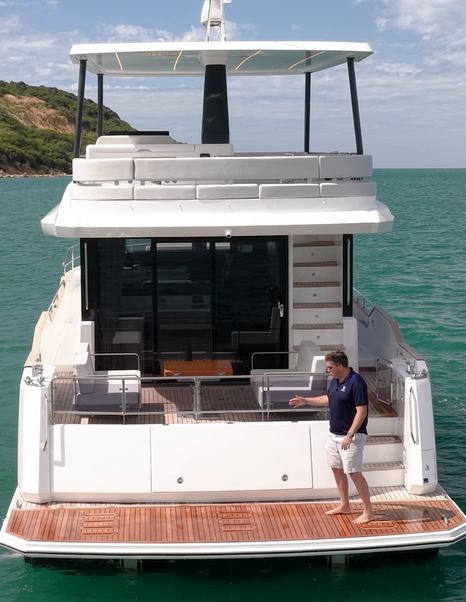
Behind the transom is what is essentially a huge boot. You can have a single crew cabin in here, but on this sort of boat I'd take the storage every time. There is loads of room for fenders, lines and covers, and you could get a deflated paddleboard or a fair bit of other water-sports kit in here too. The nice thing is that all of it sits right beside the water, so you're not dragging wet gear through the boat. There is also a neat pull-out shower, plus the passerelle and bathing-platform controls, all tucked away in one place.
You can only get up into the cockpit on the starboard side, which is a bit annoying, but at least the access itself is good. The steps are shallow, there are rails all the way up and a proper gate at the top if you've got little ones aboard. There are boarding gates on both sides too, and those are really useful when you're alongside a high quay or fuel berth and the bathing platform is too low to be much help.
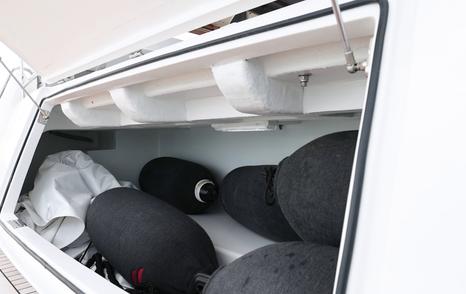
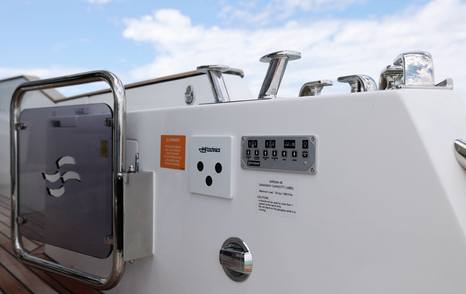
The mooring gear is good old-fashioned practical stuff. Big open cleats, two-way fairleads and a proper box for the lines, which is large enough to take rope tails when the boat is tied alongside. The lid could do with something to hold it open because it comes down with quite a wallop, but that's an easy thing to fix.
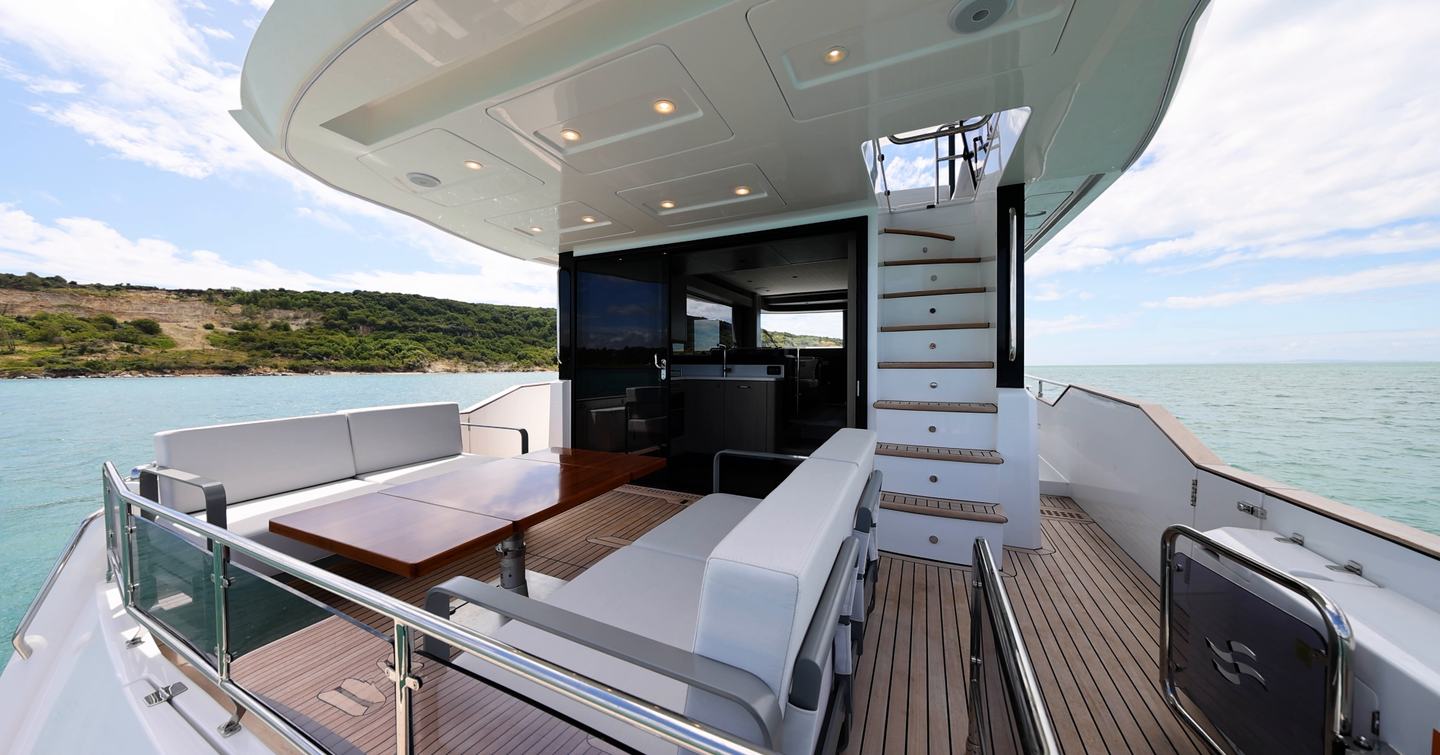
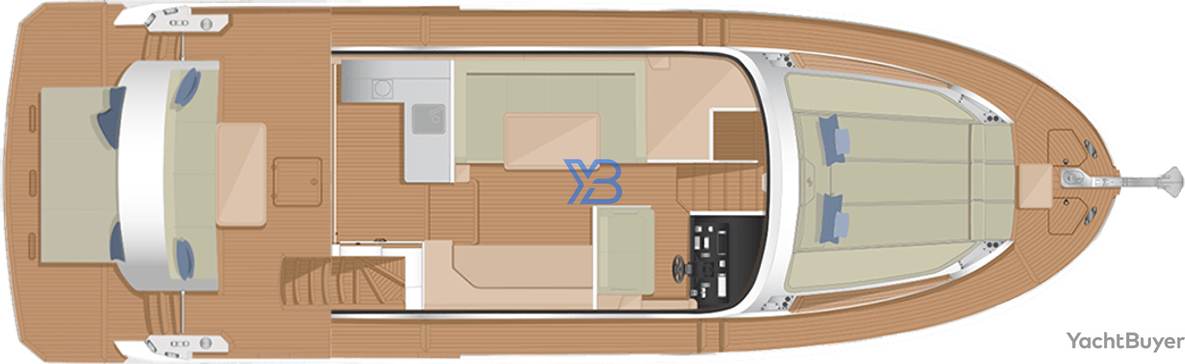
I really like the cockpit arrangement on this particular boat. You can have a more traditional fixed bench across the transom, but this feels much more casual. The chairs are fixed to the deck but can be moved if you want to change things around, and they're lovely to lounge in while still upright enough to sit at the table for dinner. The table itself comes up from coffee-table height when you want to eat, and the glass across the transom keeps the view back towards the water nice and open.
You are pretty well sheltered here anyway, but Sirena has gone a bit further. There are runners in the overhead for covers that come right out to the edge of the cockpit, so you can close most of this area in when the weather turns. On a boat that makes so much sense for the UK, that's really useful. You can almost pinch a bit more saloon when it's cold or wet outside.
Side Decks & Foredeck
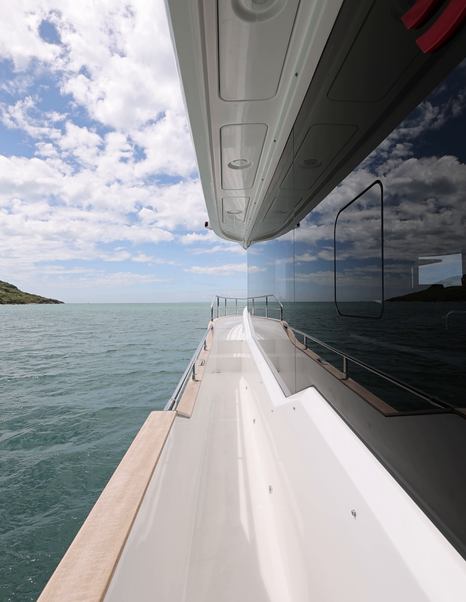
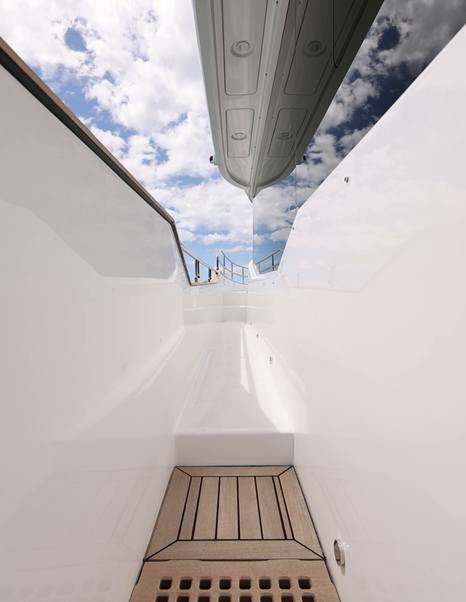
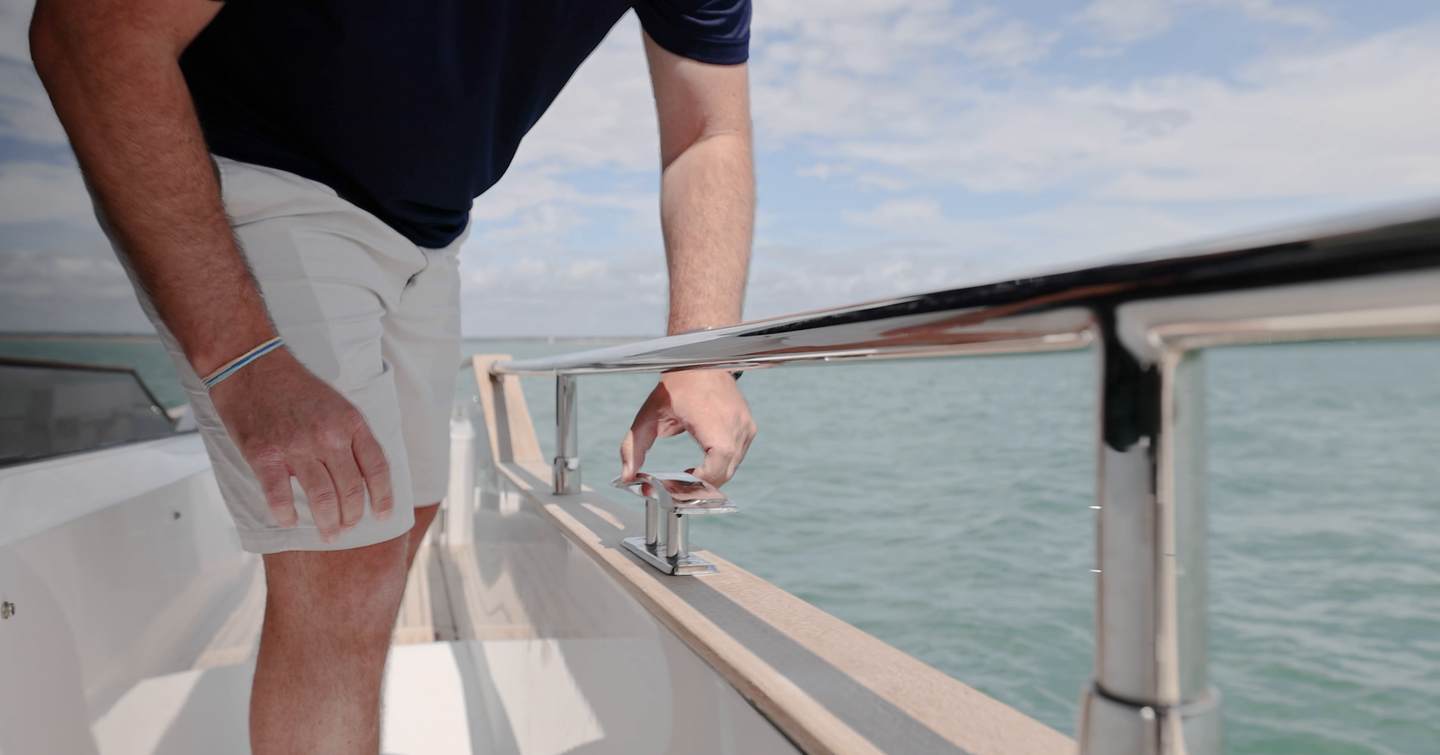
Part of the route forward sits under the flybridge overhang, which just makes you feel that bit more tucked in, and there are proper bulwarks with rails above them. The rails are handy for fenders as well, and there is lighting under the overhang for night-time use. The teak helps break up quite a lot of white fibreglass, while the pop-up cleats keep things nice and clean when they're not needed. It is a very easy boat to move around.
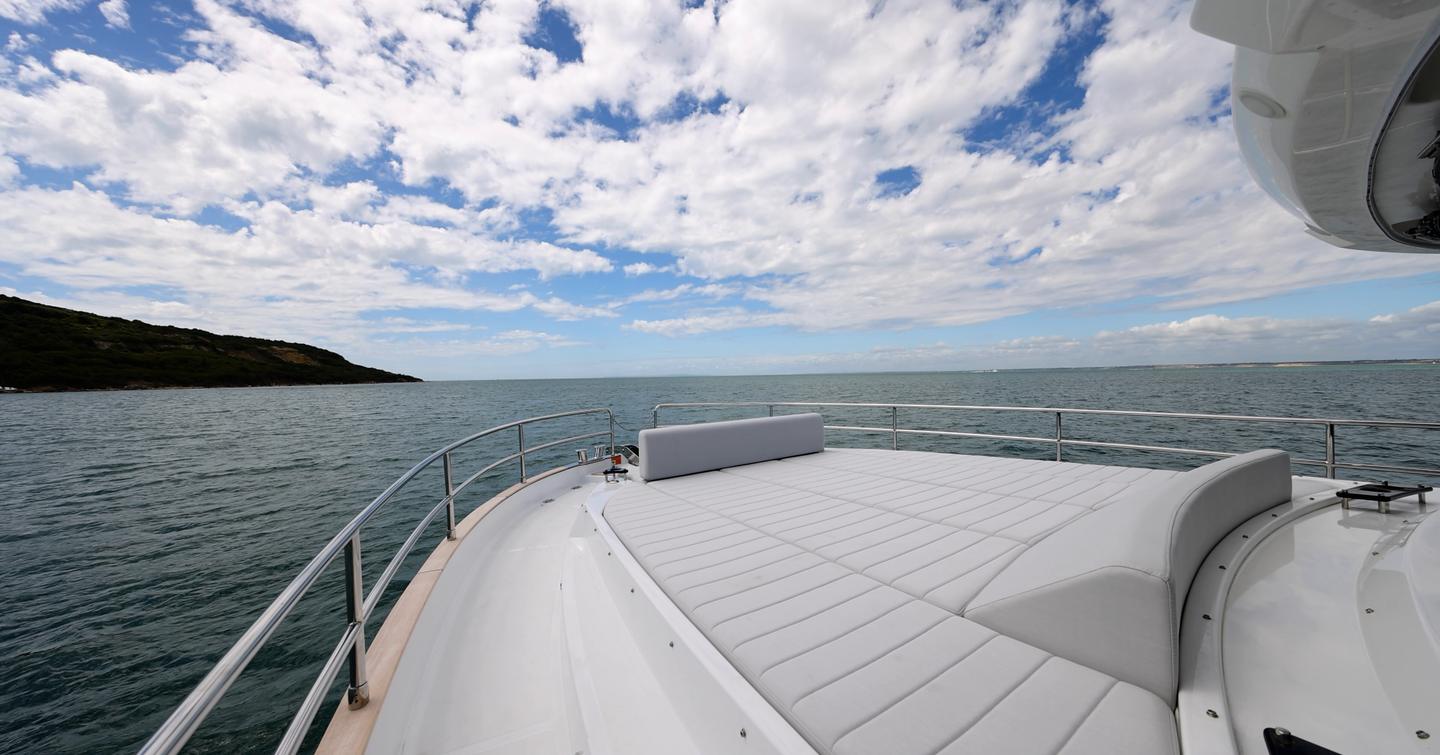
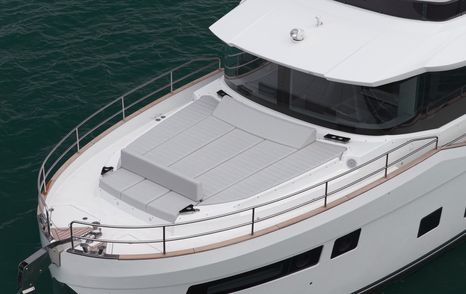
Up front, Sirena has really gone for it with the sunbathing space. The sunpad is enormous. Five or six adults on here would be no great stretch, and there are built-in headrests so it isn't just one giant flat mattress. The forward bench works nicely too because it gives the people on the sunpad something to lean against, while anyone sat on the bench can face aft and have a chat. It's simple, but I think it works really well.
That bench is also a lovely place to sit as you come into harbour, right up at the bow with a clear view ahead, and there are cup holders dotted around for the usual bits and bobs. Sirena hasn't tried to make the foredeck transform into six different things. There is a big sunpad, a good bench and lots of room around them.
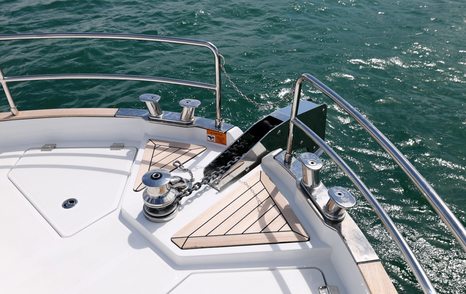
The anchor locker is absolutely gigantic. You could almost climb into it, and there is yet more room for fenders and lines. It isn't divided, which means the chain can get mixed up with ropes stored in there, and that's a bit of a shame. No complaints about the actual ground tackle, though. The cleats are big and chunky, the windlass is exposed and easy to get at, and the anchor sits on a simple roller well clear of the bow. We see all sorts of fancy retractable anchor systems these days, but there is something rather nice about a straightforward set-up that just works.
Flybridge
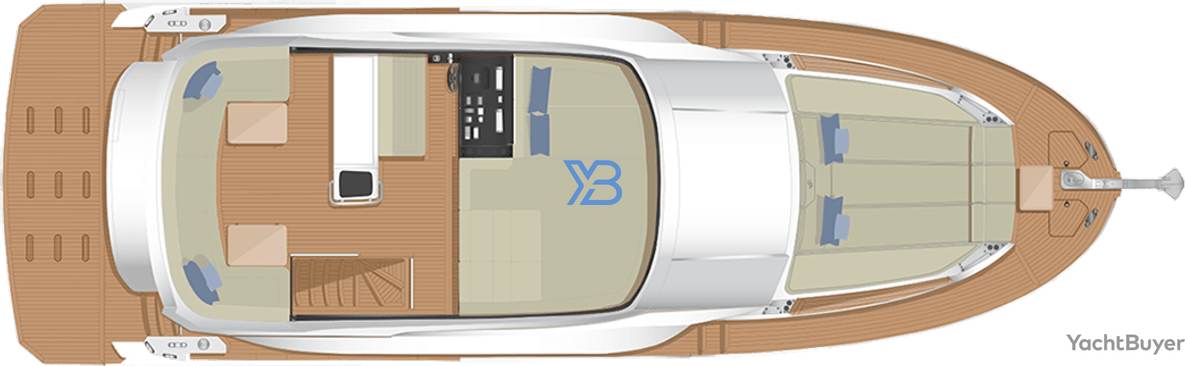
Then you get up to the flybridge and the 48 badge starts to seem slightly ridiculous as it is huge up here. The trawler-style shape lets the deck run a long way aft, and Sirena has made very good use of it rather than filling the space with furniture for the sake of it.
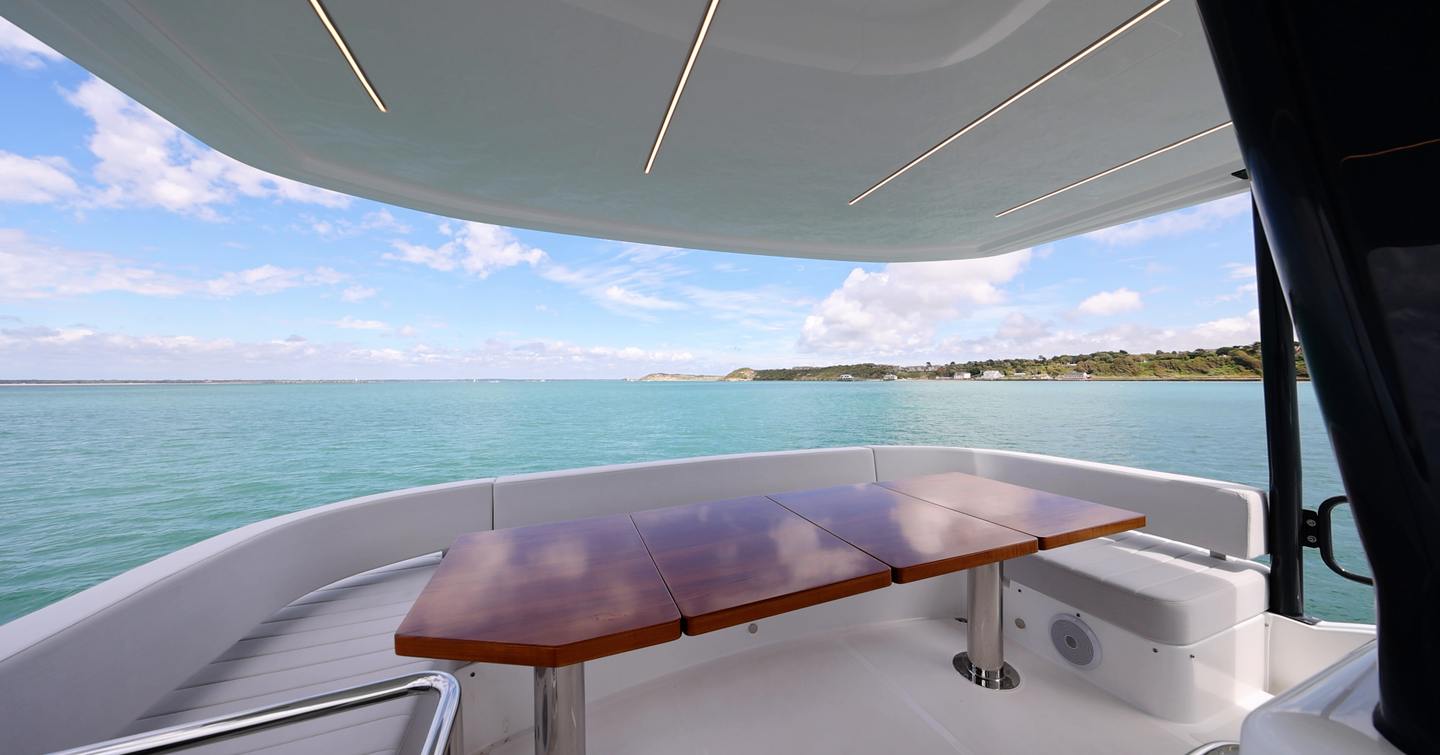
The aft seating area is massive, with a split table that works nicely for drinks but folds together into a proper dining table when you want to eat. There is room around the end as well, so you could squeeze another couple of chairs in if you had a crowd aboard. Fold the table sections back and you find handholds and cup holders underneath. Little things, but nicely done.
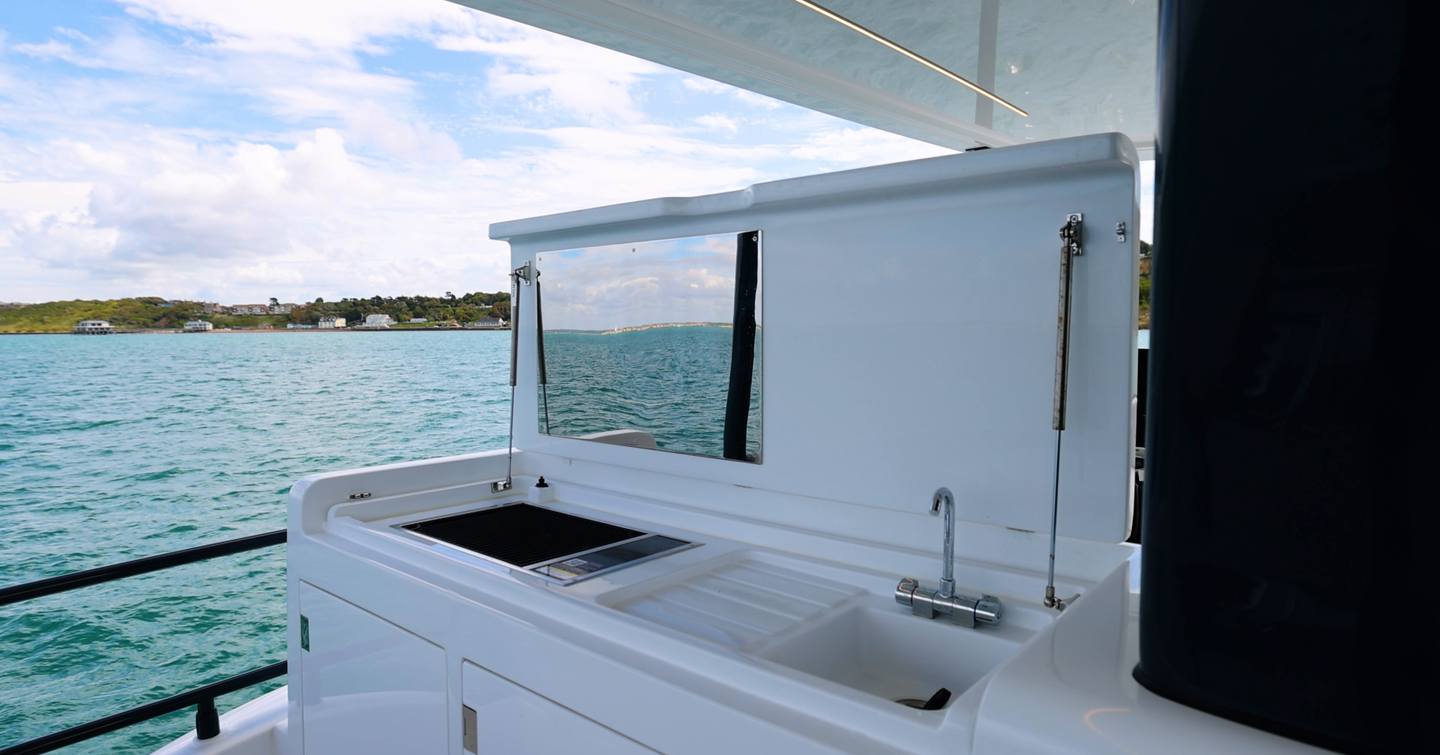
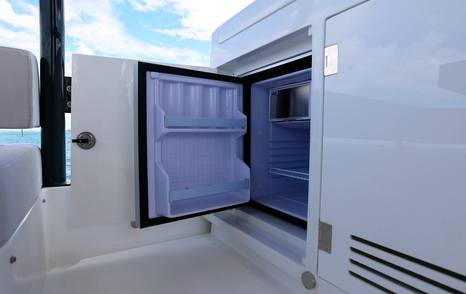
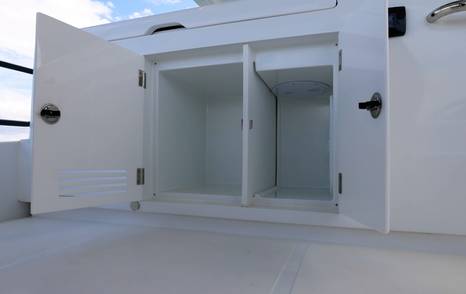
Just ahead is the wet bar, and this is a lovely big unit. There is a grill, a sink right beside it, a fridge underneath and room for an optional ice maker. Having the sink next to the grill sounds obvious, but plenty of boats manage to put the two far enough apart that you trail food and cooking mess across the worktop. Here it all falls to hand rather nicely. There is a good handhold around the outside too, which matters once the boat starts to move.
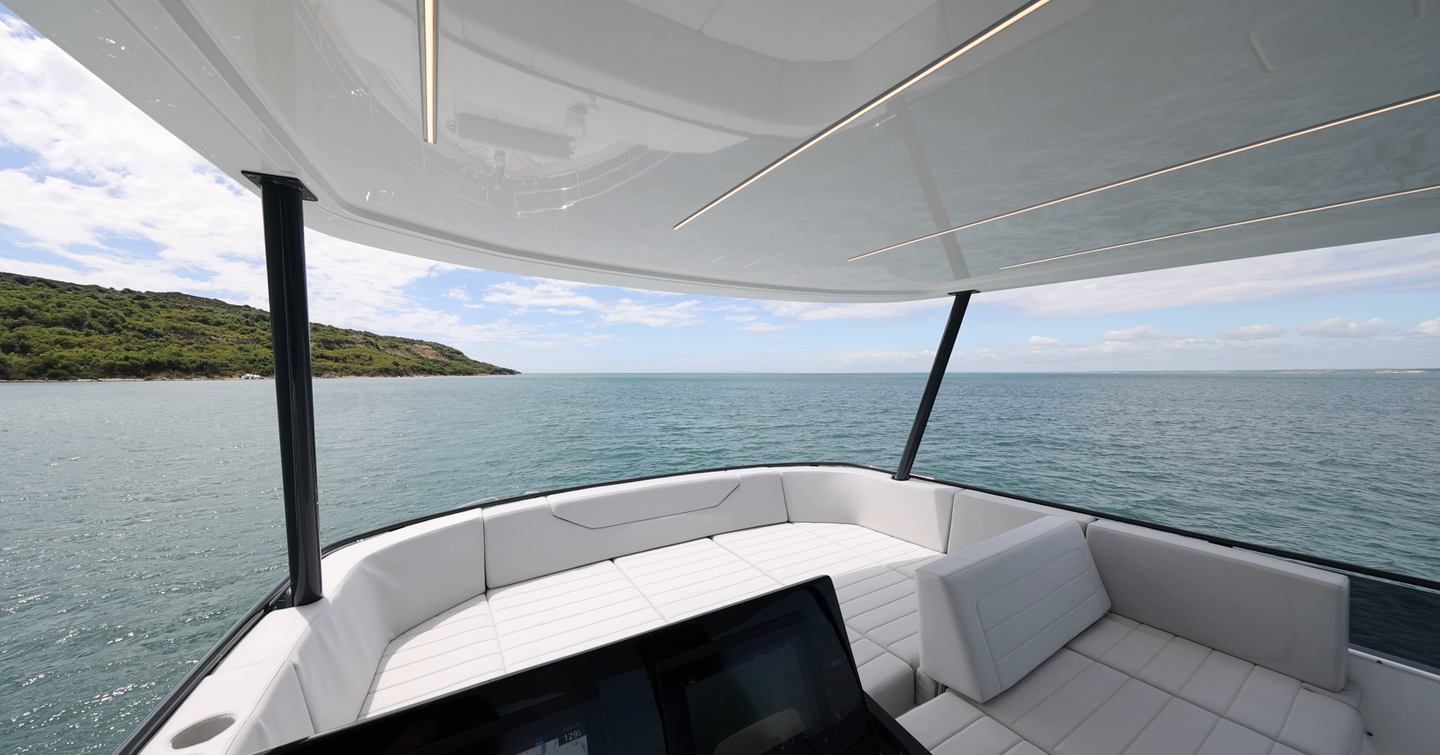
And there is still another lounge ahead of the helm. The backrest can be removed and dropped into a second set of slots, so you can face aft towards the rest of the flybridge or sit forward on a calm day. I wouldn't fancy sitting there with the boat thumping into a head sea, but when you're just pottering along it would be a lovely spot.
The forward sunpad is especially good. These areas are often completely flat and aren't actually that comfortable once you've been there for ten minutes, but this one has cushioning all the way around and a proper high backrest. You can get yourself nicely tucked into it, and the windscreen gives a bit of shelter as well. Five or six adults could quite happily spread themselves around up here, which is a remarkable amount of lounging space on a boat with 48 written on the side.
The Sirena 48 starts at £1.149 million excluding VAT, while our test boat was £1.595 million excluding VAT, so this is a heavily optioned example. Some of the bigger extras are substantial - £123,895 for the Seakeeper 6, £67,900 for air conditioning, £50,459 for the carbon hardtop and £33,945 for the hydraulic tender platform - while the useful lower-helm side door adds another £13,350. There are a few eyebrow-raisers too, including £1,470 for cabin reading lights and £5,742 for bed linens and pillows.
But the important bit is that the things which really make the Sirena 48 appealing aren't optional. The lovely hull, three-cabin layout, huge owner's cabin, 5m (16ft 5in) beam and sheer amount of space are there in the standard boat. The options make this particular one a much more complete cruising package, but you don't have to spend £1.595 million to get the basic reasons we liked it.
Our Verdict
The Sirena 48 might be some of Sirena's best work. There really aren't many boats like this at this size, and that alone makes it interesting, but the bigger point is that it works. It is a really good all-rounder, very well suited to the UK and northern Europe, and it feels like a boat that would look after you if you wanted to keep boating through the winter.
And then when the weather does behave, there is all that deck space to enjoy as well. You often think trawler and expect something quite traditional, but this feels modern inside and much fresher than that. It is still a bit of a plastic trawler, rather than some old-school, heavy-duty thing, but it has that rough-and-tough look and a lovely hull underneath it. I'm thoroughly impressed.
Reasons to Buy
- Lovely, soft-riding Frers hull
- Huge flybridge for the size
- Excellent full-beam owner’s cabin
Things to Consider
- Helm controls sit too far away
- Access issues when swim platform is deployed
Pricing
Price as reviewed: £1,600,000
Price for three cabin boat with standard 550hp Cummins engines, with the Seakeeper option.
Looking to own a Sirena 48? Use YachtBuyer’s Market Watch to compare all new and used Sirena 48 Boats for sale worldwide. You can also order a new Sirena 48, customized to your exact specifications, with options for engine choice and layout configuration. Alternatively, explore our global listings of new and used boats for sale and find your perfect boat today!
Rivals to Consider
The Azimut Fly 53 is the obvious choice if you want something with a bit more pace. At 16.78m (55ft 1in) it is longer than the Sirena and almost as broad at 4.95m (16ft 3in), with three cabins for six guests and a full-beam owner's cabin amidships. Twin 725hp Volvo Penta IPS950s push it to around 31 knots, with a 27-knot cruise, so it feels much more like a conventional fast flybridge than the Sirena. The IPS installation also brings joystick control, which has obvious appeal around the marina after the rather more hands-on experience we had with the Sirena. The trade is range - around 265nm quoted - and the Azimut's flybridge and accommodation don't quite have the same big, trawler-like feel. Prices start at around €1.5 million, so once specification is taken into account it sits in much the same broad part of the market.
The Ferretti 500 takes a slightly different route. It is smaller at 15.33m (50ft 4in) and much narrower at 4.29m (14ft 1in), which makes it an easier proposition if berth size matters, but you give away some of the sheer volume that makes the Sirena so interesting. The standard layout has two main cabins rather than three, with a full-beam owner's cabin aft and a VIP forward. Twin 542hp Cummins give a 30-knot top speed and around 25 knots at cruise, so again it is considerably quicker. At around €860,000 before options it also starts well below the £1.6 million specification of our Sirena test boat, though the two boats are quite different in character - the Ferretti is the smaller, faster flybridge, while the Sirena puts far more weight on space and slower cruising.
The Galeon 500 Fly is probably the closest match if outright space and a three-cabin layout matter, though it still goes about the job very differently. At 16.2m (53ft 2in), with a 4.46m (14ft 8in) beam, it is close to the Sirena in length but noticeably narrower. The clever bit is the amount of deck furniture and outdoor kit Galeon packs in, while engine choice stretches from twin 600hp Volvos up to 725hp IPS950s. With the largest option it can reach around 35.4 knots, so there is a huge gap between this and the Sirena's measured 20 knots. Quoted range is around 485nm at an 8.3-knot economy speed, much closer to the Sirena's slow-speed cruising figures. Prices start at around £829,072, though specification and engine choice will move that number quickly.
Considering a new boat? Explore Sirena's entire current range to find the model that best suits your needs, and compare it with alternatives from competitors to ensure you make the perfect choice.
Specifications
- Builder Sirena Yachts
- Model Sirena 48
- Length Overall 16.04m
- Beam 5m
- Draft(full load) 1.06m
- Hull GRP
- Cabins 3
- Berths 6
- Crew 1
- Cruising Speed
- Max Speed
- Fuel Capacity 1,900 Litres
- Fresh Water Capacity 600 Litres
- Engine Model 2x Cummins QSB6.7 480mhp
- Engine HP 480
- Engine economic speed 10 knots
- Engine max range (speed type) 447 (nm)
Sirena 48 Layout
-
Flybridge
-
![Flybridge Sirena 48]()
The flybridge is enormous, with proper dining aft and another big lounge ahead of the helm.
-
Main Deck
-
Standard main deck layout
![Main Deck Sirena 48]()
The aft galley opens straight onto the cockpit, and the lower helm gets that very useful side door.
-
Optional aft deck layout with wetbar
![Main Deck Sirena 48]()
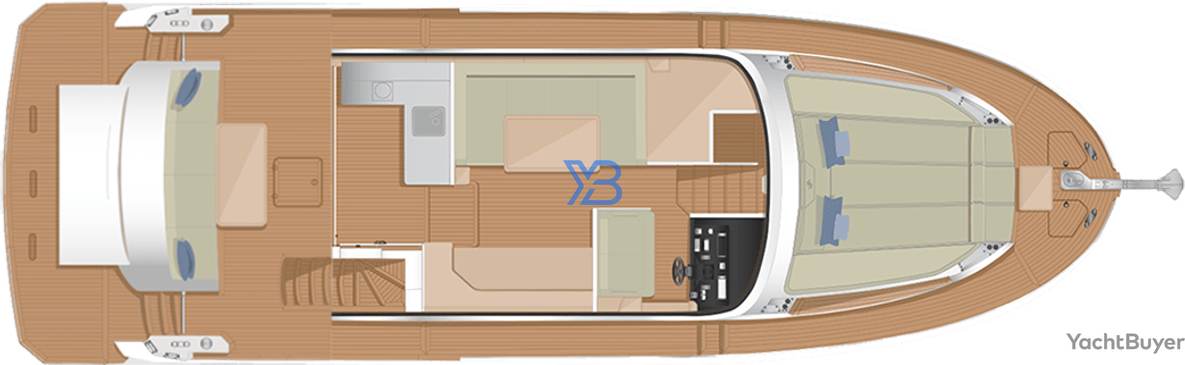
The optional wet bar gives the cockpit another use without taking over the whole aft deck.
-
Optional aft sunpad
![Main Deck Sirena 48]()
The aft sunpad gives you the more traditional fixed transom arrangement.
-
Optional aft cockpit lounge
![Main Deck Sirena 48]()
This is the cockpit layout I’d have - much more casual than the fixed bench.
-
Lower Deck
-
Standard 3 cabin layout
![Lower Deck Sirena 48]()
The standard layout gives you that huge owner’s cabin and a proper VIP, though the twin is really best for kids.
-
Optional crew cabin
![Lower Deck Sirena 48]()
I’d skip the crew cabin and keep the huge boot instead.
Interested in a Sirena 48?
NEW Build
Find your local dealer for a personalised, no-cost consultation
or just request
Brochures & Pricing
Used & In Stock
Looking for a ready-to-go Sirena 48 or pre-owned options? Explore all inventory of the Sirena 48 available worldwide