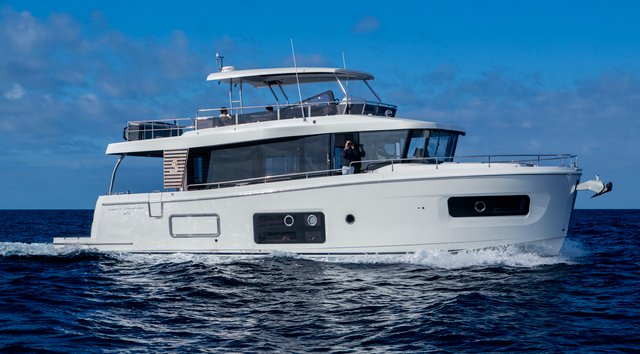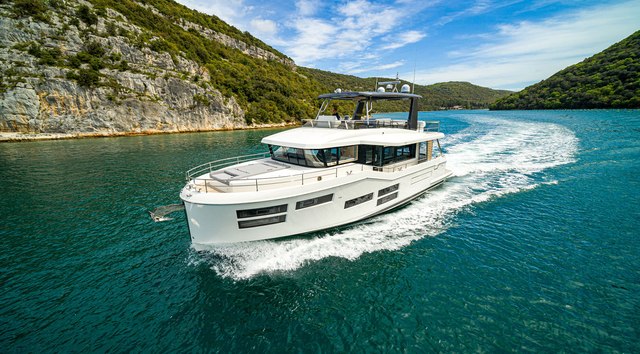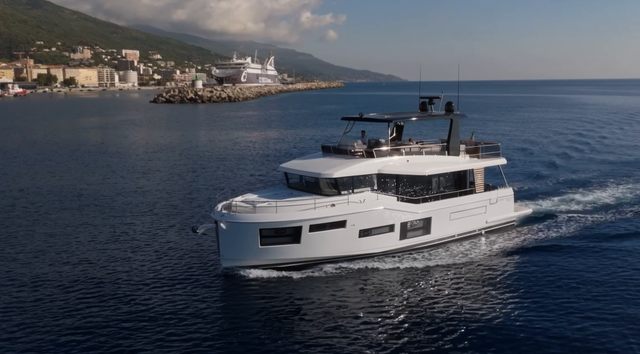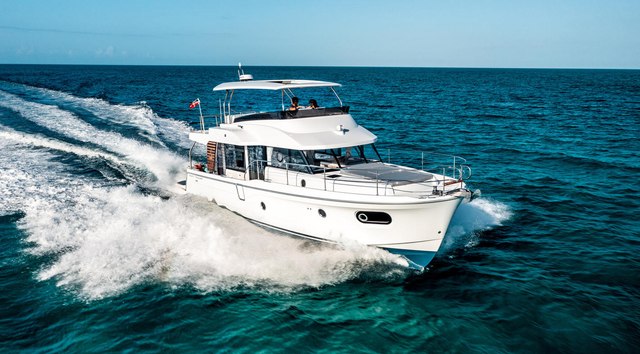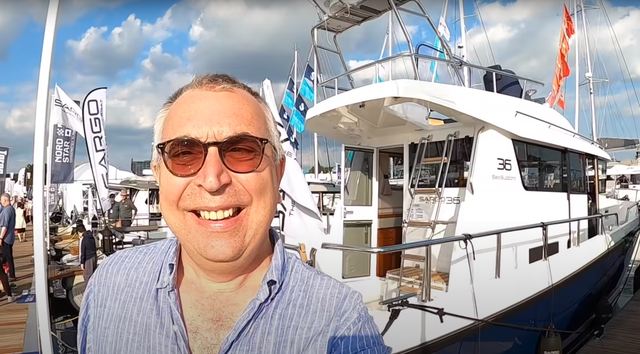
If you've got around half a million pounds to spend on a new boat, there is no shortage of choice. What there aren't many of are boats that genuinely try to do everything. That's always been the appeal of the Swift Trawler. It's big enough to spend weeks aboard, small enough to handle yourself and quick enough that a trip along the coast doesn't turn into an all-day exercise.
That formula first made its name with the Swift Trawler 34, a boat that developed an almost cult following among owners. The ST37 is the latest version of that idea. It's bigger, brighter and a bit more sophisticated than the original, but it still covers the same bases. Having spent plenty of time around the old 34, there's really only one question I want answered. Is this still the best scaled-down liveaboard you can buy?
Test & Review Video
At Sea
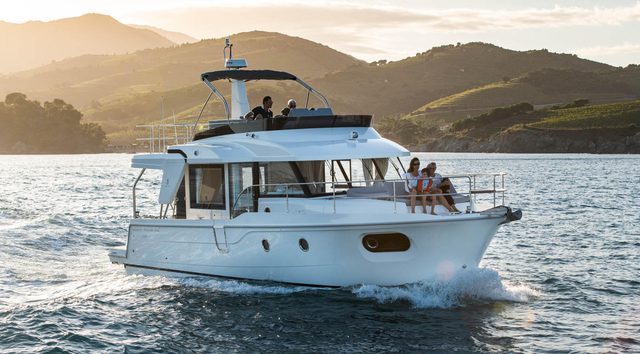
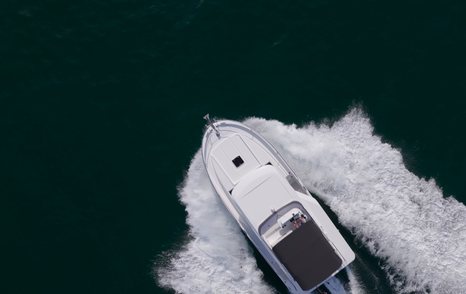
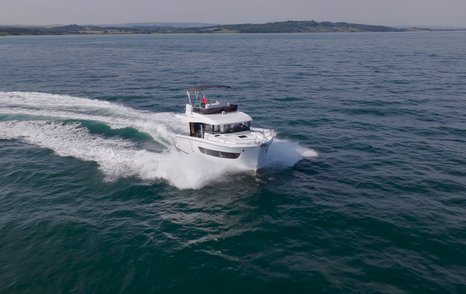
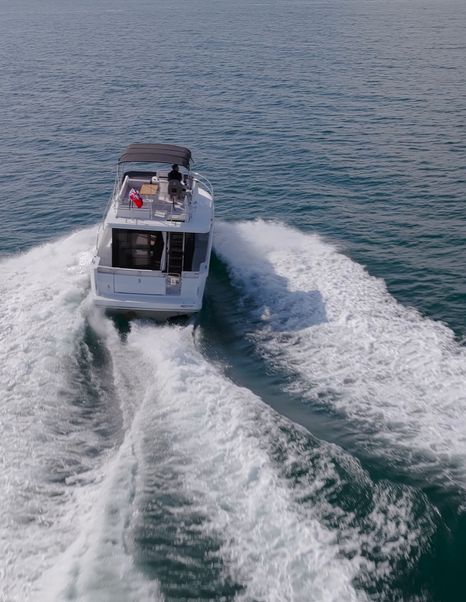
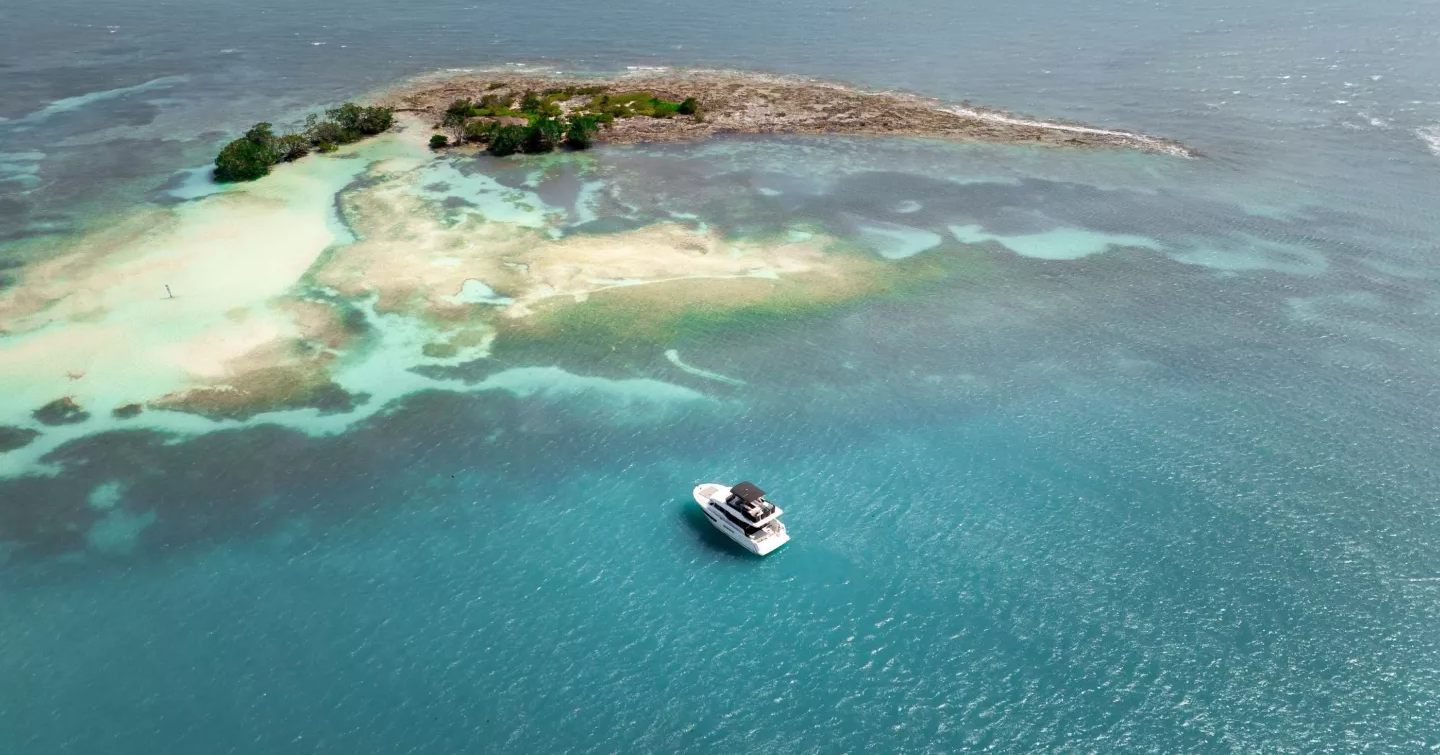
The Swift Trawler 37 settles into its stride in a way that feels entirely in keeping with the rest of the boat. Open the throttles, and there isn't a great rush of acceleration. As expected from a semi-displacement cruiser, it isn't electric out of the hole, nor is it trying to be. Instead, the bow lifts slightly, the hull gathers itself and before long, you're running comfortably at around 15 to 16 knots, which feels very much like the boat's natural cruising speed with the standard 400hp Yanmar diesel.
Like all Swift Trawlers, the ST37 sits somewhere between a traditional displacement boat and a planing hull. It isn't skimming over the surface, nor is it pushing steadily through the water in the way a full displacement trawler would. Instead, it occupies that middle ground that has defined the range for more than two decades, offering a useful turn of speed while retaining much of the reassuring character that attracts people to trawler-style cruising in the first place.
Get the boat into a head sea, and you begin to understand why the Swift Trawler formula has remained so popular. During the test, there were periods of white horses and a short chop of around 0.5m to 0.6m (1.5ft to 2ft), and the hull simply got on with the job. You can sit behind that broad bow and watch it part the waves ahead as the boat barrels on through in a very reassuring fashion. There is nothing dramatic about the experience. No crashing, no theatrics, no need to back off every few minutes. It simply feels capable. More importantly, it feels dependable.
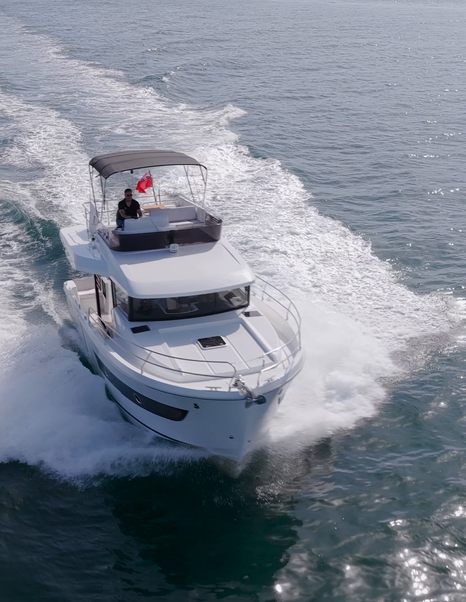

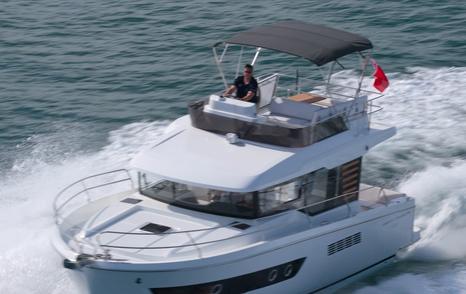
That's a word that comes to mind quite often aboard the ST37. Dependable. There are faster boats. There are sportier boats. There are certainly boats that feel more exciting from behind the wheel. What the Swift Trawler offers instead is the sense that it will keep plugging away when conditions become a bit less friendly. It feels like a proper little sea boat, one designed by people who understand that most cruising days aren't spent carving turns in flat water.
Of course, every hull shape comes with compromises, and the Swift Trawler is no different. Put the sea onto the rear quarter, and the movement becomes more noticeable. The boat will roll around a bit, and at times it feels slightly agricultural, as many semi-displacement boats do. There are no stabilisers here, so the hull is left to deal with the conditions on its own. The important thing is that the motion never feels alarming. The boat still feels safe and secure beneath you, even if it isn't quite as settled as it is when pushing into a head sea.
In less-than-ideal conditions, the temptation is often to keep feeding in steering corrections as waves arrive from different directions, but the ST37 seems happiest when you resist the urge. One of those old sea dog lessons applies here - steer less and let the boat look after itself. The hull has a habit of finding its own way through the water, and the more you trust it, the better it tends to behave. The ZipWake system helps too, quietly making its own adjustments in the background without demanding any attention from the skipper.
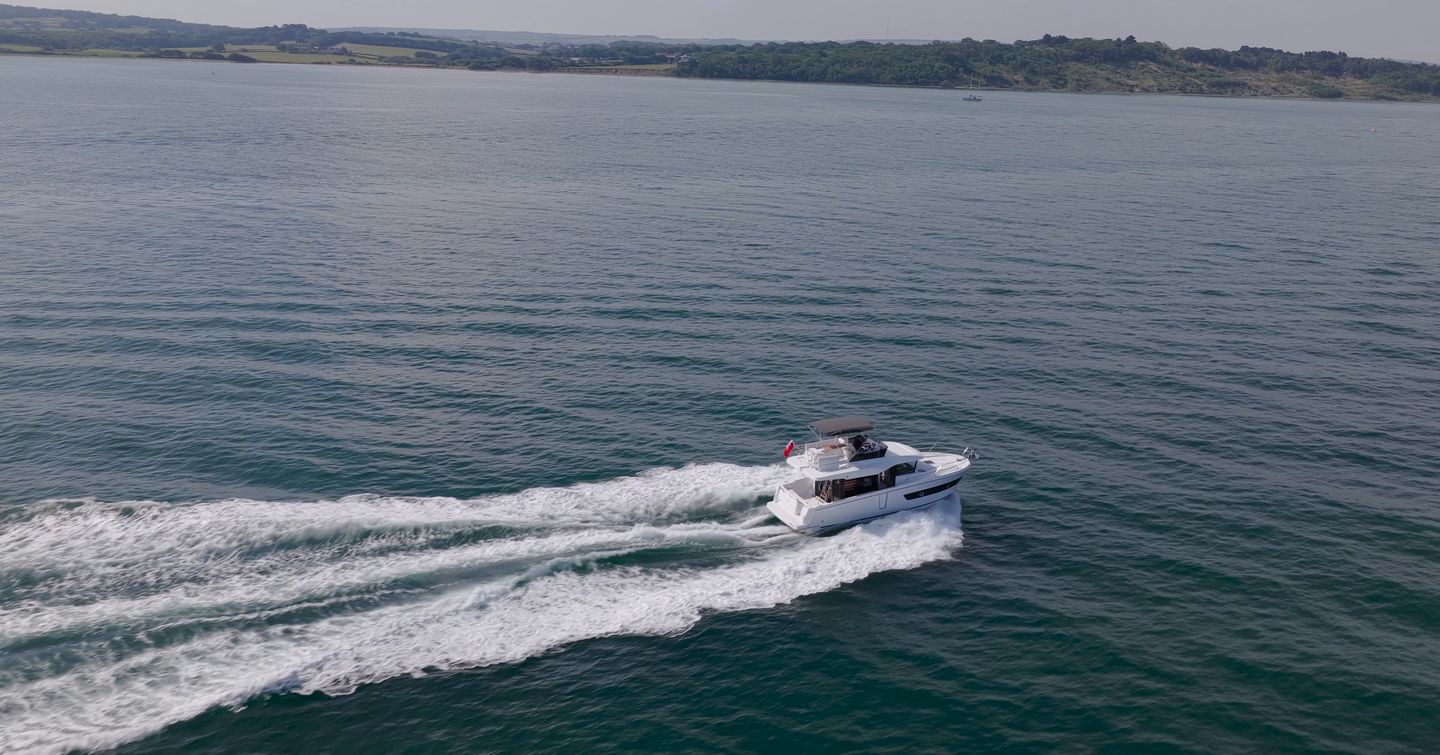
Once settled at cruising speed, the boat develops a very relaxed nature. Below about 6 knots, there is a tendency to wander and require regular wheel corrections, but as speed builds, the keel begins to do its work, and the tracking improves noticeably. At 15 knots, it will happily hold a straight course with very little input from the wheel, giving the whole experience a calm and unhurried feel.
The steering itself is nicely judged. It reacts positively to helm inputs and the boat turns more sharply than you might expect, but it never feels sporty. The hull stays remarkably flat through turns, with very little of the heeling motion that many planing boats display. Again, that suits the character of the boat.
Fuel consumption reinforces that point. At around 15 knots and just over 3,000rpm, the Yanmar was burning approximately 74 litres per hour during the test. That translates into a cruising range of a little over 200 nautical miles, enough for coastal passages, harbour hopping and the occasional overnight run without suggesting transoceanic ambitions. This isn't a long-range expedition yacht masquerading as a trawler. It's a coastal cruising boat designed to cover sensible distances at sensible speeds.
Around the Marina
The one area where the Swift Trawler 37 asks a little more of its owner is around the marina. This is, after all, a single-shaft boat, and single-shaft boats have their own habits. None of them is especially difficult to manage once you understand what's going on beneath the water, but they do require a slightly different approach to a twin-engine cruiser.
The main thing to be aware of is prop walk. When you engage reverse, the stern naturally wants to move in a particular direction because of the way the propeller rotates. That can be helpful when you learn to use it, but it can also be frustrating if you're trying to move the stern one way and the propeller has other ideas. It's particularly noticeable when coming alongside or trying to position the boat accurately in tighter spaces.
For that reason, the optional stern thruster feels less like a luxury and more like a necessity. It is rare to come across a boat where an option feels so easy to justify, but this is probably one of them. Once you're down to marina speeds, the rudder becomes less effective, and much of the fine control comes from balancing throttle inputs with the thrusters. Having direct control over both ends of the boat takes a huge amount of stress out of close-quarters manoeuvring.
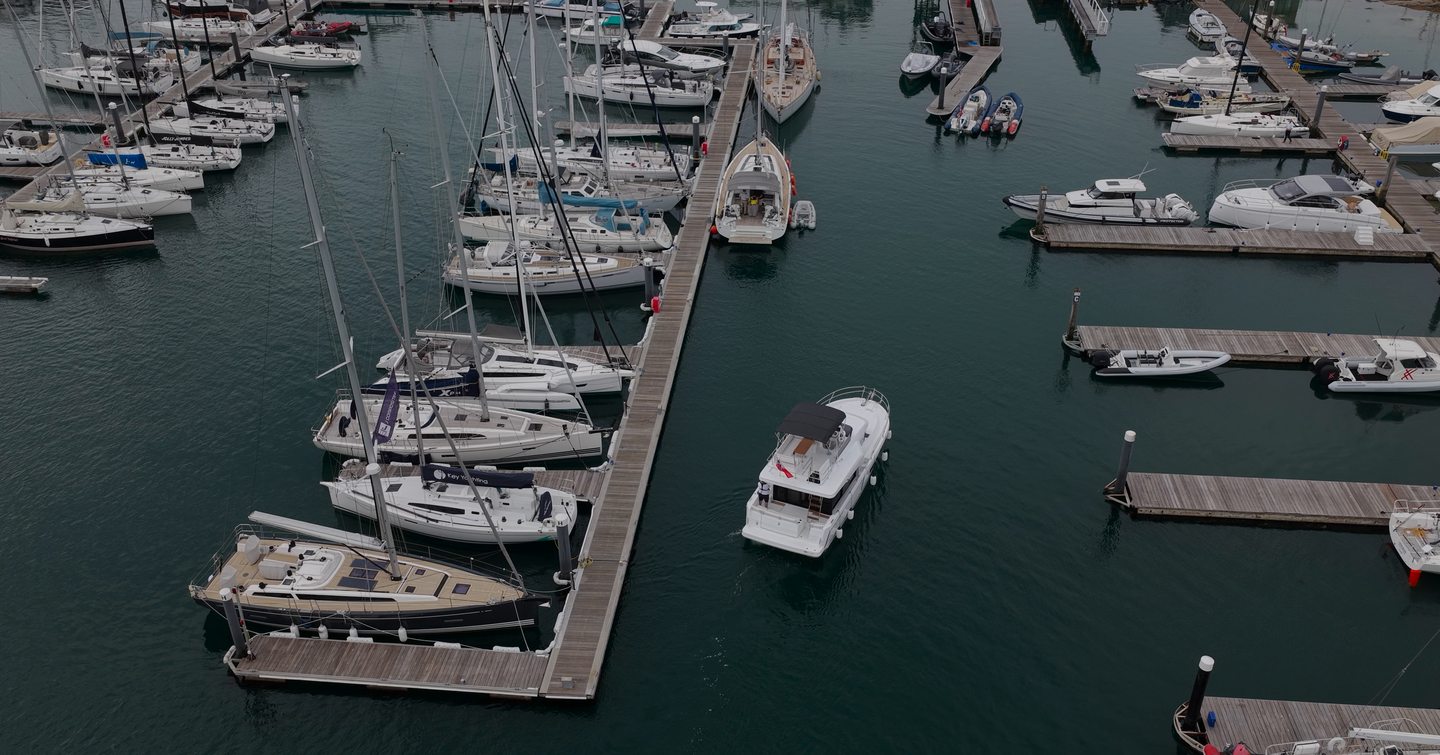
Wind is another factor. At 11.29m (37ft) the Swift Trawler is not a particularly large boat, but it is relatively tall and carries a good amount of structure above the waterline. Like many boats of this type, it gives the wind something to work with, so a fresh crosswind can quickly influence your approach if you're not paying attention. Again, this is where the thrusters earn their keep.
What stands out is how manageable the boat becomes once all the systems start working together. With a bow thruster, stern thruster and a little throttle control, the ST37 can be rotated surprisingly neatly within its own length. There is still more involvement than you would find on an IPS-equipped cruiser with joystick control, but the process never feels intimidating. Instead, it feels like a boat that rewards a little understanding and a little practice.
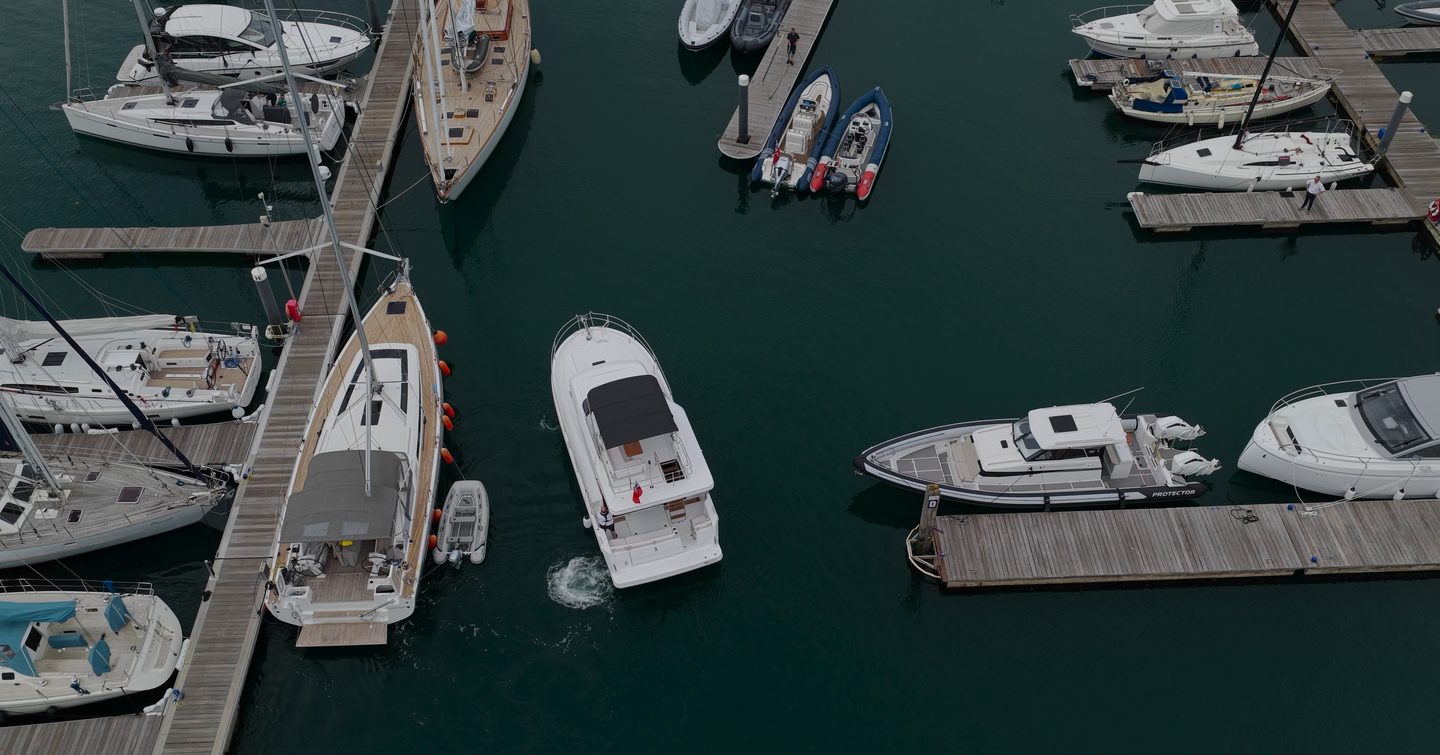
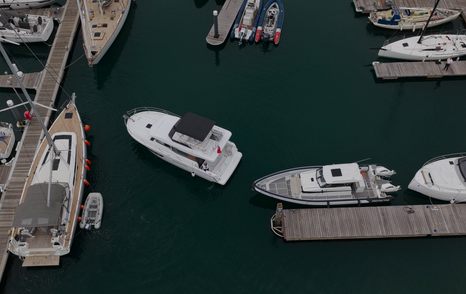
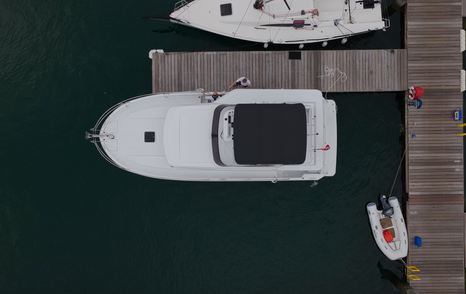
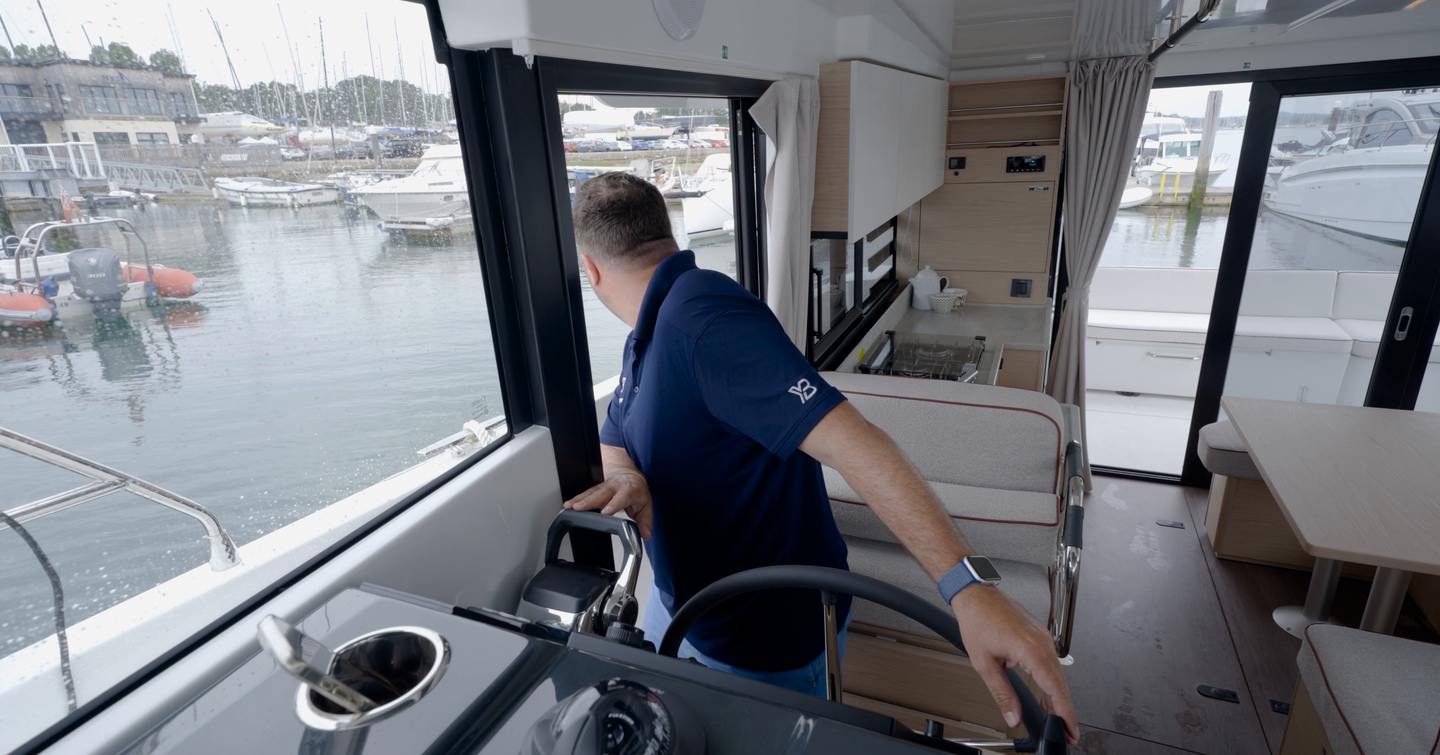
The layout helps enormously too. The lower helm side door proves its worth particularly well in the marina, allowing the skipper to step outside in seconds and take a proper look down the side of the boat. Being able to judge your distance from the pontoon directly rather than relying entirely on mirrors or guesswork is hugely reassuring when manoeuvring in tight quarters.
That same door also highlights one of the Swift Trawler's greatest strengths as an owner-operated cruiser. Once alongside, there are only a few steps between the helm, the side deck and the boarding gate. If you're handling the boat short-handed, or even completely on your own, the process feels remarkably straightforward. You don't need to cross the saloon, climb steps or work your way around obstacles. Everything is close by and easy to reach.
Thanks to the asymmetric deck arrangement, the boat naturally favours starboard-side berthing so something to consider. The wider side deck, boarding gate and direct access from the helm all work best on that side, so given the choice most owners will probably prefer to come alongside starboard side-to whenever possible.
Despite being an all-new model, it doesn't feel like a boat that exists because Beneteau wanted to change direction. If anything, the opposite is true. The ST37 is the latest version of an idea that has been evolving for more than twenty years, and a lot of its appeal comes from the fact that Beneteau has largely resisted the temptation to reinvent it.
The Swift Trawler 34 became one of the defining models in the range. Much of what people associate with a Swift Trawler today was already there - manageable dimensions, sensible running costs, straightforward systems and enough accommodation to spend proper time aboard without stepping up into a much larger yacht. It was a simple formula, but a very good one, and Beneteau has spent the years since refining it rather than replacing it. More than 1,800 Swift Trawlers have reached the water since the range was launched, giving the company a huge amount of feedback from owners who use these boats extensively.
But for the arrival of the ST37, Beneteau partnered with British Studio Dixon Yacht Design, founded by Bill Dixon. Earlier generations had been shaped by designers such as Joubert-Nivelt, Pierre Frutschi, MICAD and Andreani Design. Dixon's new involvement covered the naval architecture, exterior design and interior design. That allowed the studio to look at the boat as a complete package rather than simply updating a few visible areas.
The most significant change sits beneath the waterline. Dixon developed an entirely new Fusion Hull for the ST37, designed to work efficiently across a broader operating range than previous generations. Beneteau describes it as a bridge between displacement and semi-displacement thinking, intended to deliver the easy cruising characteristics Swift Trawler owners expect while improving efficiency and reducing the compromises traditionally associated with this type of hull. The technical details and how that translates on the water are best explored in the test section, but from a design perspective, it represents one of the biggest changes made to the Swift Trawler formula since the range began.
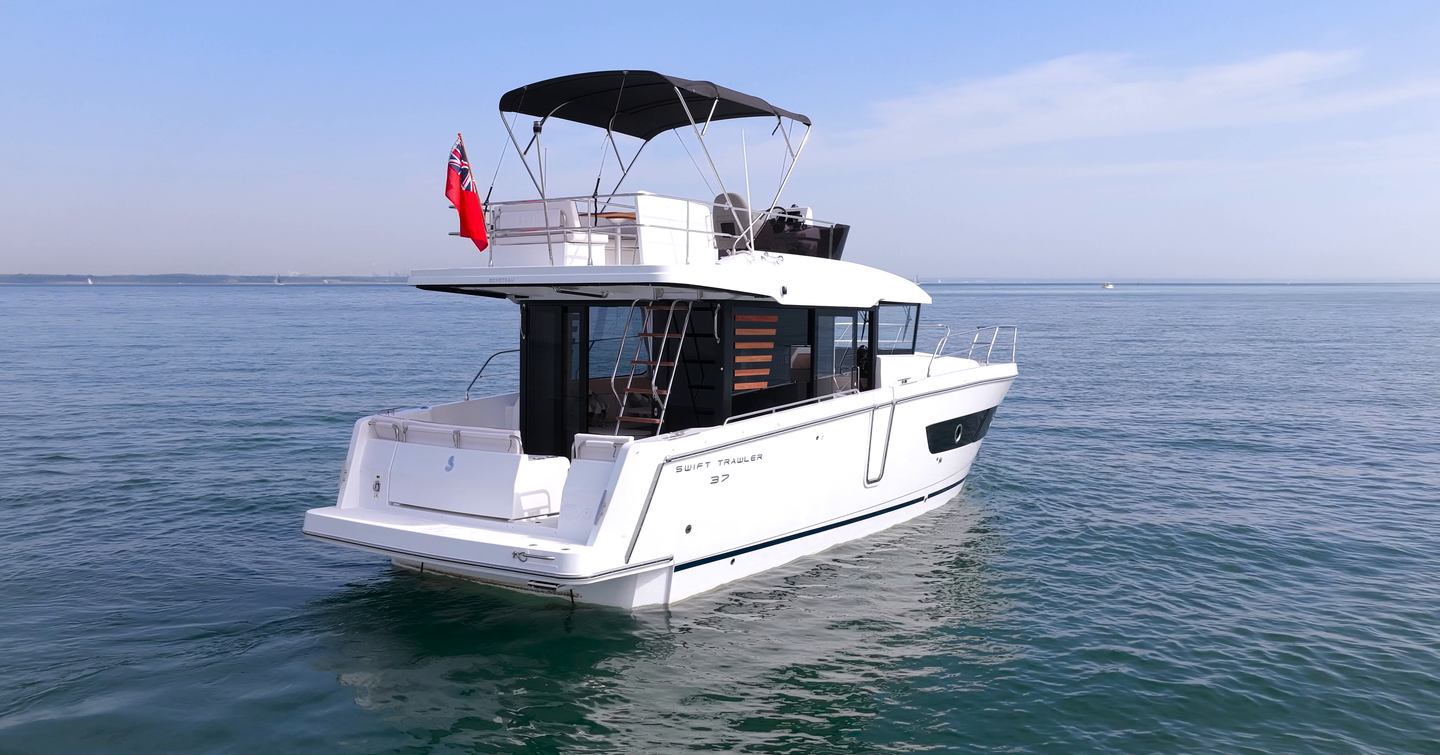
Above the waterline, the updates are easier to spot. Earlier Swift Trawlers carried a more traditional trawler profile, while the ST37 introduces a rising sheerline, a high flared bow and a reverse-raked windscreen. The result is a cleaner and more contemporary look without losing the character that makes a Swift Trawler instantly recognisable. It is a modernisation rather than a reinvention, which feels entirely in keeping with the wider development of the range.
Many of the changes introduced over the years feel less like the work of a design department and more like the sort of things owners would ask for after spending several seasons abroad. Earlier boats placed their tenders on the flybridge using a mast-and-crane arrangement. It worked well enough and left a lovely amount of open deck space once the tender was launched, but it could also be a bit of a faff.
The ST37 moves tender stowage aft onto davits, sacrificing some deck space in exchange for easier day-to-day use. A similar story played out inside. Earlier boats placed the galley beside the helm in a compact U-shaped arrangement that worked very well offshore, while later generations moved towards a more sociable layout with companion seating alongside the skipper. Neither approach is necessarily right or wrong, but they show how the design has gradually adapted to changing ownership patterns.
The same applies to natural light. Twenty years ago, relatively small ports and more enclosed interiors were perfectly normal. Today's buyers expect larger windows and a stronger connection with the outside world, and the ST37 reflects that shift without abandoning the character that helped make the range successful in the first place.
The model range itself has evolved, too. Alongside the Flybridge version tested here, Beneteau now offers the Swift Trawler 37 Sedan. Both share the same hull, accommodation concept and cruising brief, but they give owners two different ways of approaching the same boat. The Fly remains closest to the traditional Swift Trawler formula, while the Sedan offers a lower profile and a different relationship with the outdoor spaces.
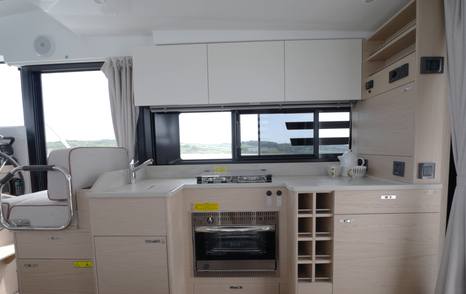
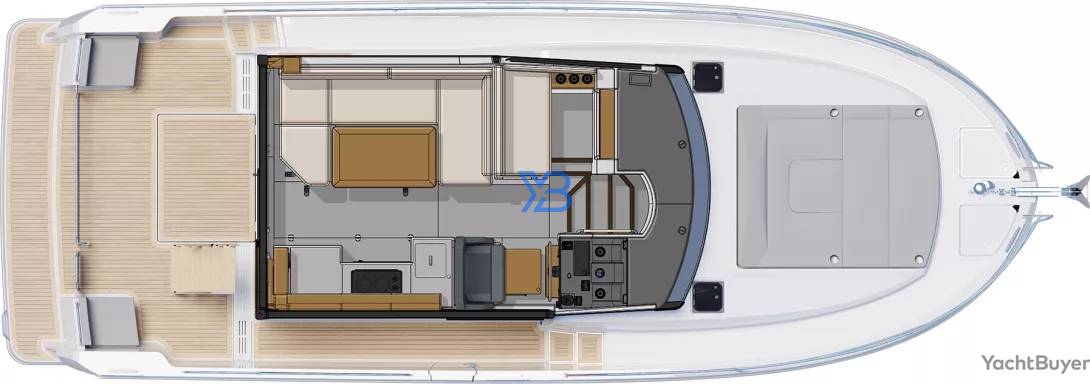
The layout in here has changed quite a lot from the original because the galley used to sit up beside the helm in a compact U-shaped arrangement. There was a good reason for that. When the weather turned rough, you could wedge yourself in there and cook quite comfortably at sea. The downside was that it took up a lot of space and meant nobody could really sit alongside the skipper. On the ST37, the galley has moved aft to port, and the whole saloon feels more open as a result.
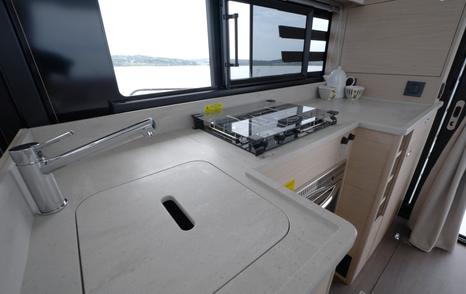
The galley itself isn't massive, with a two-burner gas hob in the middle, a decent bit of preparation space alongside and a sink aft. The worktops are all fiddled too, so anything left out underway is less likely to slide all over the place. There isn't acres of countertop space, but there is enough for the sort of cooking most owners are likely to do aboard a boat of this size. One thing that would be handy is a chopping board built into the sink cover, which would make better use of the available space.
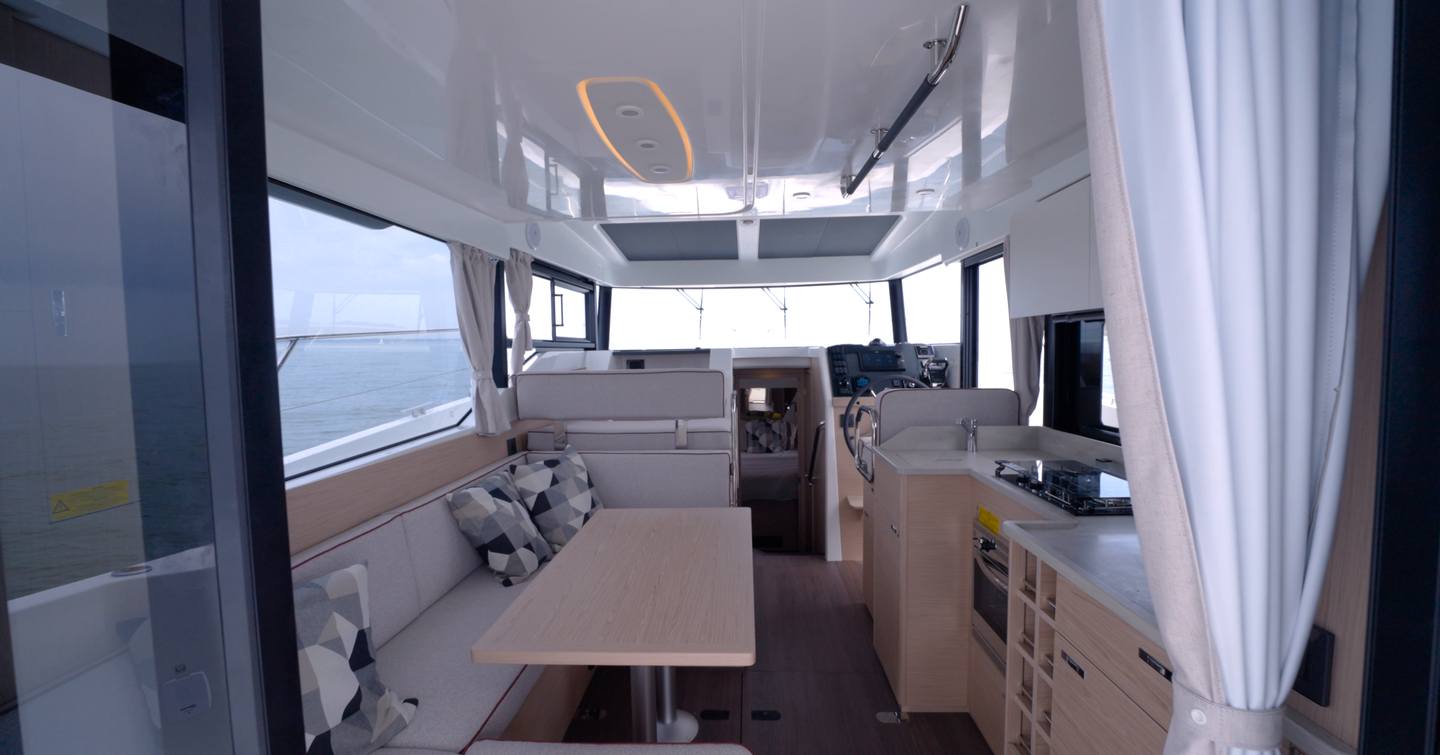
Fridge space is one area where you're a little bit lacking. The fridge beneath the worktop is the only one on board, and it's not vast. For weekends away, it will be fine, but if there's an option to add refrigeration elsewhere, perhaps in the cockpit, it would be worth considering for longer trips.
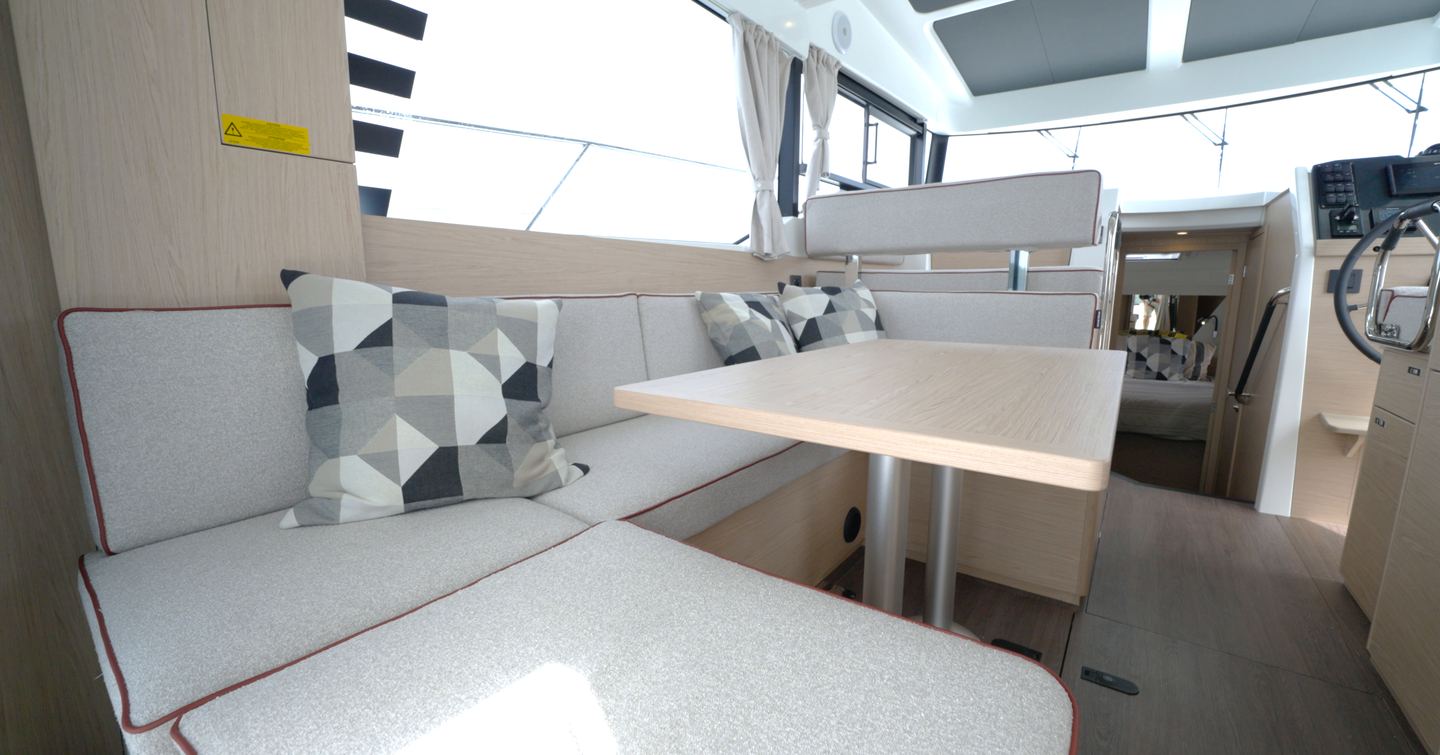
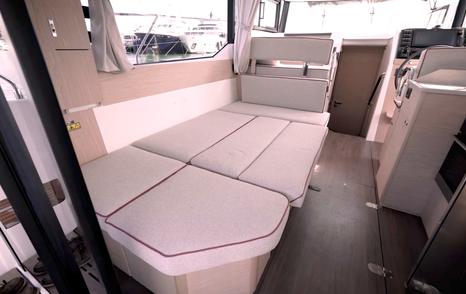
Opposite the galley sits the dinette. It's a nice space, helped by the amount of glass around it. The side windows are big, the décor is bright, and there is plenty of natural light coming in, so it feels bigger than the dimensions might suggest. An optional curtain can also be fitted here, allowing the seating area to convert into an occasional double berth when needed.
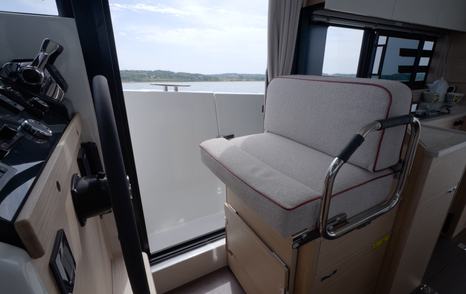
What the galley move has really allowed Beneteau to do, though, is create this companion seating area beside the helm, and that feels like a really good addition. There is space for two people, the view forward is excellent, and, if you're someone who feels a bit queasy at sea, being able to sit facing the horizon rather than sideways can make a big difference. There is usually a nice bit of fresh air coming through from the helm door, too, so it's a very pleasant place to spend a passage.
Just as importantly, the skipper is no longer sitting over there on their own while everyone else gathers around the table. It sounds like a small thing, but it changes the feel of the saloon quite a lot. Even when the boat is stationary, this remains a useful place to sit if the dinette is already occupied, and the views out through the side windows are excellent.
Owner's Cabin
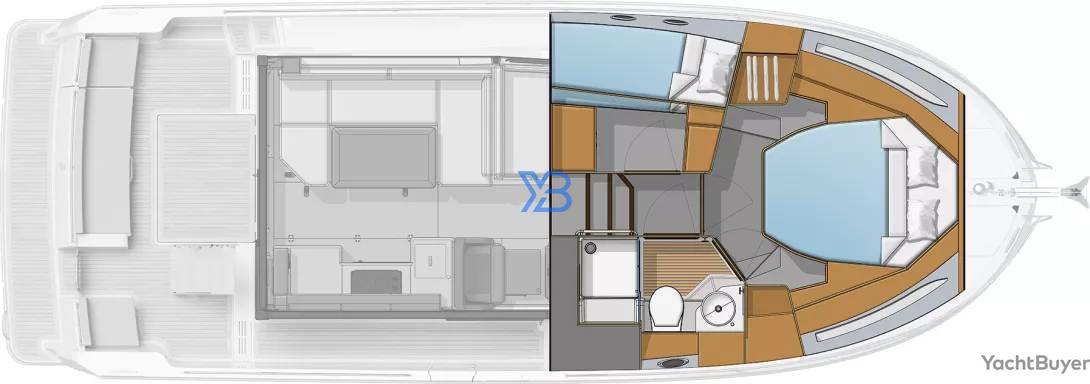
Right forward is the owner's cabin and, in many ways, it's one of the more familiar parts of the boat. The basic arrangement hasn't changed much from previous Swift Trawlers, with a central double berth, storage either side and direct access to the shared bathroom, but there have been a few worthwhile improvements along the way.
The berth itself is a good size for a boat of this length and there is enough room around it to move about without too much awkward shuffling. There is also enough space at the head of the bed to sit up comfortably with a book or a phone, which isn't always the case on boats in this size range.
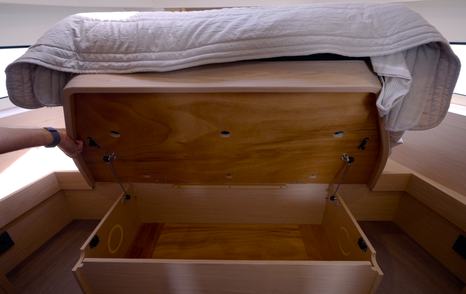
Storage is particularly well handled. Hanging lockers sit on both sides of the cabin, while additional storage is built into the base of the berth. What's nice about this arrangement is that you don't have to lift mattresses or wrestle with heavy bed bases to get to it. The section at the foot of the bed simply lifts up, making it a really handy place for bags, shoes and other items that you want to get at regularly.
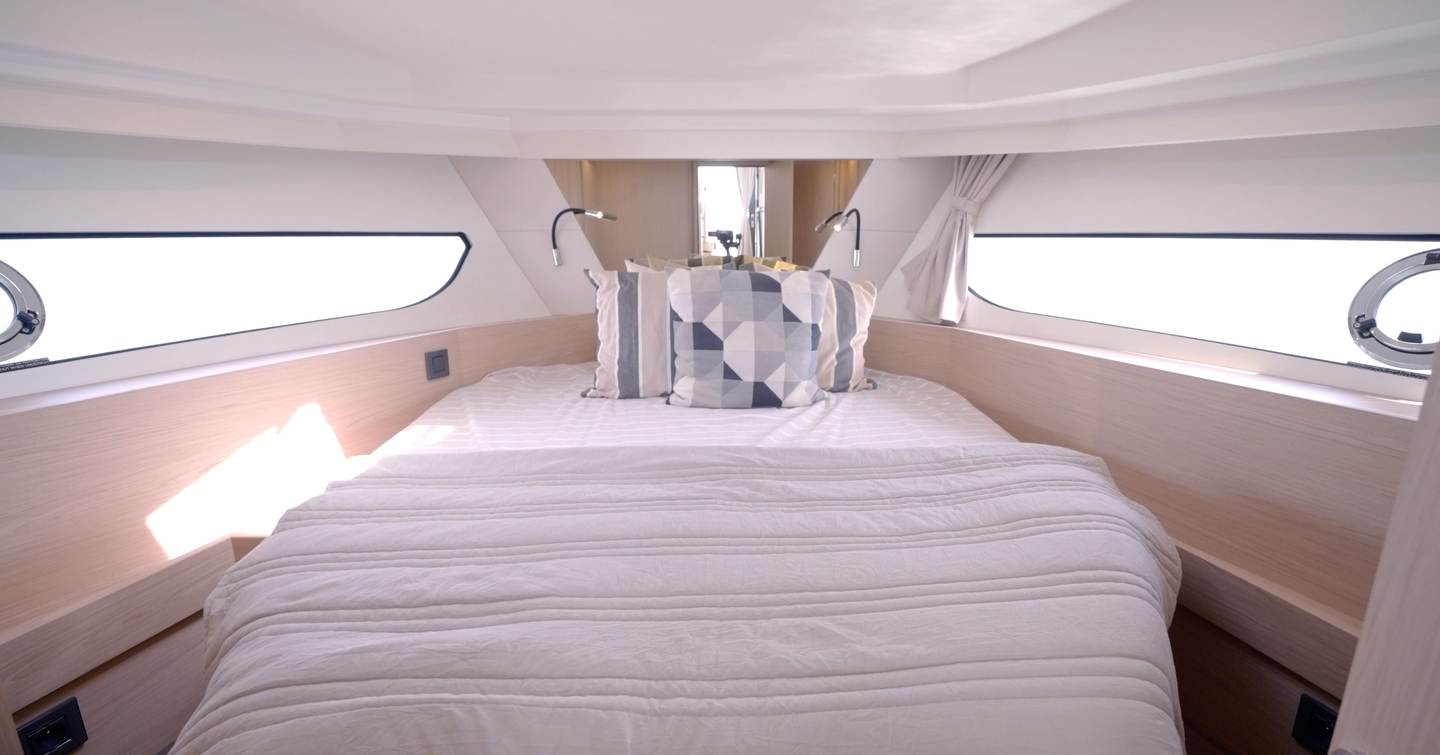
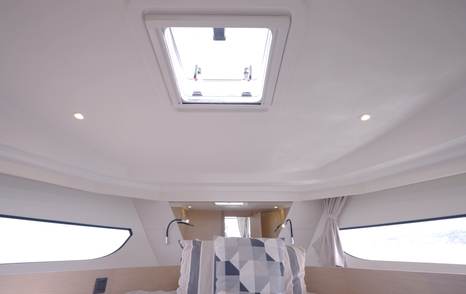
The biggest difference compared with earlier generations is the amount of natural light. Older Swift Trawlers relied largely on small round ports, whereas the ST37 gains proper hull windows alongside them. The result is a much brighter cabin and a much stronger connection with the water outside. It's a relatively simple change, but it alters the feel of the space quite noticeably.
The nice thing is that the extra glazing hasn't come at the expense of ventilation. The hull windows incorporate opening ports and there is a deck hatch overhead, so getting air moving through the cabin is straightforward even on warmer days. For owners spending extended periods aboard, that makes quite a difference to comfort overnight.
There is also direct access into the bathroom, giving the cabin an ensuite feel even though the facilities are shared with the guest accommodation. It's a simple arrangement, but one that works well on a boat designed primarily around a cruising couple.
Guest Accommodation & Bathroom
Opposite the bathroom sits the guest cabin and the arrangement is straightforward enough, with upper and lower bunks to port and the shared bathroom directly opposite on the starboard side. It hasn't changed a great deal from previous generations and, in truth, it doesn't really need to.
For children, the cabin is absolutely fine. There is a bit of storage built in, a couple of opening portholes and headroom is pretty good when you first step inside. The bunks themselves are quite tight, though, and while they work perfectly well for younger guests, they're less convincing for adults spending extended periods aboard.
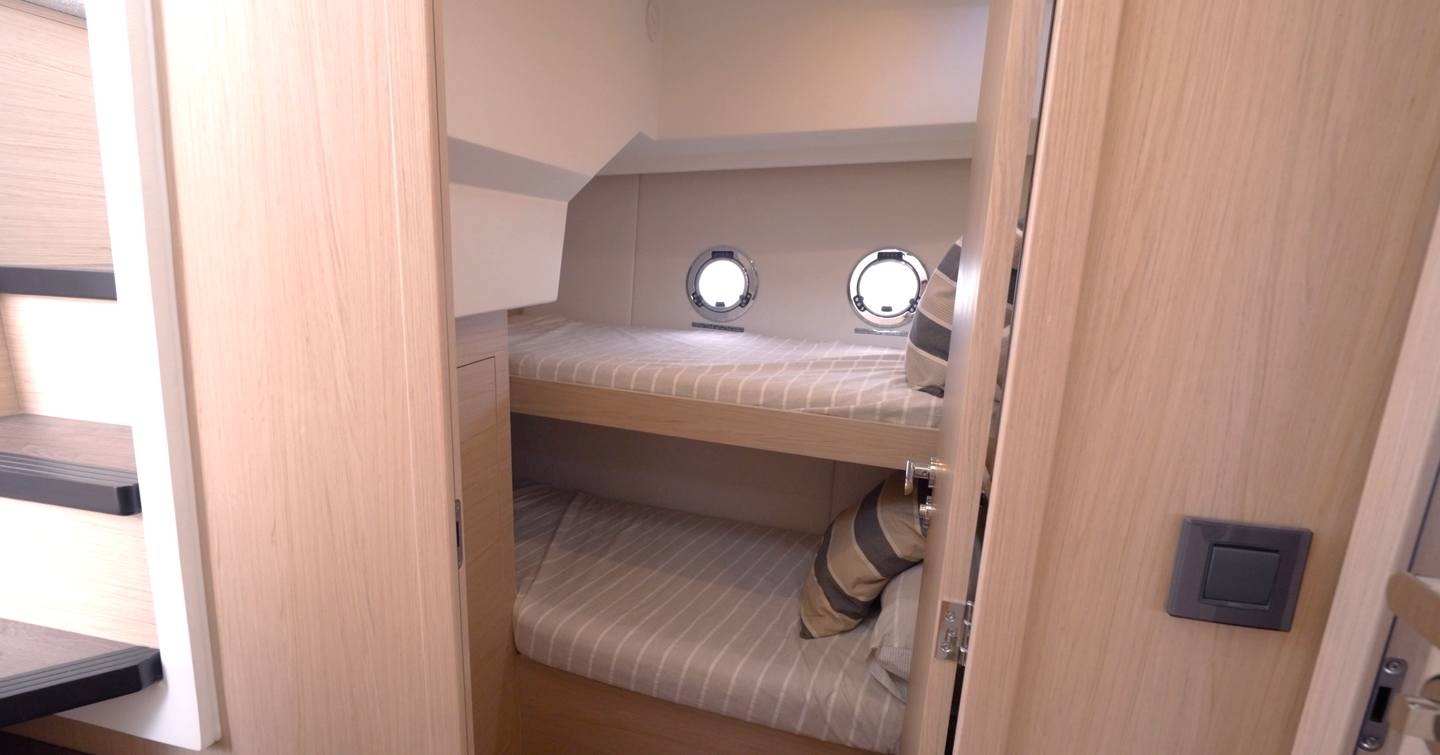
In reality, many owners will probably use this space for something else most of the time. As a dressing room, somewhere to keep bags or simply somewhere to dump the bits and pieces that inevitably accumulate during a cruise. That's one reason the optional double berth in the saloon is worth considering. If you're regularly cruising with another couple, asking them to sleep upstairs is likely to be a much more comfortable arrangement than squeezing two adults into bunks for a week.
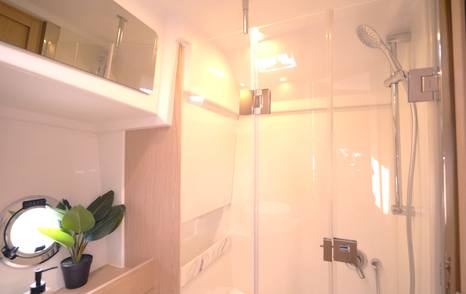
Across the passageway, the bathroom is pretty good. Headroom is excellent, it's nice and bright and, perhaps most importantly, the shower sits in its own separate cubicle. The nice thing about that is you don't end up soaking the entire bathroom every time somebody has a shower.
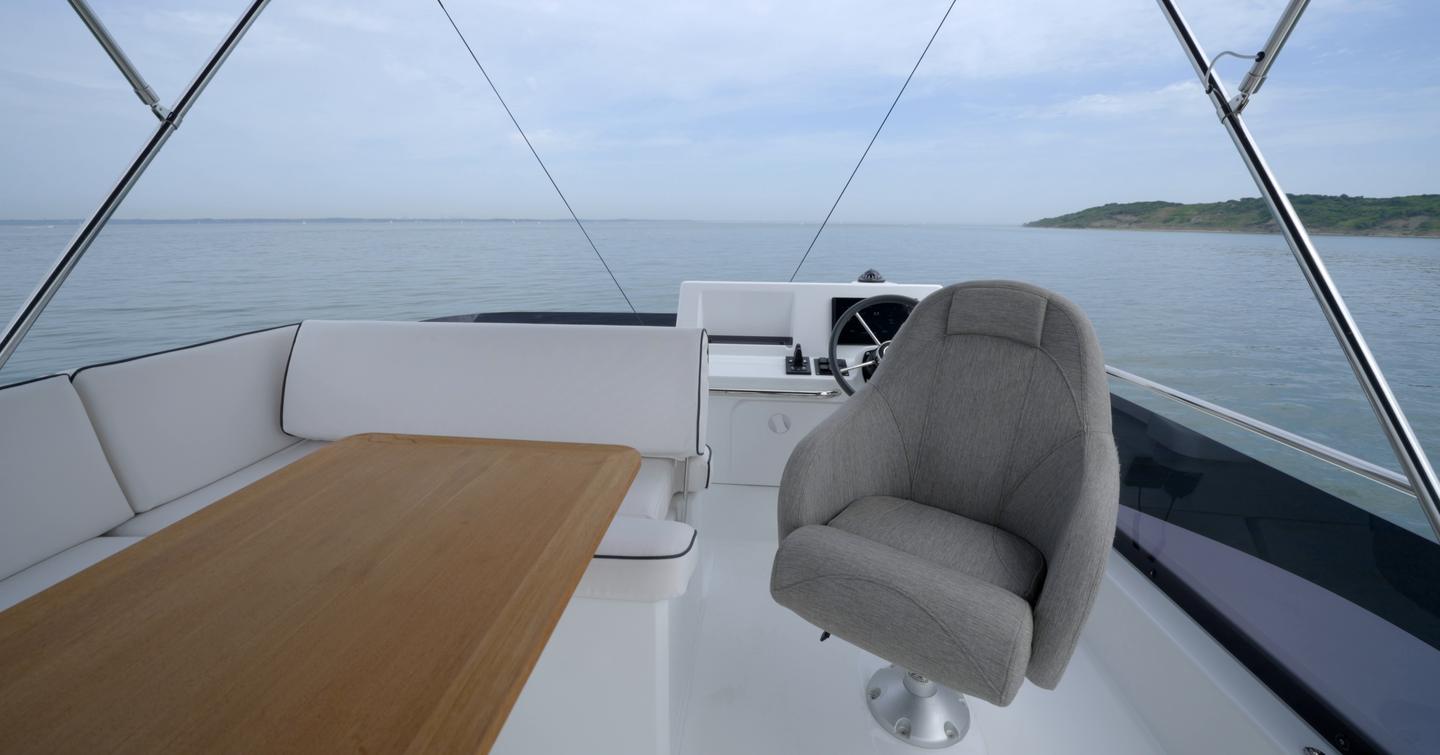
The Swift Trawler 37 has two very different helm positions, and both suit the boat rather well. Up on the flybridge, this is exactly the sort of day where you'll be glad you've got a flybridge boat. There are very few European builders still offering flybridges on boats around 11.29m (37ft), so it feels like a bit of a novelty these days, and it adds a completely different perspective when conditions are good.
The view is excellent. From the helm, there's a lovely sightline over the broad bow, which gives the boat a very commanding feel despite its relatively compact size. It's not a sporty driving position and you're not especially plugged into the boat in the way you might be on a performance cruiser, but that's not really the point. The seat is comfortable, everything falls naturally to hand and there's a nice sense of being in touch with what's going on around you.
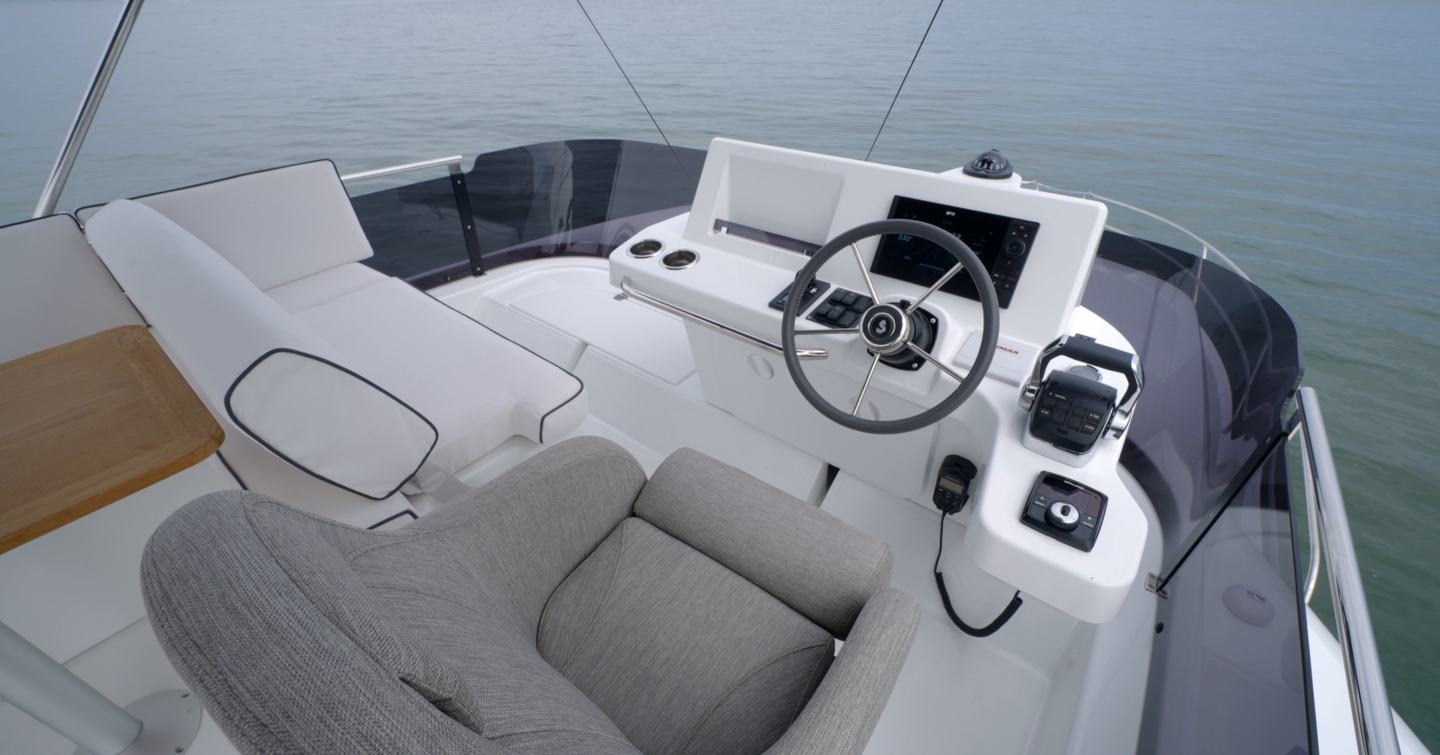
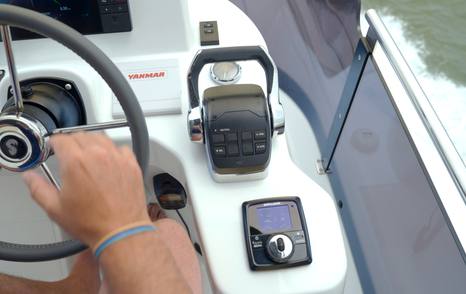
Like much of the boat, the flybridge helm is simple but effective. The main screen sits directly ahead, while the throttles, ZipWake controls, and key functions are all close by. One detail that stands out is the moulding around your right knee, which brings the throttles slightly closer and makes the whole position feel more comfortable. It sounds like a small thing, but it's the sort of detail you appreciate after a few hours at the wheel.
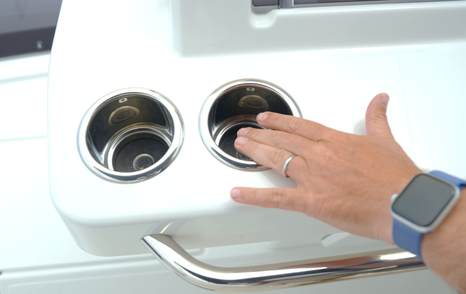
There are plenty of practical touches too. The cupholders are big enough to hold things that aren't cups, there are useful storage areas around the helm and dedicated spaces beneath the seat and dash for the various covers when they're not being used. Nothing flashy, just sensible solutions that make day-to-day use a little easier.
The Bimini deserves a mention as well as even running into the wind at cruising speed; it feels rock solid, without any flapping canvas or annoying whistling. It's also mounted nicely and high, so standing at the helm never feels like an exercise in avoiding head injuries. On a really hot day, being able to travel comfortably in the shade without any fussing about is a benefit.
Lower Helm
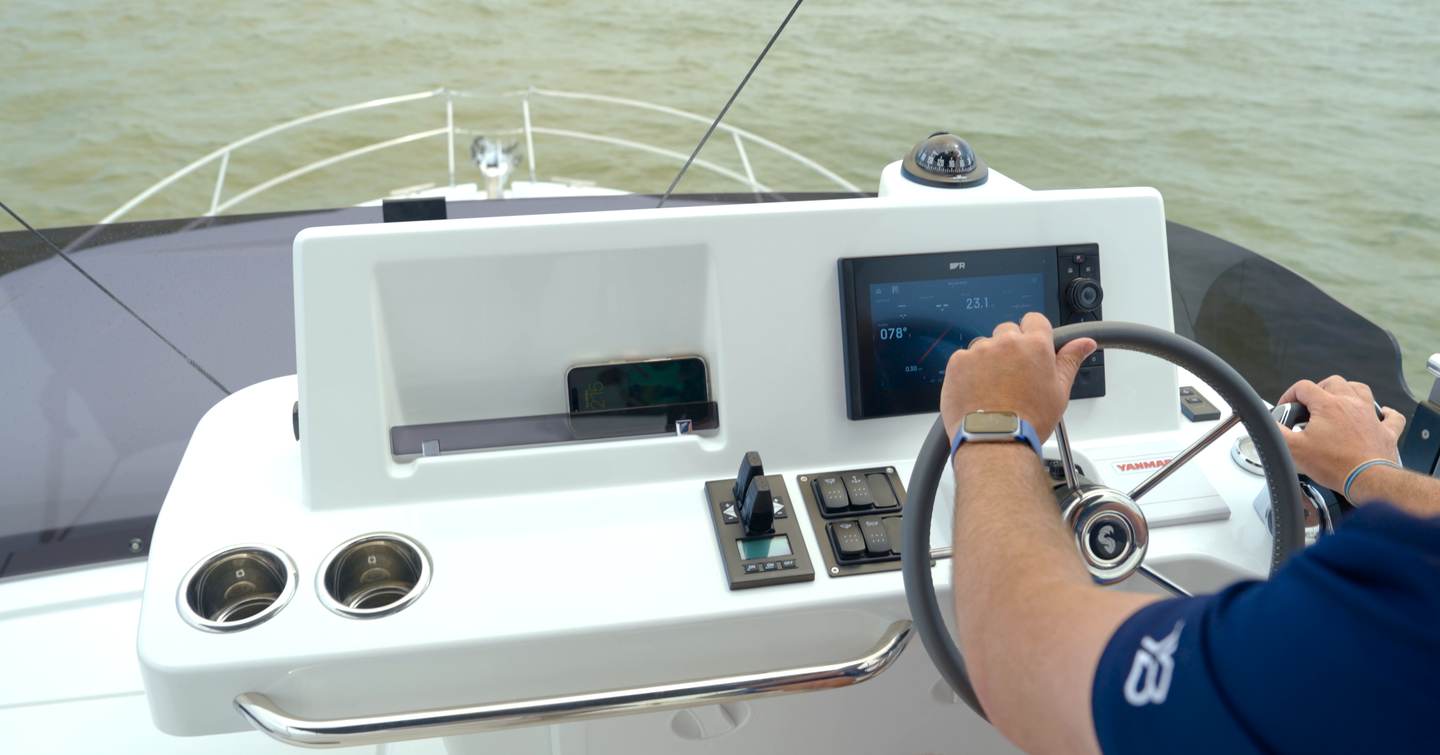
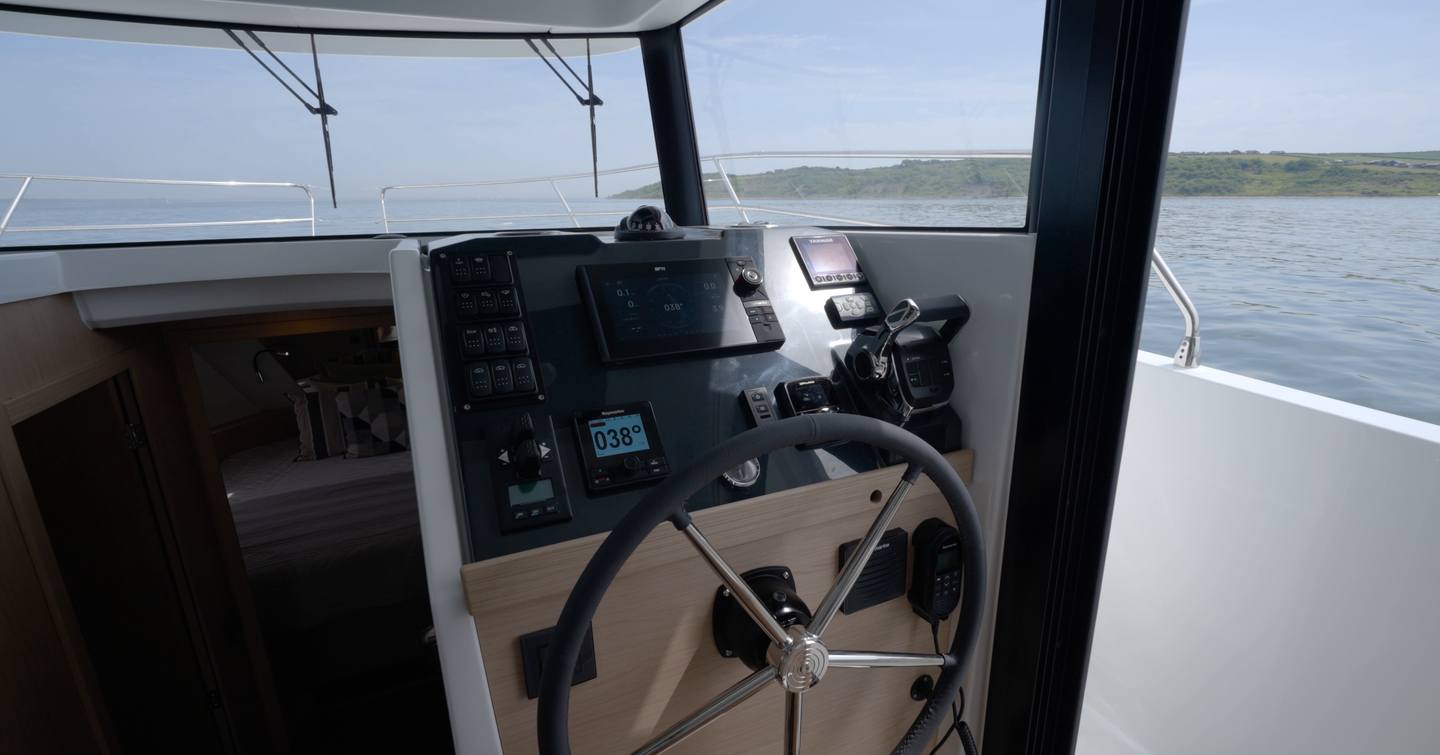
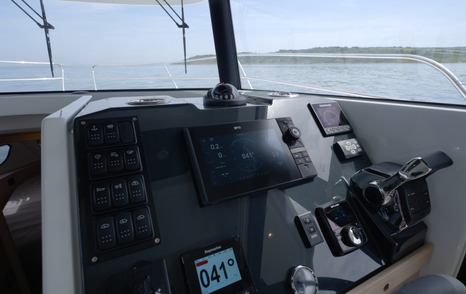
As nice as the flybridge is, though, the lower helm is arguably the more important driving position on a boat like this. The view from down here is fantastic. There's glass everywhere, loads of headroom and a very clear view forward, so even on a grey day the space feels bright and open. It feels like a helm that you'd actually want to use, which isn't always the case on boats where the lower station can feel like an afterthought.
The dashboard follows the same approach as the flybridge. It's not flashy and it's not particularly cool, but everything works. The buttons are nice and big, everything is easy to read and you can quickly hit what you need without diving through endless digital menus. The test boat carried the smaller screen and, if there is one thing worth changing, it would probably be specifying the larger display. With only one screen, the extra space would make it much easier to split navigation and systems information.
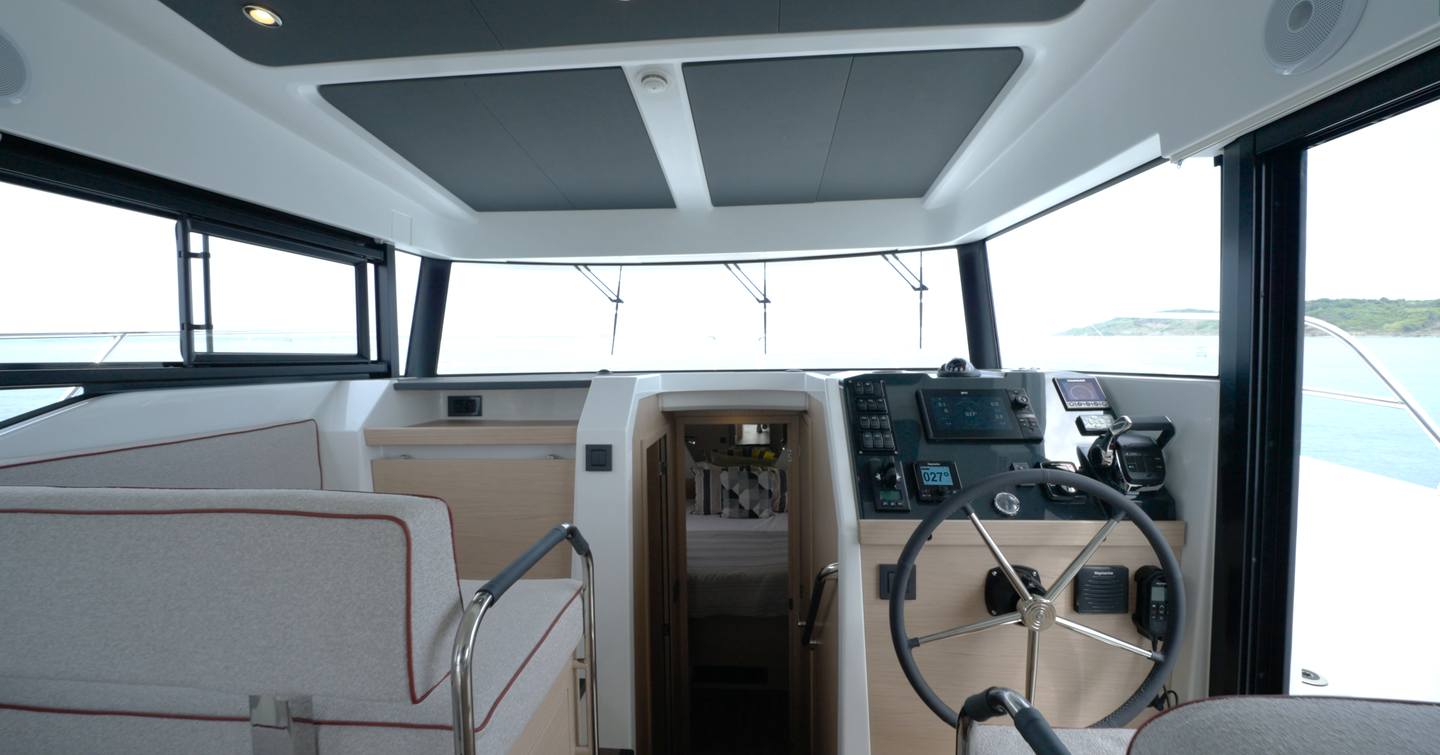
Beneteau has also moved the helm seat a little closer than before. Again, it sounds like a small change, but it means you can sit back comfortably and still reach everything. It's another example of the sort of refinement that doesn't grab attention at a boat show but makes the boat nicer to use every time you head out.
Ventilation is good too. The large side door can be left cracked open rather than fully open, so you get a nice bit of fresh air without exposing the helm to every bit of spray flying around outside. Add the opening window on the opposite side, and there are plenty of ways to keep air moving through the space on warmer days.
The one area where the lower helm struggles is noise. At the Swift Trawler's 15 to 16-knot cruising speed, sound levels sit at around 90dB, which is high enough that you have to raise your voice even to speak to somebody sitting nearby. The reason is fairly simple.
On a shaft-drive boat of this size, the engine is sitting right beneath the saloon floor, and you know about it. With the aft doors closed, there is also a lot of fibreglass around the space, so the saloon can act a bit like an echo chamber. Over shorter runs, it's not a major issue, but on a longer passage, improved insulation beneath the floor would be a very worthwhile upgrade.
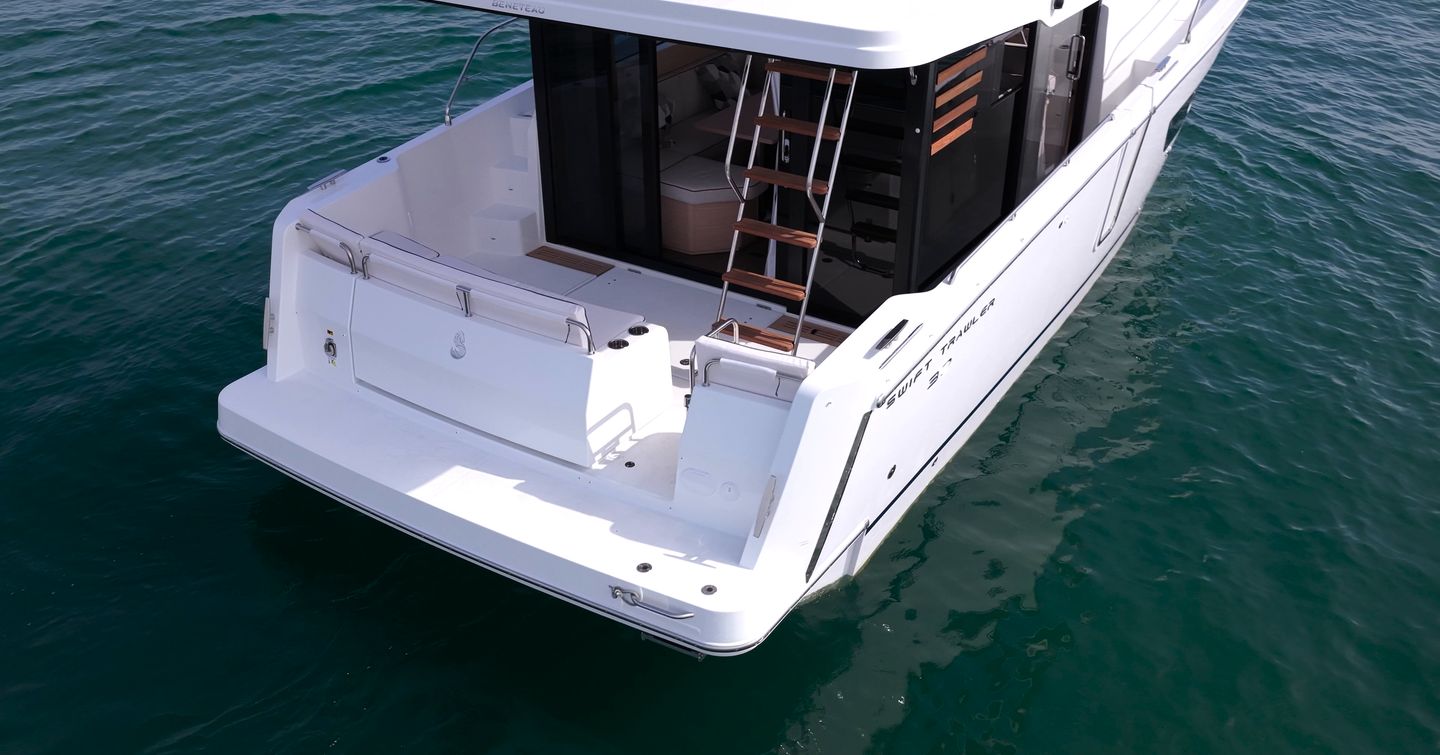
The bathing platform is fairly modest, but that's because this area now has another job to do. Rather than carrying the tender on the flybridge as earlier Swift Trawlers did, the ST37 keeps it here on davits across the transom. It might not sound like a major change, but it removes a surprising amount of hassle from day-to-day ownership.
The old crane arrangement freed up flybridge space, but launching and recovering the tender could be a bit of a faff. This is much simpler. There is also a bathing ladder, an emergency ladder that remains permanently available, a cockpit shower and cleats at both upper and lower levels for line handling.
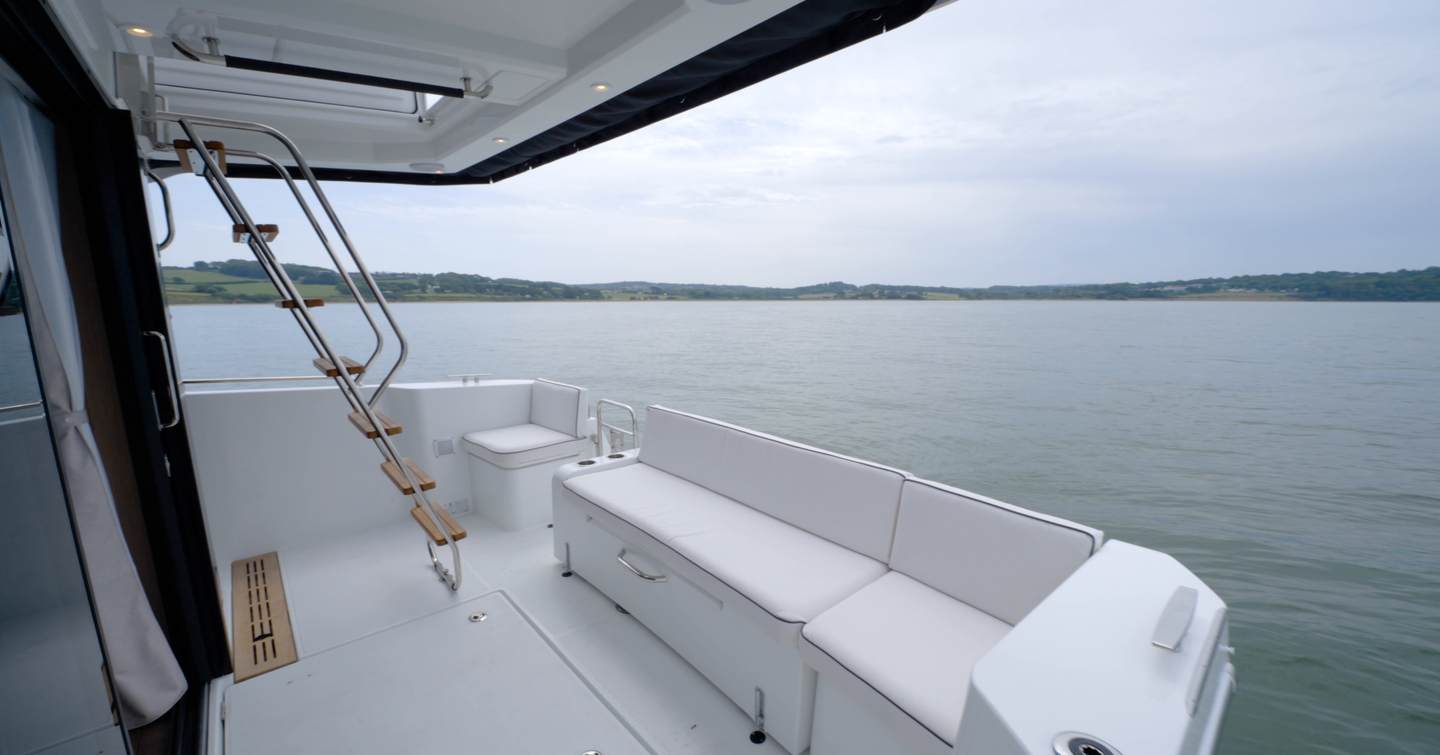
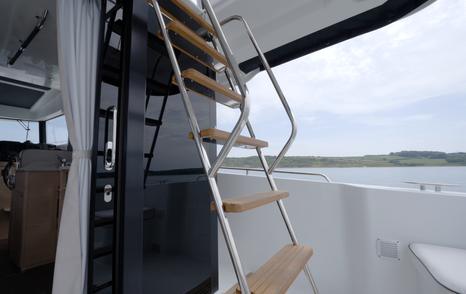
The cockpit is packed with clever ways of making the most of the available space. The aft bench slides backwards once you're at anchor, creating enough room for a dining table and a couple of additional chairs beneath the shade of the flybridge overhang. The flybridge ladder can also be pushed right up against the saloon glazing to free up more floor space.
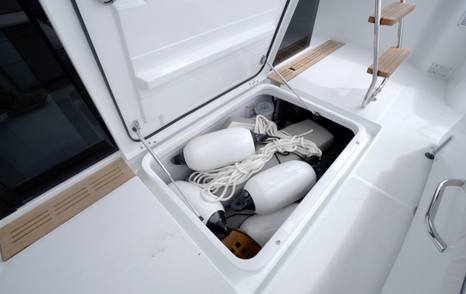
Beneath the deck sits a huge lazarette that stretches deep into the hull and out towards the hull sides. It's exactly the sort of storage that makes longer periods aboard much easier, swallowing everything from fenders and spare lines to bikes and cruising gear. The trade-off is that there's no option for a fixed cockpit table, but that feels like a reasonable exchange given the amount of storage available.
The other thing worth mentioning is how well this area works outside the height of summer. Full enclosure screens can be fitted around the cockpit, effectively creating another living area when the weather turns. Swift Trawler owners tend to use their boats throughout the year, so it's the sort of feature that becomes surprisingly valuable. A pair of small perch seats built into the aft corners is a nice touch, too, for a pleasant place to sit with a view aft over the wake or forward along the hull side.
Side Decks & Foredeck
Beneteau has modernised the Swift Trawler's appearance quite a bit over the years, but it hasn't completely lost the character of the earlier boats. The original models carried a more obvious trawler-style panel along the side of the superstructure, complete with Beneteau branding.
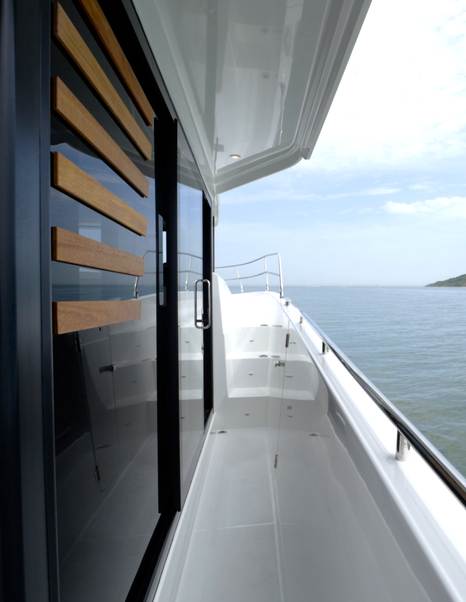
That's gone now, replaced by a cleaner treatment that also makes it easier to hang fenders, but there are still a few nods to the old design. The raised detailing along the superstructure breaks up what would otherwise be a very large expanse of black glazing and helps retain some of the Swift Trawler identity.
One of the defining features remains the asymmetric deck layout. The starboard side deck is noticeably wider than the port side, a solution that frees up more interior volume without making movement around the boat feel compromised. It's one of those ideas that feels entirely logical once you've spent a bit of time aboard, and it has become a Swift Trawler trademark over the years.
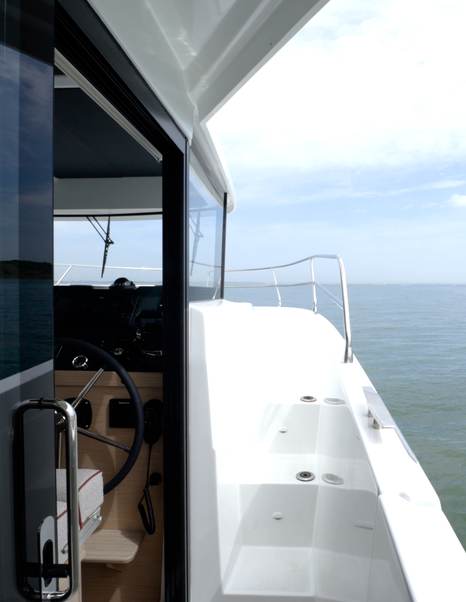
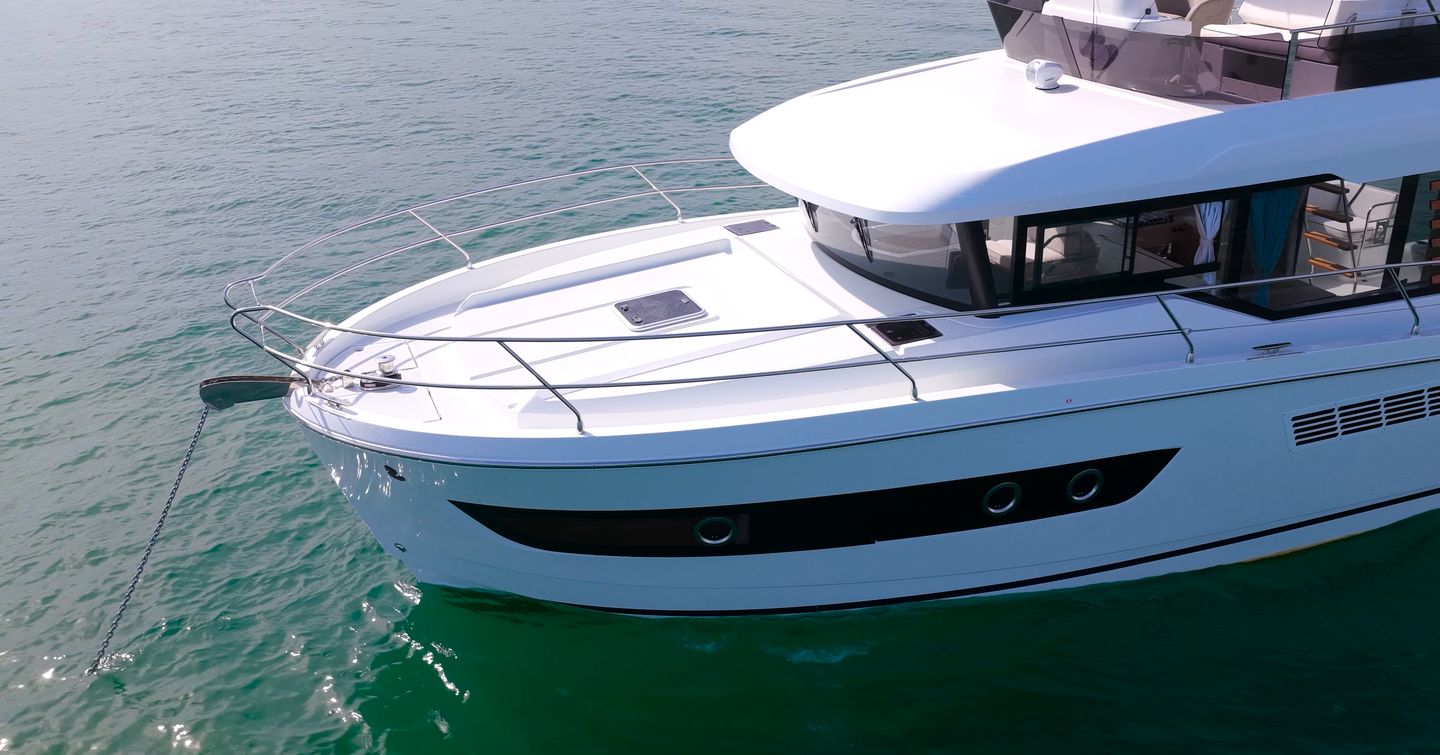
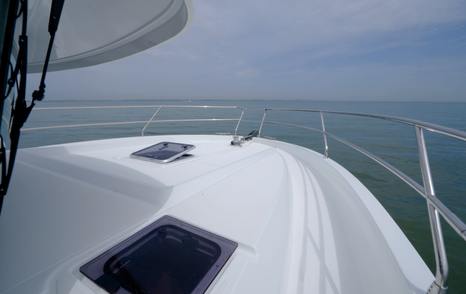
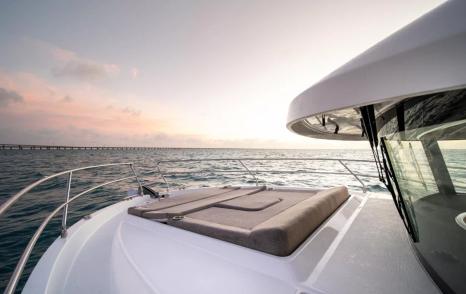
Moving forward, there are a couple of steps up to the foredeck, but the handrails always seem to fall easily to hand, and the high bulwarks add a reassuring sense of security. This is a boat that expects its owners to handle lines, fenders and anchors themselves, so safe movement around the deck is clearly a priority.
The foredeck itself is refreshingly practical. It's relatively flat, easy to move around and clearly designed around a couple running the boat on their own. Up at the bow, the anchor locker is a good size with plenty of room for lines and fenders, while access to the windlass is excellent thanks to its exposed position on deck.
There are, however, a couple of areas where it could be improved. The locker lids don't have proper stays and can drop shut surprisingly easily, while the space itself isn't divided. As a result, chain, ropes and fenders all share the same compartment. It works, but a simple partition would make the space more useful and reduce the risk of lines finding their way into the chain.
Flybridge
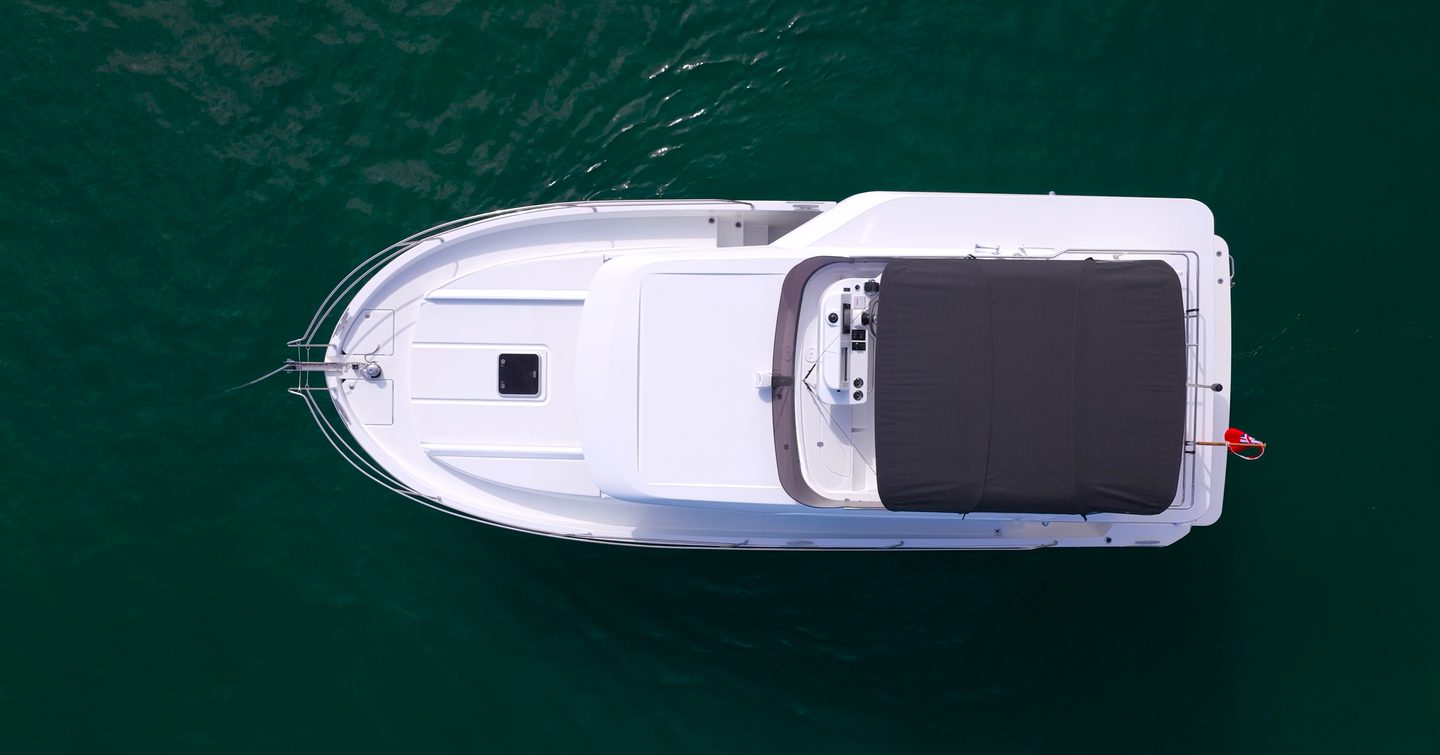
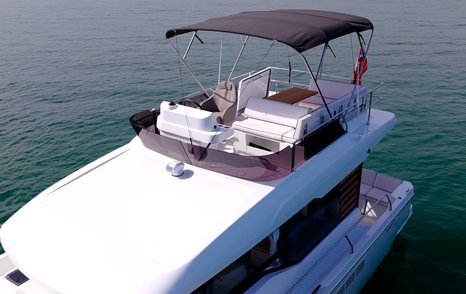
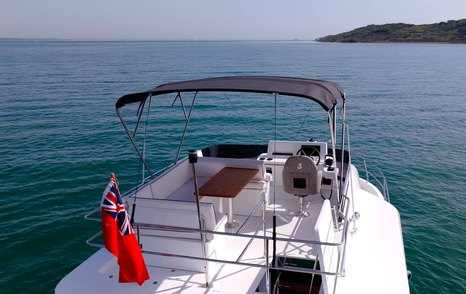
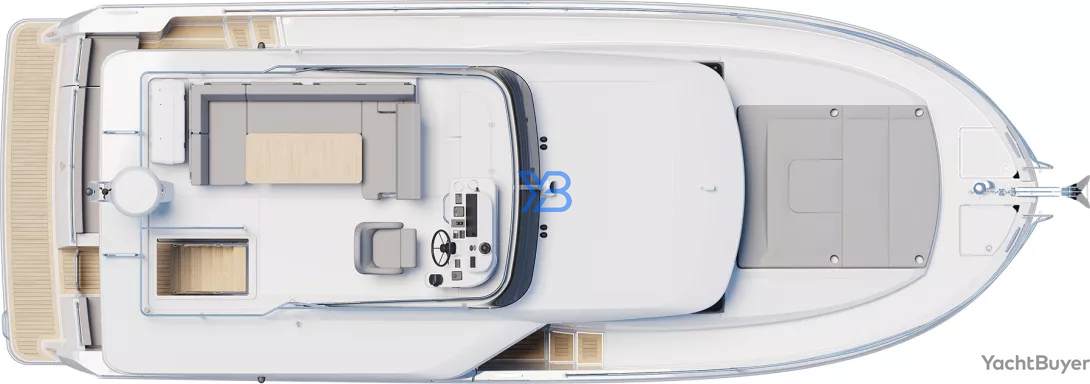
The flybridge isn't especially large, but it makes good use of the space available. The tender no longer lives up here, which means the entire deck can be dedicated to seating and entertaining rather than lifting gear and storage.
At the centre is a dinette with a reversible backrest. Leave it facing forward and it creates a comfortable companion seat for passages. Flip it the other way and it becomes part of the dining area. There is also enough space to add a couple of directors' chairs if required, while the helm seat swivels round to join the group when the boat is at anchor. It's not a huge flybridge, but there is enough flexibility here to make the area work for several different uses.
One option that feels particularly worthwhile is the Bimini. There is no hardtop available, so if you're planning to spend much time up here the extra shade quickly becomes essential on warmer days. It also extends the amount of time you'll realistically spend on the flybridge during a long cruise.
The one thing missing is any sort of outdoor galley. There isn't a wet bar, grill or fridge, so food and drinks still need to come up from the galley below. That's fairly typical for a flybridge on a boat of this size, but it does mean the area works best as a place to relax and dine rather than somewhere completely independent from the rest of the boat.
Engine Room
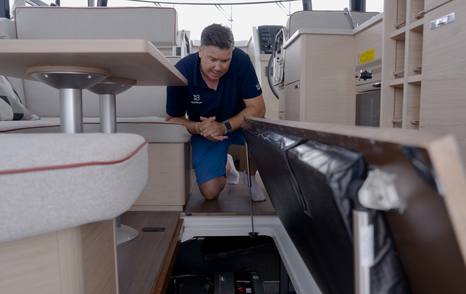
Lift the saloon floor and you'll find the engine installation sitting directly beneath. That's fairly typical on a boat of this size and, while it doesn't provide the sort of walk-in machinery space you'd find on a much larger yacht, access is good enough for the checks and maintenance most owners are likely to carry out themselves.
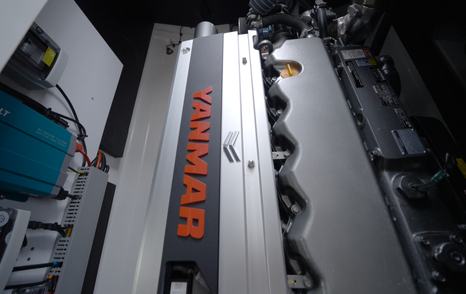
The setup itself is pretty simple. There's a single Yanmar diesel coupled to a conventional shaft drive, which is exactly what long-time Swift Trawler owners would expect to find. Beneteau has stuck with this arrangement for good reason. Twin engines would make certain things easier around the marina, but they would also bring extra servicing, extra maintenance and take up considerably more space. On a boat designed around owner operation and efficient cruising, a single-shaft setup makes a lot of sense.
The standard engine is a Yanmar 6LY 400hp, while buyers can upgrade to a 440hp version if they want a little more performance. As the sea trial showed, though, the standard engine feels very well matched to the boat. The ST37 settles naturally into its 15 to 16 knot cruising speed and never feels as though it's working particularly hard.
One thing that matters on a boat like this is being able to reach the things you'll actually need to reach. Fluid checks, filters and general servicing items are all reasonably accessible, which is important because many of these boats will spend their lives in the hands of owners rather than crew. The whole installation feels designed around practicality rather than presentation.
Fuel capacity is 800L, with 300L of fresh water and a 120L holding tank. Those figures fit the boat's brief rather well. This isn't an ocean-crossing passagemaker, but there is enough capacity here to spend a decent amount of time away from marinas without constantly worrying about fuel or water.
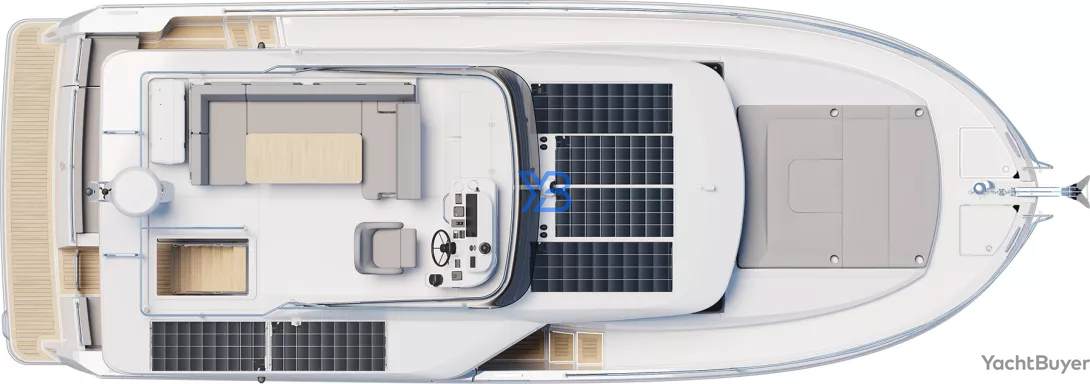
One option worth mentioning is Beneteau's Silent Boat package, adding solar panels and a larger battery bank, allowing many of the onboard systems to run overnight without starting a generator. Beneteau quotes around 8 hours at anchor, which could easily cover an evening and a night's sleep for many owners. If you're planning to run air conditioning for longer periods, there is still a generator option available.
Like most modern production cruisers, the headline price only tells part of the story. A Swift Trawler 37 Fly with the standard 400hp Yanmar starts at £366,327 including VAT, but very few boats are likely to leave the factory in that base form. By the time delivery, commissioning, and a sensible selection of cruising options have been added, Beneteau's own recommended customer specification comes in at £518,694 inc.VAT.
Our Options & Pick
The test boat was actually quite restrained. There wasn't any teak decking, or bow cushions and none of the more lifestyle-focused extras, but it didn't really feel lacking. The things that make the boat work - the storage, the accommodation and the deck layout - were all still there, which says quite a lot about the underlying design.
That said, there are a few options that feel especially worthwhile. The stern thruster is probably the easiest one to justify. At £8,237 inc. VAT it isn't cheap, but having spent time manoeuvring the boat, it's difficult not to see the value.
The other options I'd look at first are the flybridge Bimini (£6,469), sliding cockpit bench (£7,811) and, if you spend a lot of time at anchor, the Silent Boat package (£23,237). The latter adds six solar panels and two 200Ah lithium batteries, reducing the need to run a generator overnight.
By contrast, I'd think a little harder about the £9,273 jump from the 400hp engine to the 440hp version because the standard engine already feels very well matched to the boat. The £42,109 Comfort Pack also deserves attention, bundling together many of the items most owners would end up speccing anyway.
Our Verdict
What remains astonishing about the Swift Trawler 37 is how little direct competition it really has. Beneteau has been building boats around this idea for years, but it still feels like such a lot of boat in such a contained package.
It's got a really nice mix of deck space, accommodation and cruising ability. It's quick enough for day trips, comfortable enough for longer trips and small enough that most owners will feel perfectly happy handling it themselves.
Not every change from the original Swift Trawler 34 has been an improvement. The old boat had a certain charm about it and, once the tender was launched, it had more open space on the flybridge than the ST37 does today. Some buyers may also find the guest cabin a little tight, and the fridge could be bigger. Even so, the things that made the original boat so successful are all still here. It's practical, easy to handle, economical by the standards of a flybridge cruiser and remarkably well suited to extended time aboard.
The question at the start of this review was whether the Swift Trawler 37 is still the best scaled-down liveaboard you can buy. For the money, the answer is probably yes.
Reasons to Buy
- Such a lot of boat...
- ...but it's easy to handle
- Practical design
- Nice bright owner's cabin
- Excellent storage options
Things to Consider
- Guest bunks quite tight
- Needs more fridges
- Tricky to handle without a stern thruster
Pricing
Price as reviewed: £430,000 ($575,985 approx)
Pricing based on UK Beneteau Swift Trawler 37 Fly price list dated 22 May 2026. Prices include VAT and exclude future model-year changes, dealer promotions, local taxes outside the UK and market-specific equipment variations. Typical customer specification quoted at £518,694 including VAT.
Looking to own a Beneteau Swift Trawler 37 Fly ? Use YachtBuyer’s Market Watch to compare all new and used Beneteau Swift Trawler 37 Fly Boats for sale worldwide. You can also order a new Beneteau Swift Trawler 37 Fly , customized to your exact specifications, with options for engine choice and layout configuration. Alternatively, explore our global listings of new and used boats for sale and find your perfect boat today!
Rivals to Consider
The closest rival is probably the boat that came before it. The Swift Trawler 35 is the same 11.29m (37ft) length, carries the same 800L fuel tank and shares the same CE Category B offshore rating. The basic idea is very familiar too. Single engine, sensible running costs and enough accommodation for extended cruising. Where the ST37 moves things on is in the way it feels to live aboard. The saloon is brighter, the companion seating beside the helm is a genuine improvement and the separate shower makes a surprising difference to everyday life on board. Buyers looking for maximum value from the brokerage market will find a lot to like in the ST35. Those planning to buy new will appreciate the extra light, better flow and improved day-to-day livability of the ST37.
The Sargo 36 Fly comes from a completely different school of thought. At 11.8m (39ft), it's slightly larger than the Swift Trawler and carries a narrower 3.65m (12ft) beam. Twin Volvo Penta sterndrives and a deep-V hull give it a very different character on the water too, with cruising speeds and top-end performance well beyond what the Beneteau is trying to achieve. It also carries a CE Category B offshore rating for up to 12 people, reflecting its reputation as a serious all-weather cruiser. The interior feels more like a pilot house than a floating apartment and much of the design revolves around keeping people safe and comfortable when conditions turn rough. If the Swift Trawler is about spending time aboard, the Sargo is about getting somewhere.
The Sasga Menorquin 35 HT approaches things from the opposite direction. At 10.53m (35ft), it's smaller than the Beneteau, but it carries a CE Category A Ocean rating, something rarely seen on a boat this size. Twin Volvo Penta diesels provide around 21 to 23 knots at the top end, although speed isn't really the reason people buy one. The appeal is the traditional styling, the lovely single-level relationship between cockpit and saloon and the sense of character that comes with it. The Swift Trawler feels more modern and arguably more versatile, but the Menorquin has a personality that many contemporary cruisers struggle to match.
The Delphia 11 FlyLounge heads off in yet another direction. At 10.77m (35ft), it has been designed primarily for rivers, canals and sheltered coastal cruising. The draft is only 0.80m (3ft), compared with 1.17m (4ft) for the Swift Trawler, and there is even an electric propulsion option alongside the diesel version. Fuel capacity is just 300L, but then it spends most of its life cruising at displacement speeds. The FlyLounge itself is more social deck than flybridge, and the whole boat is geared towards slowing down rather than covering ground. For inland cruising it makes a lot of sense.
Considering a new boat? Explore Beneteau's entire current range to find the model that best suits your needs, and compare it with alternatives from competitors to ensure you make the perfect choice.
Specifications & Performance
- Builder Beneteau
- Range Swift Trawler
- Model Swift Trawler 37 Fly
- Length Overall 37'
- Beam 13' 1"
- Draft 3' 10"
- Hull GRP
- Cabins 2
- Berths 6
- Cruising Speed
- Max Speed
- Fuel Capacity 211 Gallons
- Fresh Water Capacity 79 Gallons
- Engine Model 1x Yanmar 6LY400
- Engine HP 400
- Engine max range (speed type) 350 (nm)
Beneteau Swift Trawler 37 Fly Layout
-
Flybridge
-
![Flybridge Beneteau Swift Trawler 37 Fly]()
The standard flybridge arrangement
-
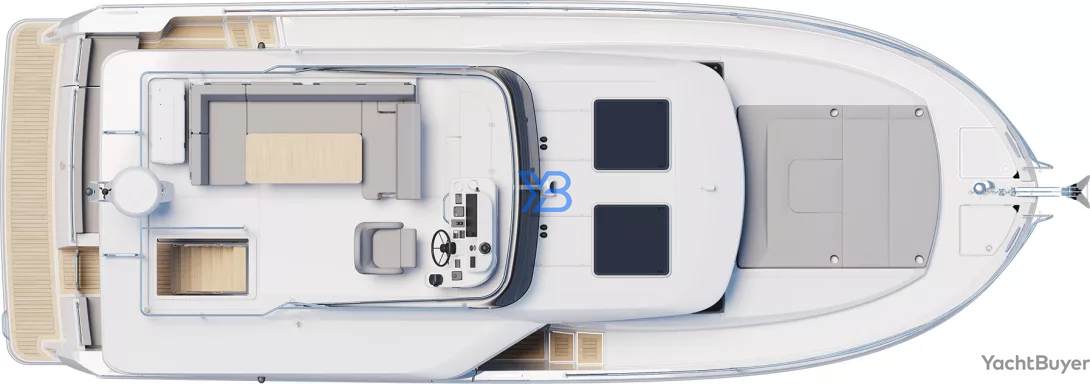
Optional electric skylight
![Flybridge Beneteau Swift Trawler 37 Fly]()
Electric skylights are a useful addition to that sparse forward section
-
Optional solar panels
![Flybridge Beneteau Swift Trawler 37 Fly]()
Add solar panels for better autonomy at anchor
-
Main Deck
-
![Main Deck Beneteau Swift Trawler 37 Fly]()
The dinette converts to a double berth when needed
-
Lower Deck
-
![Lower Deck Beneteau Swift Trawler 37 Fly]()
The twin bunks are tight, but the owner's cabin is decent
Available Stock


Beneteau
Beneteau Swift Trawler 37 Fly36'ft | Swift Trawler 37 Fly
2026 M/Y noname
1 x Yanmar
Features: Aircon, Bow Thruster
Interested in a Swift Trawler 37 Fly?
NEW Build
Find your local dealer for a personalised, no-cost consultation
or just request
Brochures & Pricing
Used & In Stock
Looking for a ready-to-go Swift Trawler 37 Fly or pre-owned options? Explore all inventory of the Swift Trawler 37 Fly available worldwide