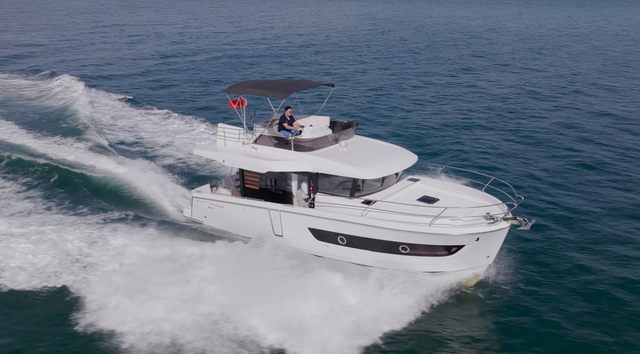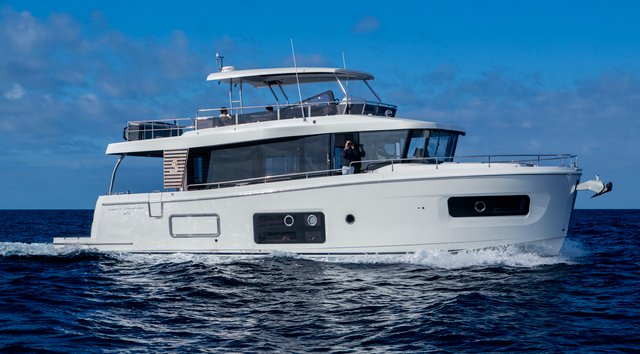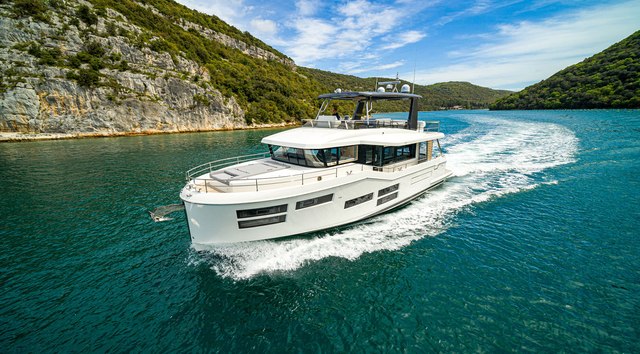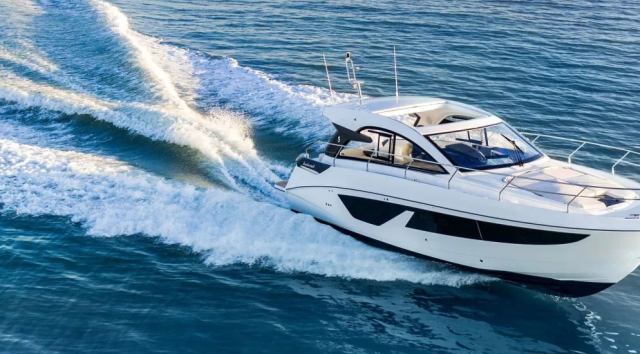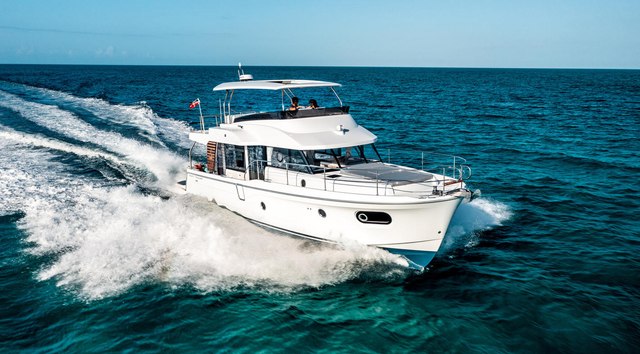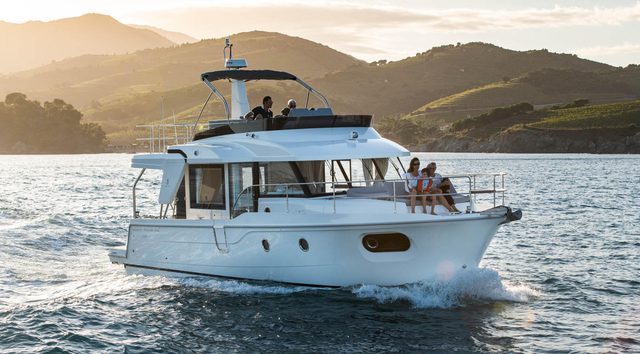
Beneteau doesn’t usually steal the spotlight with styling, but this one caught people off guard. In Alpine spec, the new Gran Turismo 50 is a fantastic-looking boat. For a boatbuilder known for practical cruisers, that’s a surprise.
It’s the lead act in Beneteau’s new GT range, with a fresh hull from Bill Dixon, 32-knot performance, and a cockpit that shifts from tender deck to waterside lounge with the press of a button. It’s loaded too. With the right boxes ticked, it climbs close to a million pounds, but does it feel worth that type of money? This is a key model for Beneteau, and they’ve gone all in. How does it stack up?
Beneteau Gran Turismo 50 (Gen 2) Key Facts

- LOA 52' 4"
- Model Year 2026
- Cabins 3
- Max Speed 32 knots
- Status In Production
- Generations 2
- Yacht Type Sportscruiser
- Use Type Cruising
Review Video
The Gran Turismo 50 is back, and this time it’s starting from scratch. The first-generation boat dropped out of the range in 2021. This second version arrives as part of a full reset, launched alongside new 35 and 40 models to refresh the whole line. It's clearly the flagship. Cleaner lines, lower roof, sharper detailing. The hull’s new, the layout’s new, the thinking behind it is new.
Length overall is 15.95m (52ft), with a beam of 4.48m (14ft 8in). Which is a 0.17m increase on the GT50 mk1's LOA - not a huge departure from before, but the deck space tells a different story. Beneteau claim a 30% increase in usable exterior area compared to the old boat. The side decks are wider, the superstructure sits lower, and the threshold between cockpit and saloon is flatter.
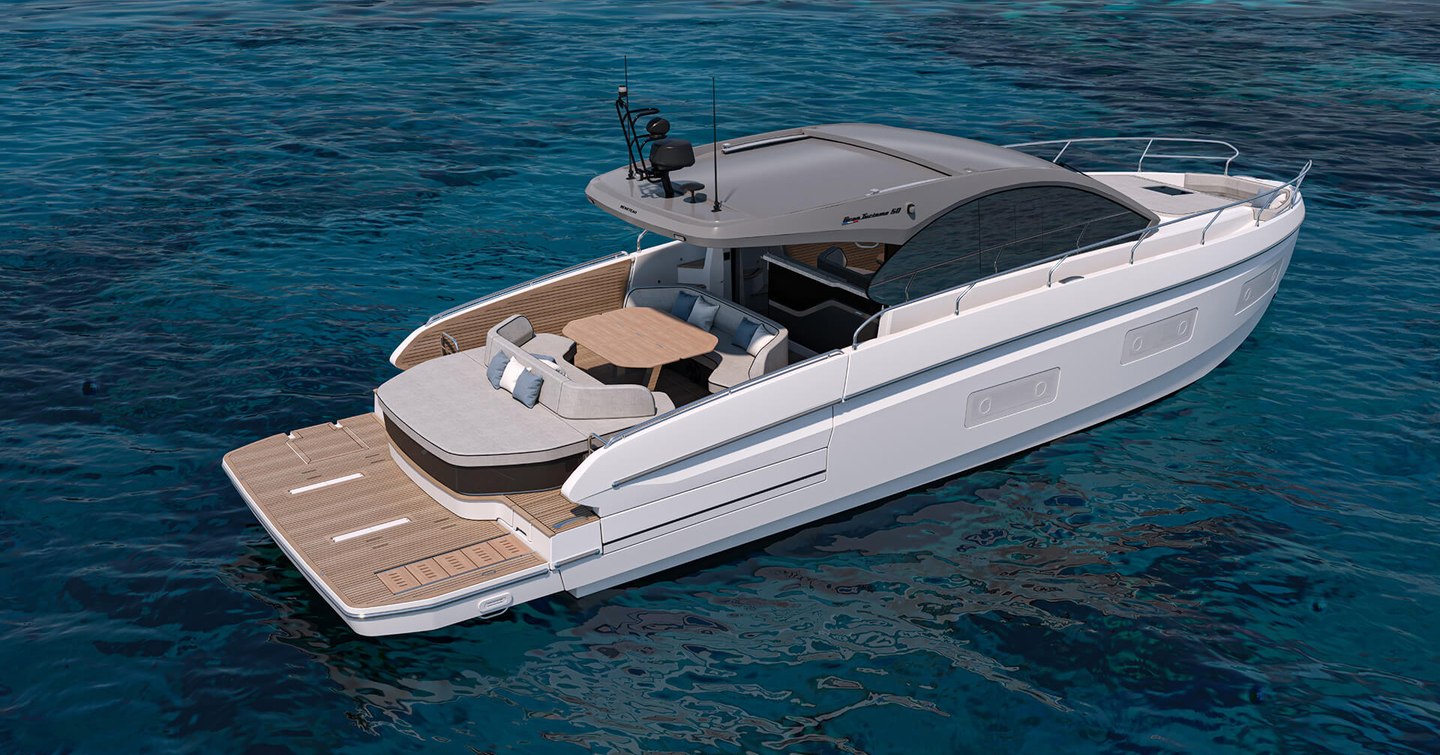
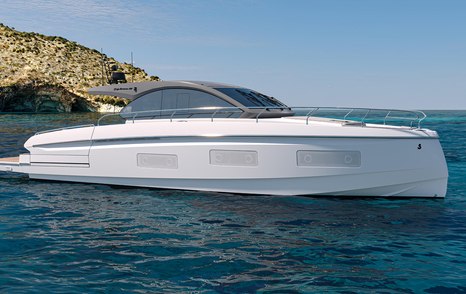
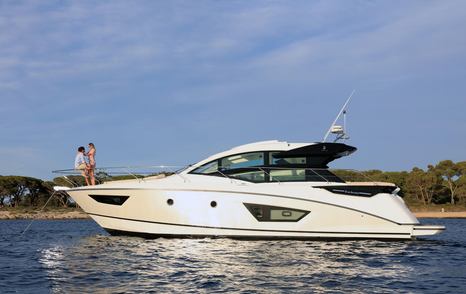
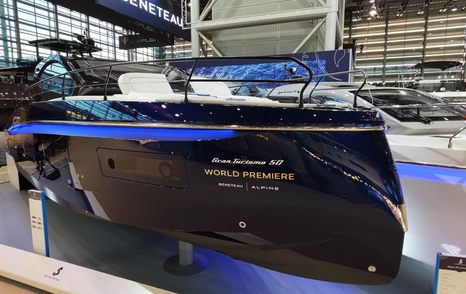
The styling follows suit. The shape is simpler and more upright, with the glasswork doing most of the visual lifting. There’s influence here from Japanese design and quite pared back. The reversed bow, flush surfaces and long hull windows give it a more modern look than its predecessor, which now feels quite busy by comparison. If you opt for the Alpine edition, the black fittings and deep blue hull look good, but they do pick up fingerprints and salt streaks quickly.
Under the water, this is a different hull. The Air Step system is gone. In its place, a clean-bottomed design by Bill Dixon, optimised for IPS drives. Twin IPS650s are standard, delivering 480hp a side. That’s a step up from the Mk1’s IPS600s (435 hp), and performance benefits accordingly. Expect a top speed just north of 30 knots, depending on load.
The cockpit layout shows the clearest change. The Mk1 kept its tender garage and fixed bulwarks. This version drops the garage in favour of open space and brings in folding terraces on either side of the cockpit. The aft platform is hydraulic, rated for a jet-ski or small RIB, and the overall footprint at anchor is wider, lower and much more connected to the water. You lose a bit of built-in storage, but gain a flexible, sociable outdoor area in return.
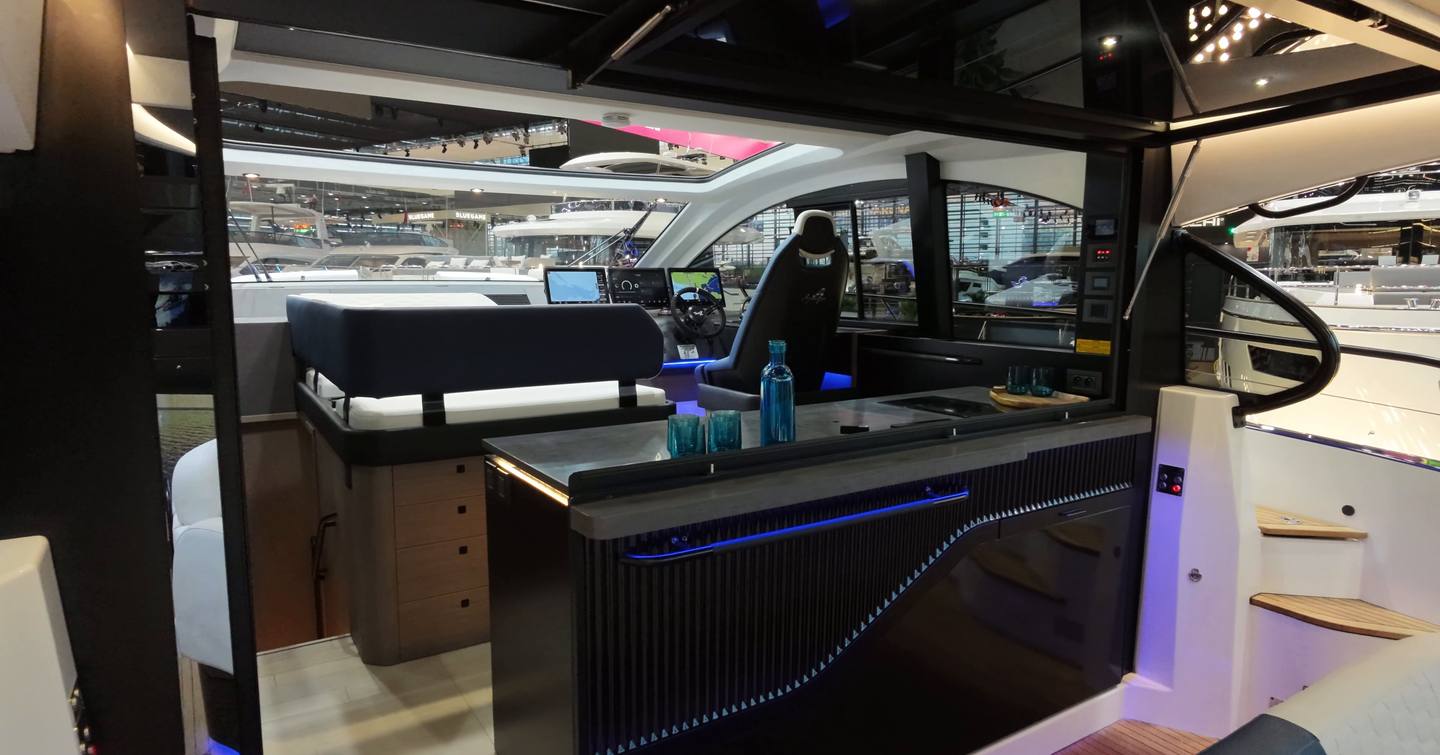
Inside, the format is familiar: two or three cabins, five berths, and a small crew bunk available as an option. But the mood is very different. Previously, there were dark wood finishes and high-gloss panels. In come matte surfaces, lighter tones, flush handles and integrated lighting. The galley runs across the beam, aft of the helm. It blends into the saloon in a way the old L-shaped layout never quite managed. Glazing is improved, too, and when the cockpit doors are fully open, the space feels more like one continuous level.
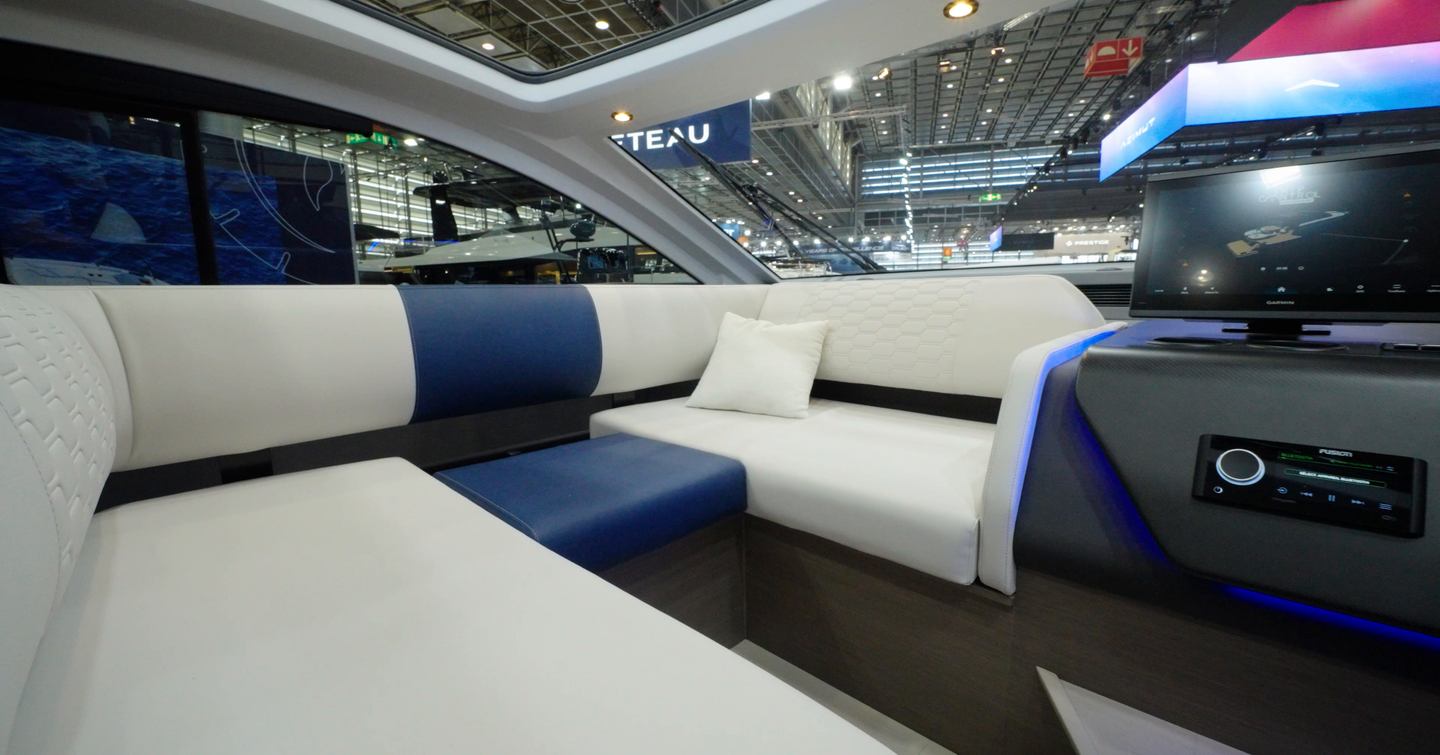
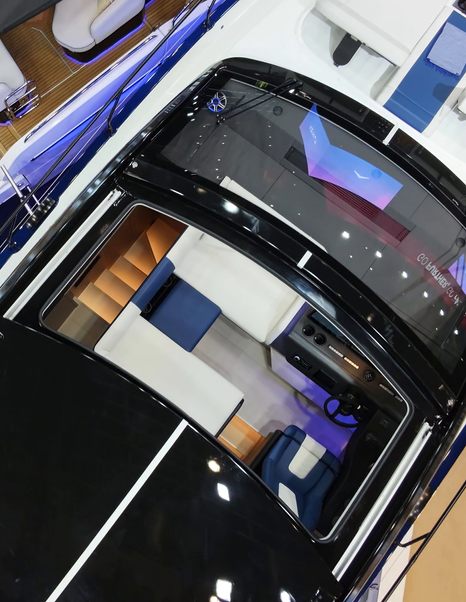
Inside, the indoor seating is fairly modest. There’s no table, just a small sofa opposite the helm. It’s under the sliding sunroof, so the space still gets plenty of light and air, but it’s more companion bench than lounge.
This is the compromise. You gain it all back in the cockpit and on deck, but if you’re looking for a salon where six people can sit and dine inside, this isn’t the layout for that. Instead, the bench works as a spot to sit next to the skipper, put your feet up, and stay involved when the boat’s moving.
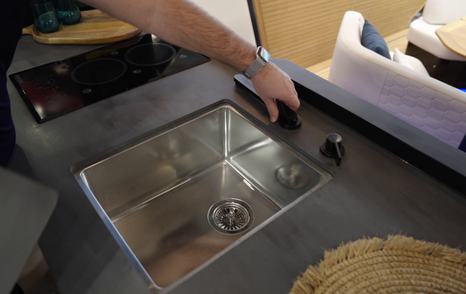
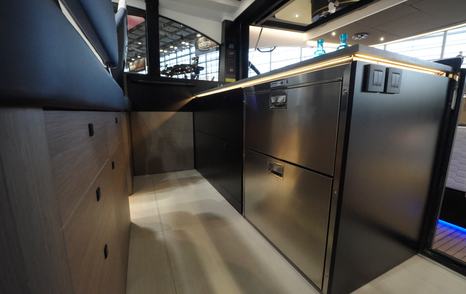
Aft to the galley and it’s better thought out here. The worktop runs port side with an induction hob, a sink hidden under a flush cover, and drawer fridges below. There’s no full-height fridge freezer, which might be a limit for longer trips, but there’s space to add more cooling if needed. If you plan to be aboard for more than a few nights, it’s something to consider.
Storage is well handled. Cutlery has its own sectioned drawers. There’s a microwave tucked in. Cabinets are shallow but accessible. Everything has a place, and the finish matches the upper deck. Materials feel good. The layout runs clean.
What lifts this space is the connection. When you’re in the galley, you’re still in touch with what’s happening outside. You look up and across the threshold to the cockpit. The window above opens high, ventilation is excellent, and you’re still part of the conversation.
Owner's Cabin
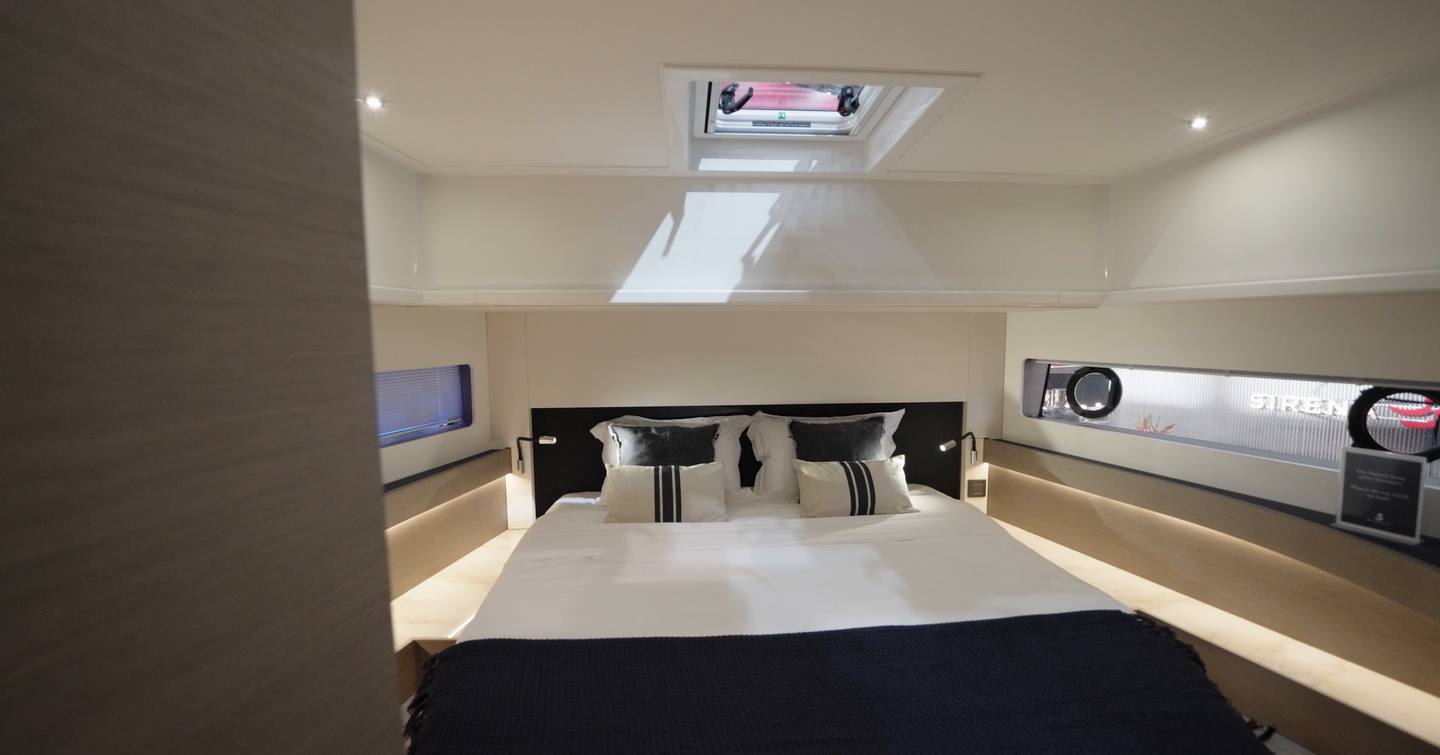
The forward owner’s cabin has espite the foredeck seating above, there’s plenty of headroom over the bed. As you move forward, the height drops a little however, but it doesn't feel too tight. Storage is a strong point. Wardrobes flank the bed and there’s a large underbed compartment for bags and bulky gear. Also you don’t need to lift cushions to get into it.
To port, the ensuite matches the style of the guest head. Separate shower, good lighting, electric toilet, and shelves for basics. The only real gripe is the door as, unlike the other doors on board that close with a soft magnet, this one swings loose at anchor unless latched.
Lower Deck Accommodation
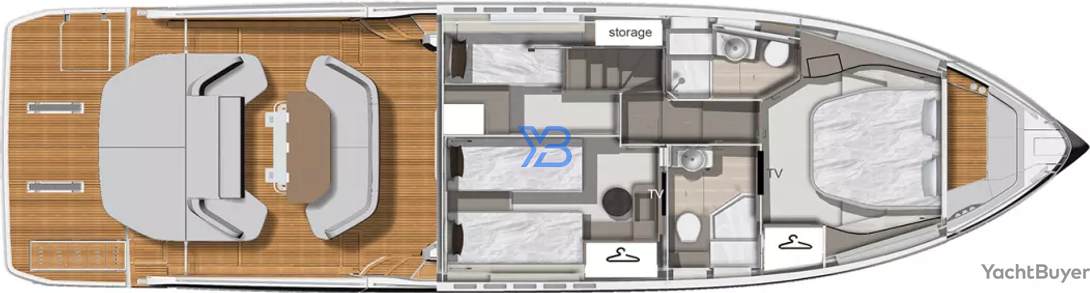
The layout down here breaks the norm. You get three cabins and two bathrooms, but the arrangement isn’t what you’d expect. The owner’s cabin sits forward rather than midships, which frees up space aft for a proper VIP and a smaller third cabin. It works, but the trade-offs are clear.
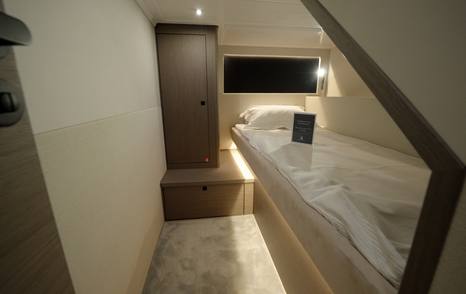
Start with the single cabin port side midships. It’s usable, but best suited to kids. The berth is long enough for an adult, but the headroom isn’t generous and there’s no standing space beside the bed. If you need to get changed, it’s in the doorway. Storage is fine. There’s a wardrobe, a drawer, and a reading light. It’s the right size for a weekend bag, not a suitcase.
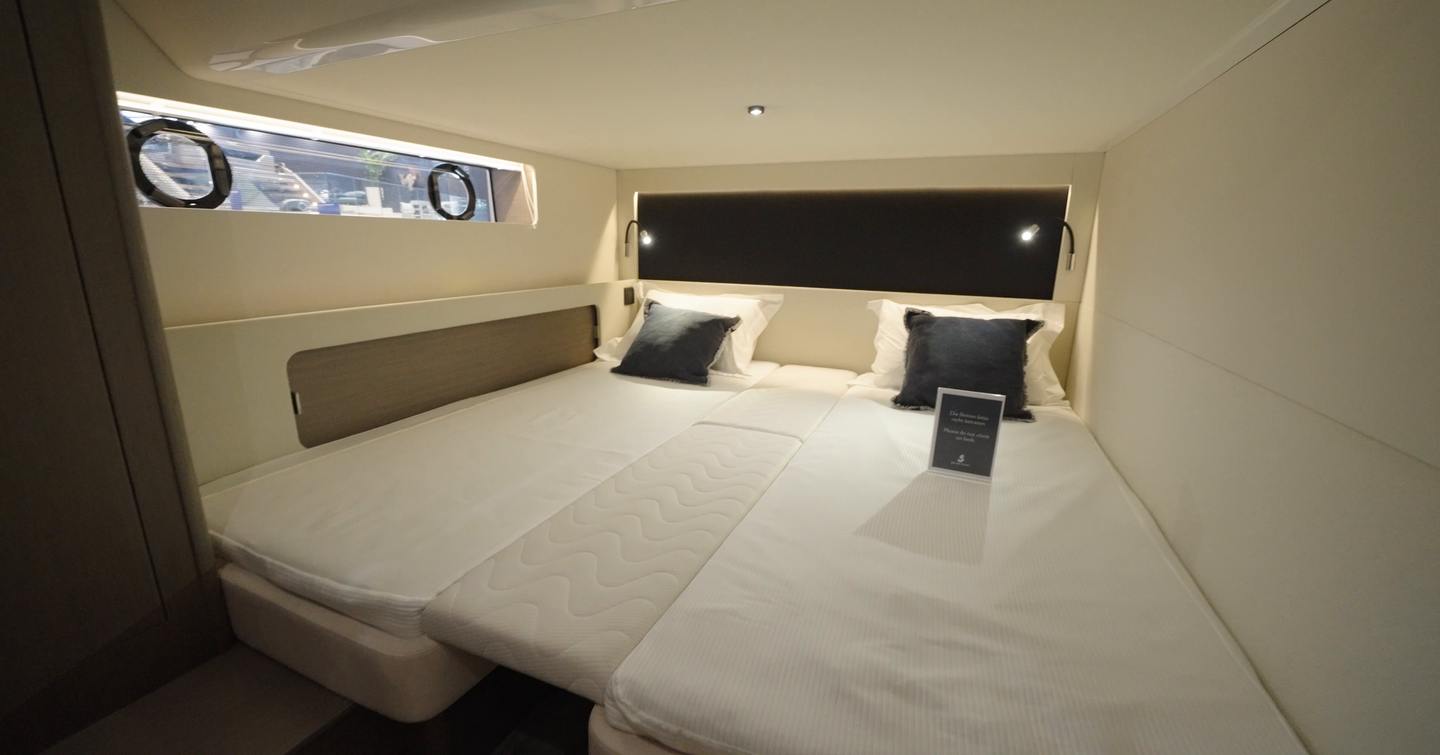
Things pick up in the VIP to starboard. This is a wonderful cabin. The beds are flexible, with infills to switch between twin singles and a large double. When it’s in double mode, it’s a big bed with good width. There’s storage built in behind the headboard, a shelf with a lip for devices, and a sliding cubby next to the bed. Wardrobe space is decent and lights up when opened. You can stand beside the bed to get changed, and there’s space opposite for a bureau or mounted TV. It could easily serve as the main cabin if needed.
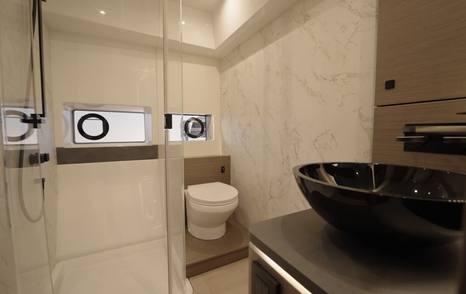
The guest bathroom doubles as the day head. It’s a good size, with a separate shower cubicle, an electric toilet and lighting behind the mirror and faux marble.
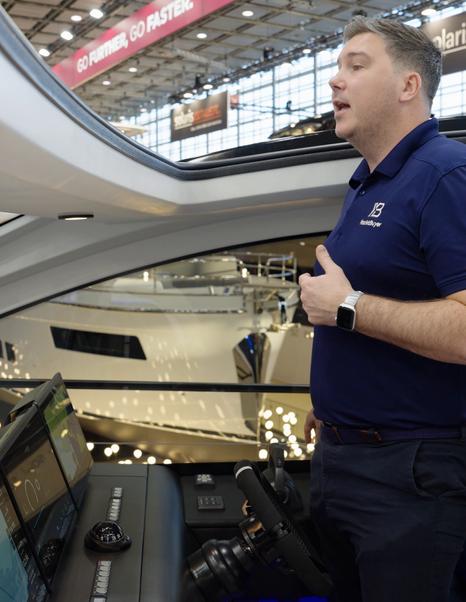
At the helm, you can stand with your head clear of the roof, while you have one hand on the joystick, the other on the wheel so there's some practical thinking on display here. With the roofline dropped by 37cm (roughly 14in) compared to the old model, there’s still headroom even with the sunroof closed.
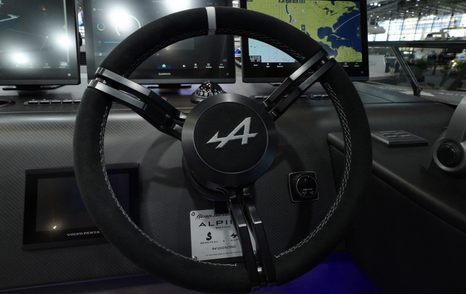
Part of the Alpine pack, ithe helm seat has a carbon shell, Alcantara trim, and just enough firmness to feel very supportive . It slides close to the wheel, the bolster flips up, and the position works for both seated and standing control. The Alpine-branded steering wheel has a nice suede feel and it provides a good contrast. Nothing overdone, but it feels good in your hands.
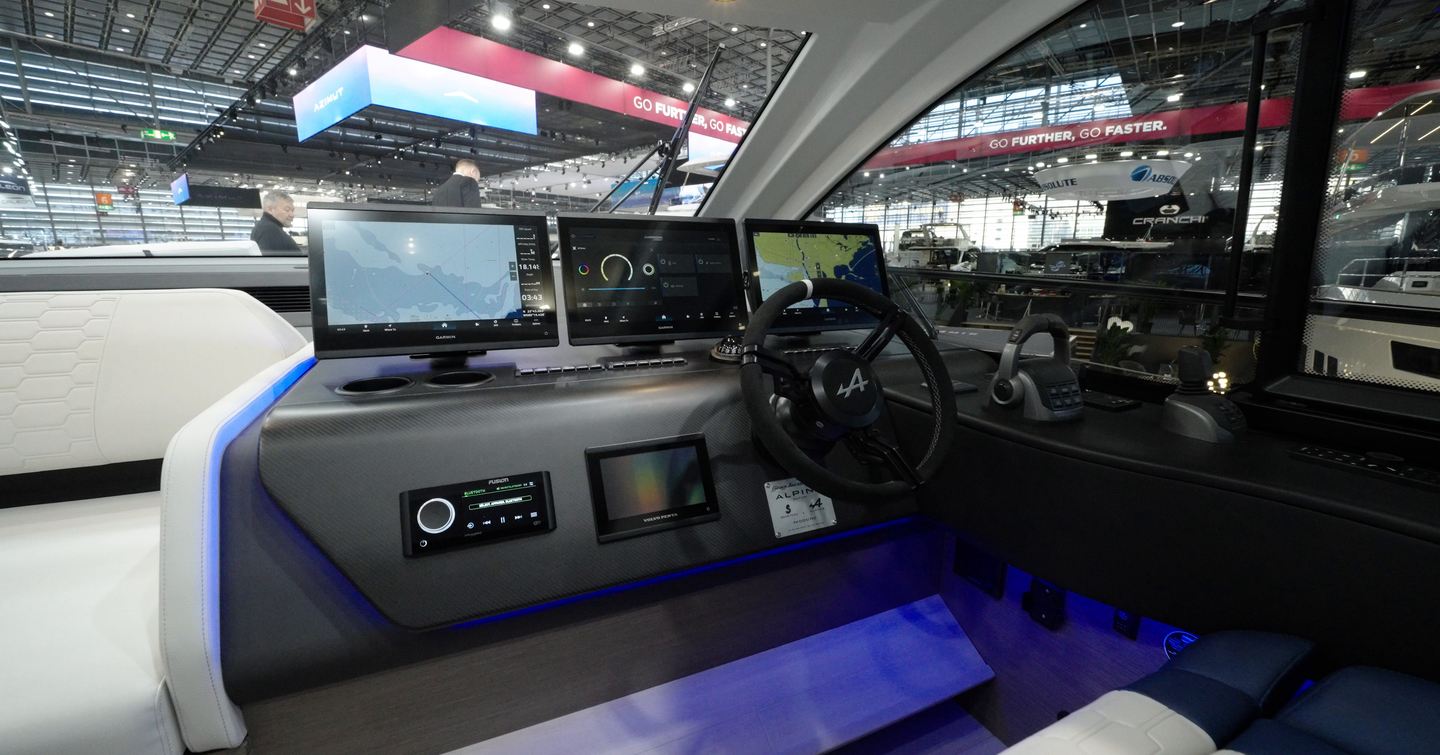
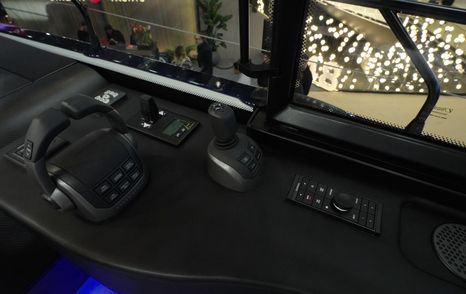
Three Garmin screens stretch across the dash. They sit a bit forward but are easy to read and controlled remotely, so you can stay planted in the seat. Joystick, throttles, displays - all in logical positions. The matte black and carbon finish helps cut reflections and makes the screens easier to read in full sun.
For visability, you can see the aft corners through the glass doors, the side decks are within line of sight, and the bow doesn’t lift much underway. At night, the helm glows. Underlighting runs along the dash and footwell. It links to the Lumishore and Fusion system, so it can pulse with the music or drop back to a quiet wash of light. It’s slick but doesn’t get in the way.
The aft deck is a clear step up from the old first-gen model. It's more open and usable as Beneteau has gone for a lovely beach club setup here, and it works. The fixed transom from the Mk1 is gone, and instead, the new boat gets optional folding balconies either side and a clean, flat aft deck that feels made for outdoor living.
The swim platform comes as standard, but it’s worth going for the hydraulic upgrade. With that fitted, it sinks into the water to launch a tender or jet-ski. It’ll take 400 kilograms, so there's space for something like a Sea-Doo Spark or a Williams. A boarding ladder folds out from the platform itself, creating a proper stairway down into the water. There’s a freshwater shower tucked under a hatch, and shore power connections hidden behind it. The cleats are big, solid, and mounted outboard so they don’t get in the way.
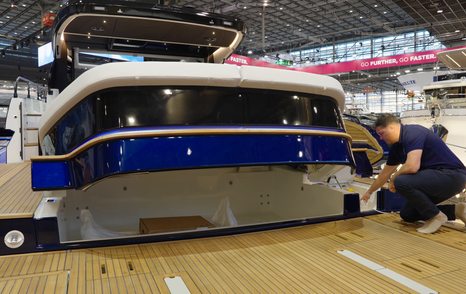
What looks like a tender garage at first is actually a slim boot locker. It opens electrically and is designed to hold water toys. There’s enough room for an inflated paddleboard and bits of kit like tow lines and fins. It’s not deep, but it’s quick to open and just as quick to stow.
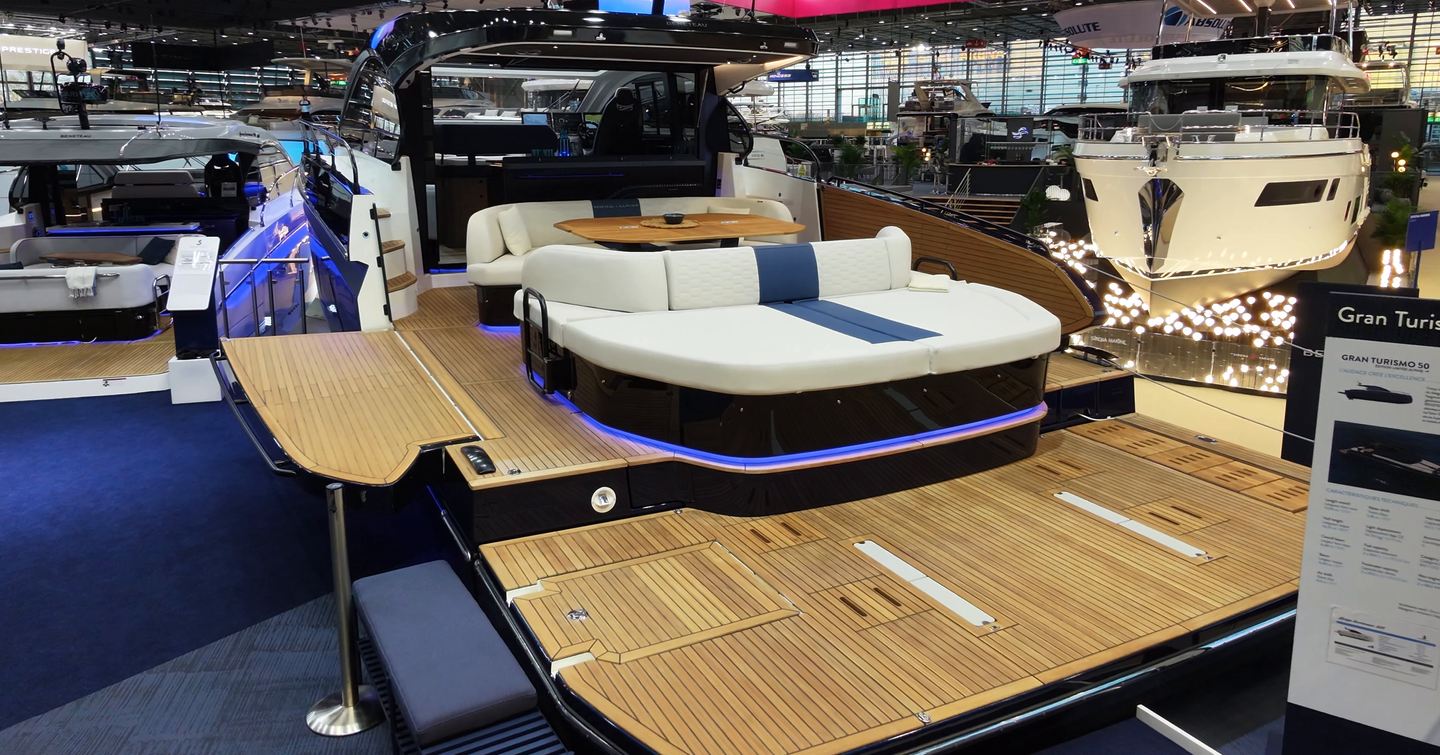
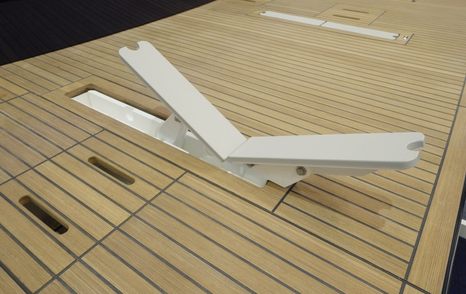
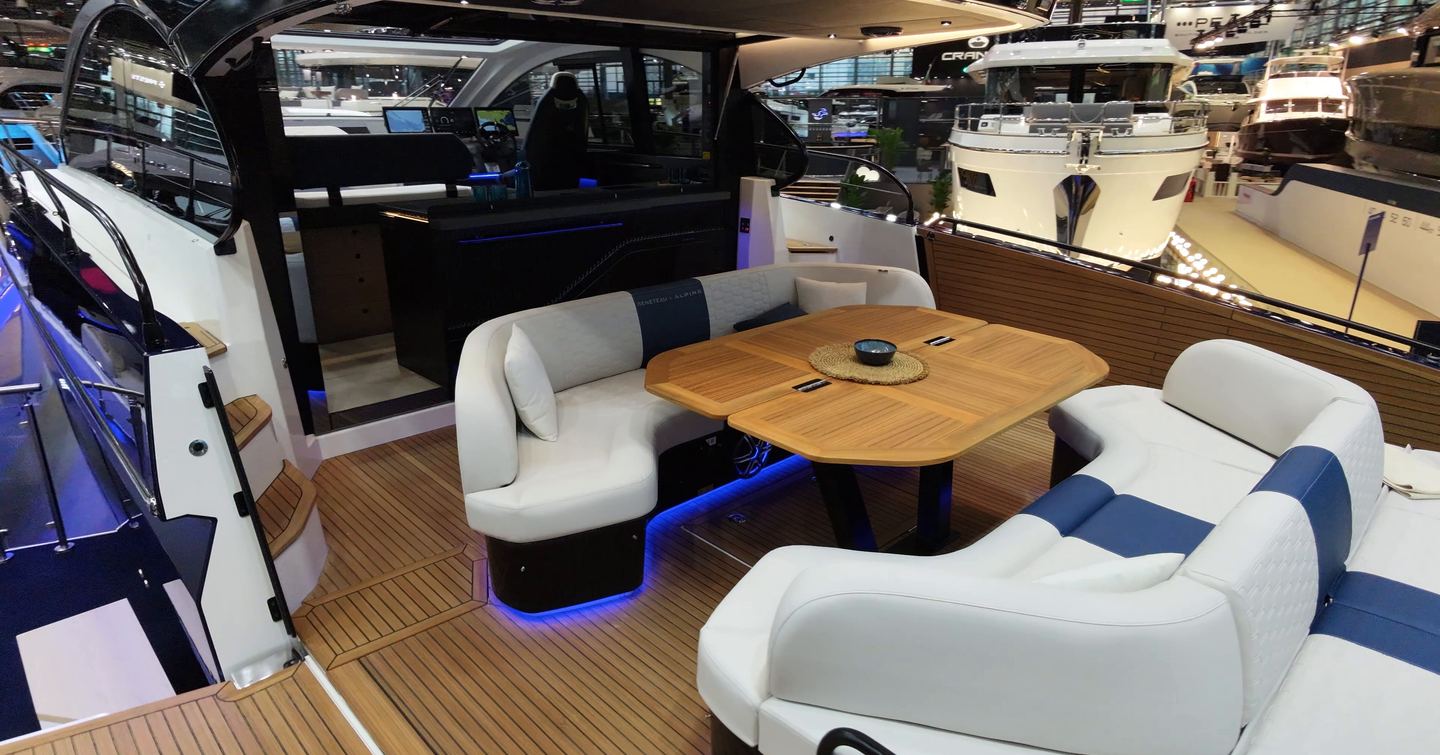
In the cockpit, the layout is simple and generous. The aft bench has a backrest that flips forward to become a sunpad. The teak table in the centre is well-made, folds in both directions, and lets you pass through the space without stepping around it. It also folds clear so you can get access to the engine hatch beneath. The bench seat has storage underneath with pull-up handles. It’s deep and wide enough to take bulky gear such as fenders.
The overhead canopy doesn’t enclose the cockpit completely, but a pram hood can stretch out across the entire space to give proper shade. It can cover the balconies too when they’re deployed, turning the whole aft end into a protected lounge.
Just forward of the cockpit is the galley threshold. On the show boat, there's no grill, but the space is prepped for one, along with the option for a fridge. It’s also designed with a lean bar that runs the full width of the counter. Beneteau originally planned for barstools here but chose to reinforce the edge instead. You lean, rest a drink, talk to guests, and stay involved with what’s happening outside.
Side Decks & Foredeck
The side decks feel wide enough without needing to crab sideways, and ou can swing round from the cockpit quickly. The guardrails are at a pretty good height and they follow the line of the boat, so the whole movement feels natural.
The curvature of the bow stands out. From the side it gives the boat good sculpted presence, and it lifts the look without relying on any chrome or gimmicks. If you go for the Alpine pack, the black powder-coated railings carry the theme forward and you get the Alpine logo worked into the roof and the bow detail, but it does show fingerprints.
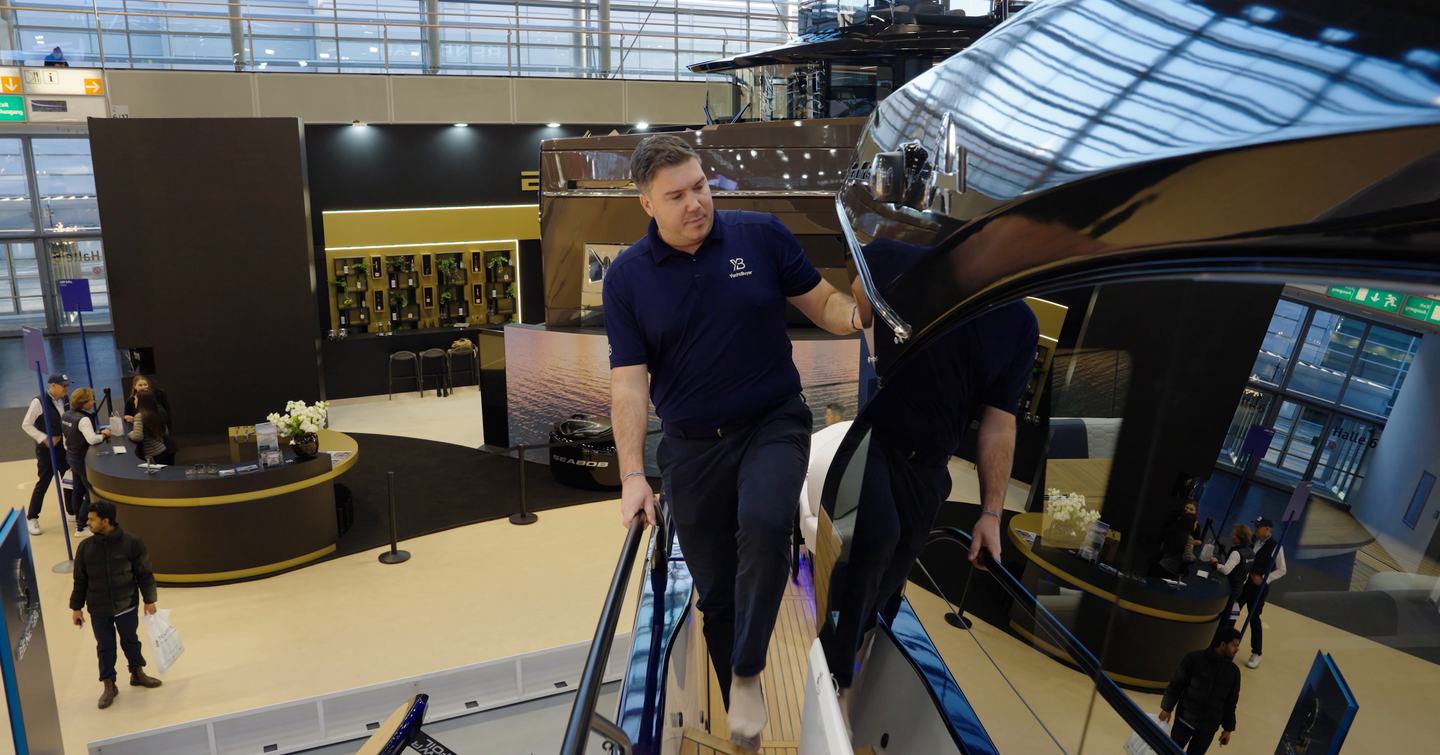
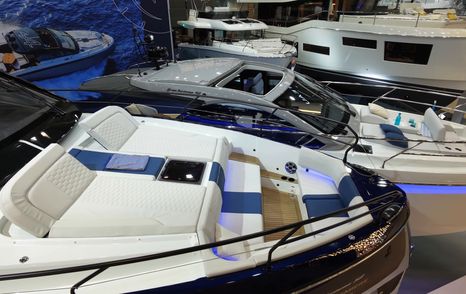
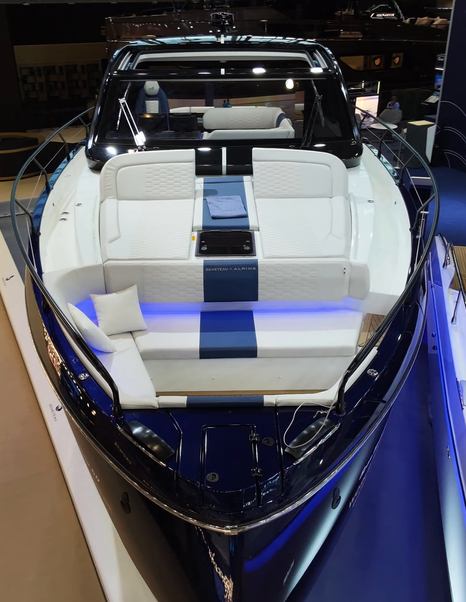
Once you're up front, the surprise is how sunken the bow seating feels. It’s not just a pad dropped on top. You sit down into it. It’s more like a bow rider layout than a typical European sunbed. The space is enclosed, safe, and comfortable. The U-shape gives backrests on all sides and lets people face inwards rather than spread flat. When the boat’s at rest or even trickling along, this is a good place to be. You catch the breeze, but you don’t get blasted.
There are cup holders, USB ports, and speakers built in. At night, the underlighting carries through from the rest of the boat, and the mood stays consistent. It’s a proper second social zone, not just a place to tan. You’re still in sightline of the cockpit, still close enough to talk, but it gives a bit of separation when the aft deck is busy.
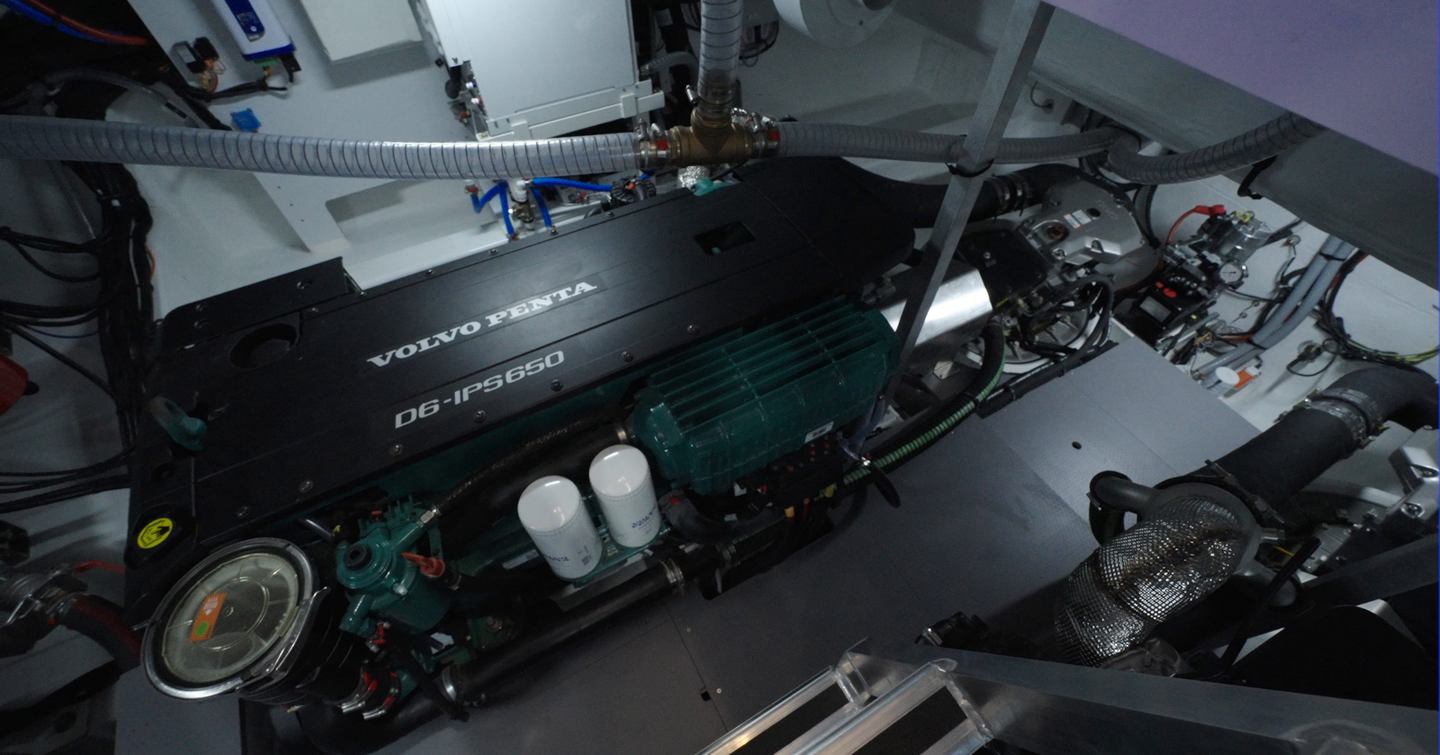
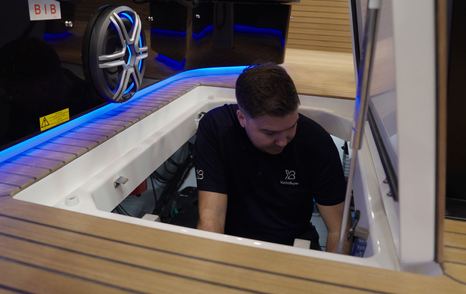
Access is through a hatch in the cockpit. It’s not huge, but it opens cleanly and drops you down between the engines. There’s a fixed ladder, and once you’re in, the layout is clear and uncluttered.
This was hull #1, and already the finish looked tidy. The mouldings were clean, wiring runs were clipped properly, and nothing felt like it had been rushed. It’s not a full standing-height space, but there’s enough room to move around and check what you need. You won’t be working down here for long stretches, but for quick maintenance and checks, it does the job.
The engines are twin Volvo Penta IPS 650s. The pods sit right aft, and the engines are slightly forward of them, which helps with weight distribution and service access. The space between the two units is open, so you can get down the middle without climbing over anything. There’s decent visibility to filters, fluid points, and intakes. Nothing felt buried.
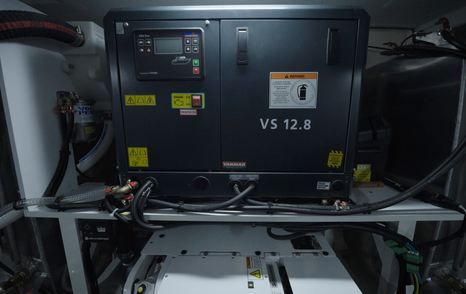
Just ahead of the engines you’ll find the generator and the Seakeeper gyro. Both are mounted cleanly and with space around them for access. The fuel tanks sit to port and starboard, helping balance the boat laterally. Everything major is where you’d expect it to be, and there’s enough clearance to reach all the standard service points without tools or contortion.
Base price starts at €950,000 excluding VAT. That gets you twin Volvo IPS650s with a joystick, the standard three-cabin layout, sunroof, and main systems. Add essential control upgrades like autopilot and extended joystick driving, and you're closer to €970,000 before choosing any major extras.
In the Alpine version, you get the dark hull paint, carbon helm, Alcantara wheel, Alpine logos, and ambient lighting inside and out. The helm seat and materials at the wheel are absolutely lovely, but it will add on €91,030 to the base price.
The Lounge pack adds €30,870 and includes the hydraulic platform, generator, second cockpit fridge, dishwasher, branded Villeroy & Boch tableware, and the electric cockpit table. The Comfort pack, slightly cheaper at €22,370, brings key upgrades to the galley, LED lighting, electric toilets, and the grill. The hydraulic platform is a must if you plan to carry a tender or swim off the back. It's €36,260, but you’re going to want this.
The Seakeeper 6 gyro costs €100,150, but it will make a massive difference at anchor. If this is your floating terrace, it needs to stay still. The Silent Boat pack at €30,030 adds solar panels and a lithium battery bank to run systems quietly without the generator. That includes charging an e-tender or running music and fridges in silence. Assisted docking comes in between €24,470-€27,290, depending on spec. Lumishore lighting adds another €30,390. The Fusion Apollo sound system, which syncs with the lights, is €8,140.
Our Verdict
In this sector, looks count more than most. The GT50 pulls at the right strings and could be one of the best-looking boats of the year. But it’s not just styling. Beneteau has put proper thought into how it works. This is a boat built for outdoor living. If you need full-season comfort or big interior volume, there are better choices at this length. But if what you want is deck space, water access, and a fast, stylish weekender to enjoy with family or friends, you won’t do much better than this.
Reasons to Buy
- Amazing cockpit
- Stylish design
- Practical deck spaces
- Tidy engine room
Things to Consider
- Single cabin is tight
- Lack of indoor seating
Looking to own a Beneteau Gran Turismo 50? Use YachtBuyer’s Market Watch to compare all new and used Beneteau Gran Turismo 50 Boats for sale worldwide. You can also order a new Beneteau Gran Turismo 50, customized to your exact specifications, with options for engine choice and layout configuration. Alternatively, explore our global listings of new and used boats for sale and find your perfect boat today!
Rivals to Consider
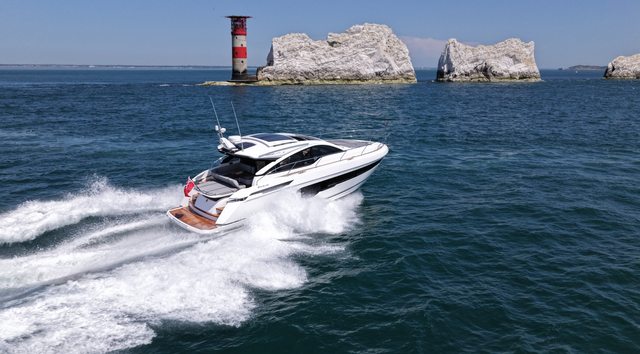
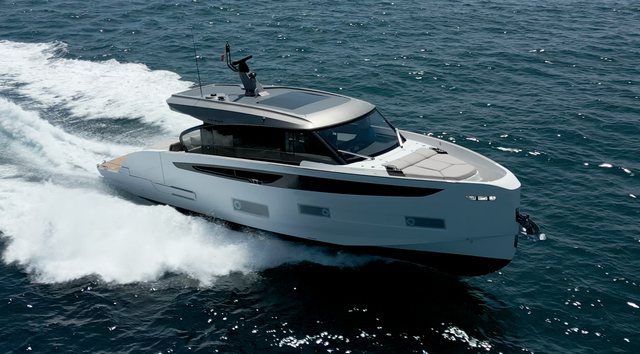
The Azimut Seadeck 6 is the closest match in spirit. It runs longer at 17.5m (57ft 5in) with a beam of 5.1m (16ft 8in), so it feels a class up in volume. Power comes from twin IPS 650s, same as the GT50, but Azimut pairs them with an onboard hybrid setup - lithium batteries, solar charging, and silent hotel mode for overnighting off-grid. The deck is fully modular, with a rear lounge that slides back and side terraces that drop wider than the GT’s. Interior fit-out feels more like a villa, and build quality reflects the price tag. You lose nothing on spec, but it’s heavier, slower to plane, and harder to run without crew. A big boat with a low profile.
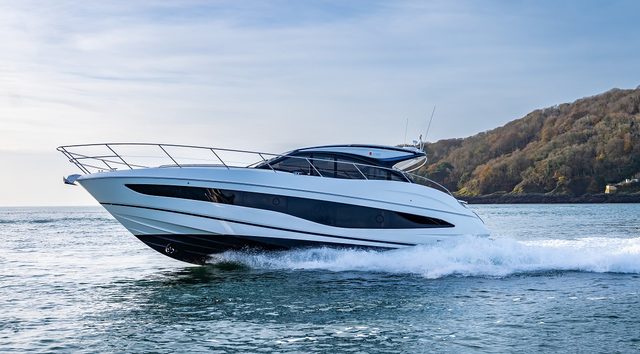
The Princess V50 is split across two formats - the V50 Open and the Deck Saloon version. Both sit at 15.5m (50ft 10in) with a 4.11m (13ft 6in) beam, so on paper the GT has the edge in space. The V50 doesn’t offer drop-down balconies or an aft beach club, but it’s tighter inside. The Deck Saloon gives you a fully enclosed main deck with better seating and more shelter. Power comes from IPS 650s or shaft drives, depending on version, and performance is excellent. Top speed touches 35 knots. The helm is spot on, visibility is good, and the whole setup feels polished. You trade away some outdoor freedom, but if you cruise in mixed weather, it makes more sense year-round.
At 13.5m (44ft 3in), the Galeon 445 HTS is shorter and narrower, but it uses its beam well. The real trick is Galeon’s modular cockpit - the sofa rotates to face aft, side balconies drop, and the galley sits half-up under the hardtop. That brings the social zones together in a way few boats this size manage. Power comes from twin Volvo D6s up to 440hp, and the drive is via sterndrives or shafts, not pods. Top speed sits around 30 knots but feels more urgent on a boat this light. You lose some refinement and polish, and the lower deck can feel tight, but in terms of usable deck and smart space, the Galeon holds its own. Best value in this list.
The Fairline Targa 50 GT is closest on spec. At 15.6m (51ft 2in) with a 4.32m (14ft 2in) beam, it shares the GT50’s footprint. IPS 650s are standard, giving a 32 to 34-knot top end depending on load. The cockpit is traditional without terraces or drop-downs, but the flow through to the saloon is clean and refined. Inside, the finish leans elegant and British, with solid cabinetry and a quieter design language than the Beneteau. The layout is more liveaboard focused. You get a full-beam midships master with proper headroom and ensuite, plus a decent guest cabin forward. It’s the more conventional choice - better if you cruise longer or stay aboard more often, but less flair on deck.
Considering a new boat? Explore Beneteau's entire current range to find the model that best suits your needs, and compare it with alternatives from competitors to ensure you make the perfect choice.
Specifications
- Builder Beneteau
- Range Gran Turismo
- Model Gran Turismo 50
- Length Overall 52' 4"
- Beam 14' 8"
- Draft(full load) 3' 10"
- Hull GRP
- Cabins 3
- Berths 5
- Yacht Type (Primary) Sportscruiser
- Use Type (Primary) Cruising
- Cruising Speed
- Max Speed
- Fuel Capacity 343 Gallons
- Fresh Water Capacity 106 Gallons
- Engine Model 2x Volvo Penta D6-IPS650
Beneteau Gran Turismo 50 Layout
-
Main Deck
-
![Main Deck Beneteau Gran Turismo 50]()
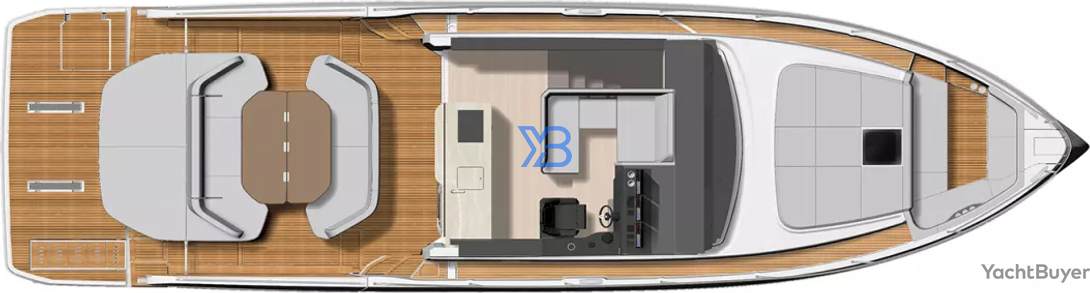
You can see by the size of the cockpit that this is a boat designed for life outdoors
-
Lower Deck
-
![Lower Deck Beneteau Gran Turismo 50]()
The owner's cabin is located forward, with two guest cabins amidships
Available Stock


Beneteau
Beneteau Gran Turismo 5052'ft | Gran Turismo 50 (Gen 2)
2026 M/Y noname
Features: Aircon, Joystick, Bow Thruster
Interested in a Gran Turismo 50?
NEW Build
Find your local dealer for a personalised, no-cost consultation
or just request
Brochures & Pricing
Used & In Stock
Looking for a ready-to-go Gran Turismo 50 or pre-owned options? Explore all inventory of the Gran Turismo 50 available worldwide