-
Guests
8
-
Cabins
5
-
Crew
13
| Length | GT | Built (REFIT) |
|---|---|---|
|
31.7m
|
1925 (1986) |
|
| Beam | Top Speed | |
| 5.55m | 12 Kts |
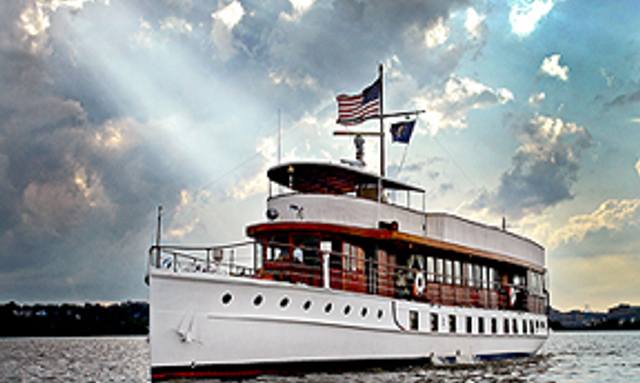
Delivered in 1925, Sequoia is a 31.7m (105ft) former presidential yacht built by Mathis Yacht Building. Her classic exterior design came from the drawing boards of John Trumpy.
Key Features
- Former U.S. Presidential yacht
- National Historic Landmark
- Used by nine presidents
- Original mahogany interior
Design & Construction
Designed around a semi-displacement wood hull and superstructure she features a 5.55m beam.
Exterior Design
Sequoia is a 31.7m (104ft) wooden motor yacht that reflects the proportions and craftsmanship of America's classic commuter yachts. Her long, continuous sheerline, gently raked bow, low freeboard and varnished mahogany deckhouses create a profile that changed very little throughout her presidential career, even as the yacht received practical updates for successive administrations.
Her dimensions also explain why she remained in service for so long. With a beam of just 5.5m (18.2ft) and a shallow 1.4m (4.5ft) draft, Sequoia could operate throughout the Potomac River, Chesapeake Bay and the Intracoastal Waterway, giving presidents access to cruising grounds that larger government vessels could not reach. Franklin D. Roosevelt eventually replaced her with the steel-hulled USS Potomac for official duties, but Sequoia continued to serve presidents because her size suited private meetings, fishing trips and informal entertaining.
The open boat deck remains one of the yacht's defining spaces. A seating area occupies the forward section beneath a removable awning, while the central funnel provides ventilation and separates the guest area from the aft deck. A single mast rises behind the funnel and a stairway on the port side links directly to the main deck. During her government service the boat deck also carried a lifeboat and life rafts without disrupting the yacht's clean profile.
On the main deck, the open foredeck retains its original windlass and Navy-pattern anchors, while the teak wheelhouse still houses the original helm and engine controls alongside modern navigation equipment installed during later refits. Wide side decks connect the wheelhouse with the aft deck, where a sheltered seating area became the setting for countless private conversations between presidents, diplomats and political leaders.
Unlike many historic yachts that have undergone extensive redesigns, Sequoia's exterior evolved through a series of practical modifications linked directly to the requirements of the presidents who used her. Roosevelt commissioned an elevator to accommodate his wheelchair, Kennedy enclosed the aft saloon, Johnson removed the elevator to create a wet bar, and later refits modernised engineering systems while preserving the yacht's original appearance.
Interior Design
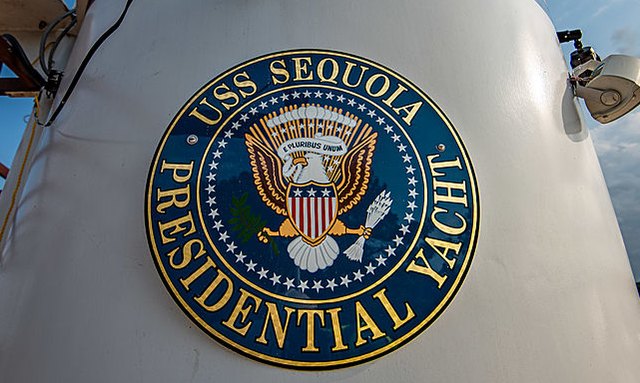
Sequoia's interior follows the traditions of early twentieth-century American yacht building, with varnished mahogany joinery, painted overheads and built-in cabinetry throughout. The original main saloon remains the social centre of the yacht, where the mahogany panelling, original 1925 dining table and period fittings survived decades of official service. During her presidential years the room also received carefully chosen decorative updates, including custom carpets bearing the Presidential Seal, antique wall sconces, naval artwork and furniture selected to echo the character of the White House without changing the yacht's underlying architecture.
The wheelhouse combines original craftsmanship with discreet modernisation. The teak helm, traditional wooden wheel and engine controls remain in place, while updated navigation displays and communications equipment allow the yacht to operate to modern standards. This balance between preservation and practicality appears throughout the yacht, with engineering systems renewed over time while historic features remain intact.
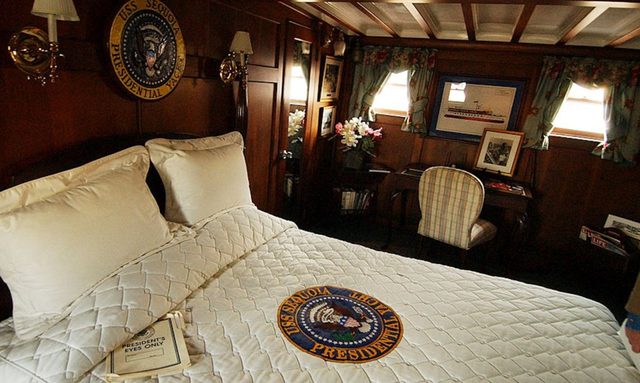
Several interior changes reflect the individual needs of the presidents who used Sequoia. Roosevelt's elevator allowed him to move between decks, Johnson later replaced it with a wet bar, Kennedy commissioned a specially designed bed to support his back, and Johnson enlarged the cabin door handles and lowered the shower floor to suit his height.
Accommodation
Sequoia accommodates up to eight guests in four staterooms, a layout that has remained well suited to private cruising despite the yacht's official role. The presidential stateroom occupies the forward section of the accommodation deck, where a walk-in cedar wardrobe and private bathroom provide considerably more space than was typical aboard yachts of similar size during the 1920s.
Three additional guest cabins occupy the aft section of the lower deck, including the former Secretary of the Navy's stateroom with twin berths and two further ensuite cabins. The captain's cabin sits close to the guest accommodation, reflecting the operational layout common aboard government yachts of the period.
Although modest by modern superyacht standards, the arrangement suited the way Sequoia was used. Presidents generally welcomed small groups of advisers, family members or visiting dignitaries so the yacht prioritised comfortable private cabins and generous communal spaces.
Performance & Capabilities
Sequoia was originally powered by twin 225hp Winton diesel engines that exhausted underwater to prevent soot settling on the decks, an unusual feature for the period. She later received twin General Motors 8V71 engines before a further repower in 1986 with Detroit Diesel engines, allowing the yacht to maintain her original service speed of around 12 knots while improving reliability.
Sequoia Yacht is not For Sale
Motor yacht Sequoia is not currently for sale. Explore all new & used yachts for sale globally powered by YachtBuyer’s Market Watch.
If you're the yacht owner, broker, or captain, please use the "Update Sales Info" link to report any changes to the sales information. Update Sales Info