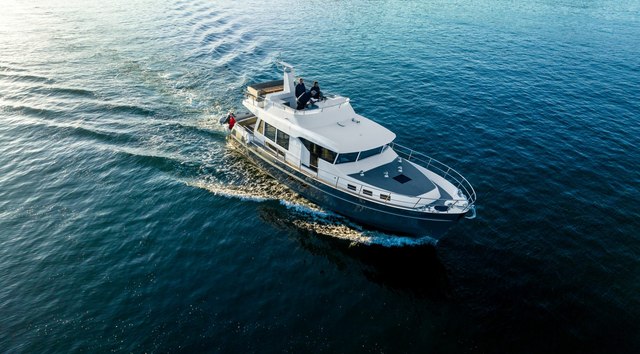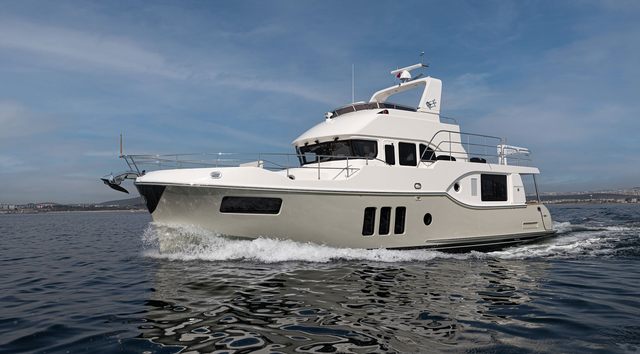
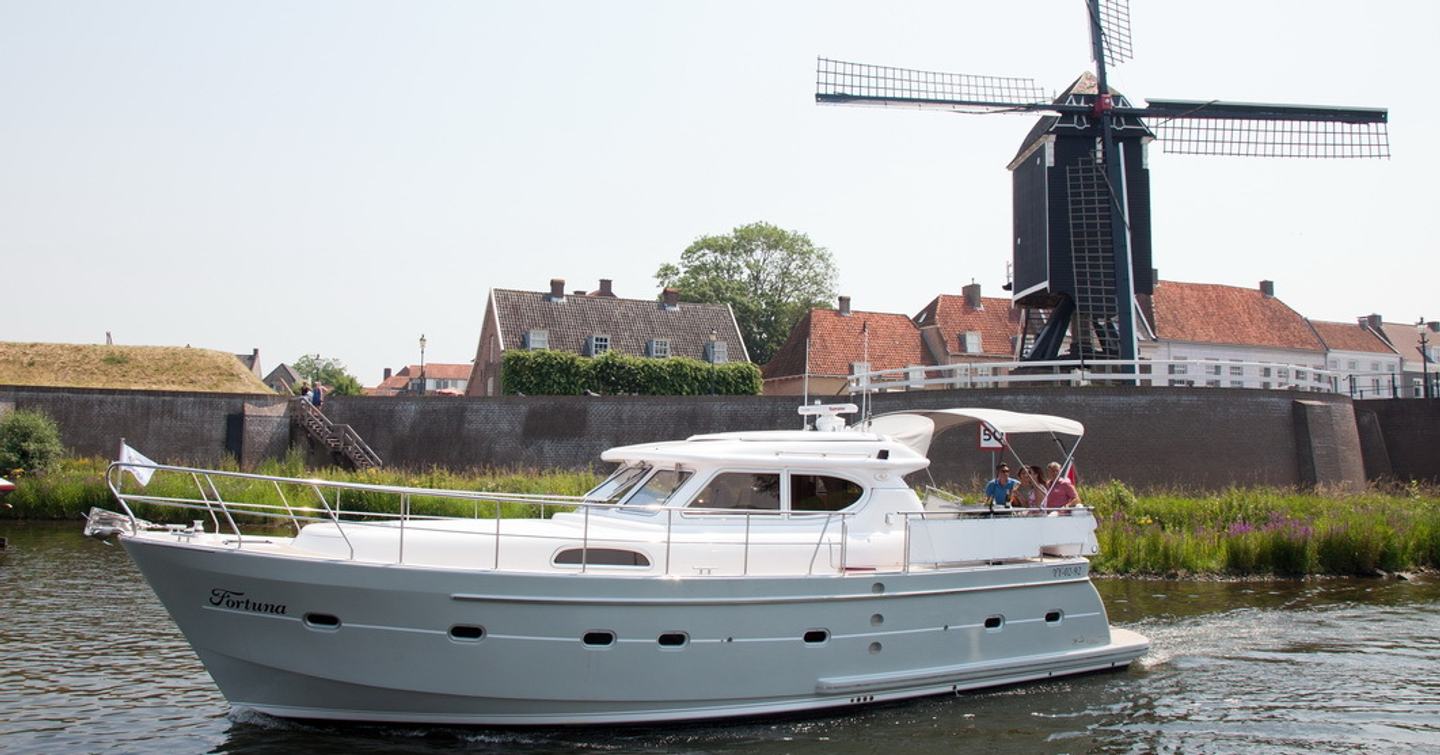
The Elling E4 is a 14.95m (49ft) cruising yacht built in the Netherlands and positioned as the flagship of Elling’s under-15m range. It has been in production since 2004, with around 350 examples built, and over time it has developed a reputation as one of the more unusual yachts in the long-range cruising market.
At first glance the E4 can appear slightly traditional compared with many modern motor yachts, yet that is largely by design. Elling has focused on refining the concept rather than reinventing it, making small updates over the years while keeping the core idea very much intact.
Elling E4
- LOA 14.95m
- Model Year 2025
- Cabins 3
- Max Speed 17 knots
- Status In Production
- Yacht Type Cruiser
- Use Type Weekending
Review Video
The Elling E4 begins with a very specific brief, and once you understand that brief, the rest of the boat starts to make sense. When Anton van den Bos developed the Elling concept in the late 1990s, the goal was to create a standard production motor yacht under 15m capable of crossing the Atlantic.
That brief shapes the entire boat. Staying under 15m affects the hull form, tankage, superstructure height, engine placement and accommodation plan, so the design ends up serving two very different environments. It needs the strength and range for offshore passages while also remaining practical for inland cruising, where bridge clearance and draft matter just as much as seaworthiness.
The whole E-Series was developed to meet CE Category A (Ocean) standards, meaning the boat is intended for conditions exceeding Beaufort Force 8 and waves above 4m (13.1ft). Elling pushed that philosophy further by designing the boat to be self-righting in the same way as a lifeboat.
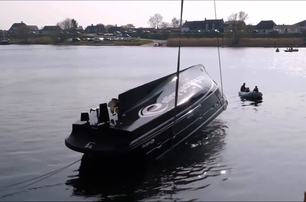
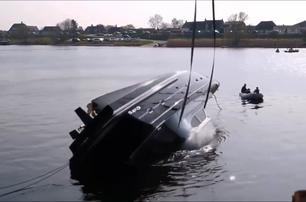
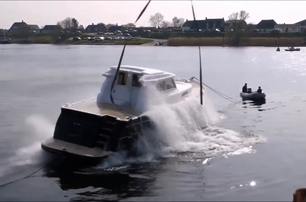
Yes, they actually flipped it
That capability was demonstrated publicly in 2014 when the yard rolled a production E4 through a full 360° capsize test, after which the boat returned upright and motored away, just as intended.
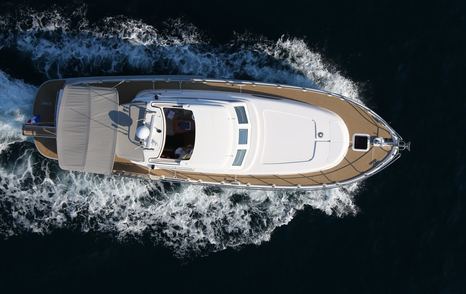
Once you understand this requirement, several design decisions fall into place. The E4 has no flybridge, and that is not a styling choice but a structural one. A flybridge places weight high in the structure and works against stability, so the boat instead uses a raised enclosed wheelhouse that gives the skipper excellent visibility while keeping the centre of gravity as low as possible.
That same decision helps in another area as well. With a compact superstructure, the overall air draft remains modest, and with the radar mast lowered, the E4 clears bridges with 3.45m (11.3ft) of height. The boat can therefore move between offshore cruising grounds and inland waterways without the compromises that taller passagemakers often face.
Despite being built in the Netherlands, the E4 is not a steel or aluminium boat. The hull is composite, formed from hand-laid E-glass reinforced throughout with Kevlar, known for its high tensile strength and impact resistance.
Elling applies that reinforcement across the entire hull rather than concentrating it only in vulnerable areas, so the structure is designed to absorb heavy impacts without catastrophic failure while also helping to dampen sound and vibration. Even the glazing reflects this approach, as the double-glazed windows are tested to withstand the pressure of a 10m (32.8ft) column of water, giving them the strength to cope with repeated blows in heavy seas.
The propulsion system follows a similarly practical philosophy. Instead of twin engines, the E4 runs on a single diesel installation, typically between 190hp and 480hp depending on specification. This simplifies maintenance while keeping machinery weight low in the hull.
Redundancy still matters, though, so the boat can be fitted with an auxiliary wing engine that runs on its own fuel supply and drives a separate saildrive and propeller. If the main engine stops because of contaminated fuel or a fouled propeller, the auxiliary engine provides an independent means of propulsion and allows the boat to continue its passage.

Noise and vibration reduction are also a major part of the engineering story. The drivetrain uses an Aquadrive thrust-bearing system, which separates propeller thrust from the engine mounts, and by doing so, it allows softer mounts that isolate vibration from the hull. Combined with extensive insulation around the machinery space, the aim is to keep the boat quiet even when running at higher cruising speeds.
All of these engineering decisions feed directly into the layout. The engine sits low in the centre of the hull while the accommodation is arranged around it, so owners sleep in a full-beam aft cabin, guests are placed forward, and the main living spaces sit between them. That arrangement creates a clear separation between cabins and social areas, which works well for extended cruising where people spend long periods on board.

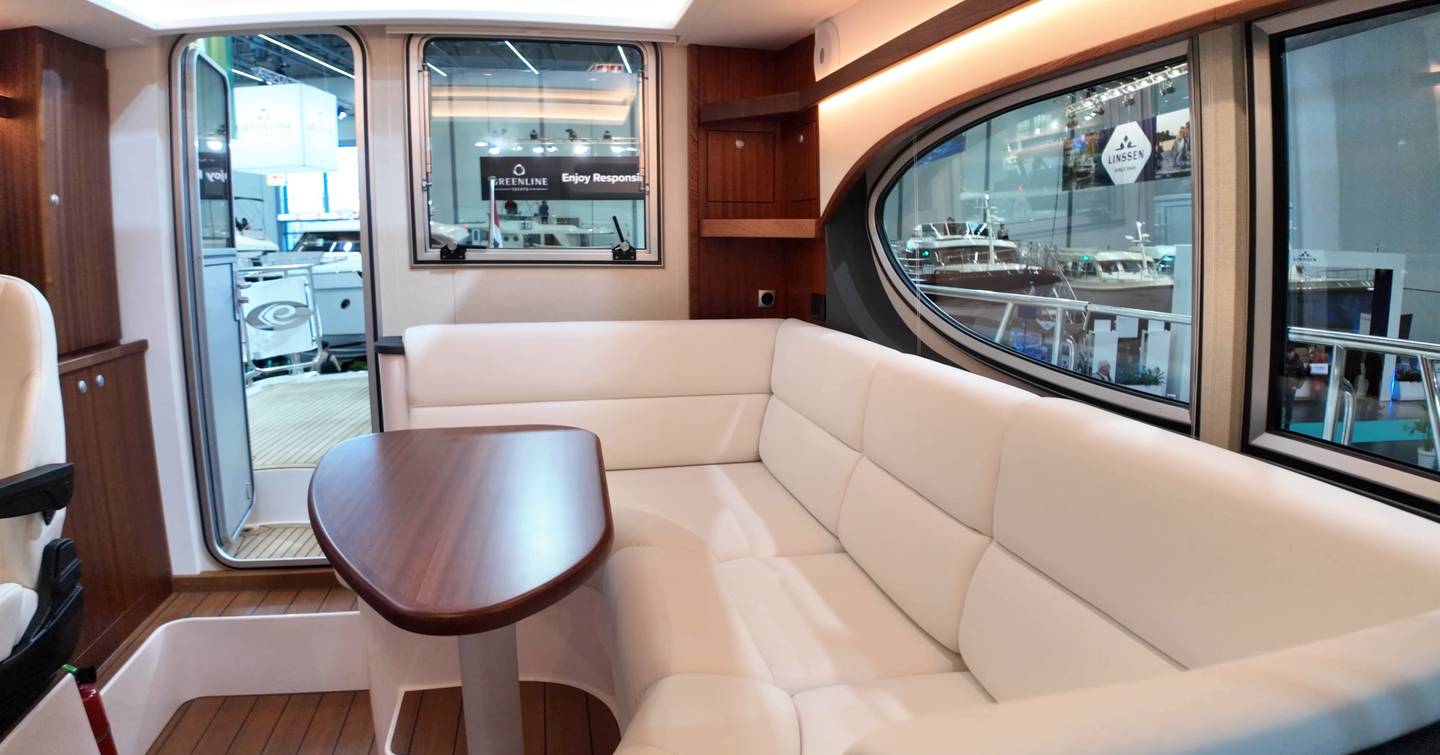
The Elling E4 raised wheelhouse layout is a defining part of the boat’s design. Rather than placing the helm on a flybridge, the E4 concentrates the main control position and seating area within this enclosed pilothouse, so both skipper and passengers sit slightly elevated with clear views forward.
Immediately behind the helm, there is a comfortable seating area that works as an internal dining space. It is a pleasant place to sit if the weather outside is less inviting, and because the seating is raised, passengers still enjoy an excellent view ahead. That small detail makes a real difference on passage, as being able to see the horizon helps when the boat is moving through big seas.
The arrangement also keeps passengers close to the skipper. Instead of being separated on another deck, guests remain part of the experience while staying protected inside the wheelhouse, which creates a relaxed and sociable atmosphere during longer journeys.
The space includes a few practical touches as well. Storage lockers are positioned above on both sides of the wheelhouse, providing convenient places for charts and small navigation items while keeping the seating area uncluttered.
Above the dinette is a large sliding sunroof built into the wheelhouse roof. The panel itself is solid fibreglass rather than glass, and it slides forward to open the space to the air when conditions allow. The design also has a practical benefit, as sliding the panel forward allows someone standing on the foredeck to clean it more easily.
Lower Saloon
Moving down from the wheelhouse, the Elling E4 opens into a lower saloon that feels quite different from the layouts found on many modern motor yachts. It is a configuration that has become less common over time, yet it works particularly well on a boat designed for long stays aboard.
Part of the reason it feels so comfortable down here is the connection to the wheelhouse above. At the forward end of the saloon, three windows look up toward the pilothouse, and one of them opens to provide a little extra ventilation. That connection allows natural light to filter down from above and prevents the space from feeling buried within the hull.
The sense of space is noticeable as soon as you step into the room. You can really feel the beam of the boat here, and headroom is generous throughout. Dutch builders tend to prioritise interior height (because the Dutch are, generally, quite tall), and the result is a saloon that feels open and easy to move around.
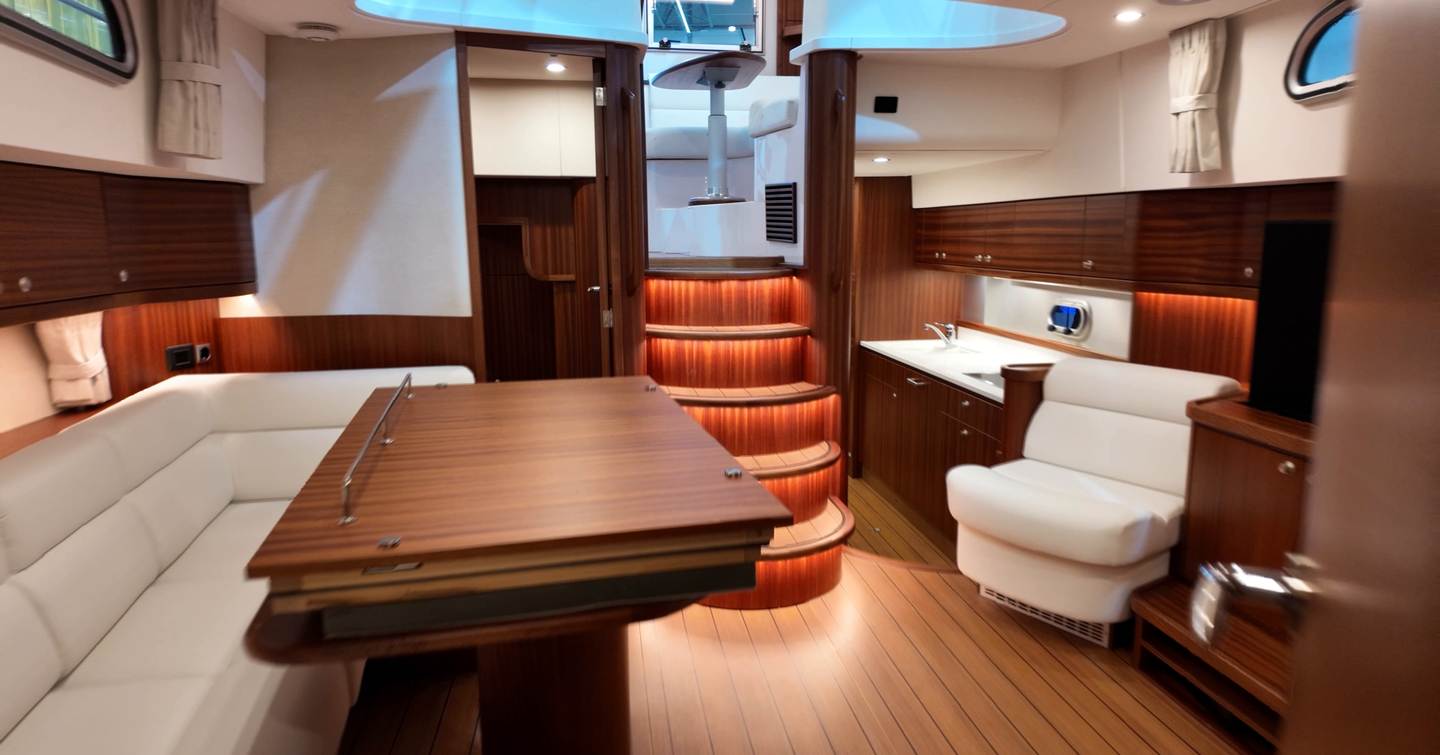

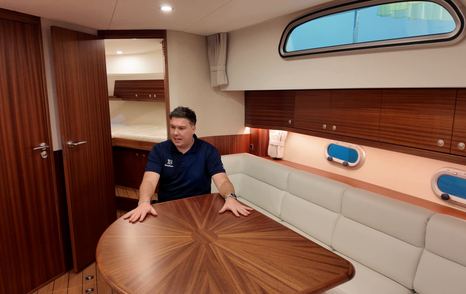
Seating is arranged in a comfortable lounge-style layout. A large sofa runs along one side of the space while a substantial table sits opposite with a television mounted nearby. What makes the area feel less like a typical boat saloon, though, is the pair of armchairs placed alongside the sofa. They create more of a living-room atmosphere where people can settle in, relax and spend time together.
It is easy to imagine this space in use during a long passage or an extended stay in harbour, with soft lighting, music playing and a drink on the table.
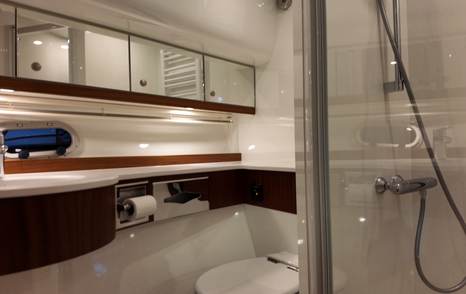
Moving forward from the lower saloon, the accommodation begins with a day head positioned just ahead of the companionway. The layout includes an electric toilet and sink, while a separate shower cubicle sits to one side. The shower floor has been dropped slightly lower into the structure of the boat, which increases the available headroom and makes it easier to stand upright while using it.

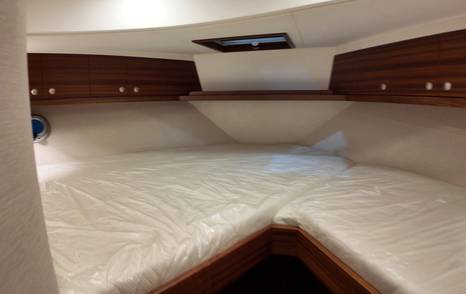
Beyond the bathroom is the forward guest cabin. The layout is deliberately flexible, with a small double berth on one side and a single berth on the other. That arrangement works well for a boat that is often used by a couple, because it allows friends or family to stay aboard without committing the space entirely to one large berth.
Storage is sensibly arranged throughout the cabin. Lockers run along the upper sides of the space, while a large hanging locker provides somewhere to keep clothes organised during longer trips.
Galley
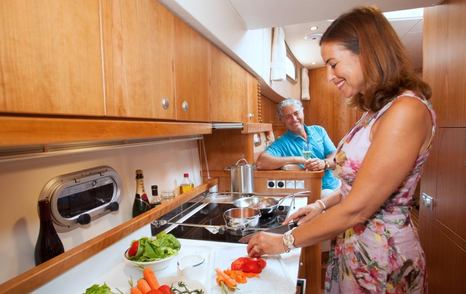
Positioned amidships, the galley sits close to the centre of the boat, and it is another part of the E4’s layout that reflects its long-distance cruising intentions. Rather than adopting the open-plan kitchen arrangements often seen on modern motor yachts, the Elling uses a more traditional configuration.
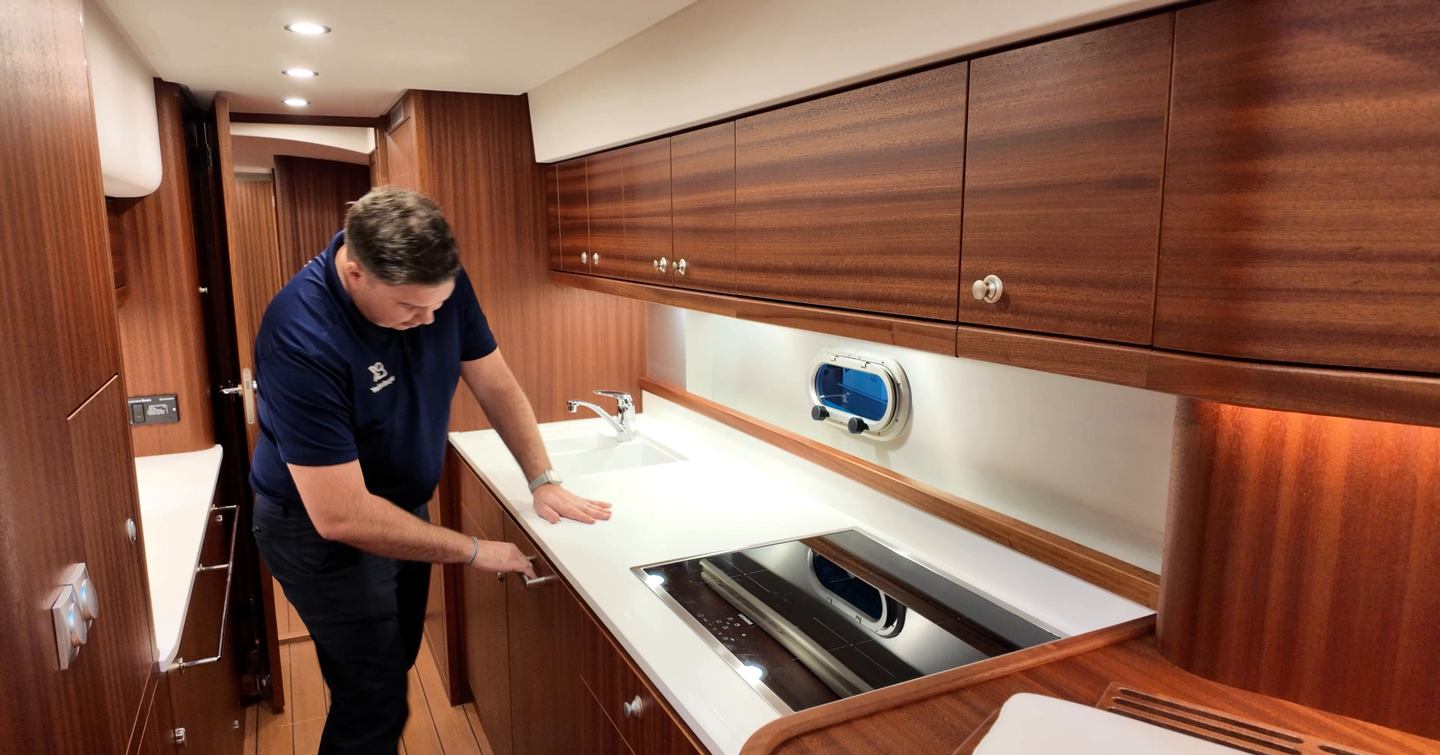
The galley itself is a proper seagoing layout, something you do not see very often on motorboats anymore. The working space is enclosed on both sides, so the cook can brace securely while preparing food if the boat is moving through a seaway. That kind of arrangement is common on sailing yachts, and it makes a great deal of sense on a yacht designed for extended passages.
Work surfaces run along both sides of the galley, providing a useful amount of countertop space while keeping everything within easy reach. Cooking is handled by an induction hob with an extraction unit fitted overhead, and there is also a dishwasher installed here. In keeping with the liveaboard philosophy of the boat, it is a full domestic-size appliance rather than a smaller marine version.
Refrigeration is positioned slightly higher up within the cabinetry, where both a fridge and freezer provide generous cooling capacity for longer trips. From a practical point of view, the galley works as a compact but efficient workspace where cooking underway should feel secure.
There is also a hatch set into the galley floor that provides access to the machinery space below.
Amidships Cabin
Moving back toward the middle of the boat, there is another cabin that reveals just how adaptable the Elling E4’s layout can be. This space sits between the forward guest cabin and the main living areas, and rather than committing it to one fixed purpose, Elling has designed it to be used in several different ways depending on the owner’s priorities.
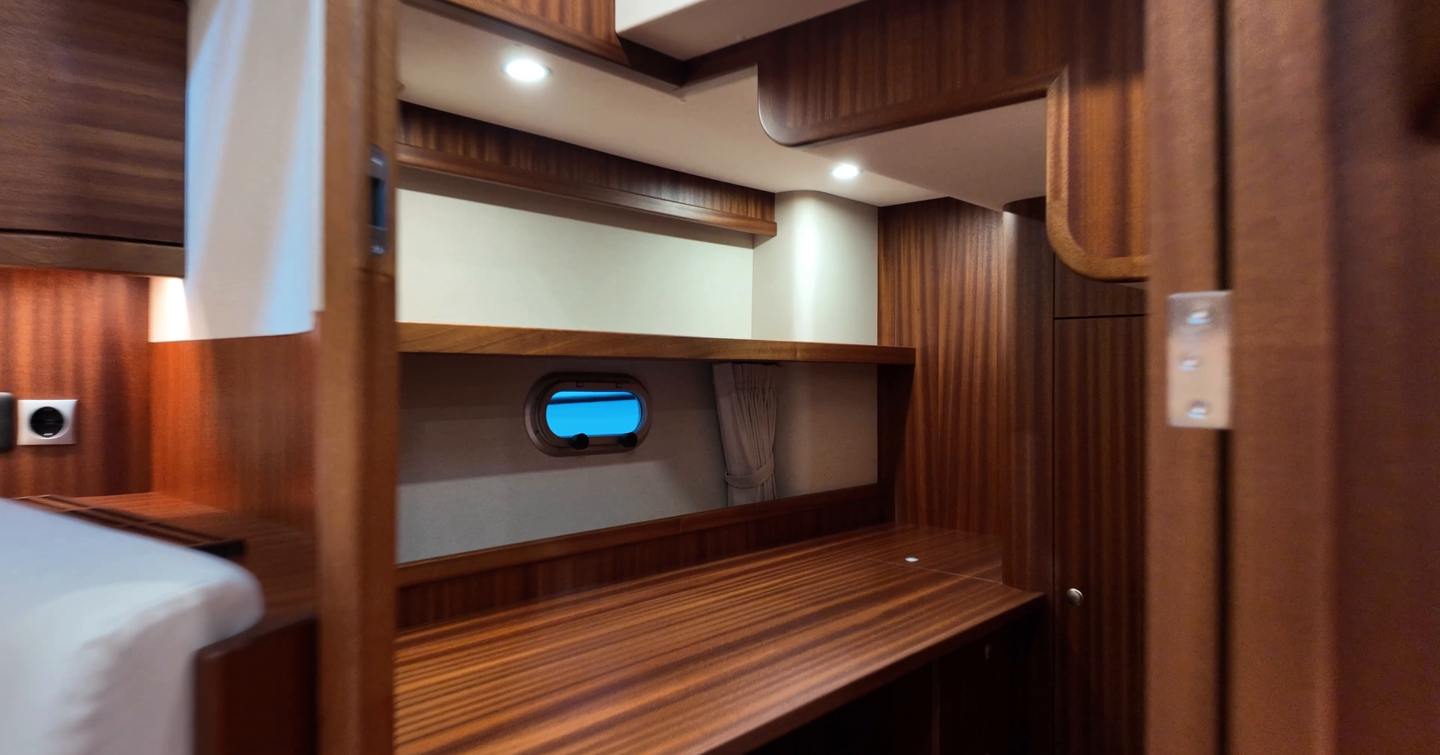
On this particular boat, the room has been arranged as an office, so it works as a quiet place to sit and manage work or plan the next leg of a journey. For owners spending extended periods aboard, that kind of space can be surprisingly useful.
The same area could easily be configured with an additional single berth if extra sleeping space is preferred, or it could be used as a practical utility room instead. A sink is already installed here, and because of that plumbing, the room can be converted into a small onboard laundry while still providing useful storage.
Owner’s Cabin
Continuing aft from the galley, the Elling E4 reveals another design feature that has become less common on modern motor yachts but still makes a great deal of sense on a long-distance cruising boat. It is a proper aft-cabin layout, and when you see it arranged like this, you do start to wonder why more builders have moved away from the idea.
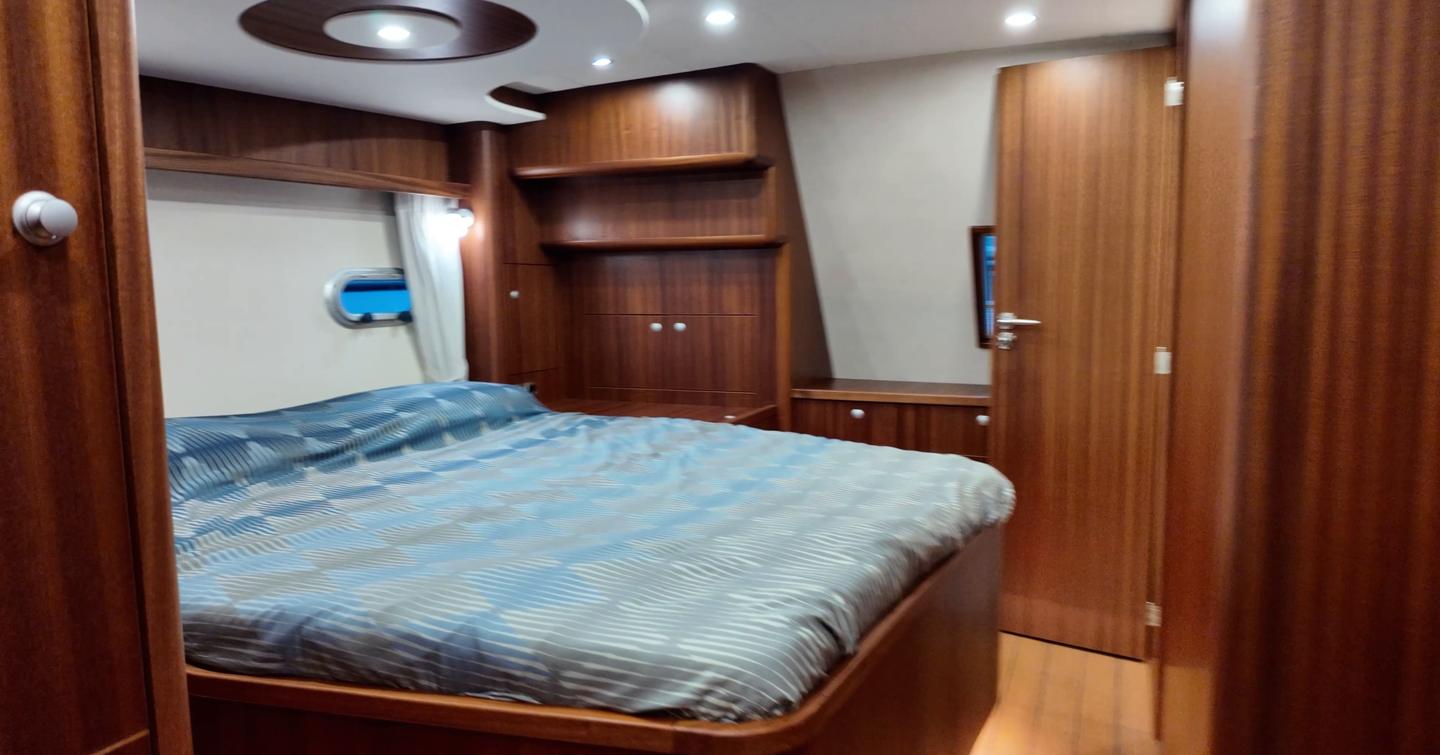
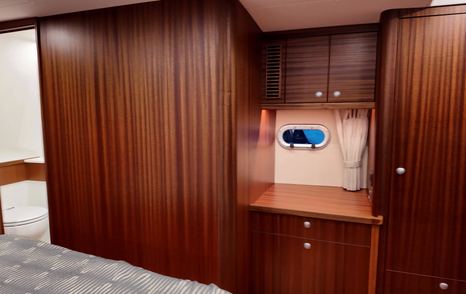
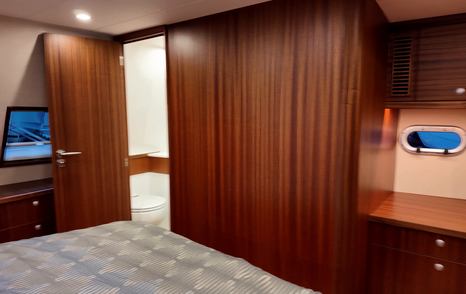
The owner’s cabin stretches across the full beam of the boat, so it feels spacious and well separated from the guest accommodation at the bow. A large bed sits at the centre of the cabin, and the surrounding furniture is all built in, creating a tidy and practical layout that suits extended stays aboard.
Storage is plentiful throughout the space. Lockers line the sides of the cabin while additional storage sits beneath the bed, so there is plenty of room for clothes and equipment during longer trips.
This cabin also provides convenient access to the machinery spaces. At the aft end, there is an inspection hatch that allows a quick look into the engine room, so routine checks can be carried out without leaving the interior. It is a simple but very practical feature because it allows owners to keep an eye on things while underway.
There is also access here to the auxiliary wing engine, which sits beneath the floor structure and drives its own propeller system. The arrangement reflects the E4’s focus on redundancy and long-distance cruising, while the positioning within the hull keeps the machinery weight low and central.
The owner’s private bathroom sits just forward of the cabin. It is not especially large, although it includes everything you need, with a separate shower cubicle, toilet and sink all contained within the space.
Arranging the accommodation in this way also helps maintain privacy on board. With the owner’s cabin positioned aft and the guest cabin placed forward, the two sleeping areas are separated by the galley and saloon in the middle of the boat, so everyone has their own space.
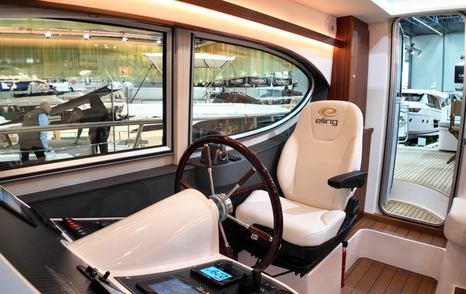
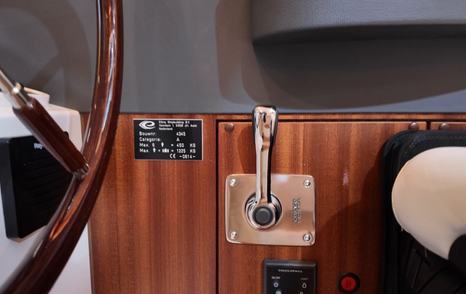
The helm station sits forward in the wheelhouse and is arranged with long passages in mind. It is a focused driving position with everything centred around a large steering wheel and a supportive suspension helm seat, the sort of setup designed to be comfortable when the boat is travelling for hours at a time.
Visibility from here is excellent. The raised pilothouse position gives the skipper a clear view forward and out to the horizon, while the surrounding windows keep the helm bright and open without exposing the crew to the elements.
The main display screen sits slightly further forward on the dashboard rather than directly in front of the wheel, though it can be controlled remotely from the helm seat. That arrangement allows the skipper to adjust settings without leaning across the console, which is particularly useful when the boat is bouncing around in big seas.

From this position, the E4 begins to feel like a traditional passagemaker, and in some ways it could be described as a Dutch take on yachts such as a Fleming or a Nordhavn. Those boats are often happiest cruising steadily at displacement speeds, and the Elling is equally comfortable running economically at around 8 knots, where it can achieve a range of roughly 1200 nautical miles. The difference is that when conditions allow, the E4 can also increase pace, reaching speeds in the region of 17 knots.
Sitting at the helm, it is easy to imagine the boat pushing through a head sea with spray occasionally passing over the windscreen, while inside the wheelhouse, the skipper remains well protected. The combination of good visibility, supportive seating and straightforward controls creates a helm position designed for covering long distances in comfort.

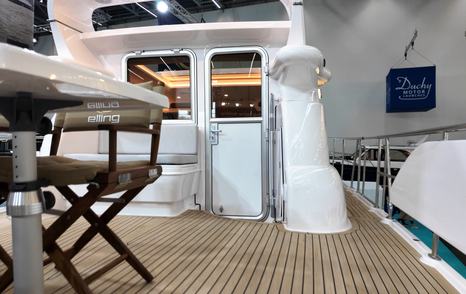
As this is an aft-cabin design, the cockpit forms the main outdoor living space on the Elling E4, and it sits directly above the owner’s cabin. That arrangement creates a generous deck area for a boat under 15m, while the wheelhouse structure forward provides useful shelter when the boat is underway.
At the stern, there is a fixed bathing platform which works as the main boarding point, and it can also be used for carrying a tender. Elling suggests launching with a crane or a passerelle, and there is enough room here for something like a Williams jet tender if owners want to travel with a proper runabout.

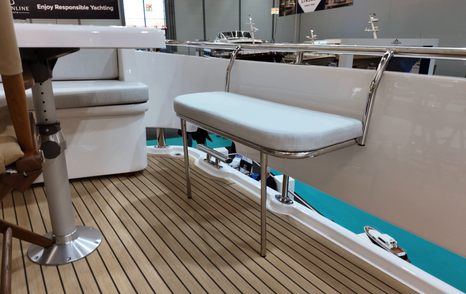
Seating is arranged around the cockpit with a transom bench and a small perch in the corner that Elling calls the harbour seat, a spot designed for sitting with a drink and watching the world go by.
The idea is simple but clever, because when the boat is underway, the seat cushion lifts away and the space beneath becomes a practical fender basket. It is an easy place to store lines and fenders while cruising, then once the boat arrives in harbour, the seat drops back into place and becomes part of the cockpit seating again.
The overall layout works well as a social space, while the wheelhouse structure ahead provides a high level of protection. In rougher conditions, it would likely be one of the more comfortable places to sit outside, sheltered from wind and spray.

Side Decks & Foredeck
Most Elling E4s are run by two people and quite often by a single owner, so movement around the deck has been designed to be straightforward and secure. From the cockpit, there is easy access along the side deck with high guardrails for support, and a sliding side gate opens in the bulwark with built-in steps that make it easier to step ashore onto high quays or move through locks.
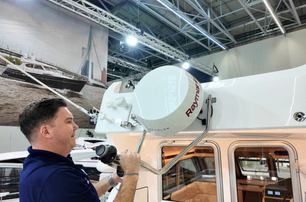
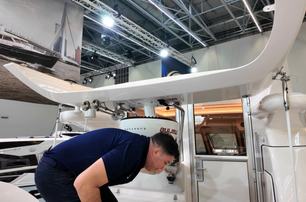
One of the small updates on the latest version of the E4 concerns the radar mast. Earlier boats used an integrated mechanism, whereas the newer design has a manually operated folding arch. A simple locking pin is removed, and the mast can then be lowered by hand, avoiding hydraulic or electric systems and keeping the mechanism straightforward. Once folded, the air draft drops to around 3.45m (11.3ft), which is particularly useful for owners cruising inland waterways where low bridges are common.
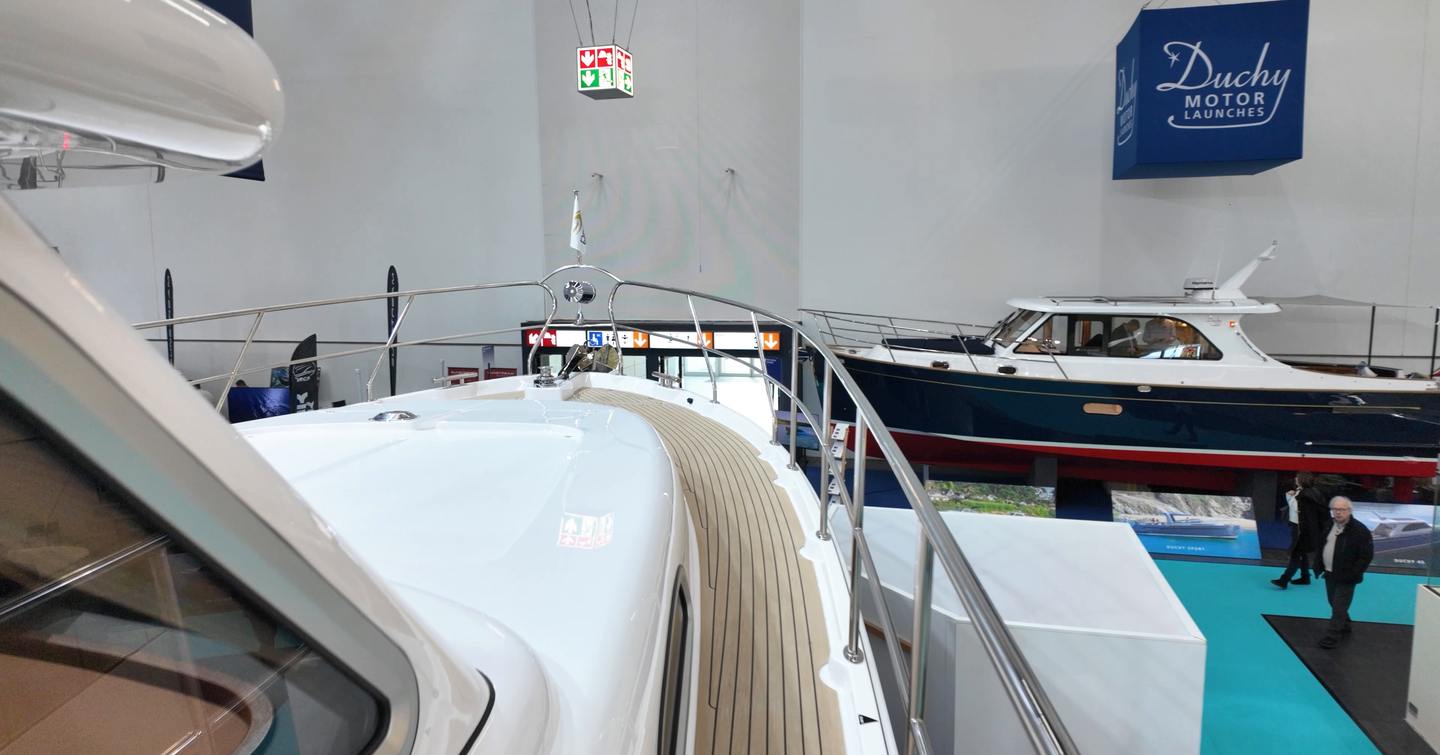

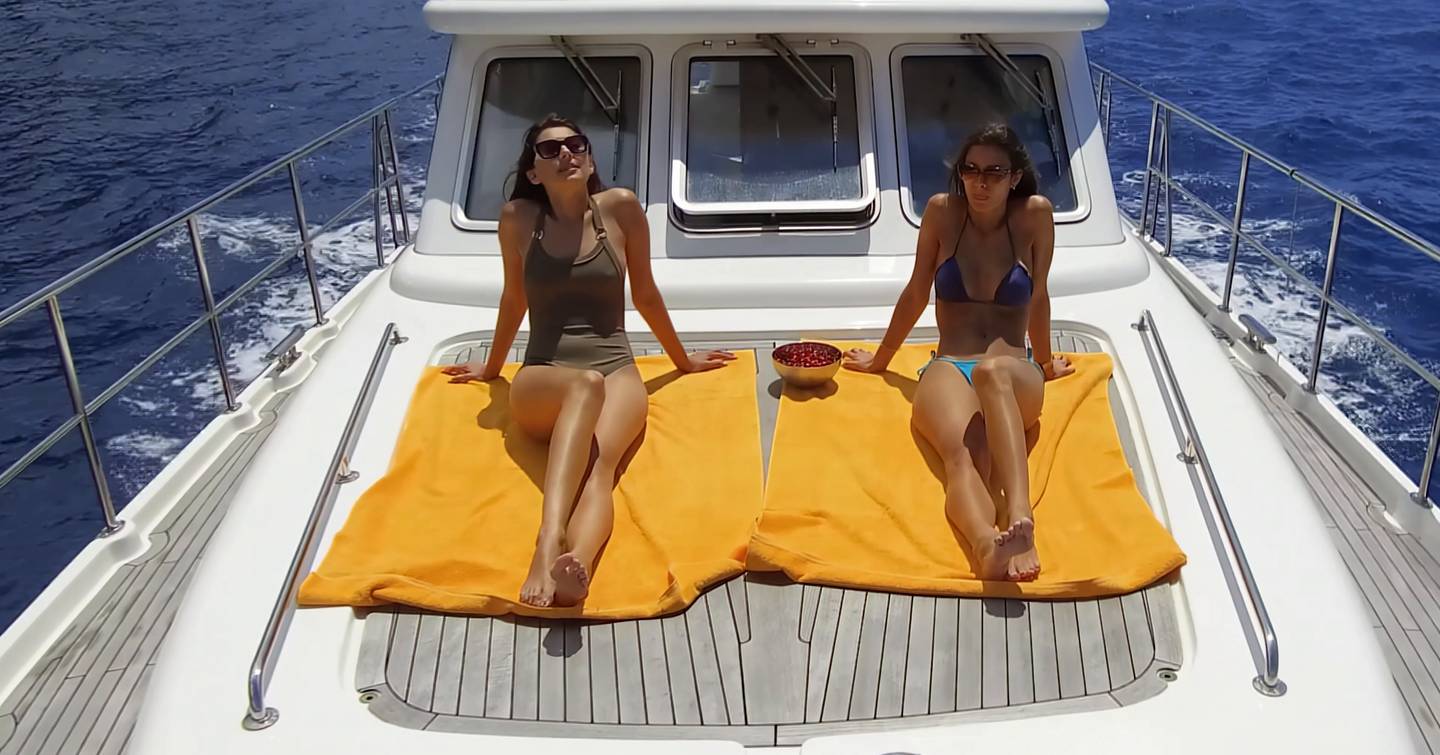
The foredeck itself is fairly simple and functional. It is primarily a working deck, although owners can add sunbathing cushions here if they want somewhere to relax while at anchor.
There is also a neat seating feature at the bow. When the boat is in harbour, a small backrest can be lifted into position to create a perch right at the front of the boat, an enjoyable place to sit with a drink and watch the harbour activity. When it is time to get underway, the seat folds away flush into the deck so the foredeck returns to a clean working surface.
Right forward sits the anchor arrangement. The windlass and chain locker are neatly housed beneath the foredeck hatch with straightforward access to the chain, and a large spotlight mounted on the bow provides powerful illumination when approaching an anchorage or harbour entrance at night.
Engine Room
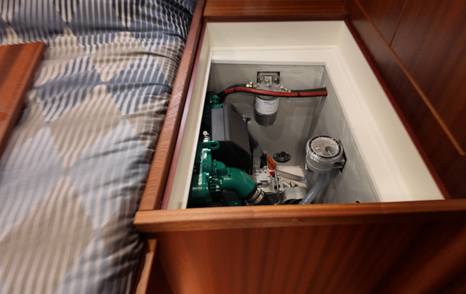
The main engine sits low in the middle of the boat, and it can be reached through inspection points within the interior. From the owner’s cabin, it is possible to open a hatch and take a quick look into the engine room, which makes routine checks easy to carry out while the boat is underway.
The primary propulsion unit is a Volvo Penta D6 producing around 480hp. It is a compact installation for a yacht of this size, and because there is only one main engine, the surrounding space remains relatively uncluttered. That simplicity also makes the engine easier to service, as key components such as the dipstick and raw water strainer are accessible without needing to reach across the machinery.
For more in-depth work, Elling has created a seam in the sofa in the wheelhouse so the engine can be fully removed/replaced if needed.
Access improves further when the main hatch is opened. With the cover lifted away, the engine sits clearly within the centre of the space, so day-to-day checks can be carried out easily, and there is enough room around the installation to work on the equipment if necessary. The generator is positioned nearby within the machinery space, contributing to the boat’s onboard power supply during longer passages.
Because the engine is located close to the accommodation areas, Elling places considerable emphasis on insulation throughout the surrounding structure. The machinery spaces are heavily soundproofed, which helps reduce noise and vibration within the cabins and living areas.
Alongside the main propulsion system, the E4 also carries an auxiliary wing engine. This secondary unit produces around 30hp and operates independently with its own propeller system, so it provides an alternative means of propulsion if the primary engine becomes unavailable, albeit at a 6-knot cruising speed.


Underwater Gear
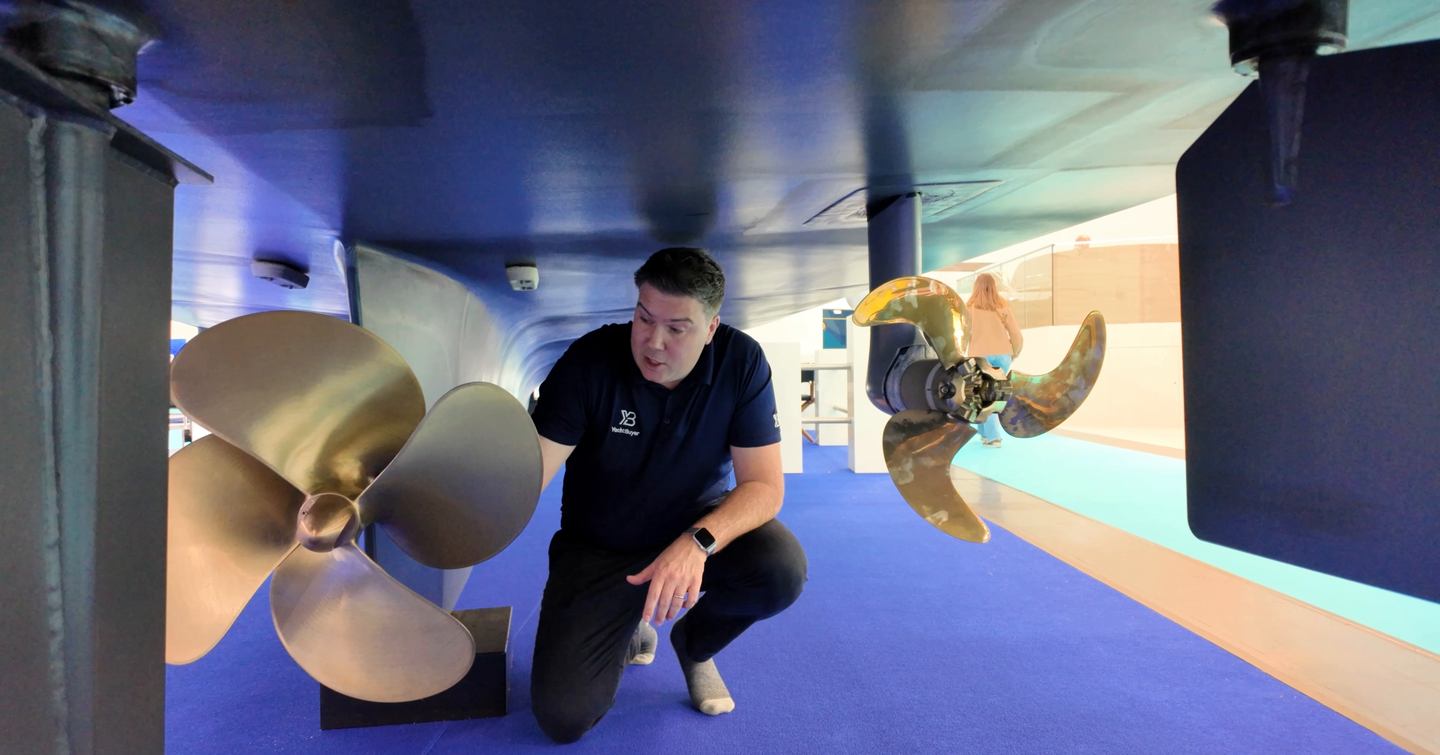
The main drive follows a straightforward layout with a central shaft turning the primary propeller, and a substantial rudder positioned directly behind it. This simple arrangement provides the boat’s main steering control while running under normal power, and it remains a dependable setup for a cruising yacht of this type.
Alongside the main propulsion line sits the auxiliary system. The wing engine drives its own saildrive unit with a separate propeller and fuel supply, so it operates independently from the main shaft. Because the two systems are separate, the boat can still make progress if the primary propulsion system becomes unavailable.
One particularly interesting detail is the additional rudder fitted for this auxiliary drive. On many boats, a wing engine simply provides propulsion while relying on the main rudder for steering, but here Elling has installed a second rudder dedicated to the saildrive. That means the boat retains steerage even if the main propulsion gear were compromised.
The auxiliary engine itself produces around 30hp, which is enough to move the boat at roughly 6 knots. While that is not intended for normal cruising, it provides a practical way to continue the journey or reach a safe harbour if required.
The stabilisation system is interesting too. Rather than using a pair of conventional fins, the E4 employs a rotating cylinder mounted along one side of the hull. When the system is not in use, the cylinder sits tucked beneath the hull, and when deployed, it swings outward and begins rotating, helping to steady the boat as it moves through the water.
The base price of the Elling E4 is €935,201 excluding VAT, with the boat we toured priced at €1,118,142 ex VAT, which in our minds feels good value for a comfortable liveaboard that is so capable.
Our Options & Pick
Most customers will tick the Ultimate package, which includes items like Fliexiteek, a bimini, rear view camera, generator, lithium battery bank, washer/dryer, dishwasher and a ceramic hob.
Additionally, central heating (€15,261) for those in colder climes will be a good addition, and equally, air conditioning (€34,812) will make life in warmer cruising grounds much more palatable. The convertible utility space/office adds a lot of flexibility to the layout for €3,565.
Considering this boat's cruising ability, we'd go big on the navigation equipment with items like the 12in Raymarine Axiom MFD (€8,152), autopilot (€6,026), AIS (€1,080) and if you're going to be handling it solo or as a couple, the second docking station is a good idea (€4,500).
Equally, stabilisers are a must-have, if expensive (€48,000) option, on a boat with such cruising intentions.
Our Verdict
There may be plenty of newer and flashier boats around, but the Elling E4 stands for something slightly different. It is a yacht built around a very clear idea of how a cruising boat should work.
The layout is a good example of that thinking. The raised wheelhouse, proper lower saloon, seagoing galley and full-beam aft owner’s cabin create a layout that feels practical for spending long periods on board, and when you see it arranged like this it is easy to understand why the concept has endured.
And when you consider how capable it is for a yacht of this size, the Elling E4 starts to look like remarkably good value.
Reasons to Buy
- Very seaworthy
- Full-beam aft owner’s cabin
- Excellent range at 8 knots
- Self-righting!
Things to Consider
- Styling feels dated
- Radar arch heavy to lower
Looking to own a Elling E4 ? Use YachtBuyer’s Market Watch to compare all new and used Elling E4 Boats for sale worldwide. You can also order a new Elling E4 , customized to your exact specifications, with options for engine choice and layout configuration. Alternatively, explore our global listings of new and used boats for sale and find your perfect boat today!
Rivals to Consider
Within Elling’s own lineup the E-Series follows a clear progression: E3 → E4 → E6. The E3 and E4 share the same core platform, both designed as CE Category A cruising yachts with a relatively shallow draught and modest air draft so they can operate offshore while still navigating inland waterways.
The Elling E3 measures 13.80m (45.3ft) in length with a 4.25m (13.9ft) beam and 1.20m (3.9ft) draught, while the E4 stretches that platform to 14.95m (49.0ft). The extra length translates into roughly 4m² (43.1ft²) more cockpit space, and the E4 also gains a second head with a separate shower serving the owner’s cabin, which makes the boat noticeably more comfortable for longer stays aboard.
At the other end of the scale sits the Elling E6, which moves the concept into a very different size category. At 19.95m (65.5ft) with a 5.40m (17.7ft) beam and a draught of 1.50m (4.9ft), it carries far greater internal volume and a much larger fuel capacity of 5,000 litres. Elling quotes a range of around 2,500nm at 9 knots with a Volvo Penta D13 producing 900hp, although the E6 no longer sits within the under-15m design constraint that defines the E4’s identity.
The Fleming 55 occupies a similar long-range cruising category, although it is a noticeably larger yacht. The current model measures 16.99m (55.7ft) in hull length with a beam of 4.88m (16ft) and a draught of 1.52m (5ft), and it typically runs twin 500hp Cummins engines. Fleming quotes a range of around 2,000nm at 8 knots, while top speed sits around 18 knots. Both the Fleming and the Elling place a strong emphasis on noise and vibration reduction, often using Aquadrive systems to isolate the driveline. Where the Elling separates itself is in its packaging: the E4’s 1.2m draught and 3.45m air draft make it easier to combine offshore cruising with inland waterways.
The Nordhavn N51 approaches the passagemaker idea from a different angle. At 15.47m (50.8ft) long with a beam of 4.78m (15.7ft) and a draught of 1.45m (4.8ft), it sits close to the E4 in length but focuses almost entirely on displacement cruising. With twin 160hp John Deere engines the N51 typically cruises around 9 knots and has a published range of about 3,000nm, supported by fuel tanks holding around 5,489 litres. In simple terms the Nordhavn prioritises maximum range at modest speed, while the Elling offers a dual-mode approach, combining economical displacement cruising with the ability to reach speeds in the mid-teens when required.
Considering a new boat? Explore Elling's entire current range to find the model that best suits your needs, and compare it with alternatives from competitors to ensure you make the perfect choice.
Specifications
- Builder Elling
- Model Elling E4
- Length Overall 14.95m
- Beam 4.25m
- Draft 1.2m
- Hull GRP
- Cabins 3
- Berths 5
- Yacht Type (Primary) Cruiser
- Use Type (Primary) Weekending
- Cruising Speed
- Max Speed
- Fuel Capacity 1,500 Litres
- Fresh Water Capacity 850 Litres
- Engine Model 1x Volvo Penta D6-480
- Engine max range (speed type) 1500 (nm)
Elling E4 Layout
-
Above
-
![Above Elling E4]()
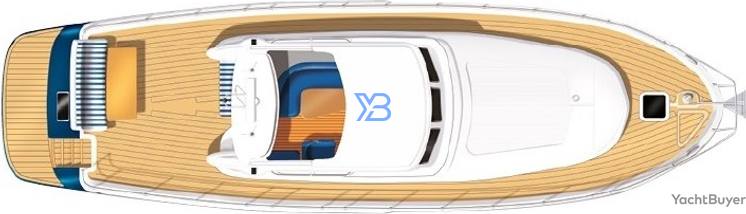
The main deck is linked all the way around without any steps
-
Lower Deck
-
![Lower Deck Elling E4]()
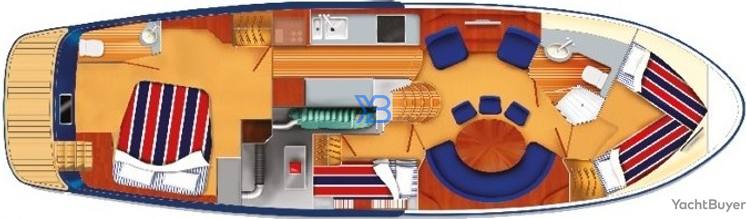
With the cabins at opposite ends of the boat, privacy is excellent
Interested in a Elling E4?
NEW Build
Find your local dealer for a personalised, no-cost consultation
or just request
Brochures & Pricing
Used & In Stock
Looking for a ready-to-go Elling E4 or pre-owned options? Explore all inventory of the Elling E4 available worldwide