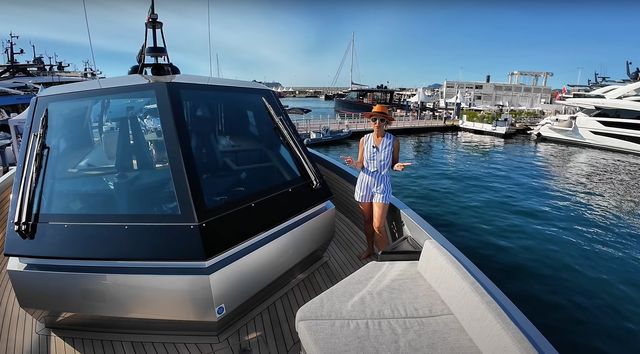
At 21.5m (70.5ft), this semi-displacement cruiser links the owner’s cabin directly to the aft deck, reshaping the traditional cockpit-master relationship. The result is a four-cabin platform that prioritises volume and water access over 30-knot performance figures.
So, instead of competing on outright pace, the S07 competes on layout. The aft master changes how the stern works, while the wide beam supports excellent volume for guest accommodation, and that combination makes it a deliberate alternative to more conventional 70-footers. Is this enough to push buyers towards a lesser-known brand?
Manda S07 Berlinetta
- LOA 21.5m
- Model Year 2025
- Cabins 4
- Crew 2
- Max Speed 23 knots
- Status In Production
- Yacht Type Sportsboat
- Use Type Cruising
Review Video
Italian brand Manda Yachts builds a compact range centred on its S series, and the S07 is its 21.5m (70.5ft) platform in the 70ft bracket. It is offered as the open Spider and this enclosed Berlinetta, with both versions sharing the same semi-displacement hull while differing in how they are used. The Berlinetta is the fixed-roof, fully enclosed interpretation, so it is aimed at year-round cruising with a splash of style.
The exterior design, concept and naval architecture come from Ceccarelli Yacht Design, while the interior is by Dragoni Design Lab. Dragoni has also shaped the larger Manda S09 as well as the Solaris Power 70 Long Range, so the S07 is within a broader thread of contemporary Italian interior architecture.
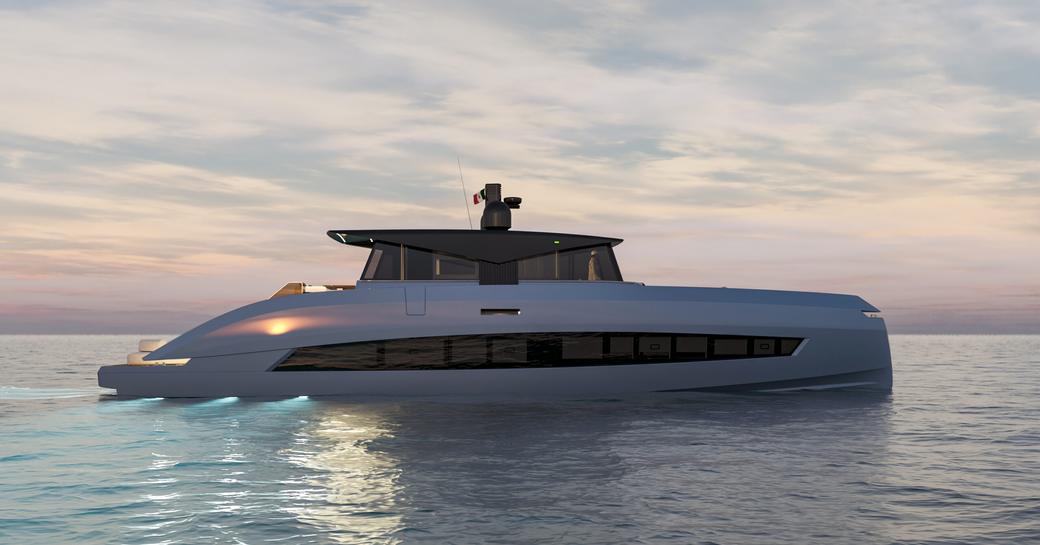
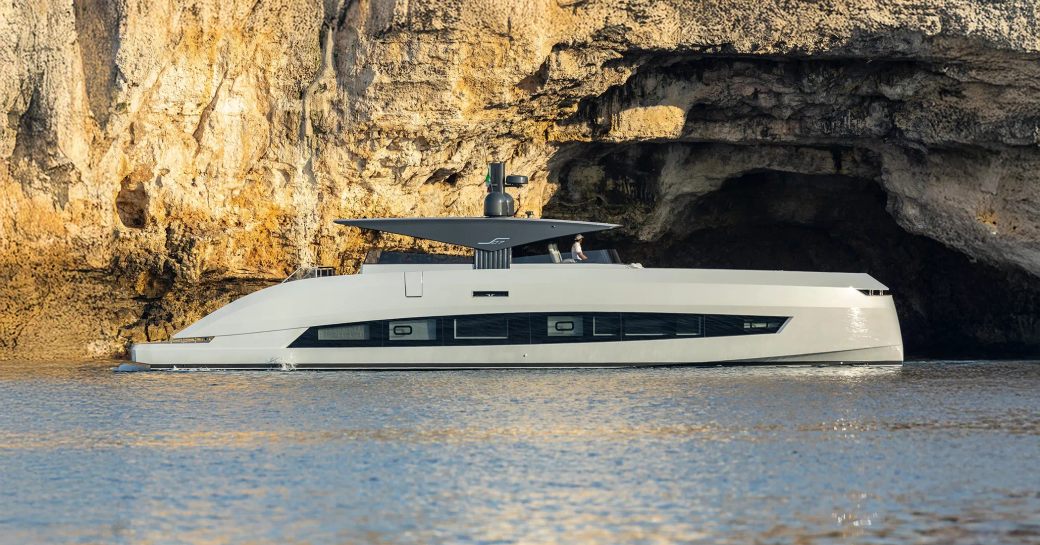
The defining move on the S07 Berlinetta is the layout. The engine room sits beneath the aft platform rather than under the saloon so that the stern can be given over to accommodation. The owner’s cabin occupies that space, and a sliding glass door links it directly to the aft deck. As a result, the traditional separation between cockpit and master suite is removed, and the aft deck becomes physically connected to the owner’s living area.
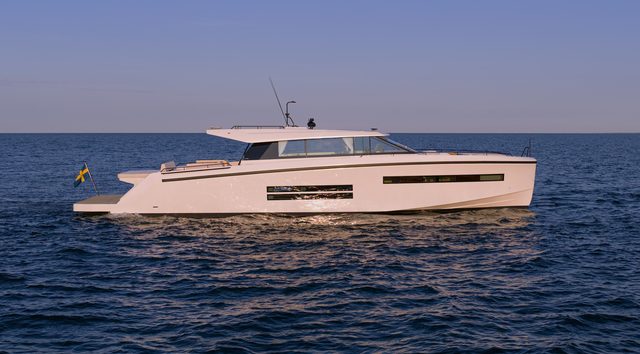
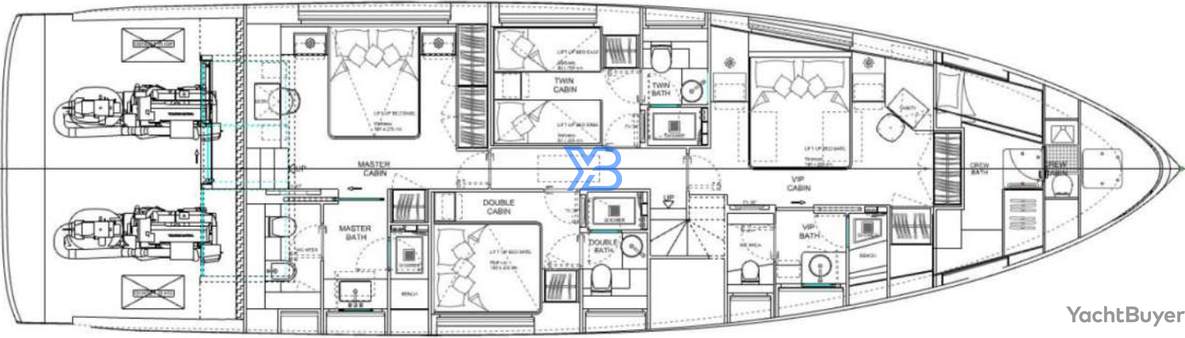
The hull is semi-displacement in form, with a maximum beam of 6.1m (20ft) and a draft of approximately 1.5m (4.9ft). That width provides substantial internal volume within a 21.5m envelope, while the hull form favours cruising stability and efficiency over high top-end speed. The arrangement below deck is made possible by that geometry, as the lower deck runs on a flat central passage from the forward VIP through the midships guest cabins to the owner’s suite aft.
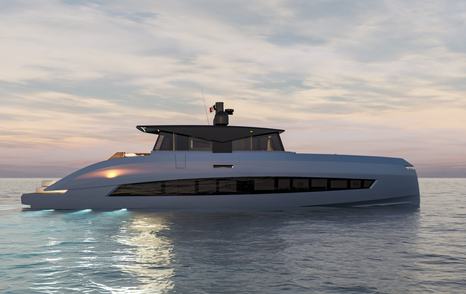
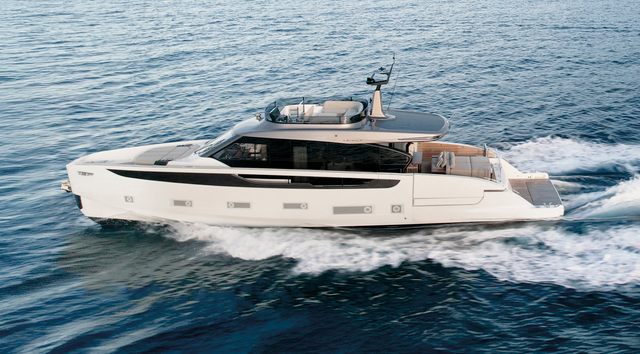
Externally, the profile reflects the volume inside. The topsides are high, while the superstructure sits comparatively low above them. A narrow horizontal glazing band reduces visual mass from a distance, though it limits the size of the saloon windows. The bow has a restrained reverse sheer, and the freeboard preserves interior headroom as well as adding security along the side decks.
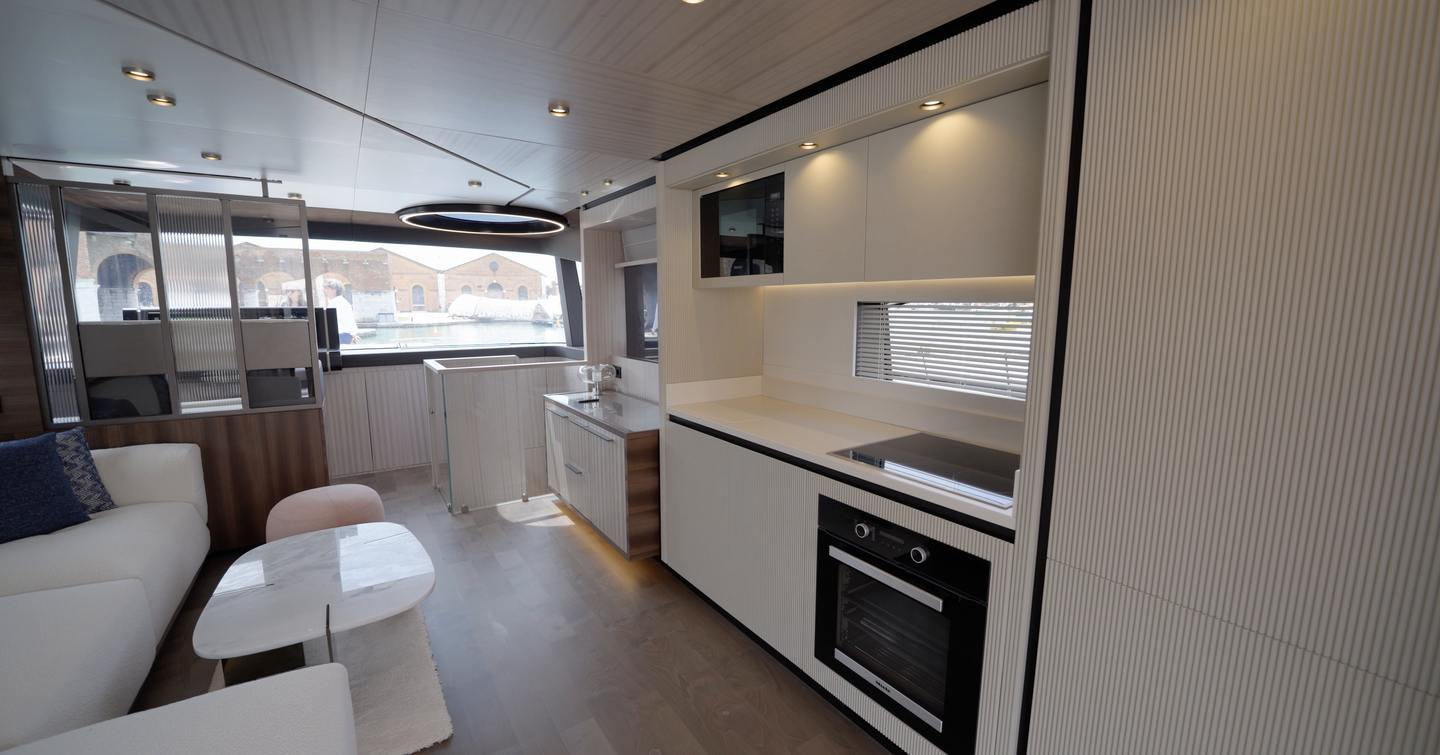
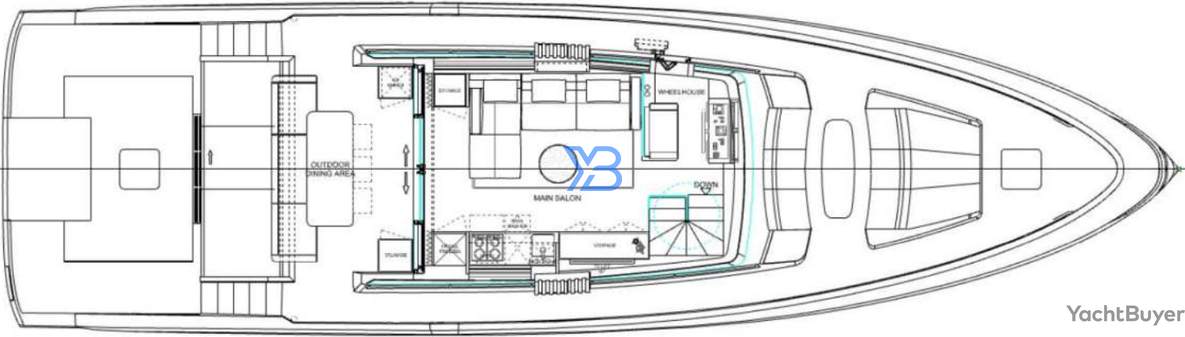
The saloon is where the Berlinetta makes its case as the enclosed, year-round version of the S07, and it does lean into contemporary Italian styling. The lines are crisp, and the surfaces are clean, though some of the edges are sharp, and there's a fair bit of form over function in evidence.
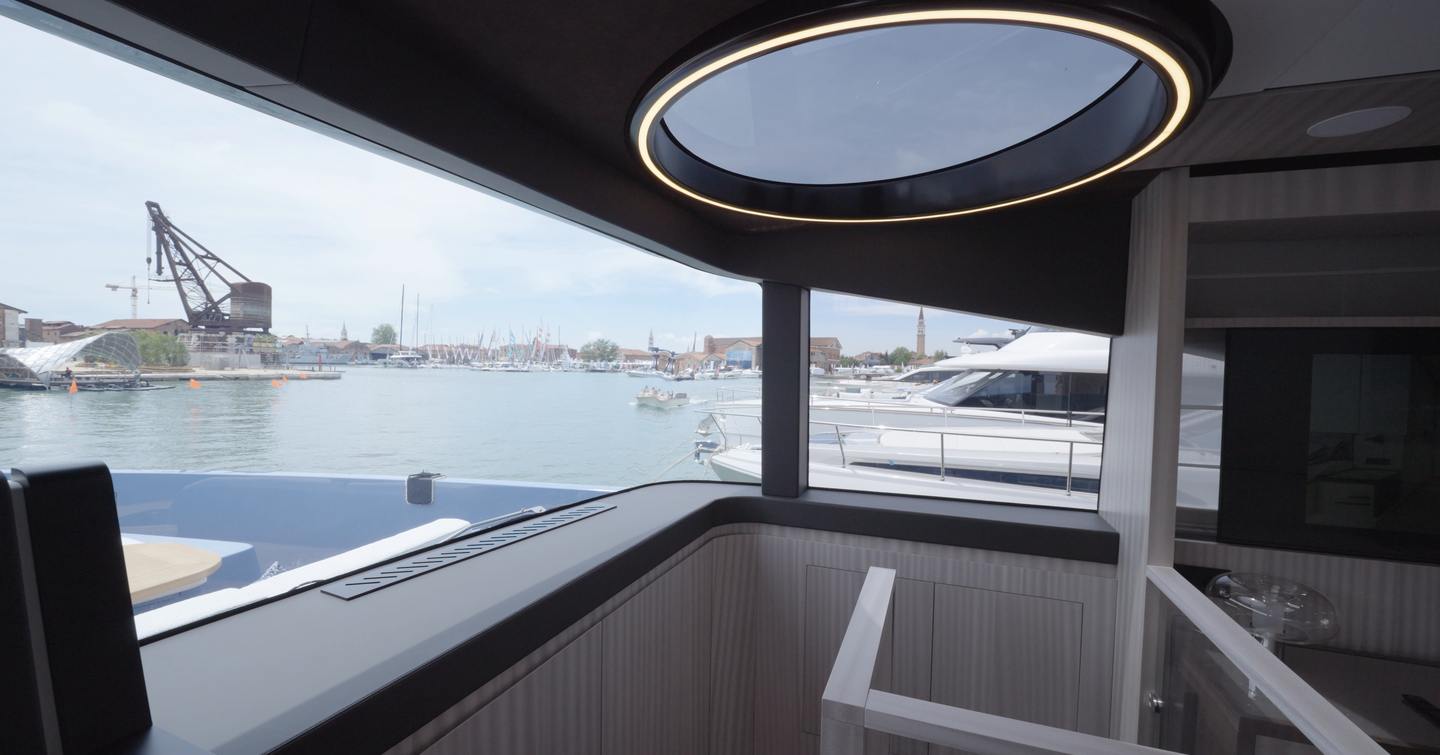
A partial partition sits just behind the helm seat, giving the wheelhouse a degree of separation without closing it off entirely. Overhead, there’s no sliding sunroof panel, but instead a circular glazed feature with integrated lighting that draws the eye upward. It’s a considered detail that adds some style to the interior, but arguably a sliding roof would be more useful.
The layout itself is largely fixed in structure. The main sofa sits to starboard, and opposite it, a television rises from a low cabinet when needed. Owners can alter finishes and loose furniture, but the core geometry of the room remains consistent, and it's one of the smaller saloons in this sector.
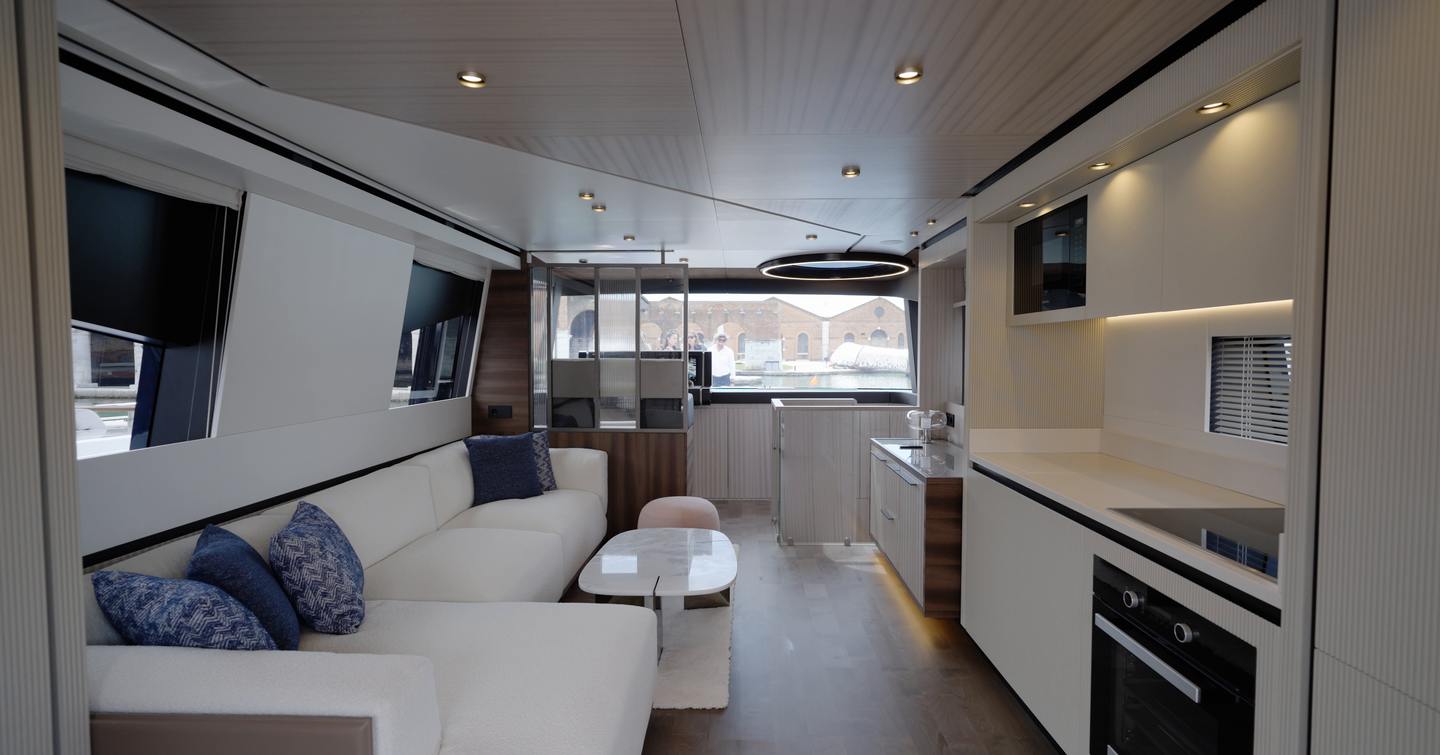
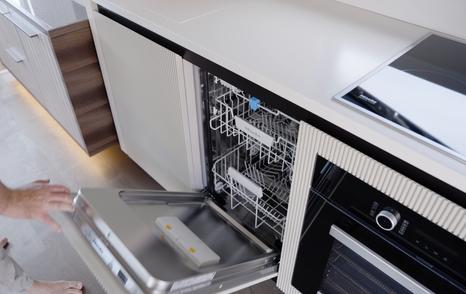
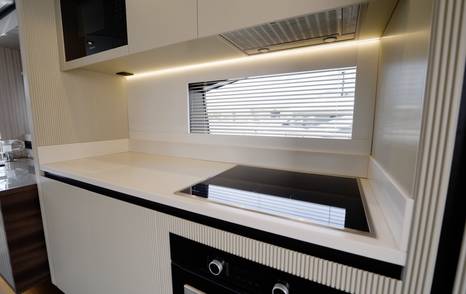
The galley runs most of the way along the starboard side, and it feels more like residential joinery than a typical boat galley, as appliances are integrated behind clean cabinetry. That minimalist look could suggest compromise, yet the equipment list says otherwise.
There is a dishwasher, a large sink with a substantial lid, a microwave and oven, an induction cooktop, and space for a domestic-style fridge with freezer below. Storage is carefully divided for glassware, crockery and dry goods, so beneath the pared-back presentation, there is proper cruising capability.
The exterior styling has a direct impact inside. The side windows are relatively narrow and taper downward with the hull line, so the view out and natural light in aren't great.
Taken as a whole, the saloon balances sharp design with practical stowage and decent amenities. It is insulated from the elements and well designed for longer stays aboard, which is the point of choosing the Berlinetta over the open Spider.
Guest Accommodation
The steps down are picked out with slim strip lighting, and there’s a skylight above in the roof that draws natural light into the stairwell, so the descent is light and airy. Once below, the geometry of the layout is very impressive. The passage runs flat from bow to stern, with the VIP cabin forward, twin and double guest cabins amidships, and the owner’s suite right aft.
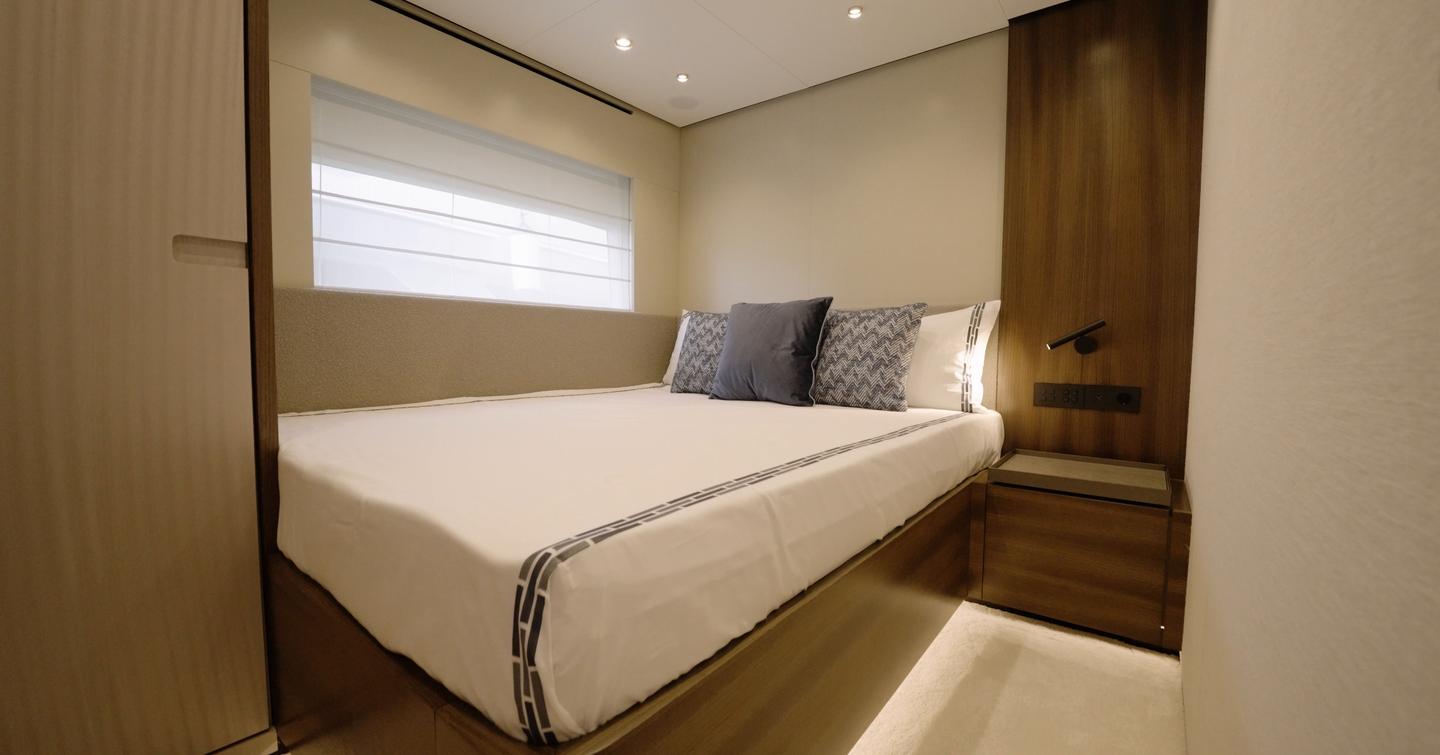
The forward VIP sets the tone for what is some really impressive accommodation. The bed runs across the cabin, and the beam carries well into the bow, so there’s still room to move around it. That geometry gives you proper wardrobes to either side, additional storage forward, and more space under the berth. A small dressing table with a lift-up lid adds somewhere to organise personal items, while hull windows bring in natural light.
In the head, there’s a separate shower with a rain head, the toilet is set apart, and a hull window adds both light and ventilation. It's an impressive premium guest space.
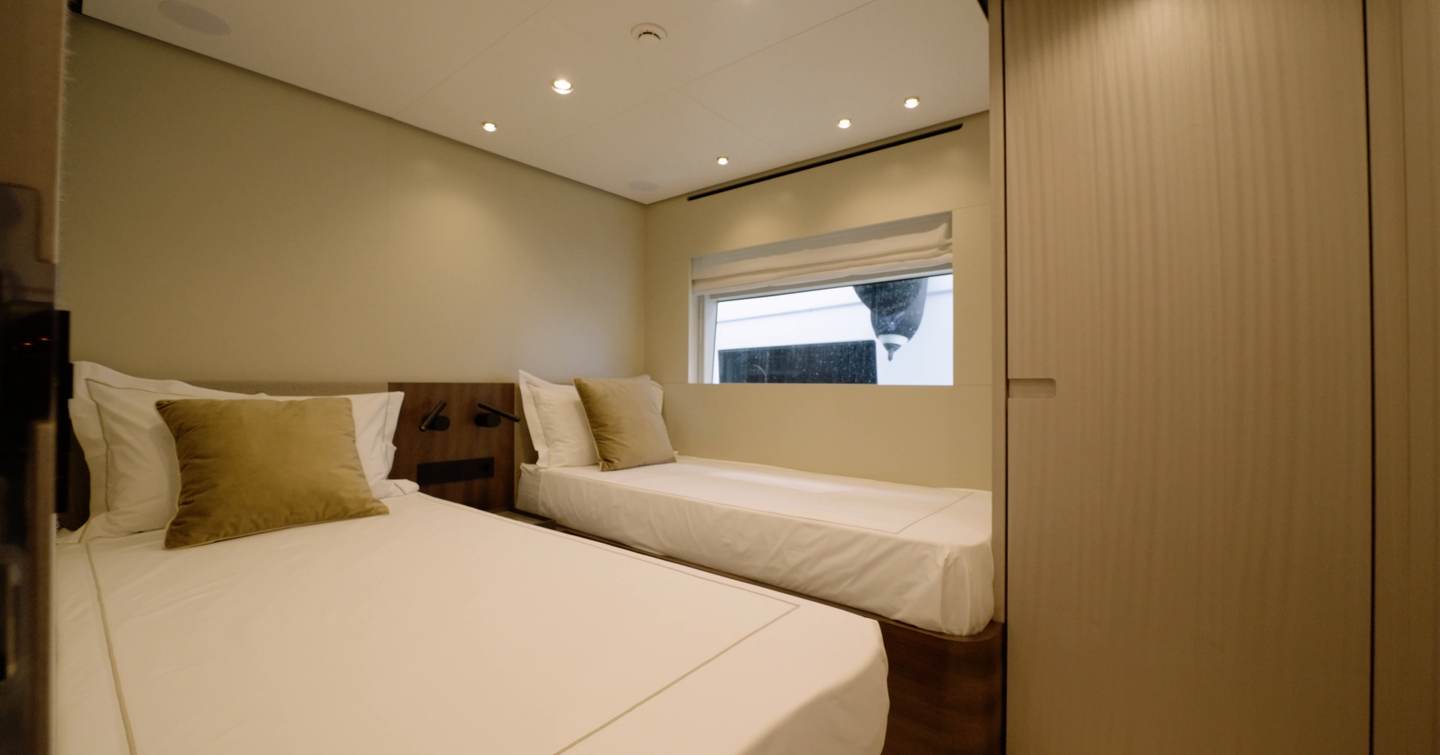
Amidships, the twin cabin is genuinely flexible. The berths are large enough for adults, so while it suits children, it doesn’t feel like a kids-only room. A hull window stops it feeling enclosed, and storage is built neatly into the joinery. There's also a TV mounted behind the door so guests have a private space to hang out.
Opposite, the double cabin is another nice guest cabin, with its own bathroom. The mattress is wide and generous, though access is mainly from one side. That’s a clear trade-off: you lose a bit of walkway, but you gain sleeping space. Independent climate control and local audio are fitted here as well. From here, the passage continues aft into the owner’s suite, where the layout idea comes fully into focus.
Owner's Cabin
The owner’s suite is what the whole layout builds toward.
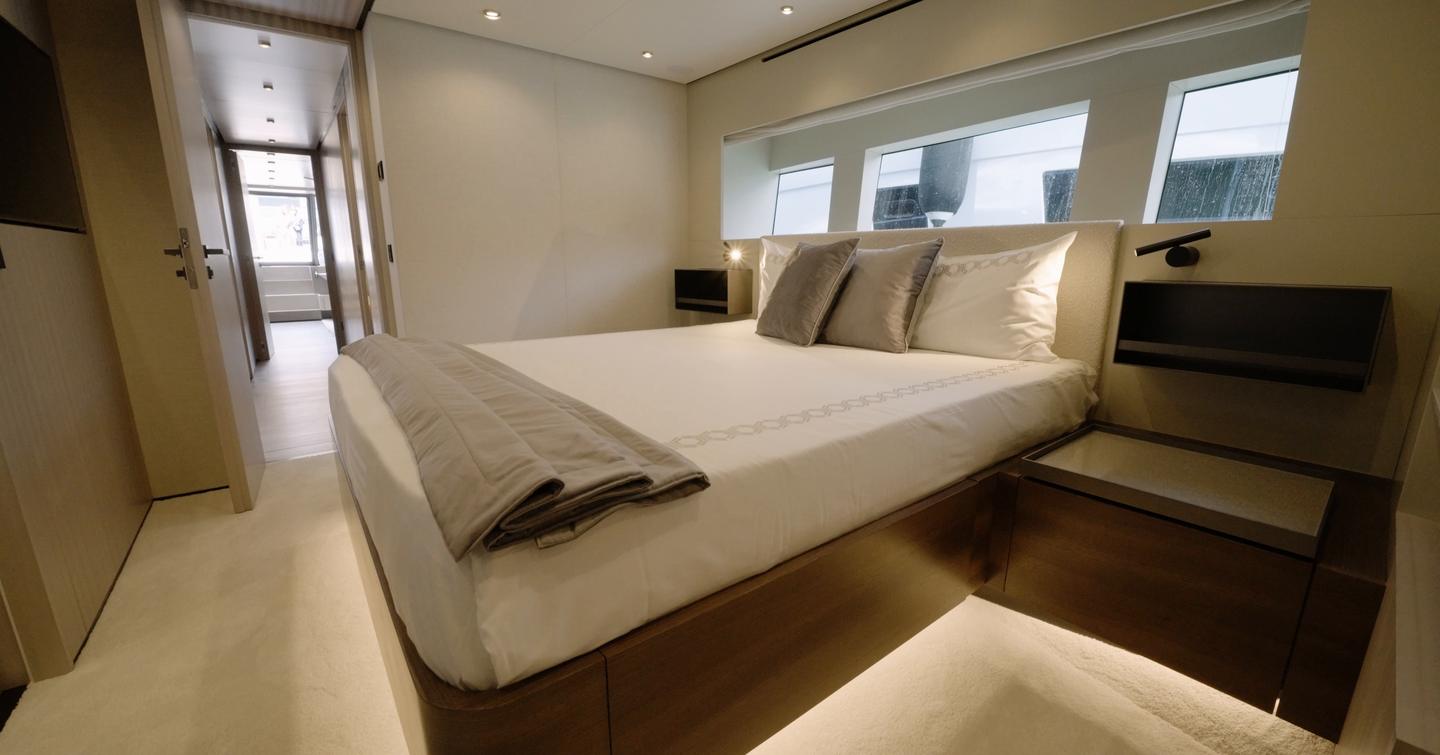
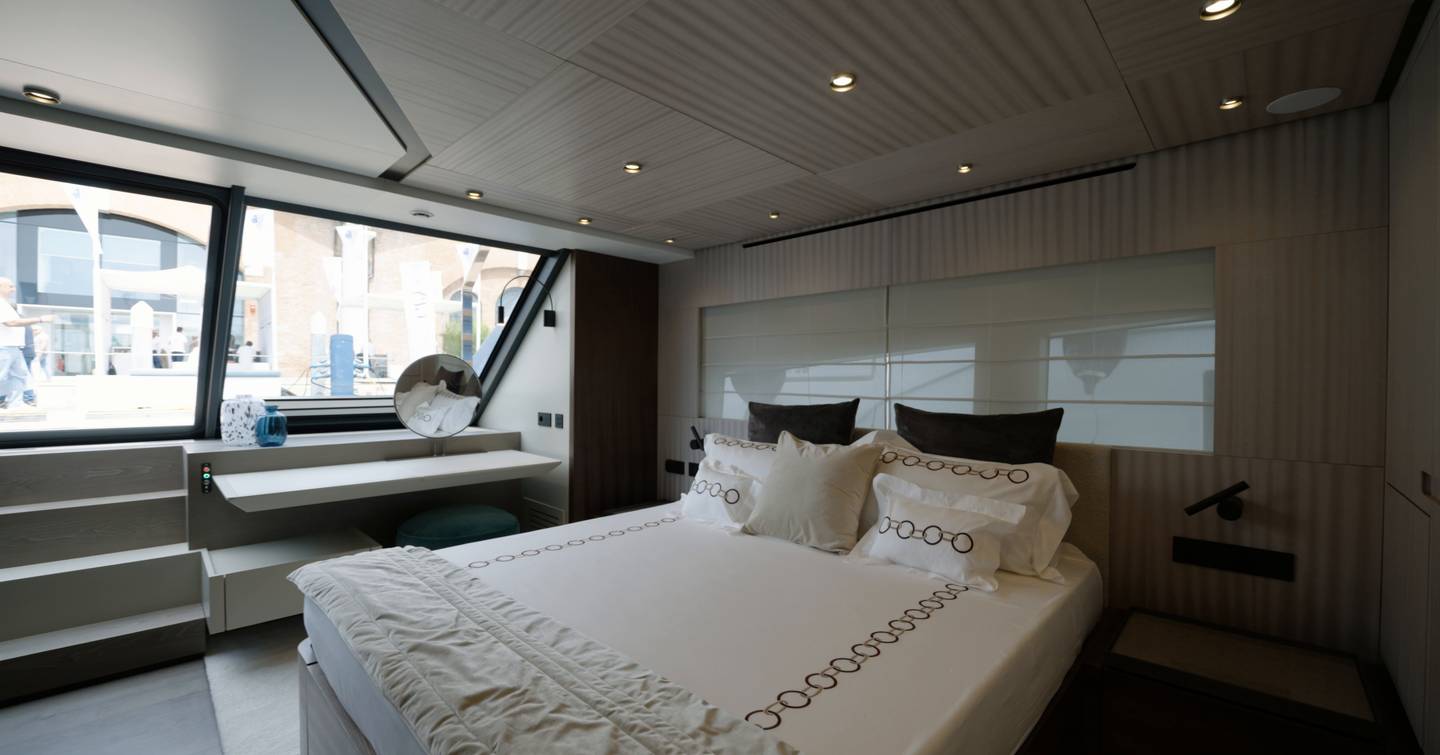
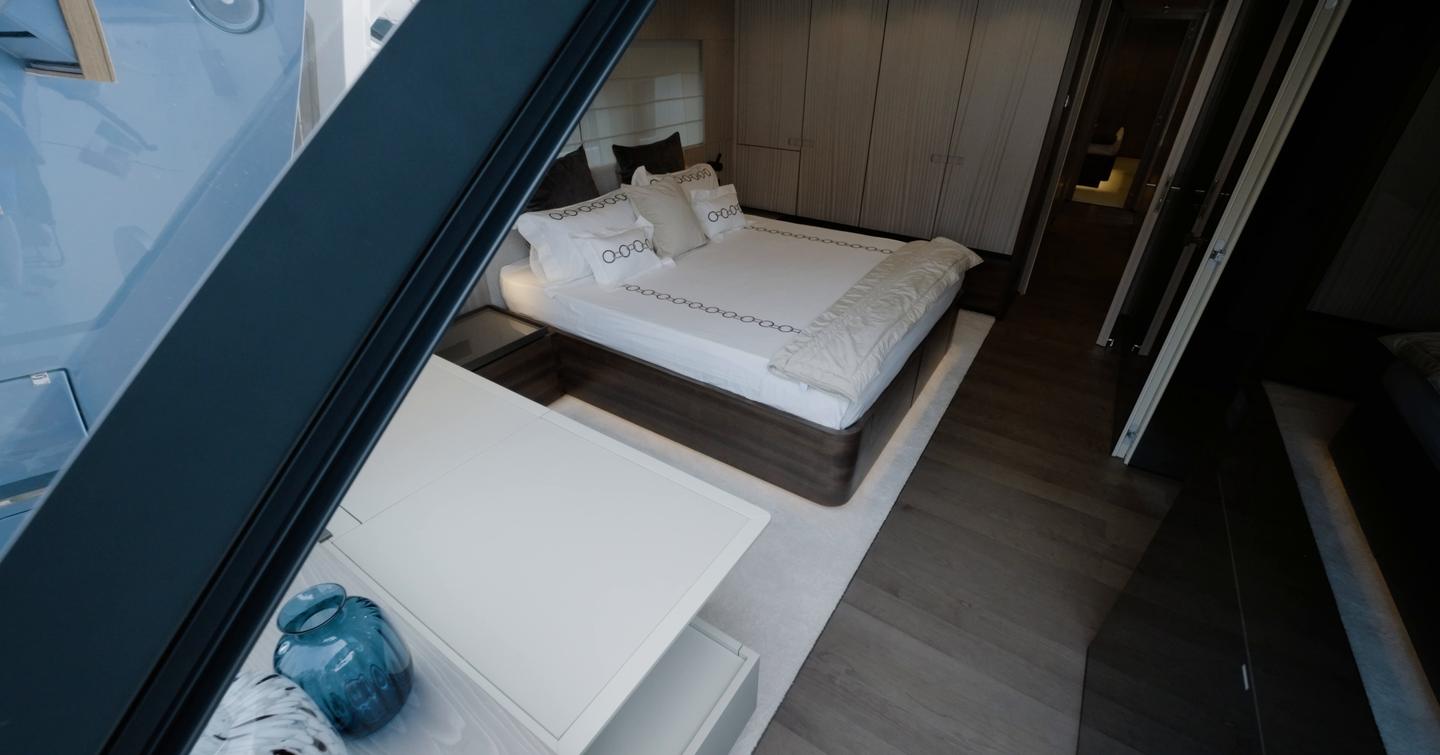
Step in, and the light is the first thing you notice. The aft bulkhead is almost entirely glazed, so the stern feels open in a way the forward cabins simply can’t. You’re not borrowing light from a side window here, as it’s coming straight in behind the bed.
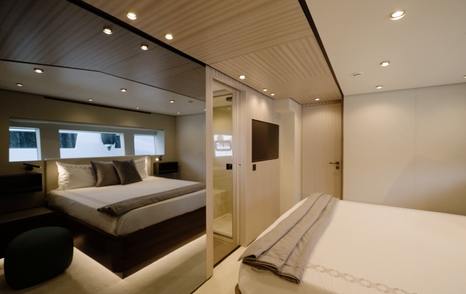
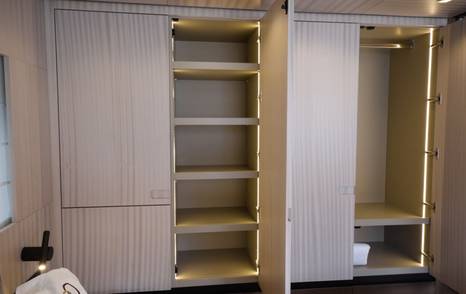
The berth sits centrally, with room on either side to move around it. Along one side, there’s a full-height wardrobe, and there’s more storage running forward as well, so it’s not short on hanging space. Mirror panels along the walls add depth, and the television is integrated into these mirrors. That said, the TV is so close to the aft glazing that when the sun shines, it's very hard to see the screen.
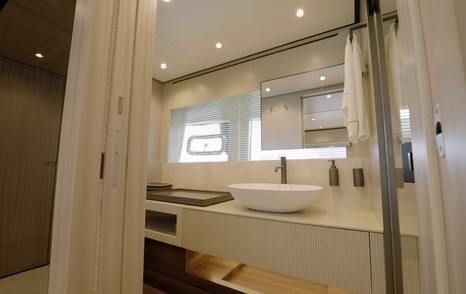
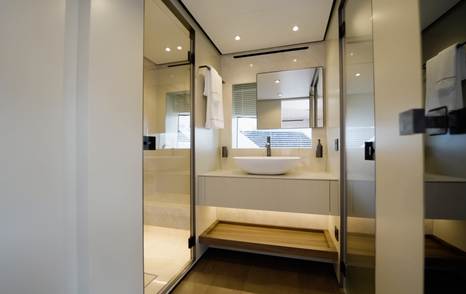
The bathroom sits forward, and it’s arranged with two doors. Open one, and the sink area becomes part of the cabin, bringing in more light; close it, and the separation is clear. The shower sits to one side, and the toilet is in its own compartment with a smoked glass door, so two people can use different parts of the space at the same time. It’s well thought through rather than squeezed in.
And then there’s the door at the back. Slide it open, and you step straight onto the aft deck. There’s no cockpit lounge between you and the water, no extra threshold to cross. You lie in bed, push the door aside, and you’re outside in seconds for a morning swim.
It's a feature that genuinely stands out in the marketplace, and the smart thing is that this layout benefits the owner and guests equally.
Crew Cabin
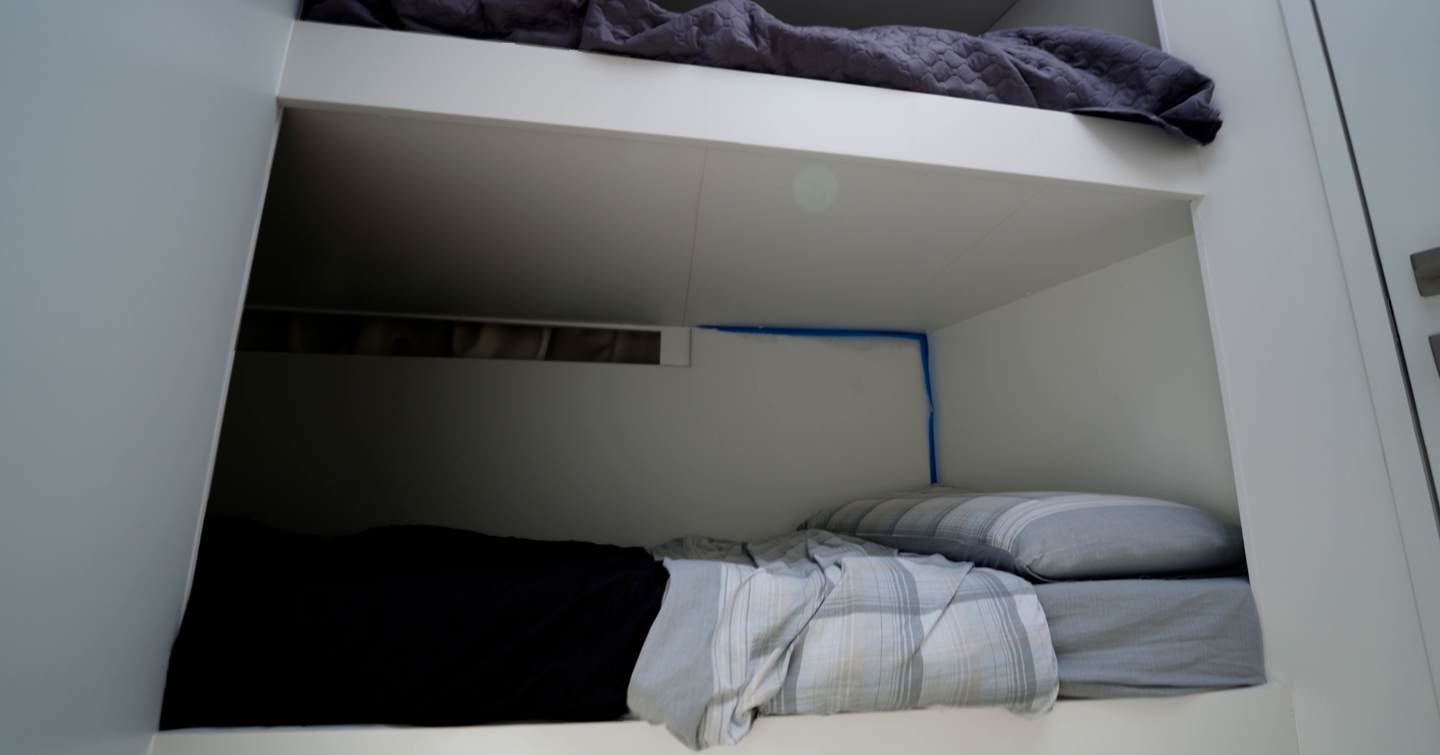
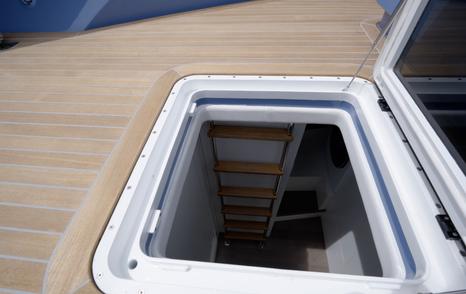
Right forward in the bow, beneath the foredeck, there’s a dedicated crew space. Access is from the deck rather than through the guest accommodation, and it's a bit of a squeeze to get down into the space.
Two bunks are within the compartment, and there is a private bathroom, but headroom is naturally more limited this far forward, though that is typical at this length.
Because the S07 runs IPS with joystick control and side-deck helm access, it is perhaps primarily an owner-operated boat. So while the crew cabin is available for a skipper or stewardess, it is just as likely to be used for occasional crew, delivery runs, or additional storage. It’s there if required, and it doesn’t intrude on the four-cabin guest layout below.
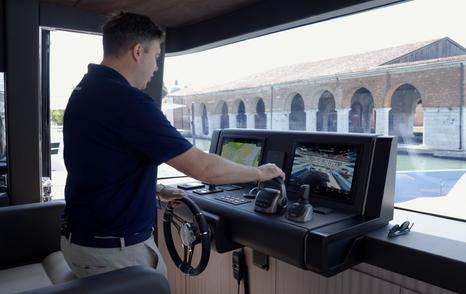
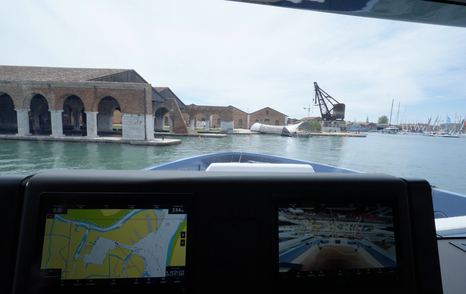
Access to the helm is direct from the portside deck, so during mooring, you can move between lines and controls without crossing the saloon. The position is slightly raised within the enclosed wheelhouse, with clear sightlines forward through a large windscreen that is free of central mullions. Visibility is strong as a result, particularly when standing.
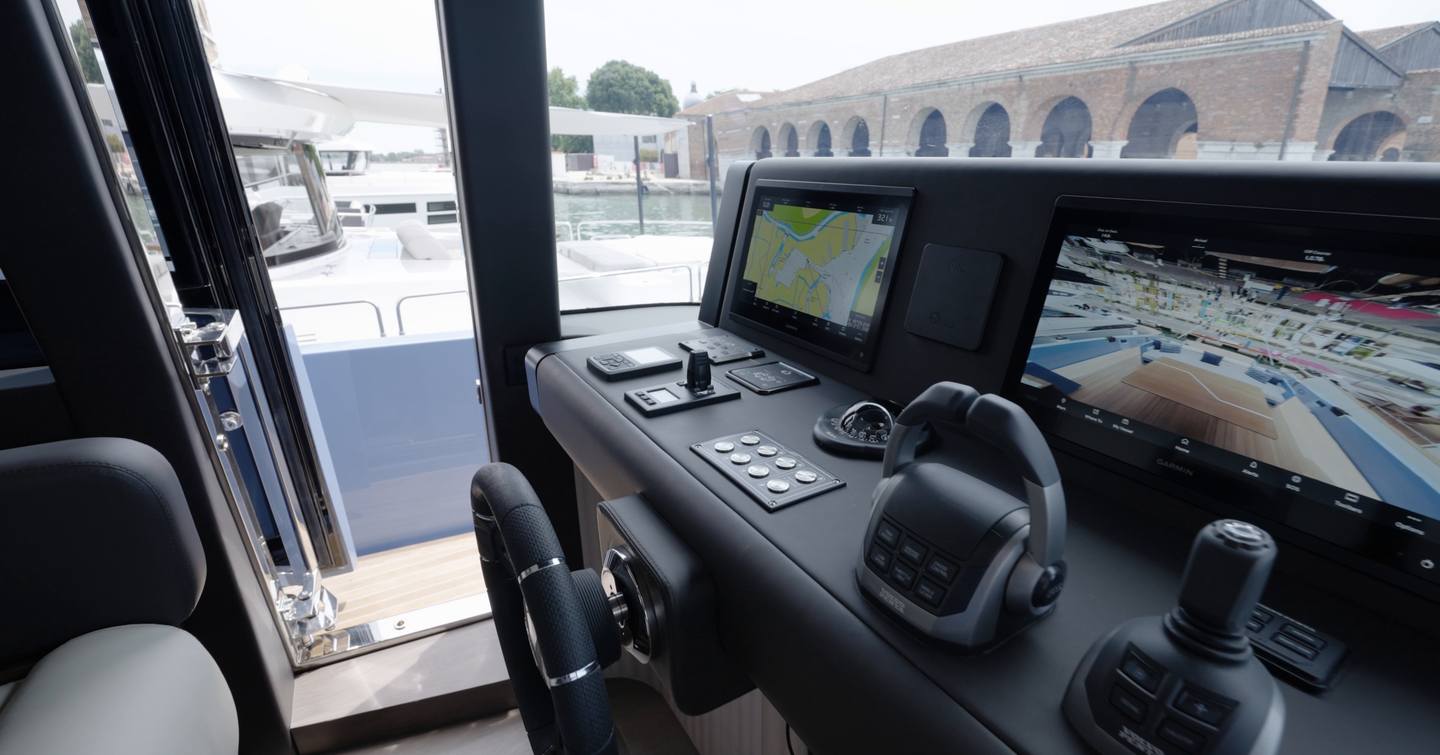
The S07 runs Volvo Penta IPS with joystick control positioned centrally, and a bow thruster is fitted alongside it. That combination supports the owner-operator brief, as low-speed manoeuvring should be relatively easy given the control it provides.
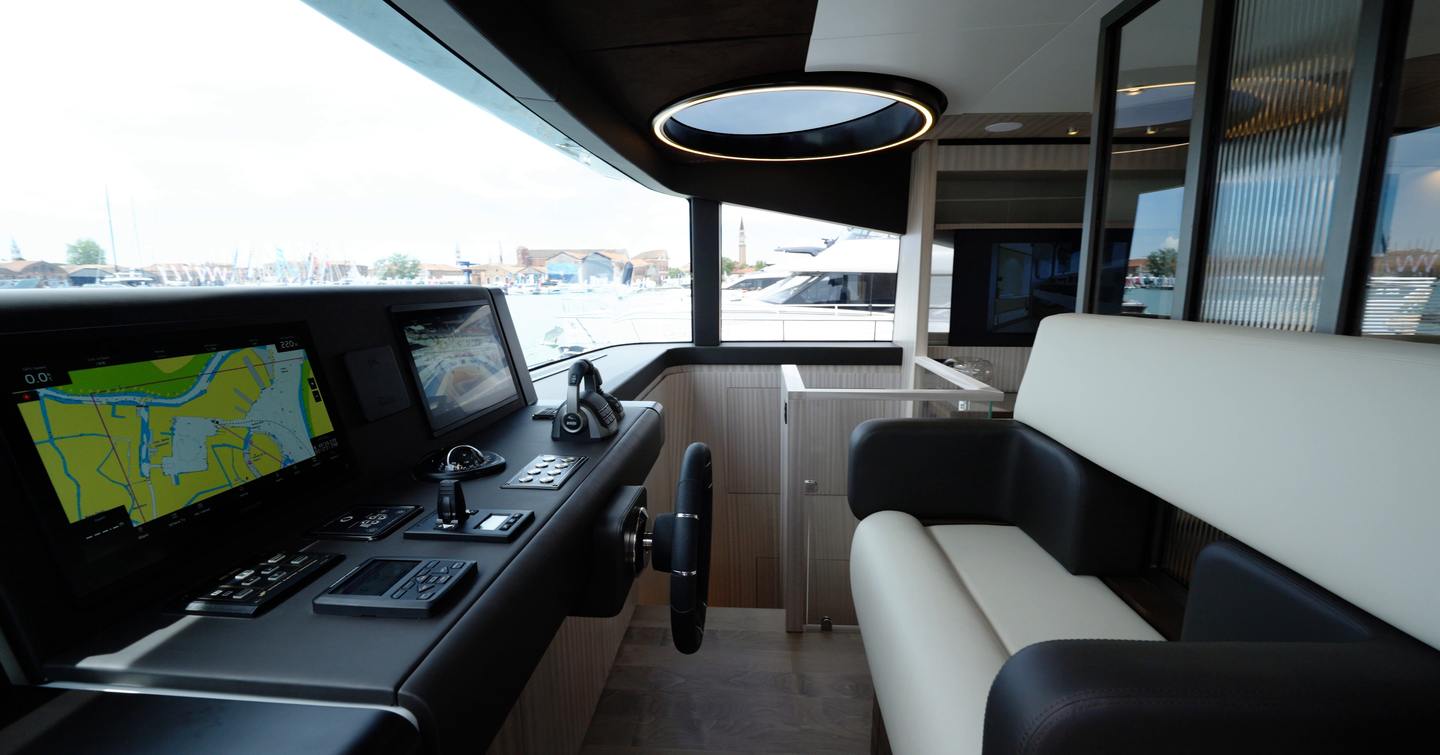
Where it works best is in the standing position. The seat base allows you to lean comfortably, and the forward view remains uninterrupted. When seated, however, the ergonomics don't feel as good. The bench is fixed and relatively narrow, and there is no dedicated footrest, so the seated position is uncomfortable on longer passages. An adjustable wheel would improve flexibility here, as the Gussi wheel (which looks great) is solid but set in a fixed position.
Twin Garmin multifunction displays dominate the dash and carry the bulk of navigation and system data. Most of the boat’s monitoring is routed through those screens, so the console avoids unnecessary clutter. Stabilisation is managed via Humphree systems, with trim interceptors and fin stabilisers operating both underway and at rest.
A stern camera feeds into the Garmin display and provides proximity guidance when manoeuvring, which assists when reversing into a berth. It works well, though it does not fully replace the convenience of a secondary docking station in the cockpit.
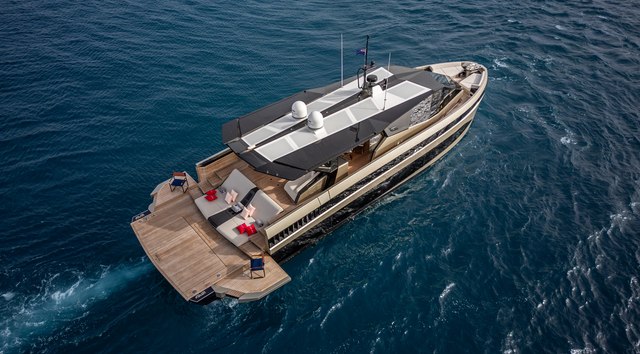
The stern is a wide, flat stretch of deck with very little fixed furniture, so the space is more like a terrace than a traditional cockpit. The owner’s cabin forms the forward boundary of it, as the sliding glass door sits directly in the aft bulkhead, and that relationship changes how this whole area works.
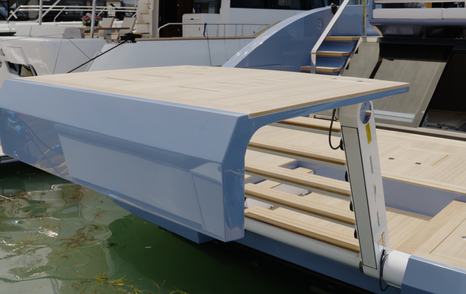
Instead of building in big sunpads or a dining set, Manda has left it largely clear. That makes sense, because this is a water-focused deck. The transformer platform lowers into the sea for launching tenders and toys, and it doubles as a bathing platform when deployed. It’s an established kit in this size range, but it works so well here because of the design of the rest of the deck.
The passerelle follows the same thinking. It works as your boarding bridge when stern-to, and it can also drop down to water level, so there are effectively two controlled ways into the sea from this deck.
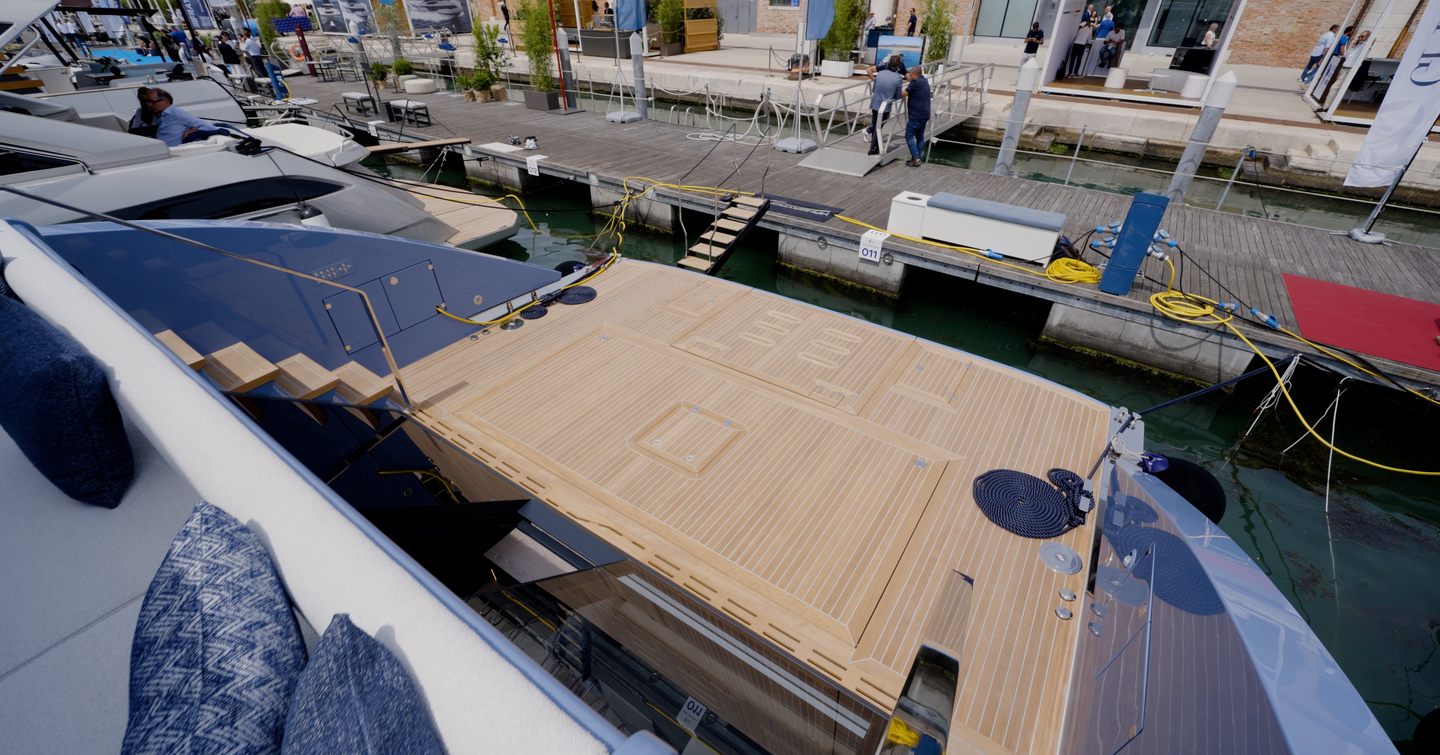
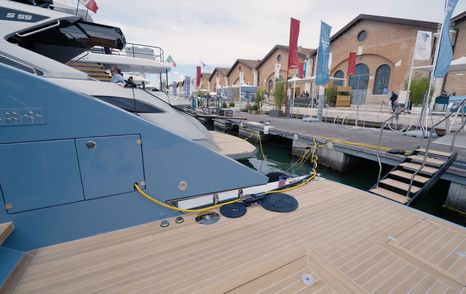
With the master cabin immediately forward, you can’t ignore the practical side. If a wave comes aboard from astern, the water has to go somewhere. A run of drainage grates sits just ahead of the threshold to swallow it before it reaches the sliding door.
There’s some utility tucked into the sides. Lockers house shore power connections and deck services, and there’s a stern shower for rinsing off after a swim. Storage isn’t generous, but the trade-off is a deck that is clean and uncluttered.
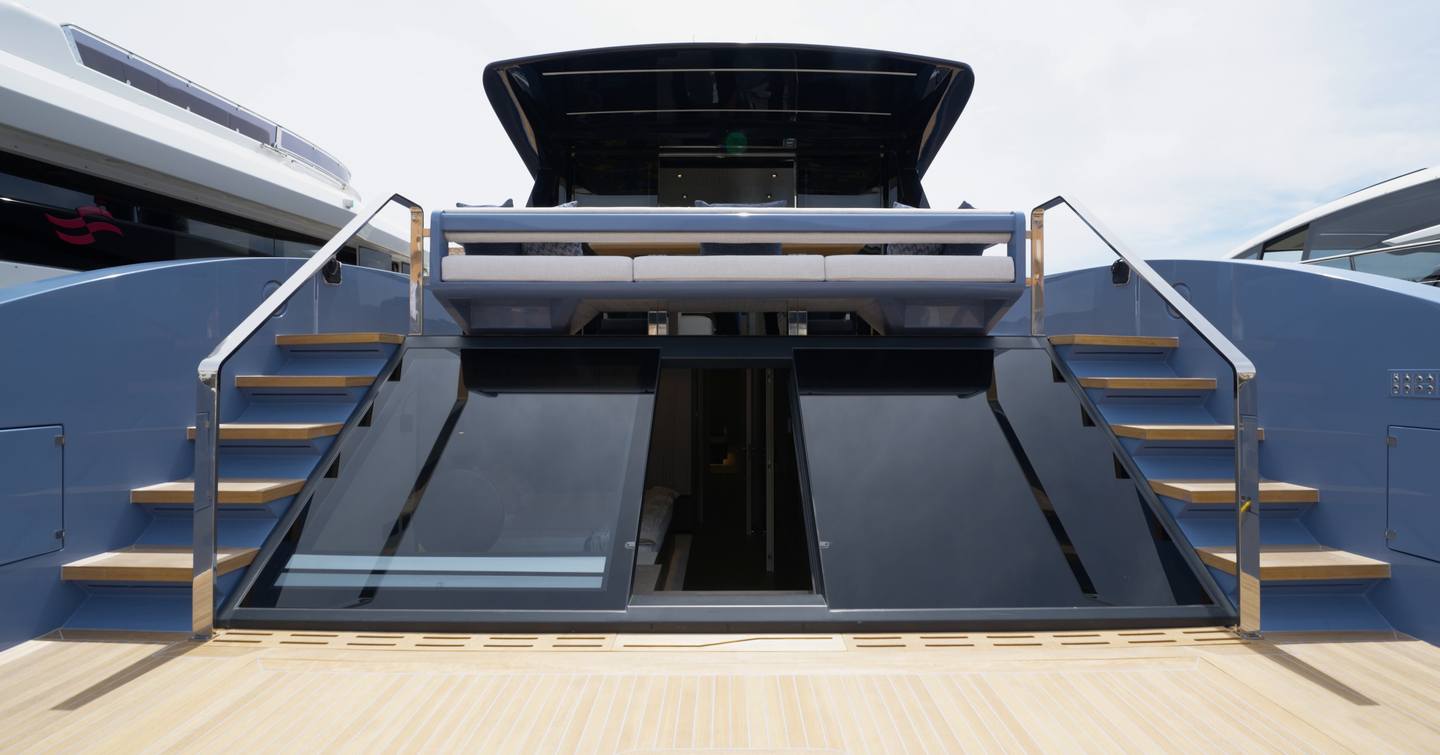
Hull #1 wears a deep blue hull, which feels more deliberate than the usual white or silver you see in this bracket and gives the stern a bit more presence. Twin staircases rise on either side with fixed stainless steel rails, leading up to the shaded cockpit above.
Cockpit
With the lower level open and exposed to the sun, this upper platform introduces shade, so the stern sequence shifts from water terrace to sheltered seating in one move.
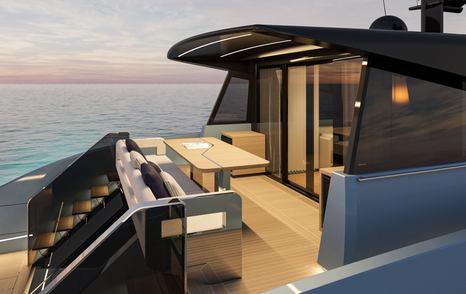
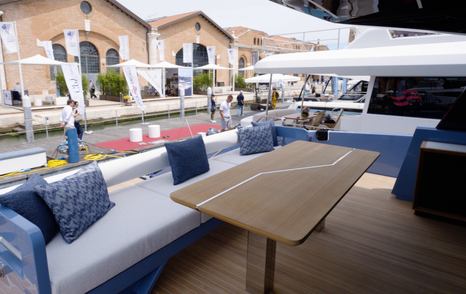
The hardtop overhang isn’t especially deep, but it offers enough cover over the dining area to make it properly usable through the day. You still feel the openness at the back, yet there’s clear protection over the table and seating, which makes sense on a boat intended for longer cruising rather than quick day hops.
Seating is pretty straightforward. A fixed bench runs across the aft end, and there’s room for loose chairs at either side if needed. It isn’t trying to cram in multiple lounging zones, and that restraint works because circulation stays clear and the space doesn’t feel crowded. Add much more, and it would quickly start to feel tight.
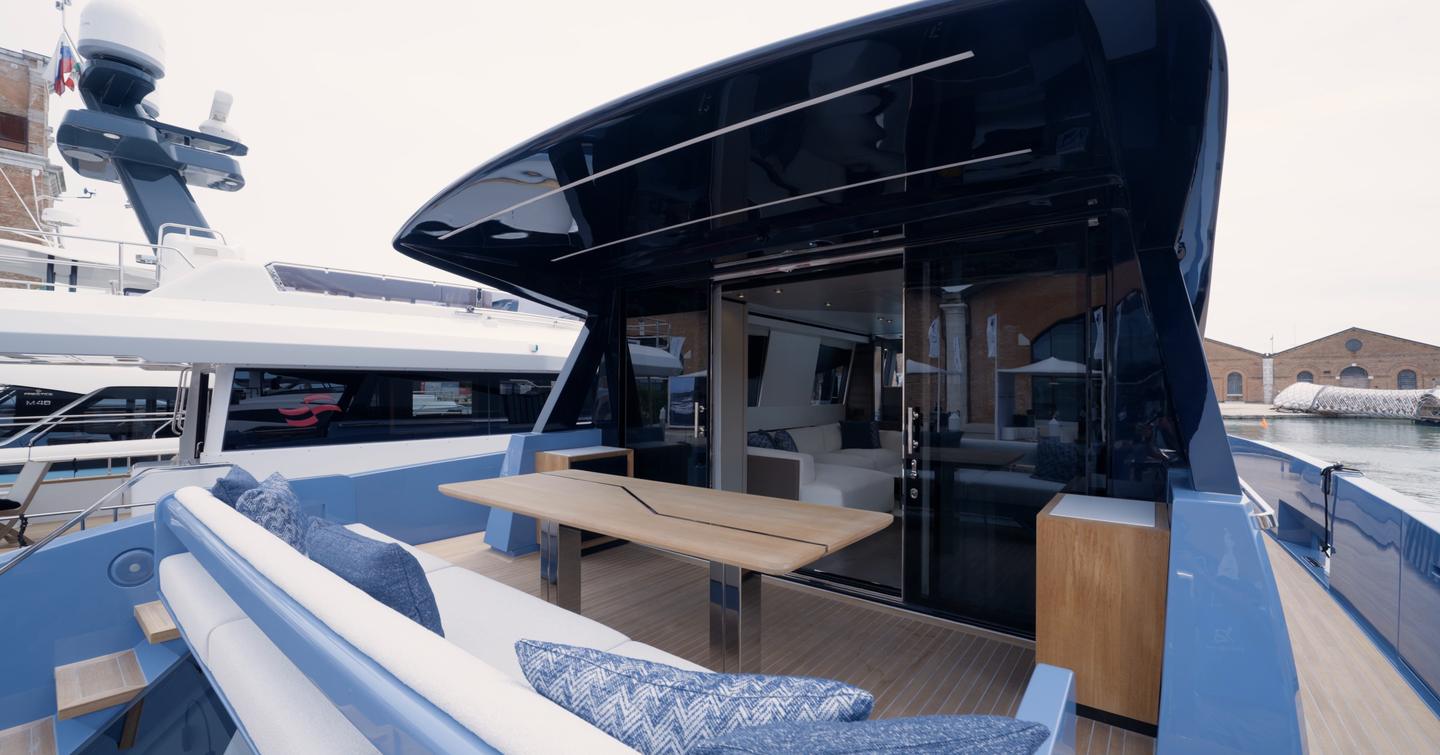
The teak table sits centrally with the S motif integrated into its surface, something that we see throughout the design.
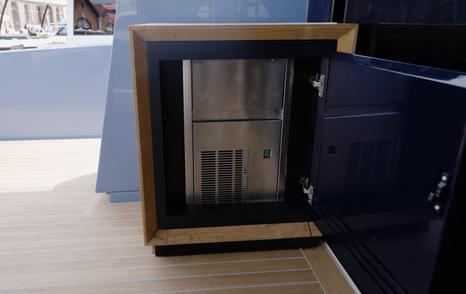
Storage is handled through matching cabinets to port and starboard. One houses an ice maker, while the other provides general stowage. Capacity isn’t great, but it supports day-to-day use and keeps the deck itself uncluttered.
One area that feels slightly underplayed is docking control. Given how naturally this boat lends itself to stern-to mooring, a secondary joystick station out here would make practical sense. It may well be available as an option, but on this example at least, manoeuvring is handled from the main helm.
Side Decks & Foredeck
From the cockpit, the side decks lead forward on both sides, and the first thing you notice is how clean they look. There are no outer guardrails, so the profile is sharp and uninterrupted.
Instead of outer rails, continuous handholds run along the inner edge, which means there is always something solid to grab as you walk forward. Without guardrails to hang fenders from, straps are used instead of fixed pins, which gives flexibility in positioning, even if it requires a different routine when mooring.
The sculpted cut in the superstructure is a strong styling feature from outside, and it explains the tapering window line seen from within the saloon. It sharpens the exterior profile, while the trade-off is reduced glazing height inside.
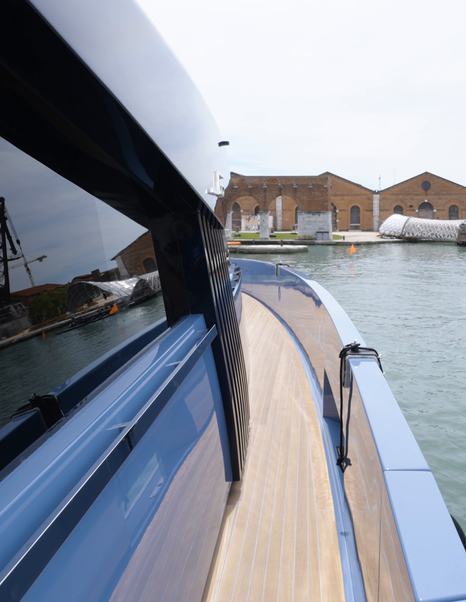
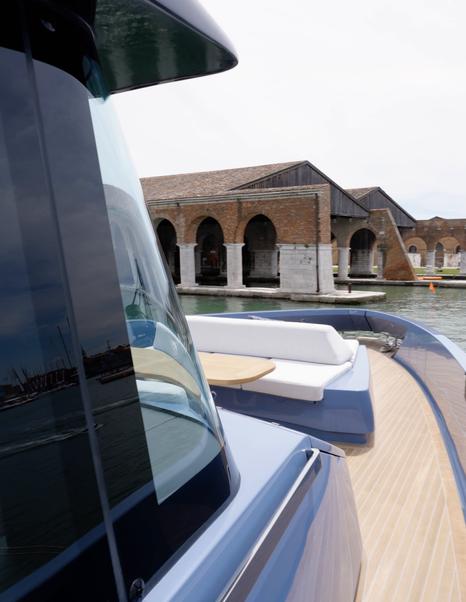
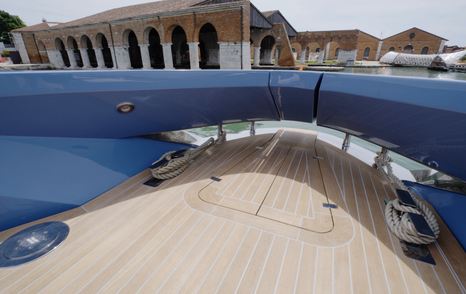
As you move toward the bow, the space opens noticeably. The deck remains flat all the way forward, so there are no awkward steps or level changes to manage. Cleats and hardware sit flush when not in use, and the anchor gear is concealed beneath split lockers, which keep the surface clear underfoot.
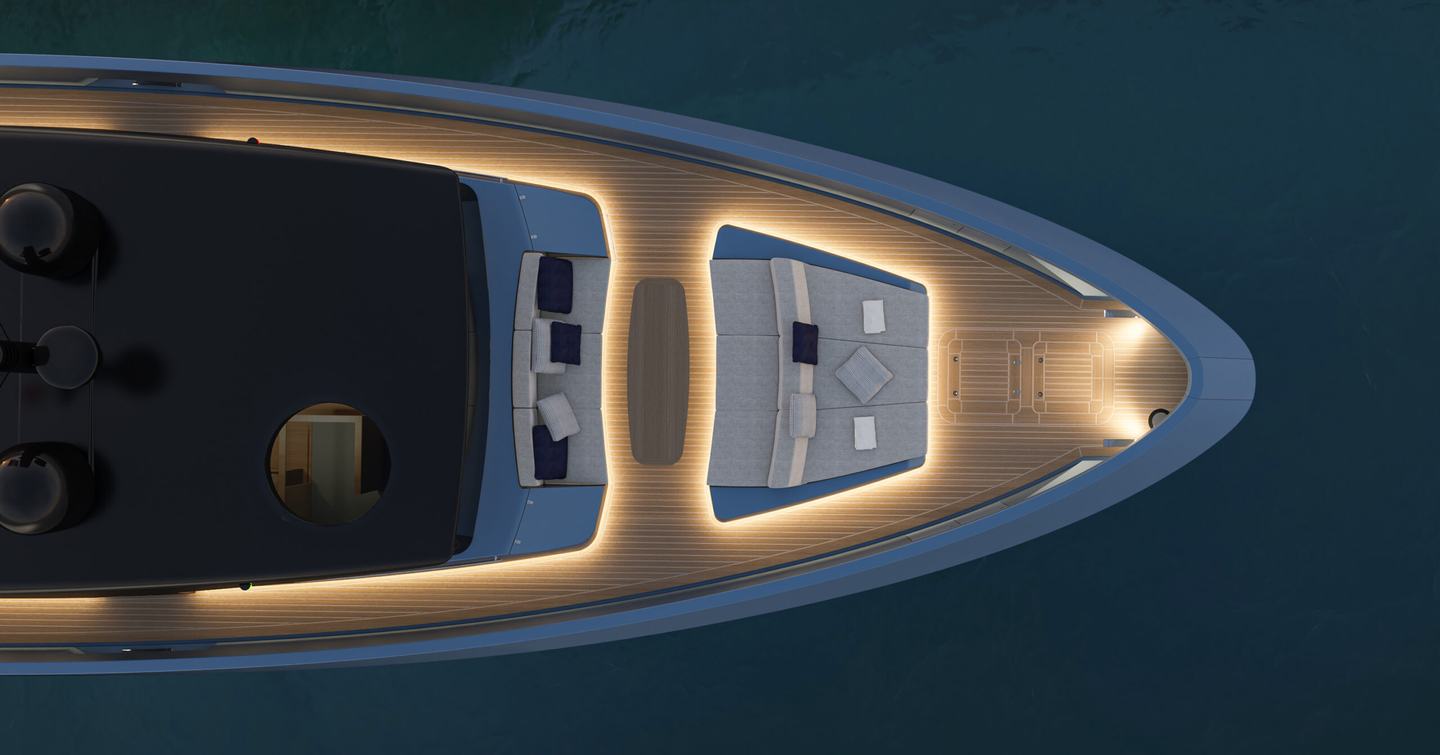
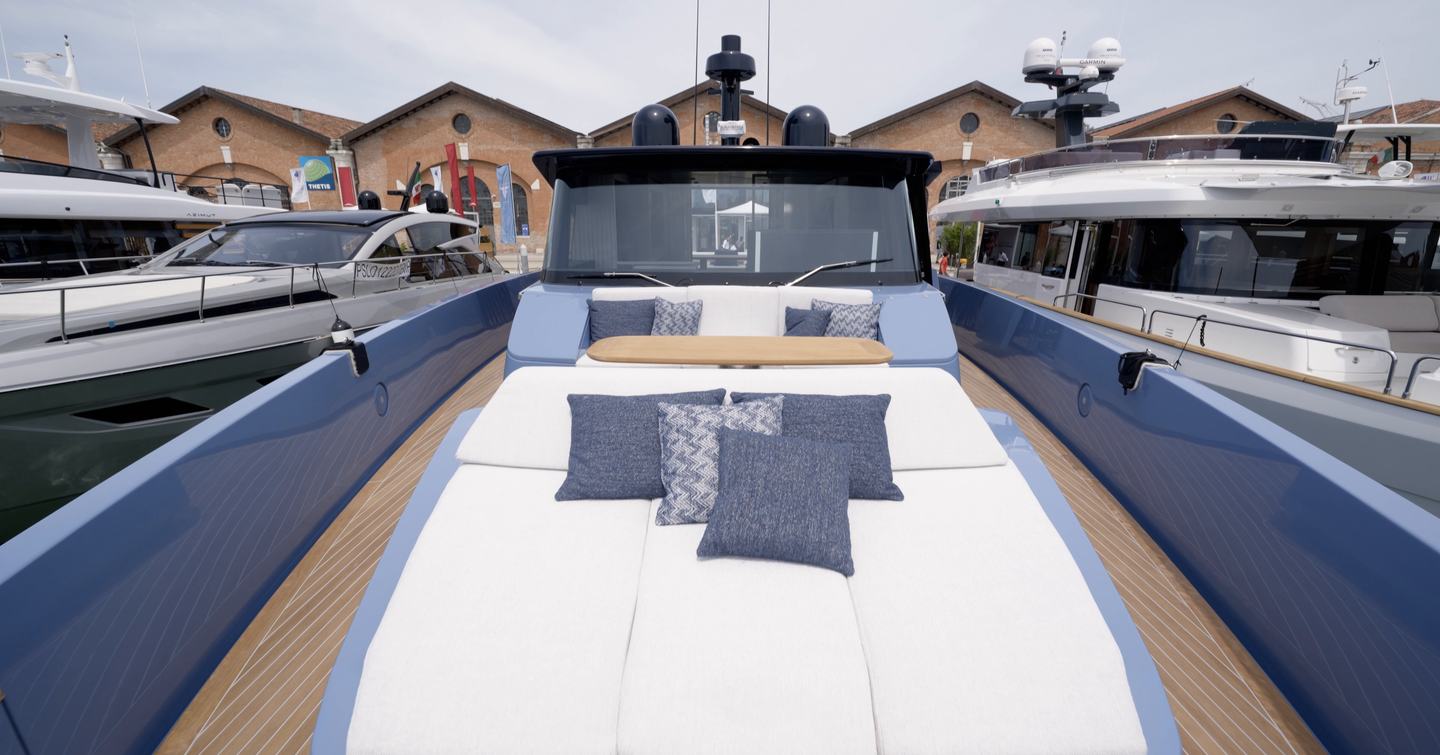
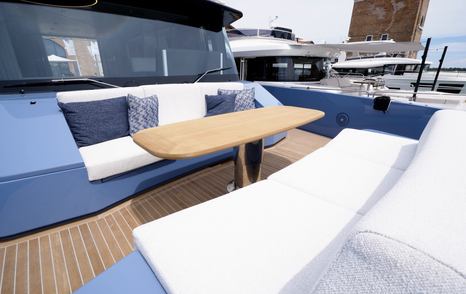
The foredeck itself is arranged as a decent living area rather than a token perch. A table is sized for dining rather than just drinks, and it becomes the sun-facing alternative to the shaded cockpit. With swimming focused at the stern, this is the dedicated place to sit out or lie forward in the breeze.
Fixed sunpads sit ahead of the seating area, providing a defined lounging zone that you don't have at the aft end of the boat. The separation works, as the boat divides its stern for access and its bow for relaxation. Two large lockers sit forward on either side, linked and deep enough to swallow covers and equipment, and they open on rams for easier access.
Engine Room
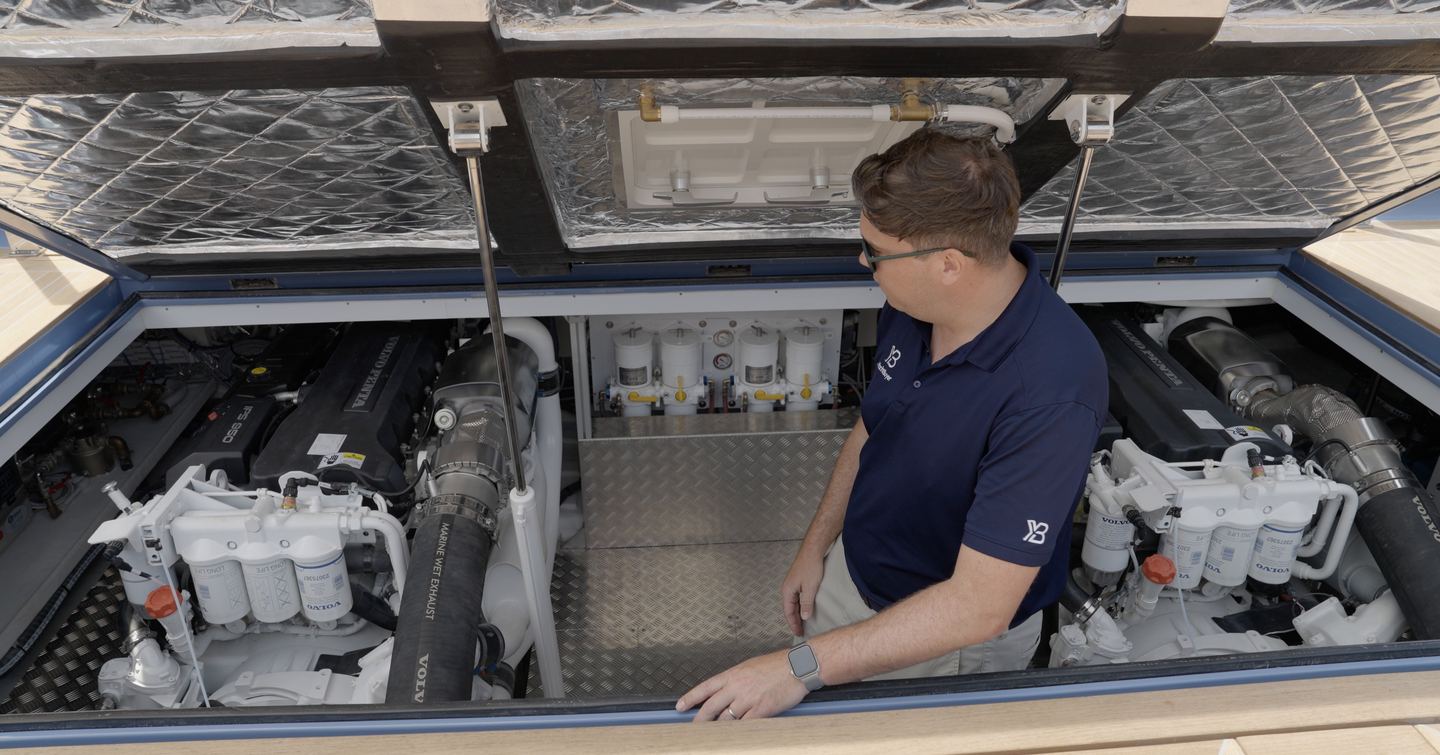
There are two access points on the aft deck. One is a smaller hatch for quick checks, but at the touch of a button, a bigger hatch lifts on rams to grant excellent access to the engines and ancillary components. For day-to-day checks, the main service points sit within reach, which means routine maintenance isn't compromised by that low, flat aft deck.
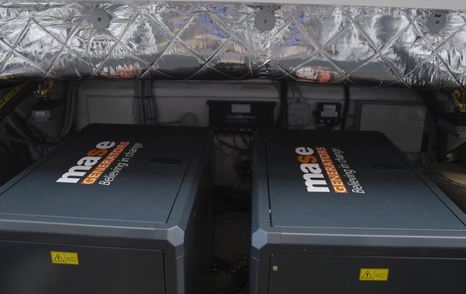
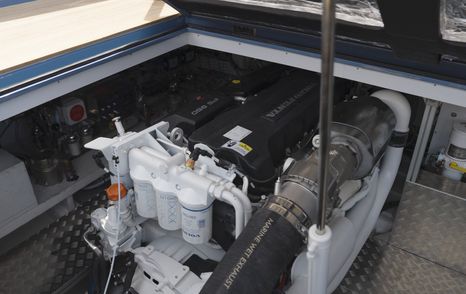
Twin Volvo Penta IPS units sit aft, with clear access to the pods behind them, and fuel filters are paired and mounted forward where they can be reached easily. Twin generators sit low in the space, while on this example, a watermaker and the air-conditioning chillers are installed alongside them. It’s compact, but the components are arranged so that the areas you’re most likely to service are easily accessible.
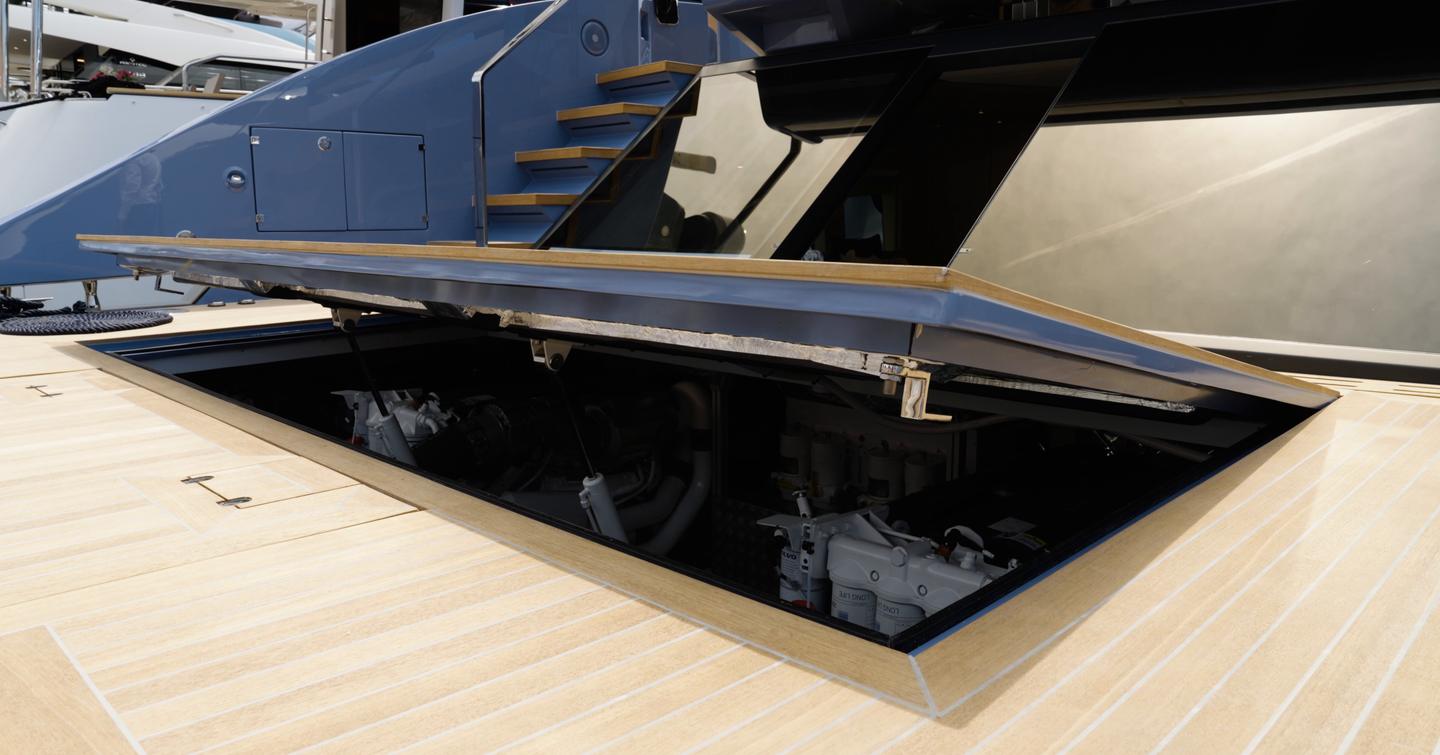
Standard power comes from twin Volvo Penta D11 IPS950 engines rated at 725hp each, while an IPS1350 option lifts output to 1,000hp per side. The larger engines would offer more margin when fully loaded, though even the standard set-up places the boat firmly in the mid-20-knot bracket.
Quoted maximum speed is around 24 knots, with a cruising speed closer to 18 knots. At that pace, the range is estimated at roughly 300nm with the 4,600-litre fuel capacity.
Stability is handled by Humphree systems combining interceptors and fin stabilisers that work both underway and at rest, so roll is managed whether you’re running or at anchor.
It's not easy to assess value for money, given Manda Yachts is pretty tight-lipped about exact pricing, though we do know that the open Spider version costs around €4,000,000 ex VAT. So, let's say a bit more than €4,000,000, shall we, given the extra cost of the superstructure and a bit more cost to fit out internally.
The real question of value here comes with investing in a smaller brand, which simply won't have the recognition on the used market as, say, Azimut has, and therefore is very unlikely to hold its value as well.
Boats like this need to give buyers a reason to buy them over the mainstream competition, and the S07, with its aft deck and amazing aft cabin, certainly does that.
Our Verdict
The S07 Berlinetta is the kind of boat you tend to find at boat shows and remember afterwards. Manda isn’t a household name in the way some of its rivals are, but this layout feels very confident.
The owner-aft arrangement isn’t completely unique in the market, though the execution here is convincing. Because the master suite sits directly against the stern glazing, the connection to the aft deck feels immediate rather than symbolic. You’re not stepping out into a separate cockpit lounge; you’re stepping into your own outdoor space, which changes how the back of the boat is experienced.
There are trade-offs. For example, in the saloon, the glazing is more controlled than some competitors, and the helm ergonomics favour standing over seated driving. The side decks are clean-lined, though that styling choice means adapting how you handle fenders. None of those points feel like oversights, but they are part of the balance.
At around €4 million for the Berlinetta variant, it sits in good company, and brand maturity will inevitably enter the buying decision. But as a piece of design thinking, and as a usable cruising platform, the S07 Berlinetta makes a clear case for itself.
Reasons to Buy
- Novel owner's cabin
- Spacious, comfortable guest accommodation
- Excellent aft deck
Things to Consider
- Restricted views from the saloon
- No cockpit docking station
- Lesser-known brand
Looking to own a Manda S07 Berlinetta ? Use YachtBuyer’s Market Watch to compare all new and used Manda S07 Berlinetta Yachts for sale worldwide. You can also order a new Manda S07 Berlinetta , customized to your exact specifications, with options for engine choice and layout configuration. Alternatively, explore our global listings of new and used yachts for sale and find your perfect yacht today!
Rivals to Consider
The Vanquish VQ70 is slightly longer at 22m (72.2ft) but narrower at 5.7m (18.7ft), and it operates in a different performance bracket, with builder claims of up to 48 knots. Engine specifications vary by build, as the VQ70 is marketed as highly custom, and pricing reflects that, with high-spec examples reportedly in the US$8m-$10m range. The VQ70 is built in aluminium and positioned as a high-speed luxury weekender with substantial tender storage, whereas the S07 maintains a four-cabin lower deck and a stern master arrangement within a lower speed envelope. Buying implication: the VQ70 competes on speed and semi-custom intensity, while the S07 competes on guest capacity and stern-led cruising logic.
The wallywhy100 is almost identical in length at 21.46m (70.4ft) but narrower at 5.73m (18.8ft), and it pairs Volvo Penta D13 IPS 1350 units with a published 27-knot maximum and 340nm cruise range. Both boats sit under 22m and use IPS, so the conceptual comparison is close. The Wally emphasises uninterrupted deck zones and brand-led design identity, whereas the Manda offers additional beam and often an extra cabin configuration alongside the aft master deck access. Buying implication: the wallywhy100 provides higher published speeds and a declared cruise range, while the S07 trades that for width and accommodation density.
The Azimut Seadeck 7 measures 21.7m (71.2ft) overall but carries a narrower beam at approximately 5.5m (18ft). It offers IPS 1200 or 1350 options within a hybrid series positioning, with published maximum speeds up to 31-32 knots and cruise ranges up to 374nm depending on mode. Azimut frames the Seadeck around efficiency and CO₂ reduction, supported by published range data and brand infrastructure. By contrast, the S07 Berlinetta positions itself around layout distinction, beam and aft master access. Buying implication: the Seadeck 7 is the safer mainstream choice with hybrid narrative and declared efficiency metrics, whereas the S07 is the wider, more unconventional layout-led alternative.
The Delta 72 extends slightly to 21.75m (71.4ft) and carries a 5.6m (18.4ft) beam, while offering a markedly different performance profile with up to 40 knots maximum and 400nm range in D13 configuration. Buyers can choose between twin IPS inboards or quad V12 outboards, and the carbon construction narrative supports the speed figures. Both boats offer transformer platforms and significant outdoor seating, though the Delta leans heavily into pace and Scandinavian engineering identity. Buying implication: if speed and published 400nm range sit high on the priority list, the Delta 72 becomes a direct threat; if beam, four cabins and the stern-owner link are central, the S07 holds its ground.
Considering a new yacht? Explore Manda Yachts' entire current range to find the model that best suits your needs, and compare it with alternatives from competitors to ensure you make the perfect choice.
Specifications
- Builder Manda Yachts
- Model S07 Berlinetta
- Length Overall 21.5m
- Beam 6.1m
- Hull GRP
- Cabins 4
- Berths 8
- Crew 2
- Yacht Type (Primary) Sportsboat
- Use Type (Primary) Cruising
- Cruising Speed
- Max Speed
- Fuel Capacity 4,600 Litres
- Fresh Water Capacity 1,500 Litres
- Engine Model 2x Volvo Penta D11-IPS950
- Engine max range (speed type) 300 (nm)
Manda S07 Berlinetta Layout
-
Main Deck
-
![Main Deck Manda S07 Berlinetta]()
The saloon isn't huge but the deck spaces are impressive
-
Lower Deck
-
![Lower Deck Manda S07 Berlinetta]()
The lower deck is really well designed with spacious and comfortable accommodation
Interested in a S07 Berlinetta?
NEW Build
Find your local dealer for a personalised, no-cost consultation
or just request
Brochures & Pricing
Used & In Stock
Looking for a ready-to-go S07 Berlinetta or pre-owned options? Explore all inventory of the S07 Berlinetta available worldwide