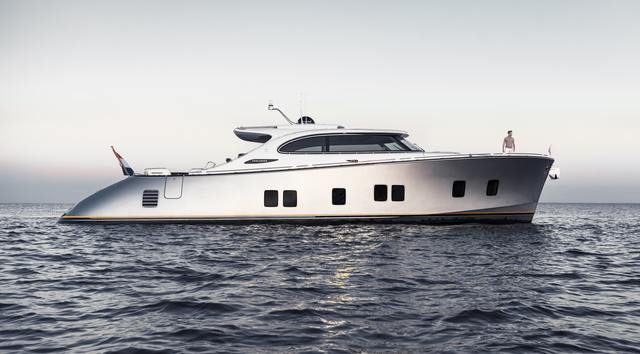
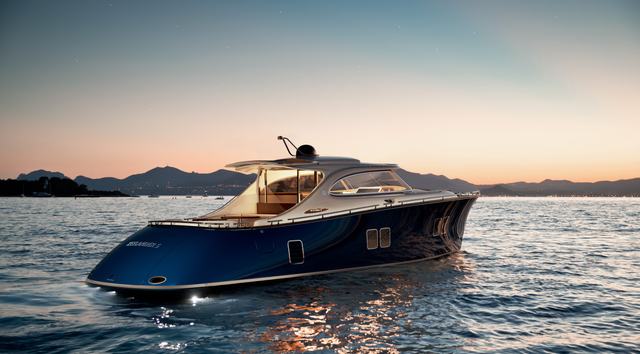
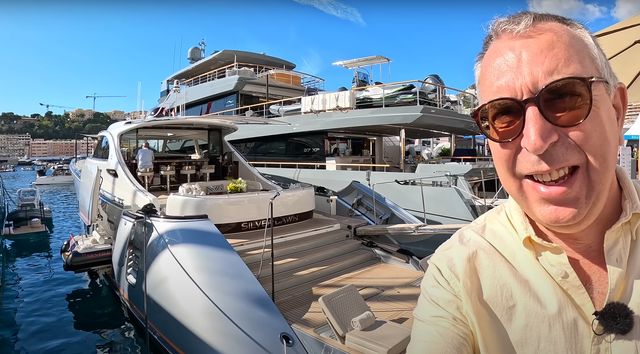
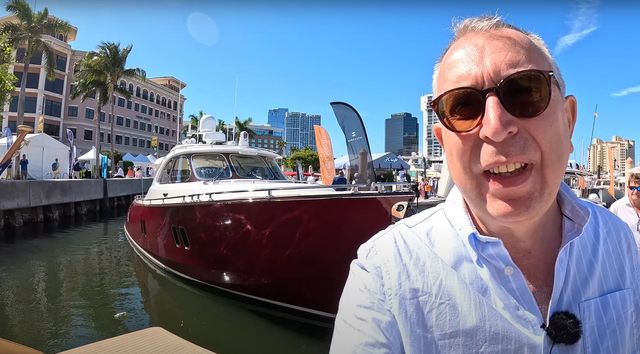
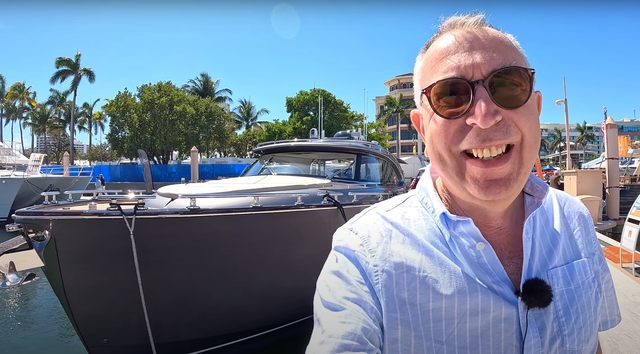
At first glance, it looks like a familiar Zeelander 7. The sweeping curves, low profile and rollover transom are all present and correct. Look closer, though, and the details begin to emerge. The stainless steel has a brushed finish rather than the usual mirror polish, the decking takes a different approach to traditional teak styling, and many of the materials have been selected to reflect the owner's personal tastes rather than a standard specification.
Aquaholic has already taken a detailed look at the model in this earlier Zeelander 7 review & walkthrough. What makes this example interesting is how many small details differ from the standard formula, and how much influence an owner can have over the finished yacht.
Zeelander 7

- LOA 22m
- Model Year 2026
- Cabins 3
- Crew 1
- Max Speed 40 knots
- Status In Production
- Yacht Type Classic Style
- Use Type Cruising
Video Tour
On Deck
One of the first details that catches the eye is the stainless steel. Zeelander's metalwork is usually polished to a mirror finish, but this owner has specified brushed stainless throughout.
The same thinking extends to the decking. Rather than replicating the look of traditional teak planking, the owner opted for a cleaner treatment that avoids the familiar black caulking lines. It's an unusual choice, particularly on a yacht that borrows so much of its visual appeal from classic boat design, but it works remarkably well alongside the satin-finished metalwork and contemporary colour palette.
Look a little closer and the details keep coming. The searchlights, radar domes and antennas have all been carefully integrated into the overall scheme rather than left as off-the-shelf additions. None of these changes alter the way the yacht performs or functions, but they do alter its personality. This is where Zeelander's made-to-order approach becomes apparent. The underlying platform remains recognisably a Zeelander 7, but the owner has been able to influence almost every visible surface.
The Clever Bit at the Back
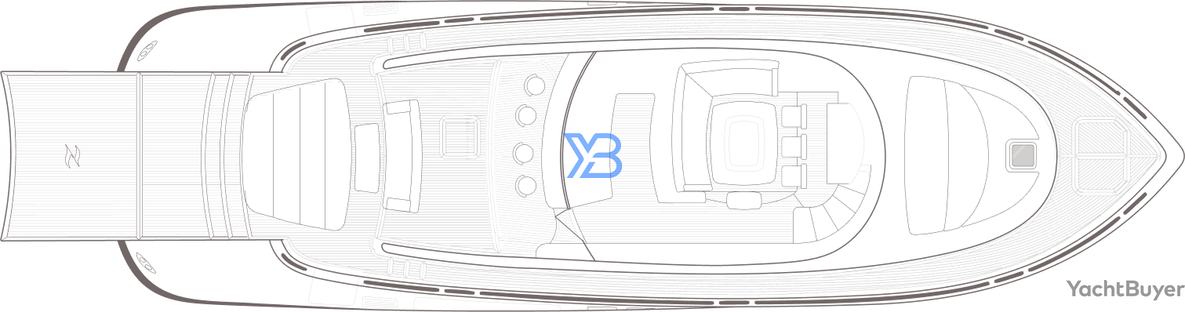
The rollover transom is one of those features that has become closely associated with Zeelander. From the dock, the stern looks completely clean, with no sign of a bathing platform hanging off the back of the boat. Press a button, though, and the whole section folds down to reveal a sizeable beach club area.
It's a neat solution. The yacht keeps its distinctive curved stern profile underway, but once you're at anchor there's a lot more usable space right on the water. The integrated lighting is built into the structure and the passerelle remains hidden away until it's needed, so none of the hardware interrupts the look of the boat when everything is closed up.
And how unexpected it feels the first time you see it operate. The stern appears to be a fixed part of the hull, then suddenly swings down and becomes somewhere to sit, swim or launch water toys.
One feature we always like to see on a boat this size is a helm door, and the Zeelander has one positioned right beside the driving seat. Open it and you're immediately next to a secondary docking station, which makes a lot of sense when manoeuvring in tight spaces. Rather than shouting instructions across the boat, you can step straight outside and deal with lines or fenders while remaining close to the controls.
The side decks lead forward to the bow seating area, but what strikes me is how clean everything looks. Zeelander has done a good job of hiding the practical necessities. Even the anchoring gear is tucked away rather than left on display, helping preserve the smooth lines that define the boat.
Up on the foredeck you'll find another sunbathing area, giving guests somewhere to escape the social hub of the cockpit. It's a pleasant spot to sit, particularly when the boat is at anchor, with enough separation from the aft deck to make it feel like a completely different space.
Aft Deck and Side-Launch Garage
This particular boat has been configured around a large lounging area rather than a formal dining setup. The aft seating adjusts, the table lowers and an infill cushion completes a substantial sunpad overlooking the water. It's a relaxed arrangement that feels entirely in keeping with the yacht's character.
One thing you don't often see is a rigid bimini on a boat like this. Most owners would opt for some form of canvas arrangement, but this one uses a carbon fibre structure instead. It feels as though it belongs to the boat rather than being something added afterwards, and it provides plenty of shade without compromising the open-air feel.
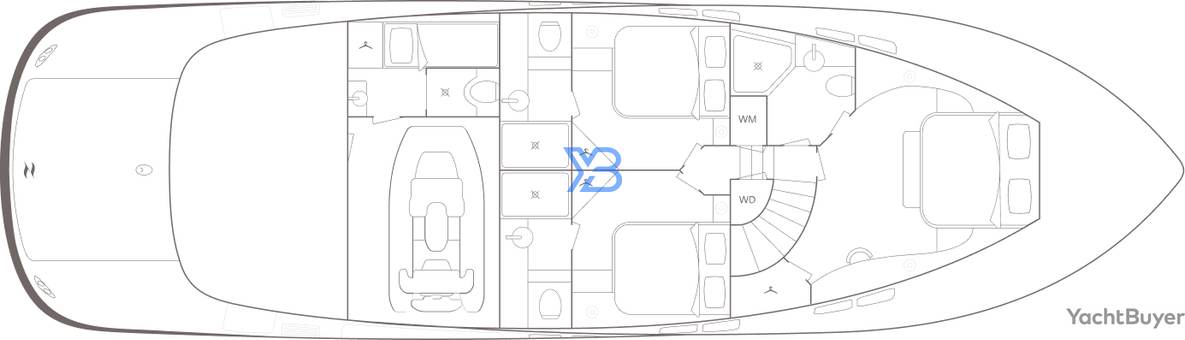
Beneath it sits one of the more unusual features on board. Hidden behind a side-opening hull door is a garage housing a Williams SportJet 345, launched and recovered using a dedicated winch system. There is also space for a pair of Seabobs and other water toys.
It's a solution that raises an obvious question - why do it that way?
When you look at the stern, by moving the tender garage to the side of the yacht, Zeelander leaves the entire transom area free for the rollover beach club. There's no crane occupying valuable deck space and no tender sitting on the bathing platform. The garage also provides storage for water toys, keeping everything neatly out of sight until it's needed.
Interior Accommodation
Step inside and the first thing that catches the eye is the wood. Except some of it isn't wood at all.
The lighter surfaces use what Zeelander calls Wood Art. Every grain line is painted by hand, which sounds unlikely until you get close to it. Then the workmanship becomes apparent. At a glance it looks entirely convincing, right down to the texture and variation in the grain.
Alongside it sits a much darker material - bog oak. This comes from oak that has spent centuries preserved in peat-rich ground, which darkens the timber throughout. It isn't a material found on many yachts and it gives the interior a very different feel to the glossy veneers that are everywhere on the market.
The brushed stainless steel seen on deck continues inside too. It's a small detail, but an important one. Most boats of this type rely heavily on polished metalwork. Here, the softer finish sits comfortably alongside the bog oak and Wood Art surfaces, creating an interior that feels cohesive without drawing attention to any one element.
The Zeelander's shape is defined by curves, and that doesn't stop at the exterior. Look around the saloon and it's hard to find a straight line. The cabinetry curves, the furniture curves and even the glass bends in multiple directions.
The glazing is particularly impressive. Creating a simple curved screen is difficult enough, but the glass here curves across more than one plane, which helps explain why it remains such a distinctive feature of the design. It's one of those details that's easy to take for granted until somebody points it out.
The same approach appears throughout the interior. Corners are softened, edges are rounded and the joinery follows the flowing lines established by the hull. Nothing feels forced. Instead, the interior and exterior seem to have been shaped by the same hand, which gives the yacht a strong sense of identity.
It's also a reminder of how much work goes into a Zeelander. The company talks about the thousands of labour hours involved in each build, and details like these help explain where some of that time goes.
The dining table at the centre of the saloon has an interesting backstory. Rather than choosing something from a catalogue, the owner wanted it based on a table from their private jet, right down to the mechanism that allows it to rise, lower and transform the space around it. It can be raised for dining, lowered to create a large daybed, or left somewhere in between depending on how the yacht is being used. The surrounding seating is equally flexible, while a television rises neatly from the cabinetry when required and disappears just as cleanly when it's not.
Owner's Cabin
The owner's cabin sits amidships and makes good use of the yacht's beam. The bog oak seen throughout the saloon continues down here, paired with brushed stainless steel details that tie the whole interior together.
Storage has clearly been given some thought. There are drawers beneath the berth, wardrobes tucked into the joinery and even a hidden workspace that folds away completely when not in use. Closed up, you'd never know it was there.
Guest Accommodation
The two ensuite guest cabins are separated by a connecting door, and at first that feels slightly unusual. On a yacht of this size, most builders would keep the guest accommodation completely separate. But the connecting door allows the cabins to work brilliantly for families. Parents can occupy one cabin, children in the other, with direct access between the two spaces. Close the door and they become entirely independent guest cabins once again.
Aside from that feature, the cabins themselves are finished to the same standard as the rest of the yacht. Large hull windows bring in plenty of natural light, while the bog oak joinery and brushed stainless detailing maintain a consistent feel throughout the accommodation. Both cabins also have their own en suite facilities, creating two comfortable guest spaces that can adapt to different ownership styles without requiring any changes to the layout.
Crew Cabin or Storeroom?
Right aft is a small cabin that can serve a number of different purposes, depending on how the yacht is used. It has a berth, storage, a compact heads compartment and enough facilities for somebody to spend the night if required.
In reality, many owners are likely to use it as a storeroom for luggage, water toys and the sort of equipment that inevitably accumulates on a boat. Equally, it could accommodate a skipper during a delivery trip or a short passage.
Performance & Engine Room
Lift the aft deck and you'll find three Volvo Penta IPS 1350 engines producing a combined 3,000hp. That's enough to push the Zeelander 7 to around 40 knots, which feels faintly ridiculous when you're standing in a beautifully finished saloon surrounded by bog oak and brushed stainless steel.
The IPS installation also brings the benefits you'd expect, including joystick docking and dynamic positioning. On a yacht of this size, that's no bad thing.
Access has been thought through as well. For routine checks there's no need to open up the entire deck. A dedicated hatch provides access to the key service points, while larger jobs simply require the whole aft section to be lifted clear on hydraulic rams.
The gyro stabiliser, at first glance seems to be in completely the wrong place because it isn't mounted on the centreline. There is, however, a perfectly good reason for that as the space available dictated the position, while still allowing the unit to sit close enough to the boat's centre of gravity to work effectively.
Helm Station
The helm itself is refreshingly straightforward. Garmin screens handle navigation and boat systems, while the triple Volvo Penta IPS installation brings joystick control and dynamic positioning. There's a lot of capability here, but it's all laid out in a way that feels easy to get to grips with.
A feature worth pointing out is the pair of seats beside the helm. Pull a lever and they swivel round to face forwards, which means guests can sit alongside the skipper underway rather than staring at the back of a seat. It's a small thing, but it changes the feel of the space considerably when the boat is on the move.
The visibility is excellent too. The huge curved windscreen provides a clear view ahead, while the helm door gives direct access to the side deck and docking controls outside. On a 22m (72ft) yacht capable of around 40 knots, that's exactly what you'd hope to find.
Ownership Considerations
This particular Zeelander 7 highlights one of the things that sets the builder apart. Many yacht manufacturers offer a choice of fabrics, woods and colours. Zeelander is prepared to go considerably further. The brushed stainless steel, custom deck treatment, bog oak joinery and private jet-inspired dining table seen aboard this yacht all stem from conversations between the owner and the yard rather than a list of factory options.
That level of involvement won't appeal to everyone. Some buyers simply want to choose a colour scheme and get on the water as quickly as possible. Zeelander's approach is different. Owners are encouraged to think about the details, whether that's the finish on a handrail, the way a table operates or the materials used throughout the interior. The result is that two Zeelander 7s can share the same platform while feeling surprisingly different once you step aboard.
It's also worth considering what these boats are designed to do. While a Zeelander 7 is perfectly capable of covering serious distances, most owners are drawn to a different set of qualities. The combination of speed, craftsmanship and distinctive styling lends itself particularly well to entertaining, day boating and weekends away. That's not to say longer cruising isn't possible, but it isn't usually the reason people buy one.
In Summary
This yacht doesn't change what the Zeelander 7 is, but it does reveal how differently two examples of the same model can feel. The platform remains familiar. The details, materials and finishes tell a much more personal story.
Discover more about the Zeelander 7, or explore the entire fleet by checking out all Zeelander Yachts for sale. You might also want to browse all yachts for sale to uncover more options.
Pricing
Price as reviewed: $7,500,000 (€6,445,492 approx)
Price is approximate as highly dependent on owner specification. Zeelander operates a made-to-order build model. Final pricing varies significantly depending on materials, finishes, stabilisation, propulsion and owner-requested customisation.
Looking to own a Zeelander 7? Use YachtBuyer’s Market Watch to compare all new and used Zeelander 7 Boats for sale worldwide. You can also order a new Zeelander 7, customized to your exact specifications, with options for engine choice and layout configuration. Alternatively, explore our global listings of new and used boats for sale and find your perfect boat today!
Specifications
- Builder Zeelander
- Model Zeelander 7
- Length Overall 22m
- Beam 6m
- Draft 1.5m
- Hull GRP
- Cabins 3
- Berths 3
- Crew 1
- Yacht Type (Primary) Classic Style
- Use Type (Primary) Cruising
- Cruising Speed
- Max Speed
- Fuel Capacity 6,000 Litres
- Fresh Water Capacity 1,500 Litres
- Engine Model 3x Volvo Penta D13-IPS1350
Tenders
The following tenders are compatible with the Zeelander 7
- Williams SportJet 345 Builder: Williams Jet Tenders Length: 3.45m Speed: 40 Knots
Interested in a Zeelander 7?
NEW Build
Find your local dealer for a personalised, no-cost consultation
or just request
Brochures & Pricing
Used & In Stock
Looking for a ready-to-go Zeelander 7 or pre-owned options? Explore all inventory of the Zeelander 7 available worldwide