
For many people, yacht co-ownership offers an accessible route into boating without the full financial commitment of sole ownership. However, it also brings practical compromises around availability, decision-making and responsibilities. This guide explains how shared ownership works, its advantages and disadvantages, and whether buying your own yacht is the better long-term choice.
- What is yacht co-ownership?
- Why does yacht co-ownership appeal to some buyers?
- The drawbacks of co-ownership
- Why do people choose full yacht ownership?
- How does co-ownership compare with full ownership?
- Who is yacht co-ownership best suited to?
- Who is better suited to full ownership?
- Practical path if you’re unsure
- FAQ
What is yacht co-ownership?
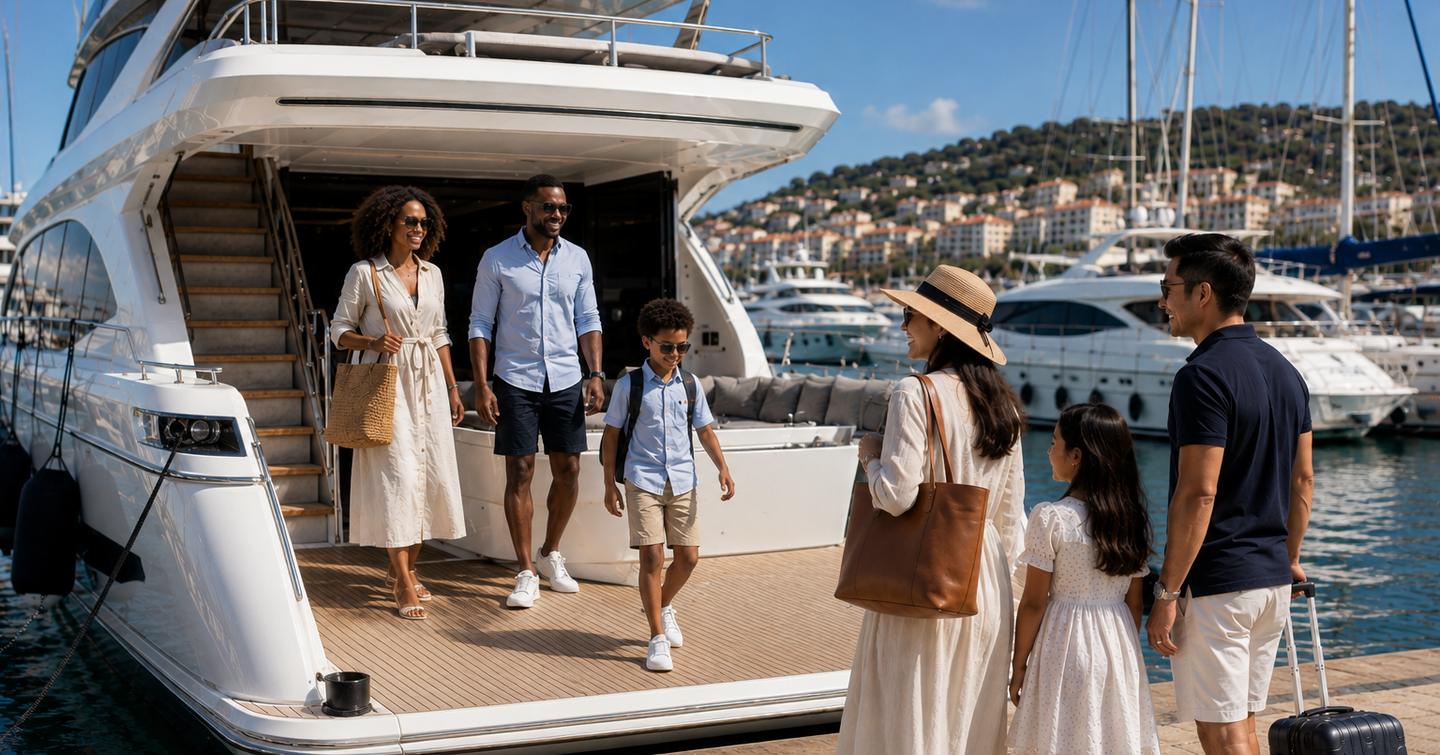
Co-ownership (also called fractional ownership) is when several people jointly own one yacht. Each person buys a share, splits the running costs, and gets allotted time on board under a management company.
In a typical setup:
You buy a fraction of the yacht (for example 1/4 or 1/8), so you hold real equity, not just a holiday timeshare.
Purchase price, crew, insurance, maintenance, and berthing are shared.
You receive guaranteed weeks, often split between main seasons (e.g. Mediterranean in summer, Caribbean in winter).
A professional manager handles crew, upkeep, logistics, and scheduling.
It sits between chartering (rent and leave) and full ownership (you own 100% and decide everything).
Co-ownership can be a smart fit for some people, especially those who only want a few fixed weeks a year and care more about cost than control. For many others, it gives up the main reason people buy a yacht in the first place.
Related guides:
Why does yacht co-ownership appeal to some buyers?
| Advantage | What it means |
| Lower entry cost | Access to a larger or newer yacht for a fraction of the full price. |
|
Shared running costs |
Crew, yard work, insurance, and management are split. |
| Less day-to-day hassle | Professionals handle logistics, crew, and moving the boat between cruising grounds. |
| Matches light use | If you only cruise a handful of weeks a year, paying for 100% of a yacht can feel inefficient. |
| Step up from charter | Heavy charter users sometimes prefer equity and fixed weeks over endless weekly rates. |

The drawbacks of co-ownership
1. You can’t take it out whenever you want
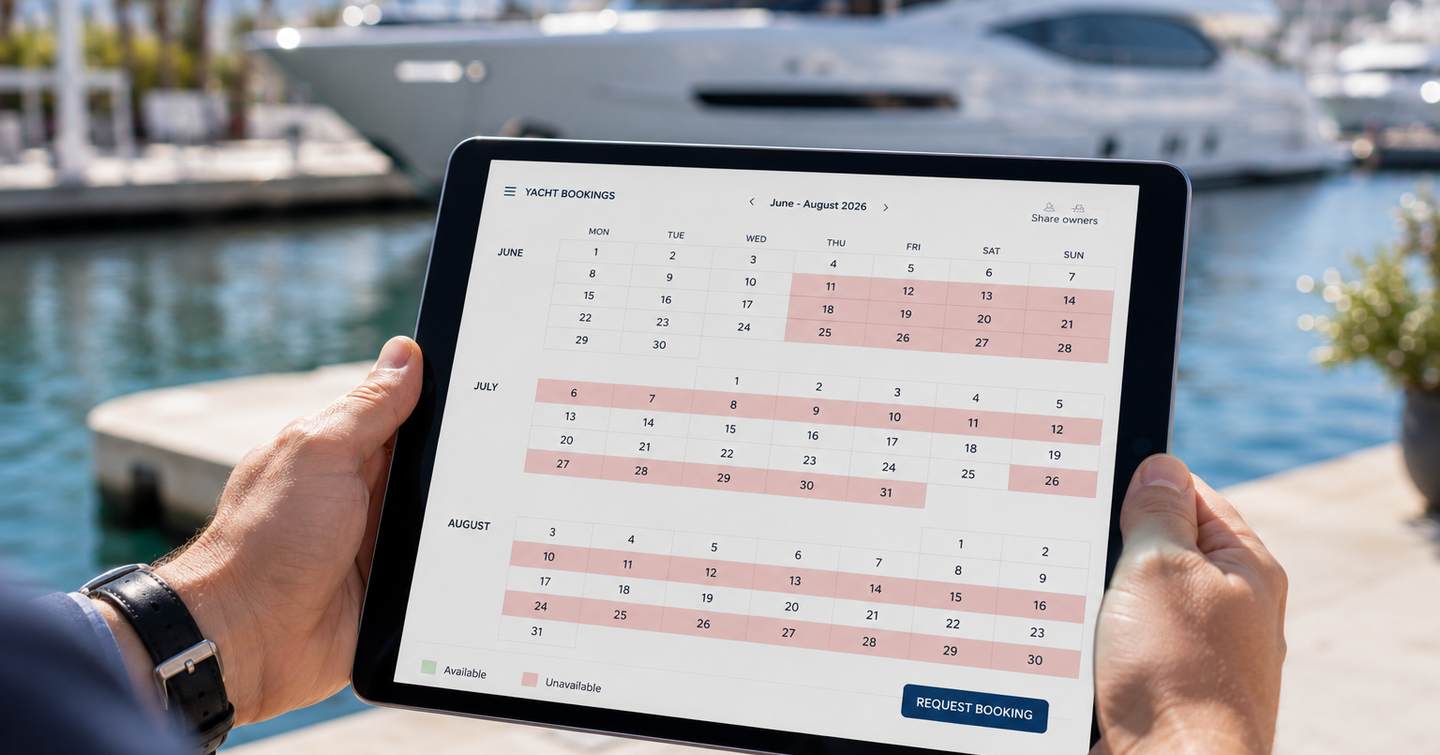
This is the core trade-off. Access is scheduled. You get allotted weeks, not open-ended use. Preferred dates are not always guaranteed. Spontaneous weekends, last-minute trips, or long unplanned seasons don’t fit the model.
2. You don’t have full control
The itinerary, crew, refits, spending, and how the boat is run are shared with other owners and the manager. If you want the yacht configured and run your way entirely, a share will feel restrictive.
3. Shared care standards
Different owners treat a boat differently. Condition depends on house rules, the captain’s authority, and how carefully other shareholders use the asset.
4. More partners, more friction
Even supporters of the model say it works best with a small group. More co-owners means more opinions on money, maintenance, and sale timing.
5. Exit can be harder
Selling a share is often less liquid than selling a whole yacht. The buyer must accept the programme, the remaining owners, and the management structure.
Why do people choose full yacht ownership?
Most buyers aren’t trying to optimise cost per week. They buy for freedom, access, and control.
Unlimited access on your schedule
Ownership fits your calendar. The boat is available when life opens a window, not only when a shared rota allows it. Flexibility and control are consistently cited as the decisive advantages of owning over chartering or sharing.
Go where you want, when you want
Relocate on a whim, stay longer in a favourite bay, or leave on a free Thursday. You’re not negotiating location or dates with a programme or other shareholders.
A yacht that is actually yours
Your crew learn your preferences. Layout, toys, and systems reflect how you live on the water. Privacy and discretion are simpler when the boat isn’t a shared asset.
Management without giving up the keys
Full ownership doesn’t have to mean doing everything yourself. Professional yacht management can handle crew, maintenance, refits, and admin while you keep 100% of the access and decision rights. That’s the opposite of co-ownership: someone else takes the hassle; you keep the freedom.
In short, people buy so the boat is there when they are ready, not when a shared calendar says so.
Related guides:

How does co-ownership compare with full ownership?
Question |
Co-ownership |
Full ownership |
| When can I use the yacht? | Only in your allotted weeks (set by the programme calendar) | Whenever you want, subject to crew/yard schedules you control |
| Who decides how it’s run? | You, the other owners, and the management company together | You (or your manager acting only for you) |
| What do I actually own? | A share of one yacht, plus usage rights under programme rules | The whole yacht |
| Can I personalise it? | Usually limited — fleet standard, shared taste |
Yes — layout, toys, décor, refit, crew setup |
| What does it cost? |
Lower upfront price; ongoing share of running costs + management fees |
Full purchase price; full running costs (often with a manager you hire) |
| How private is it? | Other owners use the same yacht at other times | Only you, your guests, and your crew |
| How do I get out? | Sell your share (buyer must accept the programme and remaining owners) | Sell the whole yacht on the open market |
| Who is it built for? | People happy with a few fixed weeks and lower cost | People who want freedom, control, and a yacht that fits their life |
Who is yacht co-ownership best suited to?
Consider a share if most of this is true:
- You’ll only use the boat a few set weeks a year.
- You’re fine sharing major decisions and care standards.
- Reducing cost matters more than spontaneity.
- You accept that selling out may be slower and less flexible.
If you hesitate on those points, you’re usually describing a buyer, not a co-owner.
Related guides:

Who is better suited to full ownership?
Full ownership tends to fit better if you:
- Want to go when you are free, not when the rota allows.
- Value privacy, personalisation, and a crew that works only for you.
- Might use the boat more than a handful of fixed weeks.
- Want a straightforward exit via the open brokerage market.
- Like the idea of management support without giving up control.
Full ownership isn’t right for everyone. If your use is light, predictable, and cost-driven, a well-run share can work. If what you actually want is spontaneity, privacy, and a boat that’s ready on your schedule, buying is usually the clearer path.
Related guides:
Practical path if you’re unsure
- Charter first — test sizes, layouts, and how often you really go.
- Be honest about usage — fixed weeks vs “whenever we’re free.”
- Price the whole picture — share price + annual fees vs owning with management.
- Decide what you’re buying — a scheduled product, or a lifestyle asset you control.
Related guides:
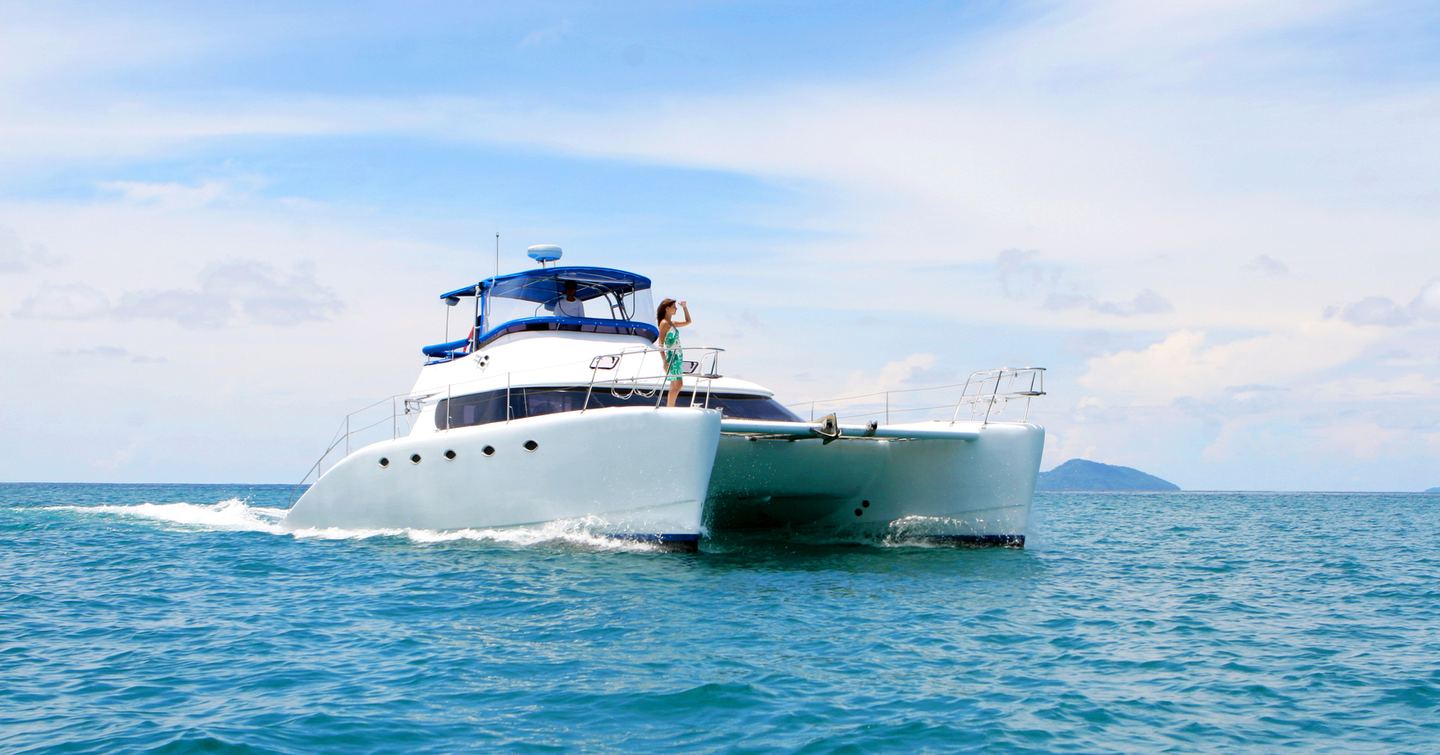
Co-ownership lowers cost; full ownership keeps unlimited access. Before you choose, use YachtBuyer MarketWatch & Intelligence to compare real asking prices, supply, and verified listings so you can see what buying outright actually costs versus sharing, and pick the path that matches how you want to use the boat.
FAQ
Is co-ownership the same as a timeshare?
No. Co-ownership usually means you buy a real share of the yacht. A timeshare is typically only a right to use it for set periods, without equity.
How much use do co-owners usually get?
Most programmes allot a fixed number of weeks per year, often split by season. You don’t get open access whenever you want.
Who should consider co-ownership?
People who only want a few planned weeks a year, care most about lowering cost, and are comfortable sharing decisions and care standards.
Who is usually better off buying?
Anyone who wants to use the yacht on their own schedule, keep full control, personalise the boat, or have a simpler path to sell later.
Can I still use a management company if I buy?
Yes. Full ownership can include professional management for crew and upkeep without giving up unlimited access or control.
Looking to own a yacht? View all new and used superyachts for sale, tracked in real time by YachtBuyer MarketWatch. We scan the entire market to ensure access to all genuine listings, helping you save time. Alternatively, explore all other yachts for sale.
