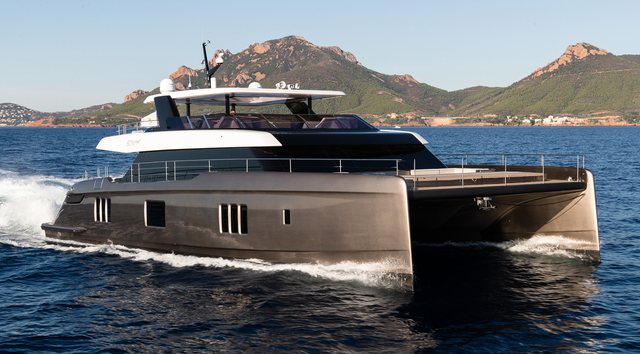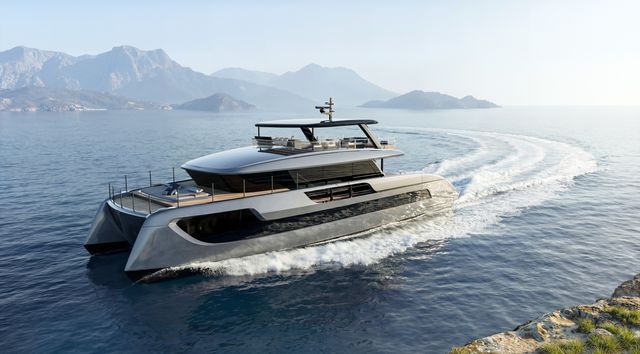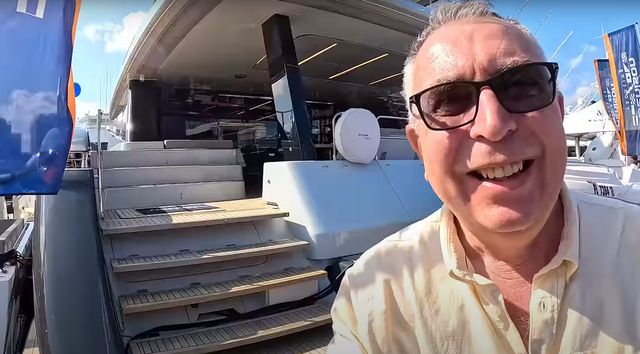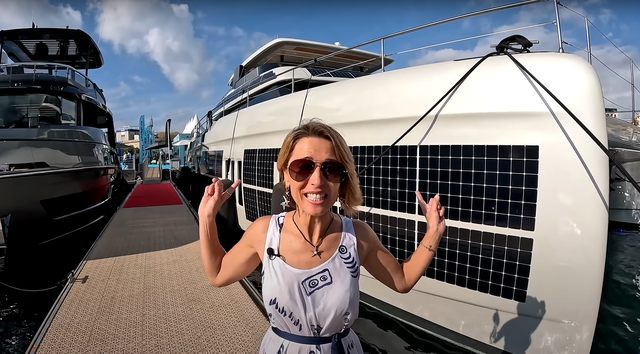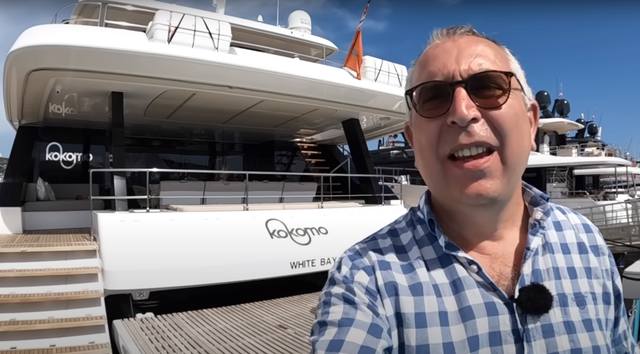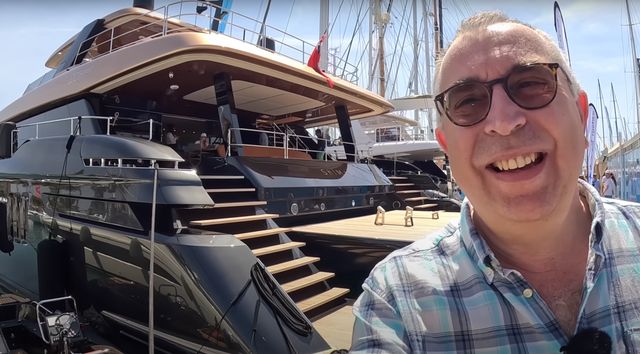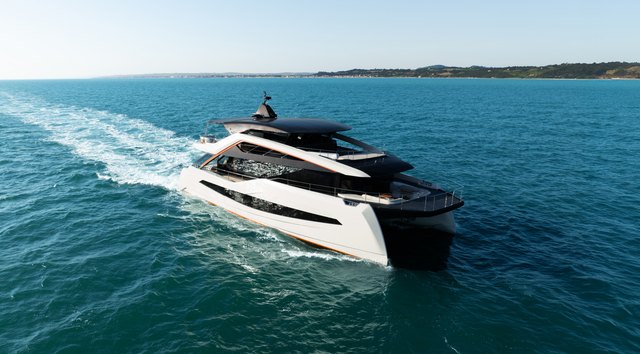
Sunreef knows how to build enormous power cats, but the Ultima 88 takes a different route. At 28.4m long, Wasabi still packs in five cabins, a huge Ocean Lounge and the sort of width you expect from a serious multihull.
The interesting bit is whether the new formula works. The Ultima range has to keep all that space and easy living while feeling sharper, lower and a little less intimidating than the traditional Sunreef Power models. Has the 88 pulled it off?
Sunreef Ultima 88
- LOA 28.4m
- Model Year 2026
- Cabins 5
- Crew 5
- Max Speed 26 knots
- Status In Production
- Yacht Type Multihull
- Use Type Cruising
- Vessel M/Y Wasabi
Review Video
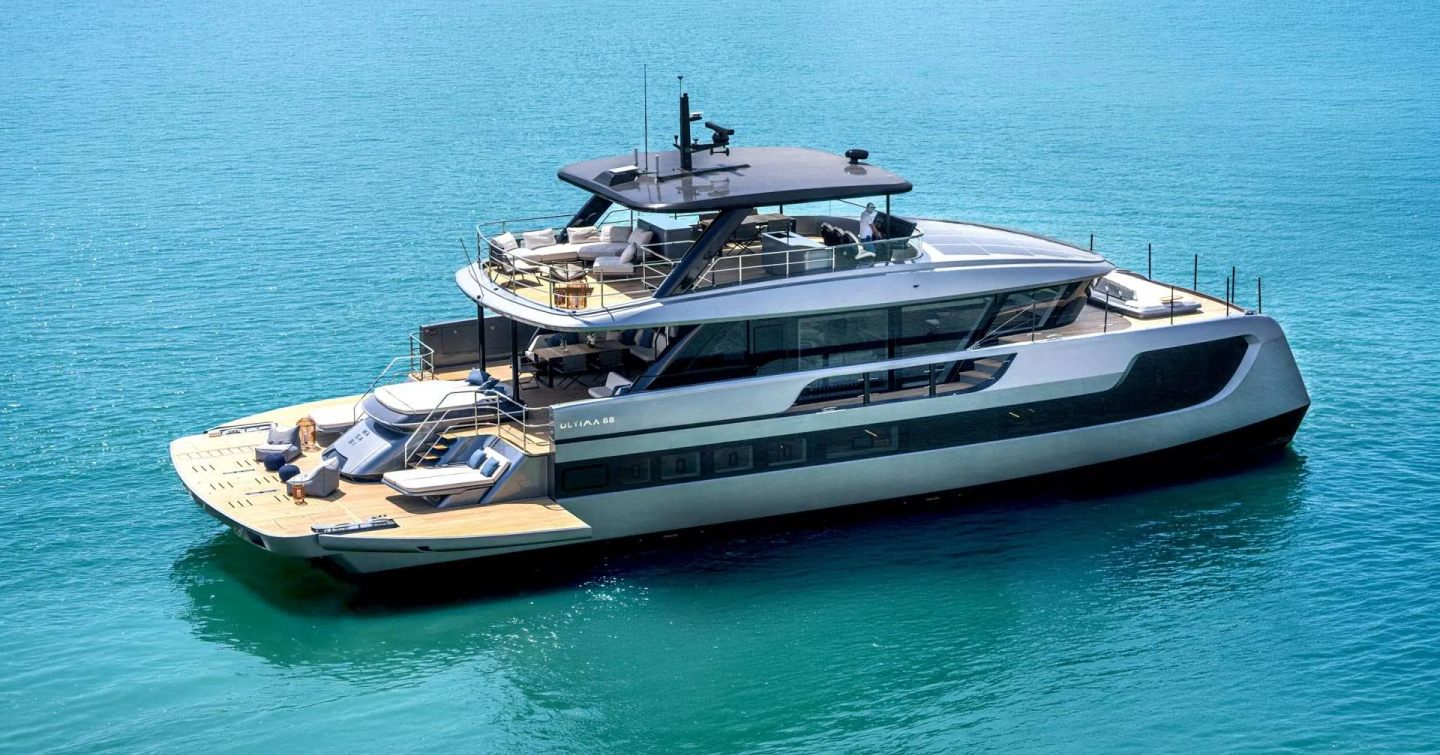
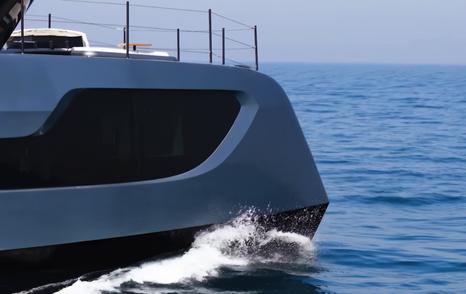
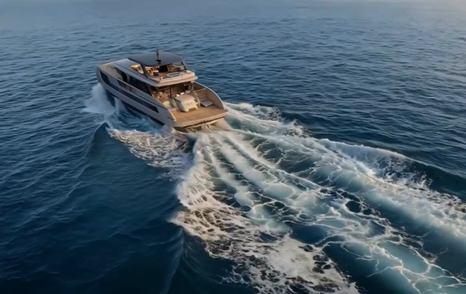
The whole thing sits much lower than a conventional Sunreef Power, and once you start picking through the details it becomes clear how much work has gone into that. The windscreen kicks back quite sharply, the roofline stays low and the long strips of glass help stretch the profile out. The bow has a softer curve to it as well, so there’s less of that big upright wall you often get on a power cat of this size.
There are the little qualities that make her. The mooring cleats drop flush into the deck, and there’s a small lip around them so lines don’t rub straight across the paintwork. The carbon-fibre poles can come off when you want the cleanest possible look. None of this is especially dramatic on its own, though it all adds up. There’s less clutter, fewer hard edges and less stuff poking up into the profile, which is exactly what this sort of boat needs.
The scale is still pretty serious. Beam is 9.3m, and once the Ocean Lounge terraces are down you’re looking at a little over 11m across the stern. Total living space is quoted at more than 400 sq m. You feel that width everywhere, but the boat hides it well from the dock. The one place where the slimmer approach gives something away is the foredeck. It doesn’t have the enormous acreage you get on a Sunreef Power 80, though there’s still a very decent sunbathing area up there.
Sunreef gives owners quite a lot of freedom once you get inside. The bulkheads stay where they are, so this isn’t a clean-sheet custom build, but the furniture, colours, textures and materials can all move around. Wasabi’s sushi counter is a pretty good example of how far you can take that. It’s a very specific choice, but that’s really the point - the basic architecture stays fixed and the personality of the boat can change quite a lot around it.
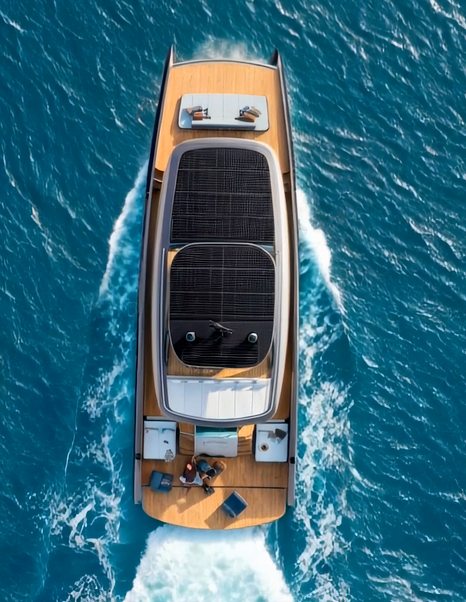
Wasabi was built at Sunreef’s Ras Al Khaimah facility, and there’s a strong in-house streak to the tech as well. The enormous helm screen is Sunreef’s own work, right down to the system behind it, and the hardtop carries solar panels that feed the batteries and take some of the load off the generators. That sort of thing crops up all over the boat. Sunreef clearly likes to solve these problems itself.
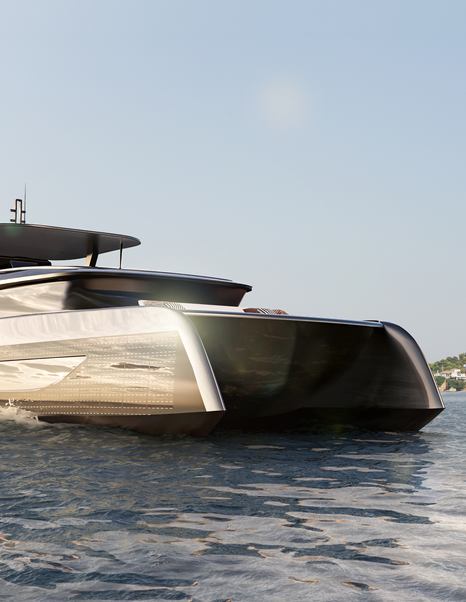
The Eco version takes it all much further. It can be paired with hybrid propulsion and Solar Skin 3.0, Sunreef’s latest photovoltaic system. The cells are ultra-thin and worked into the yacht’s surfaces, so you don’t end up with a load of bulky rigid panels sat on top. The latest version copes better with partial shade, uses data from Sunreef’s fleet to work out where the cells do their best work and gives each panel an RFID tag so faults are easier to trace. Sunreef has also tested the system at temperatures above 100°C and through more than 20,000 load cycles. Wasabi isn’t the hybrid version, so all of that sits on the Eco side of the Ultima 88 offering.
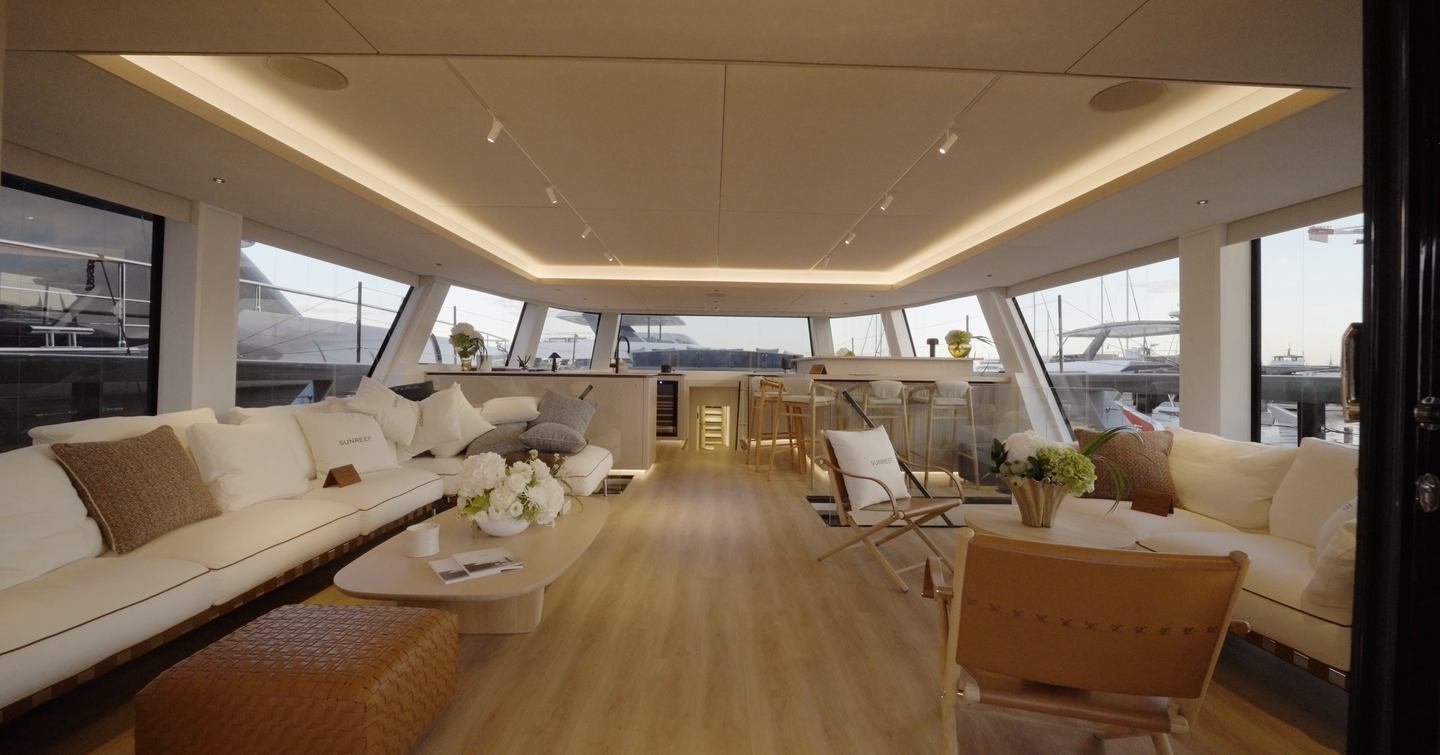
The saloon is incredibly wide, and Sunreef has resisted the urge to fill every last bit of it with fixed furniture. Wasabi has a smaller sofa to port, a much longer one opposite and plenty of clear floor between them, while the big windows keep the whole space very bright. The furniture can move around too, so another owner could take this in a completely different direction.
The staircases down into the hulls could easily have become great lumps in the middle of the room, but the glass balustrades keep them surprisingly discreet. They almost hover there. It’s a lovely bit of design because you get the access you need without chopping the saloon up or blocking those long views across the boat.
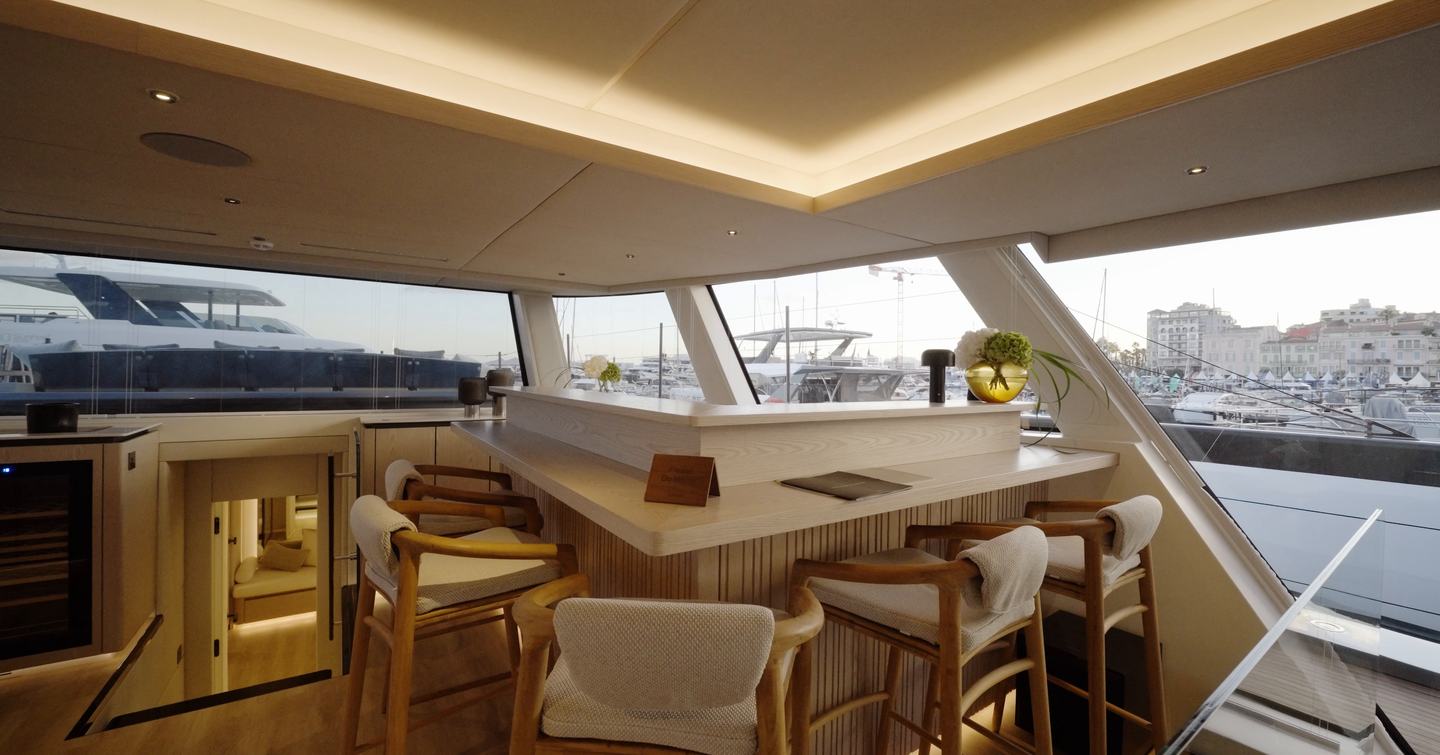
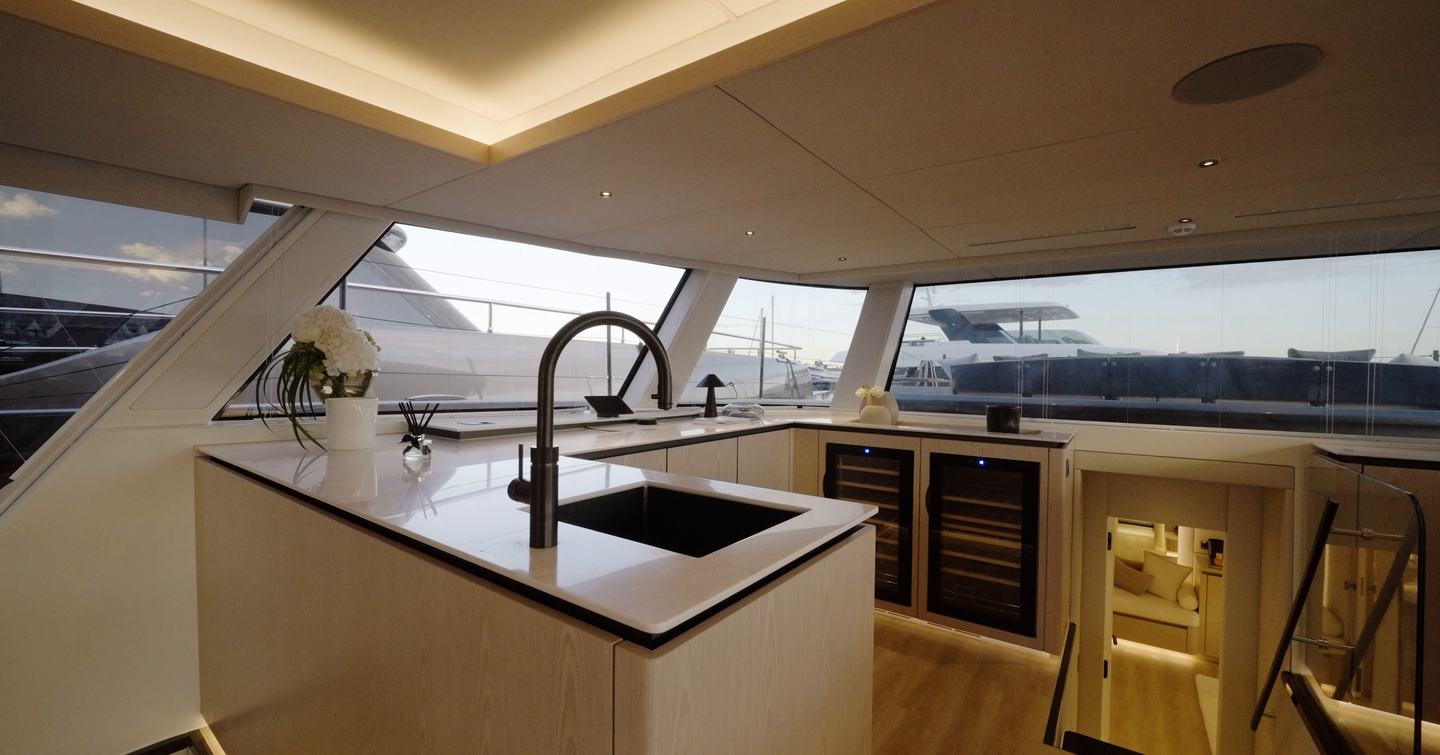
Forward is a sushi counter, which perhaps explains the name Wasabi, and it’s certainly a first for me on a yacht. With the blinds up, whoever is behind it gets a fantastic view out through the glass, and it turns this end of the saloon into a really good social space. There’s another bar opposite with a sink and wine fridges, plus control of the AV system nearby. It could all have felt a bit gimmicky, but it works because there’s so much room around it.
Galley
The important thing is that none of this has to do the heavy lifting of an actual galley. That sits down in the port hull, away from the main guest area, and there’s a very decent amount of space down there. Three large fridge-freezers are in there and I remember criticising the lack of cold storage on another Sunreef, so they’ve clearly addressed it here.
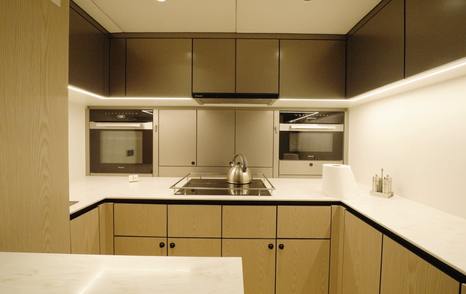
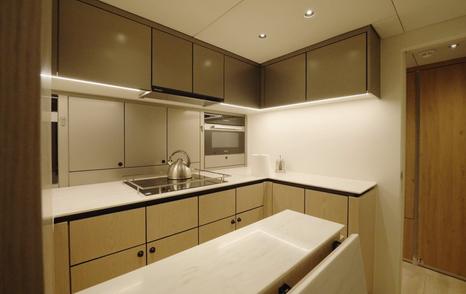
In the rest of the galley, there’s a big sink, dishwasher, hob and extraction, two microwave ovens and Miele appliances. A small section of worktop pops up when the chef needs more prep space, then folds away again to open up the passage through the galley. There’s a hull window as well, which helps because this sits deep down in the boat.
Owner's Cabin
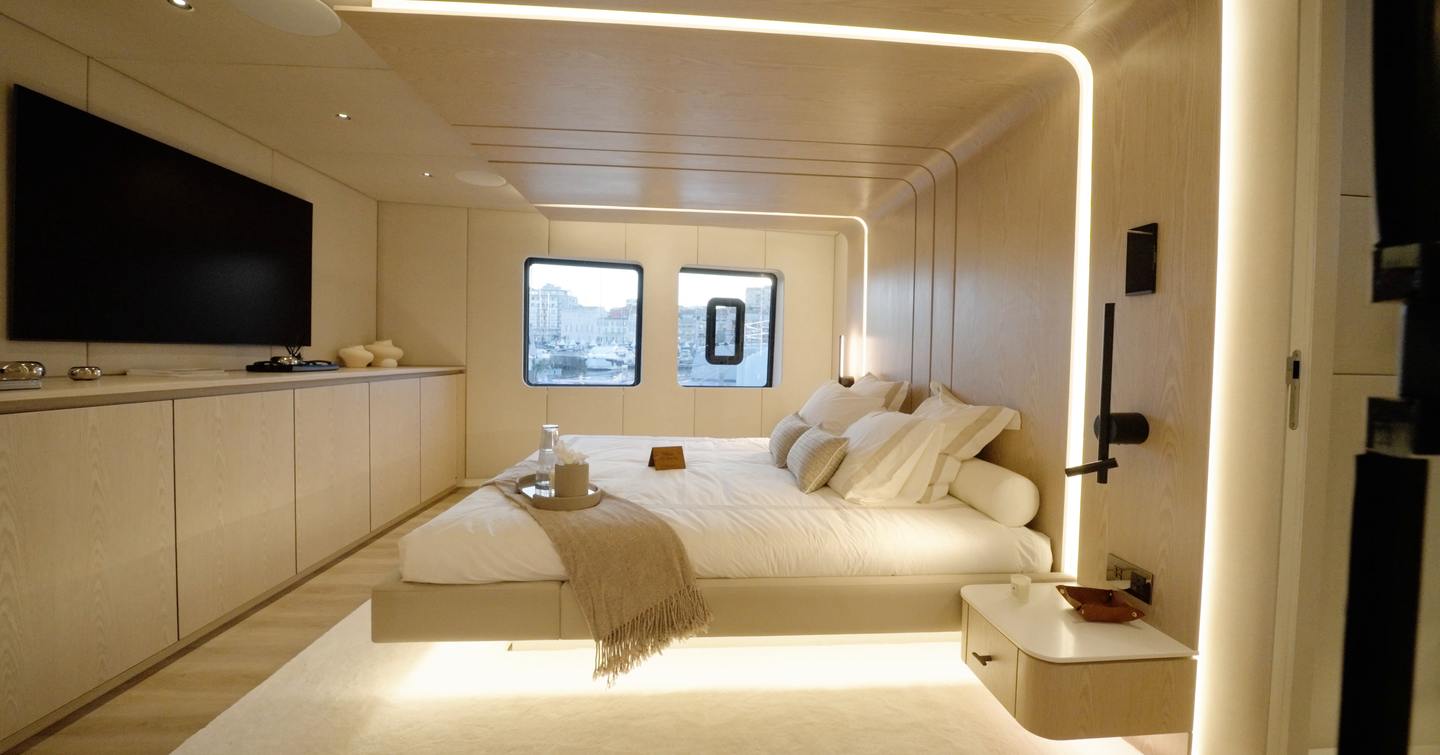
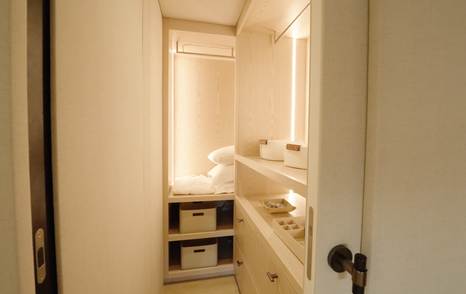
The owner’s cabin gets the prime spot right forward and takes the full beam, so there’s a huge amount of floor space to play with. The bed sits quite low, which I rather like, and Sunreef has lined the windows up with it so you can see the view when you’re lying down. There’s an opening hatch for some fresh air, a massive TV opposite and a long dresser with storage underneath, with a walk-in wardrobe to one side.
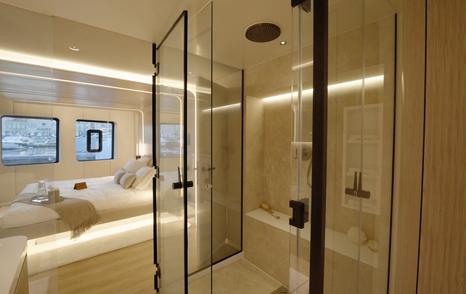
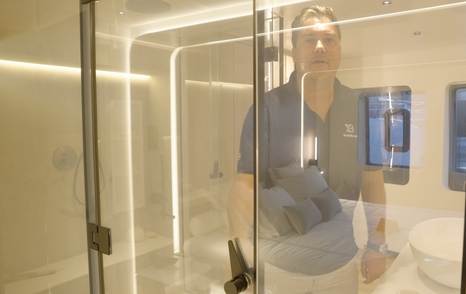
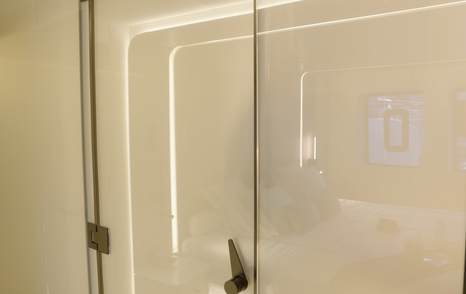
The bathroom is enormous for a yacht of this length, with a very wide vanity, loads of storage and a huge separate shower with a bench, hand shower and rainfall head. The toilet sits around the corner, which gives it a bit more privacy. There’s switchable clear-to-opaque glass between the bathroom and the cabin. You may love your partner, but you don’t necessarily want to watch them in the bathroom all day, so being able to turn the glass opaque at the touch of a button is a very good idea!
Guest Accommodation
Over in the starboard hull are the two VIPs. They’re very similar, with raised double beds that you step up into, and that arrangement works really well because once you’re in bed everything sits neatly around you. The hull windows are at the right height for a lovely view out over the water, and there’s a decent amount of storage beneath the dresser plus a larger hanging locker. The ensuites are much the same size as the bathrooms in the other guest cabins, so the extra VIP status comes mainly from the cabin space itself.
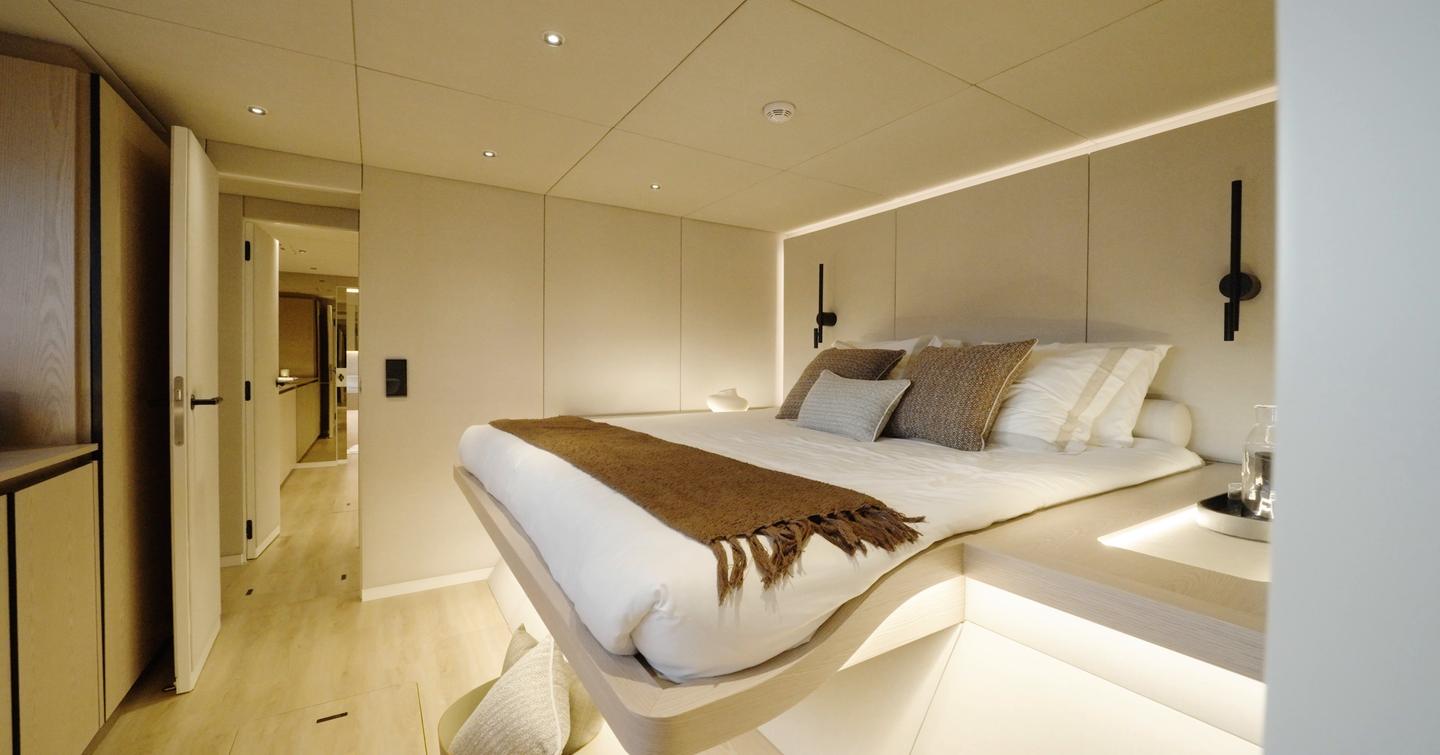
The aft double in the port hull is a touch smaller, though it’s still a lovely cabin. The bed has the same raised arrangement and the light palette keeps the room feeling bright, even though we had another boat parked right alongside when we were on board. A control screen handles the lights and air-conditioning, while a wall of mirrors hides the bathroom entrance. The ensuite isn’t huge, but there’s room for a separate shower and a floating vanity.
Forward of that is the twin, which follows much the same formula with two separate beds and a similar-size bathroom. That break between the beds gives the layout a bit more flexibility and stops the lower deck from becoming a run of near-identical doubles. Carbon-fibre steps lead down to the guest accommodation, which is a nice little reminder that this is meant to be the sportier Sunreef.
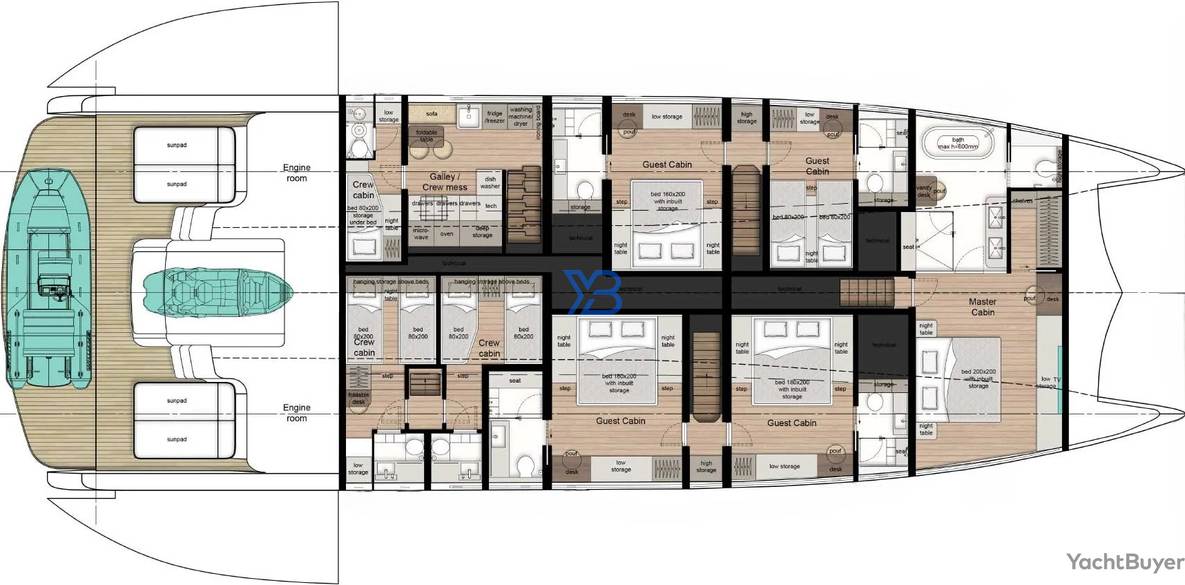
In total, there are five cabins, with the full-beam owner’s suite forward and four guest cabins split between the two hulls.
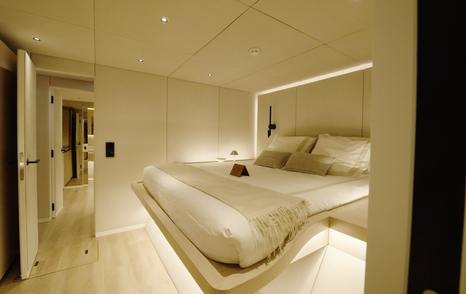
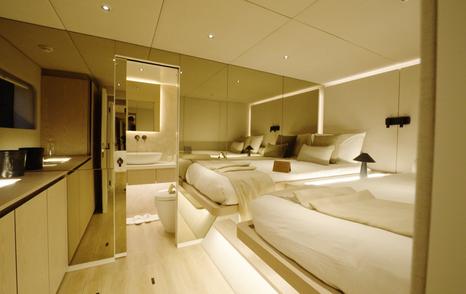
Crew
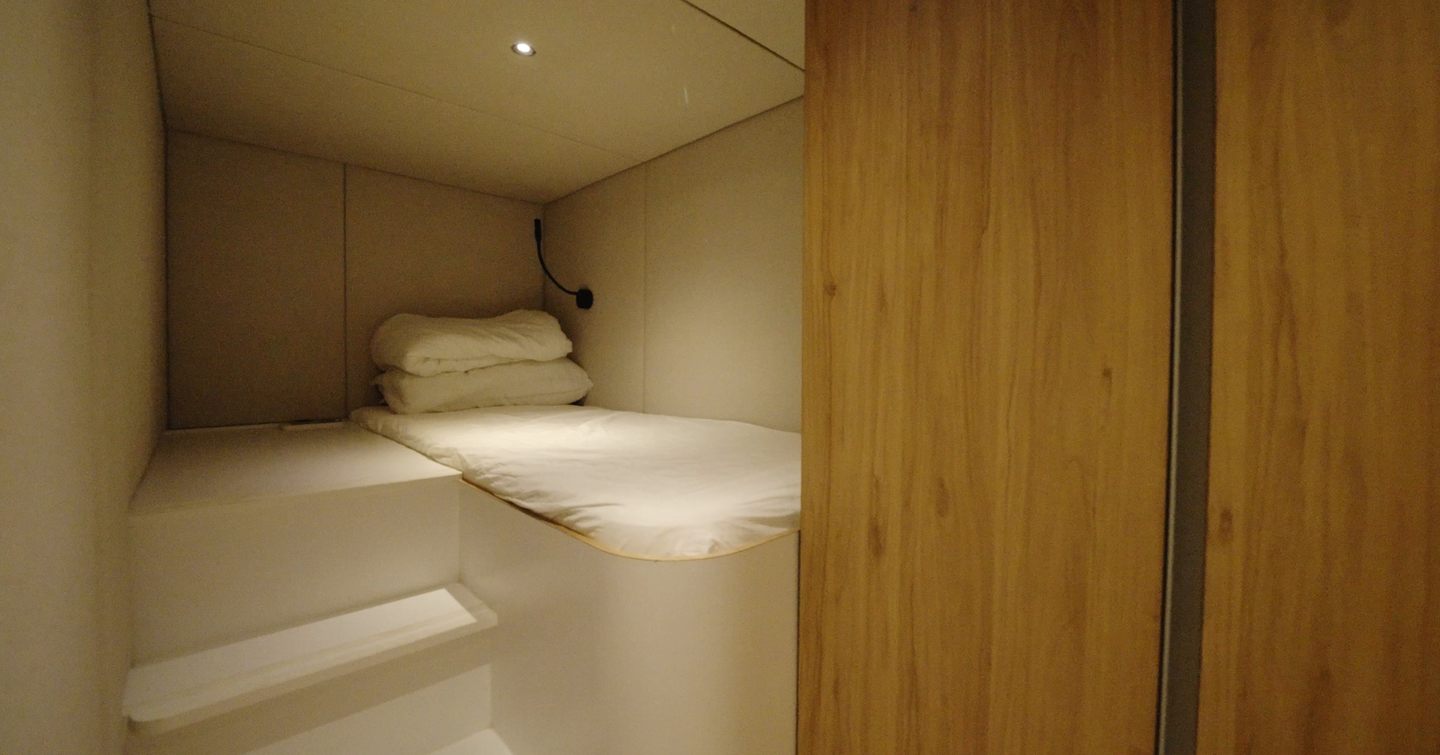
Crew accommodation is split between the hulls, with separate access from the aft deck so staff don’t have to keep cutting through the guest areas. There are at least three crew cabins aboard, although we could only get into one of them, so there’s a limit to how much we can judge the setup as a whole.
The cabin we did see sits right beside the galley and feels very much like the chef’s cabin. It has a decent amount of room over the bed and its own bathroom, but it’s quite austere compared with the guest accommodation. There’s no window in the cabin itself, which makes it feel a little gloomy, although the bathroom does have one and lets some natural light through when the door is open. The ensuite is a wet room too, so everything is going to get pretty wet once the shower is on. It’s practical enough, but it’s not one of the stronger spaces on the boat.
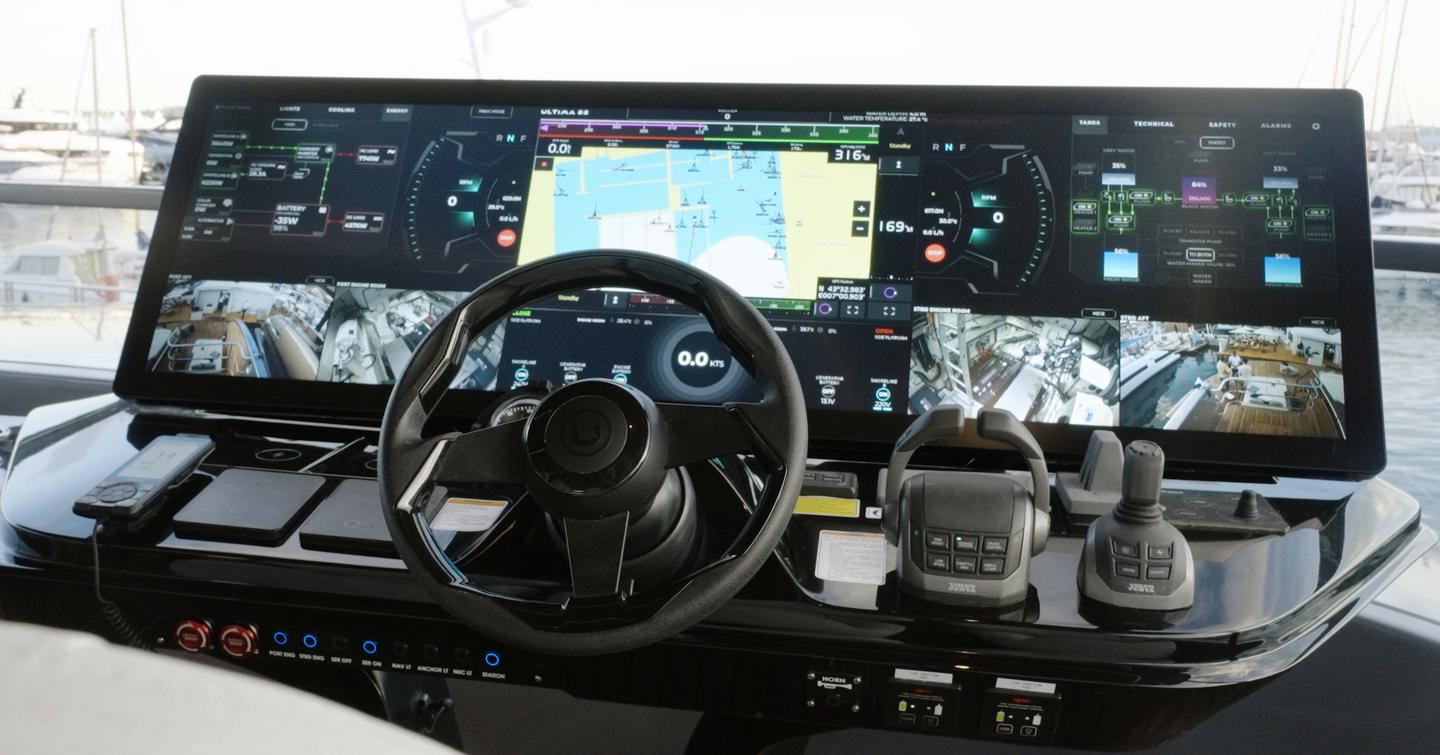
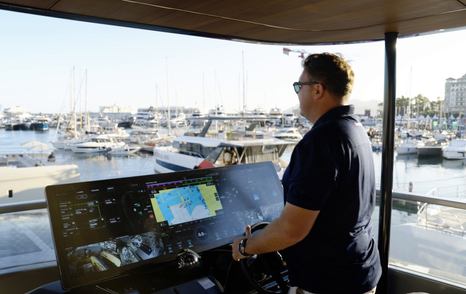
The helm is one of the most impressive bits of the boat. Sunreef has done away with the usual bank of separate displays and put pretty much everything onto one enormous screen, developed in-house. Navigation sits in the middle, with speed and engine data below, RPM information to either side and feeds from the yacht’s cameras around the edges. You can even see how energy moves around the boat. There’s a huge amount of information there, yet from the helm seat you can take most of it in at a glance. It’s absolutely superb.
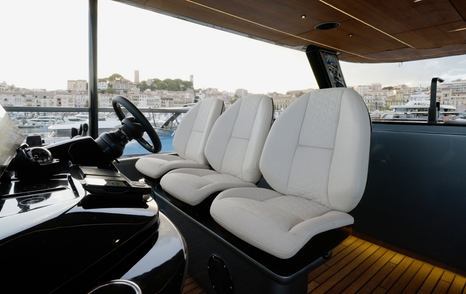
There’s a joystick for close-quarters work, a bow thruster and an adjustable wheel that controls the IPS pods, plus three helm seats. Cameras around the yacht help with visibility and also give access to the machinery spaces, which is useful on a boat this wide.
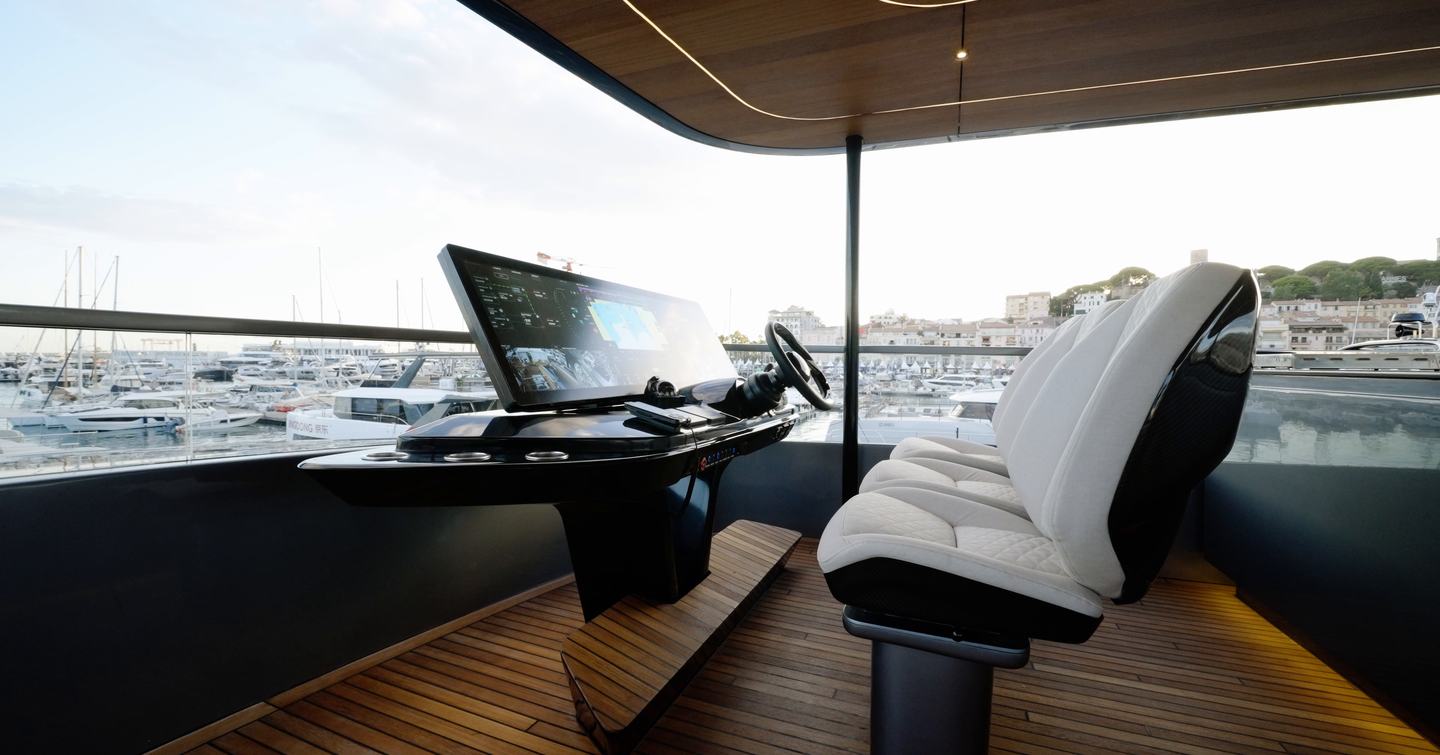
There is one issue, and it’s quite an obvious one. From the seat, the forward view isn’t brilliant. That fantastic screen is so big that it gets in the way, and you can’t really see the bow. Stand up and things improve, though I’d still like the whole helm position raised a little so the sightline works better from the chair. It feels like an odd compromise on a helm that is otherwise very well thought out.
Wasabi has a pair of 1,000hp diesels with Volvo Penta IPS pod drives, and Sunreef quotes a top speed of 26 knots. The claimed cruising band runs from 8 to 22 knots, so there’s plenty of flexibility in how the boat can cover ground. We didn’t drive it, though, so there’s no point pretending we know what the ride, noise levels or handling are like. Those will have to wait for a proper sea trial.
The performance numbers do at least fit the whole Ultima idea very neatly. This is meant to feel much closer to a fast GT than the traditional big Sunreef Power formula, and 26 knots is a healthy figure for a catamaran of this size. An Eco version with hybrid propulsion is available too, though Wasabi is the conventional diesel-powered boat with IPS.
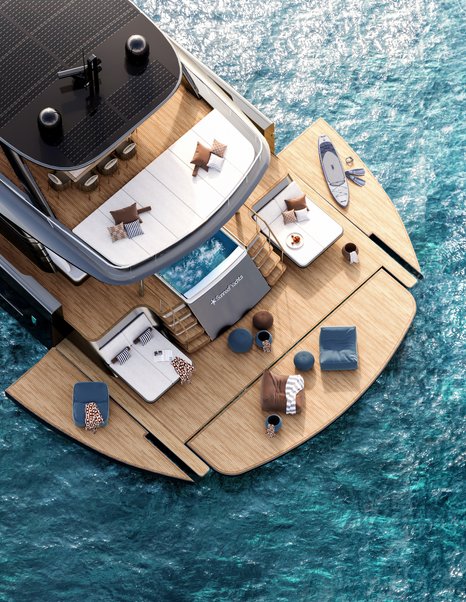
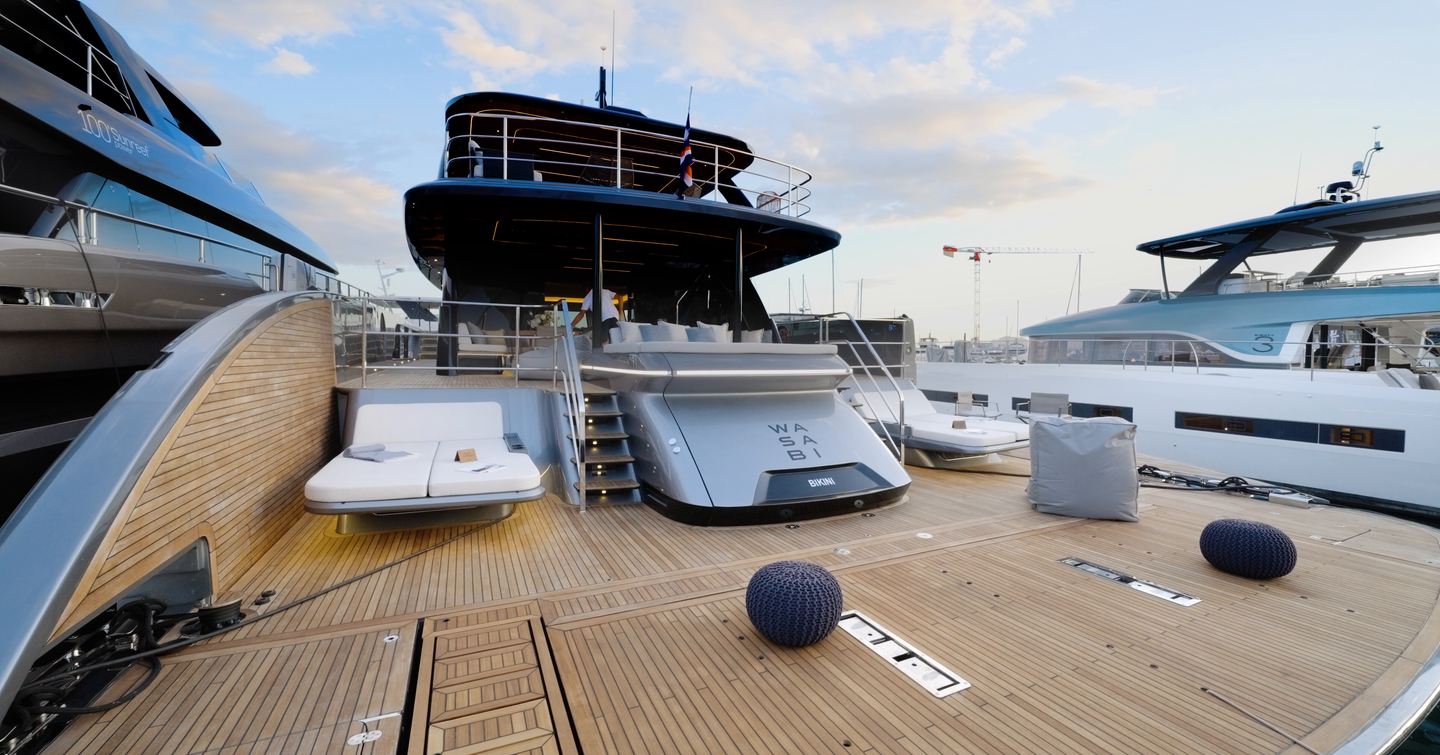
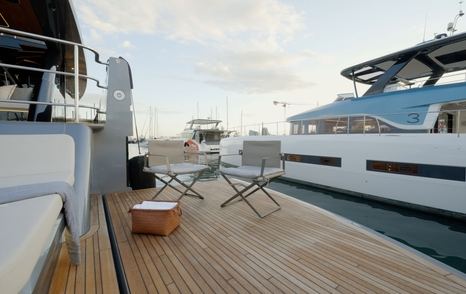
The Ocean Lounge is where the Ultima 88 really goes for it. With the terraces up, the stern is already vast, then they drop away and the beam stretches to a little over 11m. The hydraulic platform sits right across the back and will take 1 tonne, so there’s room for a decent tender, while the garage beneath can swallow a three-seat jet ski. It all sits on one level too, which makes a huge difference. There’s no clamber up and down between separate platforms as there is on some of the bigger Sunreef Power models.
I really like the fixed furniture here as well. Big beach clubs often look fantastic once the crew have dragged all the loose chairs, beanbags and cushions out, but this one already has proper sunpads built in. Drop the terraces when you arrive at anchor and there’s somewhere to lie down straight away. You can still throw loose furniture into all that spare floor space, of course, but you don’t have to. It’s a brilliant bit of deck space and probably the best part of the boat.
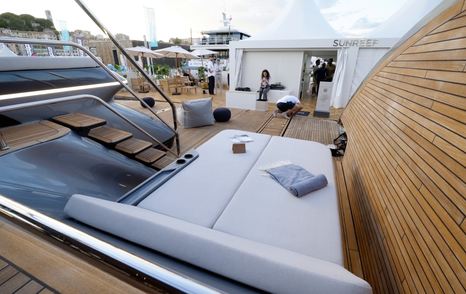
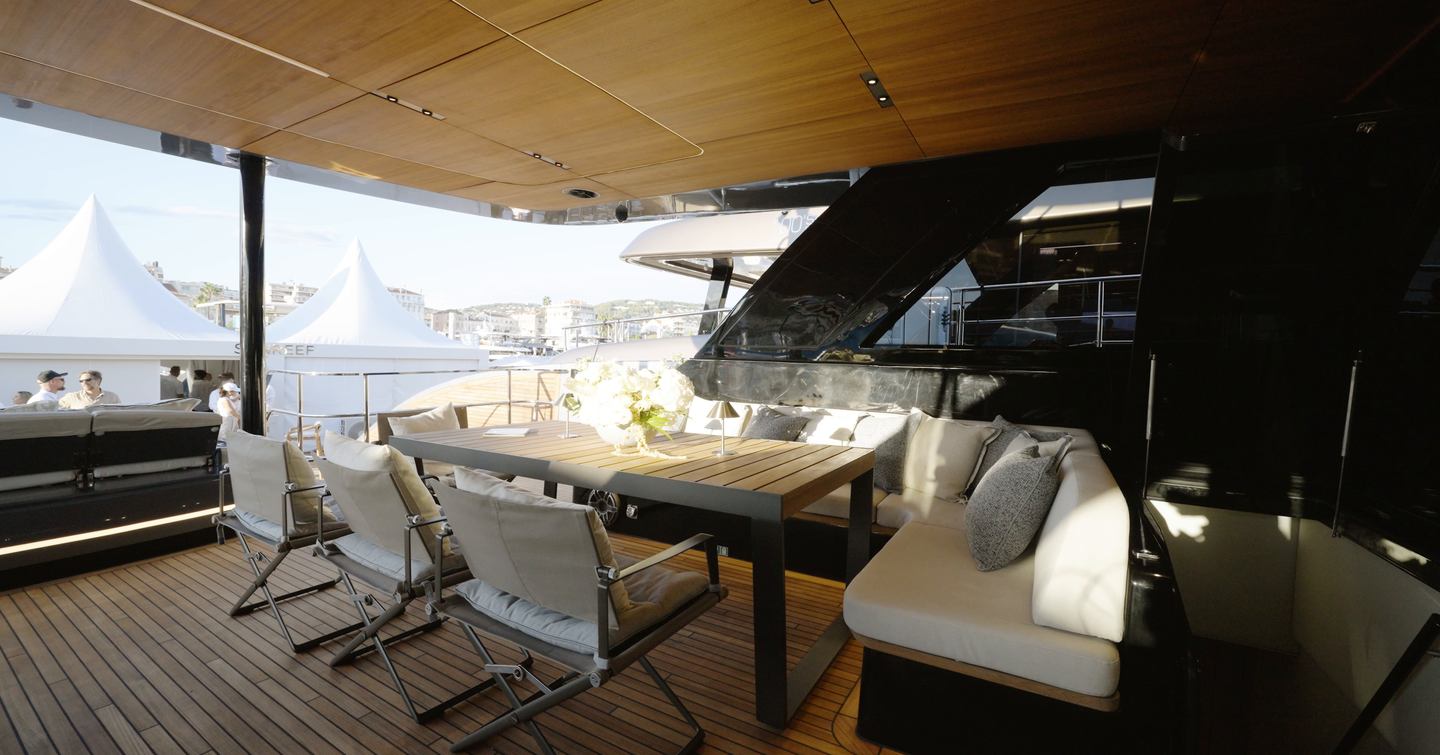
Up a level, the cockpit has another big sunpad right in the middle, which is quite unusual on a power cat because the tender normally gets in the way of this sort of thing. Behind it is a very well protected seating area, with plenty of shade and good shelter from the wind. There’s a dining nook to port with an L-shaped sofa and room for around eight at the table, plus a service area opposite for a sink, fridges or an ice maker. Big lockers in the sides take the carbon-fibre shade poles and all the usual deck gear that otherwise ends up kicking around outside.
Side Decks & Foredeck
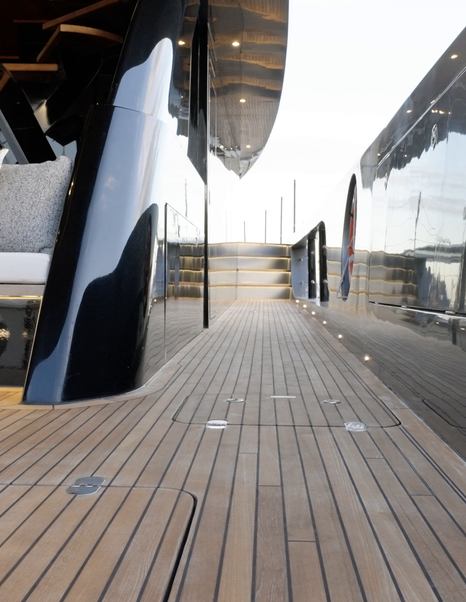
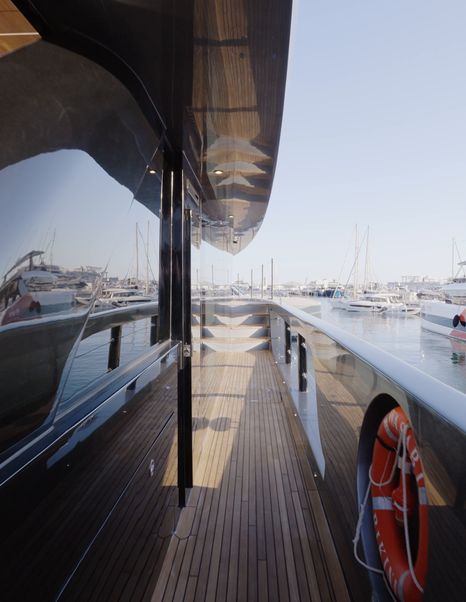
The side decks are basically bowling alleys. They’re enormous, with tall bulwarks that make them feel very safe, and the open sections lower down stop all that fibreglass from blocking the view through the saloon windows. Further forward, carbon-fibre cords add some extra security. There’s also an exterior day head on this level, which is such a sensible idea. Anyone coming out of the water can use it without traipsing through the saloon in wet trunks.
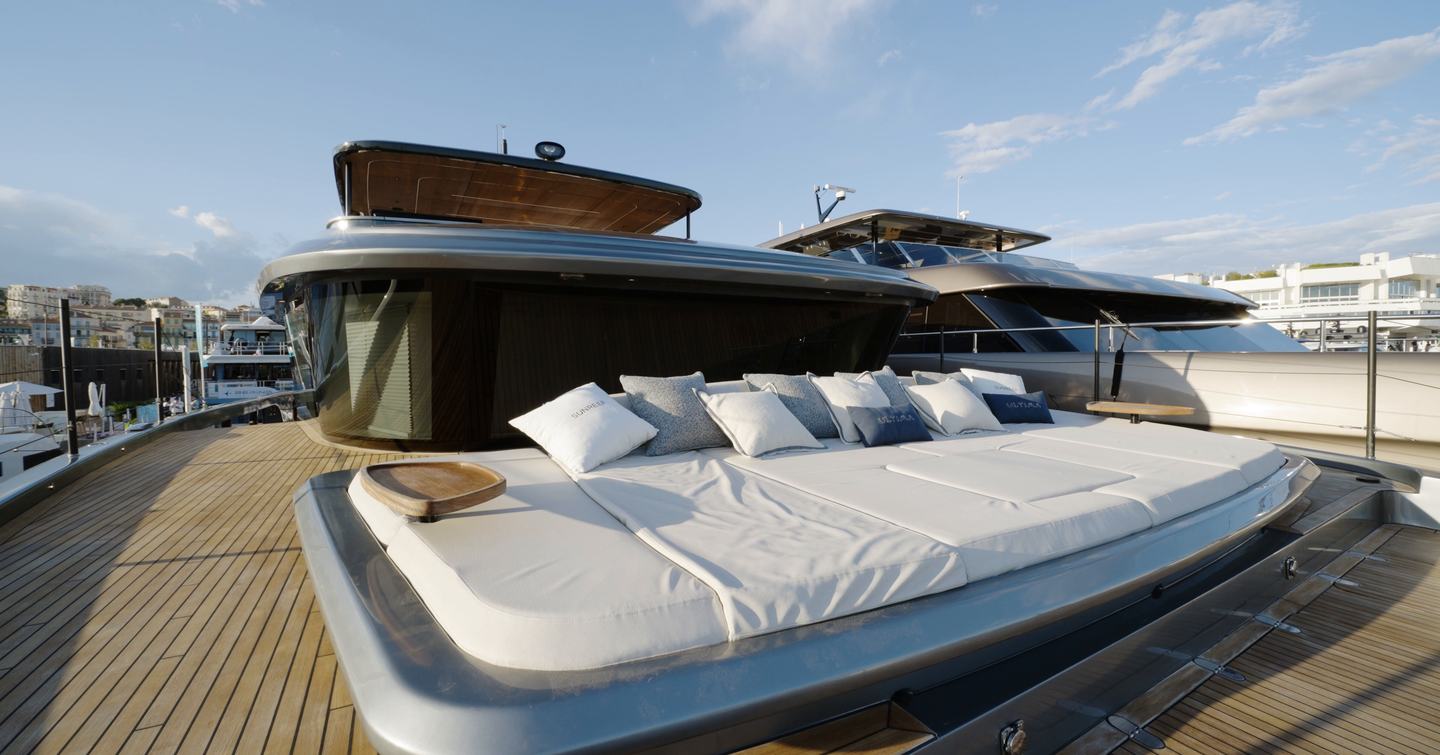
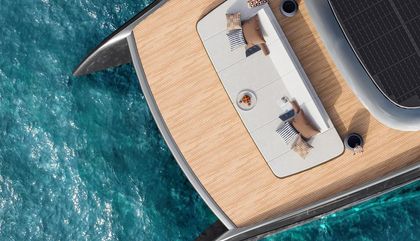
Up at the bow, you can see where some of the Ultima’s lower shape has eaten into the usual Sunreef acreage. A Power 80 gives you a much bigger slab of foredeck, though this is hardly short of room. There’s a wide sunpad with adjustable backrests, cupholders and lovely teak tables either side. It’s a very nice place to get away from the busier aft decks, and the lower profile makes it feel quite different from the towering foredecks on the regular Power range.
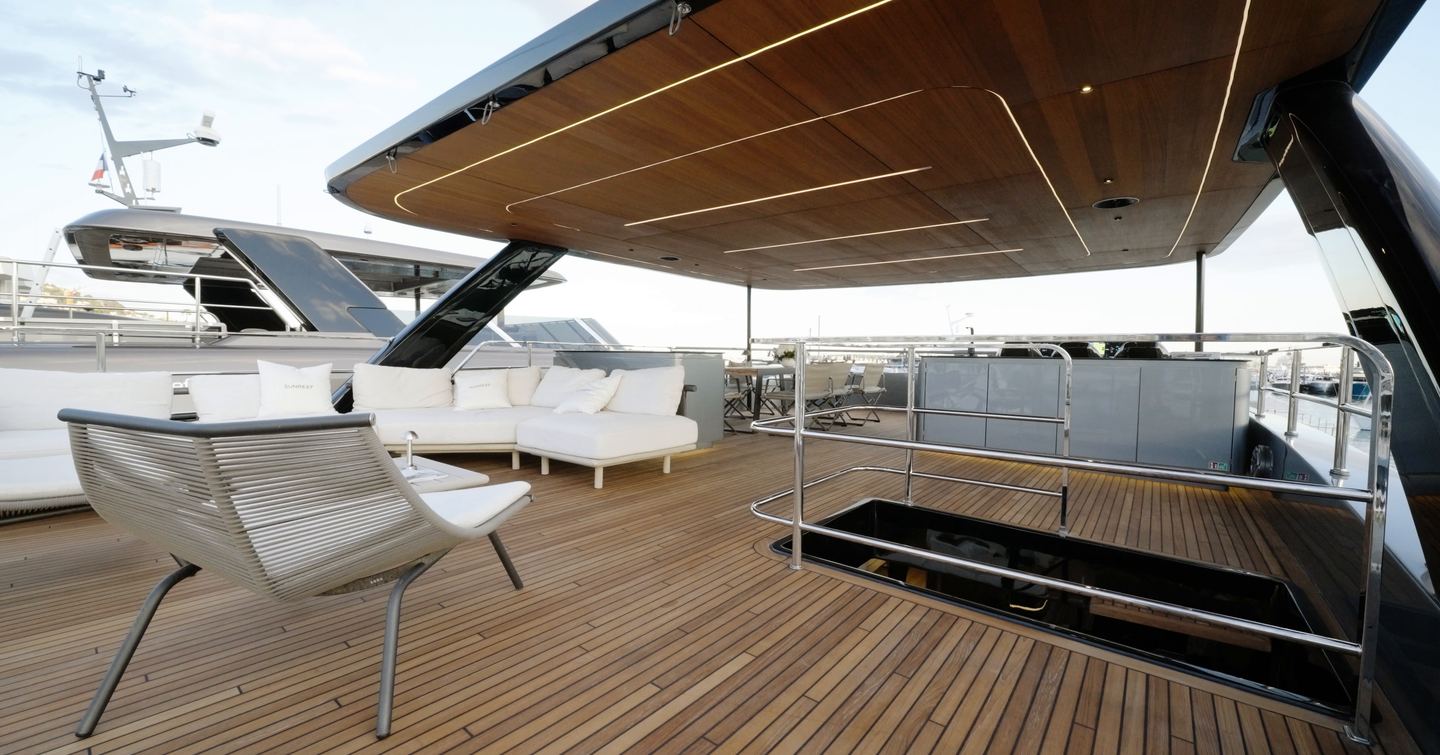
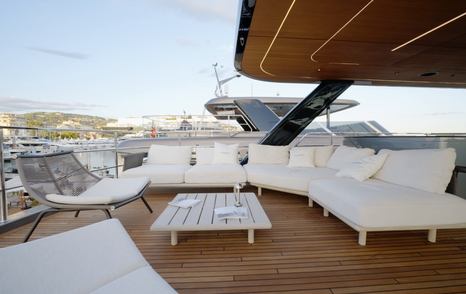
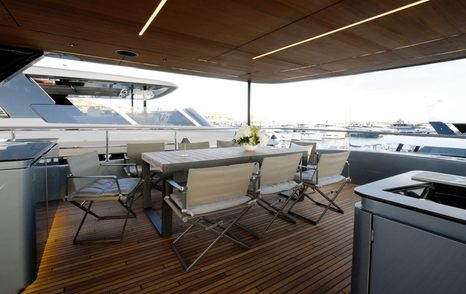
The flybridge is vast again and Sunreef has split it into zones. Aft is the lounging area, with lovely views over the water and extra shade available when you want it. Further forward comes the wet bar with a grill, sink, cooling space and storage, followed by the dining table. The furniture is freestanding, so an owner can shuffle the whole setup around rather than live with one fixed layout, while the large hardtop gives the middle of the deck plenty of shade. The dining table seats around eight.
Our Verdict
The interesting thing is that easier handling probably isn’t the Ultima 88’s biggest win after all. A boat this size is going to have crew, so what matters more is how it looks and feels. And Sunreef has got onto something very good here. The 88 keeps the huge amount of space you expect from a power cat, while shedding much of the boxy, cumbersome look that can come with it.
That could make a real difference for buyers who have always preferred the cleaner shape of a monohull. Add a 26-knot top speed and the Ultima 88 starts to make a very strong case for itself. We didn’t drive Wasabi, so the ride and handling still need a sea trial, but the basic idea works: big-cat space in a far sleeker package.
Reasons to Buy
- Huge, brilliantly executed Ocean Lounge
- Sleeker than traditional power cats
- Superb in-house helm display
Things to Consider
- Poor forward view when seated
- Foredeck smaller than Power models
Pricing
Price as reviewed: €8,800,000
The Sunreef Ultima 88 price starts at around €8.8 million according to YachtBuyer MarketWatch at the time of writing (September 2026), though the final figure will depend heavily on layout, finish, equipment and propulsion choice. Wasabi’s build price hasn’t been disclosed.
Looking to own a Sunreef Ultima 88? Use YachtBuyer’s Market Watch to compare all new and used Sunreef Ultima 88 Catamarans for sale worldwide. You can also order a new Sunreef Ultima 88, customized to your exact specifications, with options for engine choice and layout configuration. Alternatively, explore our global listings of new and used catamarans for sale and find your perfect catamaran today!
Rivals to Consider
The 28m (92ft) WiderCat 92 is probably the cleanest rival because it chases many of the same buyers, just with a very different idea of what a big power cat should be. Its 12m (39ft) beam and 242GT make it a much bigger-volume boat than the Ultima 88, and Wider leans hard into serial-hybrid tech with twin 500kW electric motors, variable-speed generators and a Zero Emission Mode. It can cover around 27nm at 6 knots on batteries alone, or sit quietly for roughly 12 hours with the hotel load running and no genset. Top speed is only 13-15 knots, so the Ultima walks away from it on pace, but the Wider gives you more space, a very polished five-cabin layout and VIPs that open straight onto the beach club. The first hull, Acali, later appeared on the brokerage market at €9.5 million, which puts the two boats firmly in the same shopping conversation.
The 24.3m (80ft) Silent 80 Open has it's own eco option. This isn’t hybrid as an extra talking point - solar-electric propulsion is the whole reason the boat exists. Silent pairs a 22kWp solar array with a battery bank of roughly 522-696kWh and claims up to 100nm a day on solar power alone in the right conditions. The trade is obvious: around 12 knots flat out instead of the Ultima’s 26, and four guest cabins rather than five. What you get back is very quiet cruising, far less reliance on generators and a huge 10.9m (36ft) beam on a much shorter hull. The Open version keeps the upper deck as breezy and open as possible, which makes a lot of sense in the Med or Caribbean.
The 24.3m (80ft) Silent 80 Flybridge uses the same basic solar-electric formula but adds a proper flybridge hardtop and a bit more shelter. That makes it easier to live with in mixed weather and probably broadens its charter appeal too. It’s also the sharpest entry point in this group at around €4.27 million, which is quite a gap from the Ultima 88. You’re still accepting roughly 12-knot performance, but the payback is the ability to sit at anchor with much of the hotel load covered by solar. Silent’s battery and panel warranties are quoted at eight and 25 years respectively, which gives this one a very different ownership pitch from the faster Sunreef.
Then there’s the 24.4m (80ft) Lagoon EIGHTY 3, which basically says forget all that and bring more people. It’s the shortest yacht here, but the six-cabin layout can take up to 16 guests - 60% more than the Ultima 88. That changes the whole brief. This is the big-family or charter choice, with an 11m (36ft) beam, 8,500 litres of fuel and a huge open flybridge built around long stays aboard. The owner’s cabin can have its own balcony too, which is a pretty special trick at this length. The Ultima 88 is faster, lower and more performance-led; the Lagoon uses every inch of the catamaran footprint to squeeze out beds, deck space and sheer carrying capacity.
Considering a new catamaran? Explore Sunreef's entire current range to find the model that best suits your needs, and compare it with alternatives from competitors to ensure you make the perfect choice.
Specifications
- Builder Sunreef Yachts
- Range Ultima Range
- Model Ultima 88
- Length Overall 28.4m
- Beam 9.3m
- Draft 1.5m
- Hull Composite
- Cabins 5
- Berths 10
- Crew 5
- Cruising Speed
- Max Speed
- Fuel Capacity 6,000 Litres
- Fresh Water Capacity 1,600 Litres
- Engine Model 2x Volvo Penta D13-IPS1050
- Engine economic speed 10 knots
- Engine max range (speed type) 1600 (nm)
Sunreef Ultima 88 Layout
-
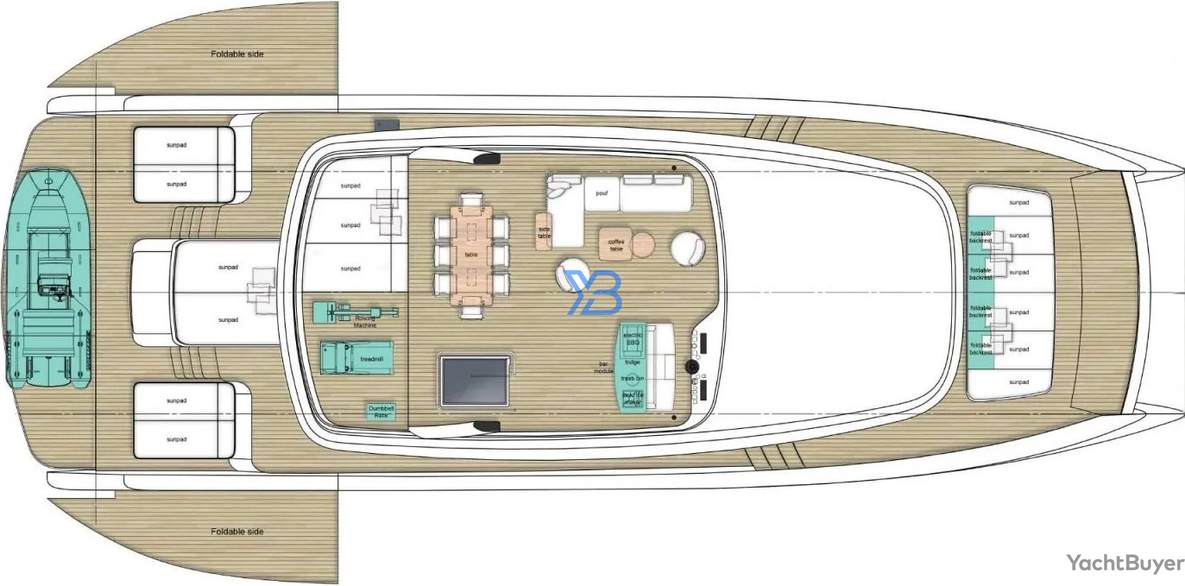
Flybridge
-
![Flybridge Sunreef Ultima 88]()
Most of the flybridge is given over to guests, with the working bits pushed neatly to the edges.
-
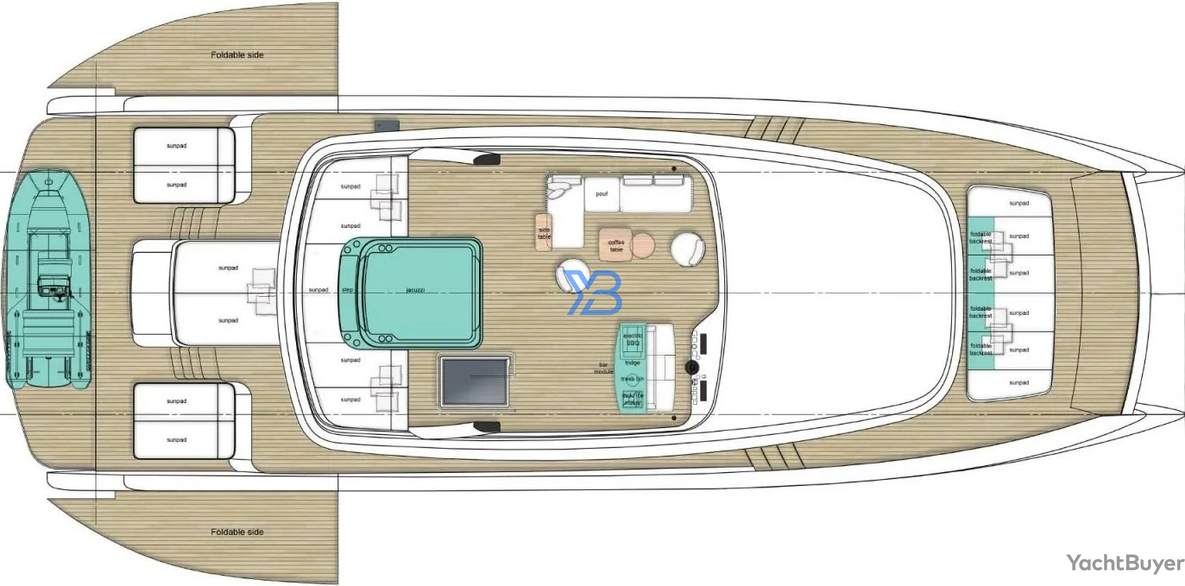
Optional jacuzzi layout
![Flybridge Sunreef Ultima 88]()
The jacuzzi option eats into the lounging space a bit, but the basic flybridge plan still works neatly around it.
-
Main Deck
-
![Main Deck Sunreef Ultima 88]()
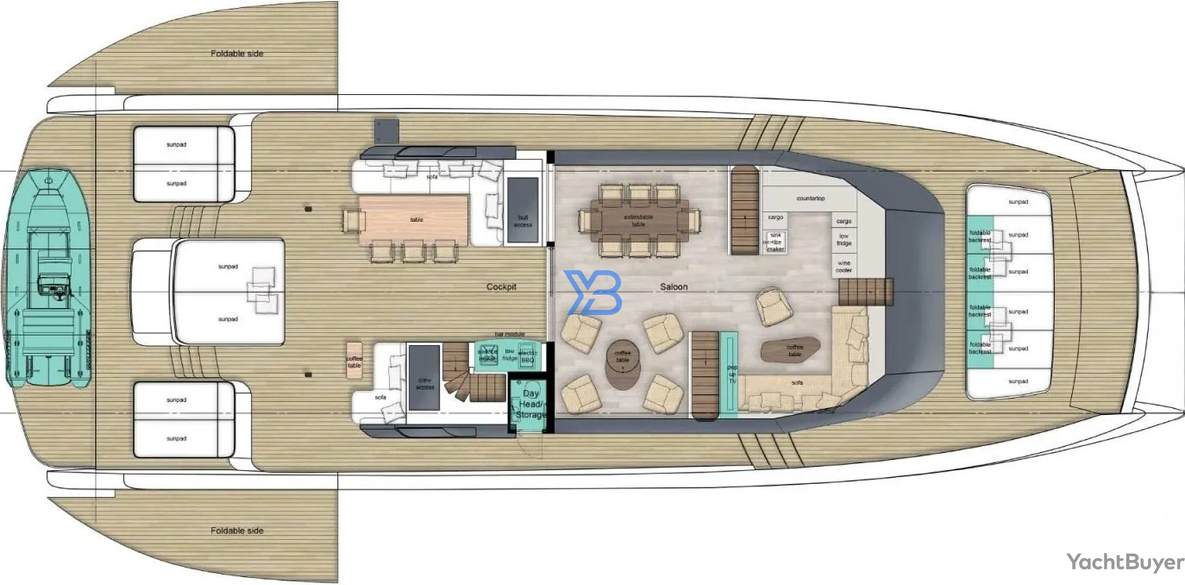
Wasabi gives most of the main deck to one huge saloon, with no lower helm
-
Lower Deck
-
Standard 5 cabin layout
![Lower Deck Sunreef Ultima 88]()
Five cabins is a sensible plan, maximising occupancy - and the owner still gets the full beam.
-
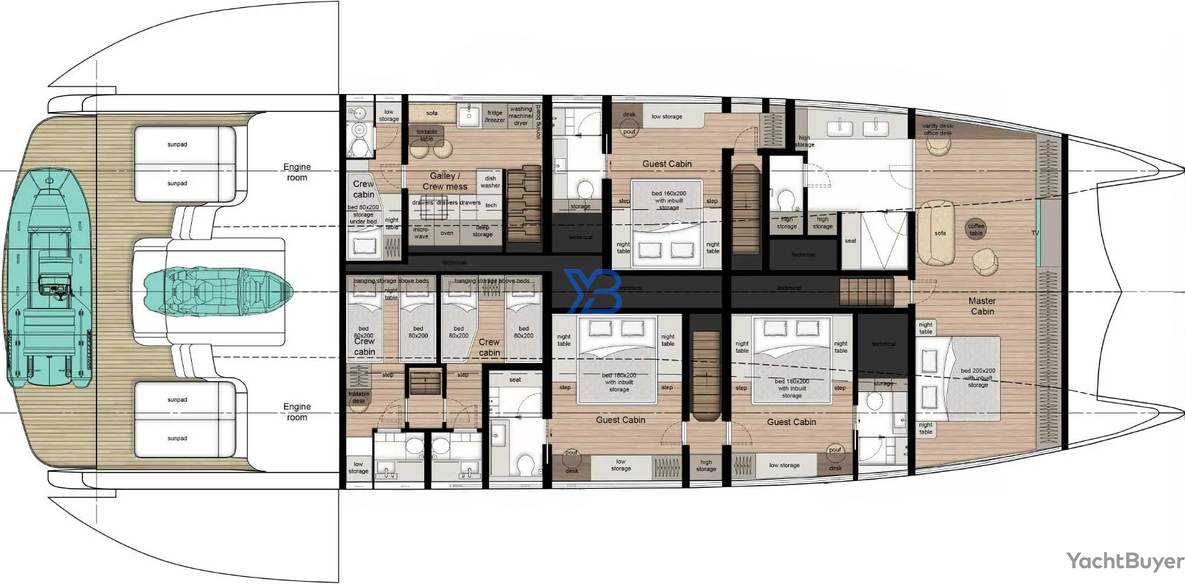
Optional 4 cabin layout
![Lower Deck Sunreef Ultima 88]()
Lose the twin and the owner suddenly gets a lounge and a much bigger bathroom.
-
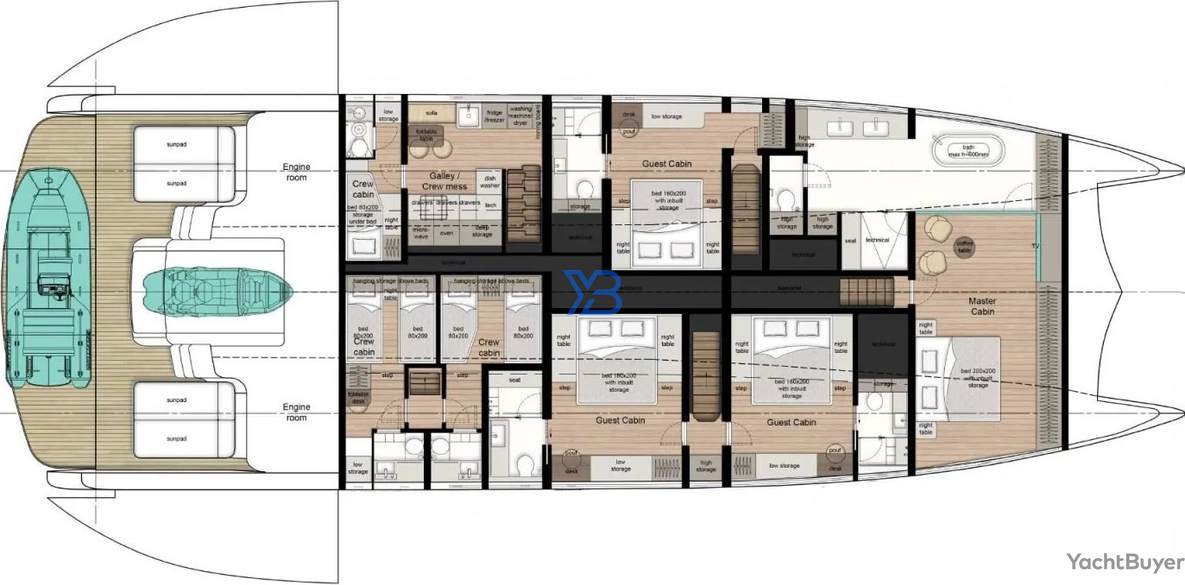
Optional forward master with larger ensuite layout
![Lower Deck Sunreef Ultima 88]()
This one goes all-in on the owner, taking the twin and part of the owner's lounge for a truly enormous bathroom.


Interested in a Ultima 88?
NEW Build
Find your local dealer for a personalised, no-cost consultation
or just request
Brochures & Pricing
Used & In Stock
Looking for a ready-to-go Ultima 88 or pre-owned options? Explore all inventory of the Ultima 88 available worldwide