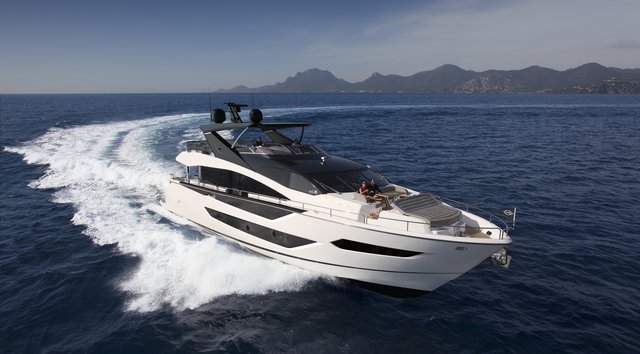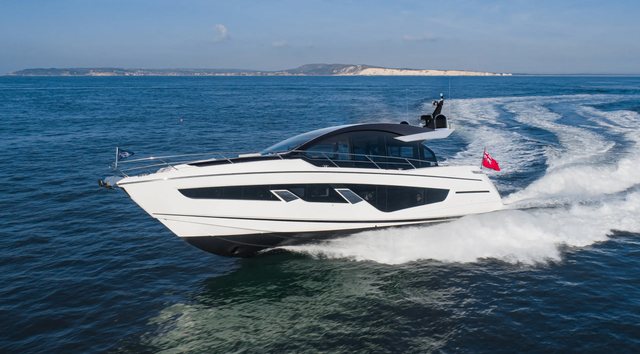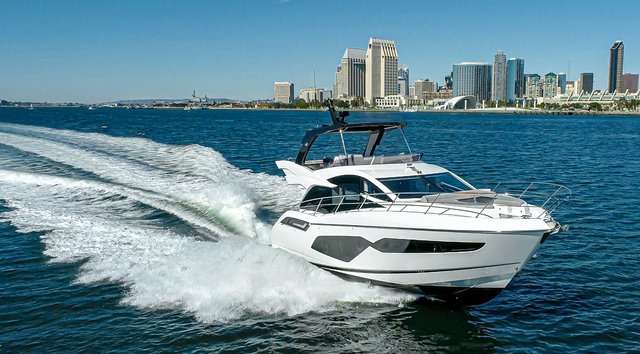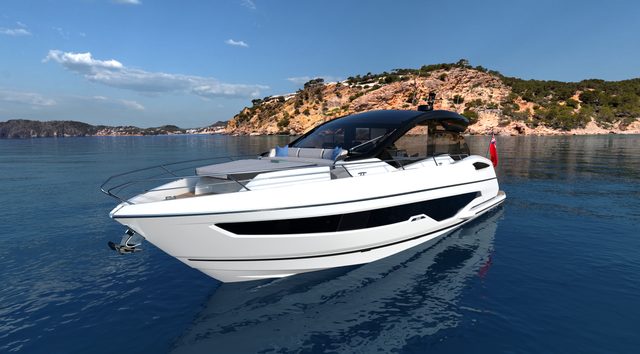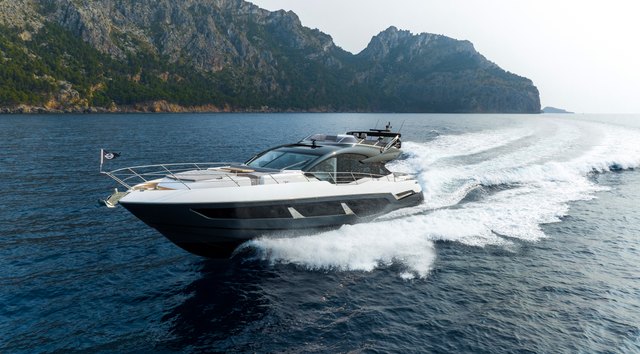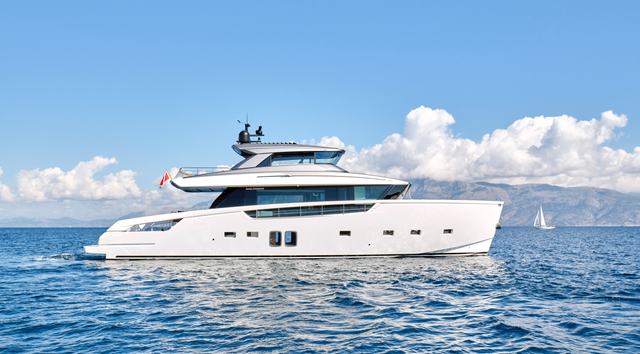
Can a 23.60m (77ft 5in) yacht with four cabins for eight guests feel like a genuine step into superyacht territory while staying manageable for an owner who still wants to run the boat with minimal help?
The Sunseeker 76 Yacht sets out to answer that with sprawling outdoor spaces, a voluminous interior, four spacious guest cabins, and hearty performance. Read on to see if it hits the mark.

Review Video
The 76 Yacht arrived as the successor to the long-running Sunseeker 75 Yacht and as the point where the brand’s flybridge line steps up into superyacht territory. It answers a clear brief: give owners the presence and volume of a larger yacht without the operational burden that comes once a boat moves over the 24-metre mark. Buyers in this bracket want plenty of space for outdoor living, room for a tender and a layout that still works with a small crew, and the 76 was drawn around those needs.
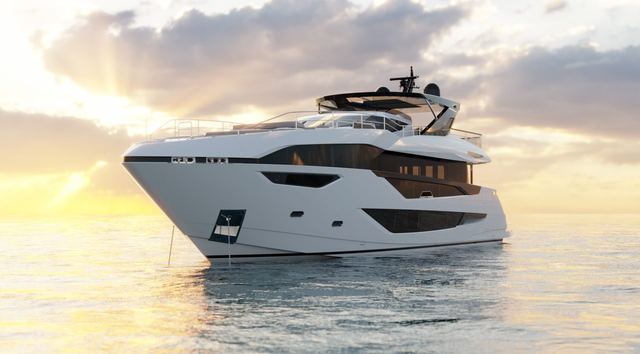
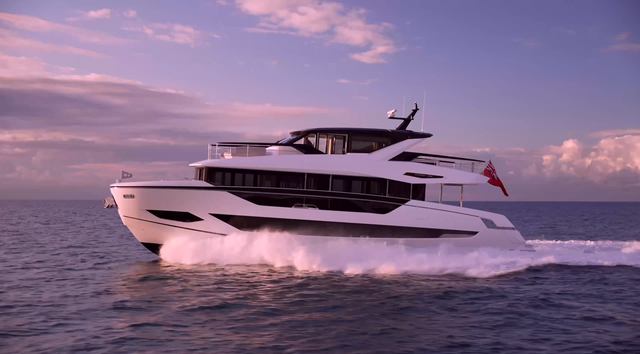
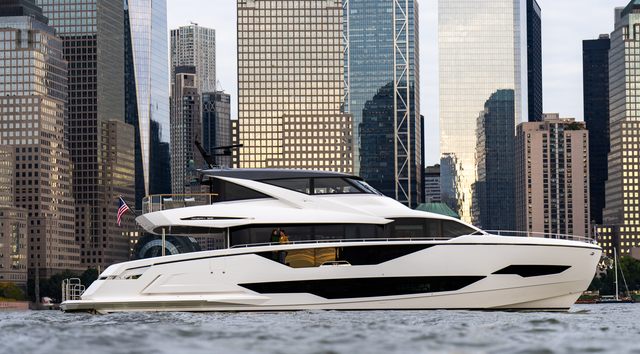
All design and naval work comes from Sunseeker’s own team in Poole. The low, drawn-out glazing line, the sharp knuckle in the bow and the deep saloon windows tie it straight back to other models in the range, but the 76 carries more glass and a broader deckhouse to reach the volume targets Sunseeker set for it.
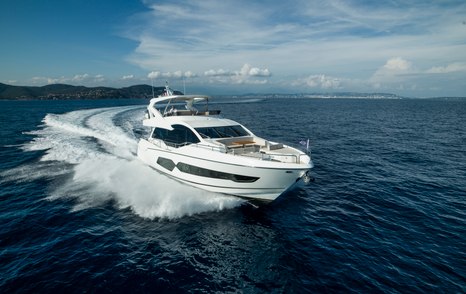
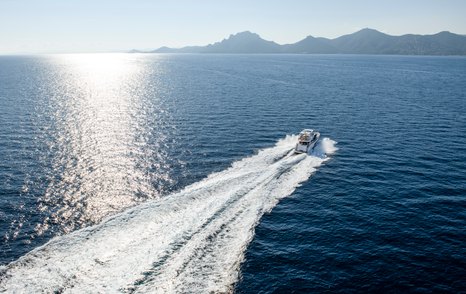
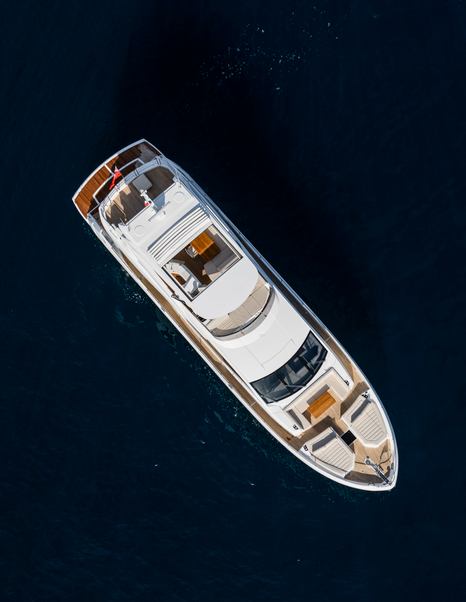
Construction uses hand-laid GRP with a vinylester skin coat for better protection against blistering. The underwater section is a single-skin laminate with heavy stitched reinforcement to deal with grounding loads and impacts, while the topsides and superstructure switch to a balsa-cored sandwich. A structural grid of stringers, bulkheads and floors ties the whole shell together.
It carries CE Category A classification, so it meets the structural and stability standard for open-water work and long passages. These numbers place it right at the top of the owner-operator bracket, with enough bulk to give broad deck spaces and a proper four-cabin layout.
Tankage is set up for an extended time away from shore. Fuel capacity stands at 6,000 litres, fresh water at 1,400 litres and black water at 435 litres. An enlarged grey-water tank can be fitted where local rules require closed systems, and it makes sense for owners planning to spend long stretches in protected anchorages.
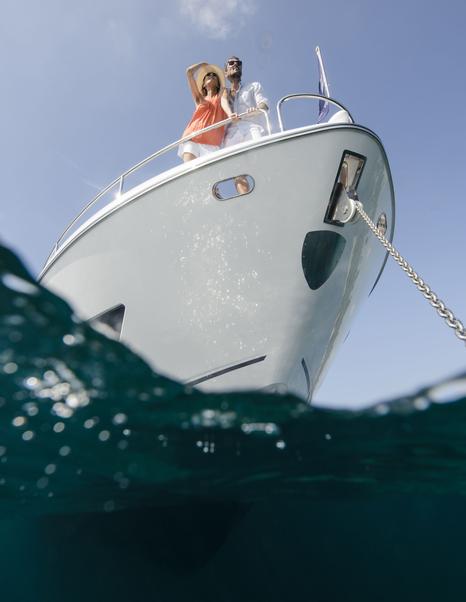
Hotel systems follow the same long-stay logic. A single 27kW or 29kW generator is standard, though most boats leave the yard with a second unit for load-sharing and redundancy. Tropical-duty air-conditioning and a watermaker are common upgrades, giving the yacht the ability to sit at anchor in hot climates with full domestic capacity.
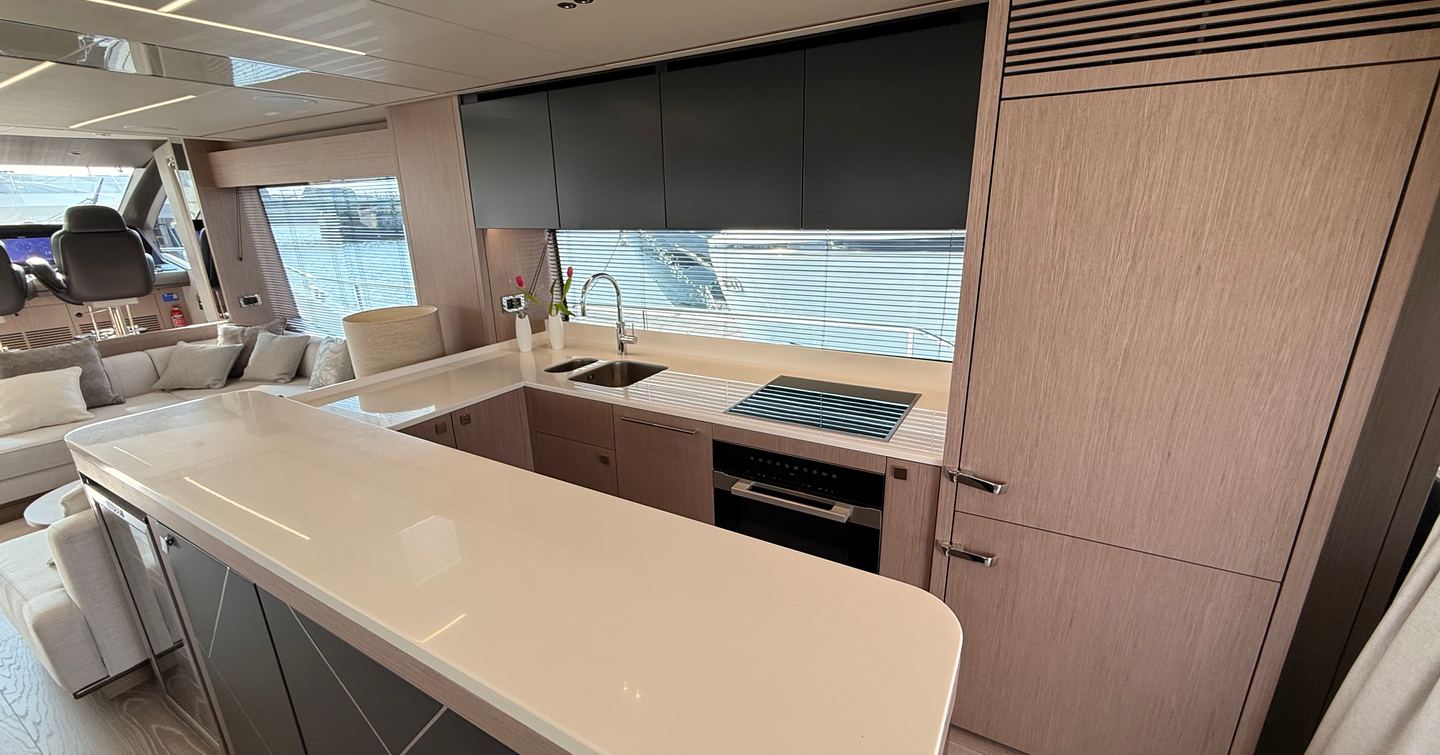
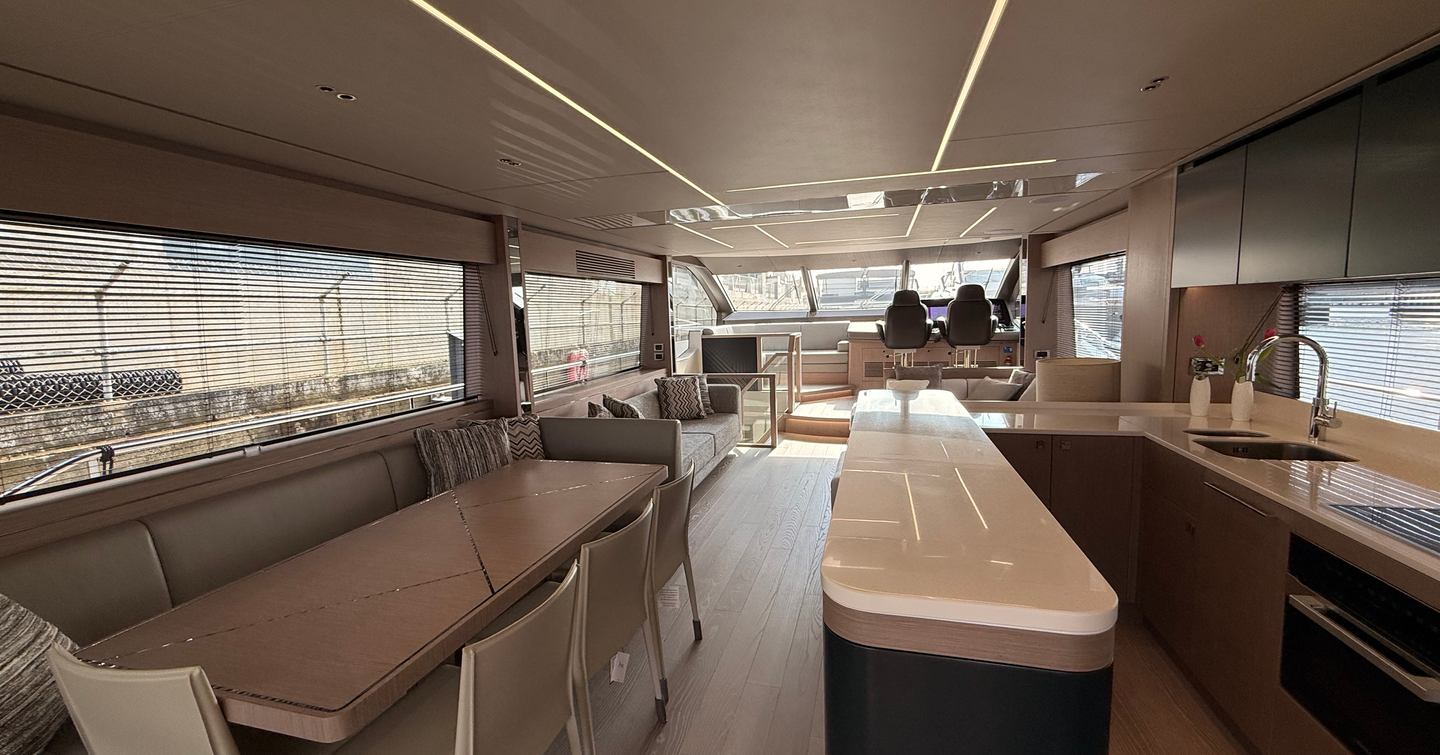
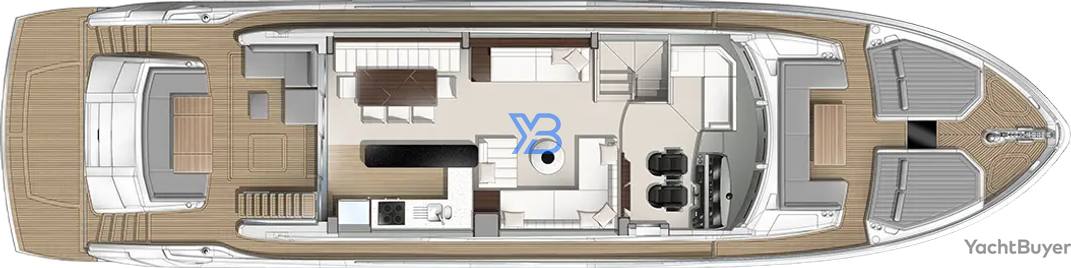
The galley sits aft and feels larger than expected on a yacht of this size. A long counter runs across the beam, giving a clear surface for food and drinks, and deep storage sits on both sides. A domestic fridge and freezer stand to port, so cold stores match what a family or small charter group might need on a week away. The induction hob has four burners with a microwave oven below, and the twin sinks sit forward with enough counter around them to work without feeling squeezed.
Several small touches lift the space. One locker opens onto auto-lit tumbler and champagne-flute racks, each set in fiddled mouldings so the glassware stays put at sea. A wine fridge is mounted opposite. The galley’s position close to the cockpit and dining table keeps service simple, and the big counter works well for laying out food for guests indoors or outside.
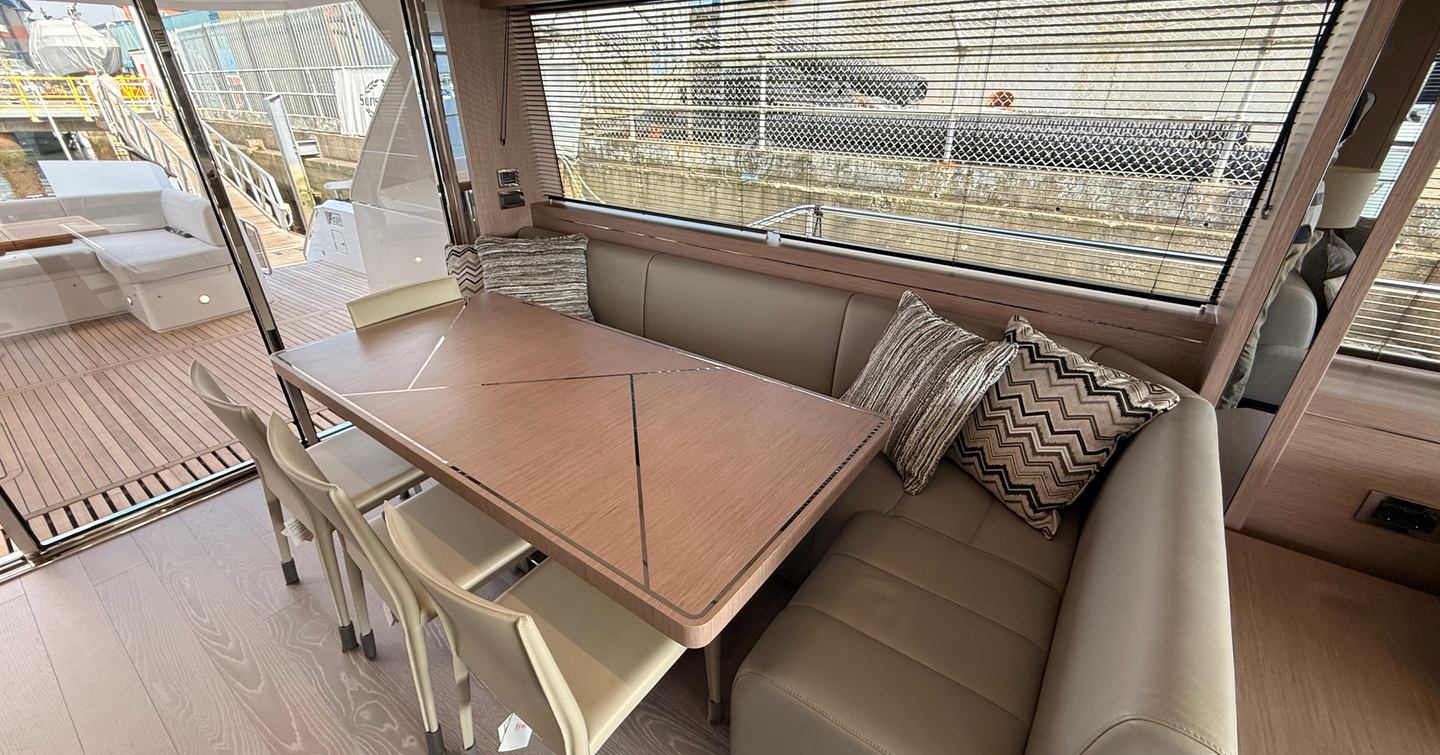
The dining area is directly opposite the galley, which gives it a practical link when guests eat inside. A fixed bench runs along the hull side, while four loose chairs sit outboard, echoing the Minotti style seen on larger yachts. The table has smart stainless detailing that picks up the trim in the cabinetry, so the section settles into the overall design without feeling heavy.
Overhead, perpendicular LED lines draw the eye forward and keep the space bright even when the blinds are down. The scale of the dining area suits the four-cabin layout and leaves enough room to move through the deck without threading between furniture.
Saloon
The amidships saloon gains most of its character from the large glazing that runs down both sides of the main deck. The light oak joinery keeps the space bright even on dull days, and the low furniture lines match the long window runs. The seating looks smart and suits relaxed use, though the backrests are too low for anything other than lounging around. It works well for slouching with a drink, less so for sitting up to read or watch something for a long stretch.
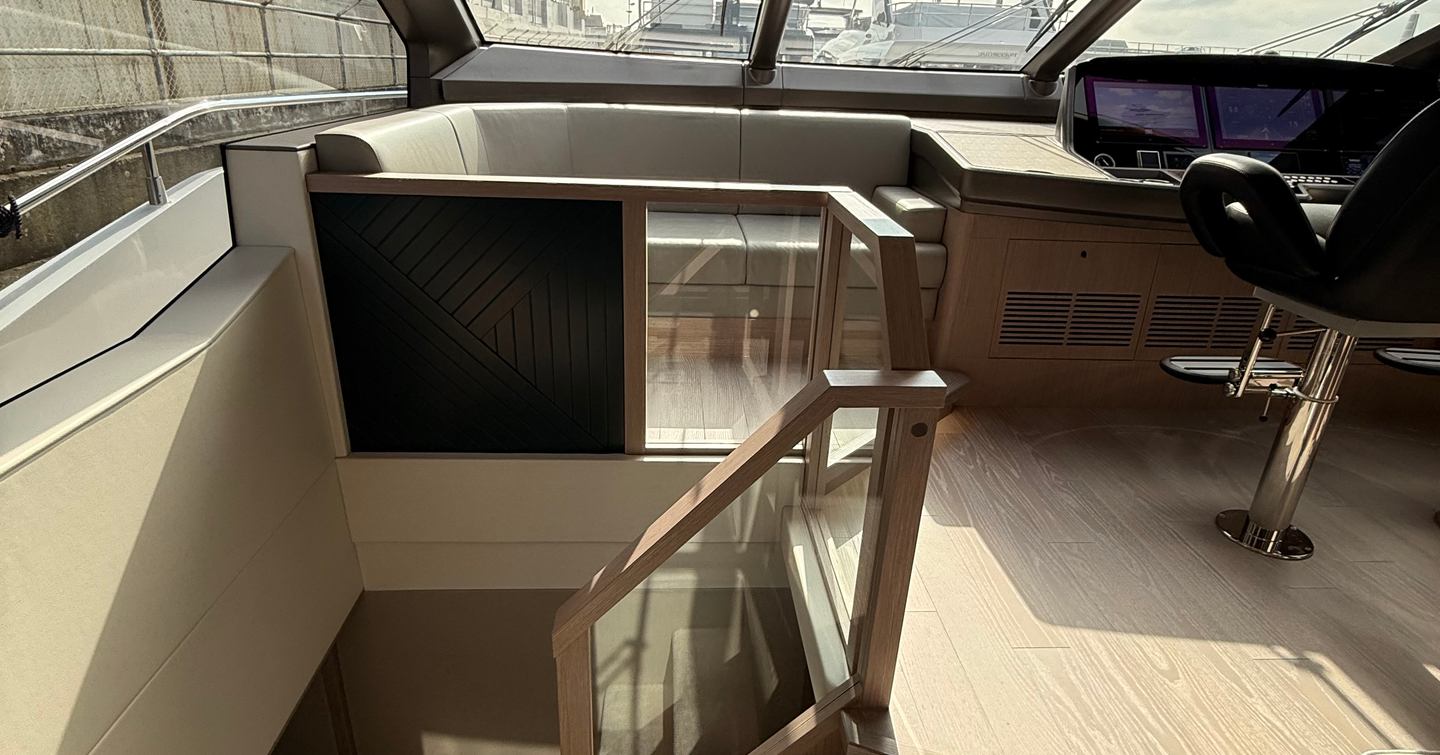
A built-in side table forms part of the port sofa and hides the mechanism for the rise-and-fall TV, which lifts from the unit behind it. The layout leaves a clear run through the middle of the saloon, but it does expose a small gap in the handhold options. The bannister to the lower deck staircase sits to port, yet there is no central rail overhead. In gentle conditions, that makes little difference, though in a seaway, a handhold here would help.
The glazing remains the dominant feature. The view out stays open from almost any seat, and the bright finish keeps the saloon feeling larger than it measures. The section works as a break between the dining area and the forward helm, with enough seating for a full group without filling the beam.
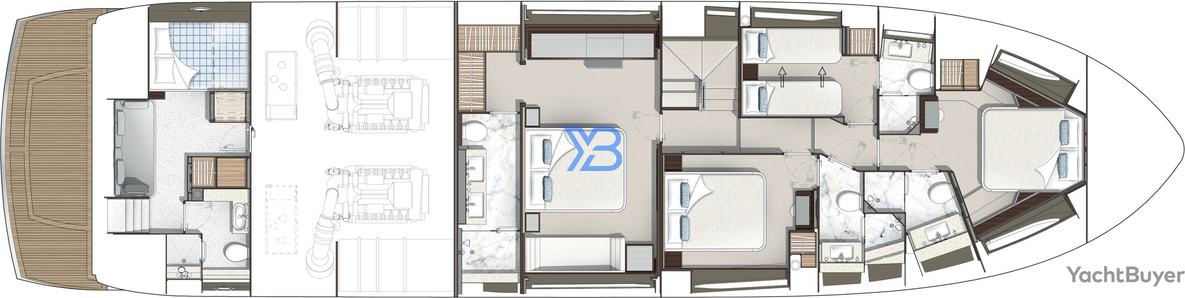
A winding staircase drops from the saloon to the lower deck with useful built-on storage on the way down. The lobby opens to reveal a four-cabin arrangement, which can't be customised aside from colours and finishes. It works well, though, with each cabin keeping its own bathroom and no need for shared access. Headroom is excellent throughout the lower deck.
Owner's Cabin
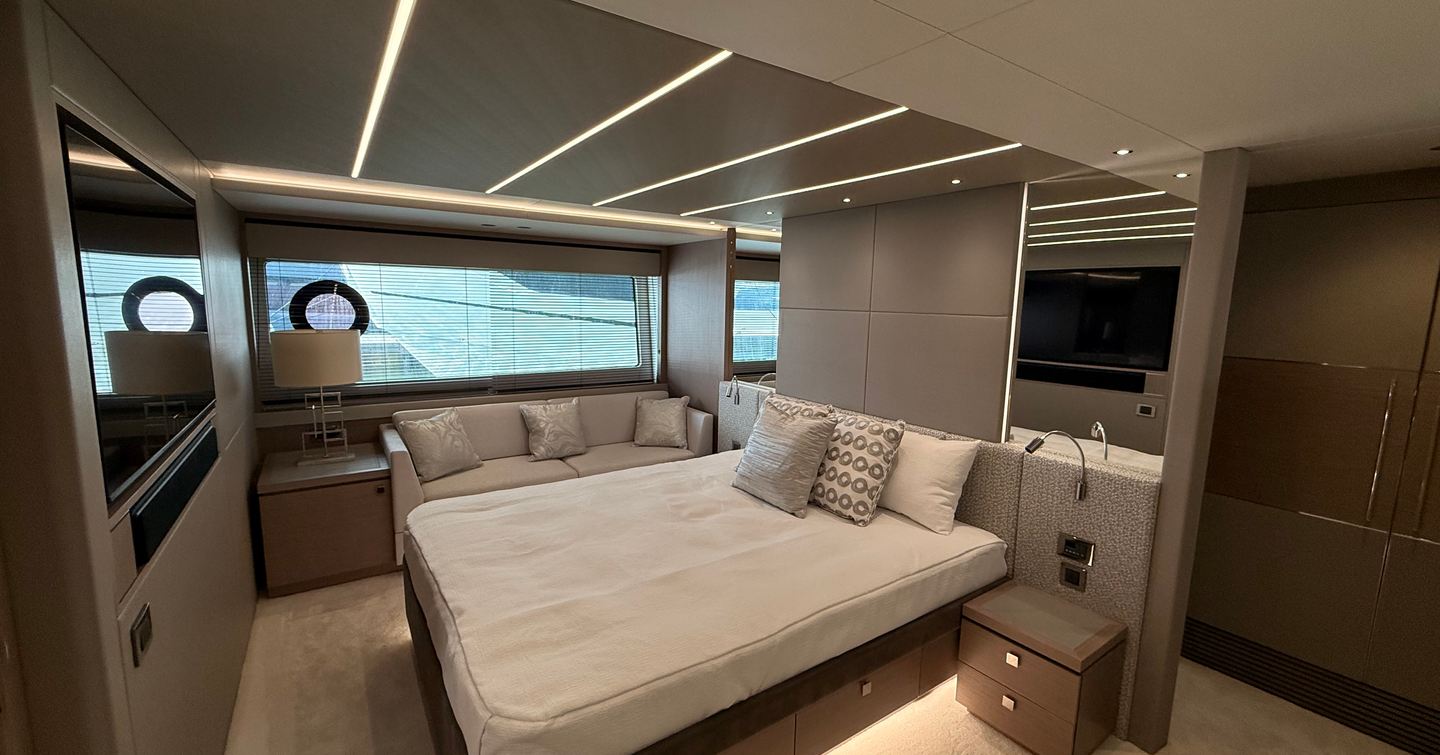
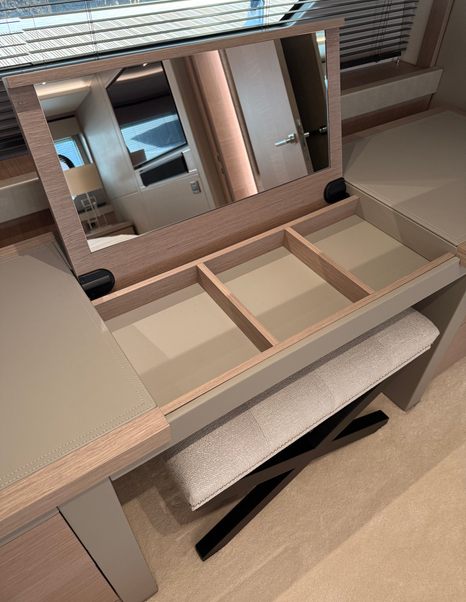
The owner’s cabin is amidships and spreads out across 76 Yacht's full beam. The first impression is the huge amount of floor space. The bed sits on the centreline with wide access on both sides, and this leaves enough open area to move around without working around furniture. A sofa runs under the starboard hull window, so there is a place to sit that takes advantage of the wonderful views they provide. Opposite, a large TV and sound bar are mounted cleanly on the bulkhead, with a bureau and storage along the port side.
Wardrobes line the entrance to the cabin with a double unit to starboard and a single to port. The storage spreads well through the space without stealing any of the cabin’s width.
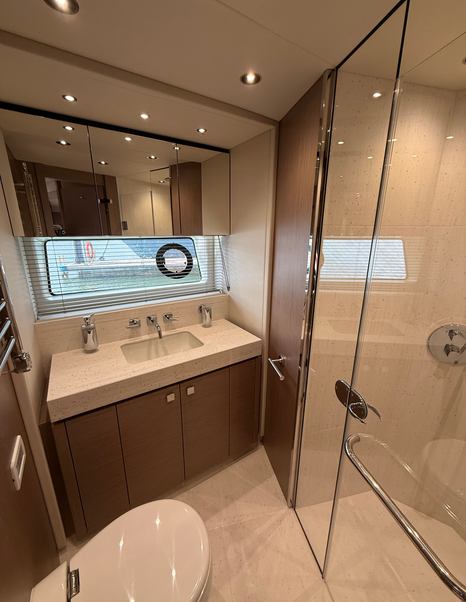
The ensuite is behind the bed, which adds a very useful buffer from the machinery space. It has twin basins with deep storage below and a separate shower that feels closer to a domestic scale than a compact yacht cubicle. The fittings follow the same restrained style as the other bathrooms, with clean lines and solid hardware.
VIP Cabin
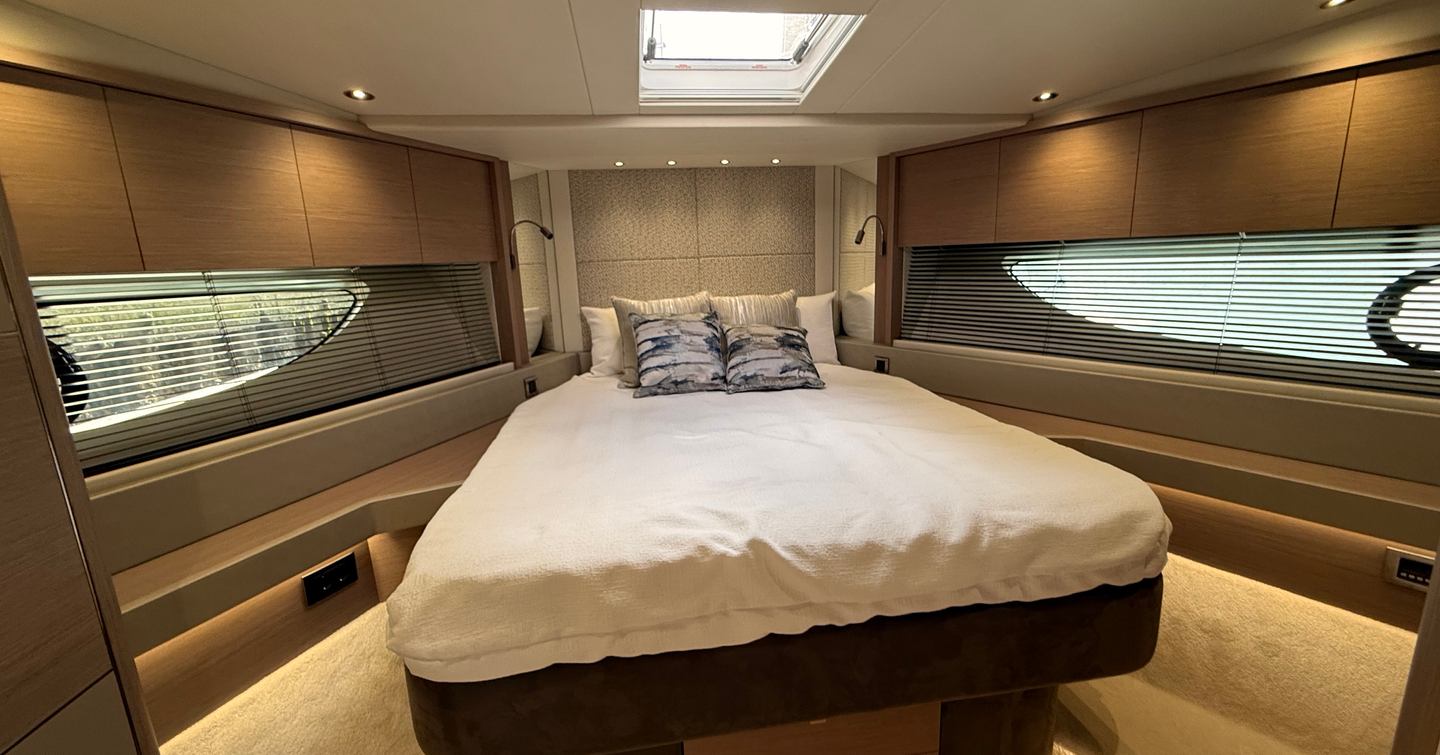
The VIP is arranged forward on the lower deck, and it's lovely and bright. A skylight above the bed joins the large hull windows on each side, and the opening ports allow a through-flow of air when the weather suits. The berth is arranged slightly on the high side, though steps on both sides make access easy. Switch repeaters and sockets sit close enough for devices, and, like the owner's cabin, a TV is mounted on the starboard bulkhead with a sound bar tucked neatly beneath the headlining.
A bureau and a full-height hanging locker are to port, and the ensuite runs aft. It has a separate shower with a rain head, a Tecma toilet and a clean, simple basin unit. The amount of space in the shower stands out for this size of yacht.
Port & Starboard Guest Cabins
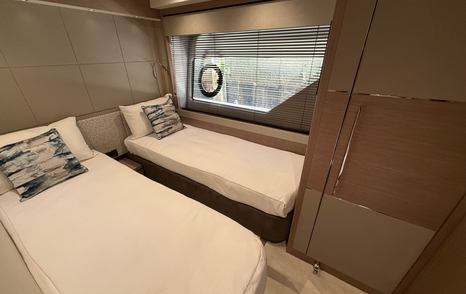
The starboard cabin has two single berths that can slide together to form a double, which gives useful flexibility for mixed groups and charter. The cabin has its own ensuite with a separate shower, so guest privacy is excellent. Storage sits along the outboard side, and the hull window keeps the cabin from feeling enclosed. The scale suits adult guests and children alike, and the private bathroom makes it a straightforward pick for longer trips.
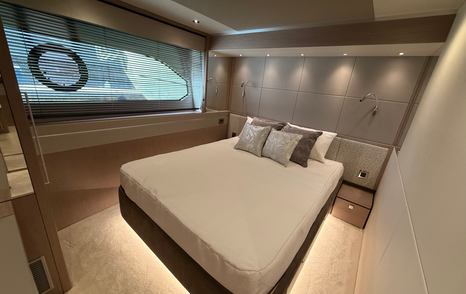
The port cabin takes a full double and has space to walk around both sides of the bed. A large hull window sits at the right height to see out from the pillow, and a wardrobe and TV mount on the opposite bulkhead.
This cabin links directly to the day head, which also serves as its ensuite. The day head itself has a separate shower and plenty of floor space. The cabins feel well-balanced and offer genuinely comfortable sleeping space for 8 adults.
Crew Accommodation
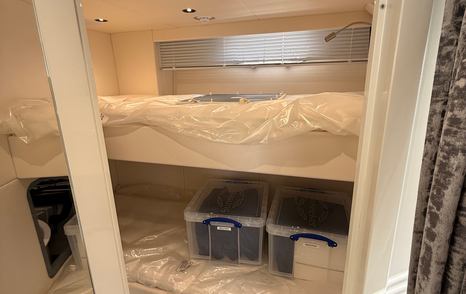
The crew space is positioned aft and is reached through a deck hatch on the starboard side. The first surprise is the headroom. The main double berth sits under the cockpit steps, yet the clearance above it avoids the usual “crawl-in” feeling common in this position. Light comes from a porthole and a slim window, enough to break up the bulkheads and make the cabin feel more like a compact guest room than a last-minute addition.
There's a small sofa on the outboard side. It sounds simple, but it gives the crew somewhere to sit that isn’t the bed, which makes the space far easier to live with on longer trips. Opposite, a TV is mounted on the bulkhead, and the locker beside it can take a monitoring screen so the crew can keep an eye on things. Storage is scattered neatly around the space, and the laundry machines sit aft where they’re easy to reach.
A watertight door leads straight into the engine room, so checks and maintenance runs don’t involve weaving through the main accommodation. A ladder aft reaches an emergency hatch under the cockpit sole, giving another route into the machinery space when needed.
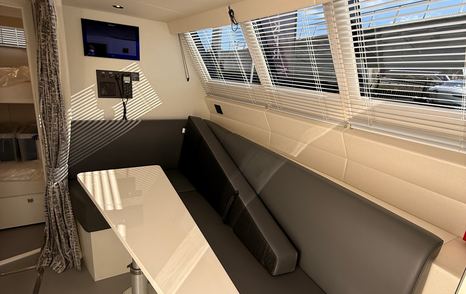
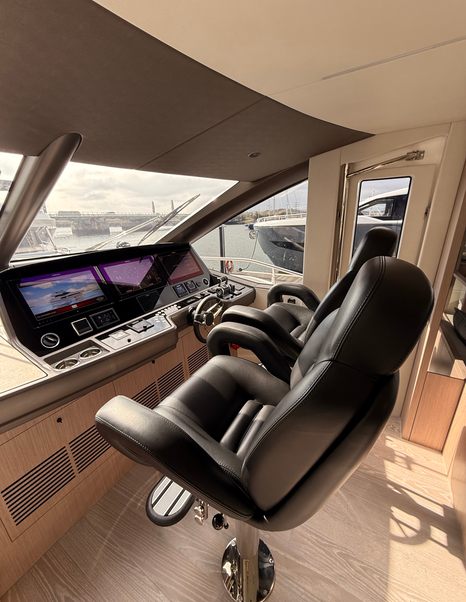
The forward end of the main deck forms a raised seating area and is home to the lower helm. A settee runs along the port side and sits high enough to give a clear view aft through the saloon, so it works both as a quiet place to sit at anchor and as an extra perch when the yacht is on the move.
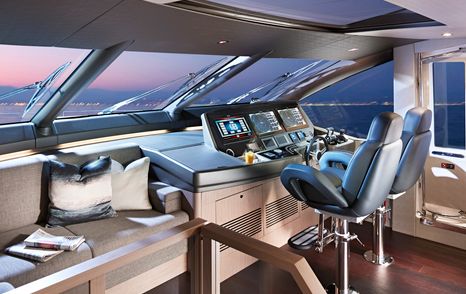
The gorgeous helm chairs are fully adjustable and sized for long passages, with enough space between them and the wheel to drive either seated or standing.
The helm itself has three 19" Simrad displays across the main console, with the CM8 digital switching screen placed to port. The Simrad units switch between charts, radar and other navigation pages, and the remote controller by the throttles removes the need to lean forward to reach the screens.
The wheel is fixed rather than tilting, which is unusual on a yacht of this size, yet the spacing in front of the helm chairs gives enough room to settle into either a standing or seated stance. Visibility aft is good because of the large windows that run down the sides of the saloon. Forward sightlines remain clear through the deep windscreen, and the elevated position helps when judging the bow at slow speed or reading the sea at cruise.
Upper Helm
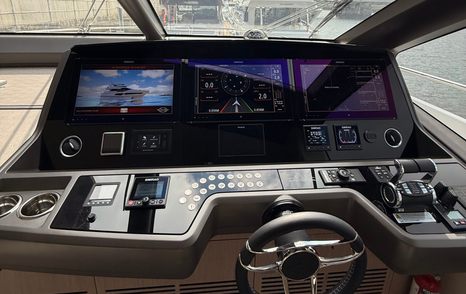
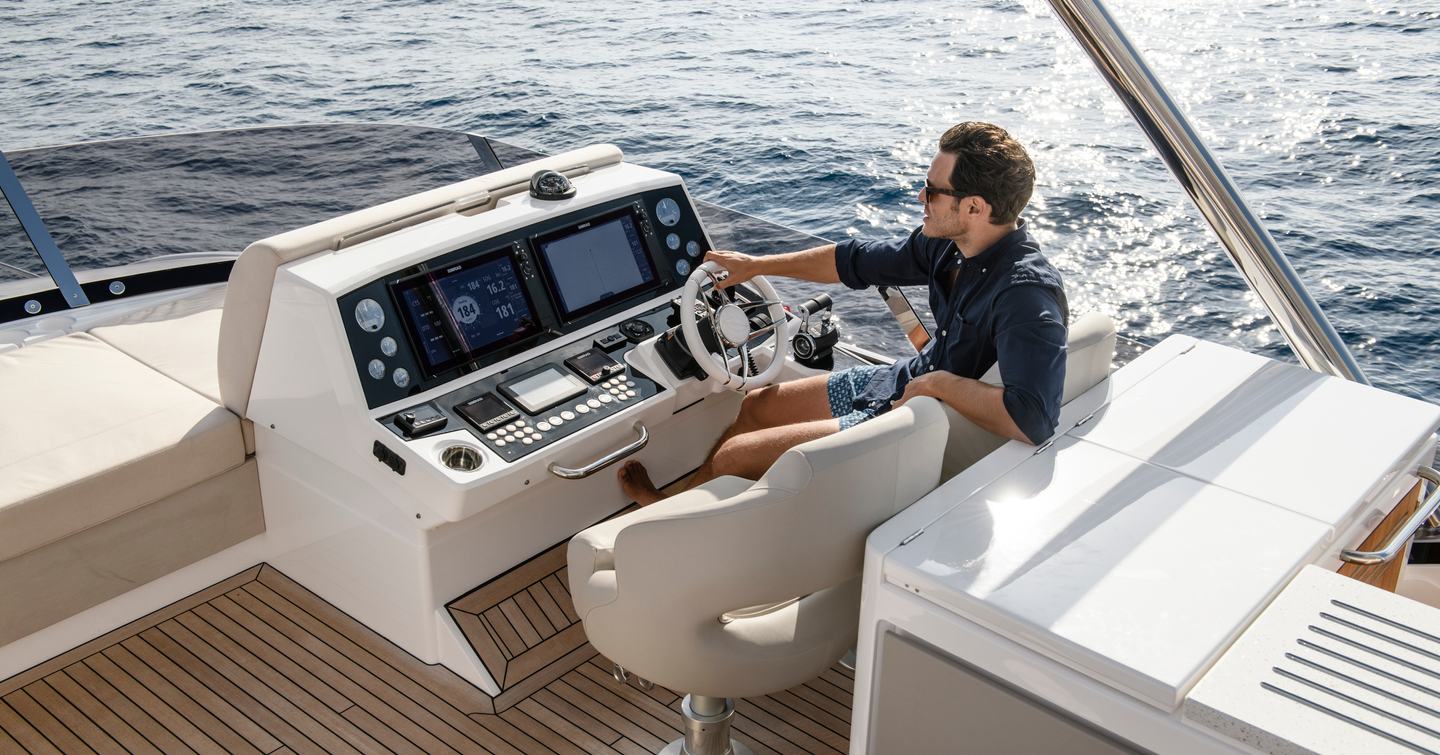
Two 16" Simrad displays sit side by side with a run of analogue dials above them, which are less ubiquitous than they were but still look good and are great for glances.
A plexiglass screen slides out from the coaming to lift the wind protection, which is such a simple and effective piece of design. I'm not sure why more brands don't do it. The windscreen stands a fair distance forward, so the added panel cuts the airflow when the yacht settles into its 25-knot cruise. It suits a planing boat that often runs at pace.
The two bucket helm seats have bolsters for either standing or seated control, and another forward-facing seat sits ahead of the console. It offers a clear view over the bow and works as a useful extra perch when guests want to sit forward underway.
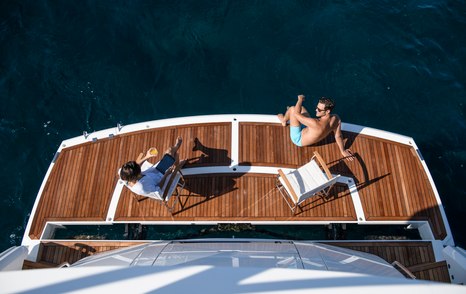
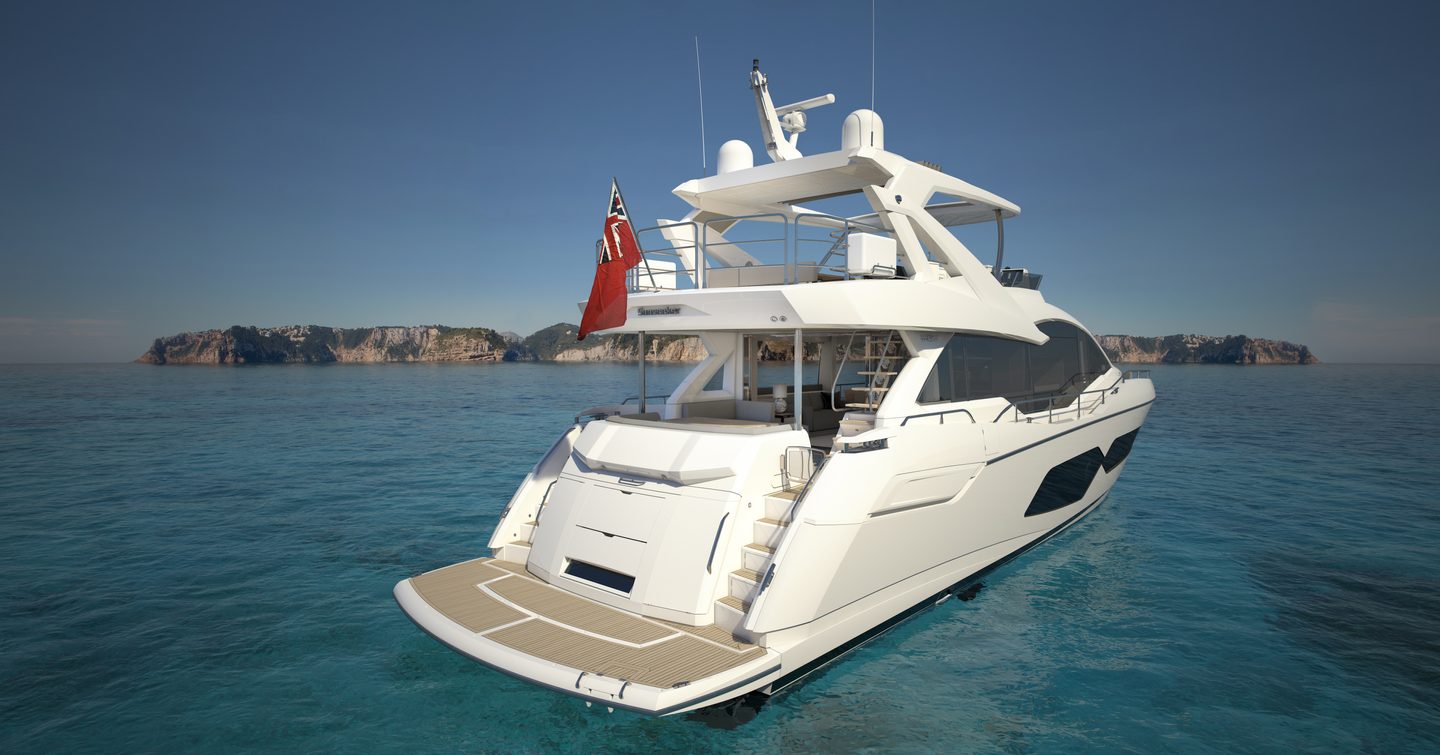
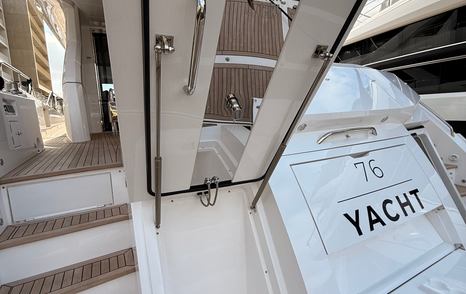
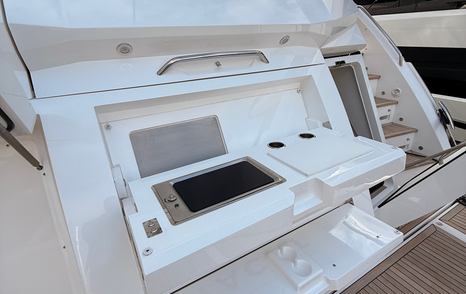
The transom features a hydraulic bathing platform rated for a tender up to 4m (13.1ft), such as a Williams 445, and still leaves room for small toys. The platform drops deep into the water, so guests can sit at the edge with their feet down at sea level. An optional fold-down module in the transom adds an electric grill, a small chopping board and cup holders. The lack of a sink makes cleaning up a bit tricky, yet the position works well for simple cooking close to the water.
A small double bench flips down to face the water, great for those who don't fancy a dip and just want to observe. An overhead shower sits in the underside of the flybridge moulding and feeds hot and cold water. The starboard steps hide the shore-power connections inside flush hatches, while the port steps house the passerelle cassette when specified. The platform and passerelle controls sit beside the aft mooring gear, which includes a cleat, fairleads, a winch and a rope bin that keeps the tails clear of the deck. It's all really well thought out, and though the Sunseeker's 'beach club' description may be pushing it a bit, it's still a water level area with plenty of functionality.
Cockpit
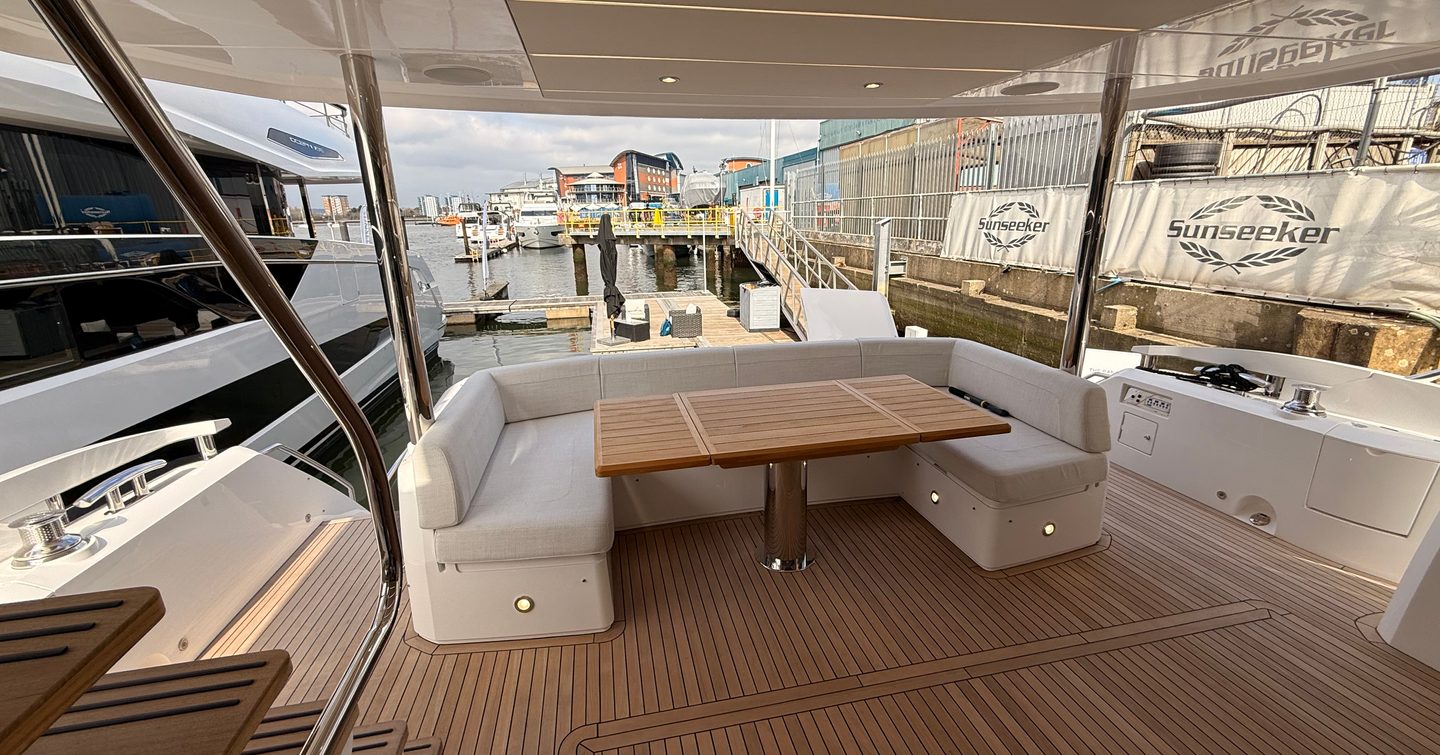
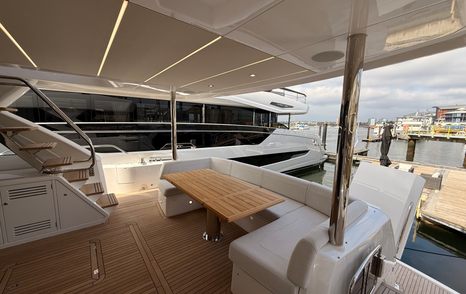
A fixed table is the main fixture under the extended flybridge overhang and folds to half size when movement across the deck matters more than table width. The beam allows loose chairs to sit outboard when a larger dining setting is needed.
A small bar on the port side holds a fridge and an ice maker. Glazing around the aft corners of the superstructure drops low enough to take the edge off the breeze without closing in the space. It's a sheltered outdoor zone that works perfectly for shady lunches, protected from the wind by the wheelhouse.
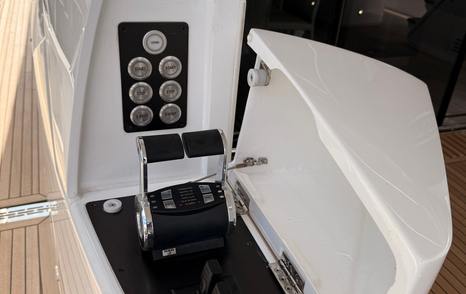
A third docking station can be fitted to the port with shaft and thruster controls, something we'd recommend if you're going to be mooring stern-to regularly.
Side Decks & Foredeck
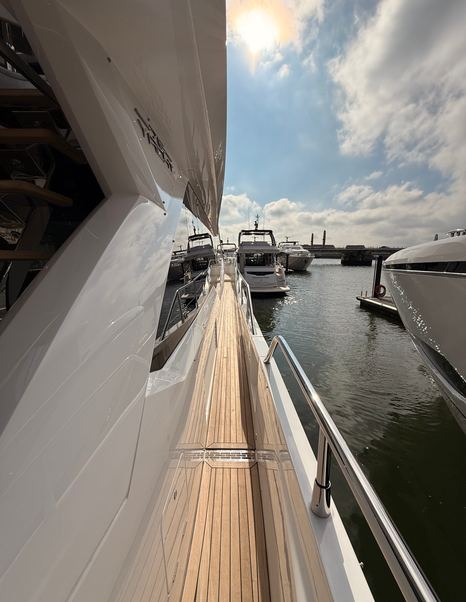
Both side decks are wide and clear, with boarding gates on each side and steady rail height from cockpit to bow. The scale of the decks suits a yacht that will often carry crew, yet they are friendly for an owner who wants to take a line or hang a fender.
The starboard side gains the pantograph door into the saloon, while the port side shows off the size of the glazing panel that carries most of the natural light into the main deck. The walkway feels open and easy to use, with enough space to pass another person without needing to turn sideways.
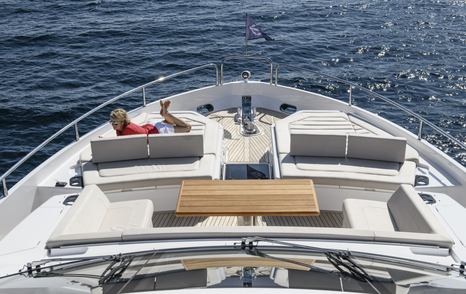
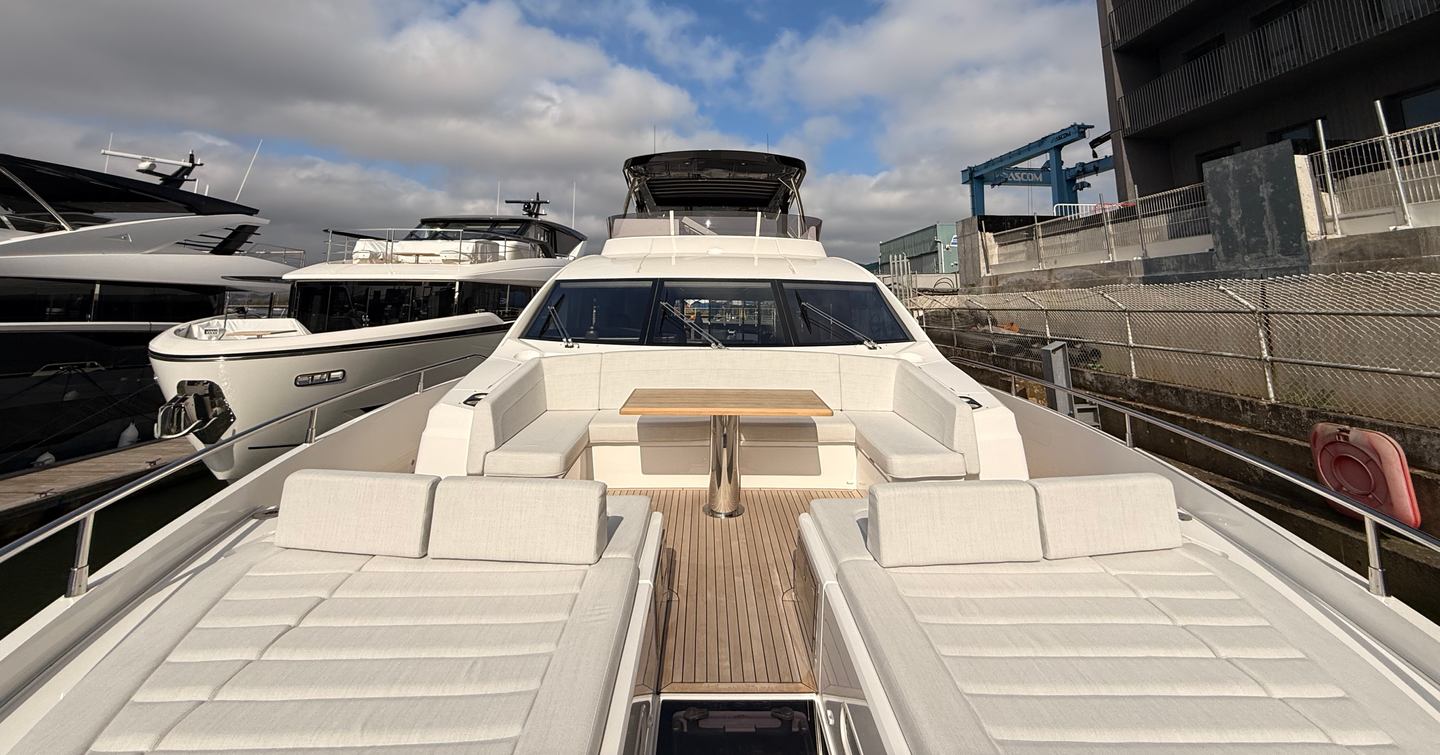
The foredeck feels like a proper living space rather than a sunpad with a token bench. Opposing seats sit around a fixed table at the base of the windscreen, which makes the space more sociable than a simple U-shape. Storage runs through the moulding on each side, with deep lockers that take fenders, covers and spare lines. More storage sits under the seating.
Forward of the benches, two large sunpads fill the width of the bow. The deck between them is flat, so the crew reach the windlass and ground gear without stepping over cushions.
A pair of Isotherm drawer fridges lie under the forward seating, which keeps drinks close to hand and makes the foredeck self-sufficient when guests stay forward for long stretches. The area can take covers when shade or protection is needed.
Flybridge
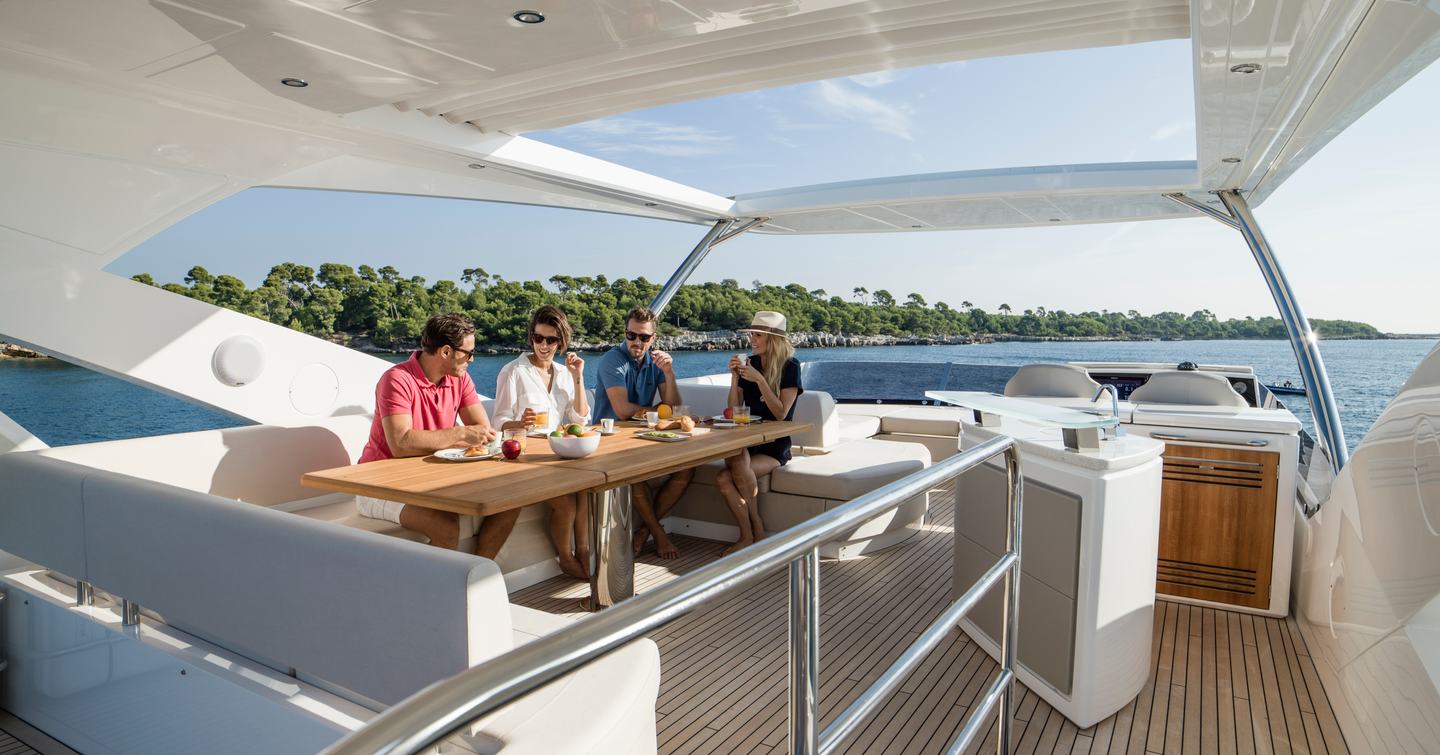
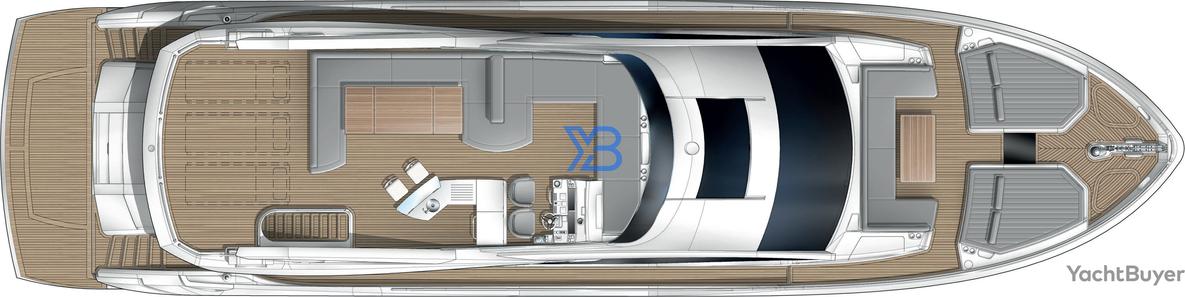
The flybridge feels bigger than expected for a yacht of 23.60m (77ft 5in). The layout is split into distinct zones, which adds to the superyacht feel and makes for an excellent entertaining space. Aft, an open space suits loose sunbeds or free-standing furniture and high rails around the staircase are perfectly located to steady yourself as you move through the deck.
A long teak table is the centre point of this deck, and it's well protected by the substantial hard top, which benefits from a canvas sunroof that peels a long way back to expose the dining space.
The bar opposite includes a grill, sink, fridge and ice maker. The glass counter above the bar adds a simple touch that makes the whole unit feel more polished, and the pair of barstools add to the scaled-down superyacht feel.
Forward of the hardtop, more sunbathing space spreads across the bow end of the flybridge. This area doubles as a place to sit underway because the seats face forward. It works well for guests who want a clear view in good weather. An extra seat in front of the helm will appeal to younger guests who want the full wind-in-the-hair experience.
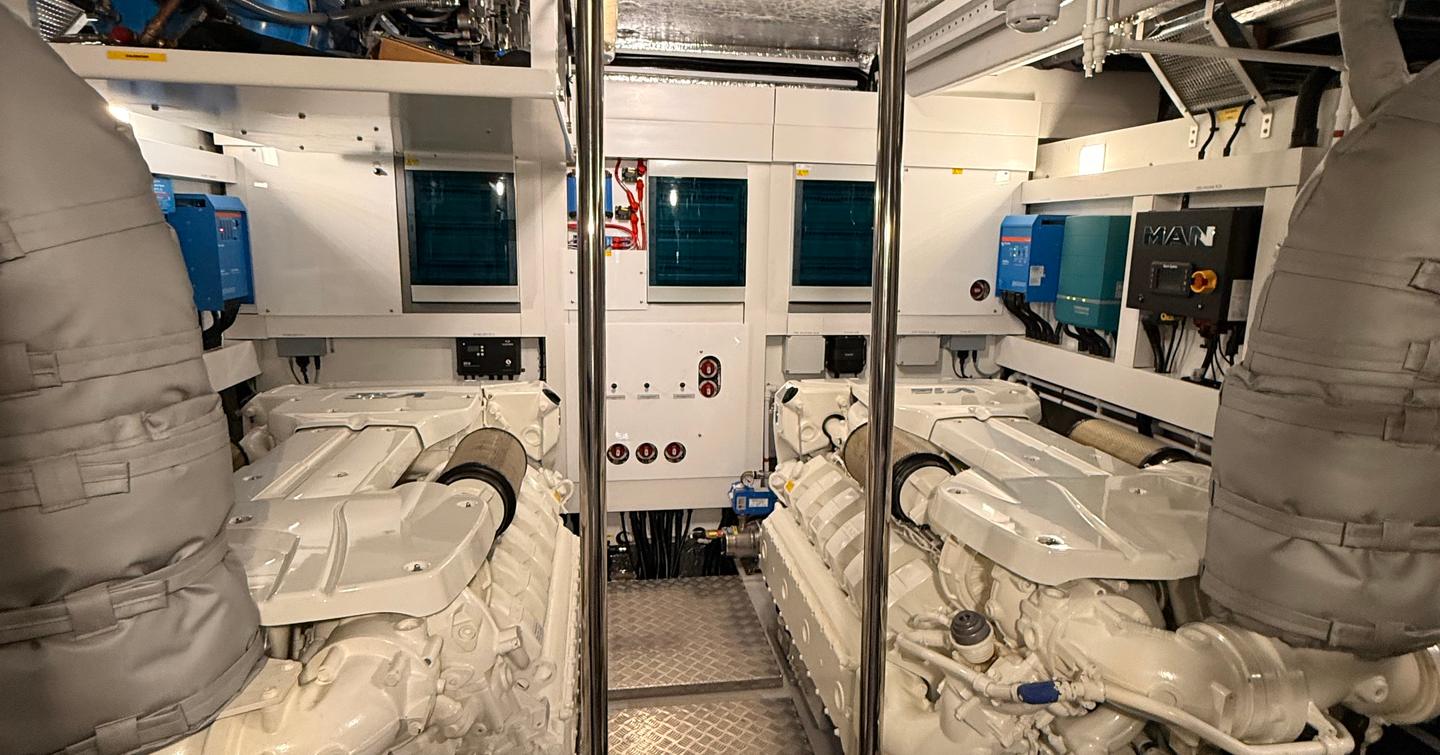
The engine room is aft of the crew space, and there is enough clearance to stand upright between the engines, even for those well over 6ft tall. The chequer-plate soles give grip, and the routes along each side are clear, so access to filters, valves and service points is straightforward. All pipework is labelled with flow arrows, and the layout has a tidy, uncluttered look that helps when spotting any issues.
Two MAN V12 1,550hp engines fill the main space. They are the same blocks used in the 75 Sport Yacht, but here they trade a little top-end speed for heavier displacement and range. In this model, they deliver a top speed of around 30–32 knots and a cruising speed of nearly 25 knots, which suits long passages as well as short hops.
At that pace, the yacht covers roughly 400 nautical miles before refuelling. Drop the speed back to around 10 knots, and the consumption falls to a level that works for slow, steady runs, helped by the Sleipner fin stabilisers that settle the hull at displacement speed.
Two generators sit stacked at the forward end of the machinery space and are easy to reach. The watertight door into the crew cabin sits close by, and a ladder aft runs up to an emergency hatch in the cockpit sole, so there are two clear access points without walking through any guest areas.
The space feels like it belongs on a larger yacht. The structure, the headroom and the direct routes around the machinery add up to a layout that is easy to work in and easy to keep in order.
A new Sunseeker 76 Yacht starts at £4,050,000 ex VAT, but the real figure you'll actually pay is likely to be far higher than that once the extras have been added.
Most buyers treat the Platinum Package as essential because it brings the hardtop with its electric canopy, the Vector Fin stabilisers, the second 27kW generator, upgraded thrusters, low-level deck lighting, and the teak work that lifts the flybridge and side decks. That package alone is £428,400...
The Beach Club Package adds the drop-down grill, the fold-down seat, and the overhead shower for £9,895, and the tropical air-conditioning upgrade pushes the system to 153,000 BTU for hot-weather use at £17,405.
Spraying the flybridge hardtop and radar equipment in Jet Black is a frankly absurd £28,242, and the navigation suite, with dual 19in displays, open-array radar and full Simrad integration, comes in at £16,308. A third engine control station in the cockpit costs £15,096 but will be worth every penny if you're mooring stern-to a lot.
Once these core items go on, the total typically lands around £4.6 million ex VAT.
Our Verdict
The 76 Yacht shows how far thoughtful design can push a hull of this size. The foredeck works as a proper lounge, the flybridge splits neatly into shaded dining and open sunbathing, and the cockpit leaves enough width for loose chairs without blocking the route inside. The owner’s cabin carries the beam with ease, the guest cabins avoid compromise, and the crew space has the headroom and layout to remain comfortable on long trips. The engineering space is just as convincing, with clear access and workable height. This 76 Yacht’s fast cruise capability, steady low-speed range, and practical deck design all point in the same direction: it delivers the feel of a larger boat without losing the ease that makes this length so attractive in the first place. It's a very accomplished package.
The YachtBuyer Score provides a clear, category-by-category assessment of how the yacht performs in the areas that matter most. In this review, the Sunseeker 76 Yacht receives an overall rating of 4 out of 5 stars.
Reasons to Buy
- Spacious, well designed flybridge
- Well balanced interior
- Clever transom design
- Impressive performance
Things to Consider
- Saloon backrests sit too low
- No sink at transom grill
Looking to own a Sunseeker 76 Yacht? Use YachtBuyer’s Market Watch to compare all new and used Sunseeker 76 Yachts for sale worldwide. You can also order a new Sunseeker 76 Yacht, customized to your exact specifications, with options for engine choice and layout configuration. Alternatively, explore our global listings of new and used yachts for sale and find your perfect yacht today!
Rivals to Consider
The Sanlorenzo SX76 measures 23.75m (77ft 11in) with a 6.60m (21ft 8in) beam and runs on twin Volvo Penta IPS units, usually the IPS1050 or IPS1200 packages, for a top speed close to 22 knots. It's only helm sits on the flybridge, leaving the main deck as a full-length open space from stern to bow. The wide aft deck carries a large tender or toys on a crane rather than a hydraulic platform, and once launched, it opens into a broad waterside terrace. Range at 10-12 knots is efficient thanks to the semi-displacement hull, but the SX76 cannot match the Sunseeker’s 30-32-knot top end or the definition of its outdoor zones.
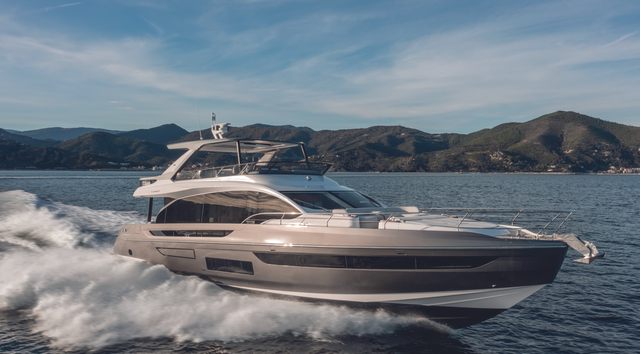
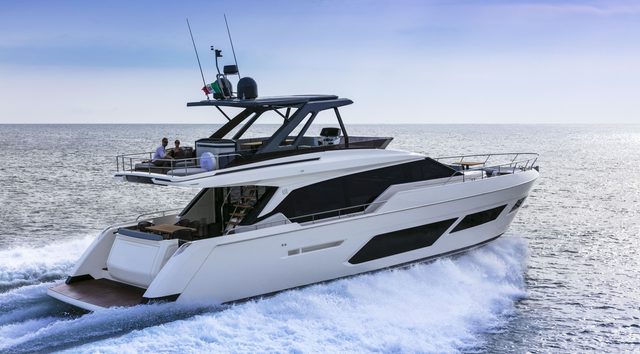
The Ferretti 720 is 22.30m (73ft 2in) long with a 5.60m (18ft 4in) beam and typically runs on twin MAN V12s in the 1400–1550hp range, giving a top speed around 32 knots and a fast cruise near 28 knots. Stabilisation often comes from a Seakeeper NG9 or NG16 gyro, favouring low-speed comfort over the lift-based effect of fins. Its four-cabin layout mirrors the Sunseeker’s, though the foredeck keeps a more traditional sunpad and bench rather than a social lounge. The flybridge is generous, yet the Sunseeker offers a broader range of distinct outdoor spaces and a more flexible tender setup with its 450kg-rated platform.
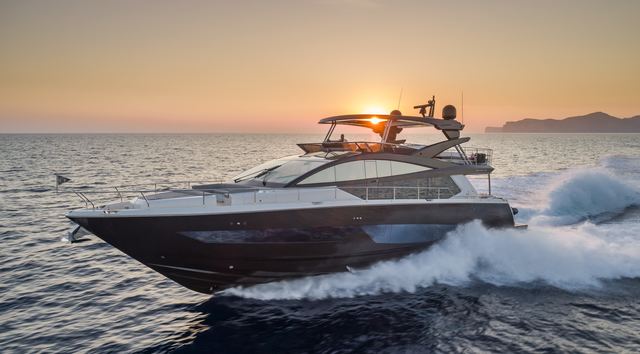
The Nomad 75 SUV stretches to 22.86m (75ft) with a notably wide 6.05m (19ft 10in) beam and uses a pair of MAN straight-six or V8 engines, most often in the 1,200hp class, for a top speed around 25 knots and long-range efficiency at 12–14 knots. The semi-displacement form and higher volume give it a steadier ride and larger internal spaces, including the option for an enclosed sky lounge. Fuel capacity and slow-speed burn favour long passages, though the yacht cannot match the Sunseeker’s planing performance or the openness of its main deck glazing. Guest flow and crew separation are more utilitarian, reflecting the Nomad’s explorer leanings rather than a sport-flybridge brief.
Considering a new yacht? Explore Sunseeker's entire current range to find the model that best suits your needs, and compare it with alternatives from competitors to ensure you make the perfect choice.
Specifications
- Builder Sunseeker
- Range Yacht
- Model 76 Yacht
- Length Overall 23.6m
- Beam 5.95m
- Draft 1.7m
- Hull GRP
- Cabins 4
- Berths 4
- Crew 2
- Cruising Speed
- Max Speed
- Fuel Capacity 6,000 Litres
- Fresh Water Capacity 1,400 Litres
- Engine Model 2x MAN V12-1550
- Engine economic speed 10 knots
- Engine max range (speed type) 500 (nm)
Sunseeker 76 Yacht Layout
-
Flybridge
-
![Flybridge Sunseeker 76 Yacht]()
The flybridge is big and well laid out with a good mix of different living areas
-
Main Deck
-
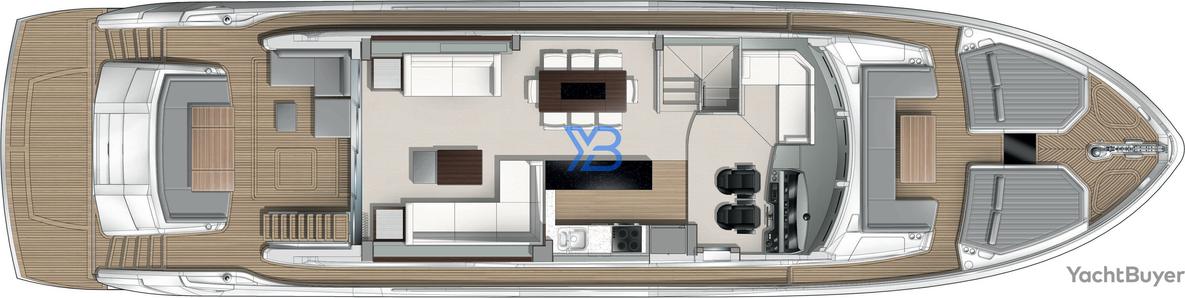
Standard midships galley
![Main Deck Sunseeker 76 Yacht]()
As standard, the galley is positioned amidships
-
Optional aft galley
![Main Deck Sunseeker 76 Yacht]()
The optional aft galley arrangement, which the boat we toured had
-
Lower Deck
-
![Lower Deck Sunseeker 76 Yacht]()
Three doubles and a twin is a versatile layout for the lower deck
Interested in a 76 Yacht?
NEW Build
Find your local dealer for a personalised, no-cost consultation
or just request
Brochures & Pricing
Used & In Stock
Looking for a ready-to-go 76 Yacht or pre-owned options? Explore all inventory of the 76 Yacht available worldwide