The Arksen 85 is a boat of great contrasts. Outside, you’ve got bare aluminium, thick glass, cranes and booms on working decks, all the tough stuff you expect from an expedition boat. Step inside though, and it feels homely, with softer detailing and spaces designed to keep the owner involved day to day.
It has six cabins in total, an owner’s suite, two guest cabins, two crew cabins and a captain’s cabin plus a pair of 350hp Scanias to push it across oceans. The question is whether it can really bridge those two very different worlds. Read on to find out.
Arksen 85
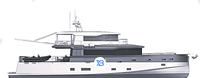
- LOA 89' 11"
- Model Year 2024
- Max Speed 14 knots
- Status In Production
- Yacht Type Flybridge
- Use Type Cruising
- Vessel M/Y Mamaluna
Review Video
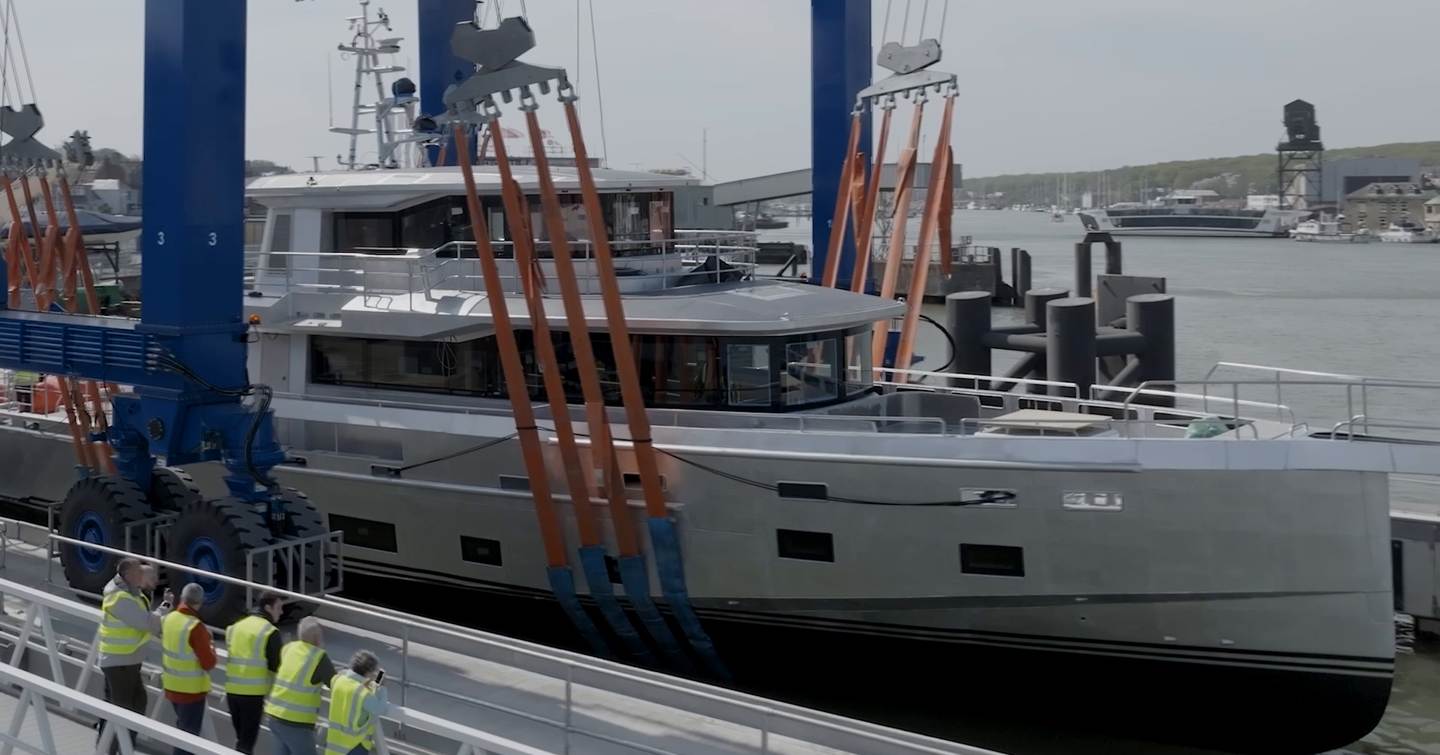
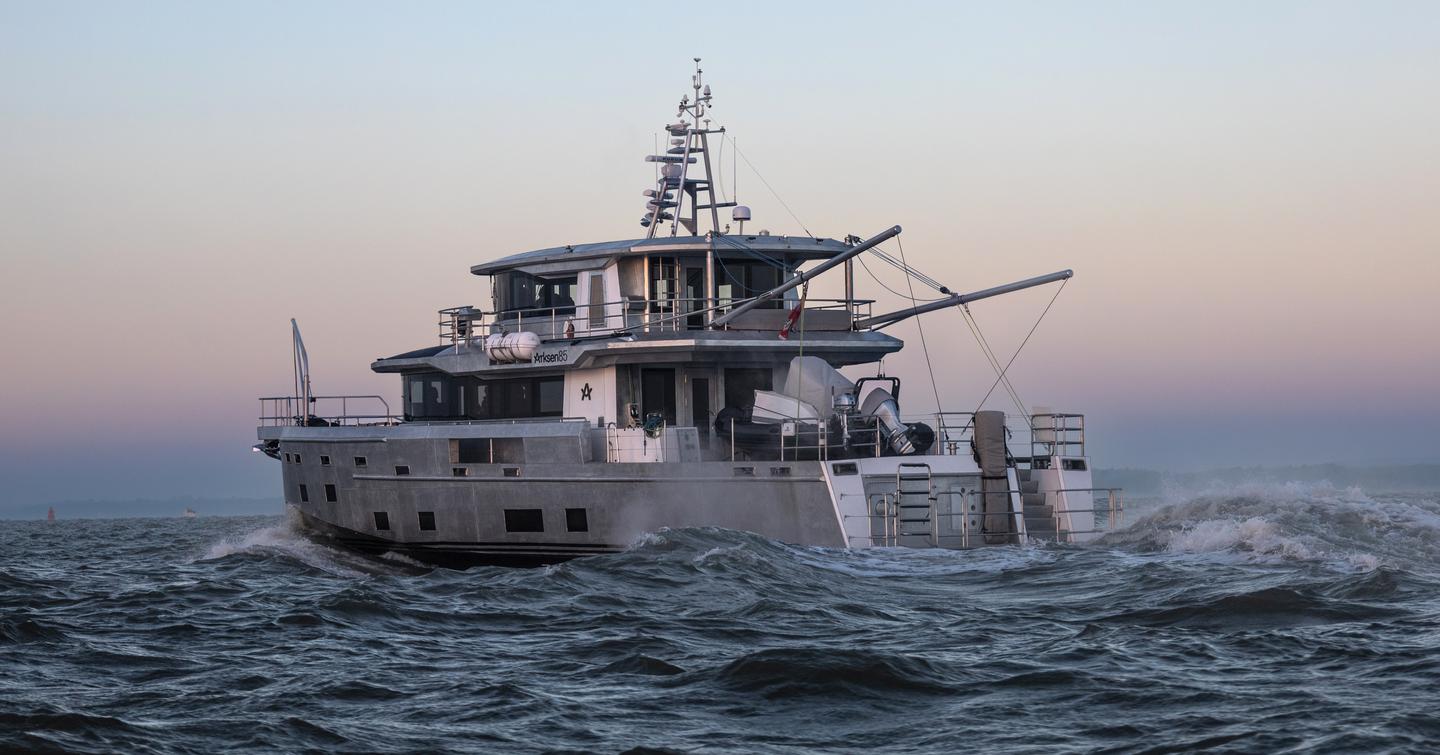
The Arksen 85 doesn’t try to hide what it is. From the pontoon it looks every bit the scaled-down destroyer, with upright screens on both decks, a pronounced aluminium brow, and plating that is as thick as many small ships – 12mm at the waterline, 8mm in the superstructure. Even the windows carry the message: 25mm thick glazing, tinted on the main deck, clear above, the kind of spec you’d expect in a research vessel rather than a yacht.
Wight Shipyard, best known for fast ferries and offshore workboats, builds the 85, and that heritage shows in the way the engineering is laid out. Raw-water strainers are the size of barrels, pipework is neatly tagged and redundant, and even the fuel transfer has a manual handle in case the digital system goes down. Watertight doors are fitted internally as standard. They take two hands and a bit of effort to swing, but that’s the price of genuine watertight integrity.
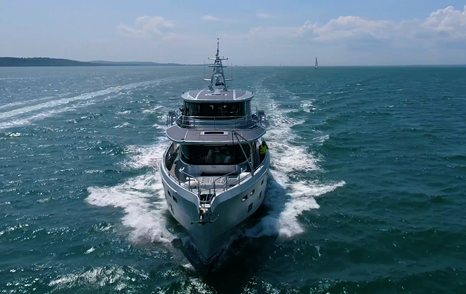
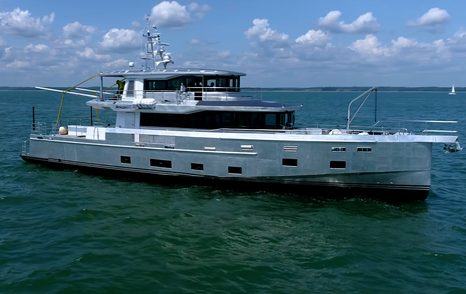
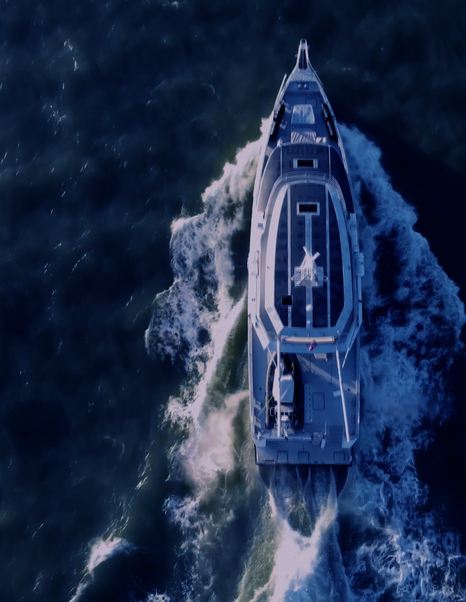
Arksen use aluminium plate with up to 40% recycled content, fully recyclable at the end of life, and lighter than steel by around 15-20%. Less weight means less horsepower, lower burn, and longer legs – the efficiency that underpins the boat’s 7,000-mile range. Left bare, the hull will develop a patina likened to a leather jacket, but owners can have it sealed, wrapped, or even fully faired and painted if they prefer. Arksen gently discourages it on environmental grounds, but the option is there.
The hull exceeds Lloyd’s SSC G6 structural rules, and the boat is designed to meet MCA Category 0 (unrestricted service) with the ability to self-right through 180° in cruising trim. That’s not marketing spin; it’s a belt-and-braces engineering choice aimed at people who plan to point the bow at remote corners of the world.
For all that toughness, the build doesn’t lose sight of the private owner. Handholds are where you need them, insulation and climate control are specified for tropics and high latitudes alike, and the commercial systems are presented cleanly so an engaged owner can understand them. It is very much a yacht that lets you stay involved – from monitoring tank levels in the saloon to working in the lazarette with a full-size bench and vice.
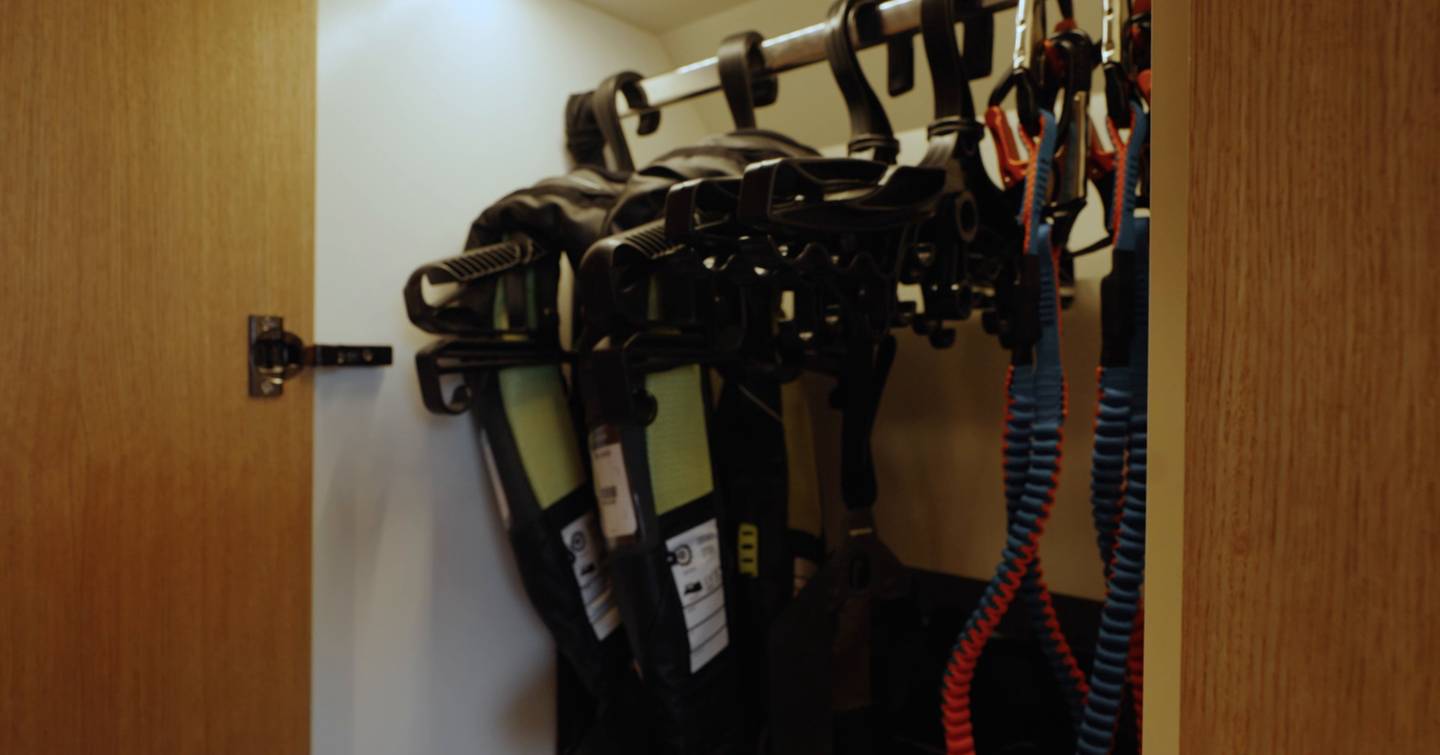
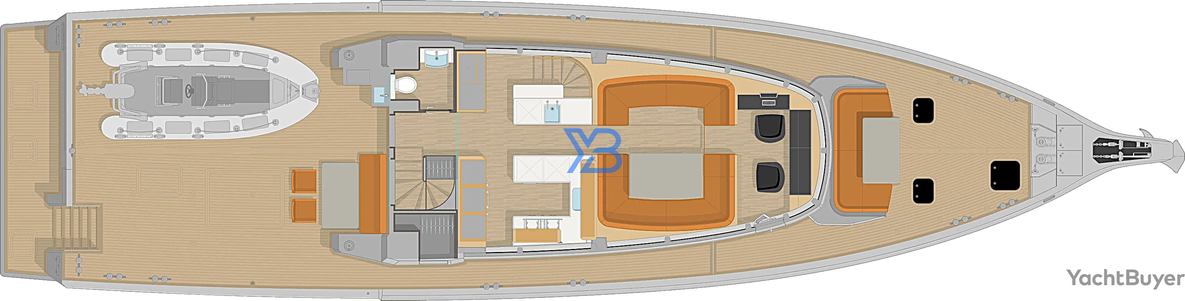
The aft lobby works a bit like a porch or a boot room, designed so wet gear never needs to intrude on the rest of the interior. A little bench seat folds up with a support so you can sit and tug off heavy boots. Opposite, a huge heated locker swallows oilskins and dries them out between watches. And if that doesn’t do the job, the day head alongside doubles as a wet room. It’s enormous and big enough to hang dripping kit so it drains onto the floor, but also fitted with a shower and toilet so swimmers don’t need to track water through the boat.
The whole space can be sealed off by an interior door, keeping warmth in when you’re operating in colder latitudes. People can come and go through the side door without bleeding heat into the saloon.
Beyond the boot room, the main deck opens into a space that feels far more homely than you expect on an explorer yacht. It begins with a small dinette, which is deliberately modest because that’s what this owner wanted. It’s cosy, in the middle of the boat where movement is softer on passage, and it sits right opposite the galley so meals don’t have far to travel. If an owner prefers a larger dining area, the layout can be adjusted, but the philosophy here is practical comfort.
The galley itself has a very domestic feel. It’s U-shaped so you can brace when the boat is rolling, but wide enough that two people can work side by side. There’s a full-height domestic fridge, a professional dishwasher that can turn a load in eight minutes, twin sinks, and an instant hot tap that saves reaching for a kettle. Counter edges are fiddled, not quite as tall as the heavy Nordhavn style but enough to stop things sliding when the boat moves.
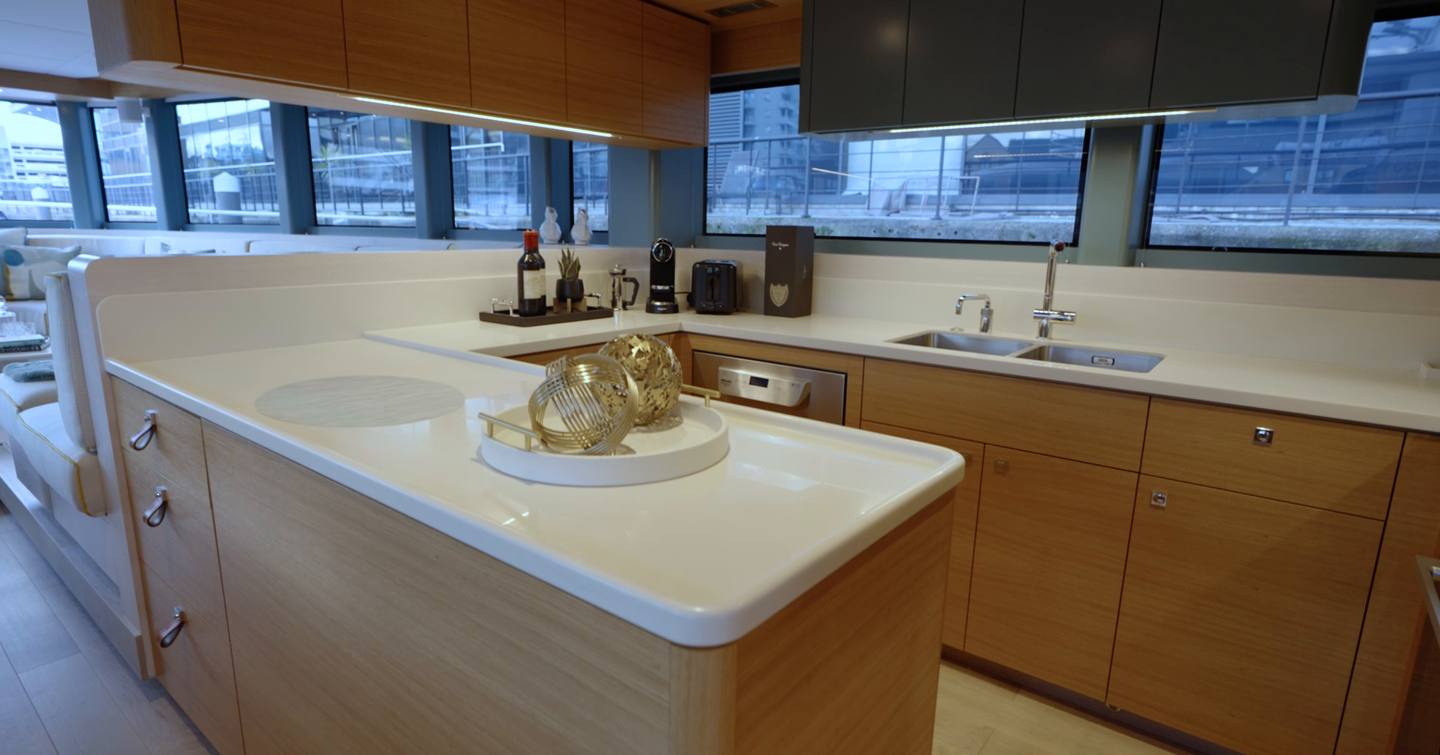
Waste management is handled carefully. Big bins are built in so rubbish can be stored until it can be disposed of responsibly, with extra capacity in the forepeak and lazarette. There’s space for a coffee machine, toaster, and everyday appliances, all neatly underlit.
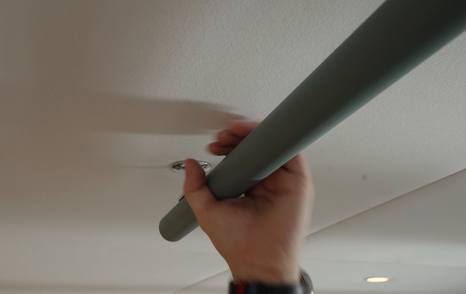
Design Unlimited, who shaped the interior, has struck a neat balance here. It’s safe and practical, with handrails where you need them, but softened by nice detailing. Locker hatches pop shut securely, yet each one is finished with leather loops so they feel tactile rather than industrial.
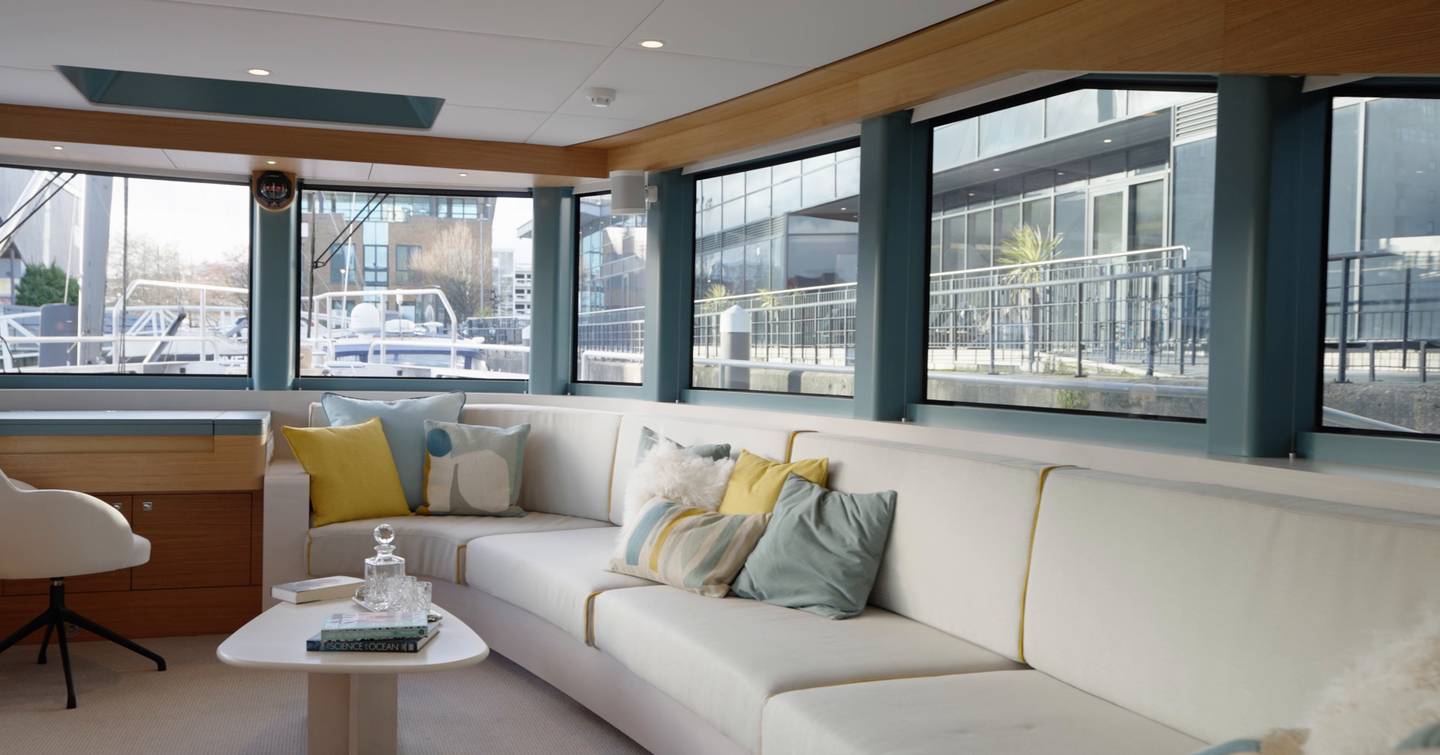
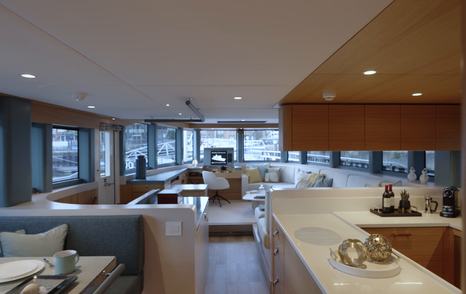
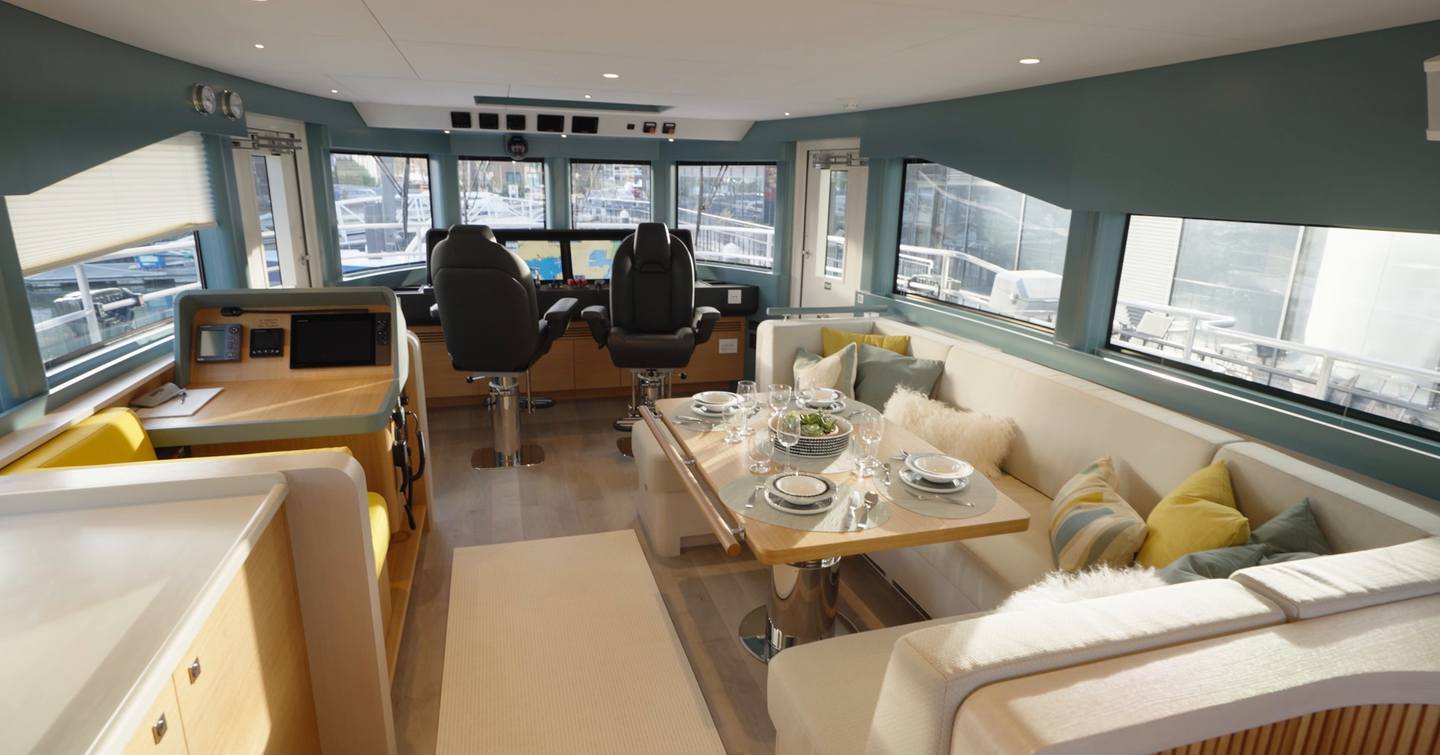
Forward of the galley the space is given over to an enormous lounging area with deep sofas, a low coffee table you can move about, and big windows framing whatever’s outside, whether that’s penguins, icebergs or a palm-fringed anchorage. It feels unexpected on an explorer yacht of this type, more like a big family lounge than a chartroom.
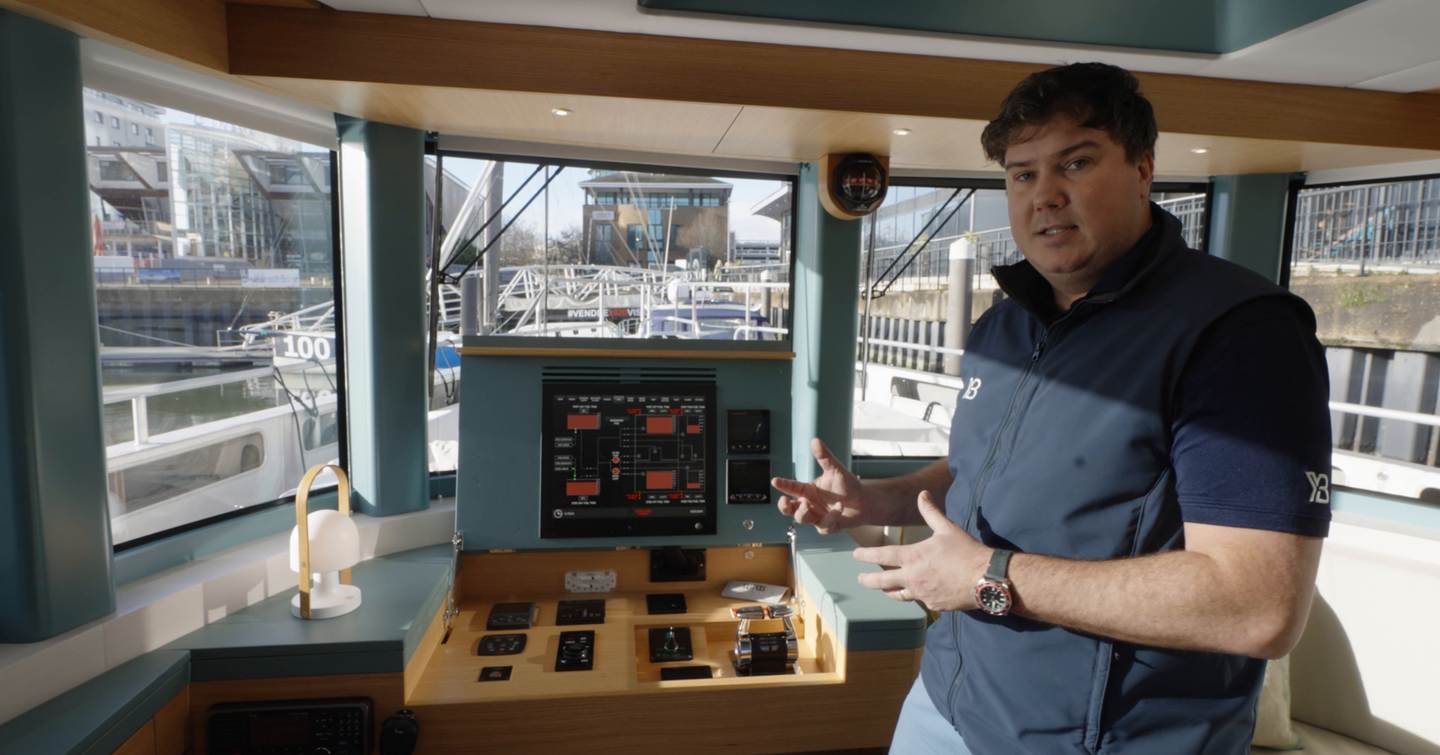
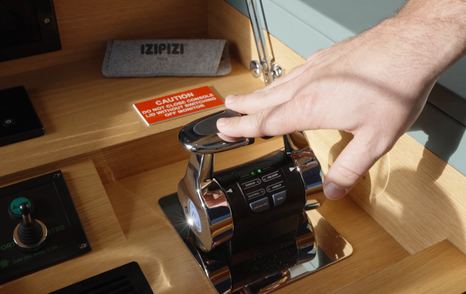
Hidden within it, though, is a control station that makes the saloon as much a working area as a place to relax. At first glance you wouldn’t know it was there as a lid folds down to leave the cabinetry looking domestic, but lift it up and you find throttles, bow thruster, autopilot, and a screen that ties you into the entire boat.
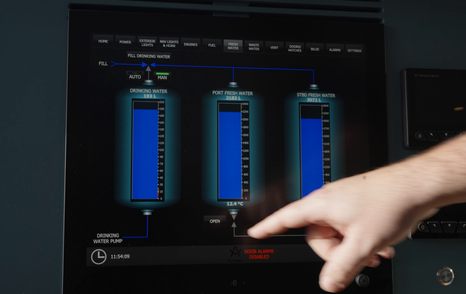
Arksen’s proprietary software pulls everything onto that screen: digital switching, engine information, battery status, and shore power. You can open or close valves, run pumps, and monitor the four holding tanks and two day tanks. Fuel can be switched from side to side to correct trim, or transferred quickly via the high-capacity pump if bunkering. Even freshwater can be shifted between three tanks, one dedicated to drinking water, to help balance the hull.
The system also shows the state of every watertight door and hatch, lighting them green when secure so you know you’re good to go. It’s all fingertip control, but there’s manual backup for every system if needed.
This space sums up the Arksen approach neatly: a comfortable lounging zone where you can settle in with the view, paired with a hidden control station that lets an owner stay directly involved in how the boat is running.
Owner's Cabin
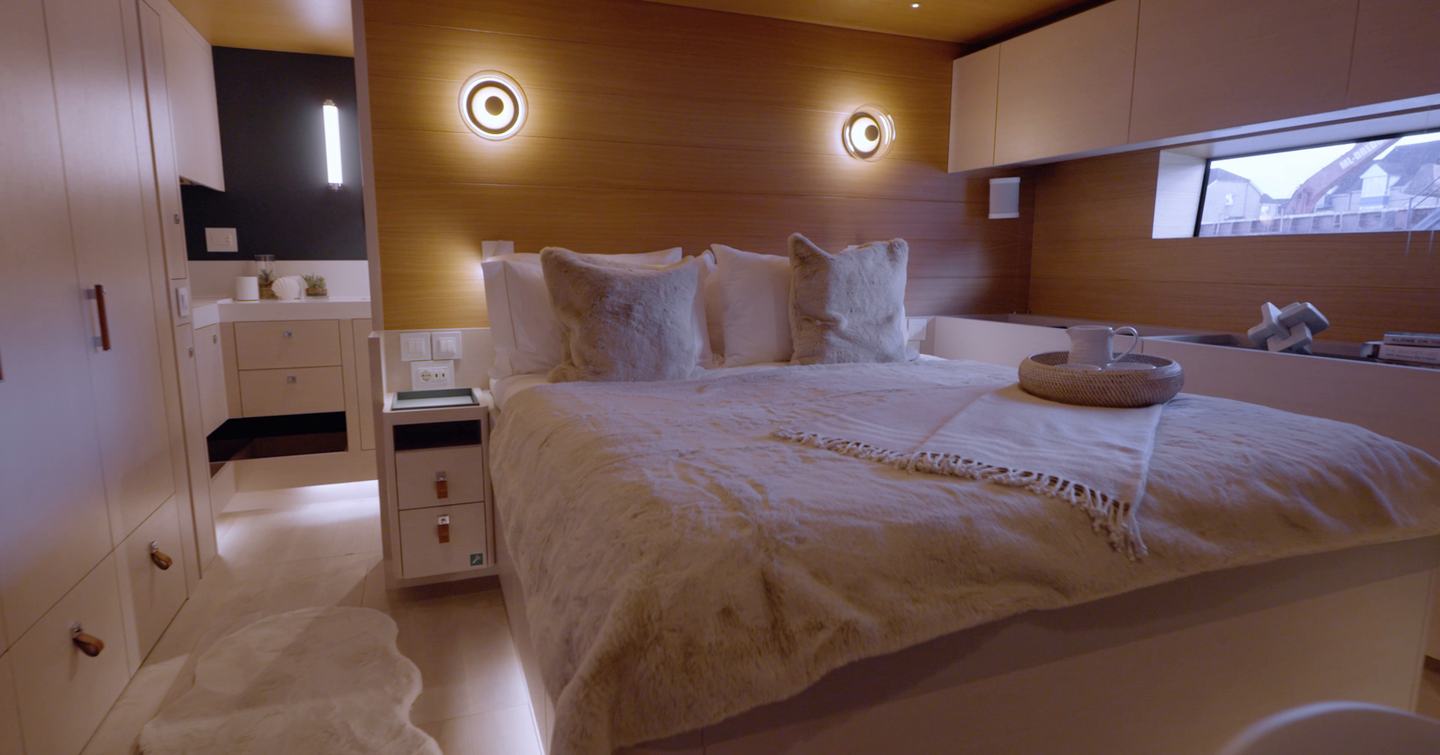
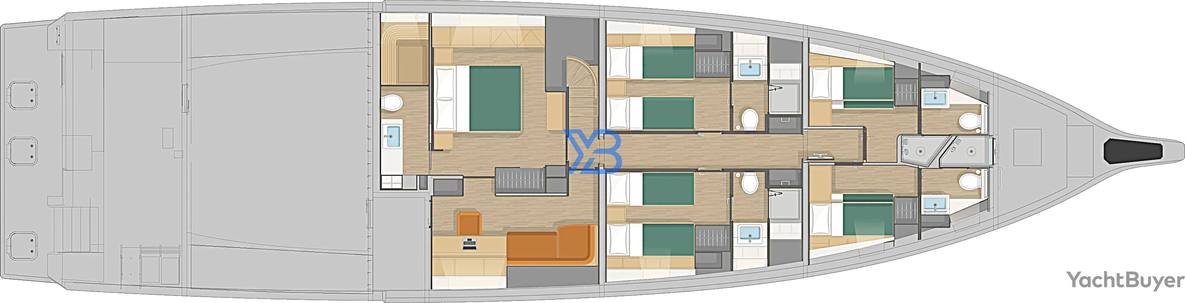
Drop down to the lower deck and straight amidships you find the owner’s suite – and it’s a real surprise. You think “explorer yacht” and expect teak, simple fittings, probably a spartan feel. But not here. The Arksen 85 is completely different inside, with soft colours, clean lines, and a sense of space that feel like a modern home.
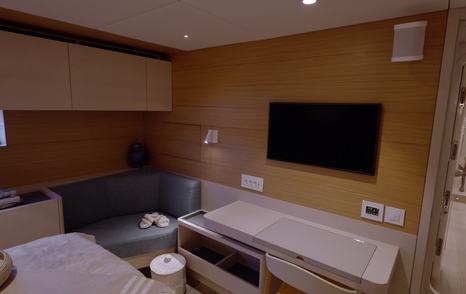
Headroom is over 2m throughout, so the cabin feels big the moment you walk in. Storage is everywhere - long runs of cupboards, drawers, and wardrobes so you can actually live on board for weeks at a time without compromise. A small sofa tucks into the corner, and there’s a bureau beneath the TV that makes the space feel properly residential.
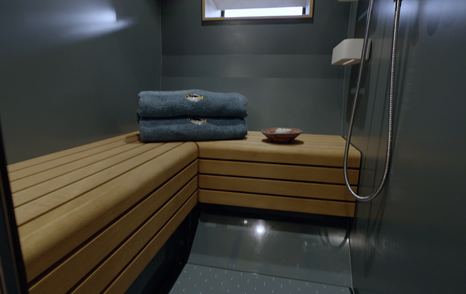
The real surprise, though, is the bathroom as it is huge. The shower cubicle is vast, and it even doubles as a steam room. There’s bench seating inside, plenty of storage, and the same colour palette carried down from the saloon. It all feels homely, almost like a good-sized bathroom in a house rather than something squeezed into a hull.
Guest Accommodation
Forward from the owner’s suite and the guest spaces keep that same sense of surprise. The passageway has handholds exactly where you need them, so even in a seaway there’s always something to grab. Lighting is bright and clean, which makes the corridor feel larger than it is, and you see those heavy watertight doors dotted along the way.
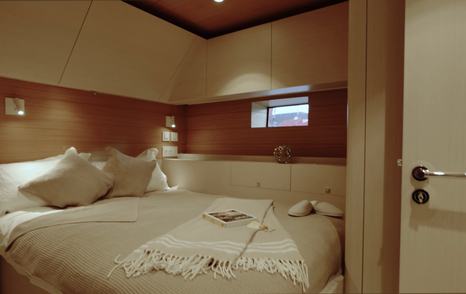
To port is a cabin set up as a double. The berth leaves space down one side to get in and out easily, and the headroom is impressive, with plenty still above. Storage is well handled, with cupboards and drawers along the bulkheads.
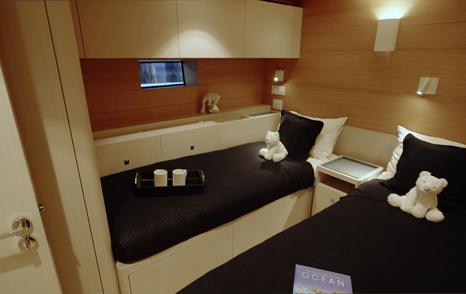
Opposite, to starboard, the second guest cabin is shown as a twin. The beds can slide together to make a double if needed, or be pulled apart for kids or friends travelling together. Both cabins can also be fitted with drop-down Pullman bunks, so you can increase capacity to three per cabin when required. That kind of flexibility is invaluable if you’re meeting friends in far-off places or cruising with extended family. Each cabin has its own ensuite bathroom, so there’s no need for a separate day head on this deck.
Crew Space
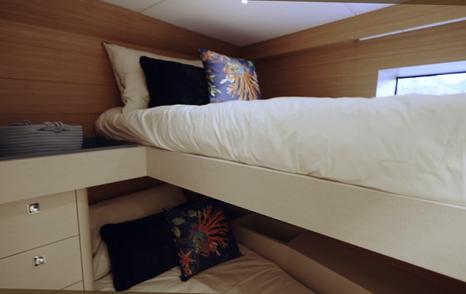
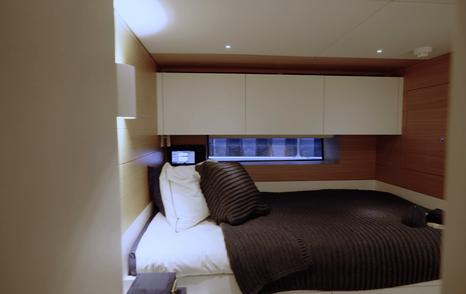
Forward, the layout splits into mirrored crew cabins. Each has bunks and its own bathroom, and though they’re designed as crew spaces they’re good enough to take extra guests when you need them. That flexibility matters on a boat like this as you may be off around the world, meeting friends or family en route, and suddenly you’ve got more people staying aboard than expected.
Push further forward again and there’s access to a vast forepeak locker - storage on a commercial scale, ideal for long passages where you need space for spares, lines, and all the gear that comes with serious voyaging.
Back aft on the lower deck is the captain’s cabin, and the fit-out is generous, with its own bathroom and a proper separate shower cubicle. Owners can choose to use it differently as it could easily be an office or study if you don’t plan to carry a full-time captain.
The clever part is that this cabin connects directly to the machinery spaces through a watertight door. That makes it perfect for an operations-minded owner or for an engineer who wants immediate access to the technical heart of the boat. This shows how Arksen expects this yacht to be used by people who want to stay closely involved with how the boat works, and not just sit back and be carried along.
The pilothouse is where the explorer credentials of the boat really show, with everything laid out for long watches and ocean crossings. Four large multifunction displays form the backbone of the console, with smaller repeaters ahead for backup. Through them runs all the serious kit you’d expect at this level - high-grade radar, AIS, comms, autopilot - backed up by Arksen’s proprietary software for digital switching and systems management. Every function you can access from the hidden saloon station is mirrored here, so whether it’s fuel transfer, tank levels, power status, or watertight door integrity, the skipper has total oversight.
The seats are deeply cushioned, built for hours on passage, and they swivel when not in use so they can join the dinette or lounge conversation. Owners can also spec armrest controls, flicking between functions without leaning forward to the console. It’s an arrangement that feels close to commercial wheelhouse design – robust, direct, and built for endurance but softened by comfort you’d want on a yacht.
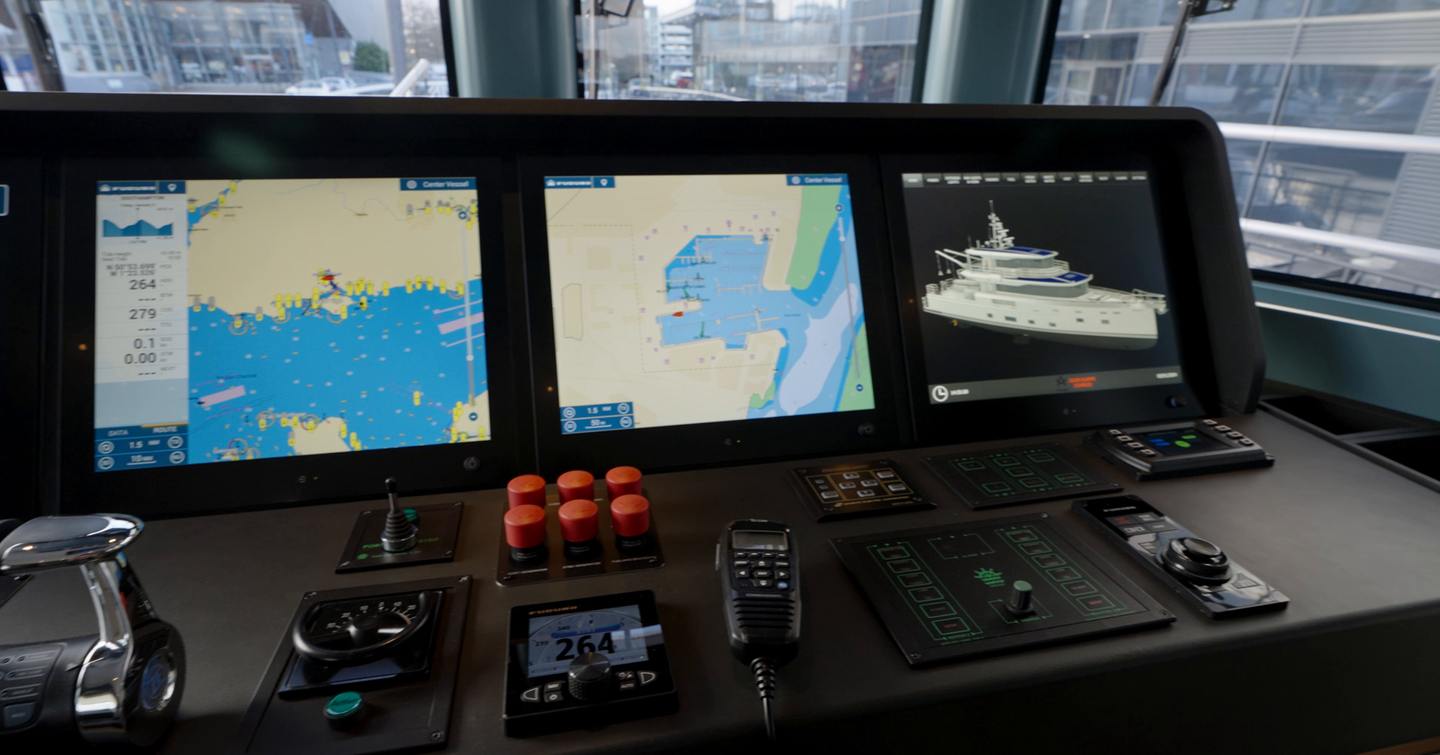
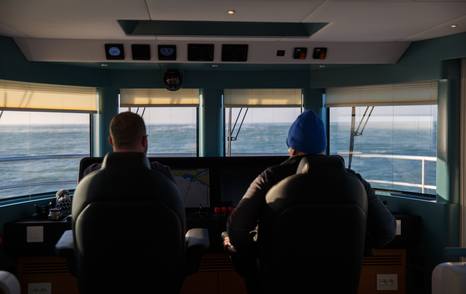
Sightlines are excellent. The pilothouse sits high, with 360° glazing wrapping the space so you can see the water forward and down the quarters. The view over the purposeful bow is particularly striking: you can easily picture edging the boat into a tight cove or up to an ice shelf with the confidence of that elevated perspective.
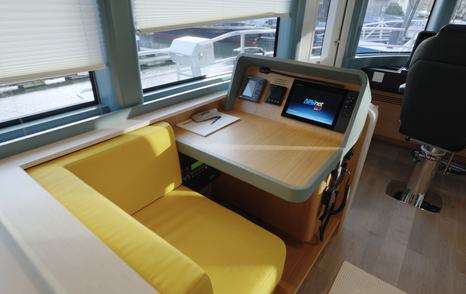
Support spaces flow neatly from the helm. The chart table to starboard is a rare treat, with room to spread full Admiralty sheets flat and stow them in a proper drawer. Nearby, the convertible dinette drops into a daybed so an off-watch crew member can rest without leaving the bridge. A tidy servery with fridge drawers and coffee machine keeps everything self-contained.
The Arksen 85 keeps things deliberately simple at water level. The stern platform is a no-nonsense working zone, finished in bare railings and exposed welds rather than gloss teak. A hydraulic bathing platform can be specified to lower into the water, making boarding tenders or a swim in remote anchorages easier. There’s also an optional fold-down transom, which opens directly into the lazarette and turns the whole stern into a wider waterside terrace.
A large, deep bathing ladder drops right into the water - designed with divers in mind, so climbing aboard with tanks strapped on isn’t an awkward scramble. Mounted across the transom sits the carbon fibre passerelle. It’s built in two pieces so it can be moved around and fixed wherever the boat happens to need it, whether that’s the main deck, the upper deck, or a side gate.
It’s all quite utilitarian compared to a Mediterranean cruiser, but this is a working platform that can be adapted to the owner’s itinerary. One cruise might call for it to be rigged as a straightforward bathing deck, another as a launch pad for serious dive ops.
Cockpit
Step up from the platform and the cockpit makes an immediate impression. It is, quite simply, enormous – the sort of open working space you don’t expect on this size of boat. You notice straight away how wide the passageway is, with solid rails and plenty to grab as you come aboard.
Right aft, a couple of neat fold-down seats perch on the transom, so you can sit with the wake streaming past. It’s a small detail but one that suits long, quiet passages. The real drama, though, is in the deck space itself.
This boat carries a 5.8m (19ft) tender (big for a yacht of this size) with capacity for an even larger one if required. Launch is via paired booms on either side, each with a 1.5-tonne lift rating. Owners can specify a central deck crane instead, but the booms double as flopper stoppers. With their stainless plates dropped into the water, they add drag as the boat rolls and can cut motion by up to 60% without using any power. That’s an impressive figure, especially for extended stays at anchor.
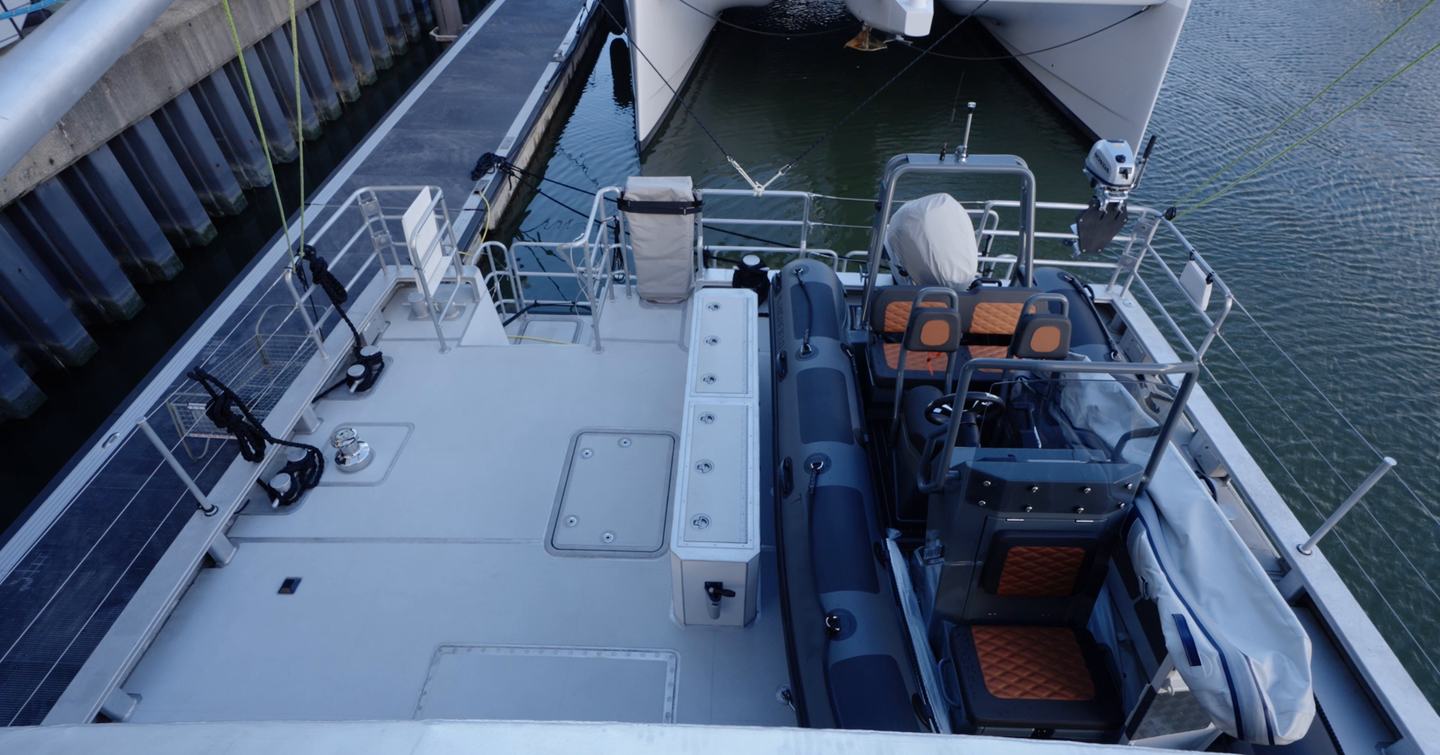
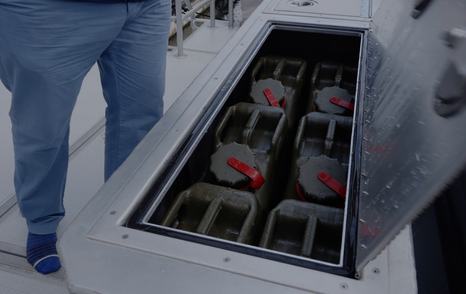
Seating runs deep across the beam, and extra deck chairs stow neatly in a locker, ready to be set out when the tender isn’t aboard. Storage is strong here too – lockers swallow spare fuel cans, tender gear, and safety kit in one organised place.
It feels practical, a bit raw in finish but you’re standing on a deck designed to take heavy loads, launch large tenders, and double up as the base for diving, fishing, or simply long evenings outdoors.
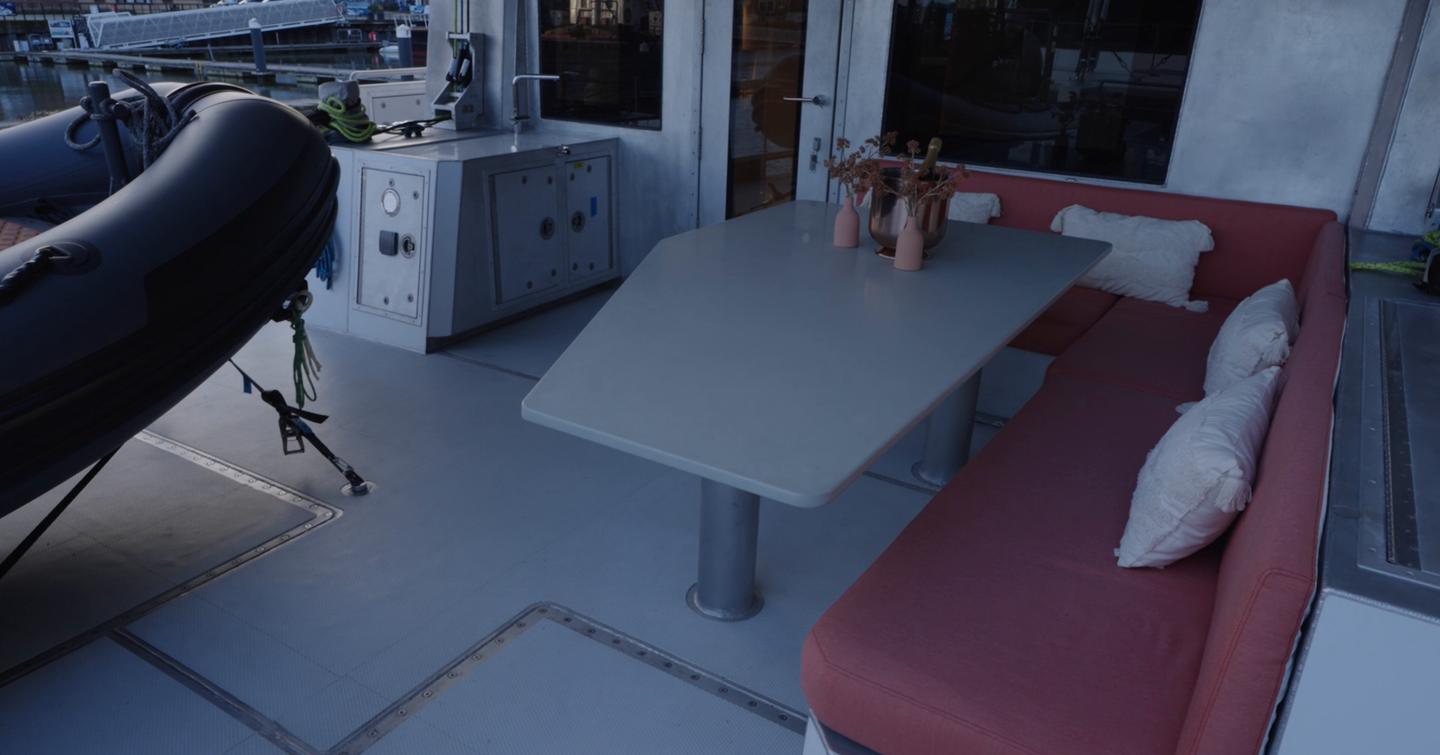
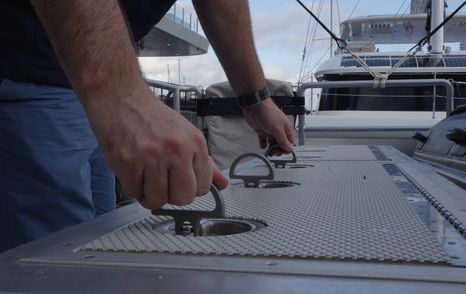
In the aft quarters is what Arksen simply calls the technical area and it says a lot about the way the boat is designed to work. Fire suppression lives here, along with power sockets for charging toys – e-bikes, dive scooters, whatever finds its way on board. It doubles as a utility hub, so you can plug in, top up, and keep kit ready without dragging it through the interior.
This boat has the simple version, just a sink built into the moulding. But owners can upgrade it into a wet bar with a grill, making the cockpit more sociable when conditions suit. On both sides, you find the controls for the tender booms. Winches, push-buttons, everything to operate the launch gear is right at hand, so you don’t have to leave the deck to get things moving.
Side Decks & Foredeck
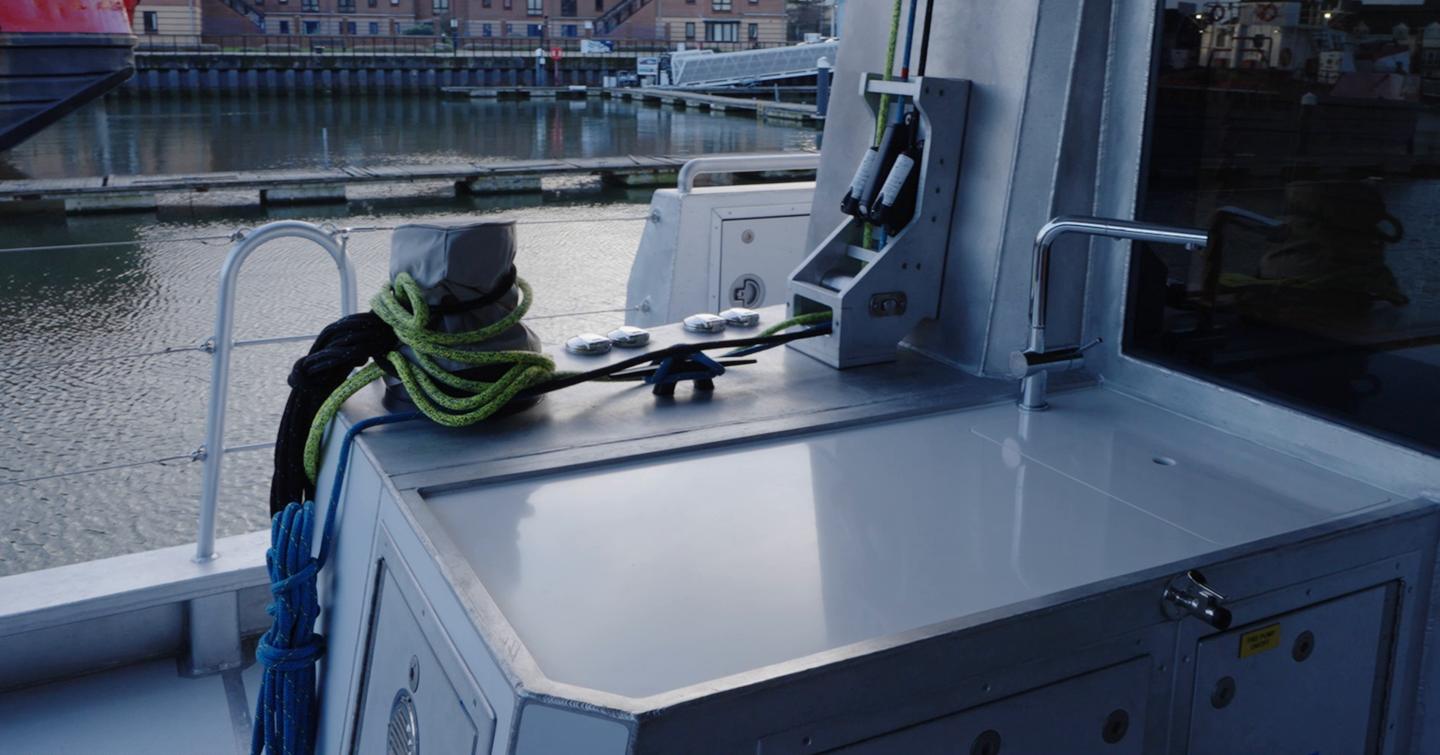
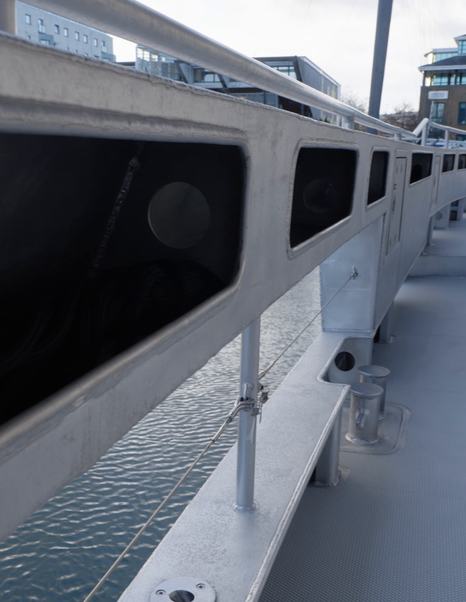
The bulwarks along the sidedecks are very, very tall, topped with solid railings. There’s nothing fancy here, these are working decks - practical and robust. Bollards are through-bolted to the structure, so they’re as strong as they can be. Along the way you’ll find open voids built into the bulwarks, ideal for stowing boat hooks or running lines. The sort of thing that just makes crewing easier day to day. On the port side there’s also a side door into the saloon, giving another entry point without having to head aft.
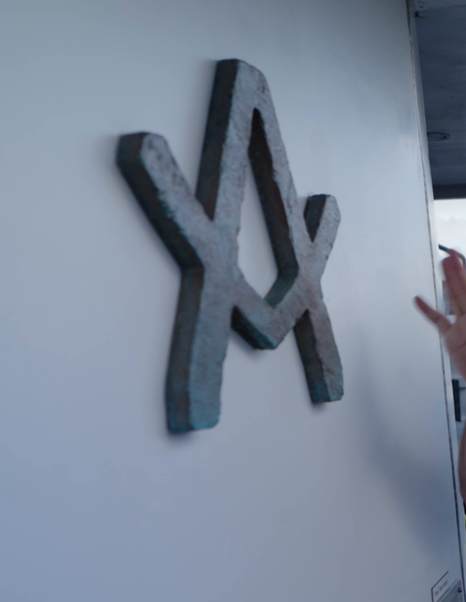
A neat touch is the Arksen logos cast into the metalwork. Each one is done individually for the boat, so no two yachts carry exactly the same mark.
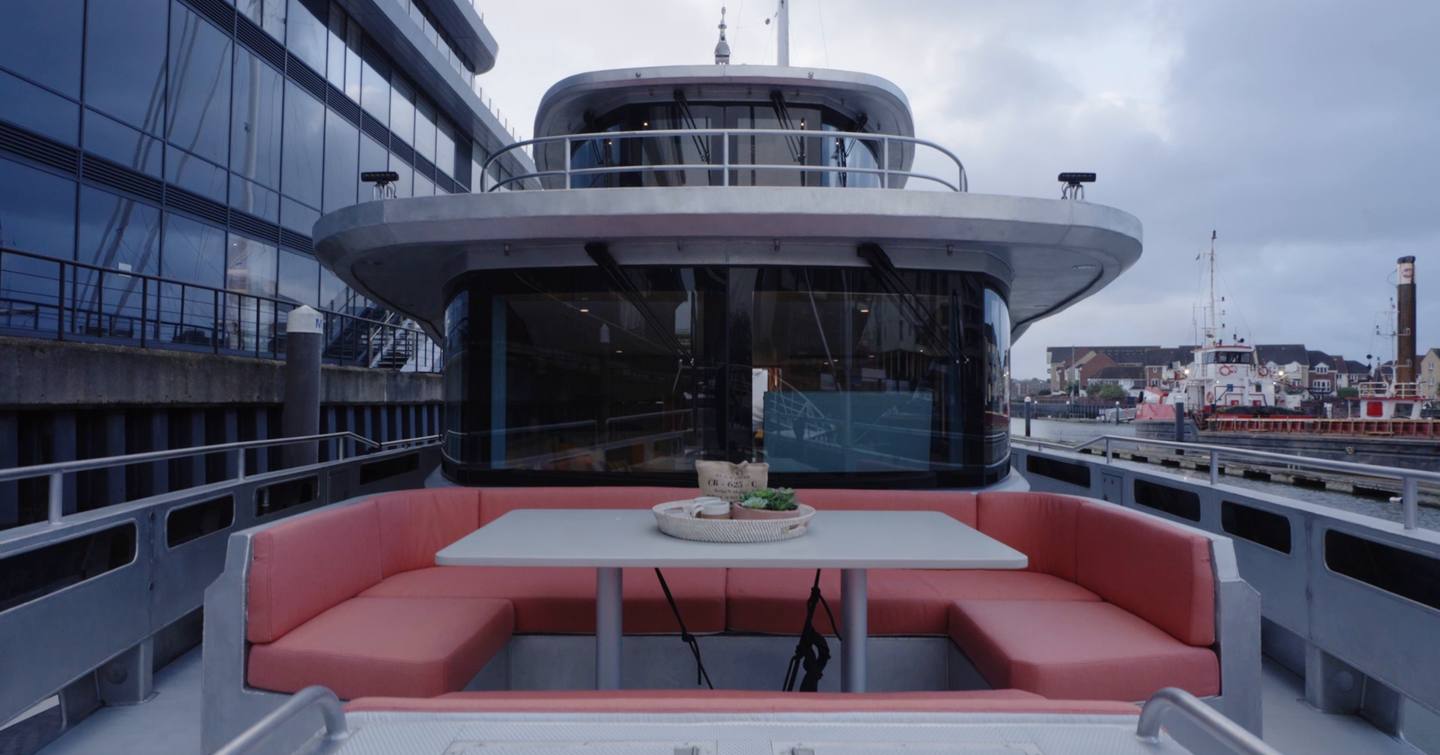
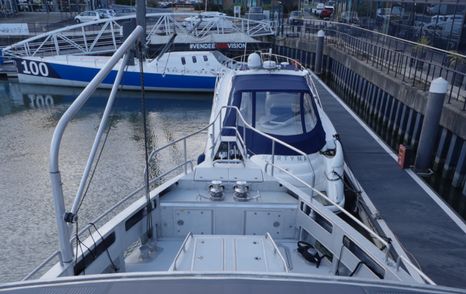
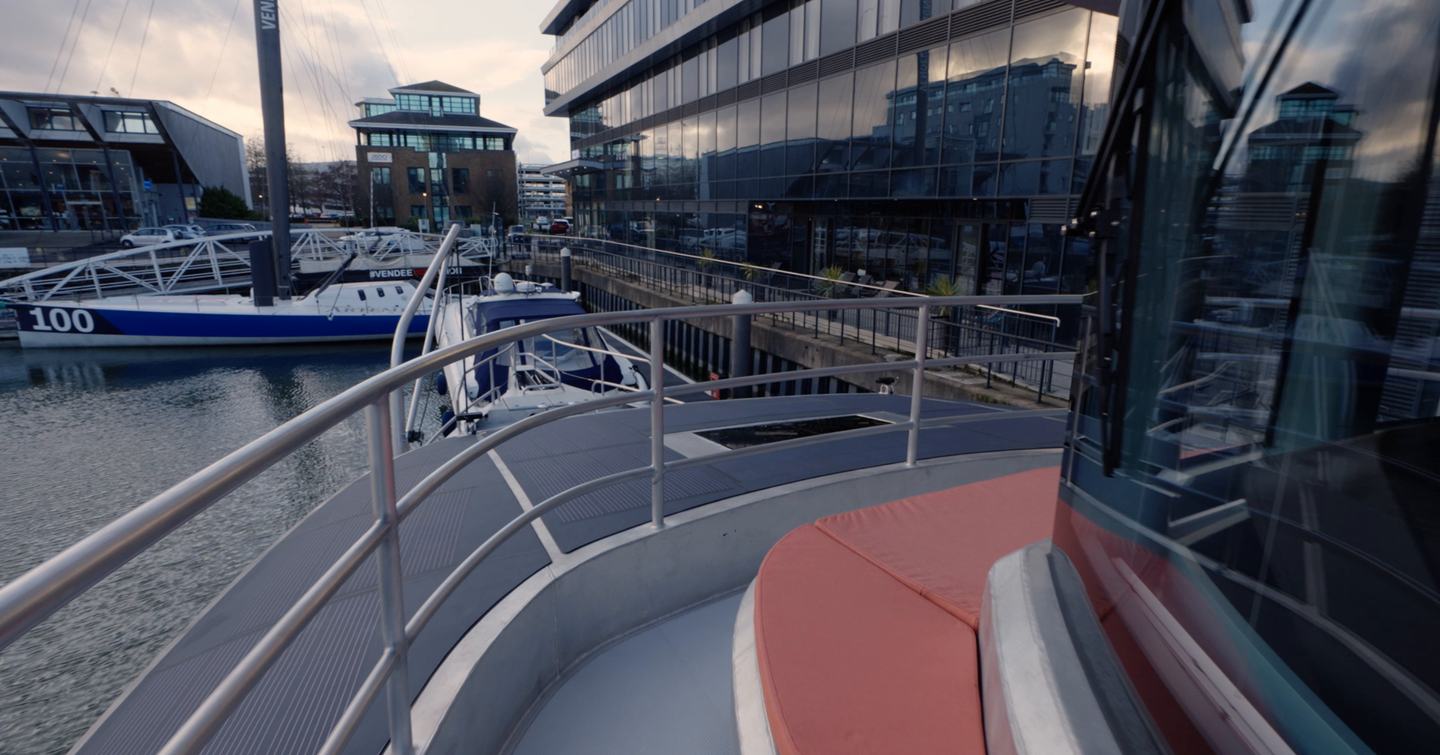
Right at the bow the atmosphere changes slightly. The foredeck is still a working space - bollards, heavy ground tackle, and a 250kg crane that can lift toys, tenders or supplies. But it’s also sociable. There’s a big wrap of seating, an opposing bench, and a table that makes this area just as useful for drinks or lunch as it is for handling mooring lines. Lockers beneath swallow cushions, which can be laid on top to form a sun pad, or removed entirely to keep the deck clear for stowing another tender.
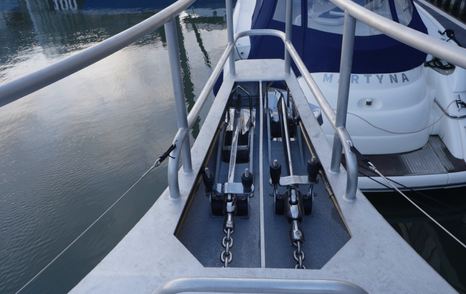
Anchoring gear is heavy-duty: to port a 130kg Ultra Marine, to starboard a 90kg claw, each with 130m of 14mm chain. That gives real redundancy for long stays in remote places, where re-setting an anchor in the middle of the night isn’t the kind of excitement you want.
It’s a foredeck with two faces - one part working boat, one part lounge – and both feel entirely at home on an 85 built to go long and far.
Exterior Pilothouse
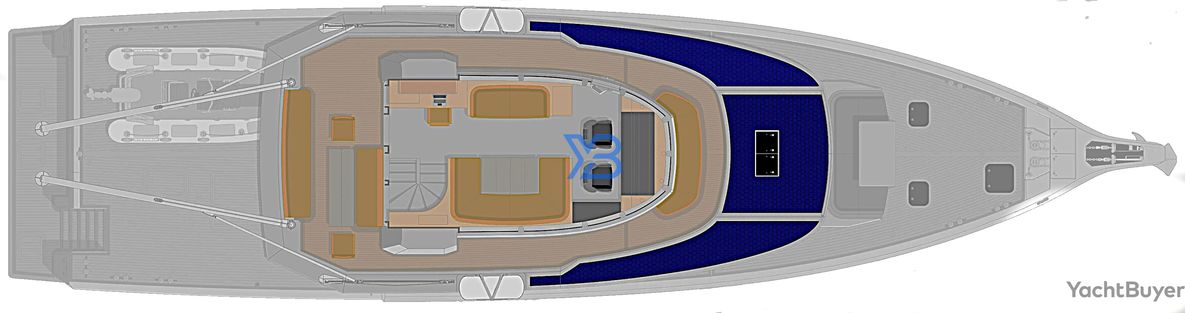
From the pilothouse you can step straight out through side doors on both port and starboard, and once you’re outside you realise this level links all the way around the boat. It’s a 360° loop, so you can always get where you need to without backtracking.
The wing stations are the real working tools out here. There are three of them in total. Forward on the port side, one station tucks neatly beneath its own aluminium hood, with wheel, throttles, thruster, and a small screen to keep an eye on depth and navigation data. Aft on the port quarter there’s another station, the one you’d use if you were mooring stern-to and needed a clear view of the transom. To starboard, a third completes the set.
These stations keep close-quarters manoeuvring simple. They’re practical, compact, and tucked under proper aluminium shells. Outboard you feel a little less sheltered than under the pilothouse roof, but the guard rails are very high and solid, and the clip-on points are built in all the way around. If it gets rough, you can clip in and move safely around the deck.
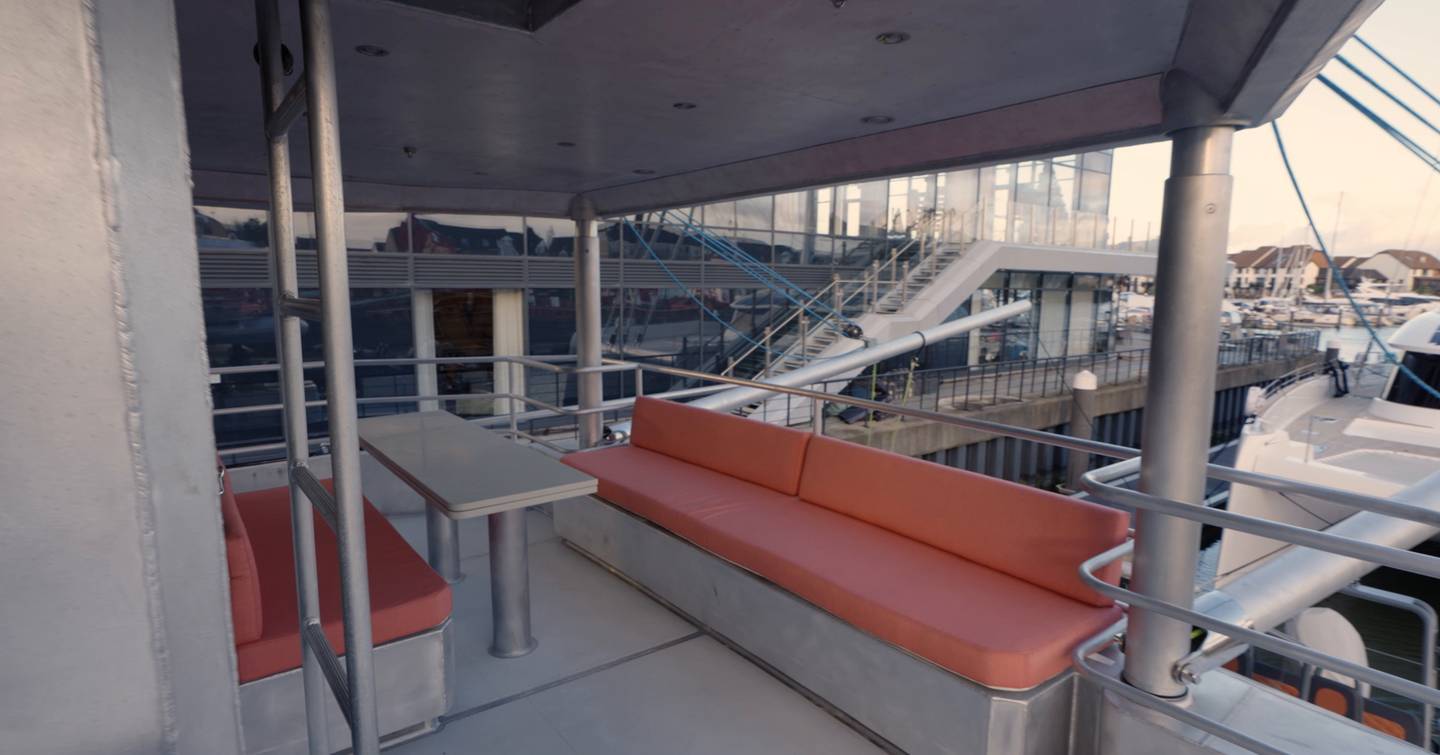
The exterior here doesn’t lose sight of comfort. Aft of the pilothouse, beneath the solid aluminium overhang, there’s a sociable outdoor dinette – sheltered enough to eat outside even in poor weather. It’s a working deck, but still somewhere you’d sit down for a meal with the best part of the view.
Up above, a ladder runs straight up to the mast so servicing navigation equipment and antennae doesn’t mean clambering over rails or bringing in a crane – you just head up through the hatch and get on with it.
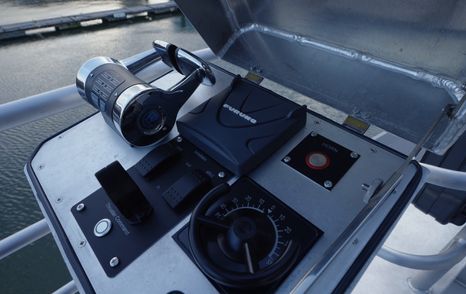
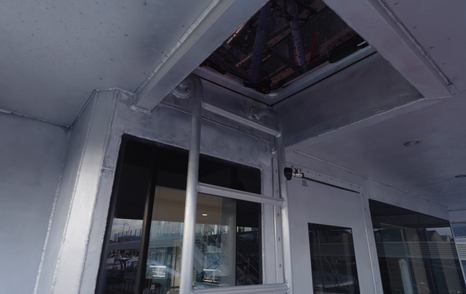
Ahead of the pilothouse windows, Arksen has built one of the nicest spots on the boat. A viewing platform with detailing that's commercial in spec, with heated nozzles to wash the screens if you’re working in freezing conditions and heavy-duty wipers sweeping across the glass. But step outside and you’re standing on a conning perch that feels special.
From here you get an uninterrupted view over that purposeful bow. It’s easy to picture yourself nudging the boat into a secluded cove or edging along the line of an ice shelf, the deck dropping away beneath you. The perspective is commanding, and it underlines just how serious the Arksen 85 is about taking its owners to far-flung places.
Entering via the captain's cabin, you first arrive in the battery room. It feels noticeably cooler, with its own climate control and the whole space is separate from the interior, with dedicated fire suppression and a very tidy installation. Everything is clearly labelled, easy to trace, and easy to get at.
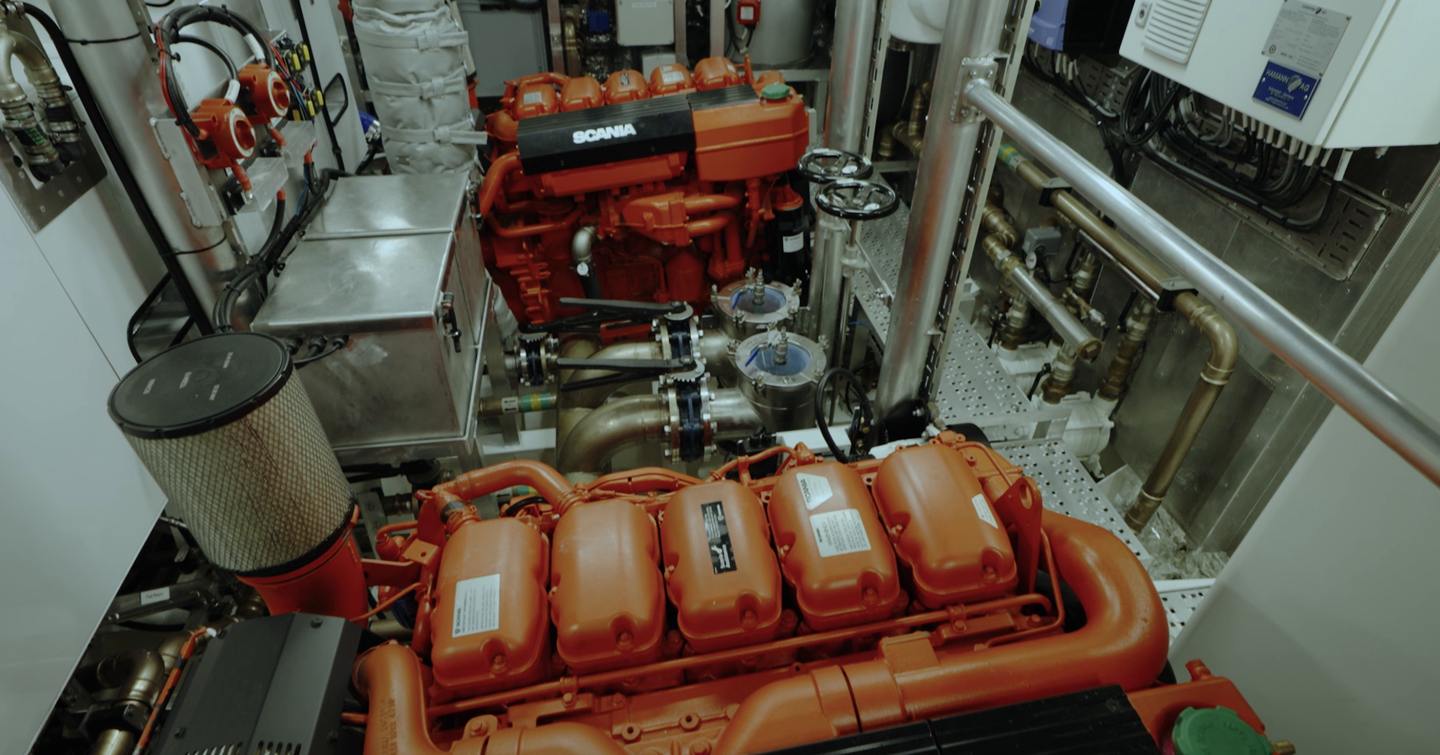
Another watertight door takes you through into the main engine room, and here again the impression is of space and order. On plenty of boats twice this size the machinery feels crammed in, but the Arksen 85’s layout leaves room to move around. Twin 20kW generators sit in parallel, spooling up or down depending on the hotel load, while the big battery bank shoulders lighter demand so the gensets don’t need to run constantly.
Along one bulkhead is the fuel transfer system. We saw the digital version of it on the saloon screen, but here you get the physical picture – beautifully arranged pipework, valves clearly marked, and everything you can do electronically also doable by hand. If the pumps fail, you can use a big old-school lever to move fuel across. A smaller filter pump manages the day-to-day transfers, while a high-capacity pump can shift fuel quickly between bunker tanks. Everything that feeds the day tanks runs through filters, which is vital when you’re bunkering in far-off ports where fuel quality might be uncertain.
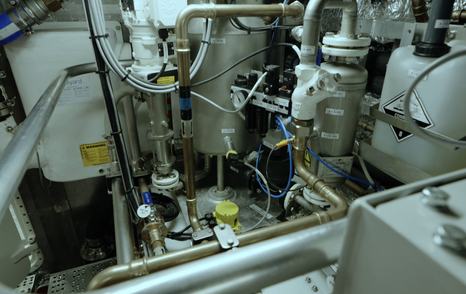

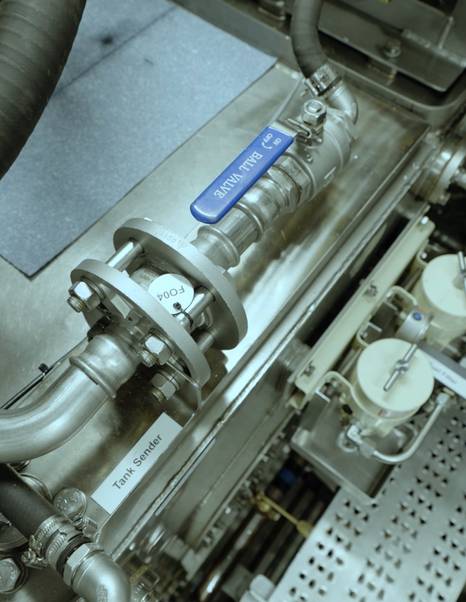
There’s provision for oily water, too, so nothing unwanted goes overboard. A sewage treatment plant handles black and grey water, sterilising it before discharge if shoreside pump-out isn’t an option. It’s another example of Arksen’s belt-and-braces approach to remote cruising.
At the centre are the main engines: a pair of 350hp Scanias. It doesn’t sound like much for a boat of this size, but with this hull form they’re remarkably efficient. At 9 knots they burn just 26 litres an hour between them, which is how the boat achieves its 7,000nm range. Top speed is around 14 knots, but it’s the long-legged cruise where this boat makes the most sense.
Everywhere you look, the commercial heritage of Wight Shipyard is clear. The raw water strainers are enormous, systems are doubled up, and there’s always a backup for the backup. It’s built to be worked on, and worked on at sea.
Lazarette & Workshop
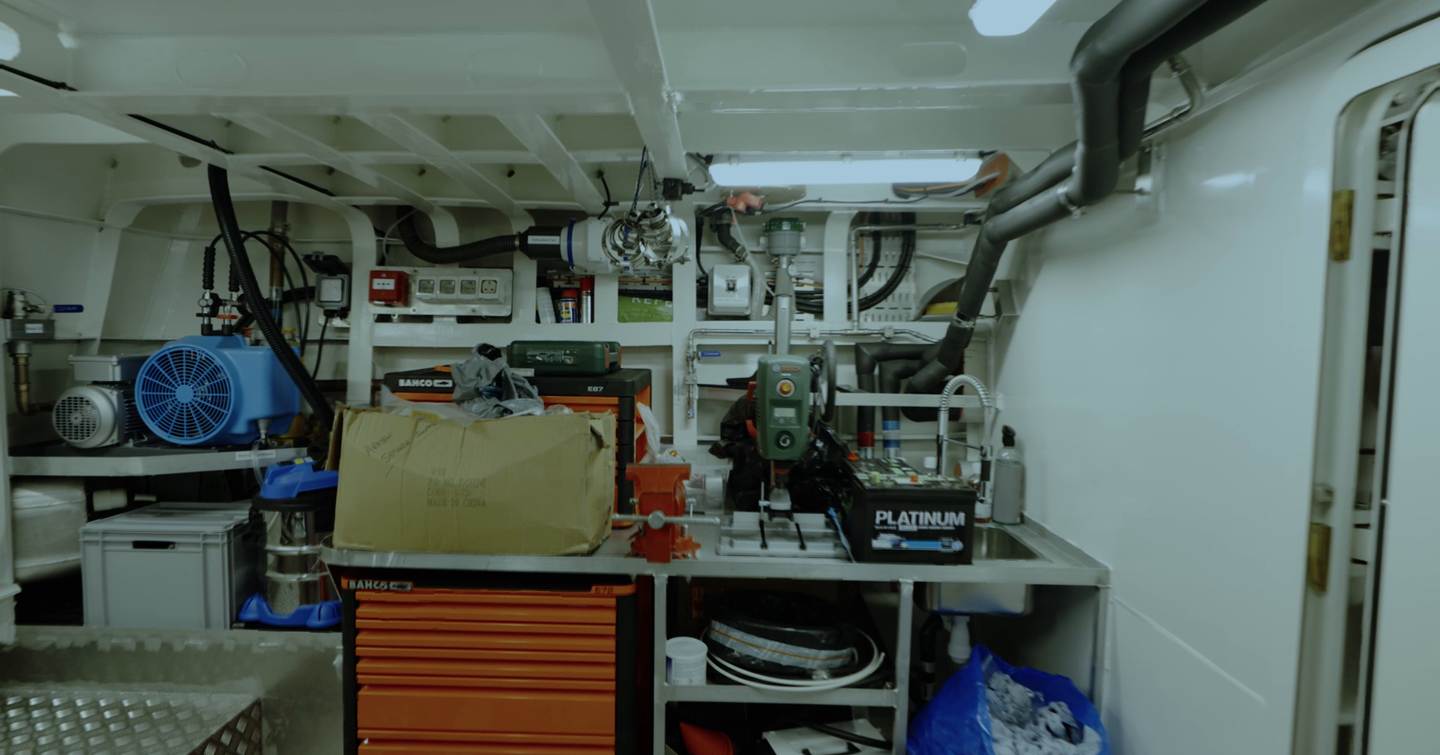
Aft of the engine room is a large lazarettewith full standing headroom. It’s laid out like a workshop, with a bench, a vice and drill, and racks of tools stored neatly so you can get at everything quickly. Dive tanks line up in their dedicated holders. The laundry kit lives here too, and a water purifier takes dock water through filters before it joins the onboard supply. That system also feeds a separate drinking-water tank, which never mixes with the general wash-down water.
Steering gear is accessible, with duplicates built in so there’s always a backup. Big storage bins run down the sides, the sort you need if you’re holding onto rubbish or cardboard for long periods between ports. It’s all arranged so that living with the boat on extended trips is as easy as possible. From here, a final hatch drops you straight back out onto the bathing platform.
Our Verdict
Having seen the whole boat, the Arksen 85 leaves a strong impression. The combination of bare aluminium strength outside, the soft and homely interior inside, and the way the engineering has been laid out makes it clear this is a yacht built to go long and far.
That 7,000-mile range means the world really is your cruising ground – you just have to decide whether it’s icebergs or islands you want to see through those 25mm-thick windows. Everywhere you look, there’s thought given to how you’d actually use the boat: the big cockpit with its booms and flopper stoppers, the wet-gear room that works like a porch, the lounge that hides a full control station. It all speaks to long-distance, self-reliant cruising, but without losing comfort.
In short, the design and build of the Arksen 85 bridge two worlds: the commercial pedigree that makes it genuinely ocean-capable, and the softer finishes that make long-term living practical and comfortable. It’s a boat that feels ready for work but built with enough thought and polish to carry an owner, their family, and their adventures for years on end.
Reasons to Buy
- 7,000 nautical mile range at 9 knots
- Boot room with heated drying locker
- Interior feels homely, not a workboat
Things to Consider
- Stairs between decks are a squeeze
- Patinaed aluminium won’t suit everyone
Looking to own a Arksen 85? Use YachtBuyer’s Market Watch to compare all new and used Arksen 85 Yachts for sale worldwide. You can also order a new Arksen 85, customized to your exact specifications, with options for engine choice and layout configuration. Alternatively, explore our global listings of new and used yachts for sale and find your perfect yacht today!
Rivals to Consider
The Numarine 26XP is close to the Arksen 85 on size at 25.89m (84.94ft), though the two boats put their space and machinery to different use. The Numarine has an FRP displacement hull, teak decks, a hydraulic bathing platform and four en suite cabins for eight guests, with its full-beam owner's cabin amidships on the lower deck. The Arksen's aft deck is far more work-focused, with space for a 5.8m (19ft) tender, 1.5-tonne lifting booms and direct access to the lazarette and workshop. Optional twin 1,200hp MAN V8s take the Numarine to 23 knots, while its long-range figure is 3,500nm at 8 knots. The Arksen tops out at 14 knots but can cover 7,000nm at 9 knots. The Numarine 26XP starts at €6.14 million.
At 26.2m (85.96ft), the Bering 88 is even closer to the Arksen in length, but its proportions are very different. Its beam is 8.1m (26.57ft), compared with 6.9m (22.64ft) for the Arksen, and the Bering has 233GT of internal volume. It uses a steel full-displacement hull and carries 39,755 litres of fuel, while twin 450hp Cummins engines give it a 10.5-knot maximum speed and a quoted range of 5,000nm at 8.5 knots. There are five en suite cabins for 10 guests, including a main-deck owner's cabin. The Arksen also sleeps 10, but its aluminium hull, narrower beam and 14-knot top speed give it a very different set of numbers, while its quoted 7,000nm range is 2,000nm greater. Bering does not publish a starting price for the 88, so pricing is on application.
The Nordhavn 80 is smaller at 23.98m (78.67ft), with a beam of 7.11m (23.33ft), and follows a full-displacement GRP format. Twin 375hp John Deere engines give it a 12-knot top speed and a quoted range of 2,700nm at 7 knots from 18,208 litres of fuel. Its four en suite cabins sleep eight guests, with the owner's cabin forward on the main deck, and there is space for three crew. There are some familiar passagemaking details here too, such as side doors from the wheelhouse, substantial handholds and fiddled work surfaces. The Arksen takes that practical approach further in places, with watertight doors throughout, dedicated wet-gear storage, a separate battery room, manual back-up for its fuel-transfer system and full standing headroom in the lazarette. Its 7,000nm range also gives it a very different cruising envelope. The Nordhavn 80 starts at £3.7 million.
Considering a new yacht? Explore Arksen's entire current range to find the model that best suits your needs, and compare it with alternatives from competitors to ensure you make the perfect choice.
Specifications
Available Stock

Interested in a Arksen 85?
NEW Build
Find your local dealer for a personalised, no-cost consultation
or just request
Brochures & Pricing
Used & In Stock
Looking for a ready-to-go Arksen 85 or pre-owned options? Explore all inventory of the Arksen 85 available worldwide