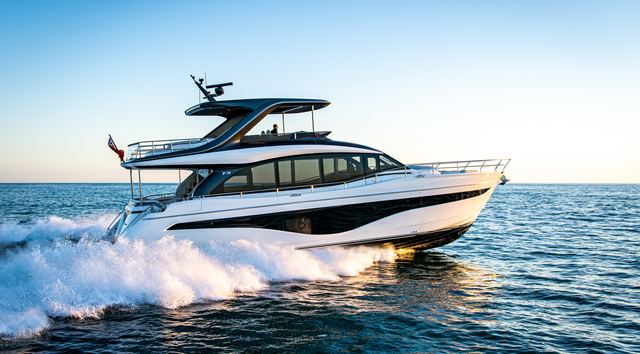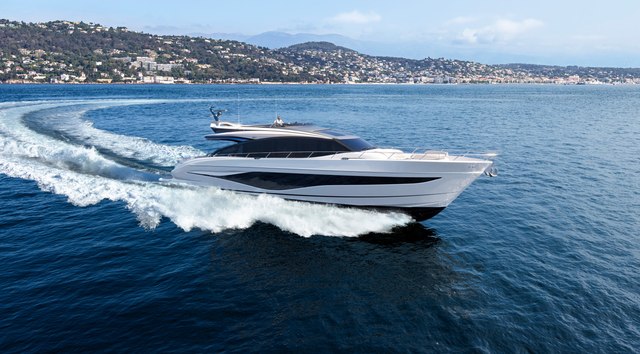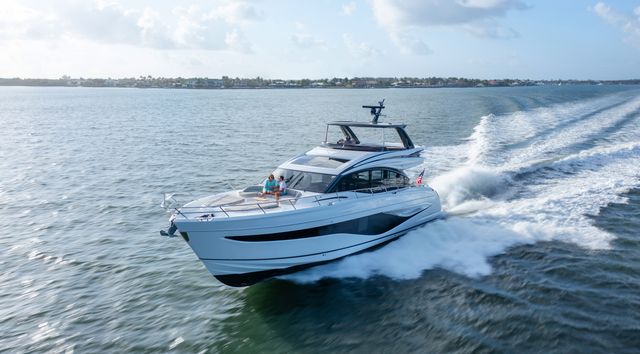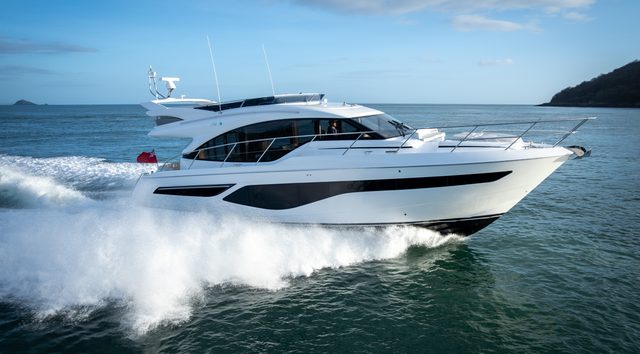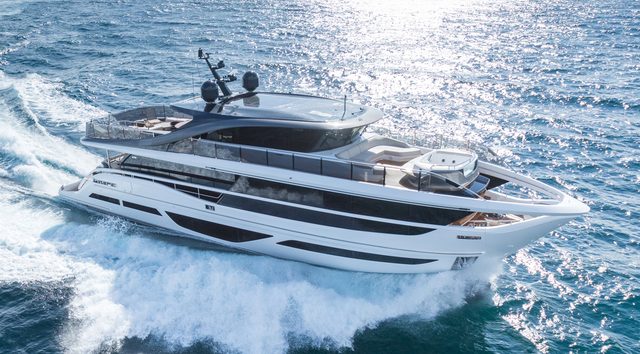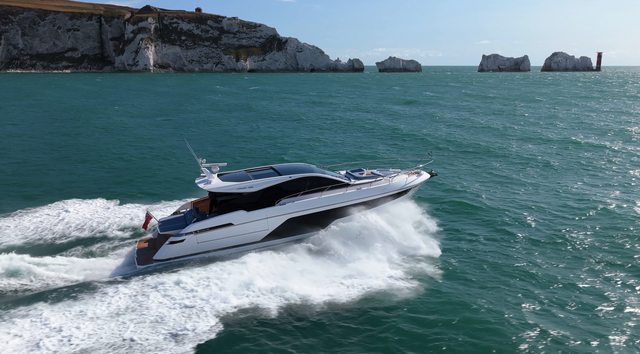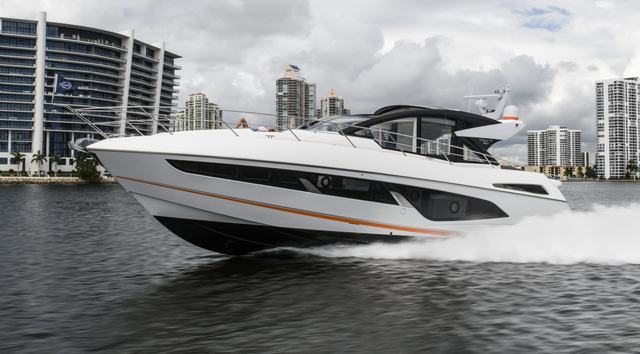
Designing a sports yacht at 55ft is a delicate balance. It has to carry three cabins, a proper tender garage and meaningful cruising systems, yet it must remain manageable for an owner rather than dependent on crew.
That is the space the Princess V55 occupies, sitting between the V50 and V65 in the V Class line-up and built around twin Volvo Penta D13 shaft-drive engines with a top speed of around 35 knots. So the brief is clear. Deliver mid-30-knot performance, proper accommodation and real usability in a 17.81m (58ft 5in) platform, without complicating the ownership experience. Has Princess struck that balance with the V55? Read on to find out.
Princess V55 (Mk2) Key Facts
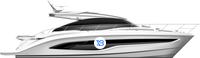
- LOA 17.81m
- Model Year 2025
- Cabins 3
- Crew 1
- Max Speed 37 knots
- Status In Production
- Generations 2
- Yacht Type Sportsboat
- Use Type Weekending
Review Video
At 55ft, a sportscruiser has a problem to solve. It has to carry decent accommodation and comfortable deck spaces, but it has to remain manageable for an owner. That can be a fine line to tread, but the V55 does it expertly.
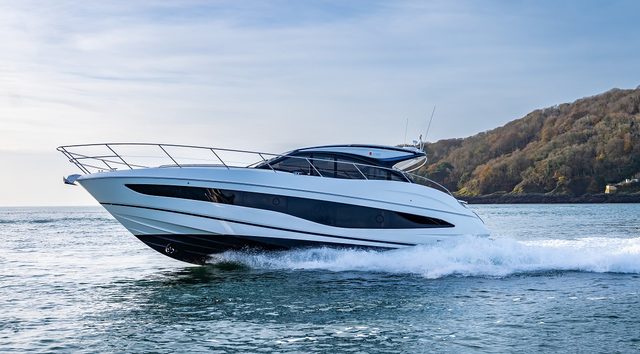
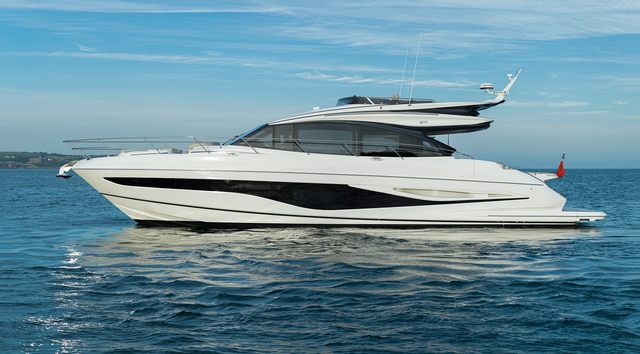
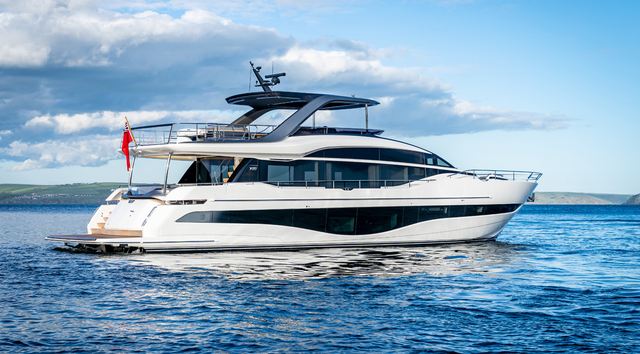
The current model arrived in 2019 as a clean-sheet platform, not a revision of the late 90s boat that shared the V55 name and was an instant classic. It measures 17.81m (58ft 5in) overall, including pulpit, and beam stretches to 4.65m (15ft 3in), which is broad for a boat in this class. That width creates interior volume, of course, but it also improves stability and gives designers more freedom with weight distribution, so tanks, machinery and accommodation can sit where they should rather than where they have to.
The hull sits within Princess’s long-running partnership with naval architect Olesinski Design, whose planing forms underpin much of the brand’s performance range. Construction uses resin infusion, and that matters because laminate weight and resin content can be controlled more precisely than with traditional open moulding.
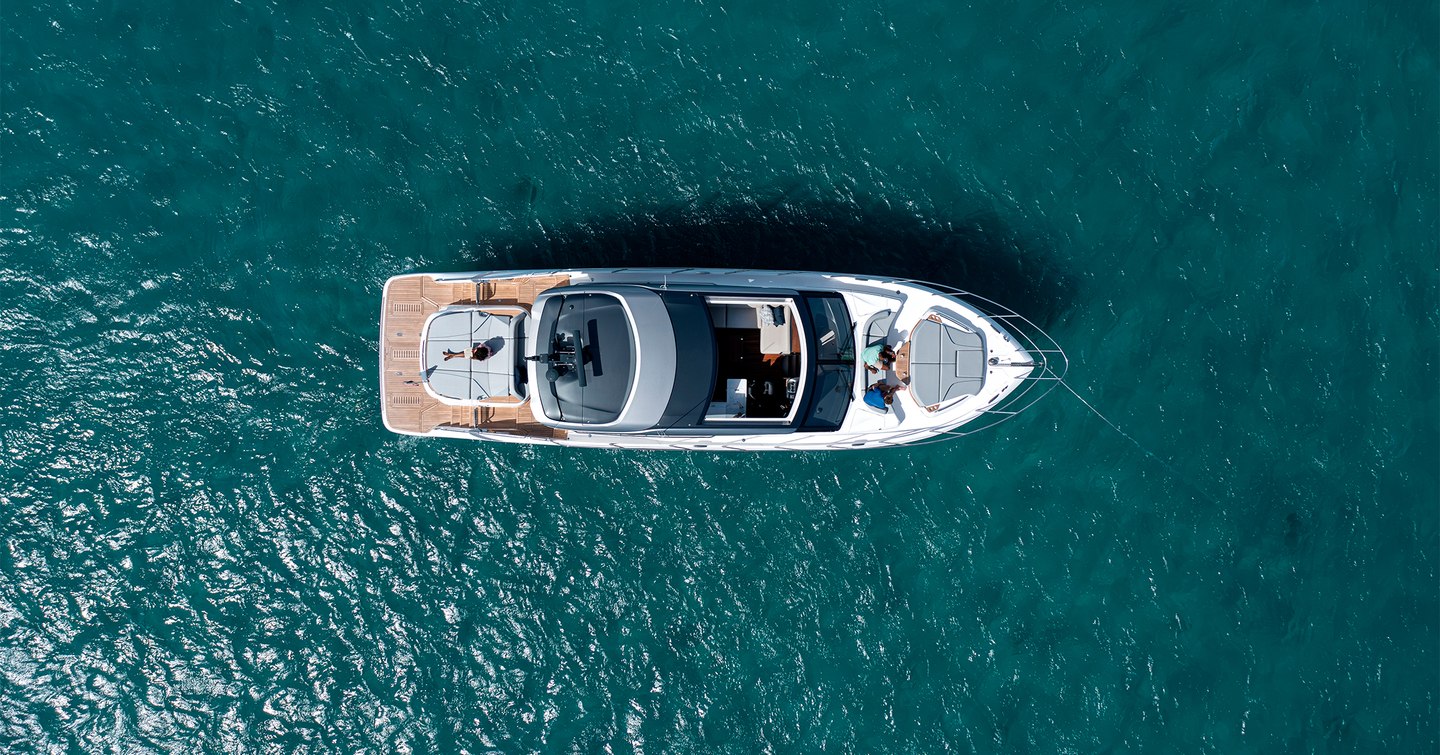
Twin Volvo Penta D13 diesels, rated at either 900hp or 1000hp per side, depending on specification, drive through straight shafts. For the long-term owner/operator, the simplicity of this setup is attractive, and with the advances in joystick operation for shafts, IPS doesn't have things all its own way in that regard anymore.
Fuel capacity is generally quoted at 2,500 litres, and draft sits around 1.40m (4ft 7in), so the platform is sized for proper offshore cruising at a decent cruising speed.
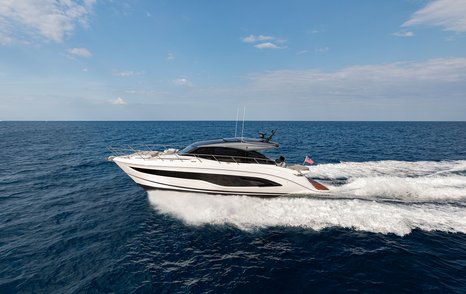
The V55 has a large sunroof instead of a flybridge, and that's what separates it from the F Class range. Sportscruisers may be fading in popularity, but there is a lot to be said for this layout, especially if you want to live on one deck and the exposure of a flybridge doesn't appeal. It makes for an easy boat to use all year round as there is so little exposed deck space that needs covering up, so even in the winter, you can open the doors, crank the heating and set off. Equally, in good weather, that big sunroof opens the saloon to the elements brilliantly.
The transition inside is handled by a clever bit of engineering. The entire aft window drops down into a cassette, the sliding door section moves across, and the lower panel lifts into place, so when it’s open, it really is open.
There’s a flat threshold between cockpit and saloon as well. It changes the feel of the main deck completely, because the two areas can operate as one continuous space rather than separate zones. Consider that you can enclose the aft deck with a canopy, and it really is a very usable space indeed.
With everything open, light and fresh air come through from aft and above, and the single-level layout makes it very easy to move between these spaces.
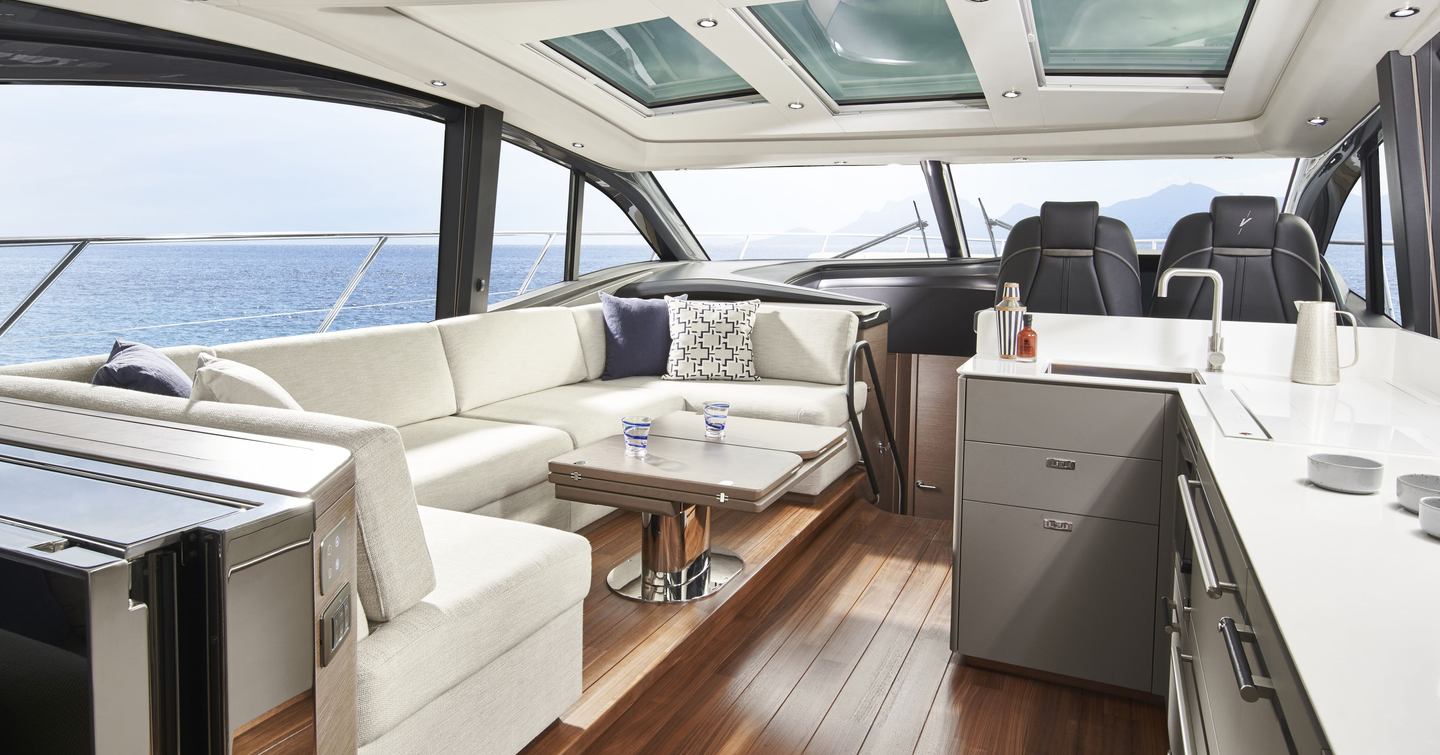
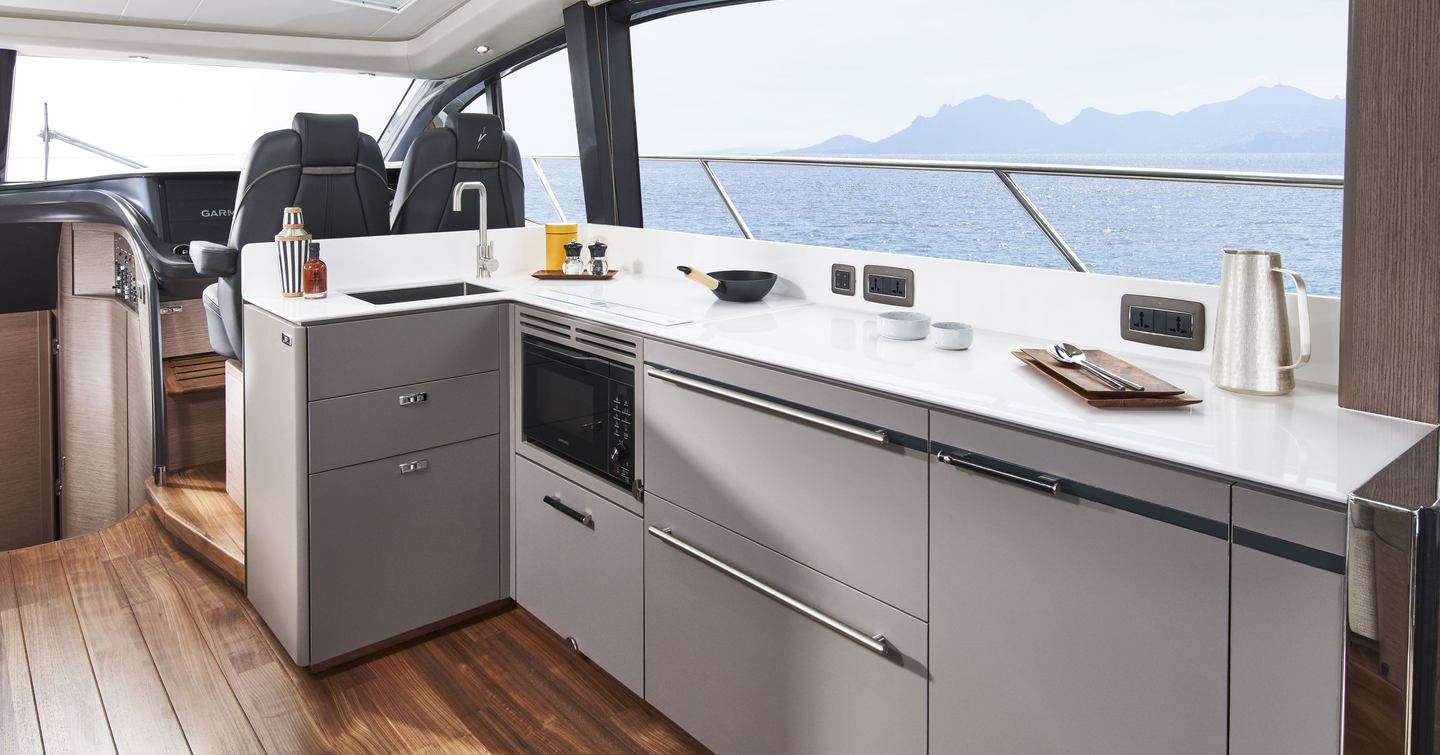
The galley is to starboard, and it’s compact but usable. There isn’t space for a domestic-sized fridge freezer, so cooling is handled under the counter. You can specify a second fridge where the standard storage sits, or replace the arrangement with pairs of Sub-Zero drawer units if you prefer that setup.
Given the size of the boat, you’d likely want the additional refrigeration, especially if you’re away for more than a weekend. Cooking is via induction, finished in white so it blends into the worktop, and there’s a microwave below, along with a sink and practical storage. It’s not huge, but it’s arranged logically.
Opposite, the dining table is fixed in position. It doesn’t rise or lower, but it does fold closed to form a smaller surface when you’re not eating. The television rises from the cabinet aft and can face either into the saloon or back out toward the cockpit, which adds flexibility. Viewing angles aren’t perfect from every seat, and that’s simply a result of where the galley sits, but the mechanism itself is neatly executed.
Overhead, the sunroof runs a long way aft, and it opens at the push of a button. Close it, and the space is protected within seconds; open it, and the saloon is drenched in sunlight. Combined with the drop-down door aft, it gives the main deck a broad operating range, whatever the weather.
Owner's Cabin
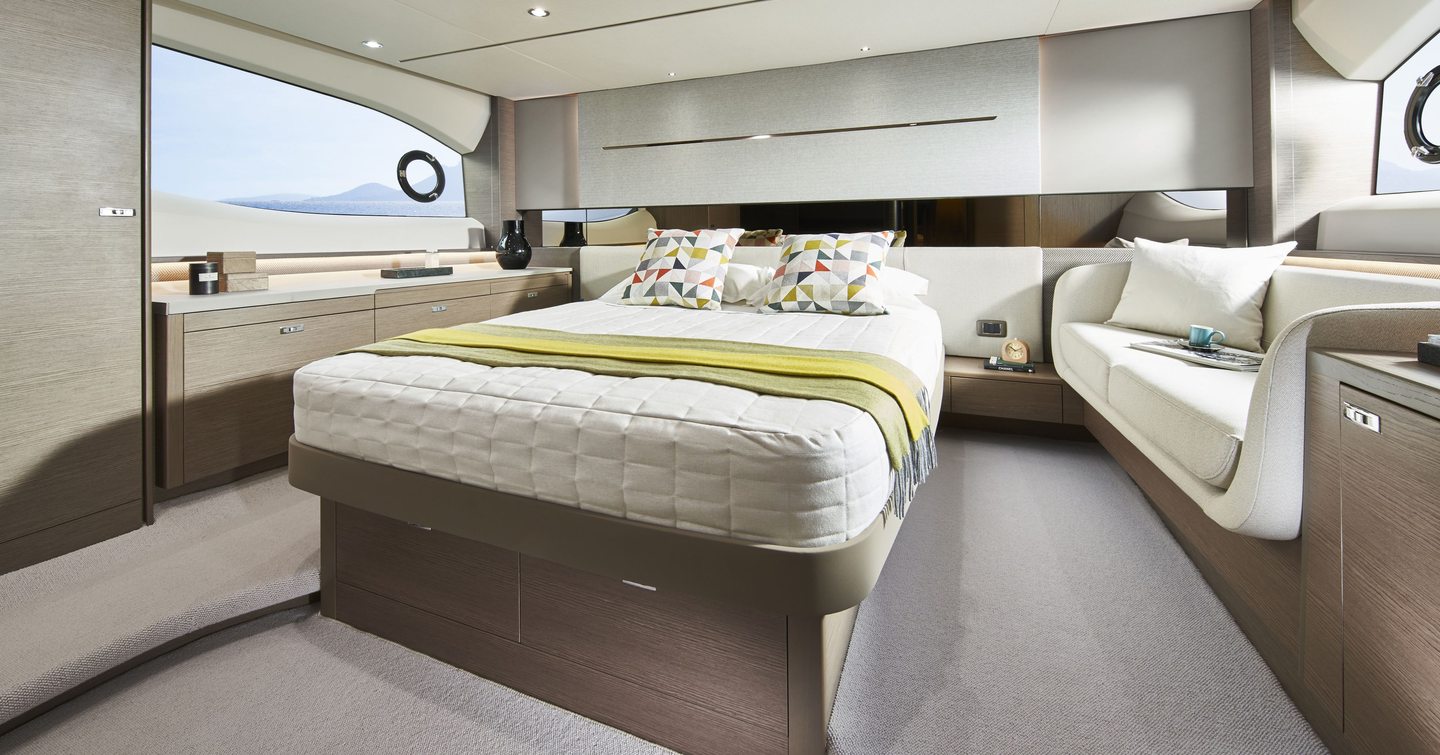
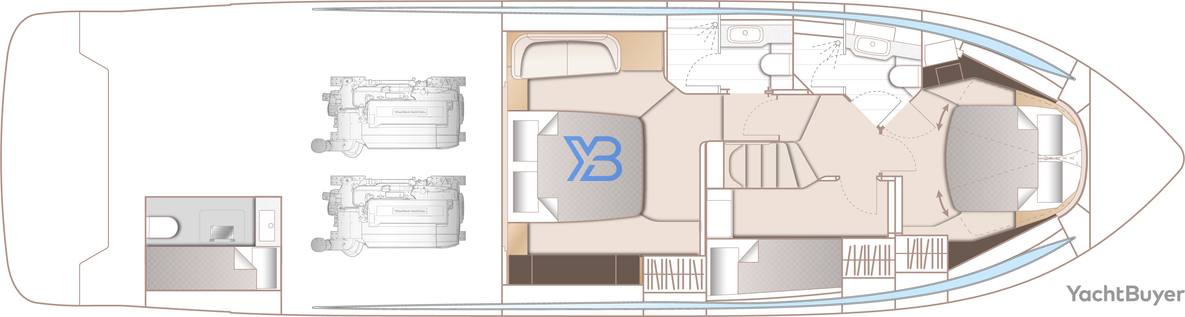
Descend from the saloon, and the first space you reach is the owner’s cabin amidships. This is the benefit of the 4.65m beam discussed earlier, because the cabin runs full width, and it feels appropriately roomy. There’s a small level change as you step down into it, yet standing height beside the bed remains comfortable, so you’re not ducking to move around.
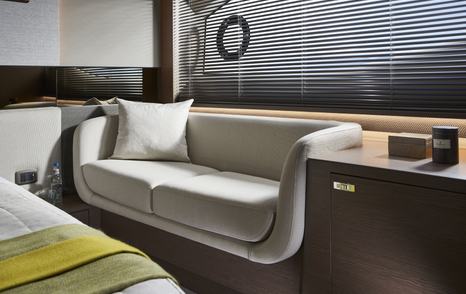
The hull windows stretch low toward the waterline, and from the bed, you should be able to see the sea rather than just sky. A small sofa sits beneath the window on one side, while storage occupies the other, and there’s a substantial hanging locker with auto illumination. The television is mounted forward with a gloss surround that helps it blend into the darker panel, while the rest of the cabinetry uses matte walnut with grain matched neatly across panels. It’s a familiar Princess finish, and it’s executed cleanly.
The ensuite sits just forward of the cabin and uses a sliding door, which avoids losing space to a swinging panel. Inside, there’s a separate shower cubicle, an electric toilet and a heated towel rail, along with a window and extraction so the space doesn’t trap steam. In the lobby outside the cabin, you’ll also find a combined washer-dryer, which makes longer stays more practical without relying on shore facilities.
Guest Accommodation
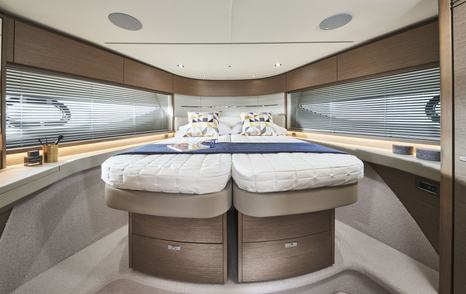
Move forward, and you reach the VIP. The bed sits slightly higher than you might expect, but it’s wide and comfortable, and the materials are thoughtfully layered, from the timber to the panel detailing behind the headboard.
Soft underlighting keeps the tone warm without glare, and storage is handled by a generous hanging locker to starboard, along with additional cupboards. There’s a small bureau arrangement worked into the space, and while there’s no fixed seat, you can use the edge of the bed. Climate controls are individual to the cabin, light switches are repeated by the berth, and you’ve got both fixed glazing and opening ports for ventilation.
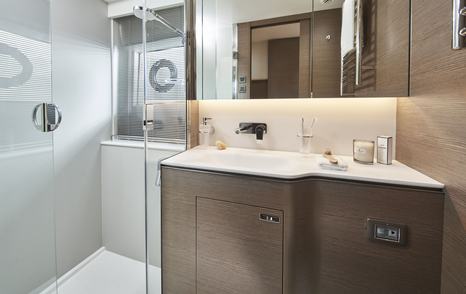
The bathroom opposite serves as the VIP’s en-suite and also functions as the day head. It’s a good size, with a proper shower compartment rather than a wet-room compromise, and the fittings feel solid and well chosen. Access from the VIP gives guests privacy, while the separate door to the lobby keeps it practical for daytime use.
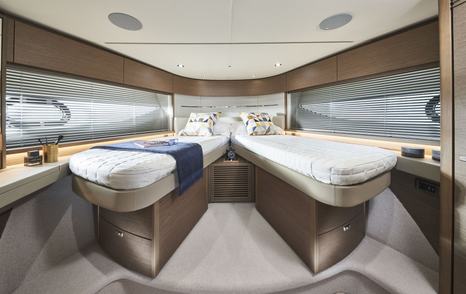
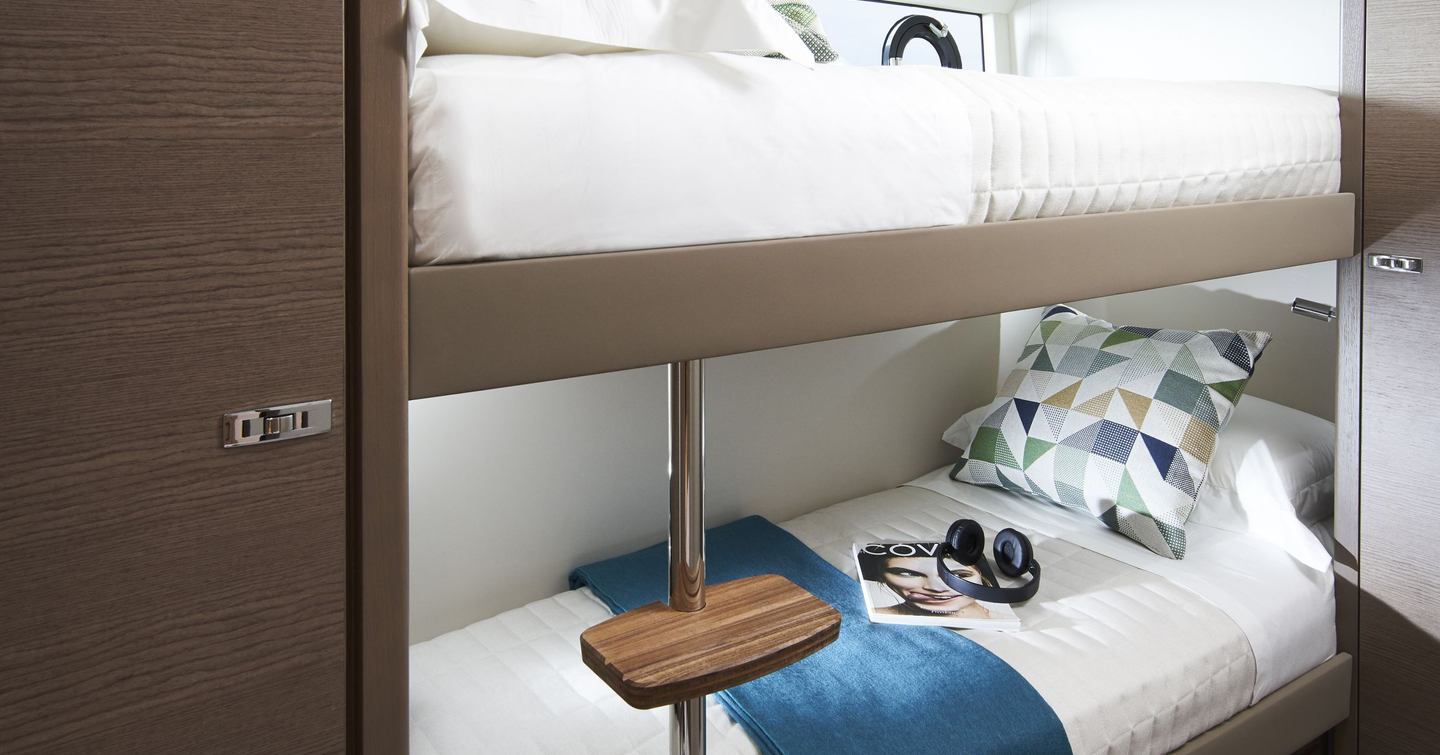
Opposite is a bunk cabin, which is intended primarily for children, but headroom and floor space are better than you might expect, and there are two full-height wardrobes along with independent climate control. The berths are on the smaller side for adults, yet they would work for short stays, and for younger guests, it’s a cabin they’d likely claim quickly.
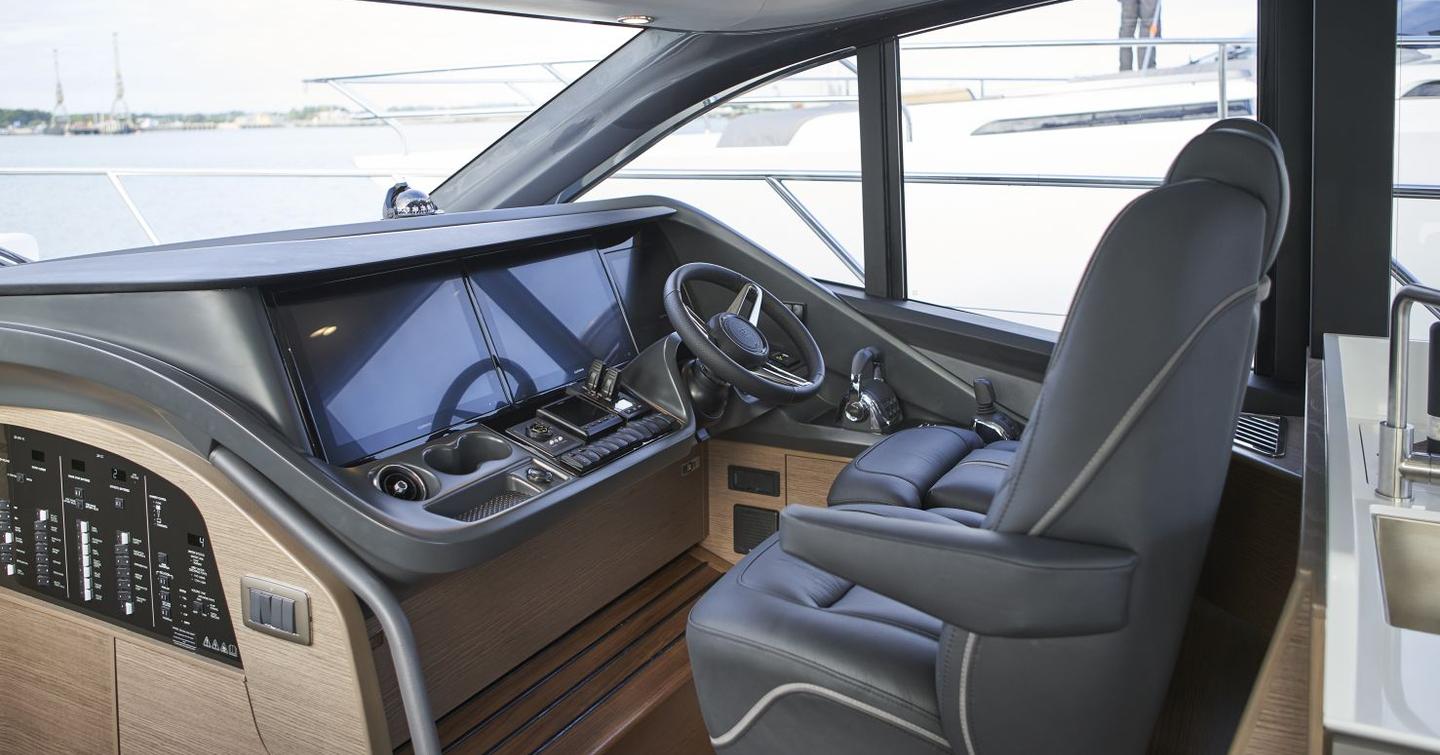
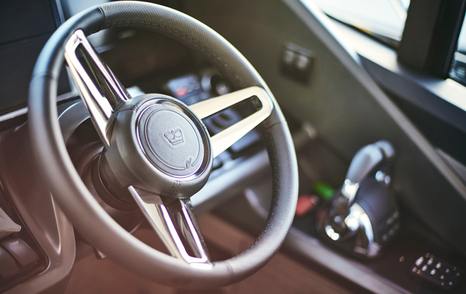
Forward in the saloon, the helm sits slightly raised but still within the same single-level space, so you remain connected to what’s happening aft. There are two helm seats, and you can drive either seated or standing without feeling cramped. The steering wheel is the familiar dished Princess design, and the dash layout is clean, finished mostly in darker matte materials rather than high-gloss plastic, which keeps reflections down and looks smarter over time.
Throttles and thruster controls fall naturally to hand, and you can add joystick control if you want to manage engines and thrusters through a single interface. The standard navigation fit pairs one larger screen with a smaller display alongside, although many owners would likely choose twin larger Garmin screens for symmetry and clarity. Forward visibility is strong thanks to the low profile and broad windscreen, so you’re not peering over a high dash to see ahead.
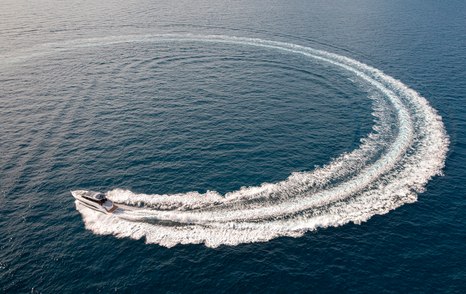
In this configuration, top speed is around 35 knots, while a comfortable cruise sits at about 25 knots. At that pace, the range is in the region of 300 nautical miles.
Without the flybridge, living space on deck is where the V55 falls short, with just the cockpit and relatively basic foredeck to enjoy.
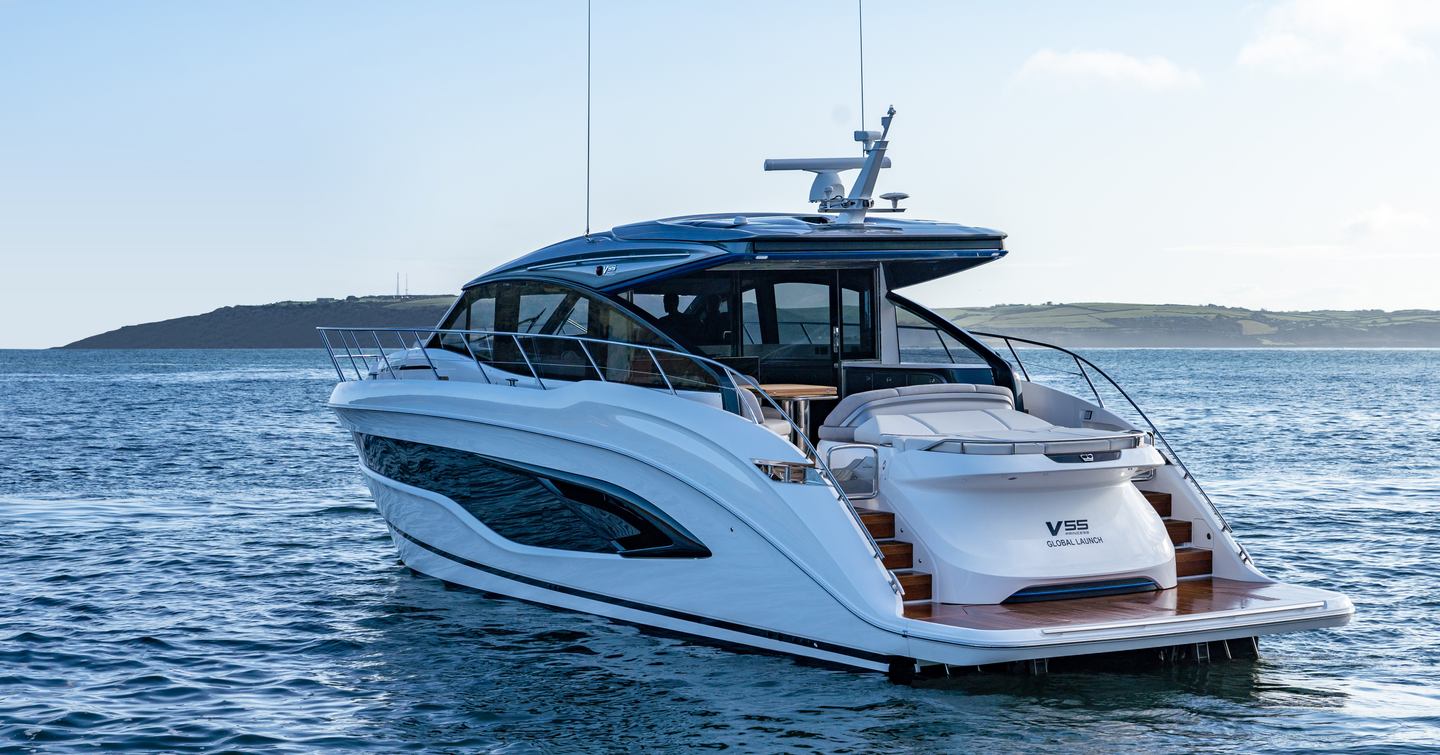
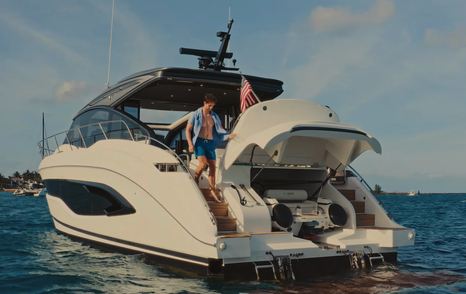
The bathing platform is hydraulic and rated to 450kg (992lb), so it’s designed to carry weight. That capacity gives you confidence when you’re launching or recovering a tender, and it also means you can use it as a proper watersports base.
You also have a tender garage, and that’s sized for a Williams 345. Once the tender is away, the platform becomes open space again, so you’ve got a clean area at water level for swimming, boarding, or just sitting with your feet in. The ability to carry a tender and a toy on the back is a real benefit at this size.
Cockpit
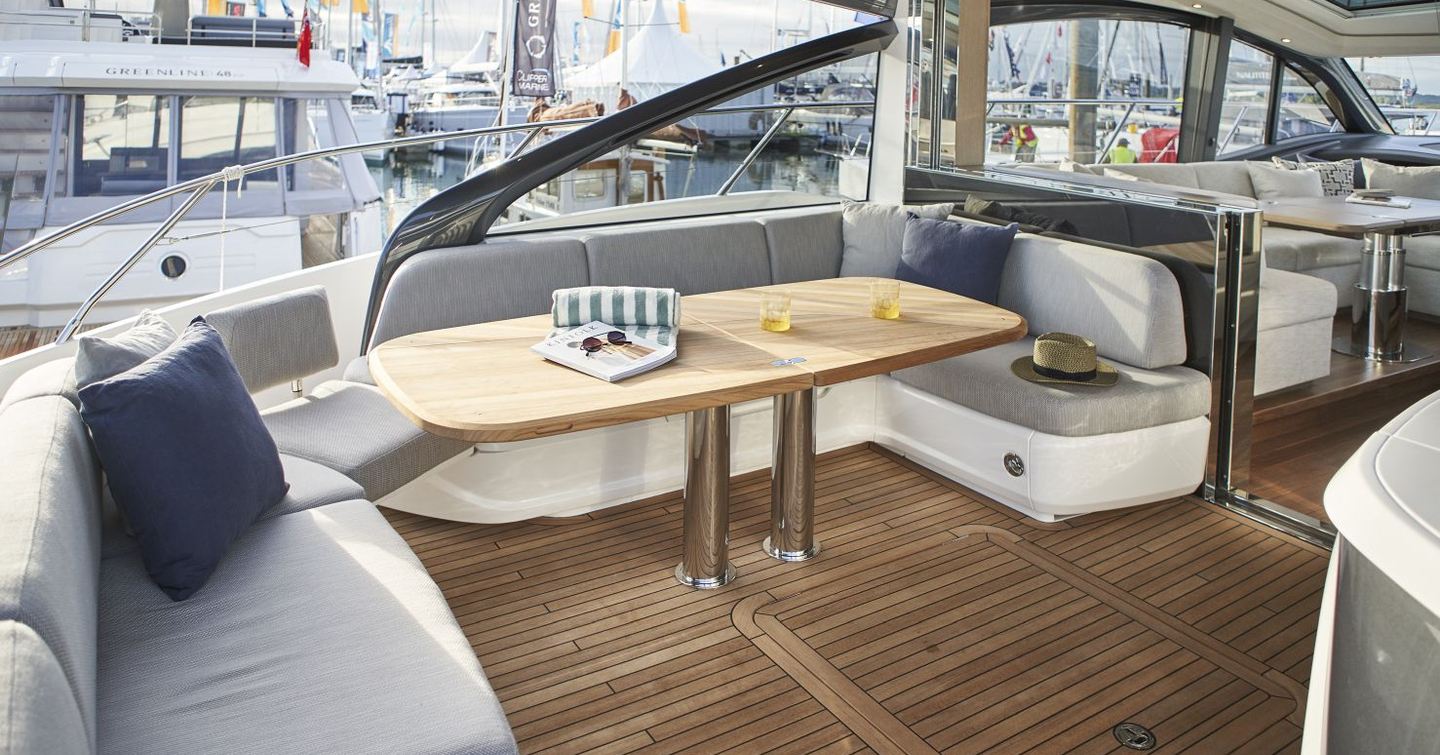
Step up from the platform, and you’re into a cockpit that is open but feels nicely protected, too. The hardtop overhang reaches far enough aft to give cover, and there’s glazing down both sides, so you’re sheltered from wind that might funnel down the decks.
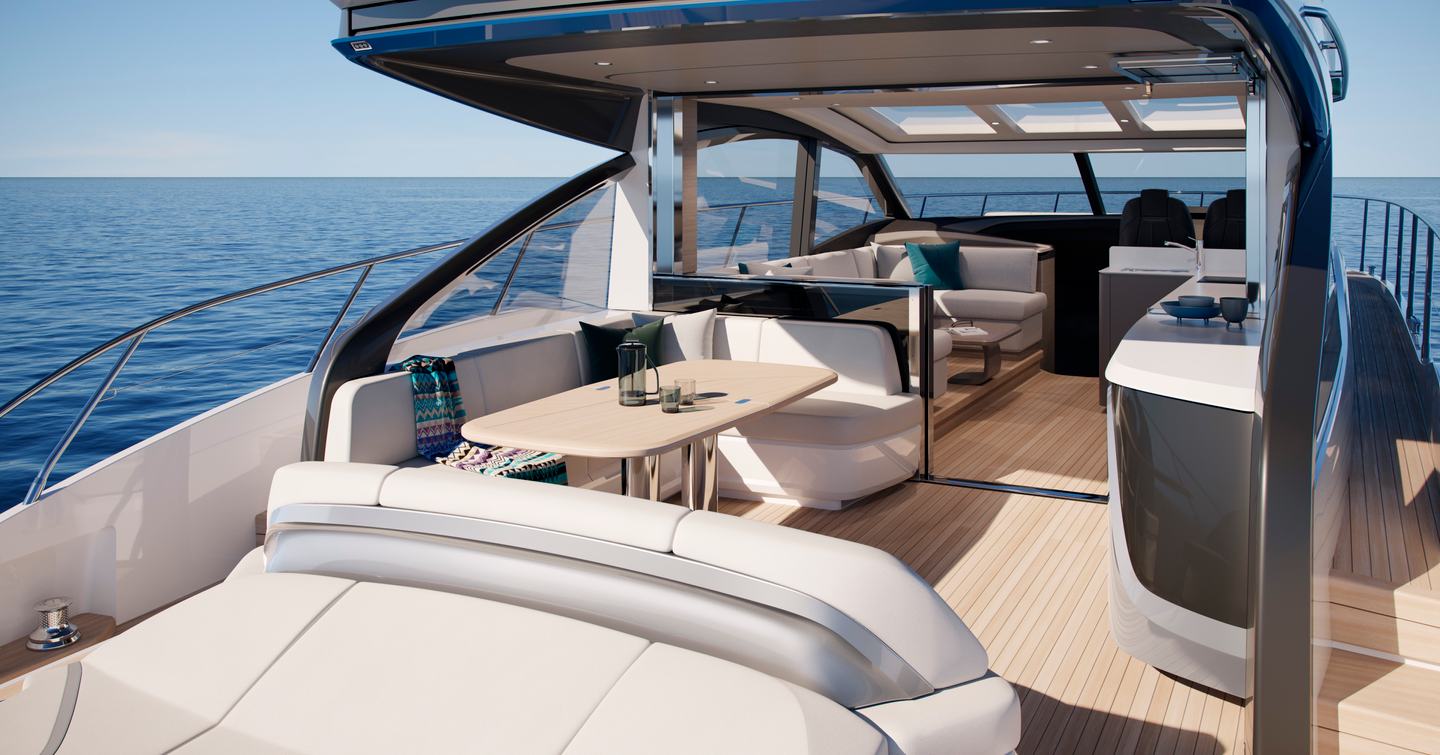
The seating runs in an L-shape around a teak table that opens to double its size. Closed, it works for drinks or coffee, and opened out, it's more than big enough for outdoor dining. There’s space outboard to add loose chairs if you’re hosting more people, so the layout adapts without needing to shift cushions around.
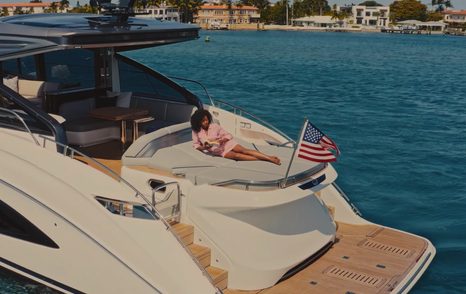
Aft, the large sunpad connects directly into the cockpit thanks to the integrated forward-facing bench, so people lounging back there can still face into the social space rather than being cut off from it.
Over on the starboard side is the wet bar. The grill is fixed in place, and beneath the counter, you’ve got refrigeration along with an ice maker, so you can spend time at anchor without running inside constantly.
You can also specify a secondary docking station back here, and that makes sense for Med mooring, although visibility from the main helm is strong enough that it isn’t essential.
If the weather turns, the entire cockpit can be enclosed with canvas right back to the edge of the sunpad, so the space shifts from open to protected quickly. With the overhang, the glazing and the enclosure working together, this becomes a usable area, even in inclement weather.
Side Decks & Foredeck
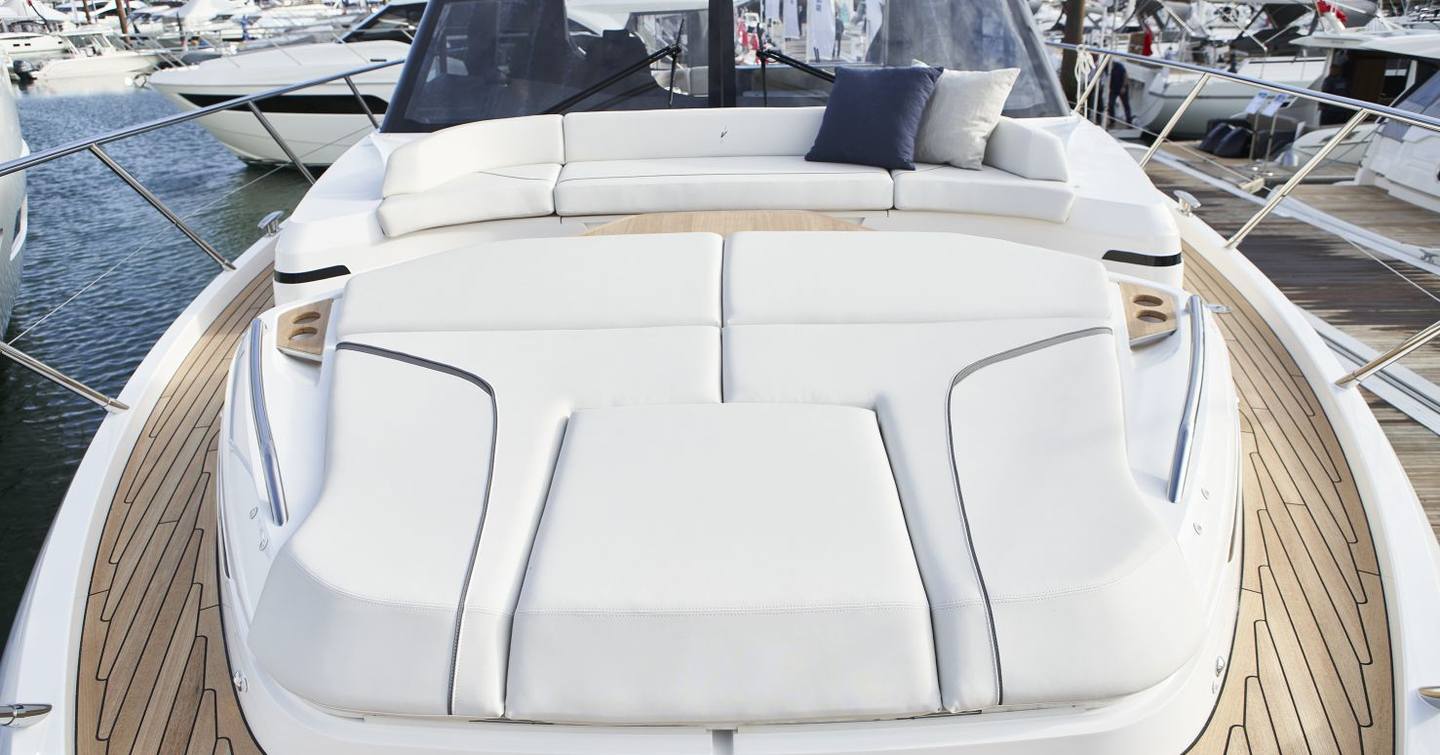
From the cockpit, you move forward along the side decks. Teak is optional out here, and while this particular boat doesn’t have it fitted, the walkway itself is easy to navigate. It isn’t overly wide, but with proper guardrails and solid handrails along the superstructure, you feel secure enough moving forward. That matters on a 55ft owner-run boat, because you’re not always going to have crew handling lines for you.
As you come up toward the bow, the space opens out into a foredeck sunbathing area. There’s a generous sunpad set into the deck and a forward-facing bench ahead of it, so you’ve got both lounging and seated options rather than just a flat cushion. Storage lockers sit on either side, useful for lines and covers, and up at the point of the bow, there’s a double anchor locker. It’s all laid out in a clean, practical way without trying to overcomplicate the space.
Engine Room
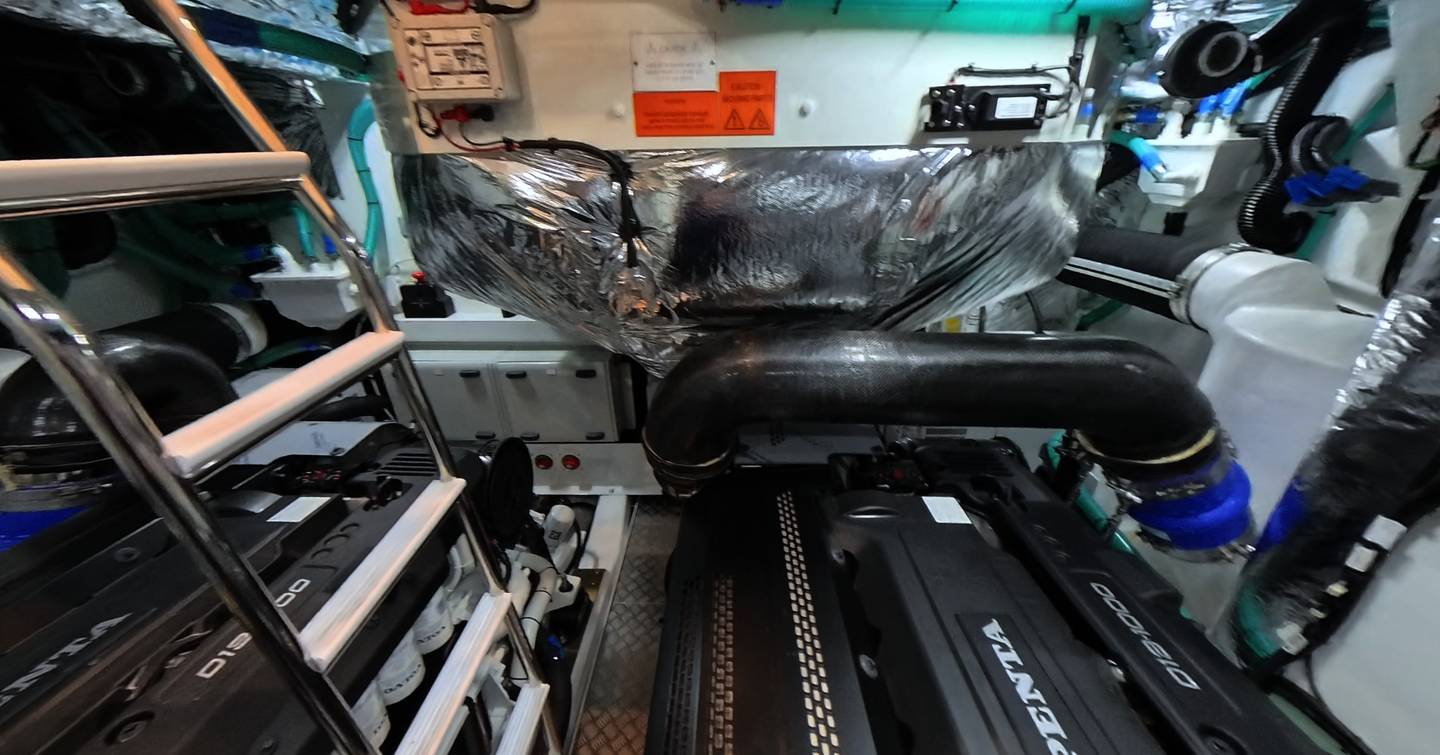
Access is through a hatch in the aft cockpit via a ladder with rubber treads on the steps, which may seem minor, but it makes a noticeable difference when you’re barefoot or the deck is wet. Once you’re down, you’re onto checker plate flooring and straight into the machinery space.
The first thing that stands out is headroom. At 1.83m (6ft), you can stand upright without hunching, and that isn’t always the case on a 55ft sports yacht with a tender garage above. It’s well-lit, well-ventilated, and surprisingly cool.
This boat runs twin Volvo Penta D13 engines, and there’s usable space around them. Inboard access is generous, while the outboard sides are tighter, as you’d expect, but still workable. Day-to-day checks are straightforward. Dipsticks, raw water strainers, fuel filters and belts are all within reach, so the routine inspections you should be doing every trip don’t become a contortion exercise.
Forward and outboard, the systems are clearly laid out and labelled. Pipework is marked with flow direction, which helps if you’re tracing a fault, and the twin fuel filters are easy to identify and access.
Air-conditioning equipment sits aft, the generator is positioned neatly to one side, and there’s provision for a Seakeeper stabiliser if specified. Even small details, like a dedicated spot to stow the boat hook, suggest the space has been thought through by people who understand how these boats are actually used.
Princess was unwilling to supply us with up-to-date pricing for this review, so it's difficult to address value for money with clarity.
Princess is generally positioned towards the upper end of the sector when it comes to pricing, but that is reflected in the fit and finish and the quality of engineering throughout. It's often criticised for safe design, but that builds into one of Princess's strong points, which is how they tend to hold their value pretty well.
The timeless designs mean they age well, and this, teamed with the quality of build, makes them attractive for secondhand buyers.
Our Verdict
The Princess V55 feels like it understands its role, sitting right in the middle of the V Class range. At 17.81m (58ft 5in), it delivers three proper cabins, a full-beam midships owner’s suite and a tender garage sized for a 3.45m Williams, but it remains a twin shaft-drive sports cruiser that an experienced owner can run without crew. That balance is the point.
It isn’t without small limitations. Refrigeration in the galley benefits from the optional upgrade, and the bunk cabin is better suited to children than long-term adult use. But those aren't fundamental flaws. What you have here is a 55ft sportsboat that delivers exactly what its position in the range promises.
Reasons to Buy
- Great all-round design
- Full-beam owner’s cabin
- Strong mid-30-knot pace
- Tender garage
Things to Consider
- Galley fridge space
- Narrow side decks
- Cramped (optional) crew cabin
Looking to own a Princess V55? Use YachtBuyer’s Market Watch to compare all new and used Princess V55 Yachts for sale worldwide. You can also order a new Princess V55, customized to your exact specifications, with options for engine choice and layout configuration. Alternatively, explore our global listings of new and used yachts for sale and find your perfect yacht today!
Rivals to Consider
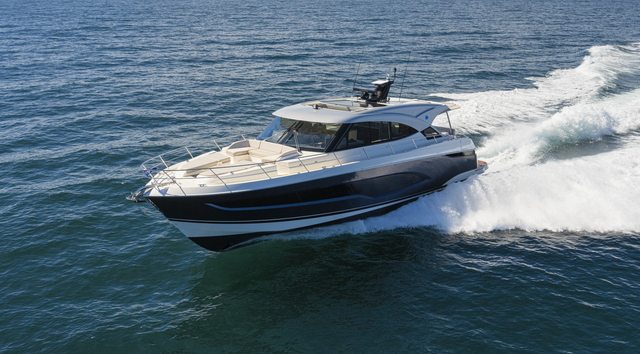
The Riviera 575 SUV is asize up from the V55 at 18.50m (60ft 8in) overall with a 5.13m (16ft 10in) beam, and that extra width changes the emphasis. Riviera offers a choice of propulsion, from Volvo IPS packages up to D13-IPS1200 units rated at 900hp, through to shaft options including Volvo D13 or CAT C12.9 at 1000hp, and fuel capacity sits around 4,000L with 750L of water. Compared with the Princess, the Riviera is less about one defined shaft-drive sports yacht formula and more about flexibility and load-carrying, with the bigger beam and tankage supporting longer-range family cruising and heavier equipment rather than a tightly focused mid-30-knot sports brief.
The Riva 56’ Rivale sits in the 56ft class at around 17.27m (56ft 8in) overall and approaches this size from a different angle. Designed by Officina Italiana Design with Ferretti Group engineering input, it runs twin MAN engines on V-drives, with 1000hp units quoted at 31-knot cruise and 35-knot maximum, or 1200hp engines pushing that to a quoted 34-knot cruise and 38-knot top end. It is an open sports yacht first and foremost, with performance and exterior presence leading the story. Against the V55, the Rivale offers higher potential top speed and a more overtly style-led package, but it does not centre its appeal on a three-cabin, full-beam master layout in the same way the Princess does.
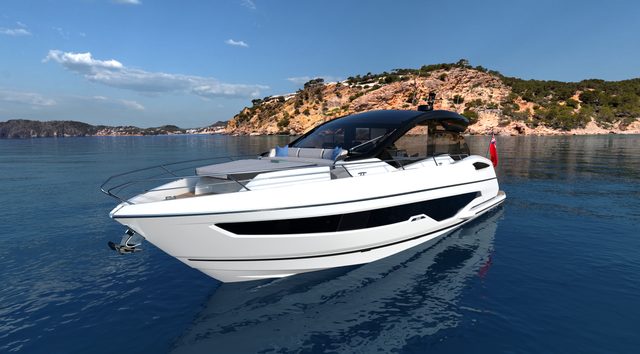
Sunseeker’s Predator 55 Mk2 comes in at 17.14m (56ft 3in) overall with a 4.93m (16ft 2in) beam and uses twin Volvo Penta IPS 950 pods, with a quoted top speed of up to 36 knots. Standard layout is two cabins, with a three-cabin option available, and propulsion is entirely pod-based rather than shaft-driven. Where the Princess stays conventional with D13 shafts and builds its identity around mechanical simplicity and a balanced owner-run brief, the Predator leans into IPS manoeuvrability and a slightly more day-focused hardtop format. The choice here is clear: shafts and traditional driveline logic versus pods and low-speed ease.
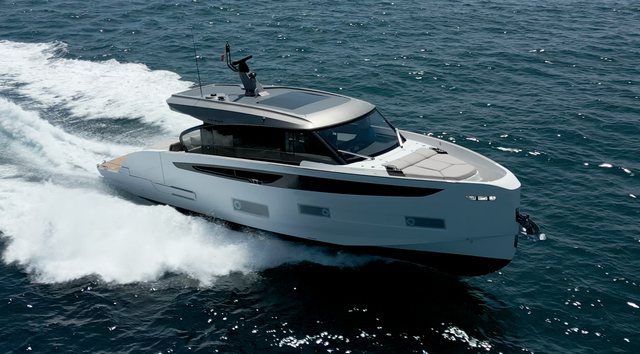
The Azimut Seadeck 6 is 17.25m (56ft 7in) overall with a 5.05m (16ft 7in) beam and takes a different technical path again. It uses triple Volvo Penta IPS units, with IPS500 or IPS650 options depending on specification, and Azimut quotes top speeds between 30 and 33 knots depending on package. The wider beam and triple-pod layout support a platform aimed at efficiency and lower emissions, with a mild-hybrid concept that allows near-silent “hotel mode” operation at anchor via lithium battery support. Compared with the V55’s twin-shaft, mid-30-knot sports positioning, the Seadeck 6 prioritises efficiency, emissions reduction and at-anchor utility over outright pace.
Considering a new yacht? Explore Princess' entire current range to find the model that best suits your needs, and compare it with alternatives from competitors to ensure you make the perfect choice.
Specifications
- Builder Princess
- Range V Class
- Model V55
- Length Overall 17.81m
- Beam 4.65m
- Draft 1.4m
- Hull GRP
- Cabins 3
- Berths 6
- Crew 1
- Yacht Type (Primary) Sportsboat
- Use Type (Primary) Weekending
- Cruising Speed
- Max Speed
- Fuel Capacity 2,200 Litres
- Fresh Water Capacity 477 Litres
- Engine Model 2x Volvo Penta D13-1000
- Engine economic speed 11.5 knots
- Engine max range (speed type) 307 (nm)
Princess V55 Layout
-
Main Deck
-
![Main Deck Princess V55]()
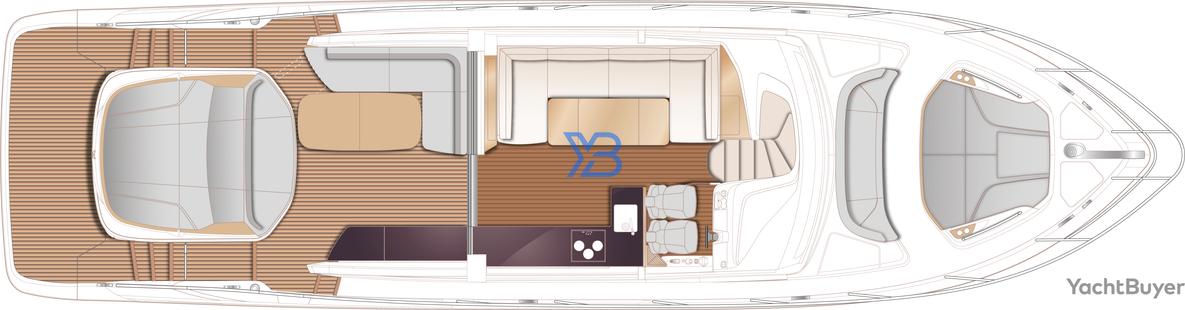
The indoor and outdoor spaces link together really nicely
-
Lower Deck
-
![Lower Deck Princess V55]()
If you don't have the crew cabin, it becomes a large storage space
Interested in a V55?
NEW Build
Find your local dealer for a personalised, no-cost consultation
or just request
Brochures & Pricing
Used & In Stock
Looking for a ready-to-go V55 or pre-owned options? Explore all inventory of the V55 available worldwide