-
Guests
10
-
Cabins
4
-
Crew
10
| Length | GT | Built (REFIT) |
|---|---|---|
|
163'
|
527 GT | 2004 (2021) |
| Beam | Draft | Top Speed |
| 33' | 9' 5" | 16 Kts |
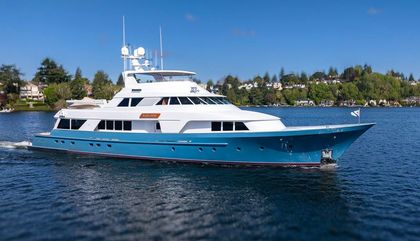
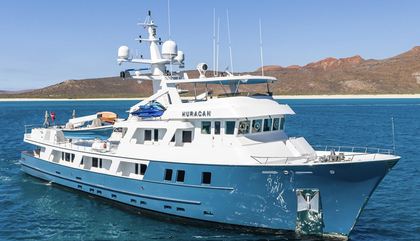
Triton is a 49.68m expedition yacht delivered by American shipyard Delta Marine in 2004. Her naval architecture, interior and exterior has been penned by the Delta Design Group design team.
Key Features
- Art deco interior with nautical accents
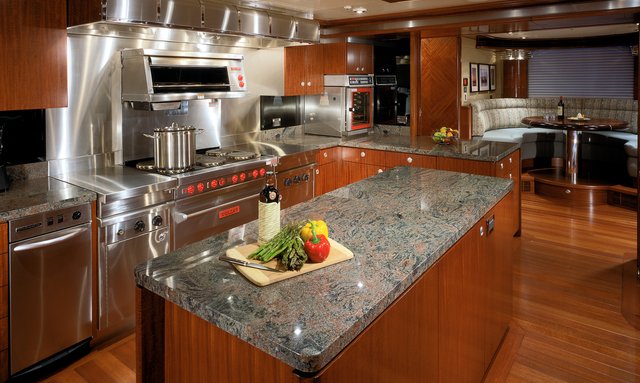
- Commercial-grade galley
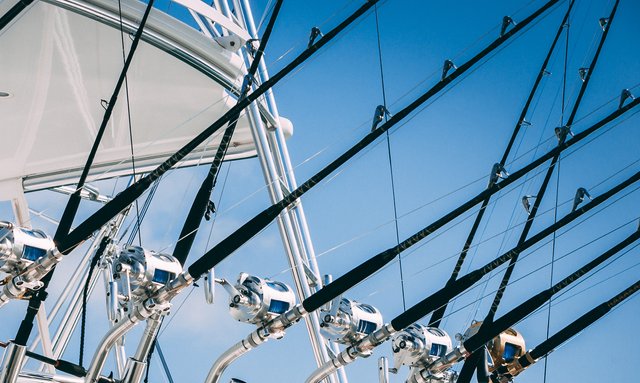
- Purpose-built fishing and dive platform
- Enclosed sun-porch for cooler climates
- Helm stations designed for optimum visibility
- 6,100nm transoceanic range
Design & Construction
Designed around a displacement GRP hull and superstructure she features a 10.06m beam and a 2.87m draft. The yacht is built over 4 decks with an internal volume of 527 GT (Gross Tonnes). The design also incorporates a heli-pad.
Construction started in mid 2003. Launched in July 2004 this yacht undertook sea trials over the following months. She was delivered to her owners in August 2004.
Exterior Design
Built by Delta Marine in 2004, Triton was conceived around a very different brief from most 50-metre yachts of her generation. Rather than treating fishing and diving as optional extras, the entire design integrates expedition capability into the yacht's architecture. At launch she was the largest composite superyacht built in the United States, and her profile reflects the practical priorities that shaped the project.
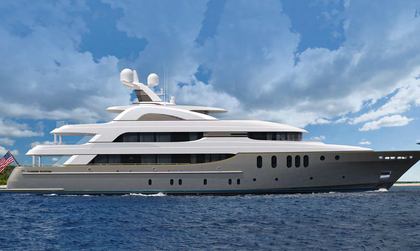
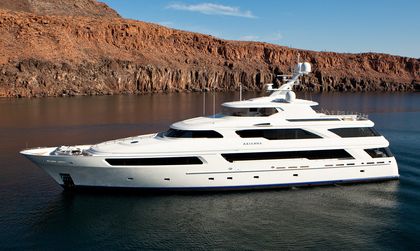
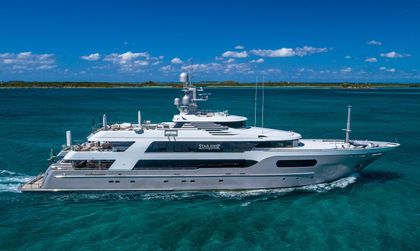
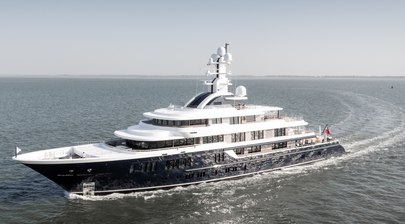
Delta Design Group gave Triton a purposeful, well-balanced silhouette with a long raked bow, broad beam and high-volume superstructure. Large rectangular windows provide generous natural light without sacrificing the solid feel expected of a yacht intended for extended offshore cruising. The grey hull, white superstructure and fine red boot stripe create a restrained finish that has aged well, while the bulbous bow improves efficiency across long passages and contributes to her 6,100-nautical-mile range.
Perhaps the most distinctive feature is the carbon fibre crow's nest above the bridge. Unlike a conventional observation platform, it forms an operational helm station with full steering controls and an uninterrupted view into the fishing cockpit below. Together with additional controls on the bridge wings and stern, it allows precise manoeuvring while backing down on game fish, reflecting the yacht's serious sportfishing credentials.
The aft deck departs completely from the beach club layouts that became popular later. Instead, Triton features a dedicated fishing cockpit with twin game chairs mounted on reinforced pedestals, flush-mounted rod holders, live bait facilities, refrigerated fish storage and generous working space. Even today, the cockpit remains remarkably uncluttered, with fixed equipment kept to the perimeter so crew can move freely around hooked fish. The central bait station also serves as informal seating when the yacht switches from fishing to relaxed cruising, while the substantial overhang above provides welcome shade throughout the day.
Adventure capability extends well beyond the cockpit. Triton was built with a hydraulically deployed dive platform, Nitrox and Tri-Mix dive systems, underwater cameras, specialist compressor equipment and storage for kayaks, underwater scooters and diving gear. Heavy-duty overhead gantry cranes and a 3,500lb knuckle-boom crane allow tenders, vehicles and expedition equipment to be launched without compromising the clear working deck below.
The broad aft upper deck originally served as a helicopter landing area and still provides a substantial open-air deck for equipment or outdoor recreation - all combined with the yacht's towing boom, stern winch and extensive lifting systems.
Interior Design
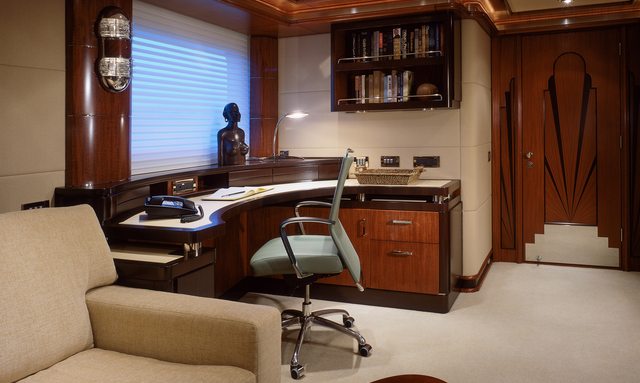
Delta Design Group carried the same practical philosophy indoors, wrapping it in a distinctly American interpretation of Art Deco. Rich mahogany, khaya, wenge and figured anigre are paired with polished stainless steel detailing to create an interior that feels warm and substantial rather than highly decorative. The styling draws inspiration from classic ocean liners and early twentieth-century architecture, while modern technology remains carefully integrated into the joinery.
The main saloon balances generous proportions with an intimate atmosphere. Coffered ceilings, polished timber flooring and deep timber columns divide the space into comfortable seating groups instead of one large open room. Large windows admit plenty of daylight, softening the darker timber palette and giving uninterrupted views from almost every seat. Rather than following European minimalism, the room has the character of a private residence designed for long stays aboard.
Forward, the formal dining room connects efficiently with the country-style galley, where a raised curved dinette creates an informal place for owners, guests and crew to gather alongside the chef during extended cruises. Concealed entertainment systems, integrated speaker towers and stainless steel detailing continue the Art Deco language without dominating the spaces.
The bridge deck skylounge remains one of Triton's most versatile areas. Large sliding doors disappear into the side pockets, opening the room completely onto the aft deck in warm weather. For colder climates, removable Isinglass panels and Lexan side doors enclose the aft deck, effectively creating a climate-controlled conservatory without losing the connection to the sea. Even the mahogany ceiling detailing continues outside, blurring the distinction between interior and exterior living.
Accommodation
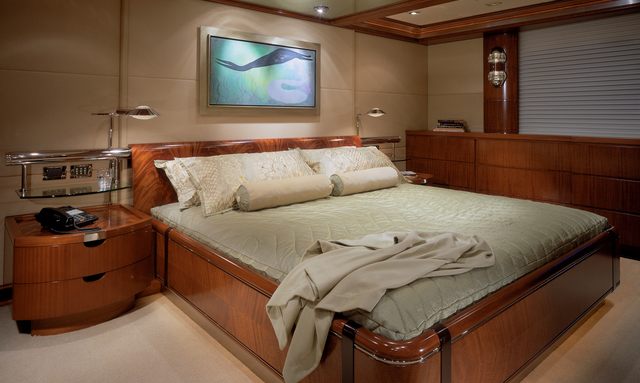
Triton accommodates up to 10 guests in five cabins, with additional Pullman berths available for children or extra guests. The arrangement reflects the original owners' wish to cruise with extended family while retaining the flexibility required for expedition travel.
The owner's suite occupies the forward section of the main deck and is arranged more like a private apartment than a conventional cabin. Beyond the king-size berth, the suite includes a dedicated lounge, writing desk, entertainment area and a spacious en suite bathroom, giving the owner a quiet retreat separate from the guest accommodation below.
Four guest cabins occupy the lower deck, including a king-size VIP and three further guest suites. Each benefits from generous storage, en suite facilities and carefully planned dressing areas, while the Pullman berths allow families to travel together without compromising the principal accommodation.
Crew quarters forward accommodate up to 10 crew in four twin cabins together with a captain's cabin and crew lounge.
Performance & Capabilities
Powered by twin diesel Caterpillar (3508B) 8-cylinder 1,000hp engines running at 1600rpm, motor yacht Triton is capable of reaching a top speed of 16 knots, and comfortably cruises at 11 knots. With her 73,816 litre fuel tanks she has a maximum range of 6,100 nautical miles at an economic speed of 12 knots making her well capable of long range and transatlantic voyages. She has been fitted with stabilizers to increase on-board comfort when the yacht is at anchor, particularly in rough waters.
Amenities
The yacht features a well-equipped gym, allowing her guests to keep up their fitness regimes at sea. In addition, a swim platform is on hand for guests looking to cool off in the sea. An elevator makes the yacht fully-accessible, while air conditioning offers increased on-board comfort and underwater lights will turn plenty of heads when the sun goes down. Triton also features a deck jacuzzi for cooling off. A library is an elegant touch that sets this yacht apart from the rest.
Special Features
Triton is equipped with sophisticated sonar and bottom-mapping systems designed to photograph the oceanic floor. This equipment was developed to navigate and locate wreck sites and reefs.
Triton Yacht is not For Sale
Motor yacht Triton is not currently for sale. Explore all new & used yachts for sale globally powered by YachtBuyer’s Market Watch.
If you're the yacht owner, broker, or captain, please use the "Update Sales Info" link to report any changes to the sales information. Update Sales Info