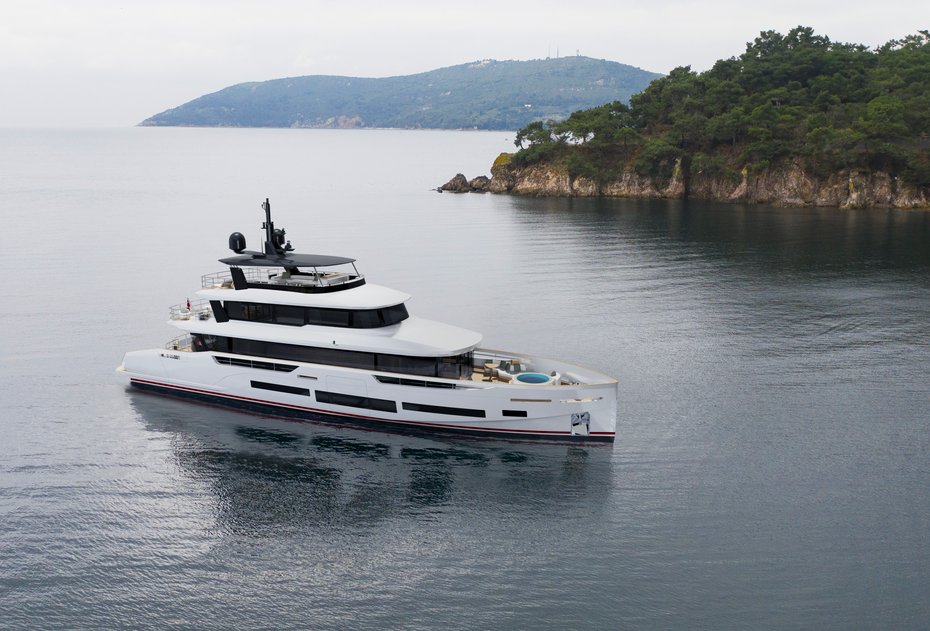
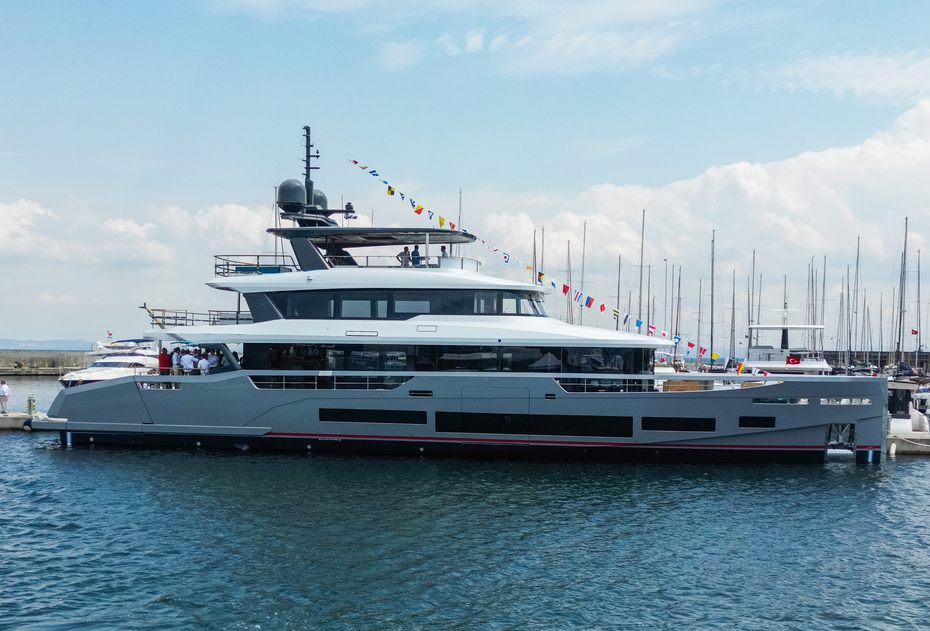
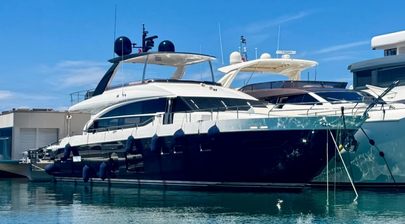
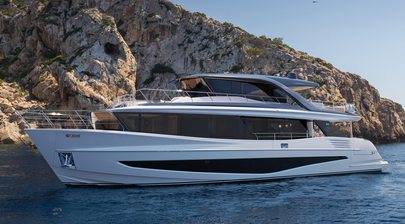
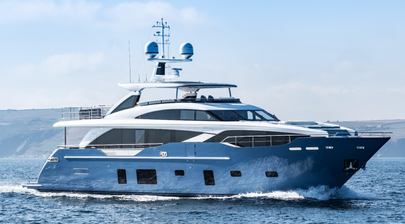
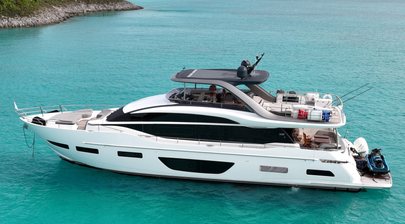
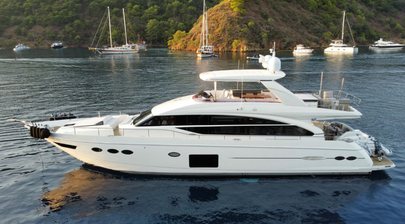
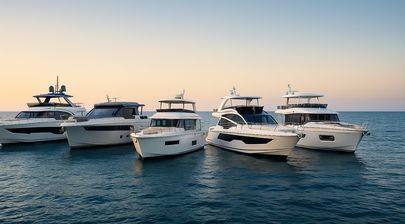
Delivered in 2023, this Princess yacht is already well into service, used for both private cruising and charter operations. In stepping aboard with owner Henry, YachtBuyer finds out why the boat was chosen, how it is configured, and how it performs once the season is underway.
The Road to the F55
Henry’s perspective is shaped by a long ownership history that follows a familiar progression. Early years were spent with smaller sports boats, including a Fairline Targa 35, before moving toward more practical flybridge platforms. “The sports boats are a pretty boat, but I didn’t like all the bits of tent and setup that went with it,” he said.
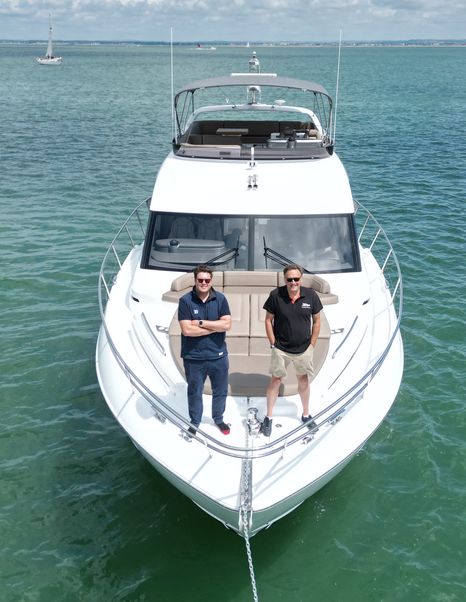
That shift led through a Fairline Phantom 42 and into Princess ownership with a Princess 42, before settling for over a decade with a Princess 50. That boat proved capable, particularly as charter use entered the picture, but it also set the baseline for what would come next.
The turning point came at a boat show. “You know when you go on something and it just ticks all the boxes,” Henry said. “It was bigger in every respect.”
An order followed at the Southampton International Boat Show in 2021, marking a clear step up not just in size, but in how the boat would be used.
Weighing Up the Competition
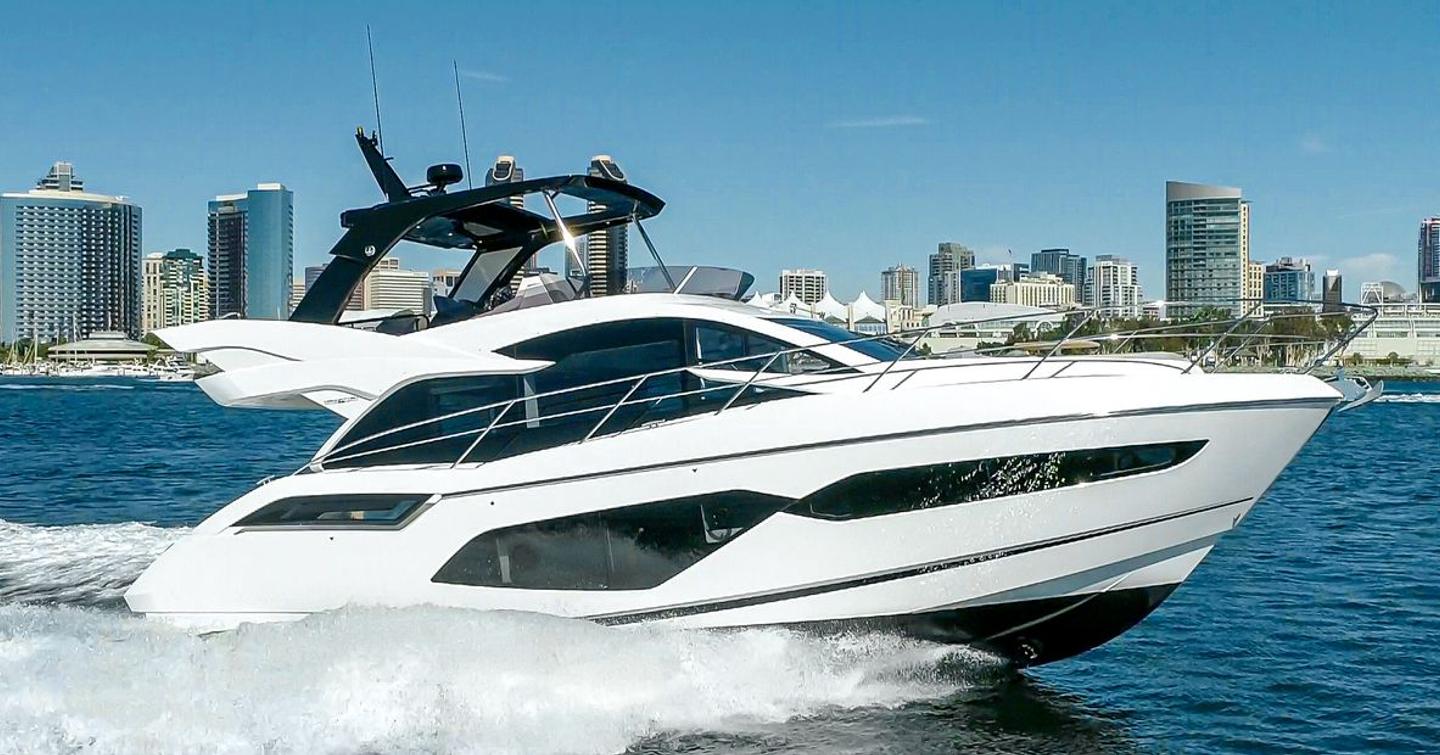
“Fairline, volumetrically, they were too small inside,” he said. Sunseeker’s Manhattan 55 was a more serious contender, particularly with its increased interior space, but ultimately fell short on practicality. “Styling wise, it’s probably more Lamborghini than Porsche, and we’re probably more Porsche.”
A Sirena model also impressed with its space and flybridge scale, but build quality remained a concern. “I don’t think it quite had the build quality the Princess has.” For Henry, the F55’s appeal was not defined by any single feature, but by how consistently it met requirements across the board - space, usability, and finish all aligned.
What to Tick - and What to Skip
If the model choice sets the direction, specification defines the experience. Mango’s build highlights how a number of key decisions, particularly around optional extras, take on greater importance once the boat is in regular use.
The most significant is the Seakeeper stabilizer. “It’s a £100,000 box to tick,” Henry said. “Having done it, absolute game changer.”
Fitted with a Seakeeper 9, the system has transformed comfort both at anchor and during slower passages, where much of Mango’s cruising takes place. It is also, in his view, an investment that holds its value. “I think if you wanted to sell a boat of this size without a Seakeeper, people would probably penalize you.”
The Seakeeper is essentially a £100,000 box to tick... but having done it, it's an absolute game changer."
Princess F55 Owner
Several options have proven their worth over time:
- Seakeeper 9 stabilizer - a major upgrade for comfort and resale
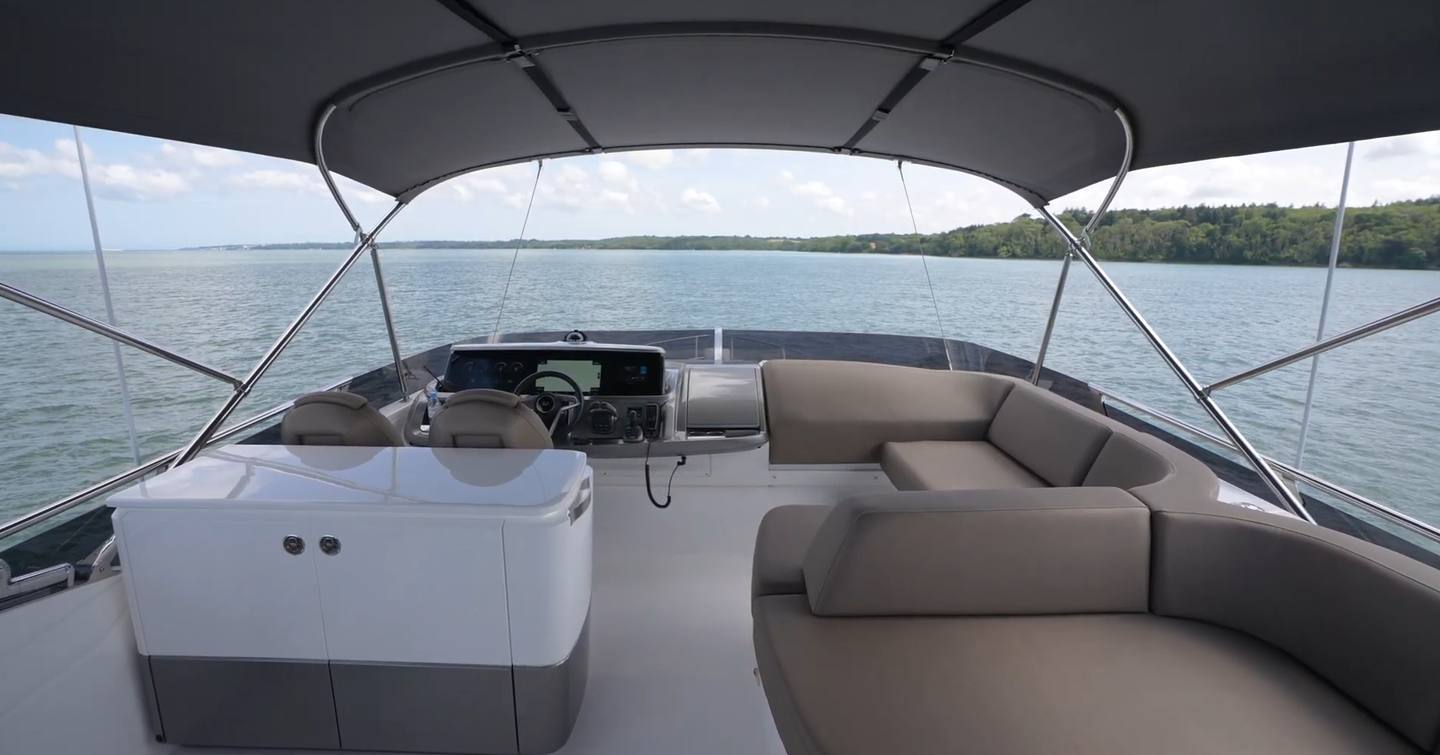
- Electrically operated bimini - initially questioned, but now essential for ease of use on a larger flybridge
Not every feature made the cut. Some were deliberately left out based on previous experience:
- Crew cabin - replaced with additional storage after going largely unused
- Dishwasher and washer-dryer - omitted to preserve space and reduce maintenance
These decisions reflect a consistent approach - less about ticking every option, and more about choosing what genuinely improves life on board the motor yacht.
Where the Design Delivers
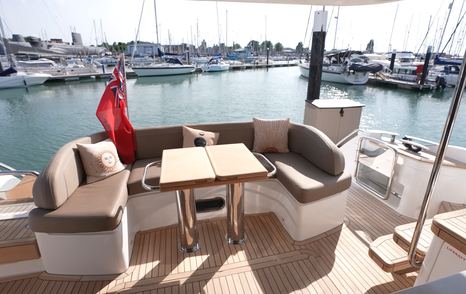
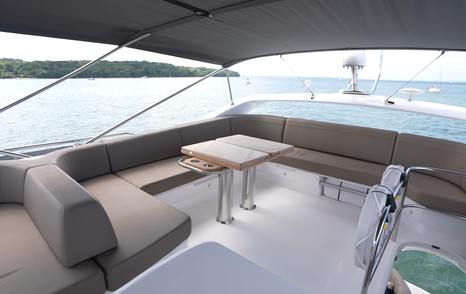
The aft galley layout plays a central role, linking cockpit, saloon, and flybridge into a single, workable flow. “It means we can service the cockpit, the flybridge, and the saloon,” Henry explained, a detail that becomes especially relevant during charters. Above, the flybridge represents one of the most noticeable upgrades over previous boats. “This is absolutely spectacular,” he said. “We can comfortably get 12 people up here.”
From a charter perspective, [the flybridge] is unbelievable. We've kind of got the flybridge of a 60-65ft boat, and you can comfortably get 12 people up here."
- Princess F55 Owner
Yet his own preference remains the cockpit. “I buy the flybridge not for the flybridge, but for the cockpit,” he noted, pointing to its flexibility as both an open and enclosed space depending on conditions.
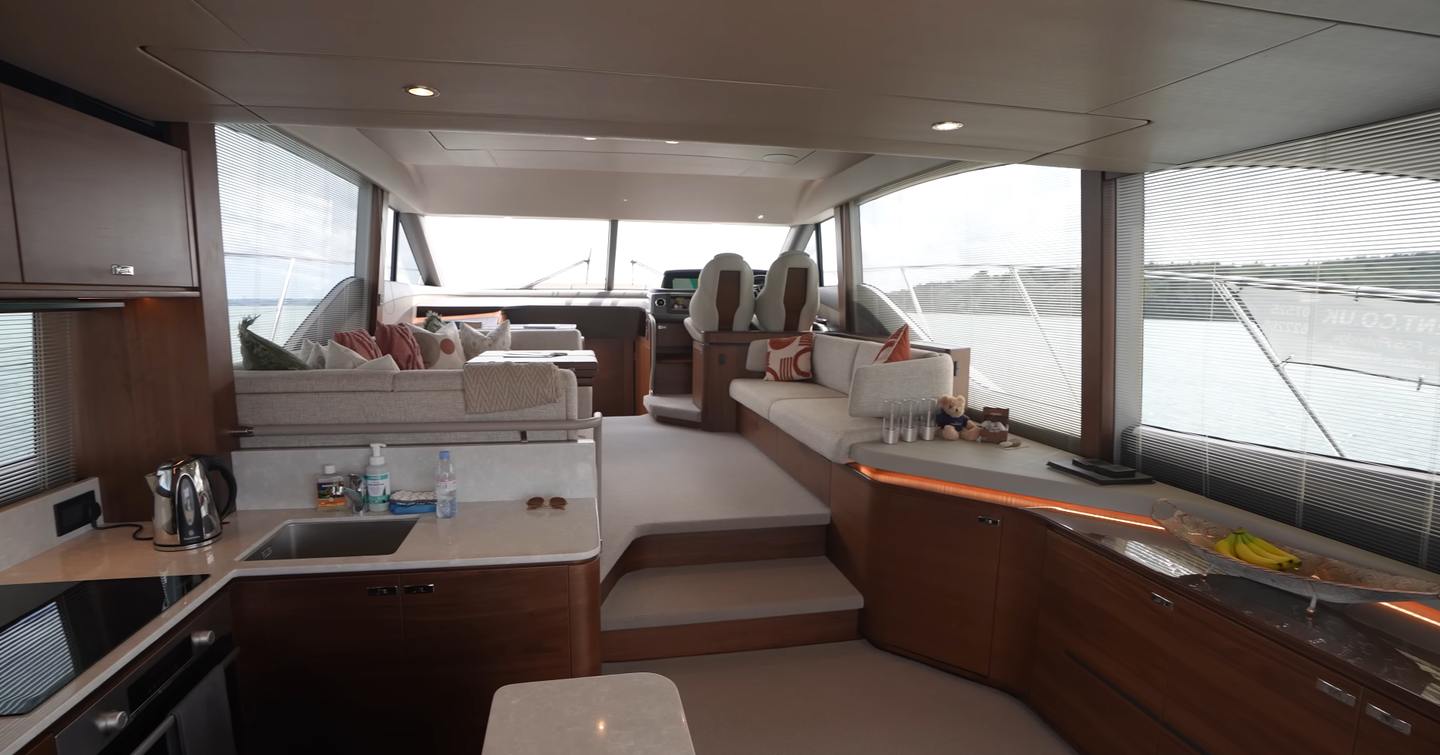
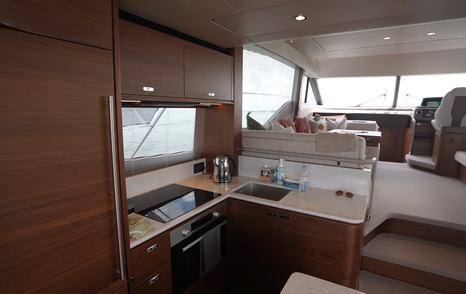
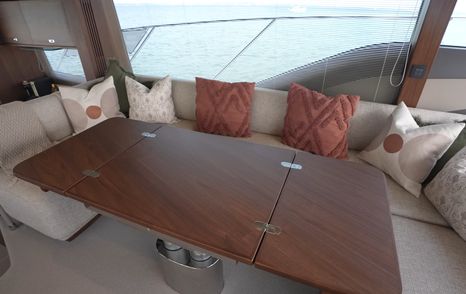
Inside the yacht, initial concerns about losing a separate dining area were quickly dispelled. The single saloon space has proven more usable, with greater seating capacity and improved light through larger windows. Storage, often overlooked during the buying process, has also become one of the boat’s more practical strengths.
Where the Boat Becomes a Home
Below deck, the full-beam owner’s cabin marks a clear step forward in both space and finish. “This is where the magic happens,” Henry said, describing the increased volume compared to his previous boat.
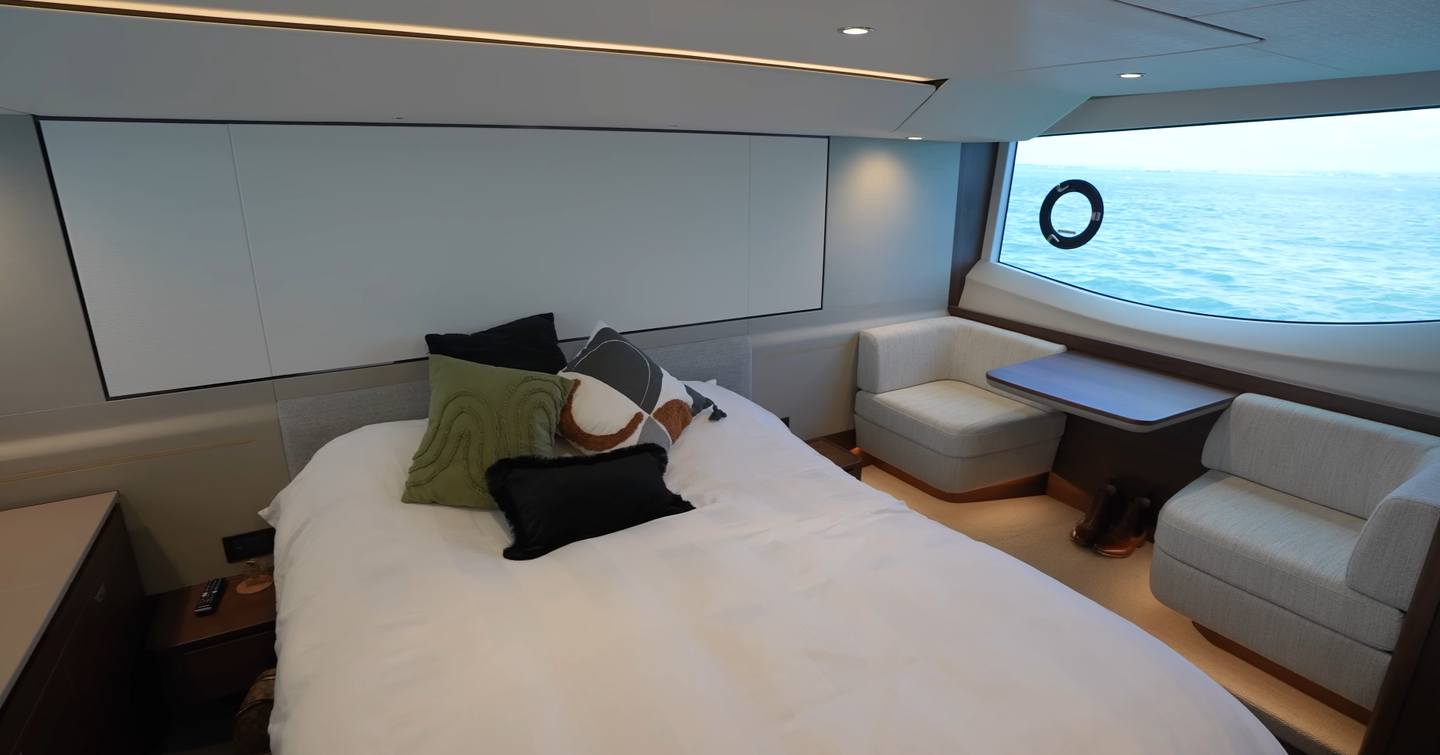
Some of the most noticeable improvements are subtle. The quality of the mattress stood out immediately. “The first night we spent on board, it felt like being in a hotel,” he said. Larger hull windows bring in more light, while materials and fittings give the space a more refined feel.
Not everything is used as originally imagined. A small seating area within the cabin, often presented as a quiet retreat, has taken on a different role. “What we actually use it for is as a study,” he explained, reflecting the reality of staying connected while on board.
Performance in The Owner's Hands
Out on the water, Mango’s performance reflects a practical approach to cruising. Powered by twin Volvo Penta D13-900 engines, the boat is capable of speeds well into the mid-20-knot range, but that is not where it is most often run.
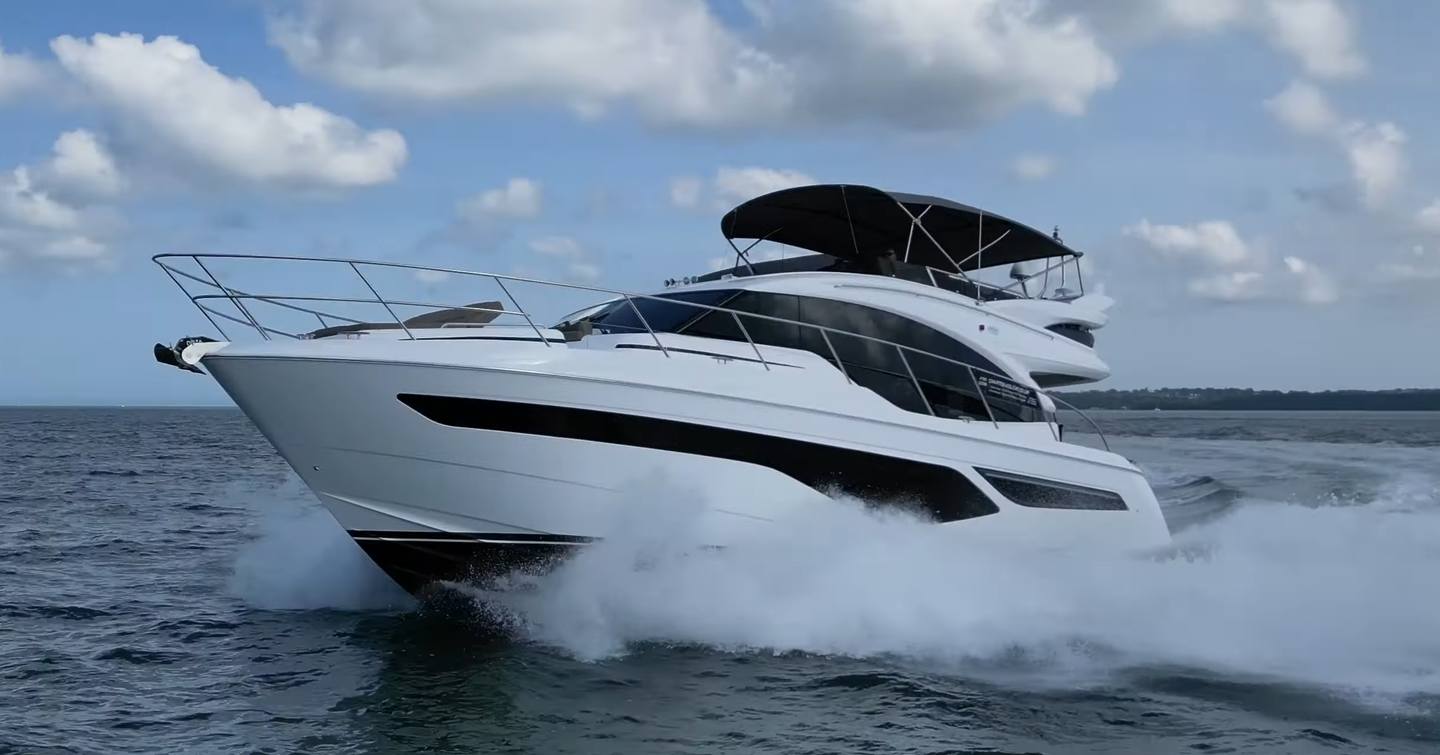
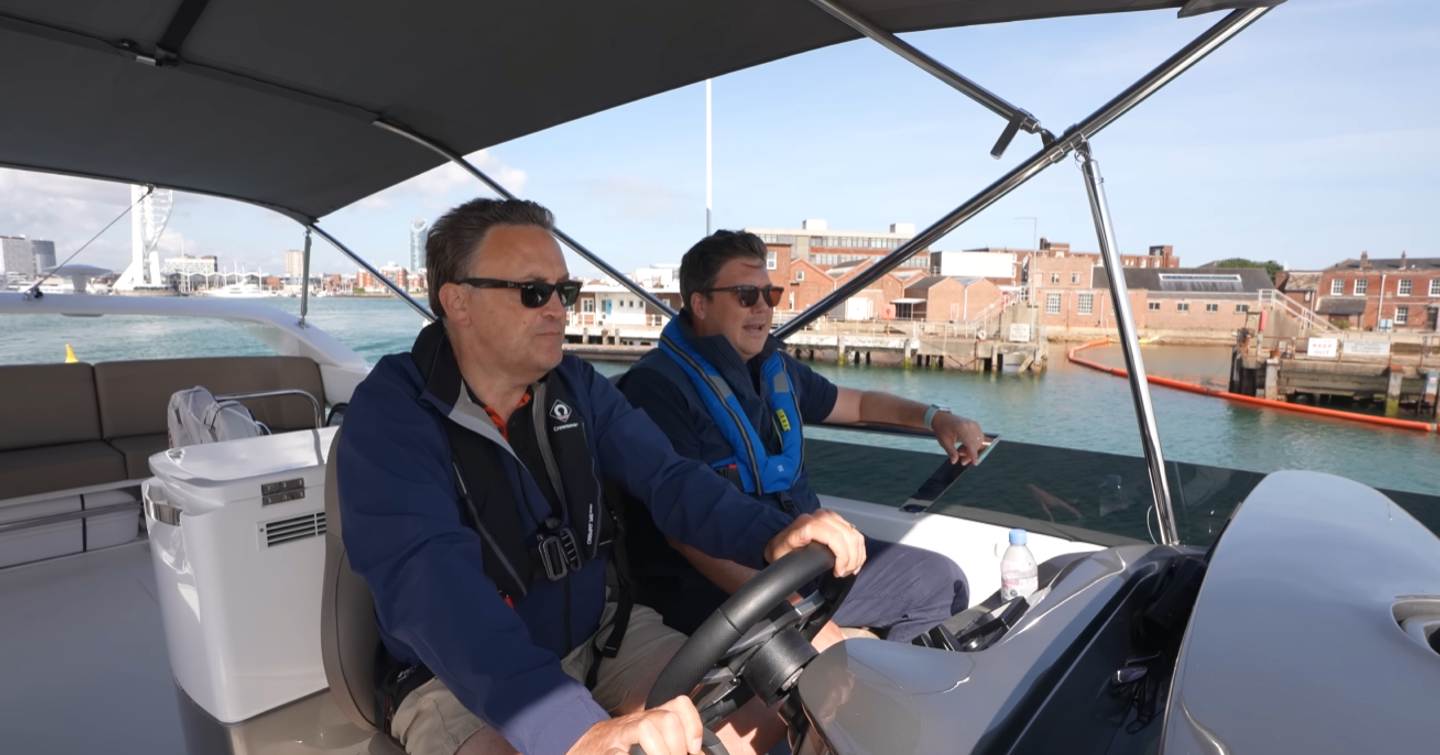
Instead, much of the cruising takes place at displacement speeds, particularly in the Solent, where tidal conditions can be used to advantage. “If I do seven knots on the keel, we’ve got ten knots over the ground for zero fuel burn,” Henry explained.
When on a plane, the speed of the flybridge yacht typically sit between 18 and 22 knots. “I’m really conscious of keeping charter guests comfortable,” he said, noting that higher speeds can introduce unnecessary movement.
A Boat That Holds Up Over Time
Mango does not present the Princess F55 as a perfect boat. What it does show, clearly, is how well the platform holds up once the initial gloss of delivery gives way to regular use.
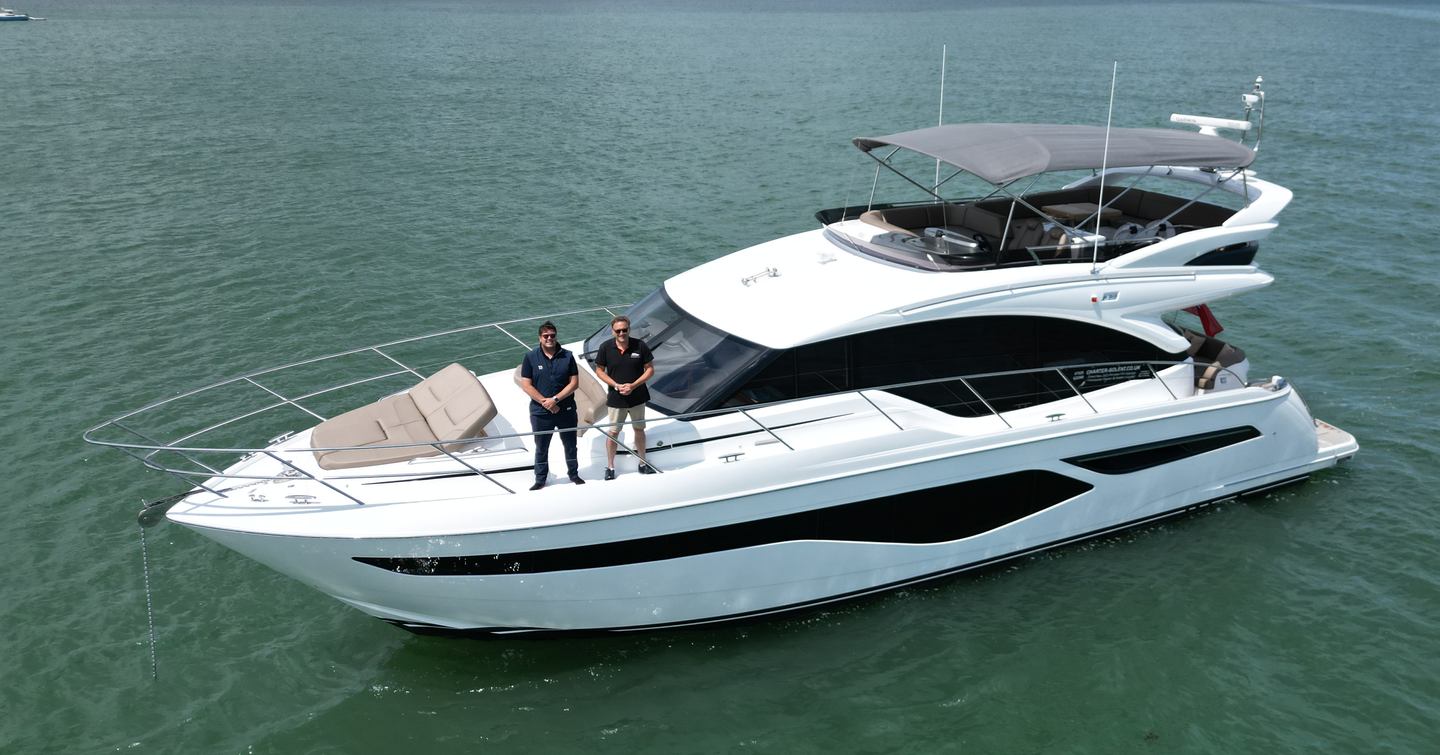
The decisions that matter are rarely the most obvious ones. They tend to sit in the details - how the boat is handled at low speed, how easily spaces adapt to different uses, and how effectively it supports both private cruising and charter operation. The F55, therefore, makes a strong case for itself; it is a boat that continues to make sense long after the order has been signed.
Interested? Read and watch YachtBuyer's review of the model below for an in-depth look at the Princess F55.
-
 BOAT TESTPrincess F55 Review (2022 Edition)
Where Mango Fits in the Princess Family
Mango also sits within one of the most important parts of the Princess range. The Princess F Class remains the builder’s core flybridge series, and the F55 occupies a well-judged middle ground - larger and more capable than entry-level models, but still manageable without stepping into the scale of the yachts above it.
Below, the Princess F45 brings many of the same strengths into a smaller format, with a full-beam owner’s cabin and a practical, galley-aft layout. It is more compact and geared toward first-time flybridge buyers, but shares the same focus on usable space.
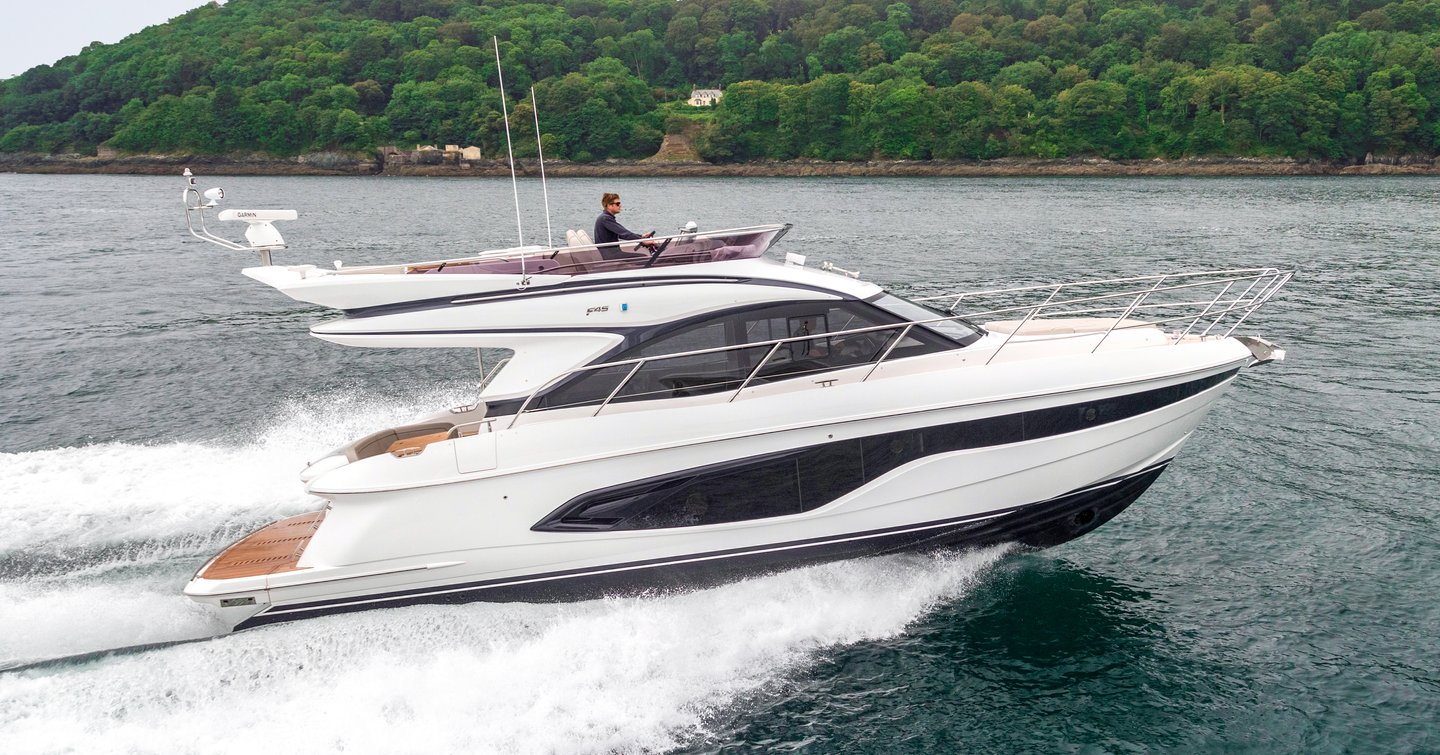
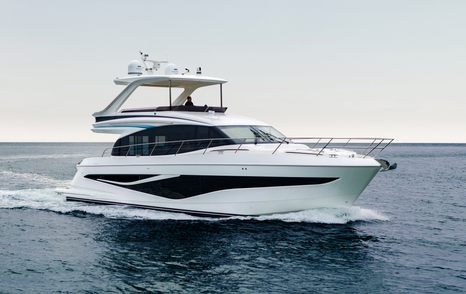
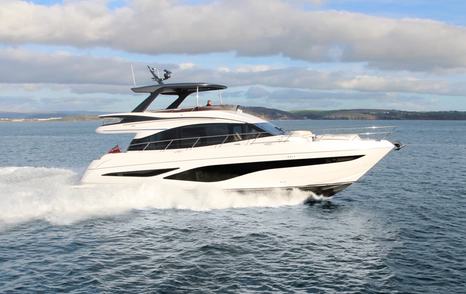
The newer Princess F54 sits closer in spirit to the F55, with a three-cabin layout and a stronger family focus, while the Princess F58 moves the platform on more directly. As YachtBuyer’s review highlights, it builds on the F55 with more space, more power, and a more refined layout, rather than a complete shift in direction. Further up, the Princess F65 moves into a different category, with four cabins and a clearer emphasis on guest capacity and crew support.
A Shipyard Expanding in Multiple Directions
That balance also helps explain why the F55 still matters within the wider Princess story. Over the past year, the Plymouth builder has been active across multiple parts of its range, not by changing course completely, but by extending its reach.
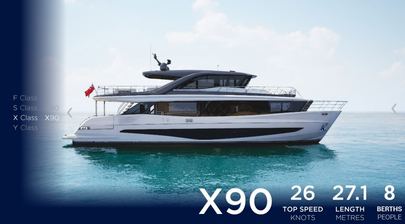
At one end, the new C48 has pushed Princess into new territory as the brand’s first outboard-powered model and first stepped-hull design. In a very different part of the portfolio, the forthcoming X90 continues the yard’s push into higher-volume, design-led cruising, while the recently revealed S74 shows that the sportbridge line is still evolving in a measured way.

Perhaps most significantly, Princess has also signaled a return to the larger-yacht arena with the 106 Odyssey, re-entering the 30m-plus category with a new superyacht platform.
Read More


Taken together, those moves show a builder widening its appeal while staying close to the principles that have long defined the brand - usable space, careful refinement, and layouts shaped by real onboard living. In that sense, Mango’s story does not sit outside the Princess lineup at all. It sits right in the middle of it.
Inspired by this Princess yacht? View all new and used Princess F55 yachts for sale, tracked in real-time by YachtBuyer MarketWatch. We scan the entire market to ensure access to all genuine listings, saving you time. Alternatively, you can view all other Princess yachts for sale.